Thisispaper Community
Join today.
Enter your email address to receive the latest news on emerging art, design, lifestyle and tech from Thisispaper, delivered straight to your inbox.
Oops! Something went wrong while submitting the form.
Instant access to new channels
The top stories curated daily
Weekly roundups of what's important
Original features and deep dives
Exclusive community features
DwellWell
under the patronage of
Concrete Stories
under the patronage of
House and Beeyard by OKKA Architects
Mar 17, 2026

In the Balaton Uplands of western Hungary, OKKA Architects rebuild a ruined stone farmhouse from its own salvaged material — rammed back into concrete walls that carry the memory and the geology of what stood before.

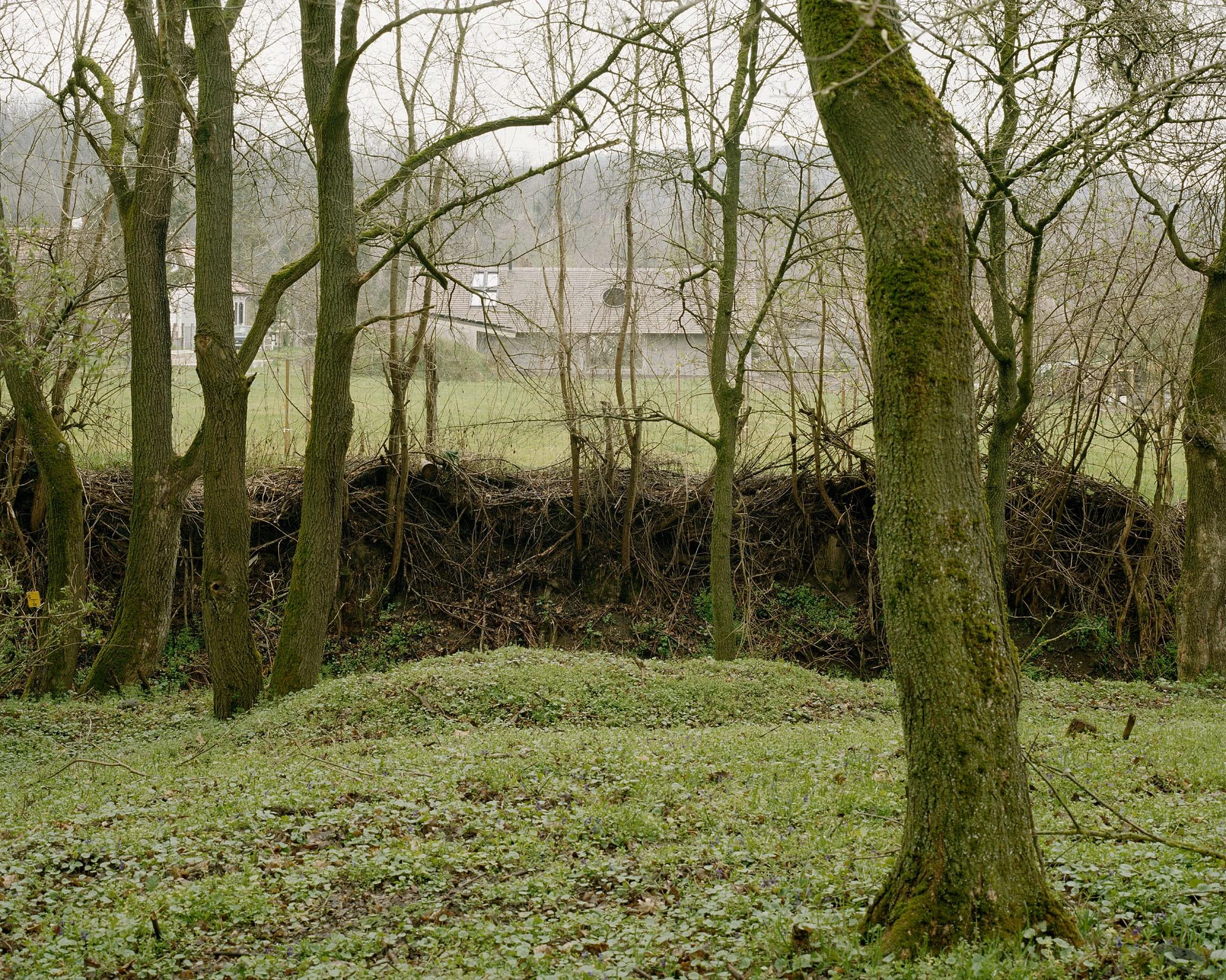
The site is in one of the basins of the Balaton Uplands in western Hungary — a terrain of volcanic geology, old stone walls, and an agricultural vernacular that speaks quietly of centuries of settled life. The project began as a renovation: an old stone house in poor condition, accompanied by two outbuildings, one of which was the Beeyard, used for storing beehives. The architect-owner originally intended to preserve the existing walls. The walls, however, could not bear the structural loads required, and the project was forced to take a new direction — one that turned out to be more considered, and more rooted, than the original.

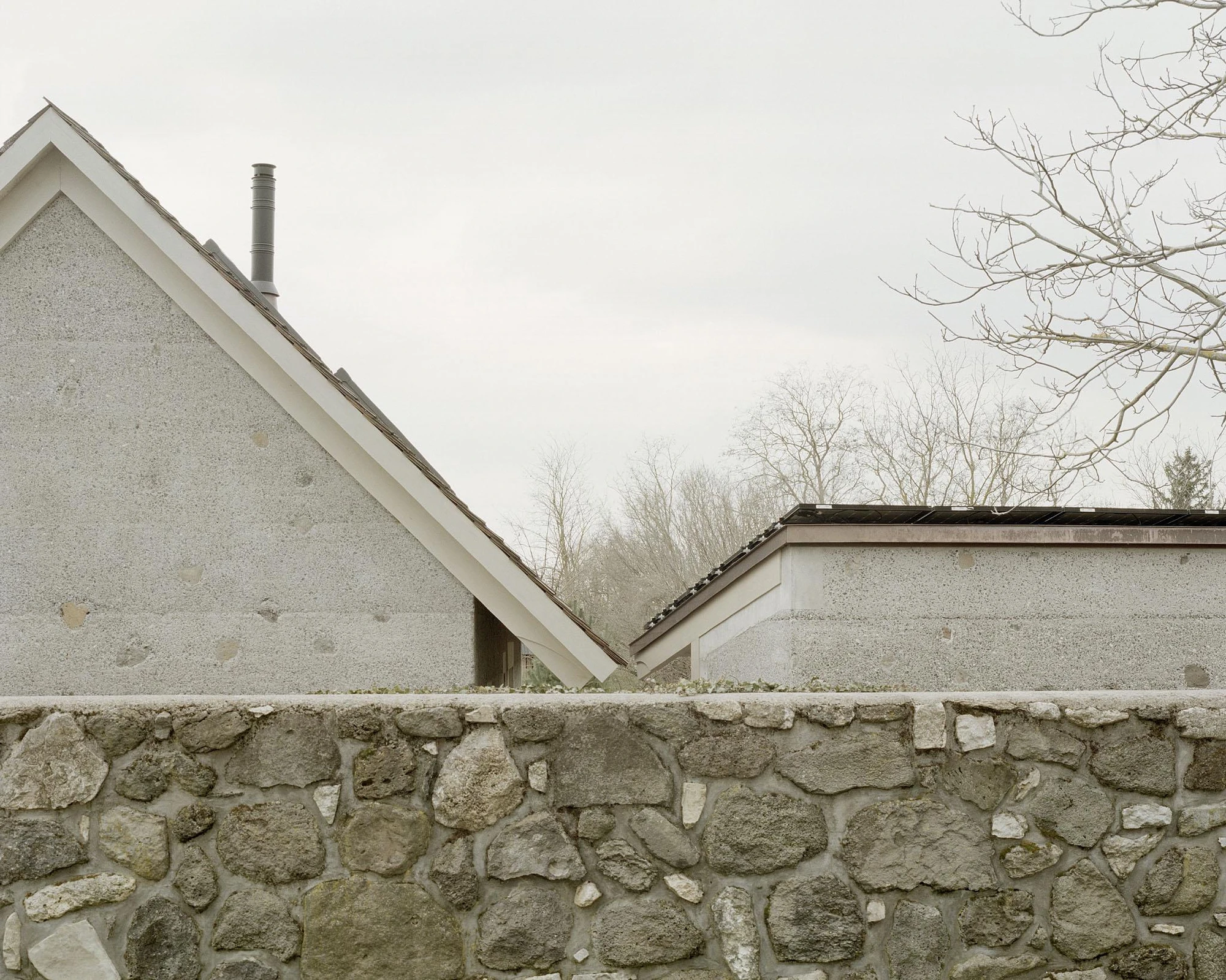
Rather than abandon the stone, the decision was made to use it. A traditional local technique of rammed concrete construction was adopted: a custom mix poured into formwork that incorporated the larger stones salvaged from the demolished old building alongside basalt aggregate quarried from a site nearby. The result is a wall system that contains the memory of the structure it replaced — the same stones, held now in a new matrix. This basalt aggregate reappears in the terrazzo flooring of the buildings, completing a material loop from geological source to finished surface that gives the ensemble an uncommon sense of internal coherence.

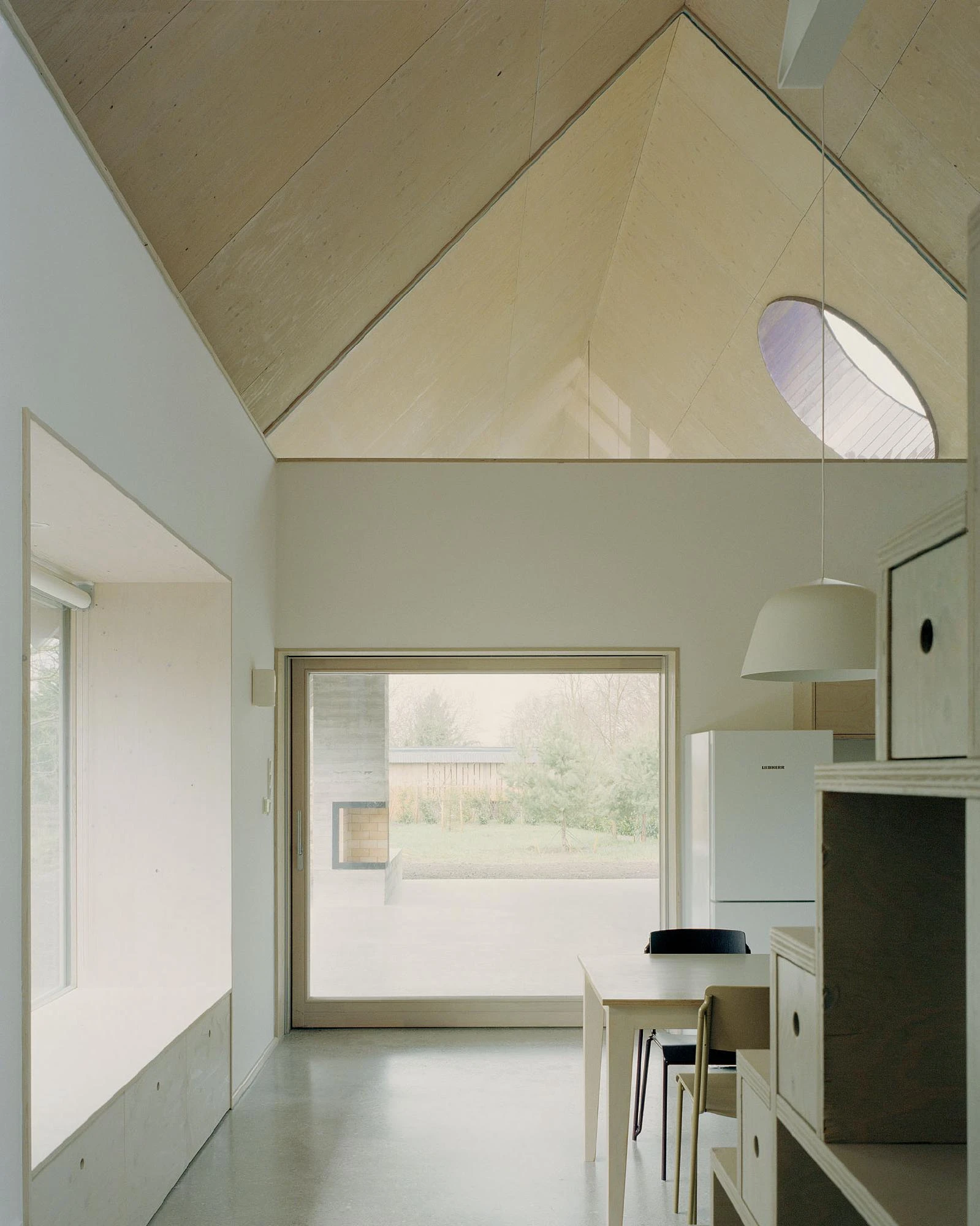
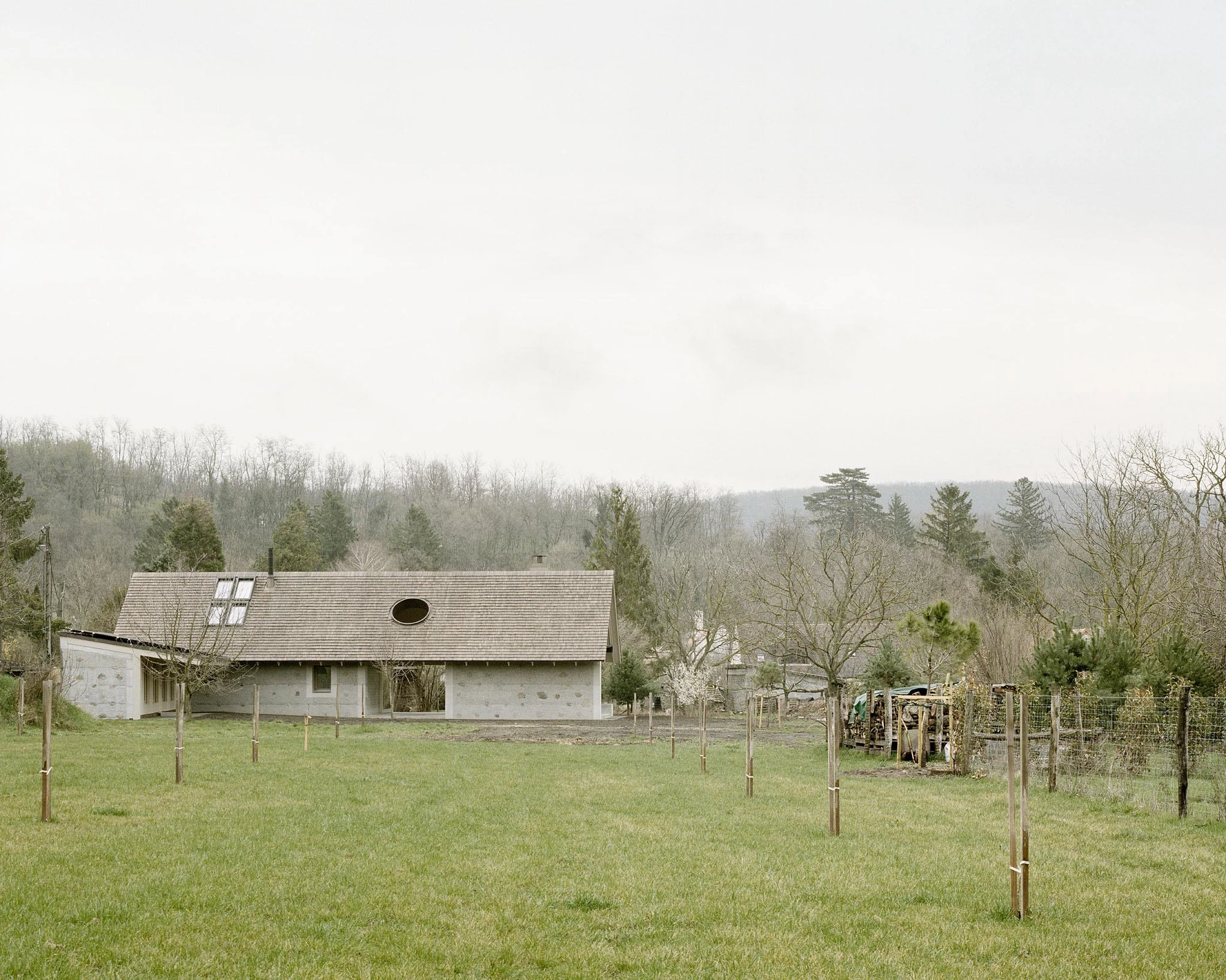
The massing of the original house and outbuildings was preserved in outline, so the ensemble reads as a settlement that belongs to this landscape — low, long, its roofline following the familiar pitch of rural Hungarian farm buildings. The roof itself is covered in wooden shingles, giving the exterior a texture that is rough and quiet, the colour of winter grass. What distinguishes the project from mere vernacular exercise is the interior: the roof structure is expressed in spruce plywood panels that rise in triangular gable vaults and culminate in circular oculus openings, admitting light in a way that is emphatically contemporary without undermining the gravitational weight of the material world below.

The Beeyard, originally a utilitarian storage structure, is transformed into a secondary living space that maintains its own architectural identity within the ensemble. Together, house and beeyard form a small domestic landscape: two volumes in conversation, their rammed stone-concrete walls registering the aggregate of the local geology, their timber interiors offering warmth and human scale. It is a project about continuity as much as construction — about what can be carried forward when the walls themselves can no longer stand.

Interested in Showcasing Your Work?

If you would like to feature your works on Thisispaper, please visit our Submission page and sign up to Thisispaper+ to submit your work. Once your submission is approved, your work will be showcased to our global audience of 2 million art, architecture, and design professionals and enthusiasts.
No items found.
We love less
but there is more.
Become a Thisispaper+ member today to unlock full access to our magazine, advanced tools, and support our work.
Get two months FREE
with annual subscription
We love less
but there is more.
Become a Thisispaper+ member today to unlock full access to our magazine, advanced tools, and support our work.
Get two months FREE
with annual subscription
No items found.
Mar 17, 2026

In the Balaton Uplands of western Hungary, OKKA Architects rebuild a ruined stone farmhouse from its own salvaged material — rammed back into concrete walls that carry the memory and the geology of what stood before.

The site is in one of the basins of the Balaton Uplands in western Hungary — a terrain of volcanic geology, old stone walls, and an agricultural vernacular that speaks quietly of centuries of settled life. The project began as a renovation: an old stone house in poor condition, accompanied by two outbuildings, one of which was the Beeyard, used for storing beehives. The architect-owner originally intended to preserve the existing walls. The walls, however, could not bear the structural loads required, and the project was forced to take a new direction — one that turned out to be more considered, and more rooted, than the original.

Rather than abandon the stone, the decision was made to use it. A traditional local technique of rammed concrete construction was adopted: a custom mix poured into formwork that incorporated the larger stones salvaged from the demolished old building alongside basalt aggregate quarried from a site nearby. The result is a wall system that contains the memory of the structure it replaced — the same stones, held now in a new matrix. This basalt aggregate reappears in the terrazzo flooring of the buildings, completing a material loop from geological source to finished surface that gives the ensemble an uncommon sense of internal coherence.

The massing of the original house and outbuildings was preserved in outline, so the ensemble reads as a settlement that belongs to this landscape — low, long, its roofline following the familiar pitch of rural Hungarian farm buildings. The roof itself is covered in wooden shingles, giving the exterior a texture that is rough and quiet, the colour of winter grass. What distinguishes the project from mere vernacular exercise is the interior: the roof structure is expressed in spruce plywood panels that rise in triangular gable vaults and culminate in circular oculus openings, admitting light in a way that is emphatically contemporary without undermining the gravitational weight of the material world below.

The Beeyard, originally a utilitarian storage structure, is transformed into a secondary living space that maintains its own architectural identity within the ensemble. Together, house and beeyard form a small domestic landscape: two volumes in conversation, their rammed stone-concrete walls registering the aggregate of the local geology, their timber interiors offering warmth and human scale. It is a project about continuity as much as construction — about what can be carried forward when the walls themselves can no longer stand.

Interested in Showcasing Your Work?

If you would like to feature your works on Thisispaper, please visit our Submission page and subscribe to Thisispaper+. Once your submission is approved, your work will be showcased to our global audience of 2 million art, architecture, and design professionals and enthusiasts.
Thisispaper+
DwellWell
100+ Projects
Web Access
Link to Maps
Wellbeing as an outcome of ongoing relations happening in space and time. Things, environments, and experiences that are designed to enhance life and enable us to thrive.
Explore
DwellWell

Join Thisispaper+
Unlock access to 2500 stories, curated guides + editions, and share your work with a global network of architects, artists, writers and designers who are shaping the future.
Get two months FREE
with annual subscription
Travel Guides
Immerse yourself in timeless destinations, hidden gems, and creative spaces—curated by humans, not algorithms.
Explore All Guides +
Submission Module
Submit your project and gain the chance to showcase your work to our worldwide audience of over 2M architects, designers, artists, and curious minds.
Learn More+
Curated Editions
Dive deeper into carefully curated editions, designed to feed your curiosity and foster exploration.
Off-the-Grid
Jutaku
Sacral Journey
minimum
The New Chair
Explore All Editions +
Atlas
A new and interactive way to explore the most inspiring places around the world.
Interactive map
Linked to articles
300+ curated locations
Google + Apple directions
Smart filters
Subscribe to Explore+
Become a Thisispaper+ member today to unlock full access to our magazine, submit your project and support our work.
Join Thisispaper+Join Thisispaper+
€ 9 EUR
/month
Cancel anytime
Get two months FREE
with annual subscription