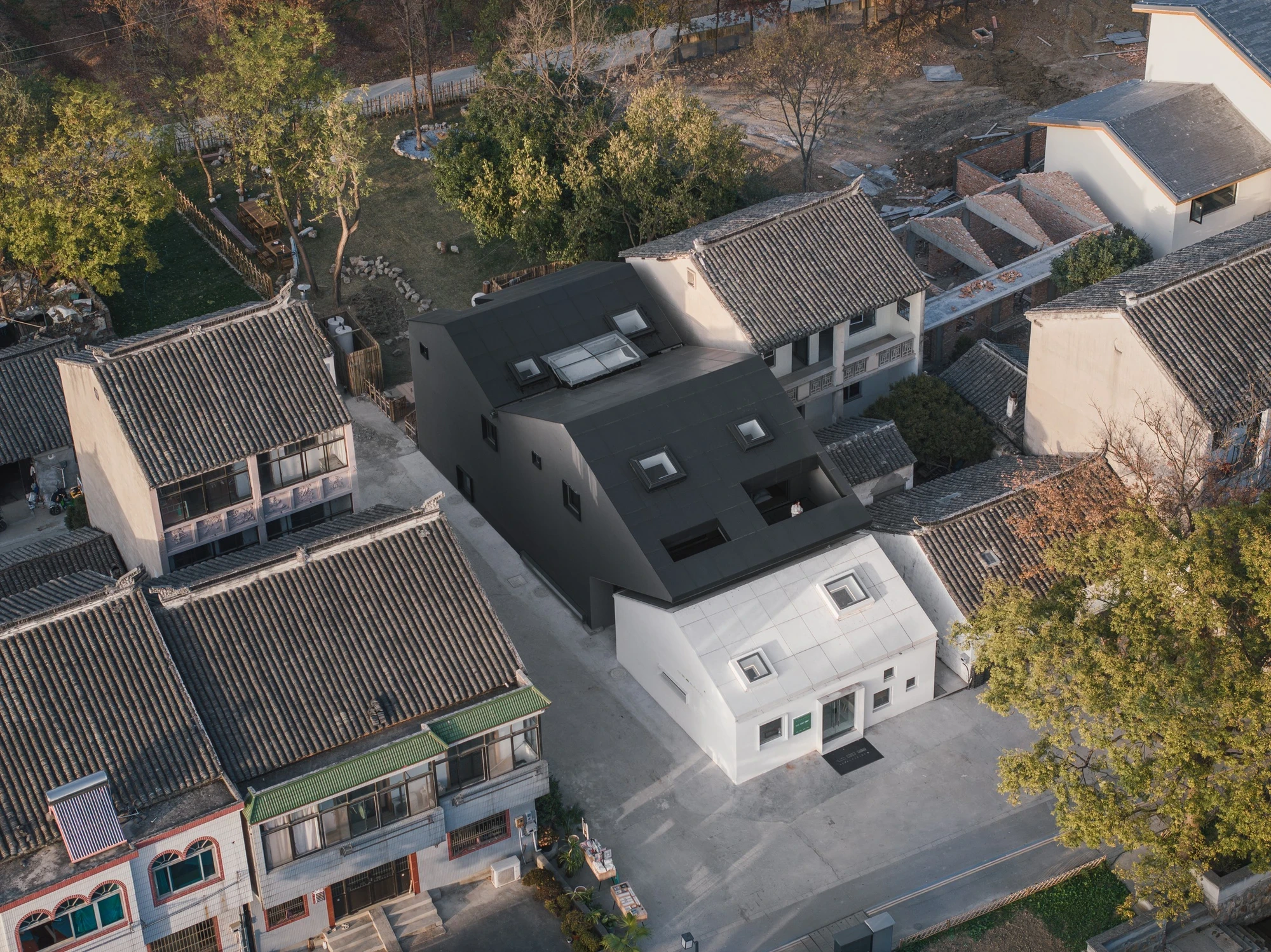
In Shanglin Village outside Suzhou in China, Wutopia Lab reworks three abandoned rural houses into Heart Fields, a bookstore, cafe and homestay that sets a matte-black gabled mass against a retained white entrance house.
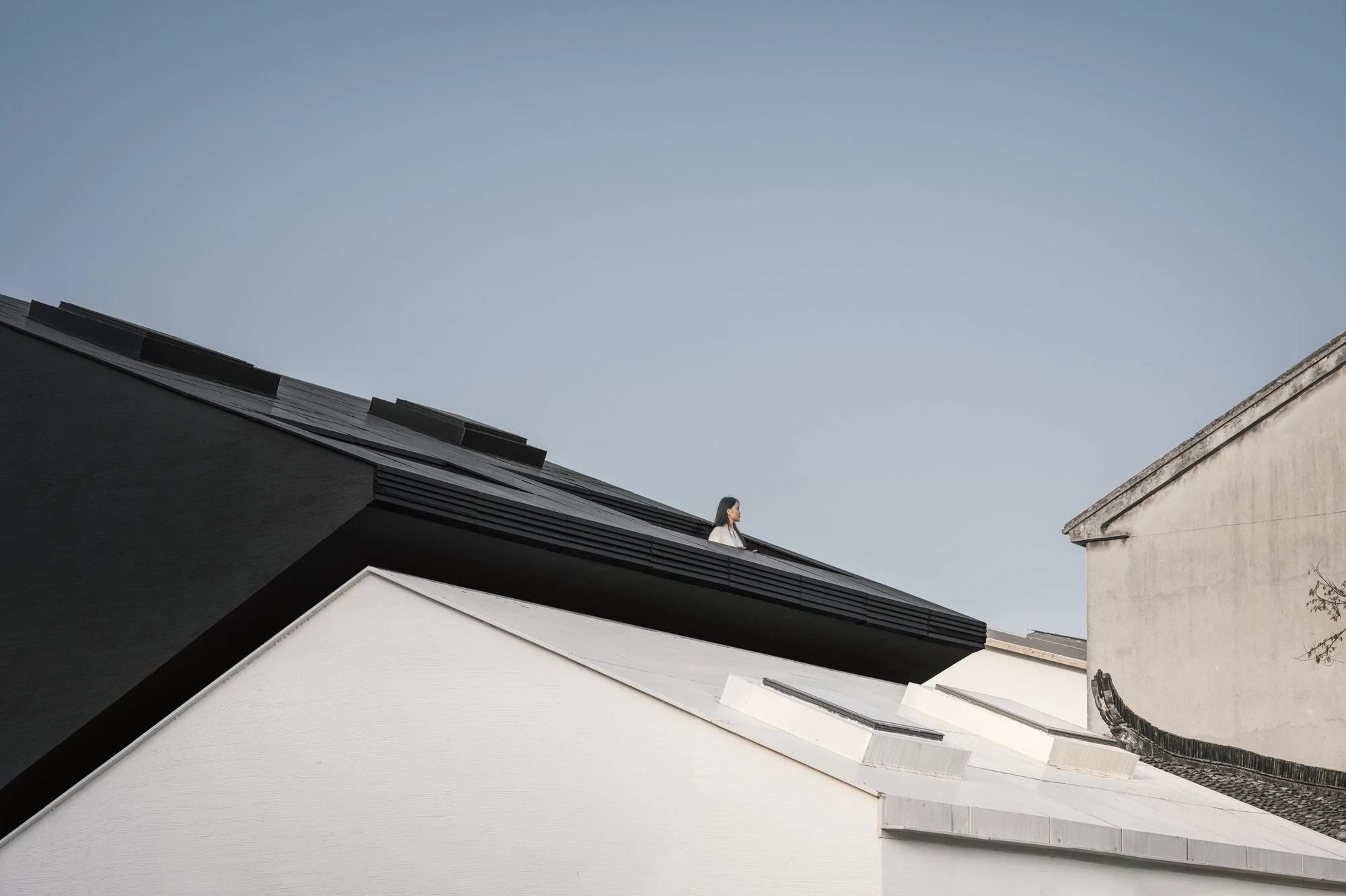
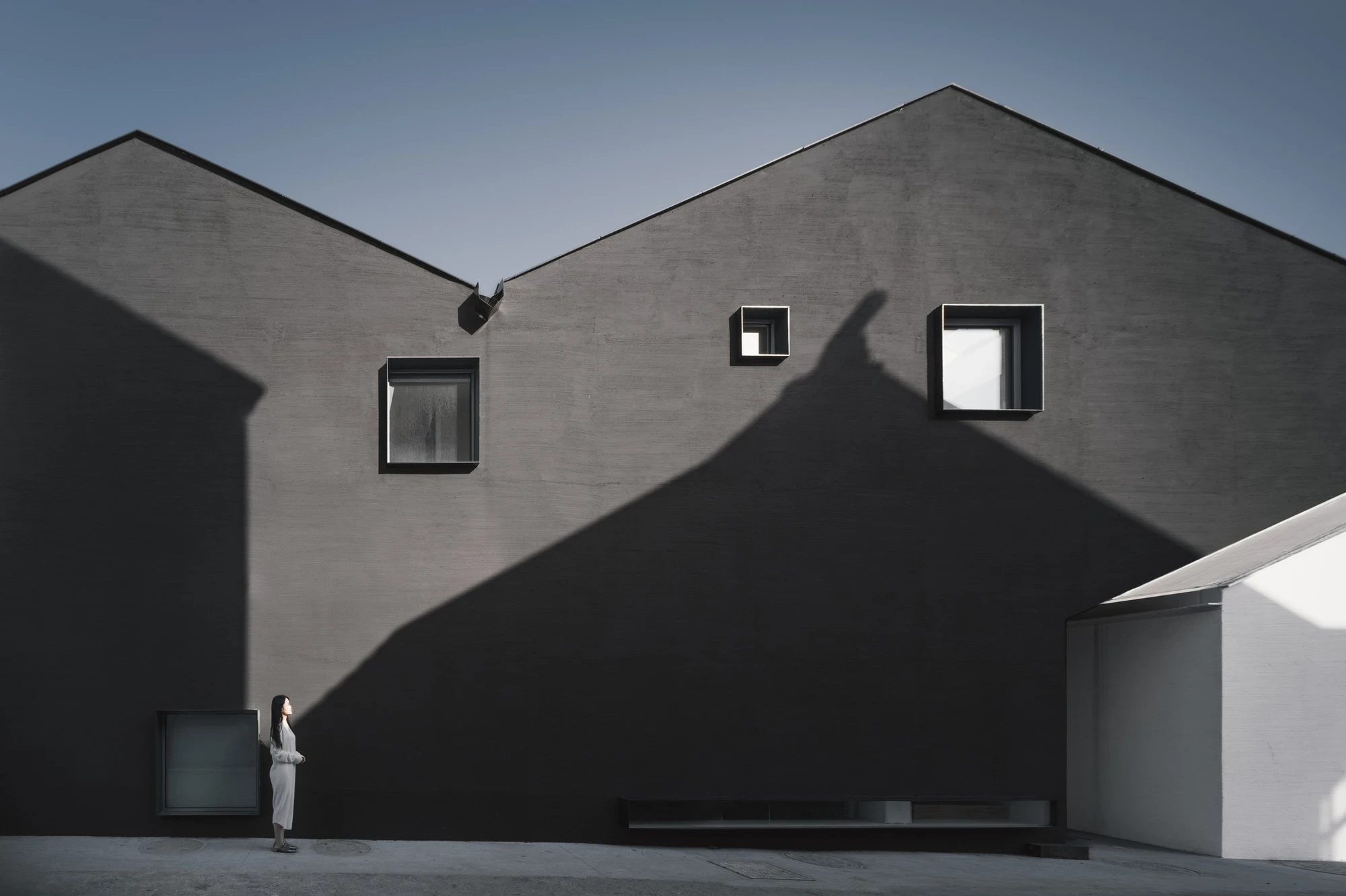
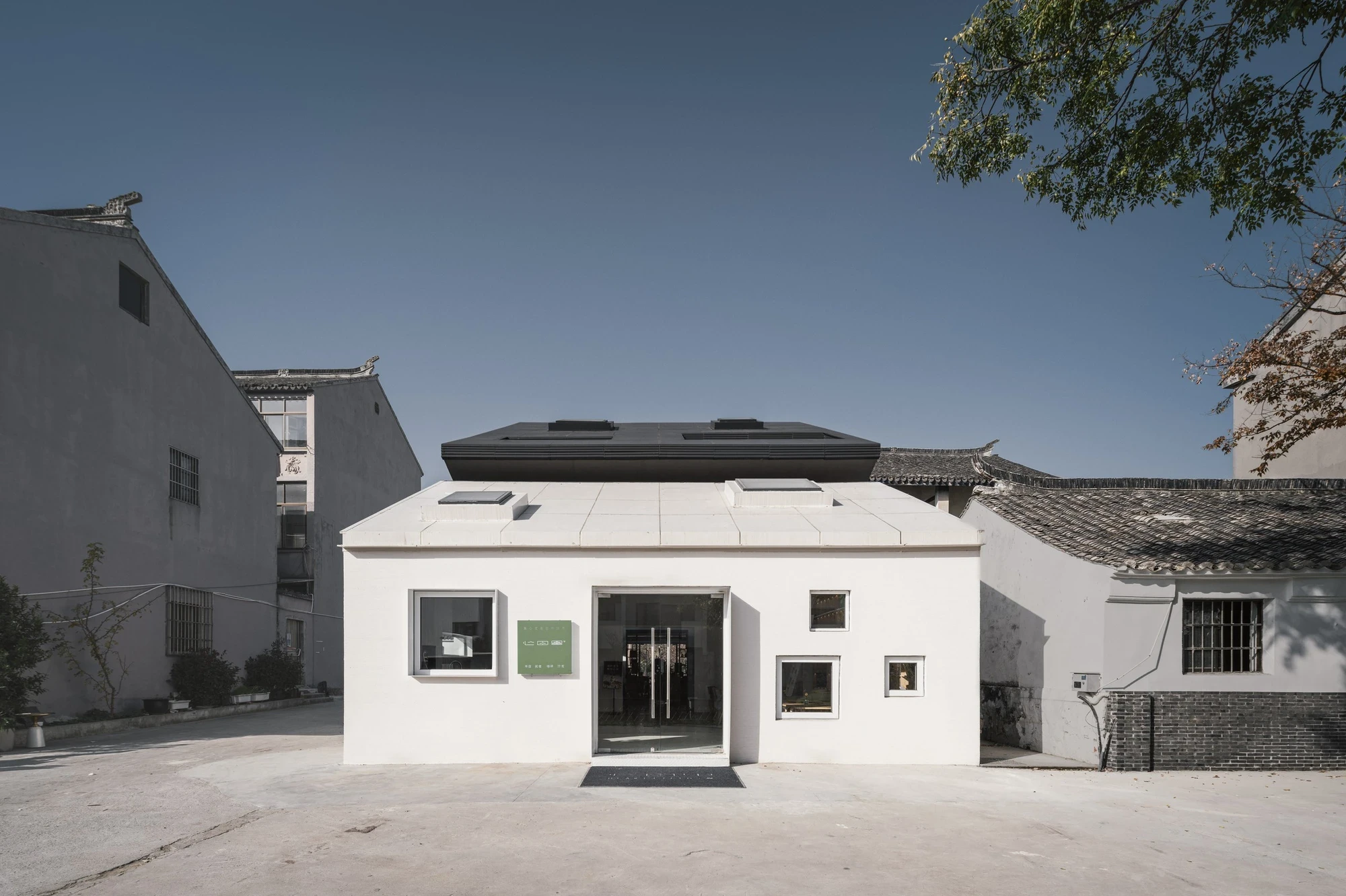
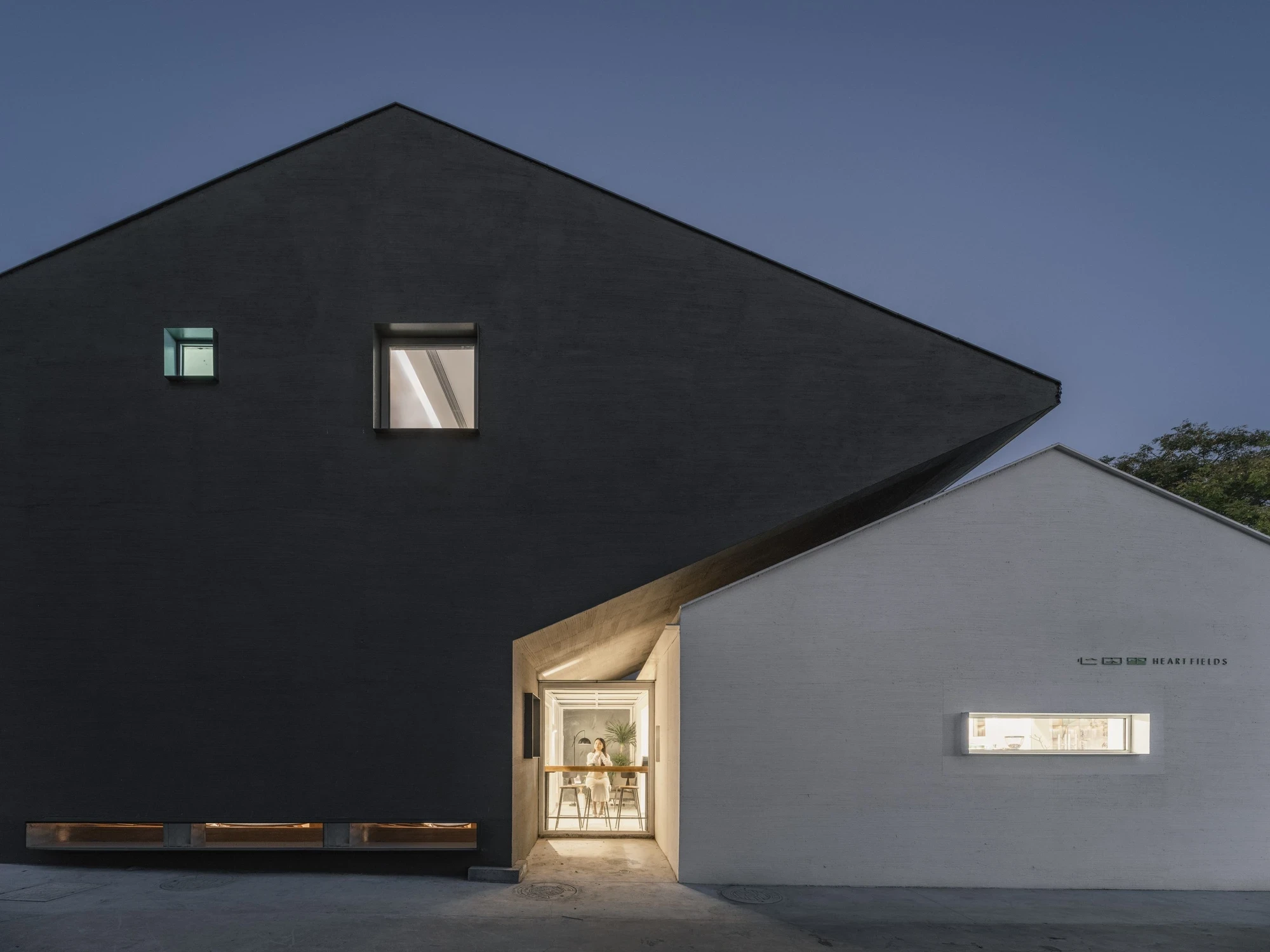
Most rural cultural buildings in China reach for the same vocabulary: rammed earth, rough concrete, a picturesque quotation of the vernacular. Heart Fields refuses all of it. The project turns three abandoned houses and a courtyard into a bookstore, cafe, library, salon and four guest rooms, and its whole argument rests on a single contrast. A retained whitewashed house stays at the entrance, low and domestic, with a shallow-pitched roof and small openings. Behind it rises something new and unapologetic, a black double-gabled volume that never pretends to be old.
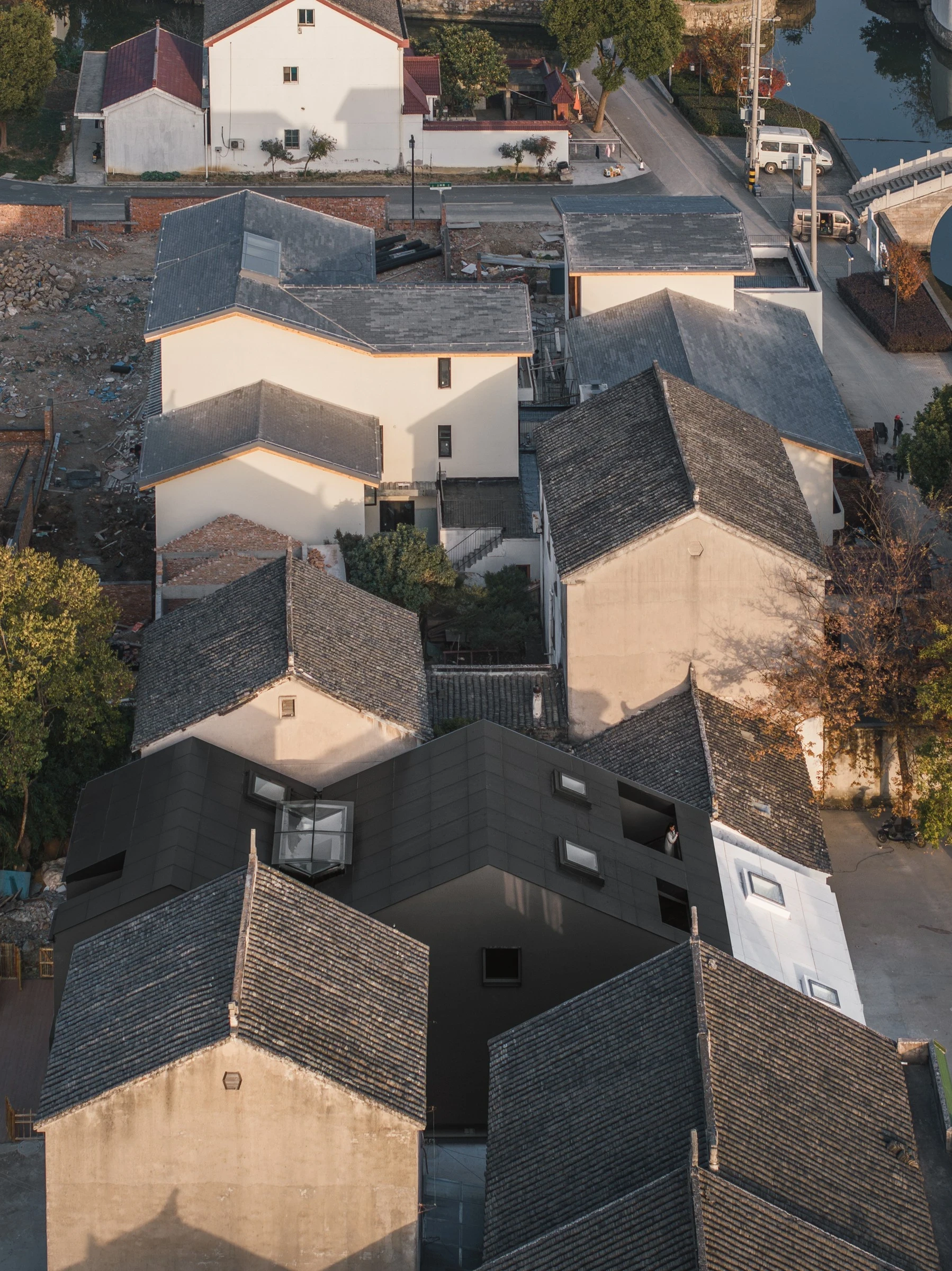
The two do not blend. Between them Wutopia Lab keeps a narrow gap and bridges it with a glass connector, a threshold that glows like a lantern at dusk. Volume expands and contracts, black meets white, public gives way to private. The differences are the point. Rather than scatter the program across separate buildings, the studio compresses it into one layered system where a bookstore can also be a place to sleep.
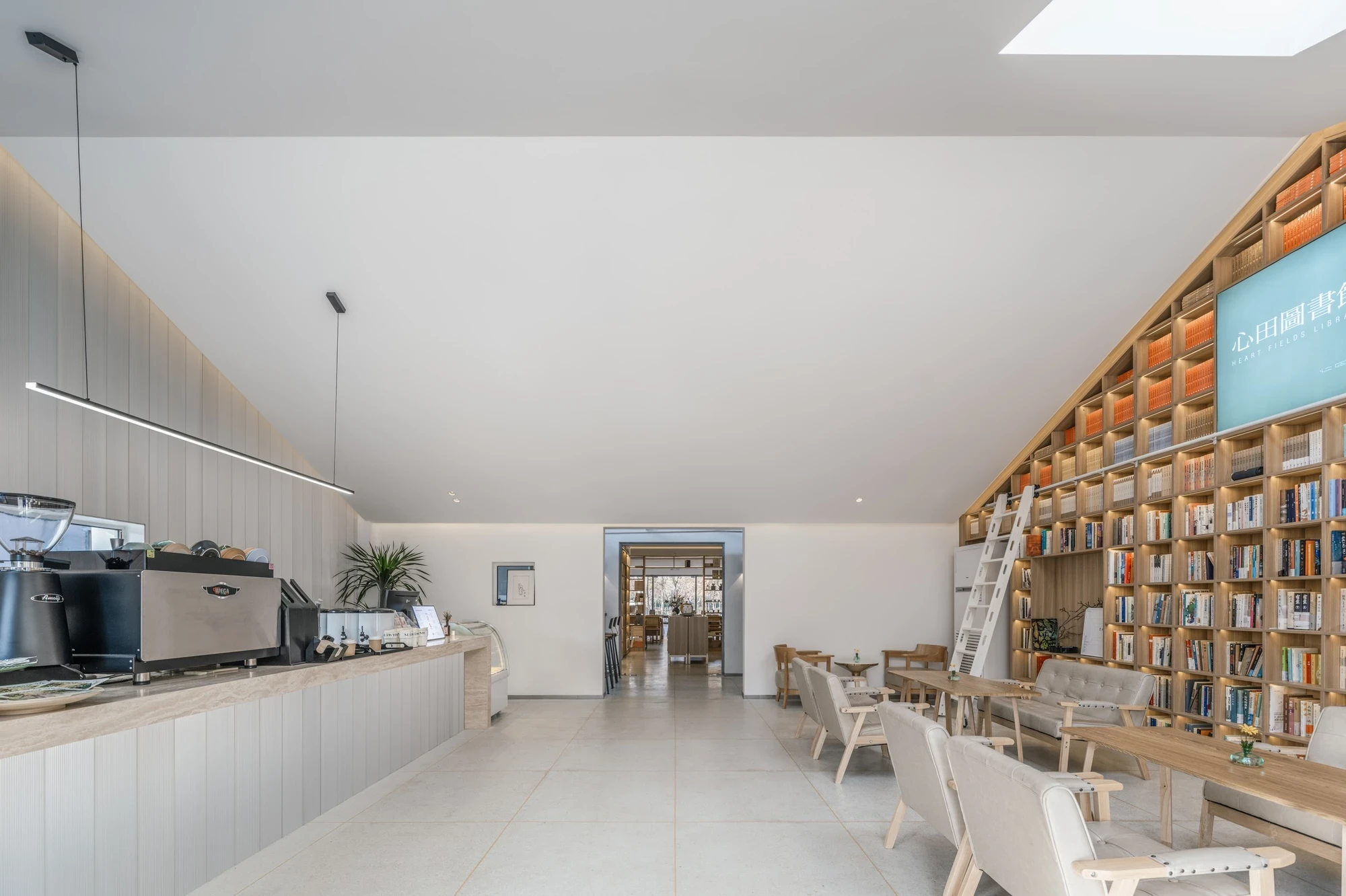
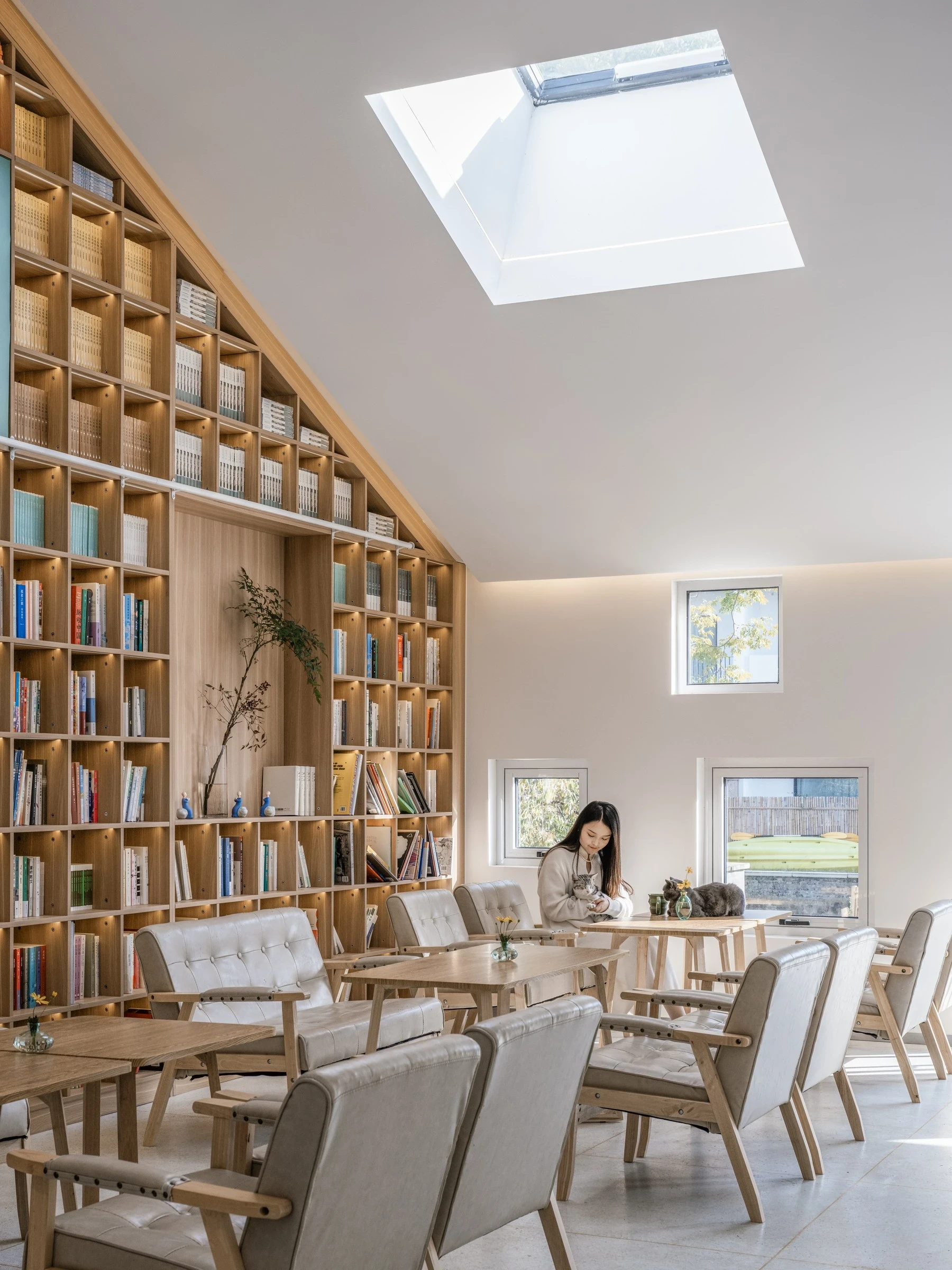
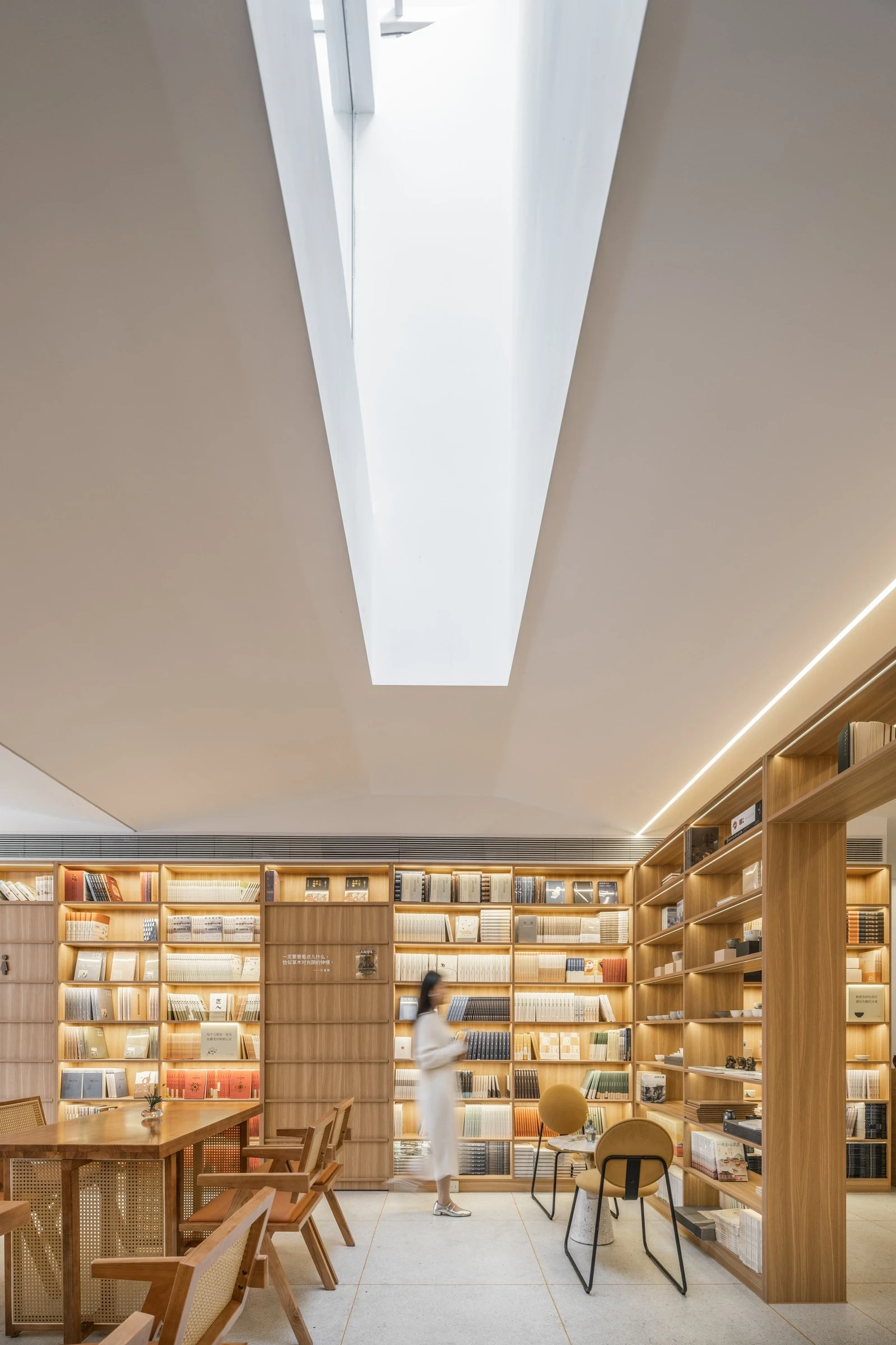
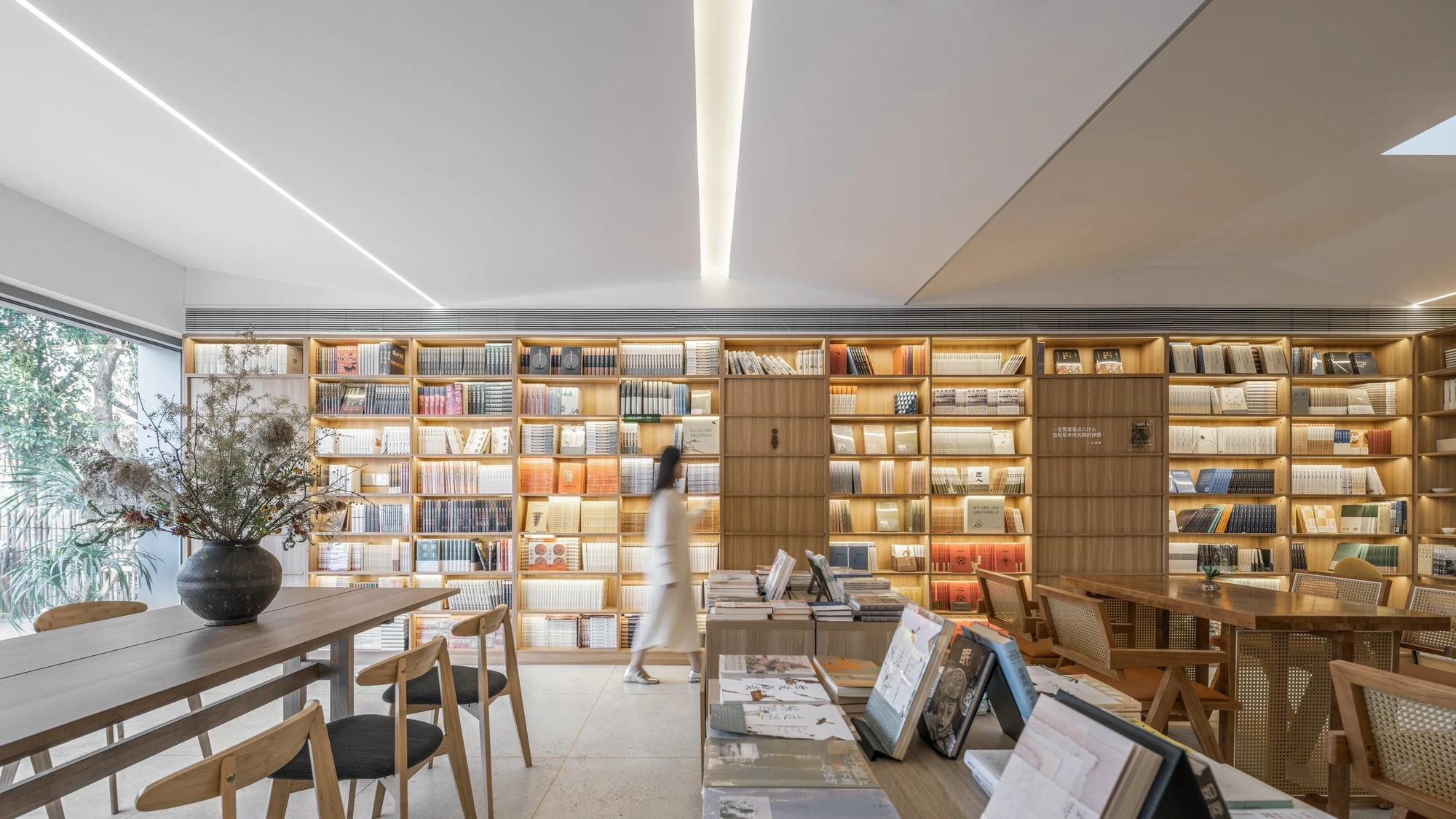
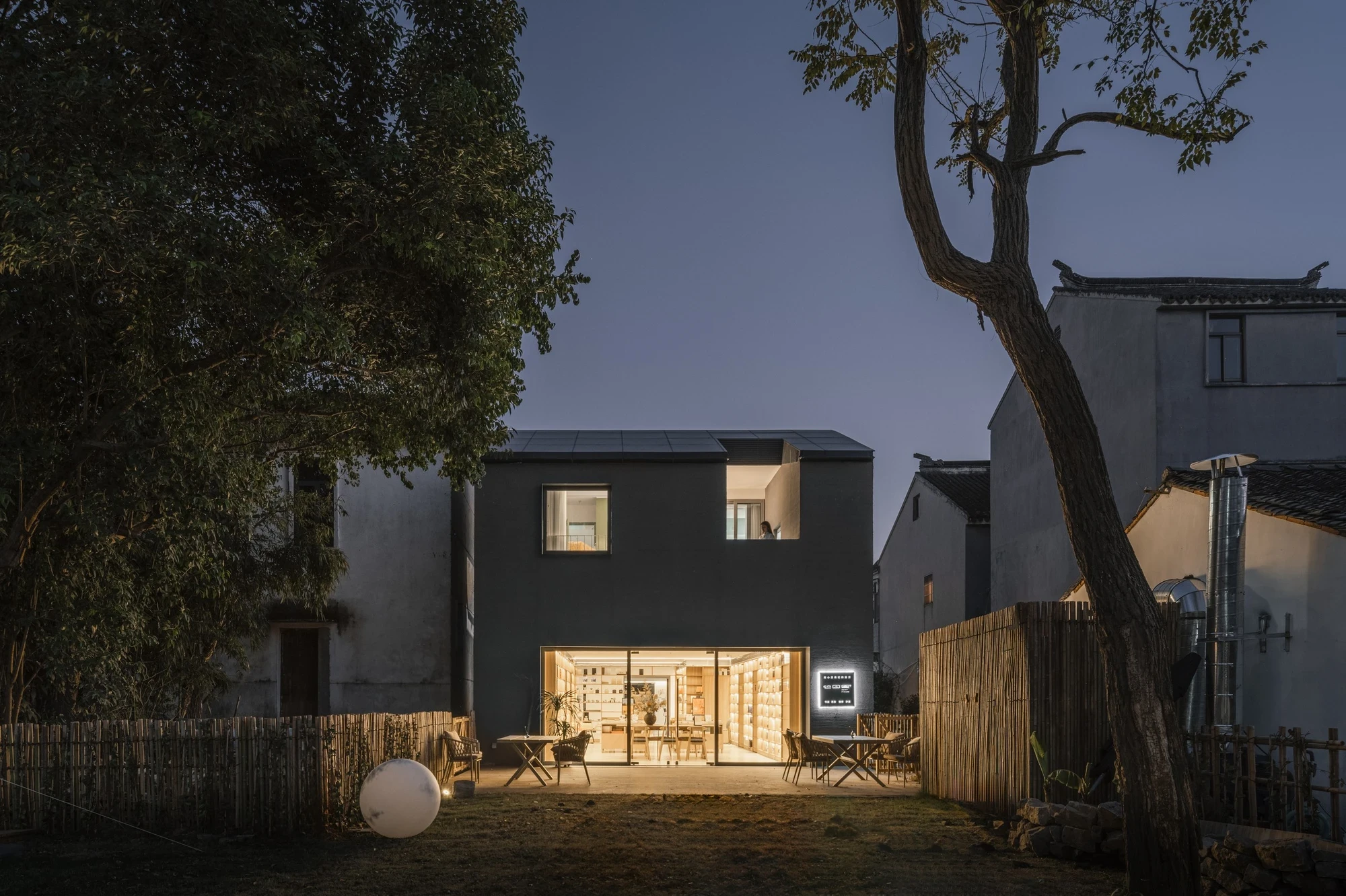
The black mass is finished with a fine directional texture that catches raking light and reads almost as fabric across the gable. Deep-set square windows sit in thin projecting metal frames, punched into the surface like viewfinders. Inside, the ground floor moves from cafe and library in the white front volume, under a faceted pitched ceiling with skylights and a long timber counter, to the bookstore and salon behind. Full-height oak shelving climbs the gabled profile, backlit shelf by shelf, with a white ladder to reach the top and a narrow light well cutting daylight down into the depth of the plan.
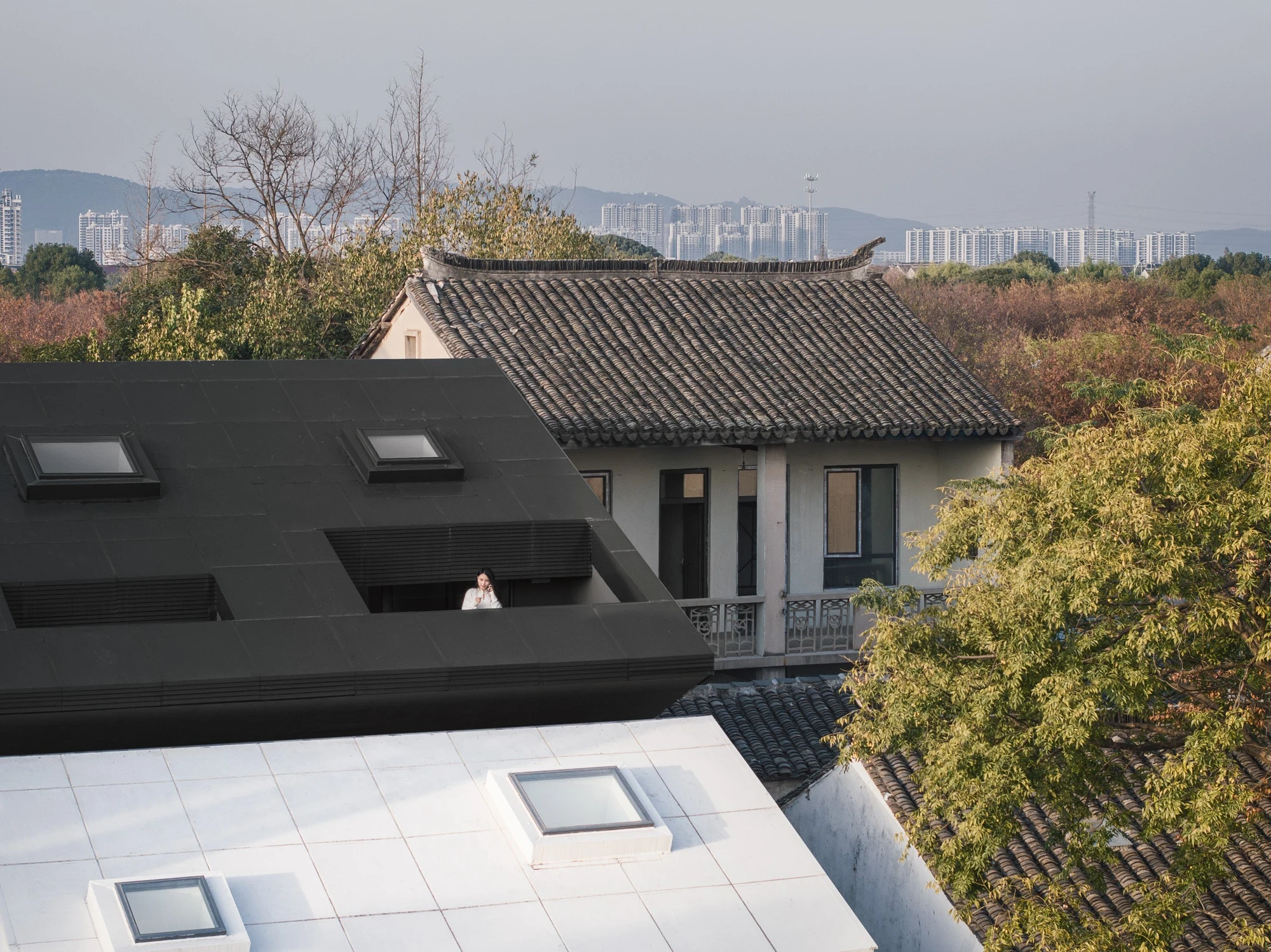
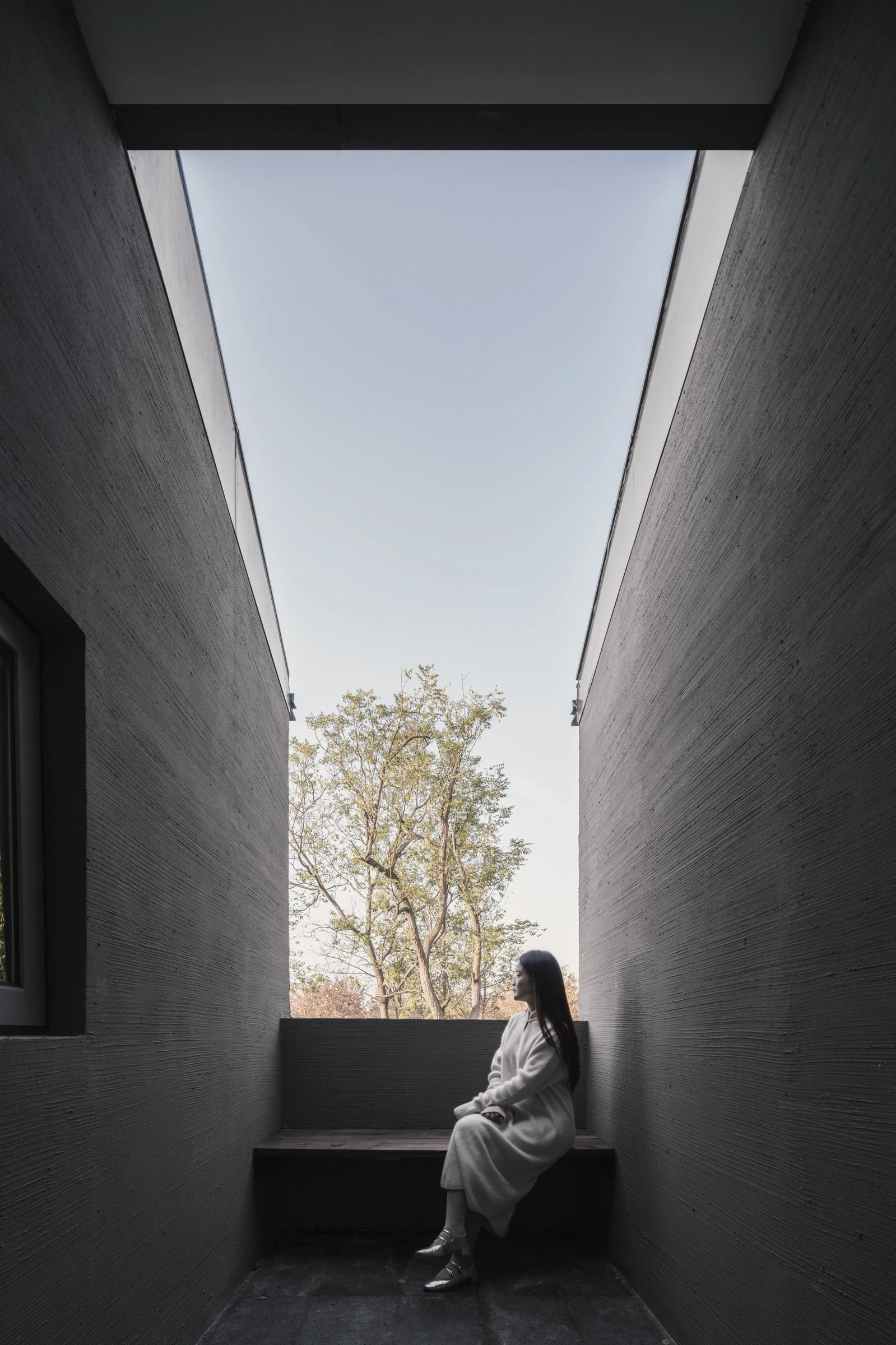
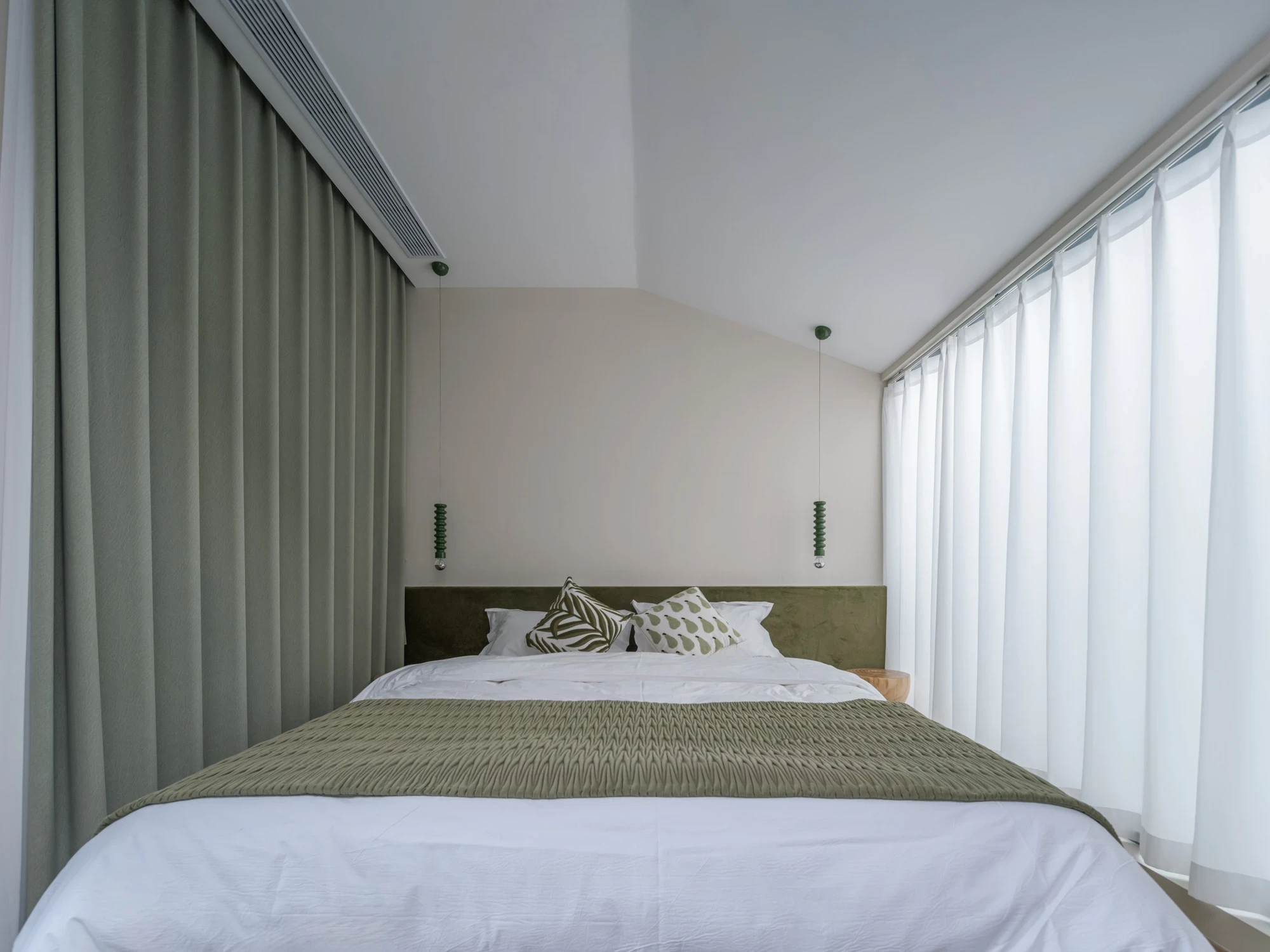
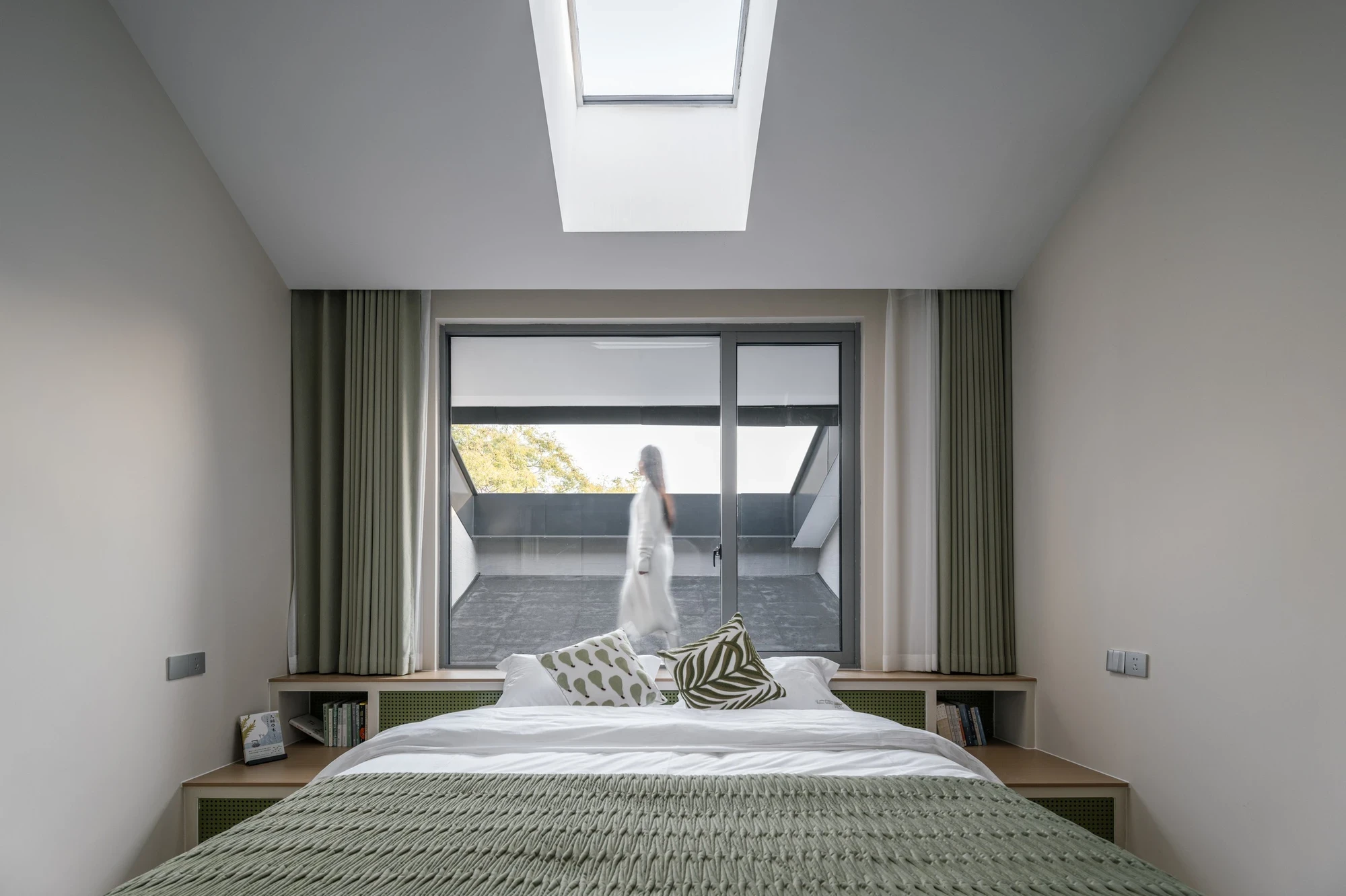
Rattan-backed chairs and pale timber tables gather beneath the shelves, and the salon at the north end slides open to the rear garden. The four guest rooms are the concealed half of the scheme, hidden above and reached by independent staircases tucked behind the bookshelves. Sage-green curtains, upholstered headboards and built-in shelving line the sleeping rooms; skylights open the pitched ceilings, and the roof volume gives way to small outdoor rooms, cantilevered slabs forming sloped terraces on the south, a recessed balcony carved into the black on the north.
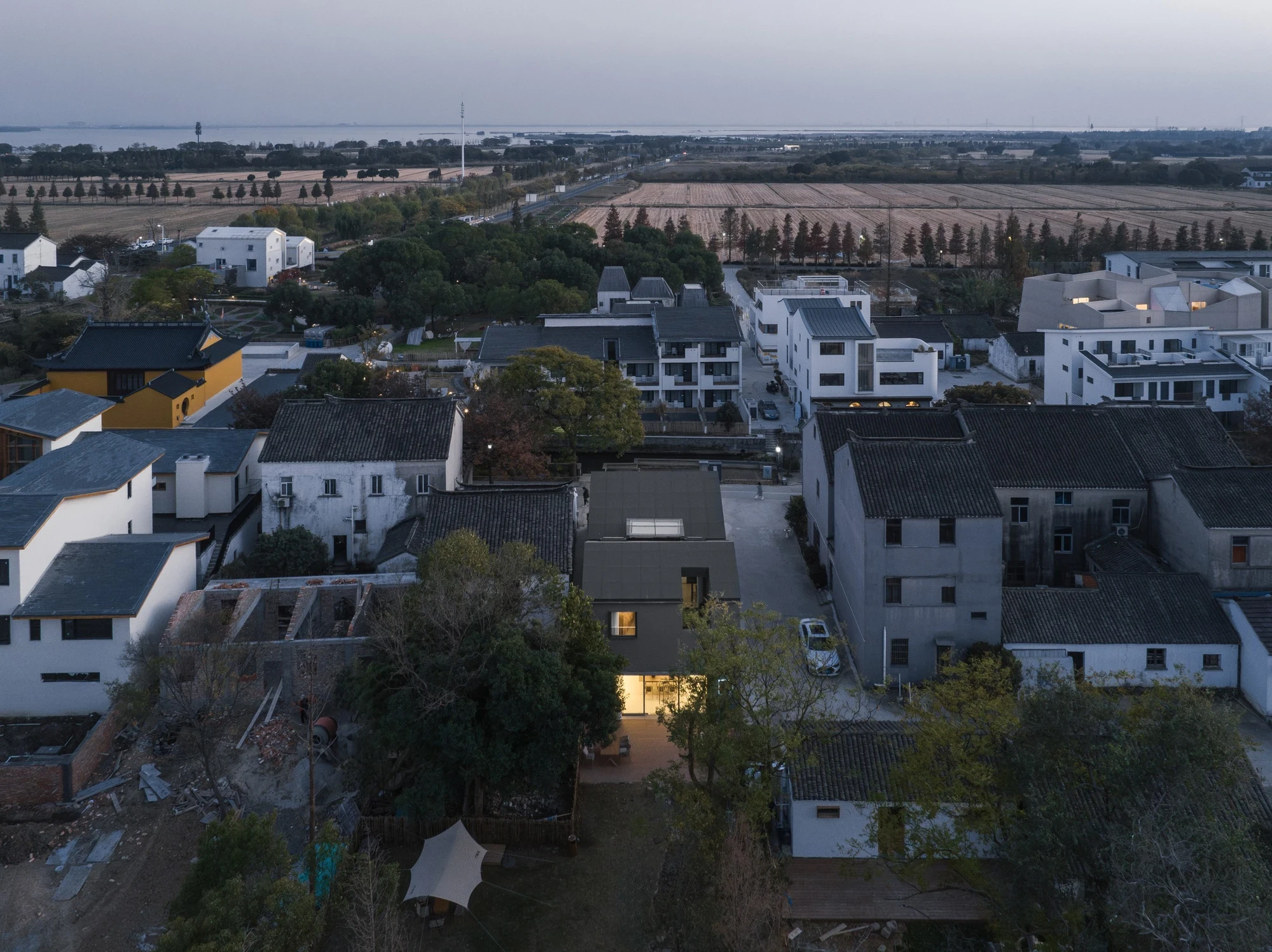
From above, Heart Fields stays legible among the grey tiled roofs of the village. The black-and-white composition stands apart, yet the gabled profiles keep talking to the roofscape around them. By day it is a sequence of shared rooms for reading, coffee and conversation. By night the same floor becomes an interior landscape for the guests upstairs, a bookstore that has quietly learned to keep people overnight.