Thisispaper Community
Join today.
Enter your email address to receive the latest news on emerging art, design, lifestyle and tech from Thisispaper, delivered straight to your inbox.
Oops! Something went wrong while submitting the form.
Instant access to new channels
The top stories curated daily
Weekly roundups of what's important
Original features and deep dives
Exclusive community features
Berlin Guide
under the patronage of
Half-Life of Grace by Jeremy Shaw at Galerie Neu
Alexander Zaxarov
Oct 2, 2026

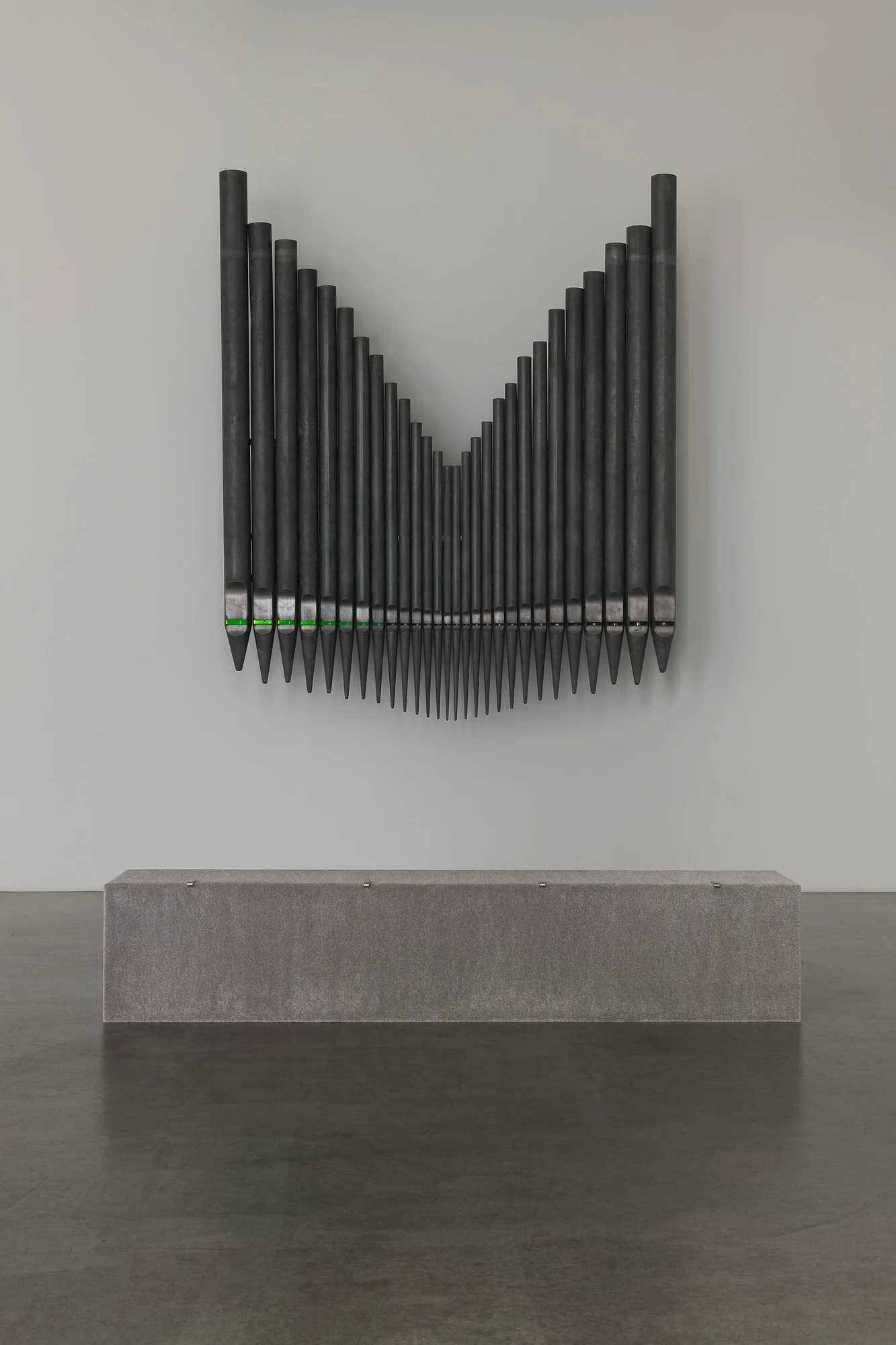
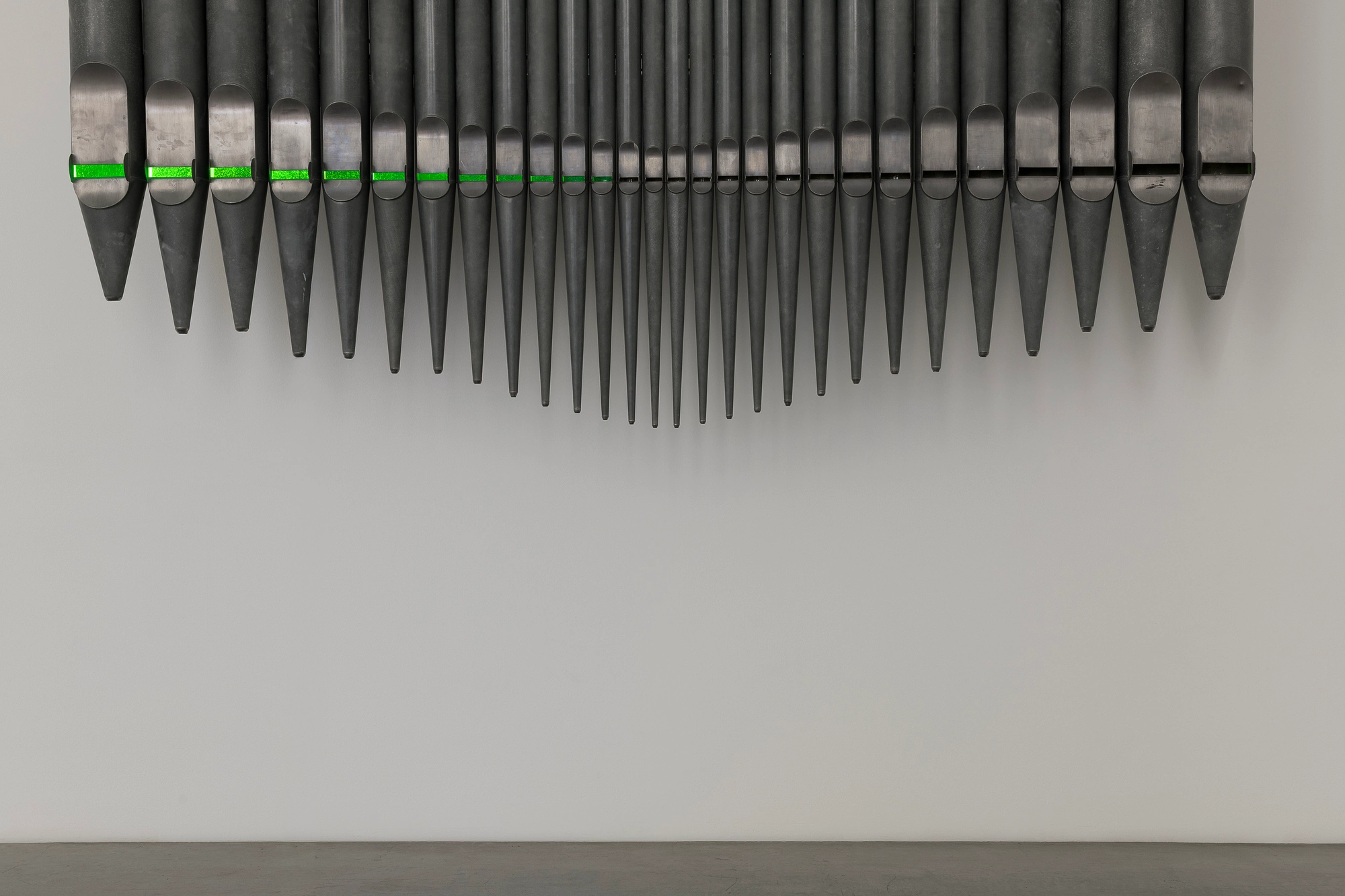
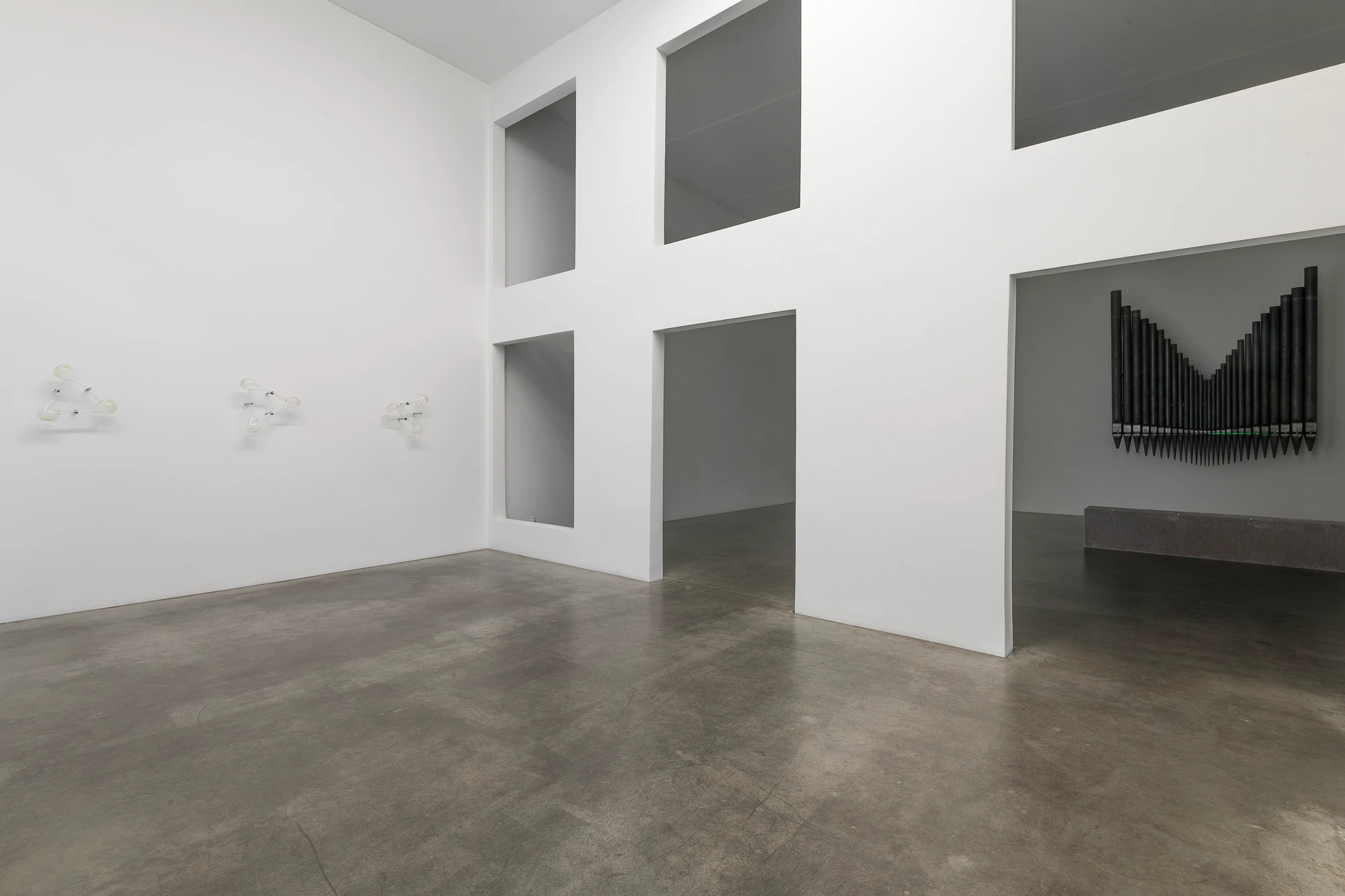
Twenty-eight pipes salvaged from a decommissioned church organ glow neon green from within at Galerie Neu in Berlin, where Jeremy Shaw's Half-Life of Grace wires radioactive glass to sound.

Jeremy Shaw works across many mediums to explore altered states, and the cultural and scientific practices that try to chart transcendental experience. Half-Life of Grace, his first solo exhibition with Galerie Neu, extends those sculptural investigations into belief with a new body of work that pulls together scientific propositions, decommissioned spiritual artefacts and materials with toxic properties. It is on view until 7 November 2026, and spreads across two rooms.

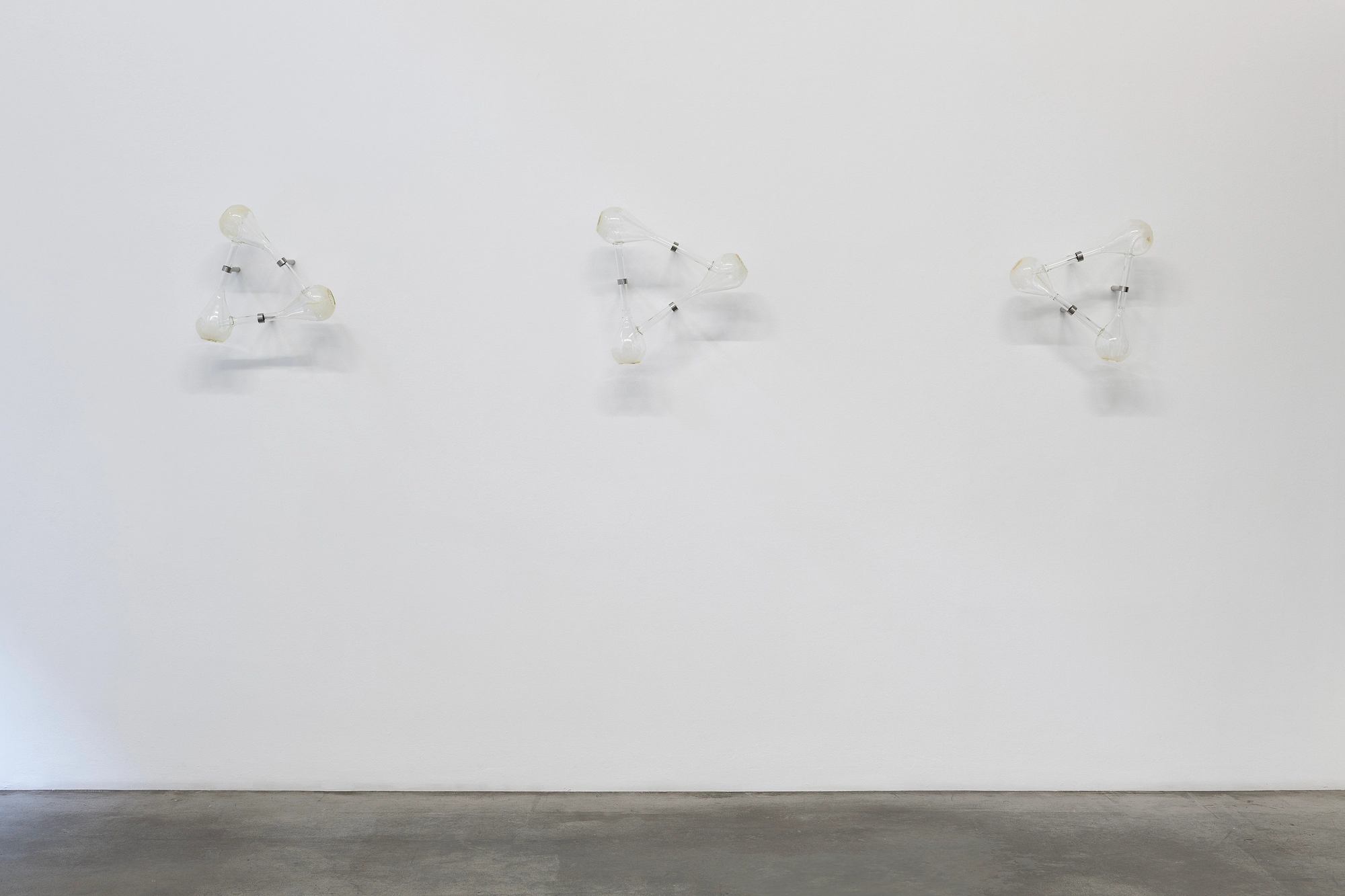
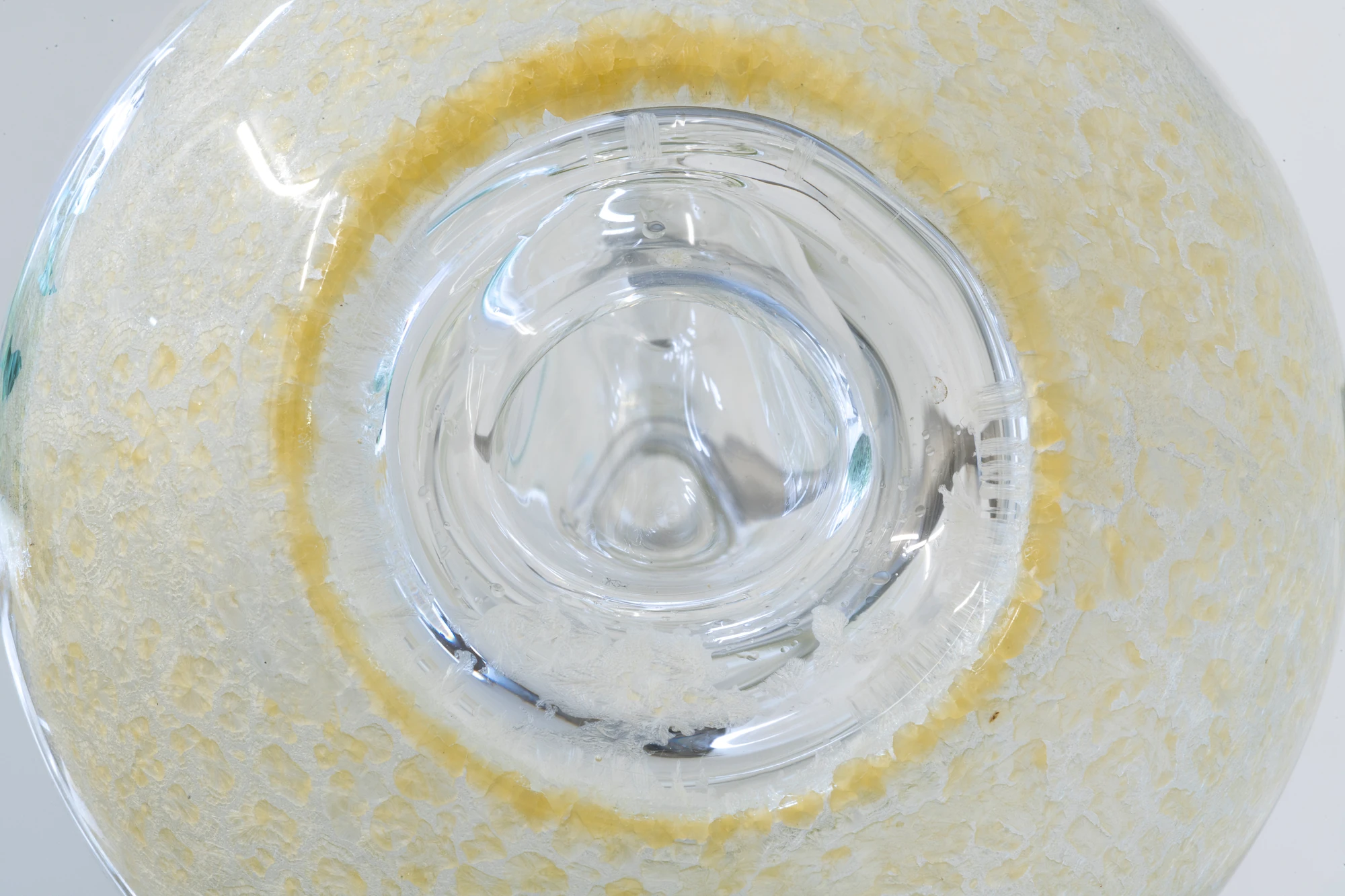
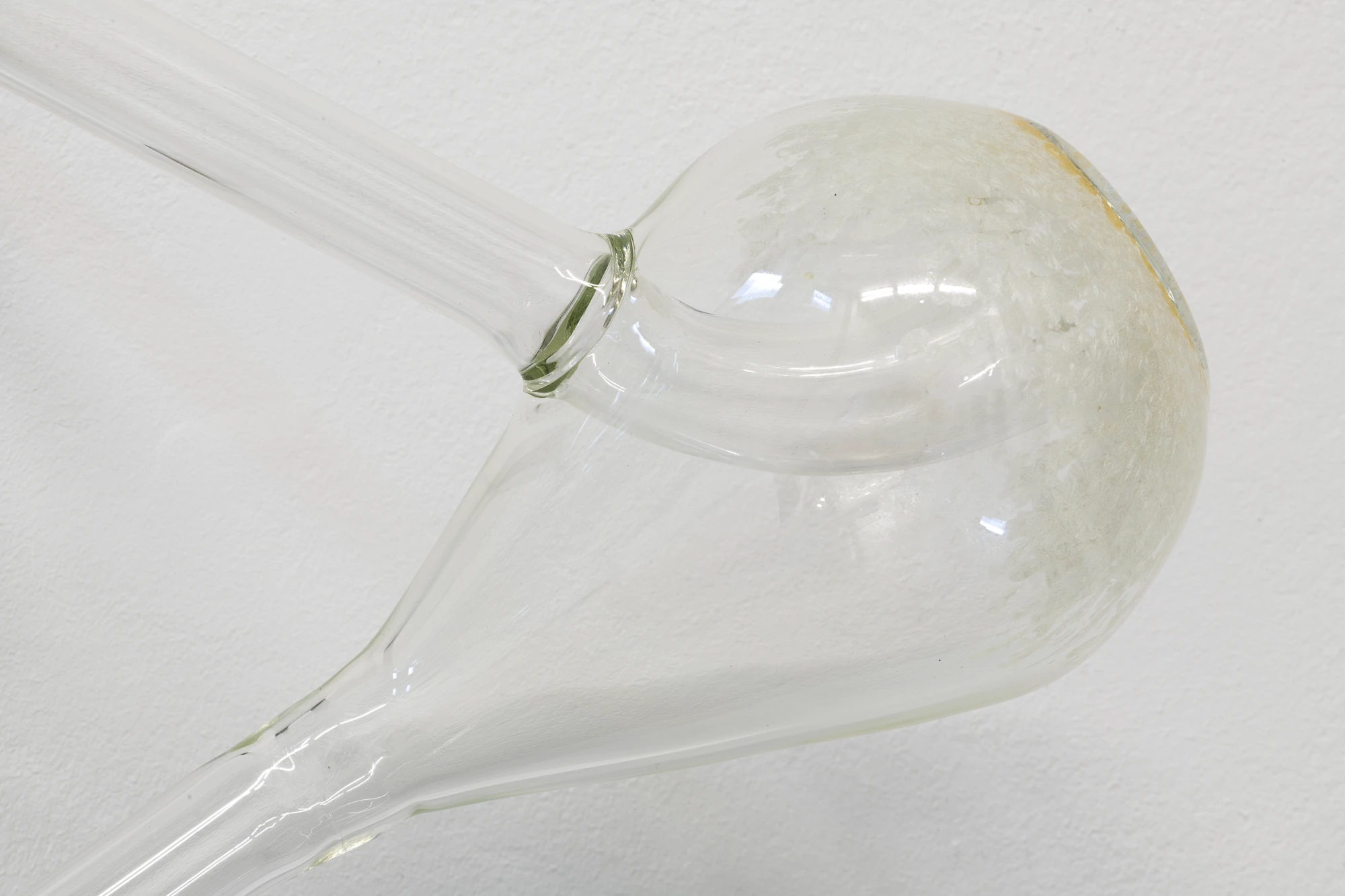
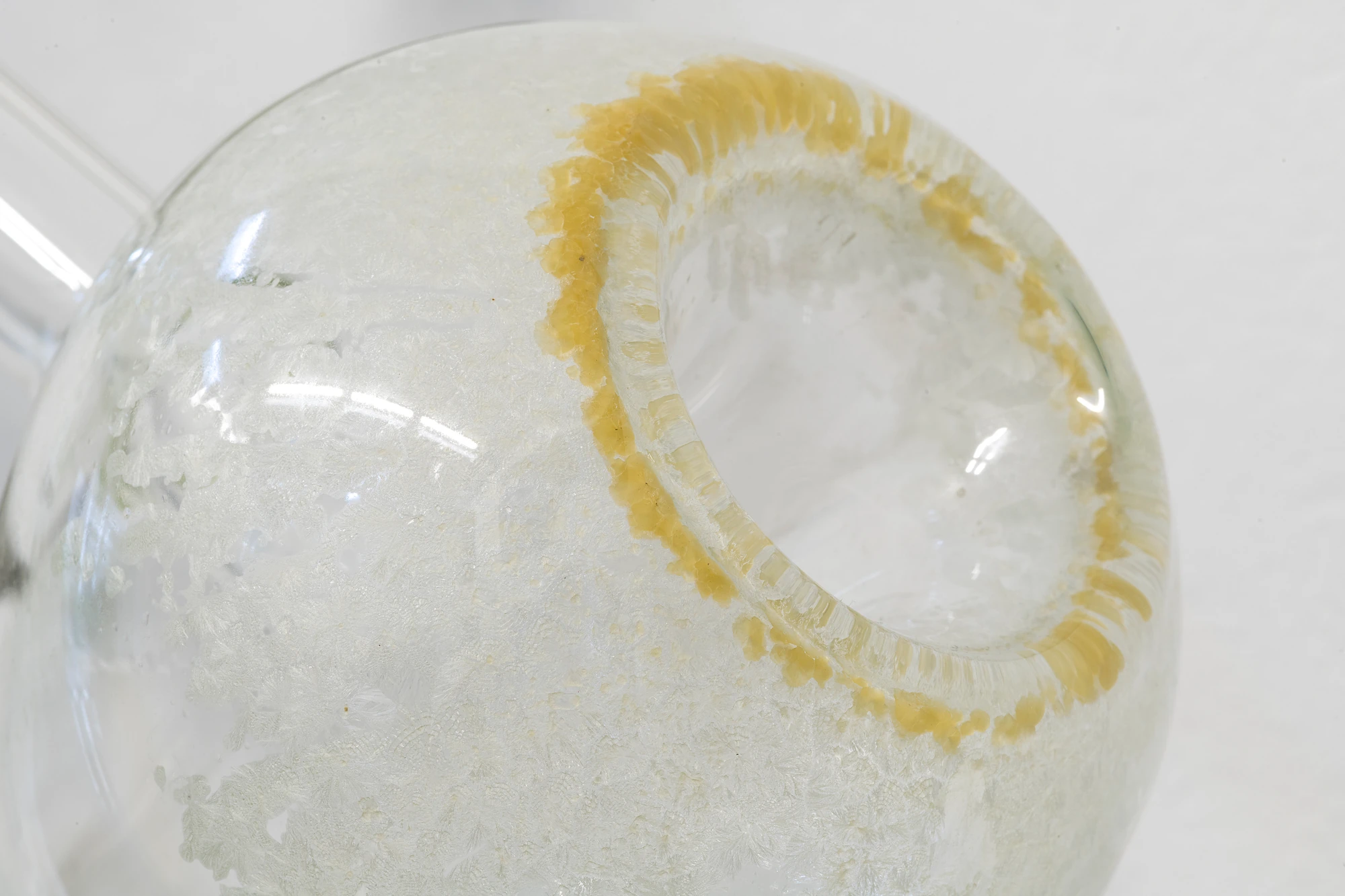
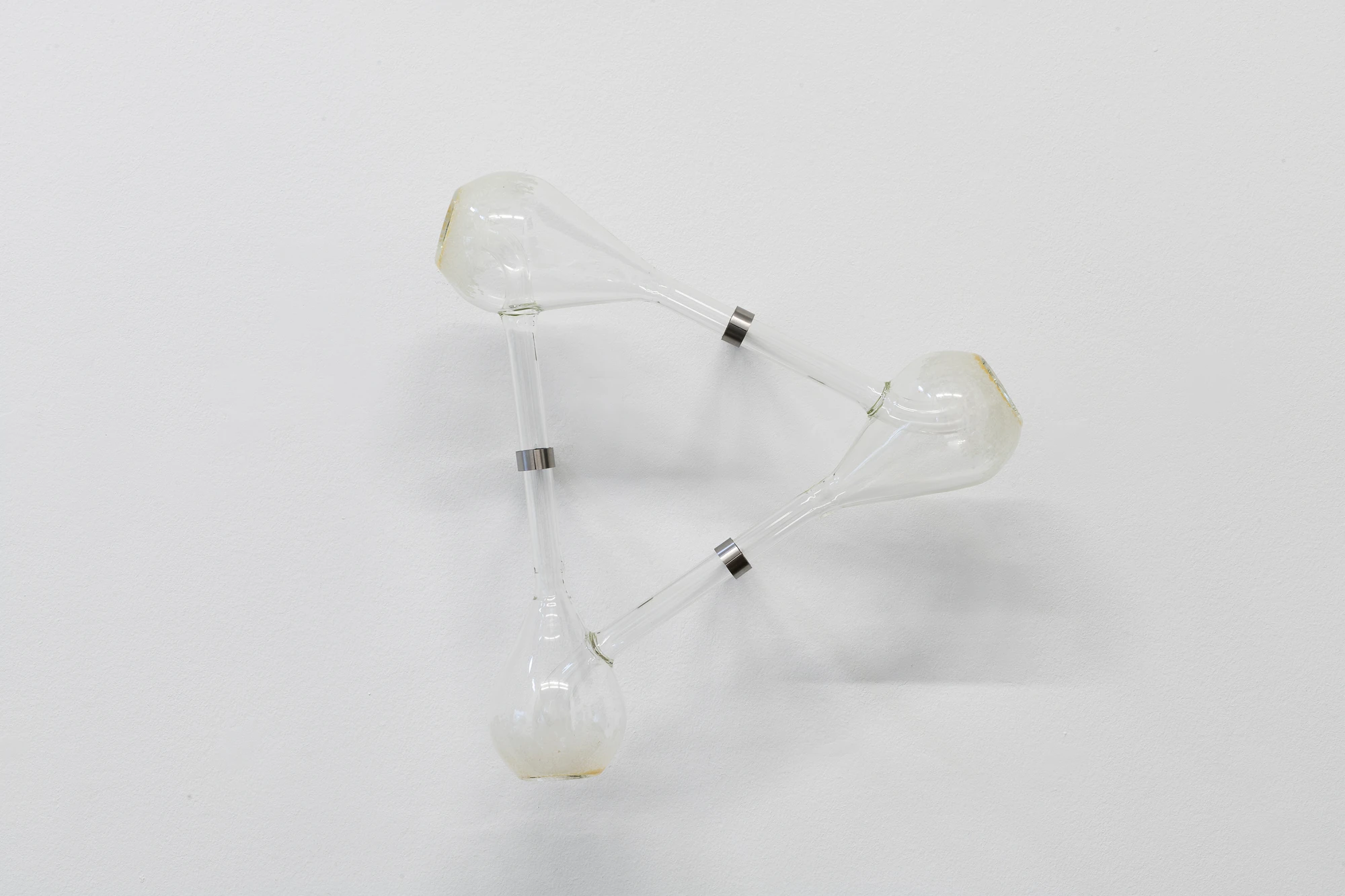
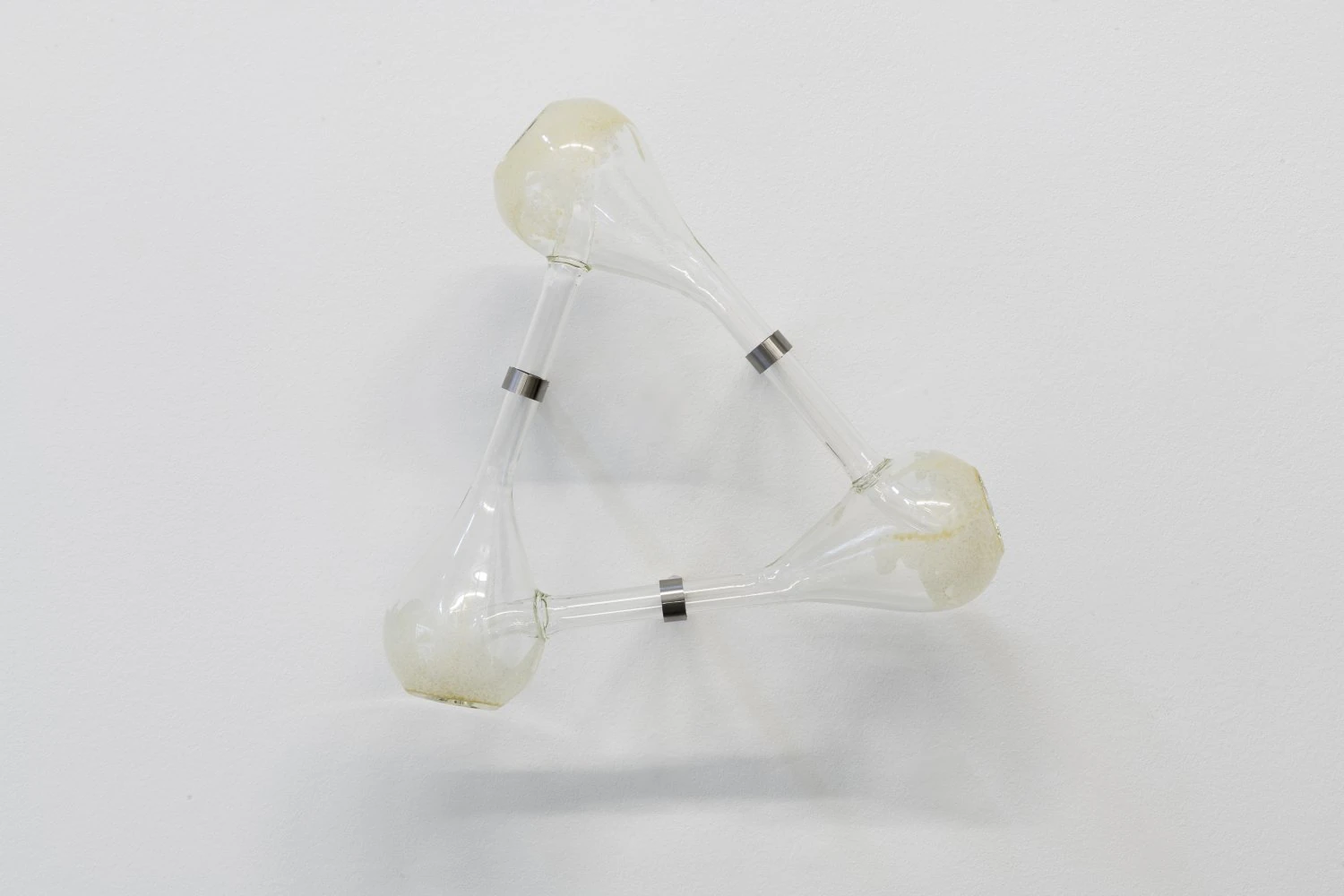
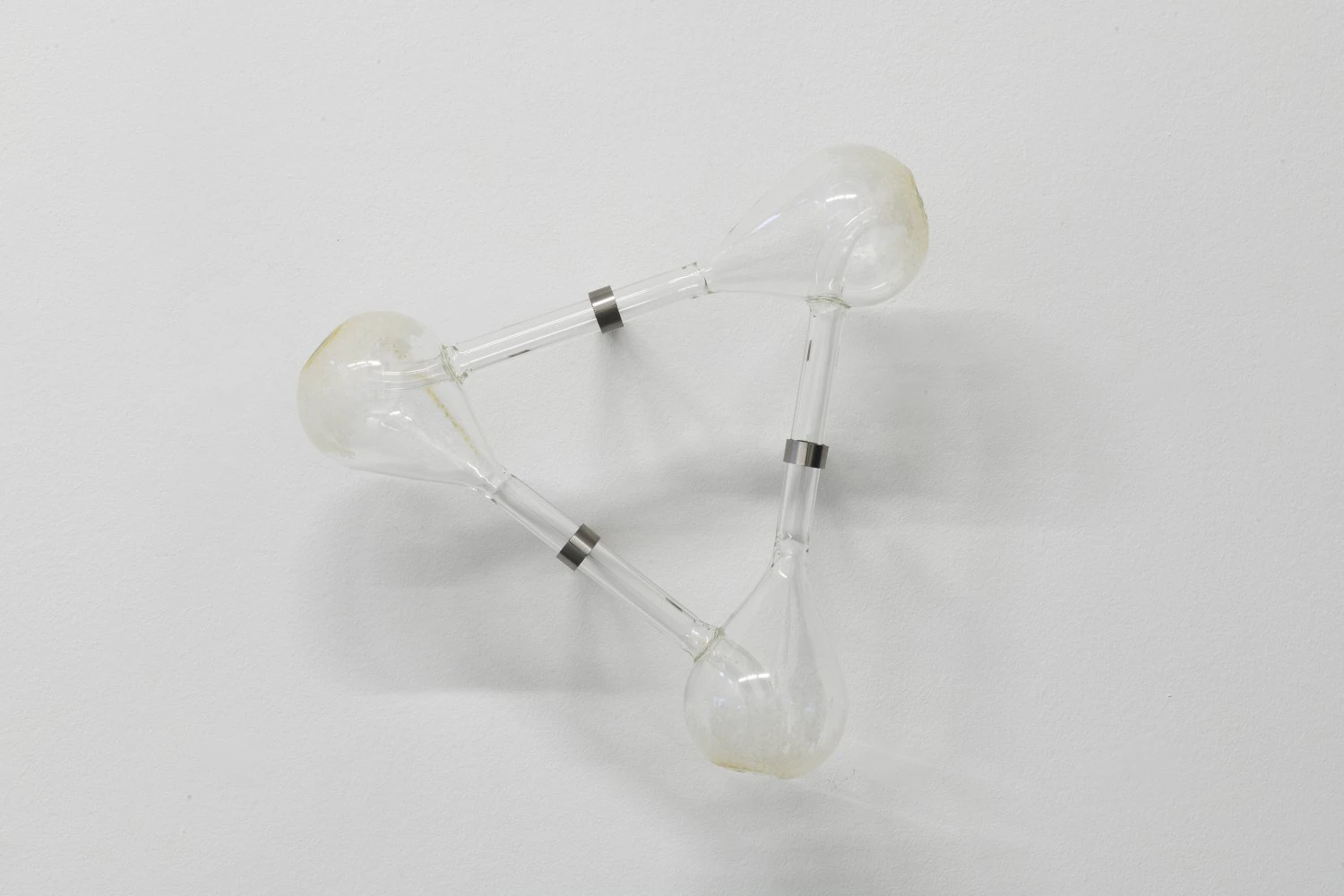
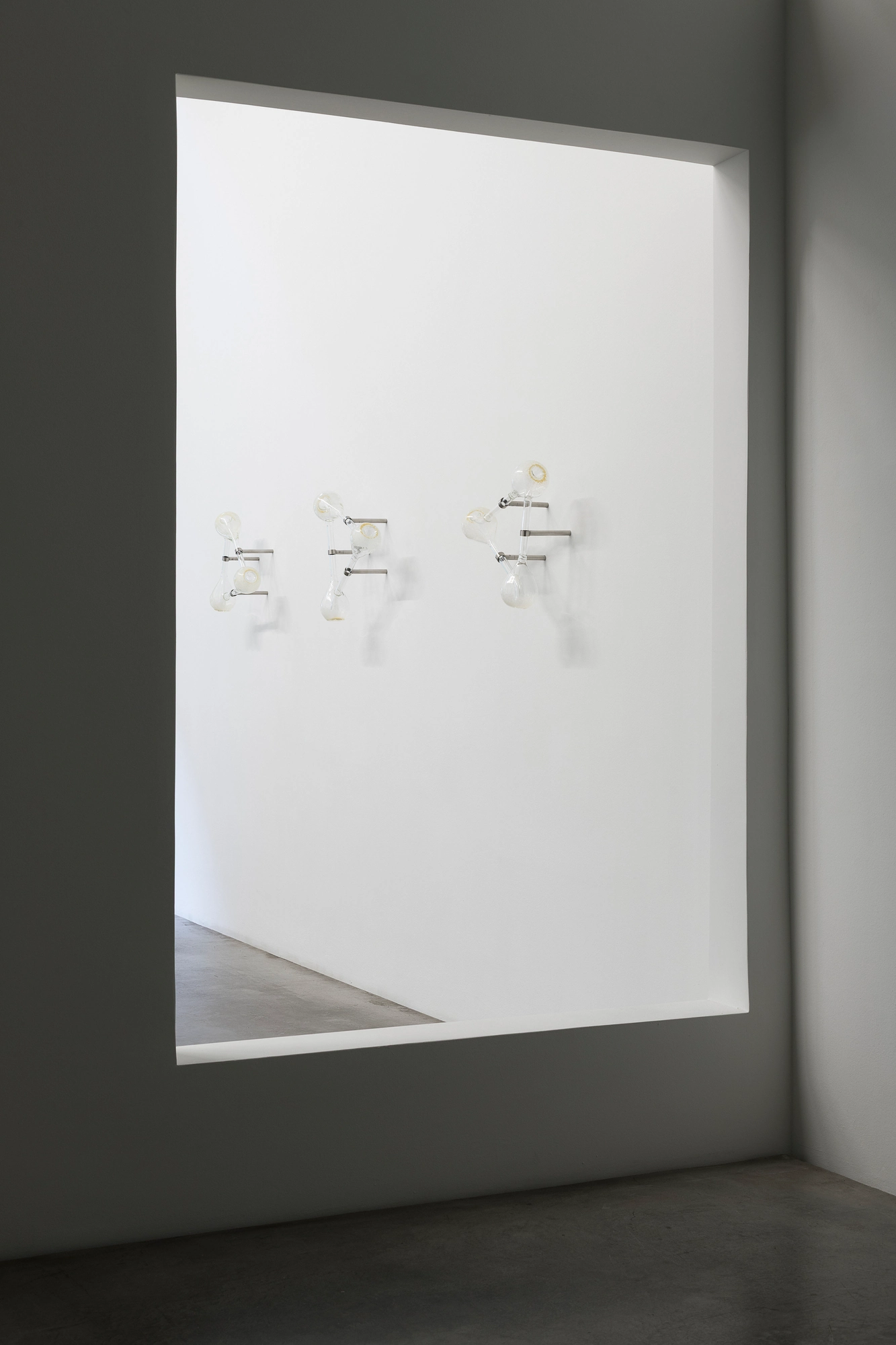
The first room holds three wall-mounted sculptures strung together from interconnected Klein bottles. The Klein bottle is a four-dimensional idea forced into three, the model of a single-sided surface that, as the gallery writes, “folds in on itself without end.” The sculptures are flame-worked from borosilicate glass. Inside the chamber of each one sits the residue of vaporized freebase dimethyltryptamine (DMT), a psychoactive compound that can trigger intense psychedelic experiences.

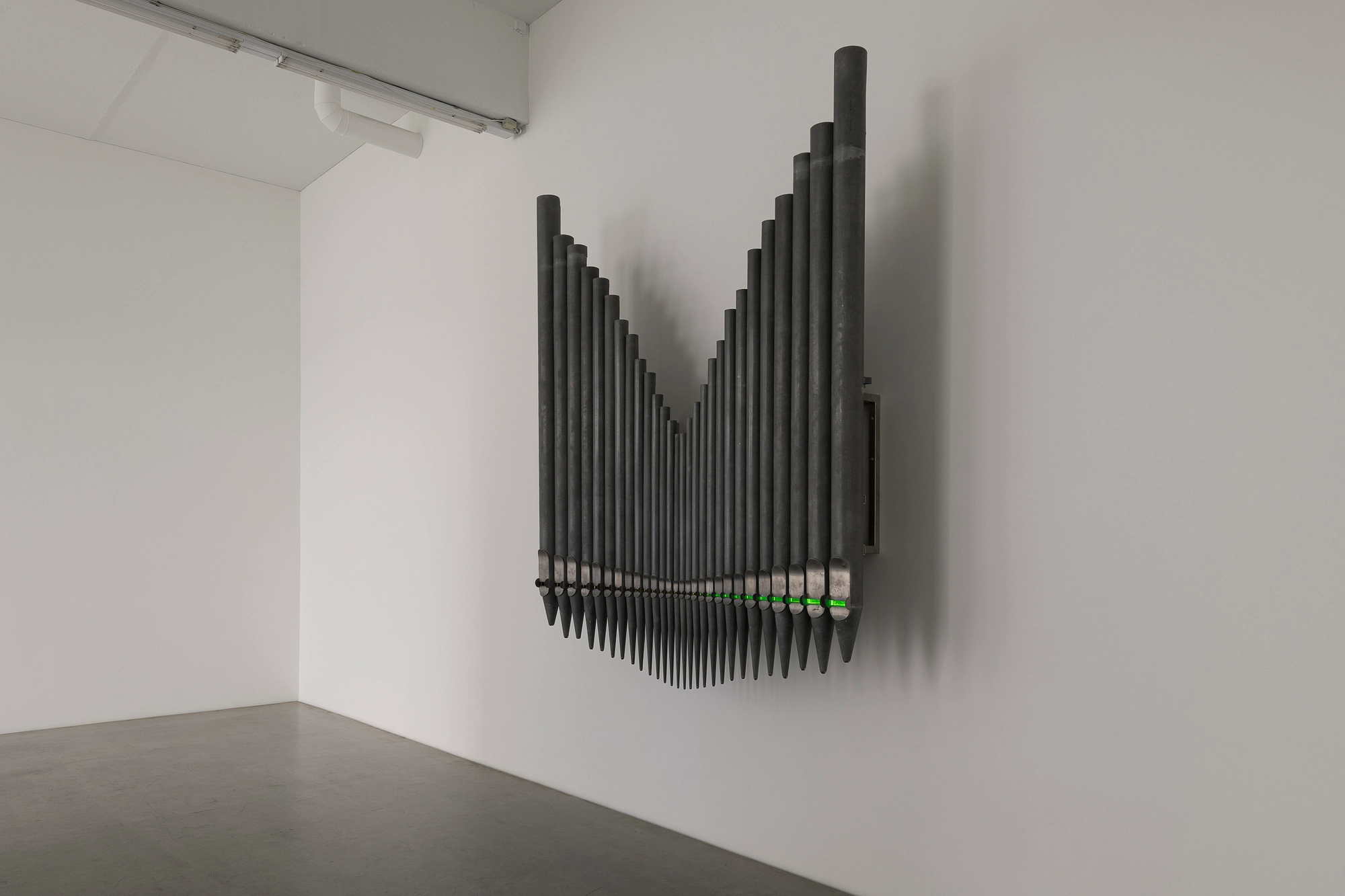
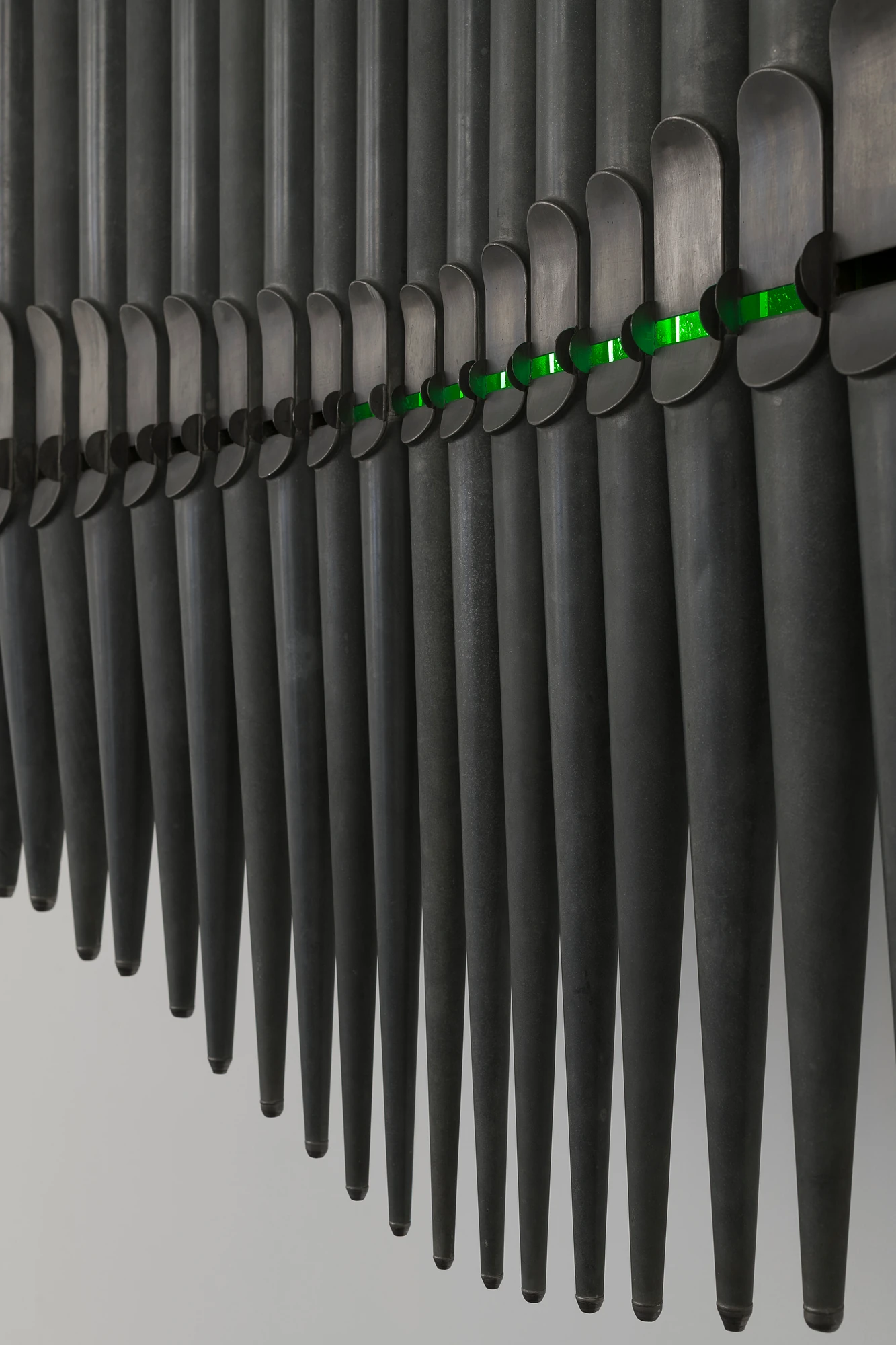
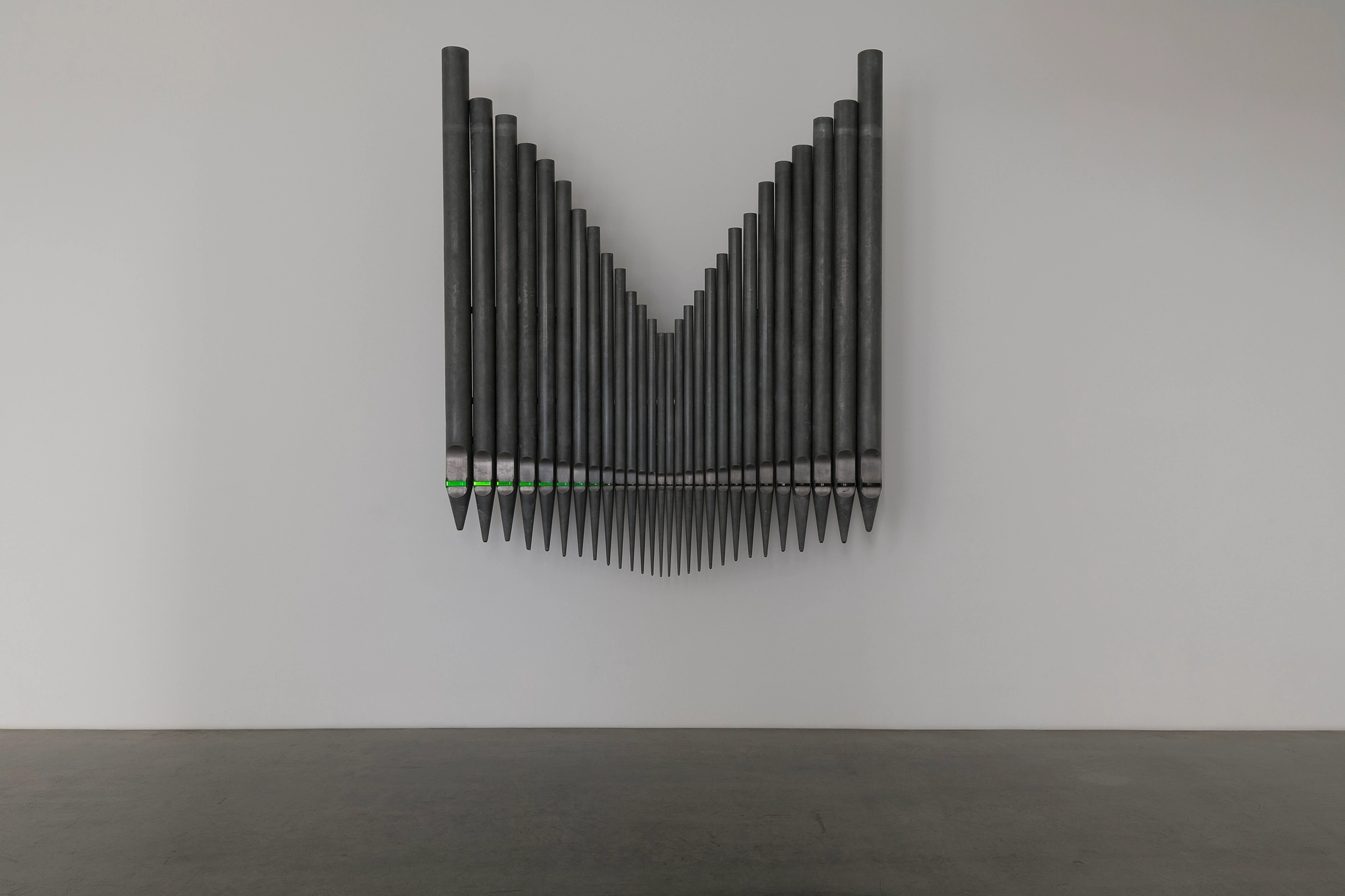
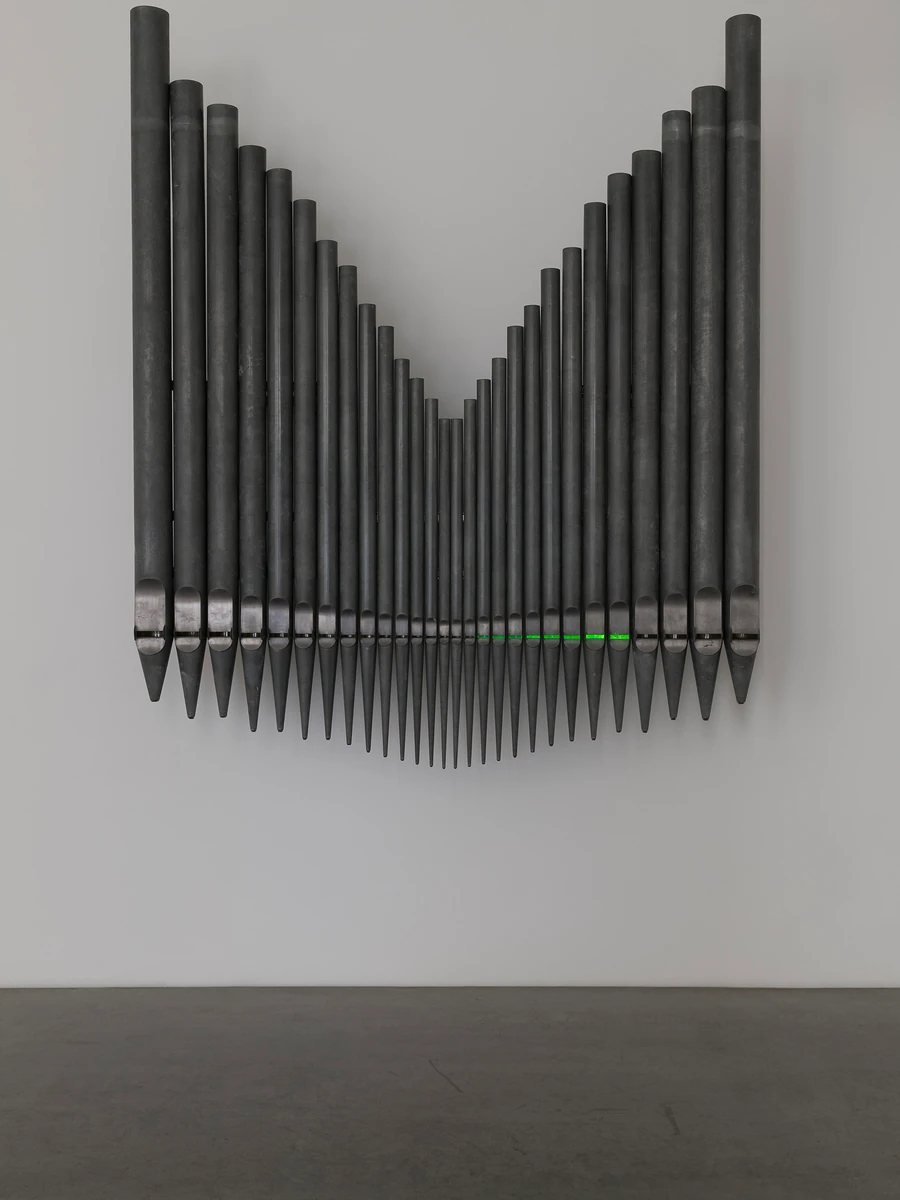
The second room gives over to a single wall sculpture that carries the show's name, Half-Life of Grace (1958). It is built from 28 facade pipes taken from a recently decommissioned Christian church organ, made of a zinc-based metal alloy and marked, as the gallery writes, by “bends, dents, fingerprints, scratches, discolouration, engravings, repairs.” Each pipe holds a custom-fitted sleeve of hand-blown uranium glass, a radioactive material once common in decorative glassware before its production all but stopped after 1942.

Ultraviolet lights hidden inside the pipes run on programmed circuitry. Switched on, they make the uranium glass glow a neon green at the mouth of each pipe, while transducers set inside release sound timed to the light, what the gallery calls “an animated pattern of light and sound.” The title does the reasoning: a church organ pulled out of service, a decorative glass that is radioactive at its core, a psychoactive compound reduced to residue. Grace, given a half-life, measured out across all three.
Interested in Showcasing Your Work?
‍

If you would like to feature your works on Thisispaper, please visit our Submission page and sign up to Thisispaper+ to submit your work. Once your submission is approved, your work will be showcased to our global audience of 2 million art, architecture, and design professionals and enthusiasts.
No items found.
Less, with more behind it.
Explore guides. Search the archive. Walk the atlas.
Become a Thisispaper+ member today to unlock full access to our magazine, advanced tools, and support our work.
Get two months FREE
with annual subscription
Less, with more behind it.
Explore guides. Search the archive. Walk the atlas.
Become a Thisispaper+ member today to unlock full access to our magazine, advanced tools, and support our work.
Get two months FREE
with annual subscription
No items found.
Alexander Zaxarov
Oct 2, 2026

Twenty-eight pipes salvaged from a decommissioned church organ glow neon green from within at Galerie Neu in Berlin, where Jeremy Shaw's Half-Life of Grace wires radioactive glass to sound.

Jeremy Shaw works across many mediums to explore altered states, and the cultural and scientific practices that try to chart transcendental experience. Half-Life of Grace, his first solo exhibition with Galerie Neu, extends those sculptural investigations into belief with a new body of work that pulls together scientific propositions, decommissioned spiritual artefacts and materials with toxic properties. It is on view until 7 November 2026, and spreads across two rooms.

The first room holds three wall-mounted sculptures strung together from interconnected Klein bottles. The Klein bottle is a four-dimensional idea forced into three, the model of a single-sided surface that, as the gallery writes, “folds in on itself without end.” The sculptures are flame-worked from borosilicate glass. Inside the chamber of each one sits the residue of vaporized freebase dimethyltryptamine (DMT), a psychoactive compound that can trigger intense psychedelic experiences.

The second room gives over to a single wall sculpture that carries the show's name, Half-Life of Grace (1958). It is built from 28 facade pipes taken from a recently decommissioned Christian church organ, made of a zinc-based metal alloy and marked, as the gallery writes, by “bends, dents, fingerprints, scratches, discolouration, engravings, repairs.” Each pipe holds a custom-fitted sleeve of hand-blown uranium glass, a radioactive material once common in decorative glassware before its production all but stopped after 1942.

Ultraviolet lights hidden inside the pipes run on programmed circuitry. Switched on, they make the uranium glass glow a neon green at the mouth of each pipe, while transducers set inside release sound timed to the light, what the gallery calls “an animated pattern of light and sound.” The title does the reasoning: a church organ pulled out of service, a decorative glass that is radioactive at its core, a psychoactive compound reduced to residue. Grace, given a half-life, measured out across all three.
Interested in Showcasing Your Work?
‍

If you would like to feature your works on Thisispaper, please visit our Submission page and subscribe to Thisispaper+. Once your submission is approved, your work will be showcased to our global audience of 2 million art, architecture, and design professionals and enthusiasts.
Thisispaper+
Berlin Guide
60+ Projects
Web Access
Link to Maps
Architecture in Berlin — industrial conversions, Brutalist landmarks, minimalist apartments, and cultural institutions built in the spaces the 20th century left behind. A city where every building carries history and every renovation is an act of interpretation.
Gallery circuits, flagships, and kitchens. The current city, mapped before the next lease turns.
Explore
Berlin Guide

Join Thisispaper+
Unlock access to 2500 stories, curated guides + editions, and share your work with a global network of architects, artists and designers who are shaping the future.
Get two months FREE
with annual subscription
Travel Guides
Immerse yourself in timeless destinations, hidden gems, and creative spaces—curated by humans, not algorithms.
Explore All Guides +
Submission Module
Submit your project and gain the chance to showcase your work to our worldwide audience of over 2M architects, designers, artists, and curious minds.
Learn More+
Curated Editions
Dive deeper into carefully curated editions, designed to feed your curiosity and foster exploration.
Off-the-Grid
Jutaku
Sacral Journey
minimum
The New Chair
Explore All Editions +
Atlas
A new and interactive way to explore the most inspiring places around the world.
Interactive map
Linked to articles
450+ curated locations
Google + Apple directions
Smart filters
Subscribe to Explore+
Become a Thisispaper+ member today to unlock full access to our magazine, submit your project and support our work.
Join Thisispaper+Join Thisispaper+
€9/month
Get two months FREE
with annual subscription