Thisispaper Community
Join today.
Enter your email address to receive the latest news on emerging art, design, lifestyle and tech from Thisispaper, delivered straight to your inbox.
Oops! Something went wrong while submitting the form.
Instant access to new channels
The top stories curated daily
Weekly roundups of what's important
Original features and deep dives
Exclusive community features
Thisispaper+ Member

Bloom by Tomáš Absolon Milan Vagač at SPOT Gallery

Dates:
✧ Collect Post
No items found.
Bloom by Tomáš Absolon Milan Vagač at SPOT Gallery
Hitoshi Arato
Dec 16, 2025

Tomáš Absolon and Milan Vagač transform SPOT Gallery in Prague into a hybrid ecosystem where colour, structure and digital sensibility merge into ever-evolving painterly organisms.

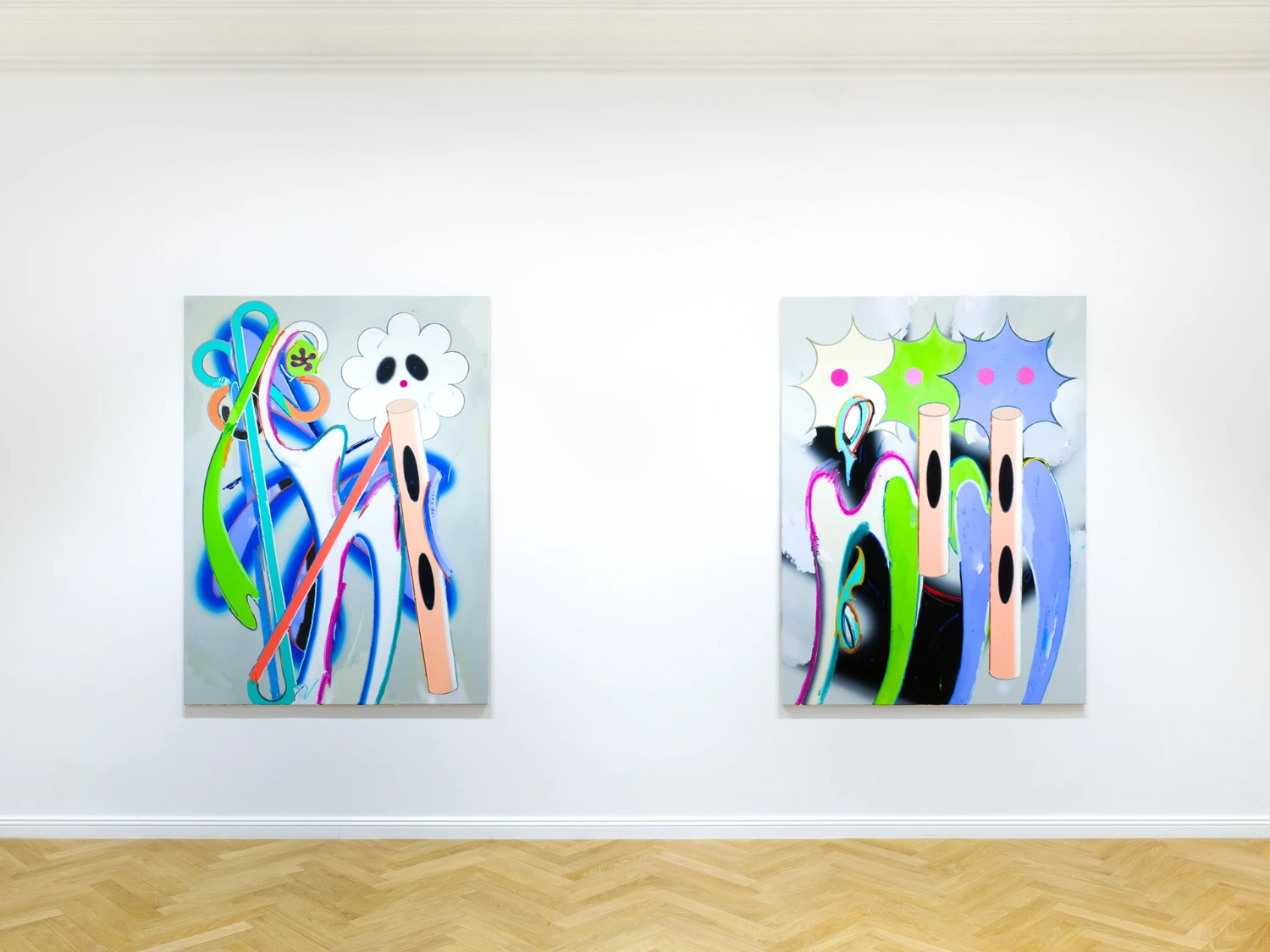
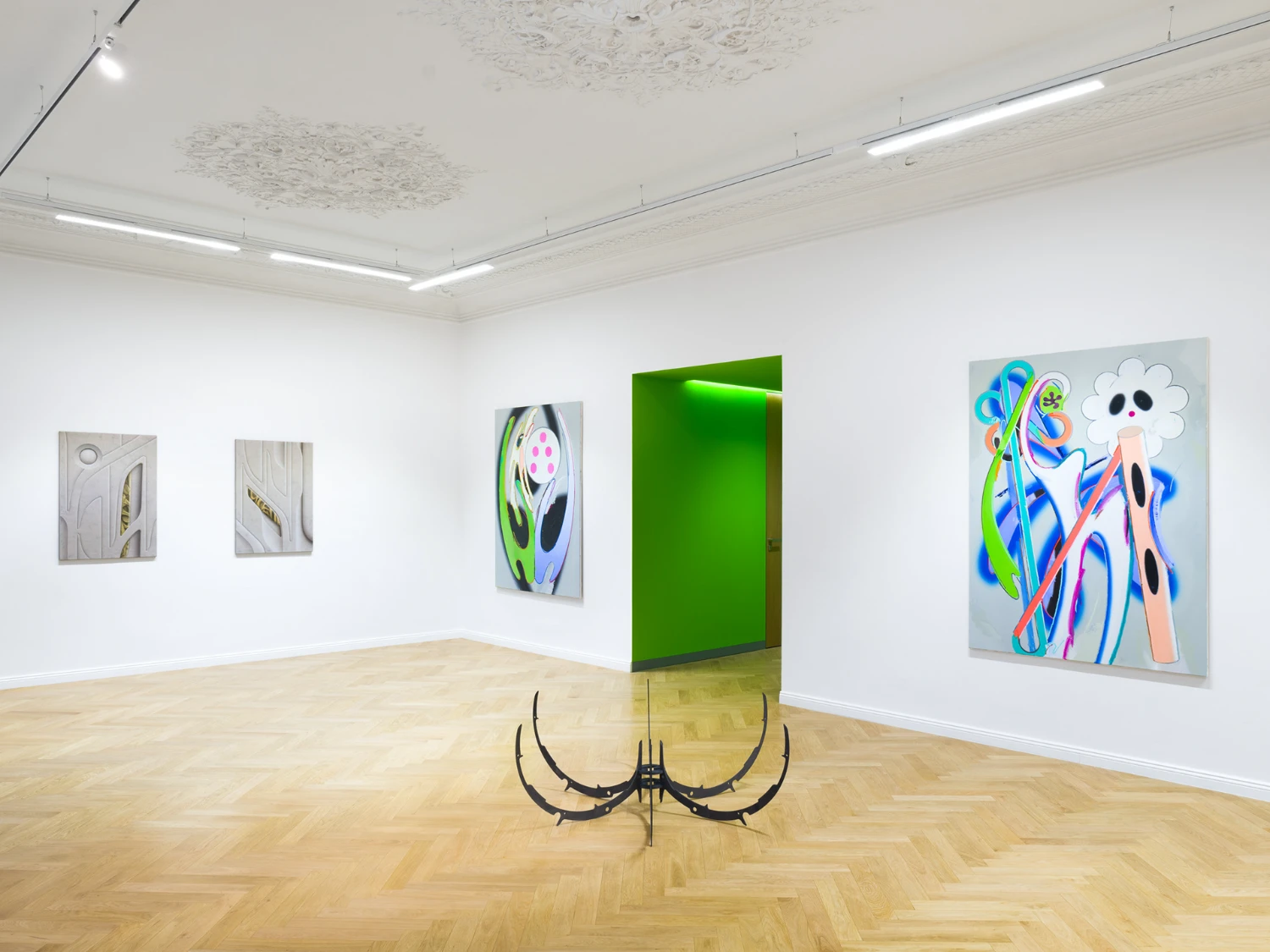
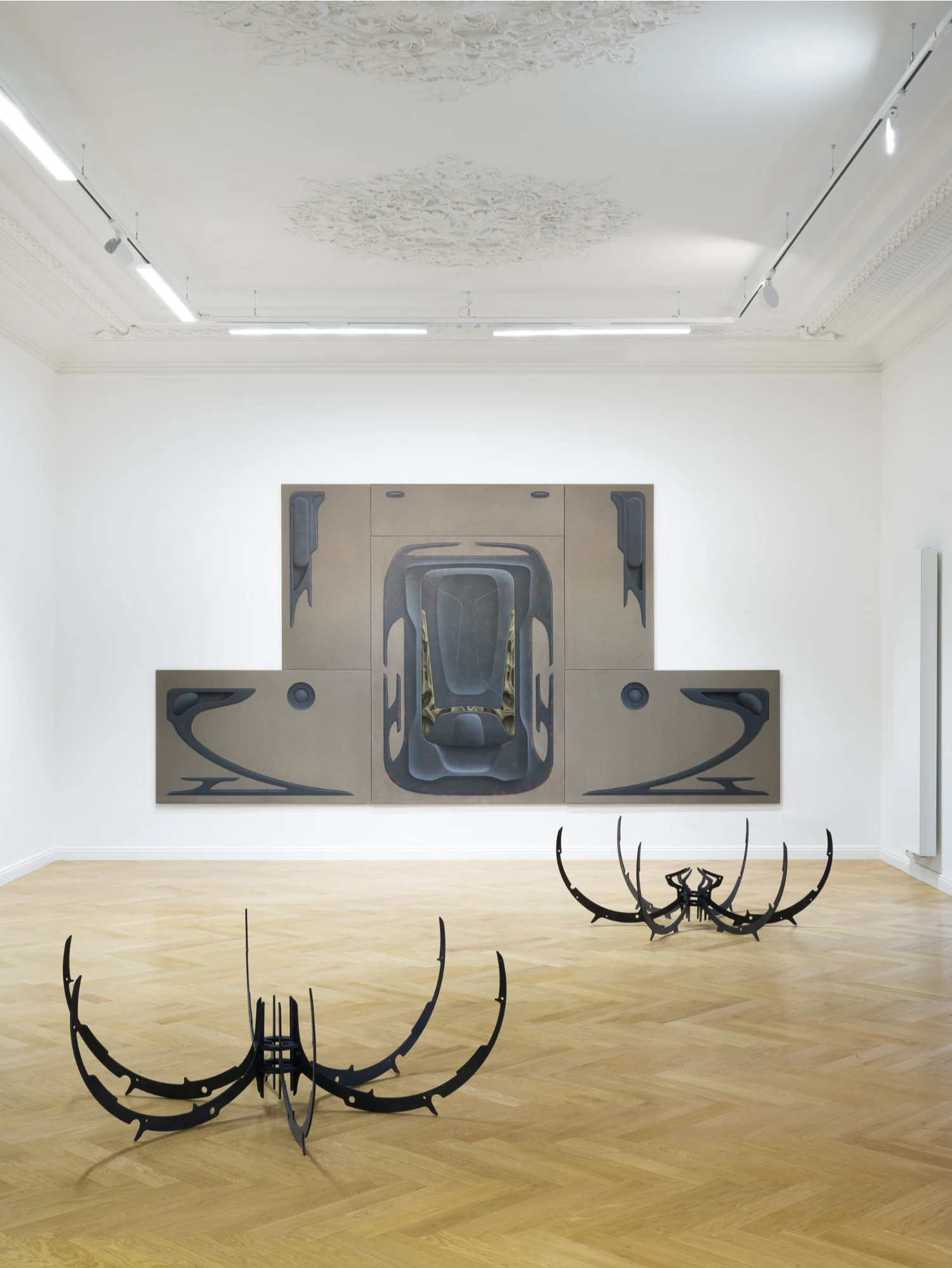
The exhibition curated by Michal Stolárik unfolds like a controlled fever dream, where painterly matter behaves as if it had absorbed the rhythms of a digital organism. Absolon’s chromatic exuberance swirls in vectors that feel half-engineered, half-feral, while Vagač’s relief-like structures anchor the space with a slower, tectonic pulse. Installed together, their works propose a hybrid ecosystem in which the organic and the synthetic are not opposites but co-conspirators. One almost senses a greenhouse for images—yet its photosynthesis runs on algorithms, muscle memory and sonic vibration rather than biological necessity.

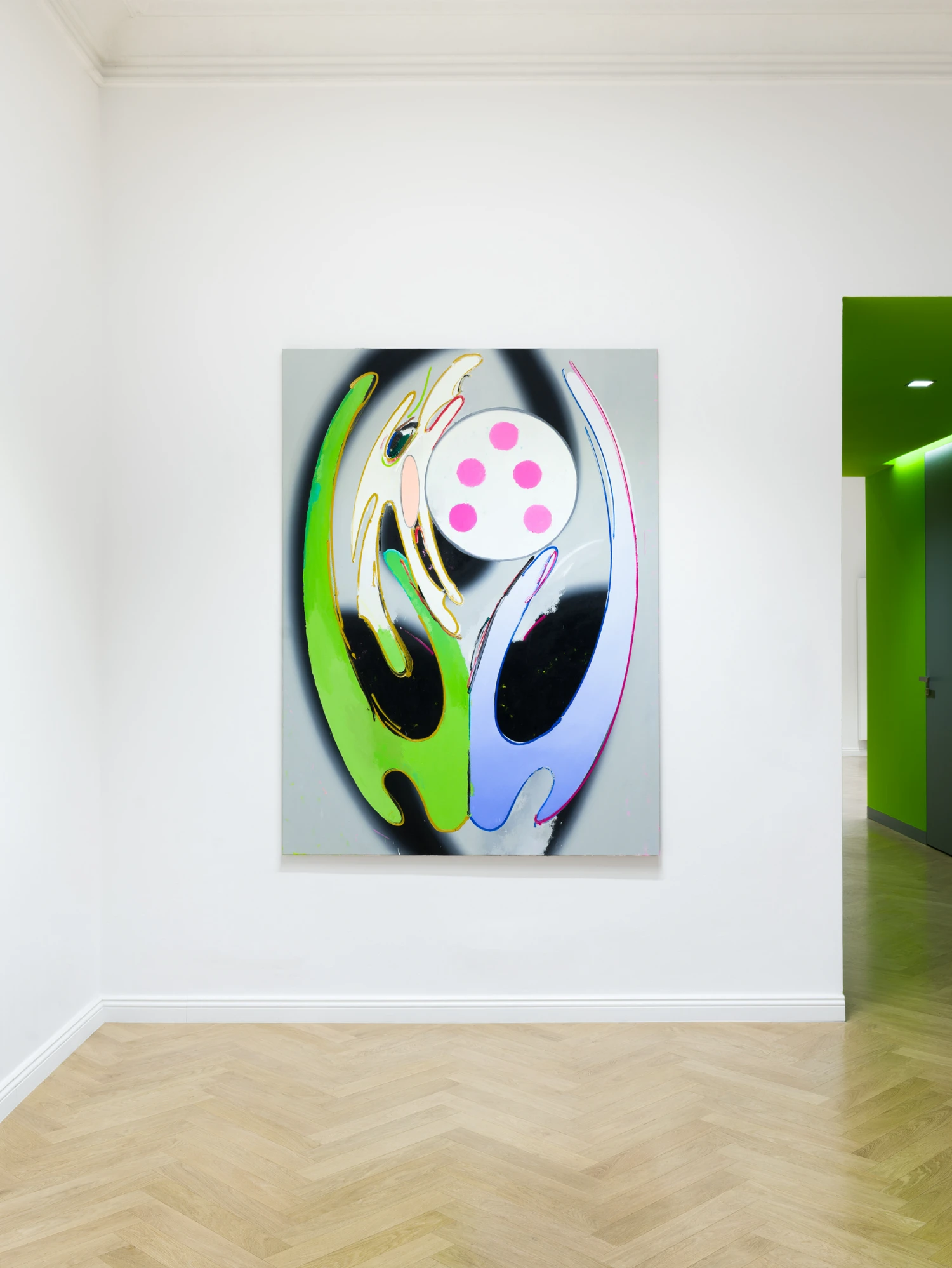
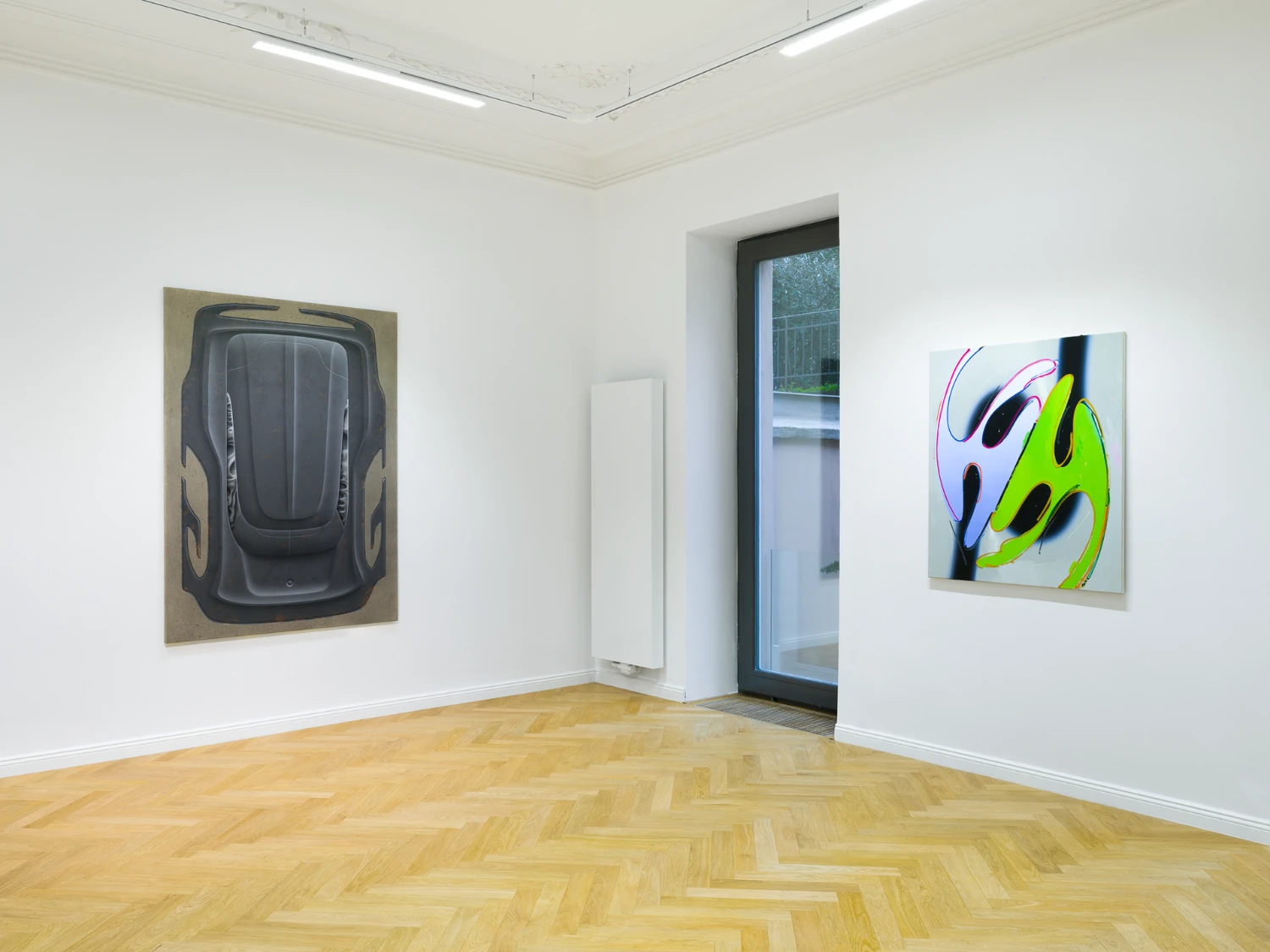
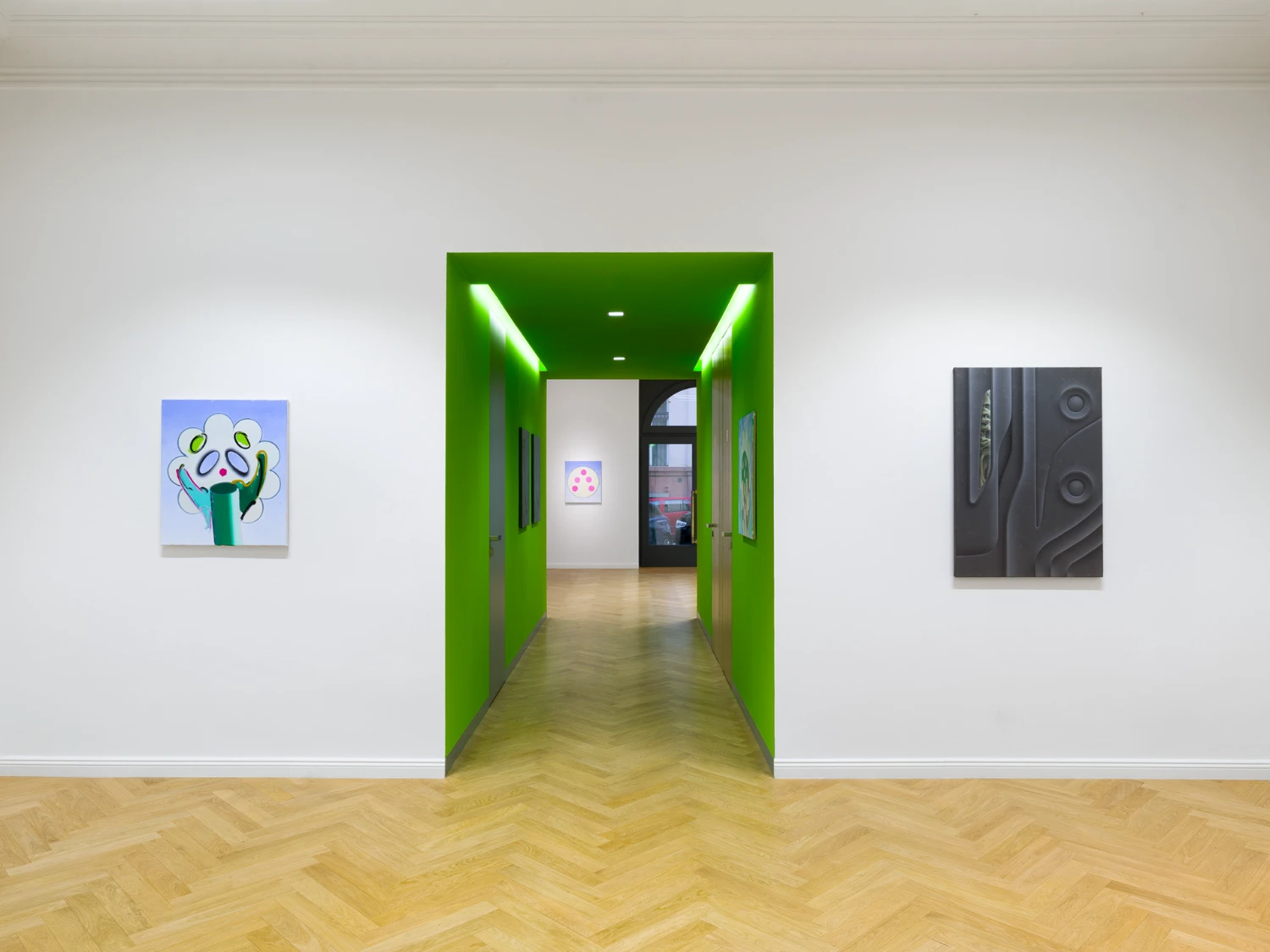
Absolon’s canvases read like mutant diagrams of emotion and movement. Their candy-coloured elongations slip between figuration and signage, never quite stabilising. The motifs—tubular limbs, pollen-like dots, tendrils that behave like animated glyphs—seem to bloom in real time, as if the surface were a screen registering continuous updates. Despite the digital undertones, the works are unmistakably painterly: airbrushed atmospheres collide with assertive strokes, generating a visual syntax that is playful but rarely naïve. The paintings behave like avatars caught mid-morph, their identities still buffering.

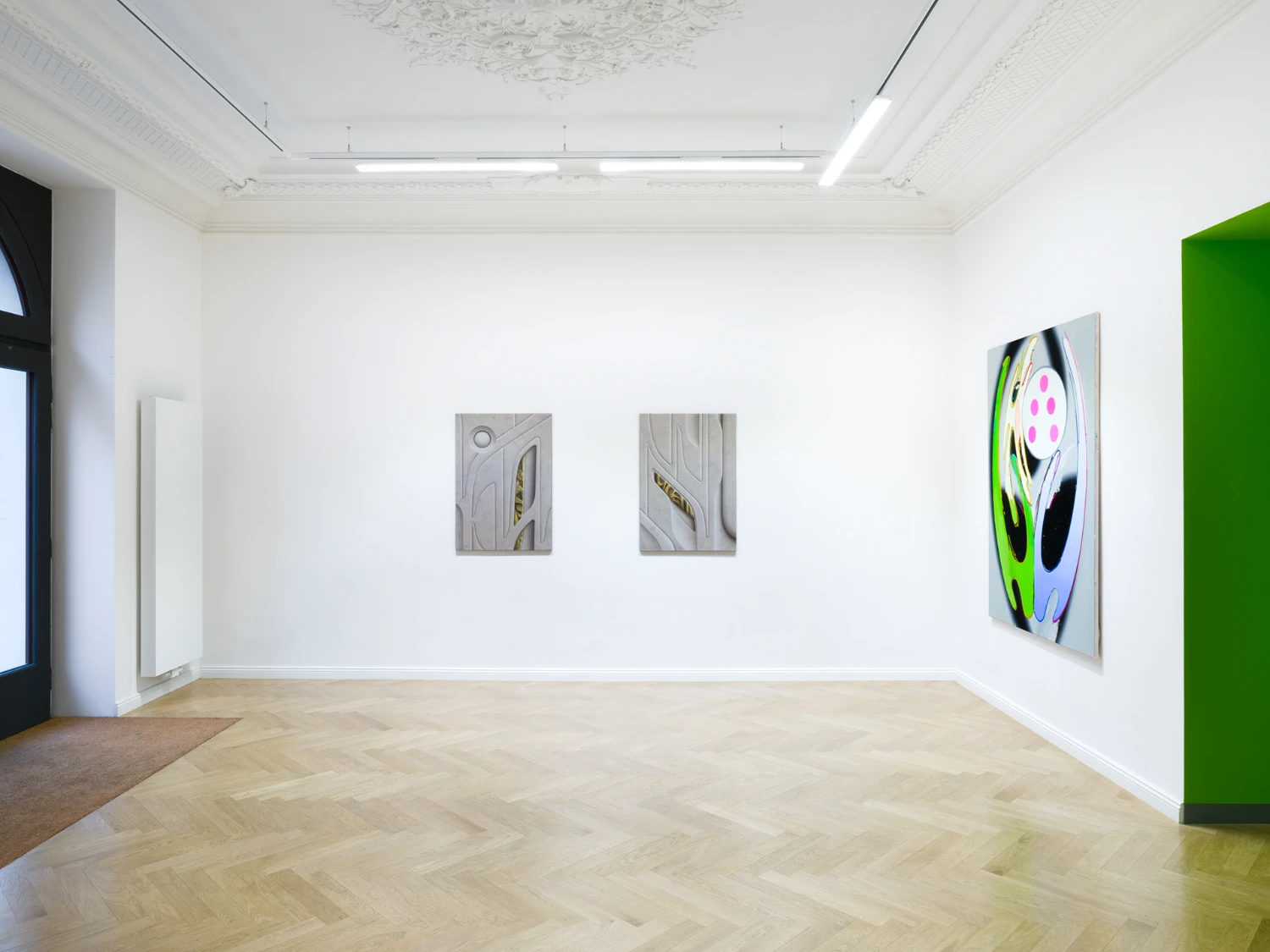
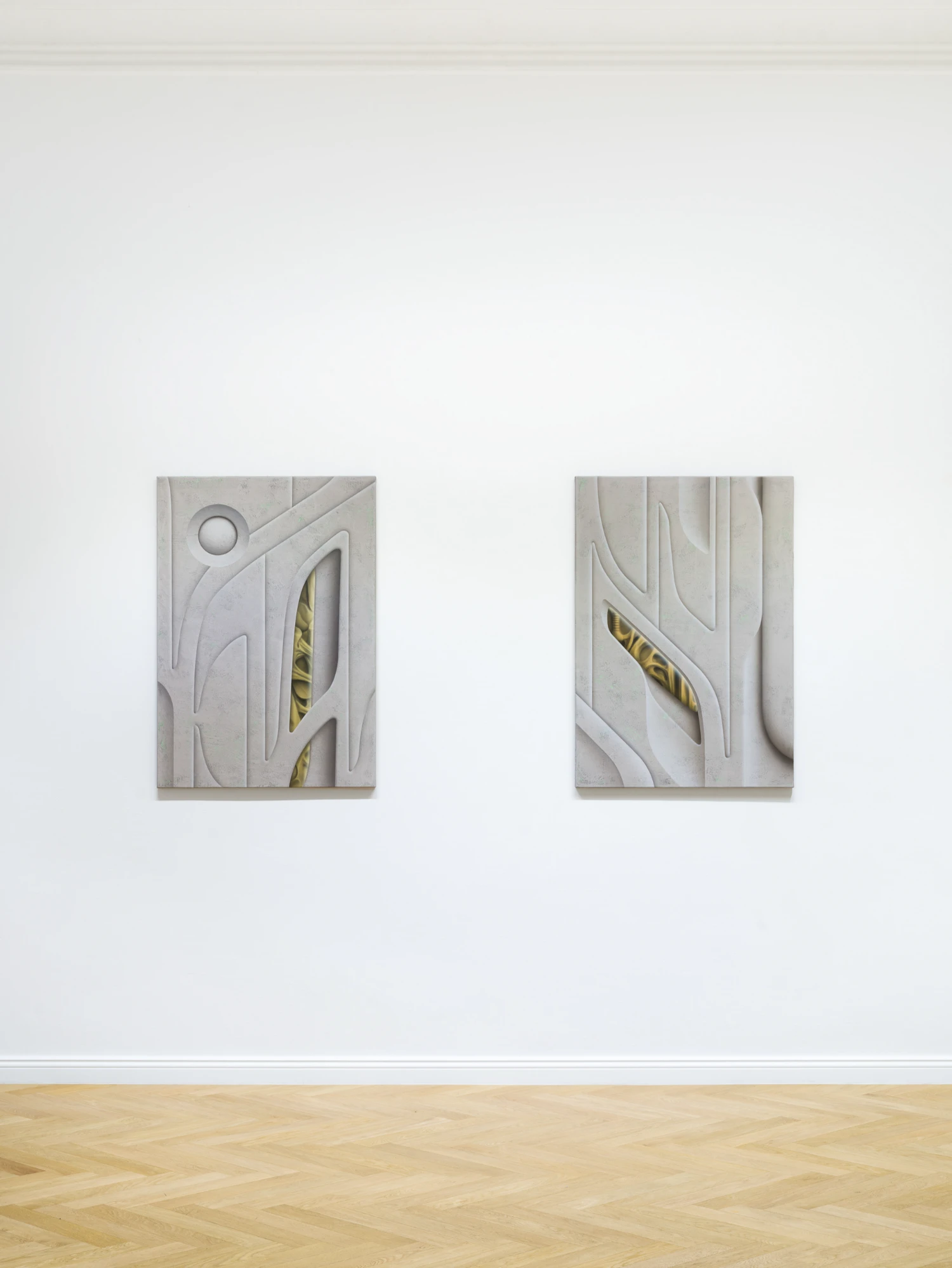
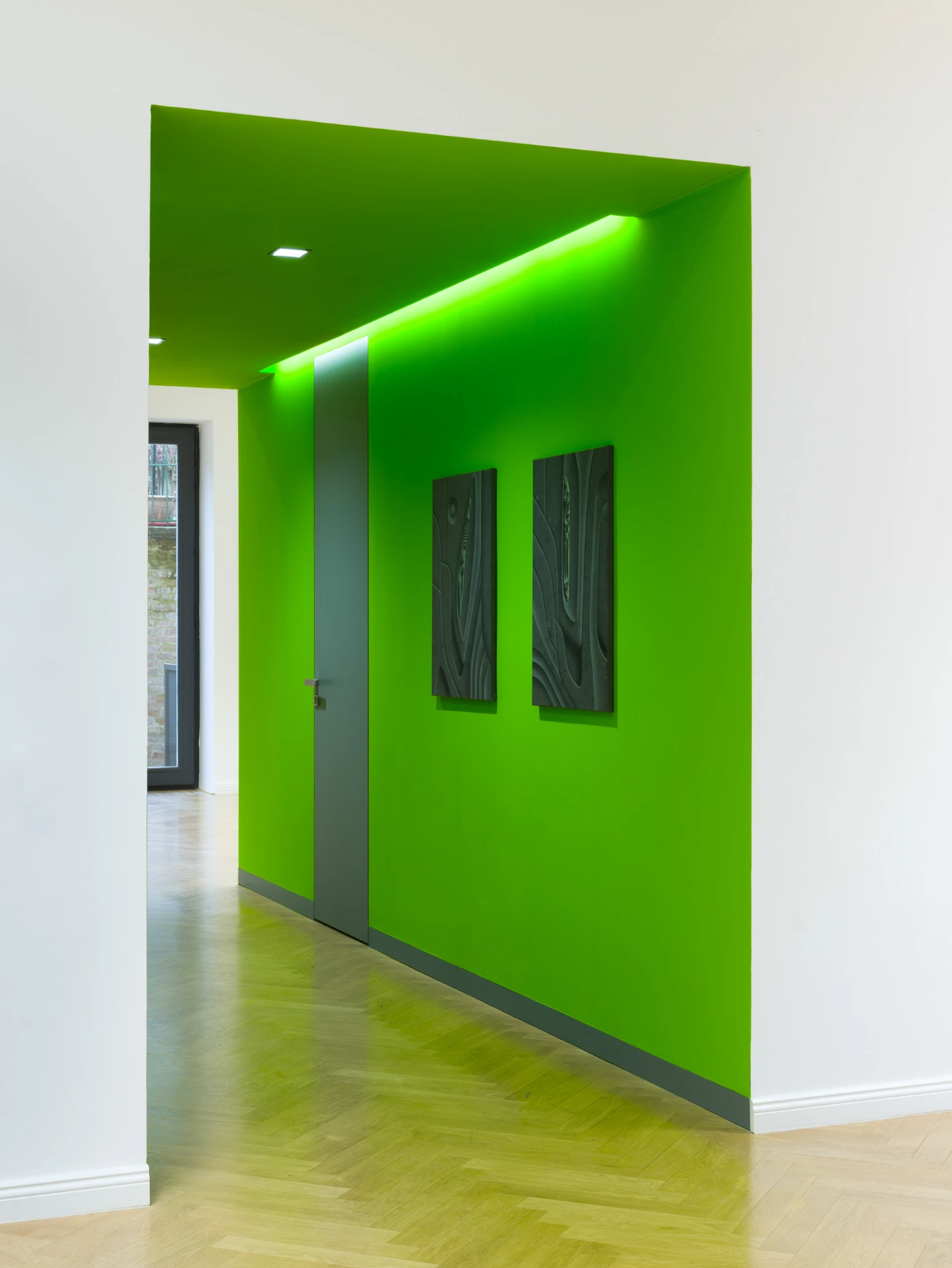
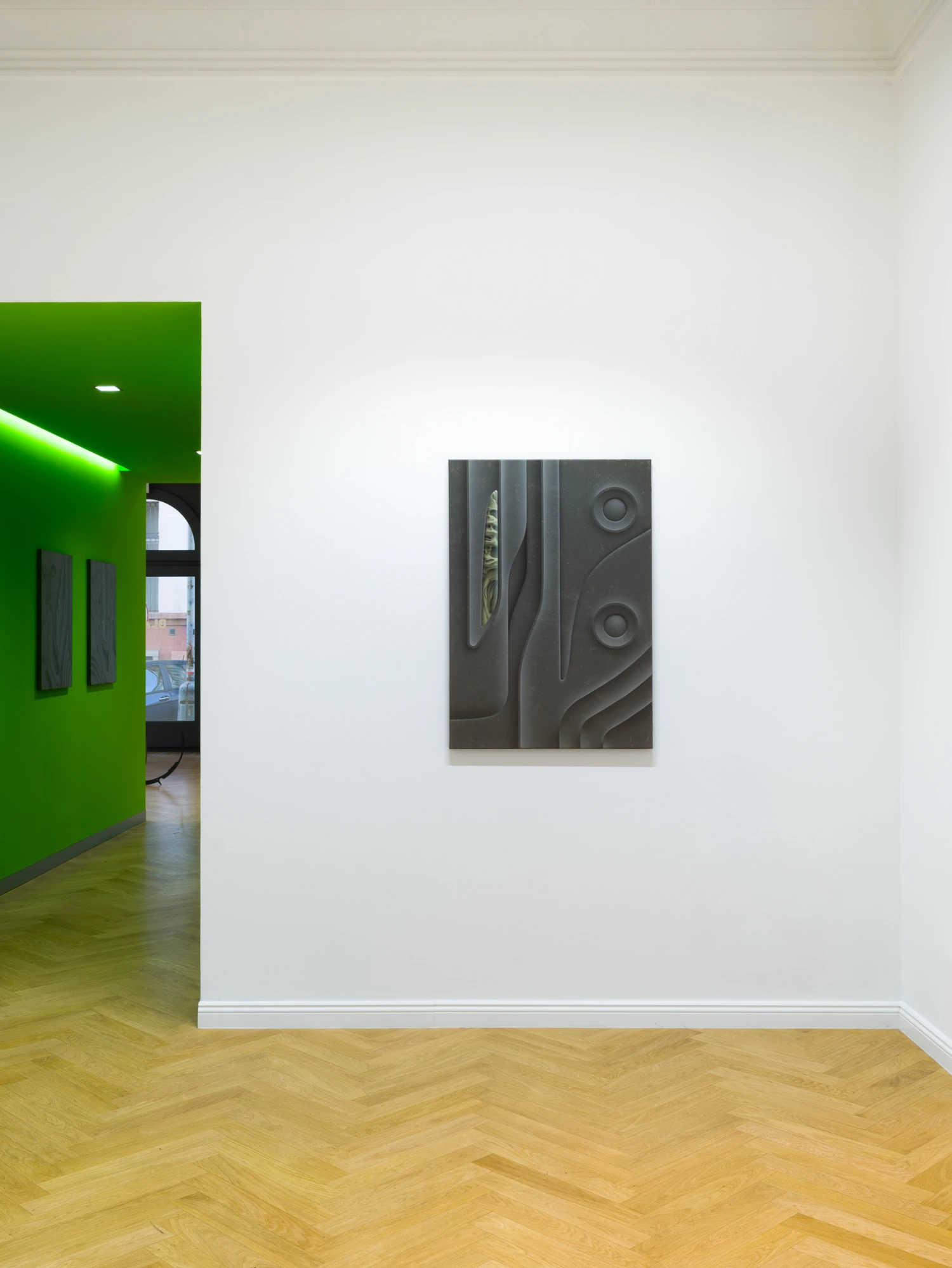
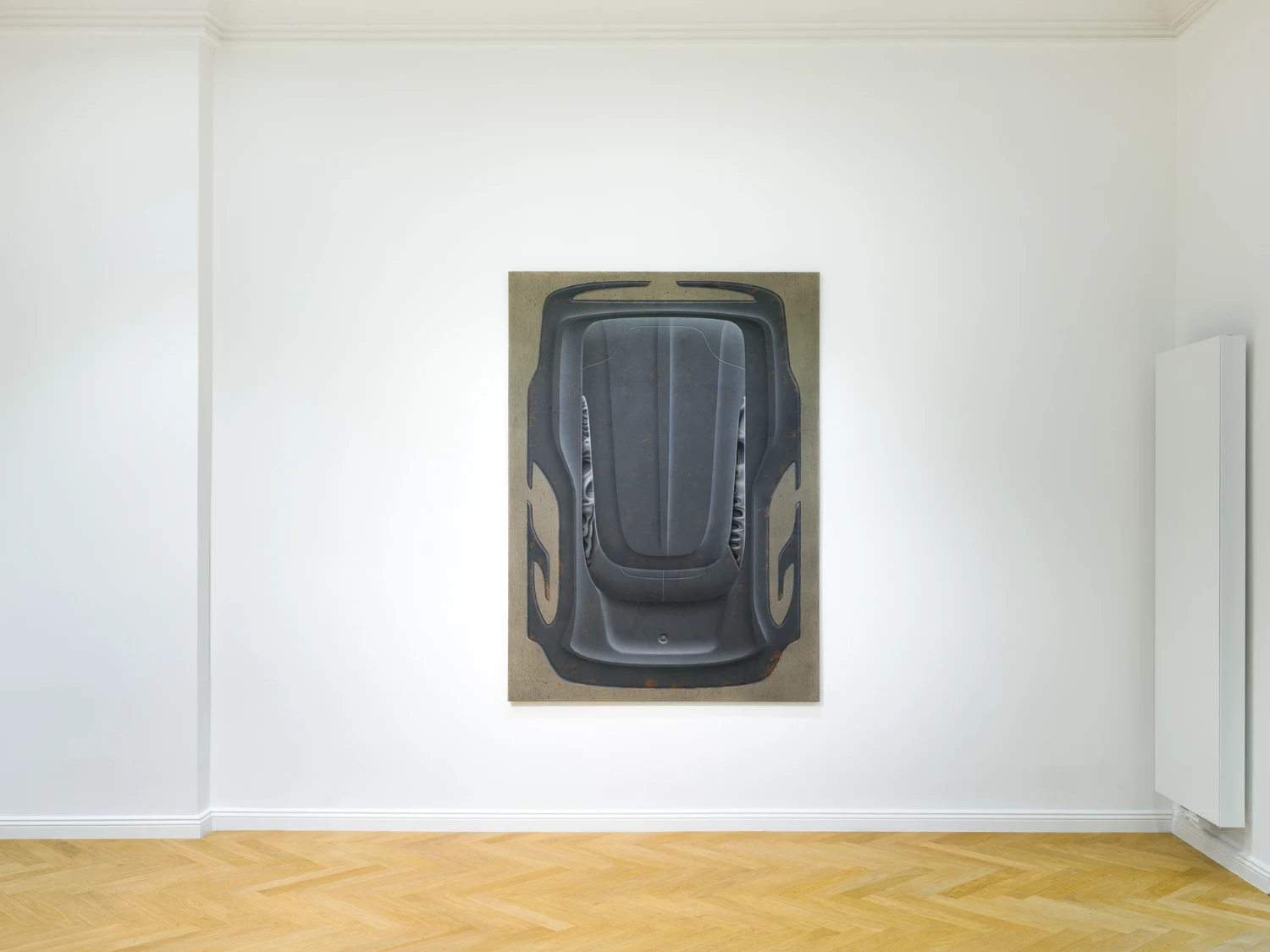
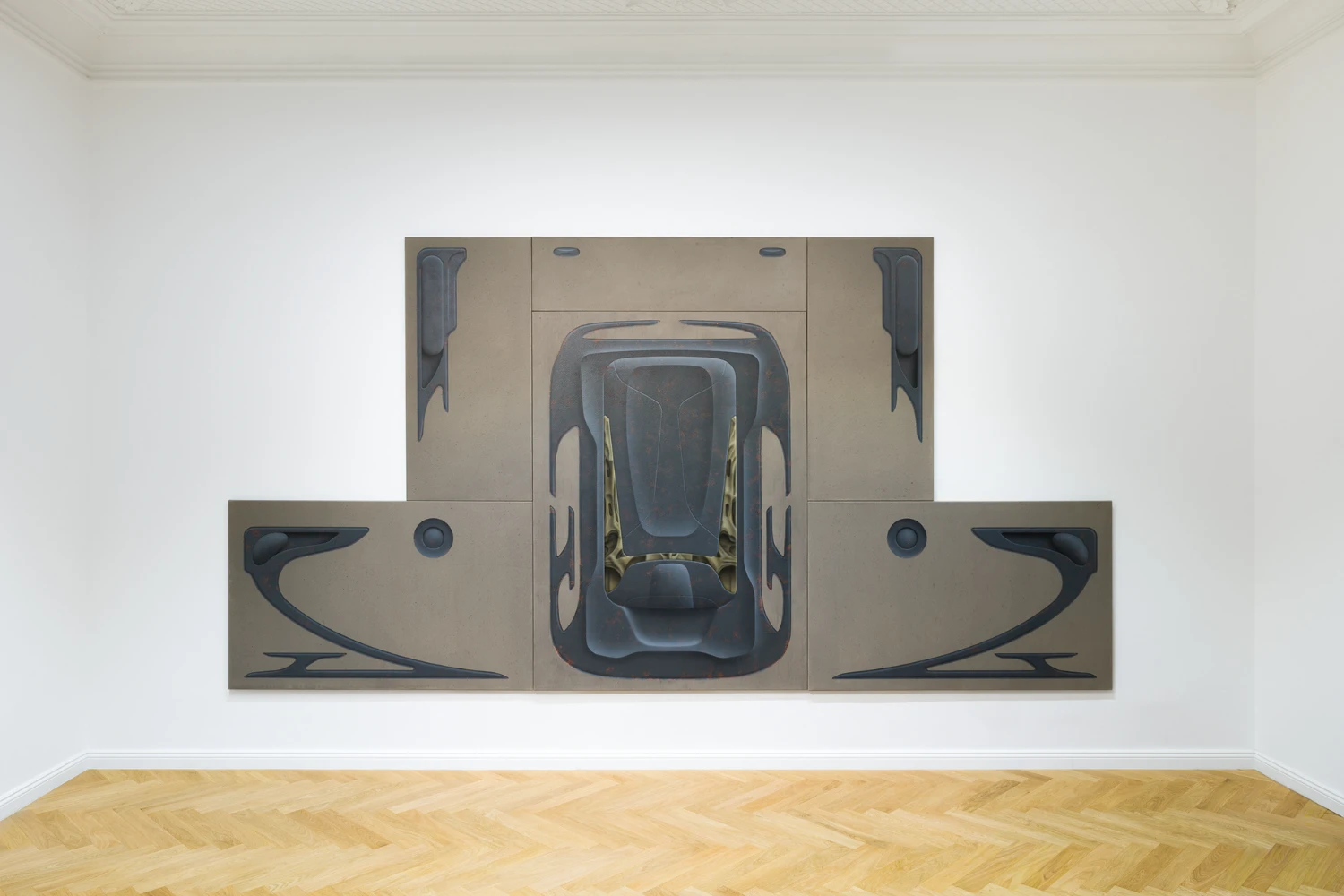
In contrast, Vagač develops a sculptural approach to the painted surface, crafting panels that resemble archaeological fragments from a future civilisation. Their recessed cavities and flowing contours evoke industrial mouldings, spacecraft interiors, or the softened edges of sci-fi architecture. The muted palette enhances their enigmatic presence; each panel feels like an interface waiting for activation. Yet these works are not cold. They hum with a quiet sensuality, their forms repeating and mutating as though governed by an internal evolutionary script.

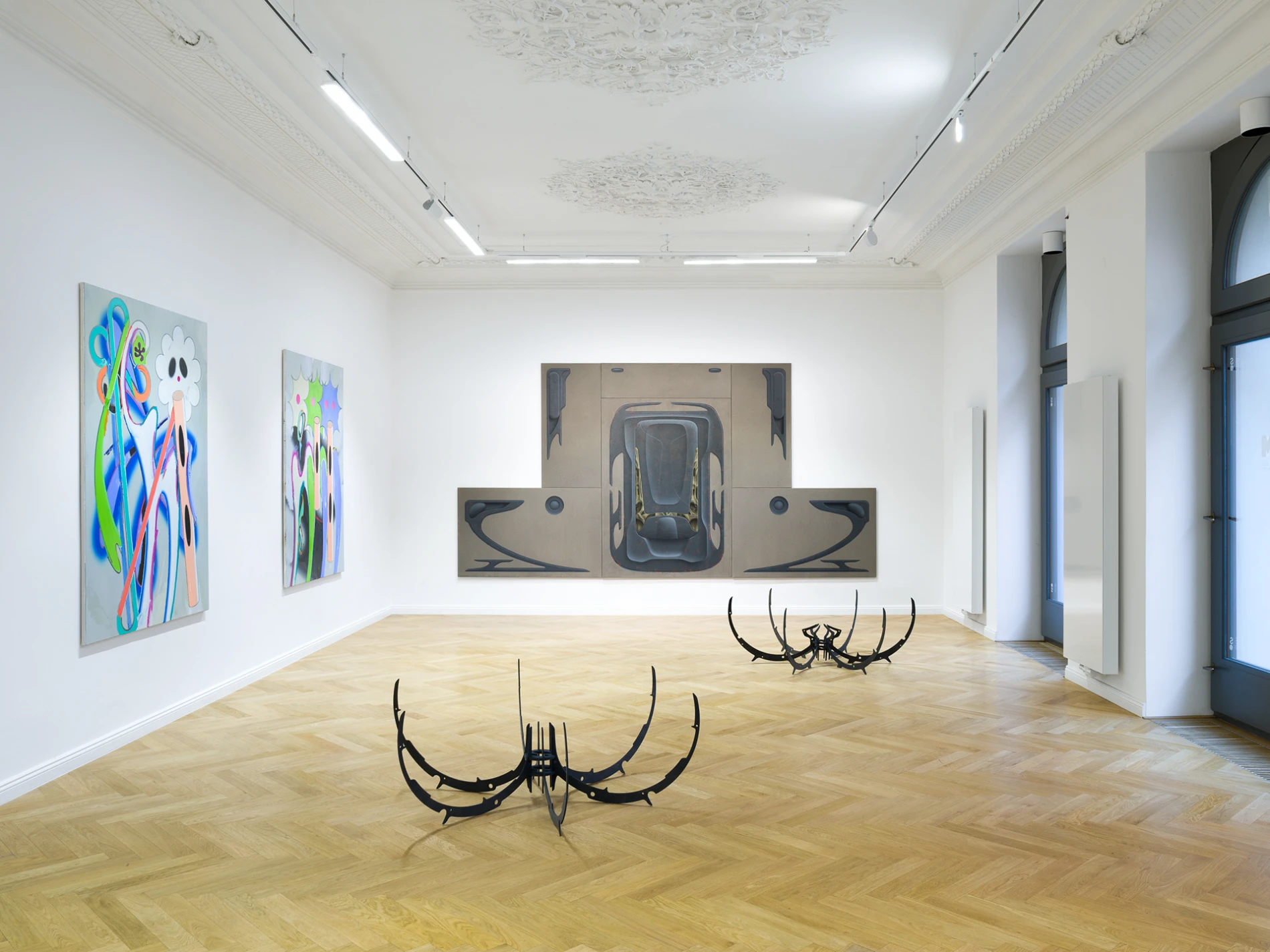
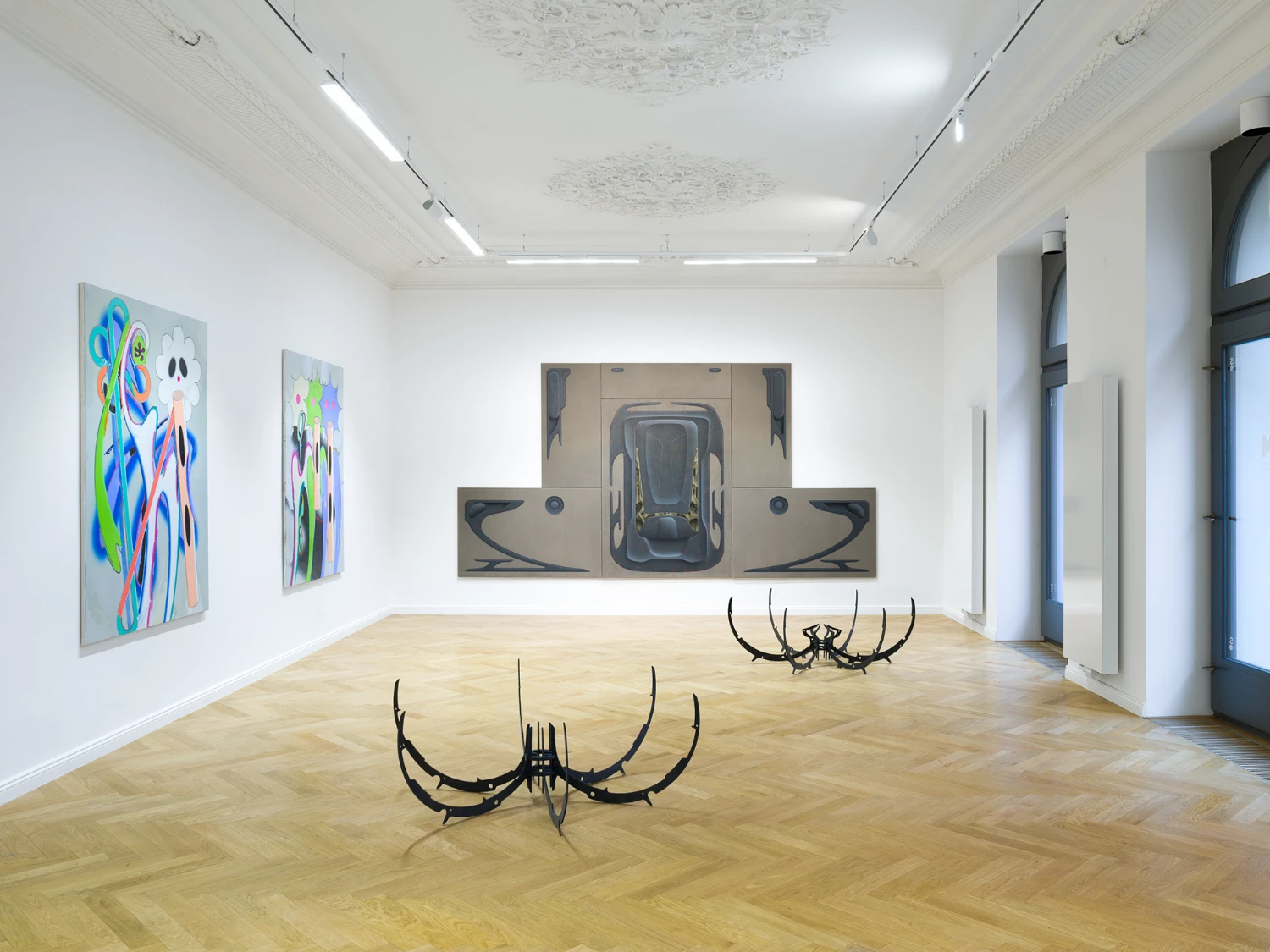
When encountered together, the artists’ idioms begin to cross-pollinate. Absolon’s buoyancy throws Vagač’s austerity into relief, while Vagač’s weight grounds Absolon’s exuberance. The exhibition’s choreography reinforces this interplay: bursts of colour flare against the neutrality of the grey panels; the episodic nature of both practices creates a rhythm of emergence and recession. In the gallery’s central hall, the black, spine-like floor sculptures echo Vagač’s language and, unexpectedly, provide a counterpoint to Absolon’s floating motifs—tethering the entire presentation to the ground while still whispering of propulsion.

The serial logic underpinning both practices becomes a key to reading the show. Patterns repeat, but never mechanically; each iteration suggests an organism testing new configurations. This repetition-with-mutability allows the viewer to perceive subtle shifts—an aperture opening slightly wider, a colour mutating toward electric intensity, a gesture acquiring a new directional thrust. These works don’t merely depict growth; they behave as though they are performing it. The effect is cumulative: familiar shapes begin returning like memories whose origins we cannot quite place.

Ultimately, Bloom reveals itself not as a narrative exhibition but as a sensorial grammar lesson in how images come into being. Absolon and Vagač treat the canvas as both environment and instrument, a site where intuition negotiates with system, where digital logic infiltrates analogue touch. Their works blossom not toward a fixed conclusion but toward a state of perpetual becoming. Standing amid their hybrid flora, one senses that representation itself is evolving—driven by forces that are at once personal, technological and quietly cosmic.
Interested in Showcasing Your Work?

If you would like to feature your works on Thisispaper, please visit our Submission page and sign up to Thisispaper+ to submit your work. Once your submission is approved, your work will be showcased to our global audience of 2 million art, architecture, and design professionals and enthusiasts.
No items found.
We love less
but there is more.
Become a Thisispaper+ member today to unlock full access to our magazine, advanced tools, and support our work.
Get two months FREE
with annual subscription
We love less
but there is more.
Become a Thisispaper+ member today to unlock full access to our magazine, advanced tools, and support our work.
Get two months FREE
with annual subscription
No items found.
Hitoshi Arato
Dec 16, 2025

Tomáš Absolon and Milan Vagač transform SPOT Gallery in Prague into a hybrid ecosystem where colour, structure and digital sensibility merge into ever-evolving painterly organisms.

The exhibition curated by Michal Stolárik unfolds like a controlled fever dream, where painterly matter behaves as if it had absorbed the rhythms of a digital organism. Absolon’s chromatic exuberance swirls in vectors that feel half-engineered, half-feral, while Vagač’s relief-like structures anchor the space with a slower, tectonic pulse. Installed together, their works propose a hybrid ecosystem in which the organic and the synthetic are not opposites but co-conspirators. One almost senses a greenhouse for images—yet its photosynthesis runs on algorithms, muscle memory and sonic vibration rather than biological necessity.

Absolon’s canvases read like mutant diagrams of emotion and movement. Their candy-coloured elongations slip between figuration and signage, never quite stabilising. The motifs—tubular limbs, pollen-like dots, tendrils that behave like animated glyphs—seem to bloom in real time, as if the surface were a screen registering continuous updates. Despite the digital undertones, the works are unmistakably painterly: airbrushed atmospheres collide with assertive strokes, generating a visual syntax that is playful but rarely naïve. The paintings behave like avatars caught mid-morph, their identities still buffering.

In contrast, Vagač develops a sculptural approach to the painted surface, crafting panels that resemble archaeological fragments from a future civilisation. Their recessed cavities and flowing contours evoke industrial mouldings, spacecraft interiors, or the softened edges of sci-fi architecture. The muted palette enhances their enigmatic presence; each panel feels like an interface waiting for activation. Yet these works are not cold. They hum with a quiet sensuality, their forms repeating and mutating as though governed by an internal evolutionary script.

When encountered together, the artists’ idioms begin to cross-pollinate. Absolon’s buoyancy throws Vagač’s austerity into relief, while Vagač’s weight grounds Absolon’s exuberance. The exhibition’s choreography reinforces this interplay: bursts of colour flare against the neutrality of the grey panels; the episodic nature of both practices creates a rhythm of emergence and recession. In the gallery’s central hall, the black, spine-like floor sculptures echo Vagač’s language and, unexpectedly, provide a counterpoint to Absolon’s floating motifs—tethering the entire presentation to the ground while still whispering of propulsion.

The serial logic underpinning both practices becomes a key to reading the show. Patterns repeat, but never mechanically; each iteration suggests an organism testing new configurations. This repetition-with-mutability allows the viewer to perceive subtle shifts—an aperture opening slightly wider, a colour mutating toward electric intensity, a gesture acquiring a new directional thrust. These works don’t merely depict growth; they behave as though they are performing it. The effect is cumulative: familiar shapes begin returning like memories whose origins we cannot quite place.

Ultimately, Bloom reveals itself not as a narrative exhibition but as a sensorial grammar lesson in how images come into being. Absolon and Vagač treat the canvas as both environment and instrument, a site where intuition negotiates with system, where digital logic infiltrates analogue touch. Their works blossom not toward a fixed conclusion but toward a state of perpetual becoming. Standing amid their hybrid flora, one senses that representation itself is evolving—driven by forces that are at once personal, technological and quietly cosmic.
Interested in Showcasing Your Work?

If you would like to feature your works on Thisispaper, please visit our Submission page and subscribe to Thisispaper+. Once your submission is approved, your work will be showcased to our global audience of 2 million art, architecture, and design professionals and enthusiasts.
No items found.

Join Thisispaper+
Unlock access to 2500 stories, curated guides + editions, and share your work with a global network of architects, artists, writers and designers who are shaping the future.
Get two months FREE
with annual subscription
Atlas
A new and interactive way to explore the most inspiring places around the world.
Interactive map
Linked to articles
300+ curated locations
Google + Apple directions
Smart filters
Subscribe to Explore+
Travel Guides
Immerse yourself in timeless destinations, hidden gems, and creative spaces—curated by humans, not algorithms.
Explore All Guides +
Curated Editions
Dive deeper into carefully curated editions, designed to feed your curiosity and foster exploration.
Off-the-Grid
Jutaku
Sacral Journey
minimum
The New Chair
Explore All Editions +
Submission Module
Submit your project and gain the chance to showcase your work to our worldwide audience of over 2M architects, designers, artists, and curious minds.
Learn More+
Become a Thisispaper+ member today to unlock full access to our magazine, submit your project and support our work.
Join Thisispaper+Join Thisispaper+
€ 9 EUR
/month
Cancel anytime
Get two months FREE
with annual subscription