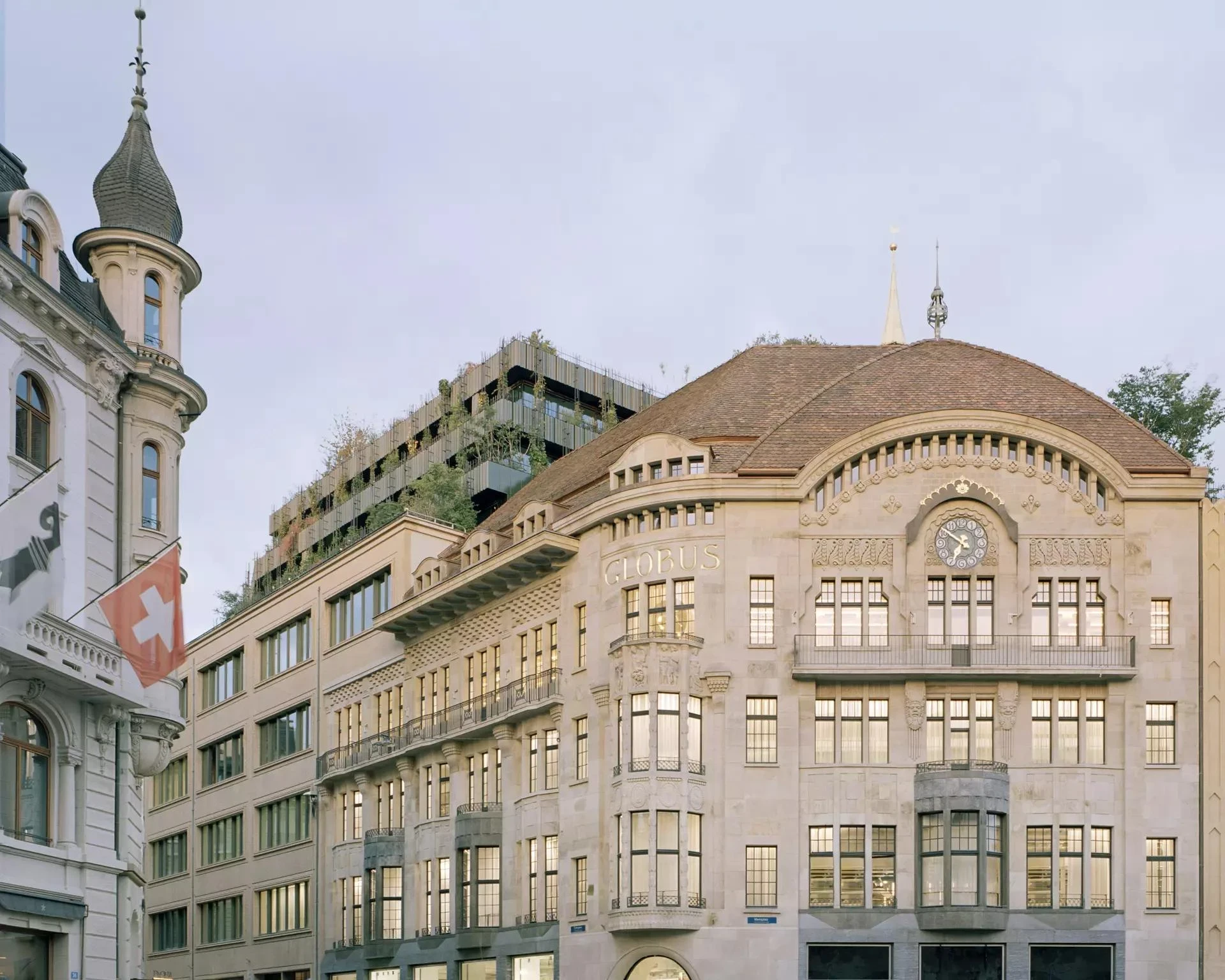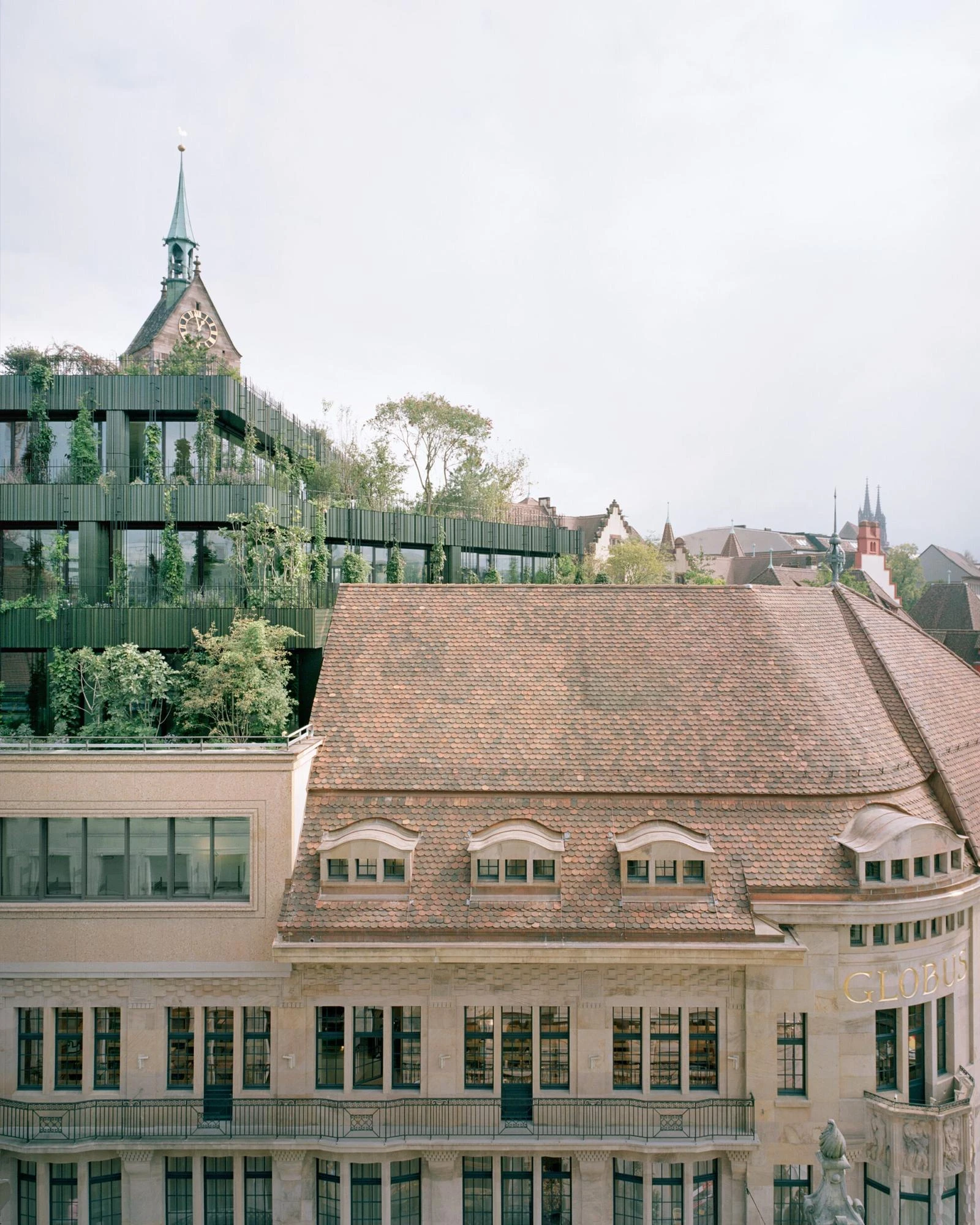
On Basel's Marktplatz, Miller & Maranta rework the Globus department store, gutting three stacked buildings behind their listed natural-stone facades and crowning the result with terraced roof gardens.
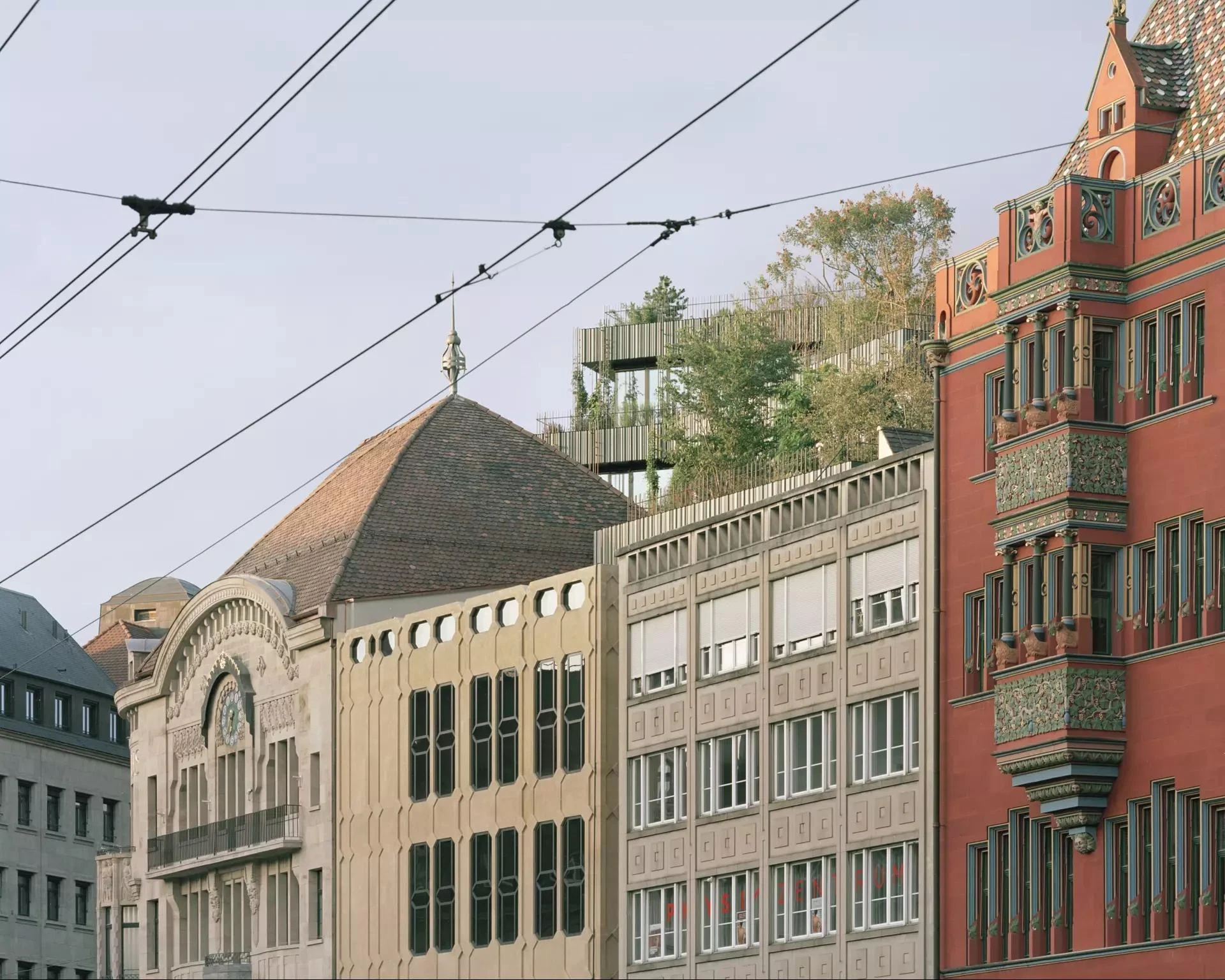
Globus has occupied this corner of Basel for more than a century, but it is not one building. It is three, fused over time. The oldest is an Art Nouveau block by Romang & Bernoulli, its cream stone gable carved with the store's name beneath an ornamental clock. A 1970s structure by Suter + Suter holds the Marktplatz frontage, and a 1930s extension by Suter & Burckhardt runs back along Eisengasse. From the square, the eye reads continuity. Behind the facades, the floor plates never aligned.
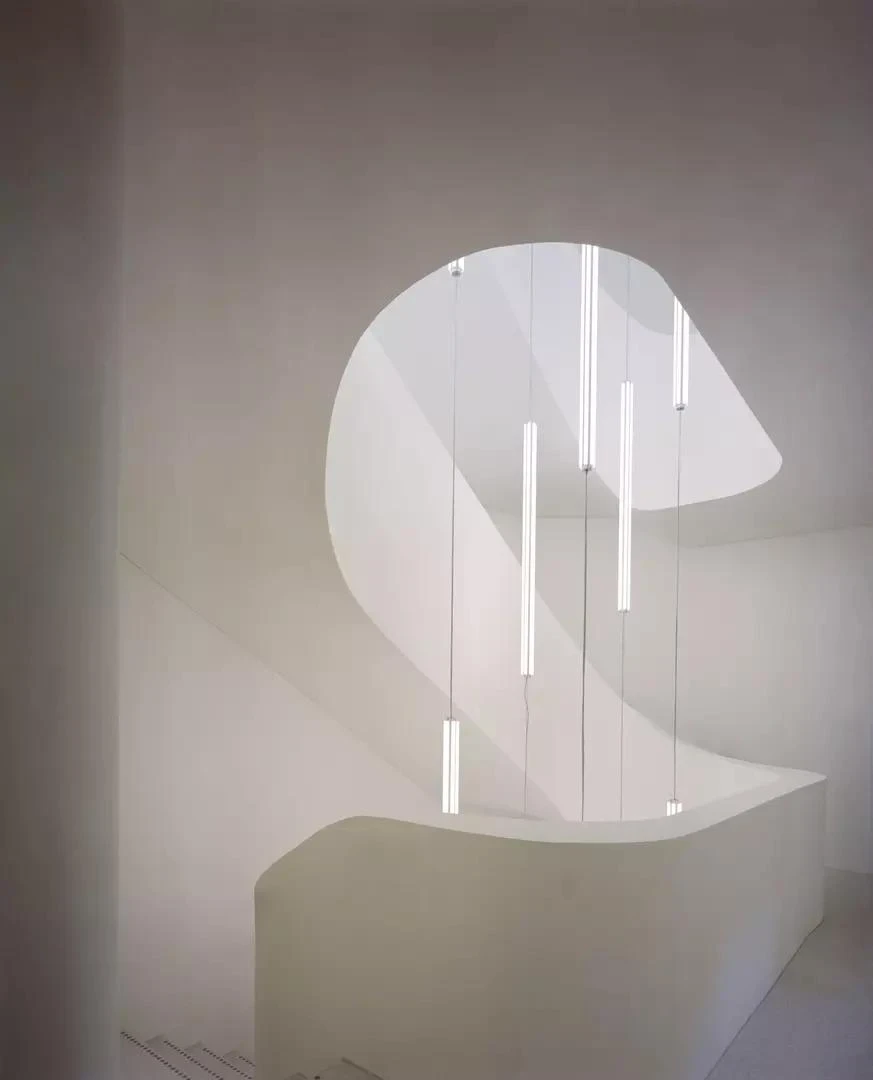
The renovation accepts the facades as fixed and works everything else loose. The natural-stone fronts, all of them protected, are secured and left in place; their windows are refurbished or replaced only where necessary, every move agreed in advance with the heritage authorities. Inside, the partitions come down. A new atrium cuts vertically through the section, threading the three buildings into a single legible interior where retail runs from the basement to the fourth floor. One photograph of that void shows a curved plaster shaft, soft daylight falling from a rounded aperture, slender light tubes hanging like plumb lines.
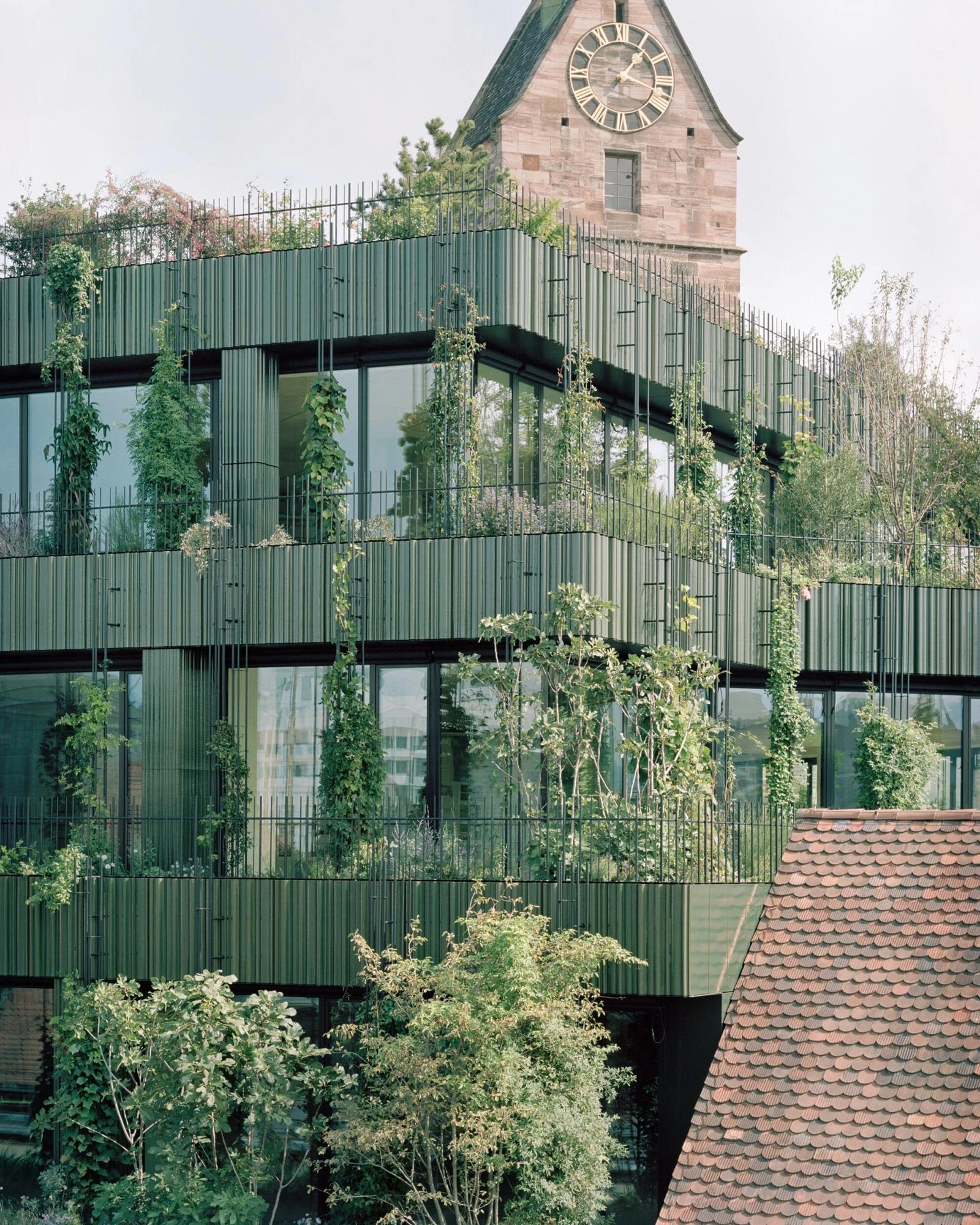
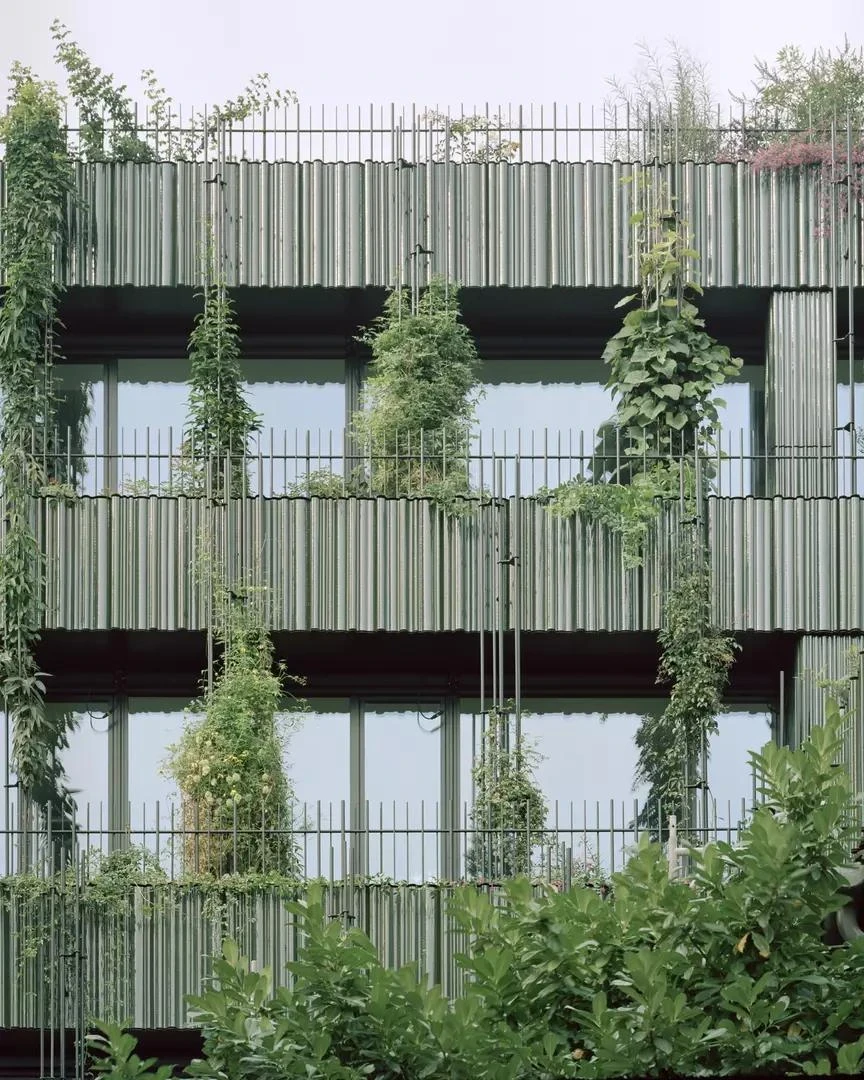
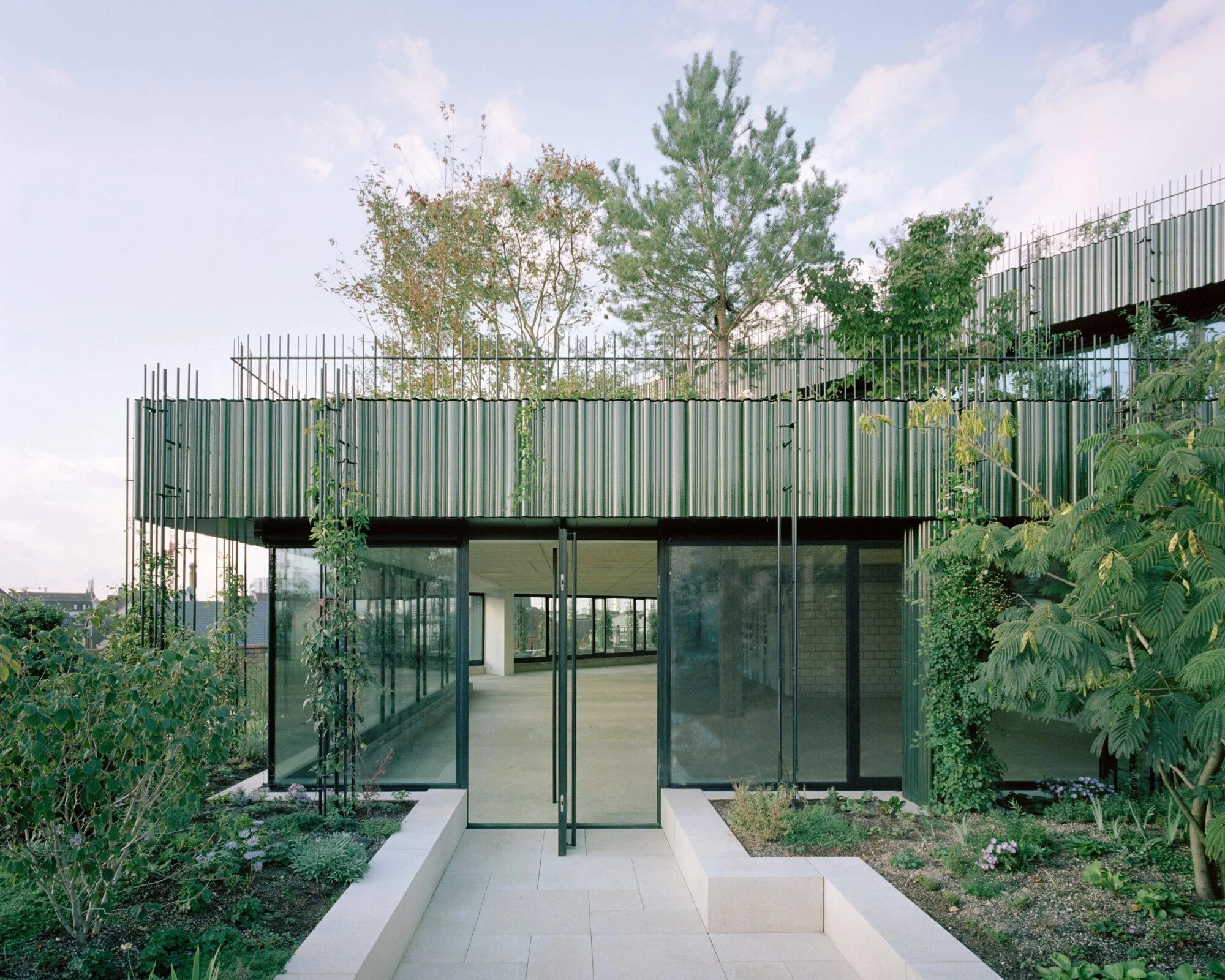
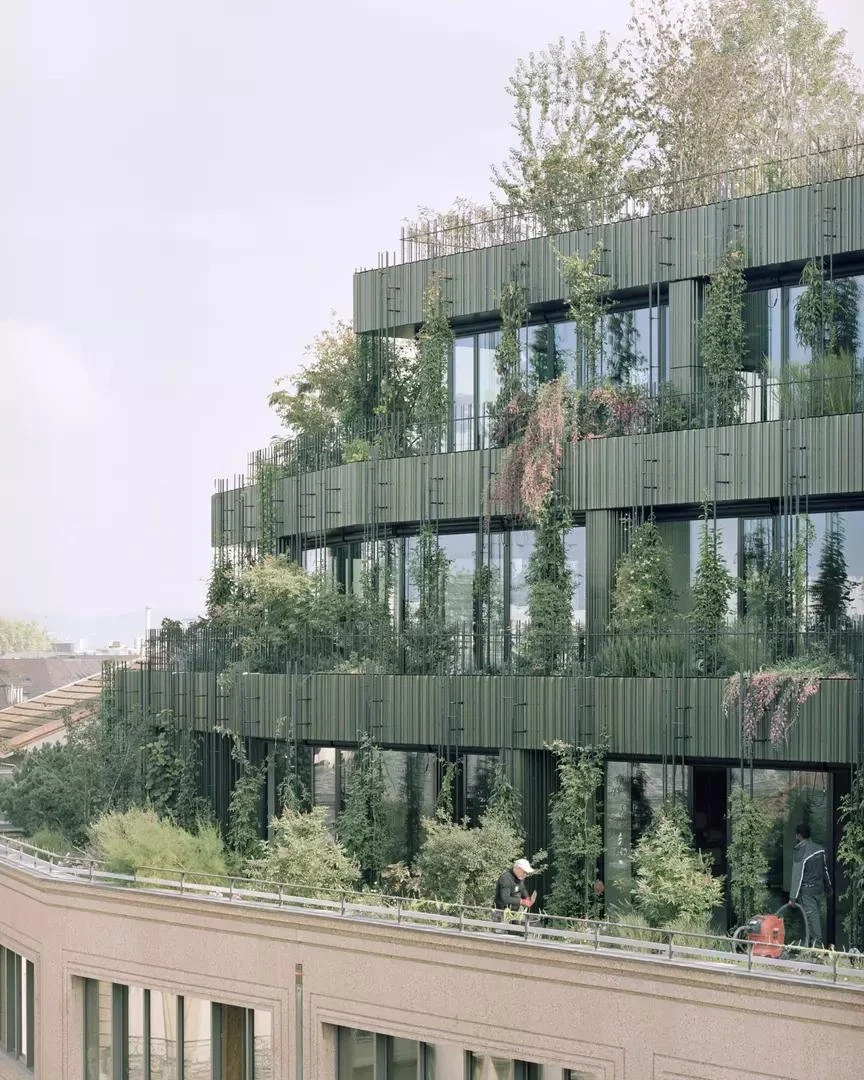
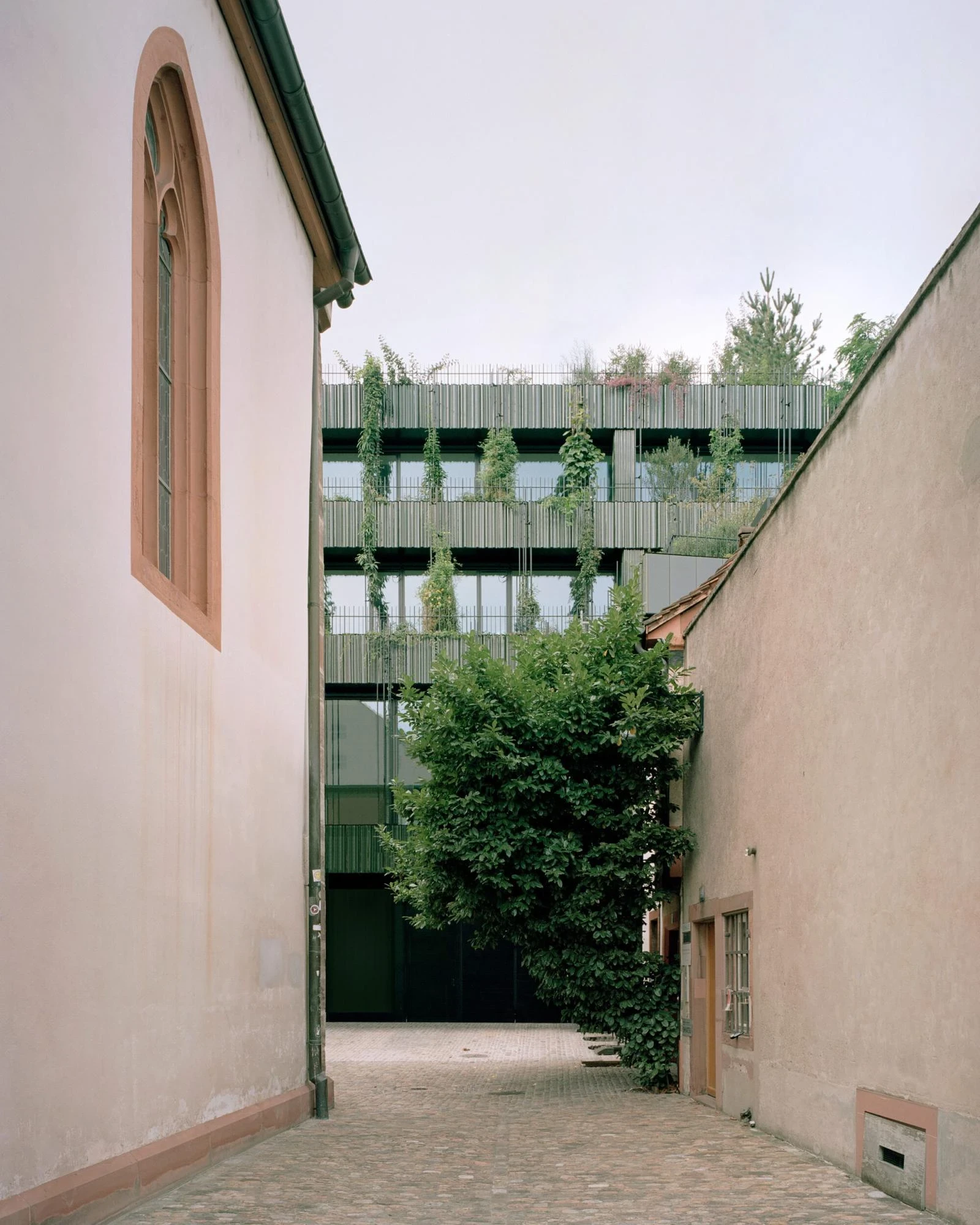
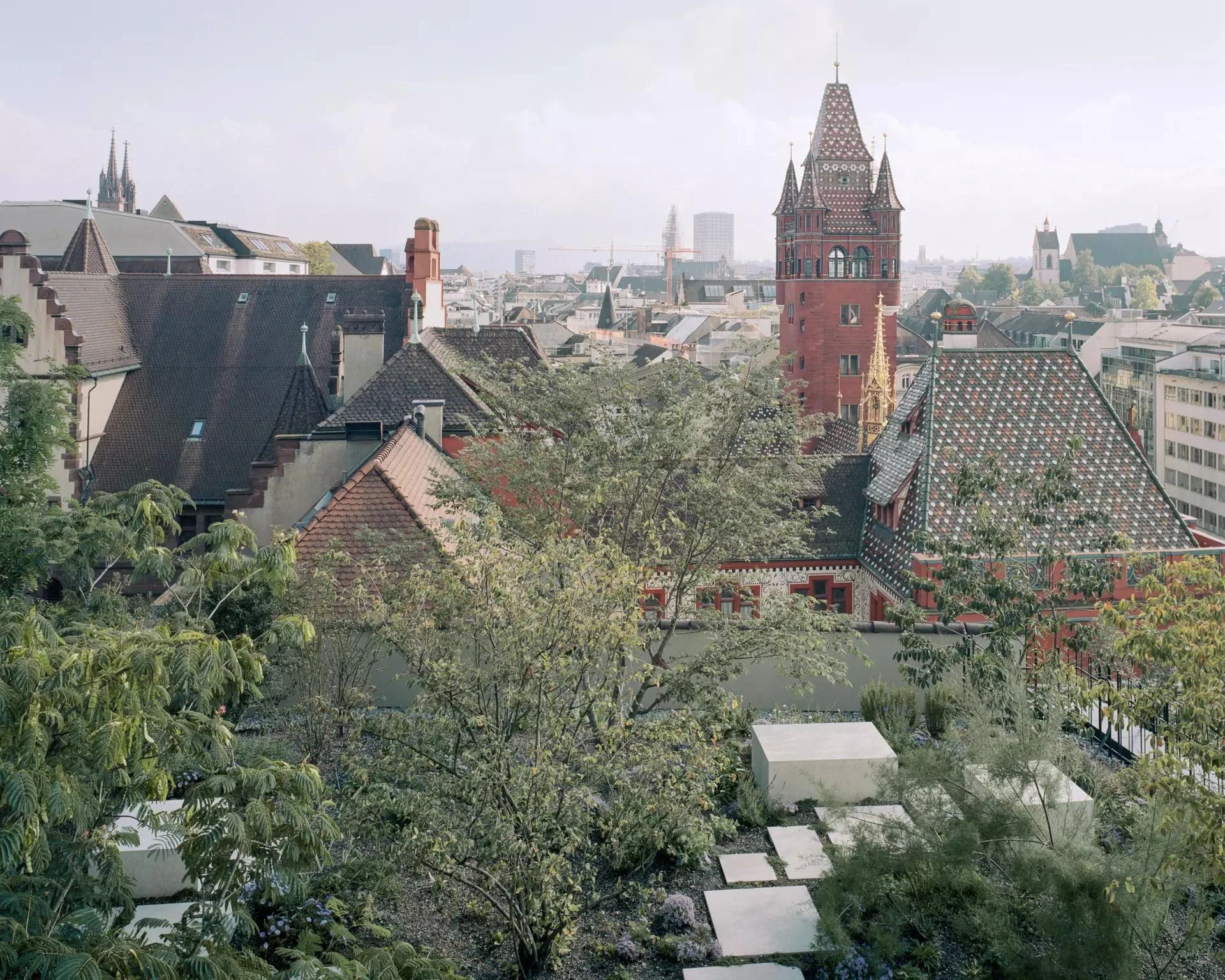
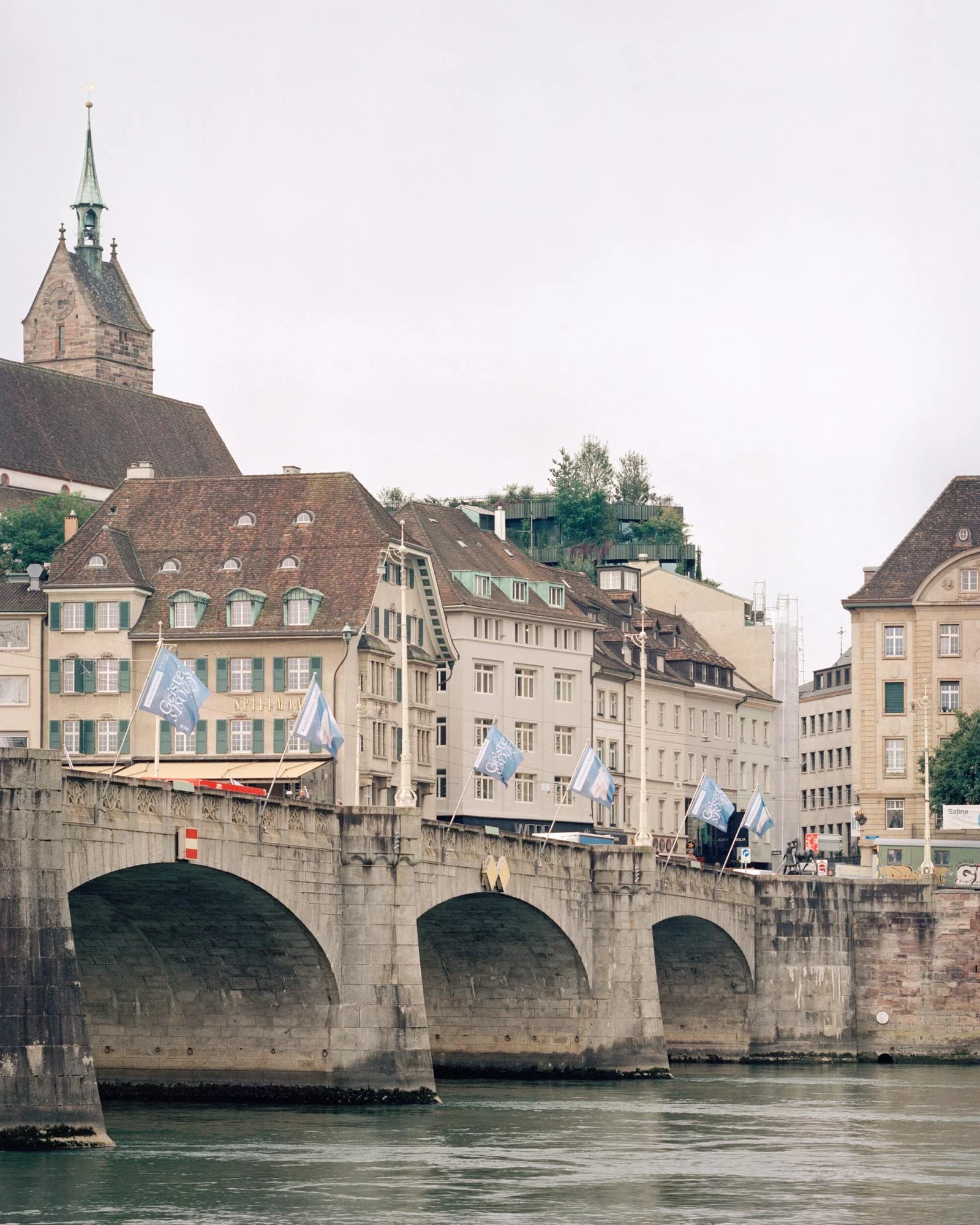
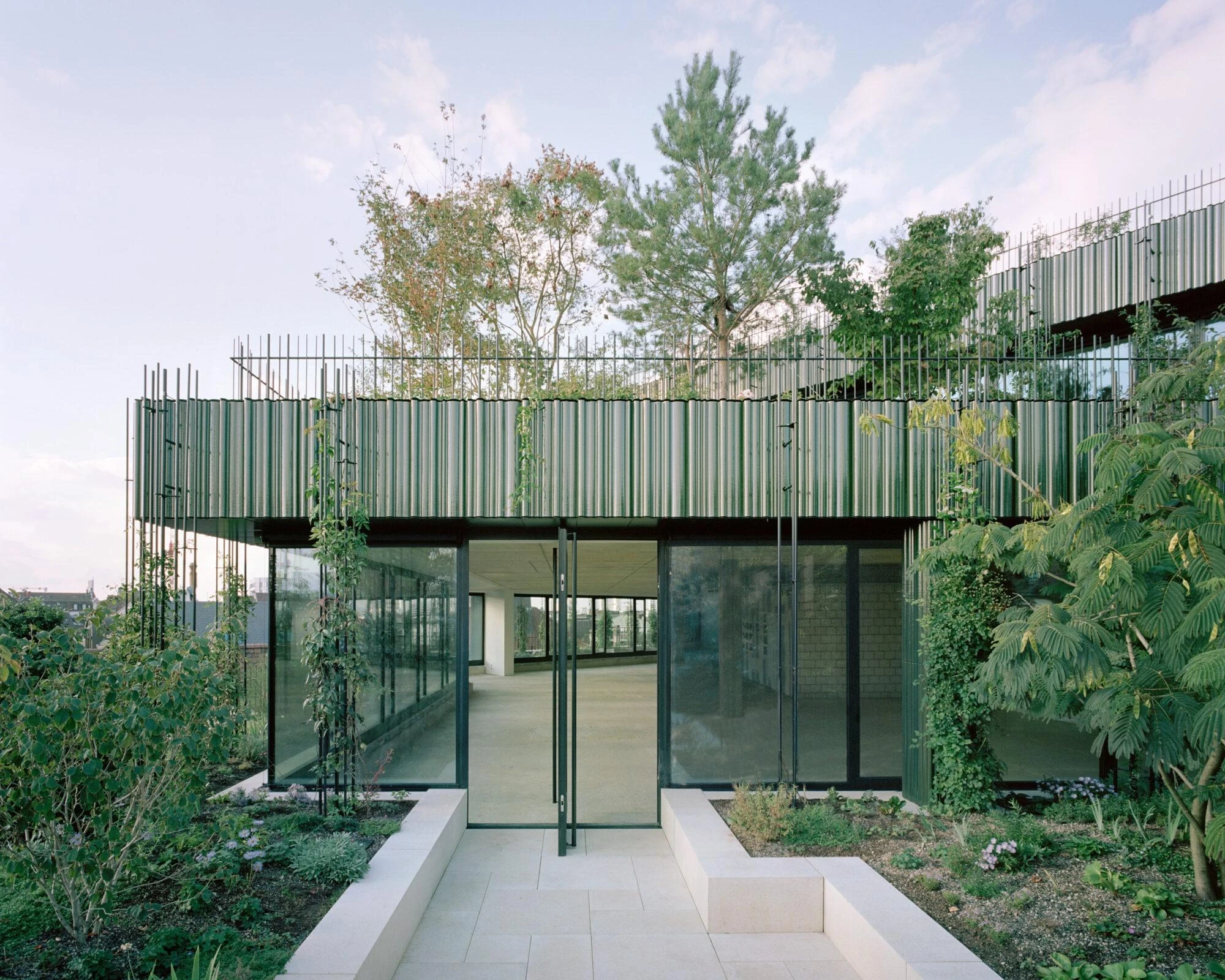
The decisive gesture happens on the roof. Where the listed stone stops, the structure carries a stepped attic of three floors, set back so the street barely registers it. These upper levels, the fifth to seventh, are let as offices, and each terrace is planted as an intensive garden. Pines, climbing vines and flowering perennials spill over the edges. From the Rhine, from the Mittlere Brücke, the green crown reads as a second skyline above the tiled domes and the red sandstone tower of the Rathaus.
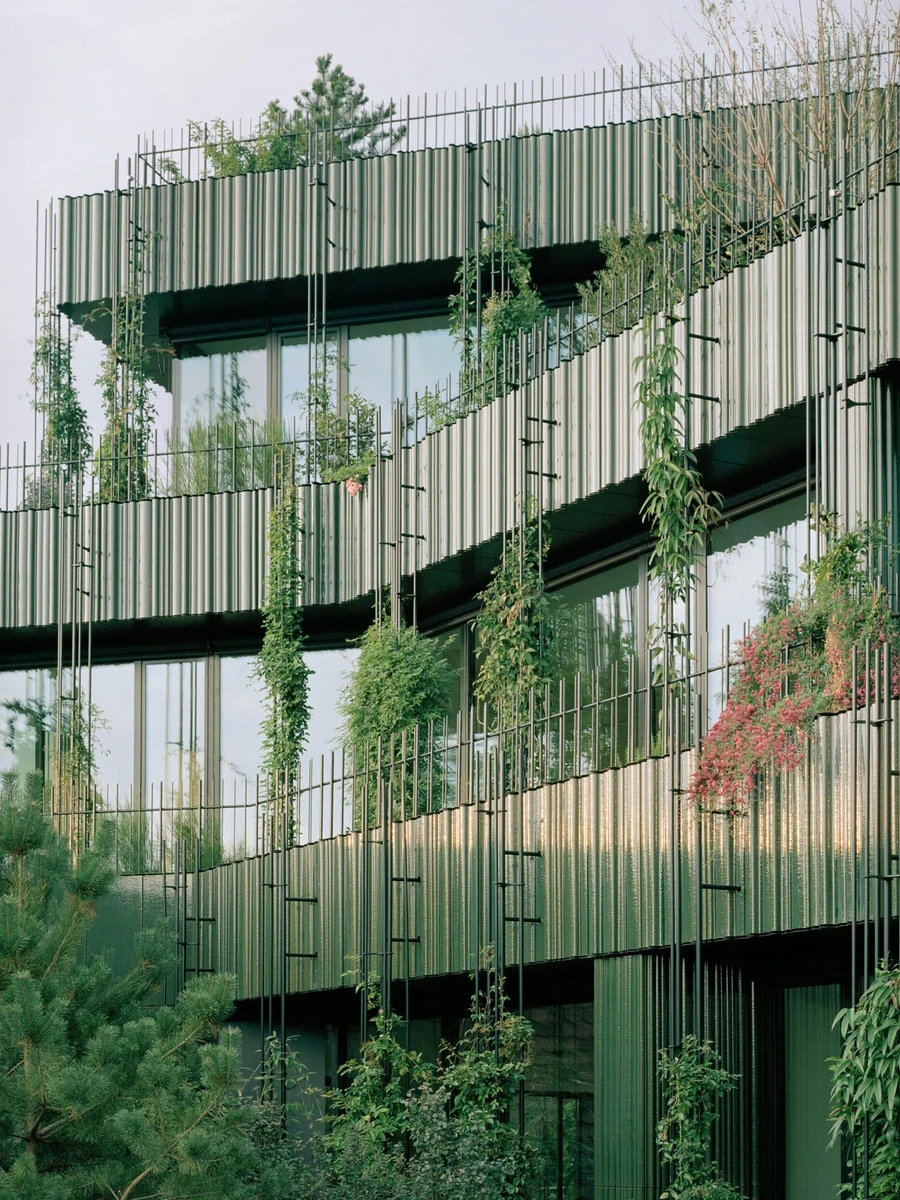
The cladding gives the addition its register. Vertical fluted louvers in a deep, glazed green wrap each terrace, set behind a cage of thin metal rods that doubles as a trellis. The plants climb the rods; the louvers catch and hold the same green, so that built surface and living growth blur into one another as the seasons turn. It is a facade designed to be overtaken.
The gardens are not decoration. In a dense city center, the intensive planting cools the air, slows rainwater and lifts a fragment of habitat seven floors above the trams. Miller & Maranta have long argued that the most demanding sites are the ones already full, where the work is to read what exists and add precisely. Globus extends that thinking upward, leaving the city's memory untouched at eye level and answering its climate where no one was looking.