Thisispaper Community
Join today.
Enter your email address to receive the latest news on emerging art, design, lifestyle and tech from Thisispaper, delivered straight to your inbox.
Oops! Something went wrong while submitting the form.
Instant access to new channels
The top stories curated daily
Weekly roundups of what's important
Original features and deep dives
Exclusive community features
Hitoshi Arato
Jul 3, 2026

Glass usually wants to be flat; Glacier refuses. For Glas Italia, Patricia Urquiola casts table tops that ripple like thawing ice, fused onto extra-light glass fins and shown in Milan.

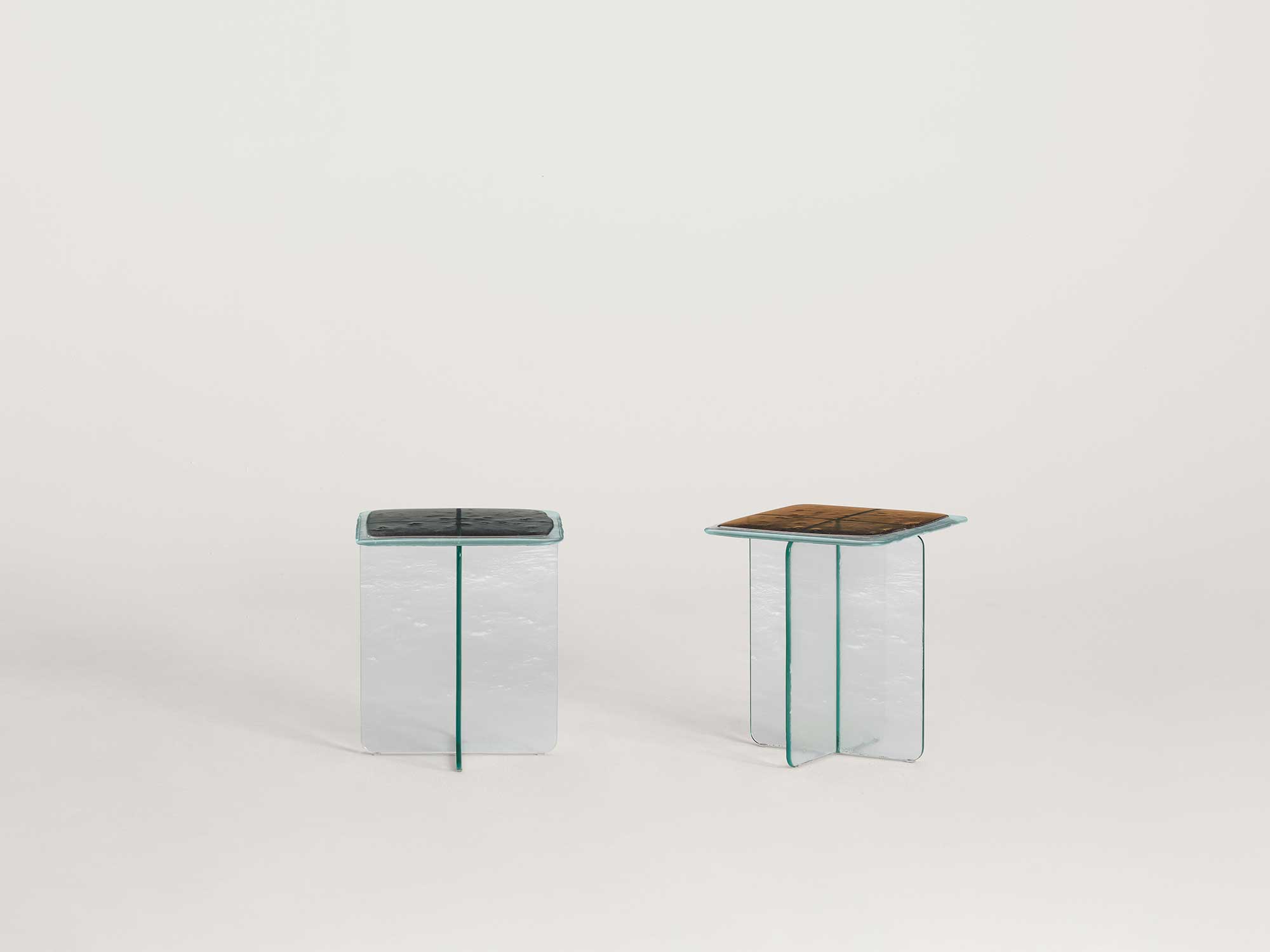
Glaciers, and the way eternal ice keeps moving even as it appears to hold still, gave Patricia Urquiola the starting point for Glacier, a collection of coffee and side tables presented by Glas Italia at Salone del Mobile 2026. The premise is a contradiction. Through a high-temperature casting process, glass gives up the flatness it is usually prized for. The surface reads as liquid, half-frozen, and the eye cannot quite decide whether it is looking at solid matter or at movement stopped mid-flow.

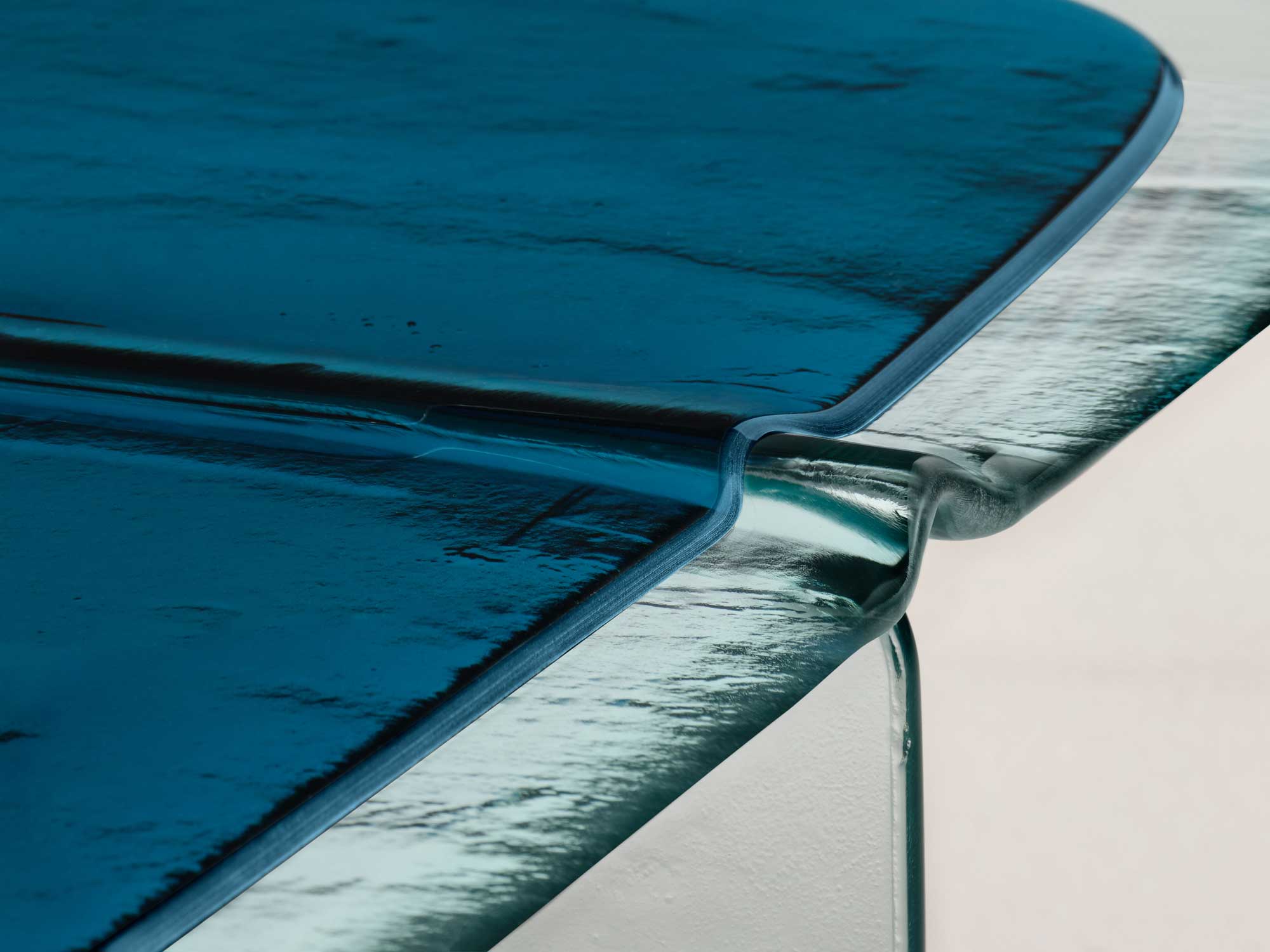
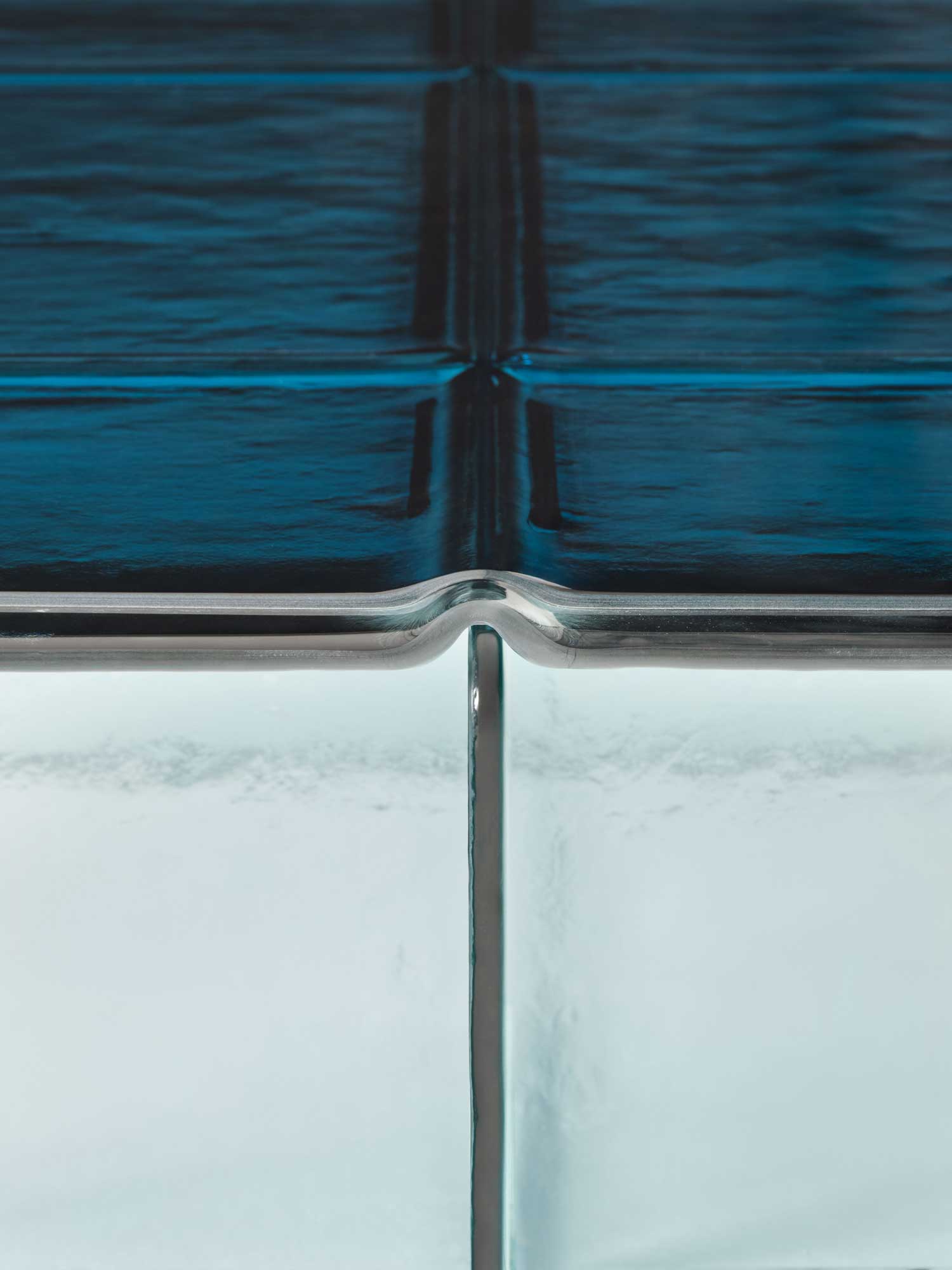
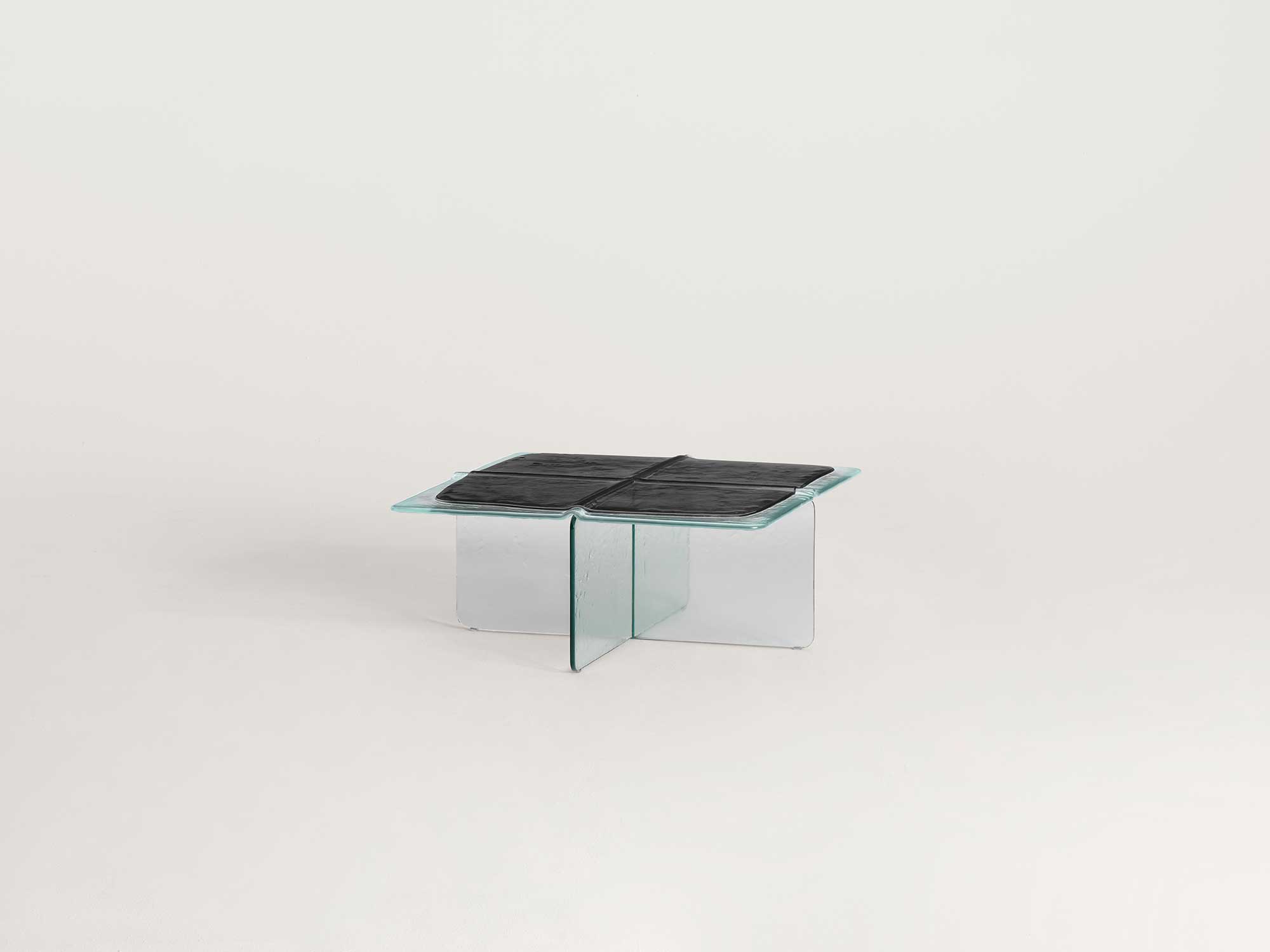
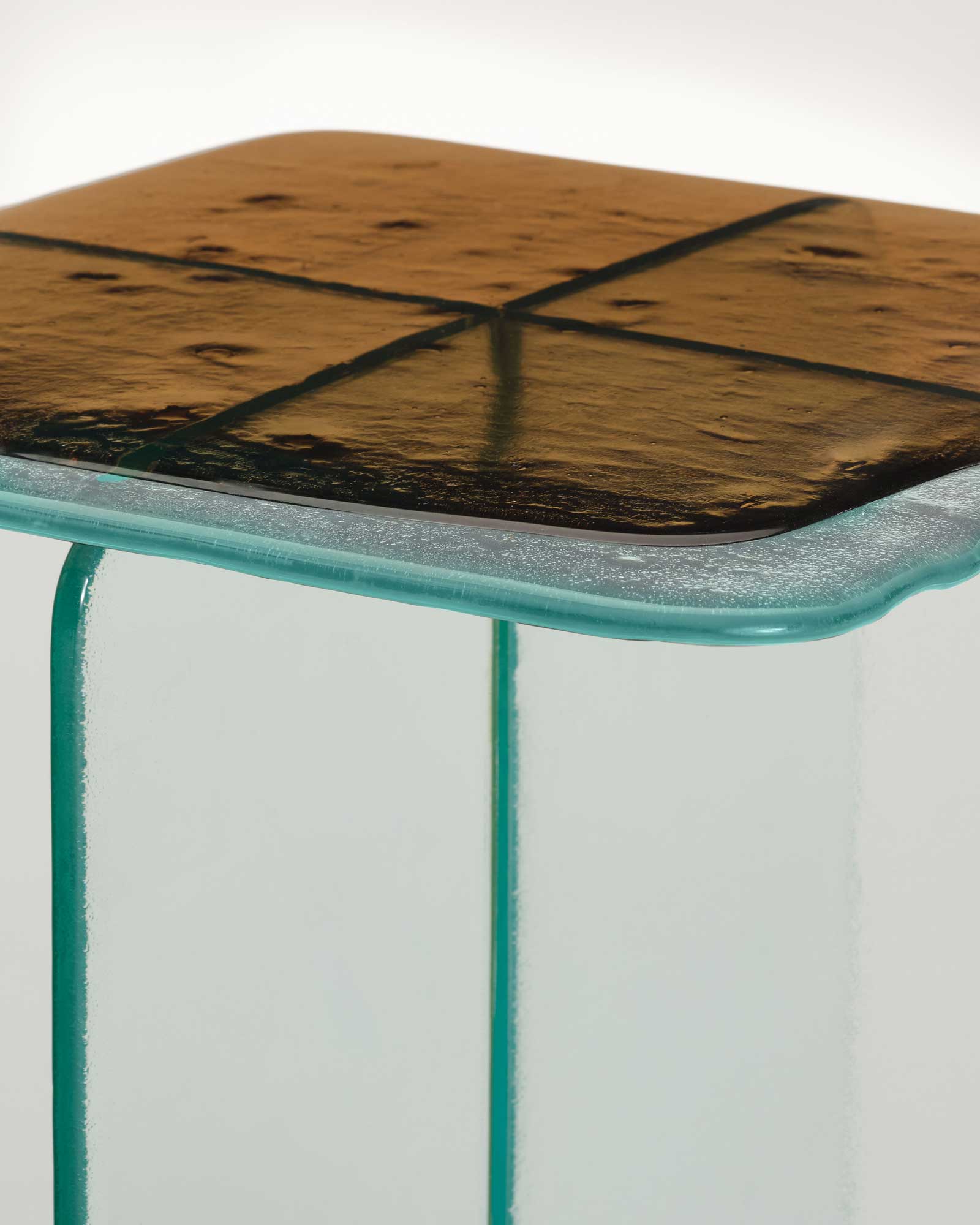
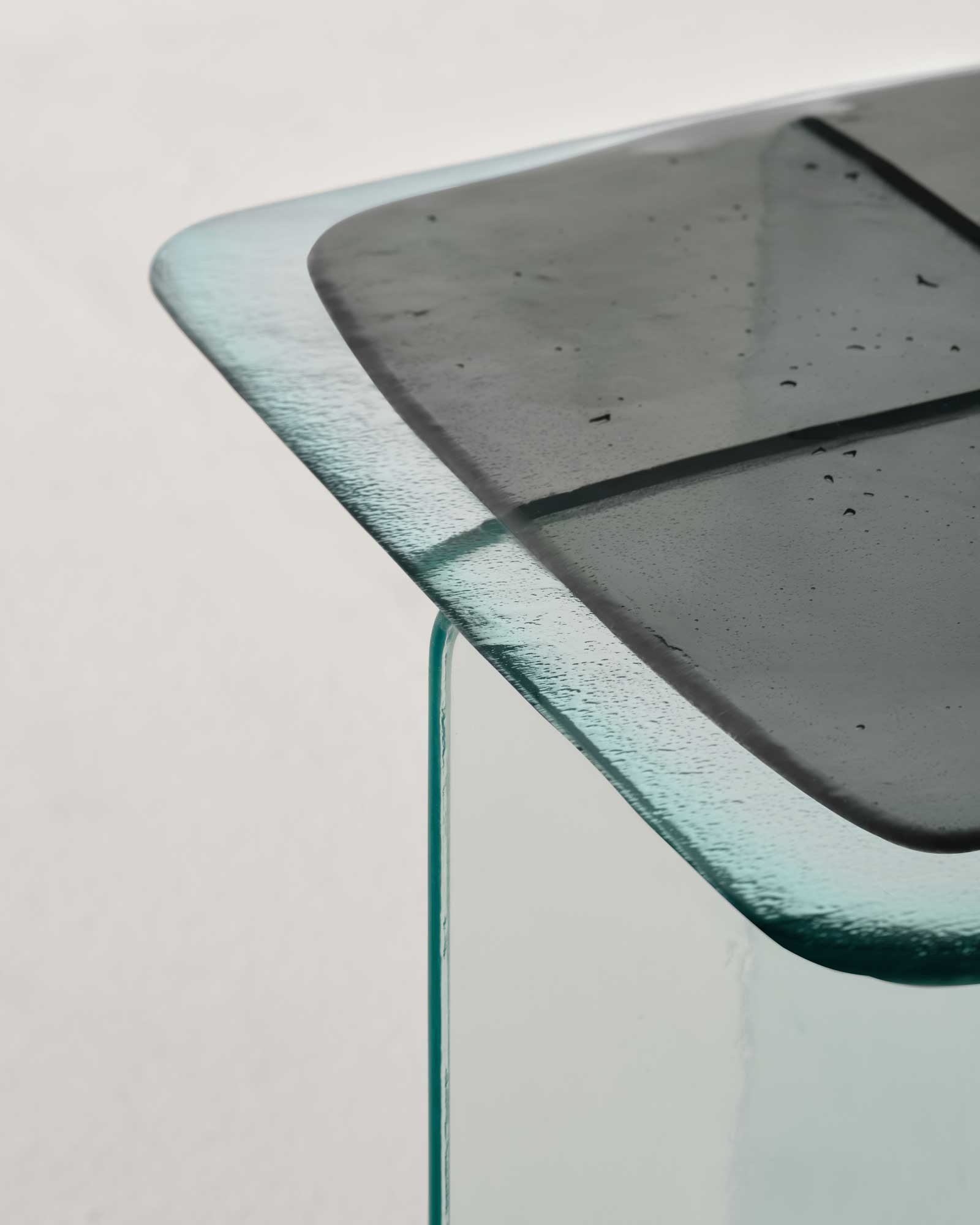
Each top is built from two layers. A coloured glass pane, available in bronze, grey, blue or amber, is fused onto a sheet of transparent extra-light glass. The bond leaves an irregular, dense texture that catches light and throws it back unevenly. In the amber version the surface pools like dark honey, pitted with tiny trapped bubbles; the blue reads almost black at its centre before clearing toward the edges. A faint grid of seams runs across each top, the trace of the tiles fused together, so the ice never looks whole.

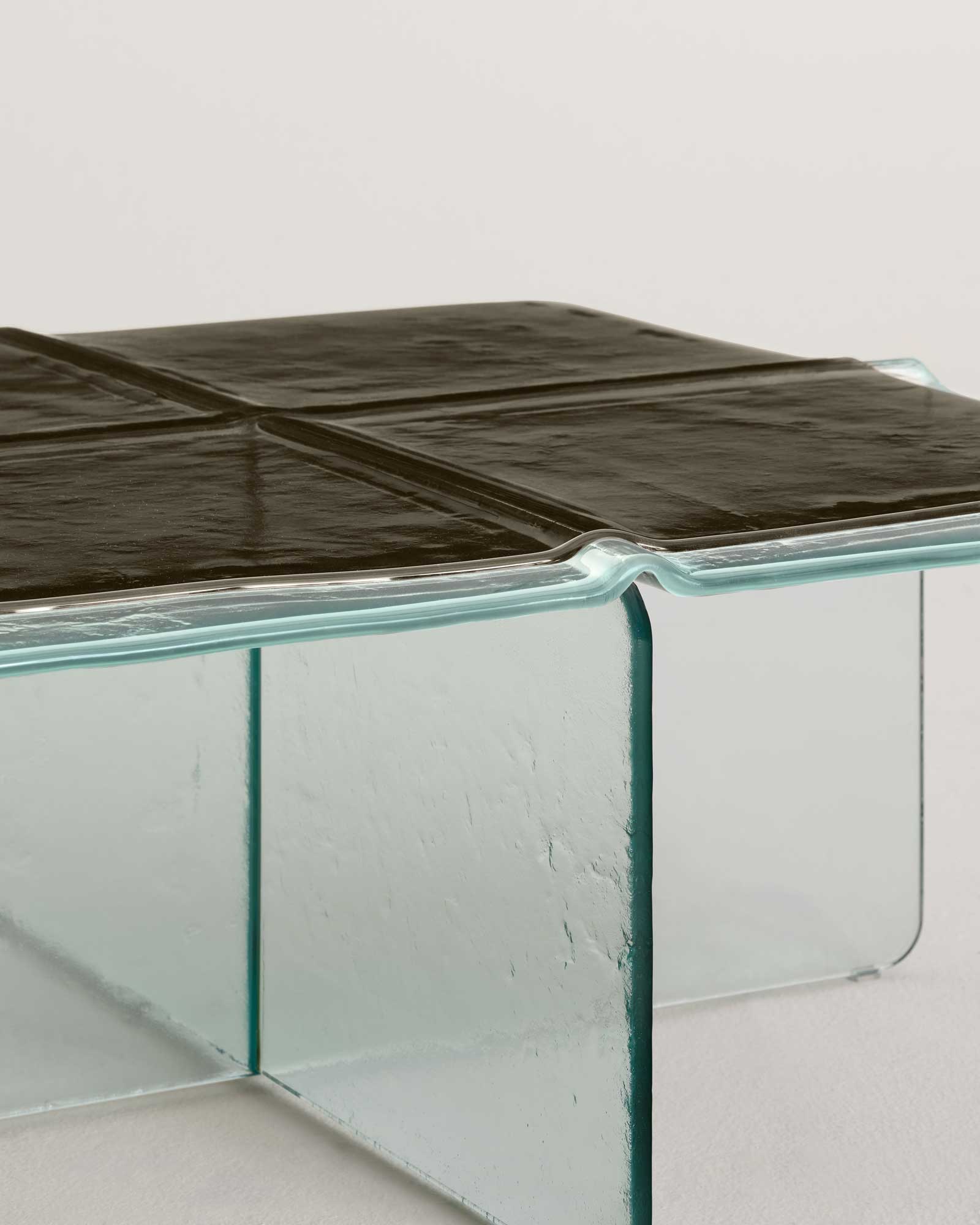
The base does the opposite work. Cut from 12-millimetre laminated glass, it stands as a set of near-invisible vertical fins, sometimes crossed in an X, sometimes run in parallel. Their transparency lets the coloured top appear to float, a slab of dense colour hovering over almost nothing. On the smaller side tables the top is fixed to the base; on the larger coffee tables it simply rests, loose, one heavy plane balanced on thin sheets of clear glass.

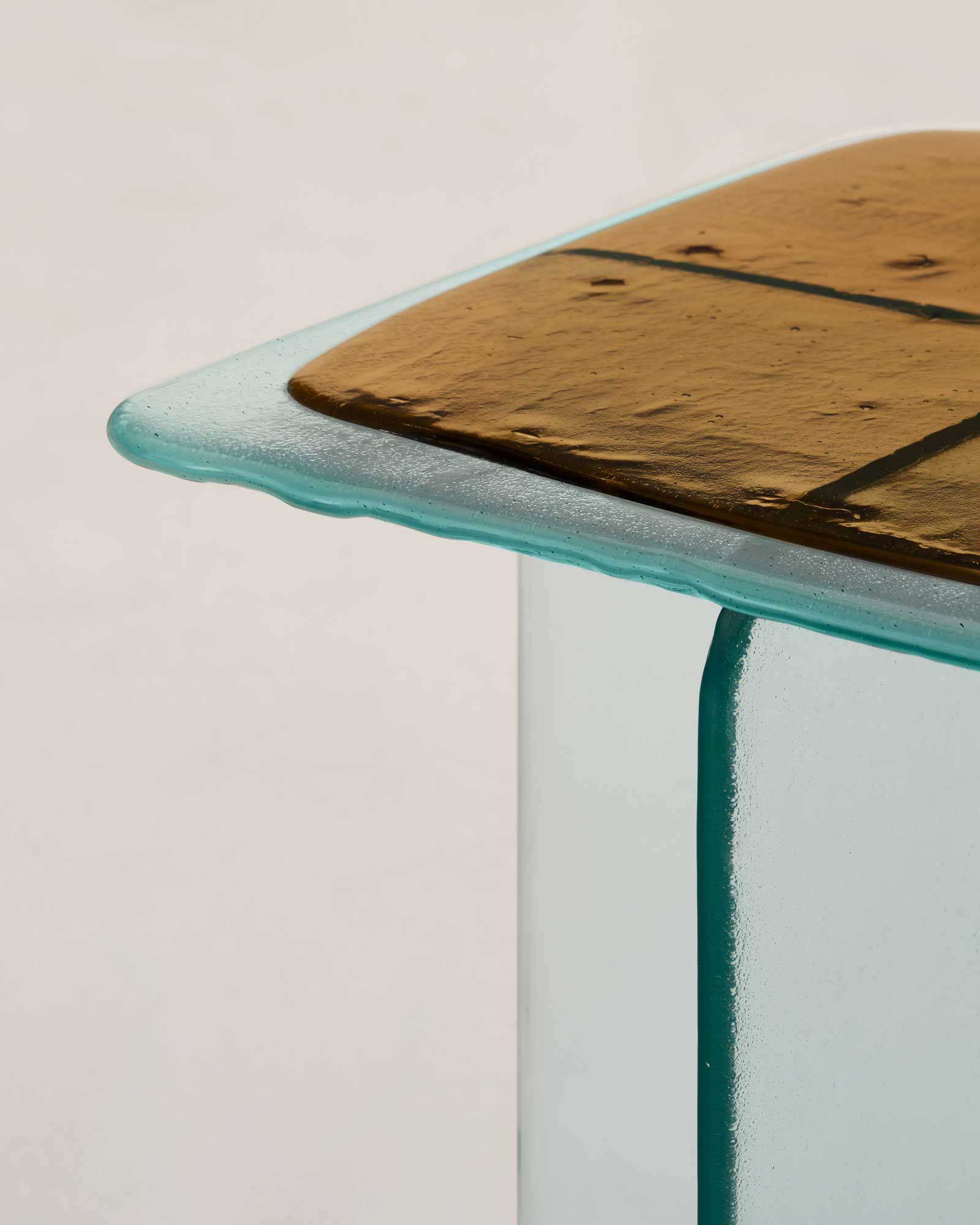
Up close, the casting shows its hand. Edges thicken and ripple where the molten glass ran and cooled, a frozen drip caught along the rim, and the surface keeps the frosted, slightly granular skin of material that was poured rather than polished. Against the machine-cut precision of the base, the top feels geological, less designed than found. It is the kind of tension Urquiola has long worked, between industrial process and something that looks like weather.

Glas Italia has spent decades treating glass as a structural material rather than a surface, and Glacier pushes that further by making the glass behave like water and stone at once. The result sits between furniture and object: a table that works, and a study in a material caught in the act of changing state.

Interested in Showcasing Your Work?

If you would like to feature your works on Thisispaper, please visit our Submission page and sign up to Thisispaper+ to submit your work. Once your submission is approved, your work will be showcased to our global audience of 2 million art, architecture, and design professionals and enthusiasts.
No items found.
Less, with more behind it.
Explore guides. Search the archive. Walk the atlas.
Become a Thisispaper+ member today to unlock full access to our magazine, advanced tools, and support our work.
Get two months FREE
with annual subscription
Less, with more behind it.
Explore guides. Search the archive. Walk the atlas.
Become a Thisispaper+ member today to unlock full access to our magazine, advanced tools, and support our work.
Get two months FREE
with annual subscription
No items found.
Hitoshi Arato
Jul 3, 2026

Glass usually wants to be flat; Glacier refuses. For Glas Italia, Patricia Urquiola casts table tops that ripple like thawing ice, fused onto extra-light glass fins and shown in Milan.

Glaciers, and the way eternal ice keeps moving even as it appears to hold still, gave Patricia Urquiola the starting point for Glacier, a collection of coffee and side tables presented by Glas Italia at Salone del Mobile 2026. The premise is a contradiction. Through a high-temperature casting process, glass gives up the flatness it is usually prized for. The surface reads as liquid, half-frozen, and the eye cannot quite decide whether it is looking at solid matter or at movement stopped mid-flow.

Each top is built from two layers. A coloured glass pane, available in bronze, grey, blue or amber, is fused onto a sheet of transparent extra-light glass. The bond leaves an irregular, dense texture that catches light and throws it back unevenly. In the amber version the surface pools like dark honey, pitted with tiny trapped bubbles; the blue reads almost black at its centre before clearing toward the edges. A faint grid of seams runs across each top, the trace of the tiles fused together, so the ice never looks whole.

The base does the opposite work. Cut from 12-millimetre laminated glass, it stands as a set of near-invisible vertical fins, sometimes crossed in an X, sometimes run in parallel. Their transparency lets the coloured top appear to float, a slab of dense colour hovering over almost nothing. On the smaller side tables the top is fixed to the base; on the larger coffee tables it simply rests, loose, one heavy plane balanced on thin sheets of clear glass.

Up close, the casting shows its hand. Edges thicken and ripple where the molten glass ran and cooled, a frozen drip caught along the rim, and the surface keeps the frosted, slightly granular skin of material that was poured rather than polished. Against the machine-cut precision of the base, the top feels geological, less designed than found. It is the kind of tension Urquiola has long worked, between industrial process and something that looks like weather.

Glas Italia has spent decades treating glass as a structural material rather than a surface, and Glacier pushes that further by making the glass behave like water and stone at once. The result sits between furniture and object: a table that works, and a study in a material caught in the act of changing state.

Interested in Showcasing Your Work?

If you would like to feature your works on Thisispaper, please visit our Submission page and subscribe to Thisispaper+. Once your submission is approved, your work will be showcased to our global audience of 2 million art, architecture, and design professionals and enthusiasts.
No items found.

Join Thisispaper+
Unlock access to 2500 stories, curated guides + editions, and share your work with a global network of architects, artists and designers who are shaping the future.
Get two months FREE
with annual subscription
Travel Guides
Immerse yourself in timeless destinations, hidden gems, and creative spaces—curated by humans, not algorithms.
Explore All Guides +
Submission Module
Submit your project and gain the chance to showcase your work to our worldwide audience of over 2M architects, designers, artists, and curious minds.
Learn More+
Curated Editions
Dive deeper into carefully curated editions, designed to feed your curiosity and foster exploration.
Off-the-Grid
Jutaku
Sacral Journey
minimum
The New Chair
Explore All Editions +
Atlas
A new and interactive way to explore the most inspiring places around the world.
Interactive map
Linked to articles
450+ curated locations
Google + Apple directions
Smart filters
Subscribe to Explore+
Become a Thisispaper+ member today to unlock full access to our magazine, submit your project and support our work.
Join Thisispaper+Join Thisispaper+
€9/month
Get two months FREE
with annual subscription