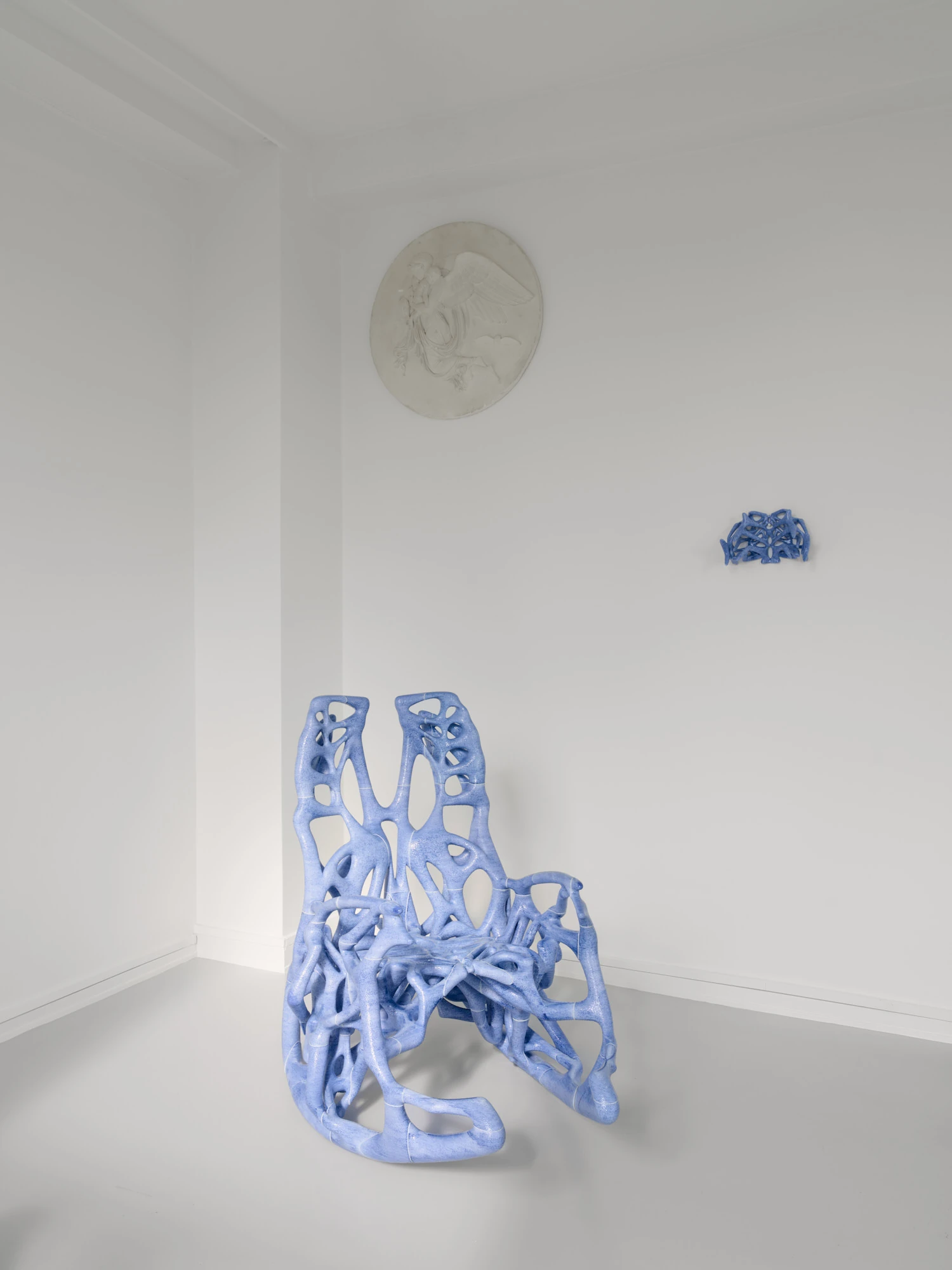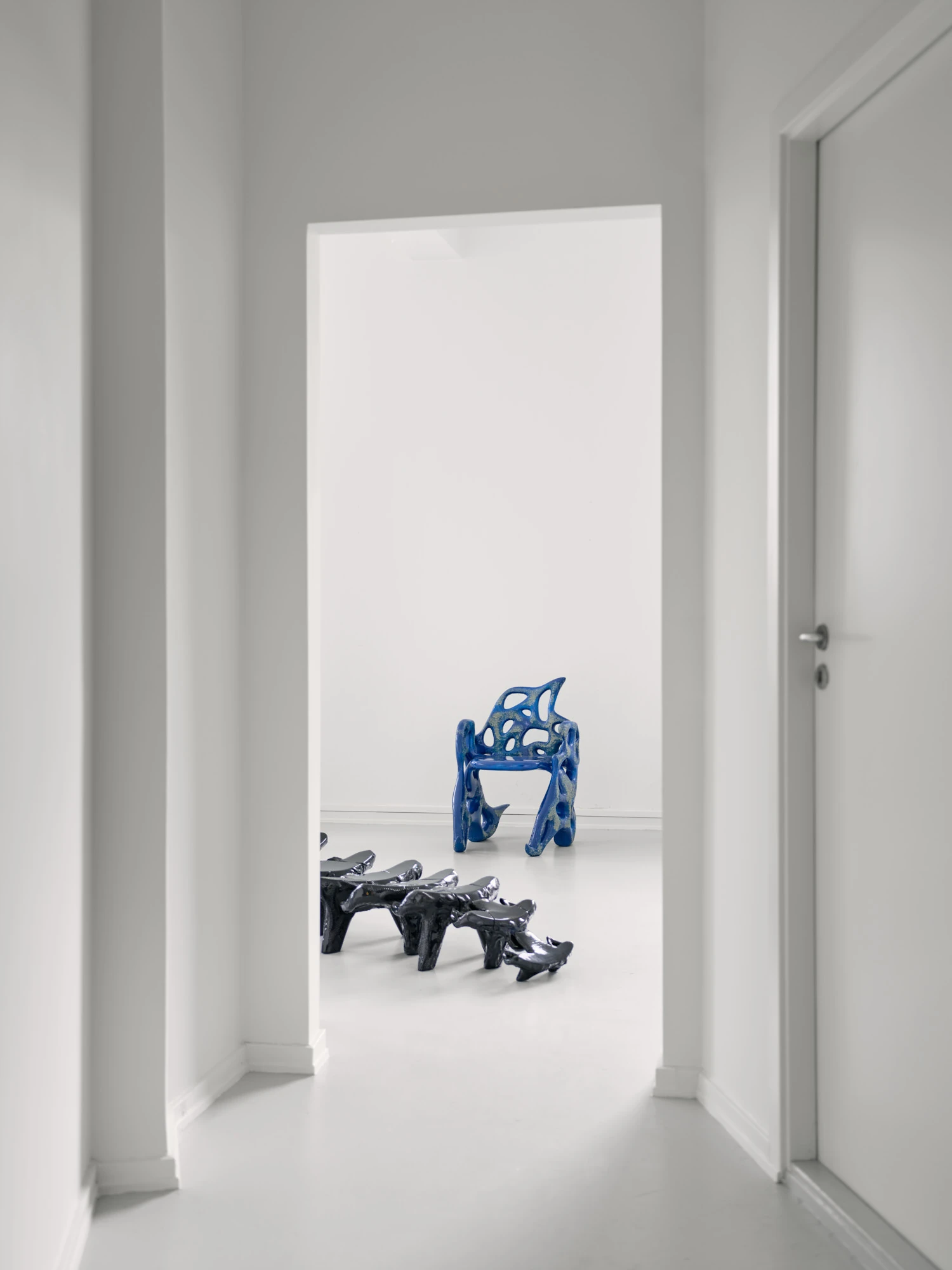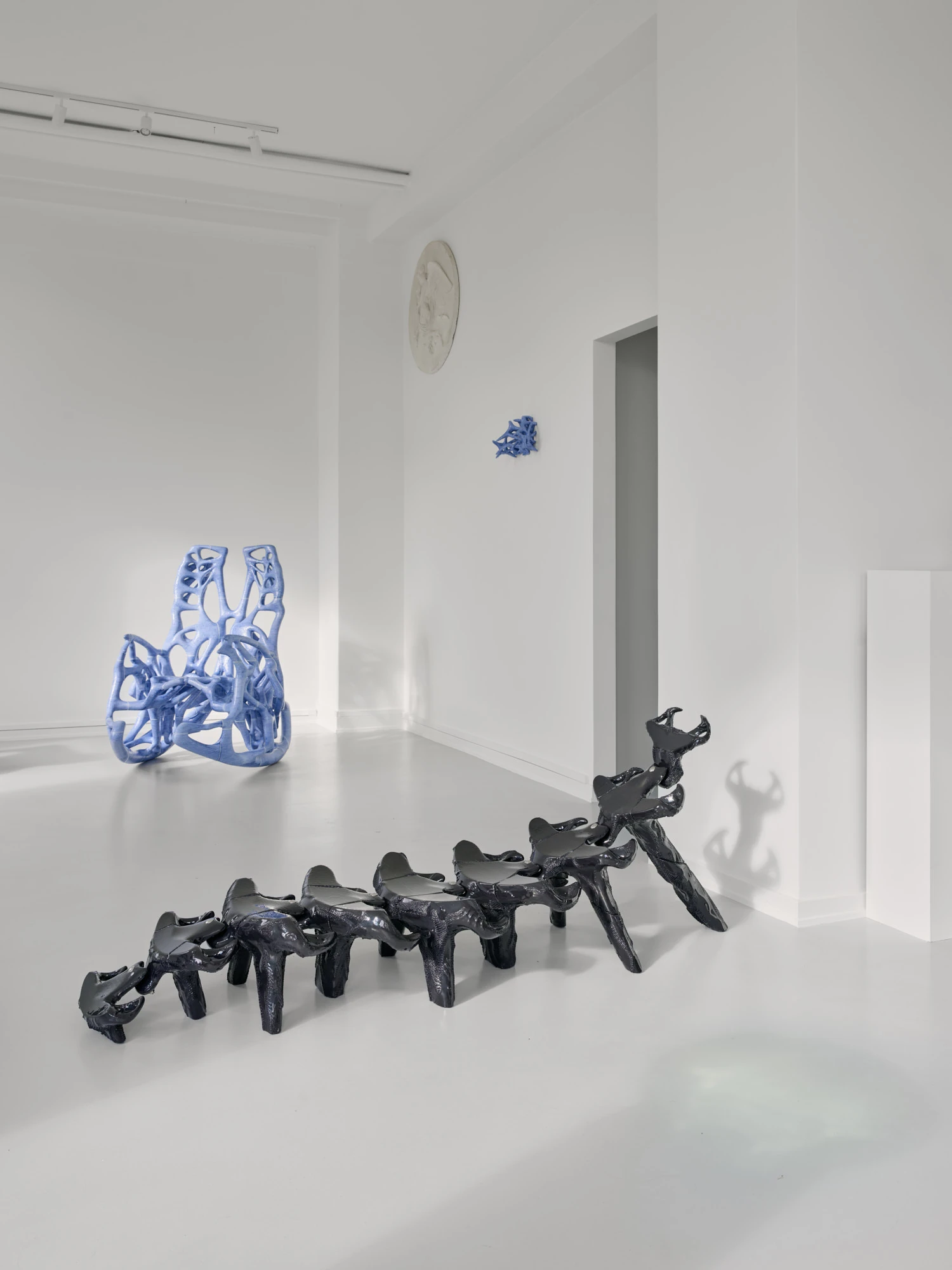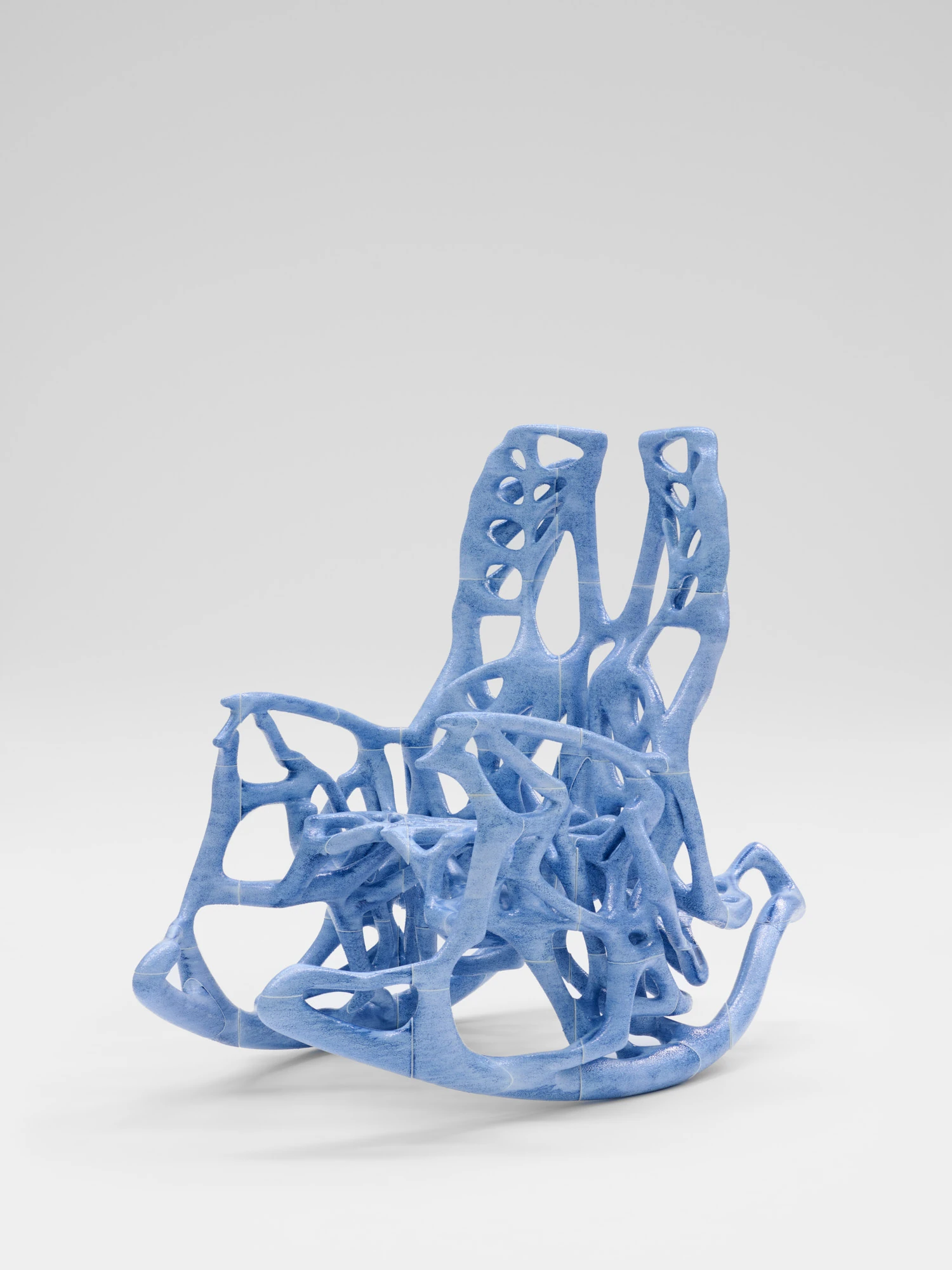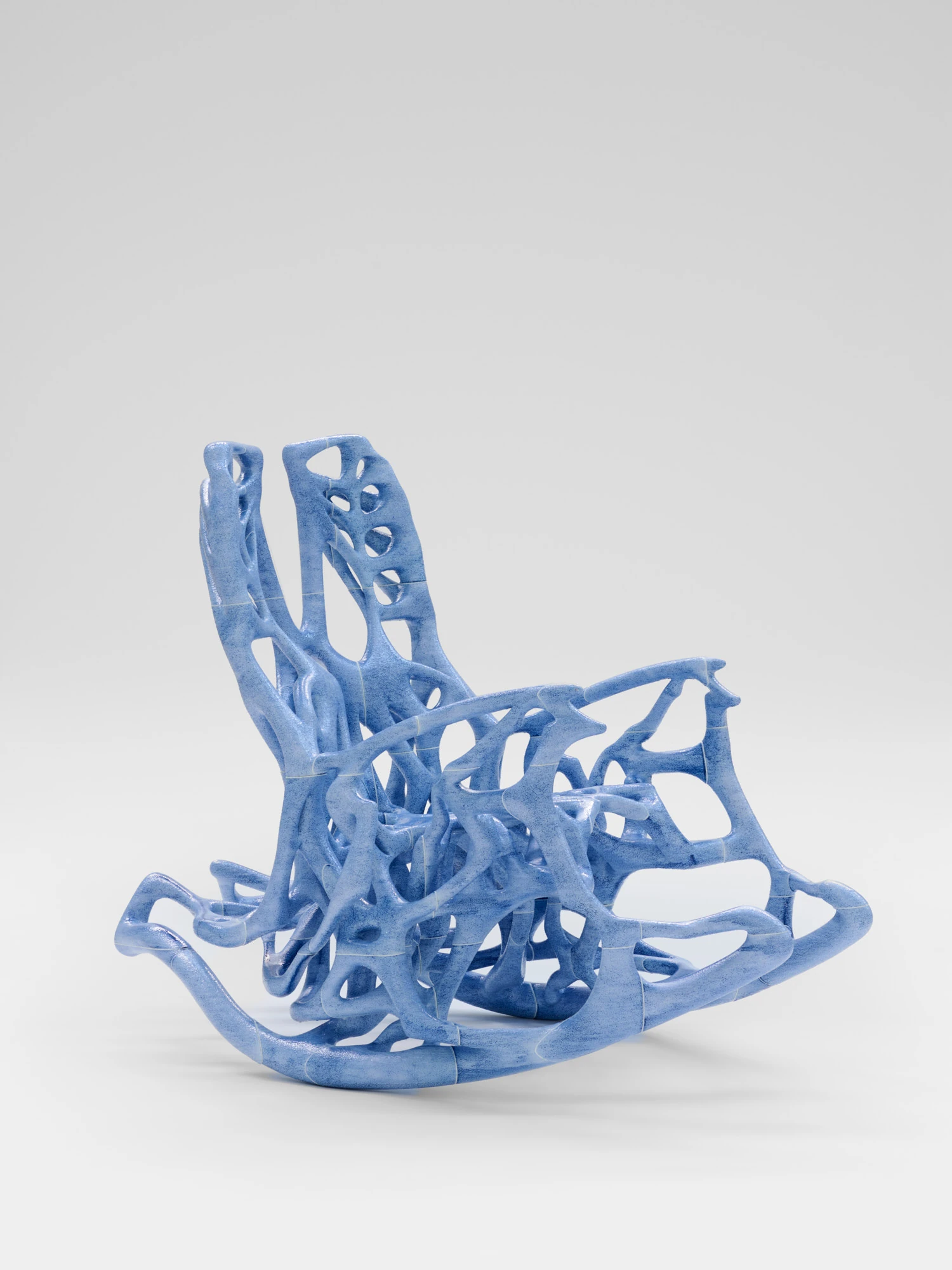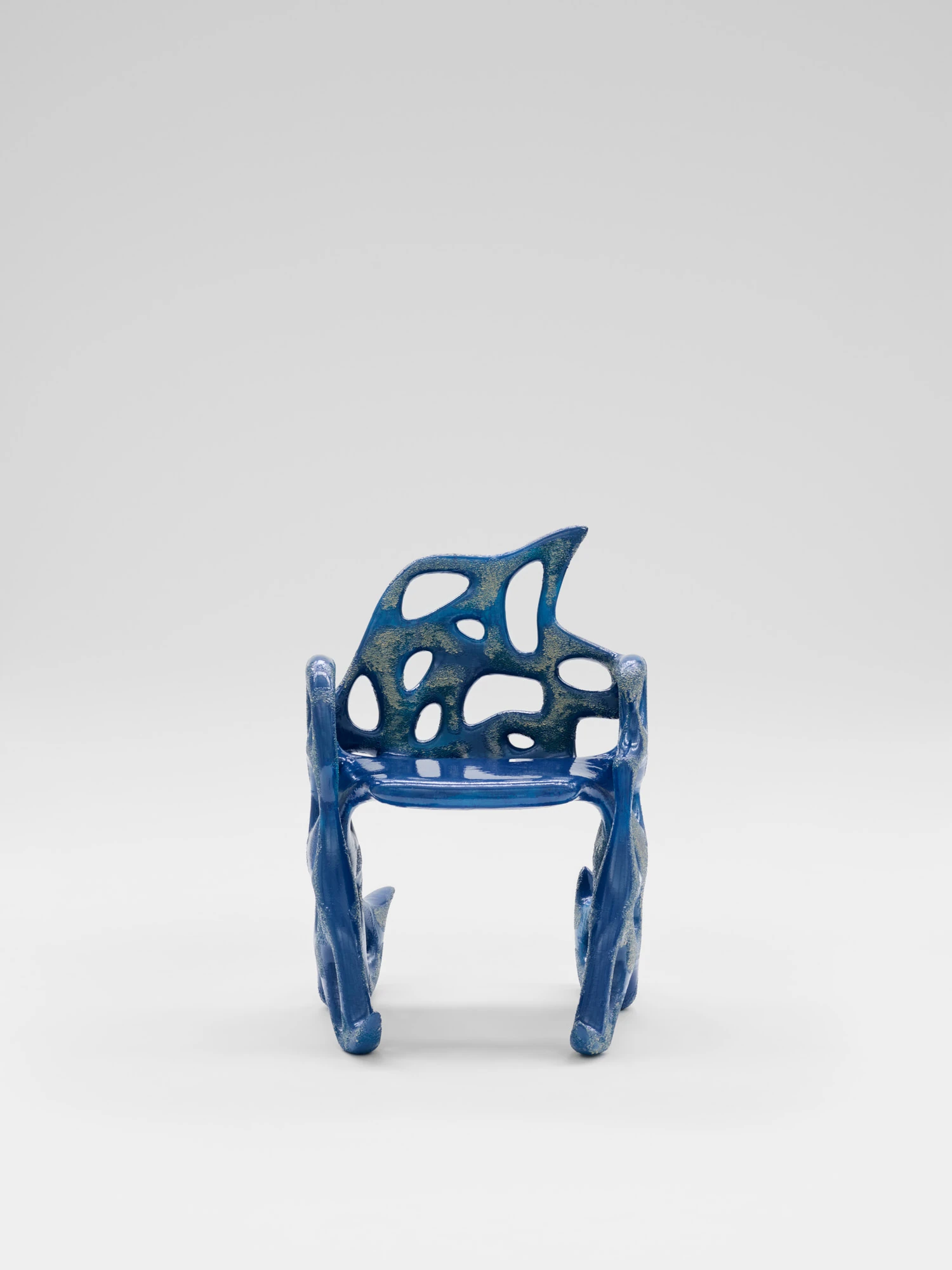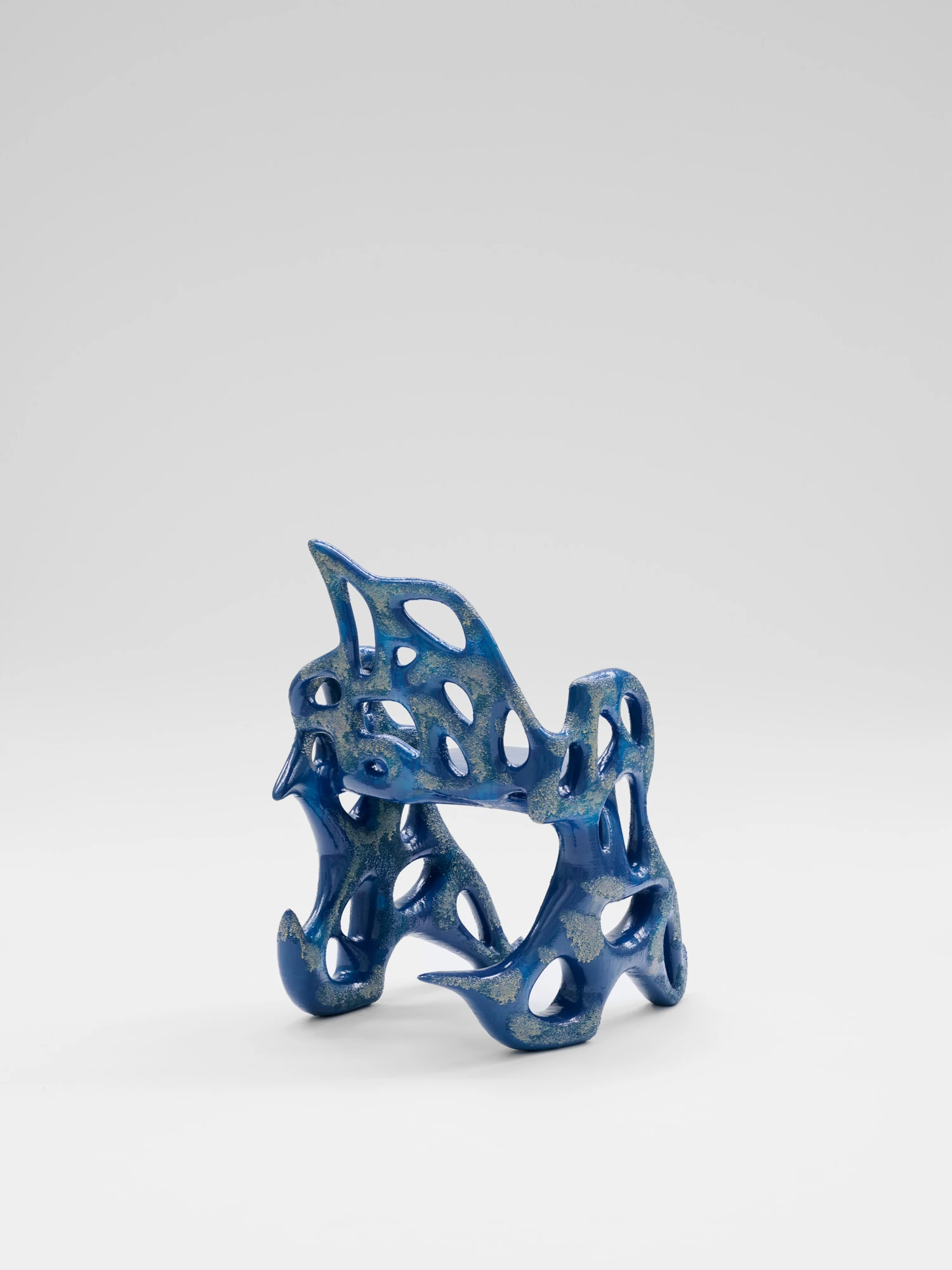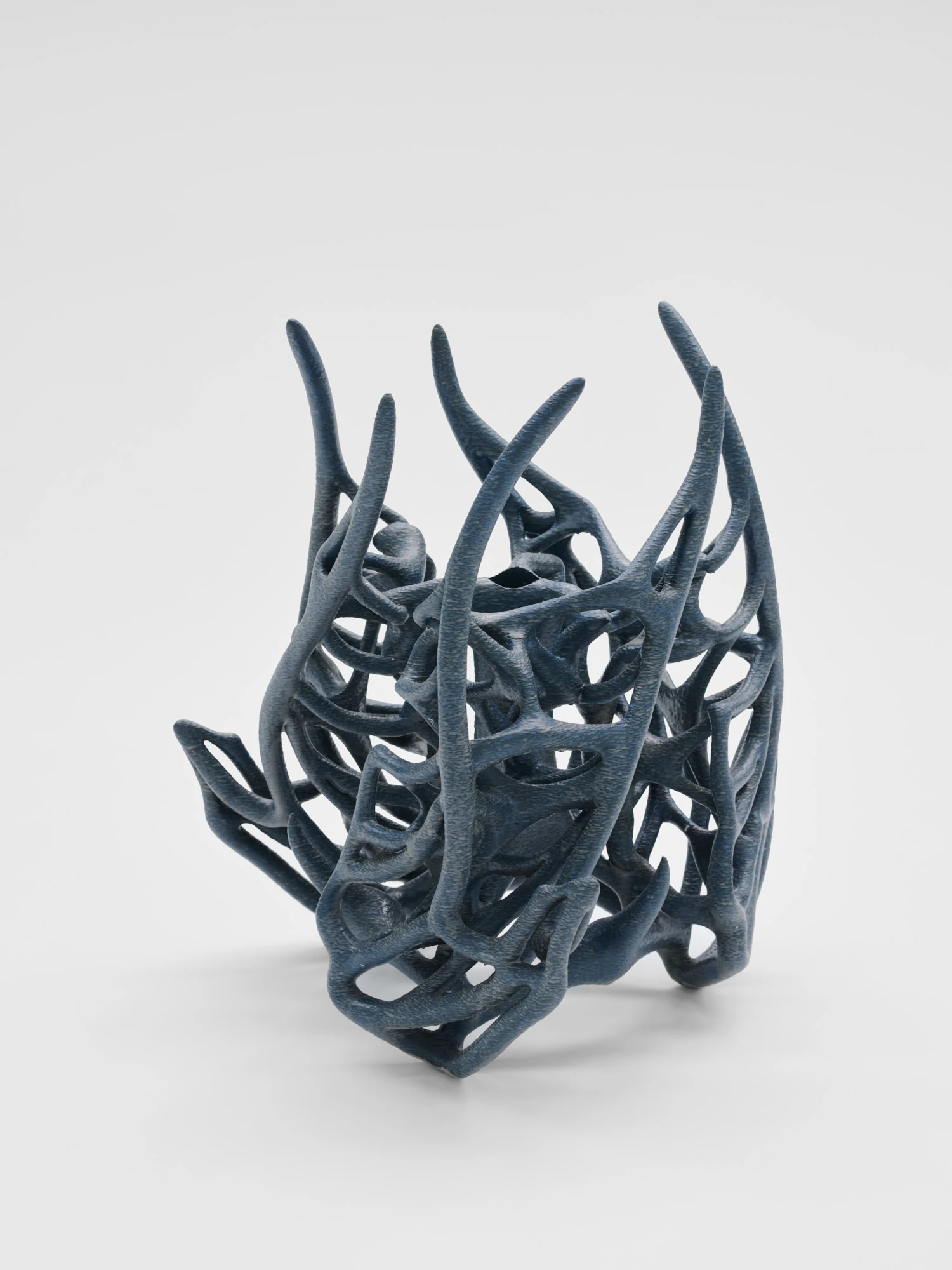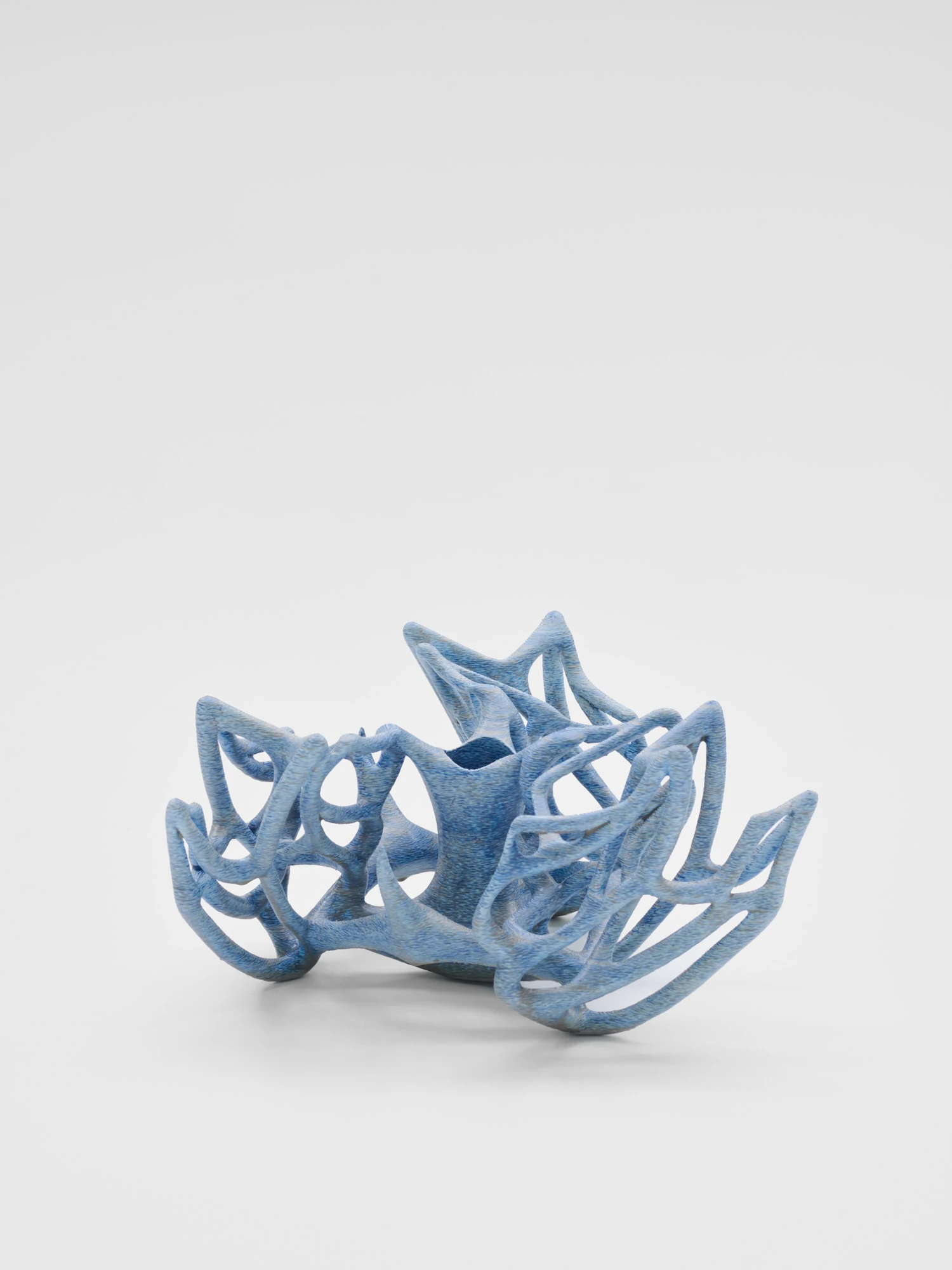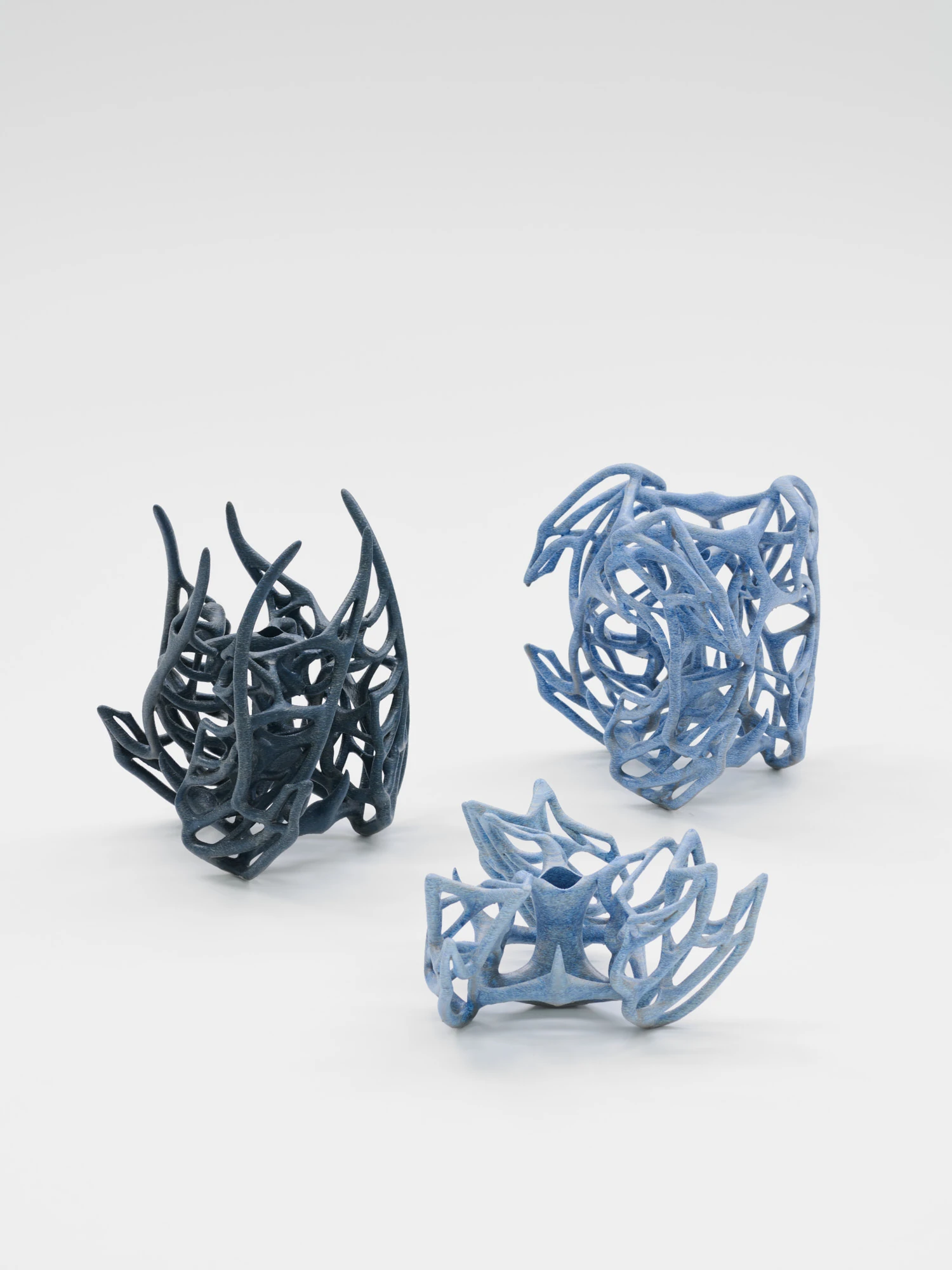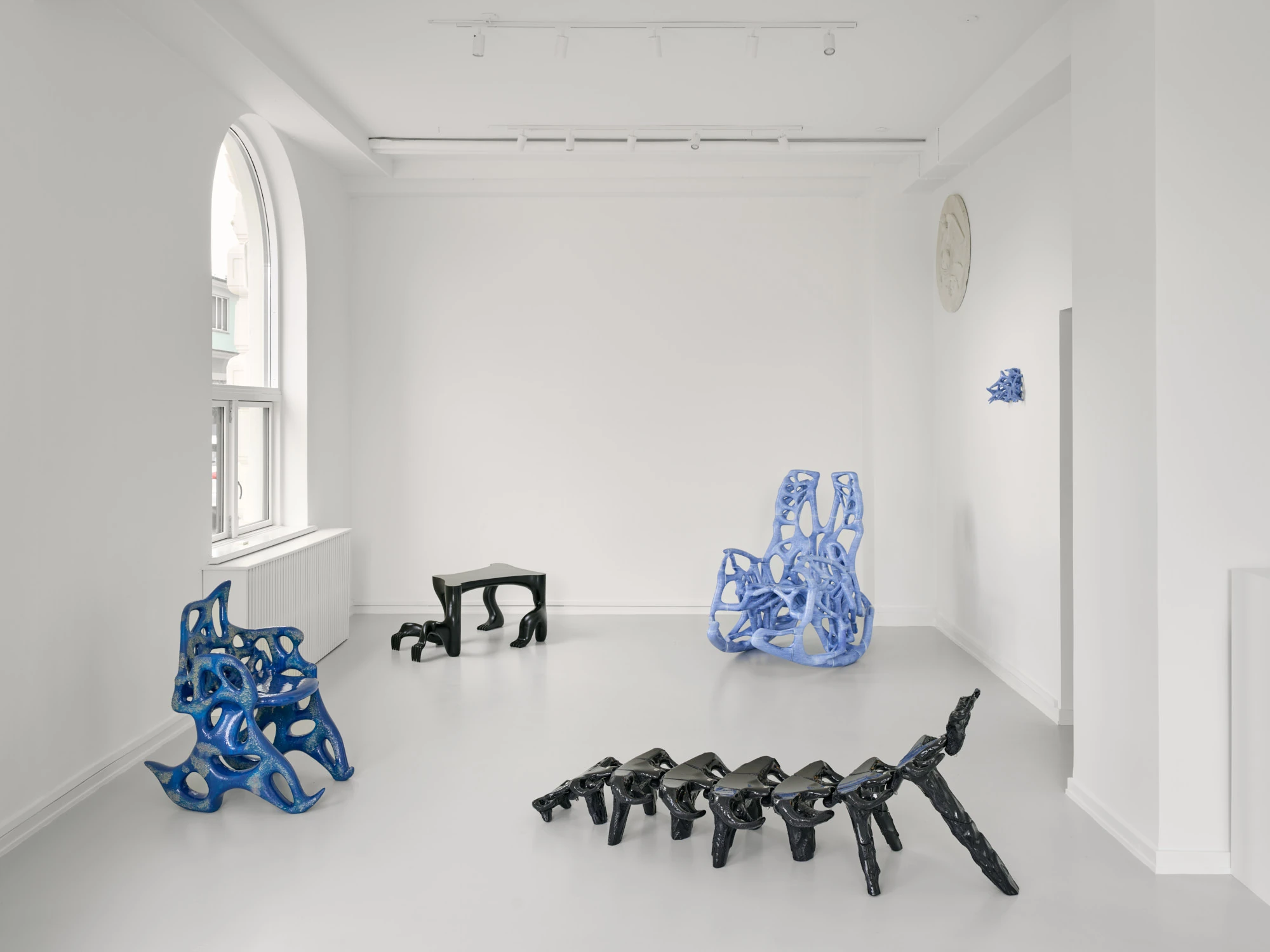
At Innenkreis on Herluf Trolles Gade 28 in Copenhagen, Lasse Sylvest Lilleør stages Extrude, Bridge, Fill, four 3D-printed works that behave less like furniture than like creatures consenting to be used.
Innenkreis opened this year on Herluf Trolles Gade 28, a Copenhagen gallery that Zeynep Rekkali Jensen devotes to functional artworks shown alongside pre-1940 decorative arts. For a programme built on studio-made uniques and small editions, Lasse Sylvest Lilleør (b. 1995) makes a fitting first proposition. Extrude, Bridge, Fill takes its name from a sequence of commands, the instructions a designer types to make a machine build. Read aloud, they turn into something closer to a spell.
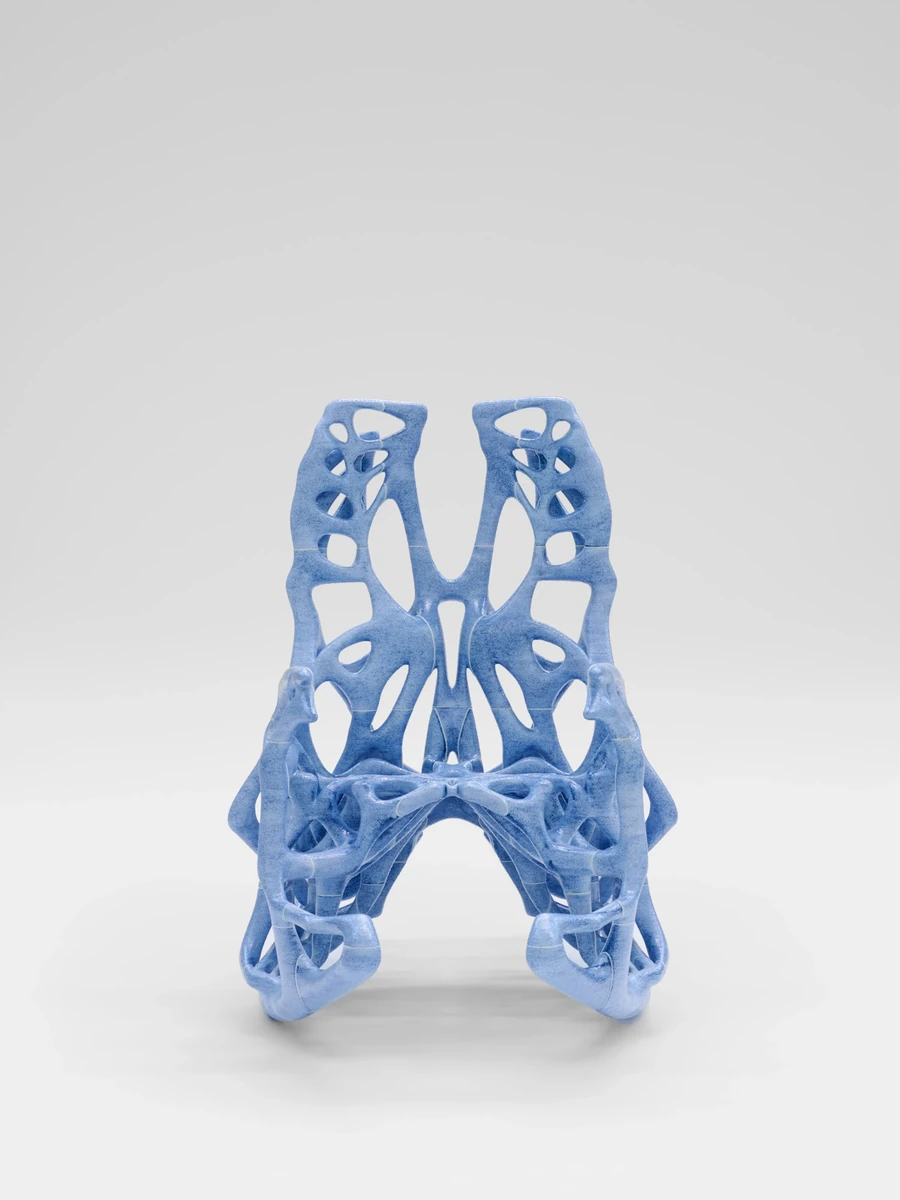
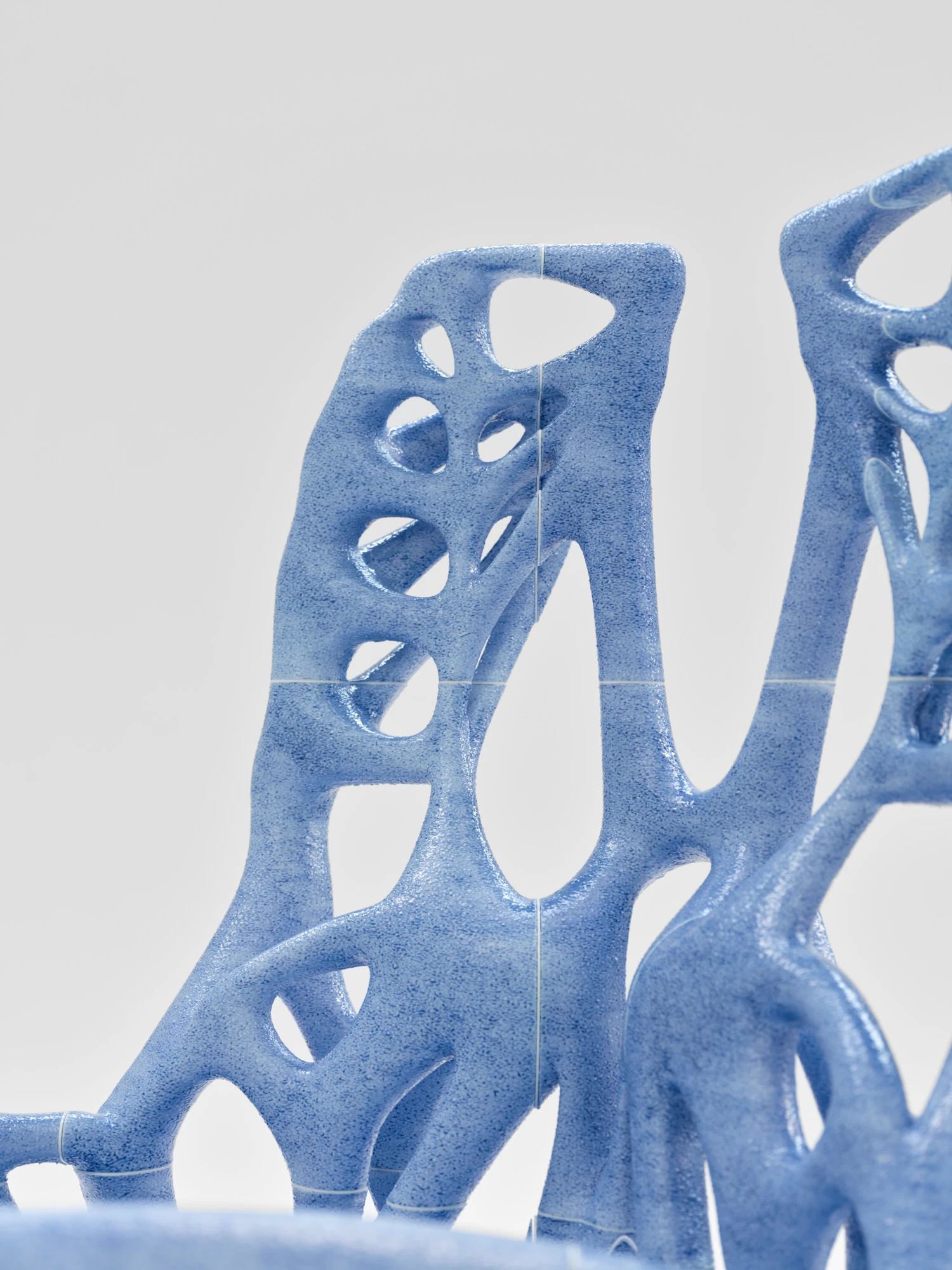
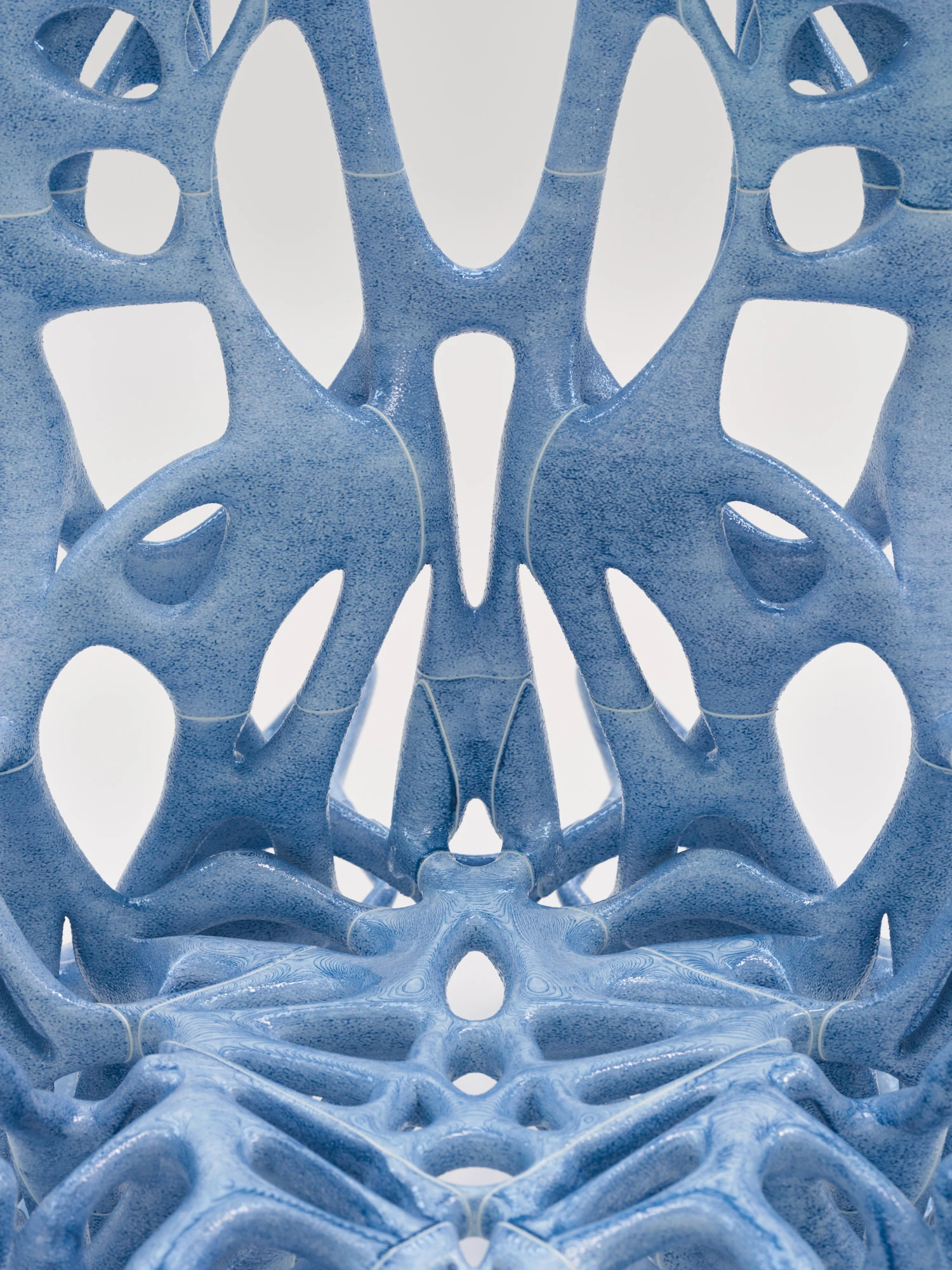
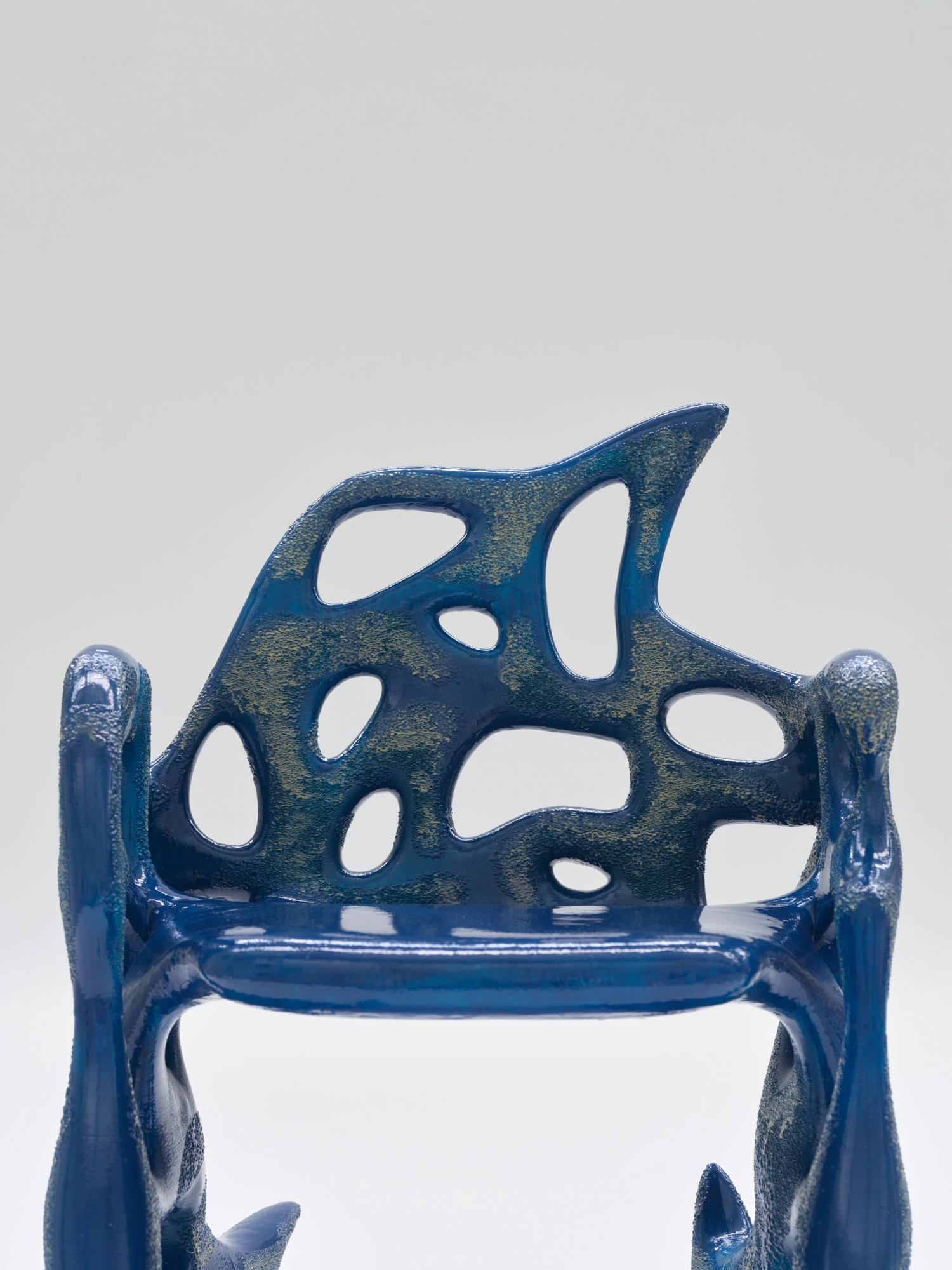
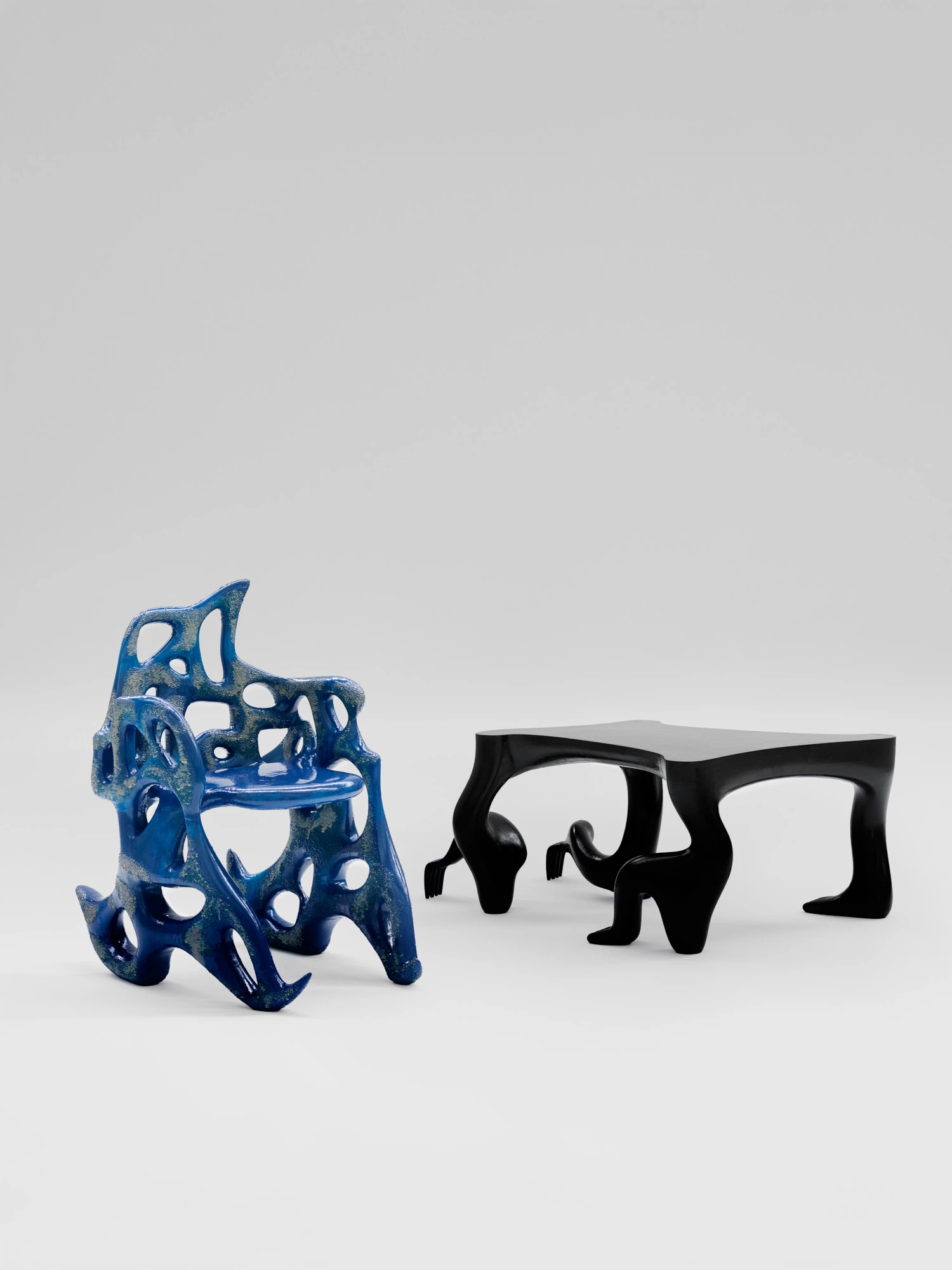
The gallery reads the title as a litany, “commands spoken to software, verbs that conjure form out of nothing.” What they summon are four works that behave less like furniture than like animals paused mid-gesture. At the centre stands a rocking chair of outsize proportions, its frame a tangle of bone-blue ligaments that open like a ribcage. It is no maquette. Titled after its own tally of parts, joints and dowels, and printed in PLA with resin and dye, it is built to hold and to rock a grown adult, the body returned to the nursery and lulled to sleep inside a skeleton.
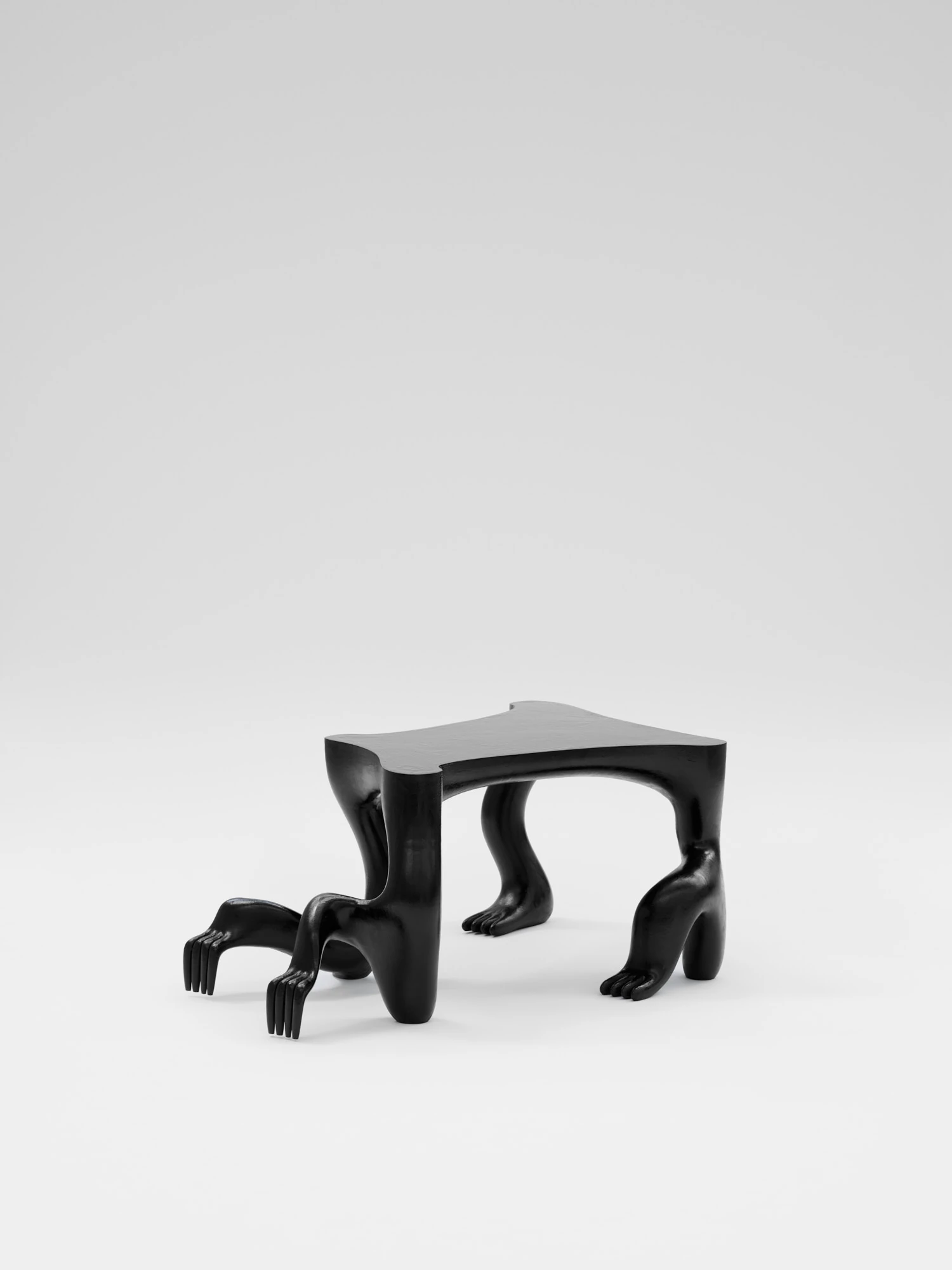
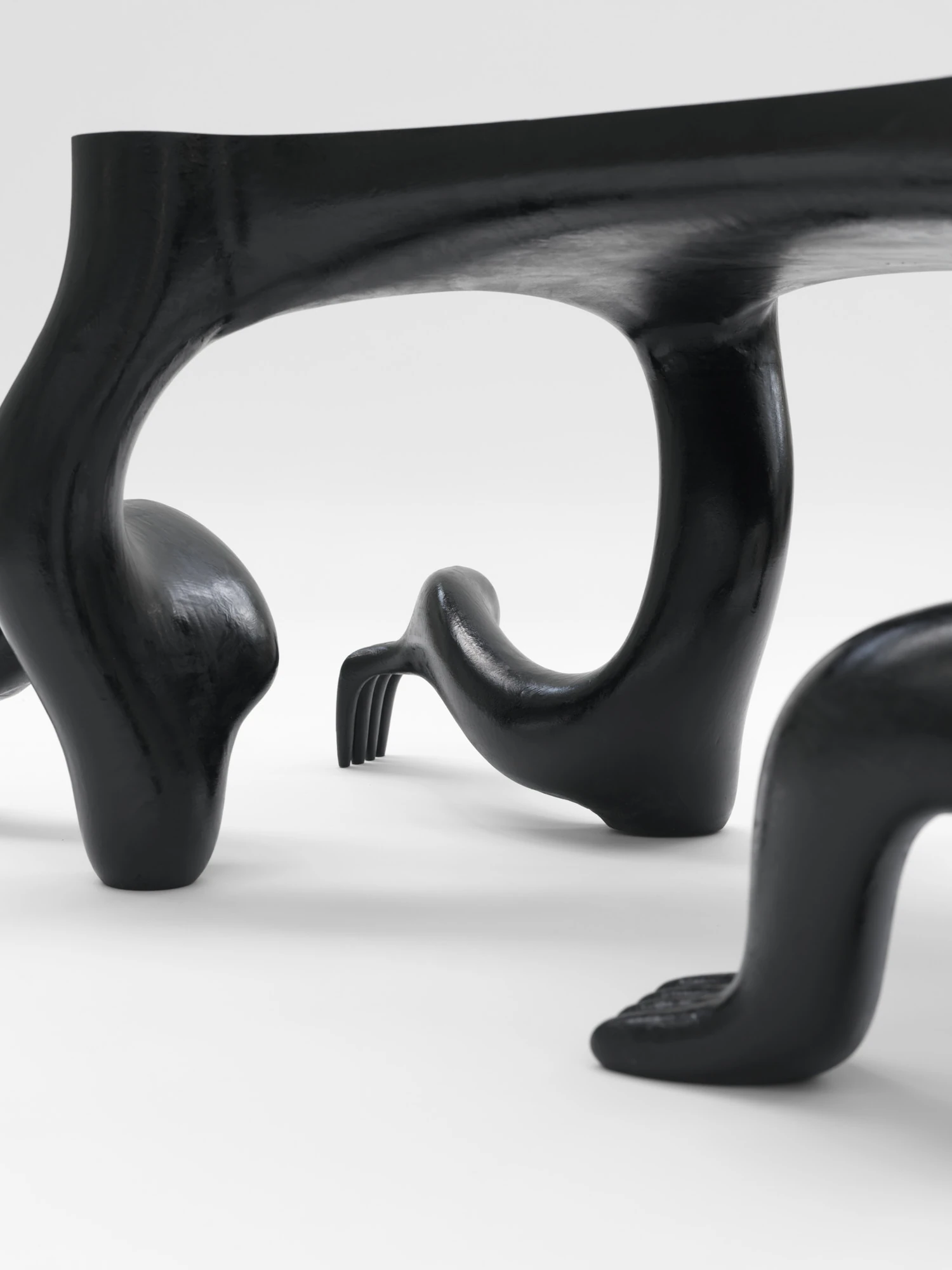
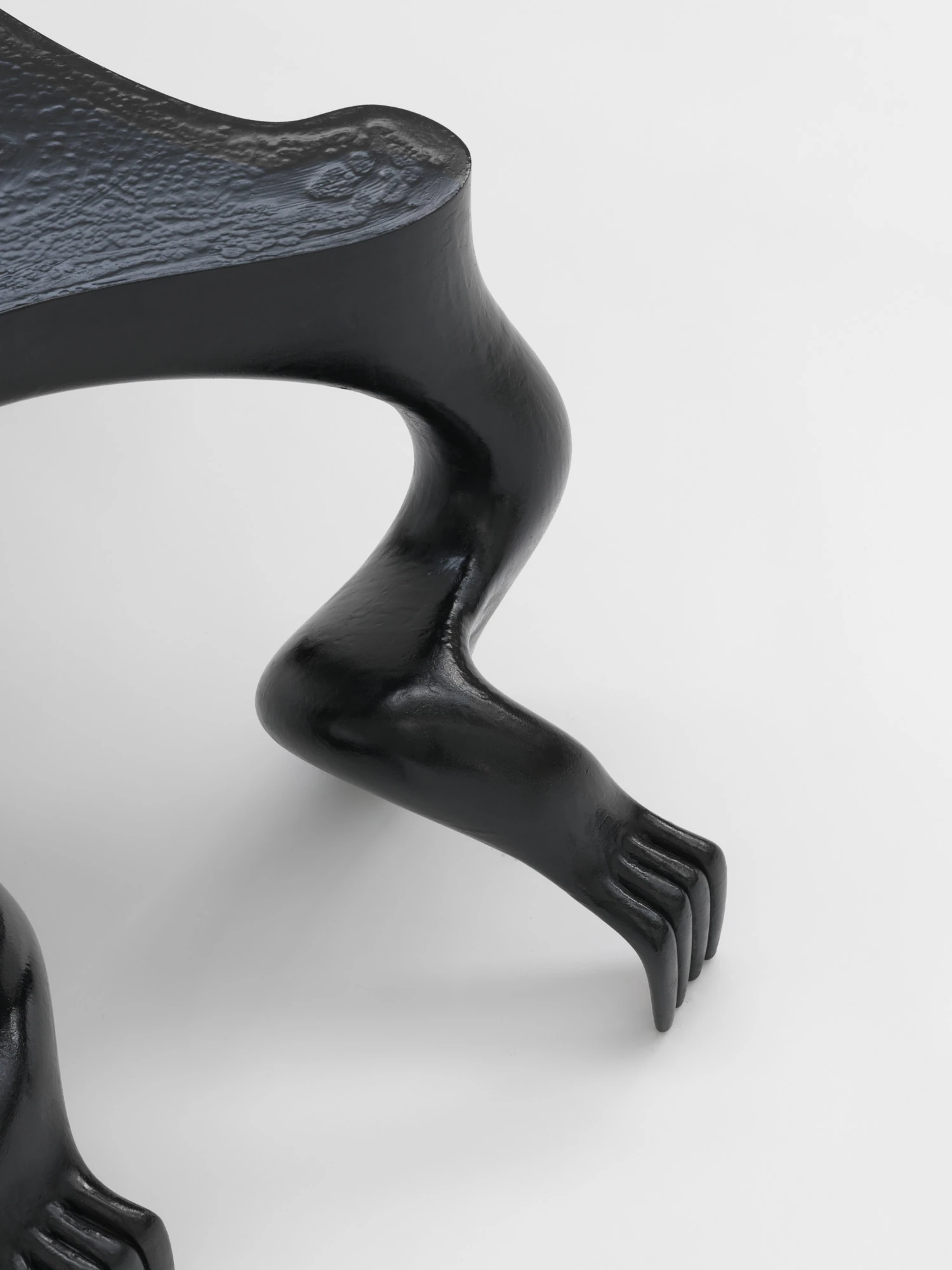
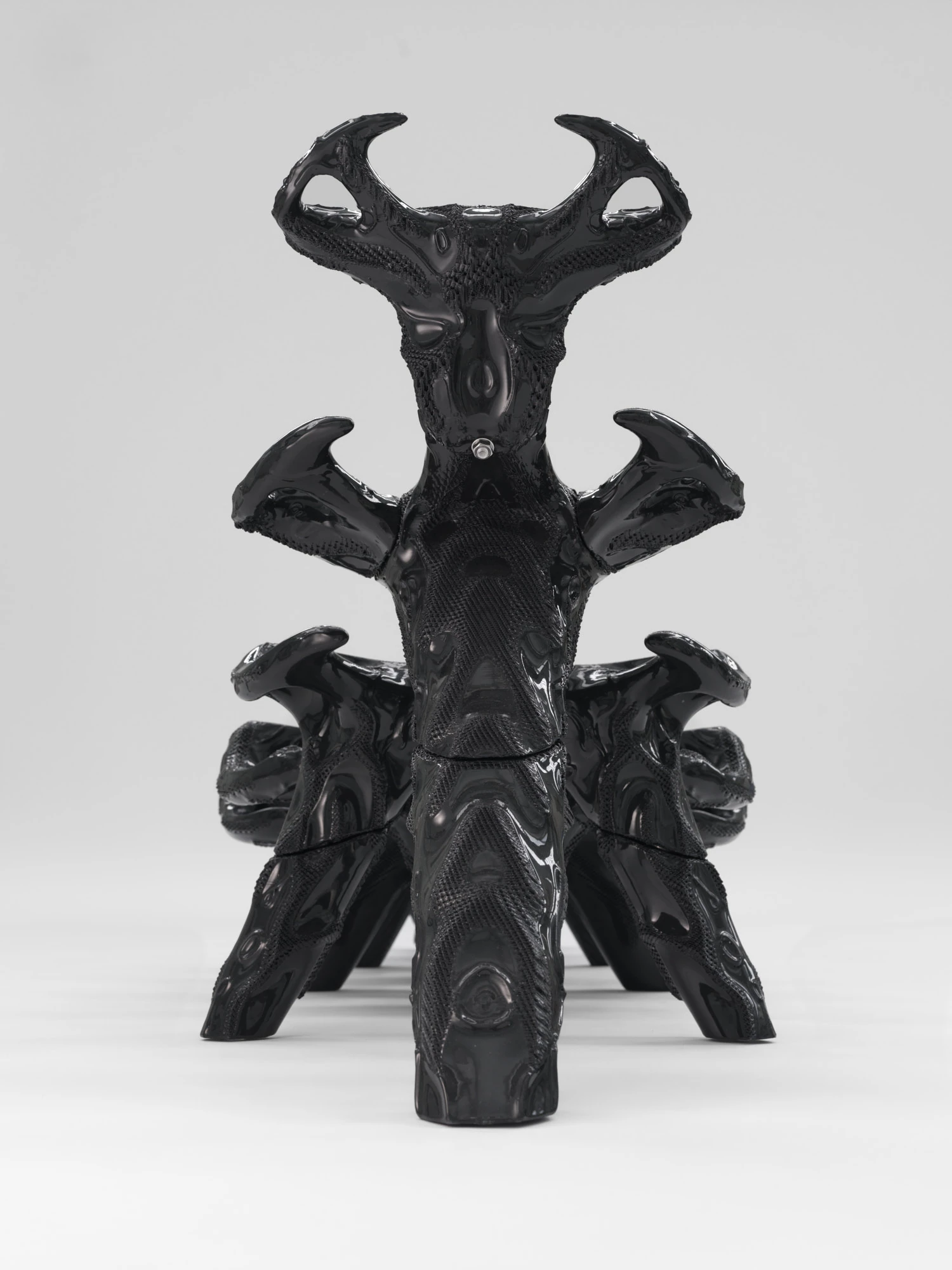
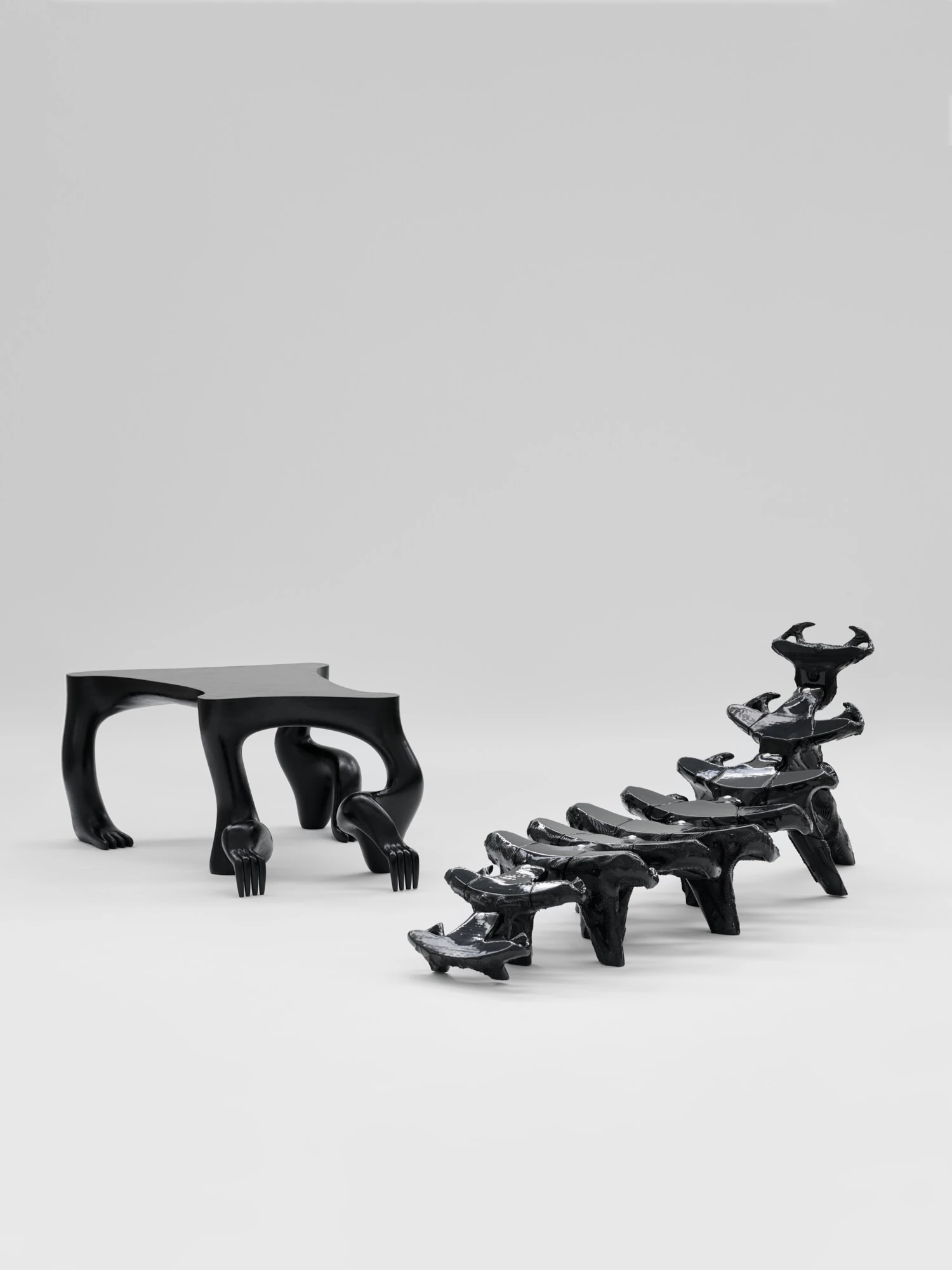
Three siblings complete the anatomy. The Crawler Coffee Table earns its name, a black top carried on cast human legs and hands frozen mid-stride, part animal and part servant. Dazing Devil, a lounger shaped as an oversized spinal column, asks the sitter to lie down vertebra to vertebra along another spine. The Sleigh Chair looks solid by comparison and hides its joints, yet it too was printed in pieces, assembled and finished by hand. As the gallery puts it, “the command conjures the body; the pigment consecrates it in the artist’s hands.”
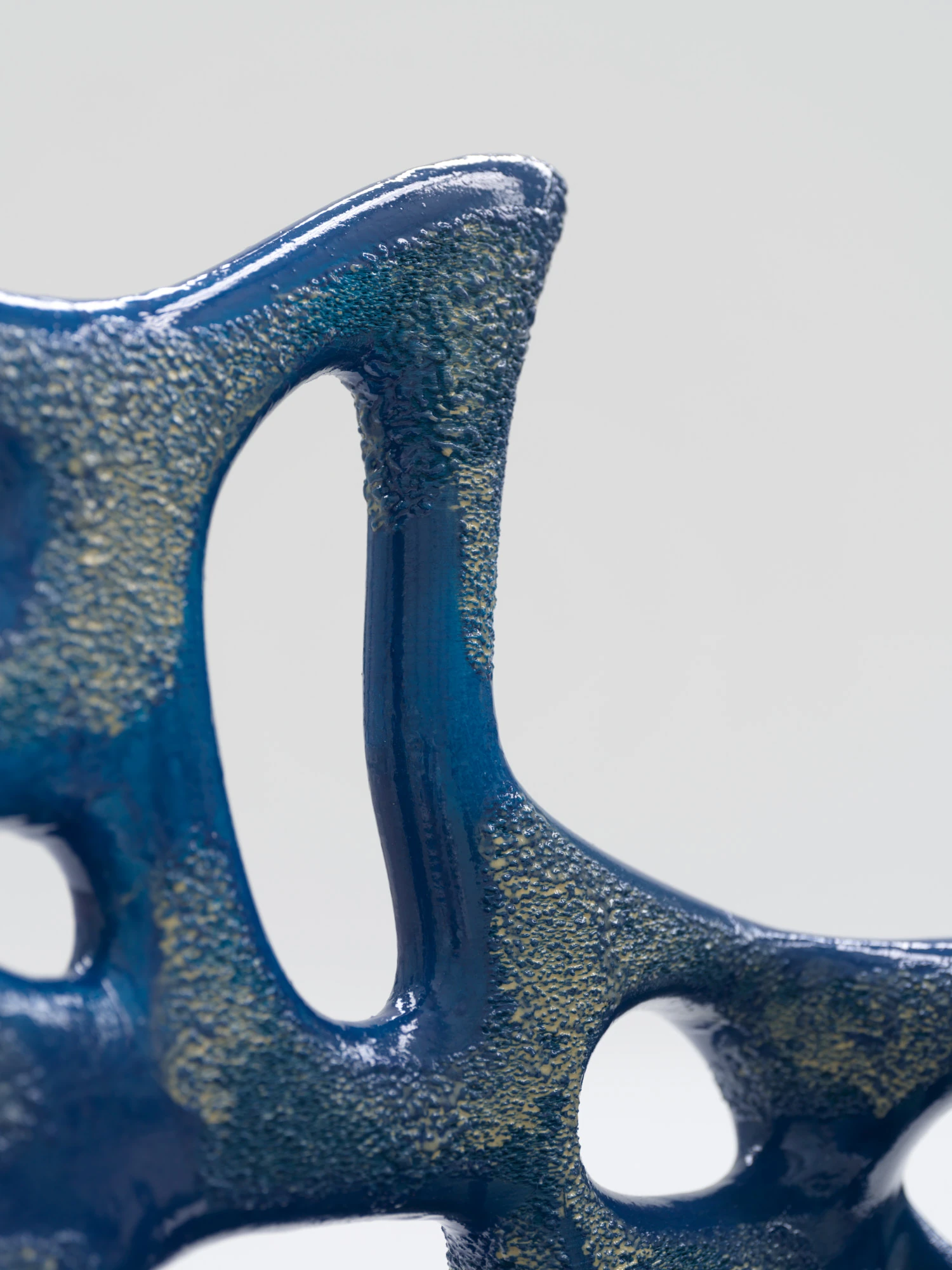
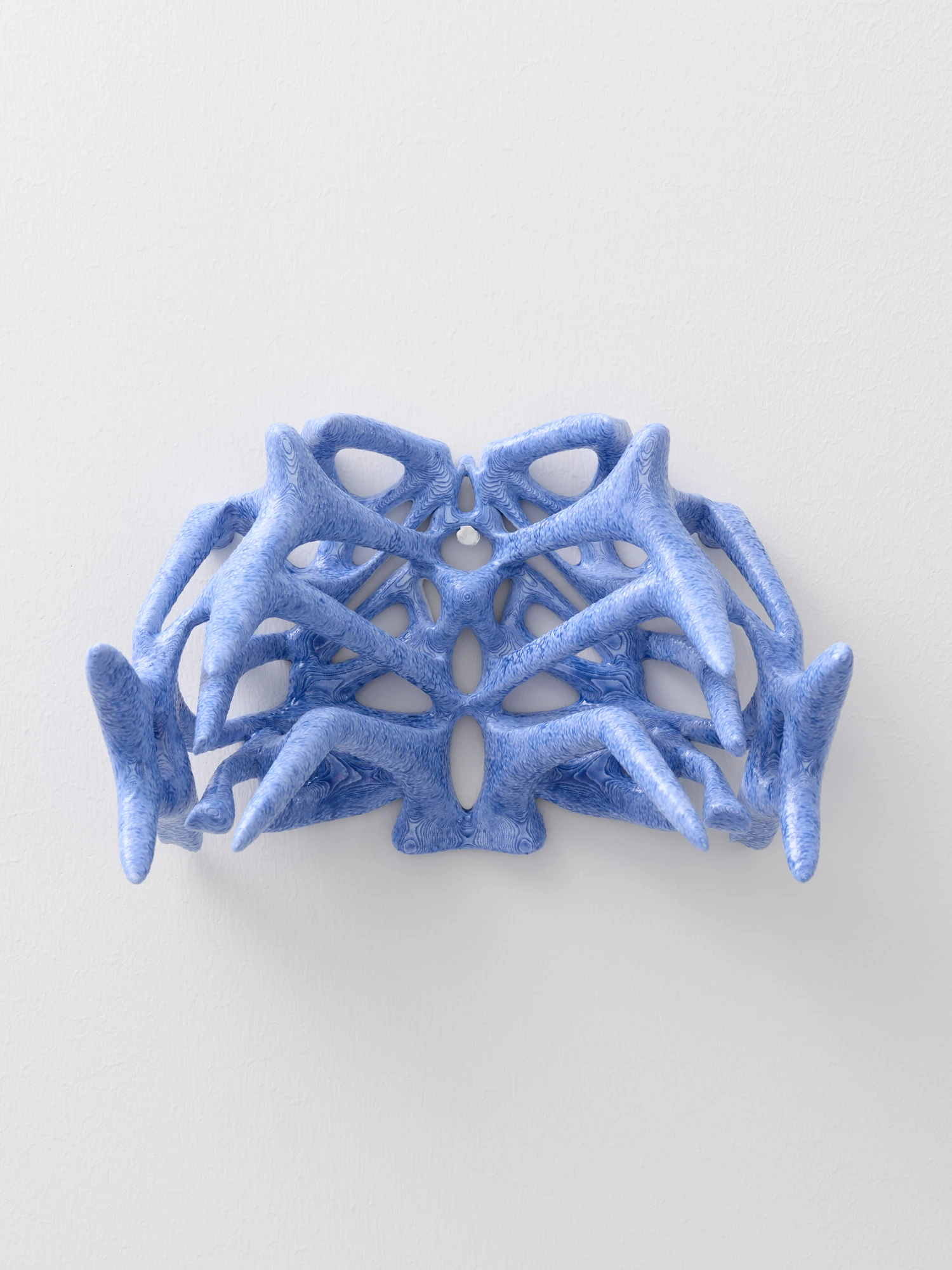
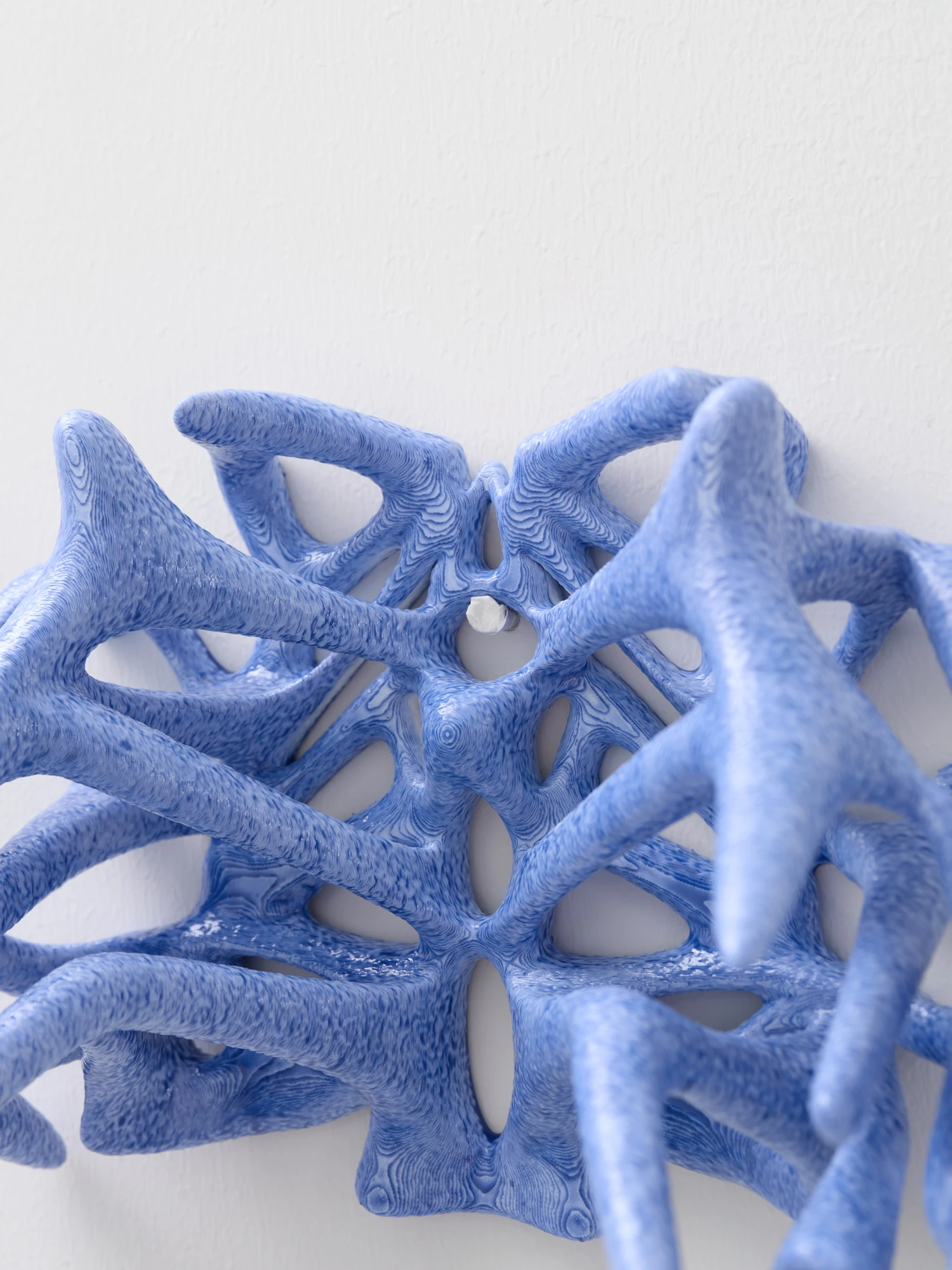
Lilleør works against the grain of what 3D printing usually promises. Rather than reproduce familiar objects, he pushes the tool toward the complex, organic geometries it allows, moving between Rhino and Blender and setting himself constraints that leave the trace of process on the surface rather than sanding it away. The striated skin of each piece records the path of the print head, layer on layer, so the object never fully forgets how it was made. Colour arrives last, a dye that settles into bone-blue, cobalt and black.
What binds the group is not a shared silhouette. Each body came out of the same syntax, and as the gallery writes, each “bears in its striated flesh the memory of being written.” Lilleør keeps that memory legible, which is the argument of the show: a made thing can carry its own instructions on its skin, and a chair can be both tool and testament. Extrude, Bridge, Fill runs at Innenkreis through 17 October 2026.