Across the backroads of Marin County, California, Benjamin Young photographs Eternal Return, a black-and-white cycle that reads a familiar landscape through home, seasons, and the passage between birth and death.
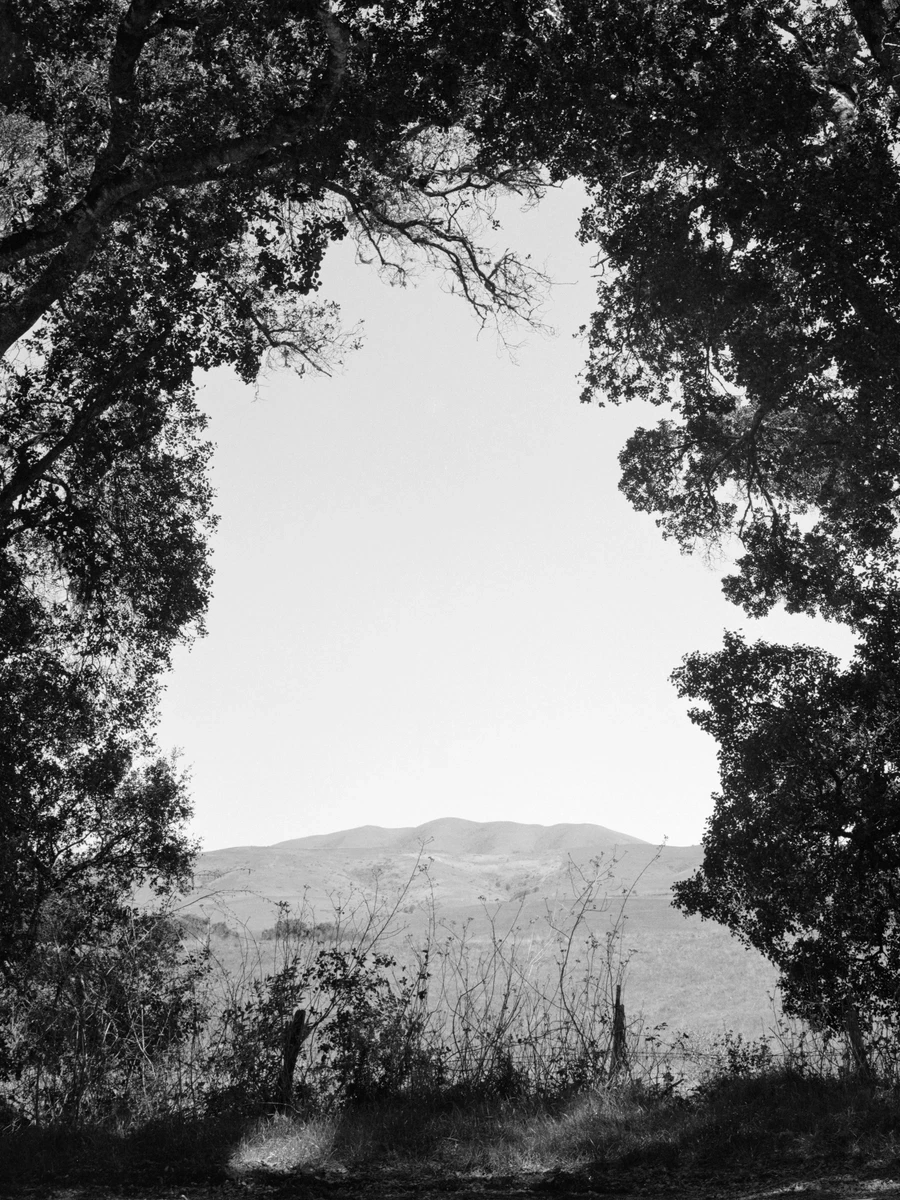
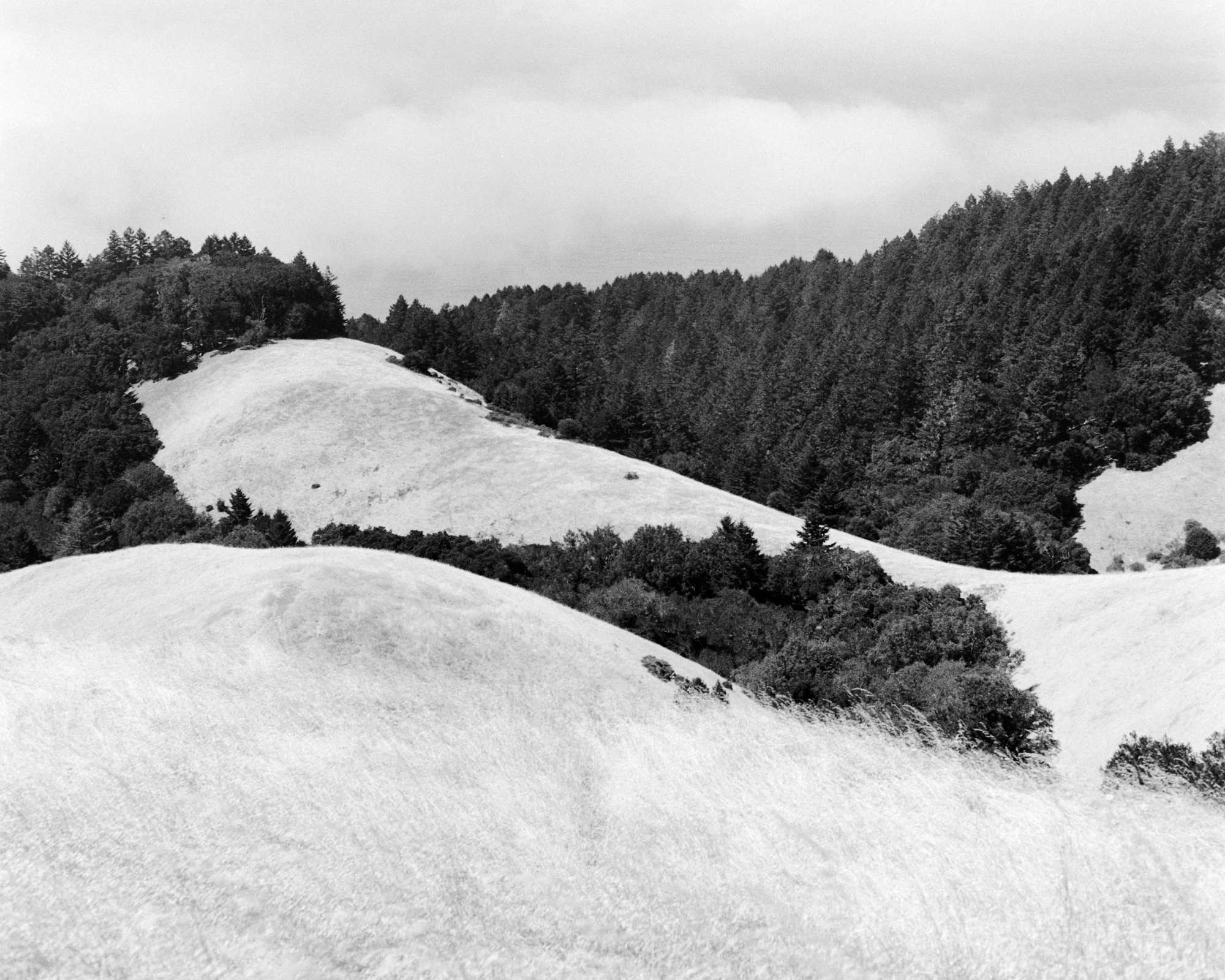
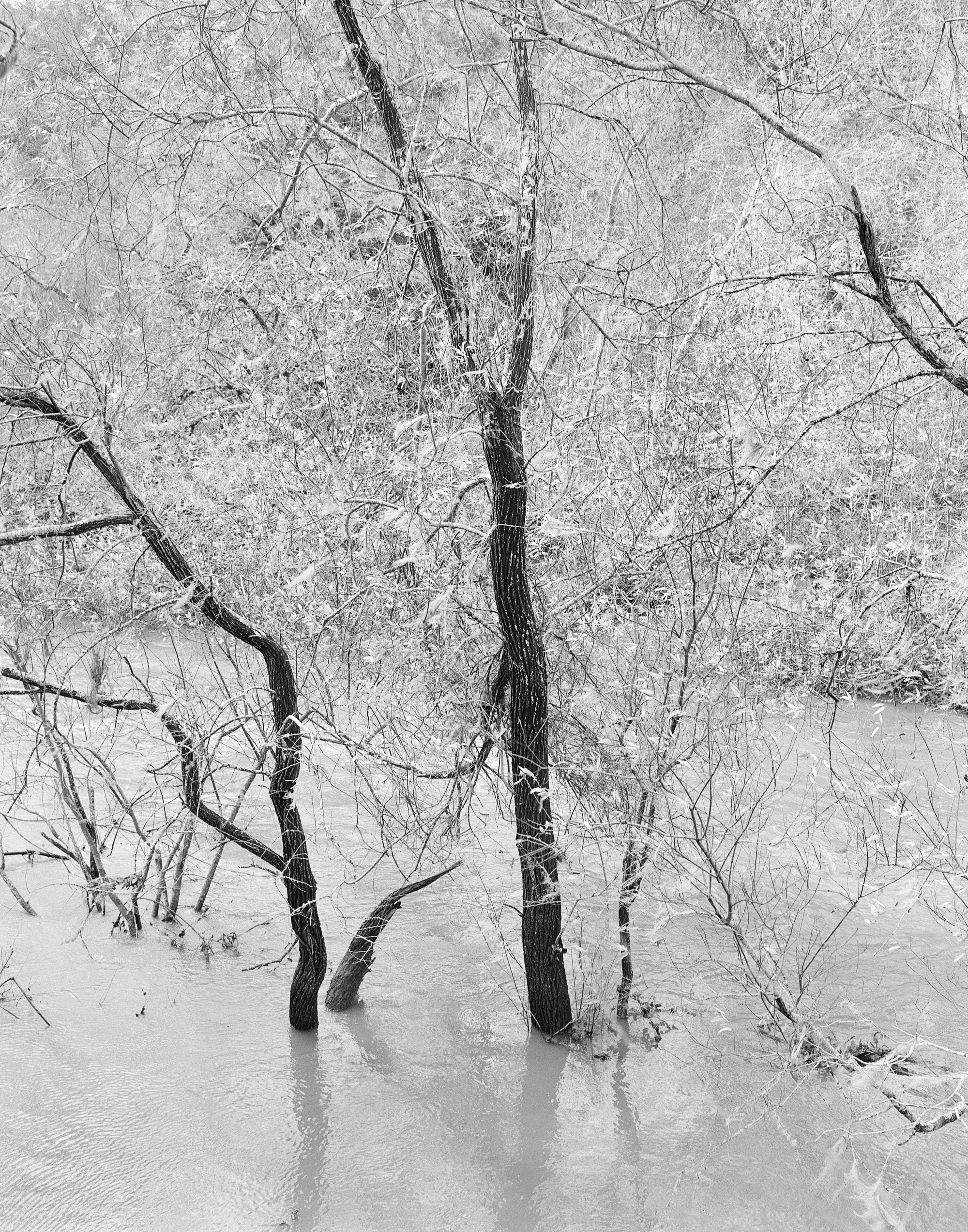
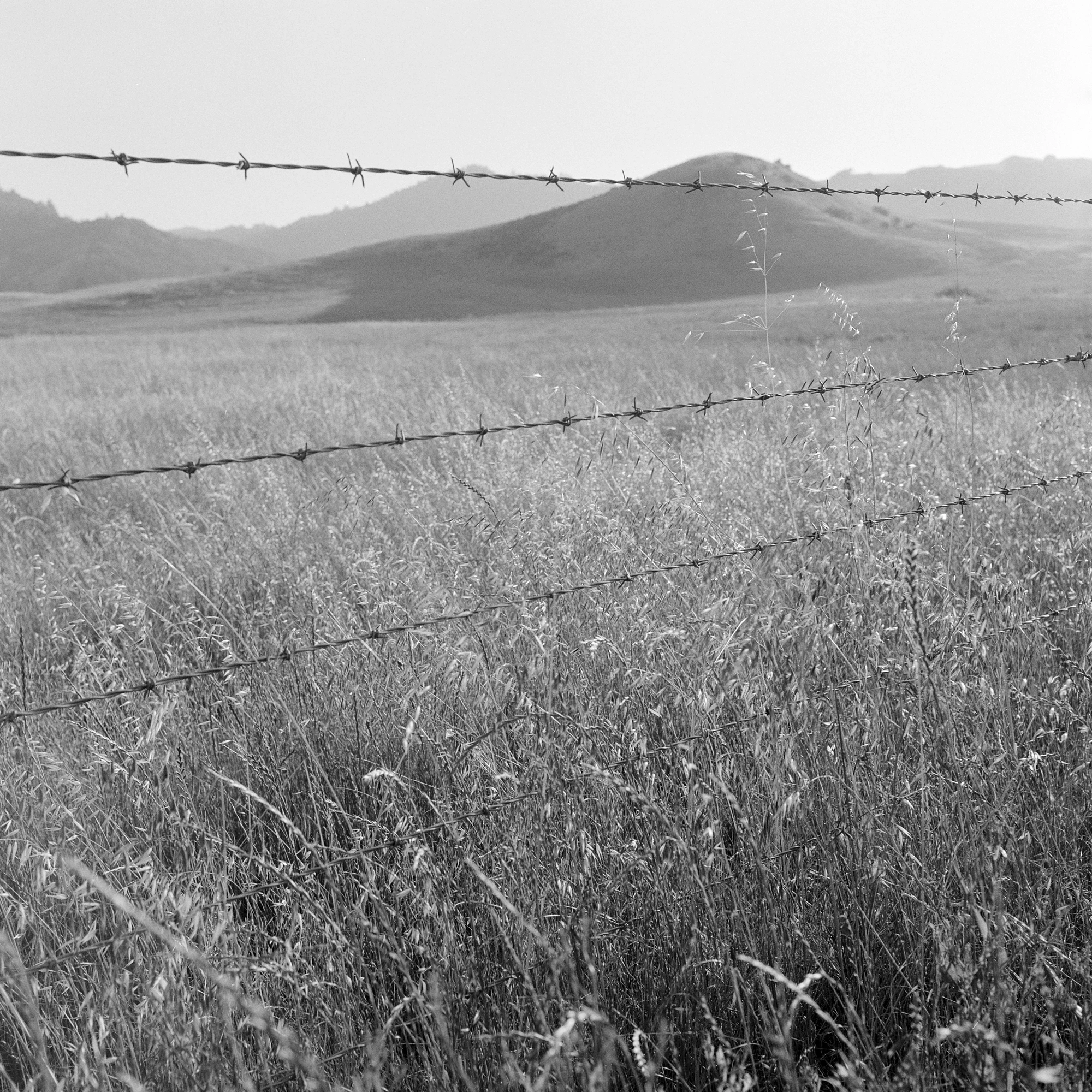
The hills come first. Bald grass ridges rise toward a wall of dark firs under a flat gray sky, the kind of terrain a person learns before they can name it. Young has nearly a century of family in this part of California, and the pictures carry that weight without announcing it. He works in medium-format black and white, mostly on square film, and the tonal range does the arguing: silver grass against near-black conifer, a road surface holding the last of the light, skin gone luminous in full sun. Nothing here is loud. The drama is in how long the eye is asked to stay.
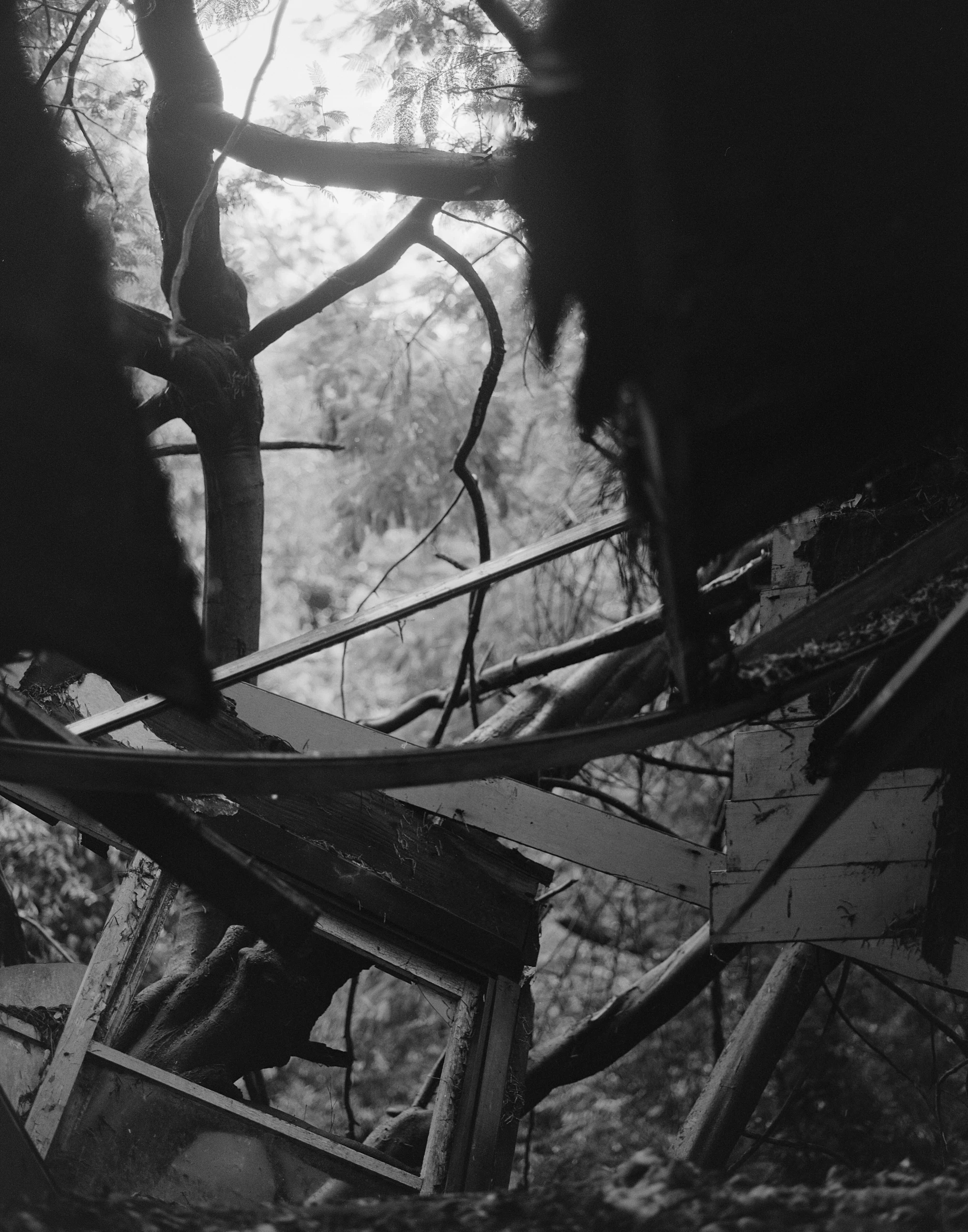
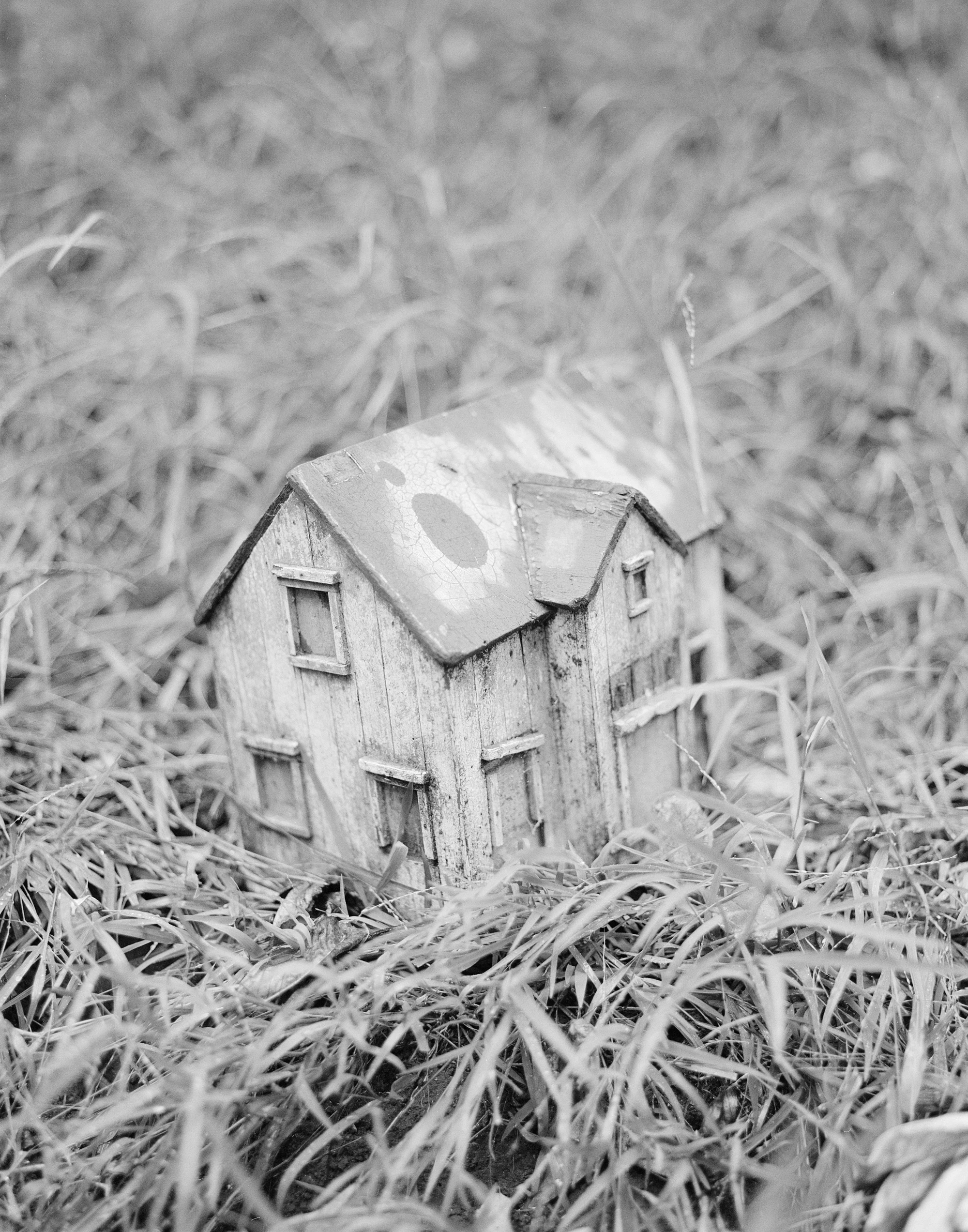
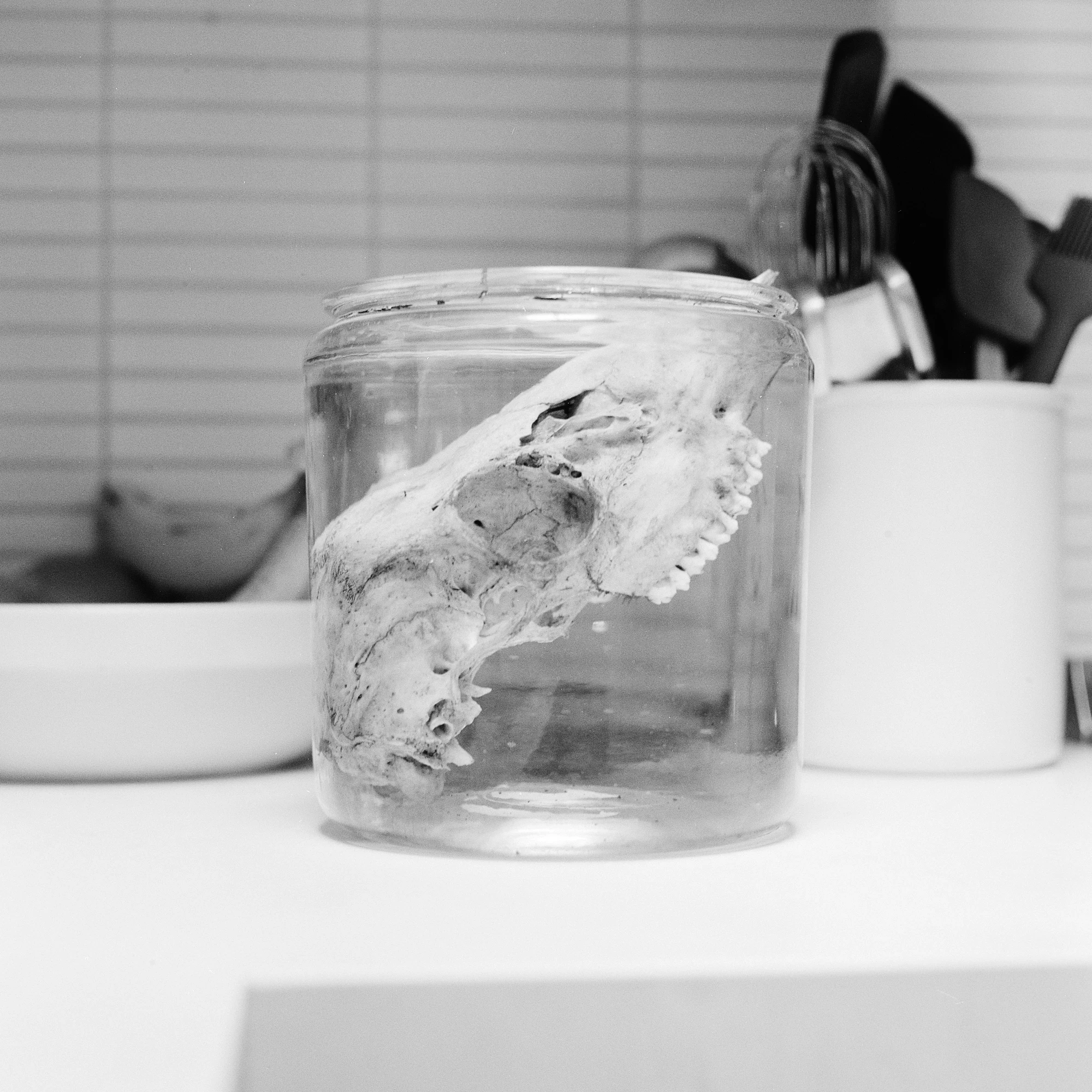
Home is the organizing idea, and it keeps changing scale. A carved wooden toy house sits abandoned in frosted grass, its roof stained, its windows scored into the grain. A real house appears only as a roofline glimpsed through the halftone grid of a window screen, trees dissolving into dots. The domestic and the wild press against each other until the boundary stops holding. A dead deer's skull floats in a glass jar on a kitchen counter beside a utensil crock and a whisk, the outdoors carried inside and preserved.
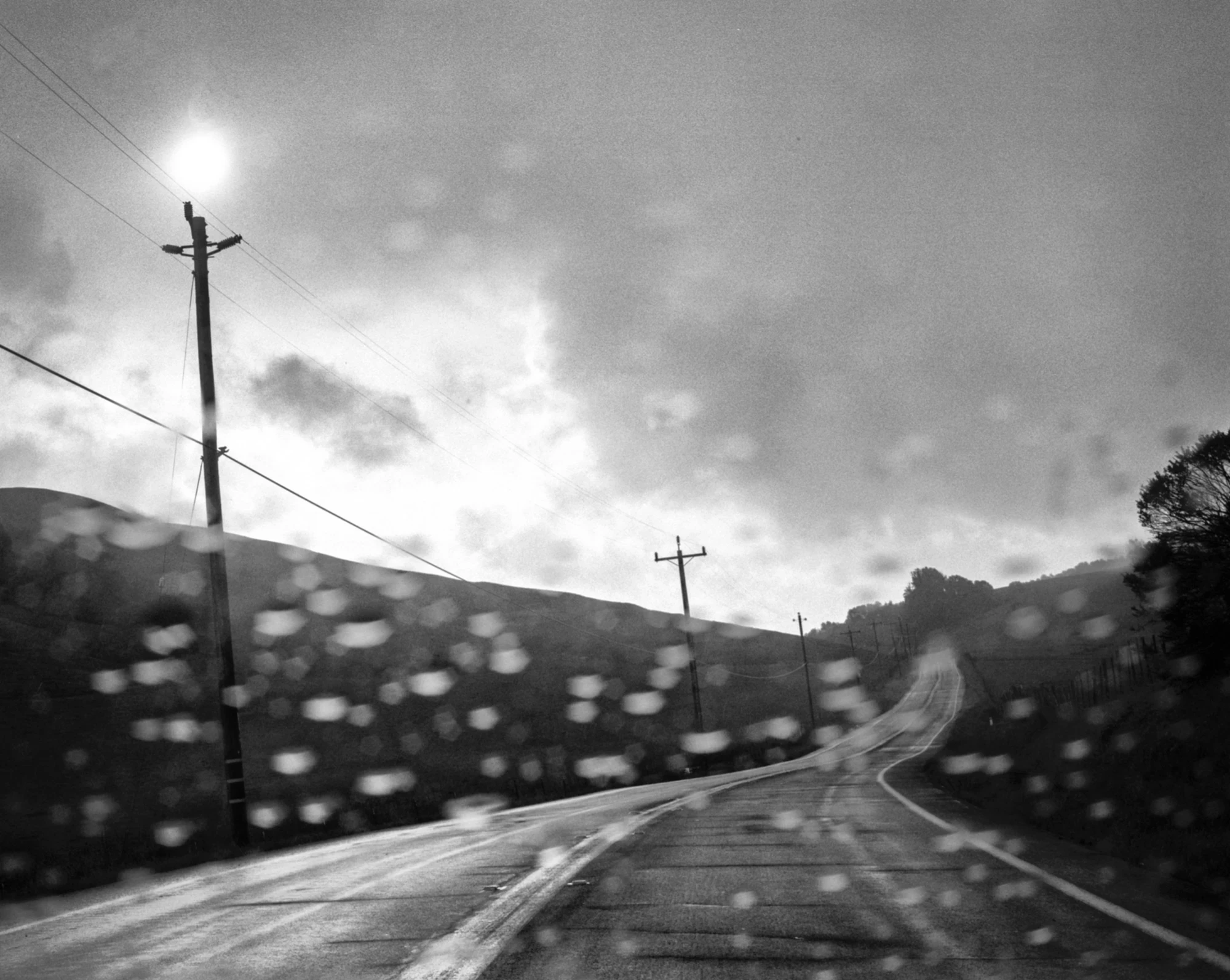
Young shot these images "on weekend drives to and from my childhood home in Sonoma County on Marin backroads, or on any of the countless day trips west I made while living there." The road recurs as both subject and method. One frame catches a foggy street at night, a lamp burning cold above wet leaves. Another is taken through a windshield freckled with rain, the sun blown out over rolling grazing land, the whole view softened by the glass between the driver and the world moving past.
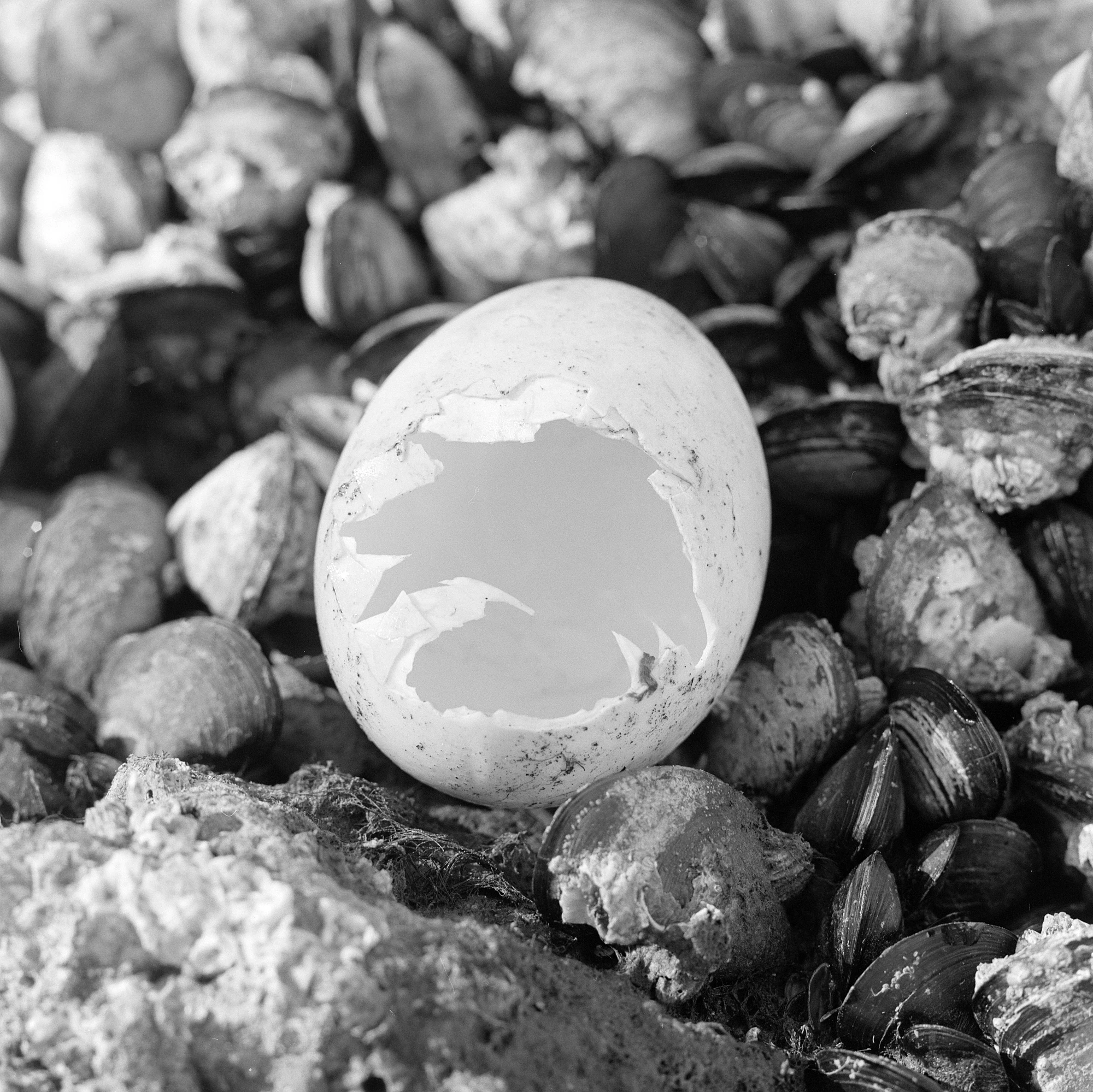
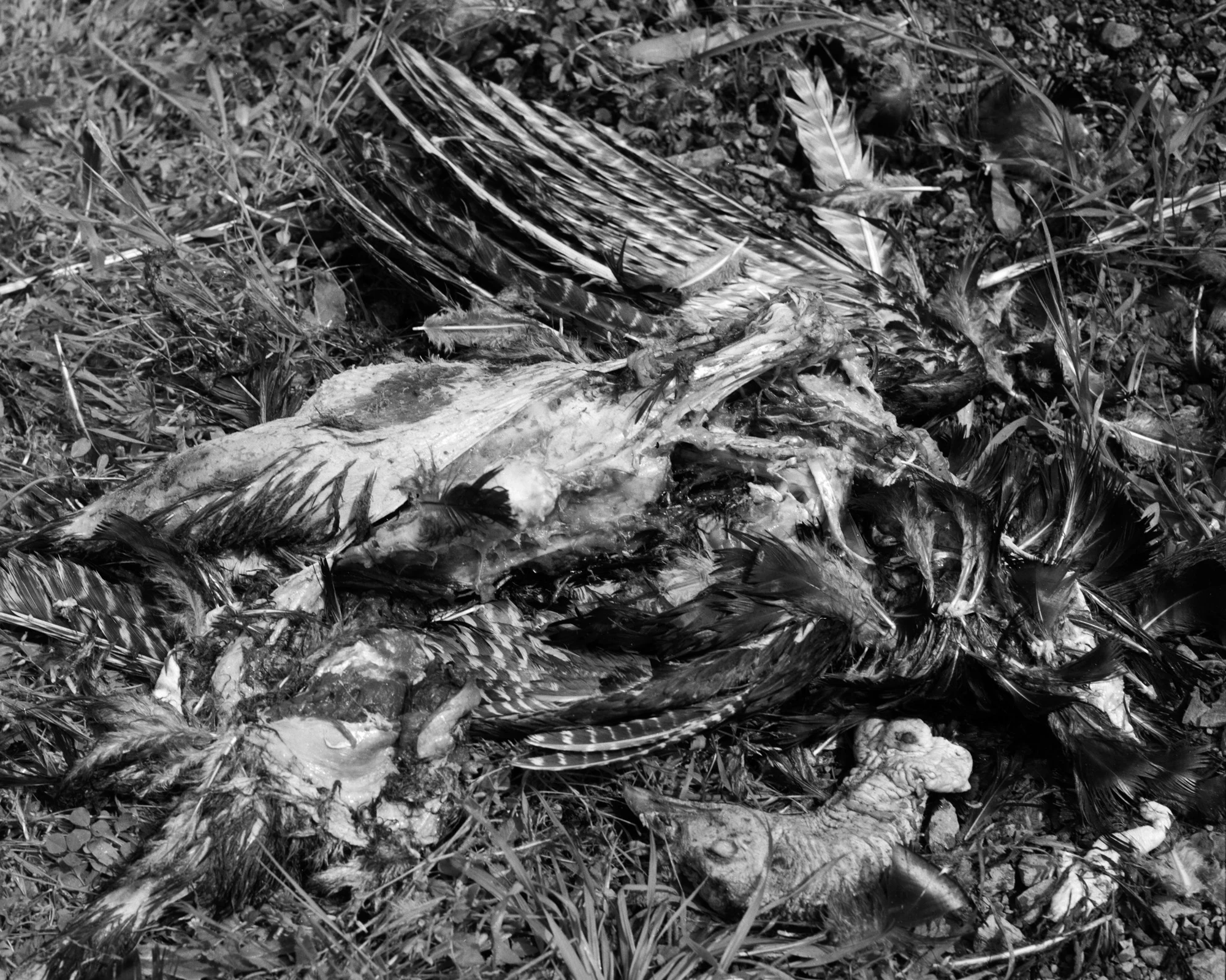
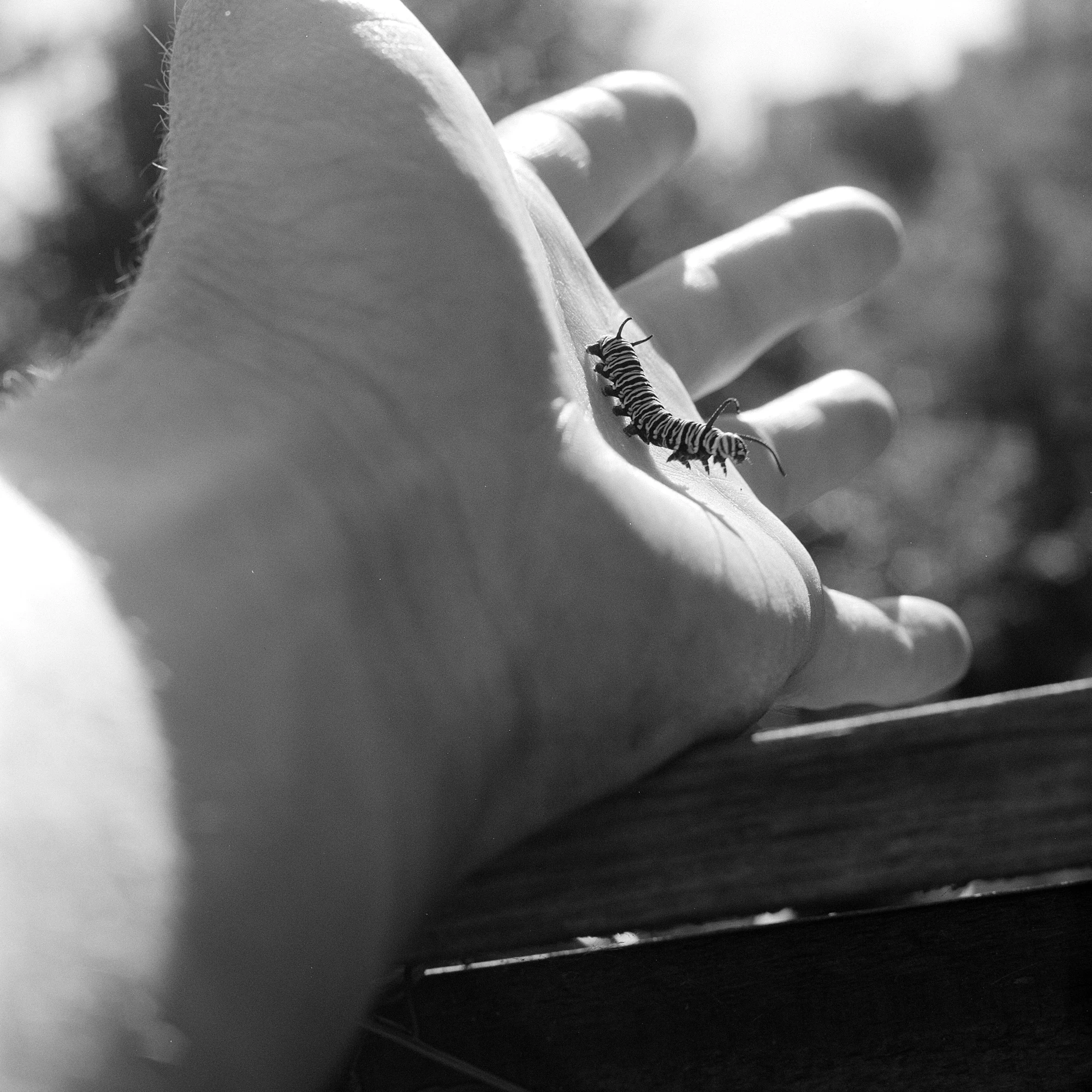
The cycle turns on birth and death, and Young refuses to soften either. A cracked white egg empties itself among a bed of black mussel shells. A snake lies dead on warm asphalt, its body still holding the last curve it made. A bird decays in the grass, one striped wing thrown open. Set against these, a hand offers a monarch caterpillar to the light, and a broken eggshell reads less like loss than like something that has already left. Death and continuance occupy the same tonal register, which is the point.
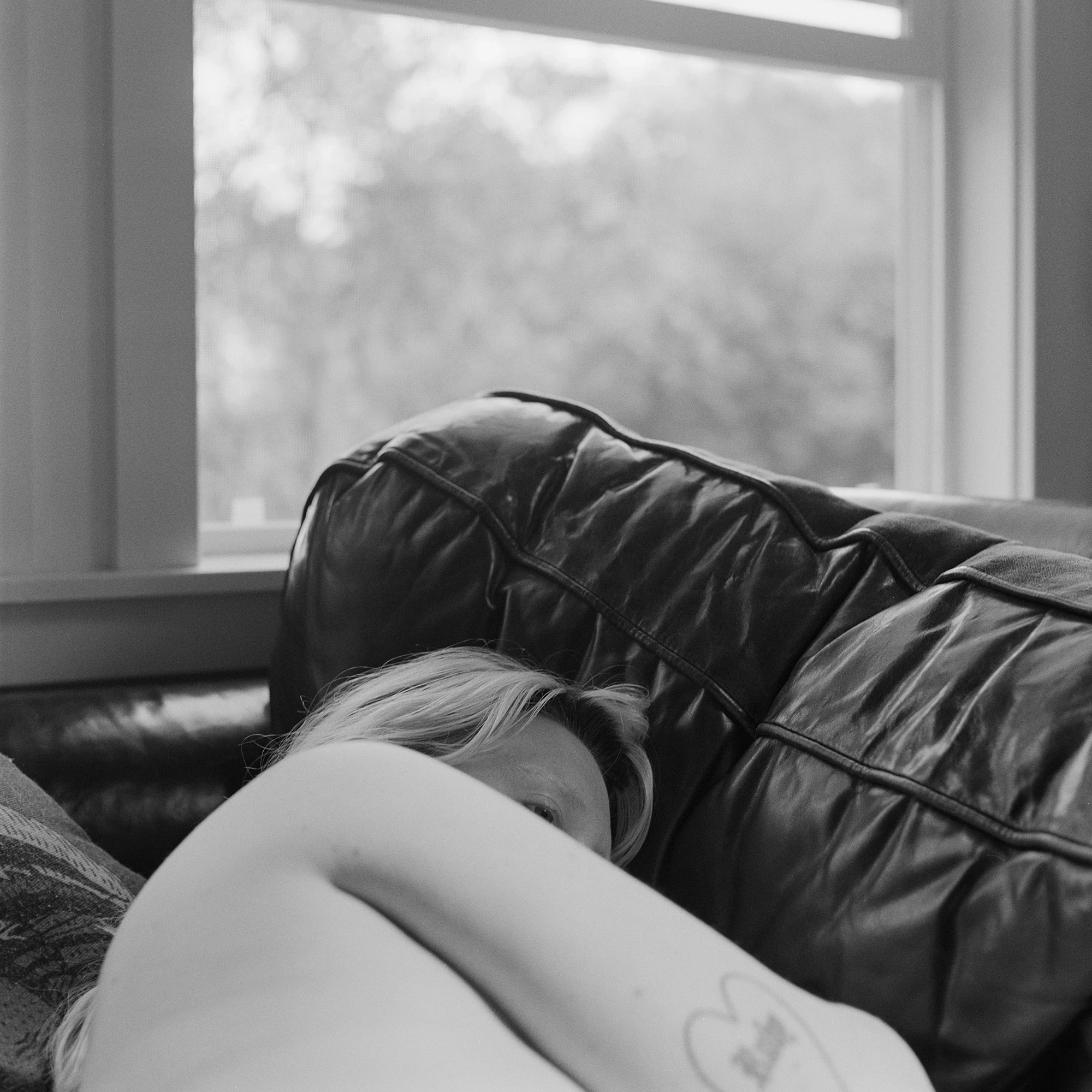
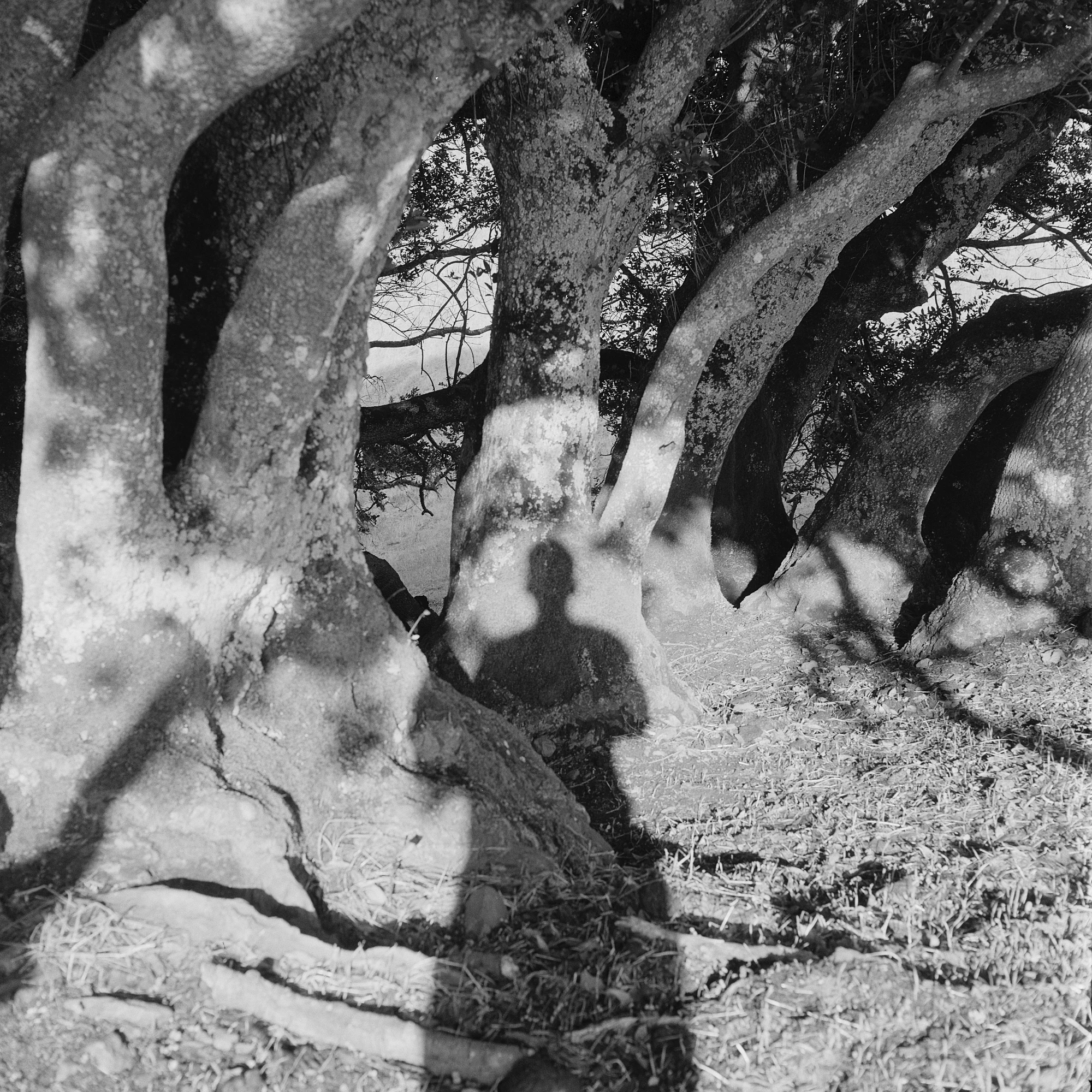
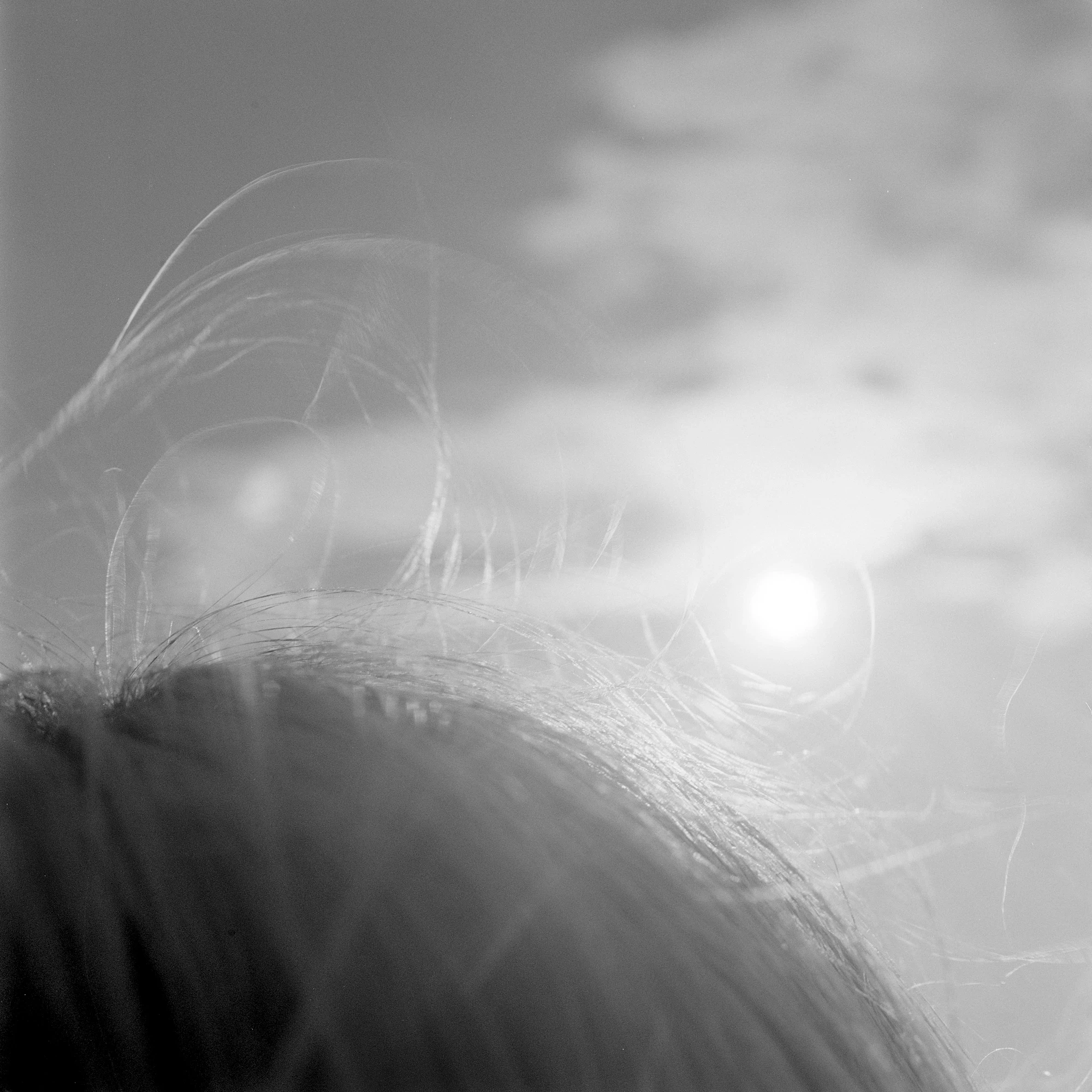
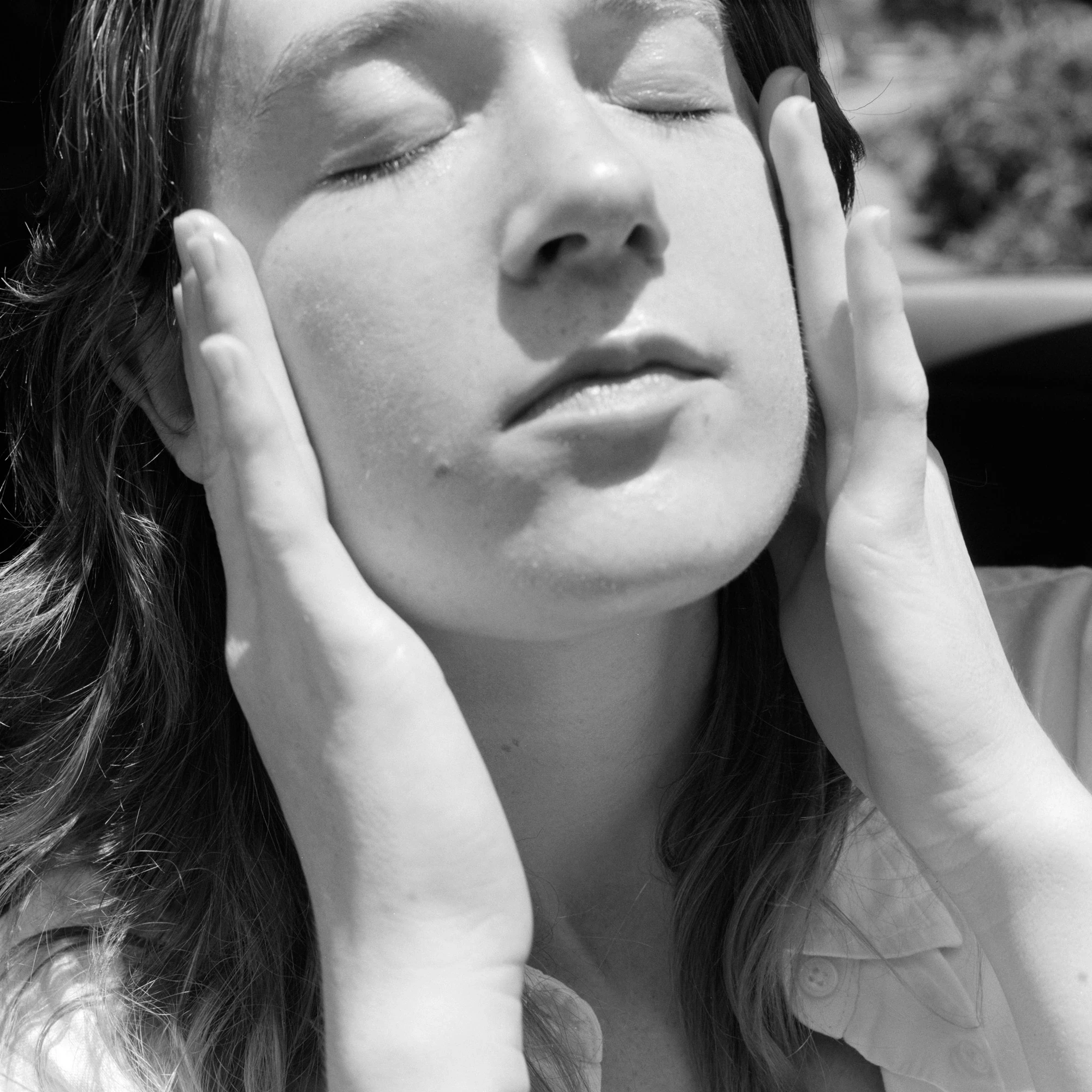
People move through the work as bodies more than faces. A figure lies half-hidden behind a black leather sofa below a bright window. A young woman cradles her own face in both hands, eyes shut against the sun. Wet hair, backlit strands, the shadow of the photographer himself thrown across a grove of leaning tree trunks. Ancestors travel the same roads in Young's imagination, noticing the same seasonal shift, and the living figures feel like their momentary stand-ins.
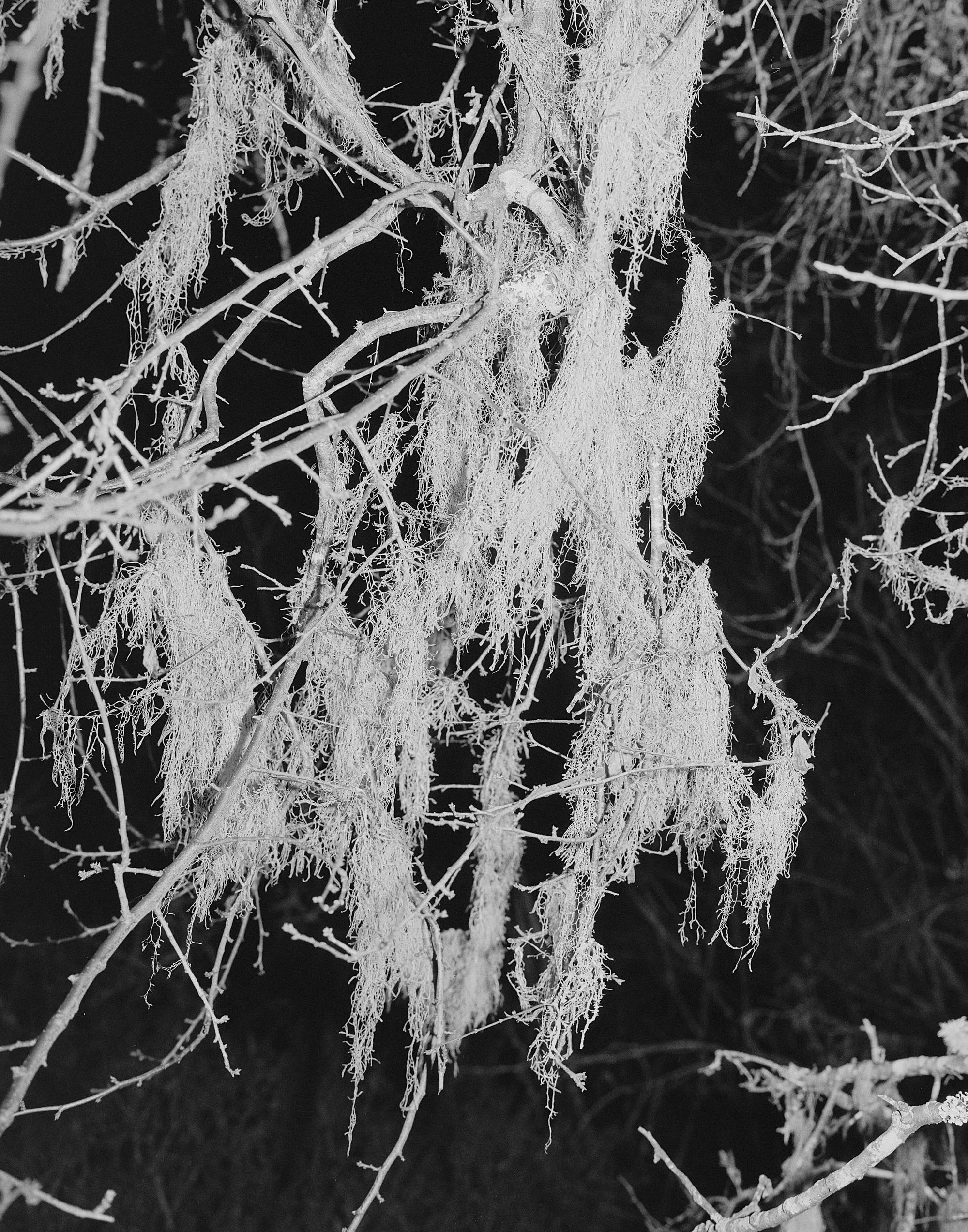
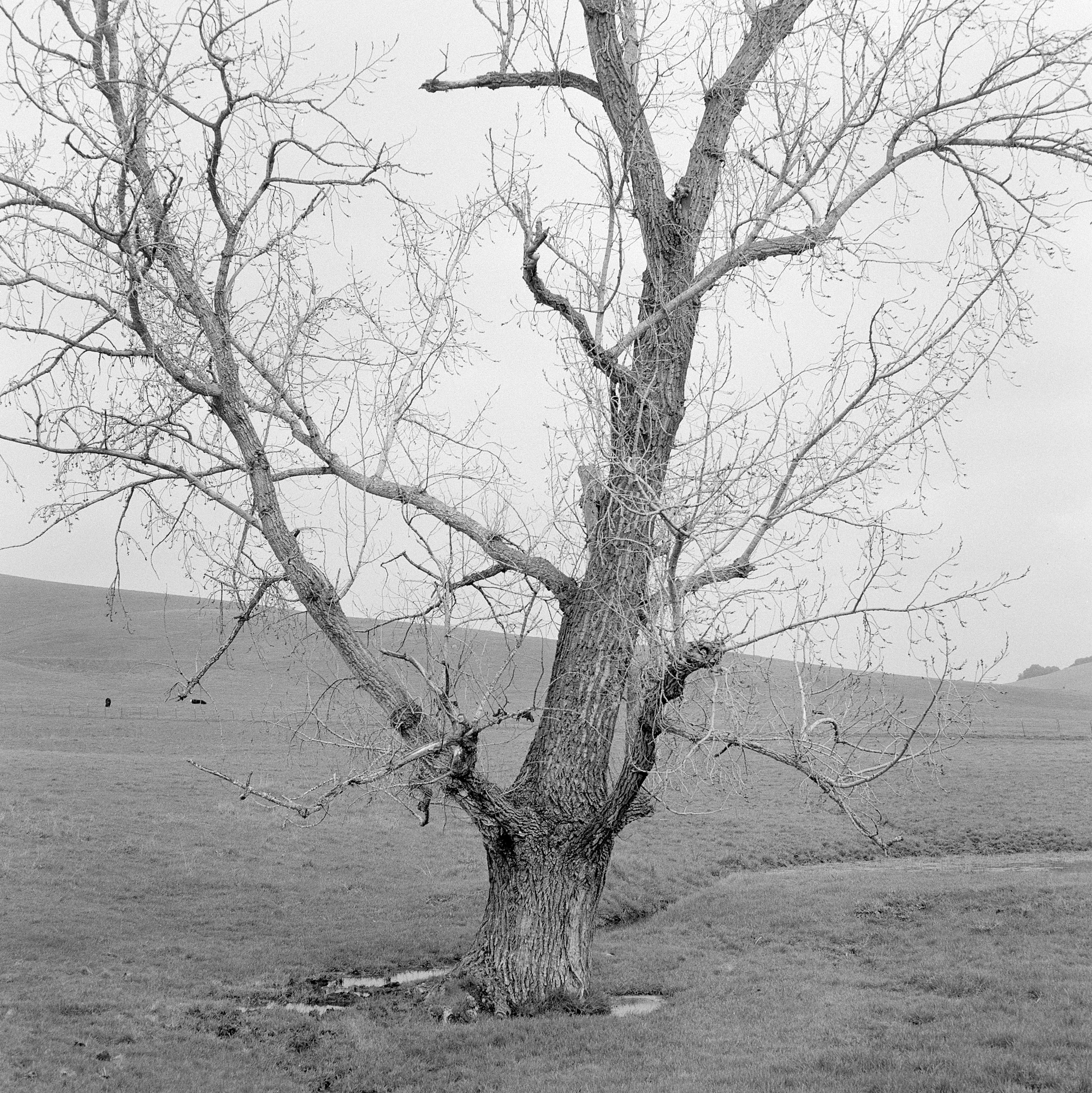
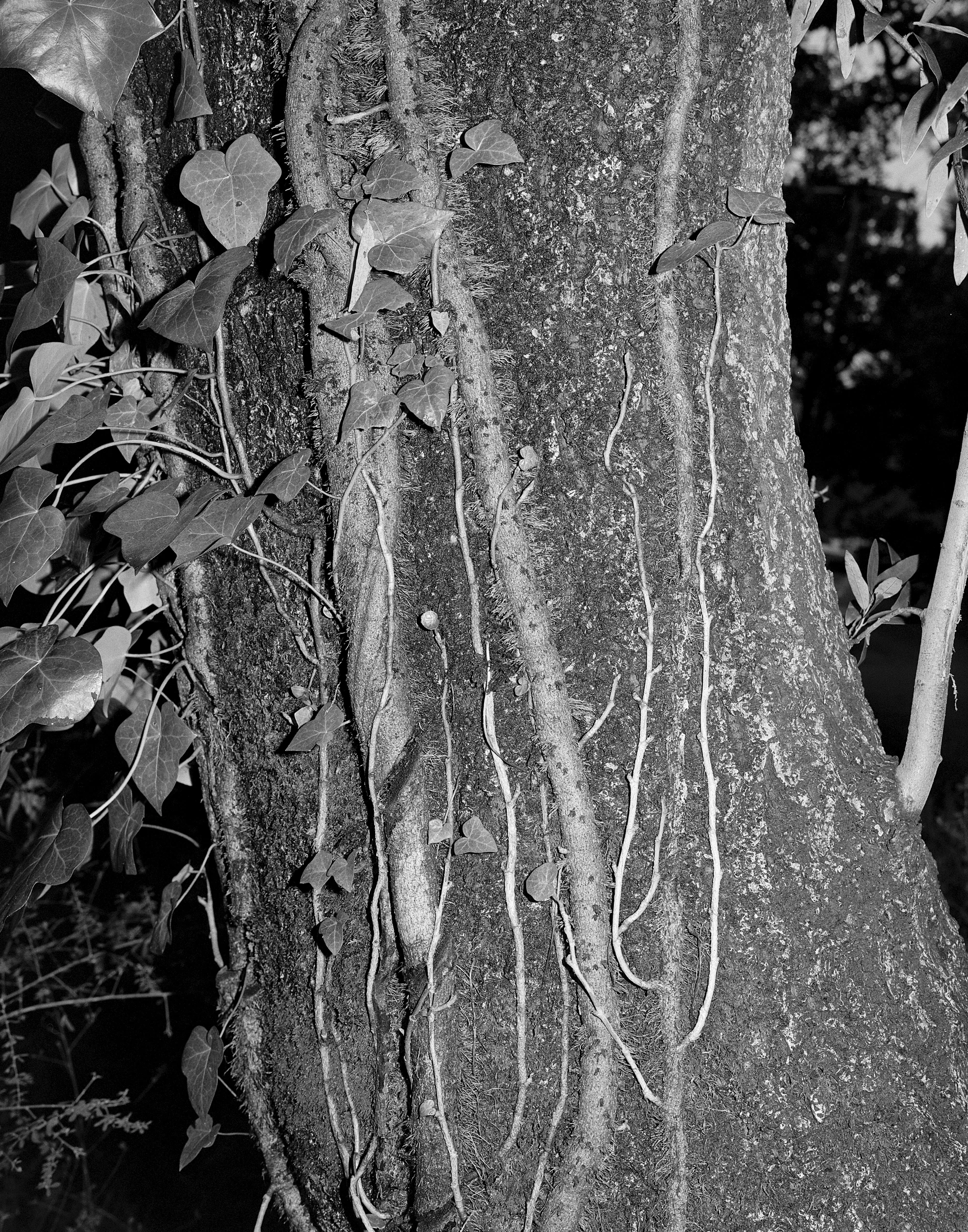
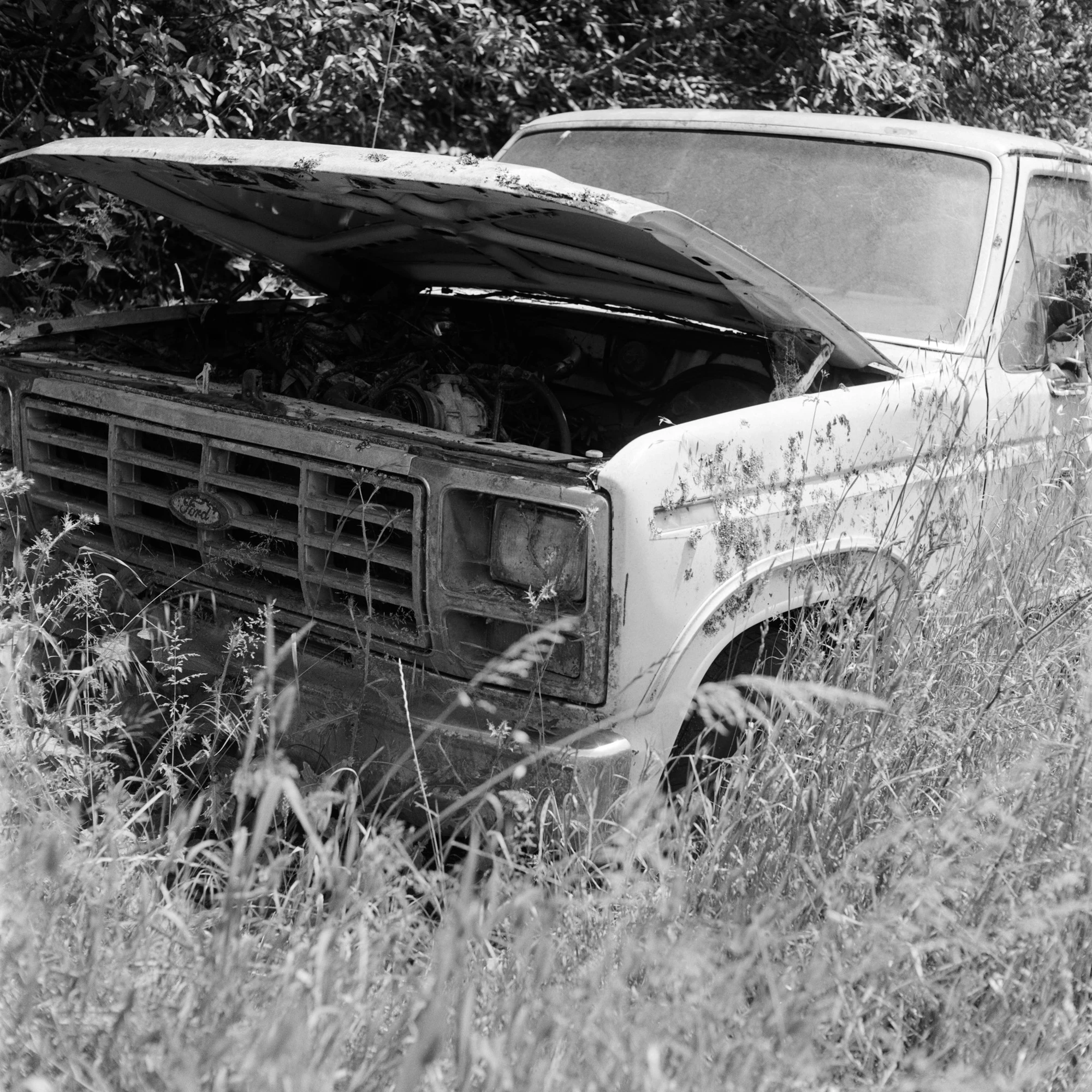
What holds Eternal Return together is patience with the ordinary and a refusal to sentimentalize it. Lace lichen hangs from bare branches like something spun overnight. An oak stands alone in a summer field, then stands bare in winter, the same tree twice. The title names the wager. A place returned to often enough stops being scenery and becomes a way to measure time against oneself.