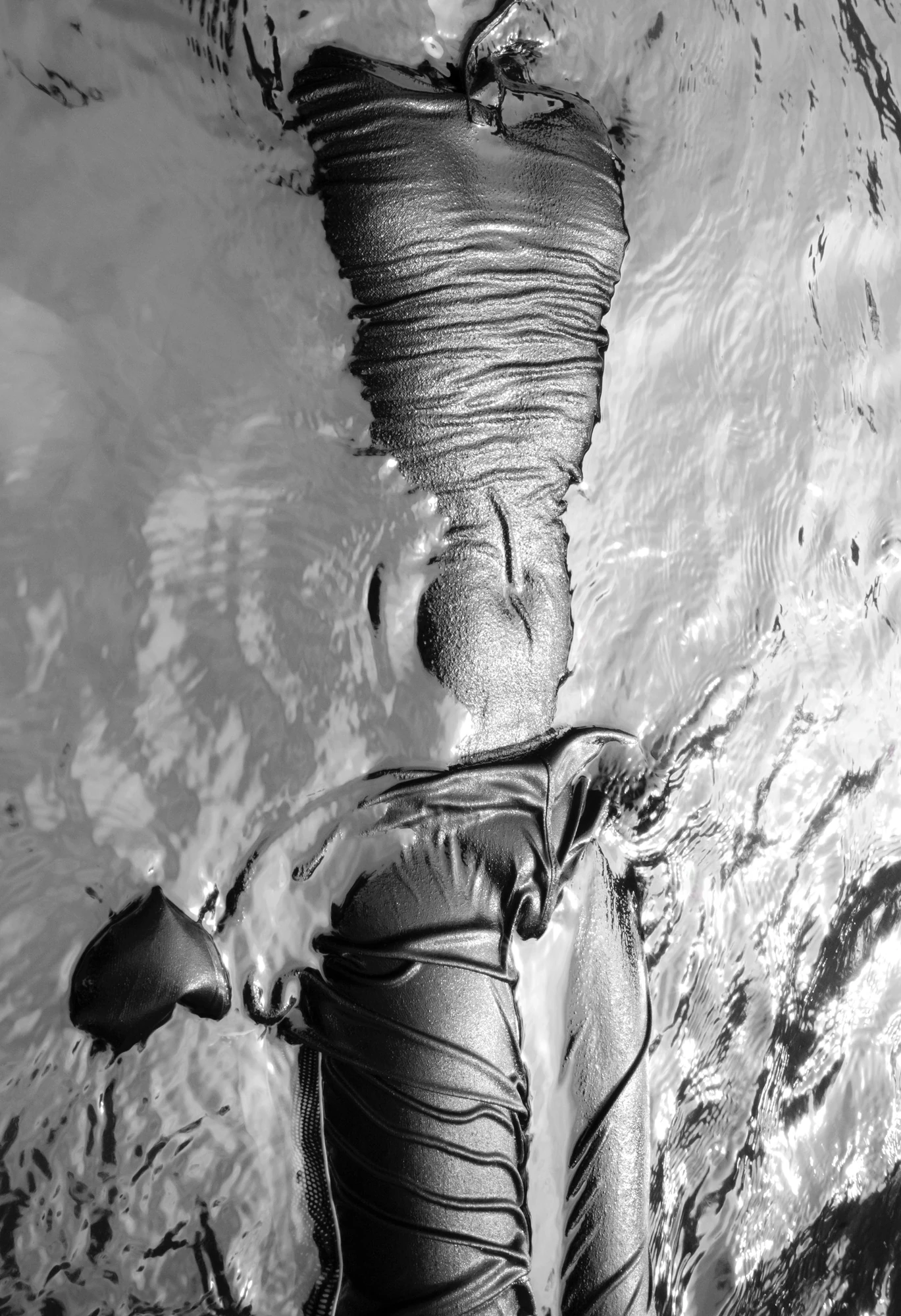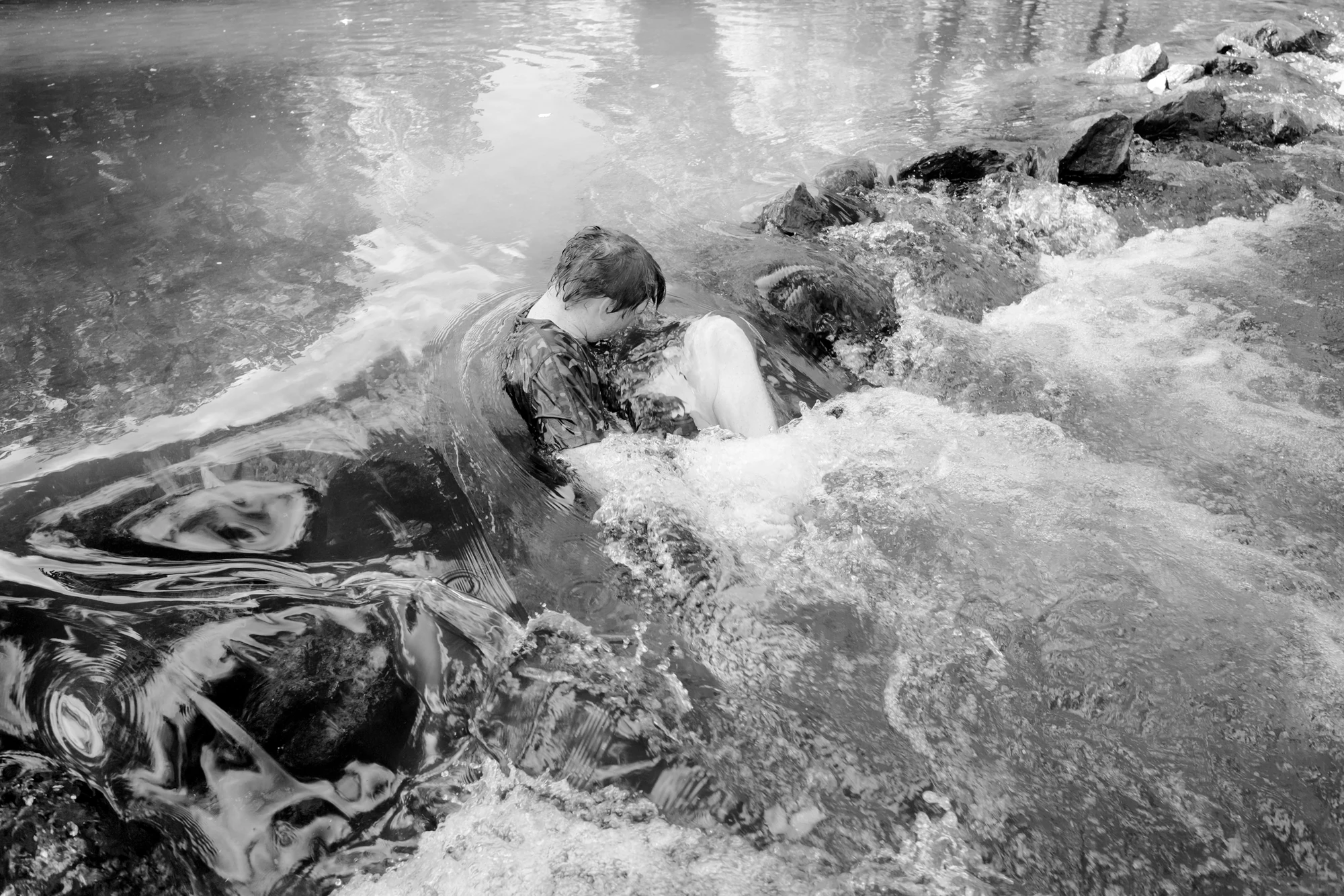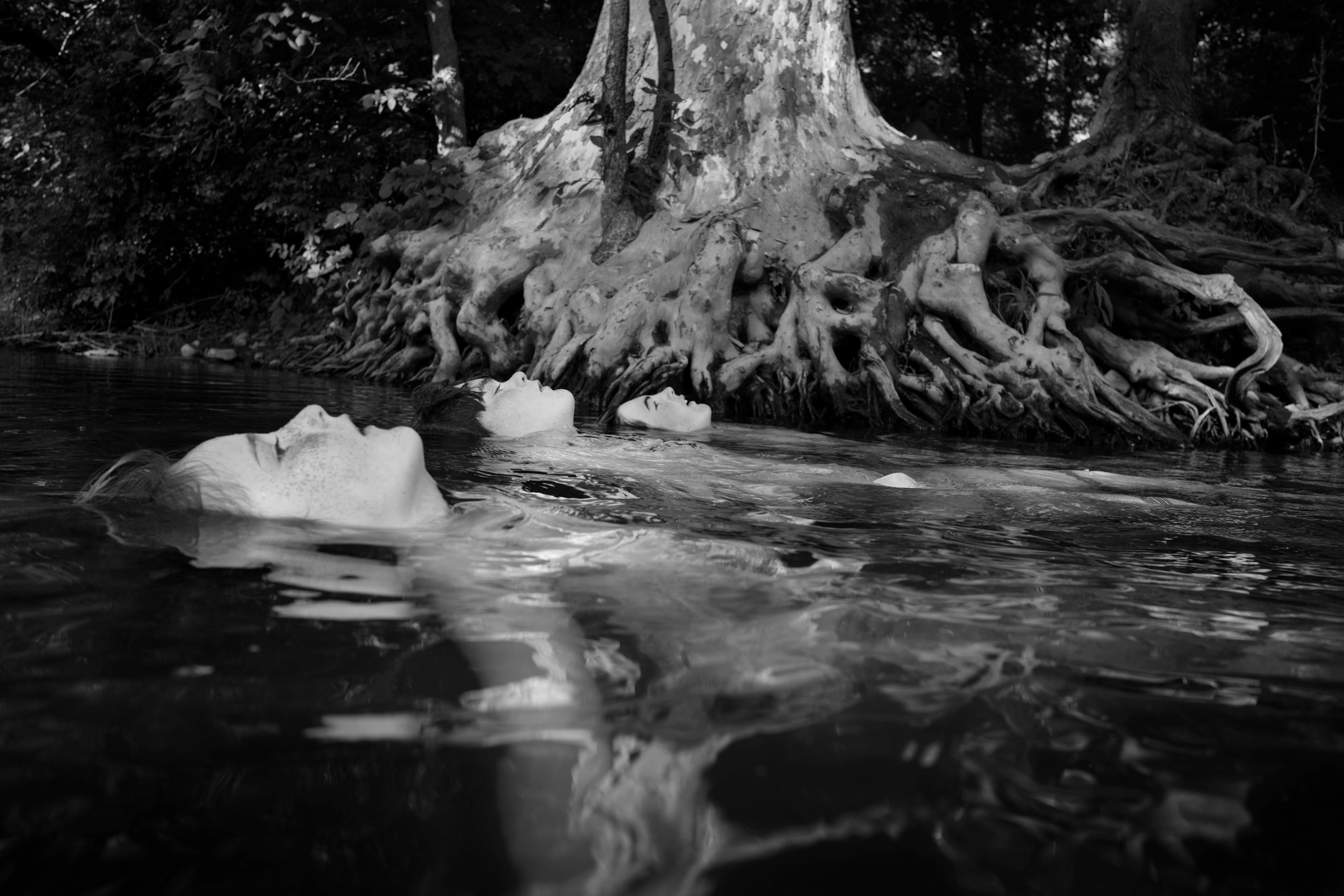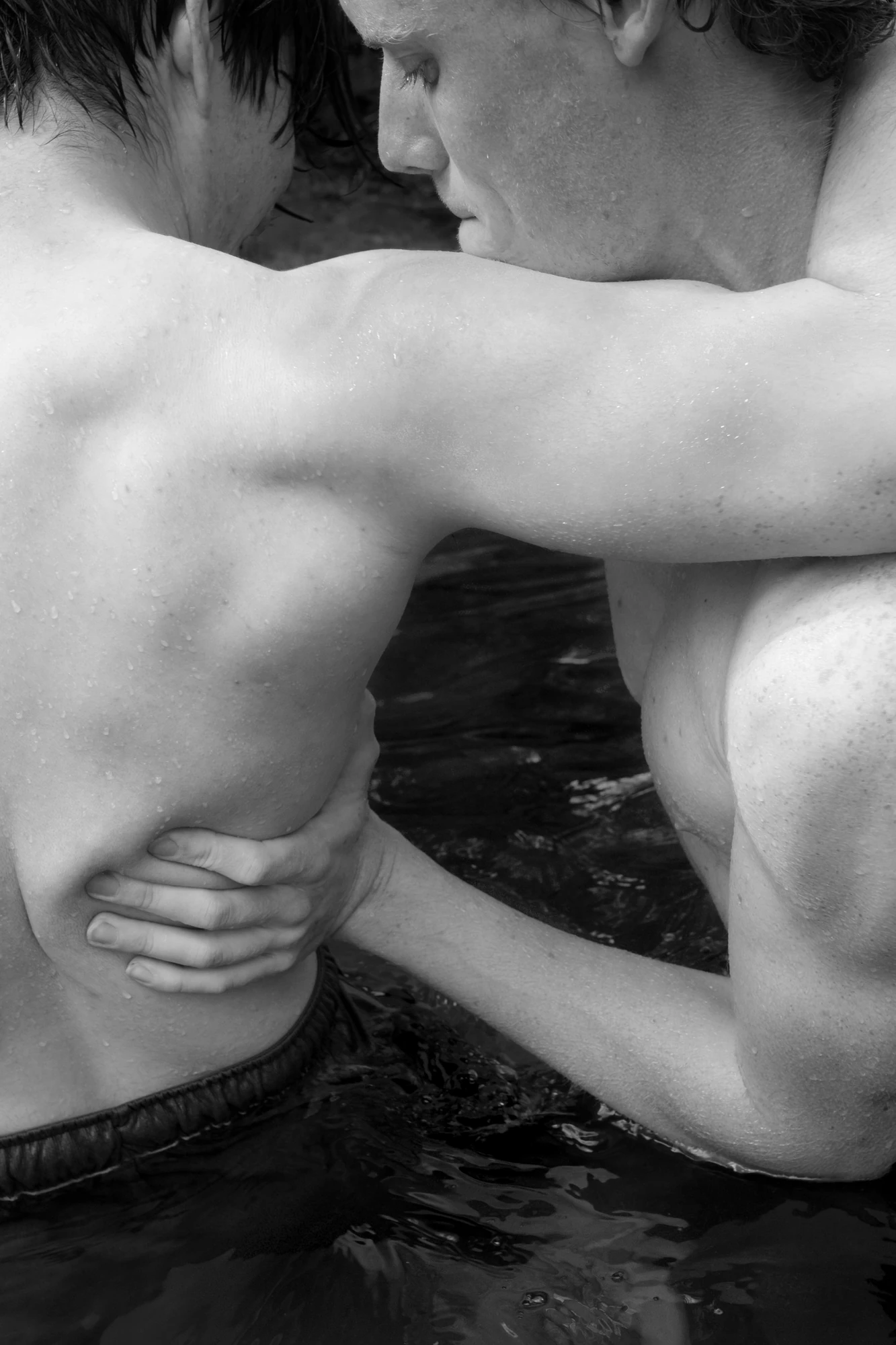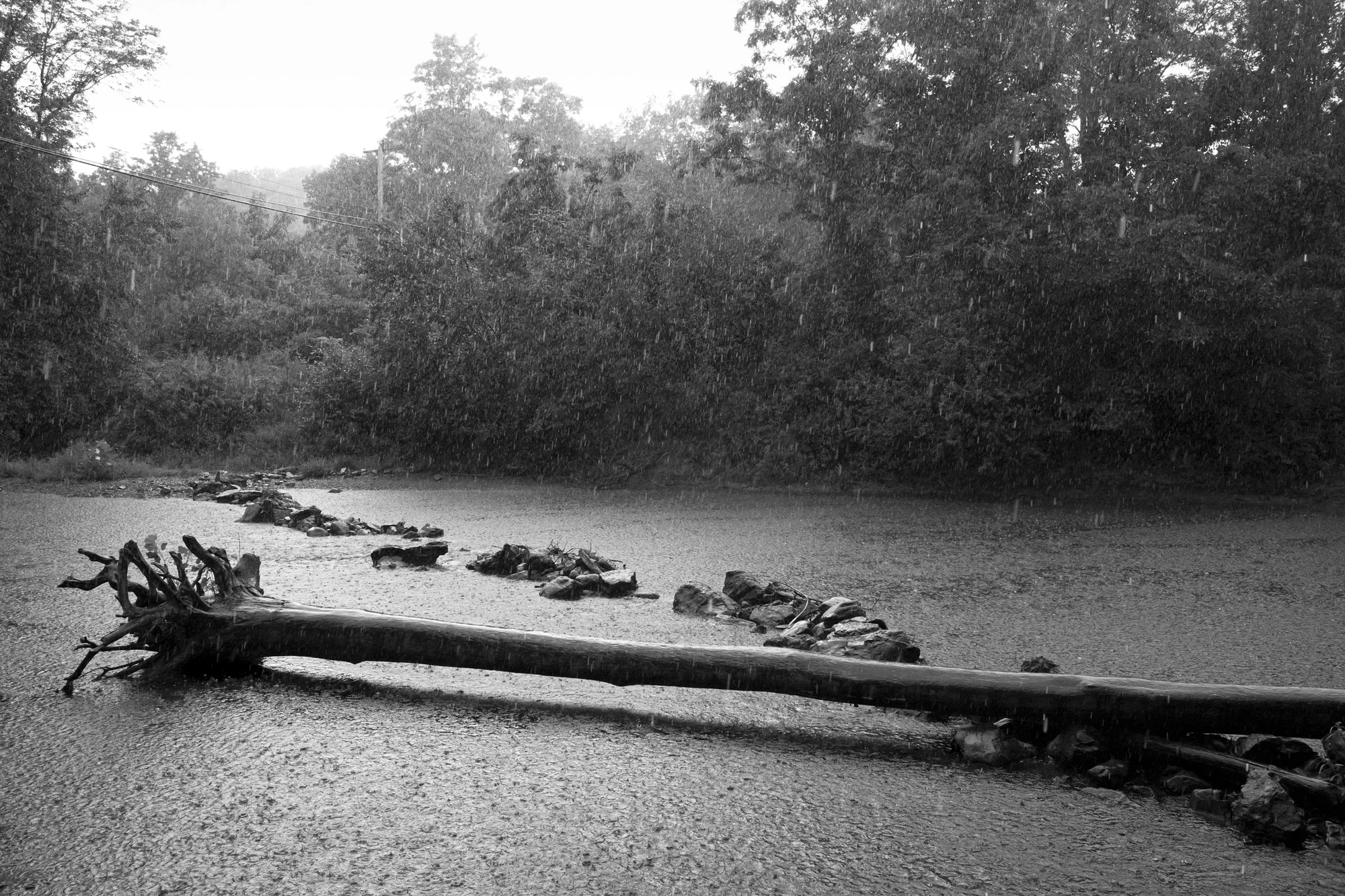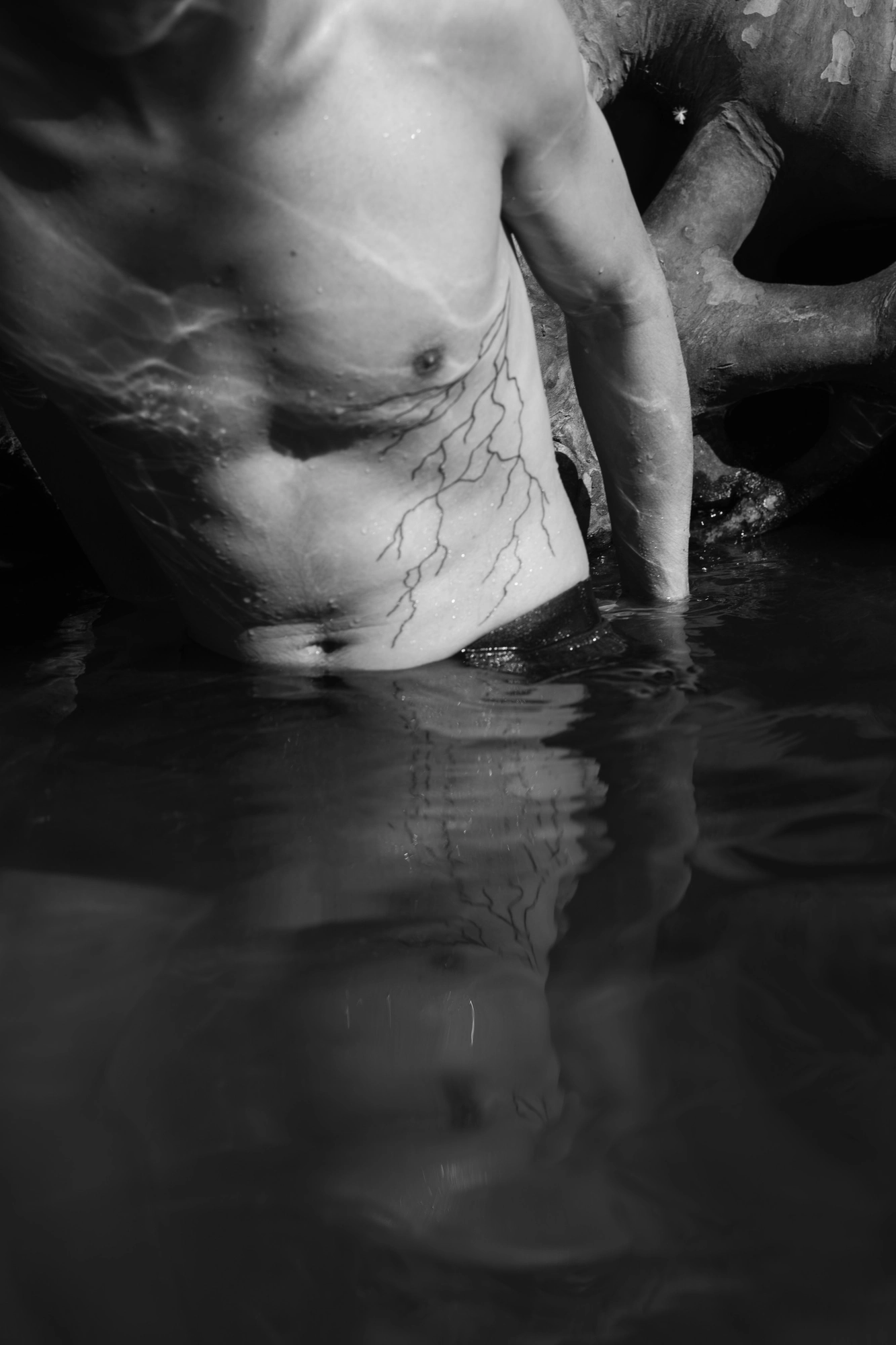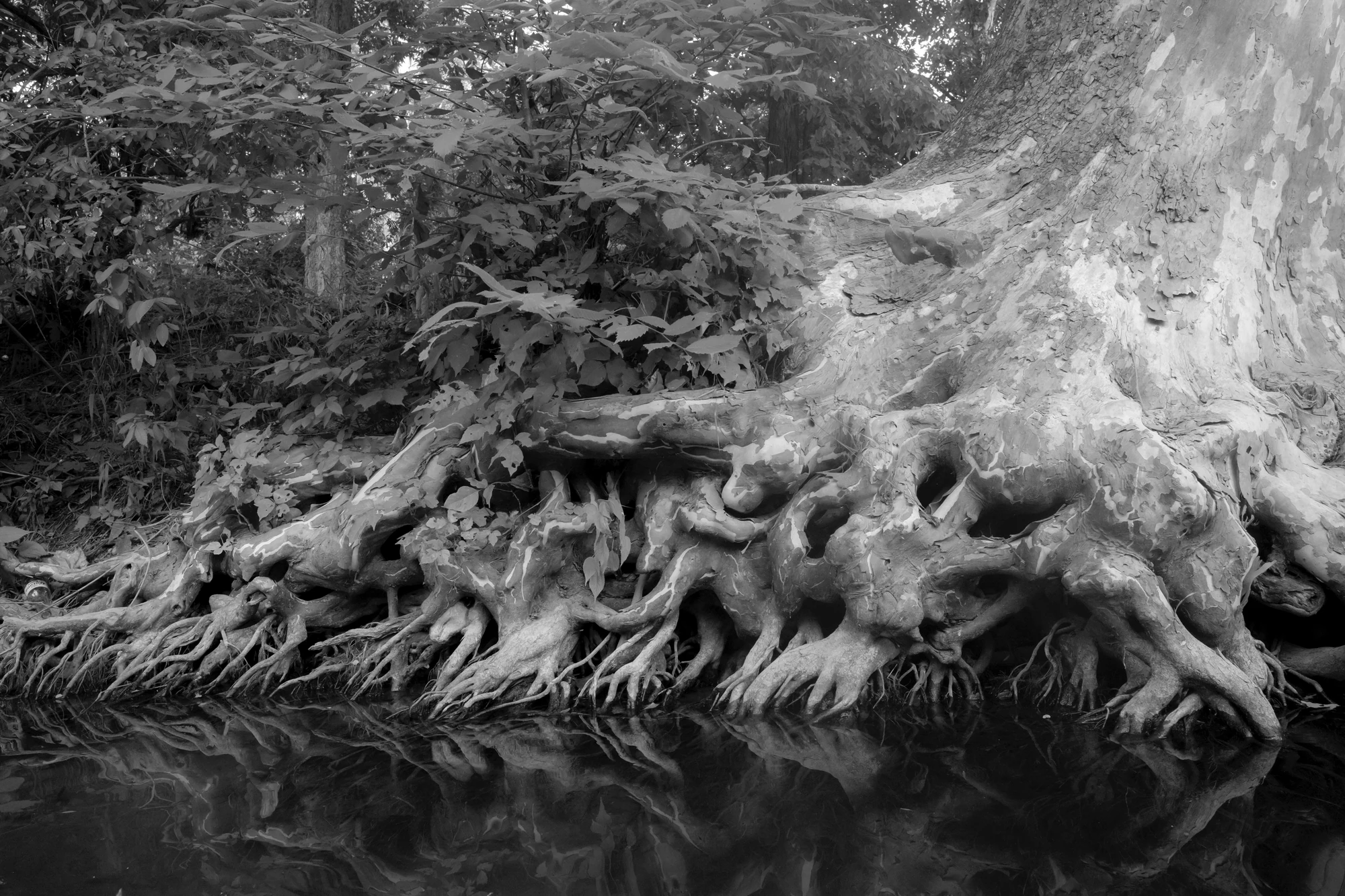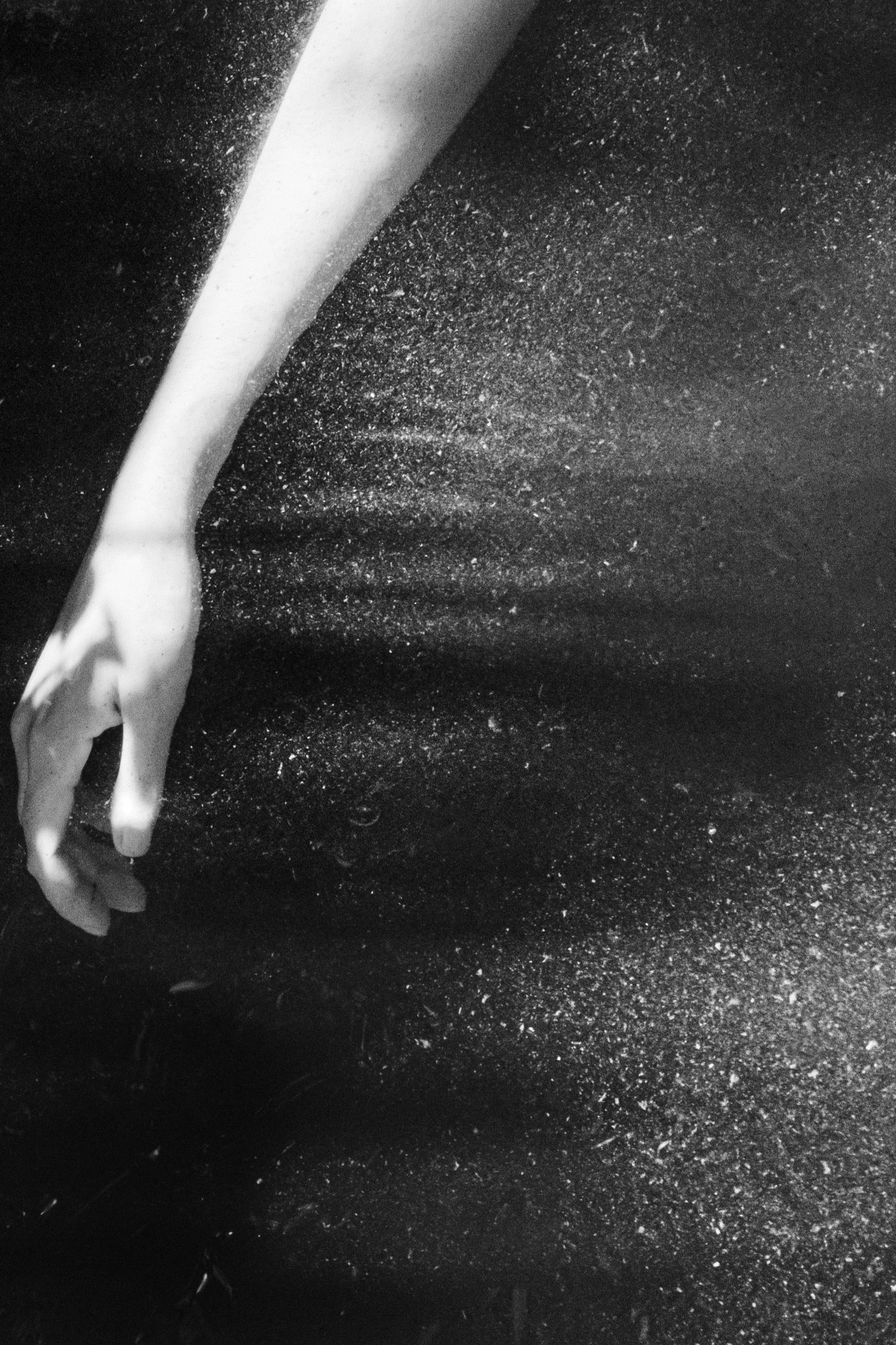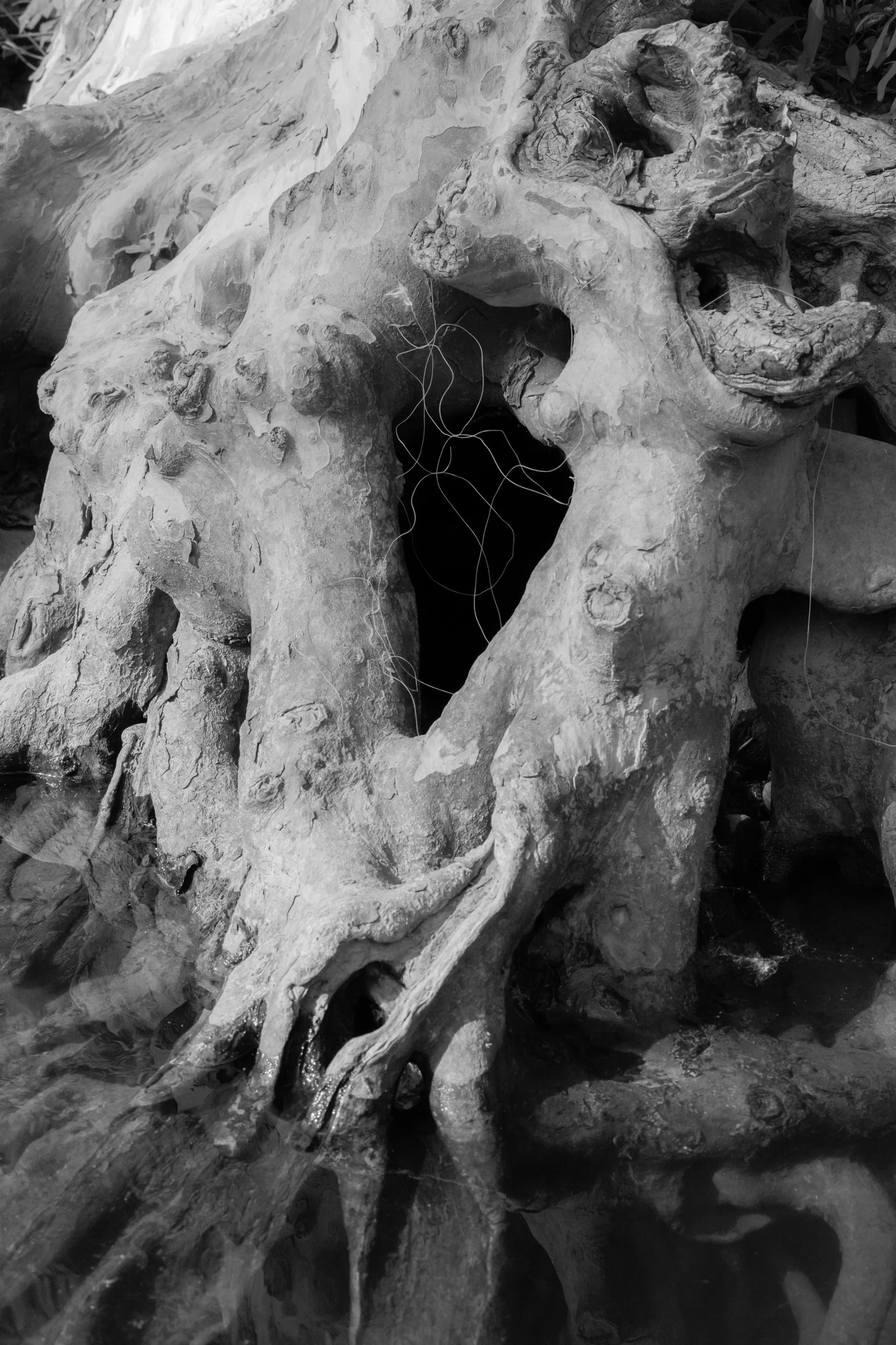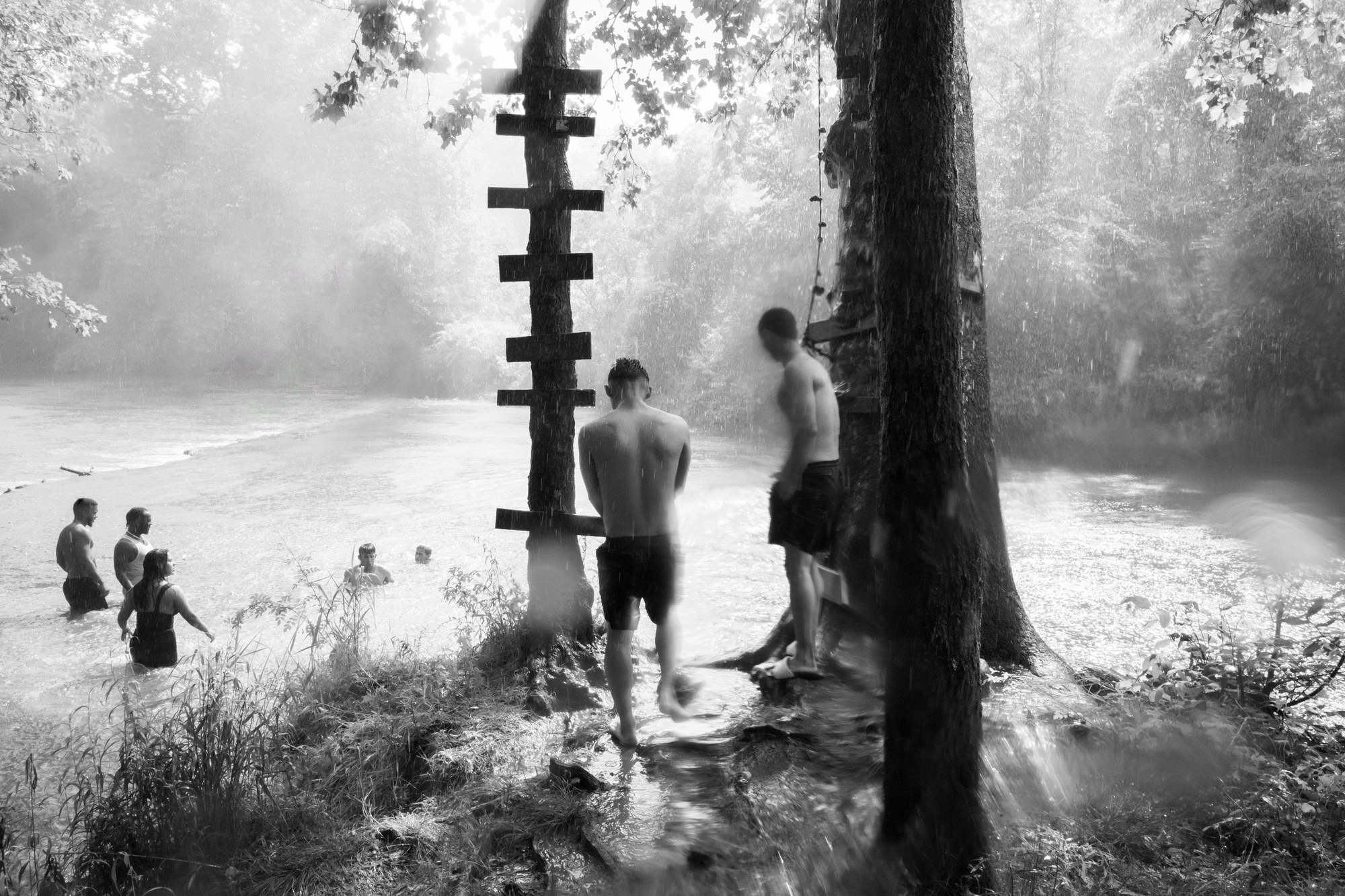
A single swimming hole on Wappinger Creek, outside Poughkeepsie in the Hudson Valley, is the whole subject of Down by the Hudson, the black-and-white series Caleb Stein built across more than a decade of returning.
On the edge of Poughkeepsie, where Wappinger Creek pools into a swimming hole between a drive-in movie theater and an American Legion, Stein found a patch of common ground the town has leaned on for generations. Even the officers sent to clear it out, he notes, bring their own families here. “It’s a space that somehow belongs to everyone and to no one,” he tells Daniel Wolff in the book’s conversation.
Stein grew up between New York and London, and the America he carried was secondhand: Norman Rockwell, Grant Wood and Life magazine. After moving to Poughkeepsie he spent a long stretch failing to make the pictures work. What unlocked them was patience, a willingness to let the place give up its rhythms, its regulars and its weather over many returns.
Trust accumulates frame by frame. “Every photograph begins with a relationship,” Stein says. He asks before he shoots, shows people examples of the work, and is candid about where an image might end up, in a show, an article, the book he always intended to make. Often he is fumbling in the water with a camera that is not waterproof, and the clumsiness puts everyone on the same footing. He hands over the files, sometimes prints, and shooting digitally he can let a subject see the result on screen at once.
What drew him was the way the water loosened the men, their postures easing as they settled in. “Somehow it’s a place that allows bravado to give way to tenderness,” he says. Wrestling reads less as a contest than as closeness. He keeps decay and detritus out of the edit by choice, and sets the work beside Walker Evans, Helen Levitt, Sam Contis and William Gedney. He offers it, too, as a rejoinder to the Hudson River School, whose painters cast the valley as vast and empty of people. Stein fills that emptiness one name at a time: Shamus, Matthew, Jackson, Oden, Bode, Owen.
Belonging, for Stein, has less to do with birthplace than with where someone invests time and care. He was a long-distance swimmer as a child, long before Poughkeepsie, and found the creek only after moving to the town as an adult. He photographed it from nineteen to thirty-one, and still goes there to swim. Each winter he visits the island the current encircles, reading its frozen, emptied self against the summer to come. The series became Down by the Hudson, published by Palo Gallery Press with essays by Amitava Kumar, Anita N. Bateman and Matt Carey-Williams and a conversation with Daniel Wolff; a selection hung at Palo Gallery in New York from 10 September to 3 October 2026, his solo debut there.