Thisispaper Community
Join today.
Enter your email address to receive the latest news on emerging art, design, lifestyle and tech from Thisispaper, delivered straight to your inbox.
Oops! Something went wrong while submitting the form.
Instant access to new channels
The top stories curated daily
Weekly roundups of what's important
Original features and deep dives
Exclusive community features
No items found.
Door of Hearing by Frederik Exner at Le Parvis
Alexander Zaxarov
Jun 5, 2026

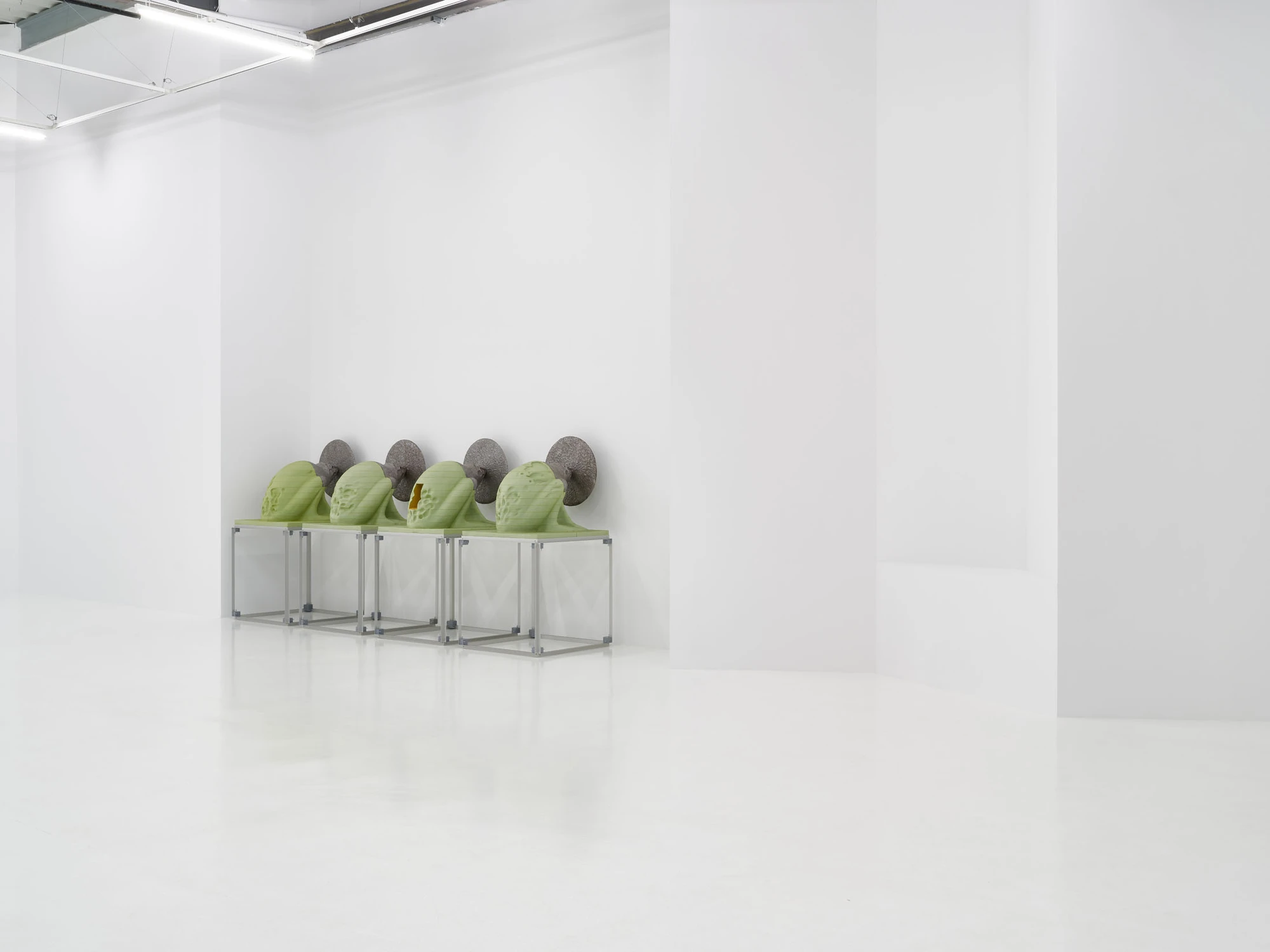
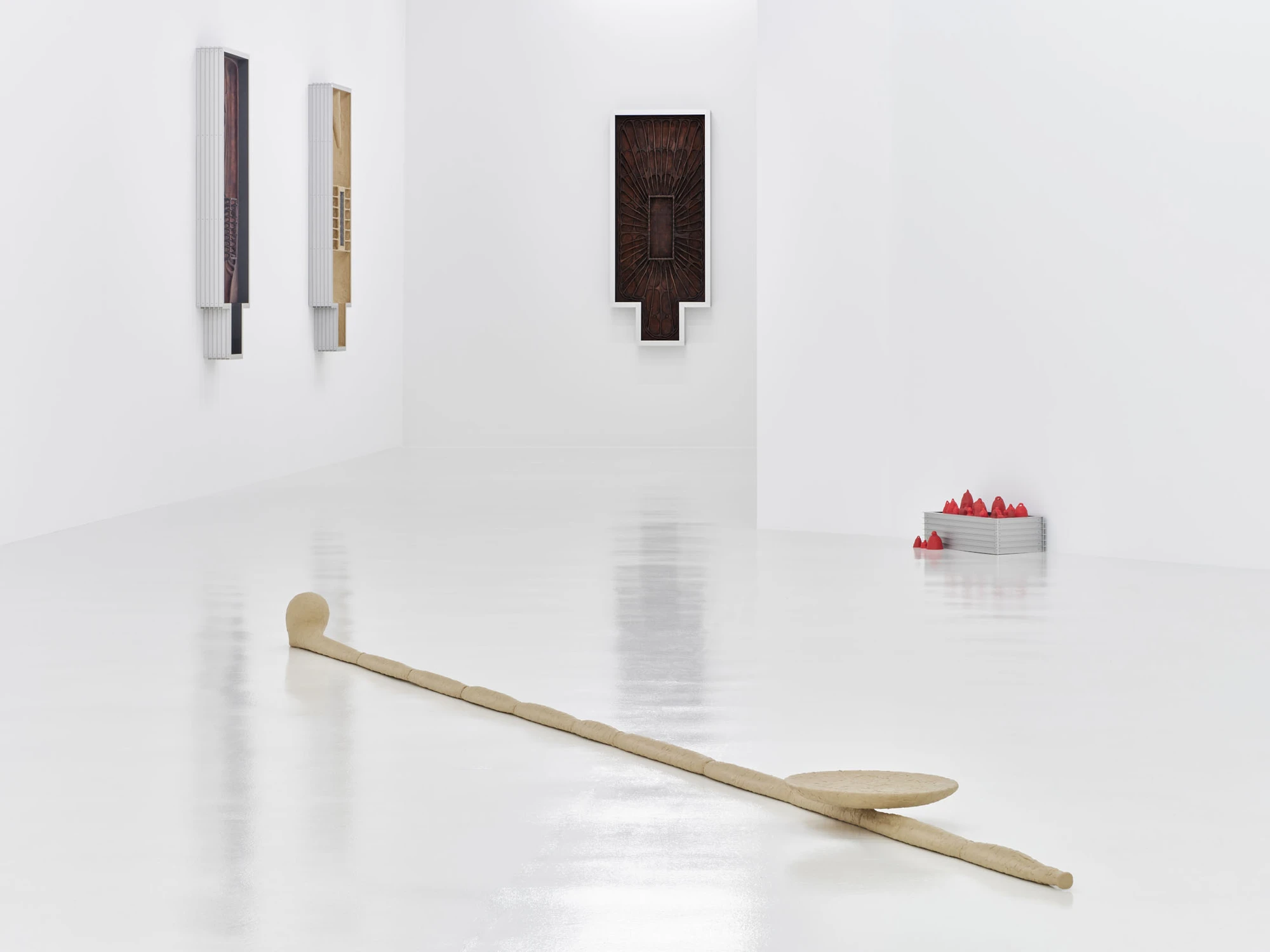
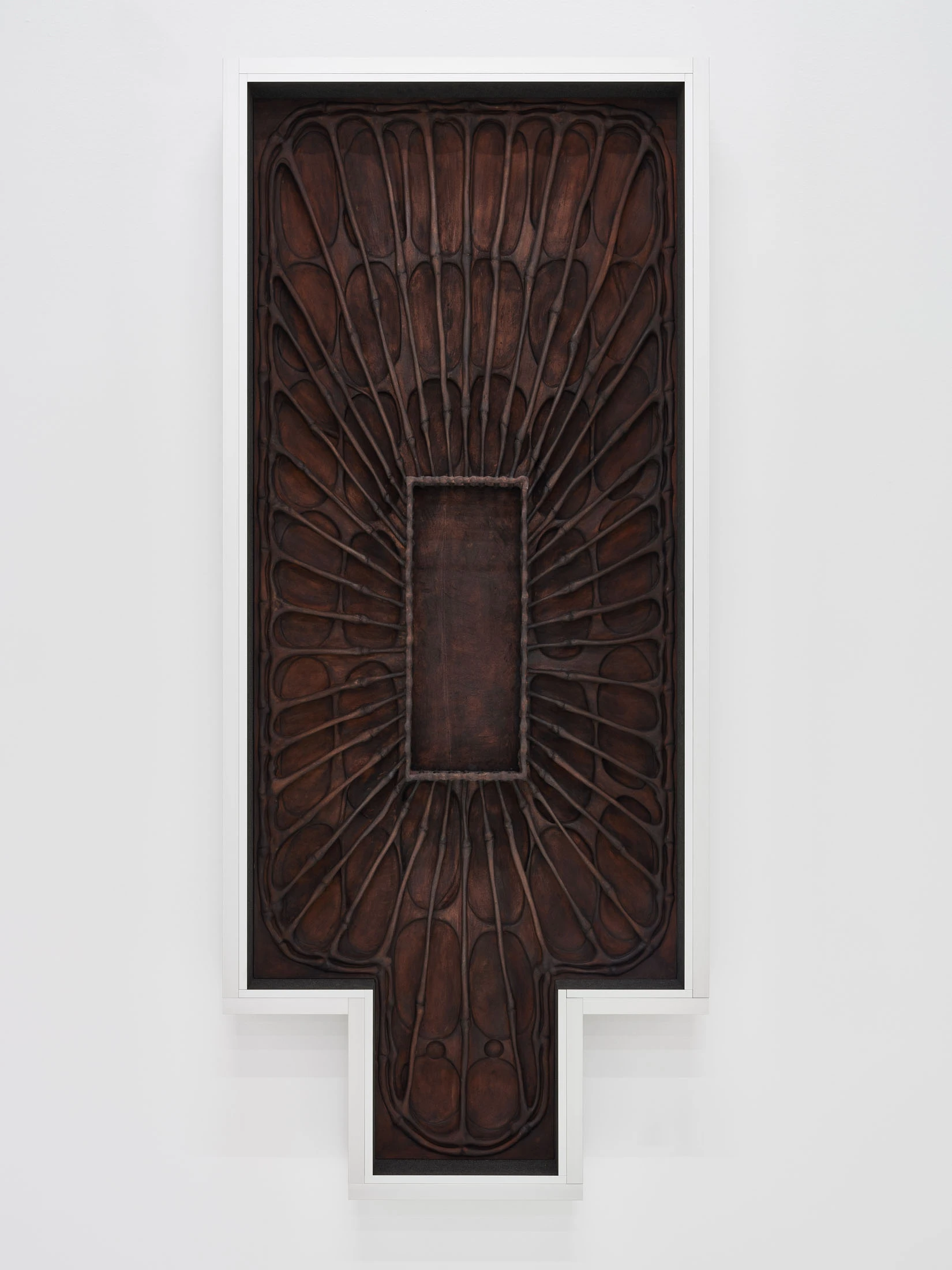
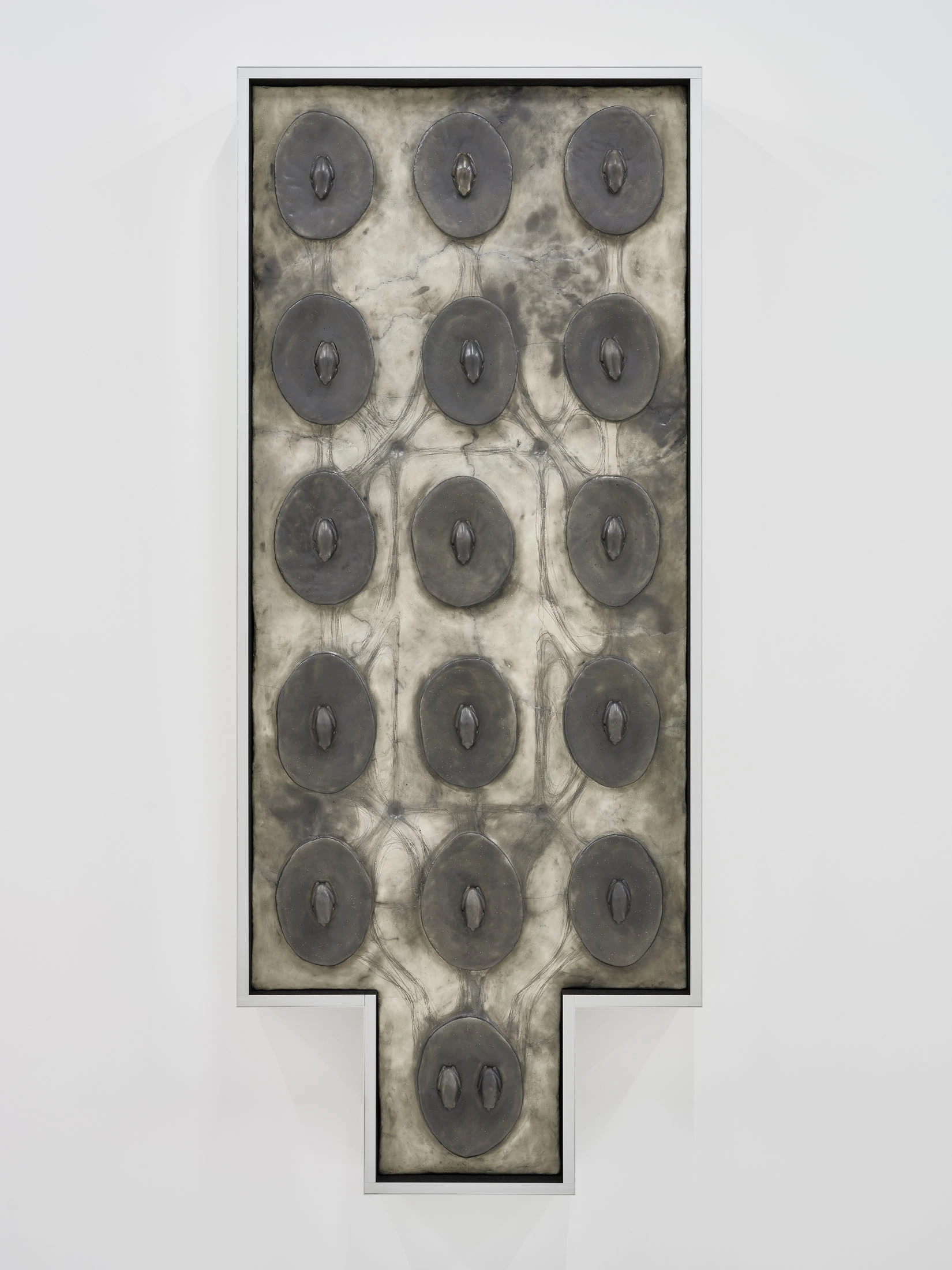
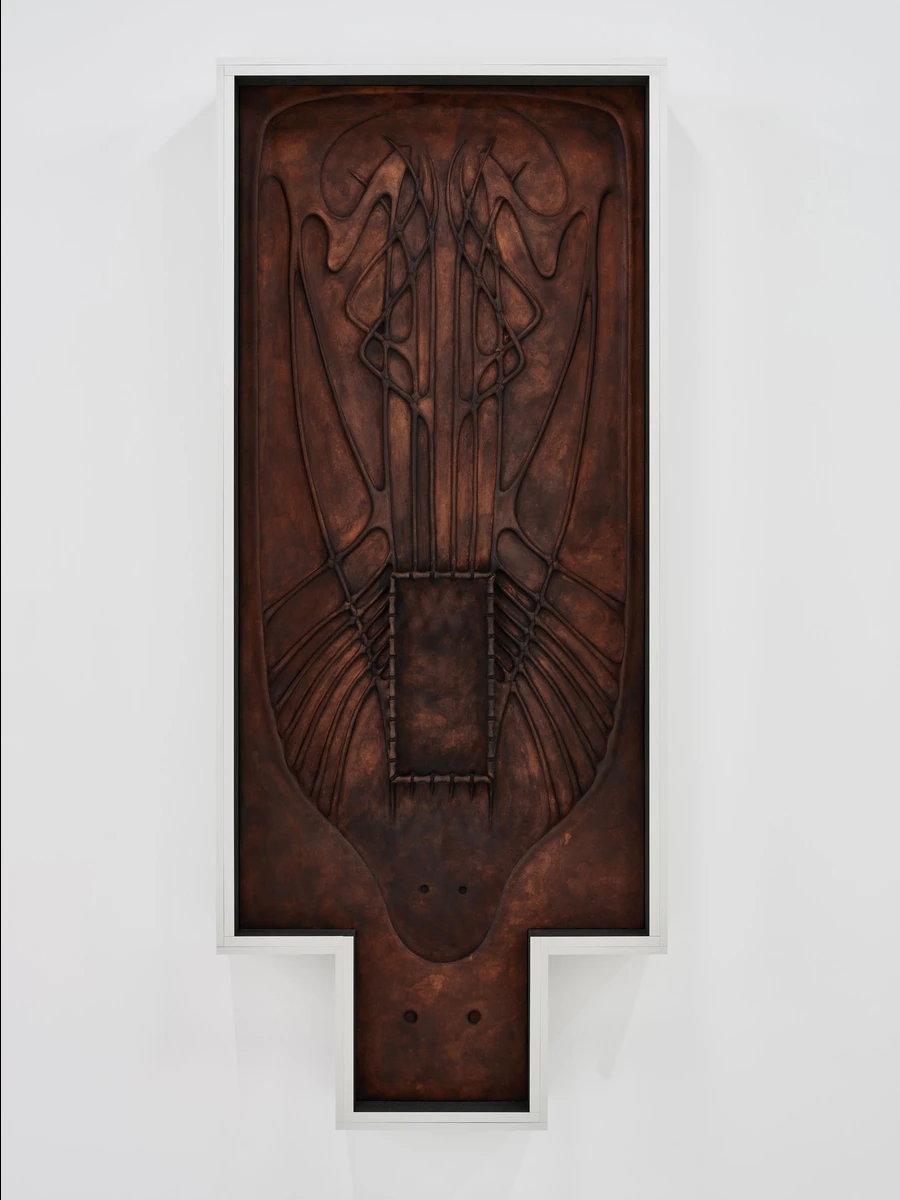
At Le Parvis in Ibos, Danish artist Frederik Exner stages Door of Hearing on the Greenwich meridian: nine foam frogs with disc-halos, five Chest effigies and a six-metre needle that tells no time.

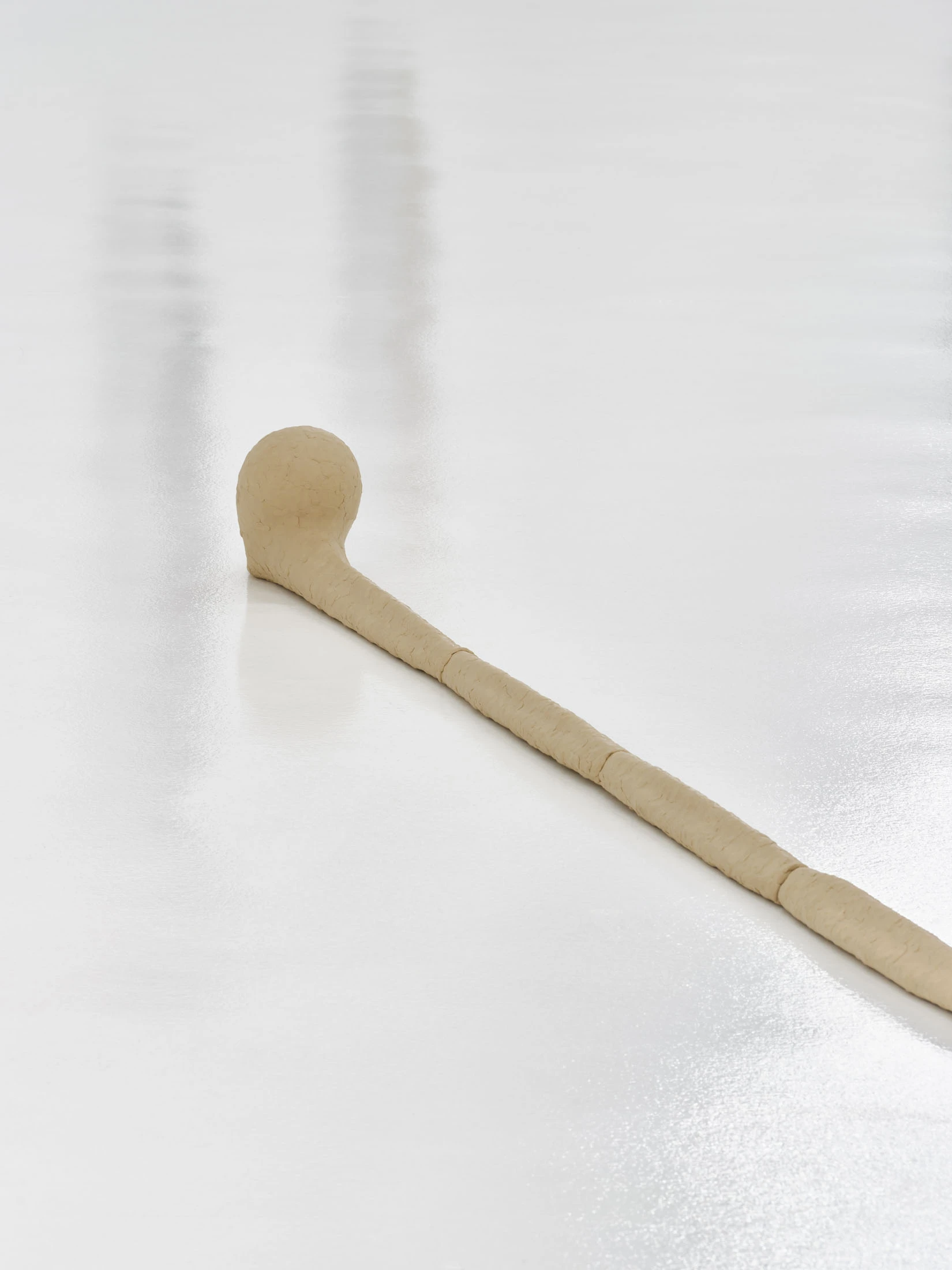
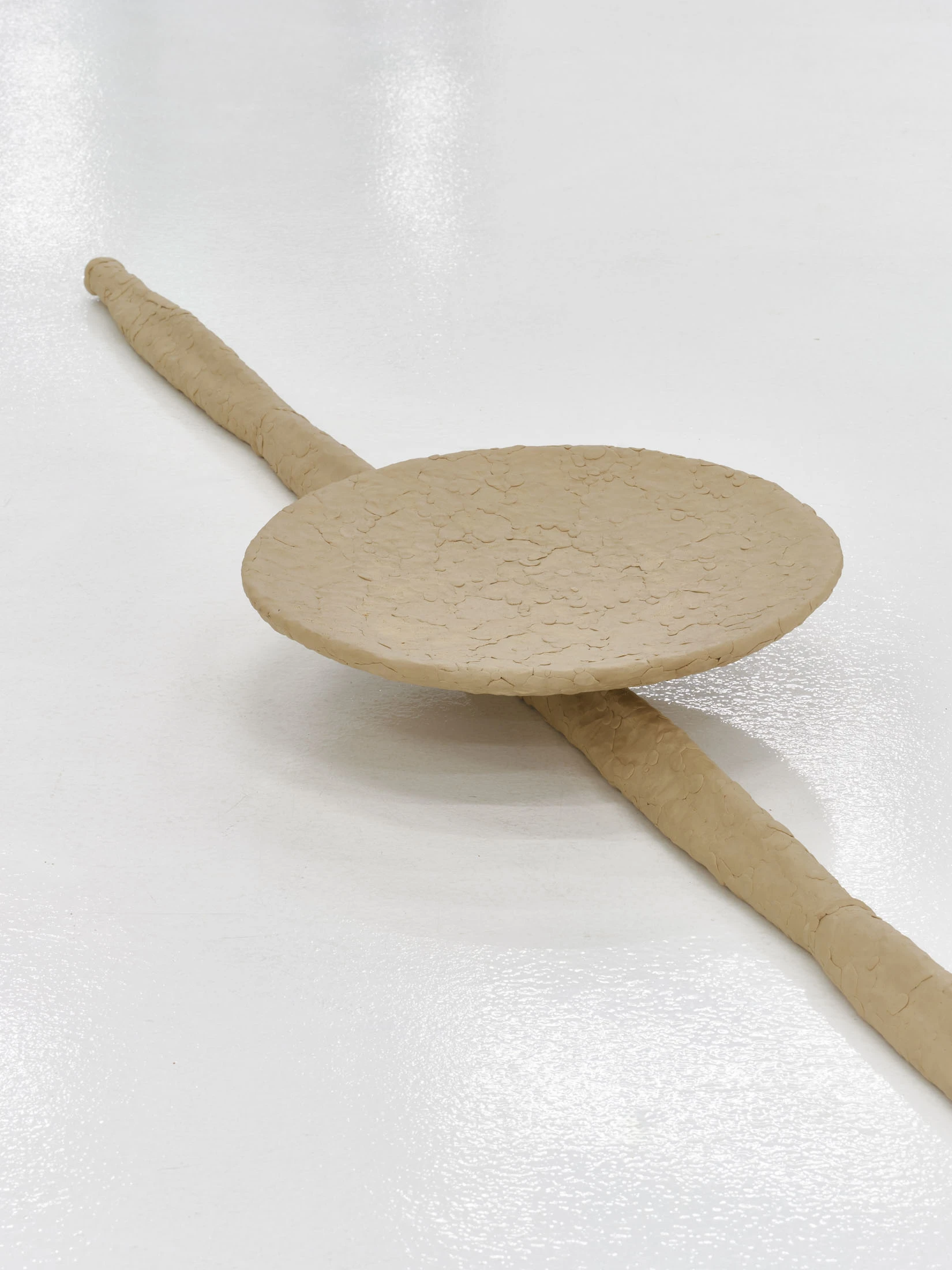
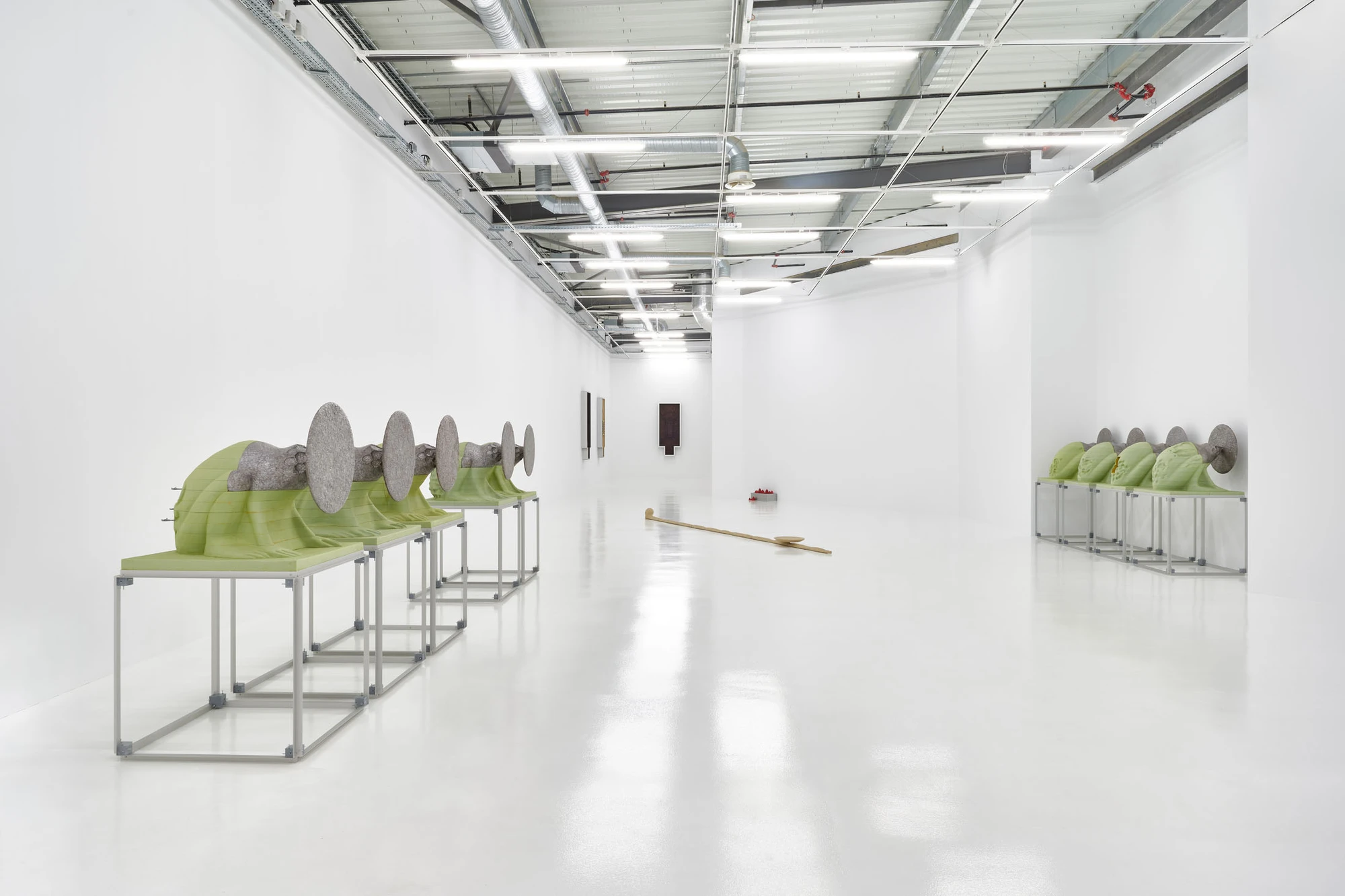
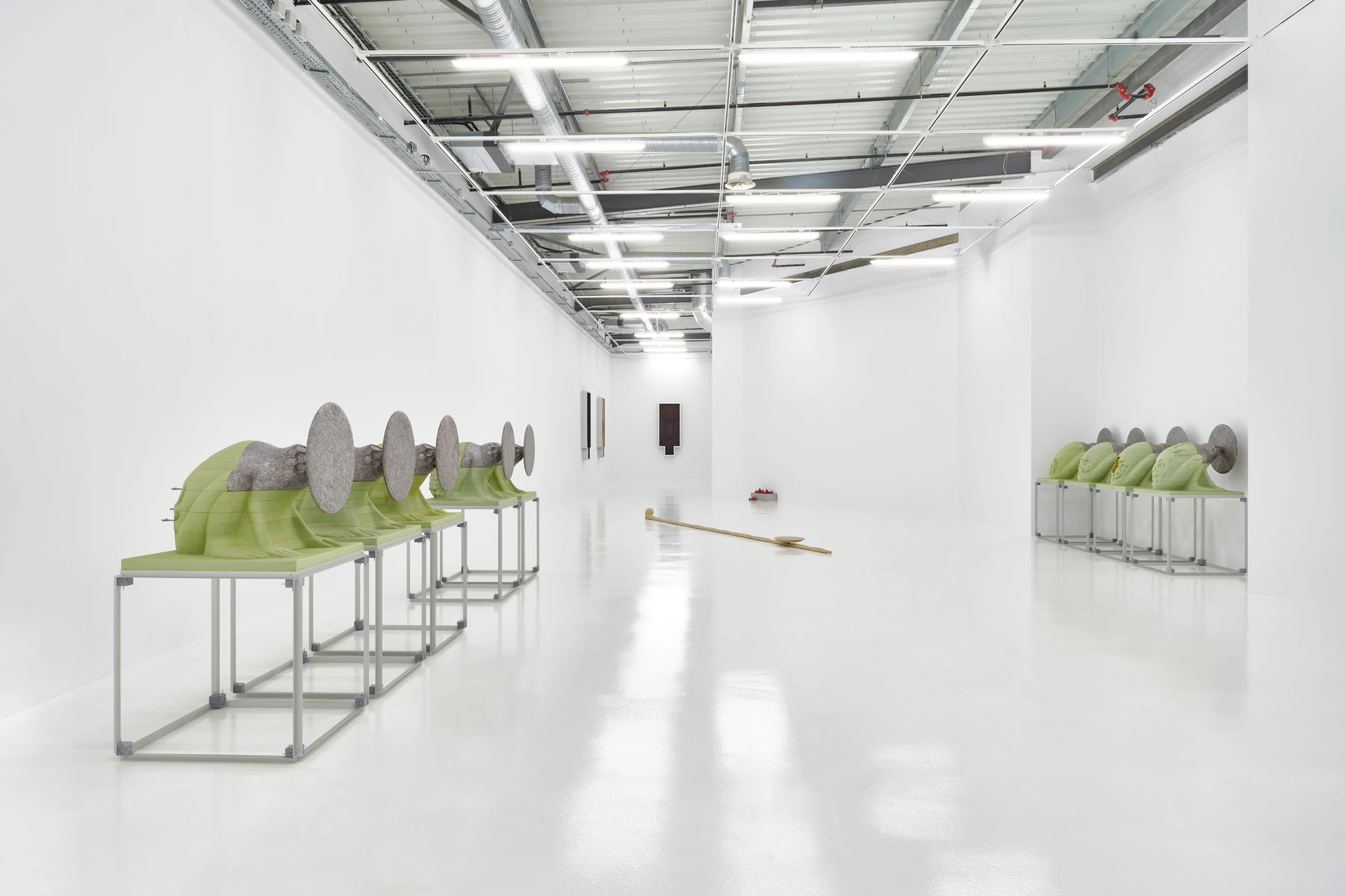
The site-specificity is given, not manufactured. Ibos sits on the Greenwich meridian — Exner's Untitled (nail), 600 centimetres of epoxy clay lying on the floor, is calibrated to that line. The gnomon whose cast shadow marks the apparent march of the sun, "and thus the course of a time that Exner sets out to unsettle," as the curatorial text puts it. A temporal axis that the building happens to sit on, now made visible and horizontal, now stripped of its function as an instrument. The needle tells no time.

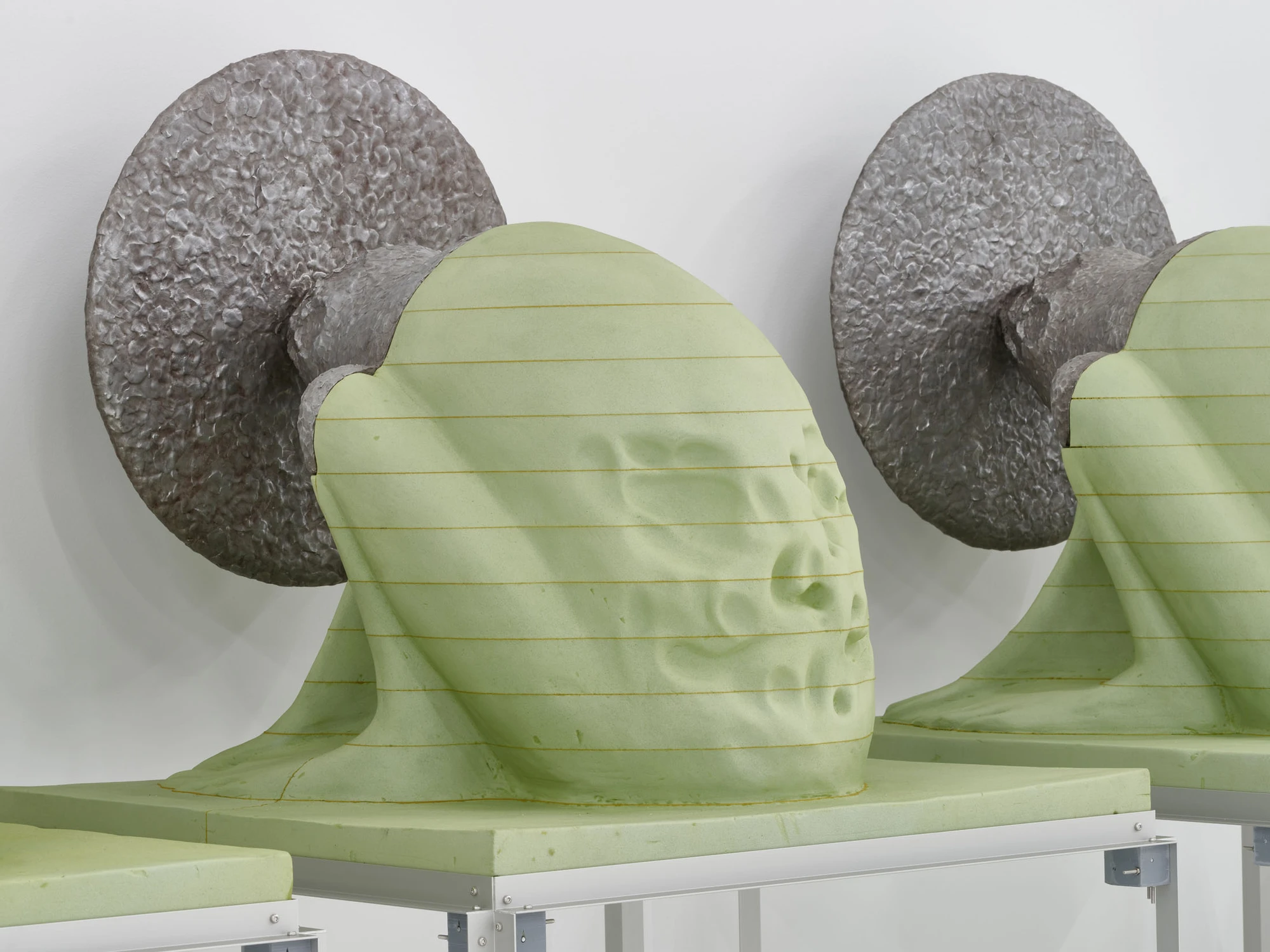
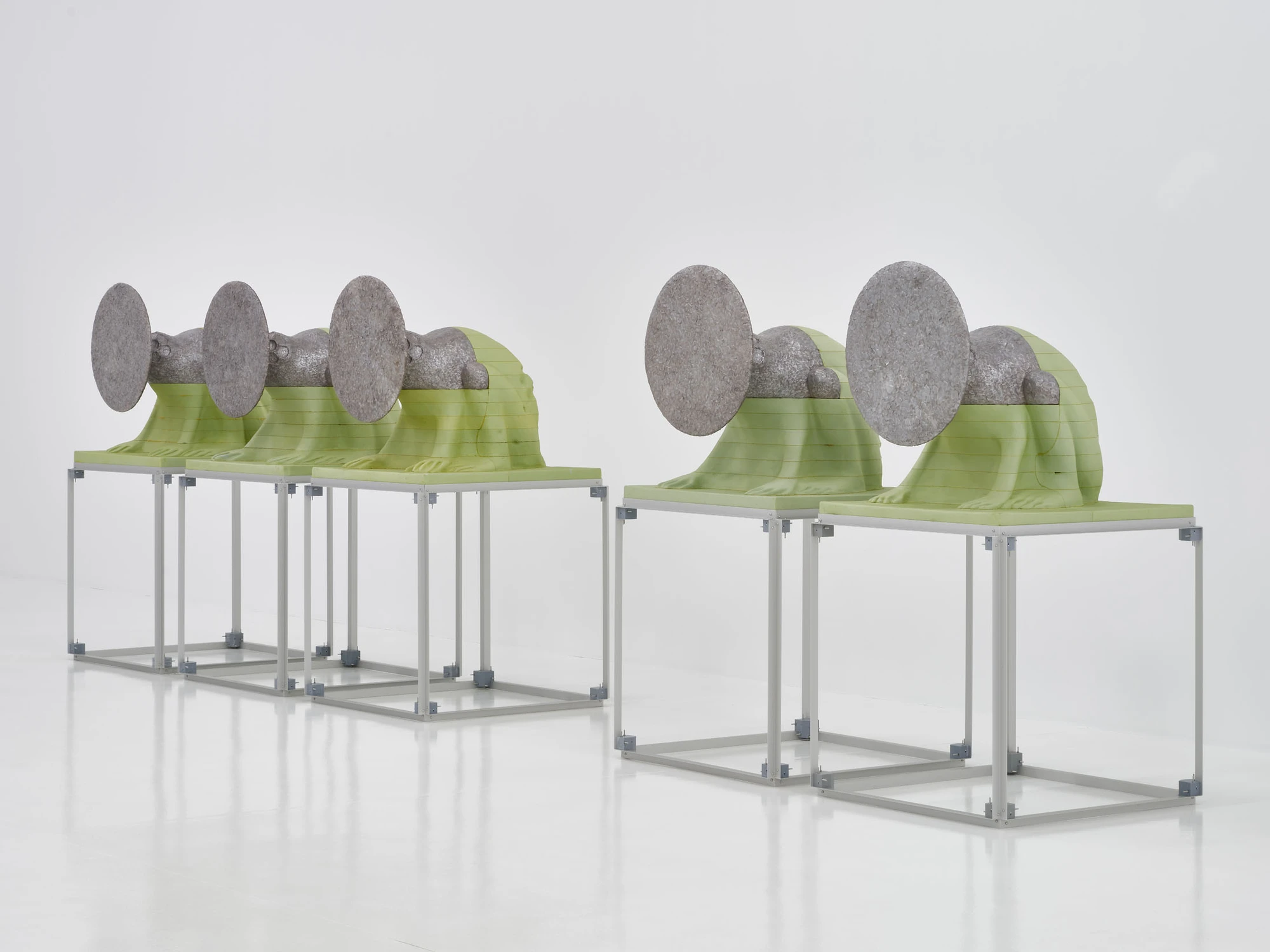
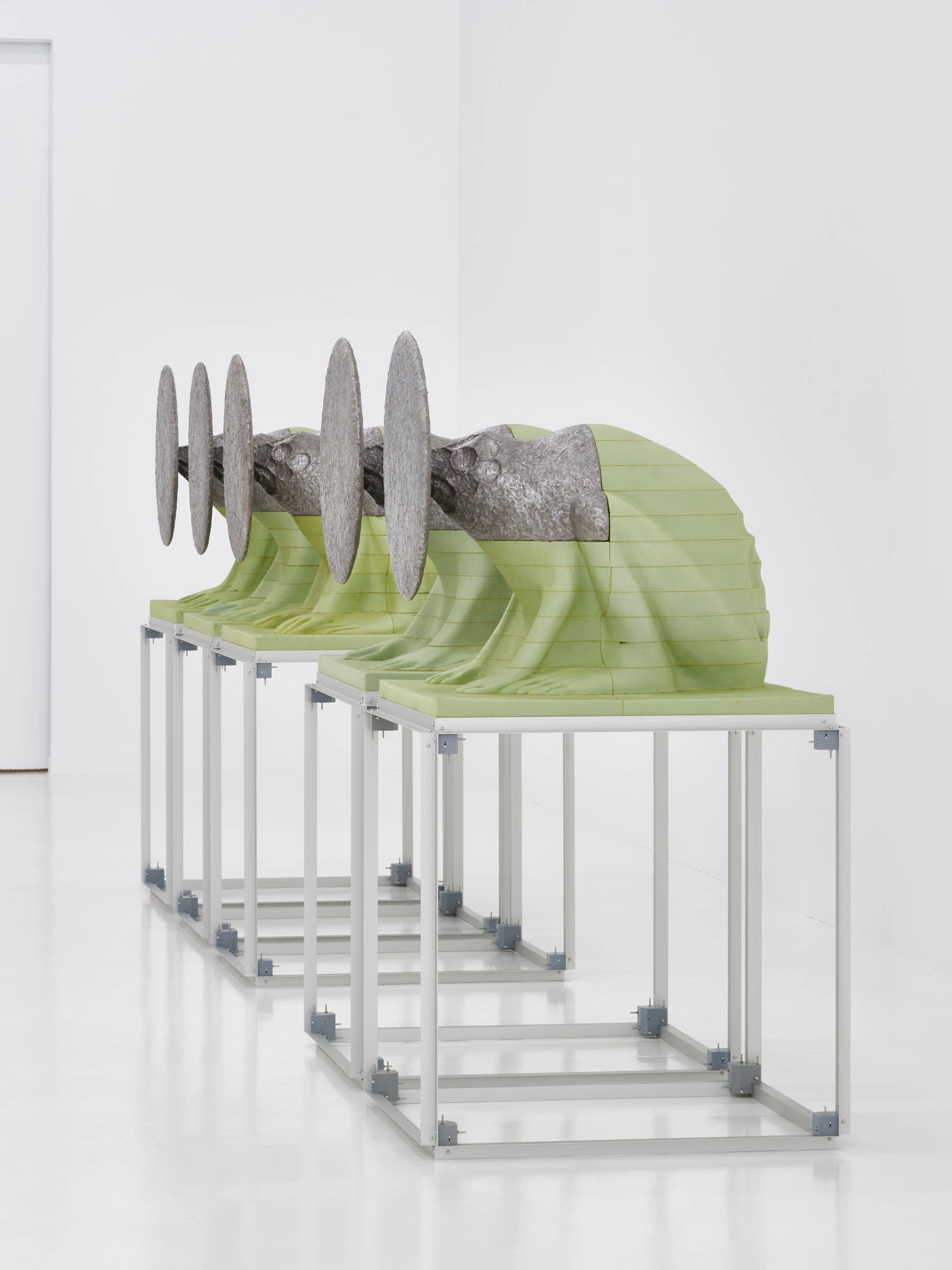
The nine frog-figures that constitute Ansekt (2025) carry the burden the press release assigns them with complete seriousness: the frog as totem of a sinking world, the maligned creature of fairy-tale and legend repurposed as a ruin-witness. More than 41 percent of amphibian species in France are currently threatened. The sculptural frogs are PU-foam, acrylic resin, anodized aluminium — synthetic materials made to carry the weight of devotional or architectural forms. The disc-halos and metal plinths complete the liturgical register without providing its content.

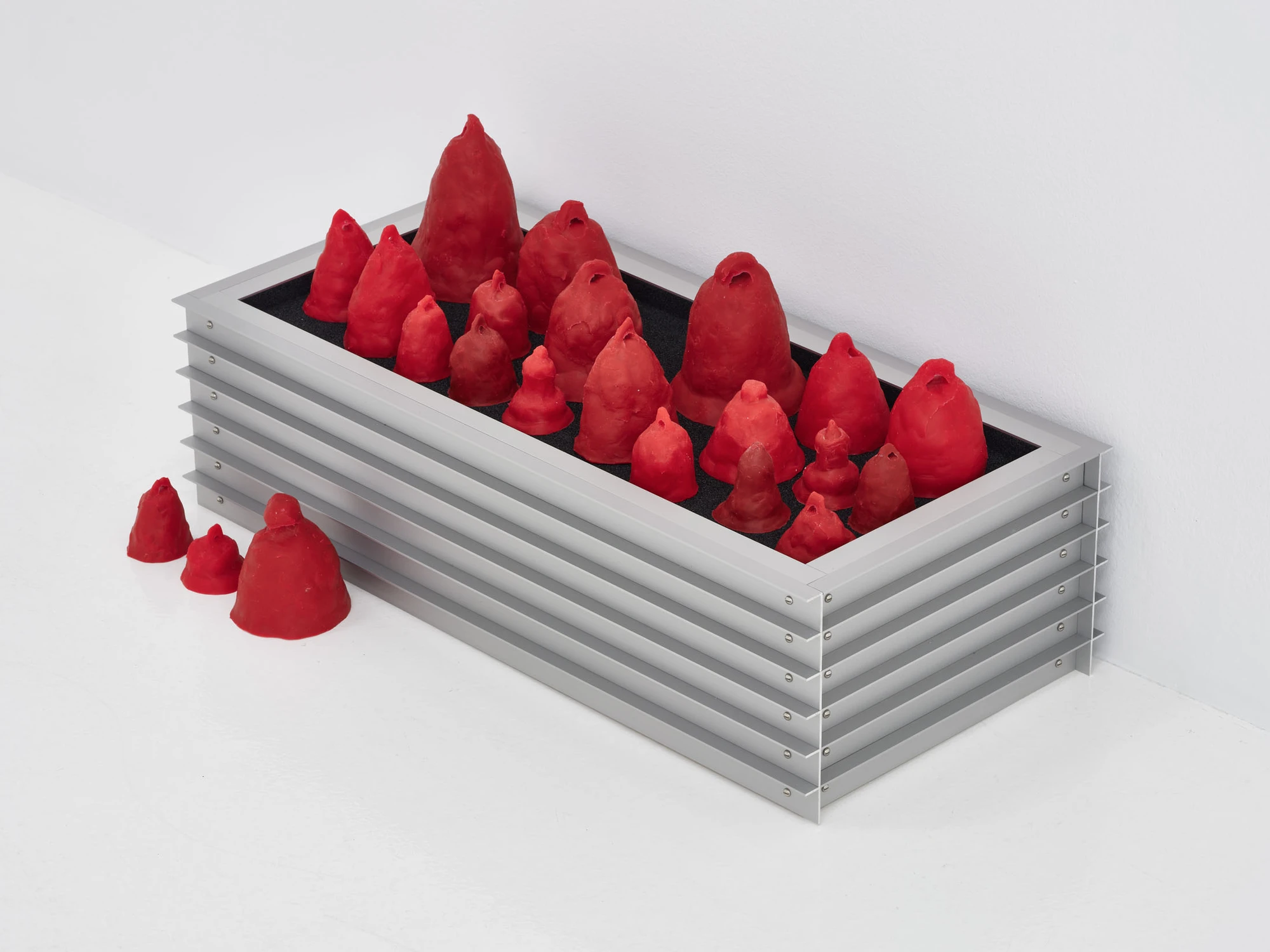
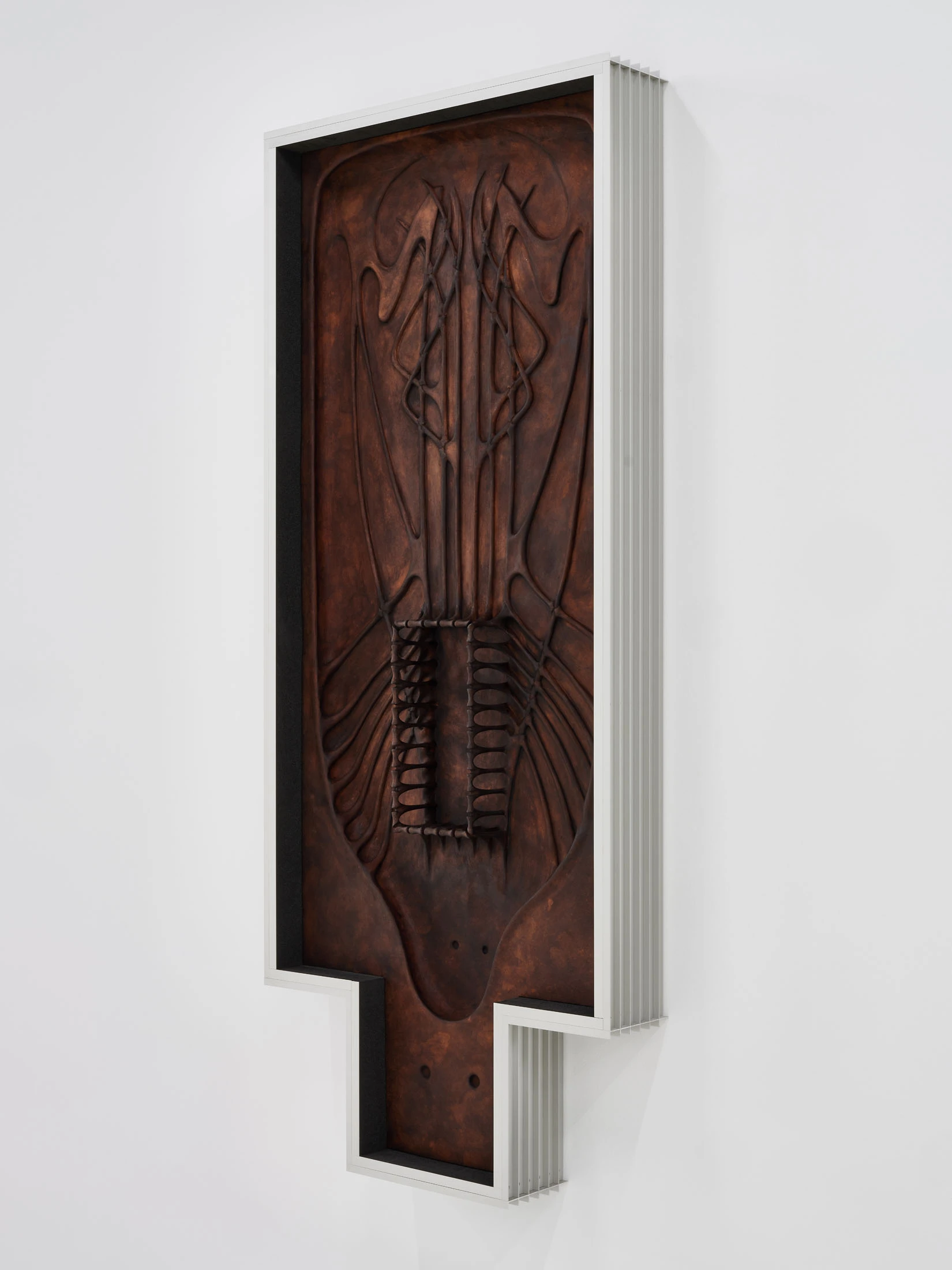
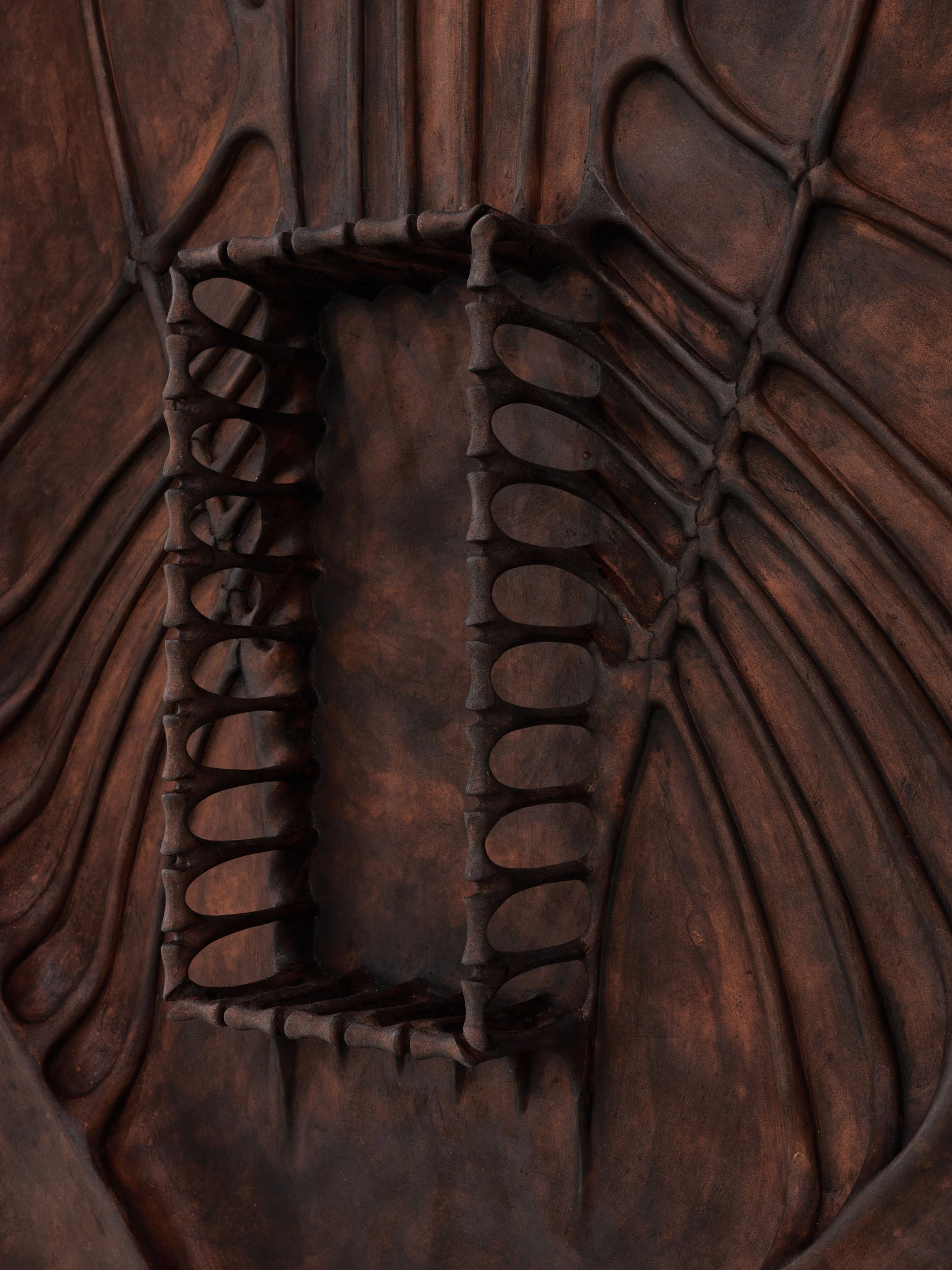
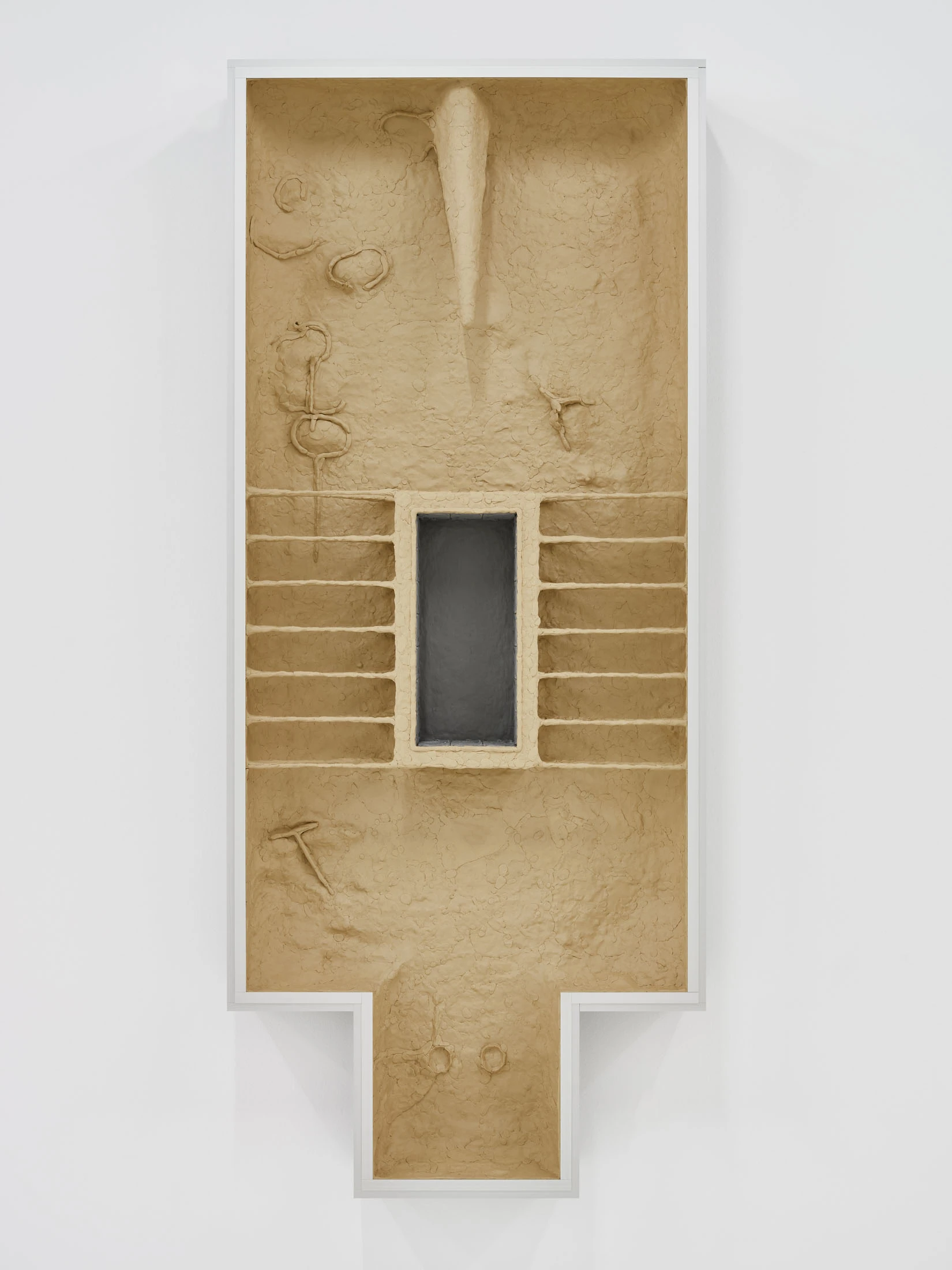
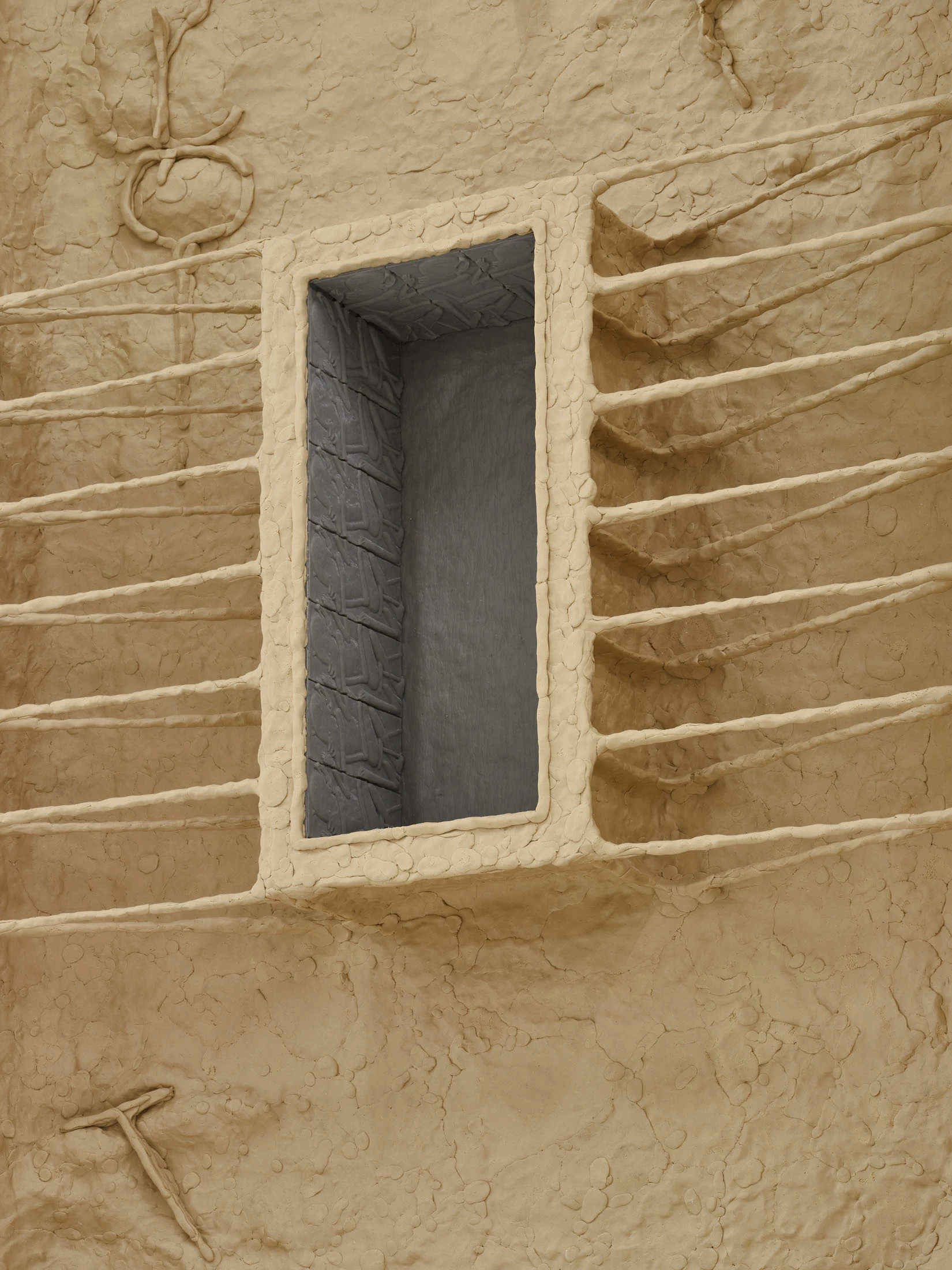
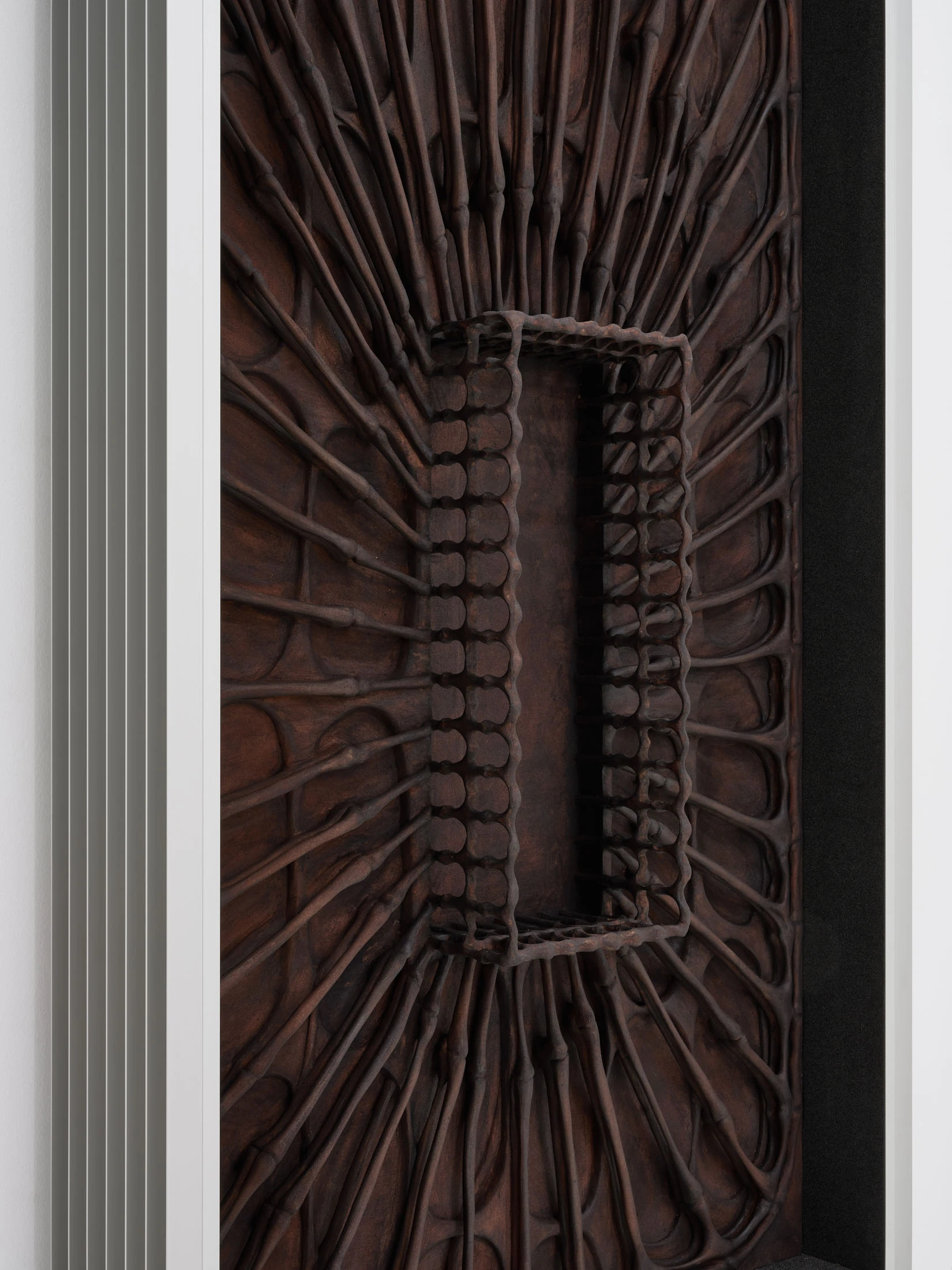
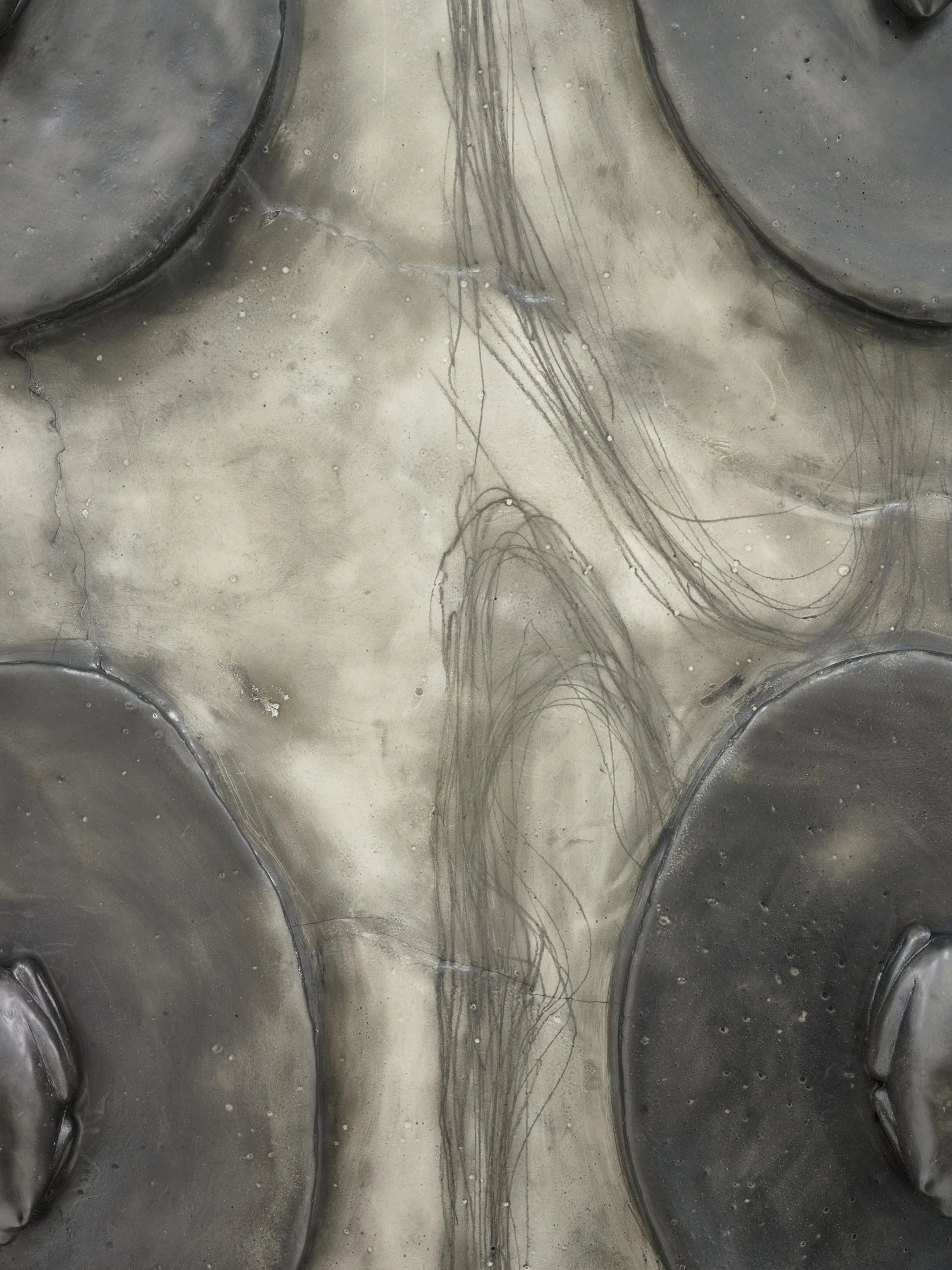
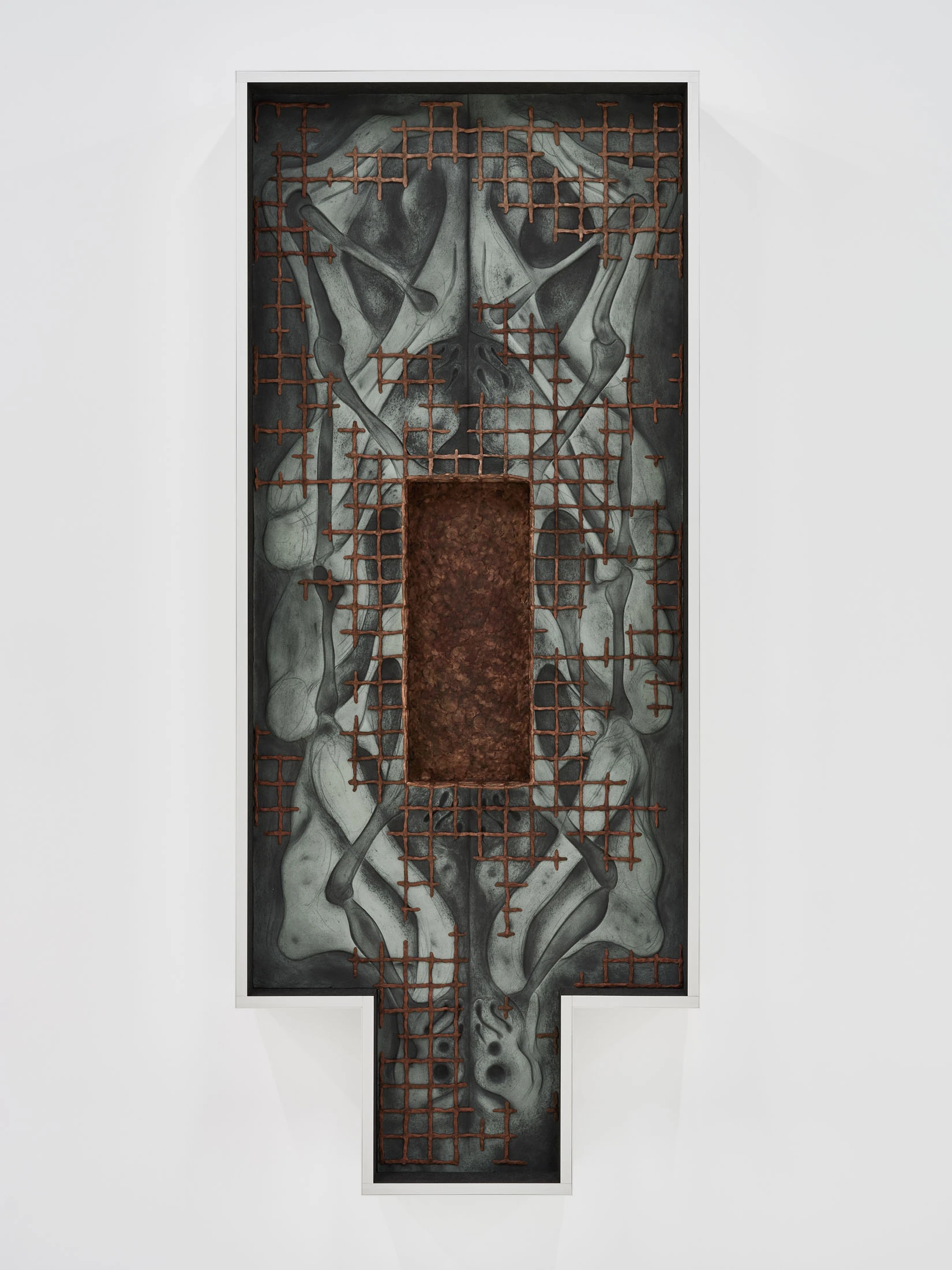
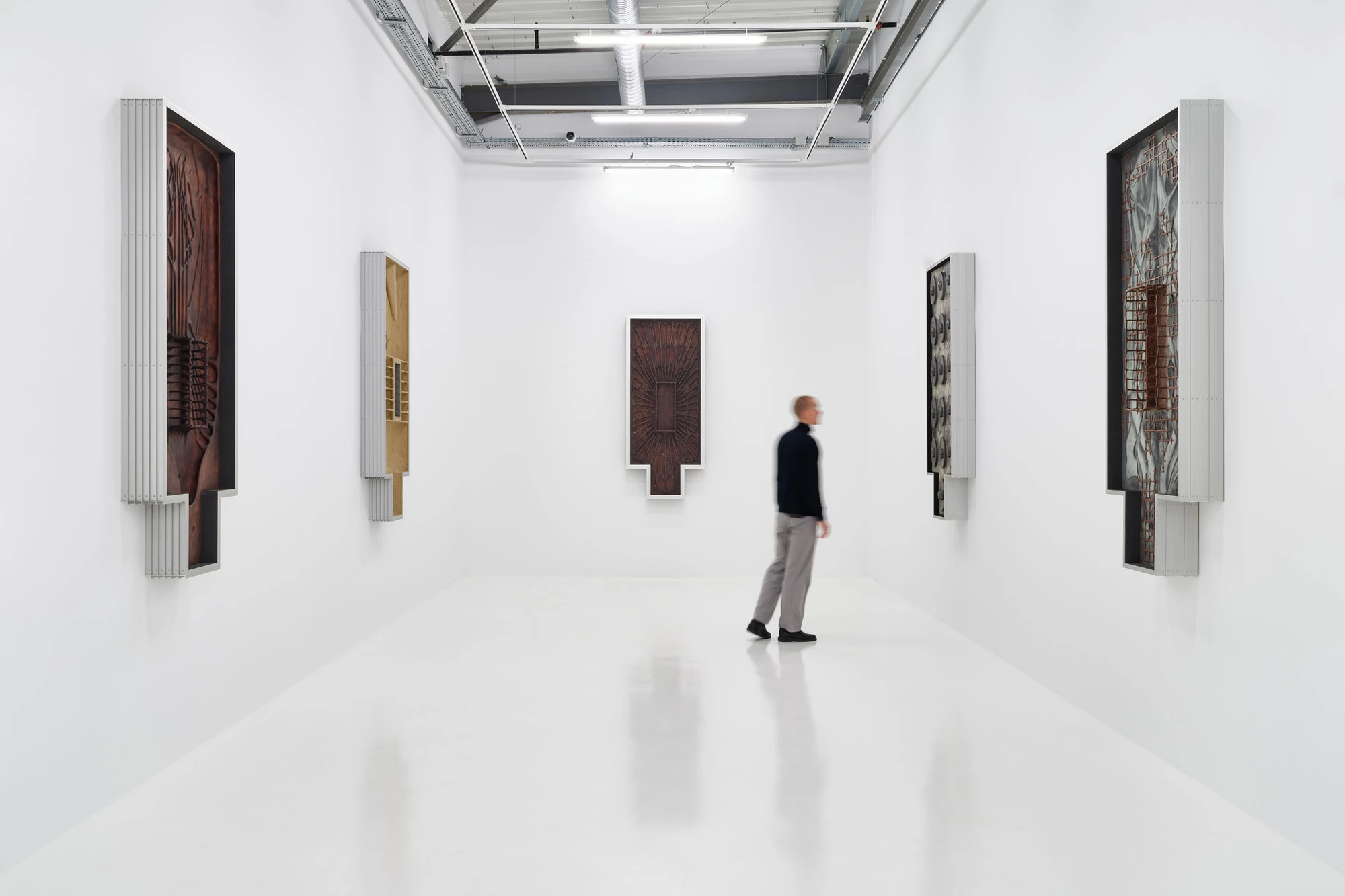
The five Chest works — standing 2 metres tall, titled as both chest and coffer — introduce a further anthropomorphic dimension. Each is a different material combination: PU-foam and shellac for one, epoxy clay and silicone for another, acrylic resin and pencil for a third. The variations within a single formal type produce something closer to a series of statements than a series of repetitions. On the floor, Bells — some twenty red silicone-cast bells — refuses its instrumental and sacred function, becoming, in the curator's phrase, "an autonomous work sufficient unto itself."

The press release that curated this exhibition, written by Magali Gentet, describes Exner working "sans but, ni message" — without aim or message — against the current of self-centred, hyper-relational societies. "The artist effaces himself to let the work take place, accepting that the work, agentive, imposes its own law on him." What the work produces in the immaculate space of Le Parvis is what it calls a "sedimented, alternative time": not the past, not the present, not the future, but something prior to all three distinctions, haunted by medievalist memory and populated by creatures whose time on earth is running out.
Interested in Showcasing Your Work?

If you would like to feature your works on Thisispaper, please visit our Submission page and sign up to Thisispaper+ to submit your work. Once your submission is approved, your work will be showcased to our global audience of 2 million art, architecture, and design professionals and enthusiasts.
No items found.
We love less
but there is more.
Become a Thisispaper+ member today to unlock full access to our magazine, advanced tools, and support our work.
Get two months FREE
with annual subscription
We love less
but there is more.
Become a Thisispaper+ member today to unlock full access to our magazine, advanced tools, and support our work.
Get two months FREE
with annual subscription
No items found.
Alexander Zaxarov
Jun 5, 2026

At Le Parvis in Ibos, Danish artist Frederik Exner stages Door of Hearing on the Greenwich meridian: nine foam frogs with disc-halos, five Chest effigies and a six-metre needle that tells no time.

The site-specificity is given, not manufactured. Ibos sits on the Greenwich meridian — Exner's Untitled (nail), 600 centimetres of epoxy clay lying on the floor, is calibrated to that line. The gnomon whose cast shadow marks the apparent march of the sun, "and thus the course of a time that Exner sets out to unsettle," as the curatorial text puts it. A temporal axis that the building happens to sit on, now made visible and horizontal, now stripped of its function as an instrument. The needle tells no time.

The nine frog-figures that constitute Ansekt (2025) carry the burden the press release assigns them with complete seriousness: the frog as totem of a sinking world, the maligned creature of fairy-tale and legend repurposed as a ruin-witness. More than 41 percent of amphibian species in France are currently threatened. The sculptural frogs are PU-foam, acrylic resin, anodized aluminium — synthetic materials made to carry the weight of devotional or architectural forms. The disc-halos and metal plinths complete the liturgical register without providing its content.

The five Chest works — standing 2 metres tall, titled as both chest and coffer — introduce a further anthropomorphic dimension. Each is a different material combination: PU-foam and shellac for one, epoxy clay and silicone for another, acrylic resin and pencil for a third. The variations within a single formal type produce something closer to a series of statements than a series of repetitions. On the floor, Bells — some twenty red silicone-cast bells — refuses its instrumental and sacred function, becoming, in the curator's phrase, "an autonomous work sufficient unto itself."

The press release that curated this exhibition, written by Magali Gentet, describes Exner working "sans but, ni message" — without aim or message — against the current of self-centred, hyper-relational societies. "The artist effaces himself to let the work take place, accepting that the work, agentive, imposes its own law on him." What the work produces in the immaculate space of Le Parvis is what it calls a "sedimented, alternative time": not the past, not the present, not the future, but something prior to all three distinctions, haunted by medievalist memory and populated by creatures whose time on earth is running out.
Interested in Showcasing Your Work?

If you would like to feature your works on Thisispaper, please visit our Submission page and subscribe to Thisispaper+. Once your submission is approved, your work will be showcased to our global audience of 2 million art, architecture, and design professionals and enthusiasts.
No items found.

Join Thisispaper+
Unlock access to 2500 stories, curated guides + editions, and share your work with a global network of architects, artists, writers and designers who are shaping the future.
Get two months FREE
with annual subscription
Travel Guides
Immerse yourself in timeless destinations, hidden gems, and creative spaces—curated by humans, not algorithms.
Explore All Guides +
Submission Module
Submit your project and gain the chance to showcase your work to our worldwide audience of over 2M architects, designers, artists, and curious minds.
Learn More+
Curated Editions
Dive deeper into carefully curated editions, designed to feed your curiosity and foster exploration.
Off-the-Grid
Jutaku
Sacral Journey
minimum
The New Chair
Explore All Editions +
Atlas
A new and interactive way to explore the most inspiring places around the world.
Interactive map
Linked to articles
300+ curated locations
Google + Apple directions
Smart filters
Subscribe to Explore+
Become a Thisispaper+ member today to unlock full access to our magazine, submit your project and support our work.
Join Thisispaper+Join Thisispaper+
€ 9 EUR
/month
Cancel anytime
Get two months FREE
with annual subscription