Thisispaper Community
Join today.
Enter your email address to receive the latest news on emerging art, design, lifestyle and tech from Thisispaper, delivered straight to your inbox.
Oops! Something went wrong while submitting the form.
Instant access to new channels
The top stories curated daily
Weekly roundups of what's important
Original features and deep dives
Exclusive community features
No items found.
Concrete TV Stand by David Bard
Alexander Zaxarov
Feb 4, 2026

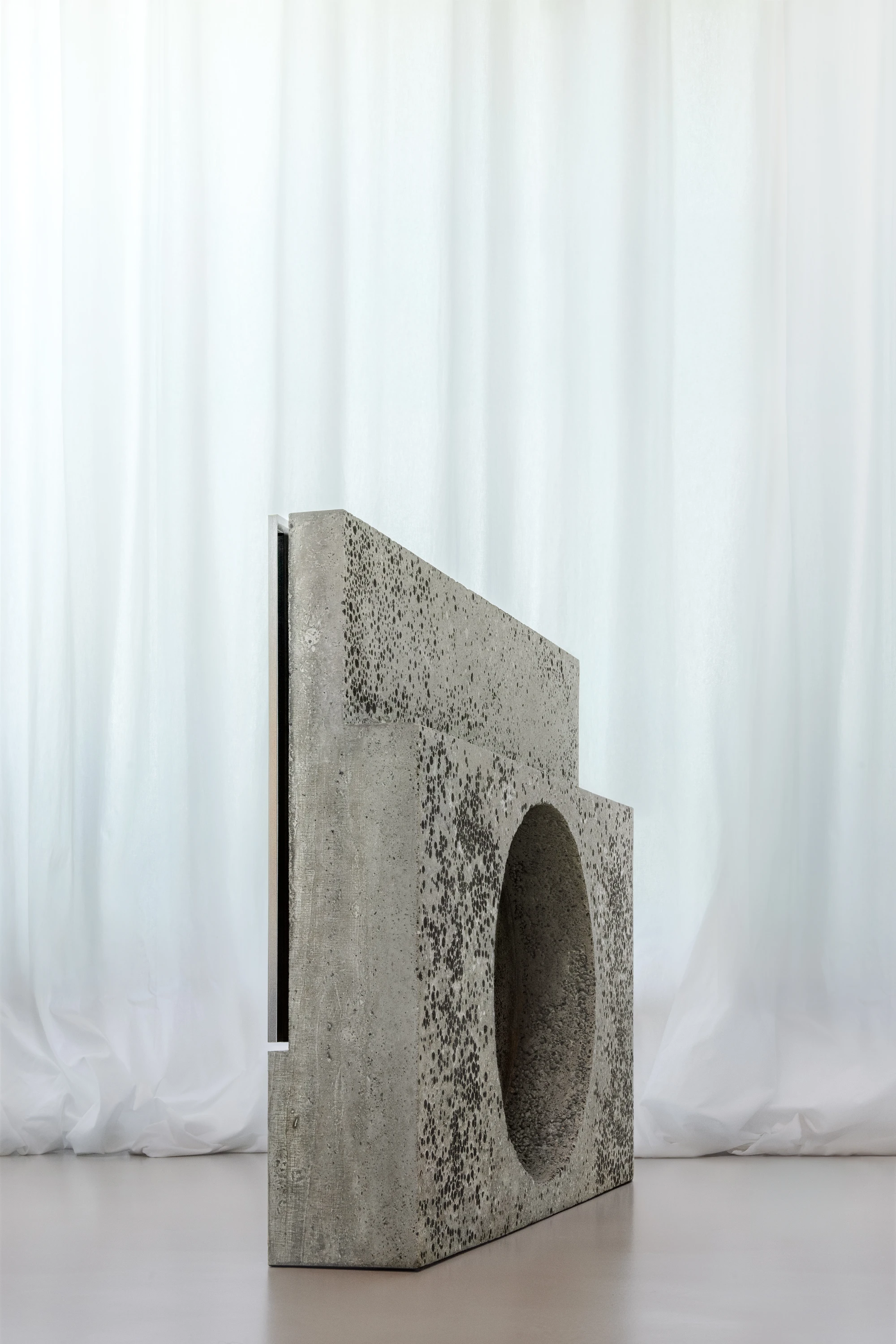
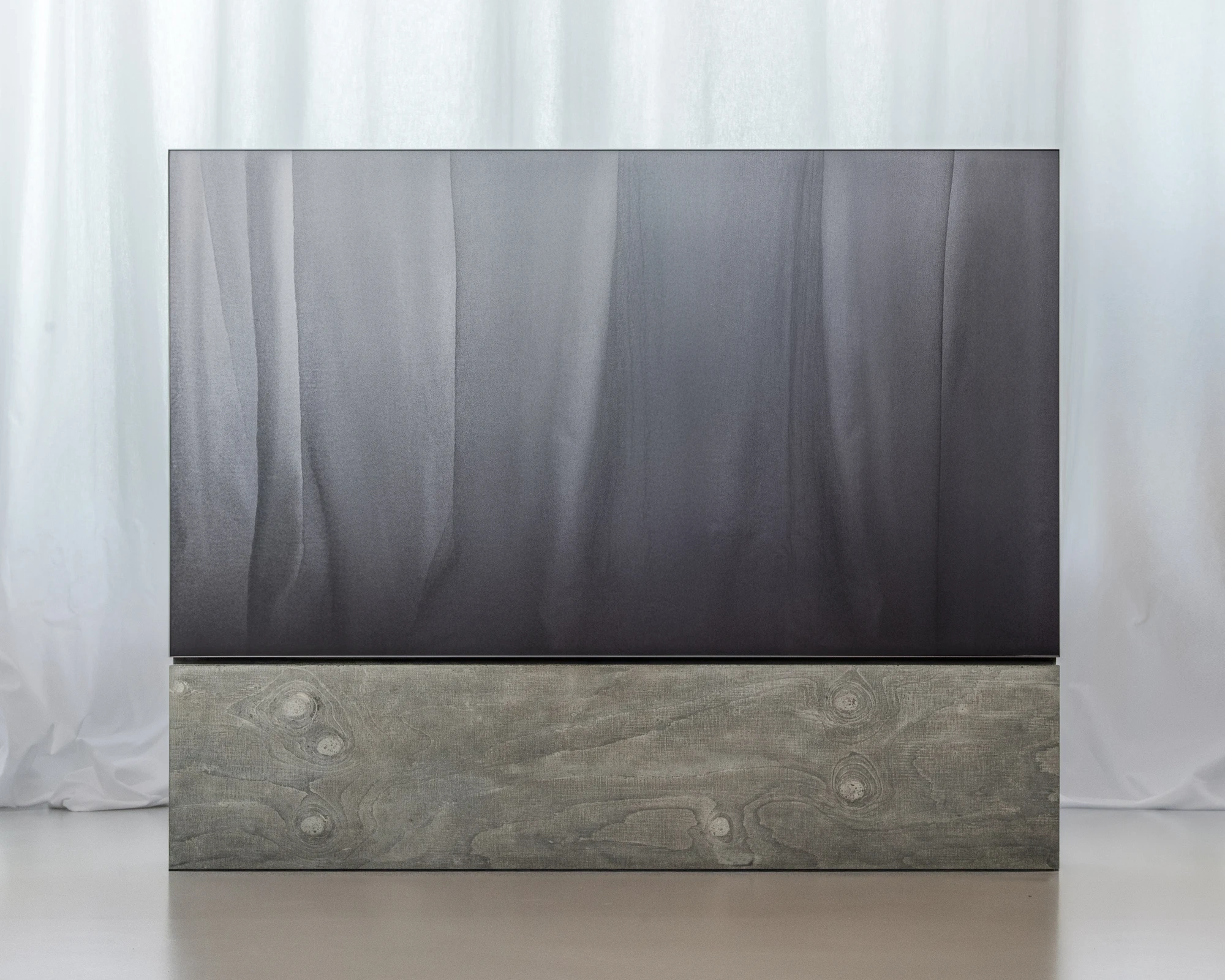
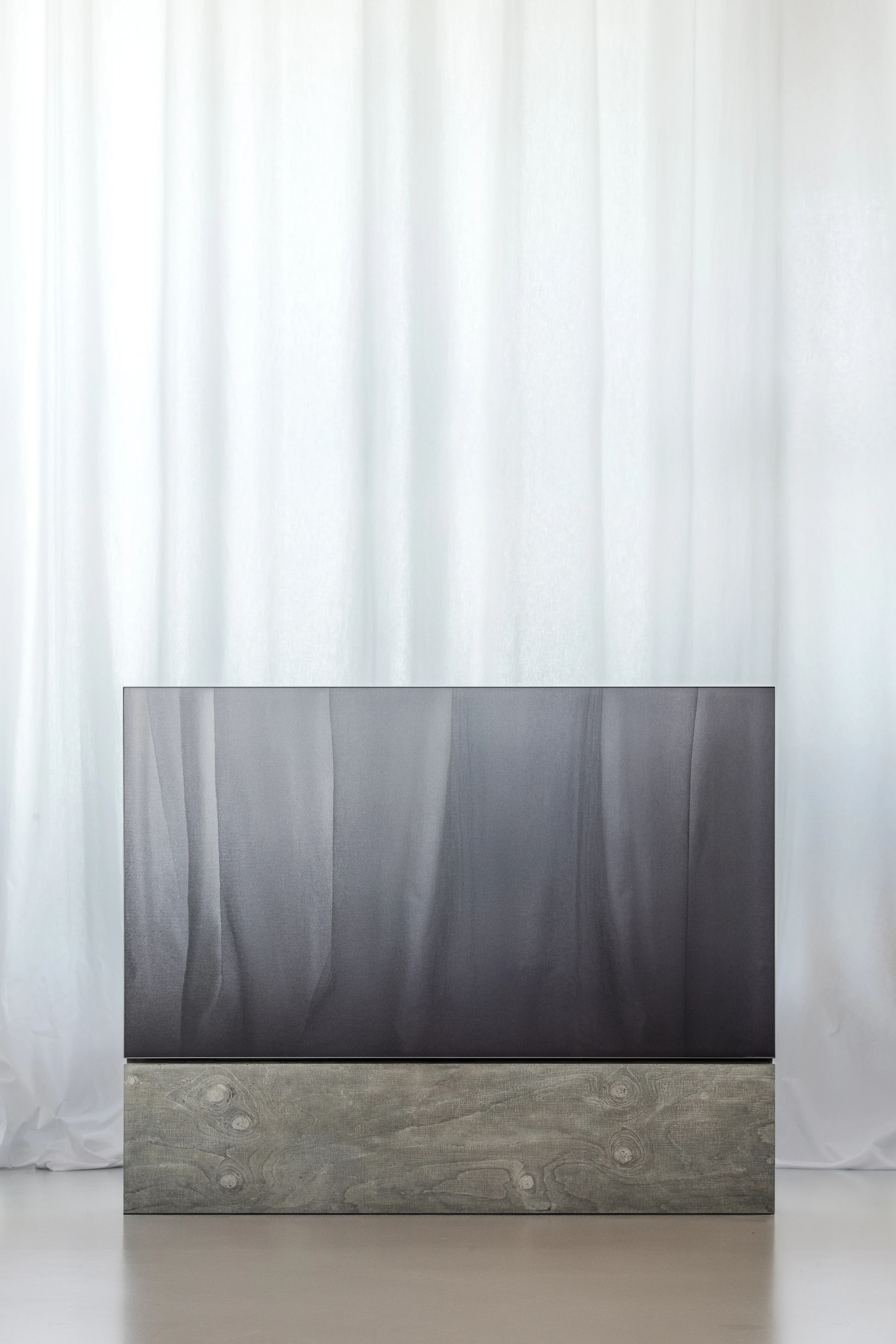
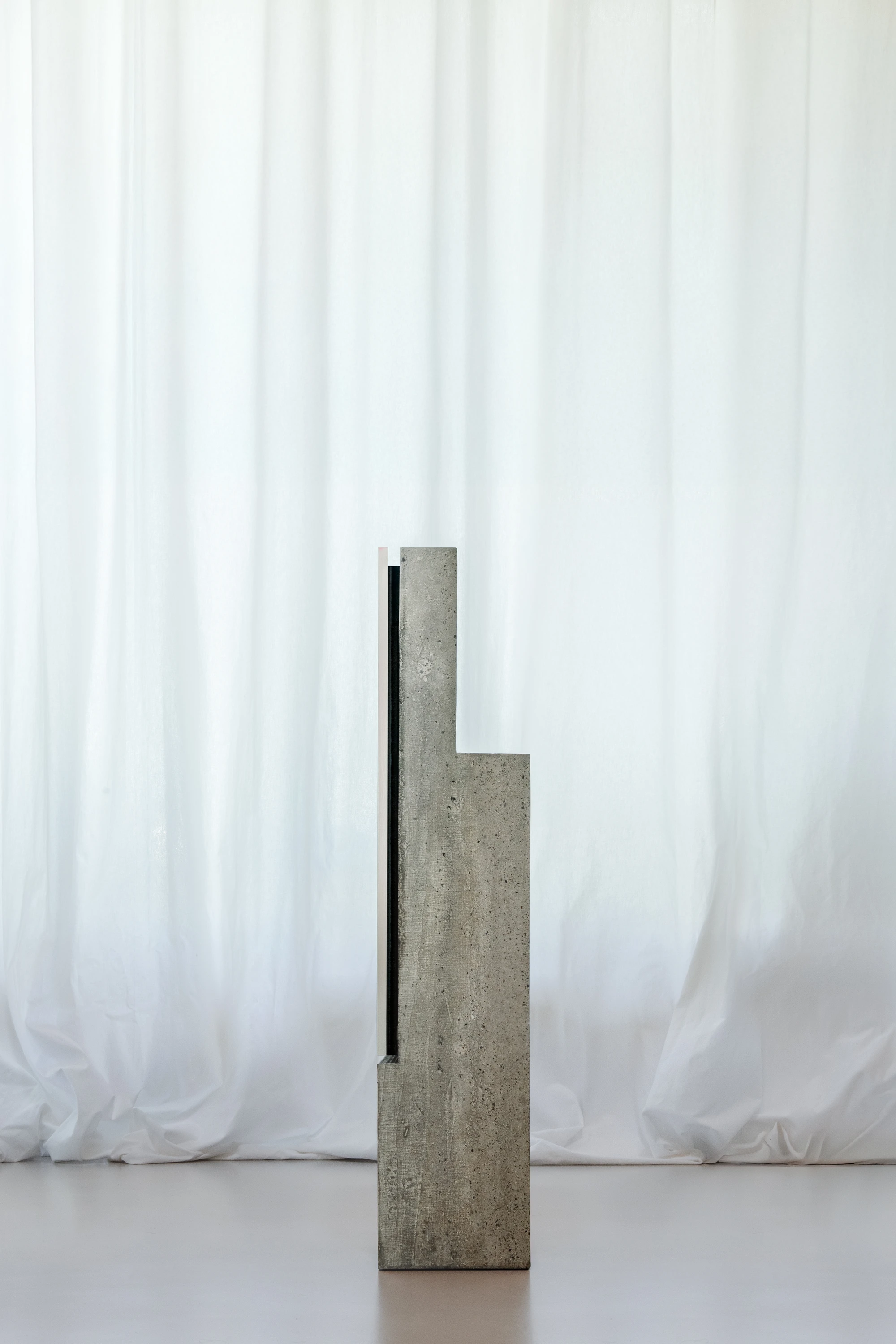
Concrete TV Stand by David Bard in Switzerland treats a media console as found object—a meteorite of expanded clay and cement that arrived from elsewhere.

The television stand occupies an awkward position in contemporary furniture design. Too utilitarian to warrant formal attention, too visible to ignore entirely, it tends toward either anonymous minimalism or aggressive concealment. The Swiss designer David Bard approached the typology from a different direction: what if the stand possessed more presence than the screen it supports?

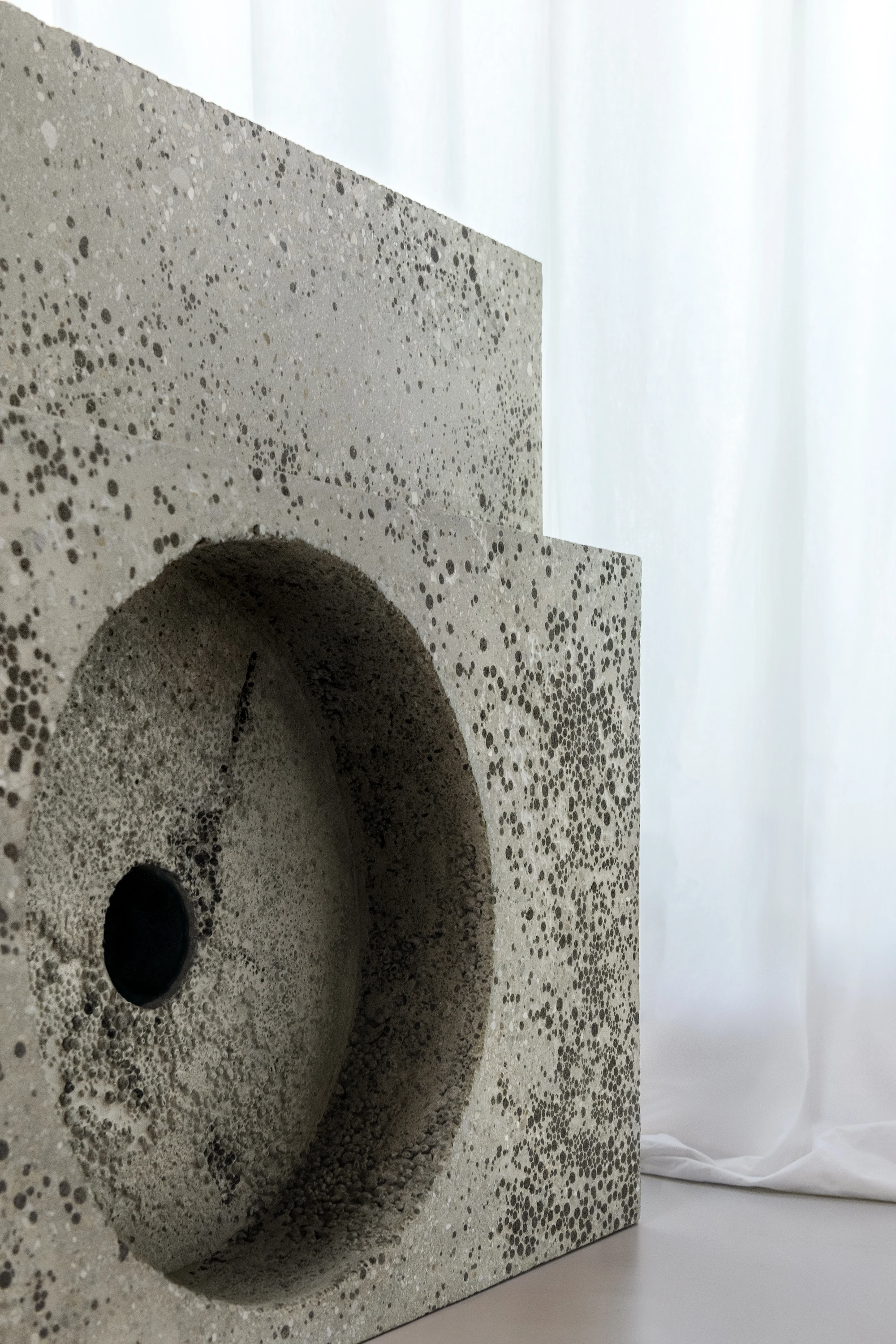
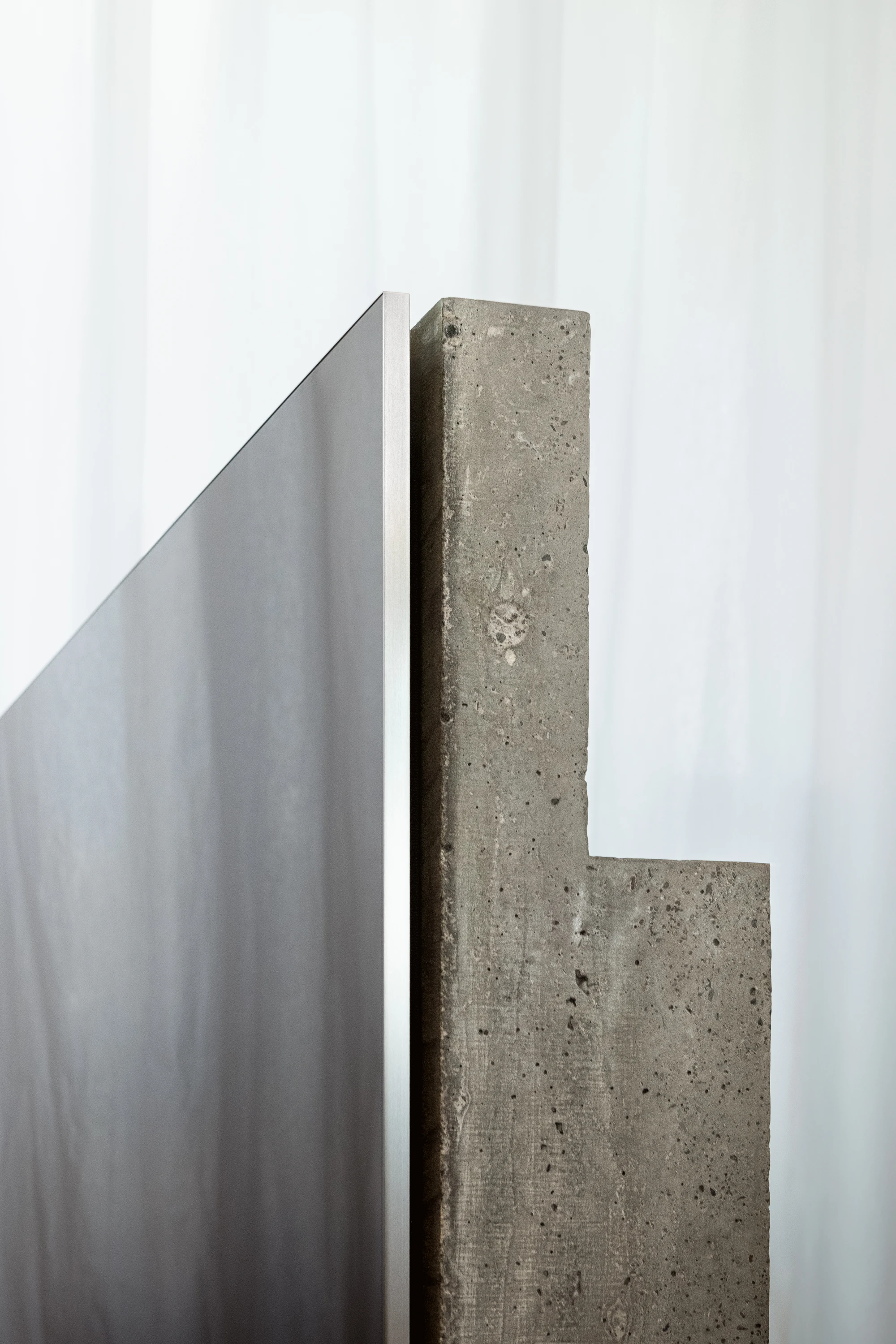
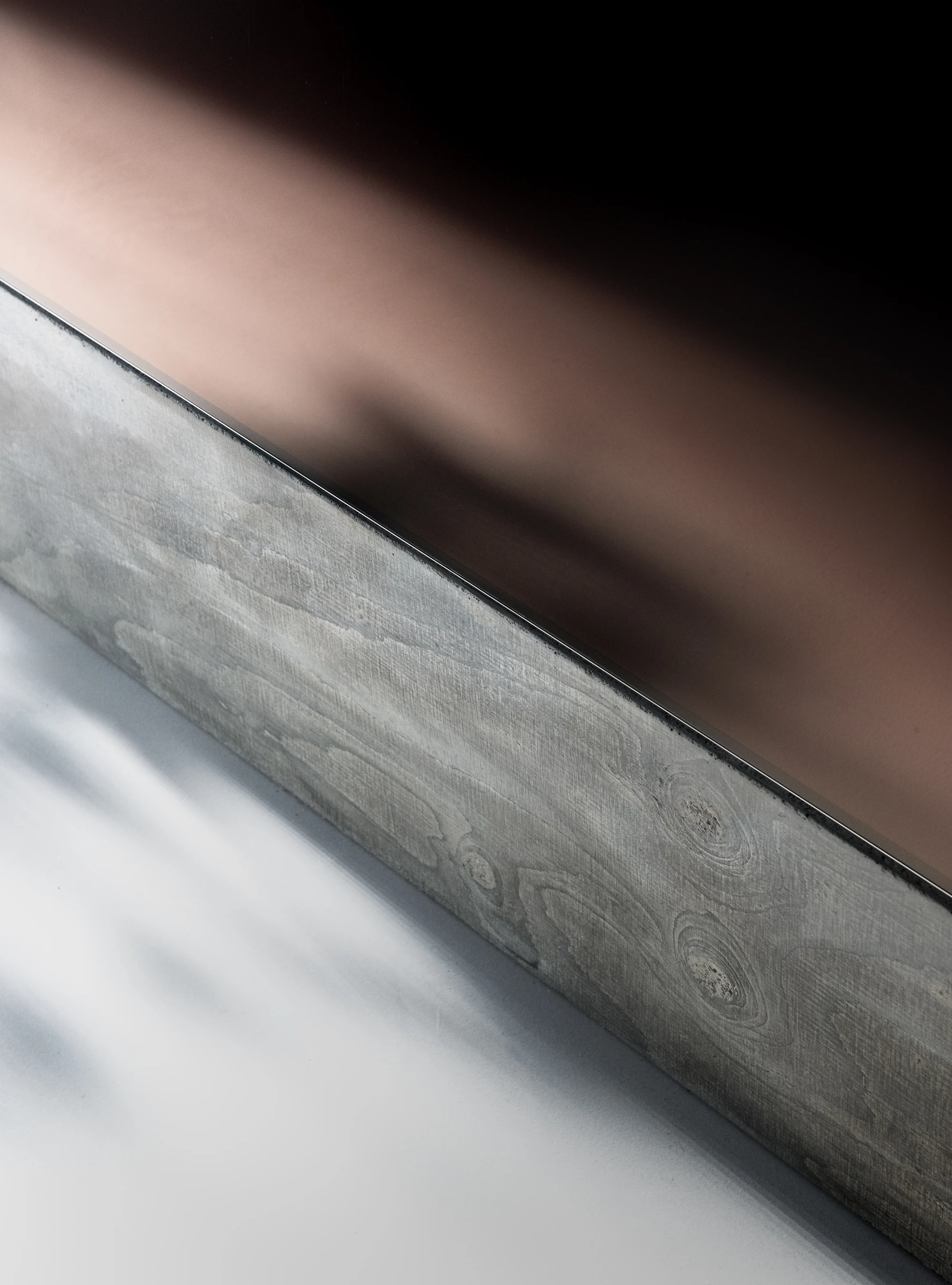
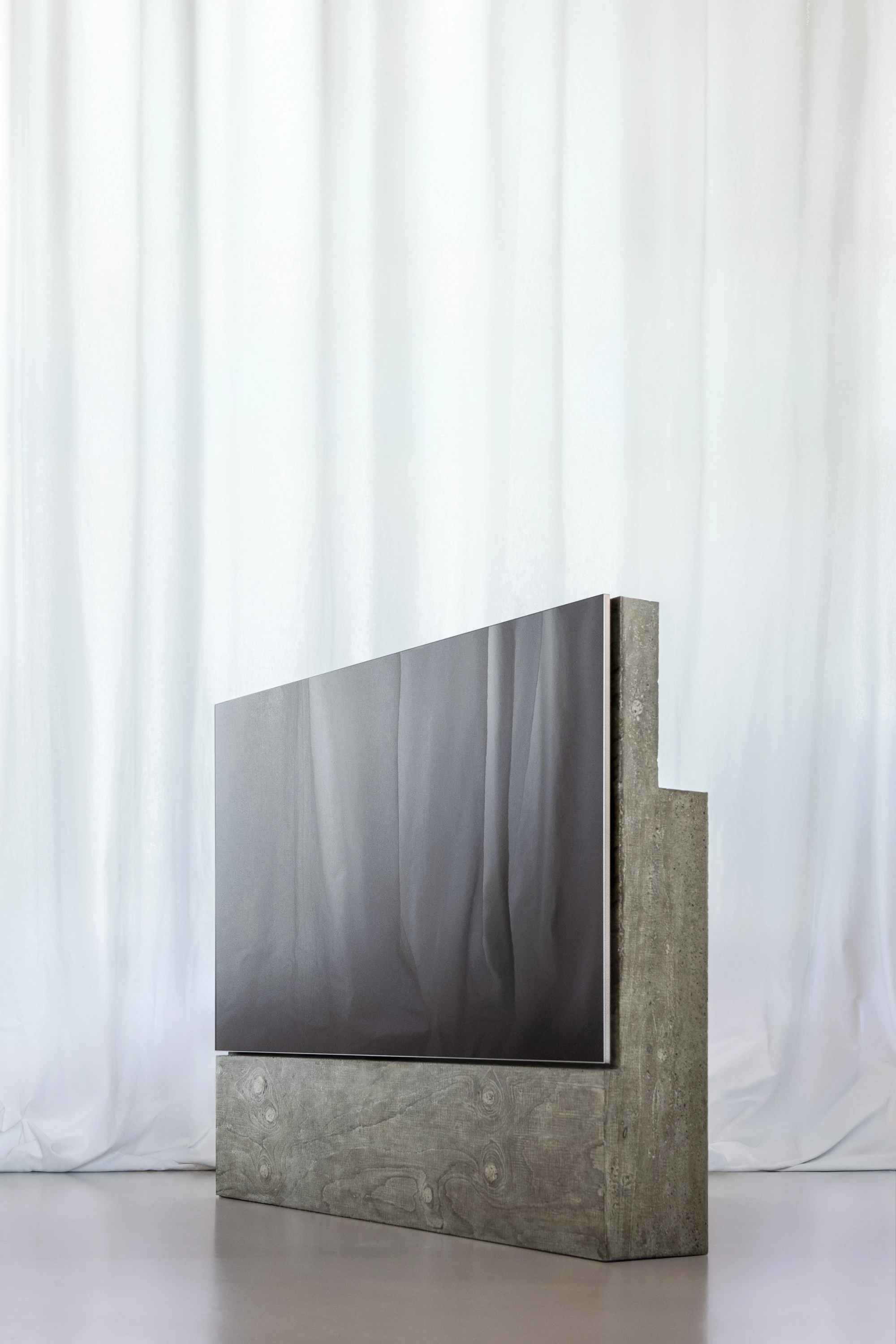
The resulting object reads as geological specimen rather than manufactured product. A concrete base—cast with expanded clay beads that surface as polished craters across its form—provides the visual and gravitational anchor. The texture recalls pumice or volcanic rock, suggesting formation through heat and pressure rather than mold and pour. A slender metal frame rises from this mass, suspending the television like an artifact in a museum vitrine.

The asymmetry is deliberate and disquieting. The concrete volume refuses the bilateral symmetry that furniture conventions demand, its irregular profile creating different silhouettes from different angles. The piece appears to have been excavated rather than designed—discovered in some improbable quarry and transported, still bearing the evidence of its extraction.

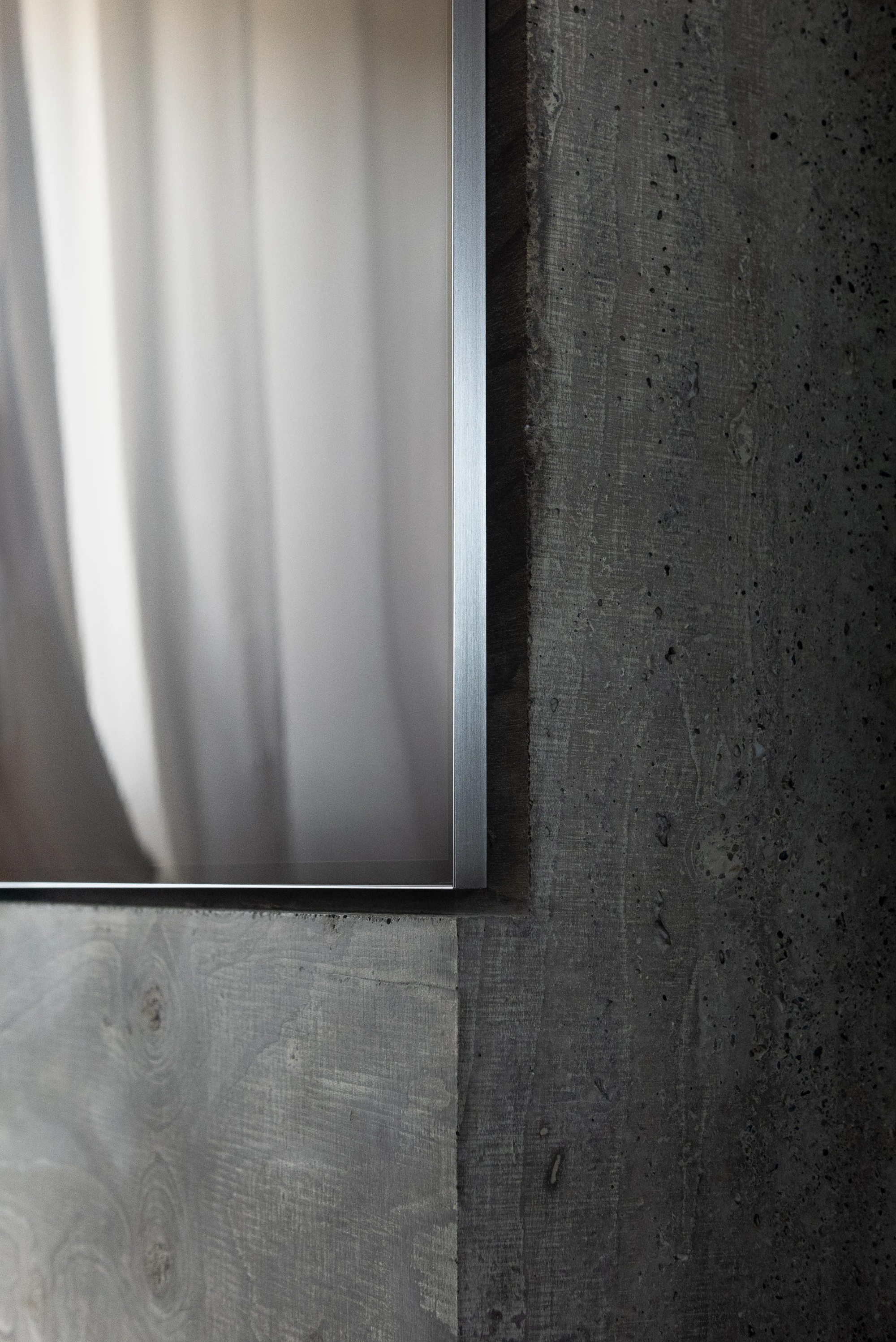
Wood grain impressions on certain surfaces complicate the material narrative further. Concrete remembers its formwork; here, that memory reads as fossilized timber, organic matter somehow preserved within the mineral matrix. The effect layers natural and industrial processes into a single object that seems to contain geological time.

What Bard has produced is furniture that refuses its category. The television, when mounted, becomes almost secondary—a glowing rectangle floating above something far stranger and more permanent. In an era of disposable electronics, the stand proposes an alternative relationship to our devices: not as centerpieces but as temporary inhabitants of forms that will outlast them.
Interested in Showcasing Your Work?

If you would like to feature your works on Thisispaper, please visit our Submission page and sign up to Thisispaper+ to submit your work. Once your submission is approved, your work will be showcased to our global audience of 2 million art, architecture, and design professionals and enthusiasts.
No items found.
We love less
but there is more.
Become a Thisispaper+ member today to unlock full access to our magazine, advanced tools, and support our work.
Get two months FREE
with annual subscription
We love less
but there is more.
Become a Thisispaper+ member today to unlock full access to our magazine, advanced tools, and support our work.
Get two months FREE
with annual subscription
No items found.
Alexander Zaxarov
Feb 4, 2026

Concrete TV Stand by David Bard in Switzerland treats a media console as found object—a meteorite of expanded clay and cement that arrived from elsewhere.

The television stand occupies an awkward position in contemporary furniture design. Too utilitarian to warrant formal attention, too visible to ignore entirely, it tends toward either anonymous minimalism or aggressive concealment. The Swiss designer David Bard approached the typology from a different direction: what if the stand possessed more presence than the screen it supports?

The resulting object reads as geological specimen rather than manufactured product. A concrete base—cast with expanded clay beads that surface as polished craters across its form—provides the visual and gravitational anchor. The texture recalls pumice or volcanic rock, suggesting formation through heat and pressure rather than mold and pour. A slender metal frame rises from this mass, suspending the television like an artifact in a museum vitrine.

The asymmetry is deliberate and disquieting. The concrete volume refuses the bilateral symmetry that furniture conventions demand, its irregular profile creating different silhouettes from different angles. The piece appears to have been excavated rather than designed—discovered in some improbable quarry and transported, still bearing the evidence of its extraction.

Wood grain impressions on certain surfaces complicate the material narrative further. Concrete remembers its formwork; here, that memory reads as fossilized timber, organic matter somehow preserved within the mineral matrix. The effect layers natural and industrial processes into a single object that seems to contain geological time.

What Bard has produced is furniture that refuses its category. The television, when mounted, becomes almost secondary—a glowing rectangle floating above something far stranger and more permanent. In an era of disposable electronics, the stand proposes an alternative relationship to our devices: not as centerpieces but as temporary inhabitants of forms that will outlast them.
Interested in Showcasing Your Work?

If you would like to feature your works on Thisispaper, please visit our Submission page and subscribe to Thisispaper+. Once your submission is approved, your work will be showcased to our global audience of 2 million art, architecture, and design professionals and enthusiasts.
No items found.

Join Thisispaper+
Unlock access to 2500 stories, curated guides + editions, and share your work with a global network of architects, artists, writers and designers who are shaping the future.
Get two months FREE
with annual subscription
Atlas
A new and interactive way to explore the most inspiring places around the world.
Interactive map
Linked to articles
300+ curated locations
Google + Apple directions
Smart filters
Subscribe to Explore+
Travel Guides
Immerse yourself in timeless destinations, hidden gems, and creative spaces—curated by humans, not algorithms.
Explore All Guides +
Curated Editions
Dive deeper into carefully curated editions, designed to feed your curiosity and foster exploration.
Off-the-Grid
Jutaku
Sacral Journey
minimum
The New Chair
Explore All Editions +
Submission Module
Submit your project and gain the chance to showcase your work to our worldwide audience of over 2M architects, designers, artists, and curious minds.
Learn More+
Become a Thisispaper+ member today to unlock full access to our magazine, submit your project and support our work.
Join Thisispaper+Join Thisispaper+
€ 9 EUR
/month
Cancel anytime
Get two months FREE
with annual subscription