.webp)
In South London, Actual Office completes Cherry Orchard, 305 square metres of shared living where painted brick, white-oiled oak, and hand-worked stainless steel form the entire vocabulary.
Shared living, as a category, has come to mean something specific in London: a developer typology that signals community through branded paint colours, neon, and the kind of plywood that costs nothing and ages worse. Actual Office's Cherry Orchard, a 305 square metre fit-out in South London, takes the opposite line. The building's logic is a short list of materials applied without flourish until it reads as a single decision. Painted brick. Pale poured concrete. White-oiled oak. Hand-worked stainless steel. A wall of cocoa-brown plenum behind the mailboxes. The choice is what the project is.
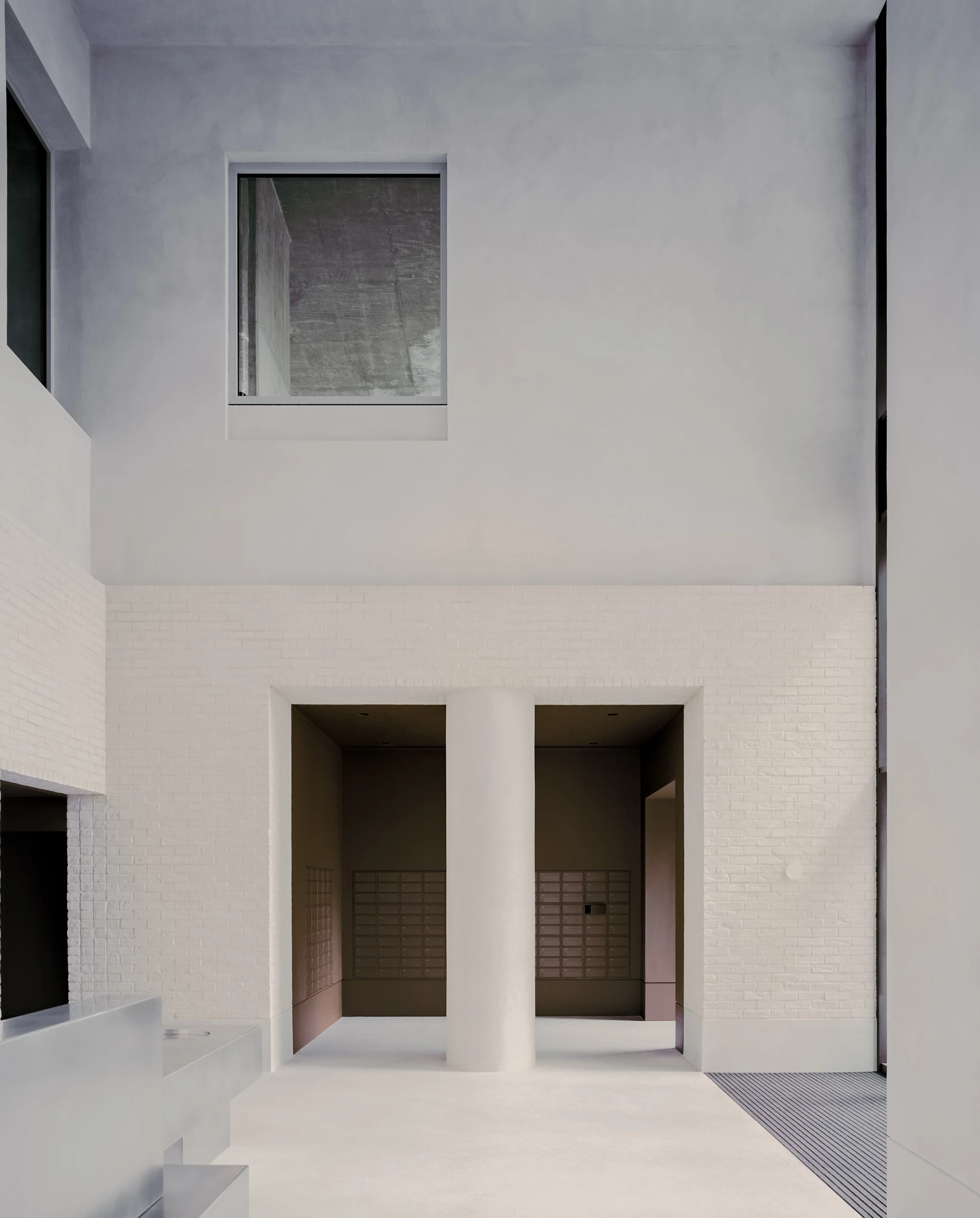
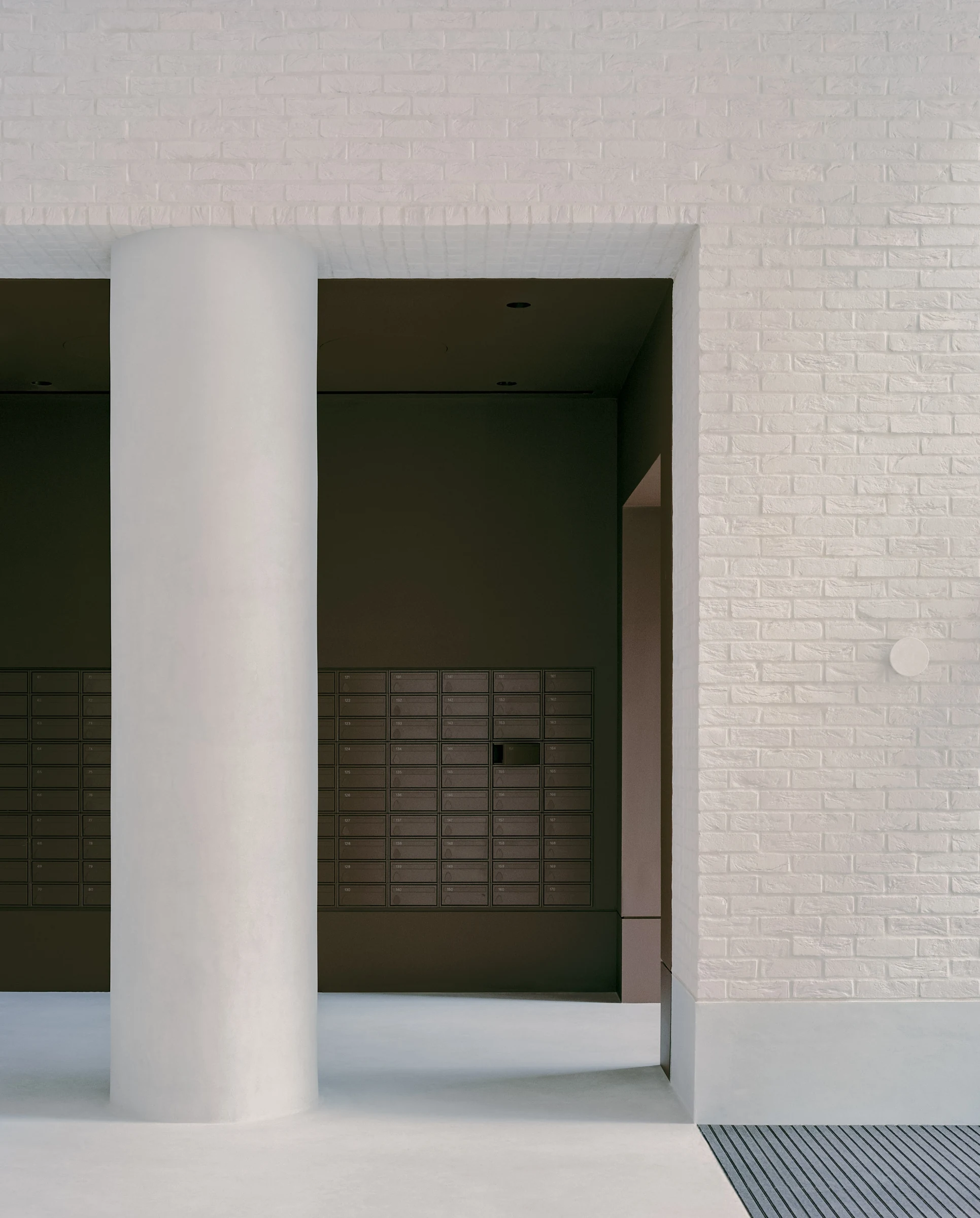
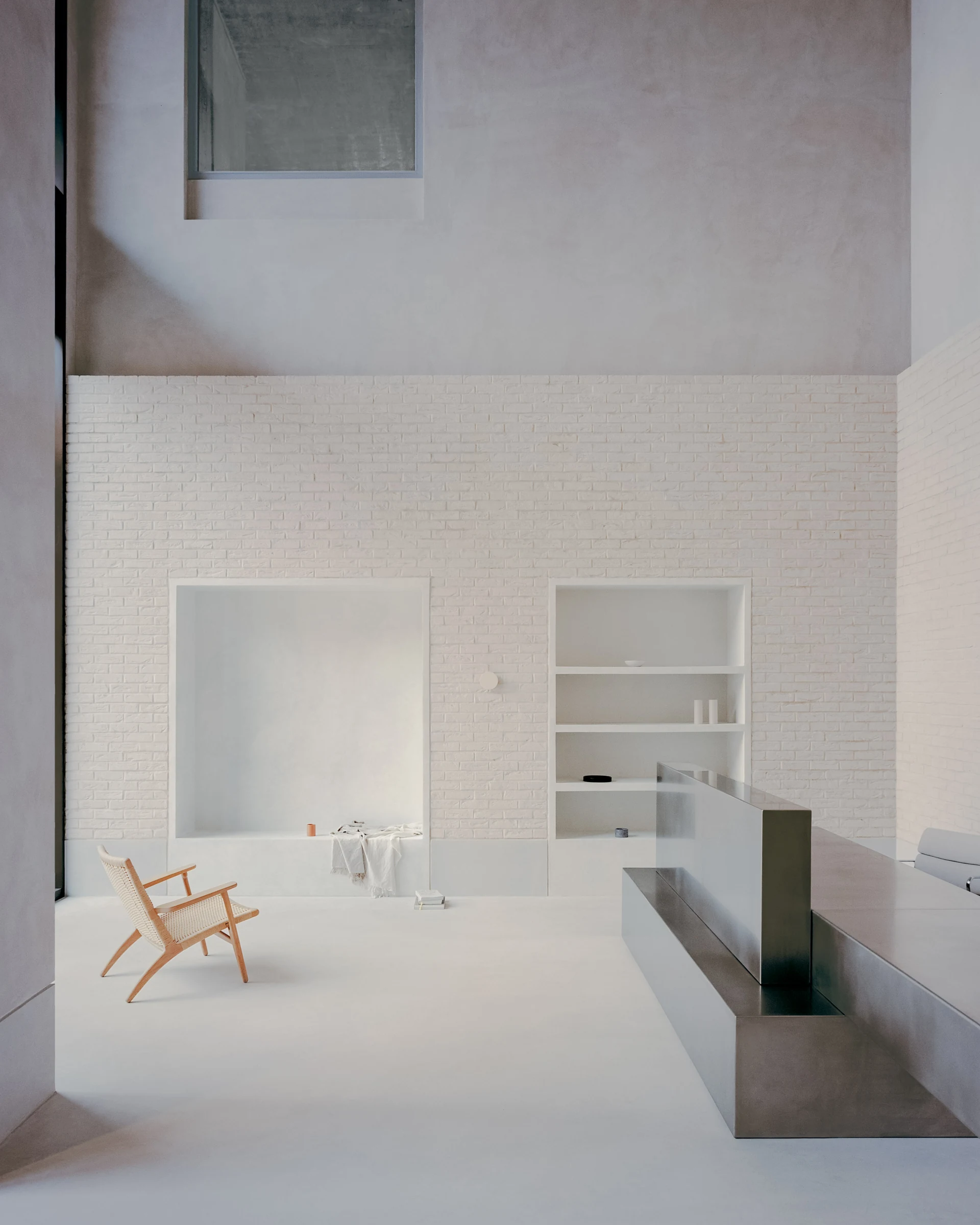
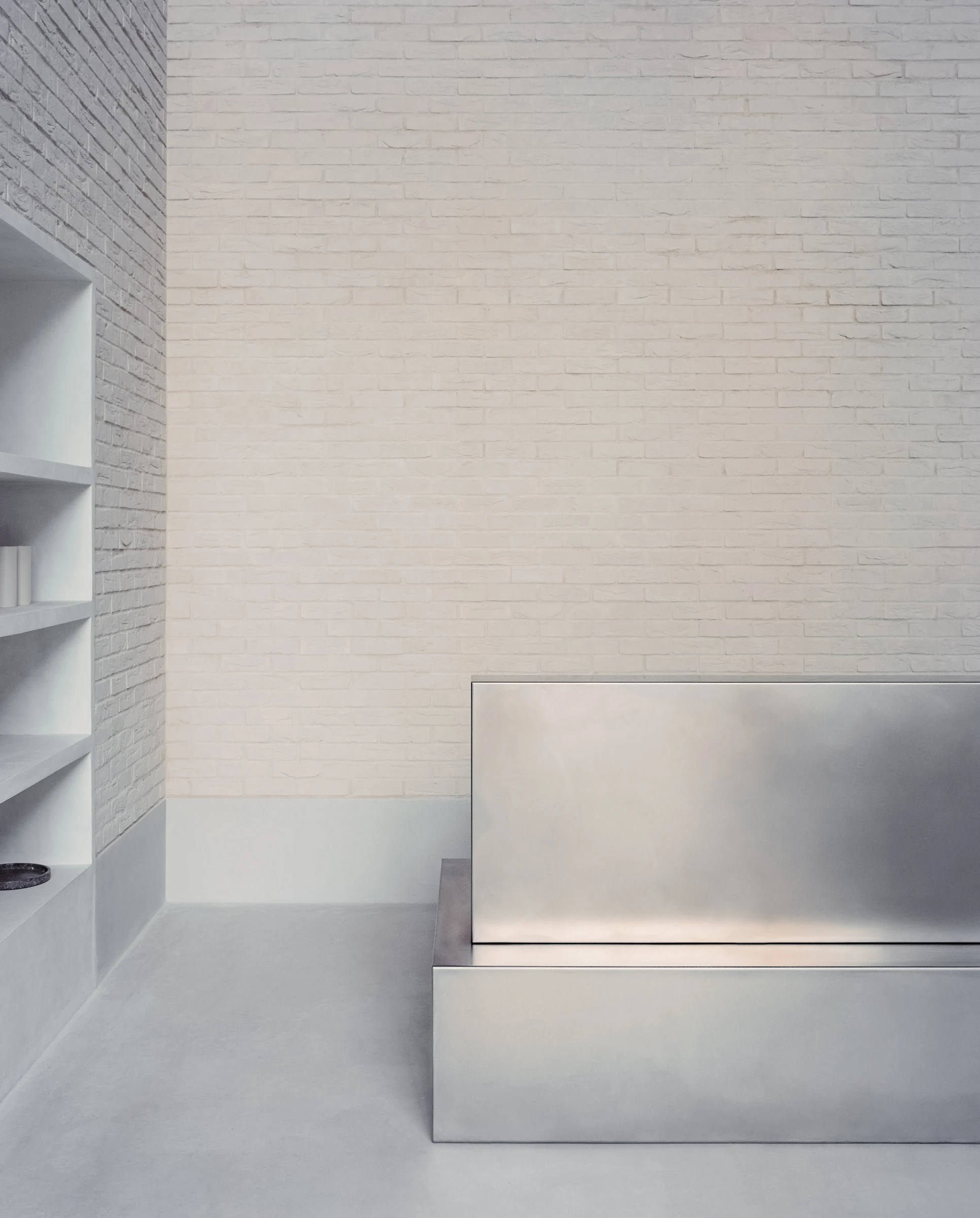
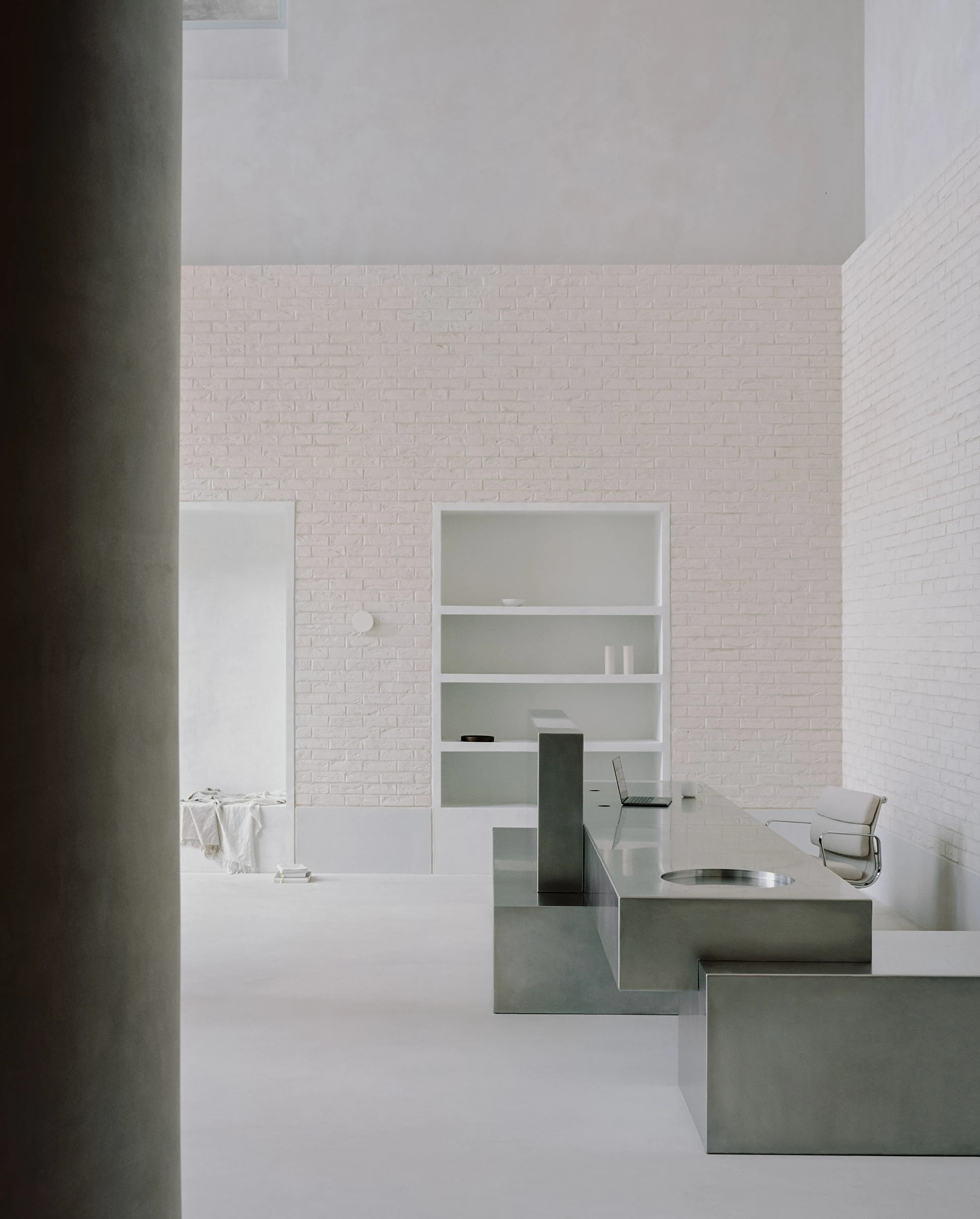
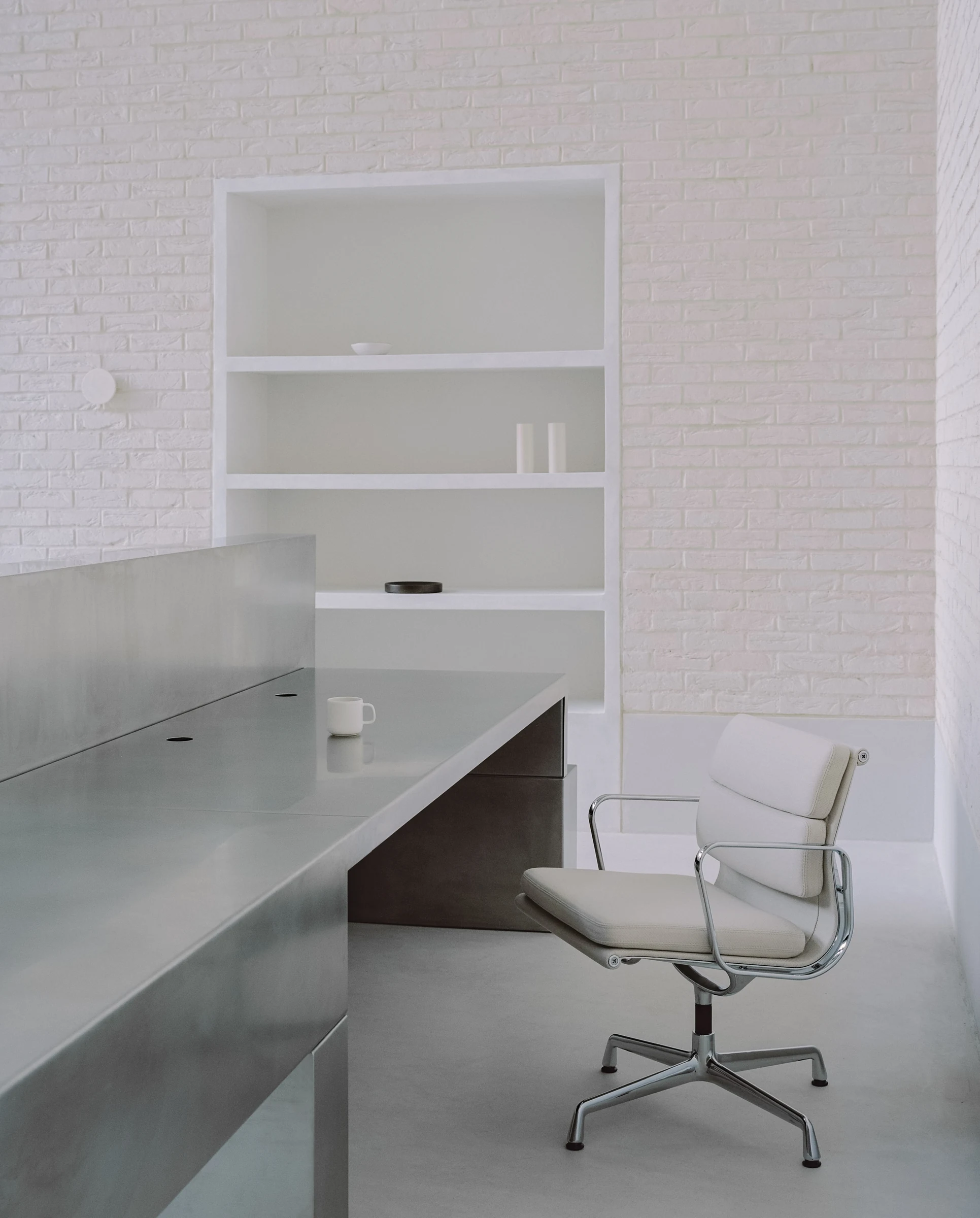
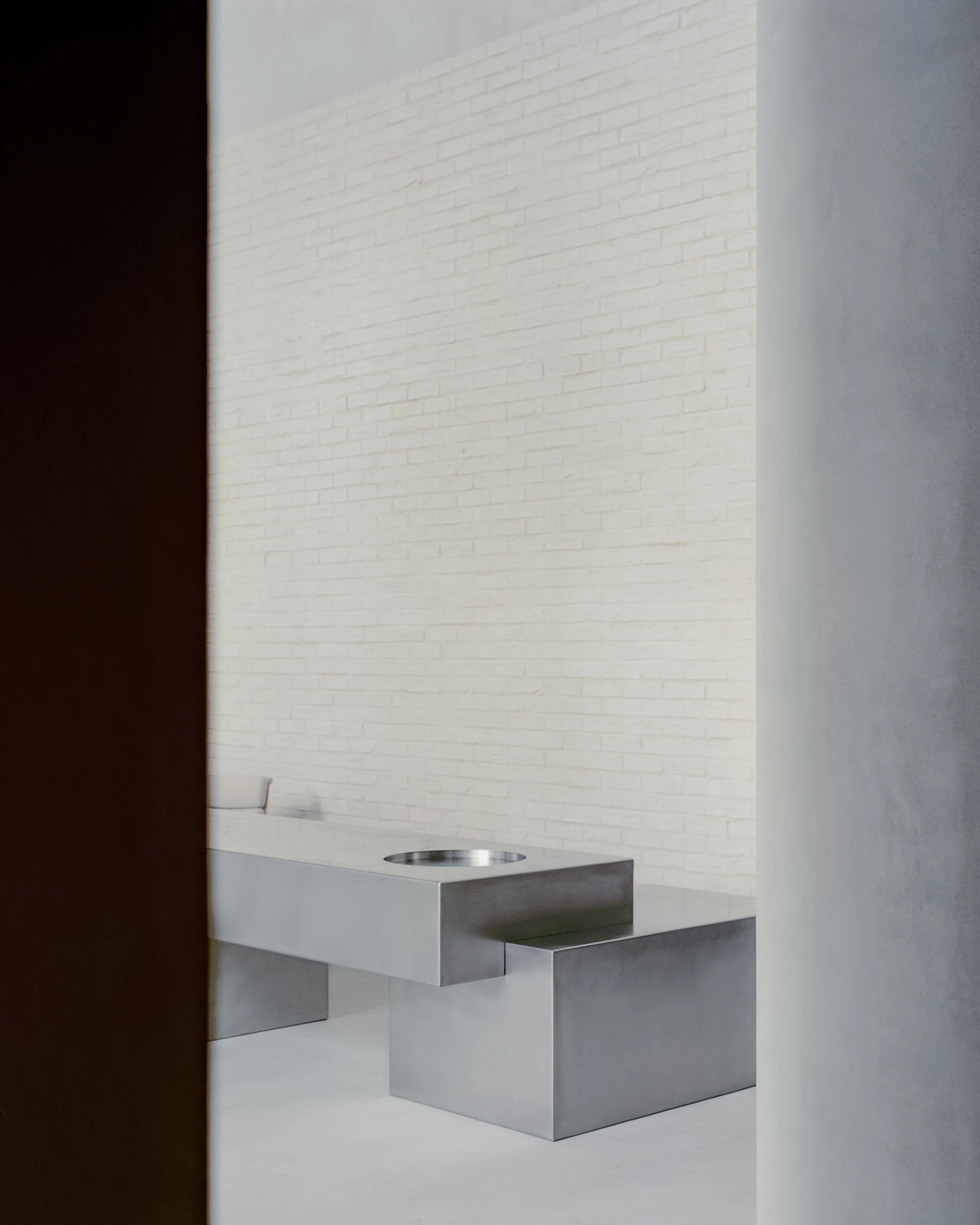
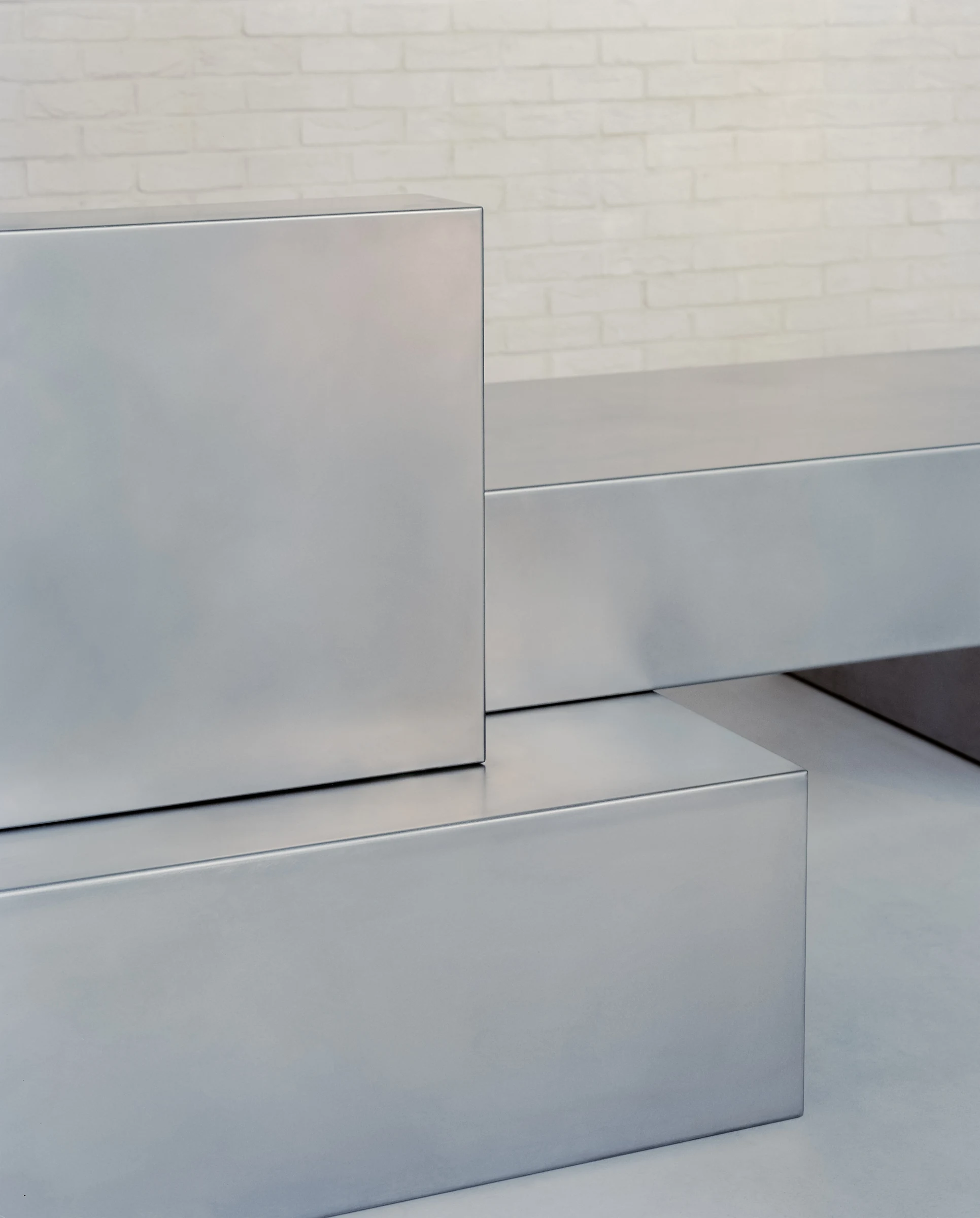
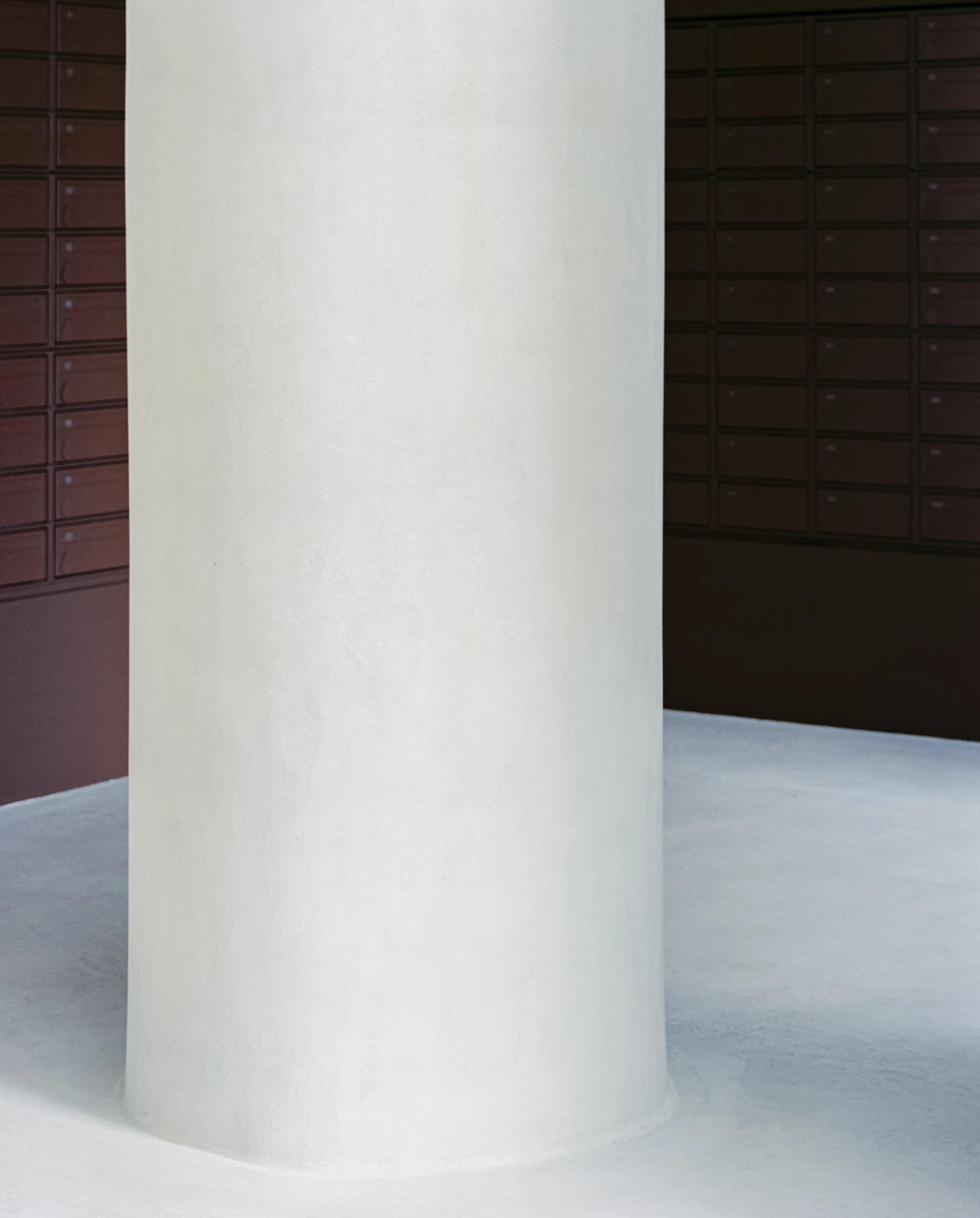
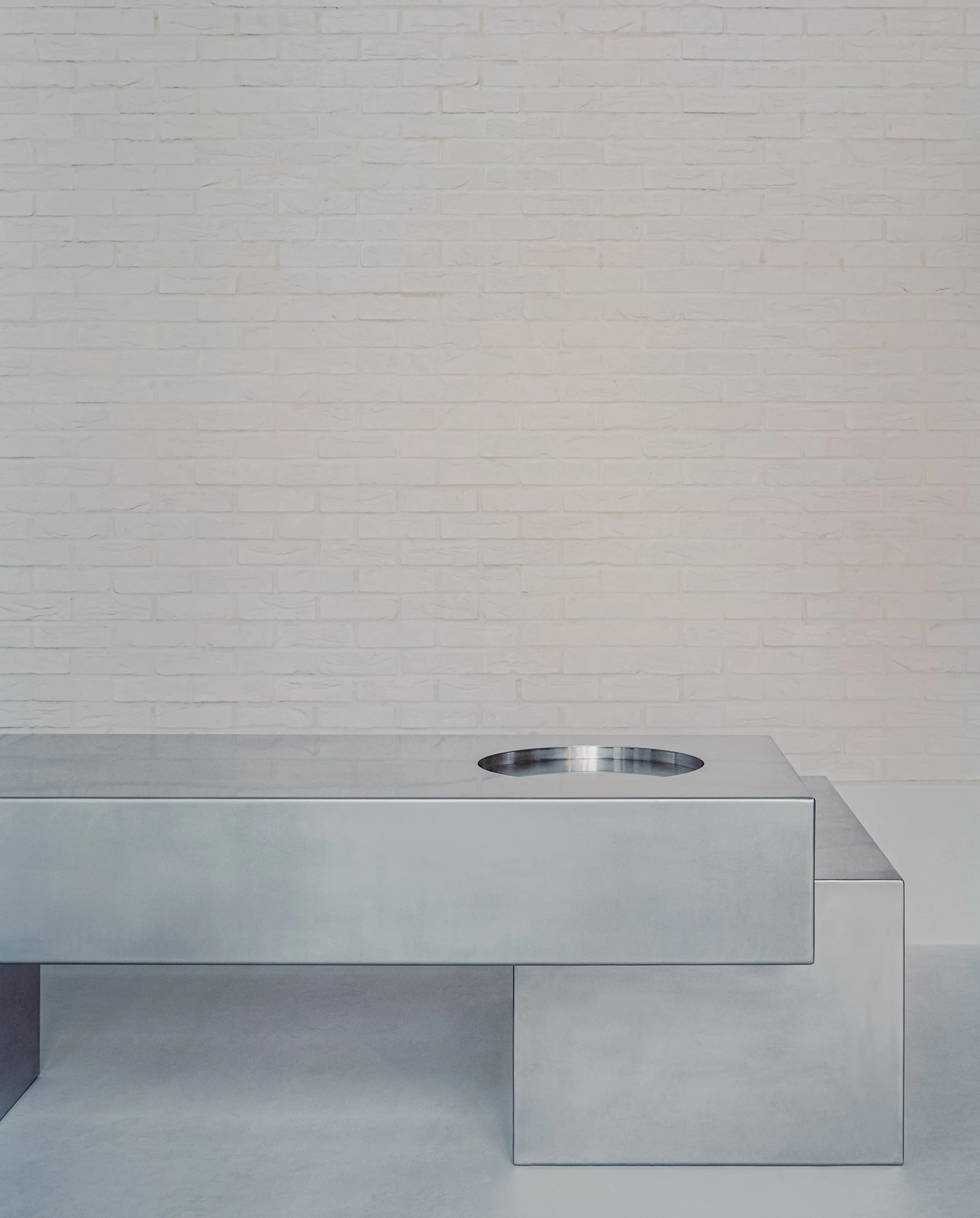
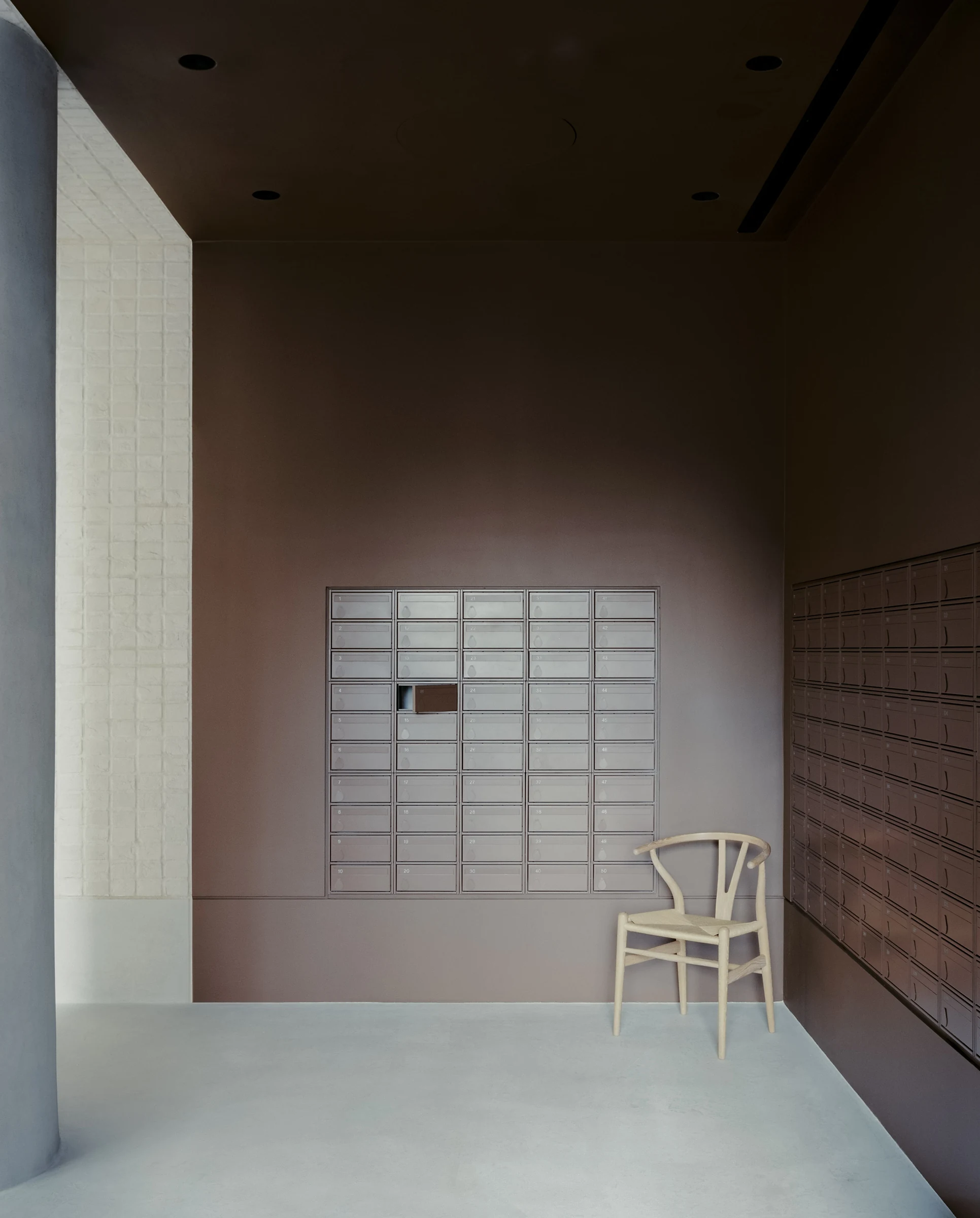
The sequence opens with a triple-height entrance hall lined floor to ceiling in white-painted brick, the mortar joints clear enough that the wall keeps its texture without lifting toward dominance. A single plastered column stands at the centre, framing the threshold to a deep mailbox chamber finished in a warm cocoa pigment that registers, by contrast, almost as warmth itself. The concierge desk is a low monolith of hand-worked stainless steel by Fish Fabrications, a circular drop-point cut into its surface; from certain angles its planes catch the brick's pinkish wash and behave more like water than metal.
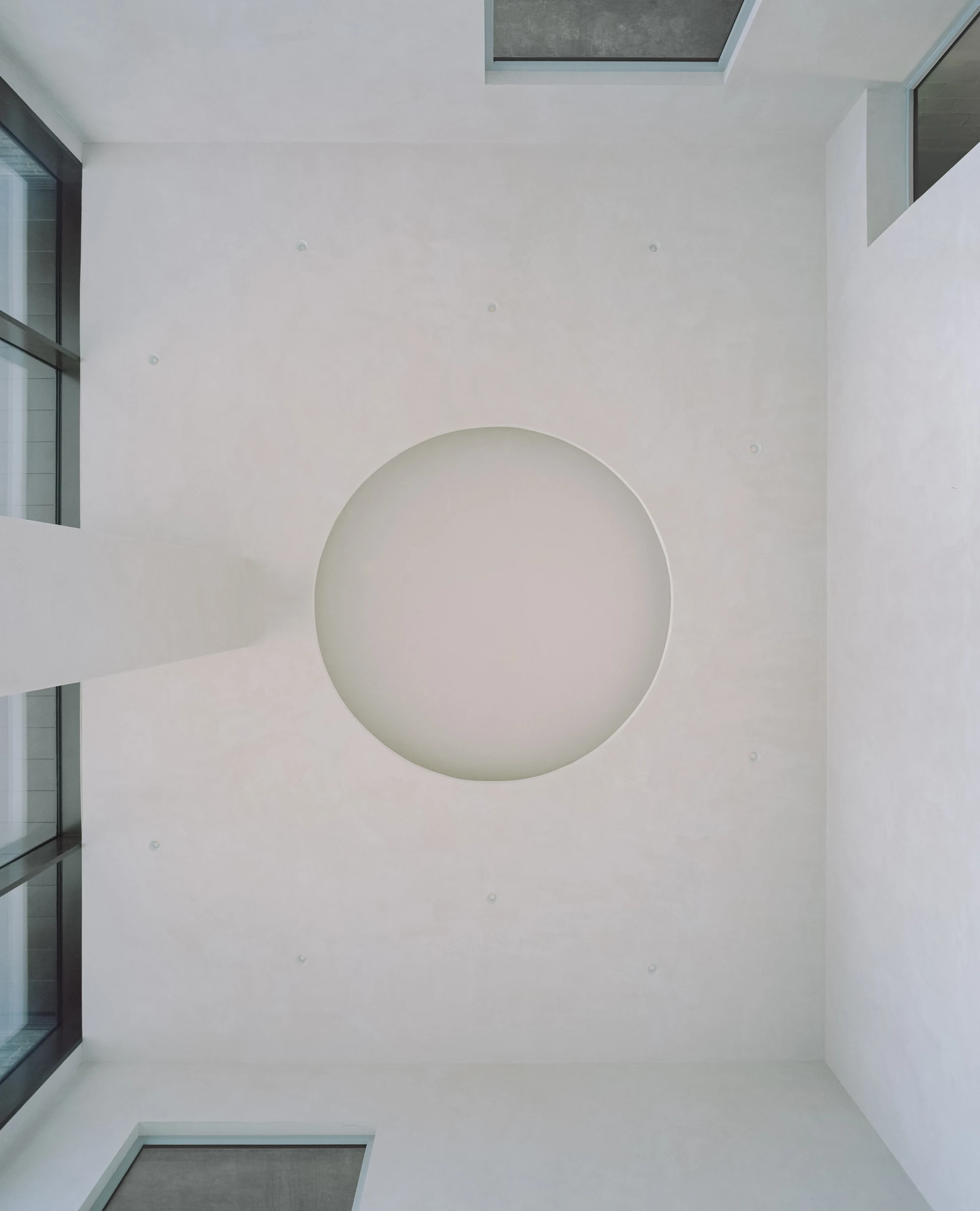
Three large apertures link the entry volume to the floors above, including one circular reveal cut into a ceiling soffit that operates as a domestic oculus. The connection is generous without being theatrical. From the upper floors the brick returns at half height, capped now by a band of pale plaster that pushes the ceiling higher and softer than it has any right to be. The detailing is the project's whole thesis: nothing is hidden, and nothing is drawn attention to.
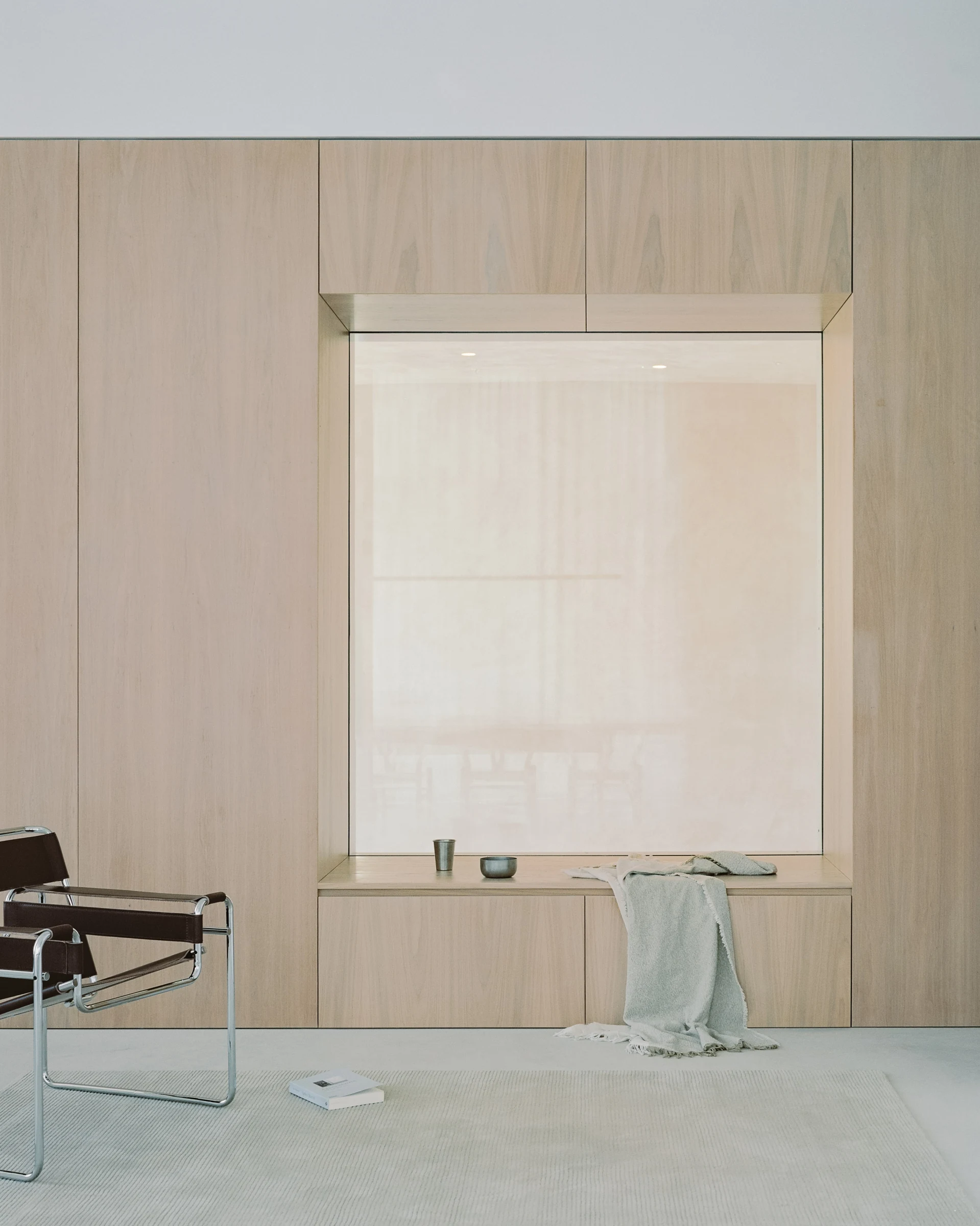
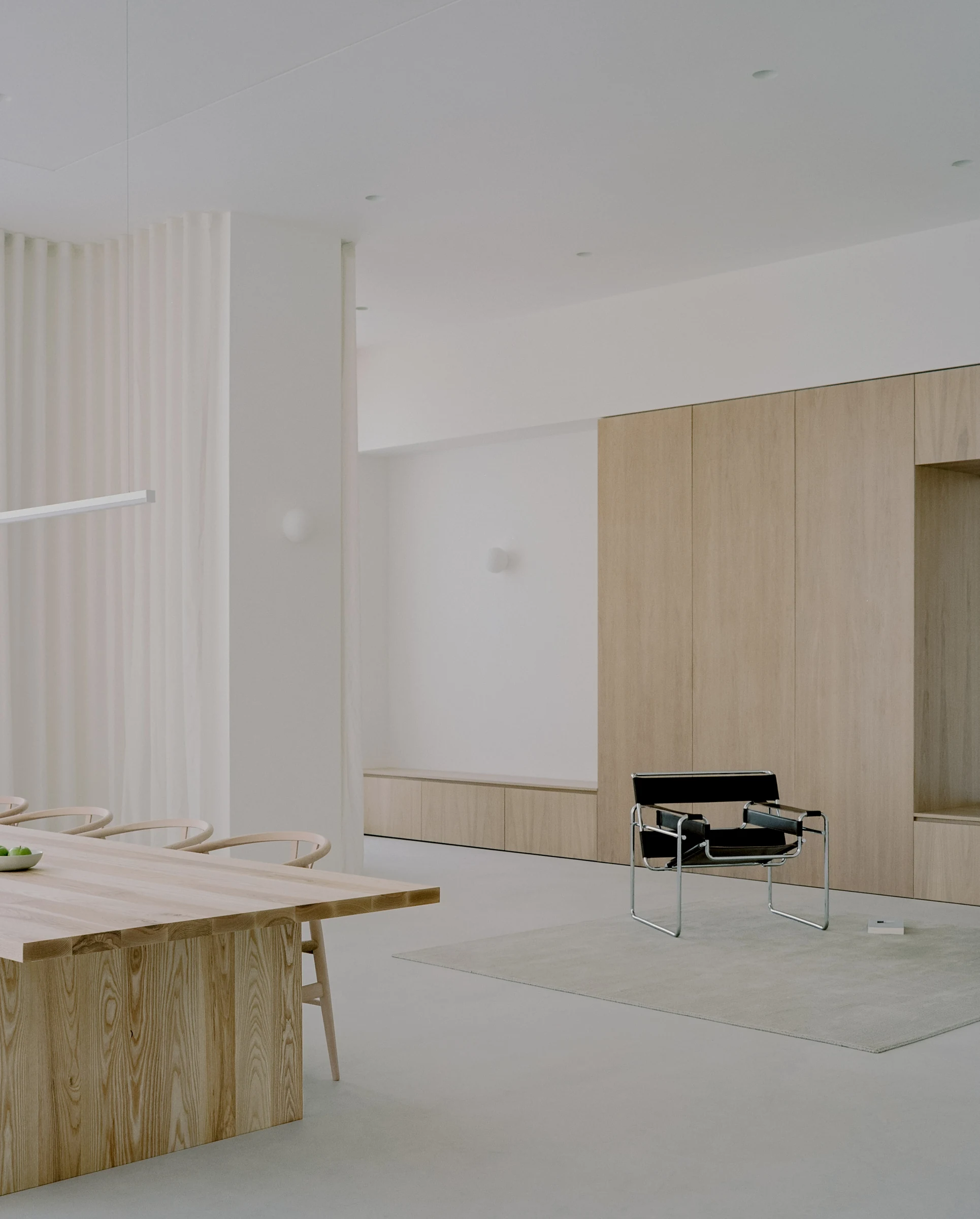
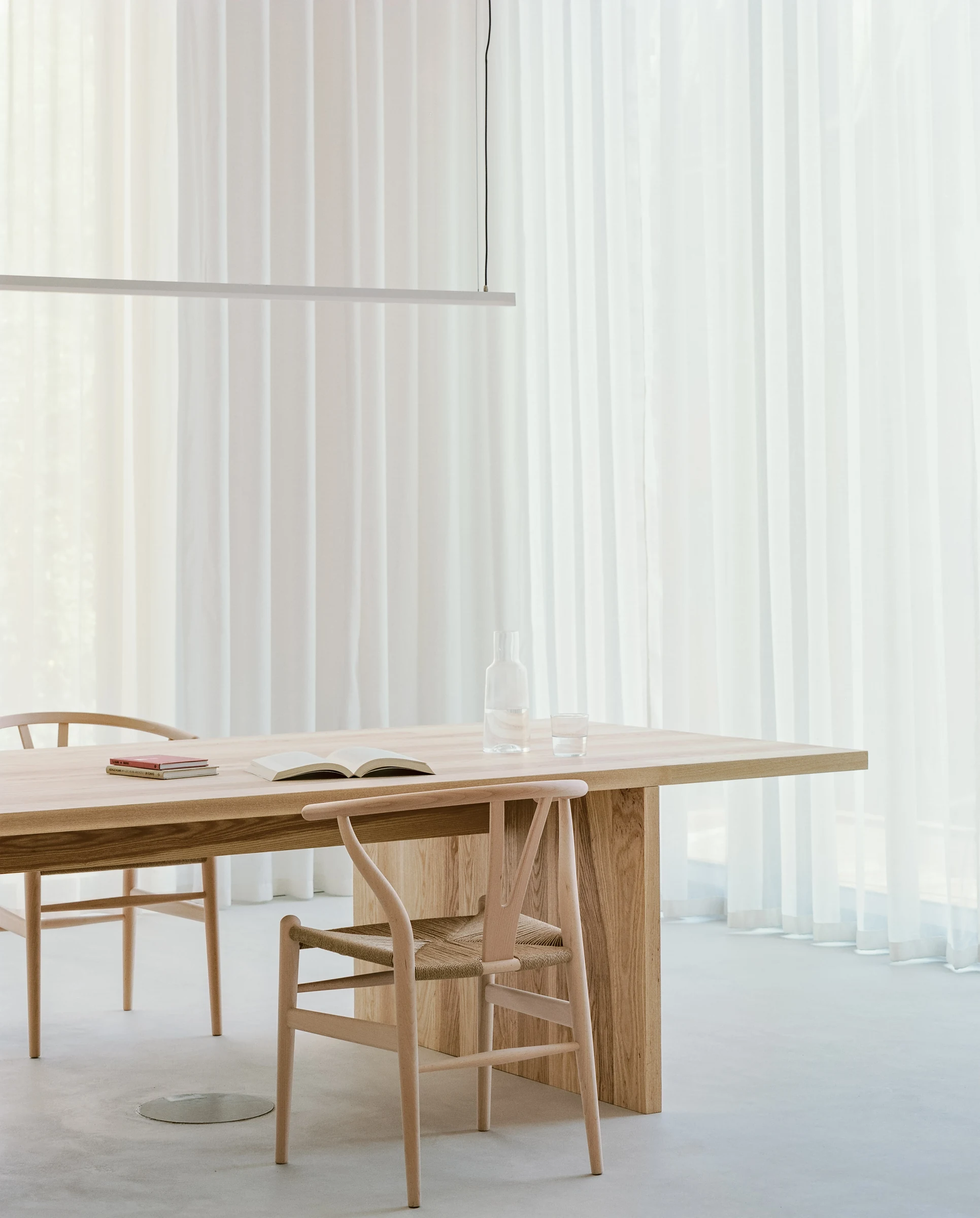
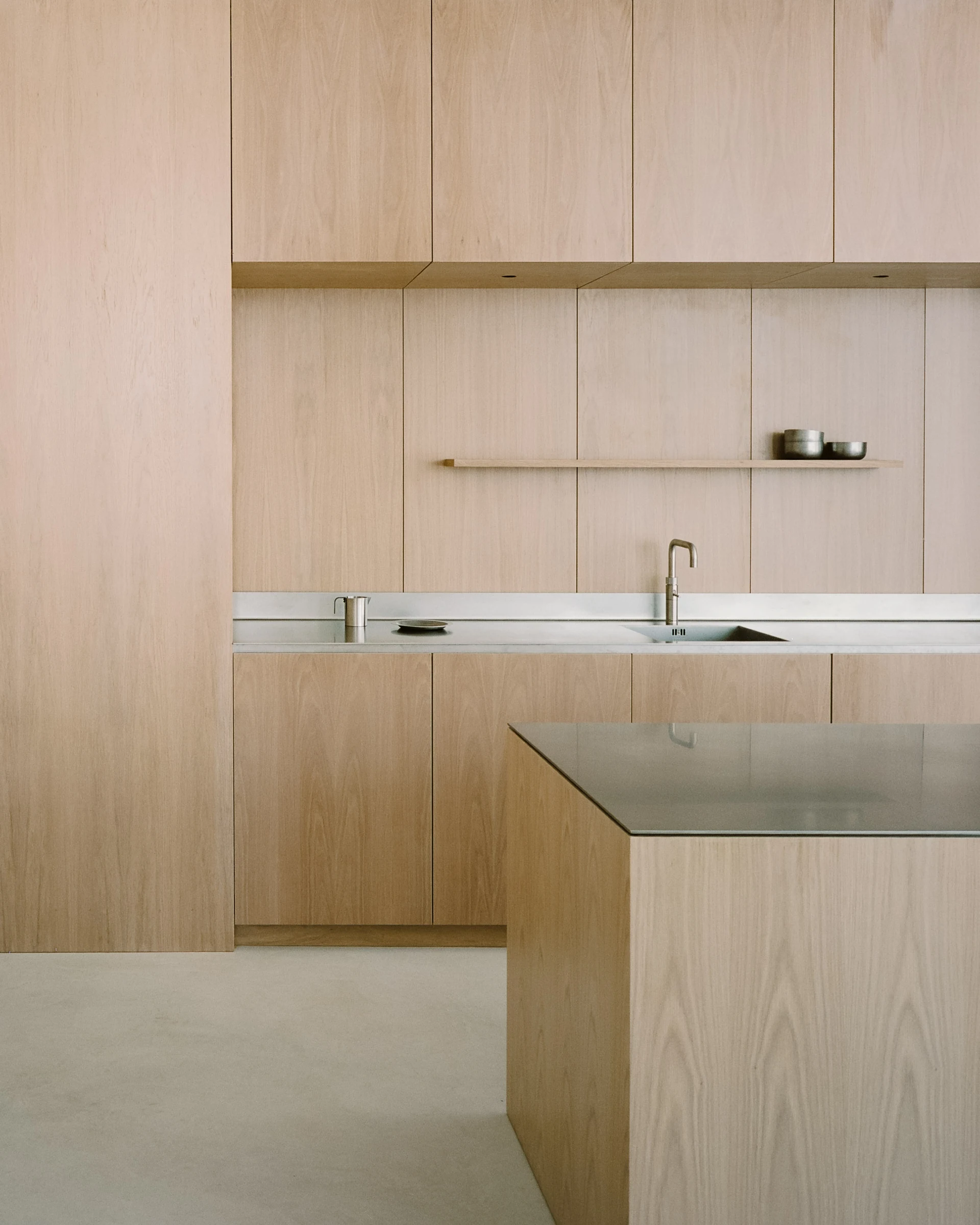
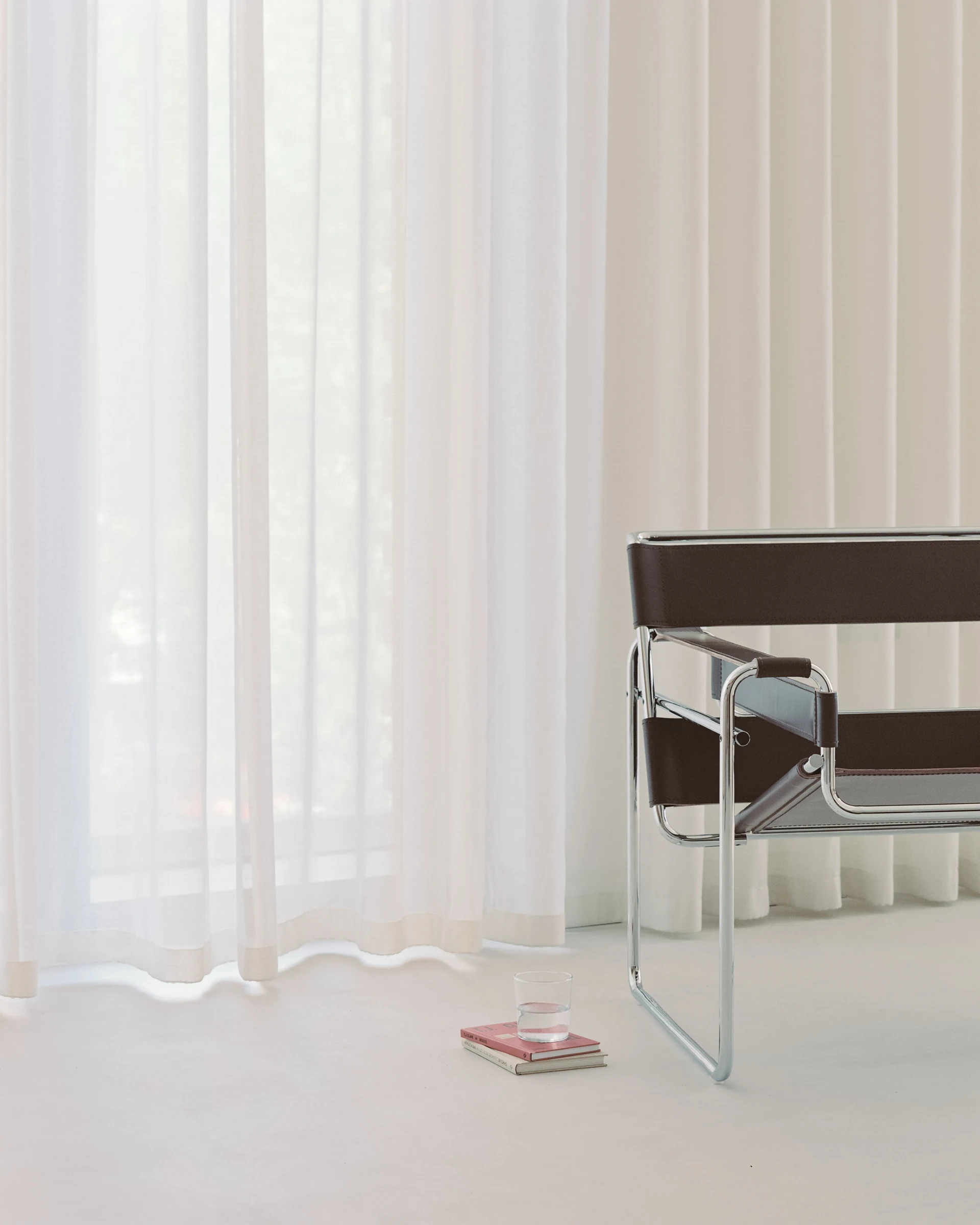
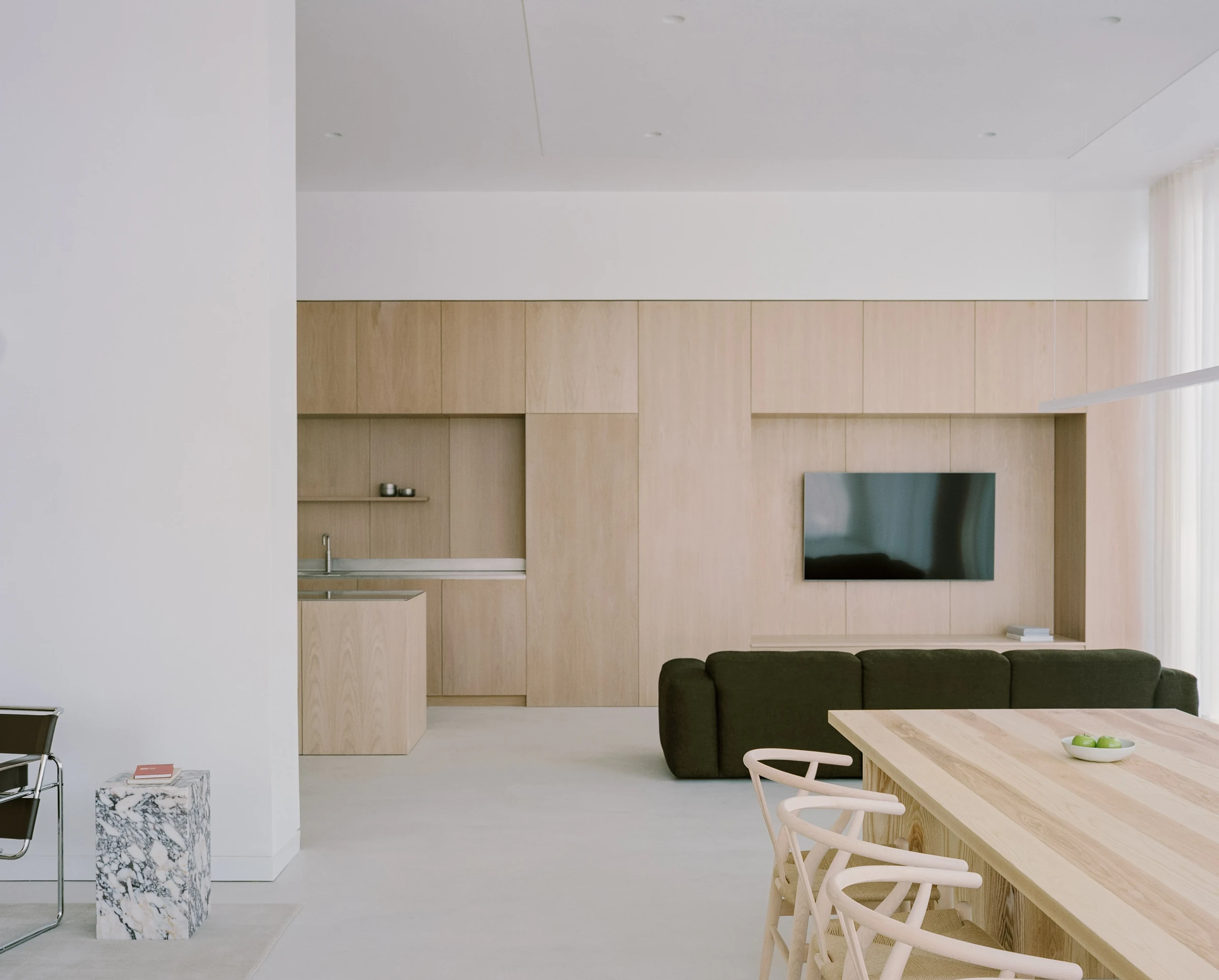
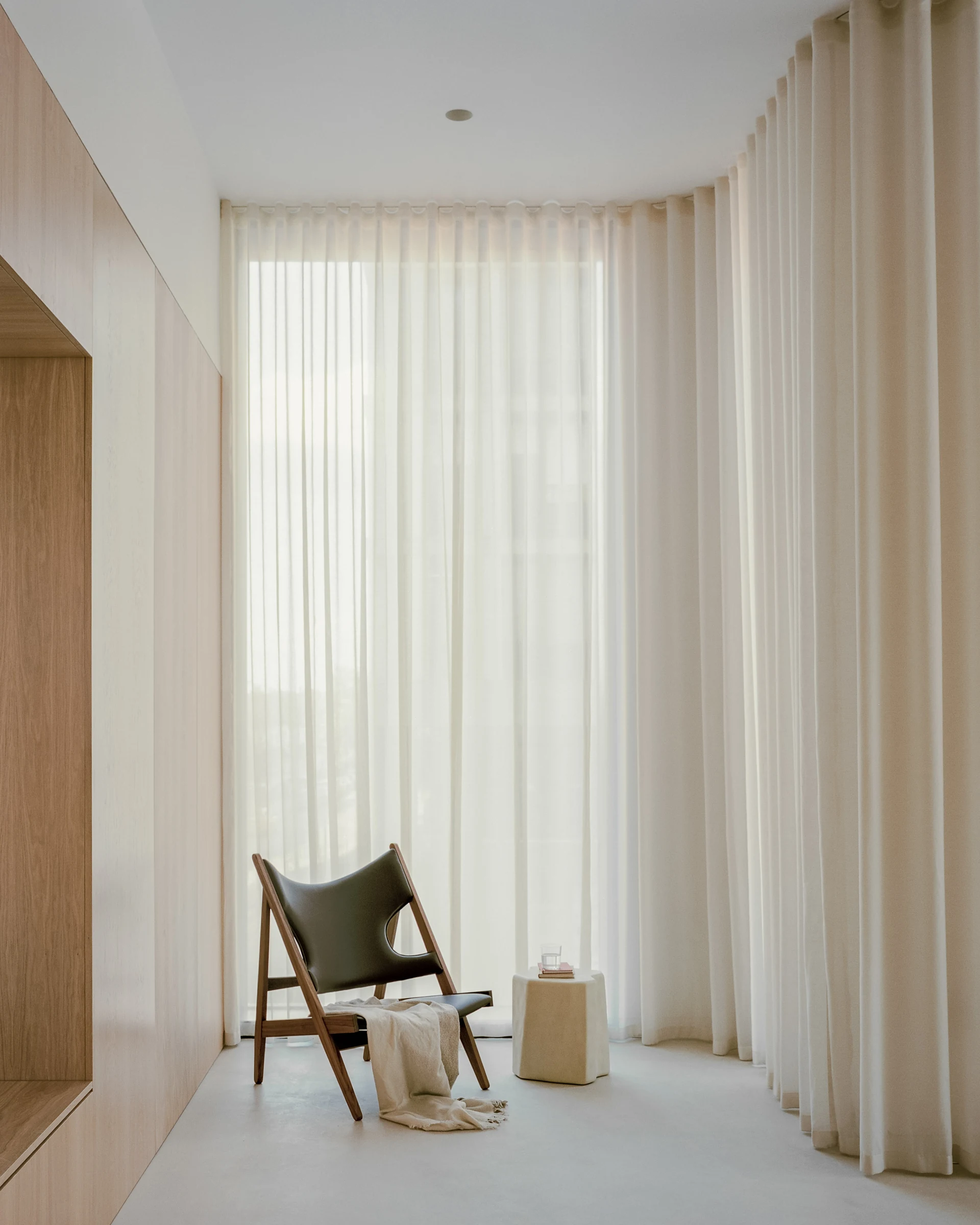
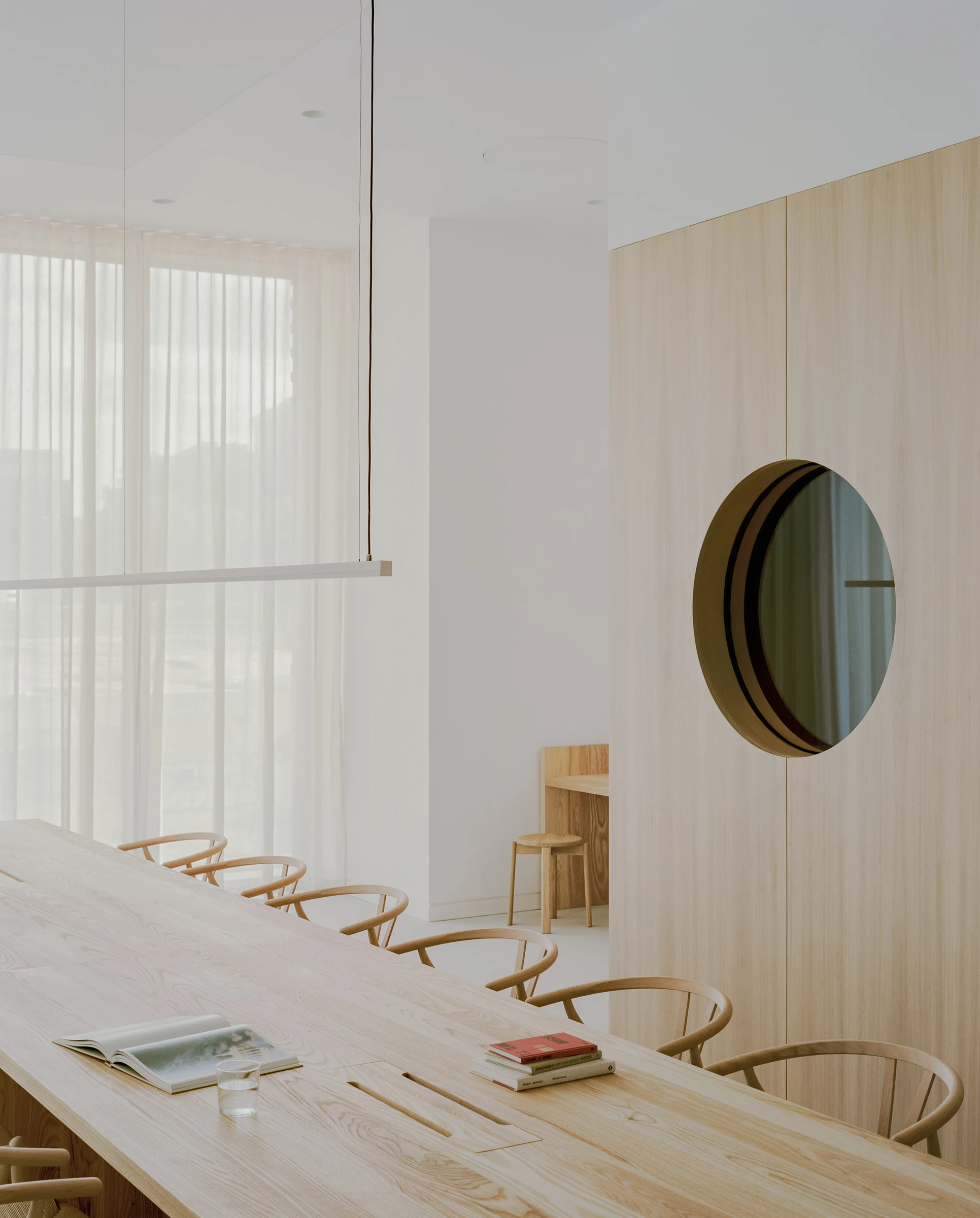
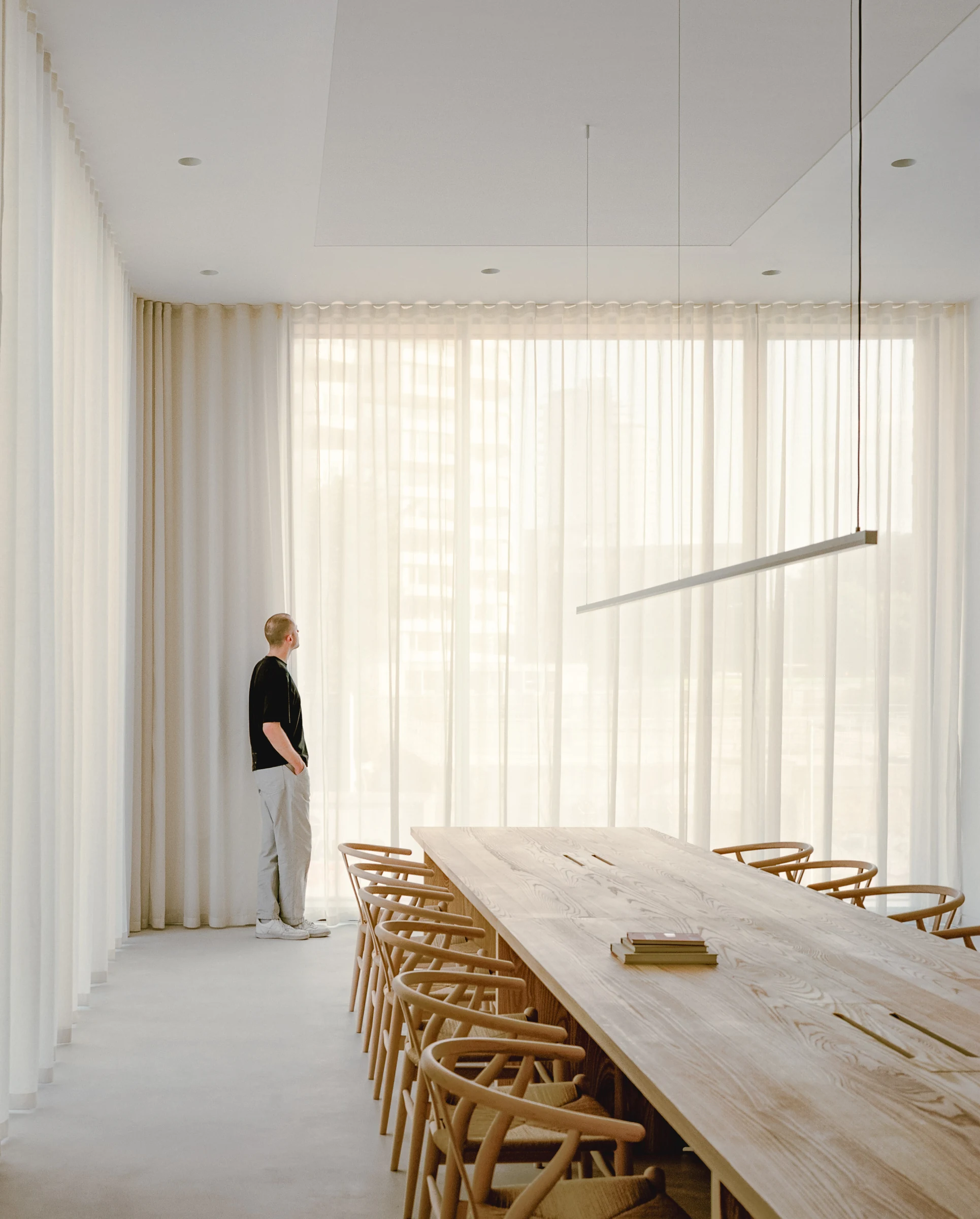
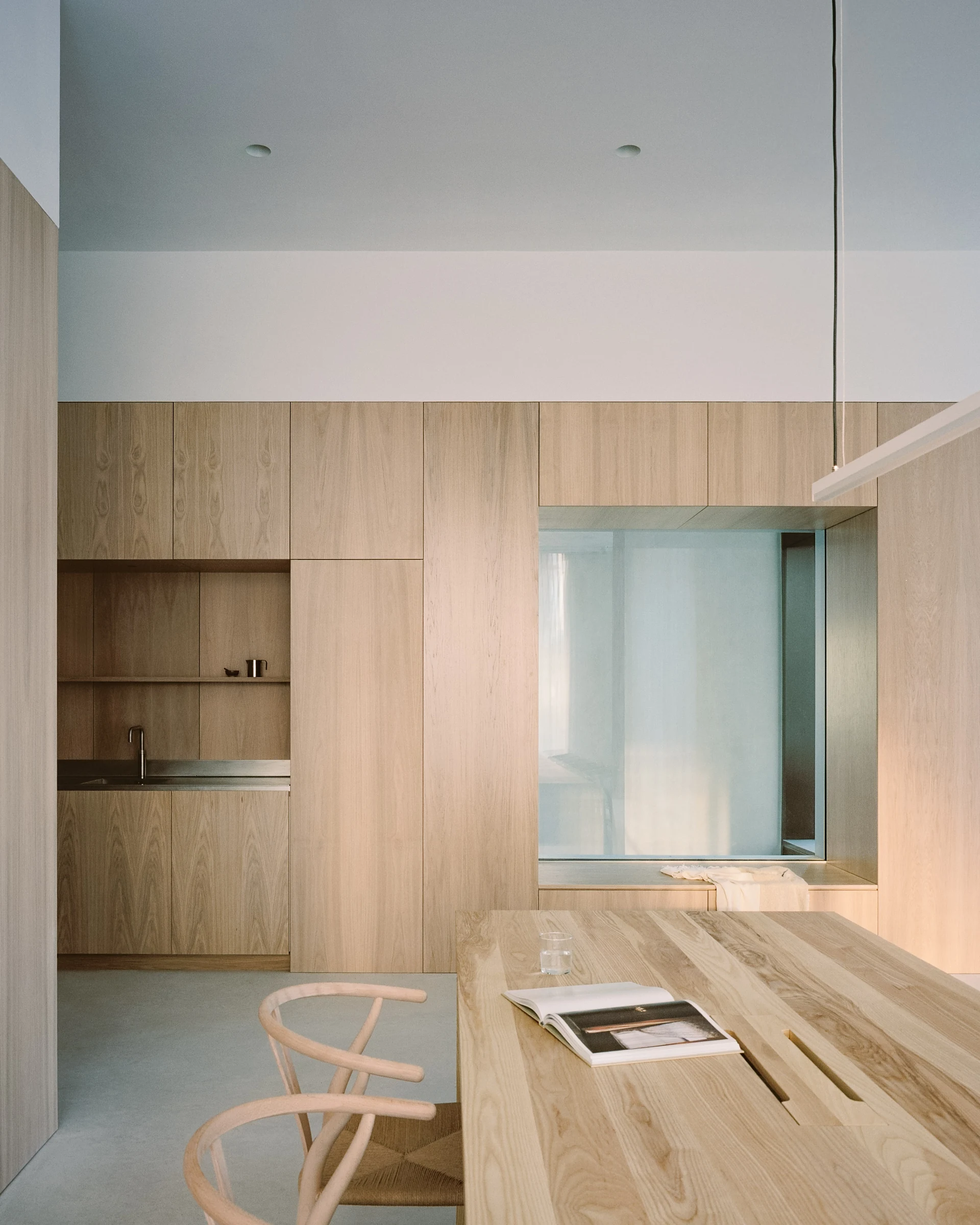
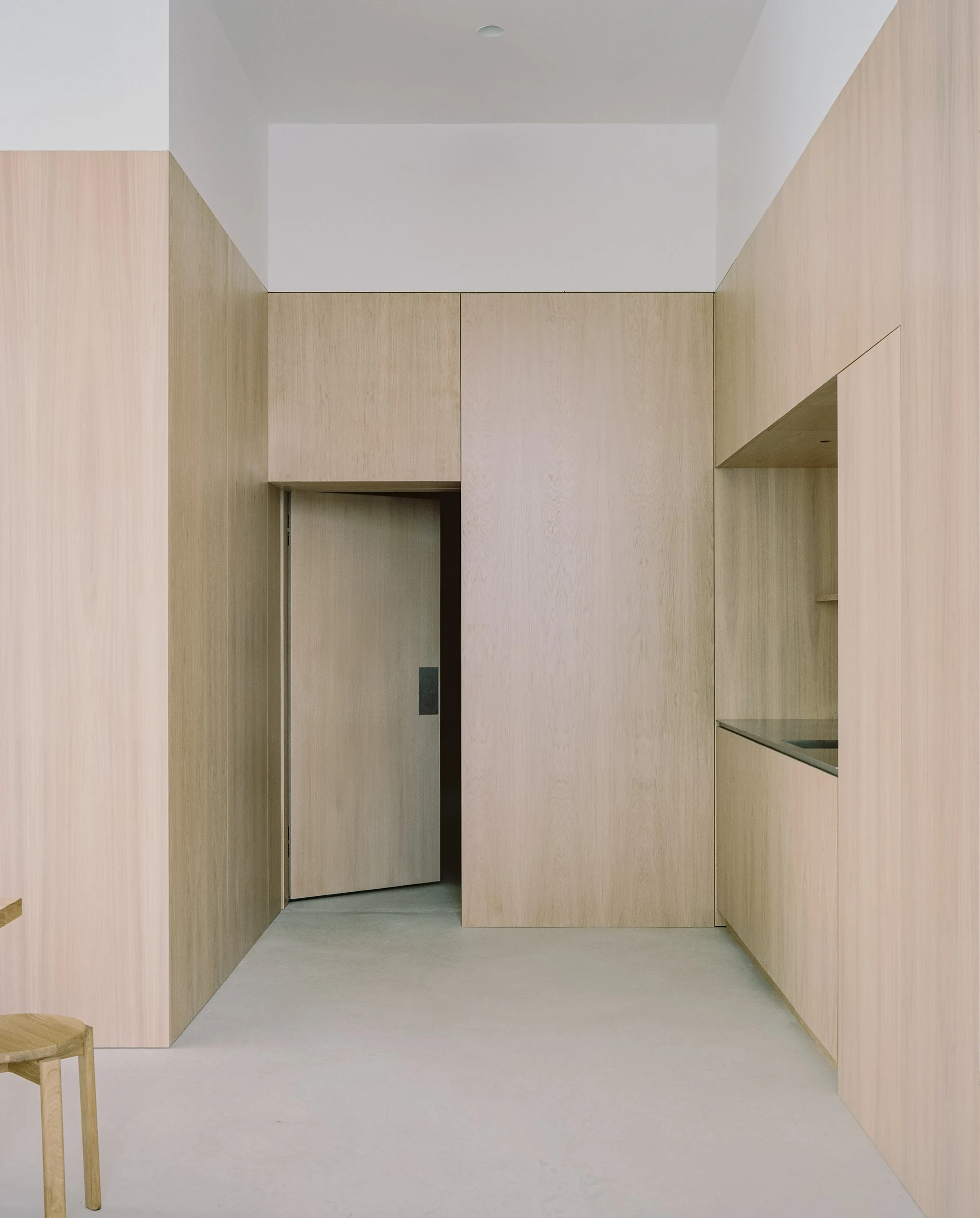
The upper-floor common rooms move into a different register. Here the entire perimeter of joinery is white-oiled oak, milled in vertical book-matched panels that absorb kitchens, banquette seating, and storage into a continuous wrap. Functional zones are read in the reveals, not the doors. Where a window opens to the city, floor-to-ceiling white voile diffuses the south London skyline into something nearer to a Japanese paper wall. A Knoll Wassily chair and a row of Carl Hansen wishbones sit on the pale poured floor; a long ash communal table marks the social centre, the linear LED pendant above it almost too thin to read as light.
Working with local makers, the studio also drew a parallel programme of bespoke furniture in the same restricted palette. The concierge desk anchors the entrance; on the first floor, two custom timber tables sit at the heart of the shared rooms and pull occupants into the same orbit without forcing the encounter. The studio writes of "material continuity and craftsmanship" as the project's emphasis, and the phrase reads less like positioning and more like a description of what is in front of the camera. Cherry Orchard's argument, made in the smallest possible vocabulary, is that shared living can be built like a private flat instead of a brand.