In Madrid, Maximale renovates Casa St-Maximale, an uncommon urban townhouse where vertically stacked floors, oak-panelled volumes, and a sequence of patios redefine how a city dwelling can be inhabited.
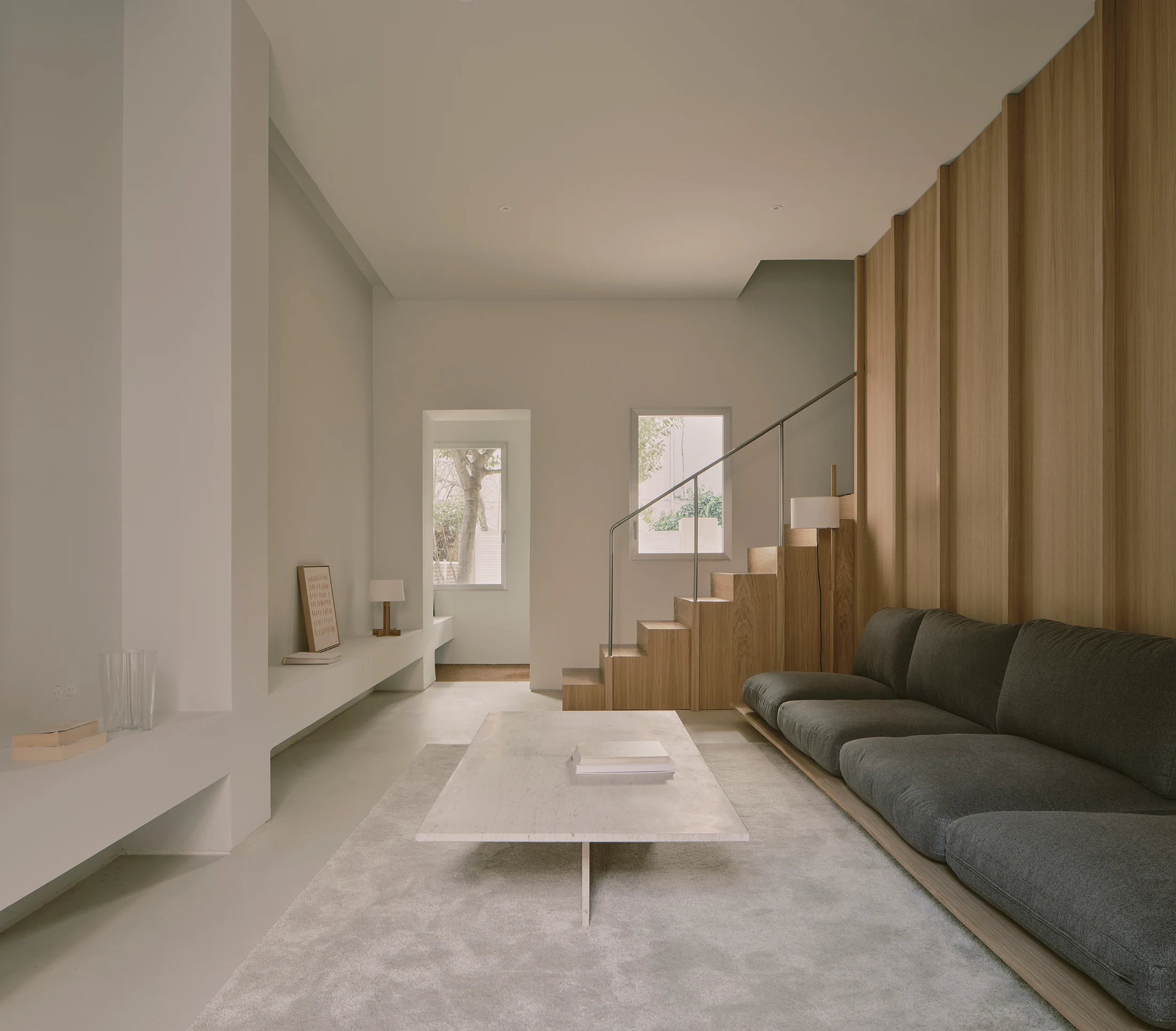
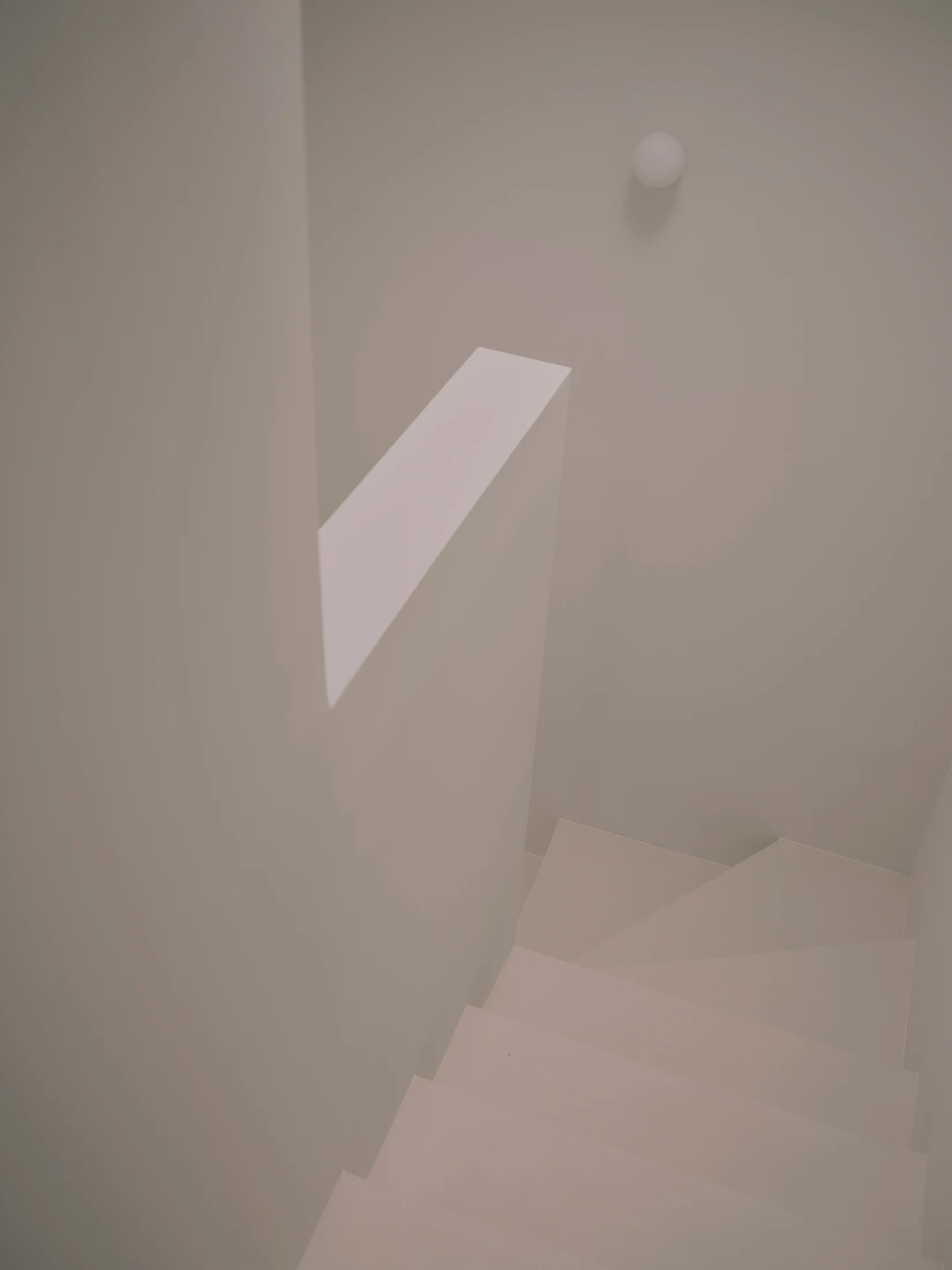
The townhouse sits in a Madrid neighbourhood where this building type is unusual enough to constitute an opportunity in itself. Maximale's renovation takes the typology seriously as a spatial argument: not a flat with a garden, but a genuinely vertical dwelling whose floors operate independently while connected by a single oak staircase. The stair's solid-oak treads and side-panelled risers step through an opening in the microcement floor with the deliberateness of something designed to be noticed.
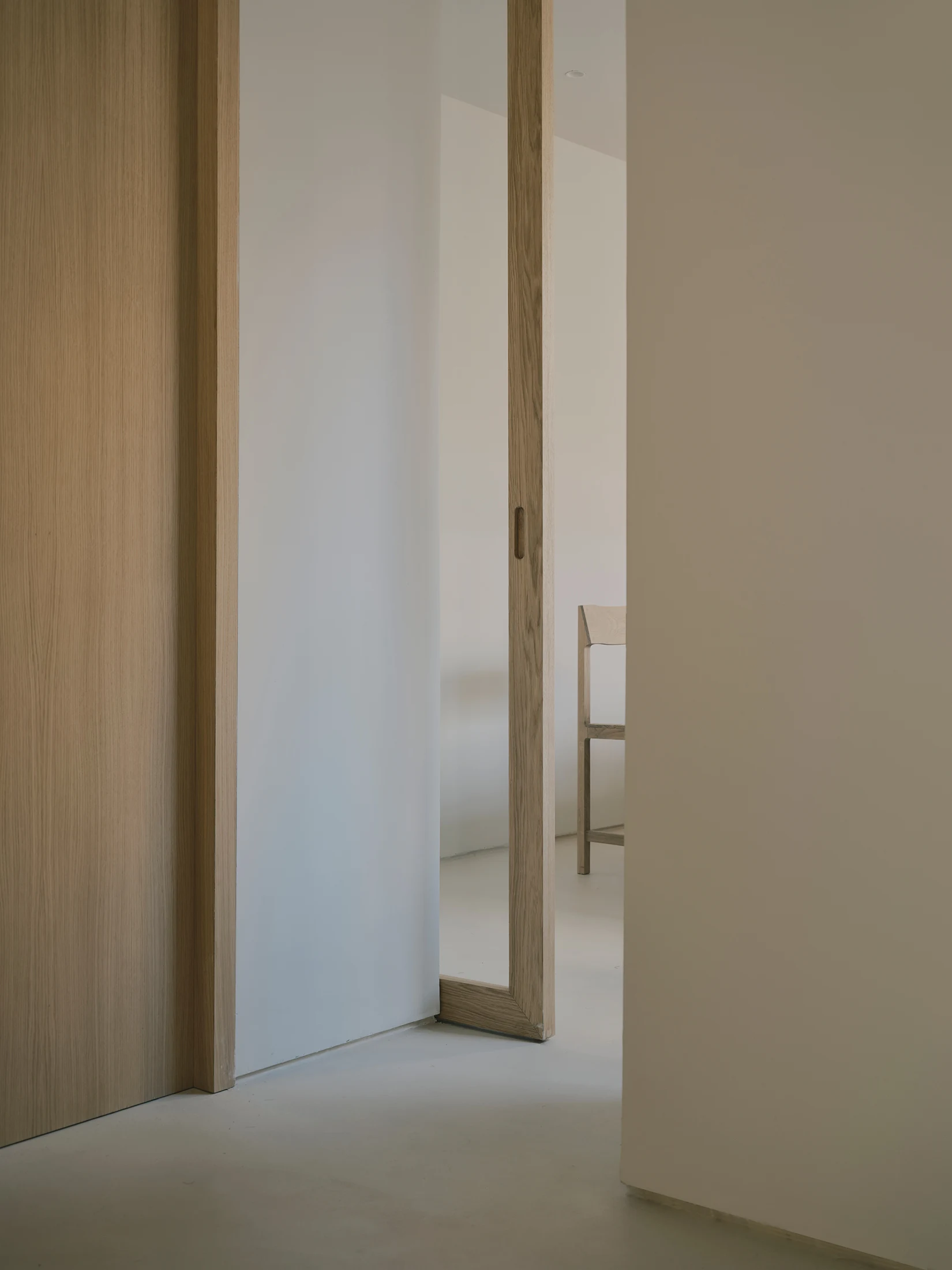
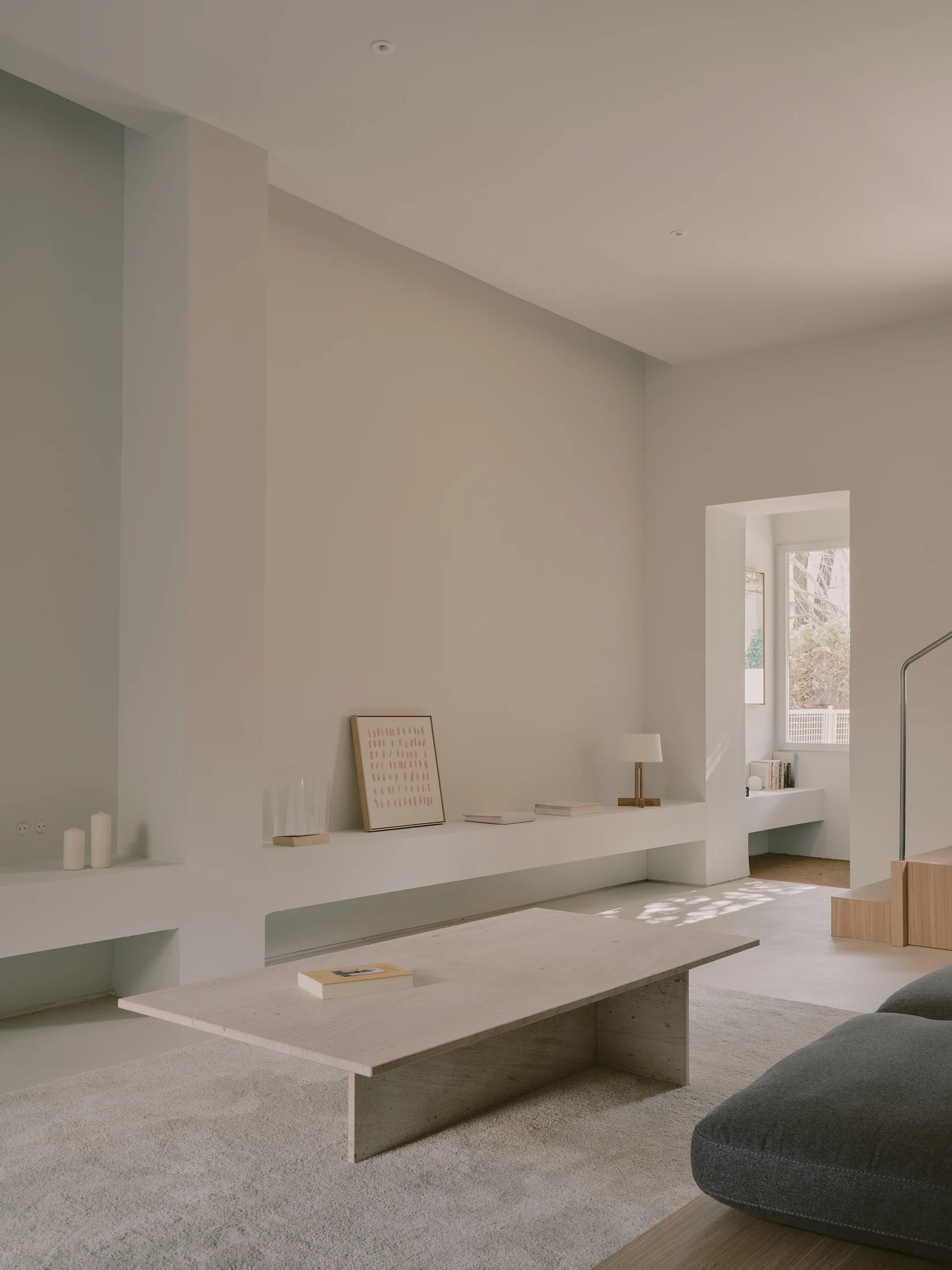
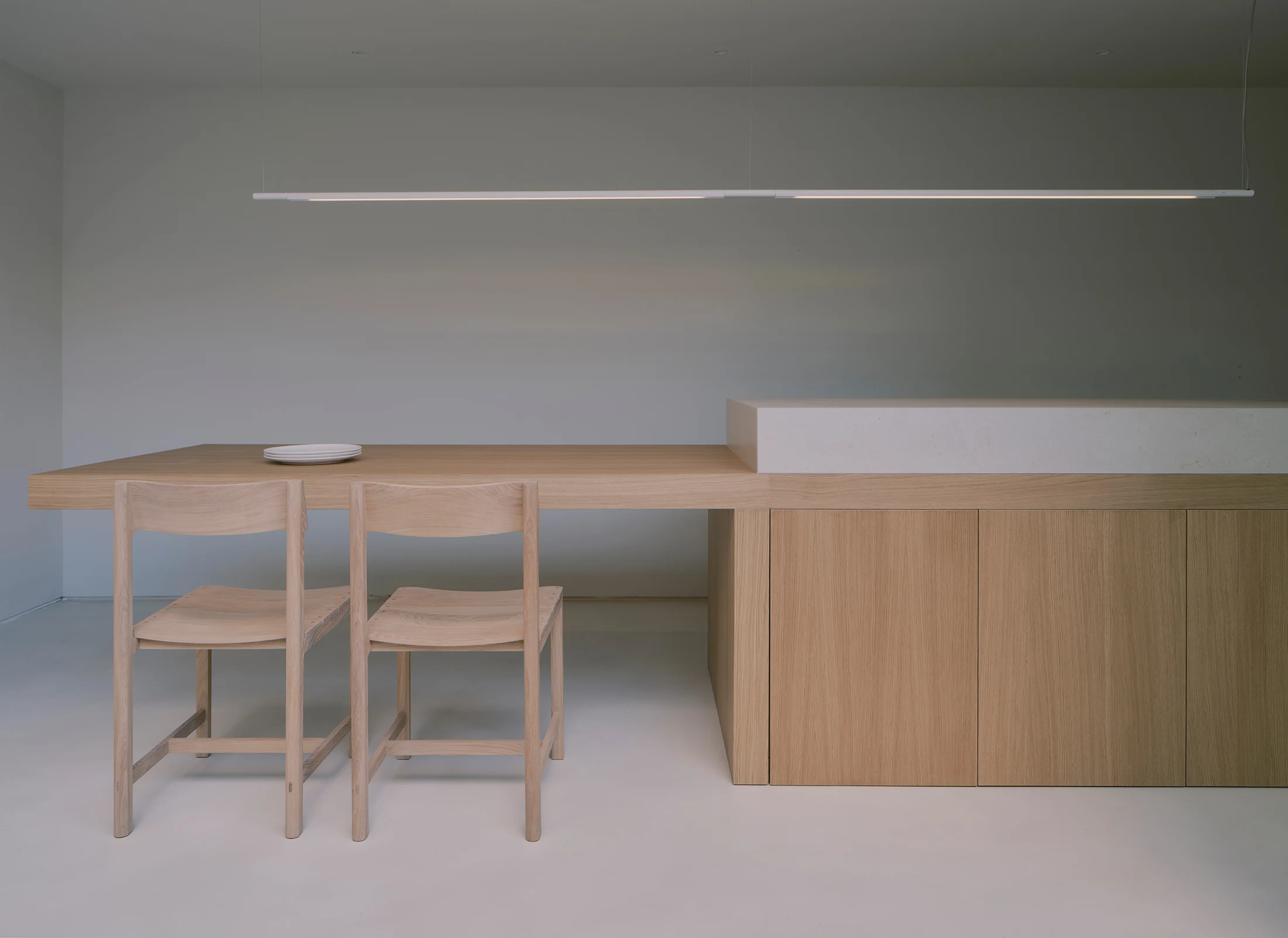
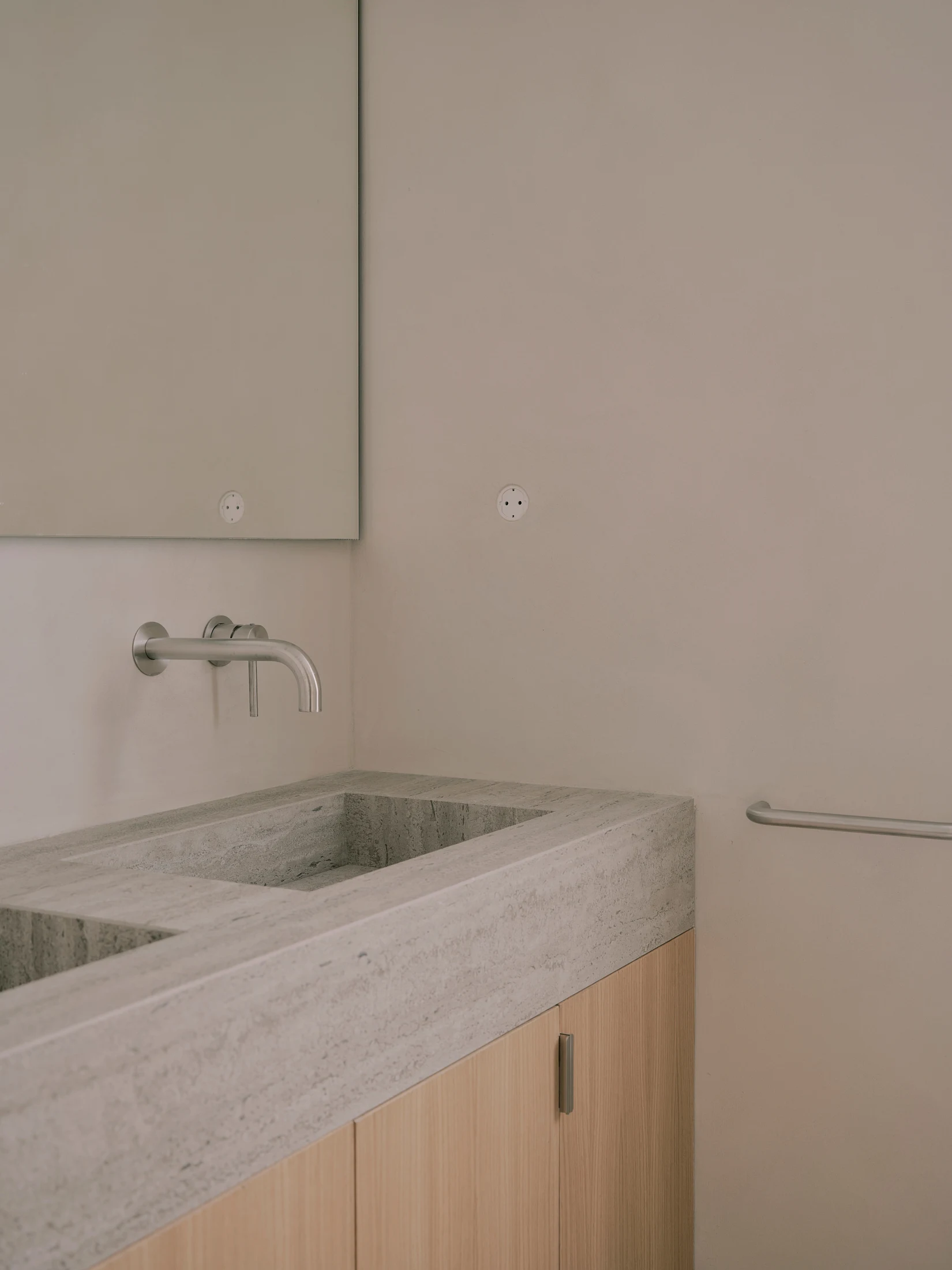
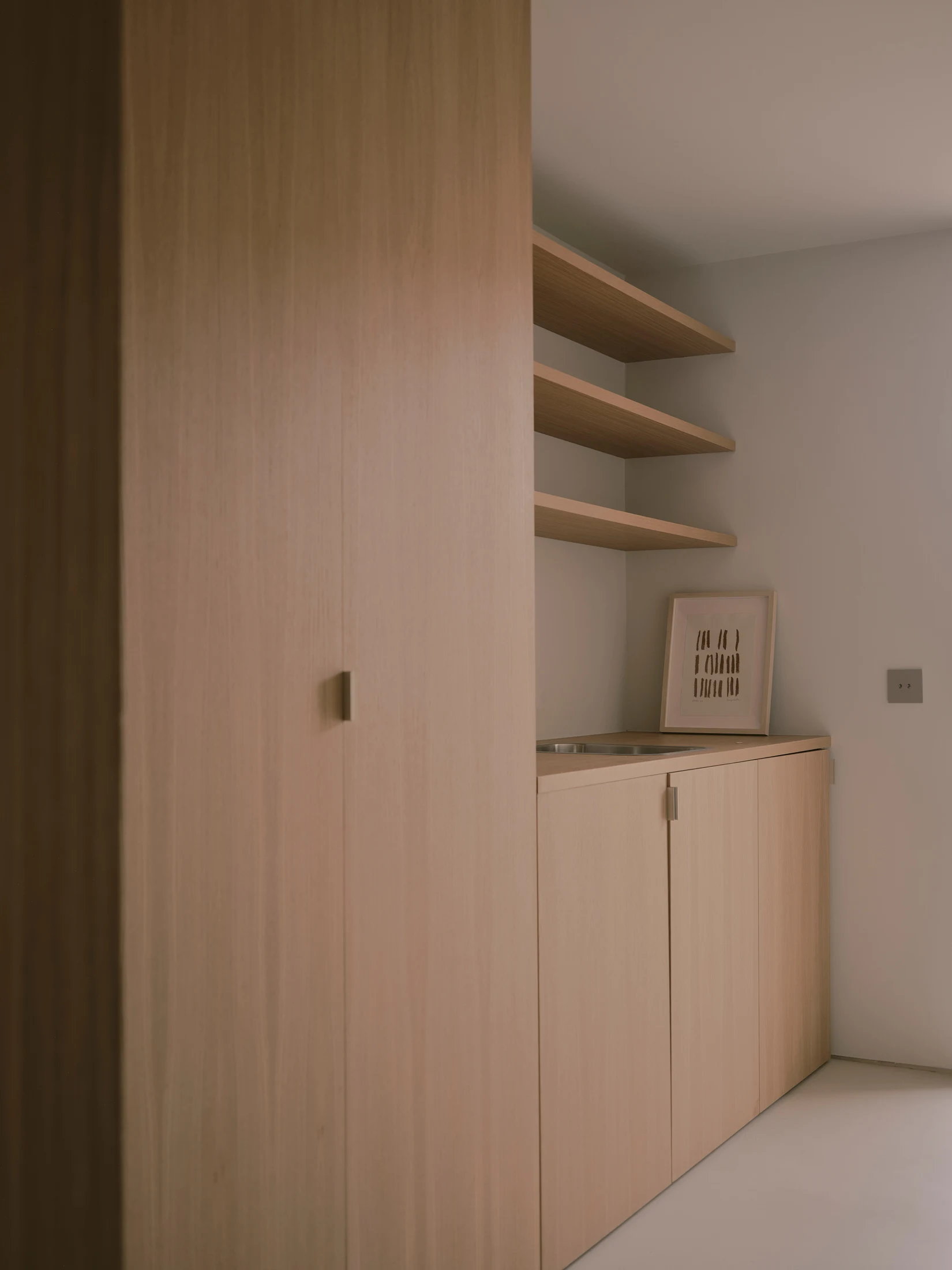
Throughout the project, Maximale establishes a limited palette and holds to it. Microcement runs across every horizontal floor surface, pale warm grey, uninterrupted by thresholds. Oak appears in panelling, joinery, door frames, kitchen cabinetry, and the stair, a consistent honey tone with a straight close grain that shows best in the long living-room wall panel, where the fluting casts shadows at midday. White plaster walls absorb both materials without competing. Against this field, individual elements carry more visual weight: a travertine kitchen island whose stone top has been routed to receive the sink; a honed limestone vanity; a cantilevered microcement bathtub positioned under a roof skylight.
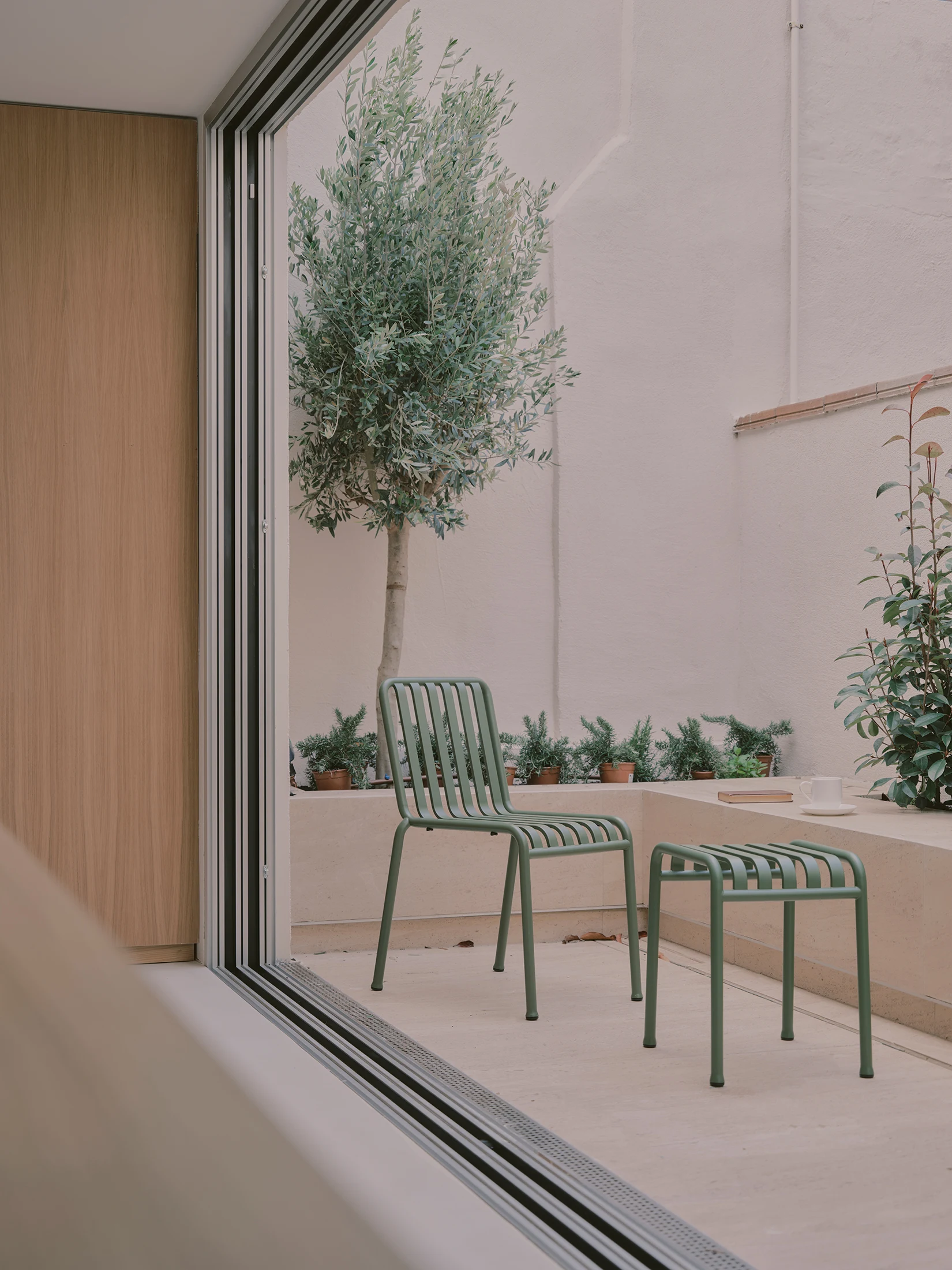
The patio sequence is the project's defining spatial move. Rather than treating outdoor areas as residual, Maximale positions them as mediators between floors. The ground-floor kitchen, anchored by a solid-oak dining table, opens through a full-height aluminium-framed sliding door onto a compact patio with an olive tree in a raised planter. The kitchen's travertine island sits perpendicular to this threshold, so standing at the sink places a person equidistant between the oak cabinetry wall and the garden view.
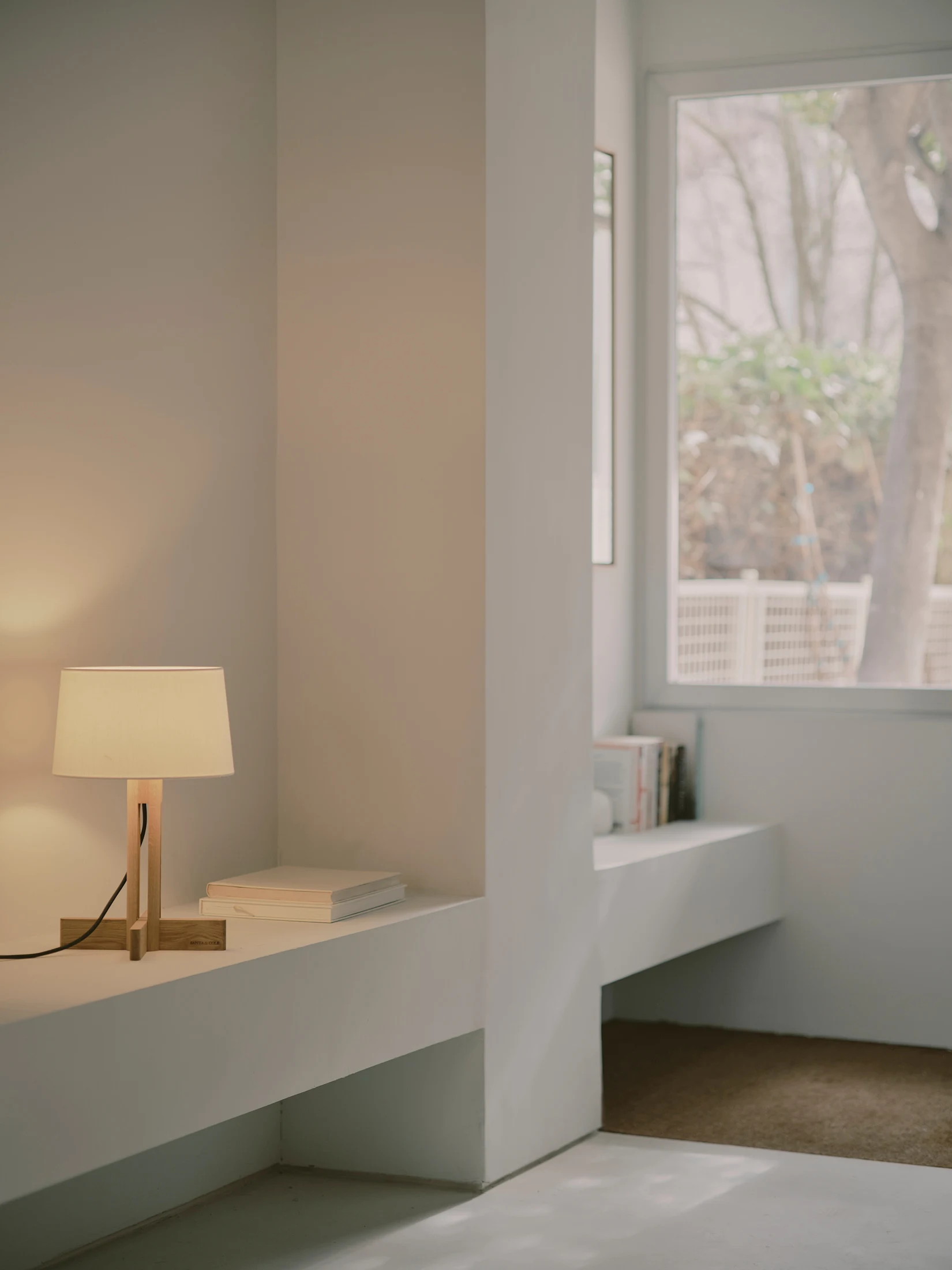
Upper floors introduce smaller intermediate spaces that perform a similar role. A deep built-in shelf running under a window doubles as a reading ledge and a visual connection to a second planted terrace. Maximale describe the project as a reactivation of intermediate spaces, meaning every recess, sill, and threshold is treated as an active component of daily use. The oak shelving flanking a corner workroom does exactly this: three floating shelves set low, framing a wall-hung desk and a woven-cane chair that catch afternoon light through a skylight in the sloped ceiling above.
The bathroom at the top of the house resolves the sequence. Its skylight delivers a column of diffused daylight onto the microcement tub surround, a detail that only functions because the tub is positioned not against a wall but as a freestanding plinth in the room's centre. Moving through the building feels like a progression of conditions: each level creates its own atmosphere through the alignment of material, light, and threshold, so the stacked floors never read simply as more of the same.