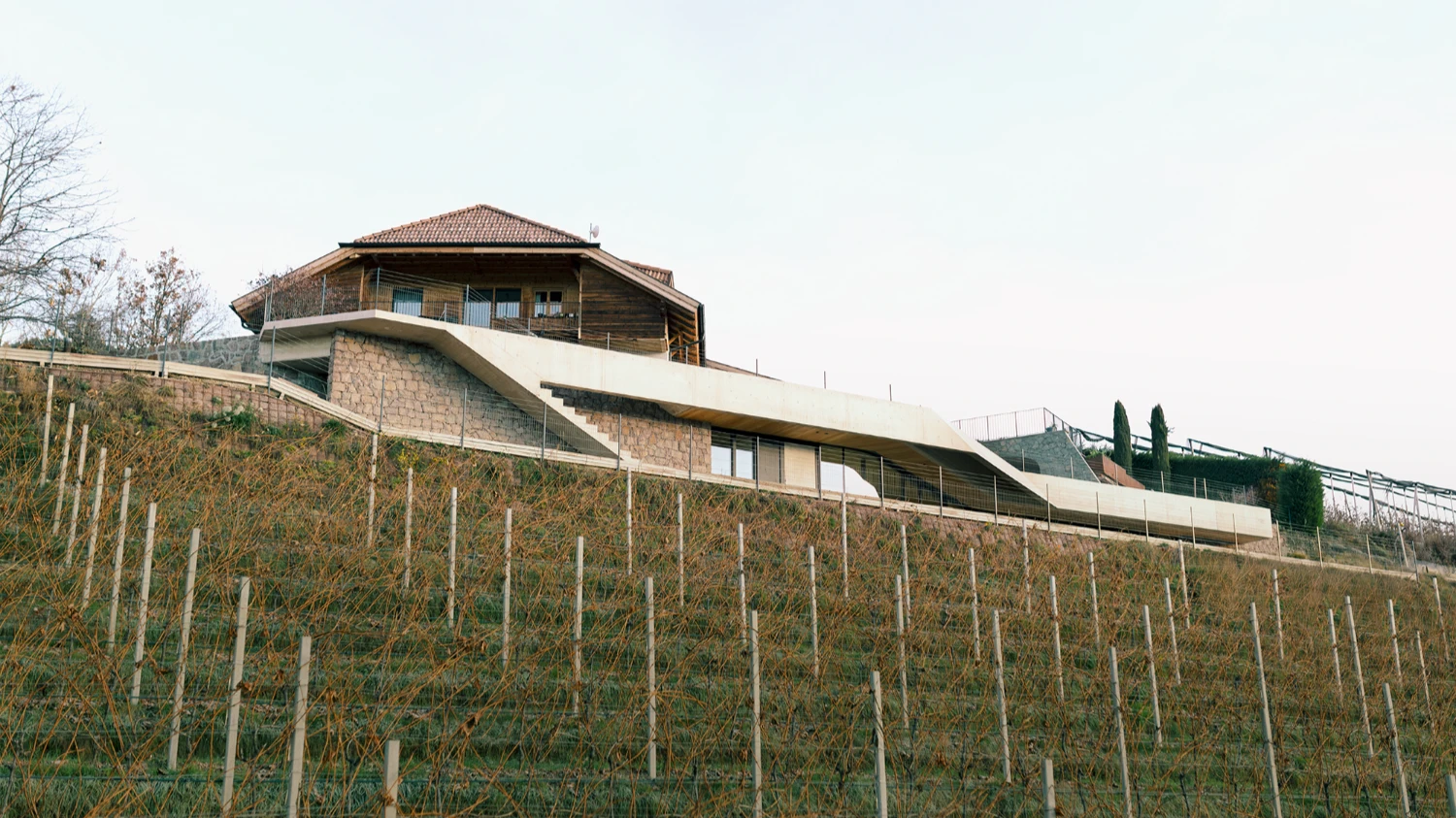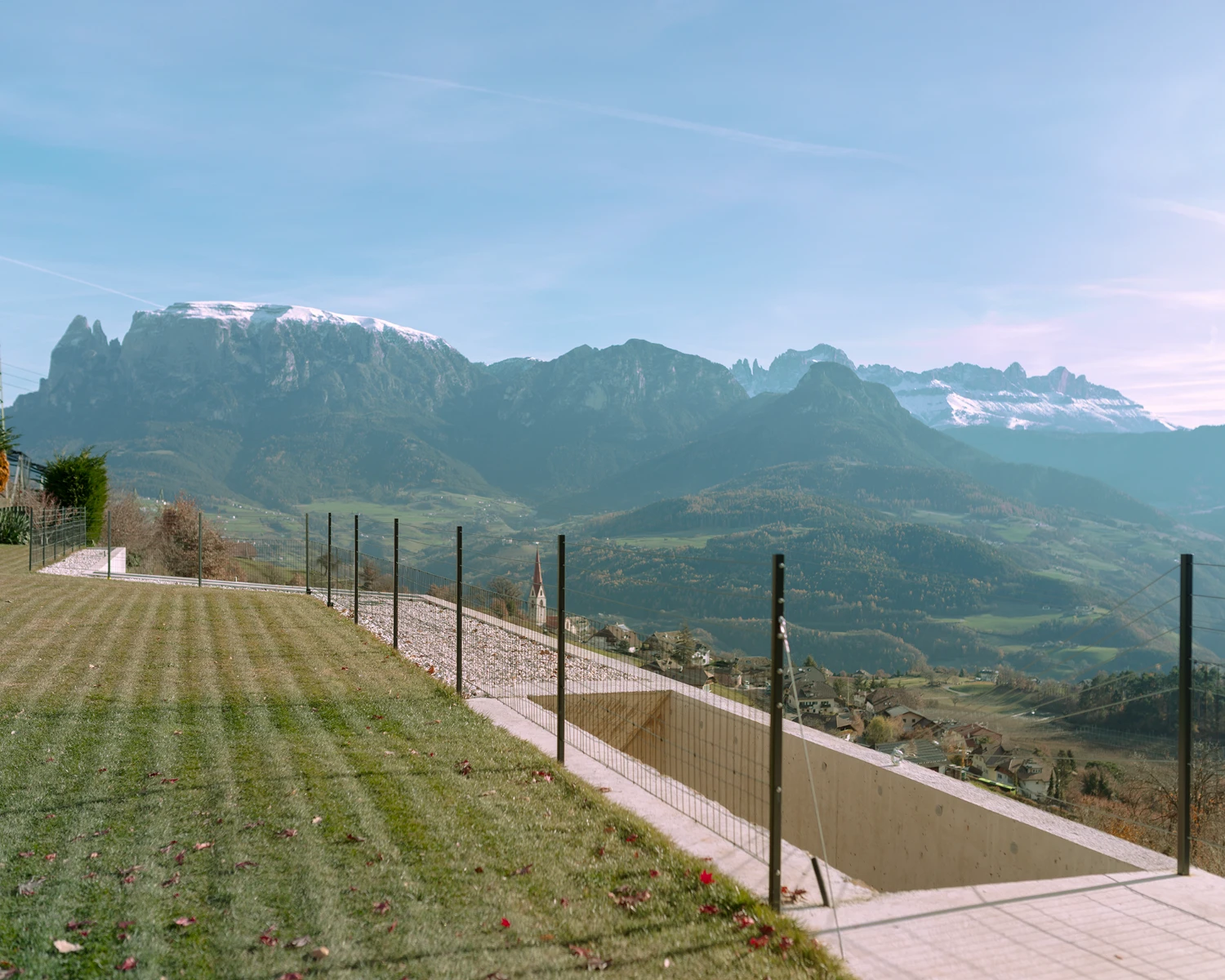
In Northern Italy’s Alto Adige, where agricultural topography gives way to the grandeur of the Dolomites, Messner Architects’ Casa Conte emerges with a quiet, geological confidence.
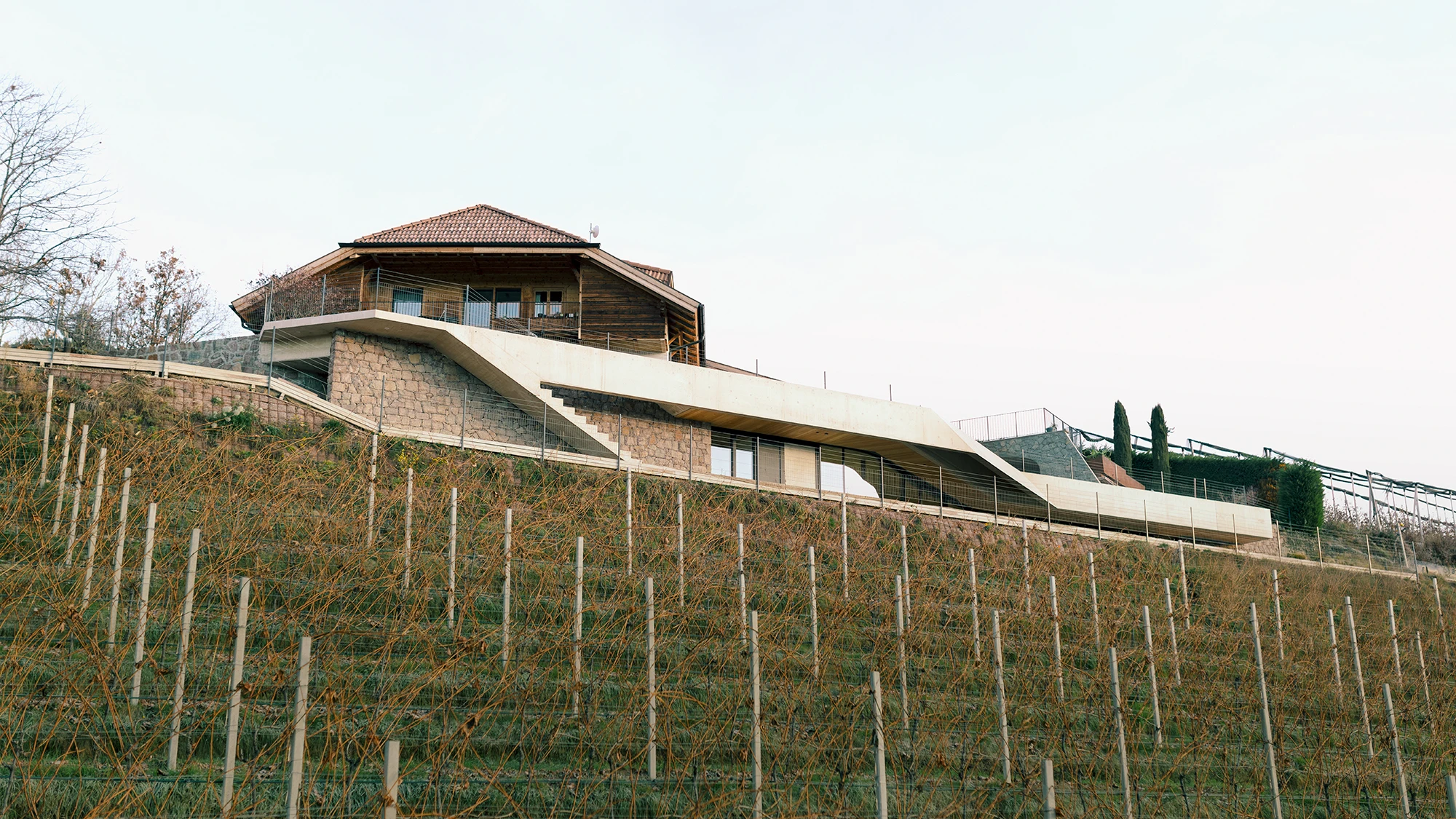
The studio's expansion of a 1970s residence above Unterinn am Ritten is less an act of addition than one of uncovering—unearthing a logic intrinsic to the slope itself. By embedding the new structure into the hillside, Messner avoids any gestural assertion. Instead, the architecture listens, nestling into the terrain like sediment naturally settling into a valley.
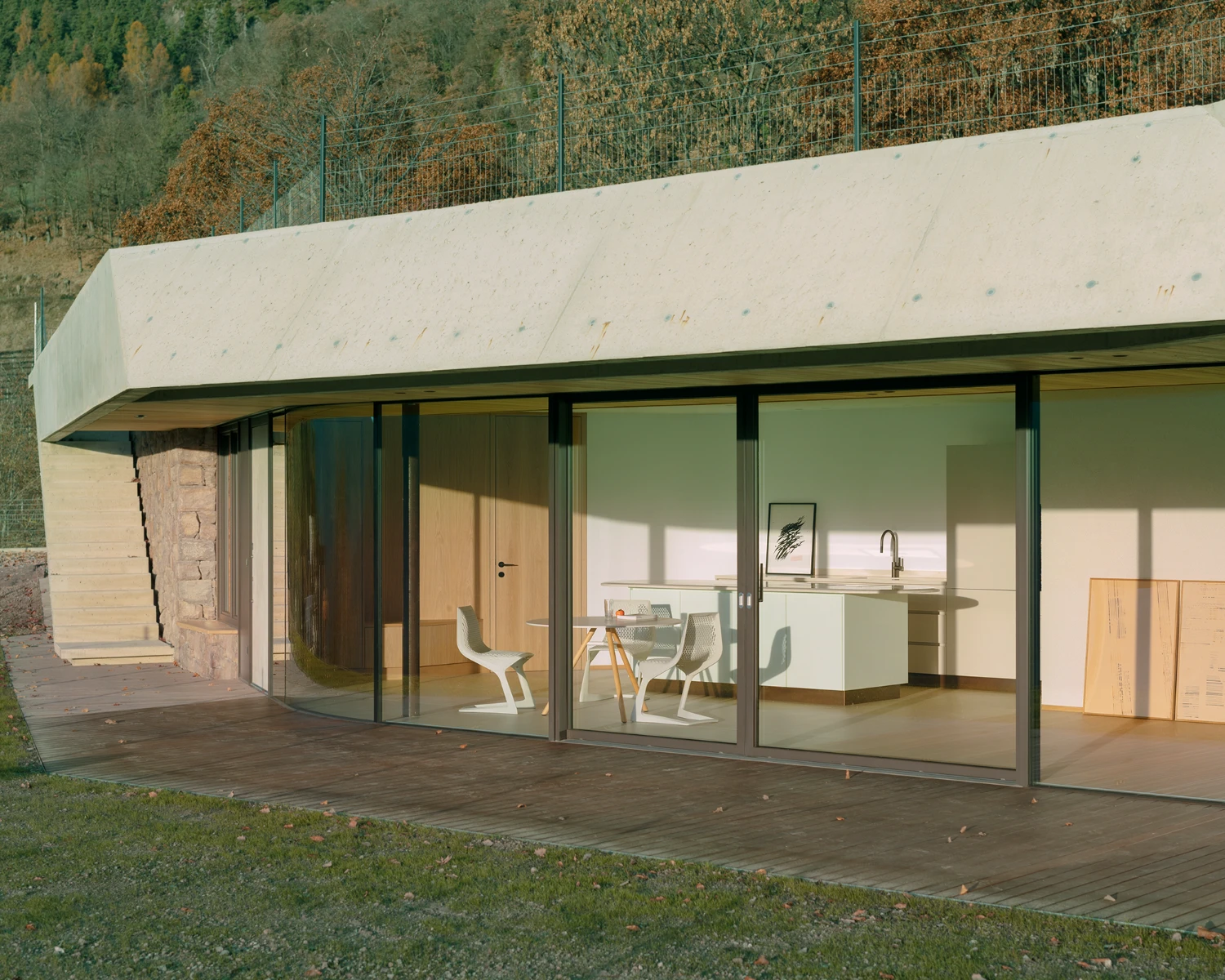
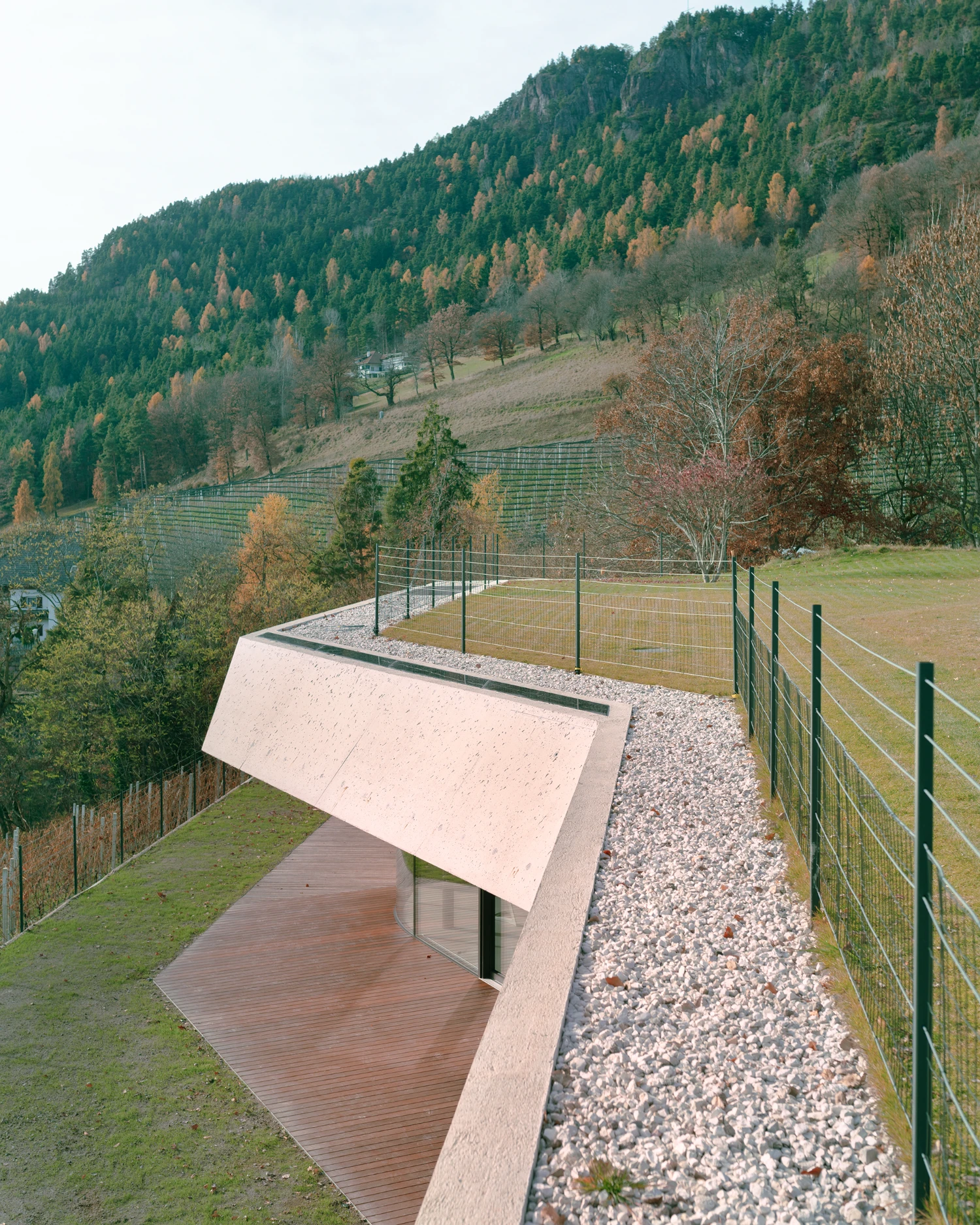
The extension—limited in volume by local building codes—clings to an existing retaining wall, hovering just below the main house. Its low profile and linear spread respond to the topographical logic of the site and echo the scattered agrarian vernacular of the region. But this is not a mimicry of the traditional farmhouse; rather, it is a studied reconfiguration. The single-story form hugs the contour, dissolving architectural ego into landform, while offering sweeping, cinematic vistas toward the Dolomites.
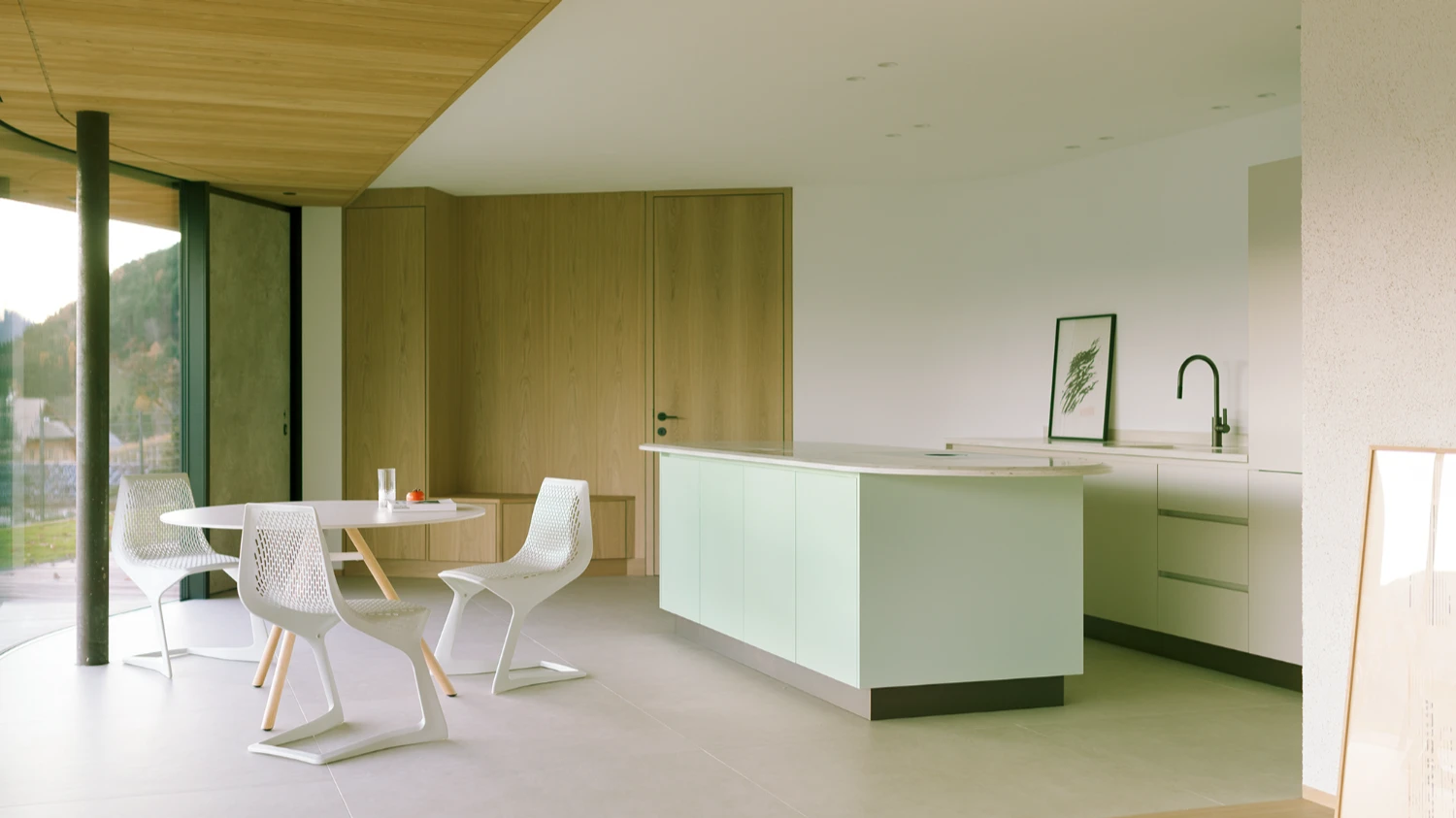
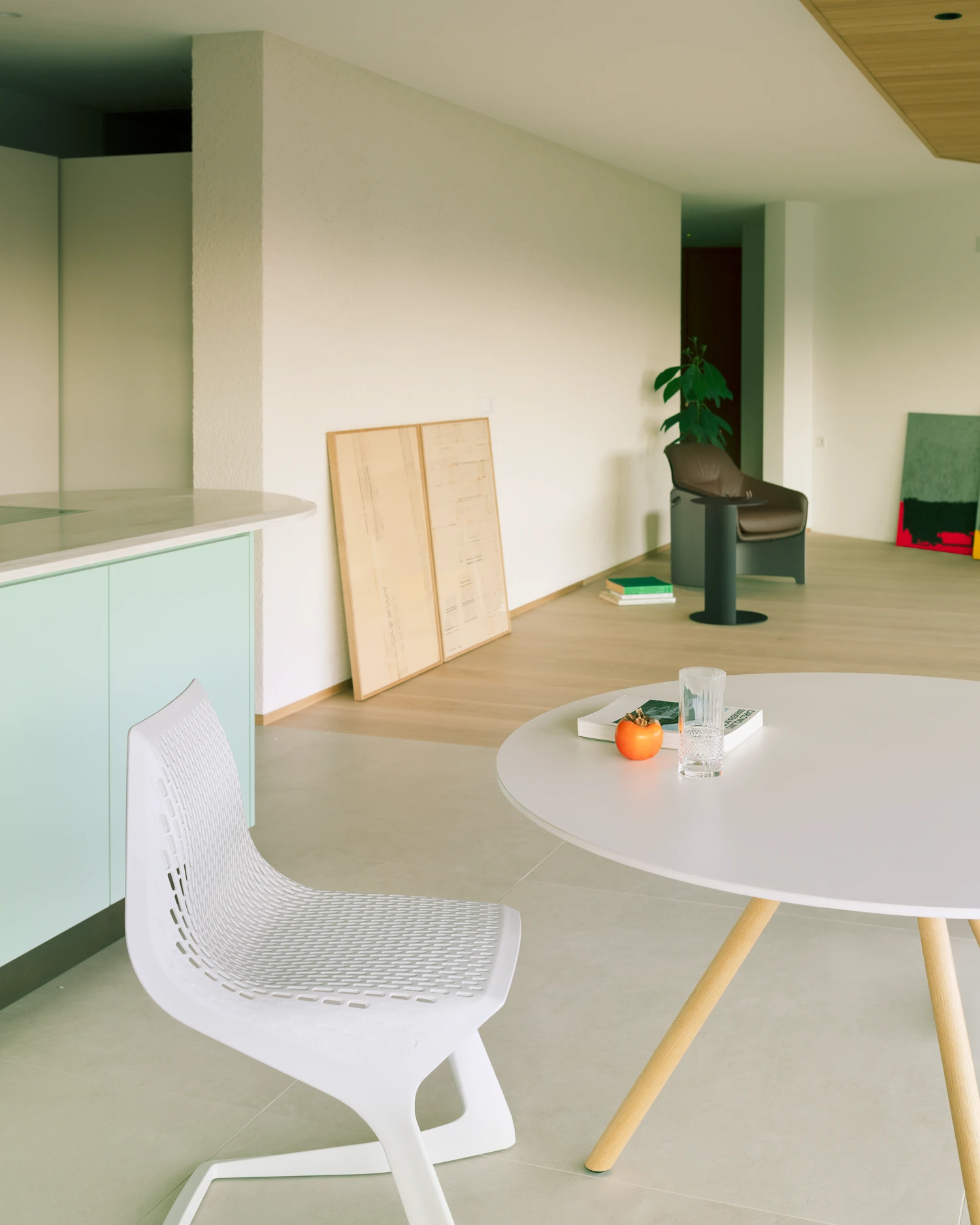
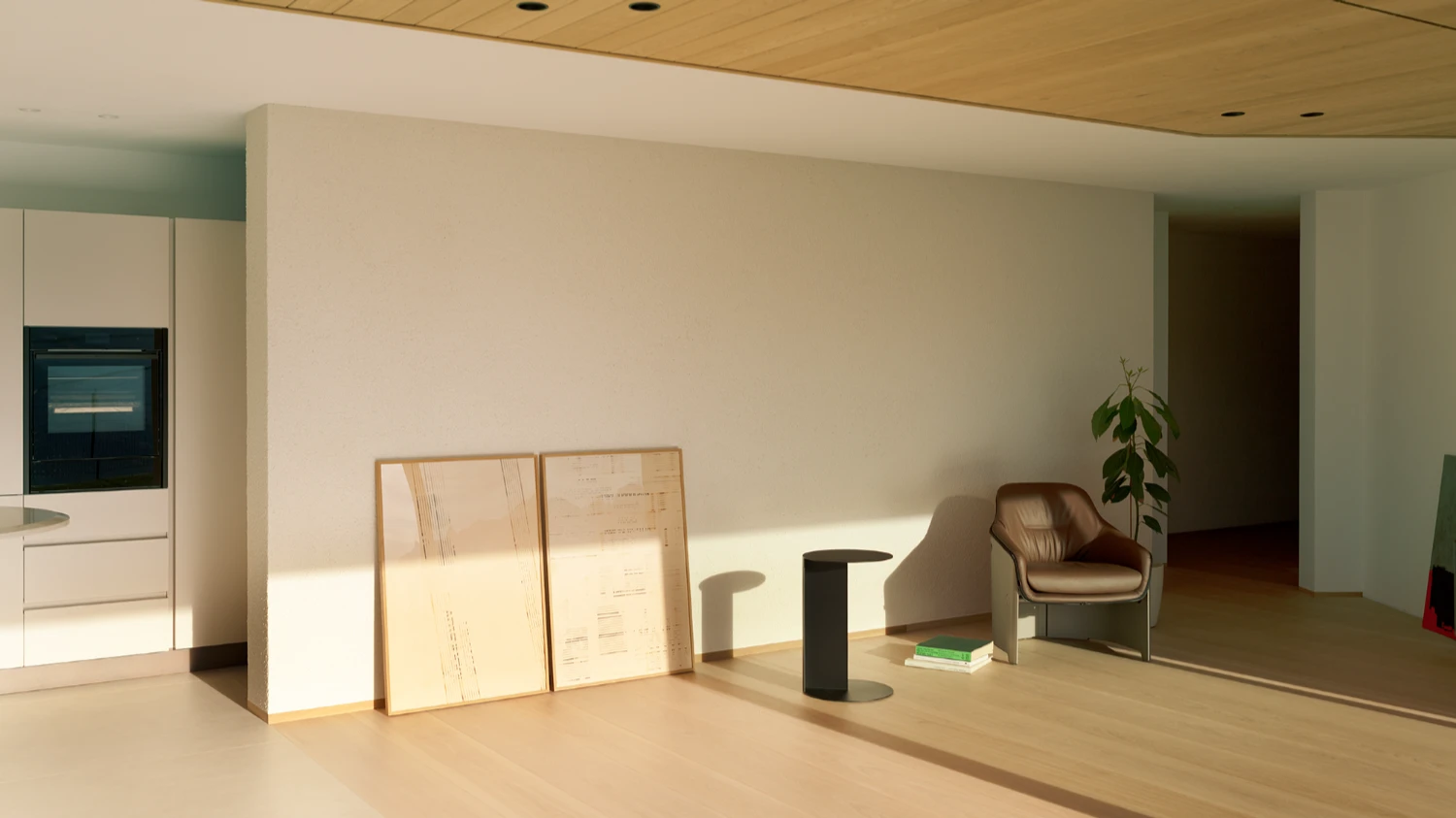
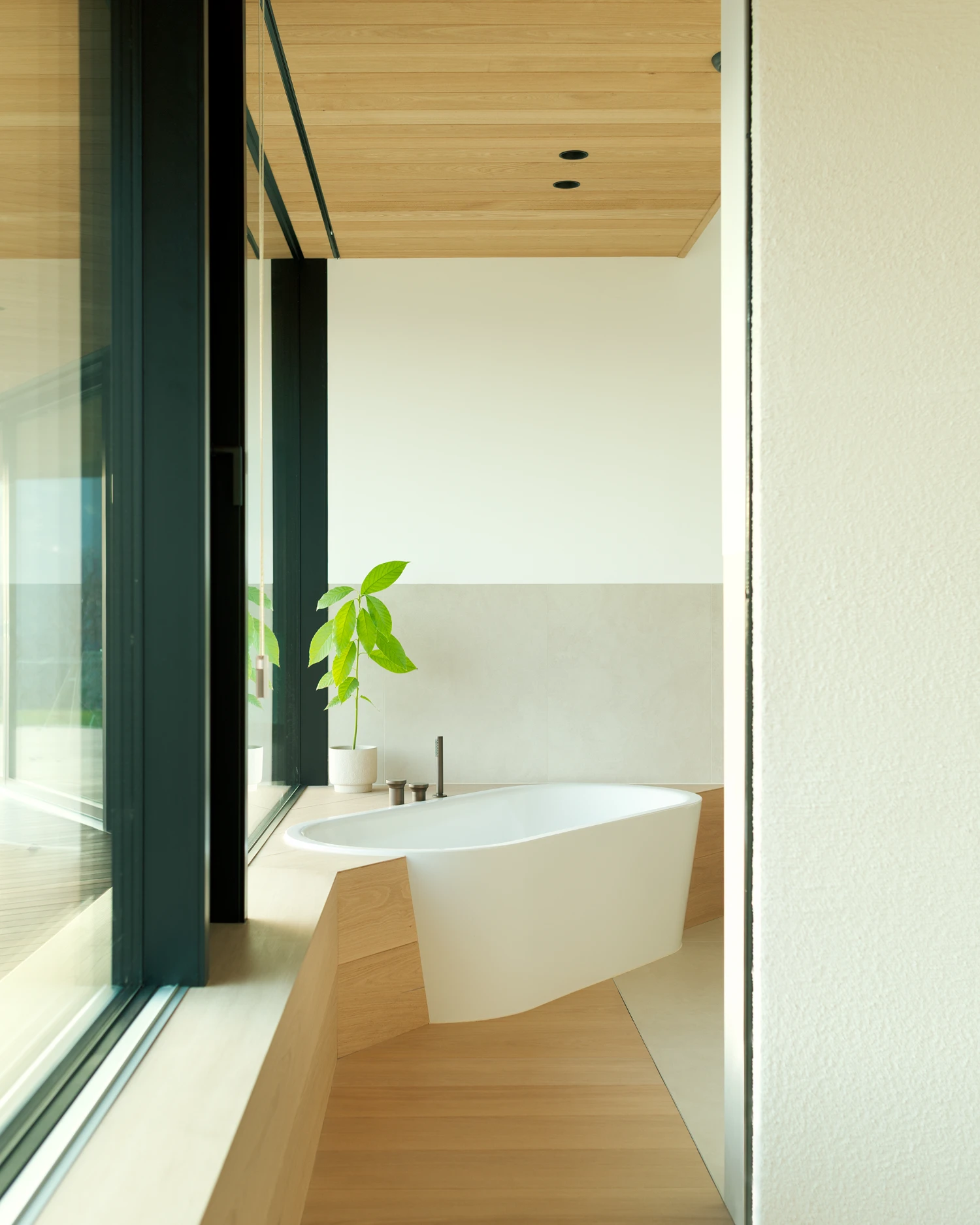
Internally, the sequence of spaces follows the slope’s inclination, choreographing movement and view with subtle restraint. A sun-oriented living core—integrated with a kitchen—anchors the extension, flanked by bedrooms and baths that press gently into the hill. Privacy is achieved not through enclosure, but through topography; circulation is both practical and spatially expressive. The connection between old and new is discreet, occurring below grade—a subterranean gesture of continuity rather than interruption.
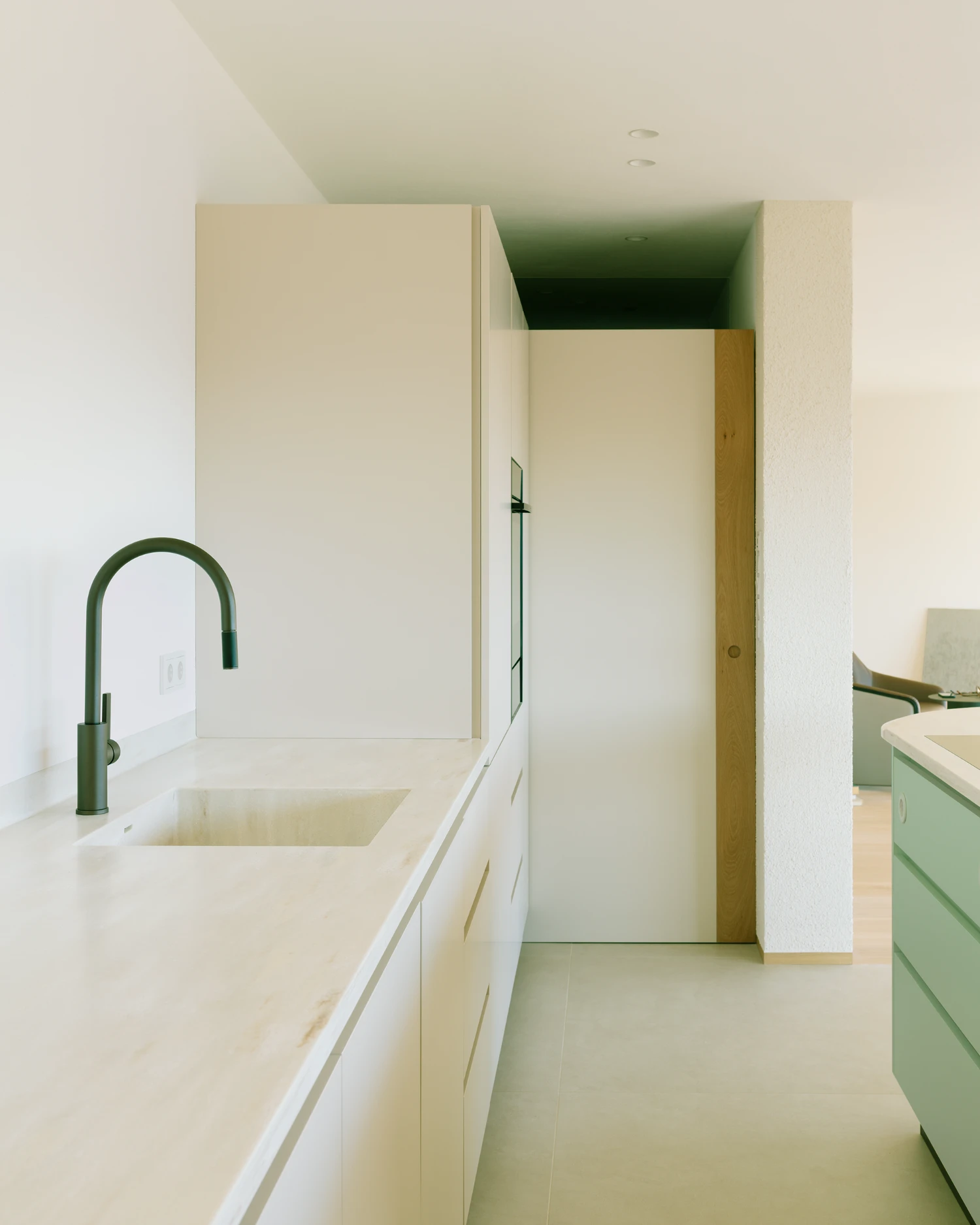
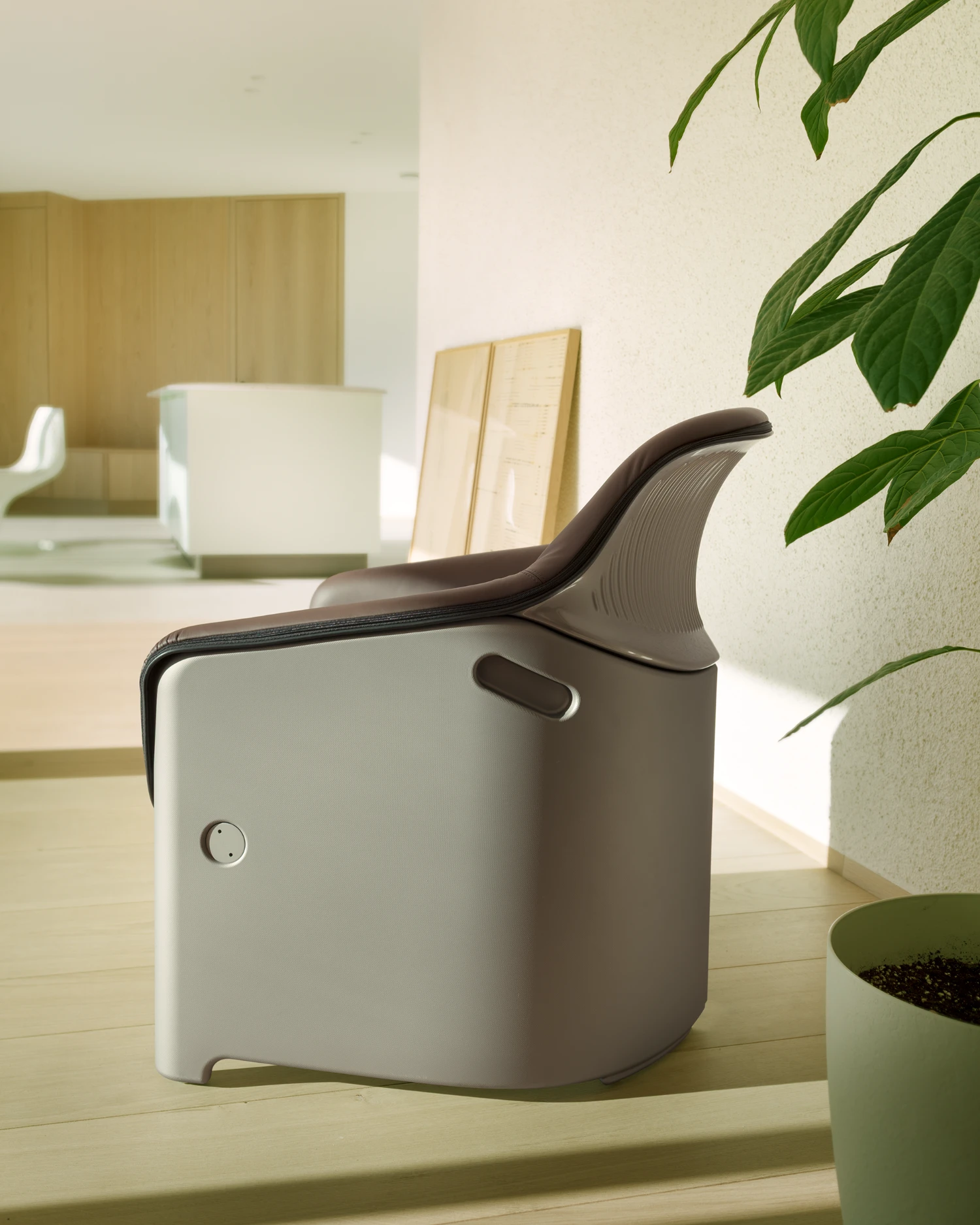
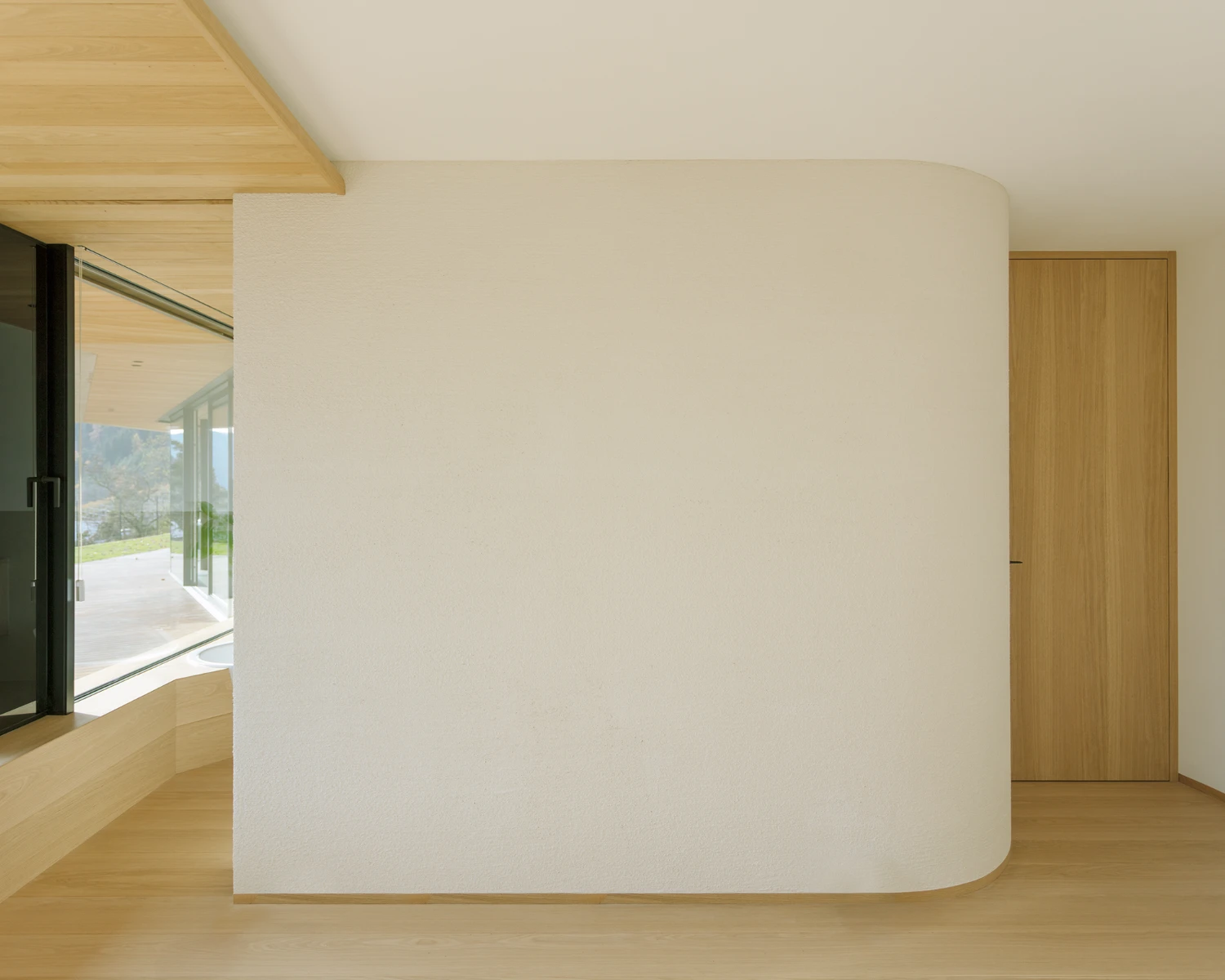
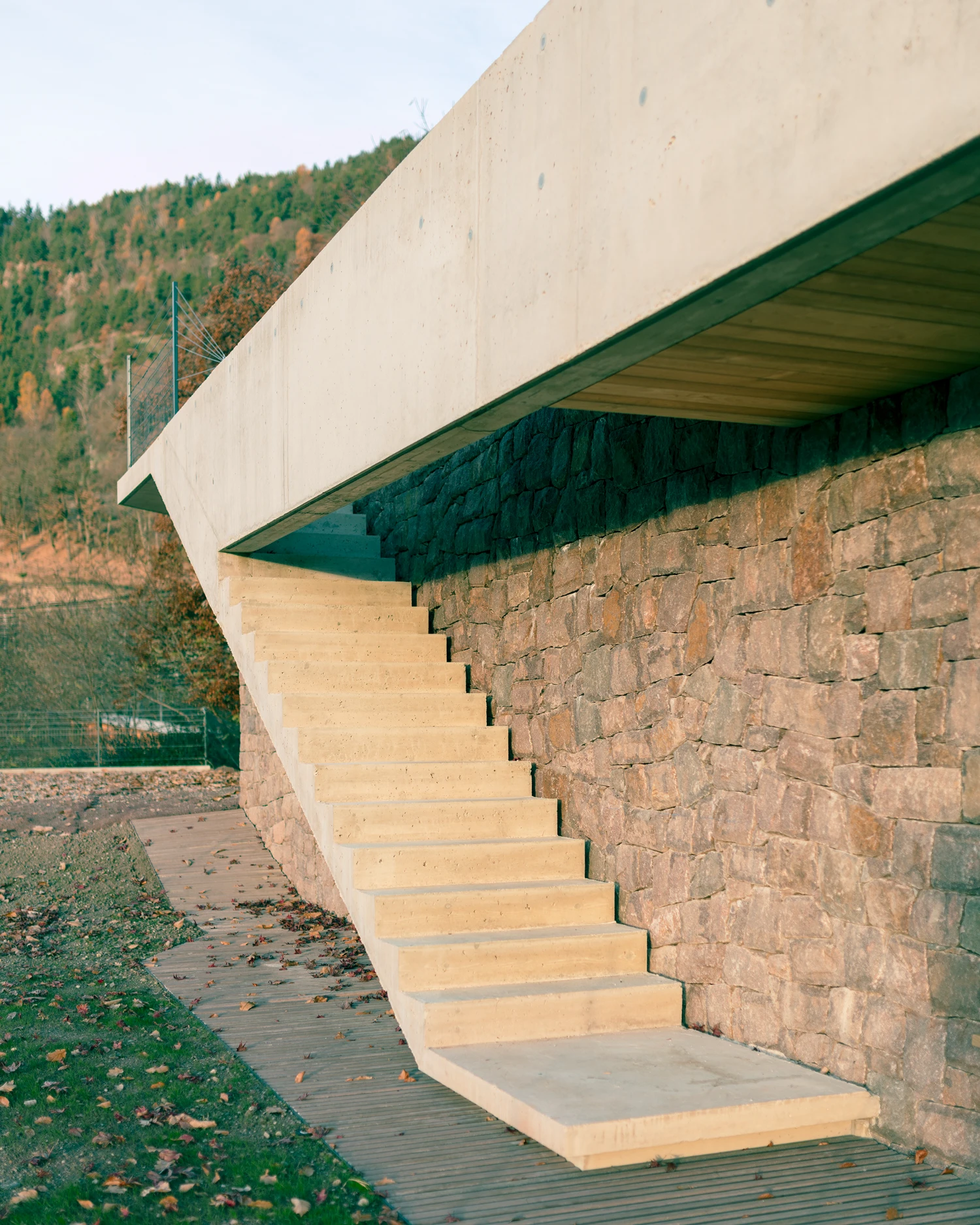
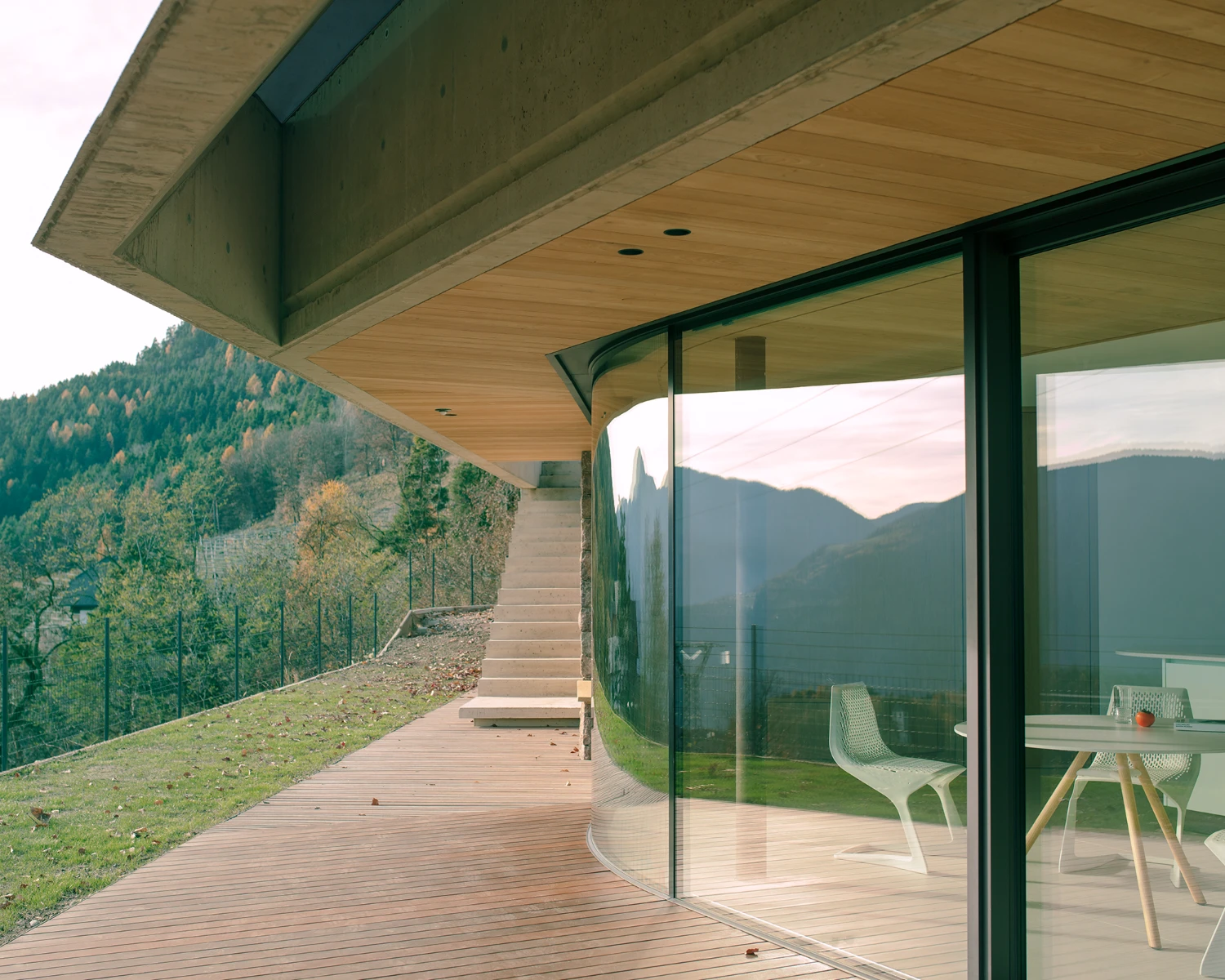
Materially, the house is an ode to elemental tactility. Exposed concrete and natural stone masonry ground the exterior, while interior surfaces lean into contrasts: rough plaster infused with local aggregates softens against oak and chestnut detailing, revealing a sensibility attuned to both material integrity and tactile nuance. Floor-to-ceiling glazing frames the Dolomites without spectacle, shaded by a precisely cantilevered ceiling that functions as both brise-soleil and architectural punctuation.
Casa Conte does not seek visibility; it achieves presence. It is architecture as contour, horizon, and silence—a quietly radical gesture of inhabitation.