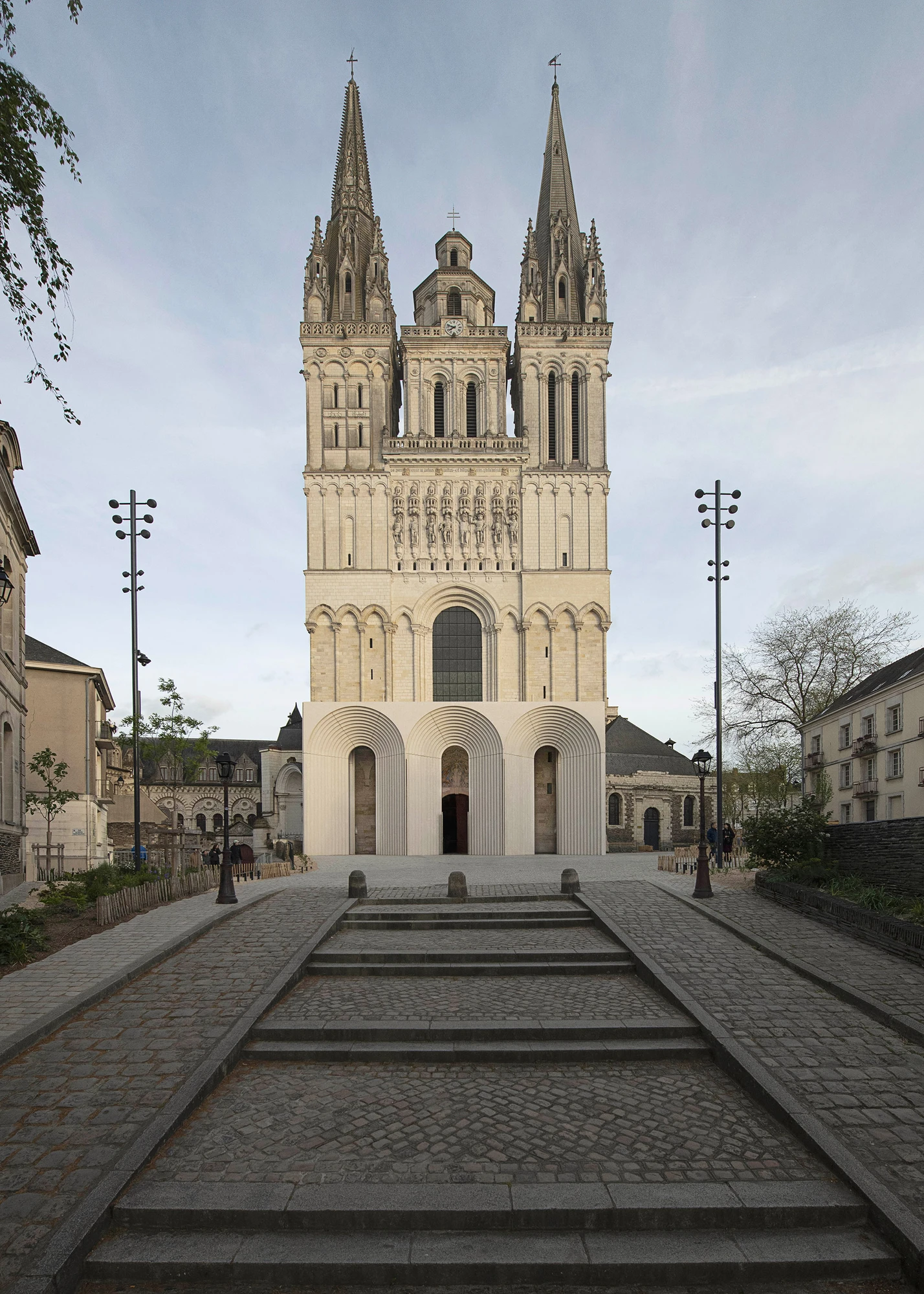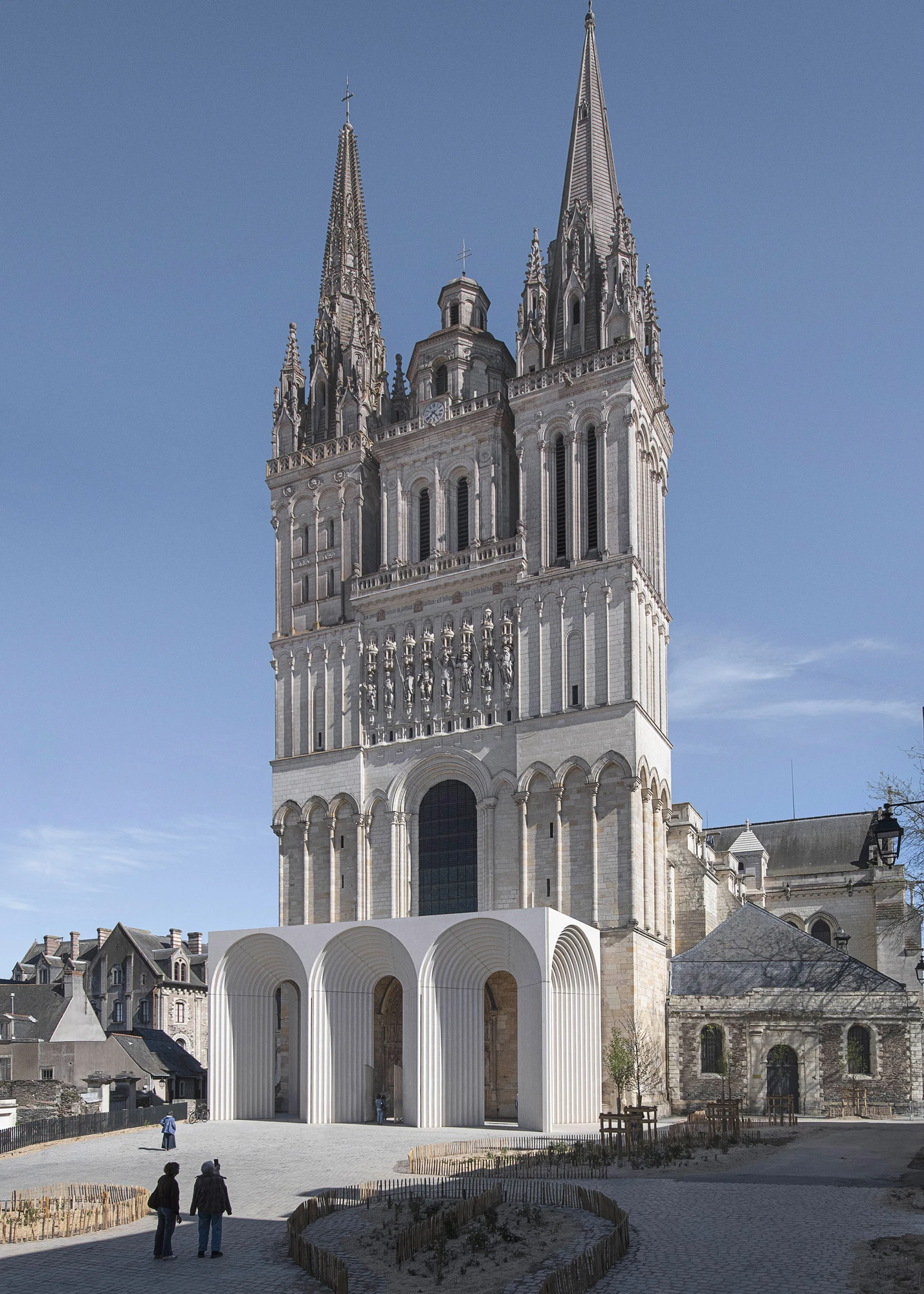
At the base of a 12th-century Angevin Gothic cathedral in Angers, Kengo Kuma and Associates completes a 21-metre concrete entrance gallery sheltering a medieval sculptural doorway unsheltered since 1807.
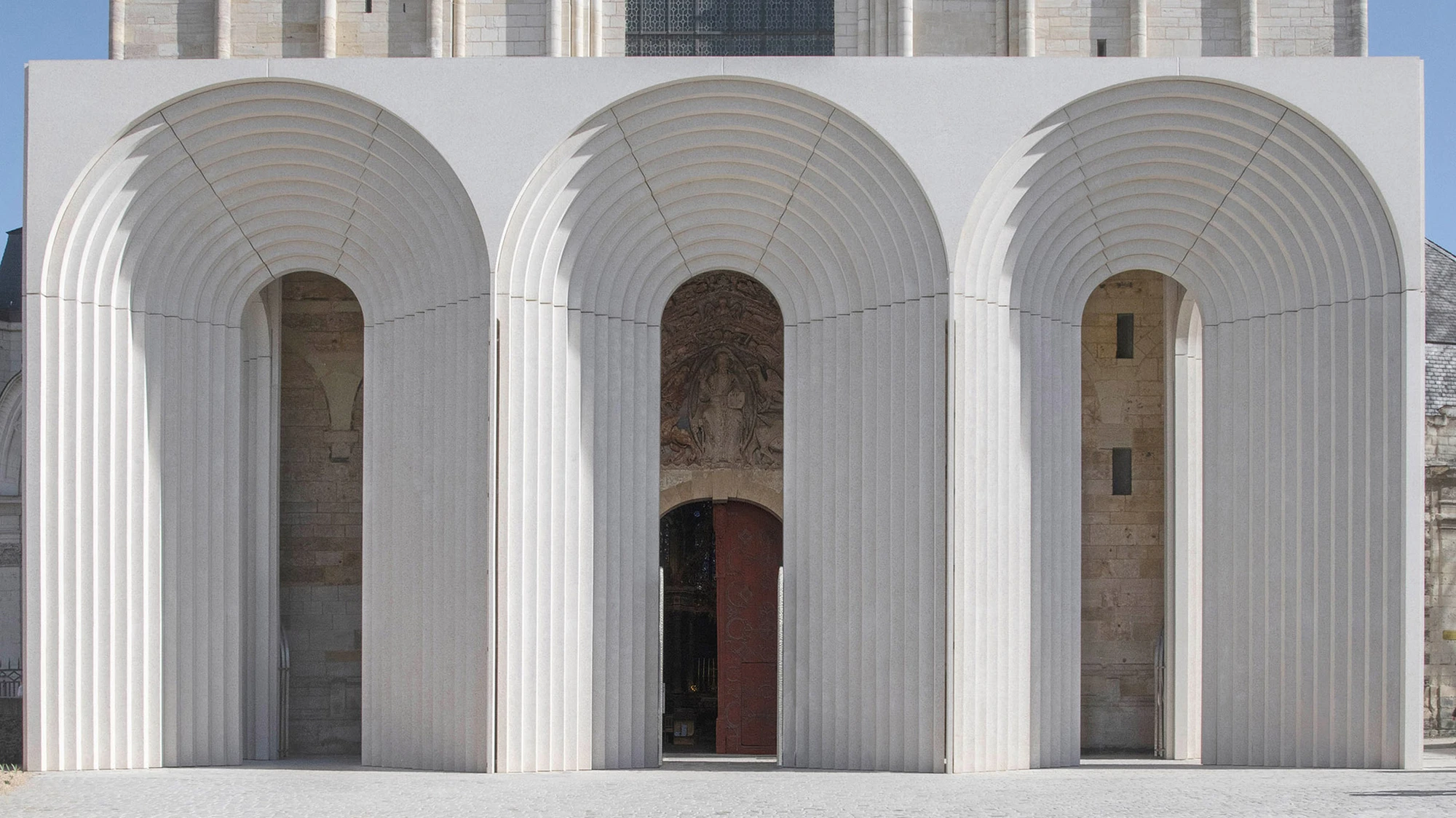
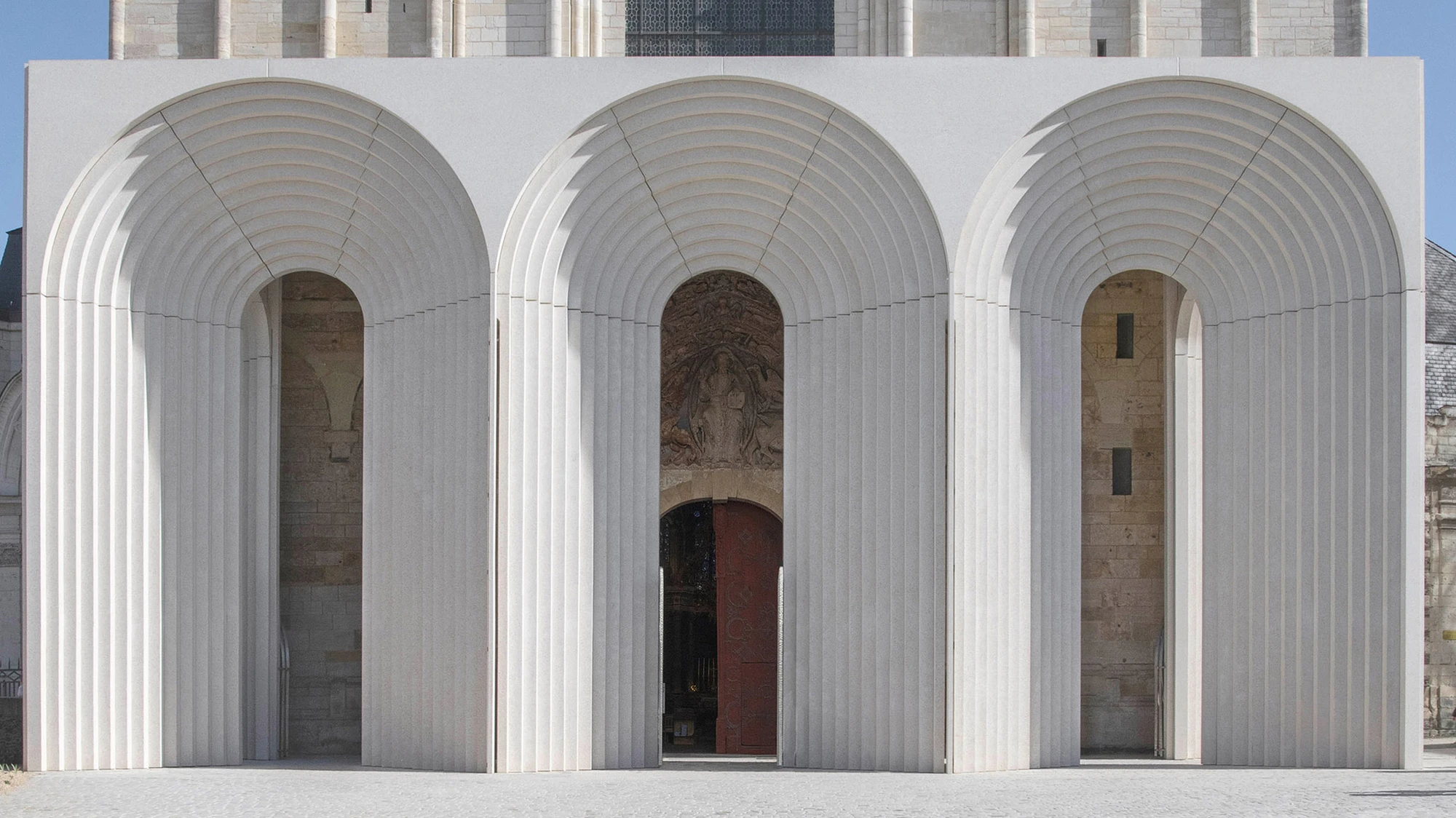
The proportional system begins with a compass. Kengo Kuma and Associates, working from a competition brief won in 2021, developed the entrance gallery's geometry by replicating the generative logic of Gothic construction rather than its surface ornament. The result is a 21-metre concrete volume whose five deeply ribbed arches carry the same disciplined derivation from circle and straight edge that governed the builders of the 12th century. The studio put it directly: "It is this technical process that creates a contemporary feeling to the building, while remaining part of the history of construction."
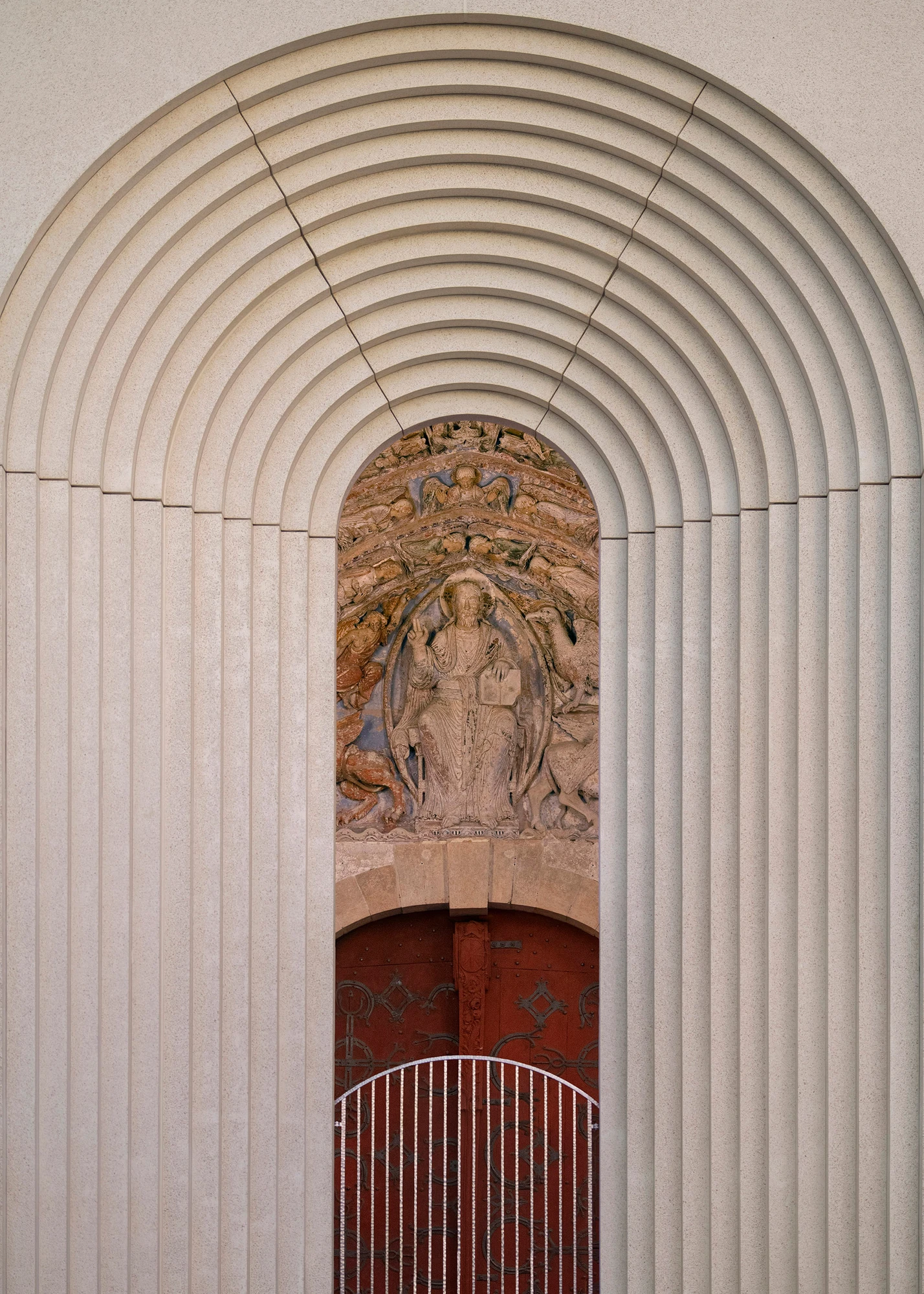
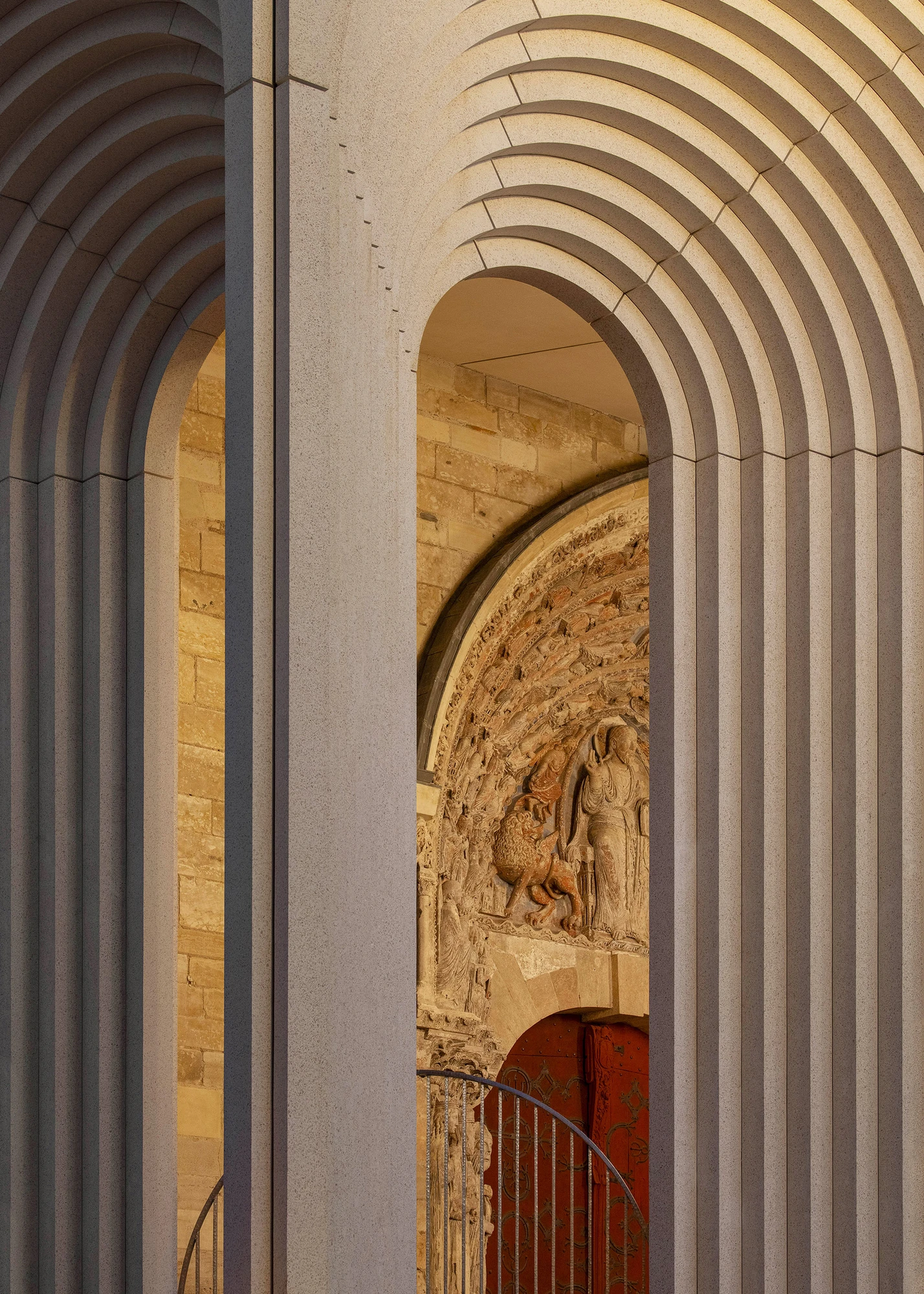
What the images show is a material that refuses to perform as stone but refuses equally to announce itself as industrial. The concrete is pale, almost chalky, cast on-site from sand and aggregates drawn from the Loire river basin a few kilometres away. The resulting tone sits close to the cathedral's own limestone. Its surface is smooth in the field between ribs, while the archivolts themselves are formed with tight, repetitive bands that produce deep shadow across the face of each arch at almost any angle of light.
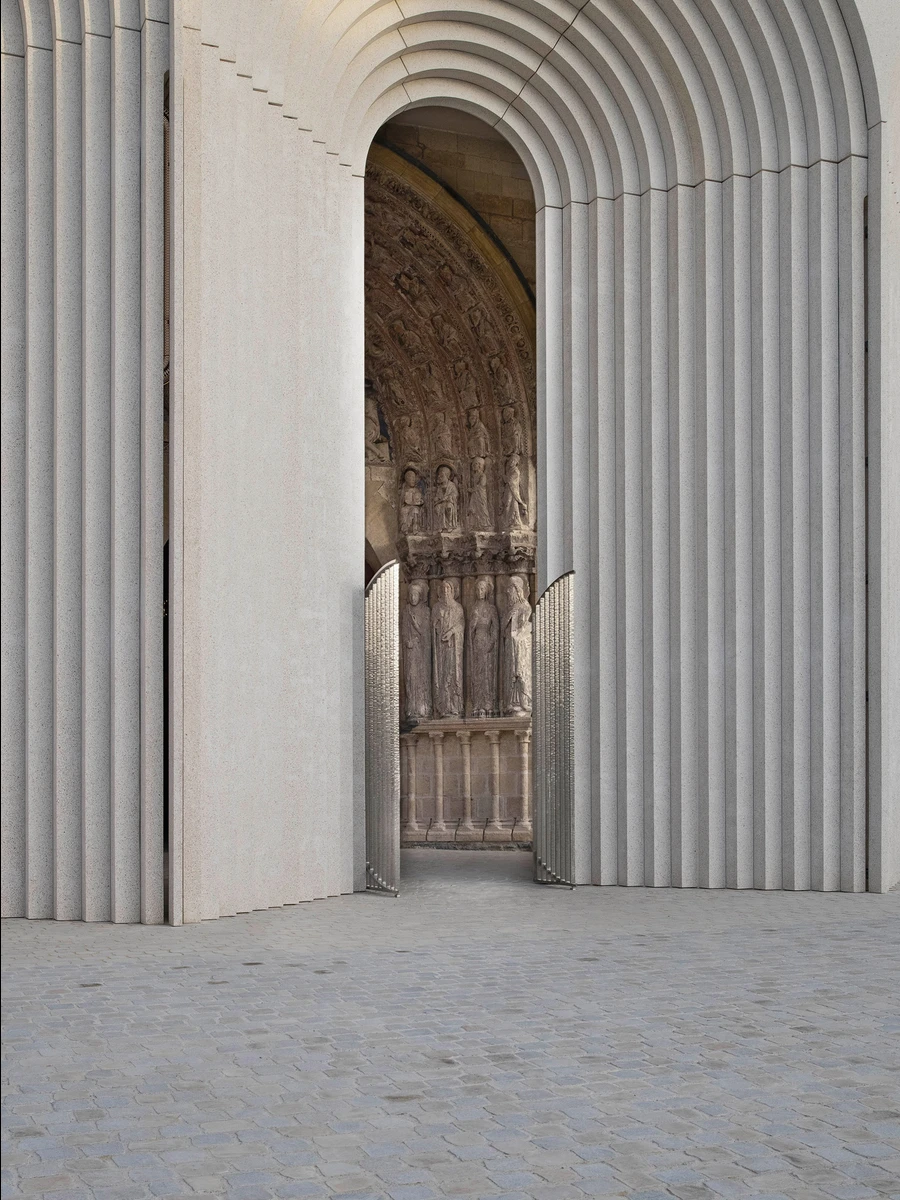
The structure serves a protective purpose as much as a liturgical one. The polychrome tympanum it encloses was carved in the 1600s, rediscovered during cleaning in 2009, and had been exposed without cover since its canopy was demolished in 1807. Within the gallery, warm evening light catches the carved figures and residual pigment in a way the open forecourt never could. The new concrete recedes at precisely the moment the medieval relief comes forward.
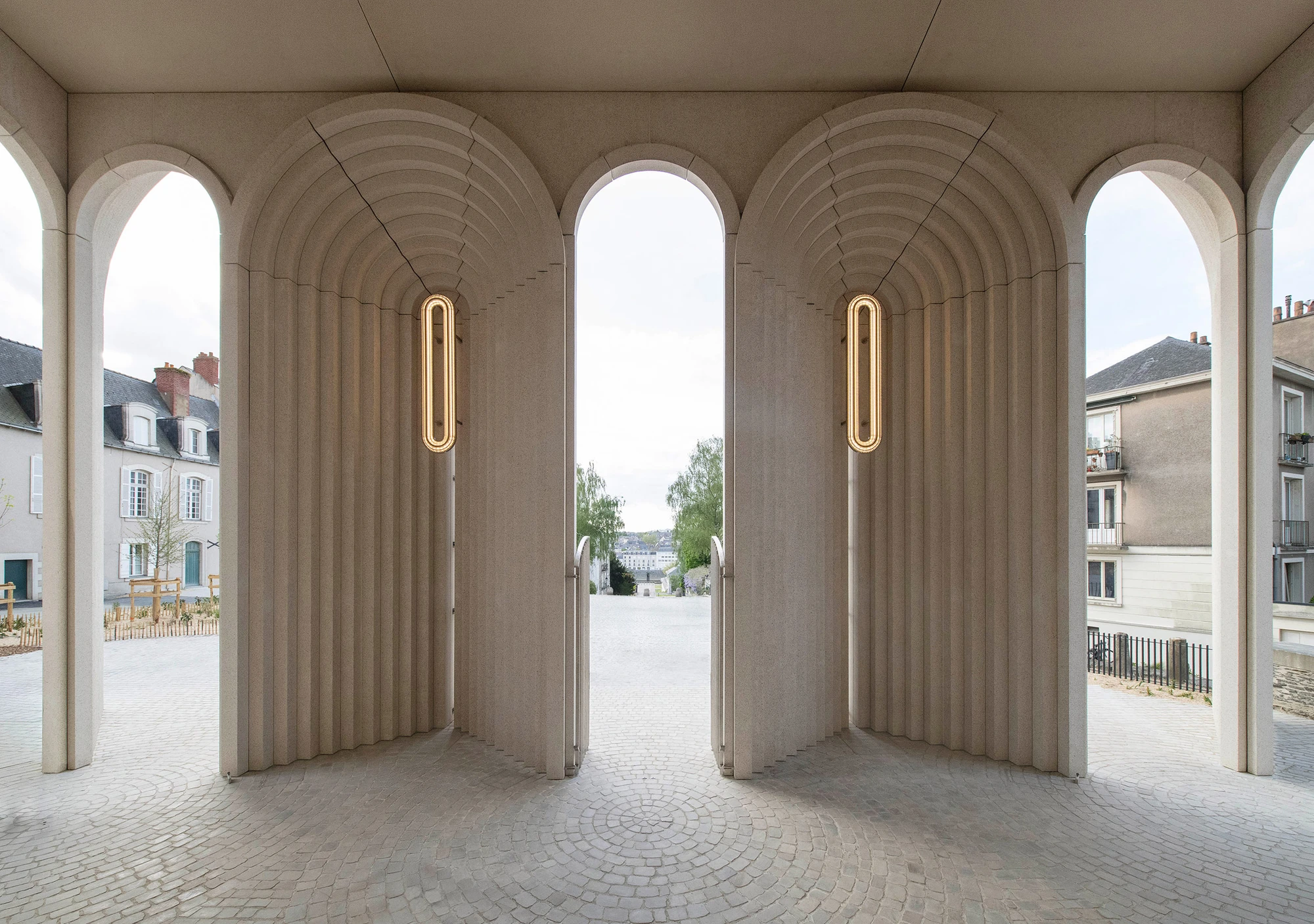
Between the piers, slender neon fixtures set flush to the concrete mark the lateral passages, visible from the city side as thin luminous verticals. They read as anachronistic in the best sense. From the public square, the new entrance sits lower than any element of the Gothic facade, its profile horizontal where everything behind it reaches upward. That decision, and the choice to build inward from the footprint of the original 13th-century canopy, was the project's primary act of restraint.
The addition has drawn public argument in Angers. Ouest-France described it as a "concrete UFO", and local opinion remains divided between those who read it as an intrusion and those who recognise in it a considered proposition about what continuity can look like when it refuses nostalgia. The debate is itself evidence that the building is doing something, rather than simply deferring to what was already there.