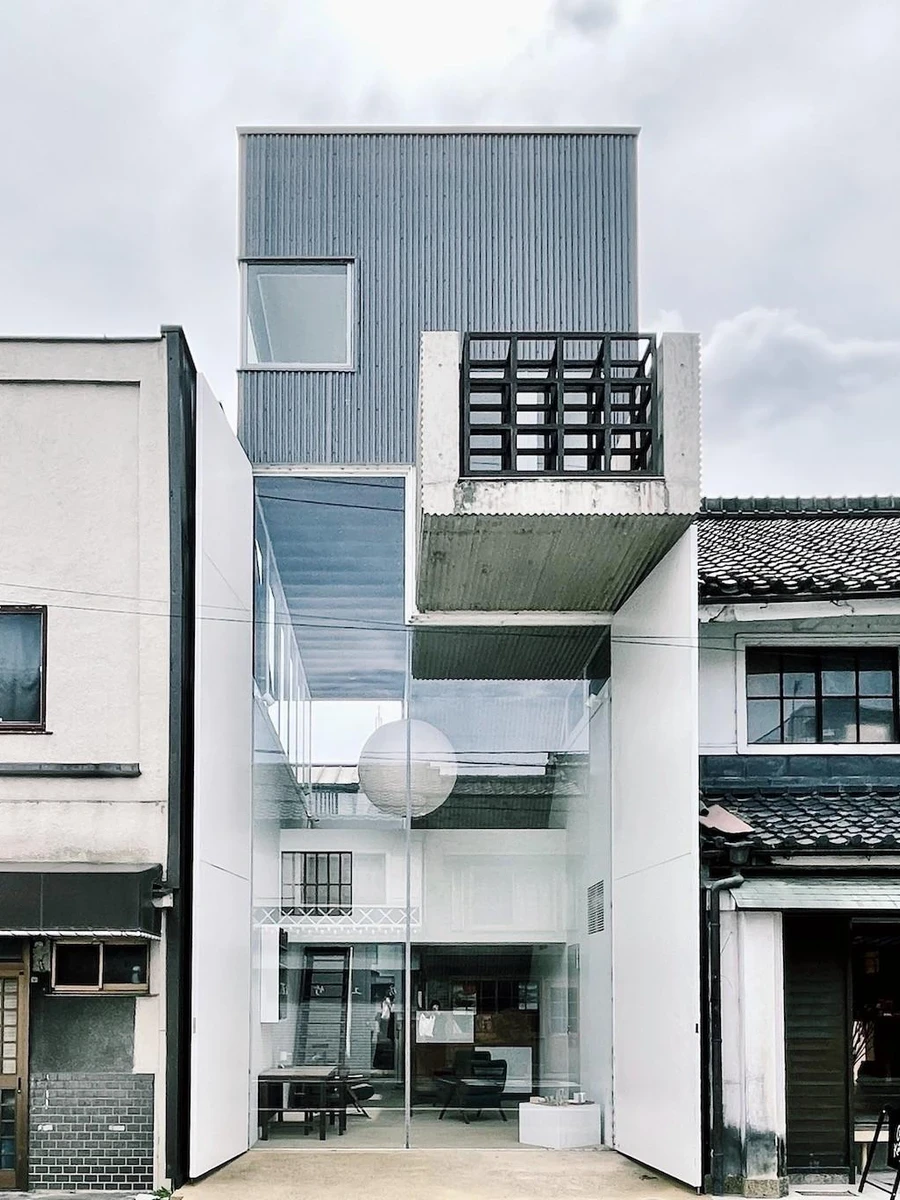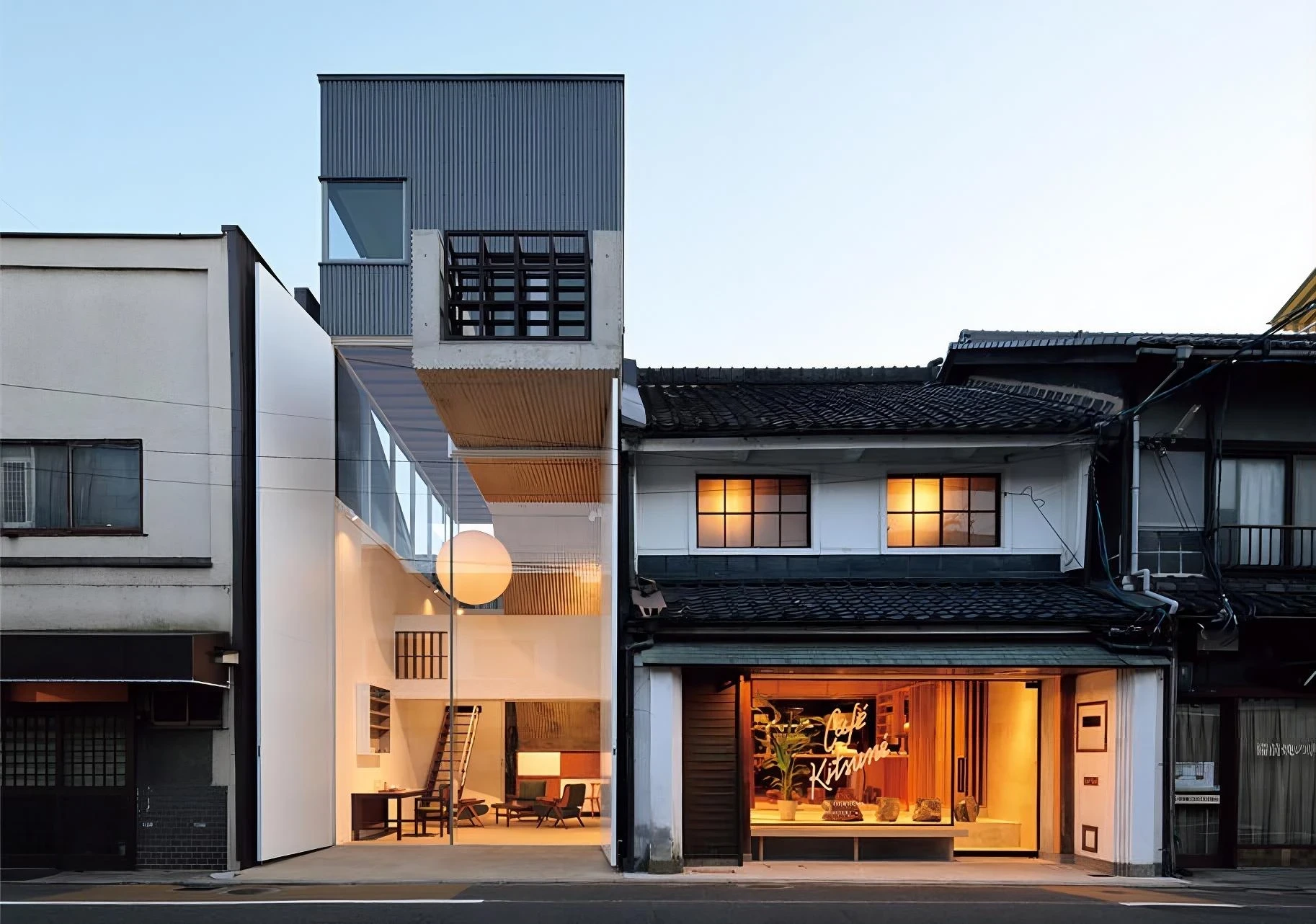
On a narrow plot between the museums and Korakuen gardens of Okayama in Japan, conceptual artist Jonathan Monk and Go Hasegawa design AA Okayama, a 214 sq m hotel of three buildings holding a single guest room.
The hotel sits on a tight street where the two-storey eaves of older merchant houses still dominate the skyline. The plot it occupies once held two small private homes. Rather than clear the site and start over, Monk reproduced the silhouettes of those vanished neighbours and added a third volume between them, a move that reads as both restoration and copy, a found-object gesture pulled into building scale.
Monk has spent three decades remaking the work of other artists, repainting, restaging, reshooting, treating imitation as a way to test what originality is worth. AA Okayama brings that practice into hotel form. The three volumes are not historic replicas but their shapes, a pitched-roof house, a flat-fronted shop, and a slim corrugated tower set between them, register the memory of the block without pretending to belong to it.
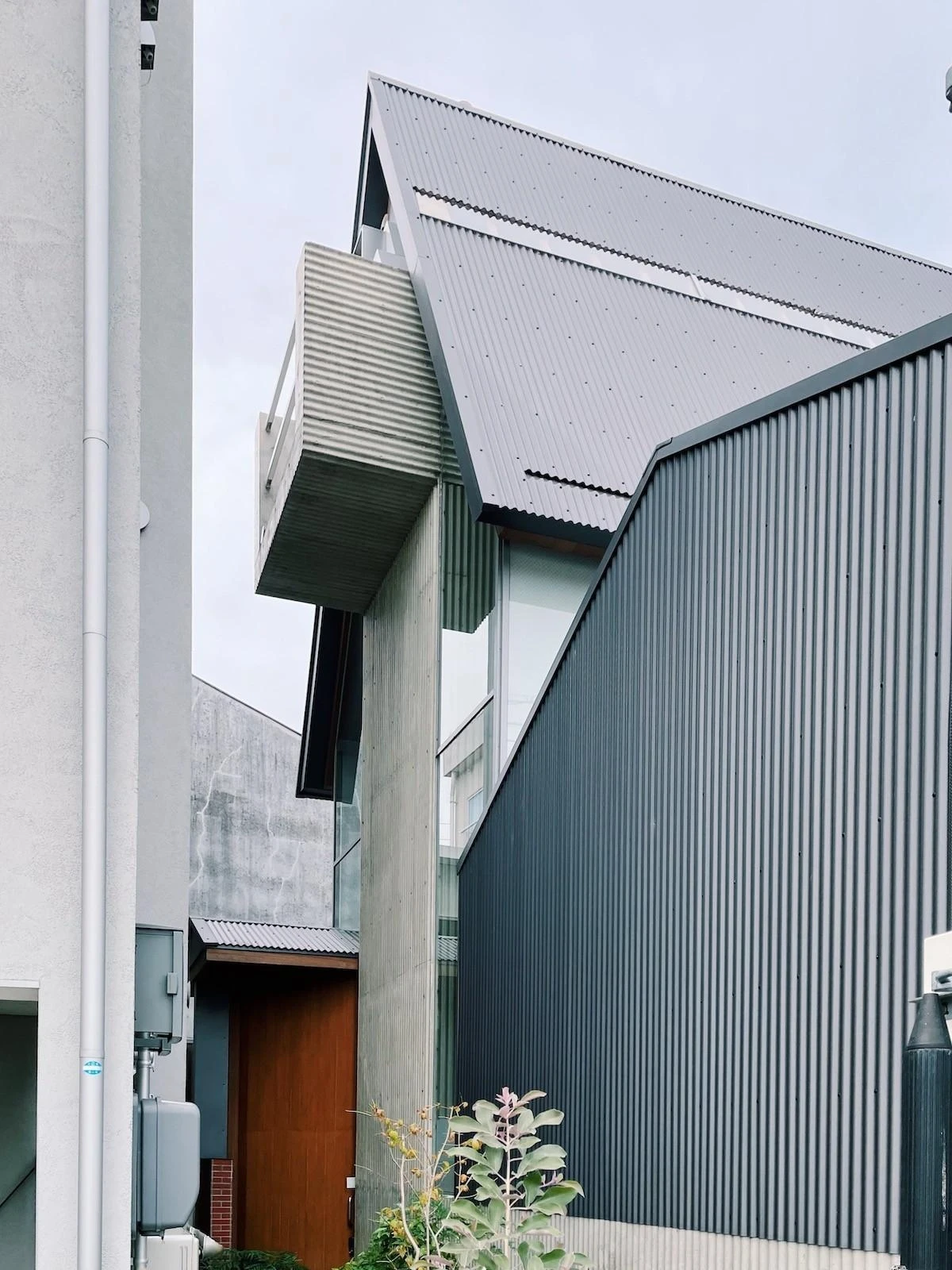
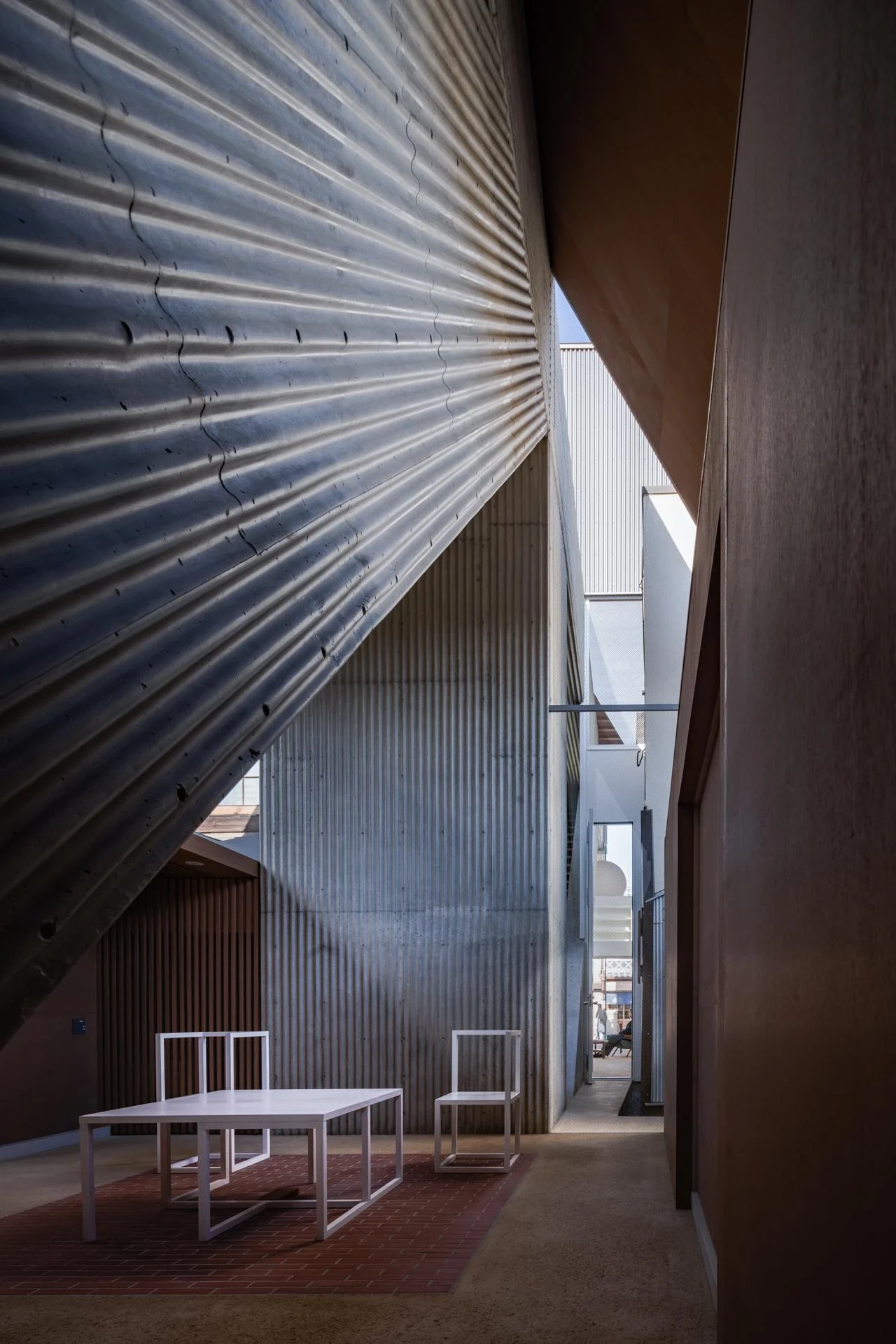
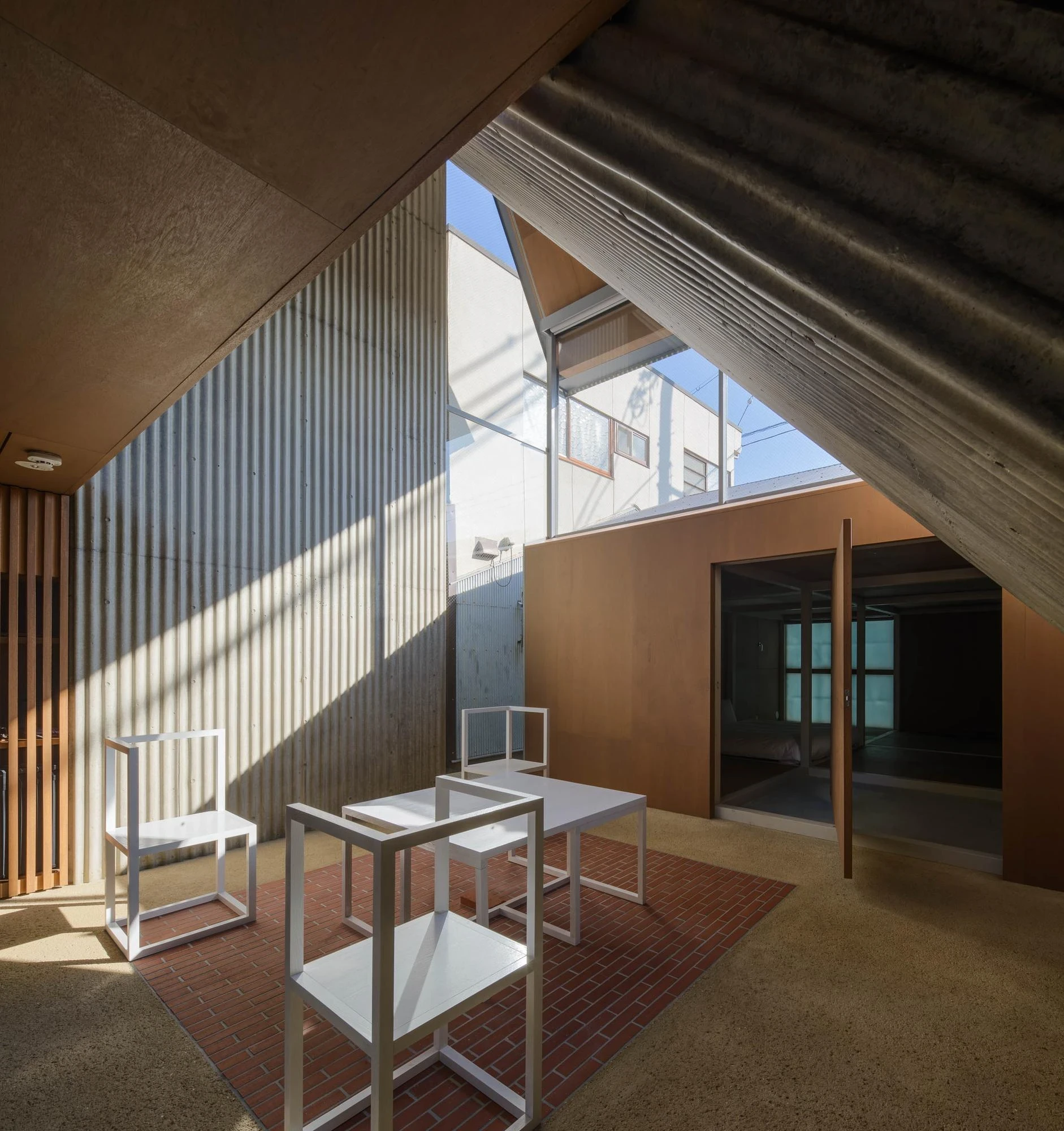
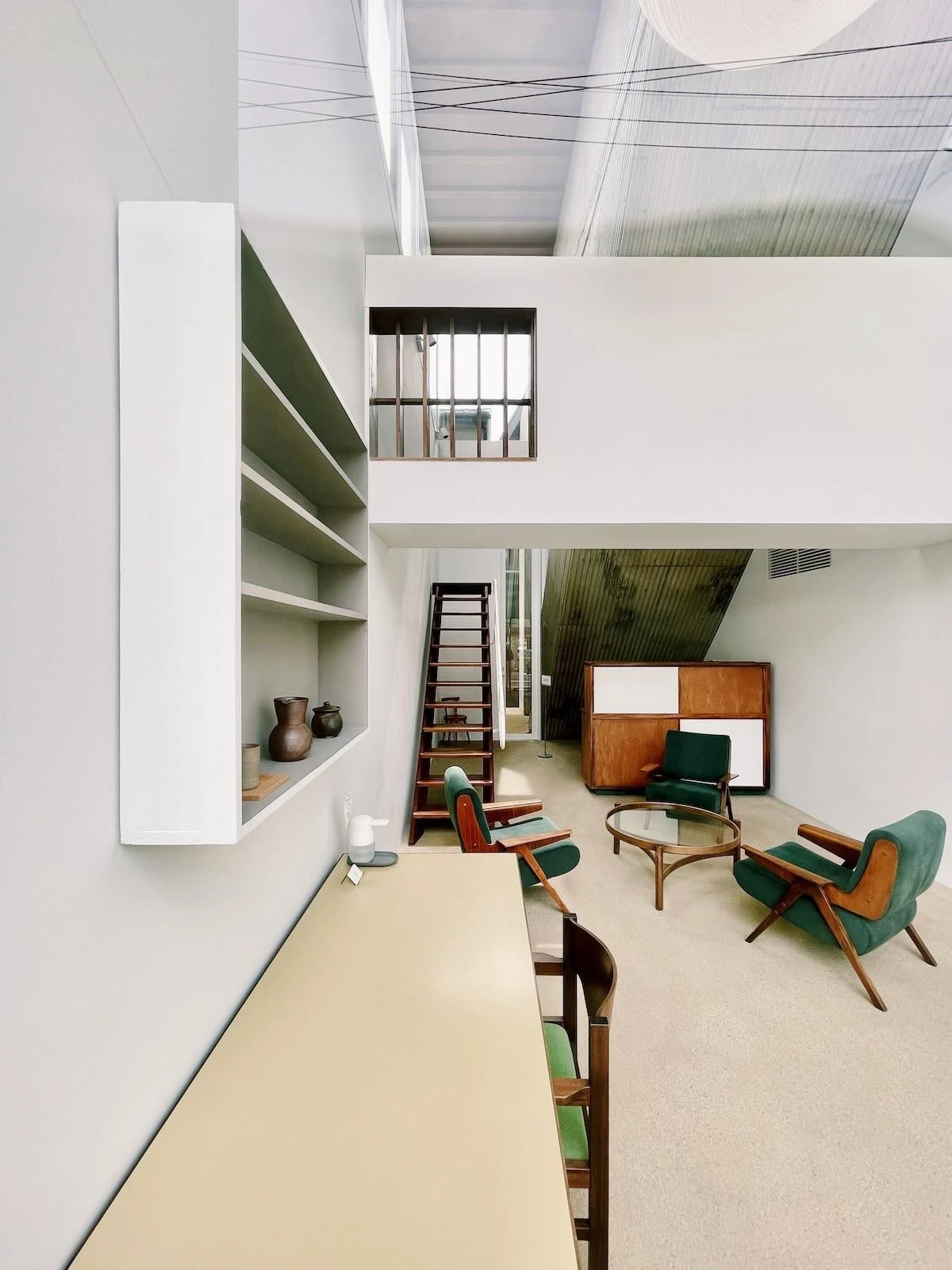
Outside, the cladding swerves between registers. Corrugated metal pleats along one side wall and folds inward to form the roof of the central building, where it droops in a slow catenary curve over a brick-paved courtyard, lit through gaps cut between the volumes. A glass facade reveals the deep section of the ground floor to the street, with mid-century lounge chairs, a low table, and a steep ship's ladder visible from the pavement.
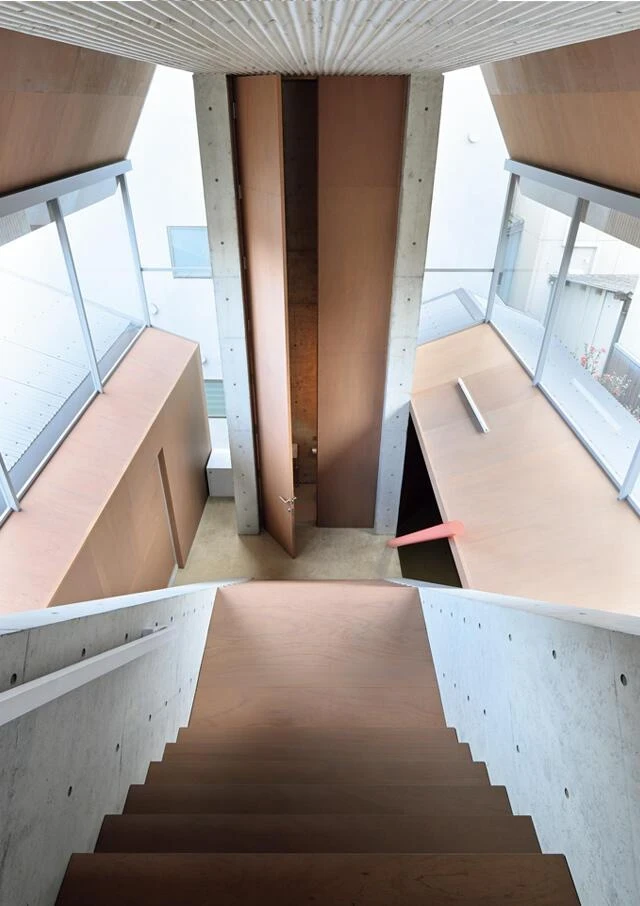
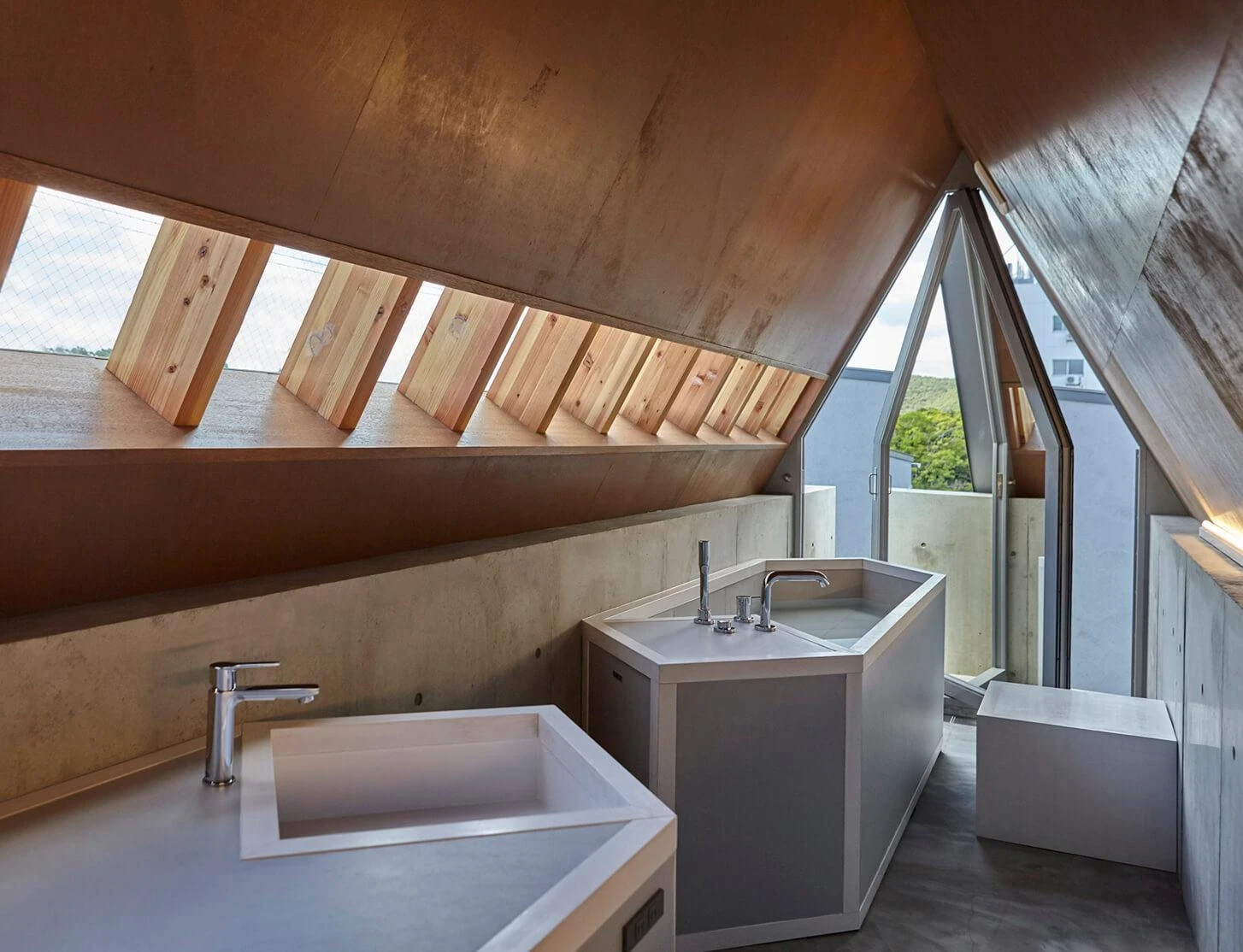
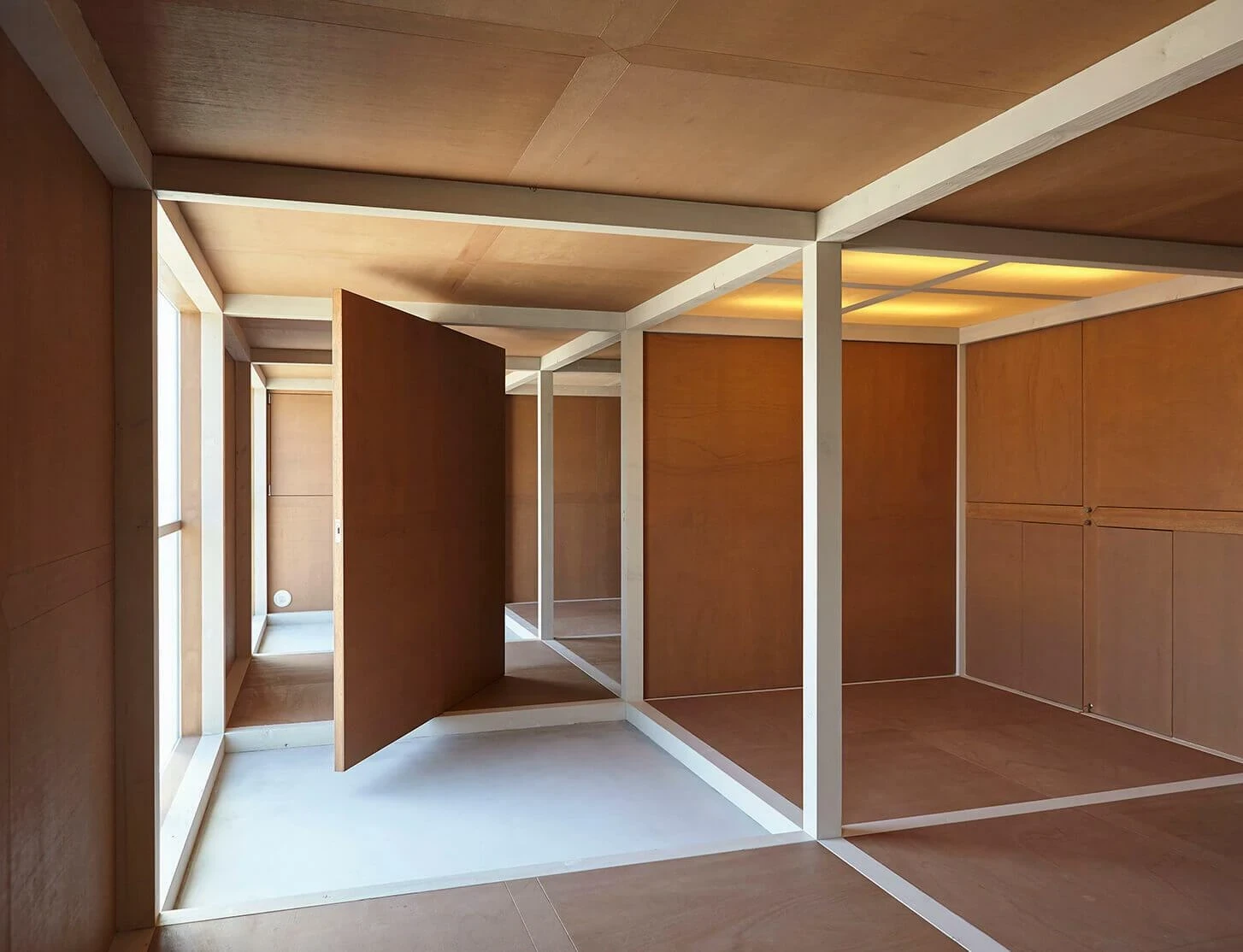
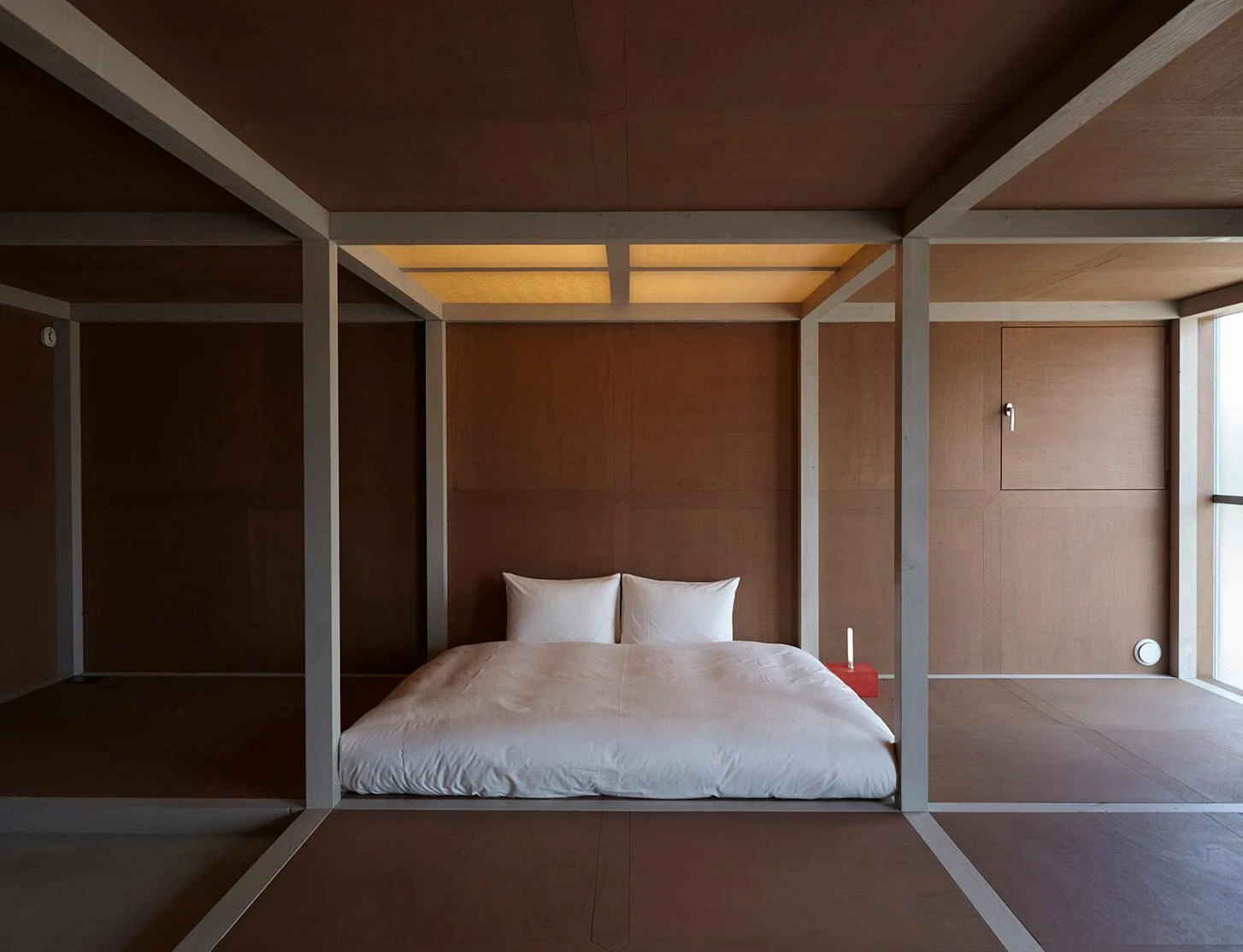
The interiors are lined almost entirely in pale plywood and lauan, cut into a grid of slender white-painted timbers that frame doorways, sleeping alcoves, and storage cabinets like a full-scale construction drawing. A single ground-floor lounge holds Brazilian modernist chairs around a tea table. Upstairs, a low futon sits inside a plywood frame, a red lacquered box beside it carrying one candle. At the top, under the pitched corrugated roof, a bathroom opens onto a triangular balcony through a window cut to follow the gable.
The Ishikawa Foundation's A&A programme commissions artists to design residences for visitors, treating Okayama itself as the gallery and the buildings as the way a guest enters it. Monk's contribution turns that brief inside out. The hotel reproduces its own neighbourhood at one-to-one scale, then asks a single guest to occupy the result, walking nightly between three houses that hold one room.