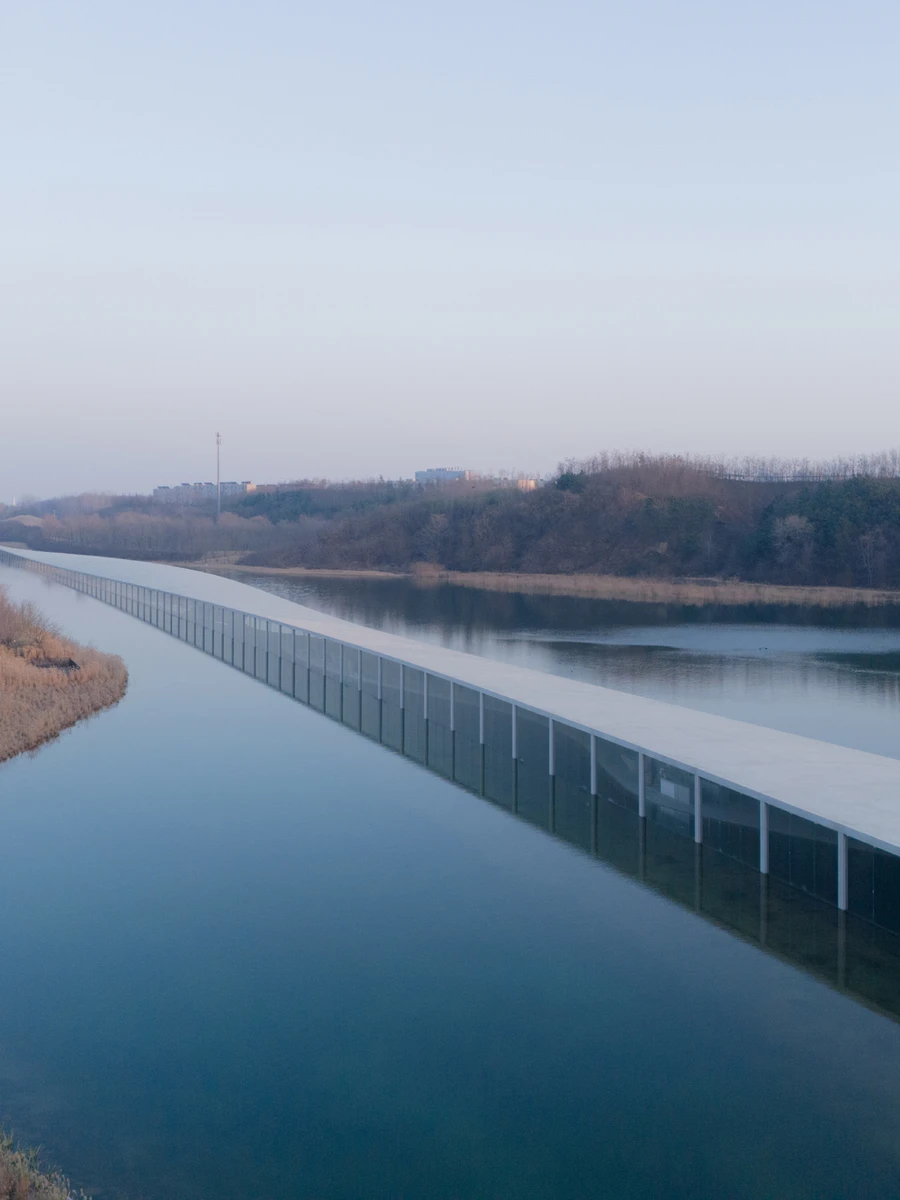
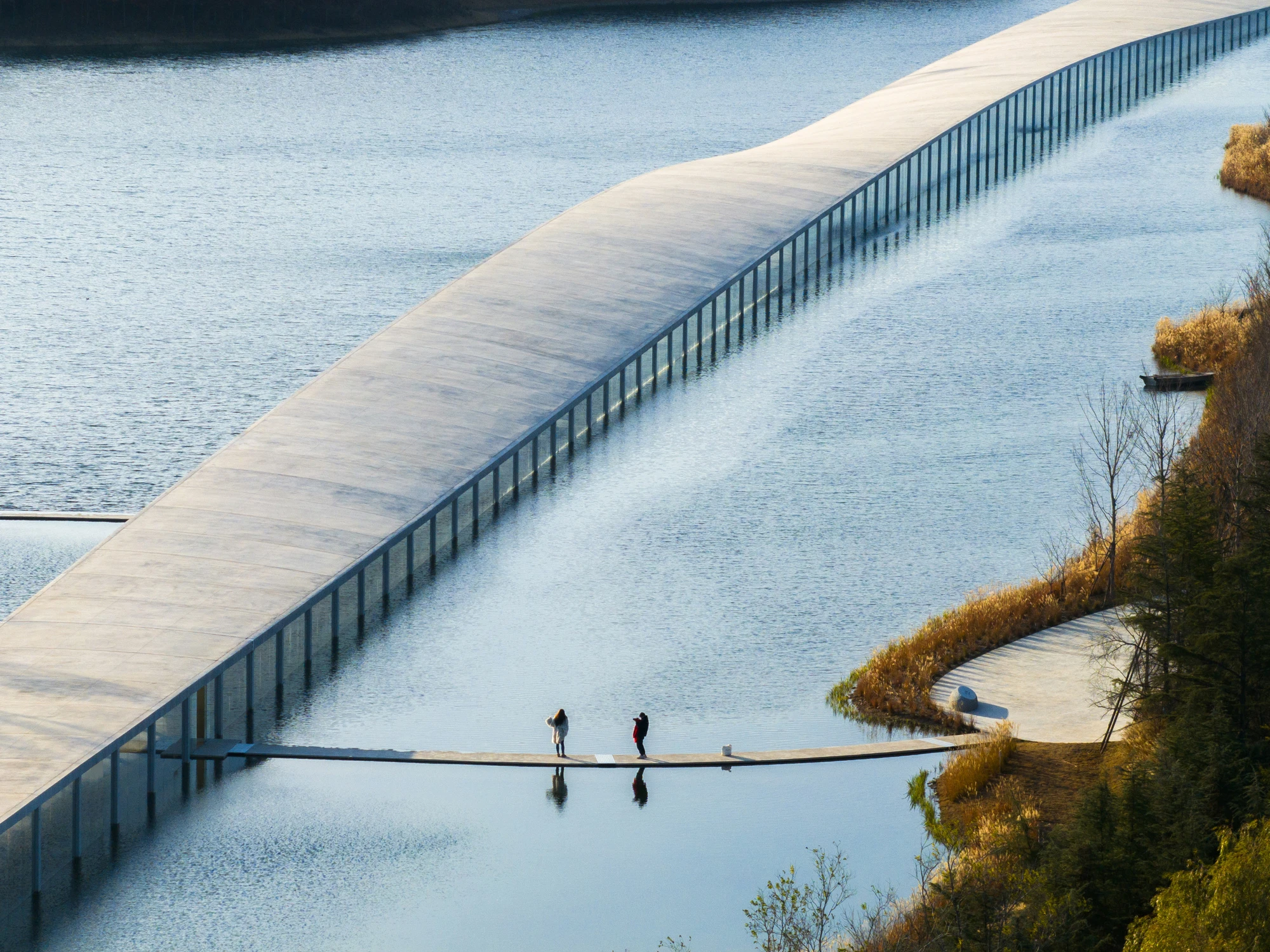
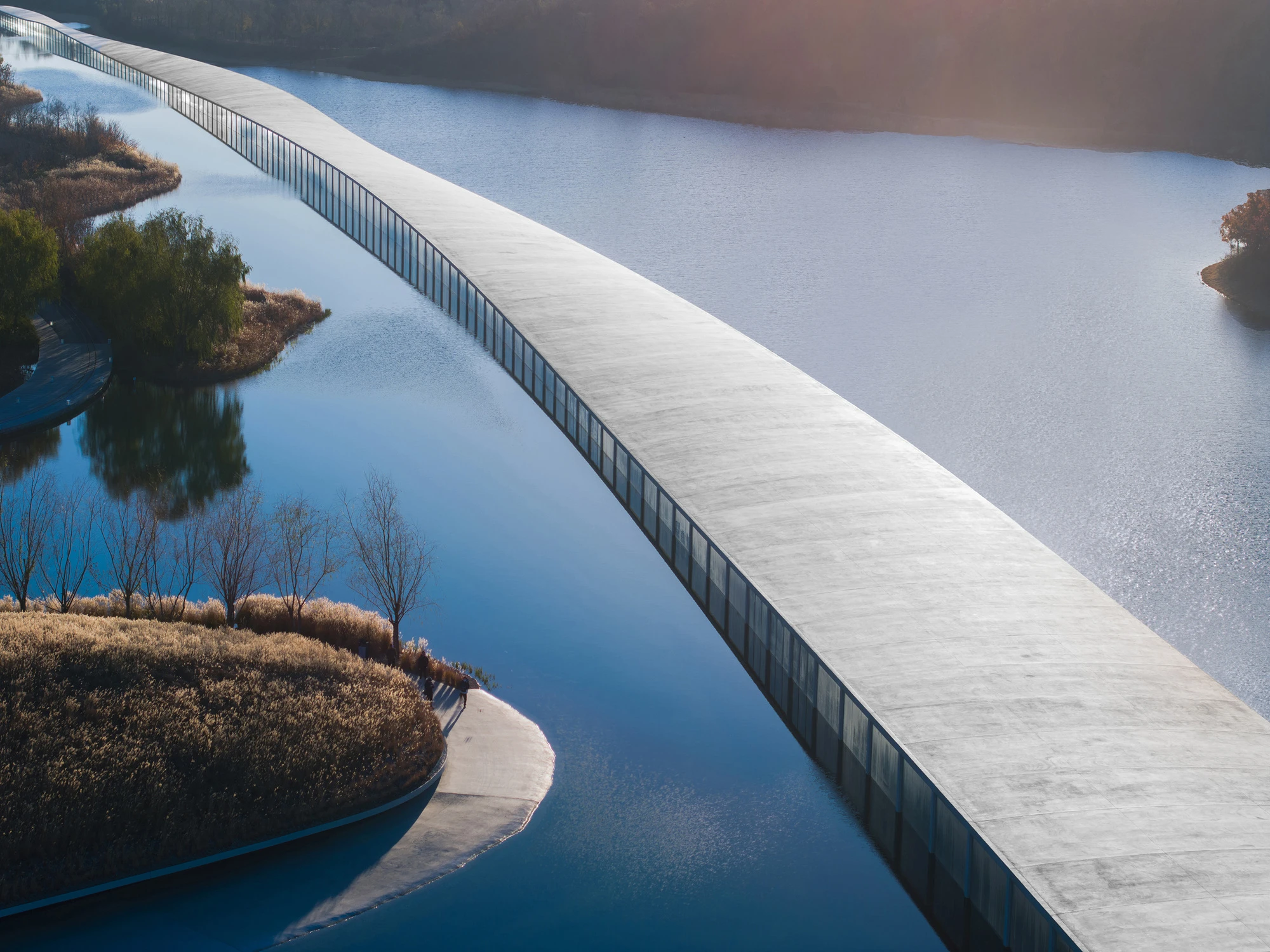
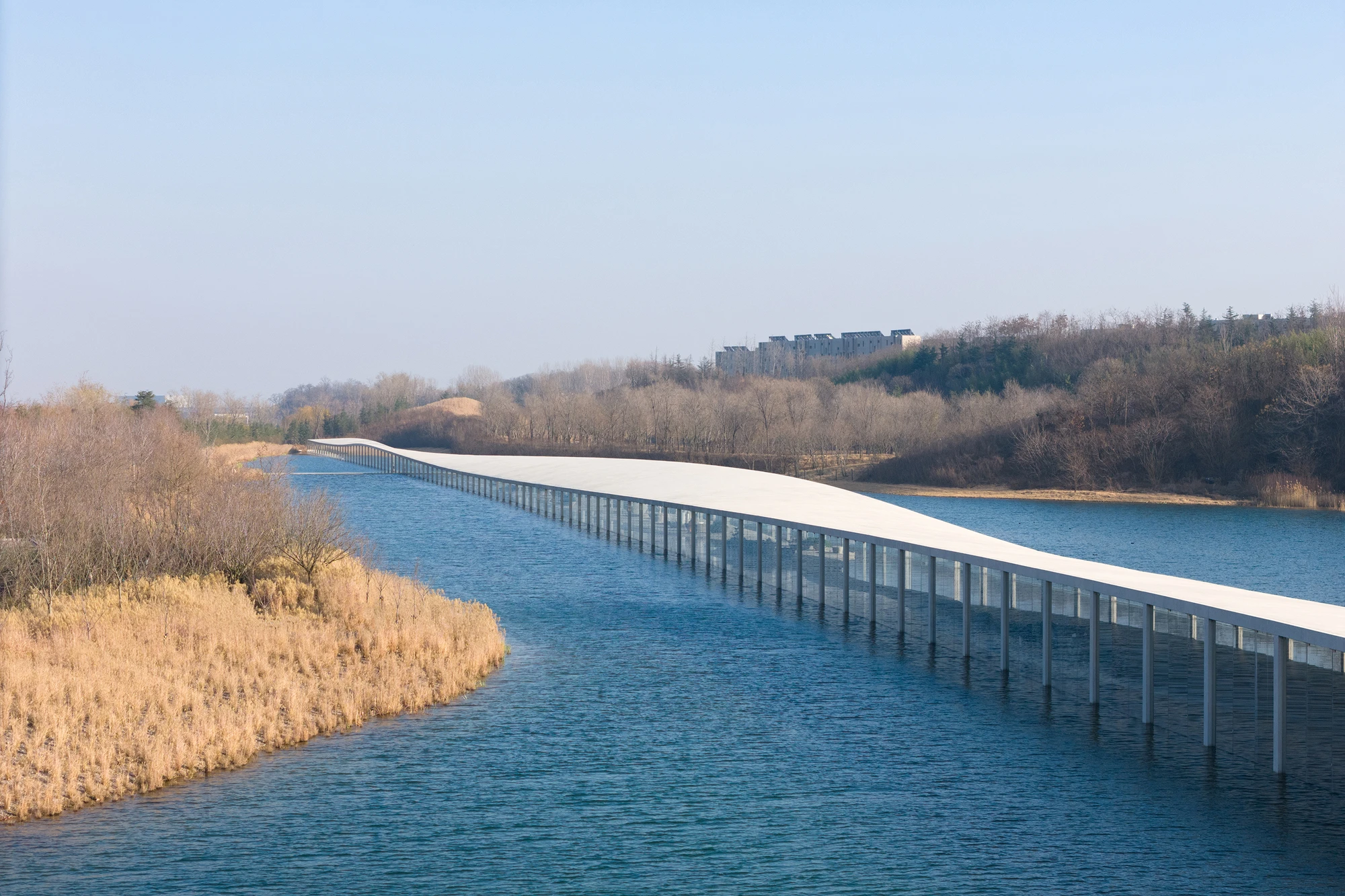
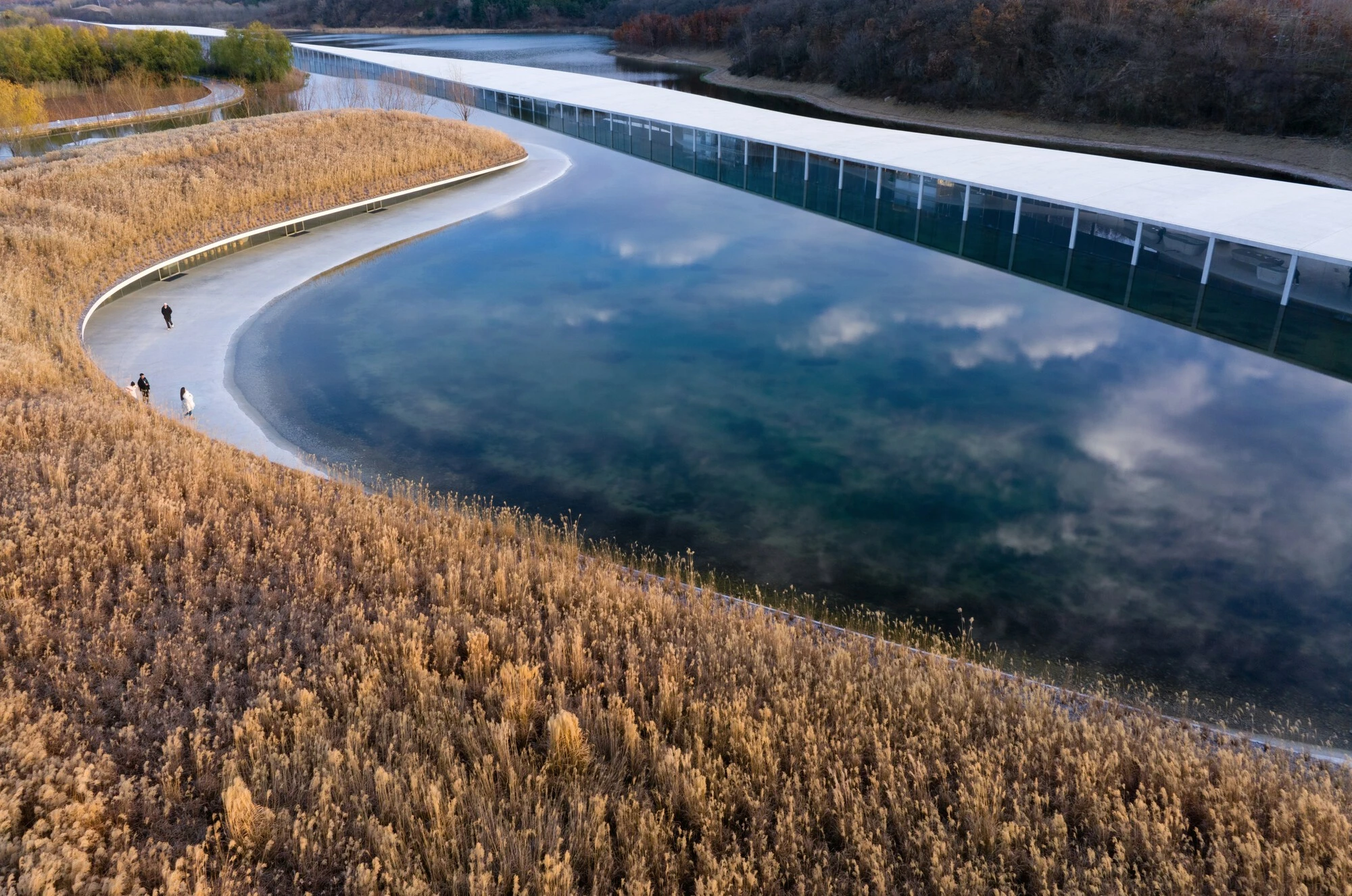
A kilometre of building brushes the surface of an artificial lake in Rizhao, Shandong in China, where junya ishigami + associates places the Zaishui Art Museum as Ishigami's "gentle giant."
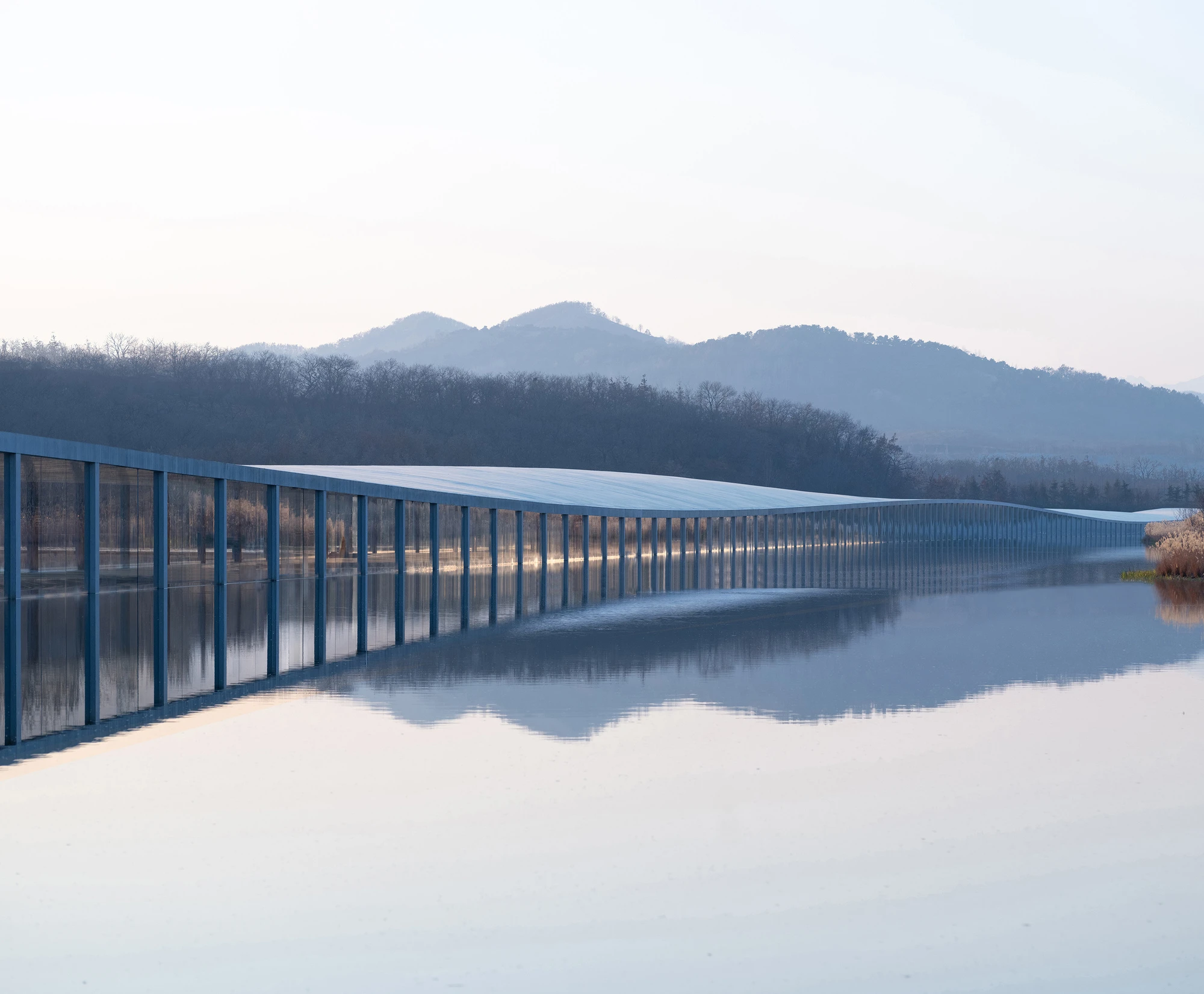
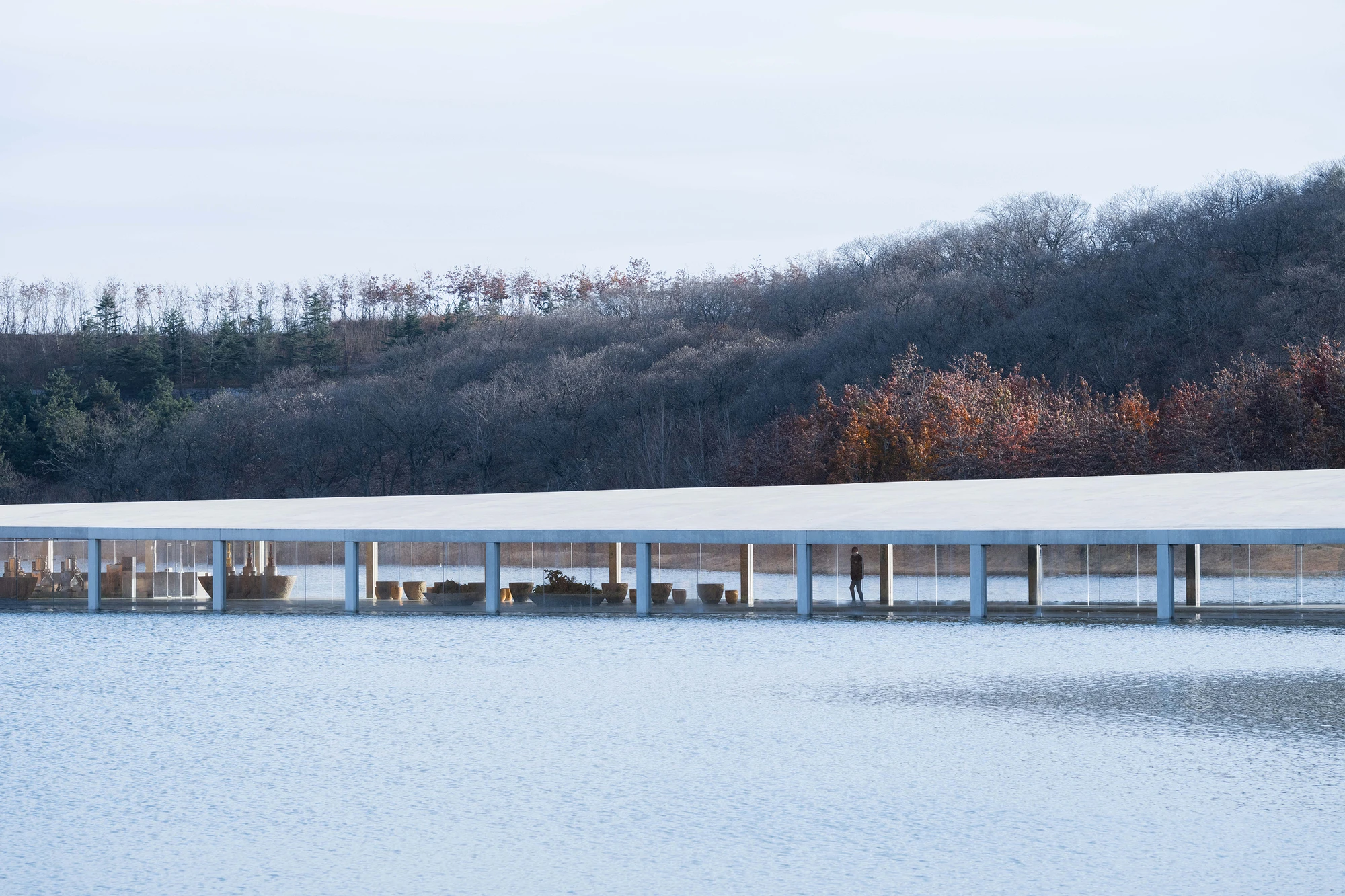
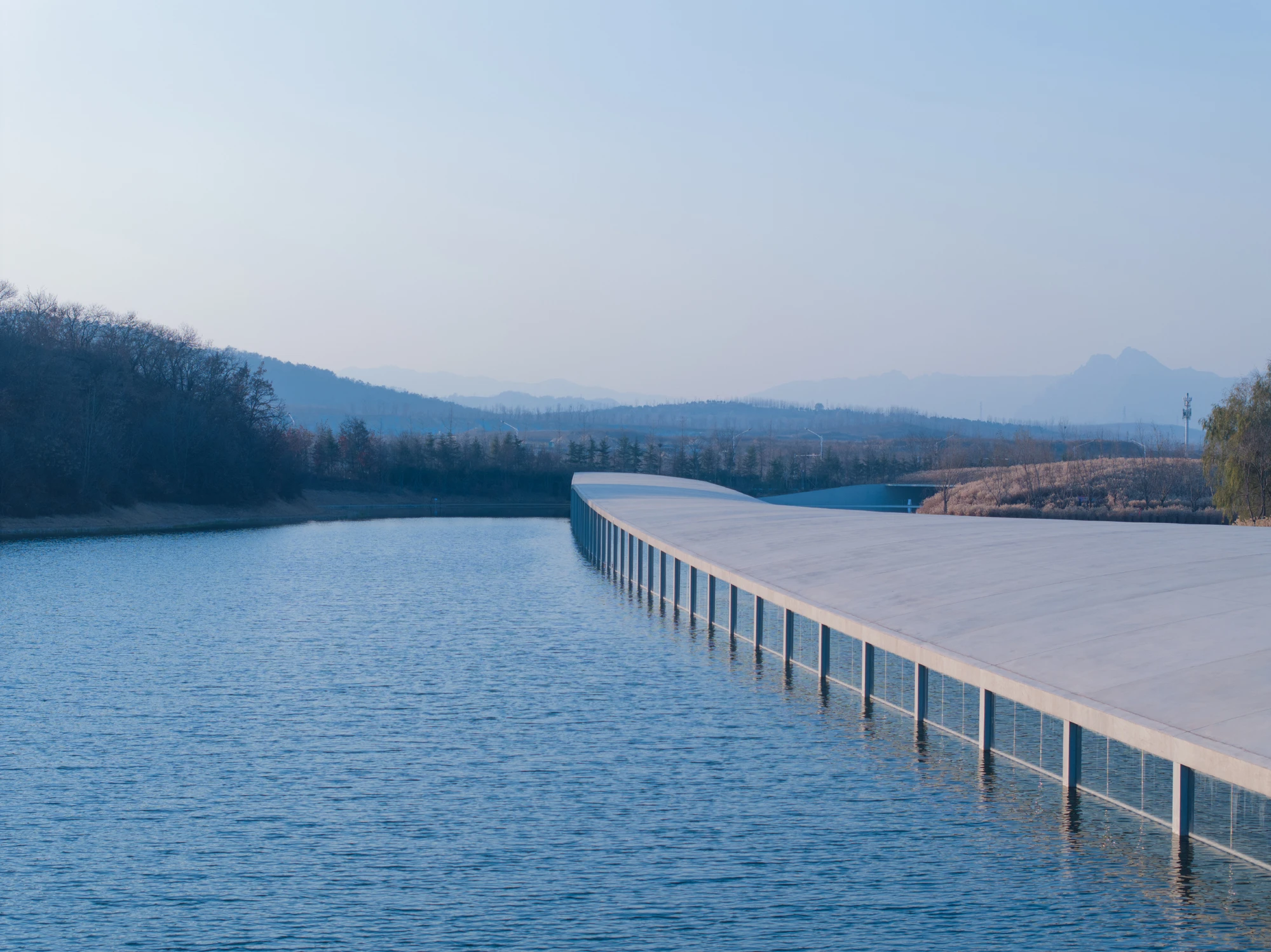
"When contemplating architecture in China, that country's vast, boundless landscapes can pose a daunting challenge," Ishigami writes. "To build with the diminutive beast that is architecture any kind of equal relationship with the immense environment that is China is very difficult indeed. There is something lonely about Chinese buildings that stand in isolation as if dropped into their limitless surroundings." The Zaishui Art Museum's answer is to not stand in isolation. Rows of slender columns stand directly in the water. A sash-like roof — sometimes hanging low against the surface, sometimes opening generously toward the sky — extends the exterior into the interior. The lake is drawn inside the building itself.
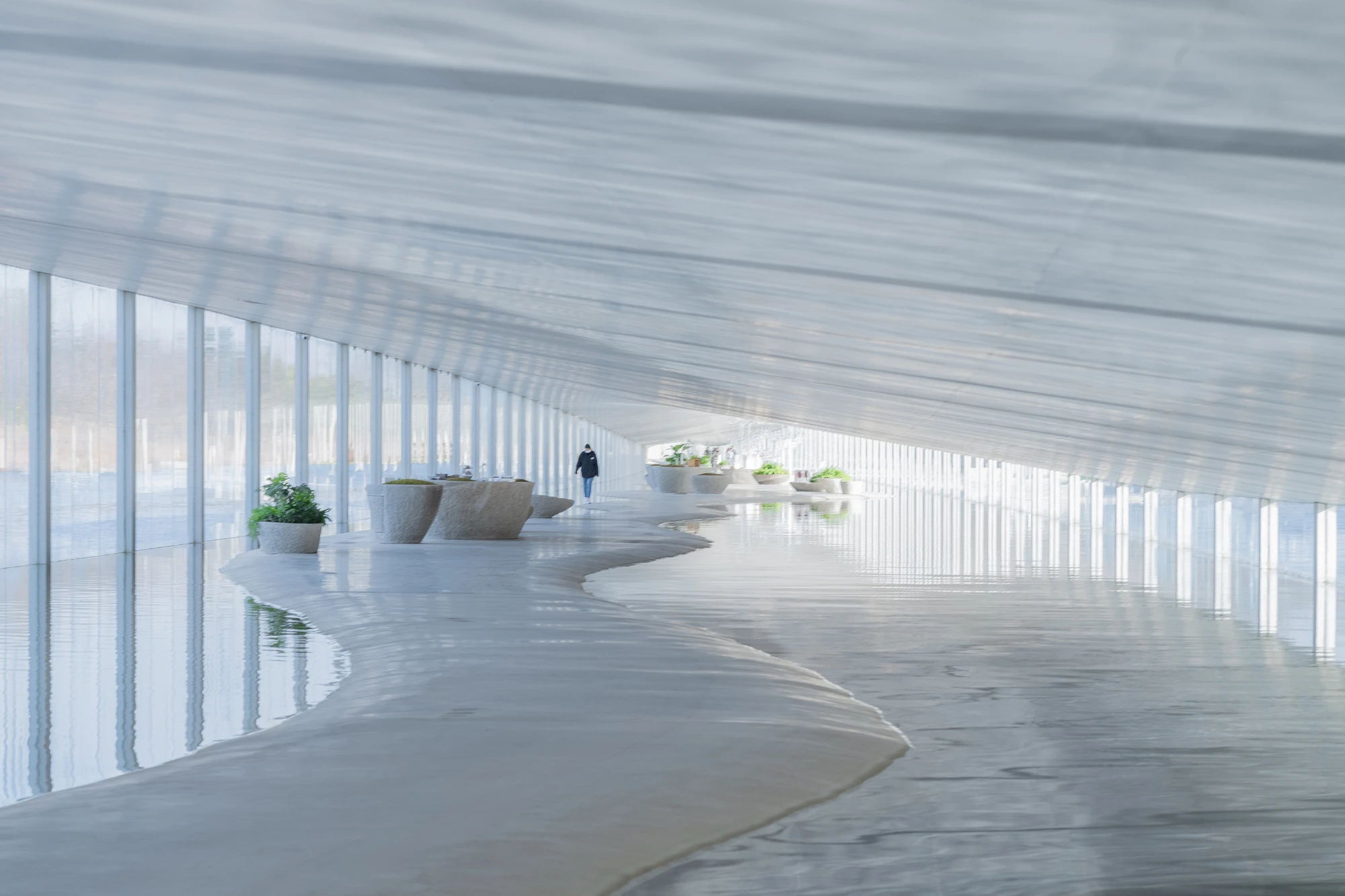
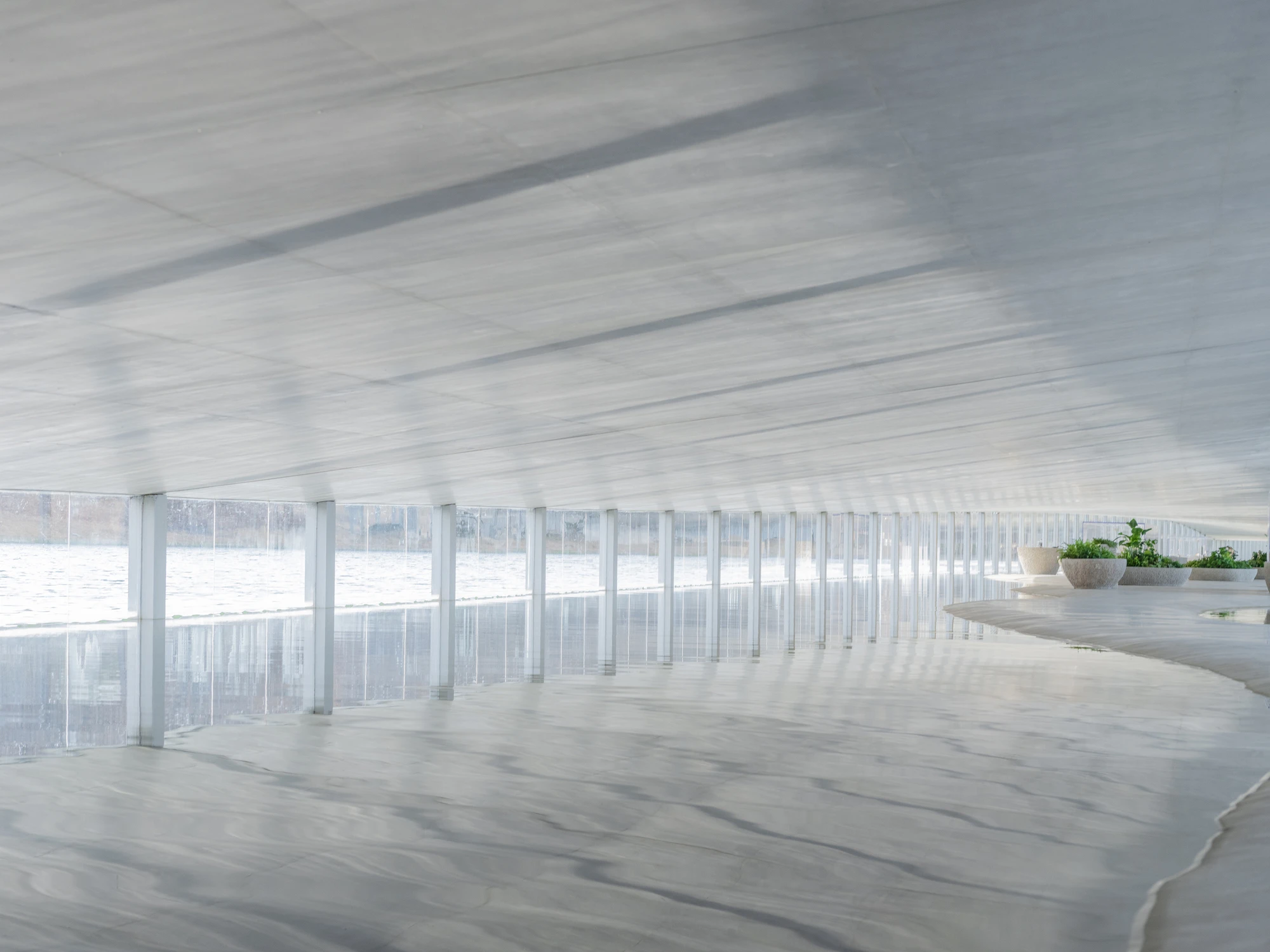
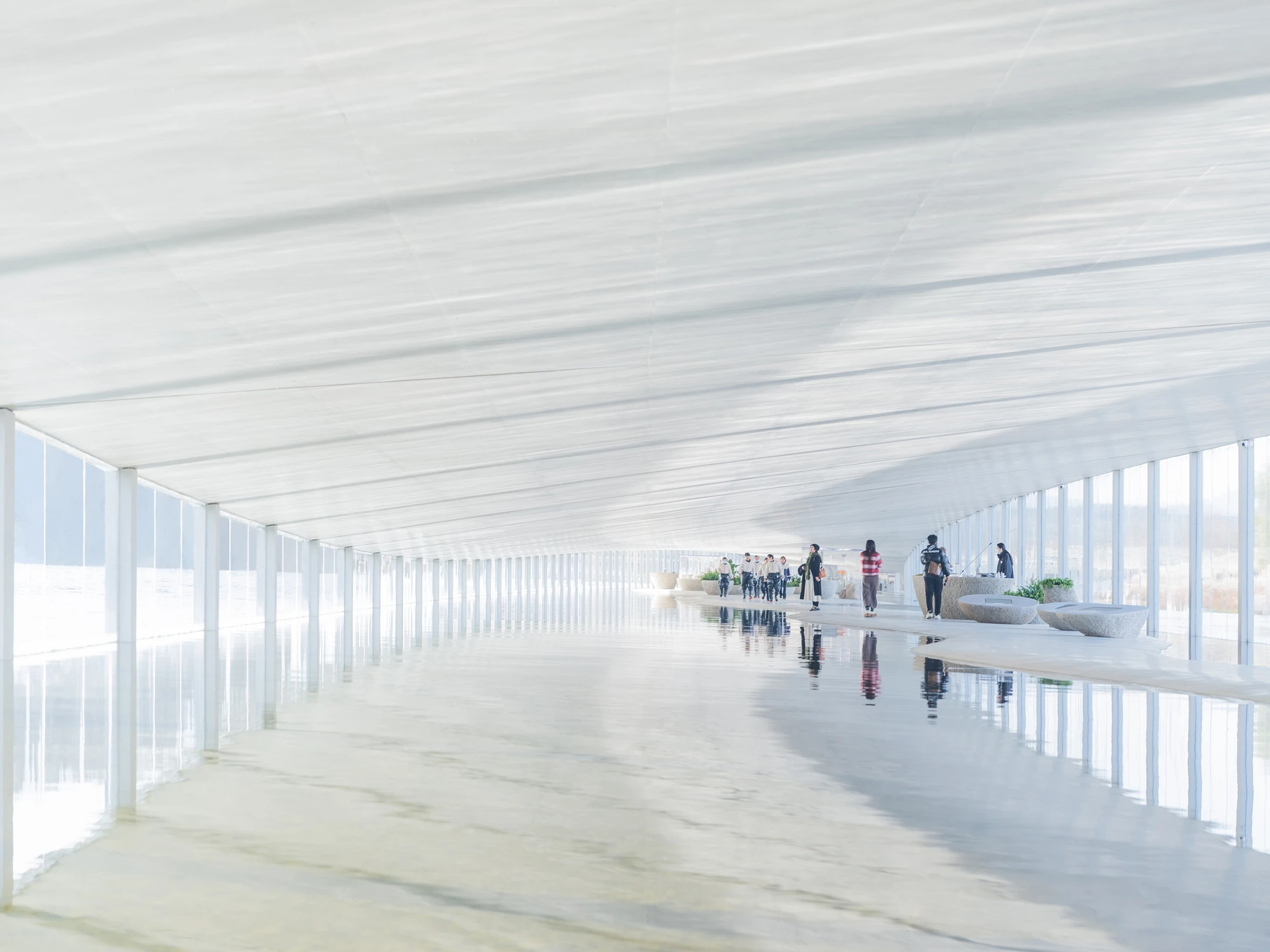
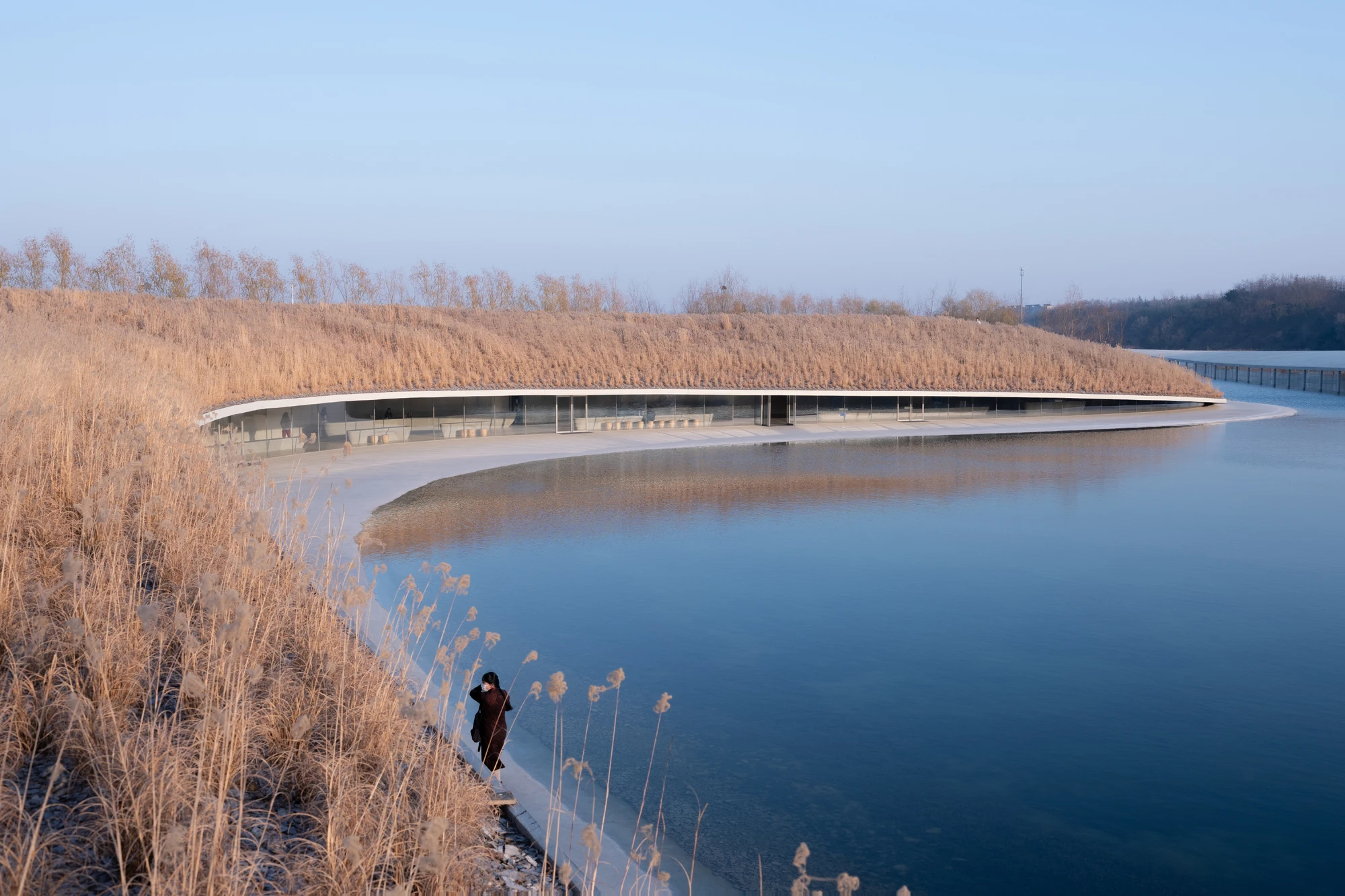
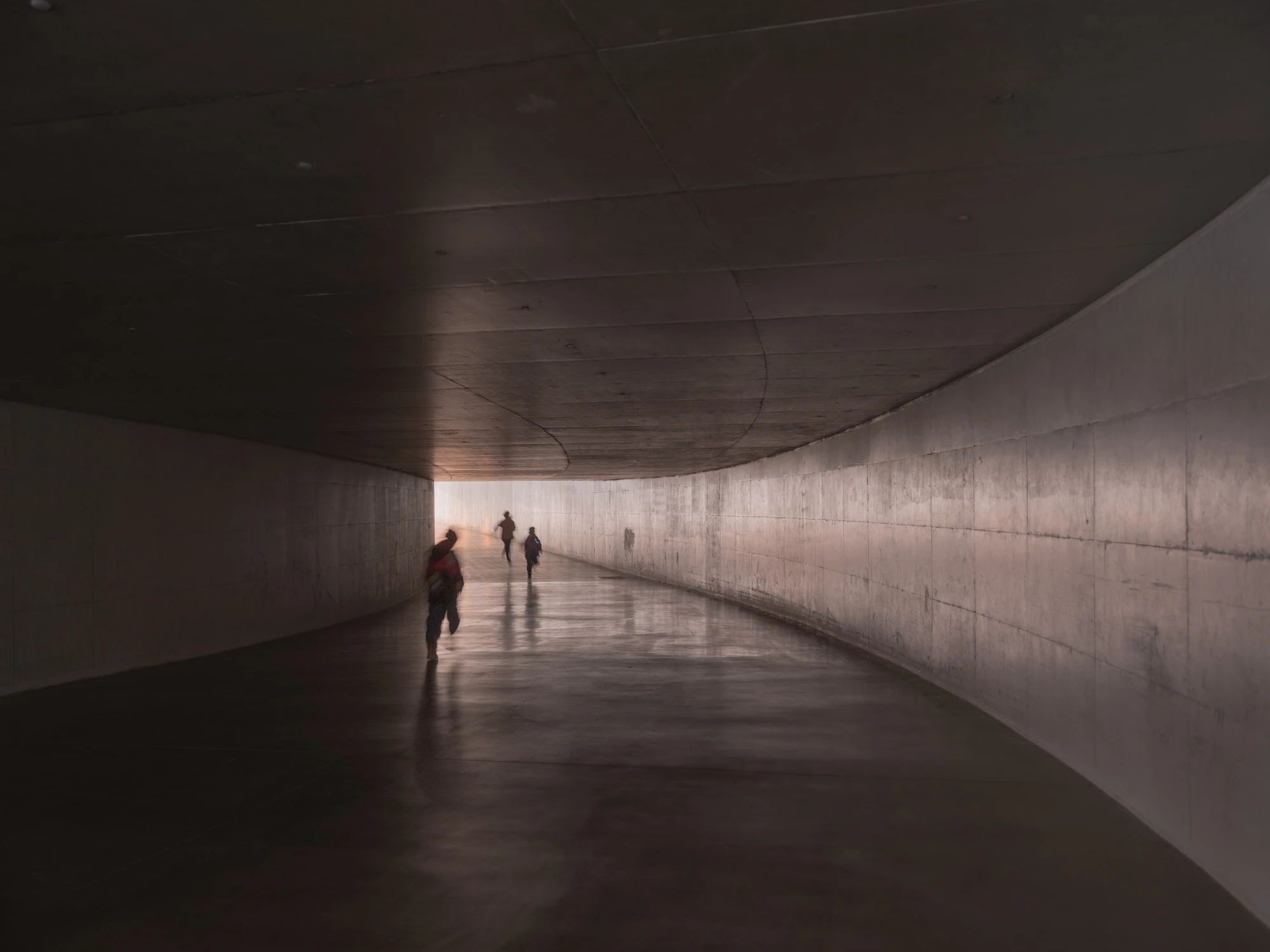
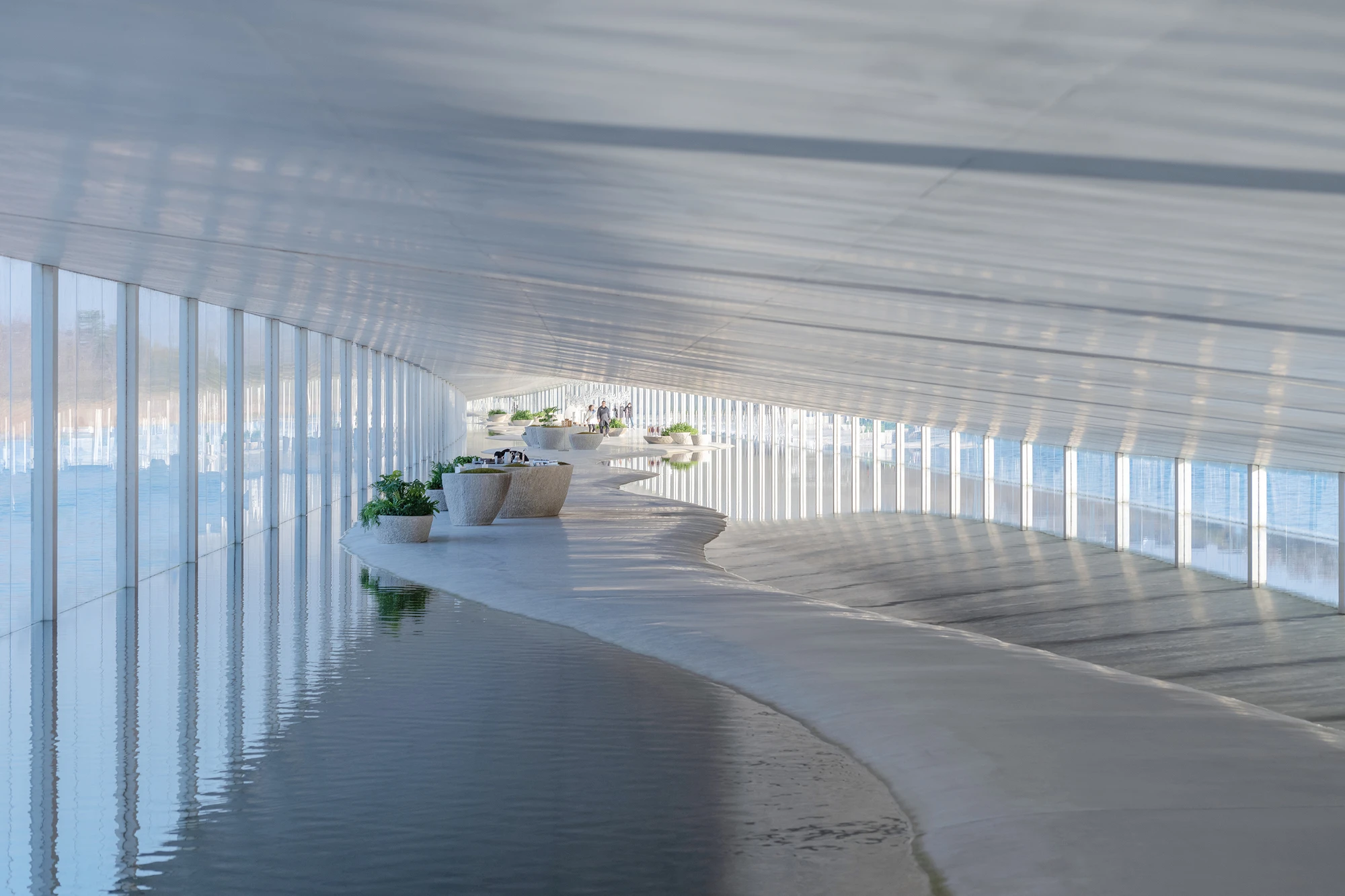
The glass panels fitted between the columns can be opened in mild weather, letting a breeze in. The lower sections, submerged underwater, have gaps that channel lake water into the building. In winter the lake outside freezes; the liquid beneath the ice flows inside through those gaps and pools there, Ishigami writes, "in anticipation of spring." The floor is imagined as new land, "extending to give a sense of skating on that lake surface, an environment on which humans cannot hope to walk." The museum's 20,000 square metres of exhibition, visitor and shopping space sit within this spatial proposition, in a building whose ceiling varies from high — "allowing in plentiful light and the surrounding scenery" — to low, where the ceiling reflects on the water and "light slips, almost crawling across the water's surface."
The structure is steel-reinforced concrete, designed from December 2016 and constructed through to December 2023 with XinY Structural Consultants. The building's scale — identical to the lake — is what allows it to avoid the architectural loneliness Ishigami diagnoses in the Chinese built environment. "A long piece of architecture identical in scale to the vast landscape appears like a streak of wind passing over the lake." That image is not a metaphor for something else. It describes exactly what the photographs by arch-exist show.