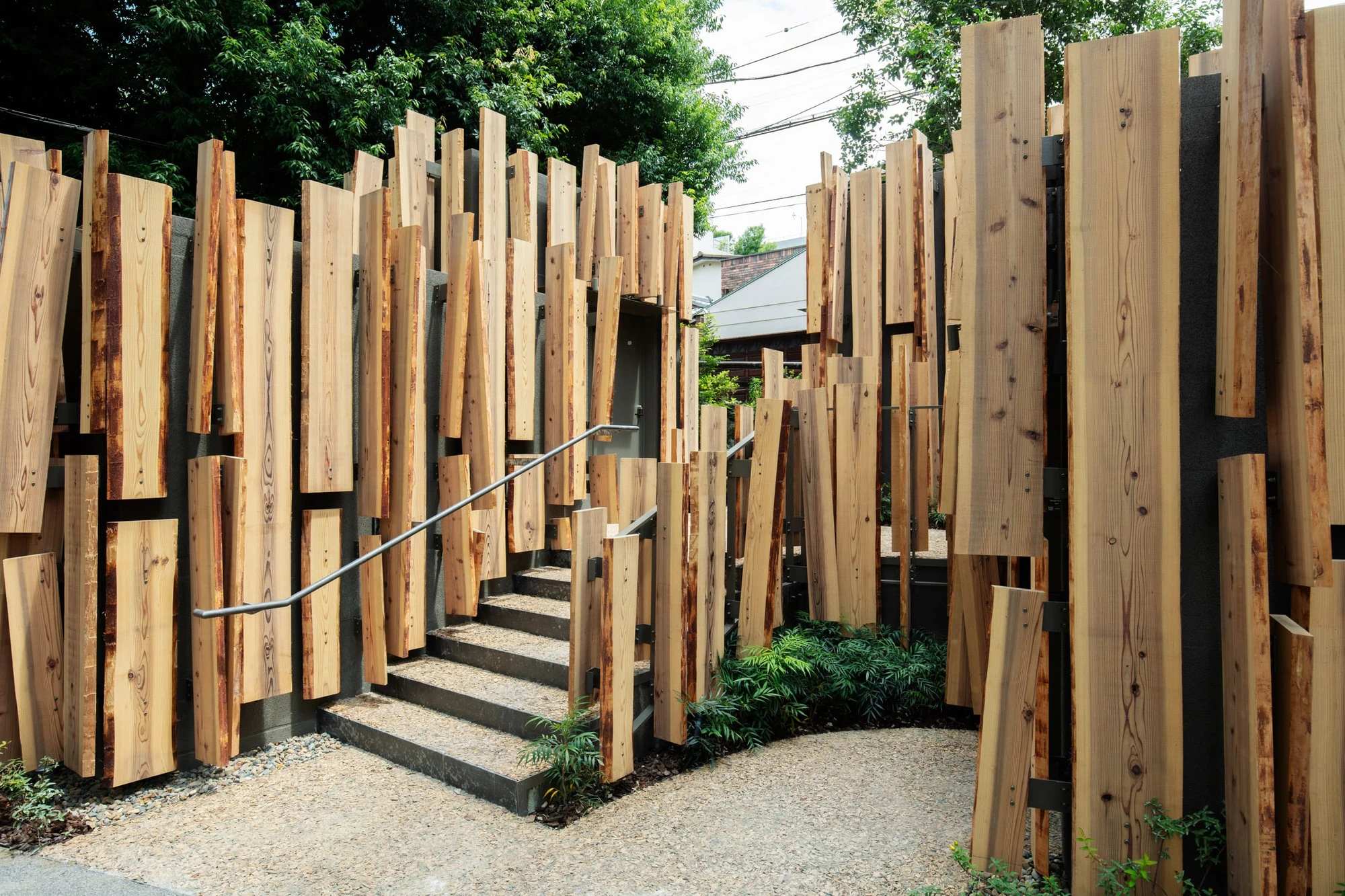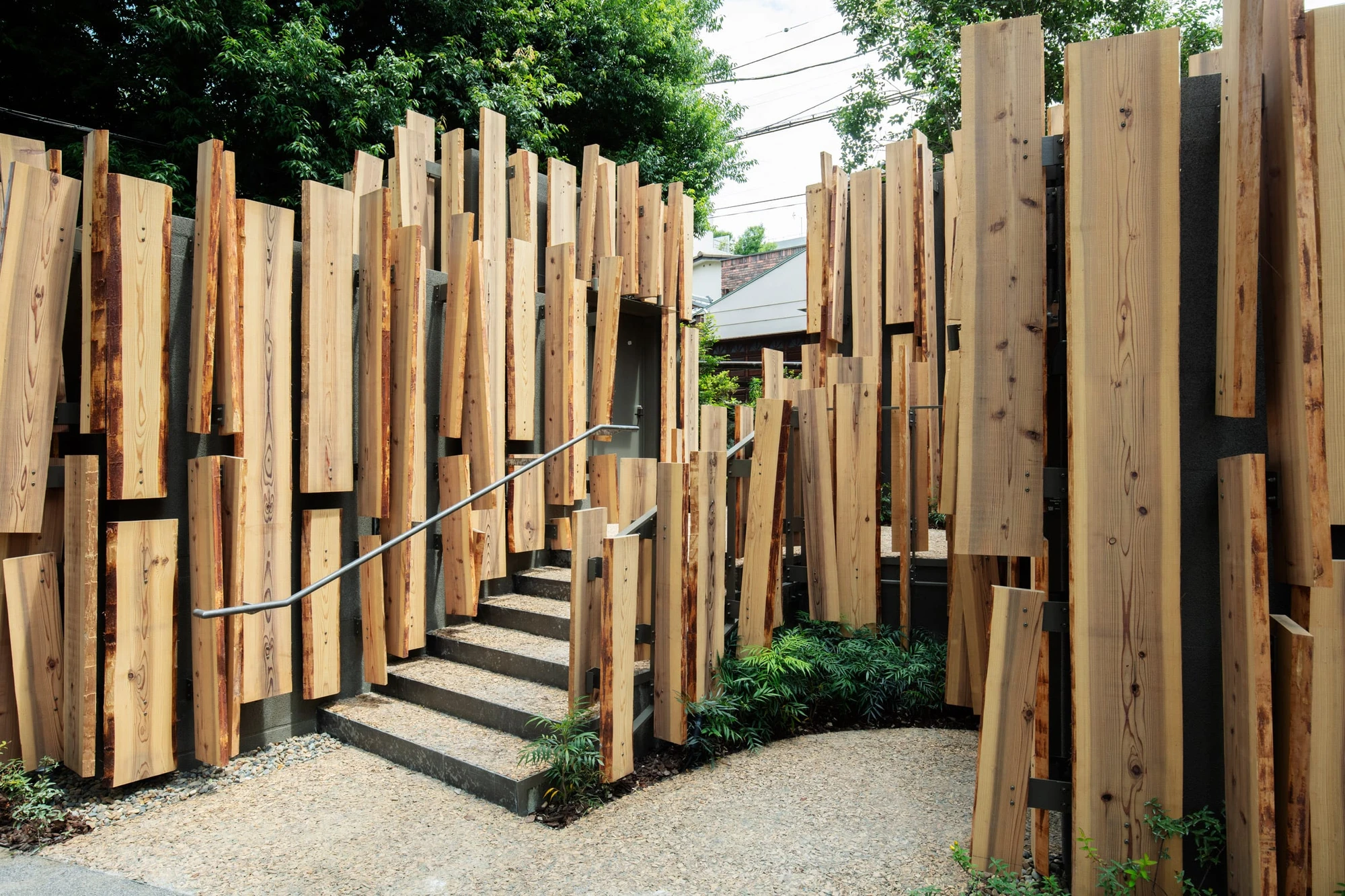
In Nabeshima Shoto Park in Tokyo’s Shibuya district, Kengo Kuma has replaced an existing brick toilet block with something gentler: five small huts clad in cedar louvres, connected by a stepped walkway that gives the project its name—A Walk in the Woods.
The facility is part of the Nippon Foundation’s Tokyo Toilet initiative, which has enlisted Pritzker Prize winners and leading designers to rethink public sanitation across 17 locations in Shibuya.
Kuma chose this particular site for its greenery. "There were many potential sites for this project, but I chose Nabeshima Shoto Park because it has the lushest greenery and I thought I would be able to dispel the conventional image of public toilets," he explains. Rather than designing a single block, he broke the programme into five individual units, each with a specific function: standard facilities, a children’s toilet, and a changing room for the events that fill Shibuya’s calendar. "Unlike conventional public toilets, these are unique in that they can be used by a diverse range of people."
Cedar louvres wrap each hut and extend to form the edges of the walkway and stairs, dissolving the boundary between building and landscape. The material dialogue is direct: the same wood that grows in the park covers the structures within it. Kuma’s ambition is total experience rather than isolated object—"In addition to the toilets, I designed the path that creates a line of flow, with the hope of offering a total experience that encompasses the surrounding environment as well as the structures."
The Nippon Foundation’s executive director Jumpei Sasakawa frames the broader ambition: "We hope this will become a model for dispelling the conventional image of public toilets being dark, dirty, smelly, and scary." In Kuma’s hands, the model is not a manifesto but a walk—a sequence of small shelters held together by cedar, greenery, and the simple act of moving through a park.