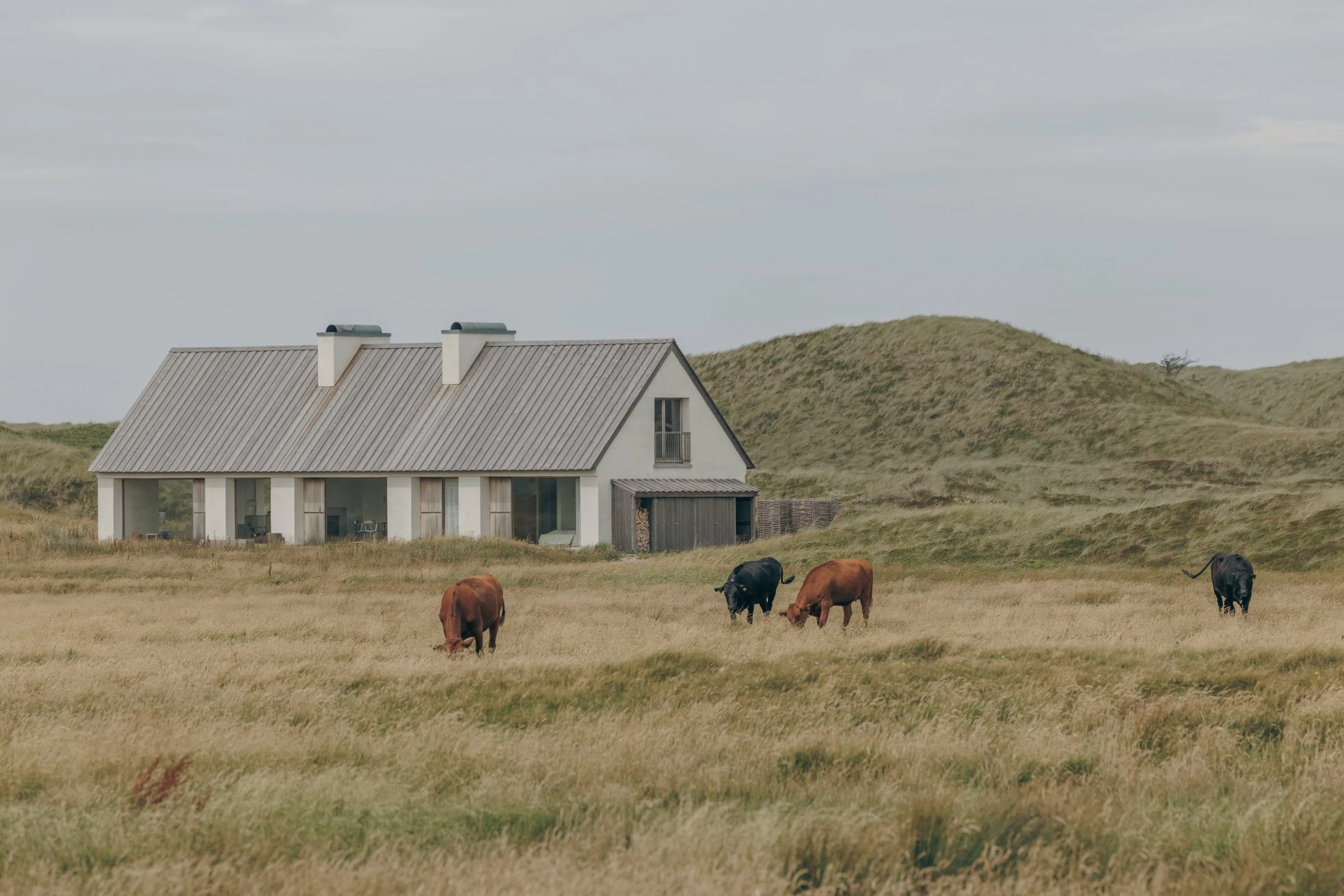
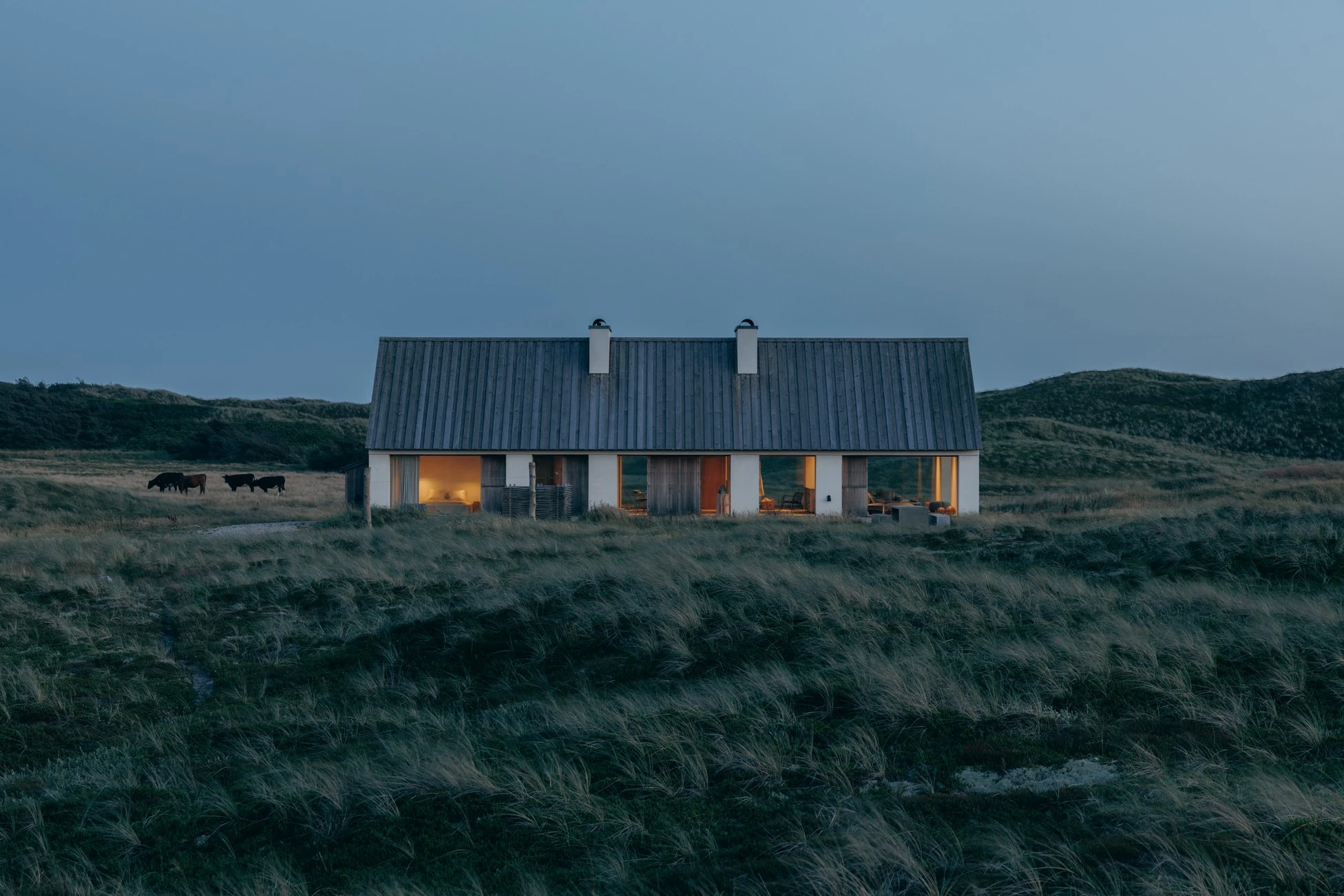
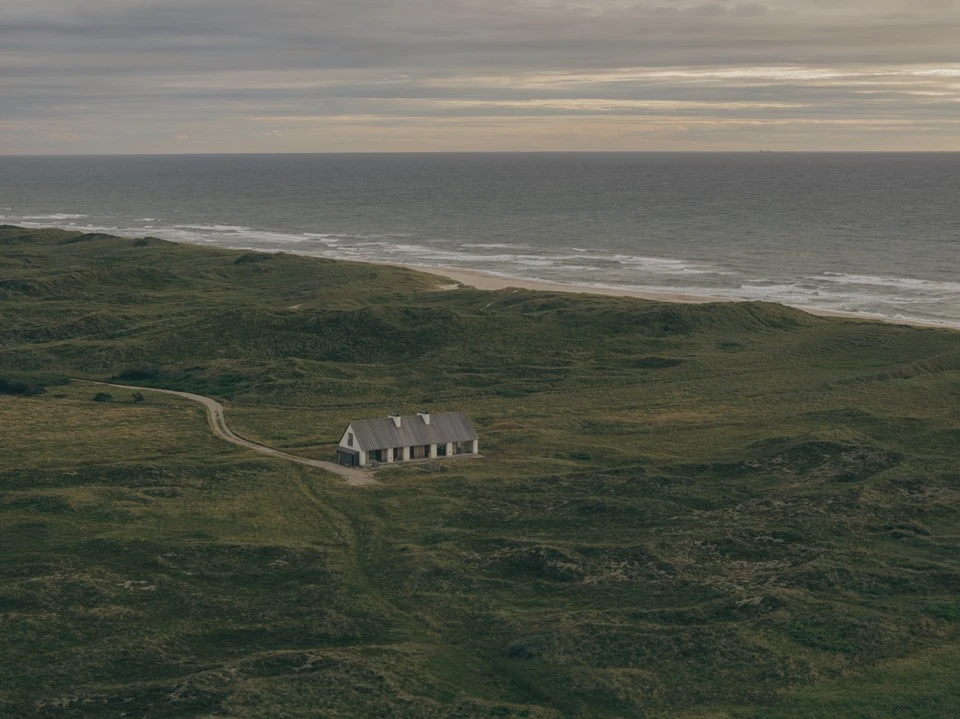
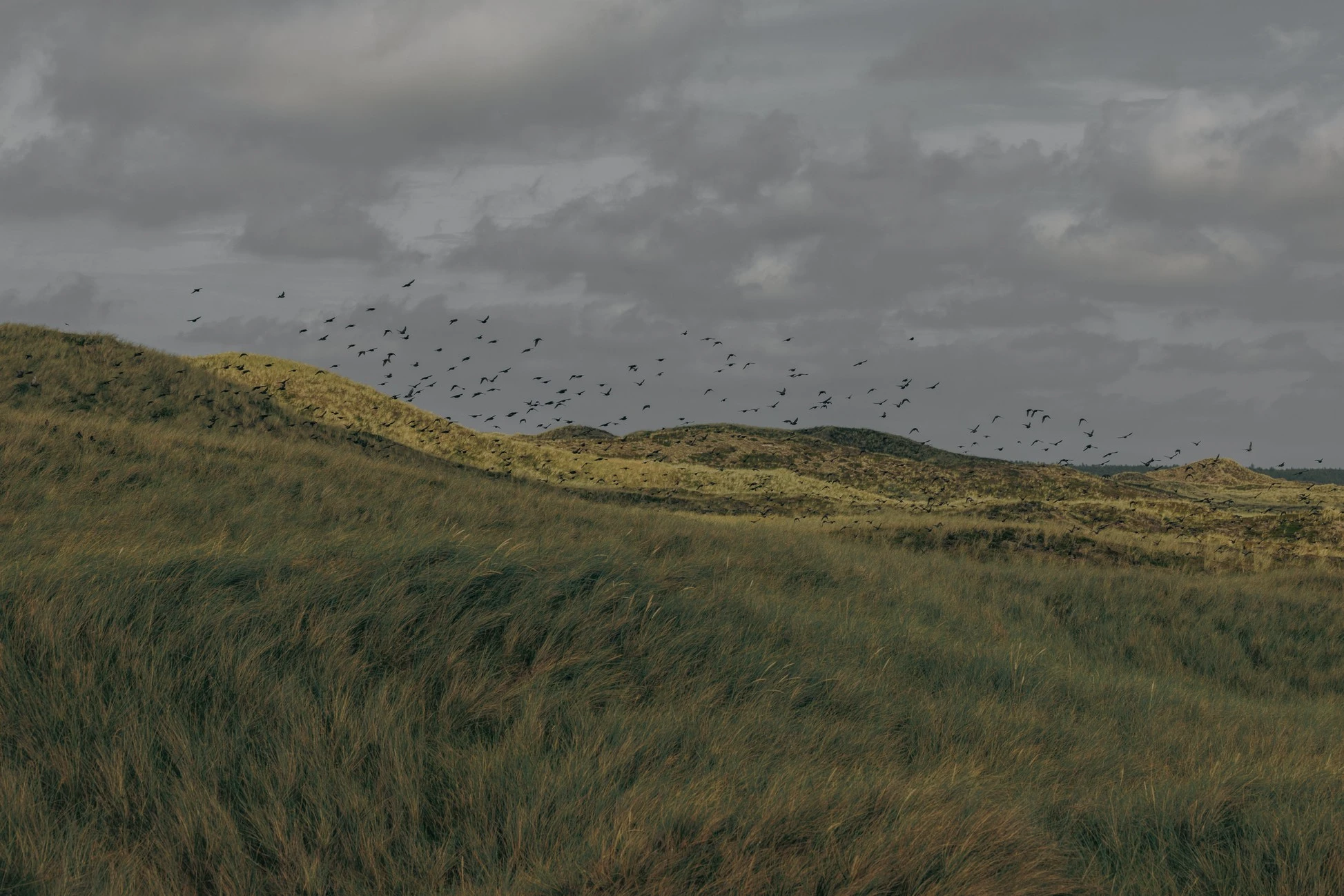
Vipp Cold Hawaii’s new guesthouse rises from the windswept plains of Thy National Park in Denmark with a kind of quiet inevitability, as though the dunes themselves had willed it into being.
On a 9900 m2 plot in Vangså, where the horizon remains largely undisturbed by human presence, Hahn Lavsen reinterprets the archetype of the fisherman’s cottage without succumbing to nostalgia. From afar, the structure seems familiar, almost anonymous; up close, its disciplined geometry and rhythmic silhouettes reveal a contemporary language that resists spectacle in favour of clarity.
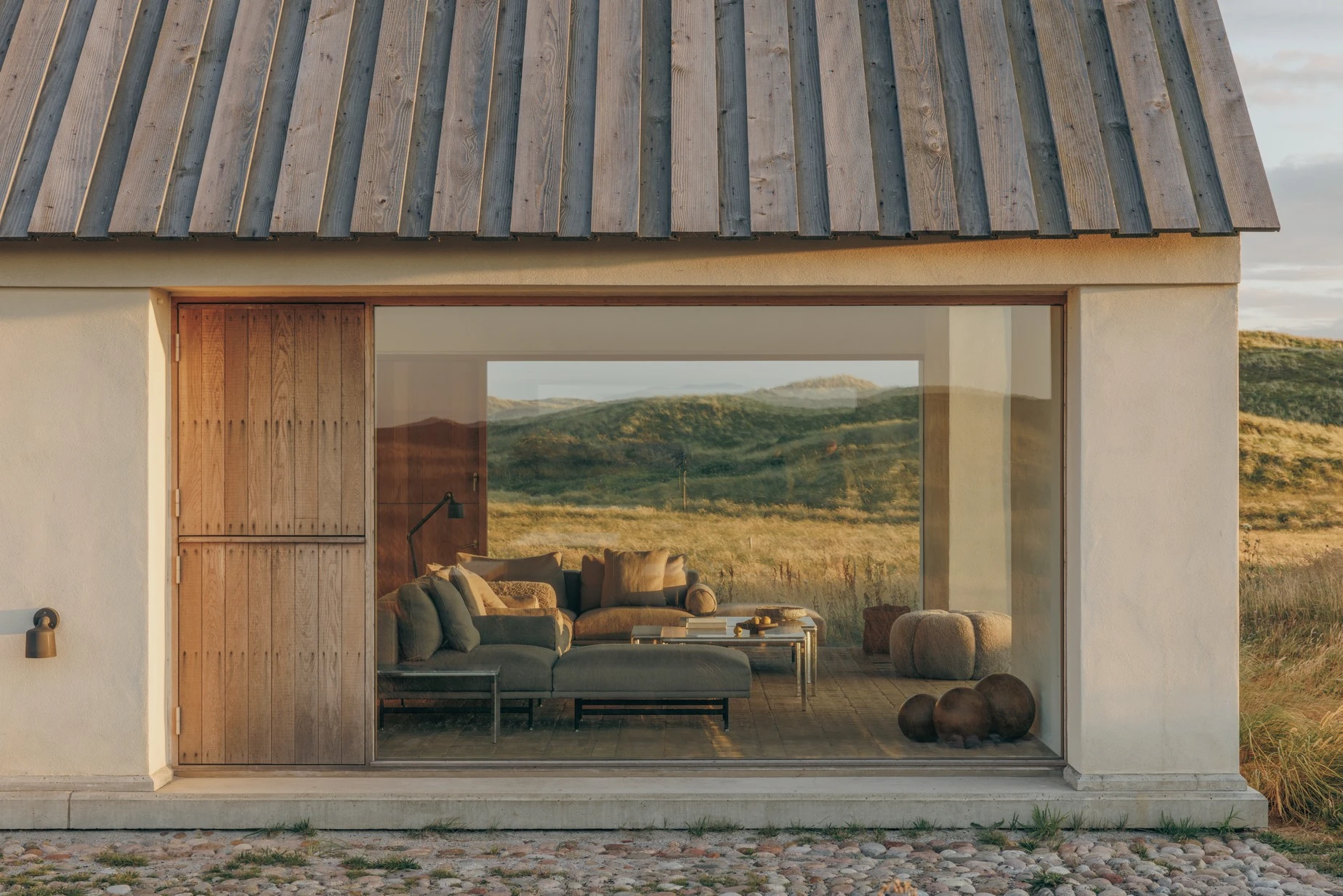
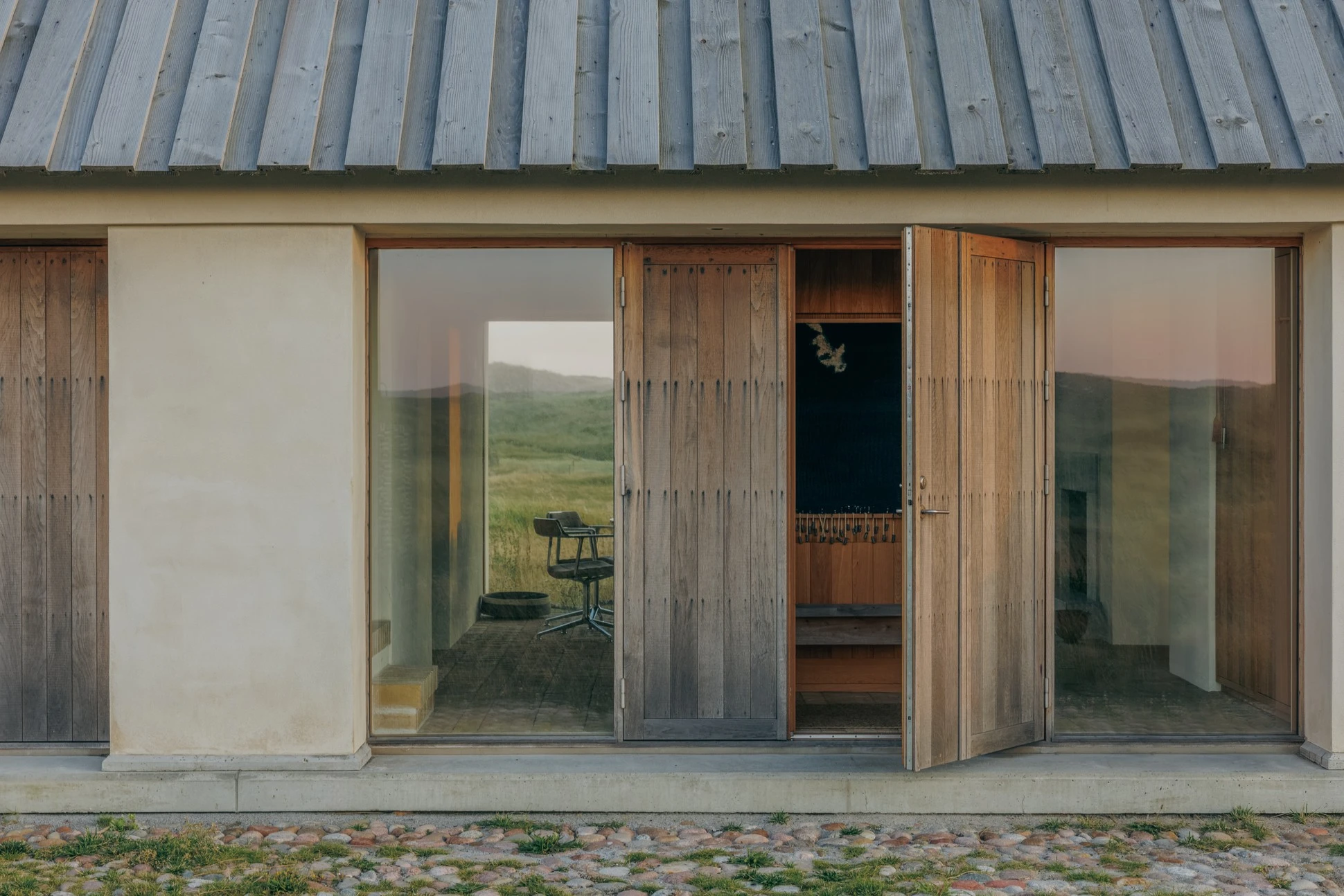
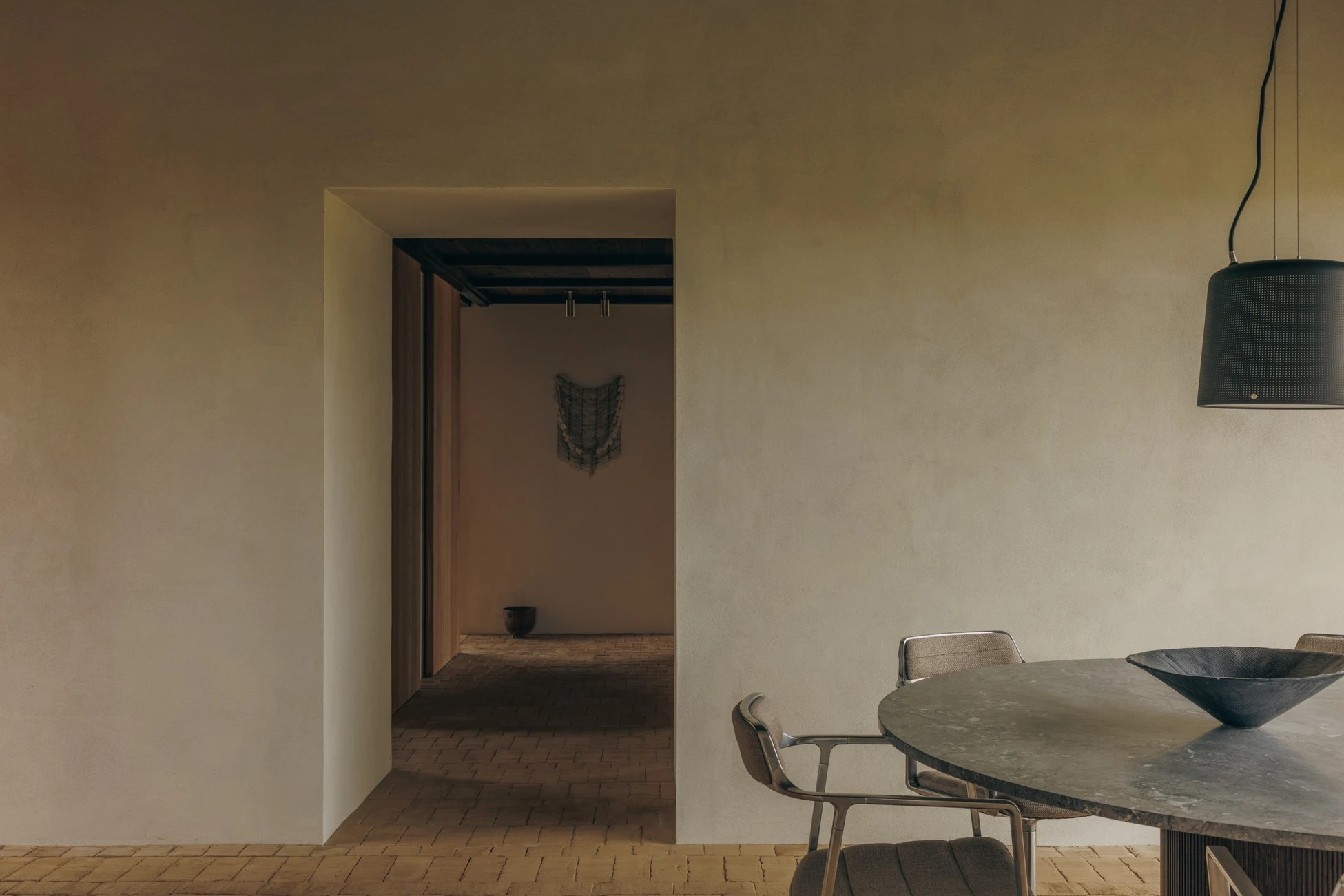
The architects’ insistence on a pared-back material palette grants the building a grounded, almost stoic presence. Five materials, each used in its most unadorned state, structure both the house’s aesthetic and its performance against the elements. Aerated concrete walls receive only a rough whitewash, allowing their inherent texture to remain visible. Douglas fir heartwood, left untreated, forms a durable skin against sea winds and salt air. Oak stable doors—repeated like a rural mantra—nod to the land’s pre-dune agricultural past, reintroducing ventilation as a tactile gesture rather than a technical one.
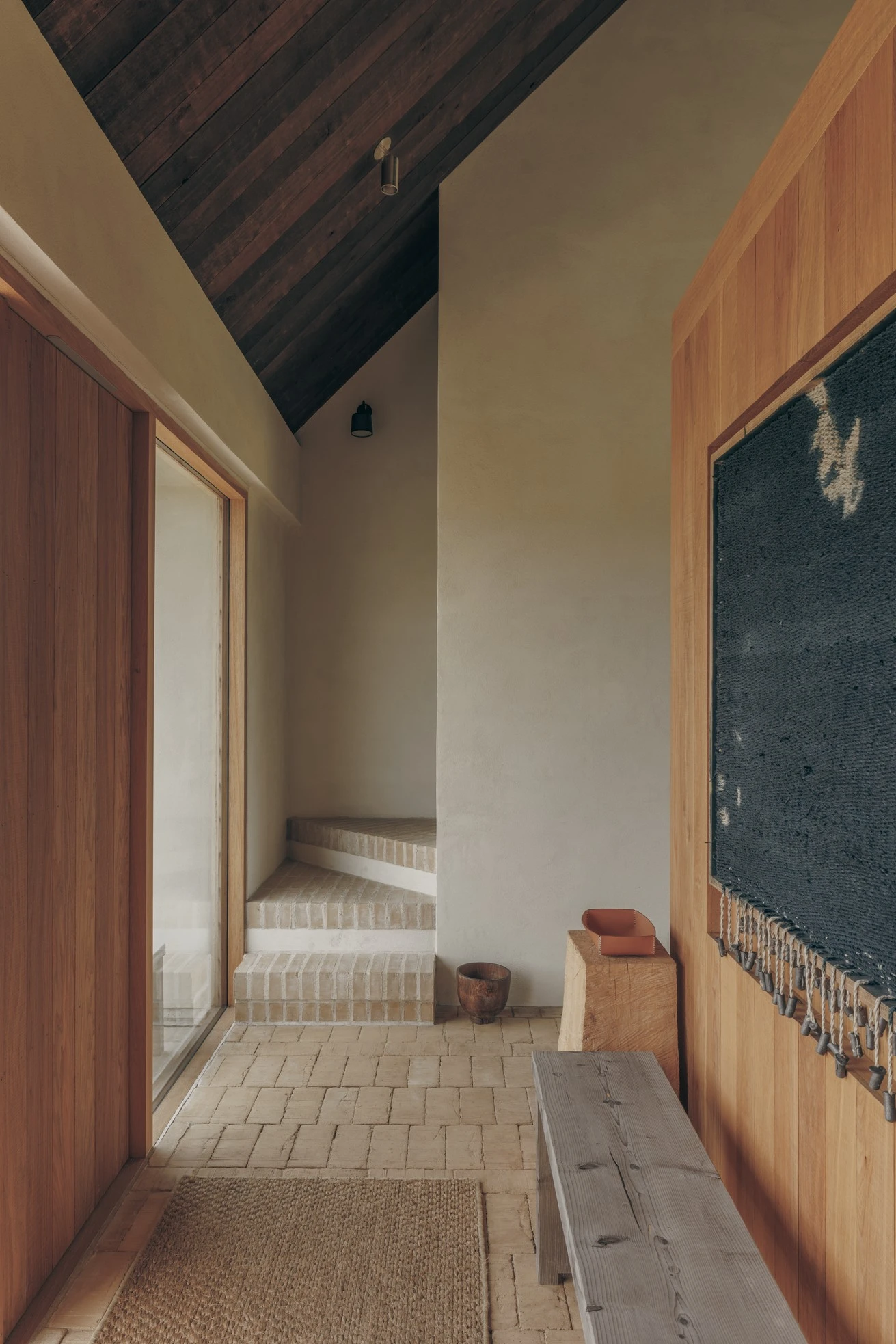
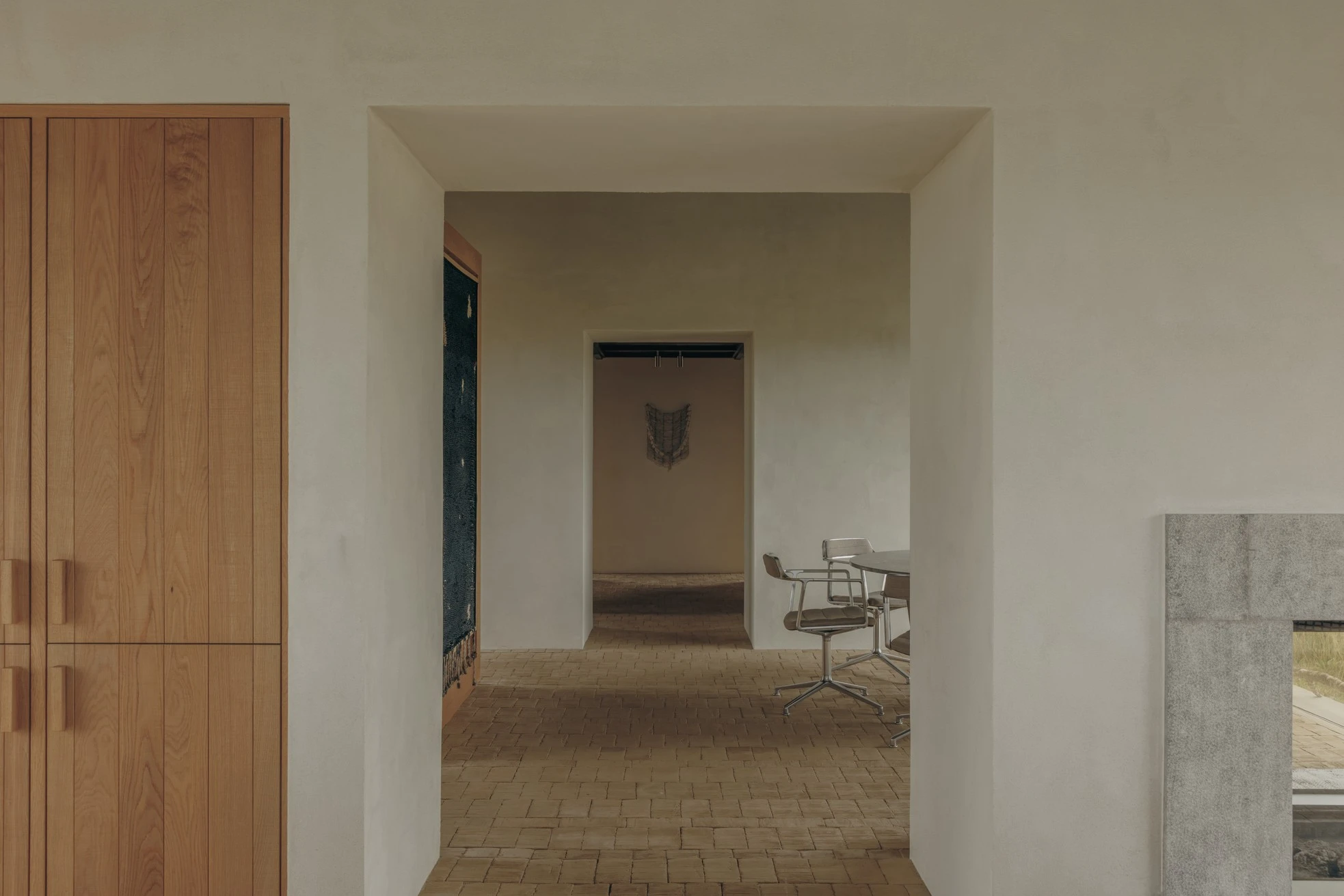
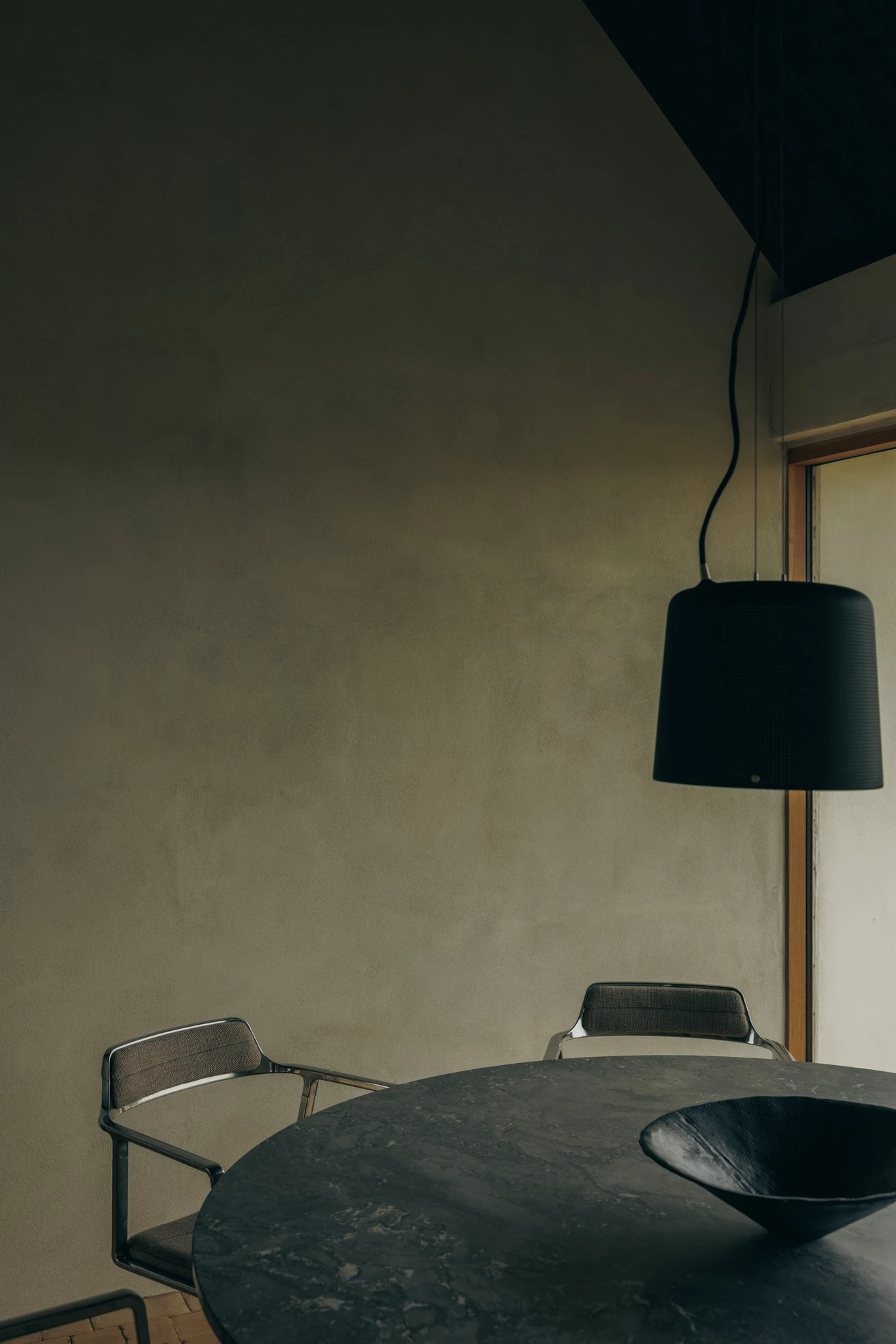
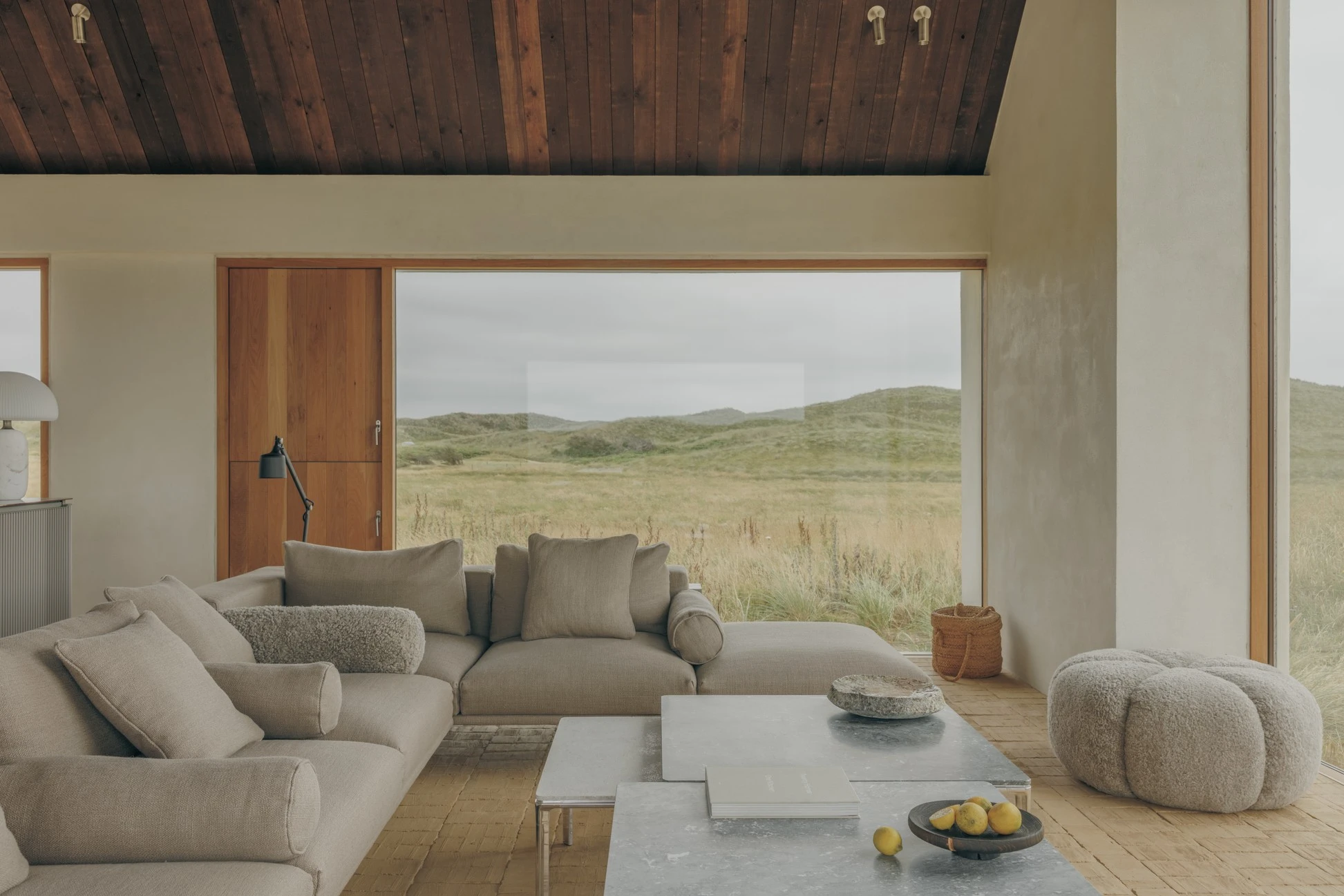
Inside, the sensorial shift is immediate. Julie Cloos Mølsgaard’s interior landscape tempers the exterior’s ruggedness with calibrated softness and meticulous craft. Her restrained palette—wood, metal, glass, stone, woven fibres—invites the hand as much as the eye. Texture carries the emotional weight usually assigned to colour. Vipp furniture mingles with local craft, vintage discoveries, and works by neighbouring artists, giving the interior a regional pulse without turning it into a curated tableau.
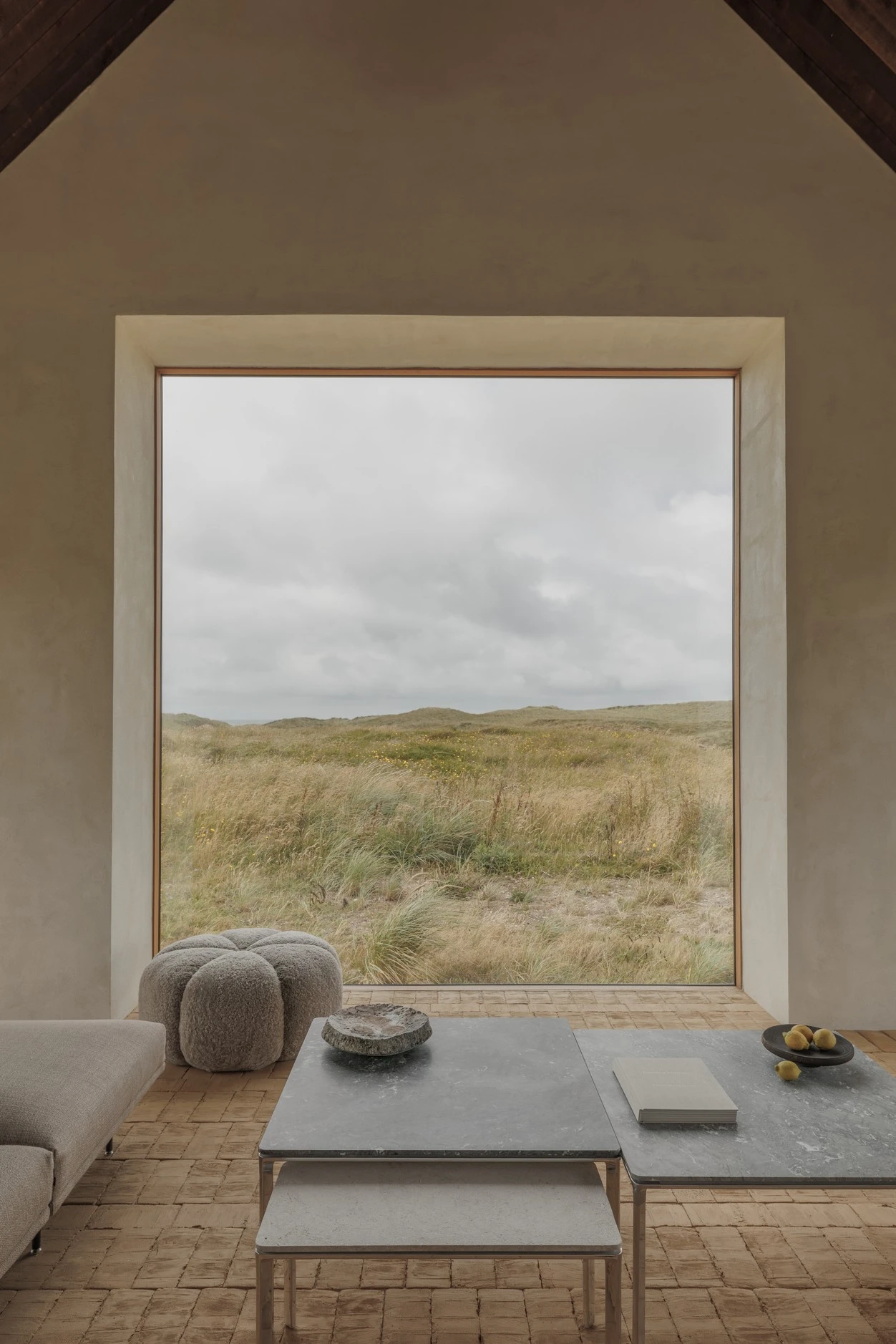
Nature, however, remains the project’s true axis. The glass walls, recessed deep into the structure, avoid theatrical framing; instead, they create a continuous, almost diffused relationship with the dunes and heathlands outside. Floors laid in exposed brick set in sand subtly echo the beach beyond the threshold, softening the transition between shelter and landscape. Stepping out of the house, as Lavsen notes, feels like entering a no-man’s-land—a lunar vastness where the building serves more as companion than refuge.
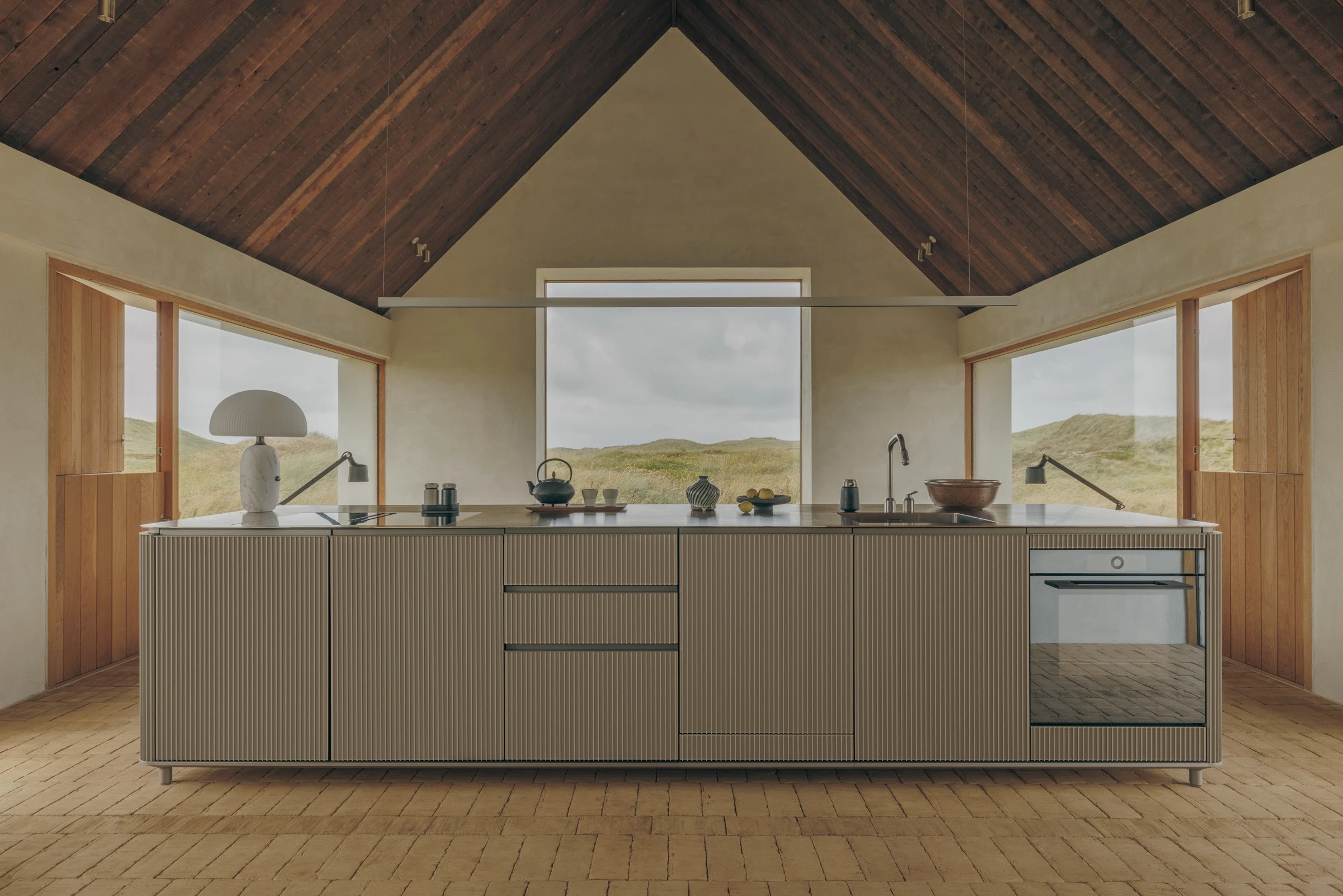
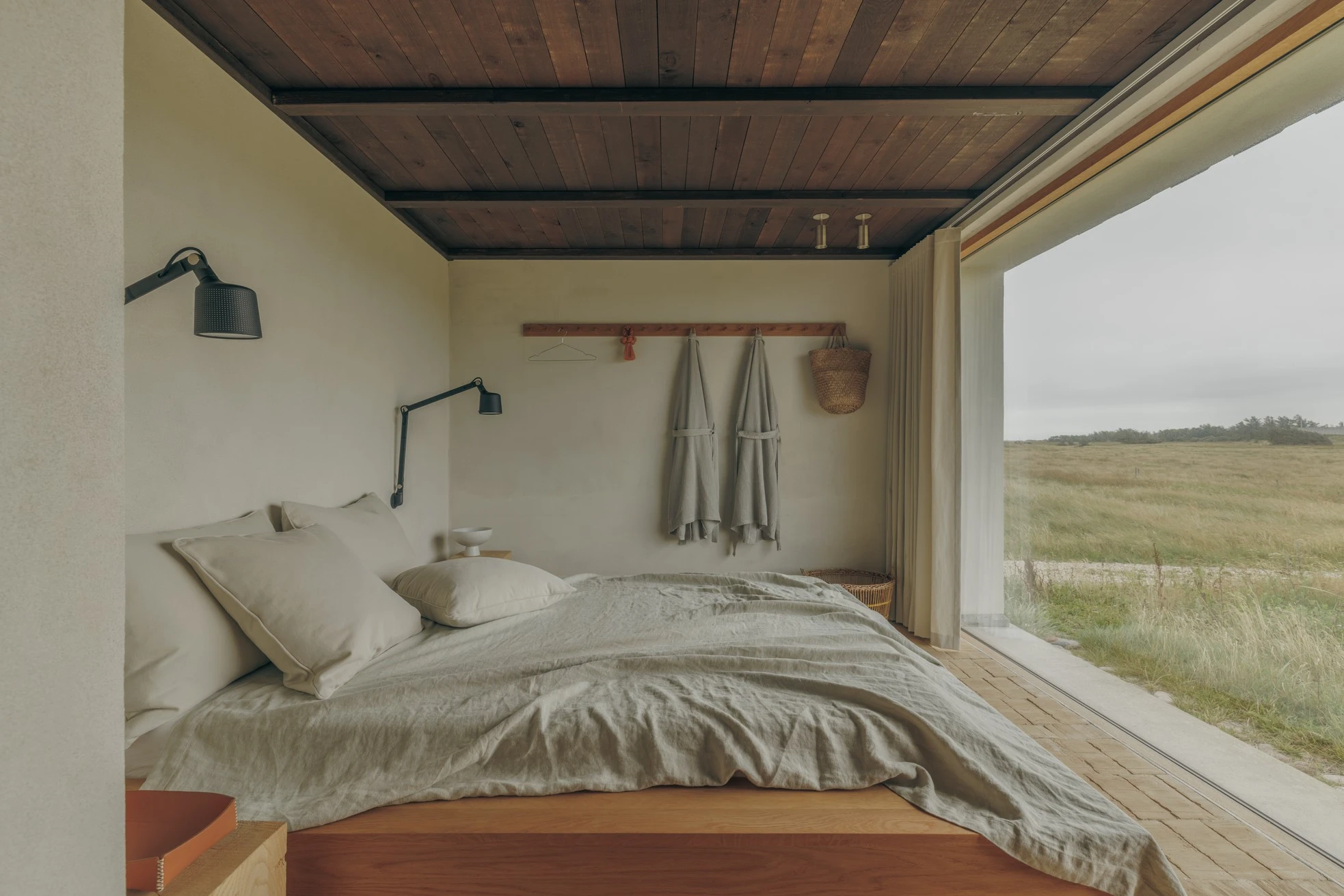
At the centre of the home, the Vipp V3 kitchen assumes the role of anchor. Its anodized aluminium modules, softened by vertical extrusions, introduce a sleek yet unobtrusive precision. The island stretches generously through the living area, its calm monumentality balanced by oak cabinetry and textile-upholstered seating arranged to follow the coastline’s pull. This choreography extends into the bedrooms, where repetition of fabric, tone, and proportion maintains a sense of quiet continuity.
A double-sided fireplace in bush-hammered stone completes the spatial narrative, acting as a hinge between living and dining zones. Its materiality—grain exposed through impact rather than polish—mirrors the architecture’s larger ethos: nothing is concealed, everything is given space to breathe. The guesthouse’s program accommodates up to eight people across three bedrooms, two baths, and a compact utility core, distributed over two levels that maintain the building’s low-slung silhouette.
Set within a region reshaped by centuries of sand migration and, more recently, by surf culture, Vipp Cold Hawaii positions itself as both counterpoint and companion to its environment. It is not an icon but an insertion—precise, resilient, and deeply attuned to the rhythms of a landscape that precedes it and will outlast it.