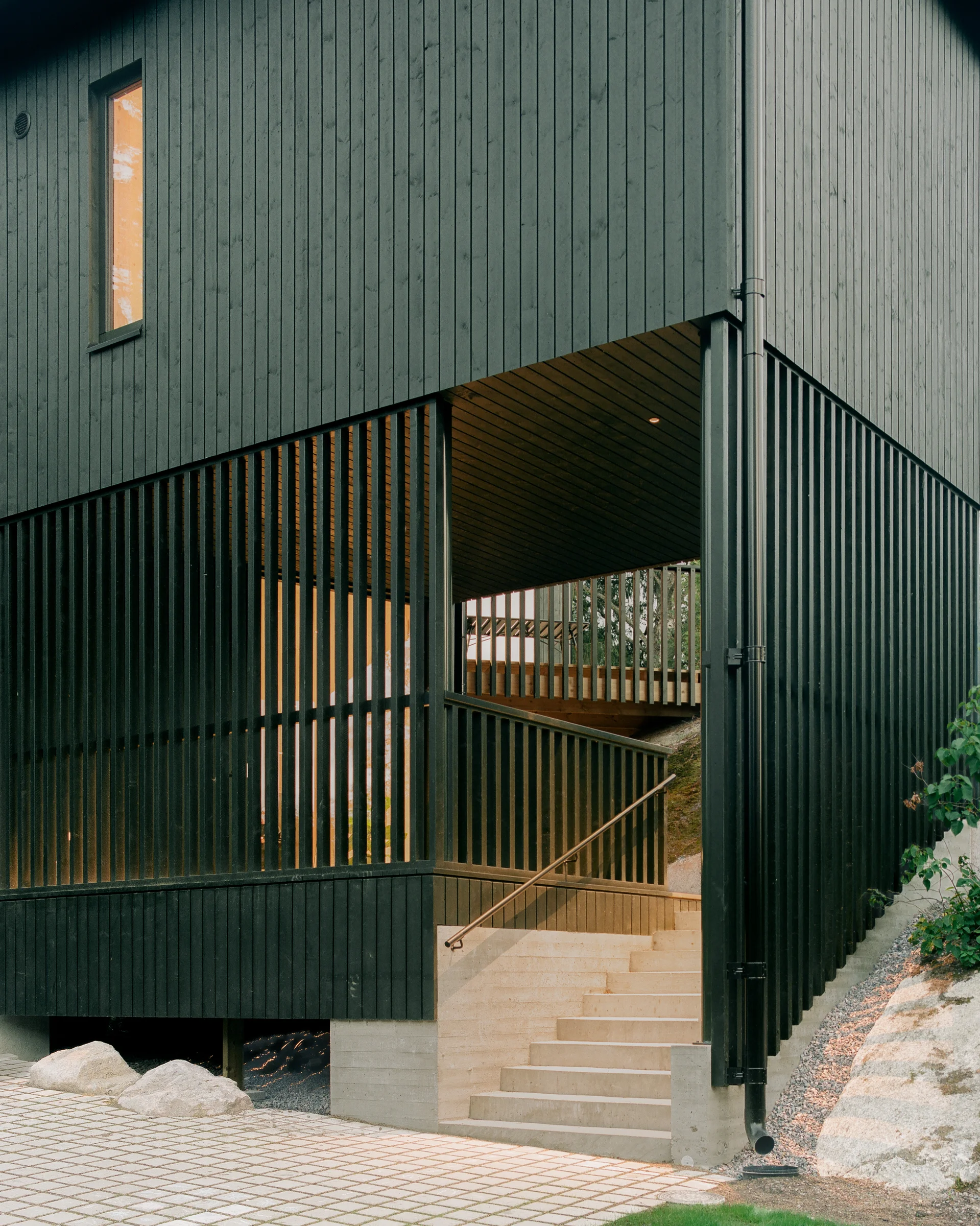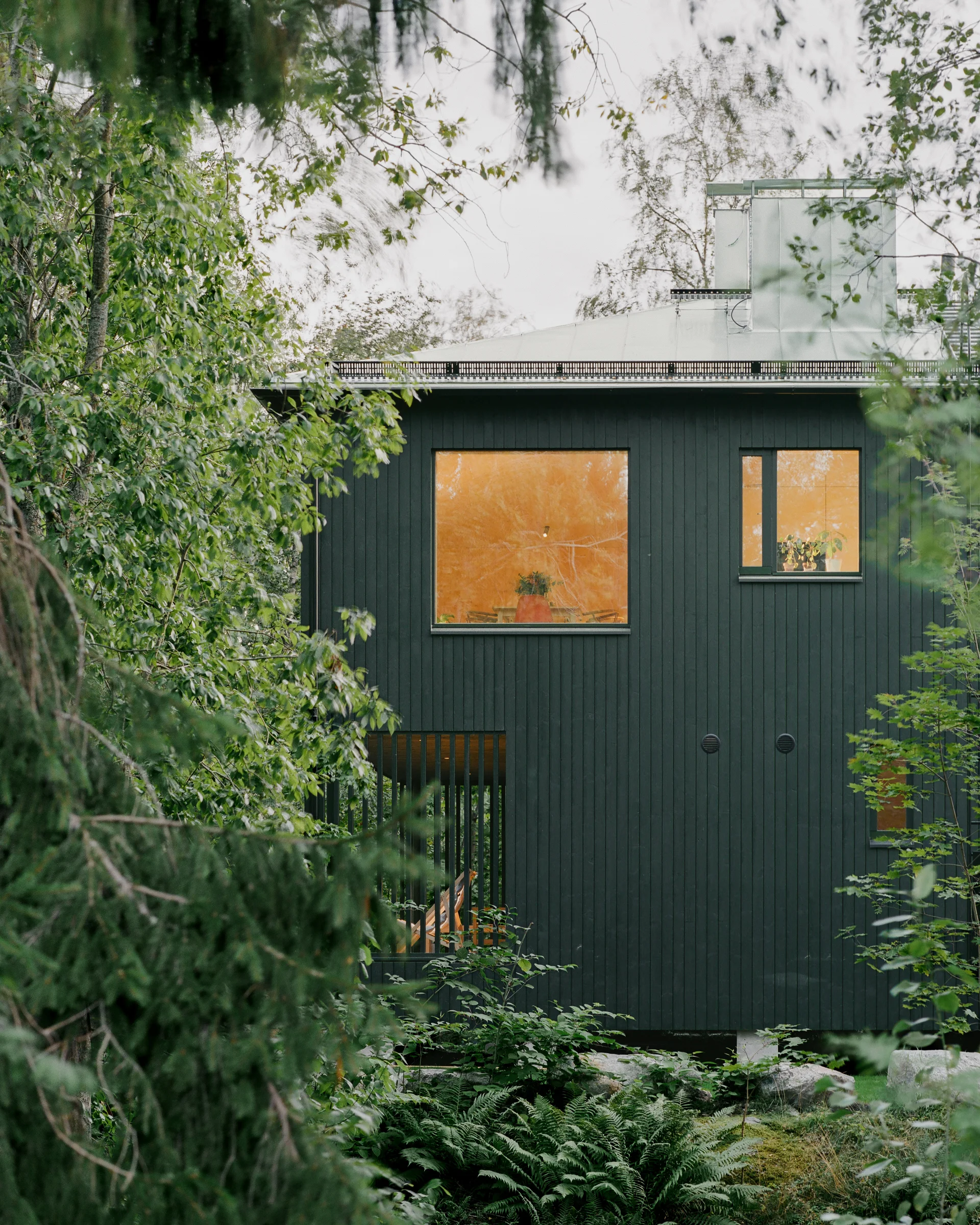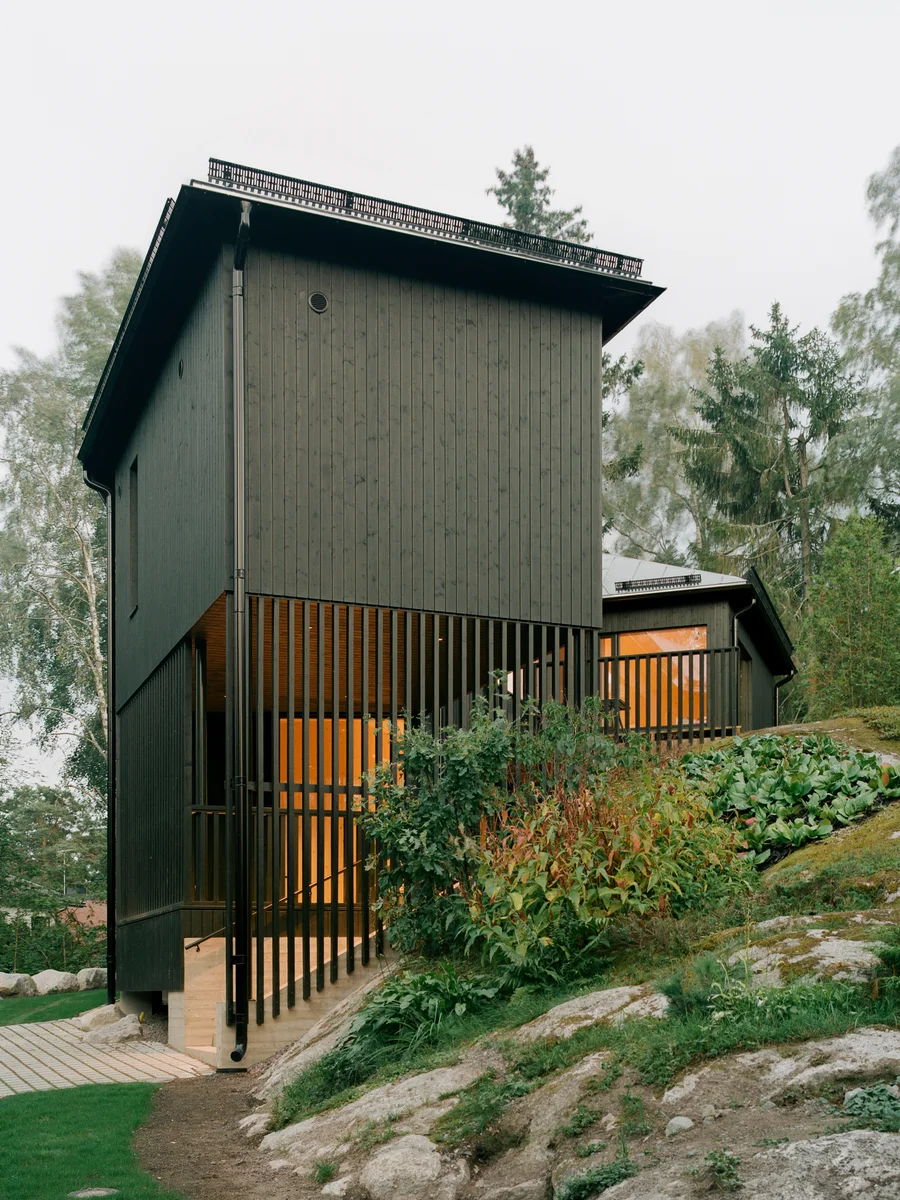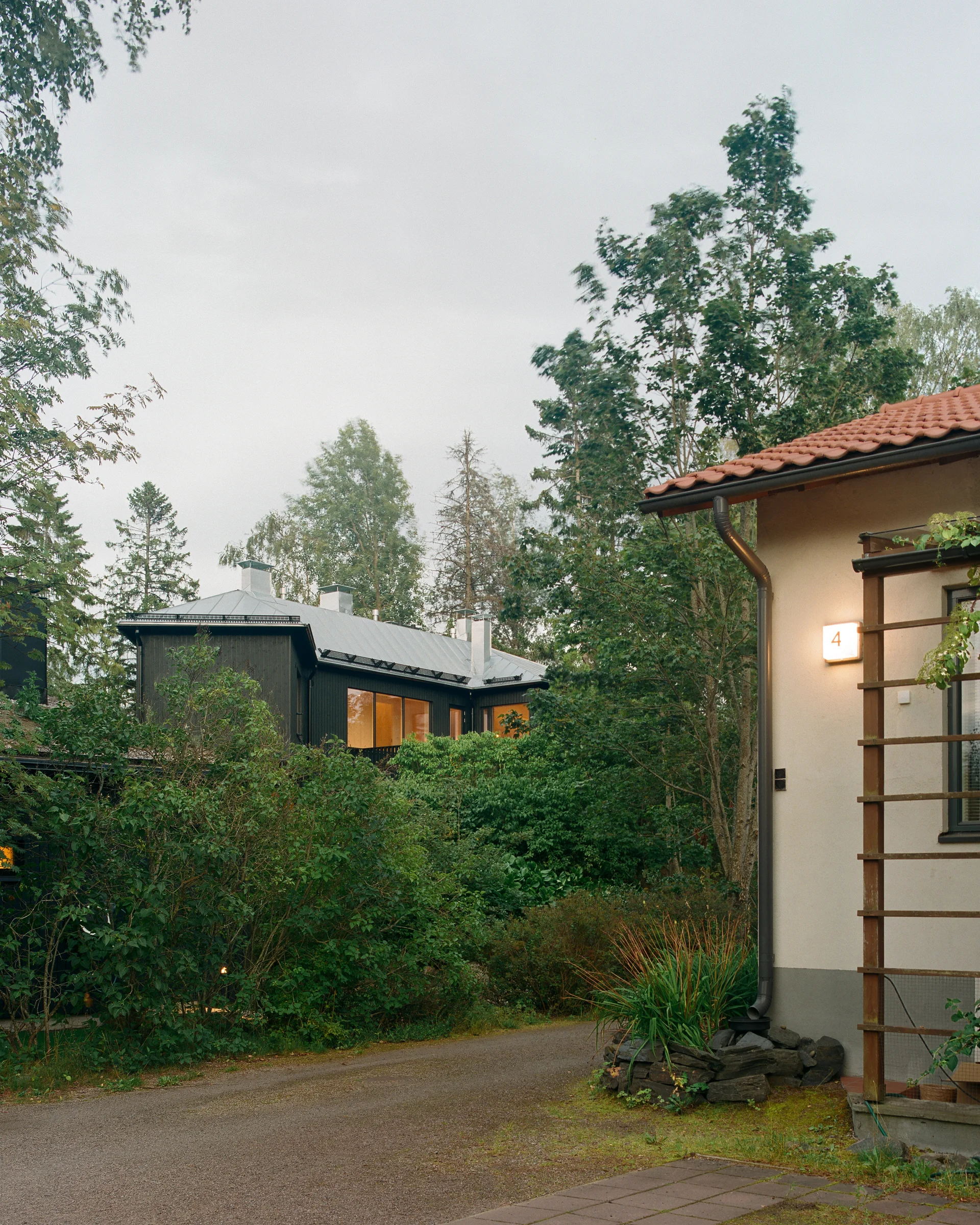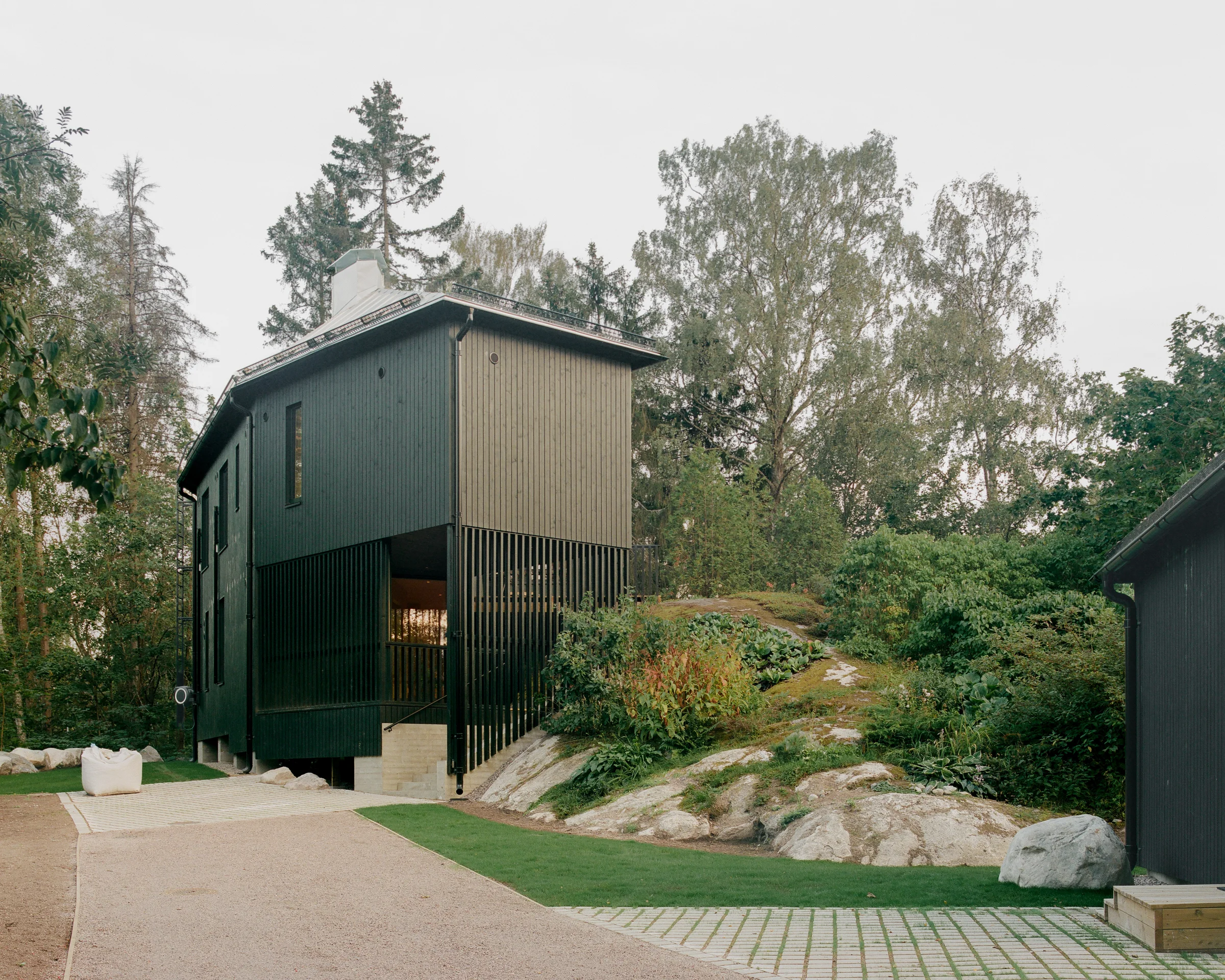
In a dense pocket of small-scale houses in Helsinki, Talli Ark replaces a collapsing building with Villa Margo, a two-story family home clad in dark-green linseed-painted boards that hugs a small green hill and leaves the trees where it found them.
The site came with a dilapidated house and a set of conditions the new building had to honour. Mature birches and firs, a manicured lawn, a smooth apron of exposed bedrock. The old structure came down, the vegetation stayed. Villa Margo, designed by Jenni Hölttä with Mer Arkkitehdit in the early phase, now stands on the same footprint, following the geometry of the plot across two stories under a hipped zinc-sheet roof that will weather to dark grey over the coming years.
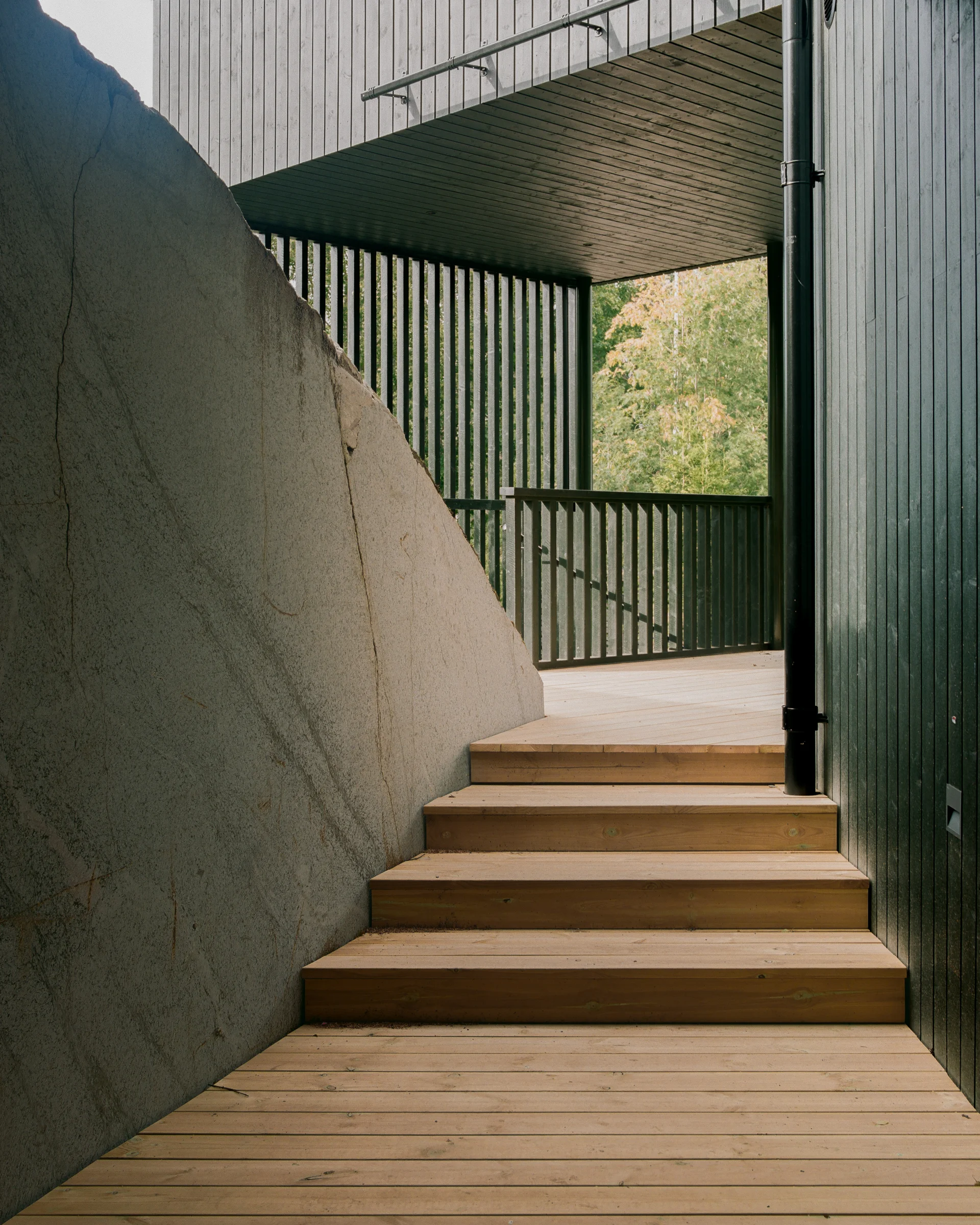
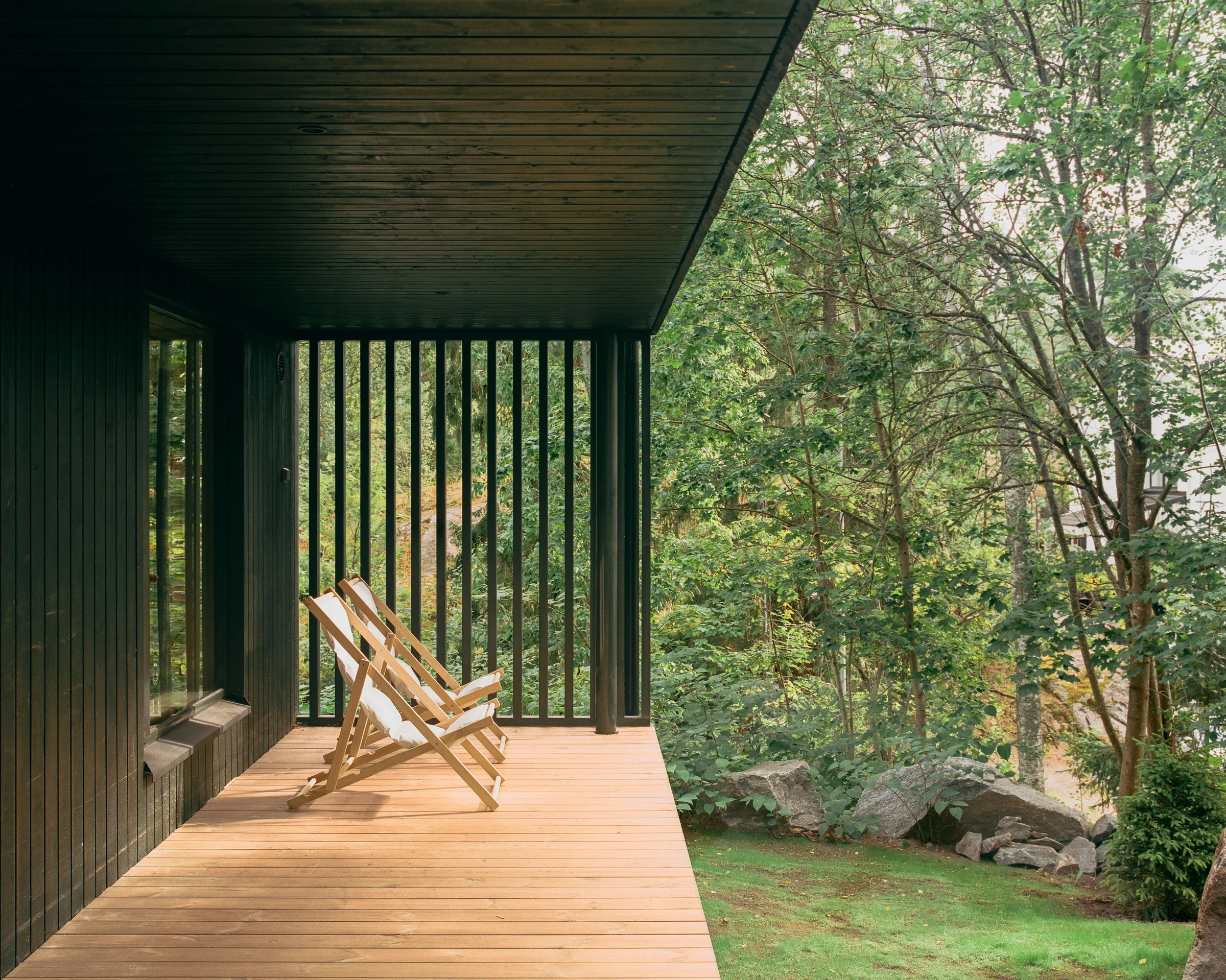
The envelope is vertical boarding painted a deep forest green with traditional linseed-oil paint, set over a solid CLT frame and a ventilated crawl space. Corners and recesses are carved out rather than added on, producing a sequence of sheltered outdoor terraces that face different directions and catch different light. A bay of black steel balusters screens the elevated deck, and a timber stair threads up between a raw concrete retaining wall and the dark cladding to arrive at the front door.
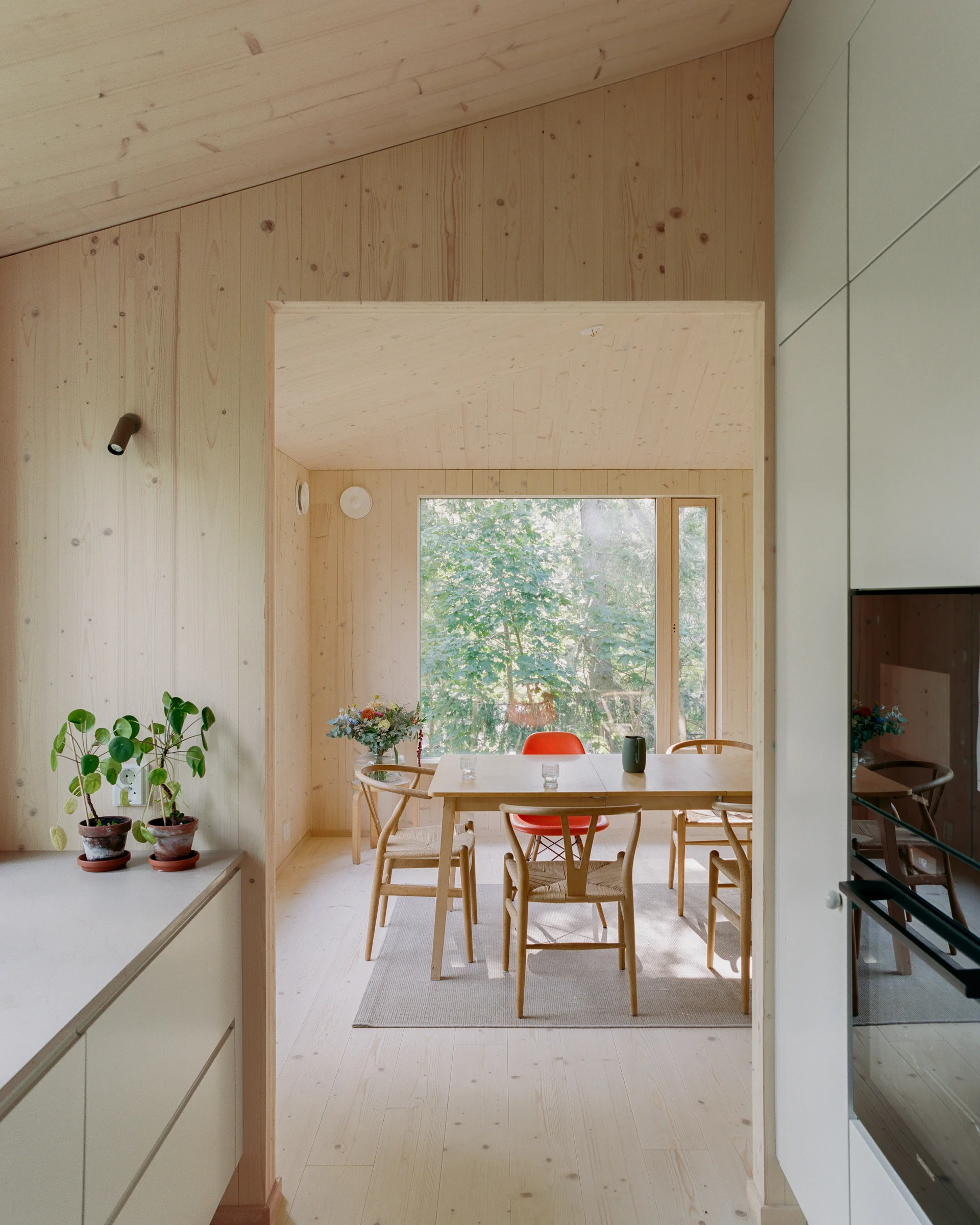
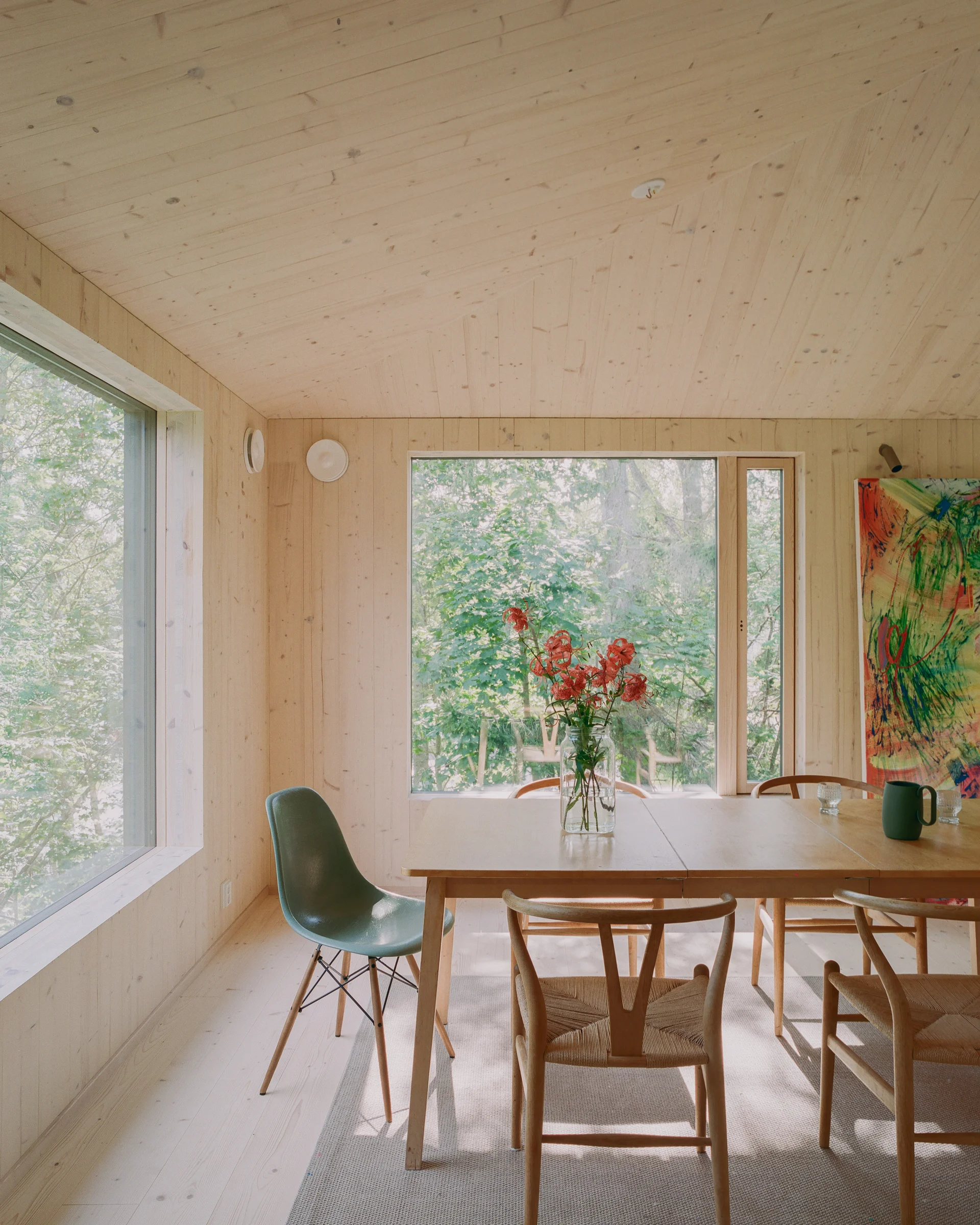
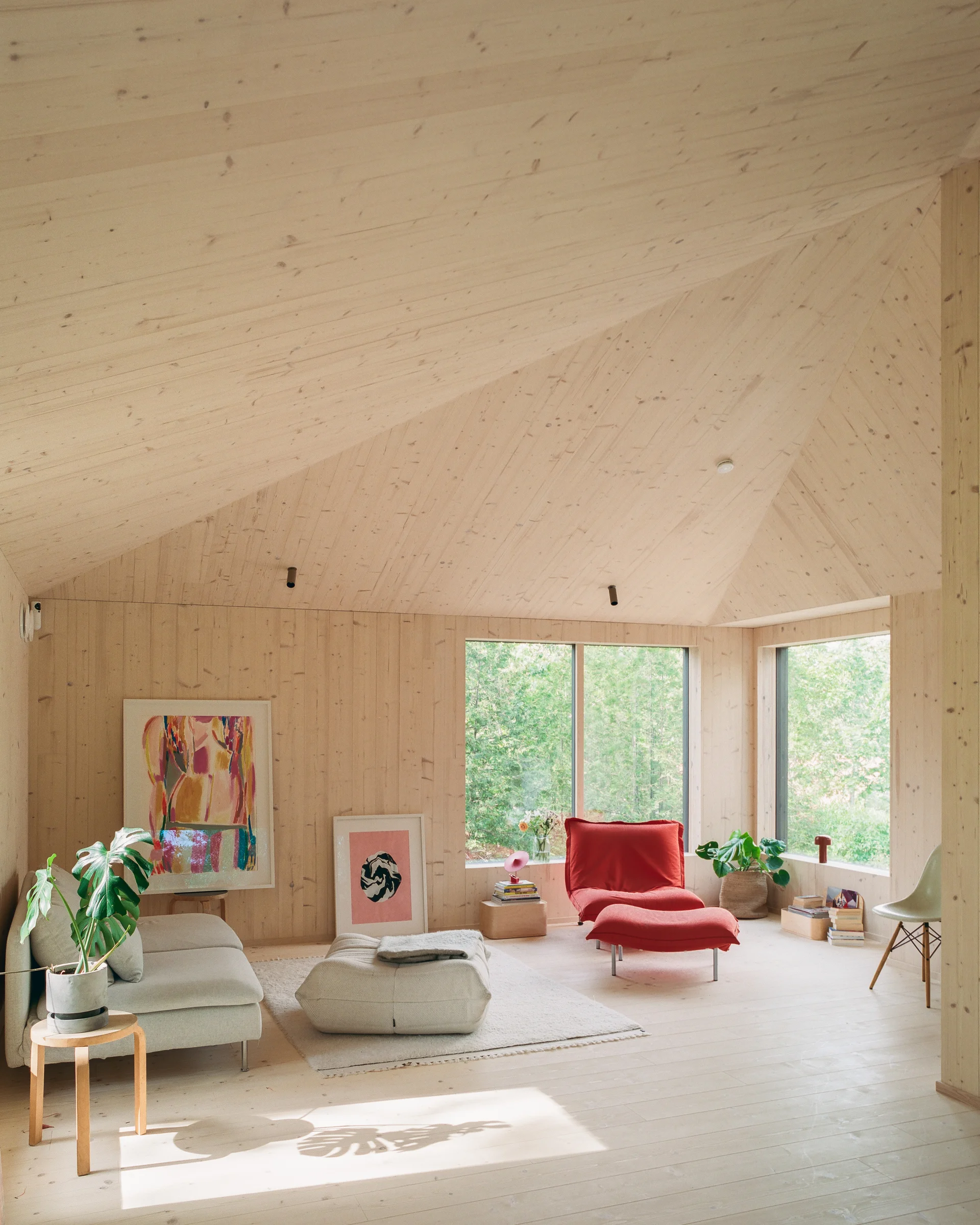
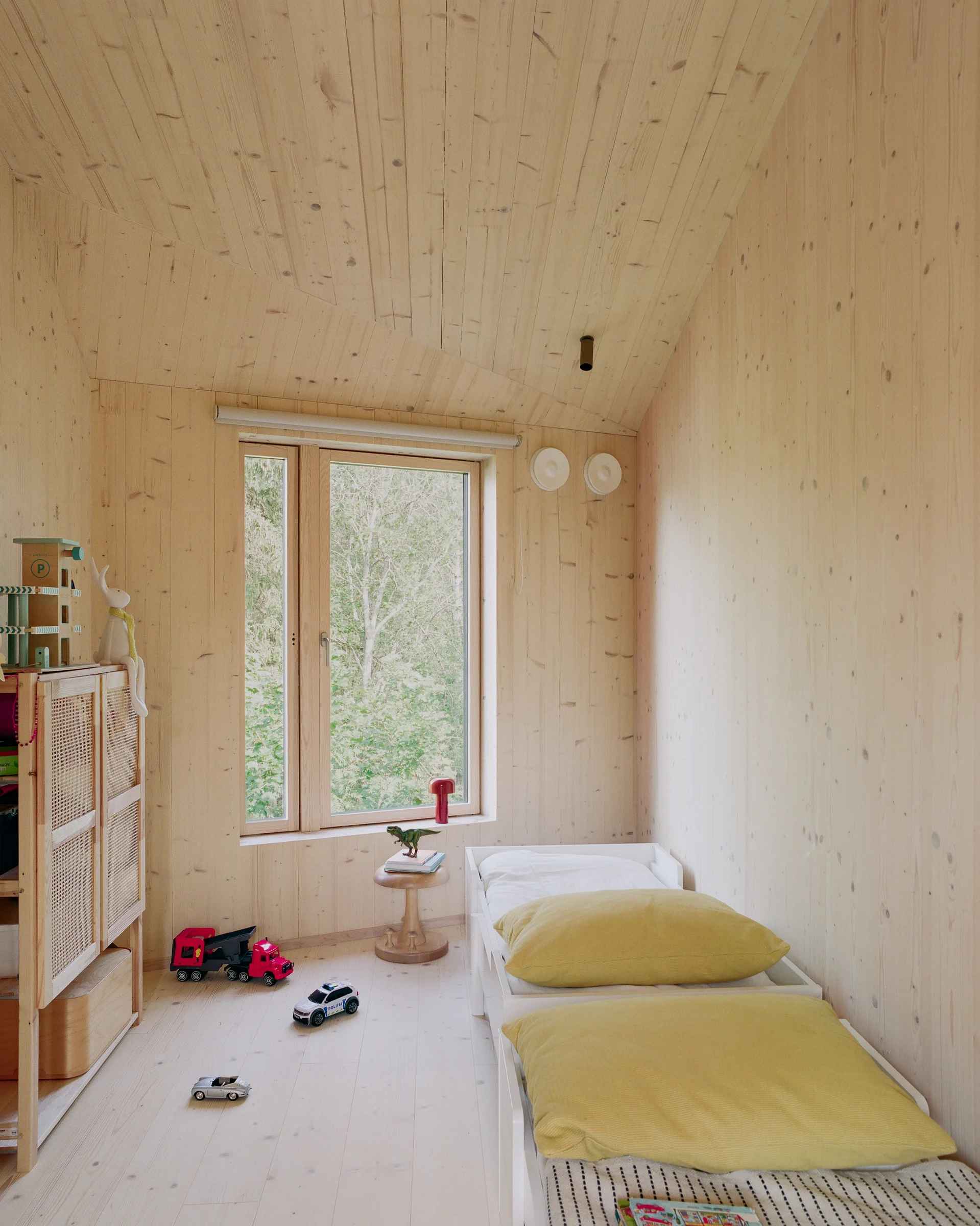
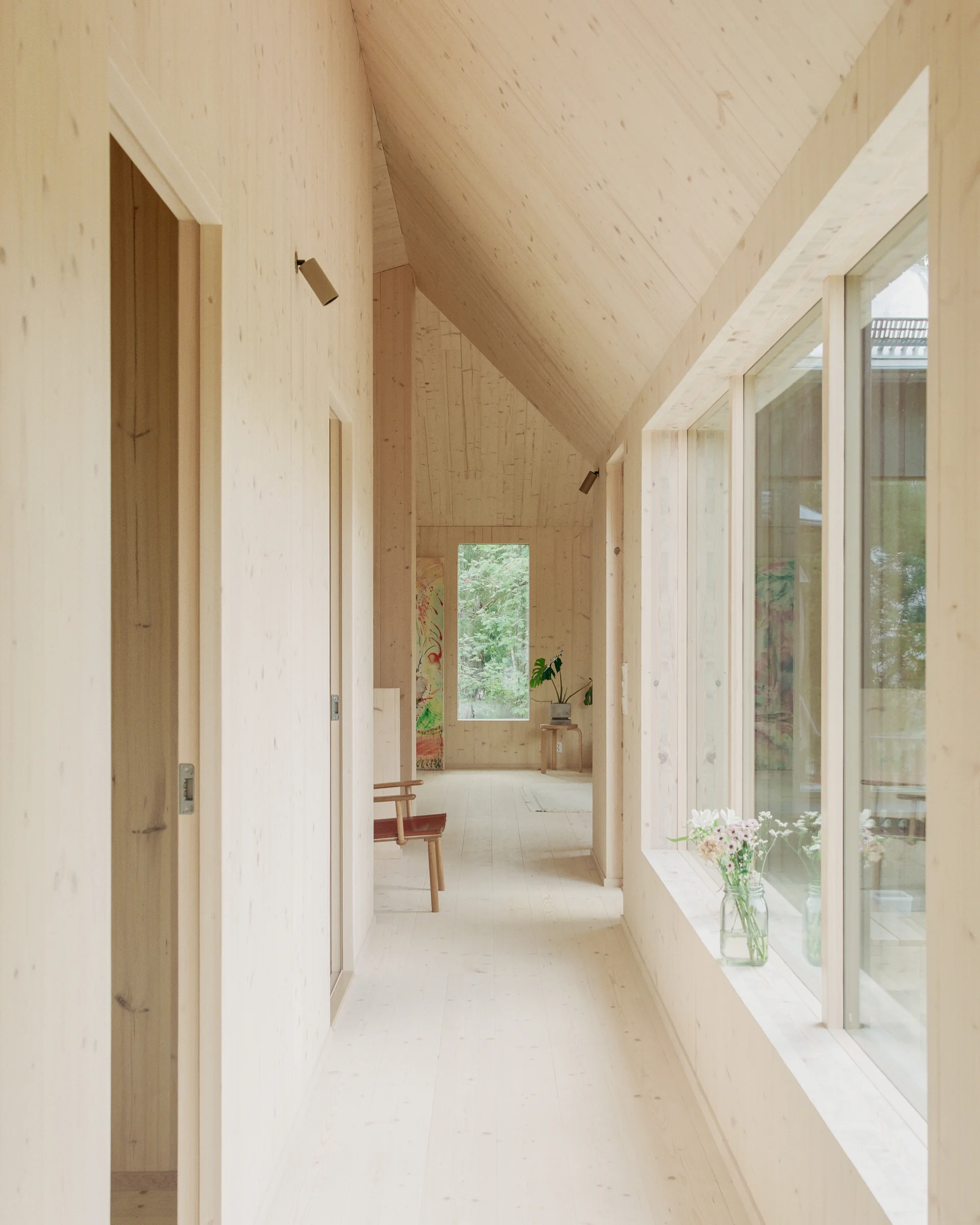
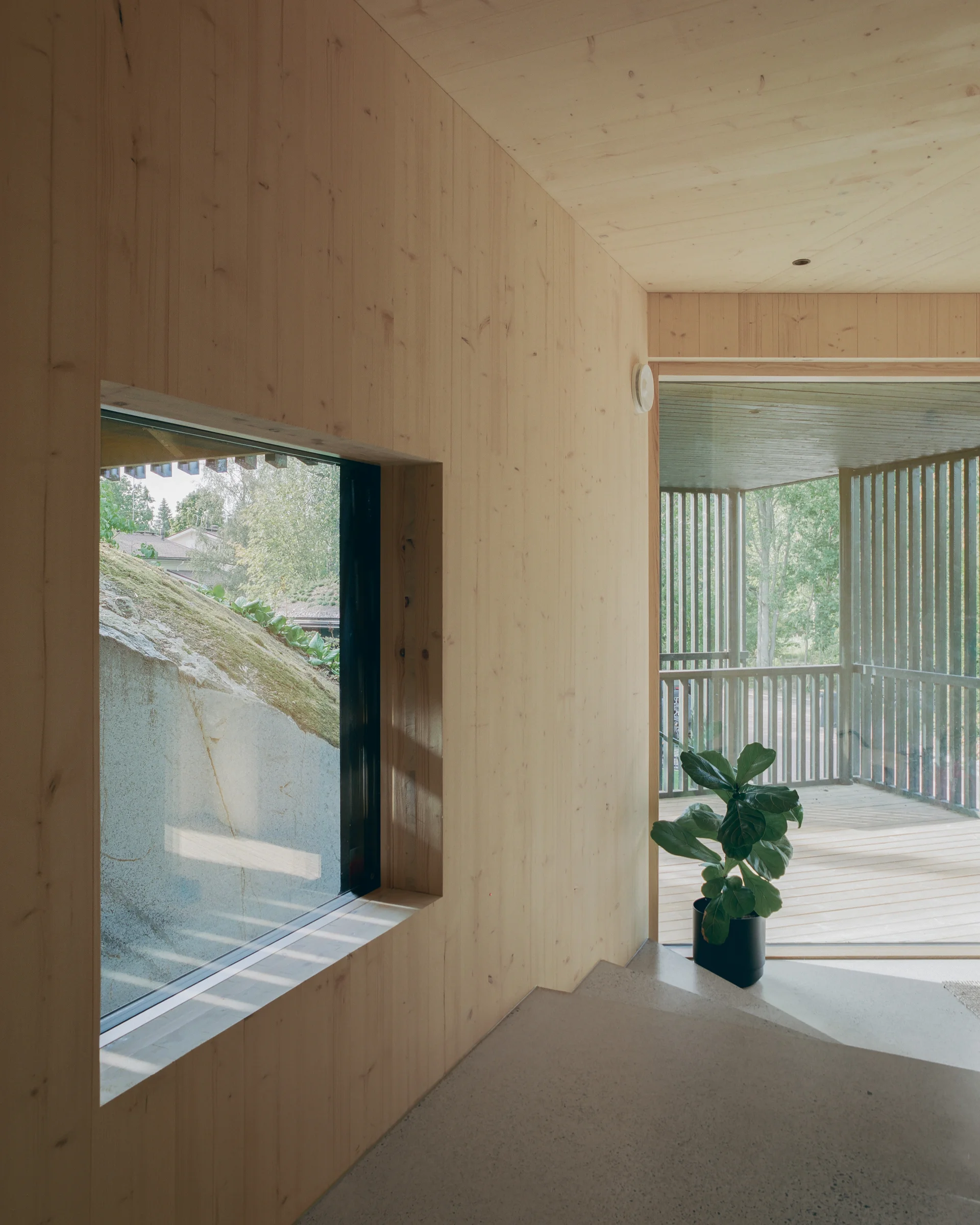
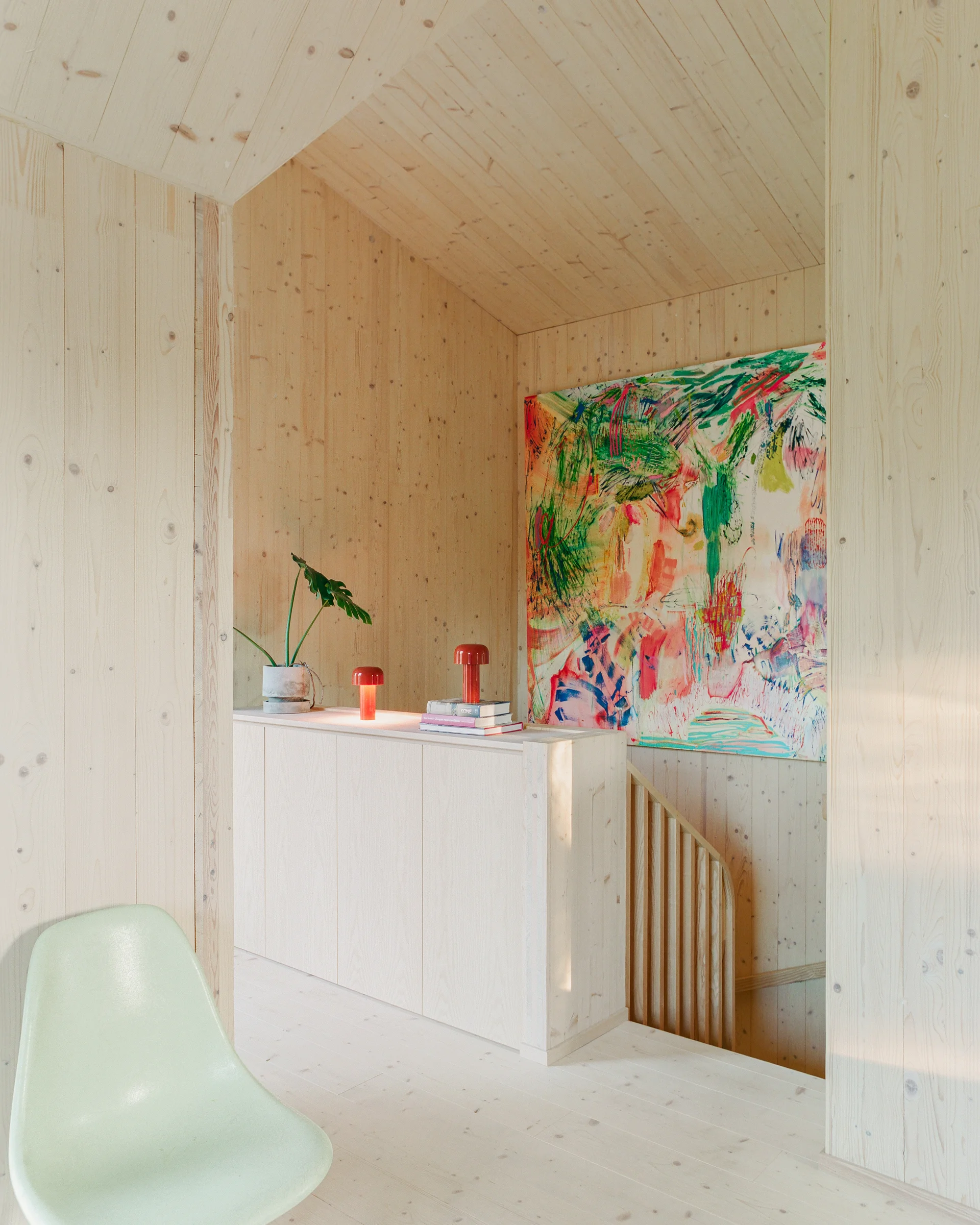
Inside, the palette inverts. Walls, ceilings and floors are lined in pale spruce, the knots and grain left visible across board-and-batten surfaces and the vaulted upstairs volume. The ground floor holds the entrance hall, utility and technical rooms, a bathroom, sauna and small guest room; the first-floor window gives onto the smooth rock surface uncovered when the old house was demolished, a geological detail staged as a view rather than landscaped away. Upstairs, the living room, kitchen, three bedrooms and a second bathroom open to long sightlines across treetops and neighbouring roofs.
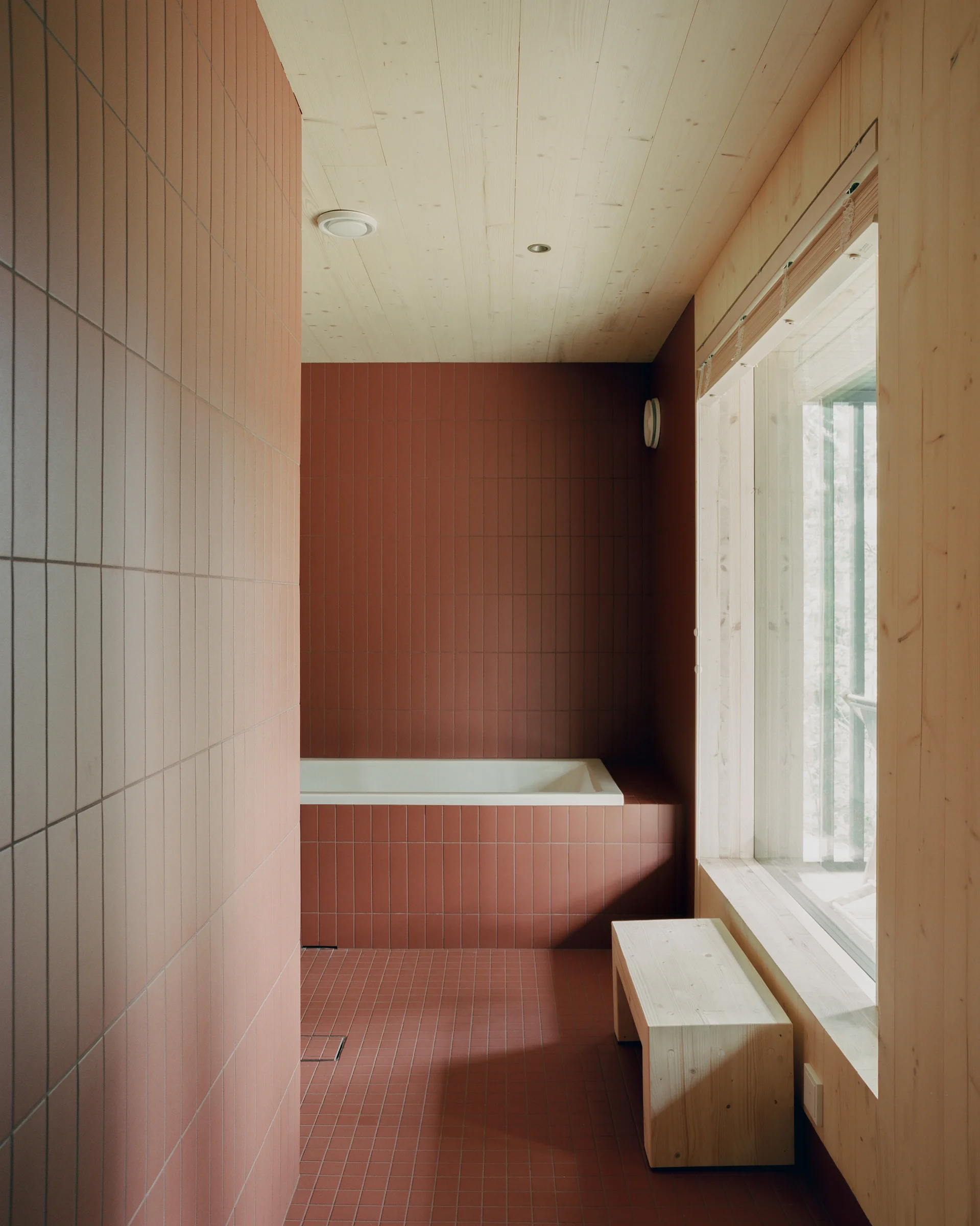
The bathroom is the one place the wood gives way. Dark red terracotta tiles in a narrow vertical grid wrap walls and floor, broken by a built-in tub and a spruce bench set beneath a tall window. It is the earthy counterpoint Hölttä flags in the brief, a warm pocket inside an otherwise pale envelope, and it holds the house's slightly bohemian streak, the so-called Villa Villekulla spirit of the neighbourhood, in one saturated room.
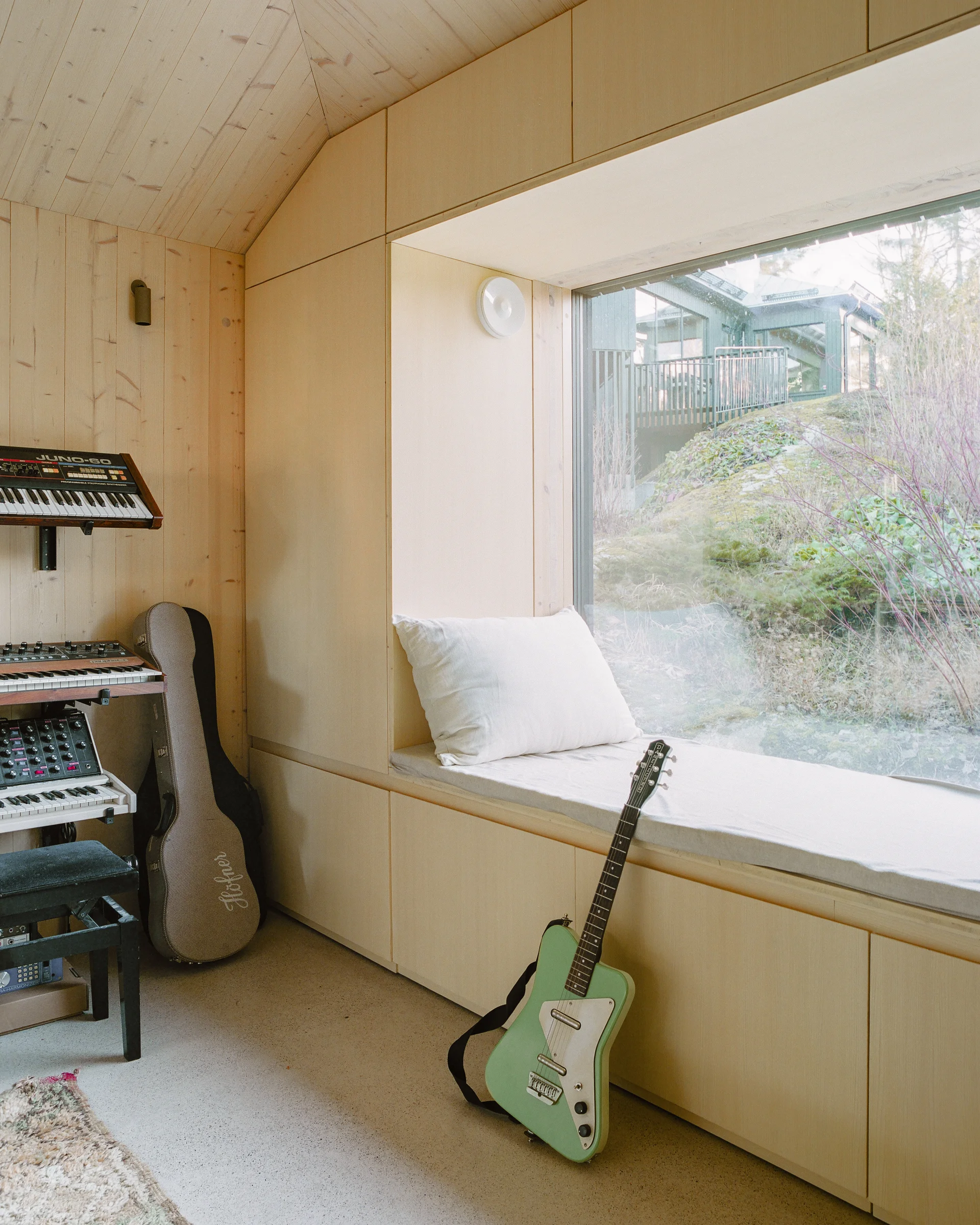
A separate garden building sits at the edge of the lot, its facade tar-painted black, its roof planted green. Inside, a built-in window seat lines up with a picture window onto the slope, synthesisers and a guitar lean against the wall, and a cream plywood interior replaces the spruce of the main house. It functions as a music studio, a small toilet and storage, and as a screen that gives the garden back to the garden. Geothermal wells run under the plot, solar panels are pencilled in for the main roof, and the old, lush vegetation, preserved intact, already behaves as if the new house has always been there.