On a busy street in Ampelokipoi in Athens, NYSA reimagines the Vedalia beauty salon as a therapeutic retreat — white and sand-toned tiles, cascading tropical plants, a double-height void that turns the ritual of care into a quiet architecture of pause.
Athens is a city of textures that rarely resolve into the seamless — the urban fabric is dense, fast, layered with the history of decades of improvised construction, and the street in Ampelokipoi where Vedalia sits is no exception. Against this backdrop, NYSA's proposal for the 150-square-metre salon is a studied act of subtraction: a space that removes itself from the rhythms of the street and constructs, in their place, an environment of deliberate calm.
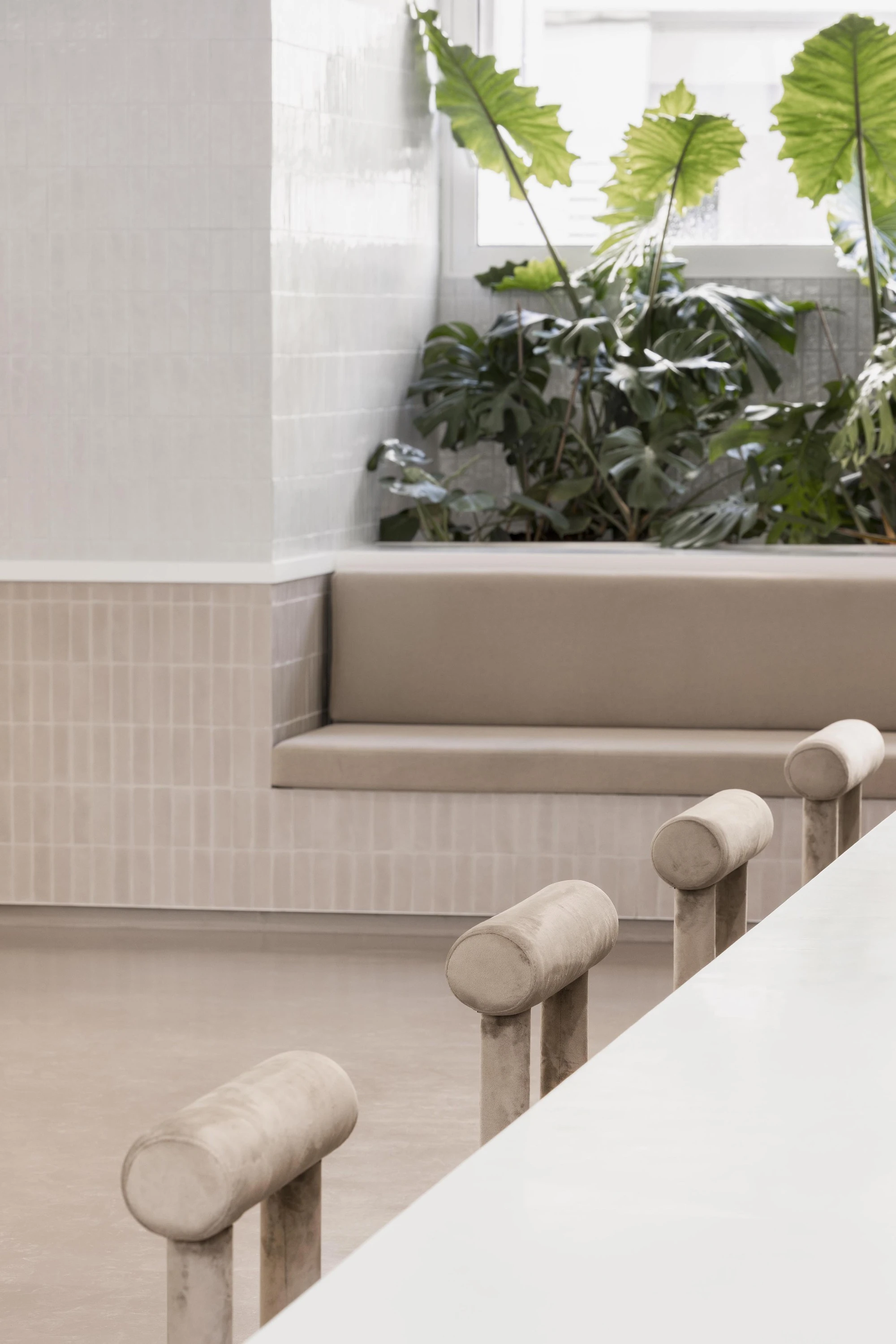
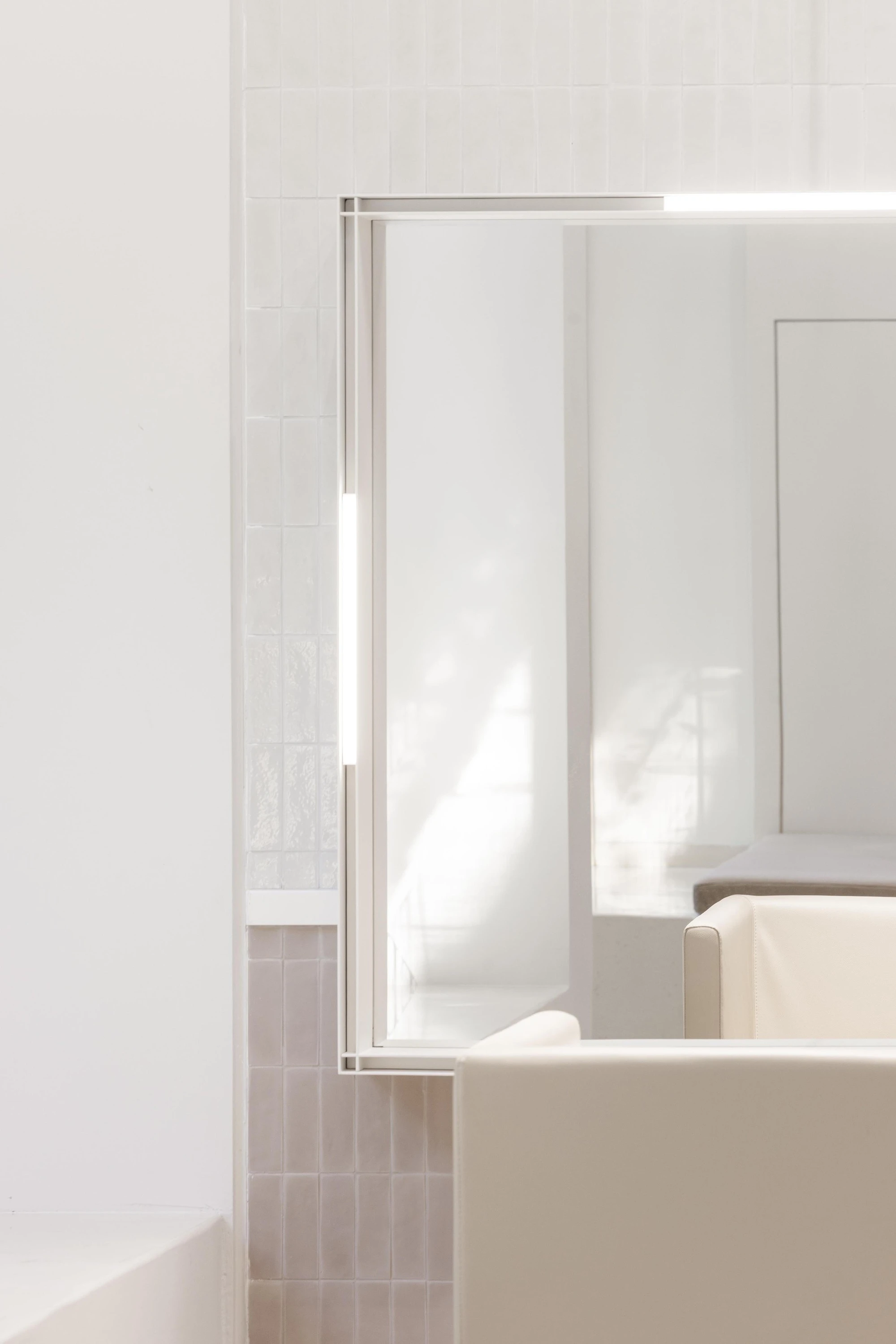
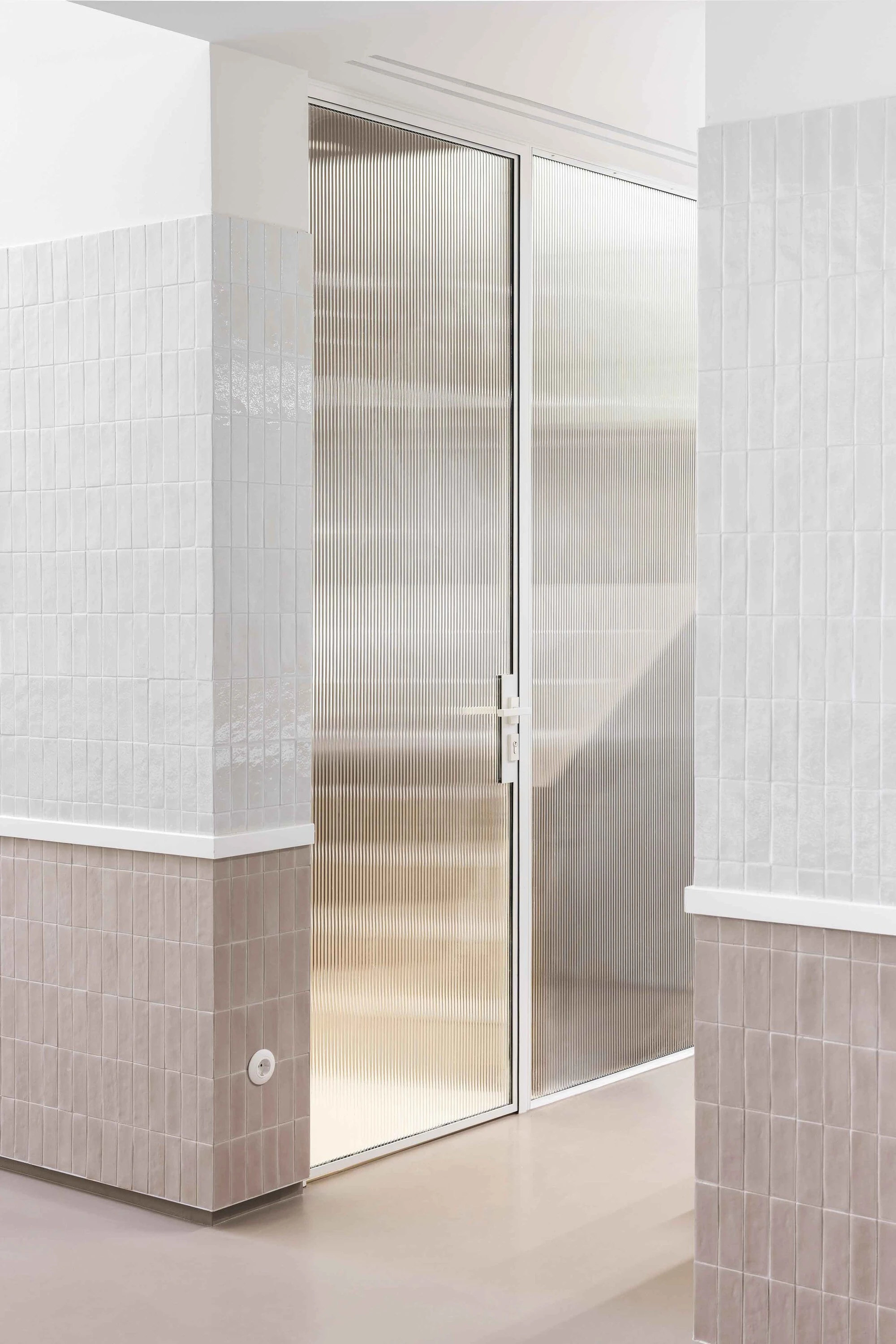
The material palette is built from two registers of tile: white ceramic at the upper level, its glazed surface catching and scattering light from the large south-facing windows; sand-toned tile at the lower zone, wrapping benches, service stations, and counters in a continuous warm field. The transition between these two surfaces is unhurried — a horizontal line that divides the room without hardening it, suggesting the boundary between different modes of attention. The white tile reflects the photographic greenery visible through the glazed upper façade; the sand tile grounds the working surfaces in something closer to earth.
The double-height void is the room's spatial event. From the street, a large planted volume is visible behind glass — tropical leaves in soft focus, an interior garden that operates as the salon's first threshold before the visitor enters. Inside, the plants descend from the upper level through the void, creating a vertical connection between the street-facing façade and the working interior. Rounded, sand-upholstered stools at the long white nail stations, rounded-back chairs at the hair stations — the furniture is soft in form, unhurried in its dimensions.
The design positions beauty treatment not as a commercial transaction but as a process closer to a therapeutic retreat. The spatial language supports this claim without overstatement: it does not aestheticise wellness through the usual vocabulary of spas and retreats, but through the more demanding means of architectural restraint — proportion, material quality, the careful management of light. Published on ArchDaily in November 2025, the project represents a serious contribution to a typology that rarely receives this level of architectural consideration.