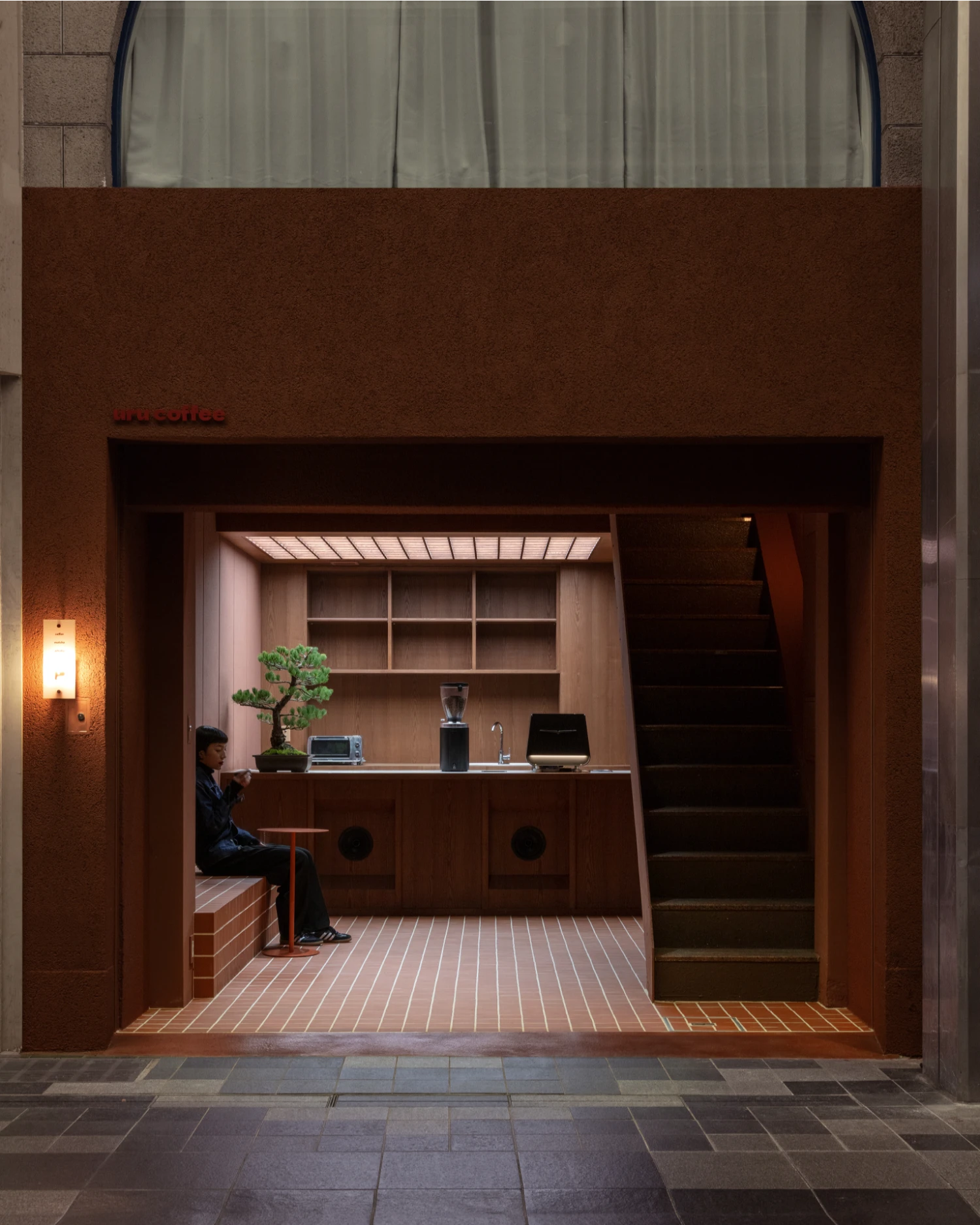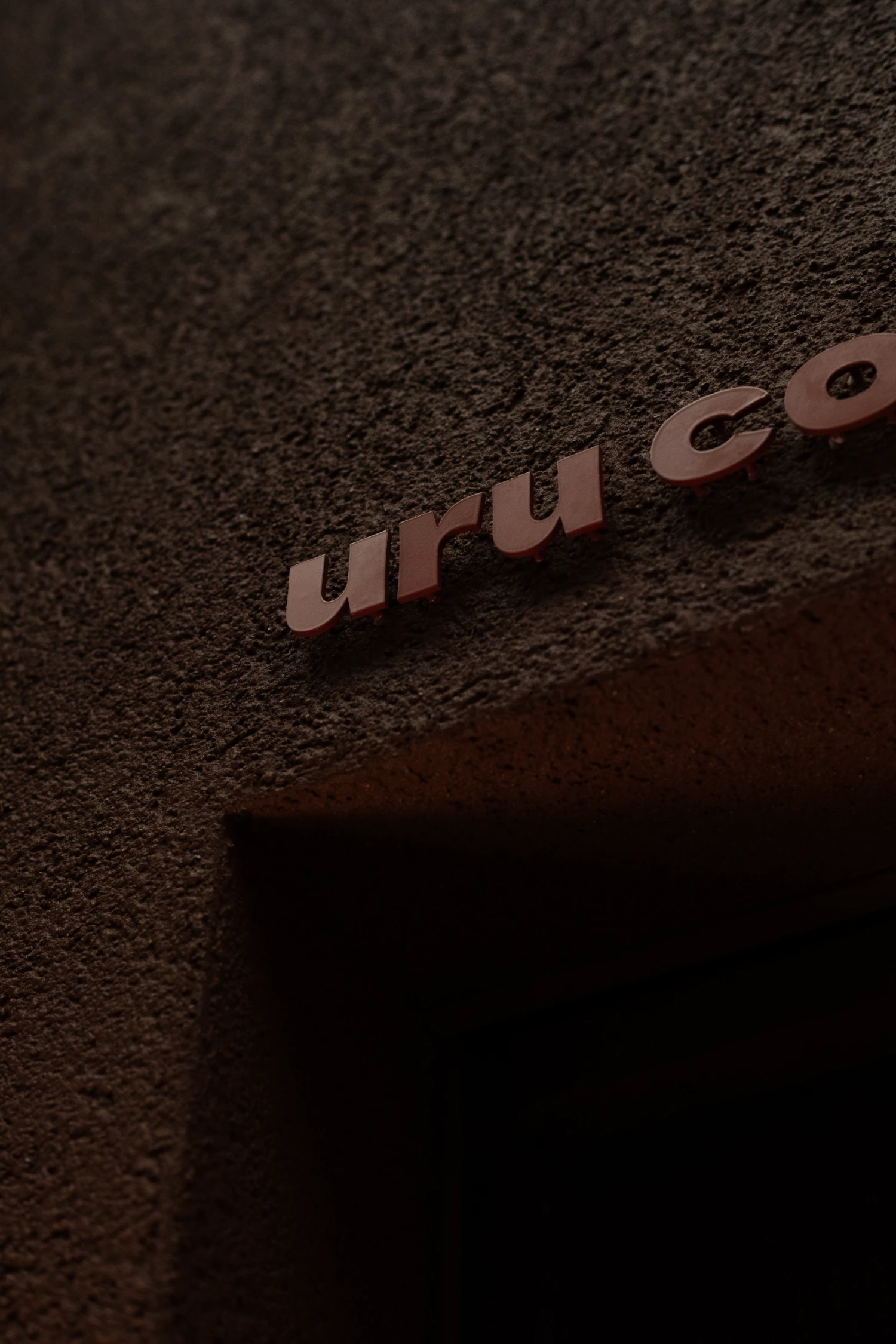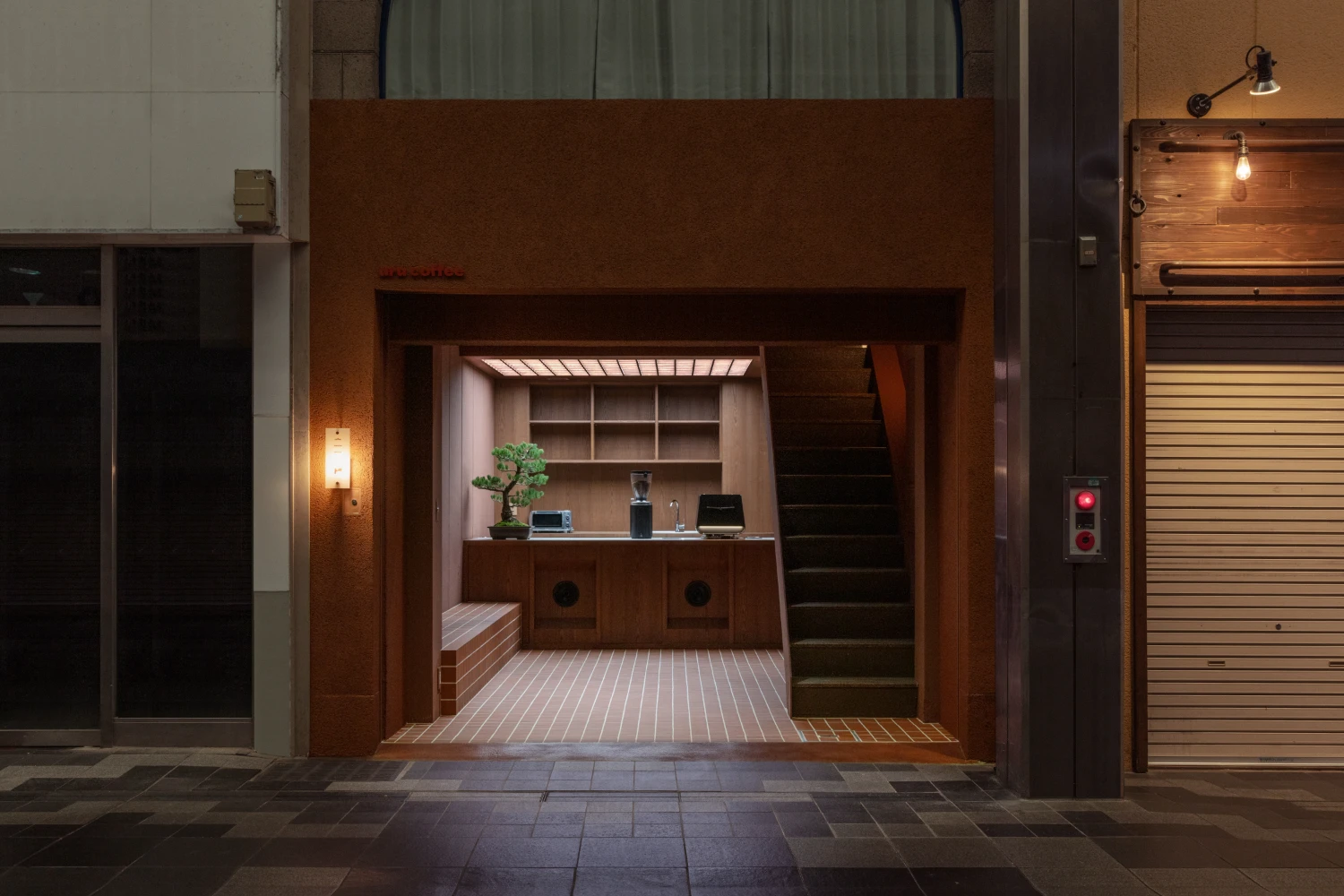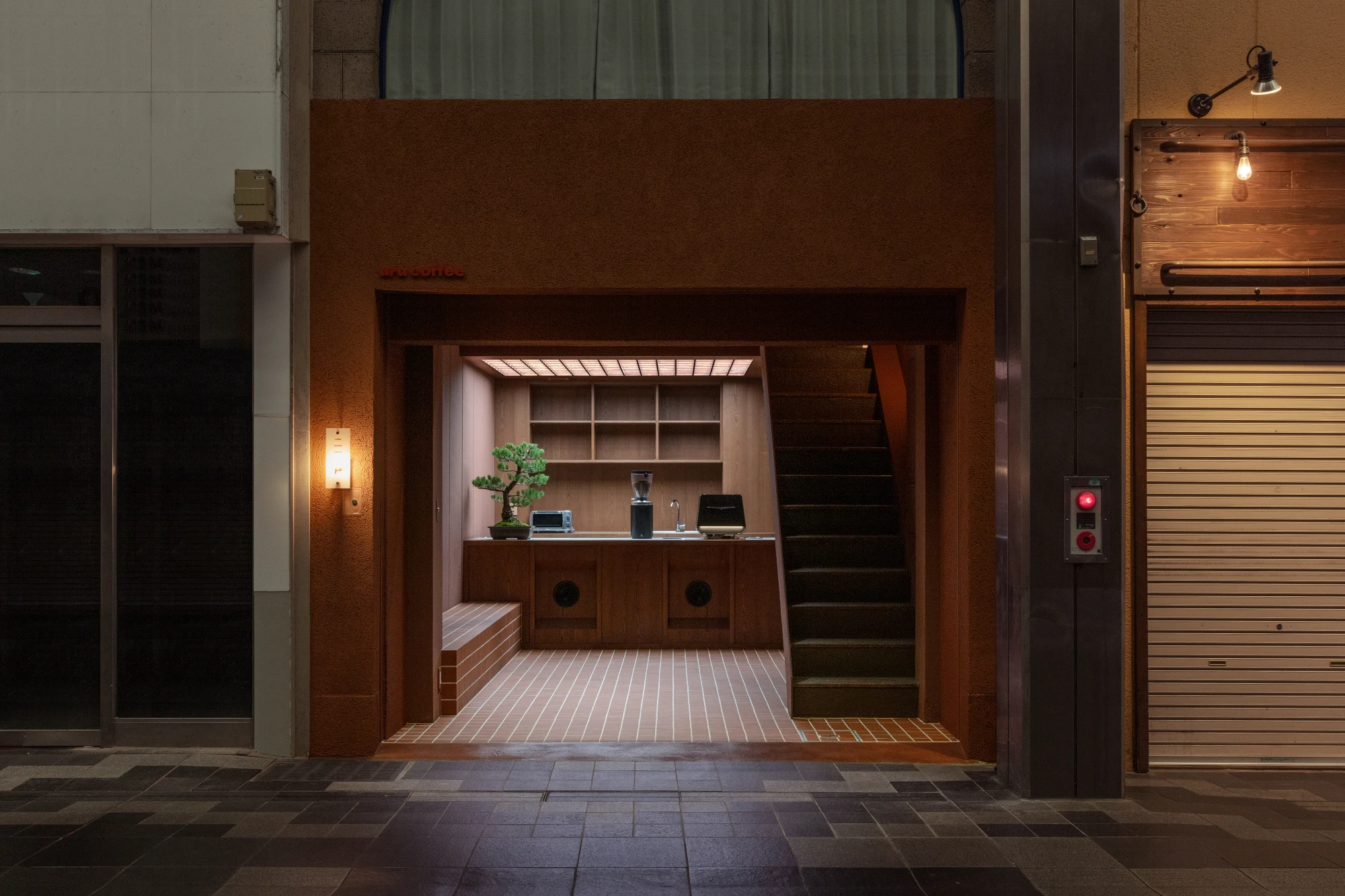
uru coffee designed by TRANSFORM in Kyoto reinterprets vermilion and shoji light to create a calm, memorable pause within the density of Teramachi Shopping Street.
TRANSFORM’s intervention is compact yet unmistakable, carving out a spatial inhale amid retail noise. The project’s strength lies in restraint: an interior that resists spectacle while quietly reordering attention through proportion, material, and light.
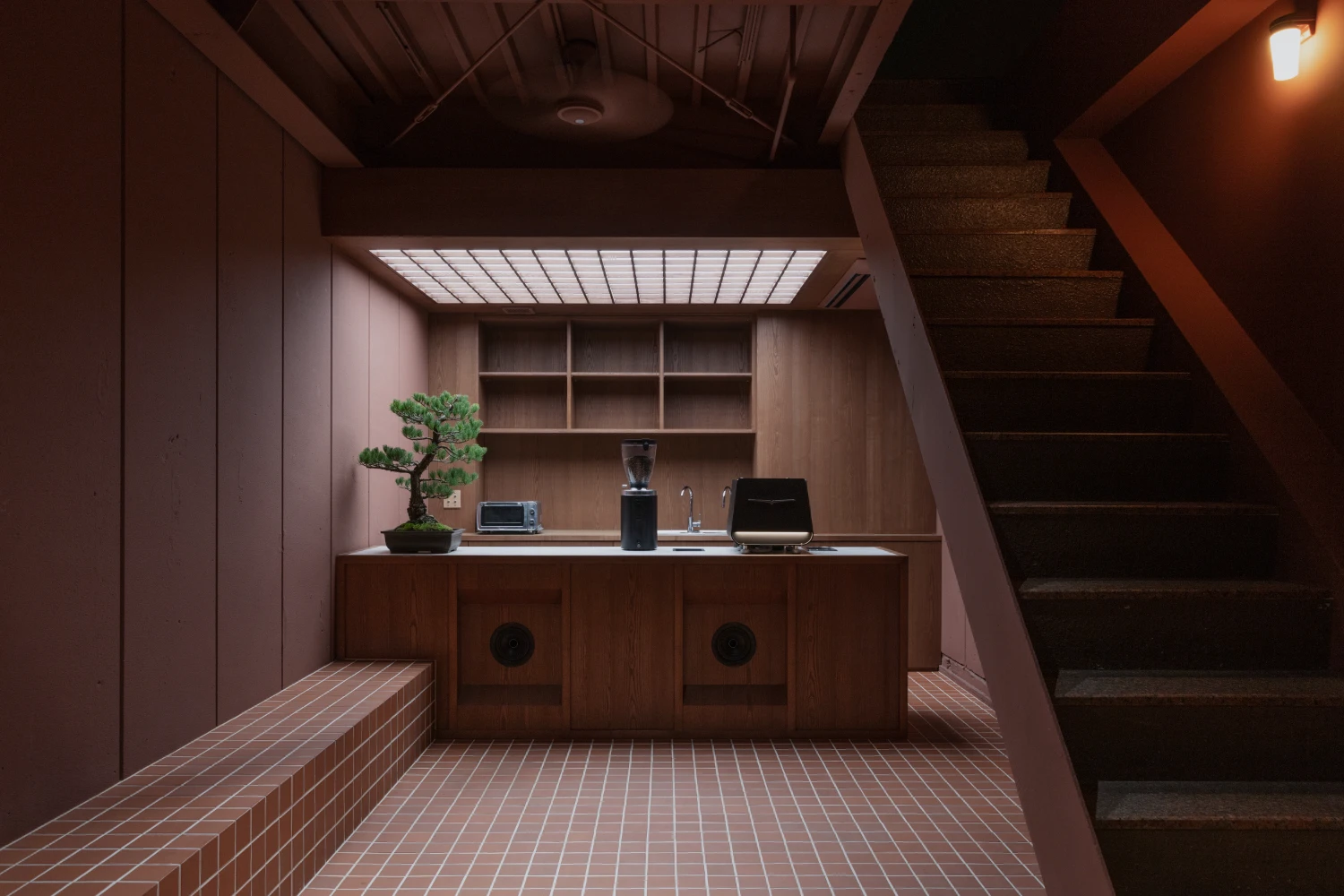
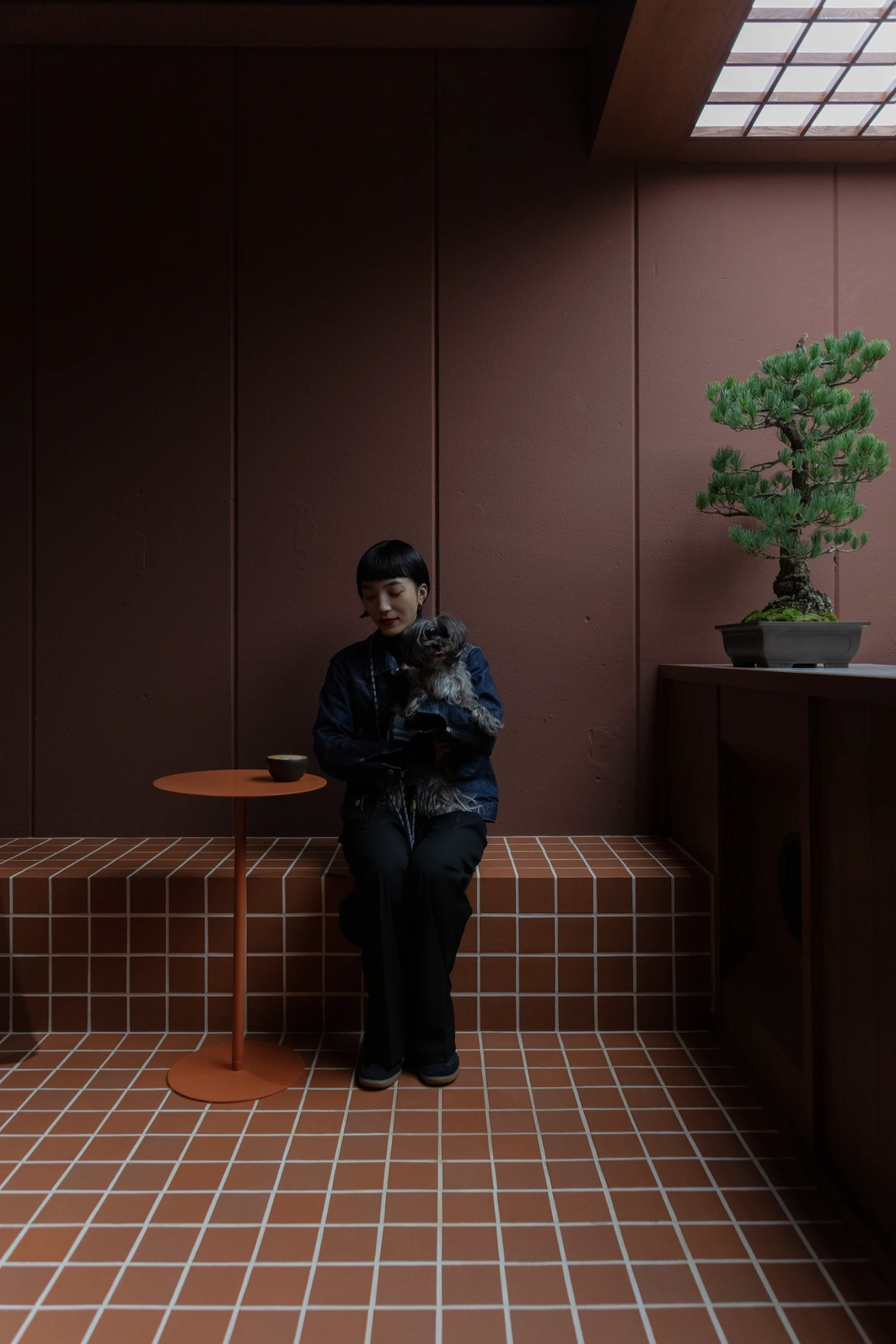
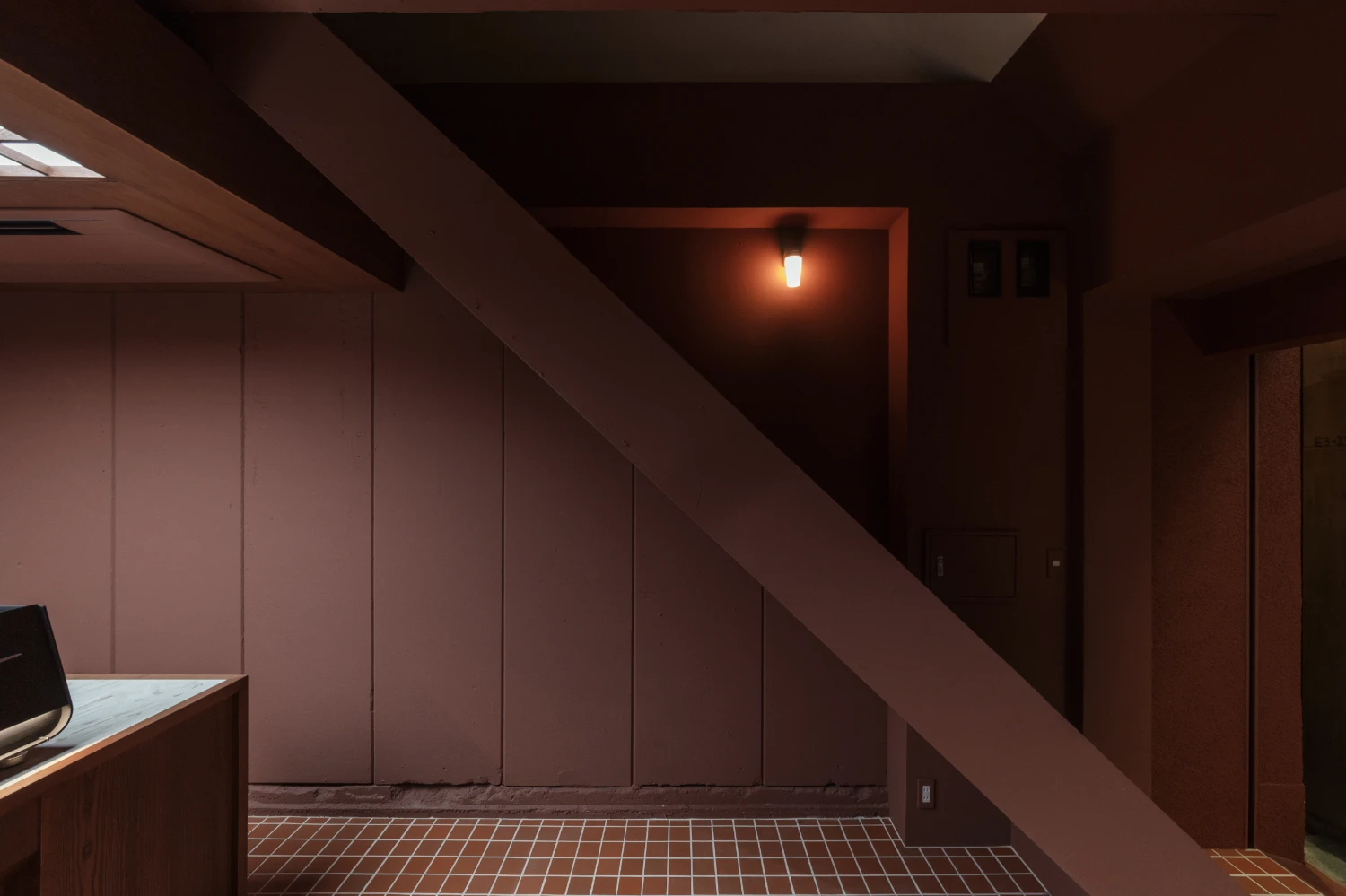
Vermilion sets the emotional temperature. Historically charged and immediately legible in Kyoto’s visual memory, the color is here softened and thickened, coating walls and tiles with an earthen gravity rather than shrine-like brightness. Its application avoids nostalgia, instead behaving as a structural field that anchors the space and lends the narrow frontage an almost infrastructural authority within the street.
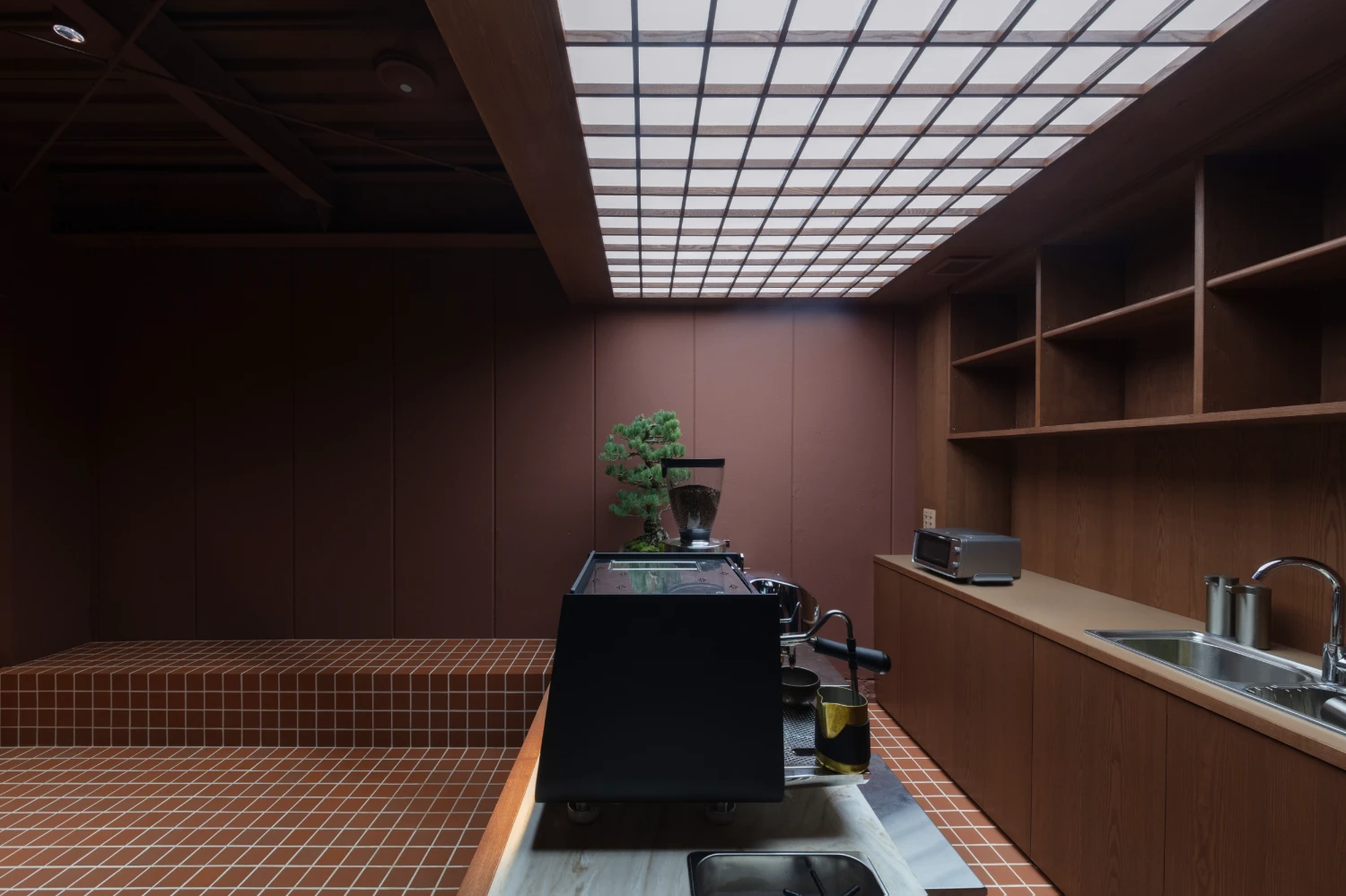
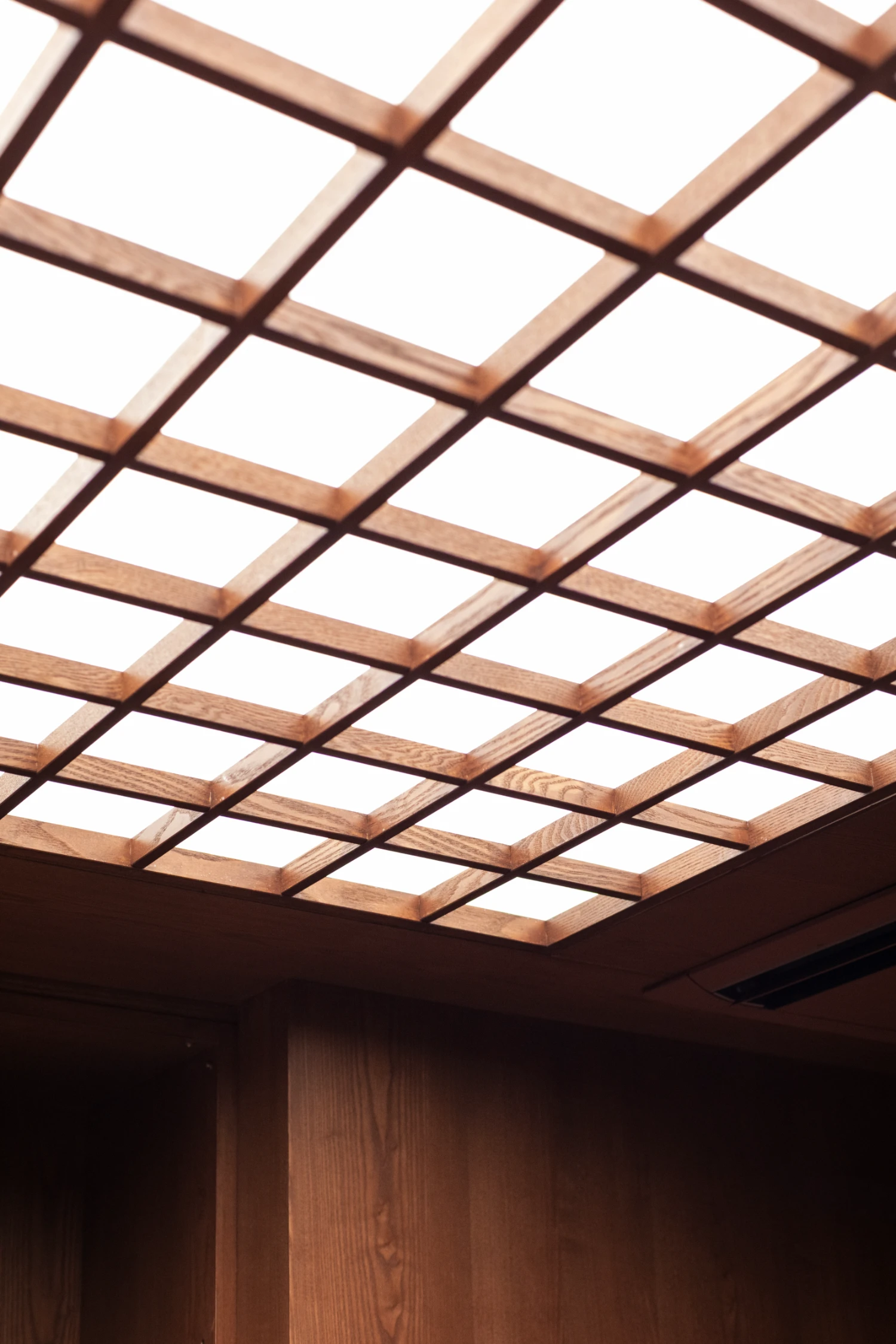
Light becomes the project’s most articulate material. A ceiling grid, recalling shoji screens, filters illumination into a gentle lattice, producing a mutable gradient across wood surfaces and tiled planes. This choreography of light and shadow deepens the room perceptually, stretching a modest footprint into something contemplative. The effect is neither theatrical nor decorative; it is temporal, changing with the day and subtly marking duration.
Furniture and objects are reduced to essentials: a bonsai placed with near-liturgical precision, equipment presented without concealment, seating integrated into the architecture itself. The coffee stand becomes a social hinge rather than a destination, a place to lean, wait, observe. In this way, uru coffee reads as an urban instrument, generating micro-encounters and embedding itself into the daily cadence of Kyoto life.