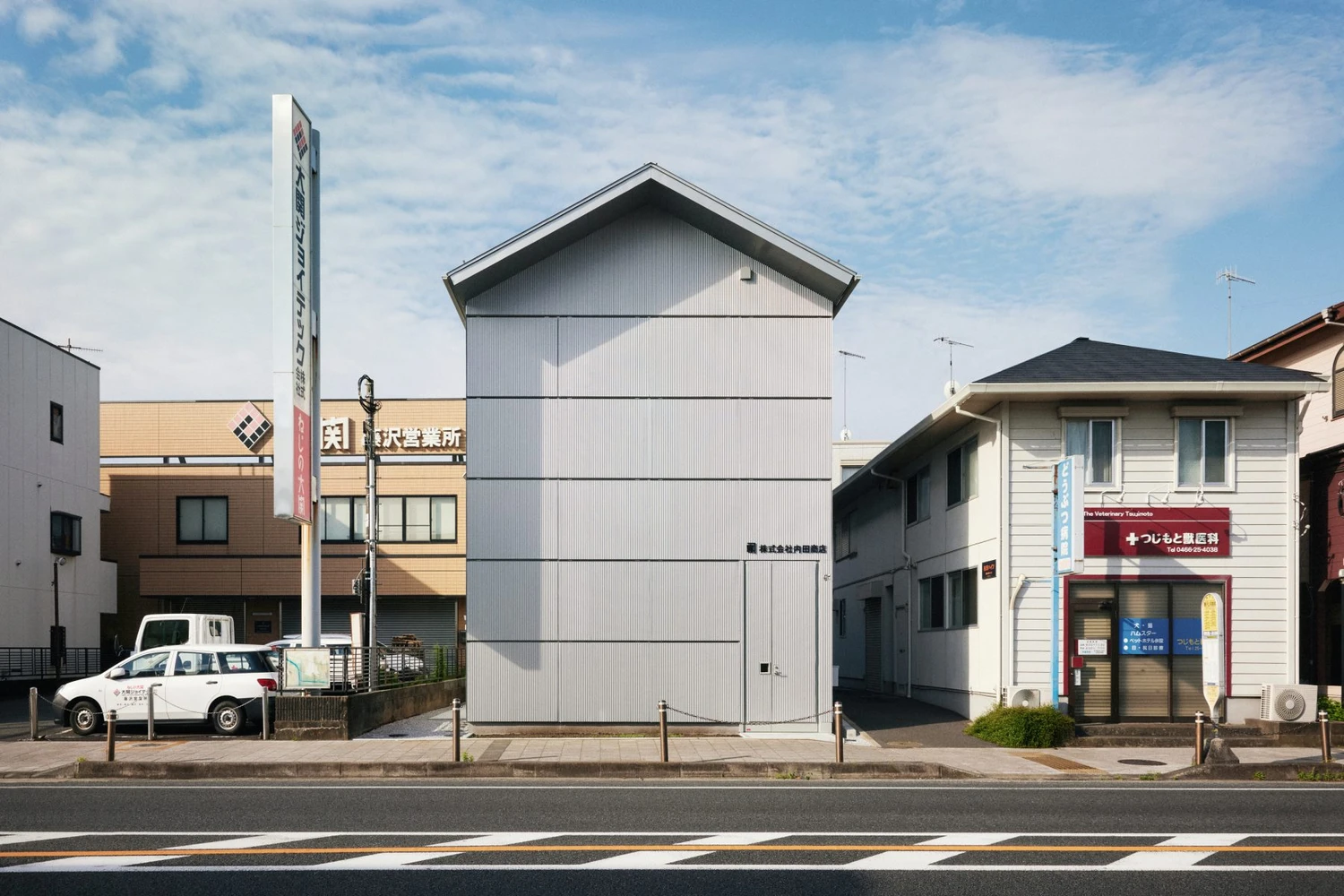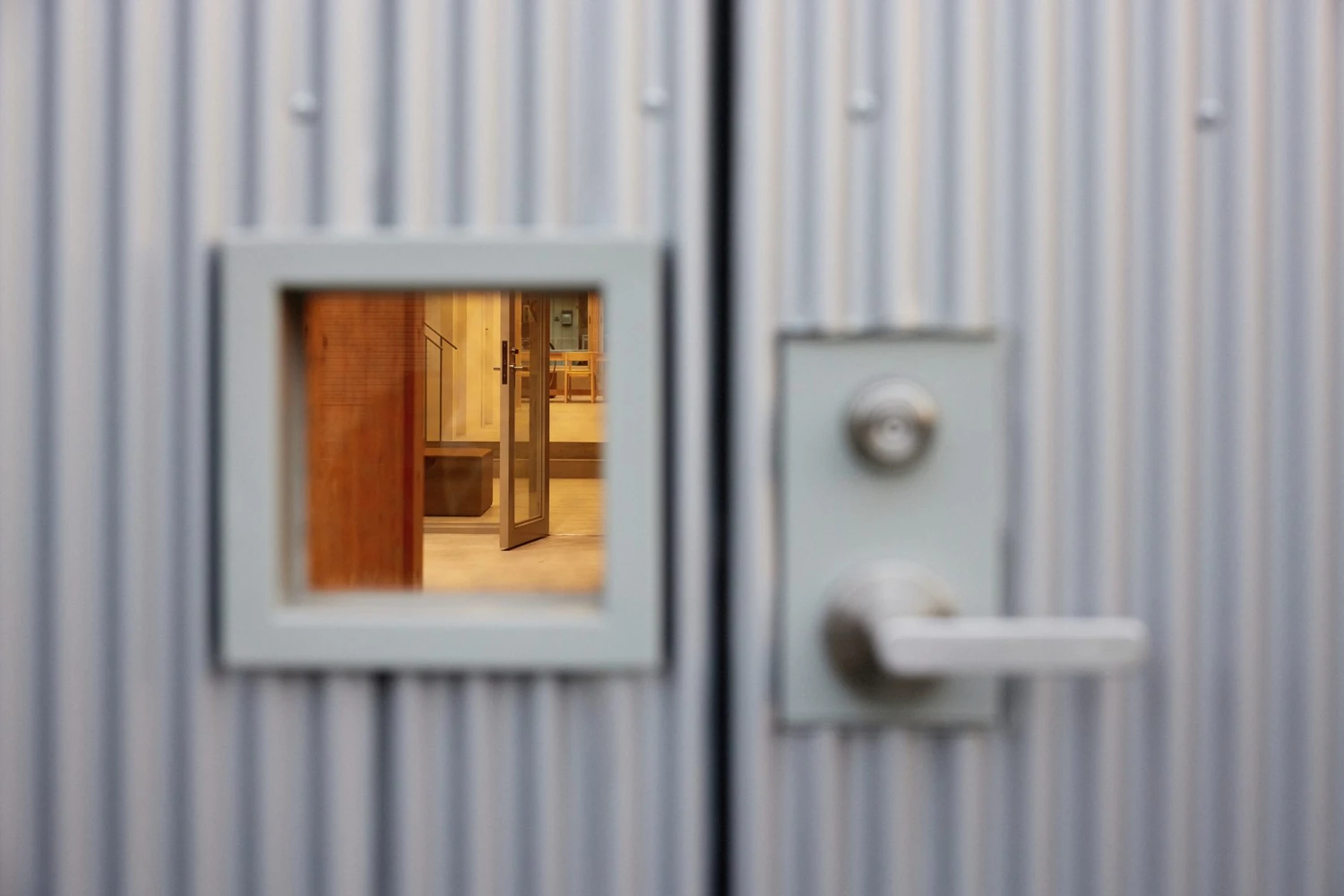
Uchida Shoten Head Office by Jo Nagasaka / Schemata Architects in Fujisawa, Japan grafts an artist residency onto a hardware company—shop in front, studio within.
The old Tōkaidō road once connected Kyoto to Tokyo, its route dotted with post towns where travelers rested and merchants prospered. Fujisawa was the sixth such station, and though the highway now carries cars instead of foot traffic, certain traces persist. The plots here remain long and narrow—a legacy of Edo-era taxes calculated by street frontage—and the family businesses still remember their origins.
Uchida Shōten has sold hardware in Fujisawa for one hundred and sixty years. When the company needed a new headquarters, Jo Nagasaka of Schemata Architects saw an opportunity to do something stranger than simply build an office. What if a building hardware company could also be a patron of the arts? What if the traditional machiya layout—shop at front, life at back—could be reprogrammed for creative production?
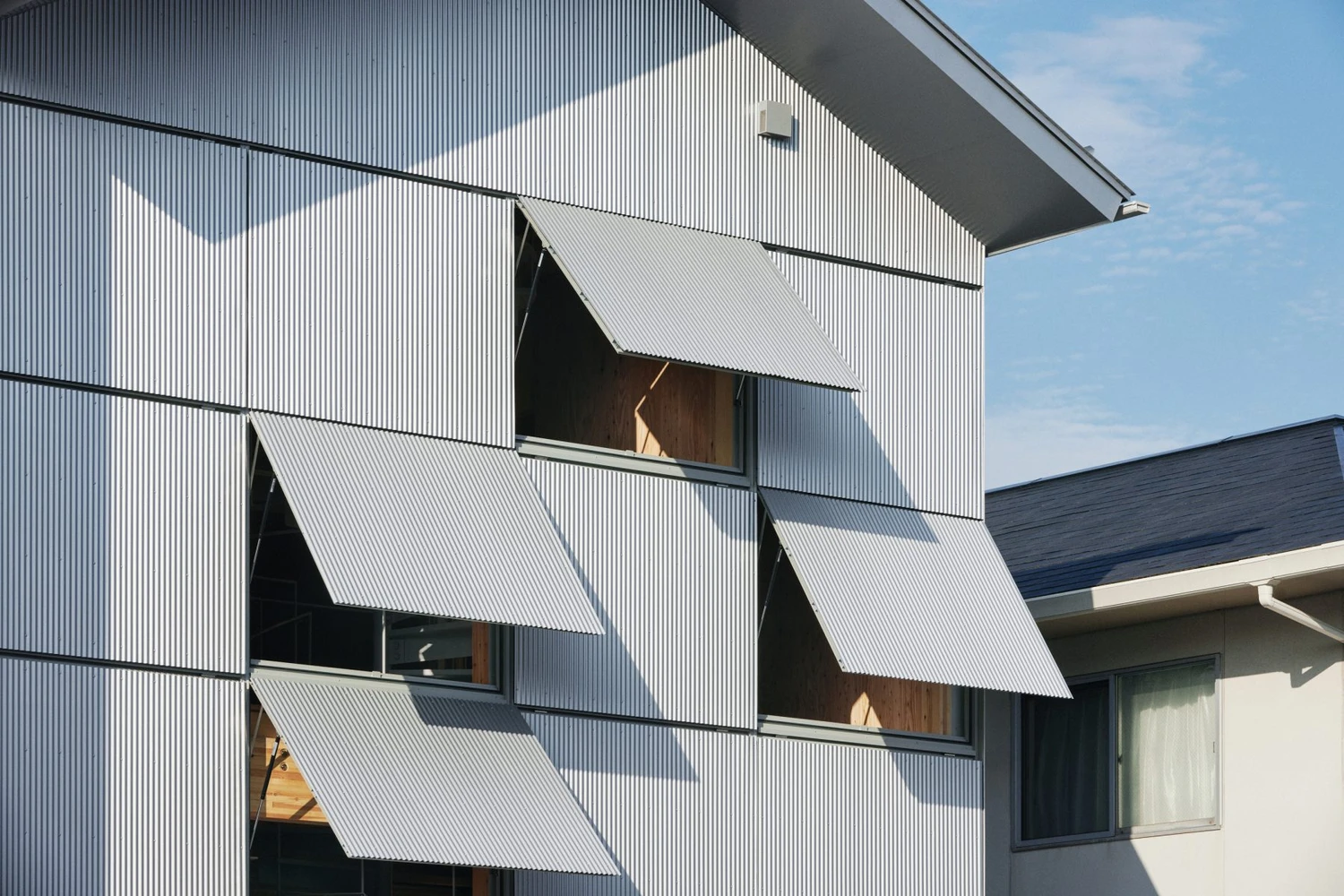
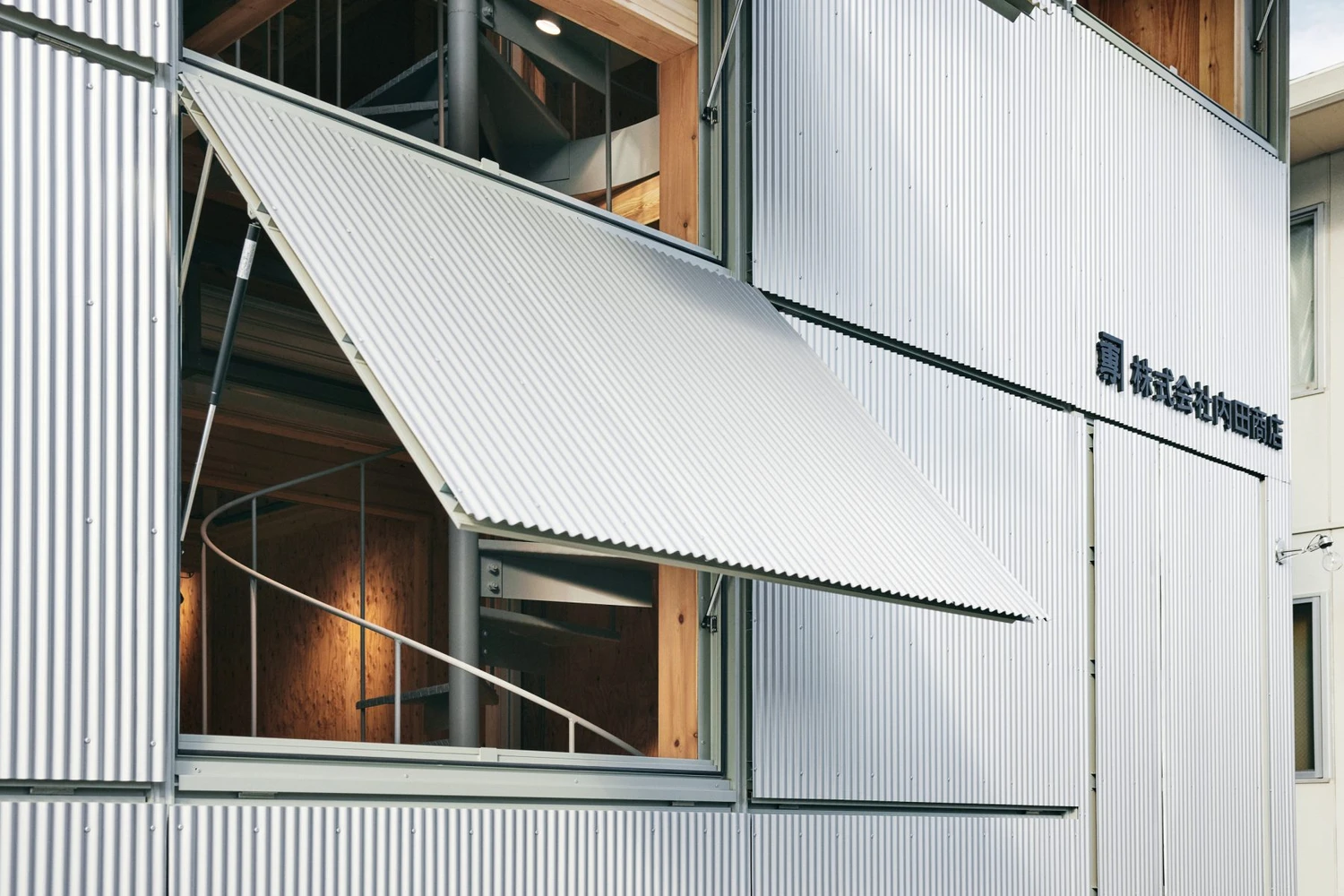
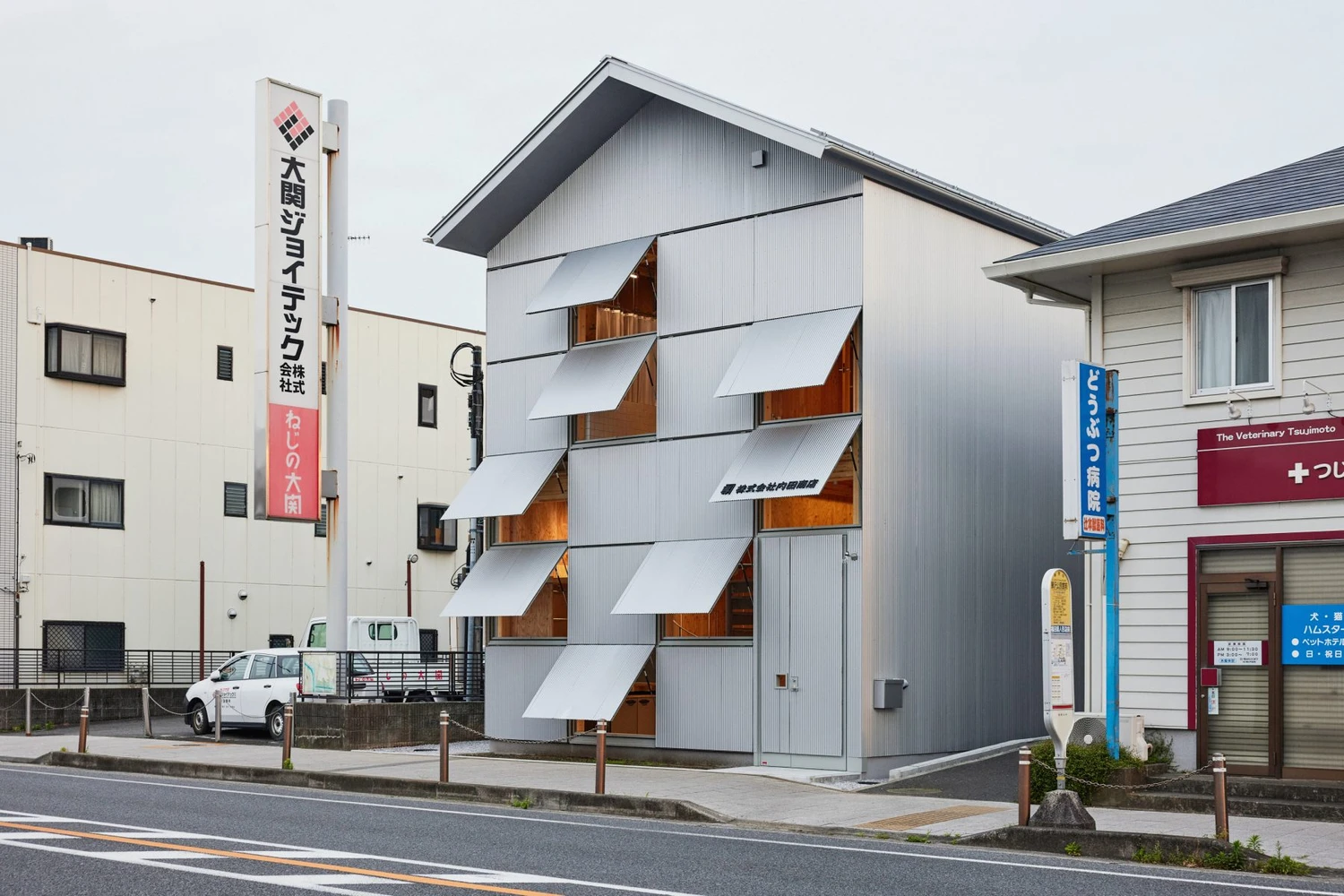
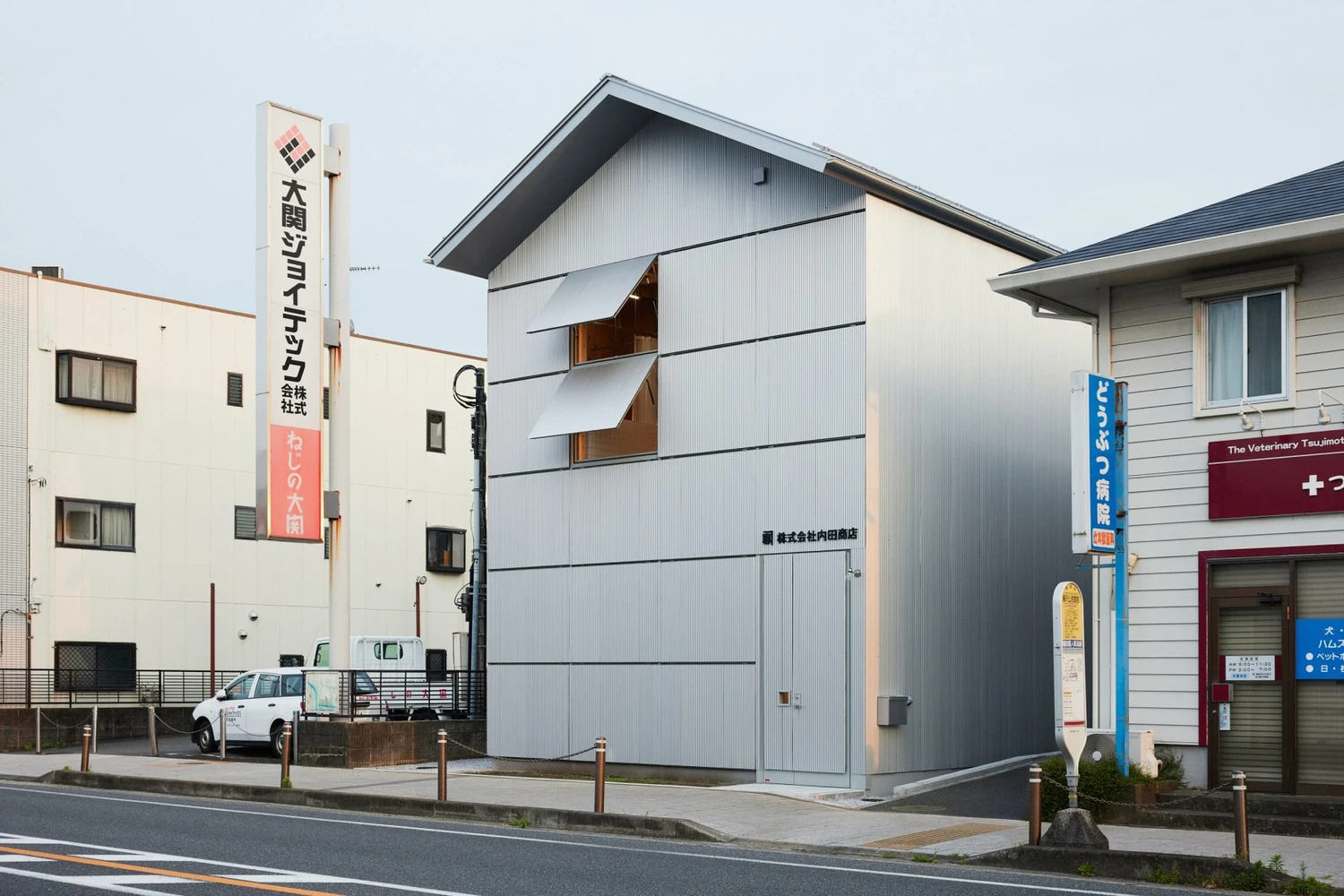
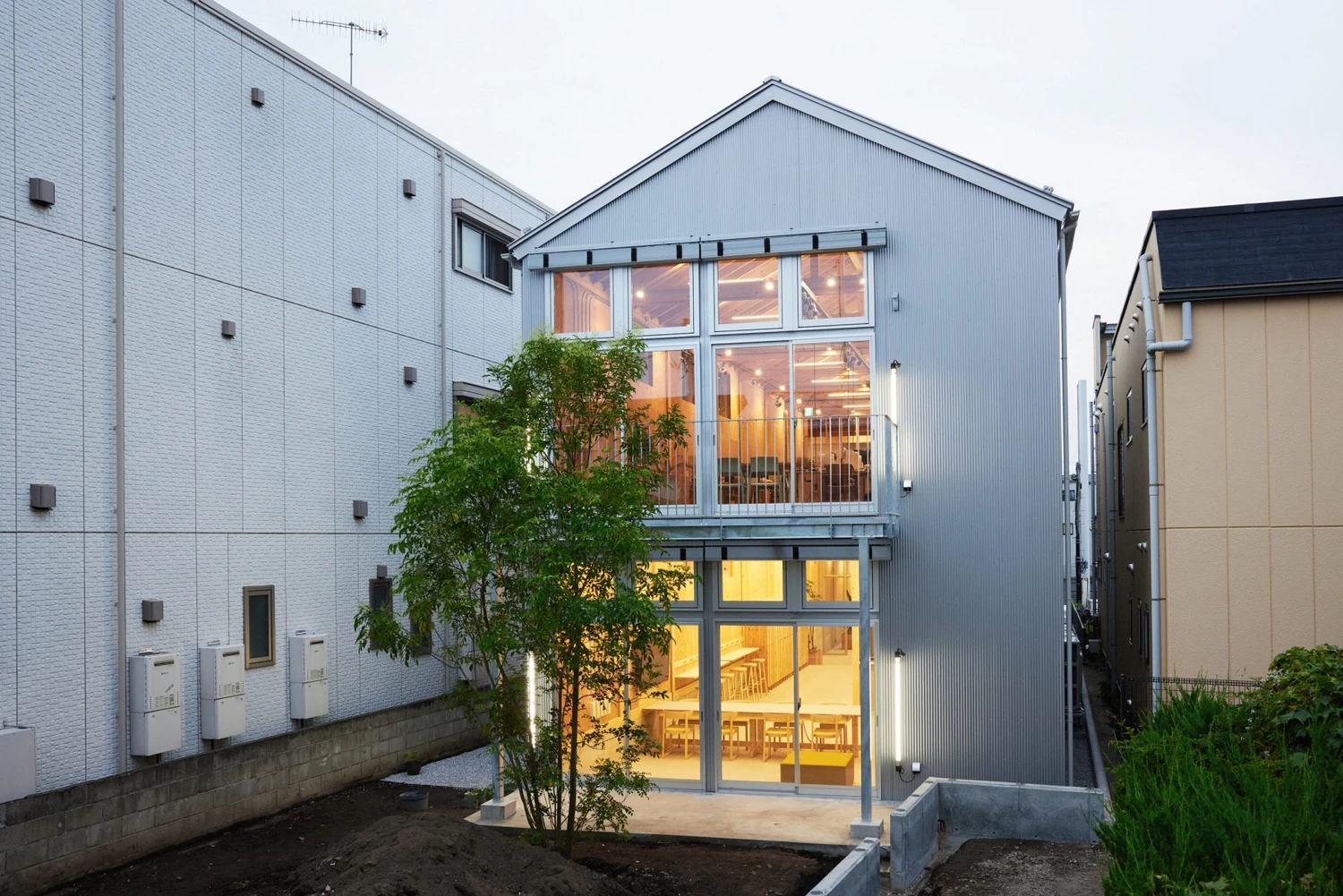
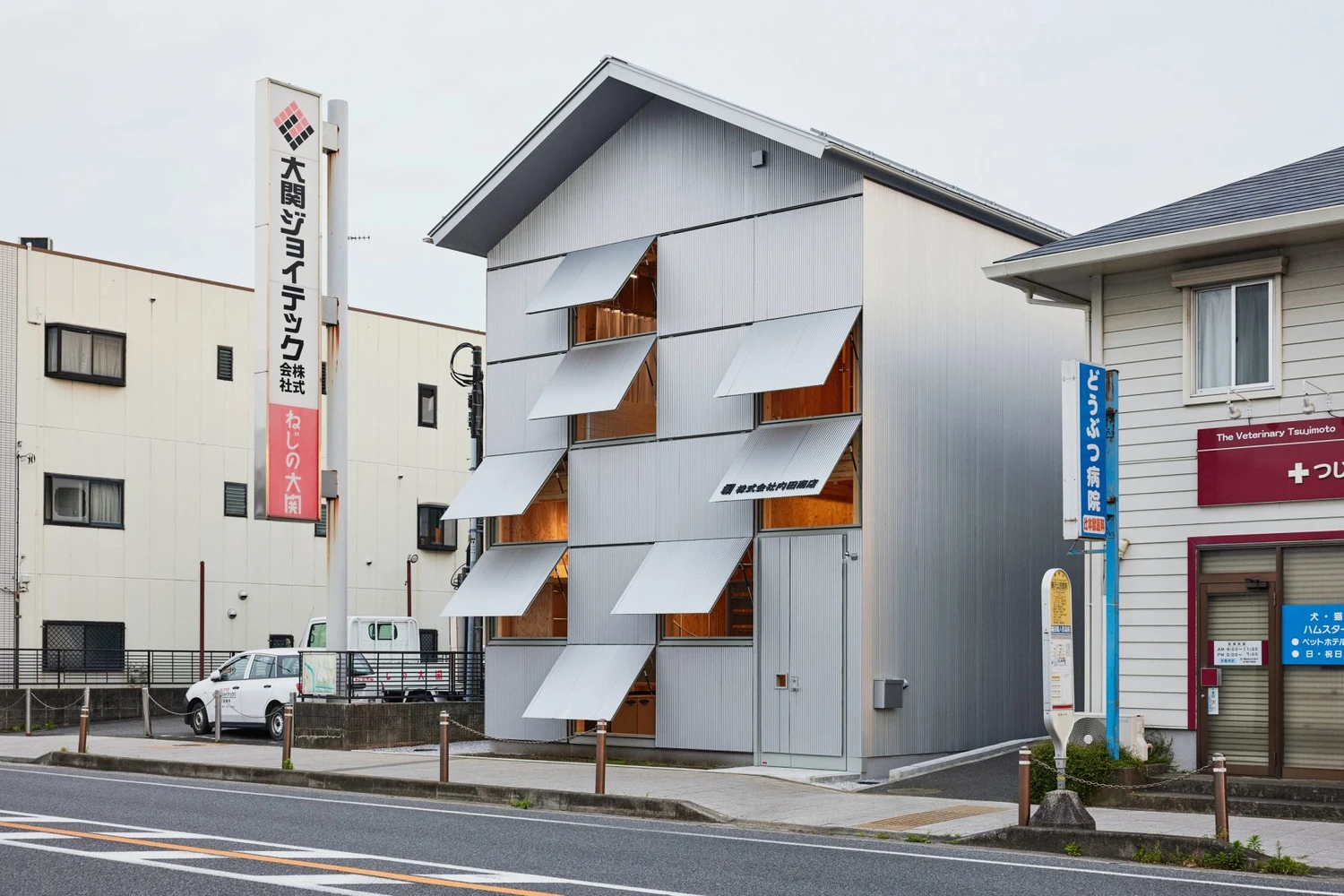
The resulting structure wears its modesty like a uniform. Clad in corrugated metal with a pitched roof that echoes its residential neighbors, the building presents an almost anonymous face to the street. Only the awning windows along the north façade, hinged to swing outward like the pages of an opening book, suggest that something unusual happens inside.
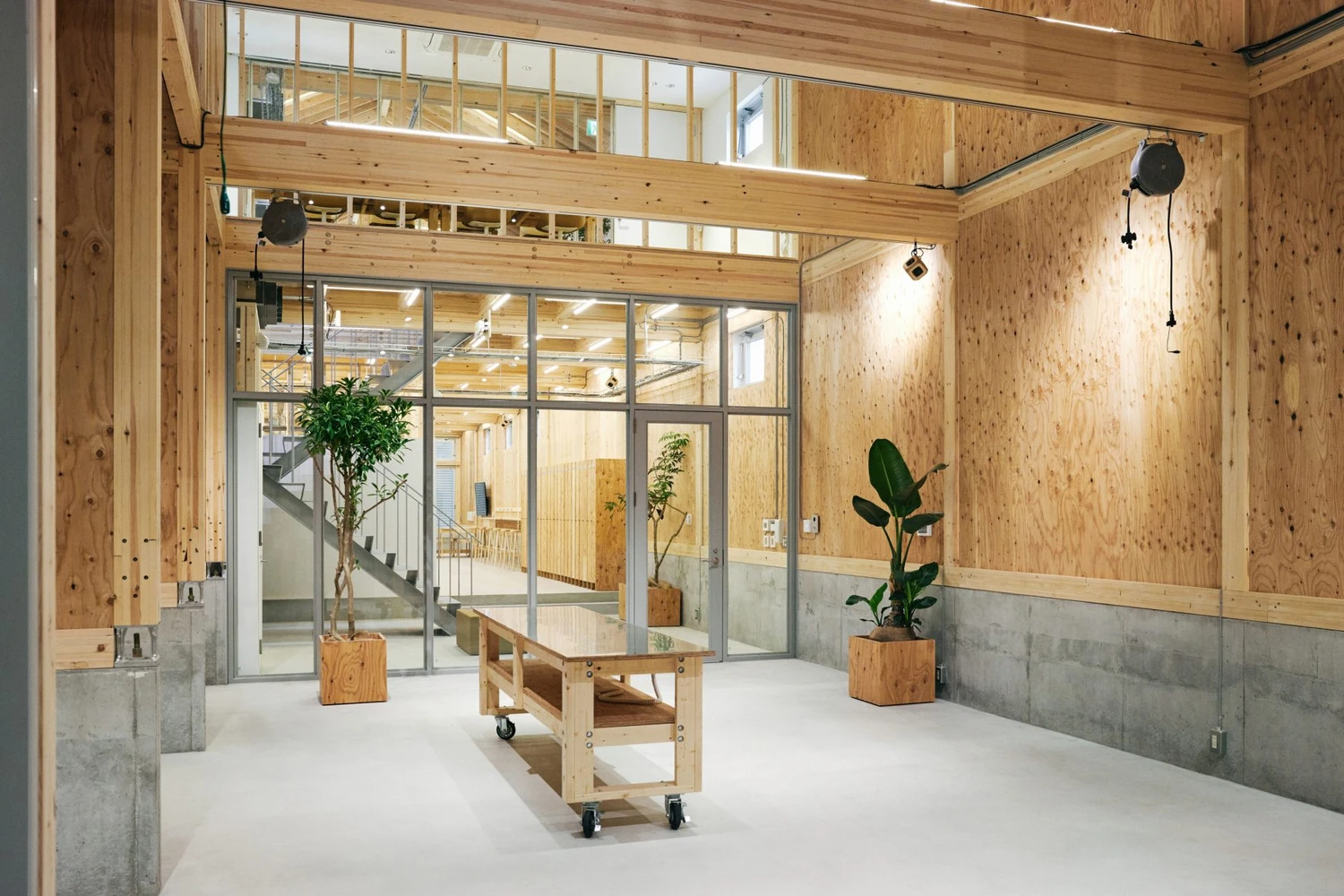
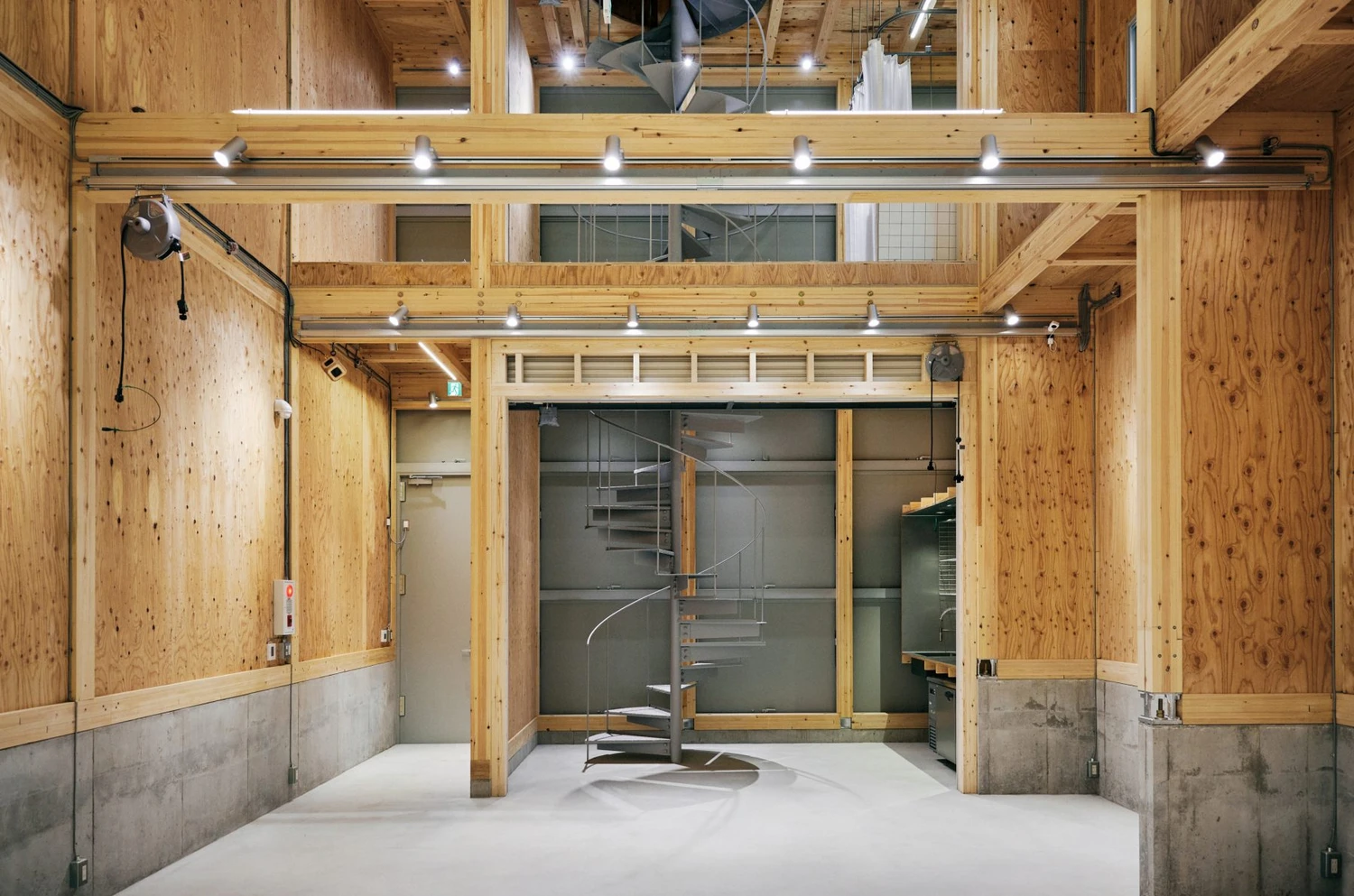
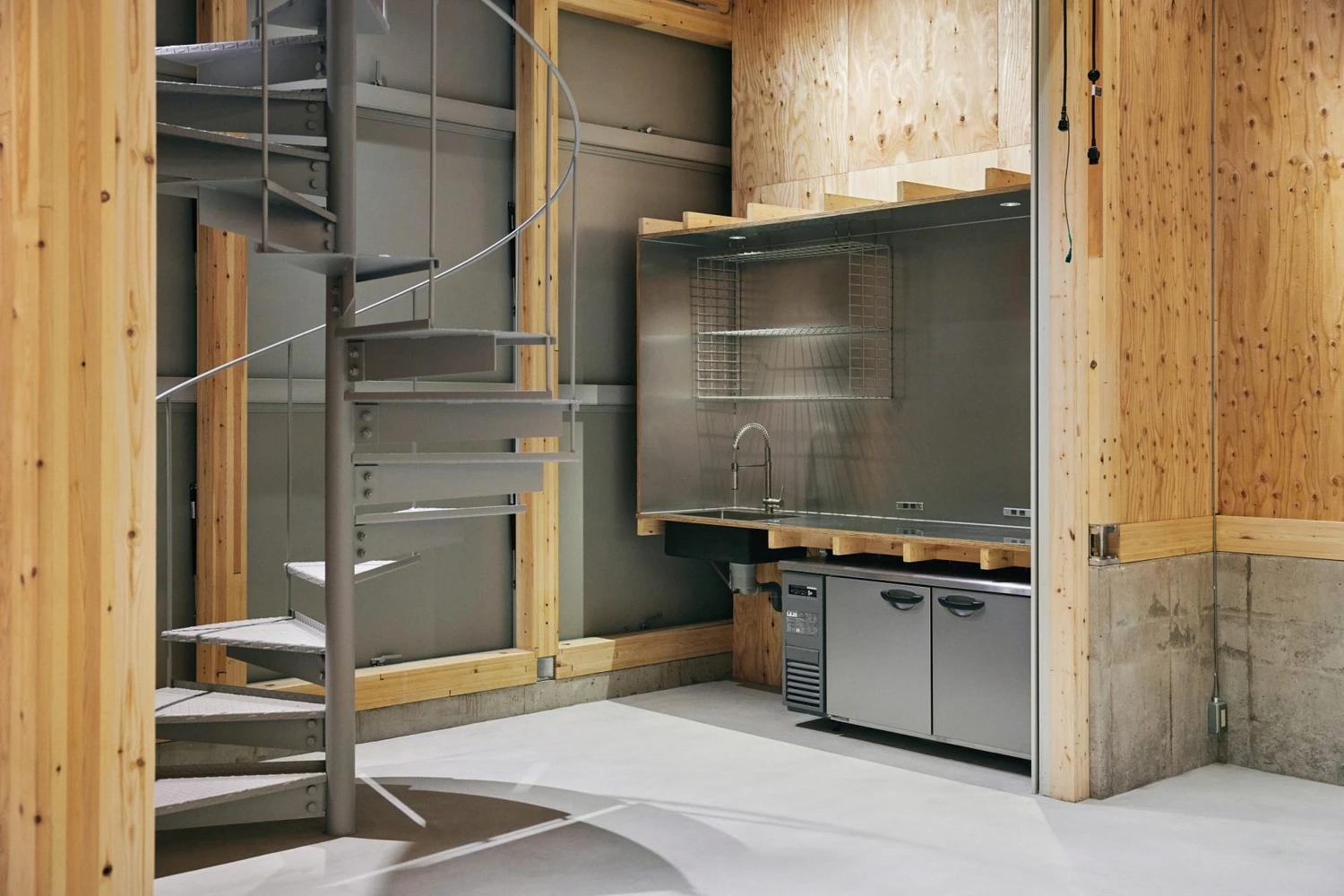
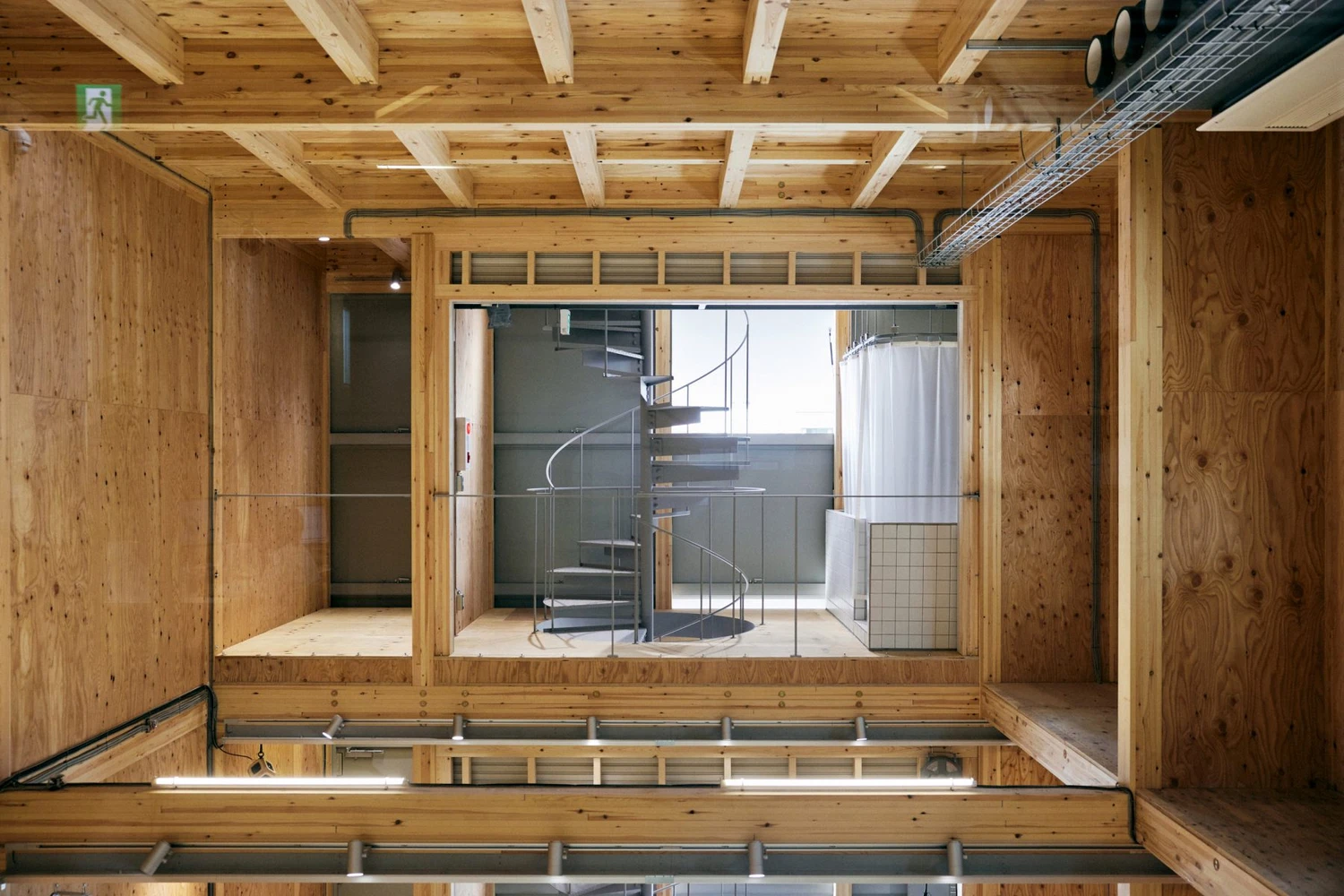
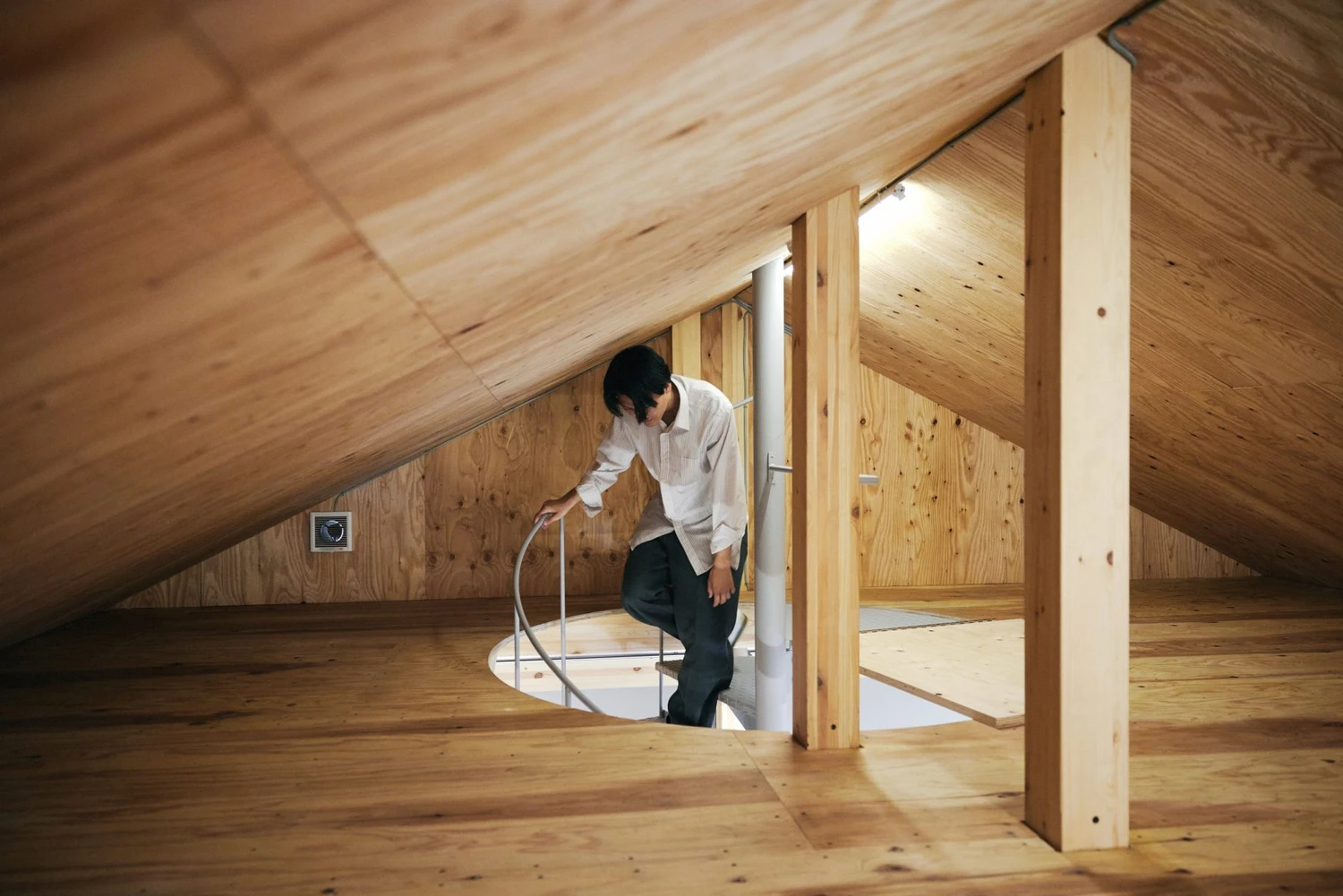
That something is a fully equipped artist residency, tucked behind the shutters at the building's front. A spiral staircase climbs to a loft sleeping space. A small kitchen, bathroom, and work area complete what Nagasaka calls the nedoko—a berth, in the nautical sense. The company offers this space to designers, students, and artists for short-term stays, producing exhibitions and workshops that spill out onto the street.
The arrangement makes a certain poetic sense. A company that manufactures the components of buildings—hinges, brackets, fasteners—now also manufactures the conditions for creative work. The employees pass through the residency each morning on their way to their desks at the back, encountering whatever strange project has taken root at the front. It is architecture as gentle provocation: a reminder that making things, whether drawer slides or drawings, requires both discipline and the willingness to be surprised.
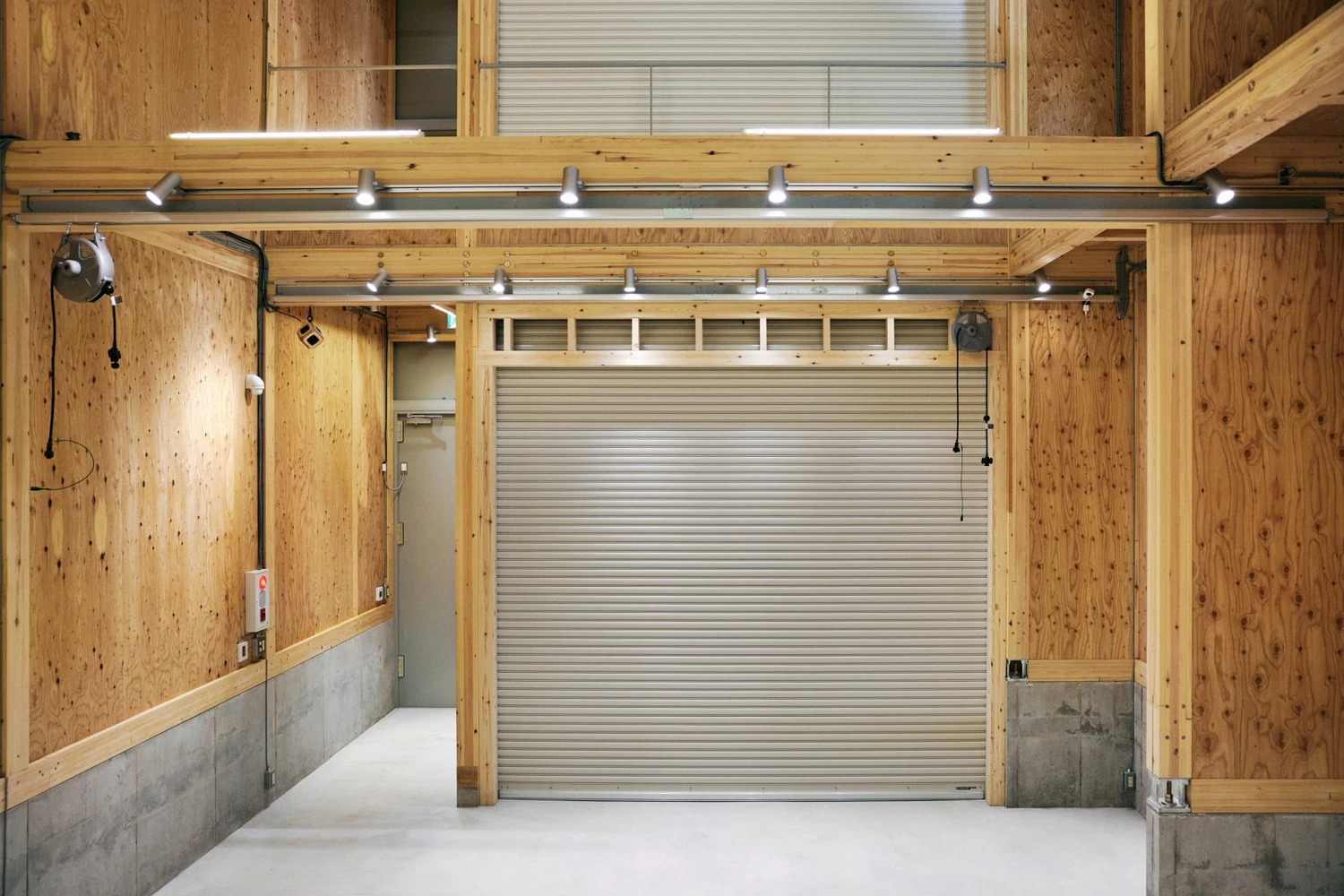
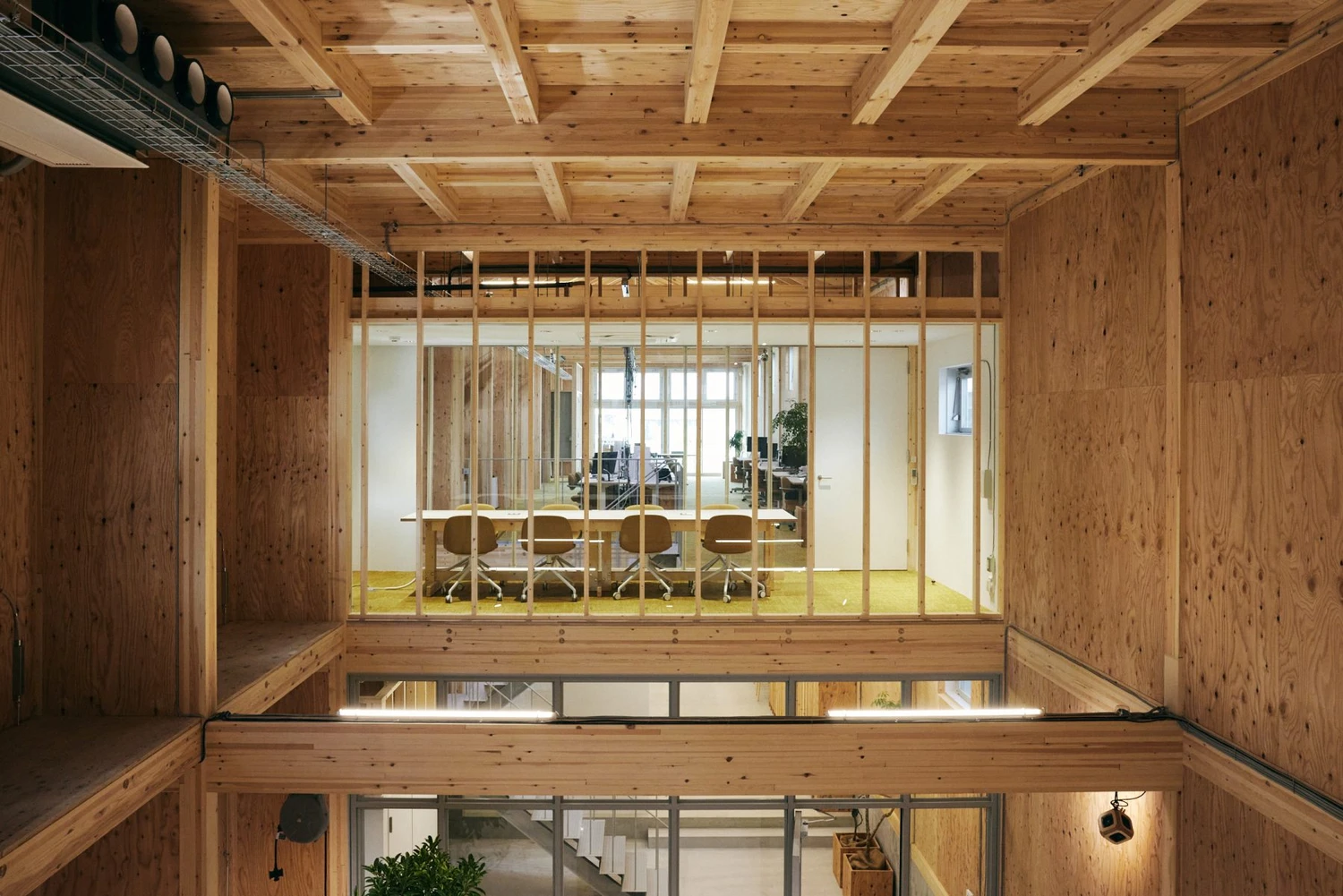
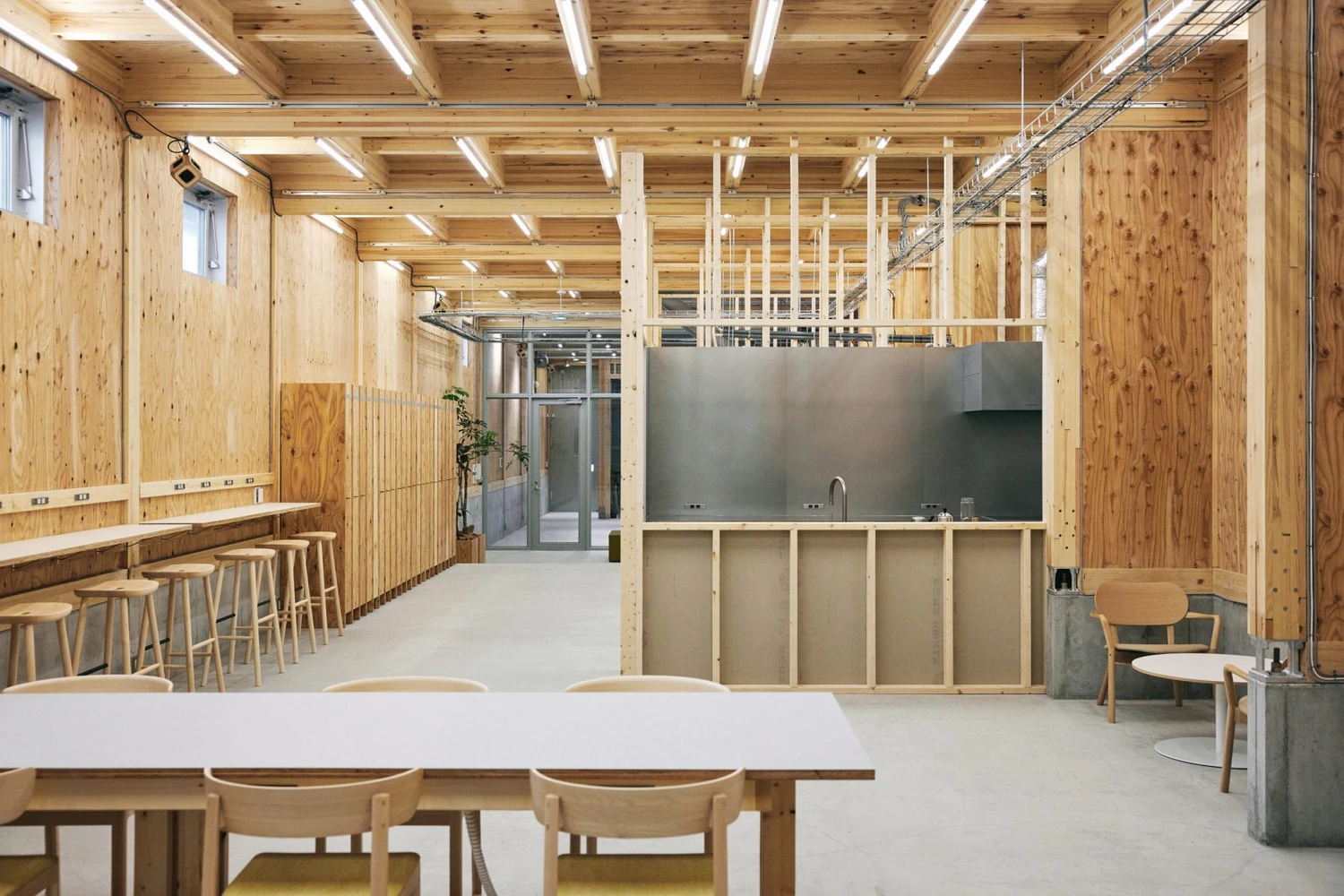
Inside, the space is unfinished in the deliberate way that signals possibility rather than poverty. Plywood walls accept nails and screws without complaint. Track lighting adjusts to whatever configuration the current resident requires. The building waits, patient and adaptable, for whatever comes next.