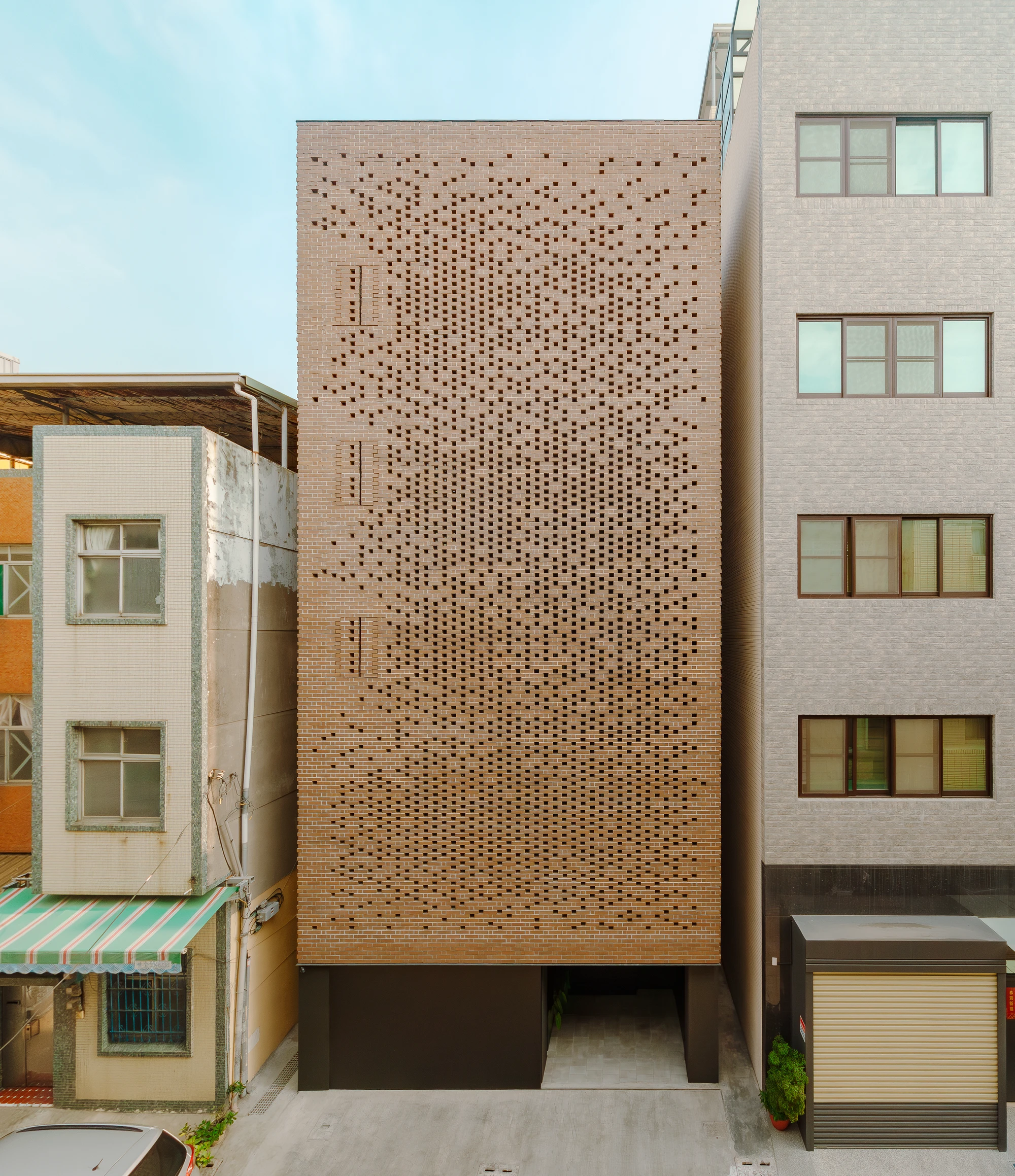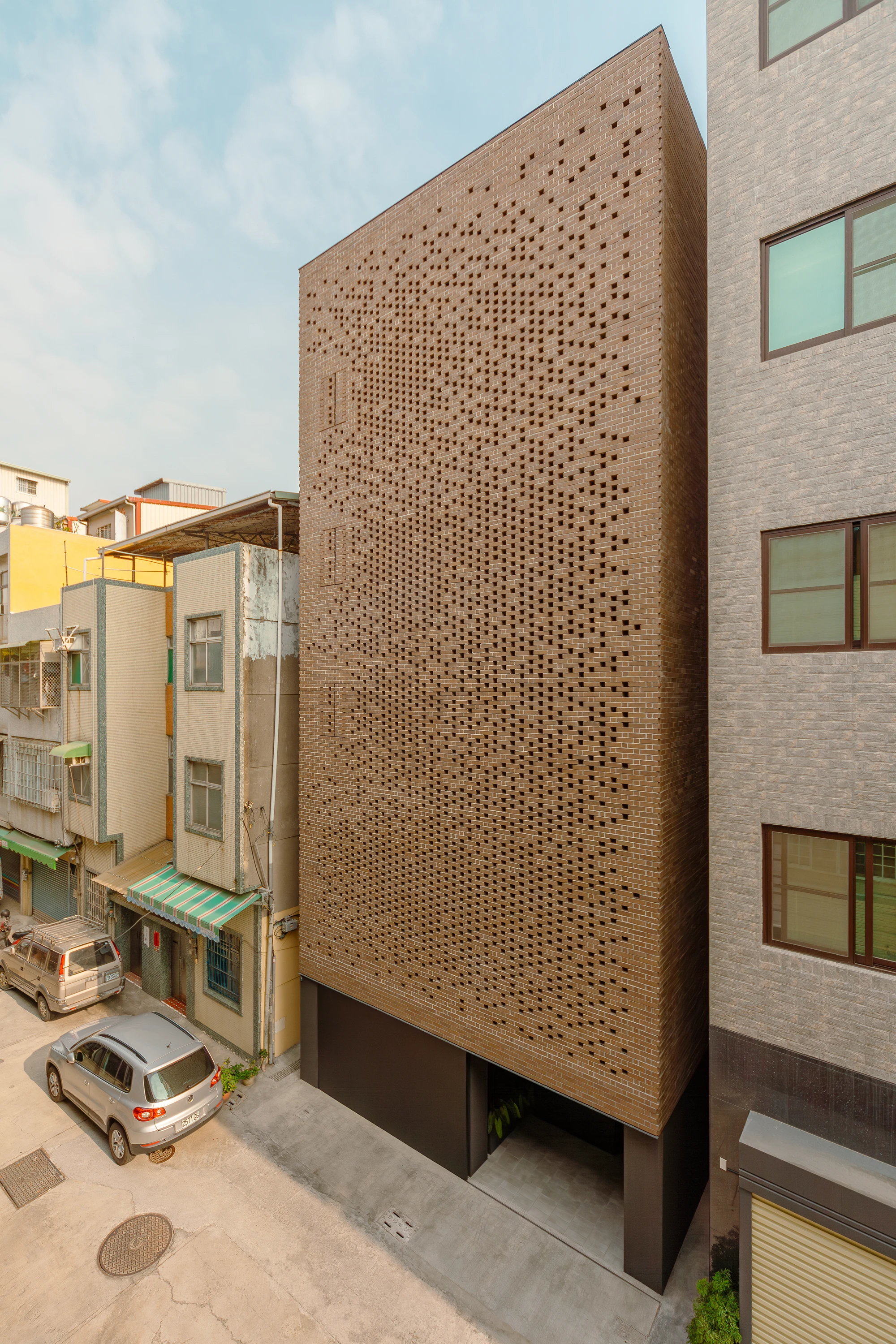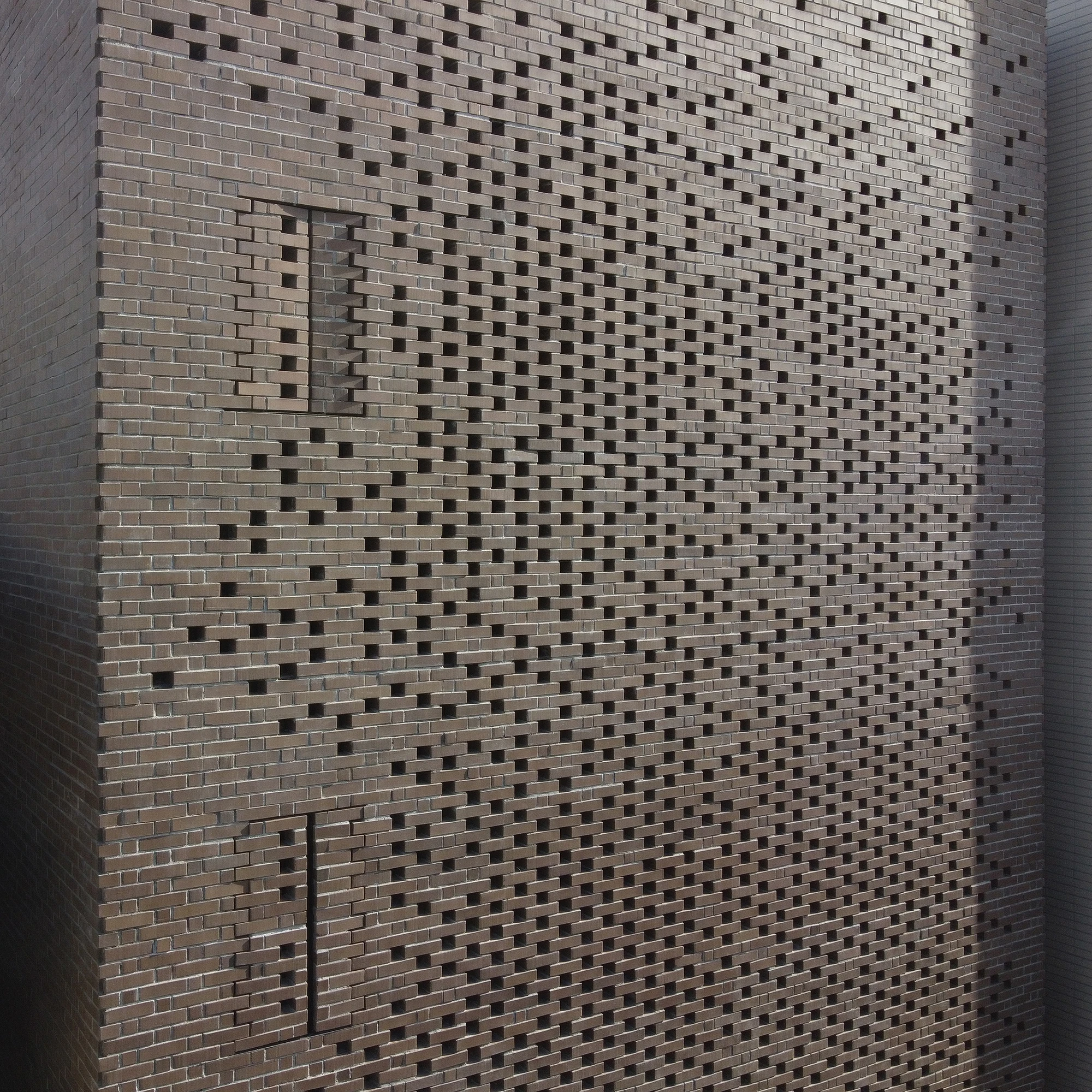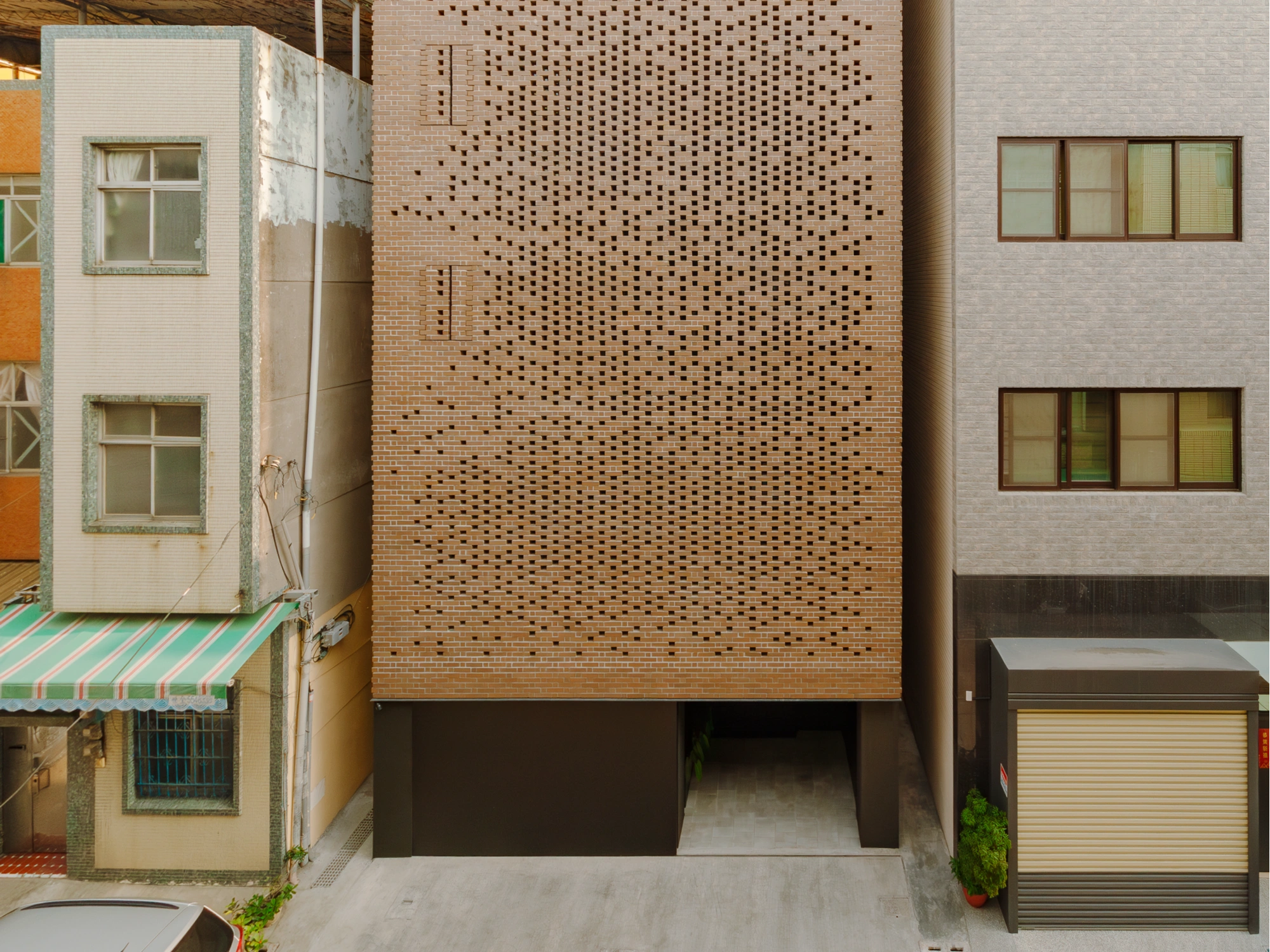
Near the site of the historic Taiwan-Renga brick kiln from 1899 in Kaohsiung, Taiwan, Paperfarm Inc has built a house that thinks of itself as a body. The Veil House reimagines the home as something with "a breathable, permeable skin"—a perforated brick facade that secures privacy while letting light filter in, eliminating the need for curtains entirely.
The problem is a common one in this district: very narrow streets, close proximity to neighbors, and a social fabric so active that "privacy is often compromised." The typical response—shading windows all day, abandoning balconies and terraces—renders homes dim and interior-focused. The Veil House turns this condition inside out. Its clay-brick facade is perforated at varying densities, "like skin's pores," calibrated to the functional needs behind each enclosure—tighter where privacy matters most, more open where light is welcome. The weaving of floating bricks references the brick kiln history that once made this neighborhood prosper.
The engineering behind the poetry is serious. Cored bricks are secured by rebars, shelf angles, and steel channels—"designed to withstand the local challenges of earthquakes and typhoons." Three emergency exits, built with saw-tooth pivots, disappear into the facade. At street level, a powder-coated stainless-steel door—366 cm by 214 cm, two inches thick—provides automobile storage "without visually distracting the pedestrian entry," its track hung from above and hidden behind five courses of veneer brick. It is one of those details that tells you the architects cared about what walking up to this house feels like.
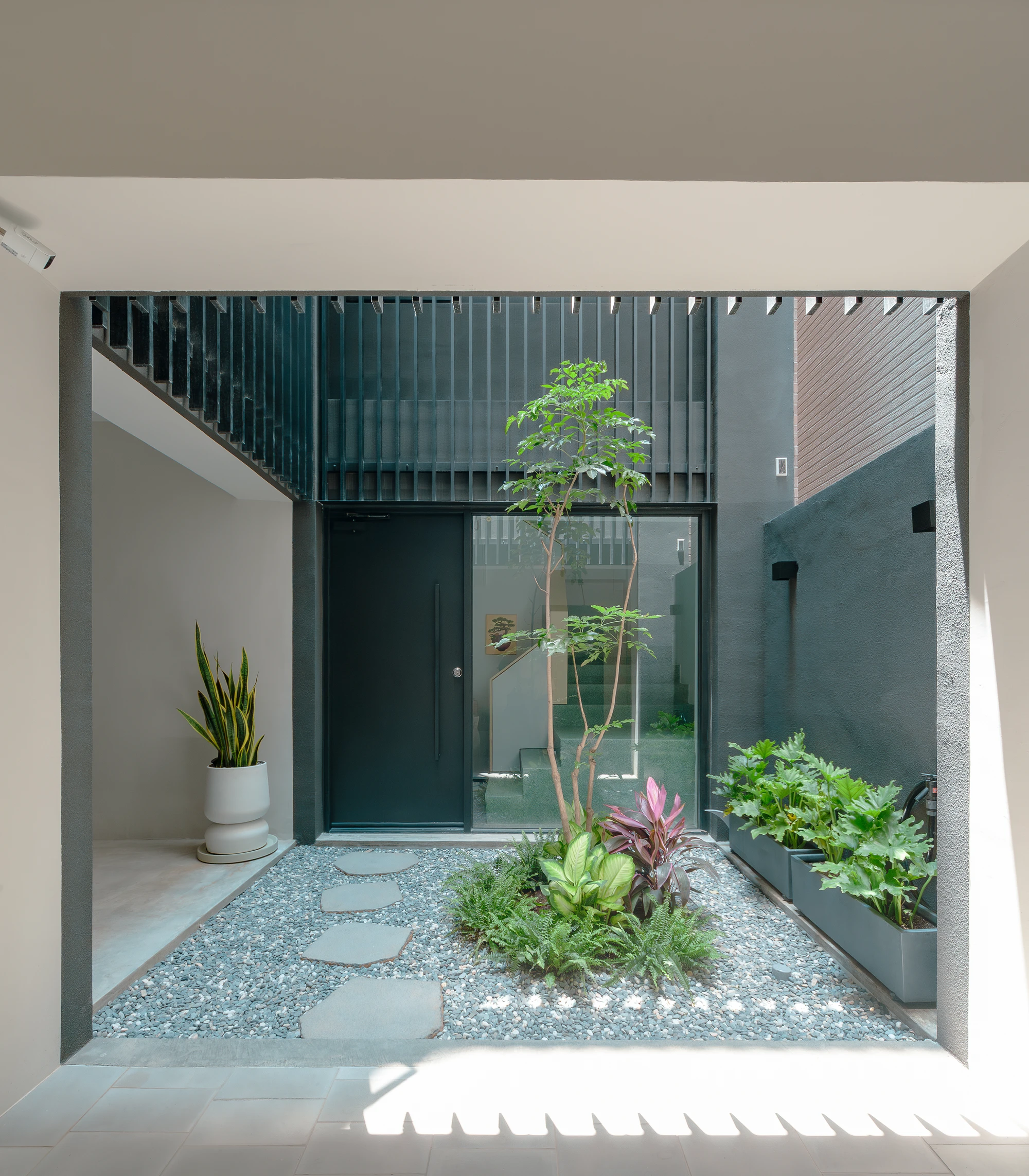
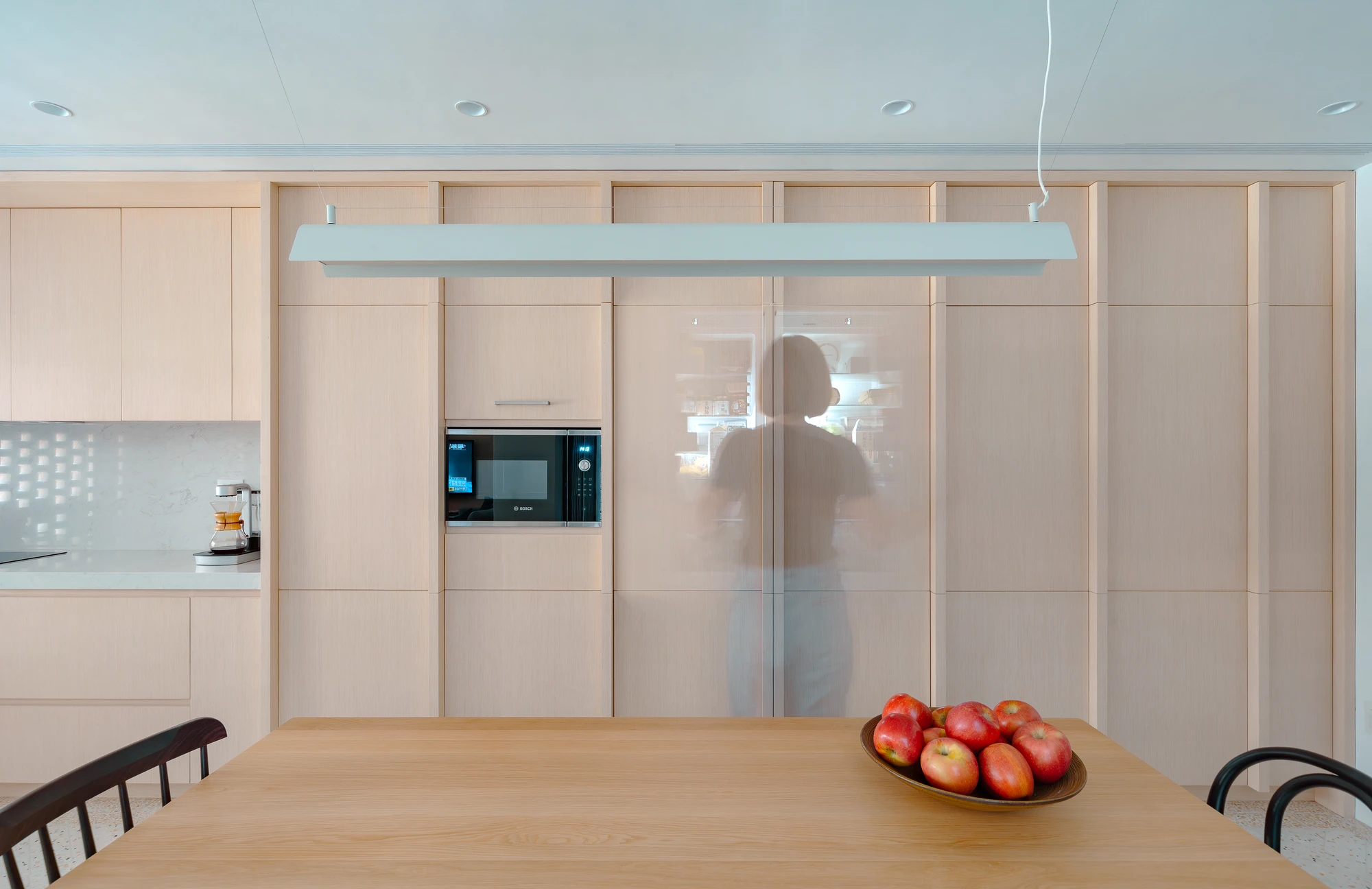
Inside, the entry moves through an interior garden that quiets the transition from the street—"a deep threshold into the heart of the home." Residents circle an open atrium clad with vertical aluminum louvers, a nod to the Taiwanese vernacular of protected fenestrations. This atrium does everything: it is an urban garden on the ground floor, a light-well for the bedrooms, an airshaft for cross-ventilation with the brick veil, and a connector that ties program together across multiple floors. Custom terrazzo defines the open-plan living spaces; full-length white-oak millwork conceals not only the kitchen but the entertainment and storage as well.
The result is a house whose defining characteristic is the productive tension between what is shown and what is shielded. "The desire to build a cozy, airy lifestyle behind an urban facade that successfully withdraws from the frenetic street life" is how the architects frame it. Behind the veil, everything is quiet, reductive, material-focused. The brick does the talking—filtering light, guarding rest, connecting this contemporary home to a neighborhood whose identity was built, quite literally, on the making of bricks.