The Temple of Cremation in Parma, Italy designed by Studio Paolo Zermani occupies an edge condition where suburban drift meets the quiet insistence of agricultural land.
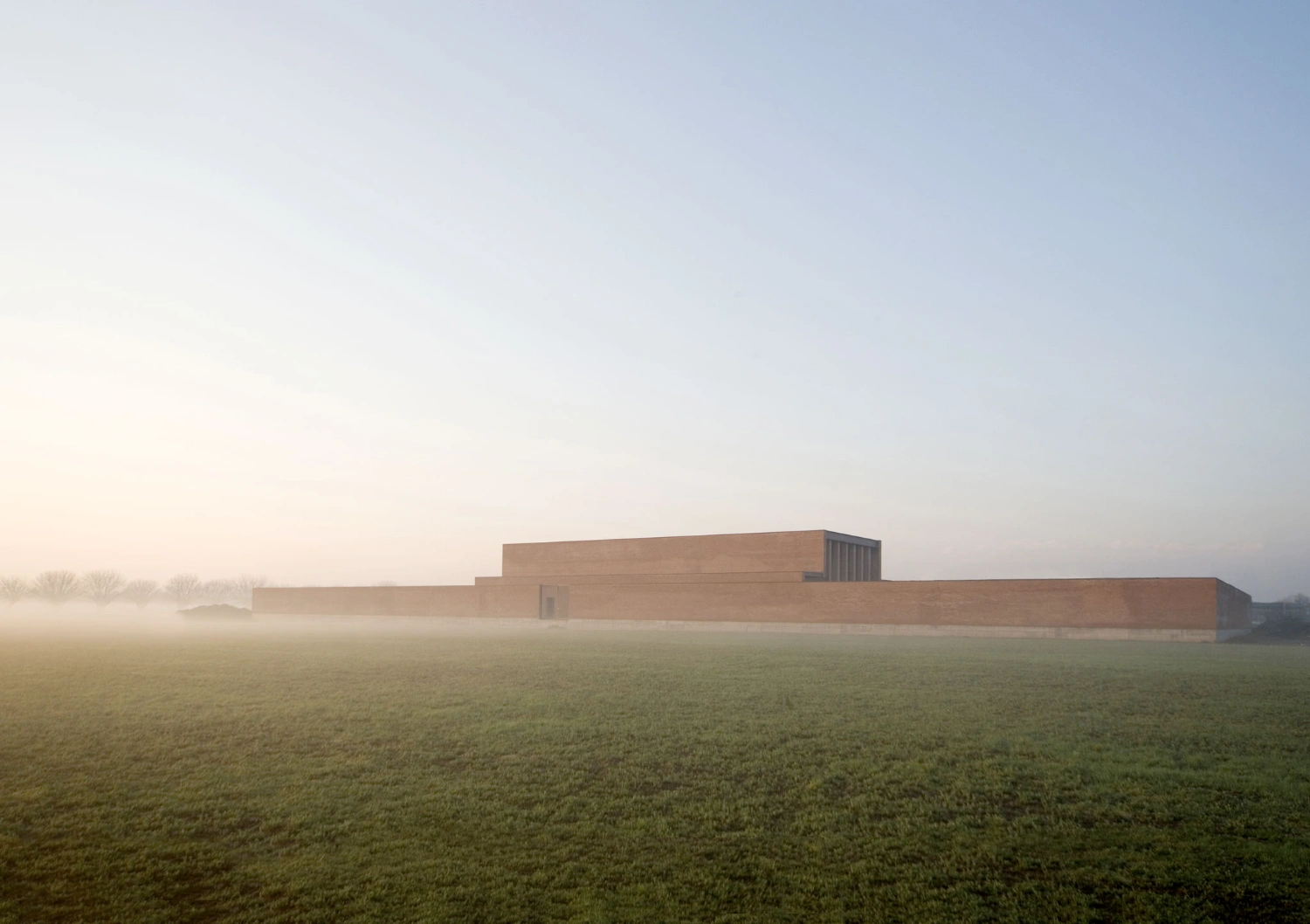
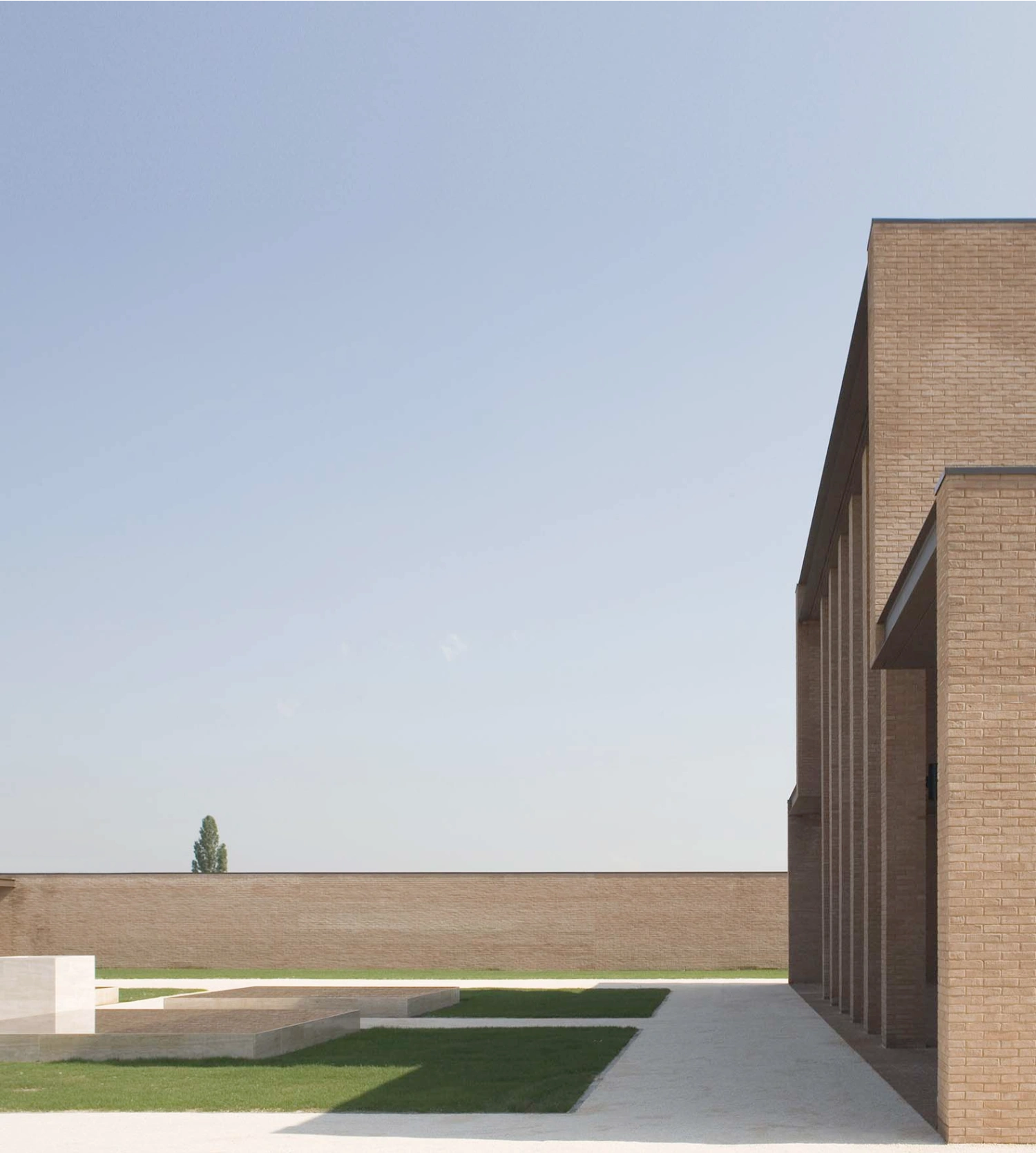
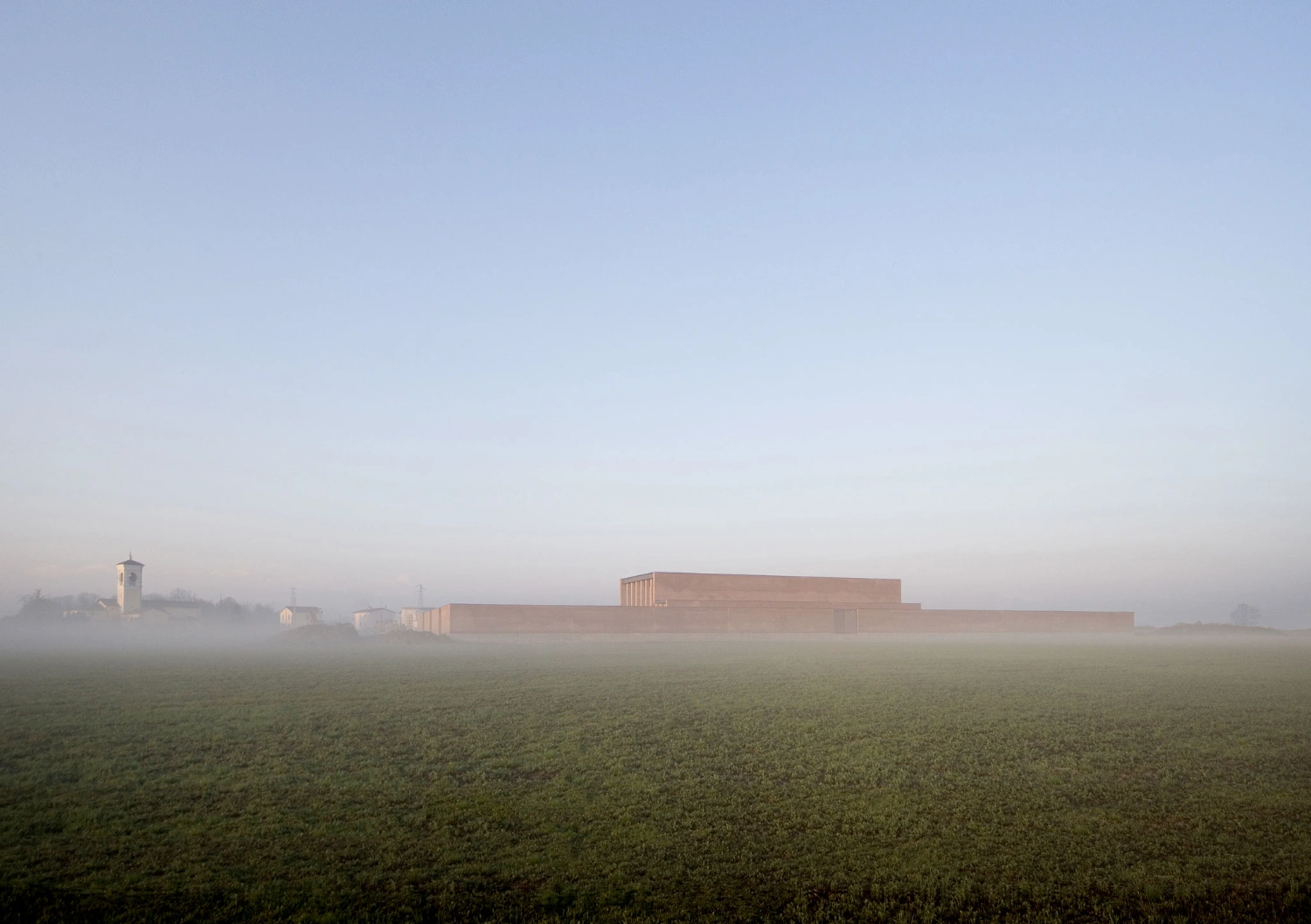
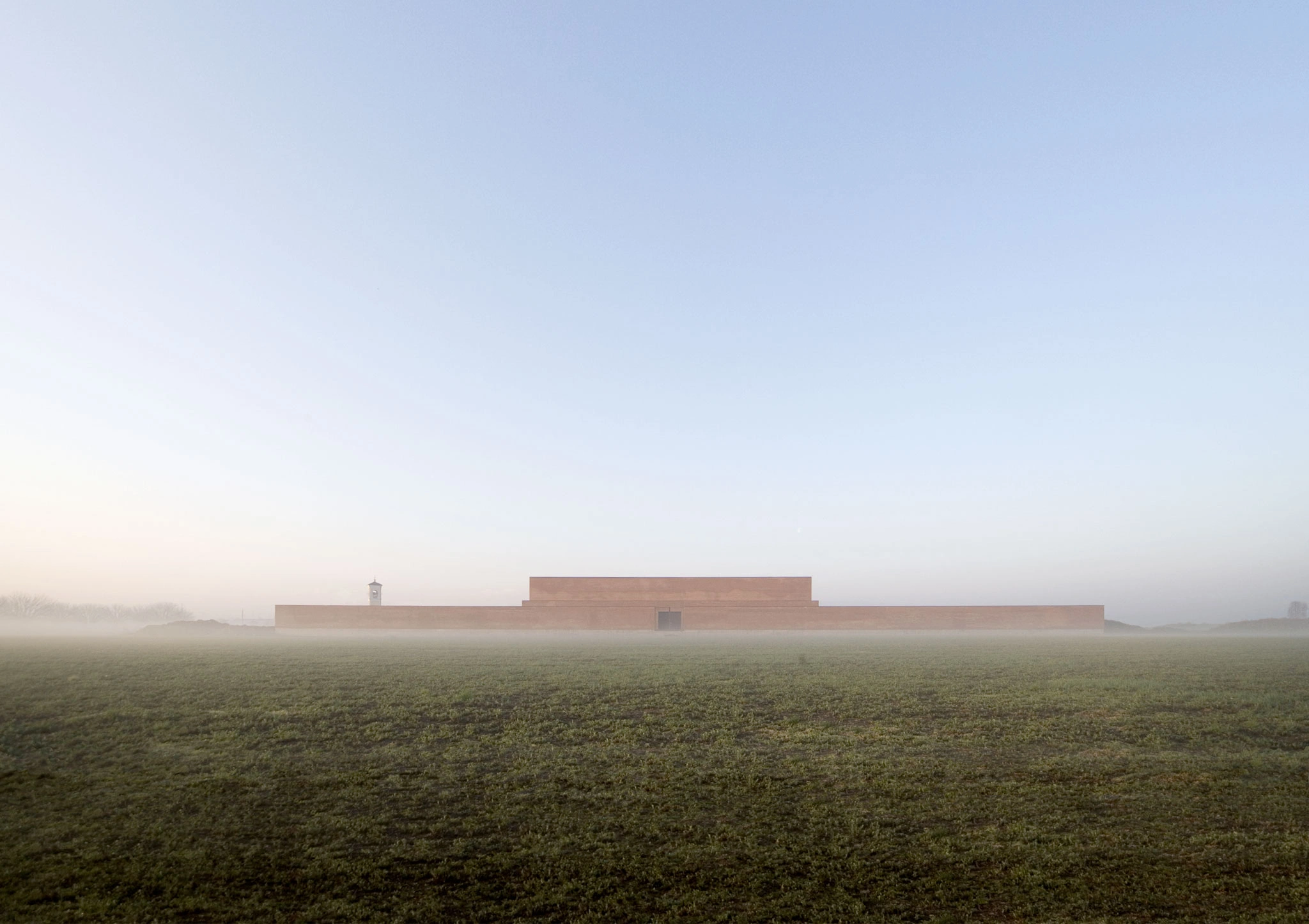
The project stages this tension not as conflict but as a slow, geometric exhalation across the plain. At dawn, its brick mass hovers in mist like an archaeological remainder, a datum anchoring the centrifugal sprawl of the ring road and the lingering Roman grid still legible in fields and farmsteads. Rather than inserting itself as an object, the building calibrates its presence as a boundary condition, a measured perimeter that frames rather than fills.
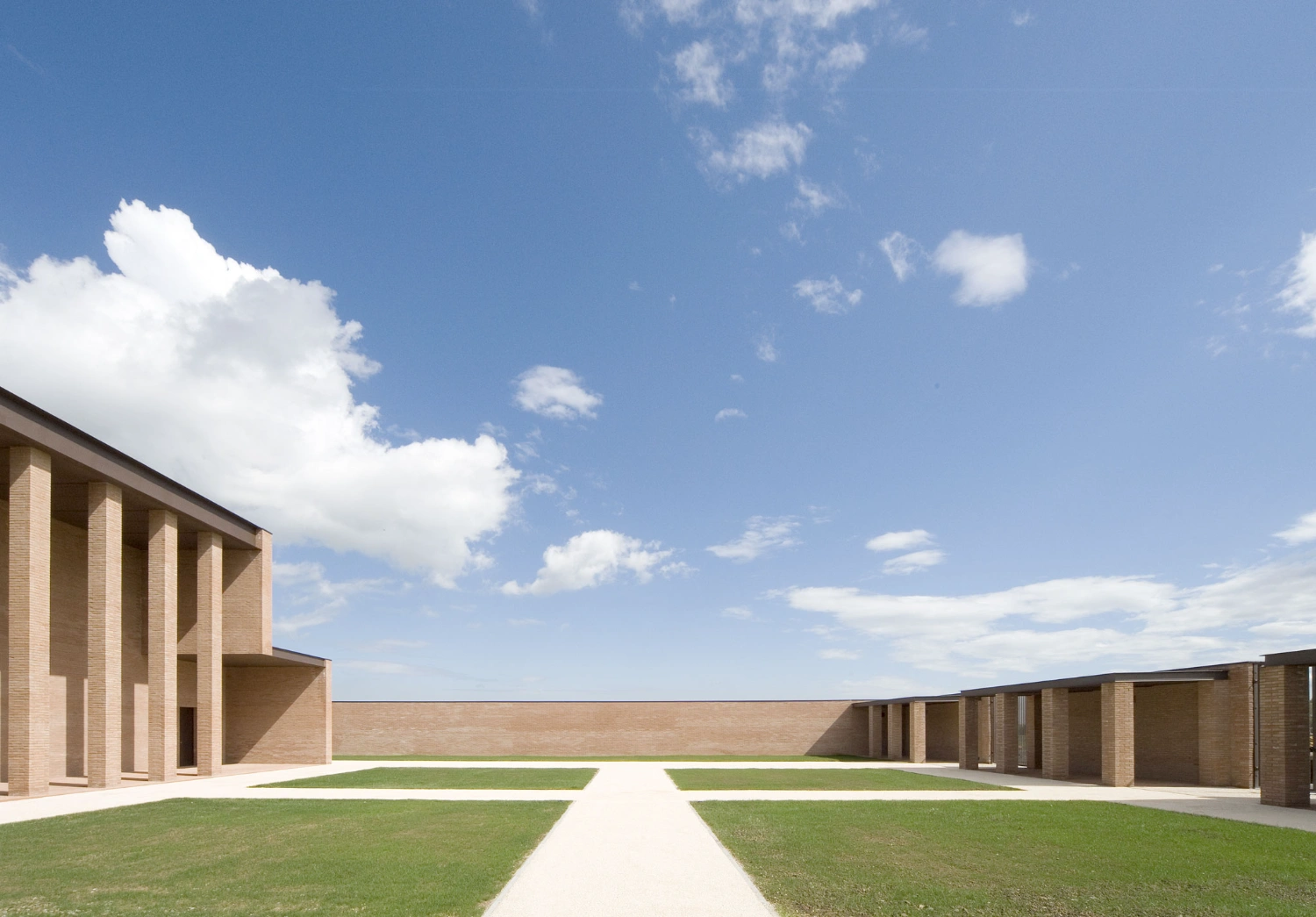
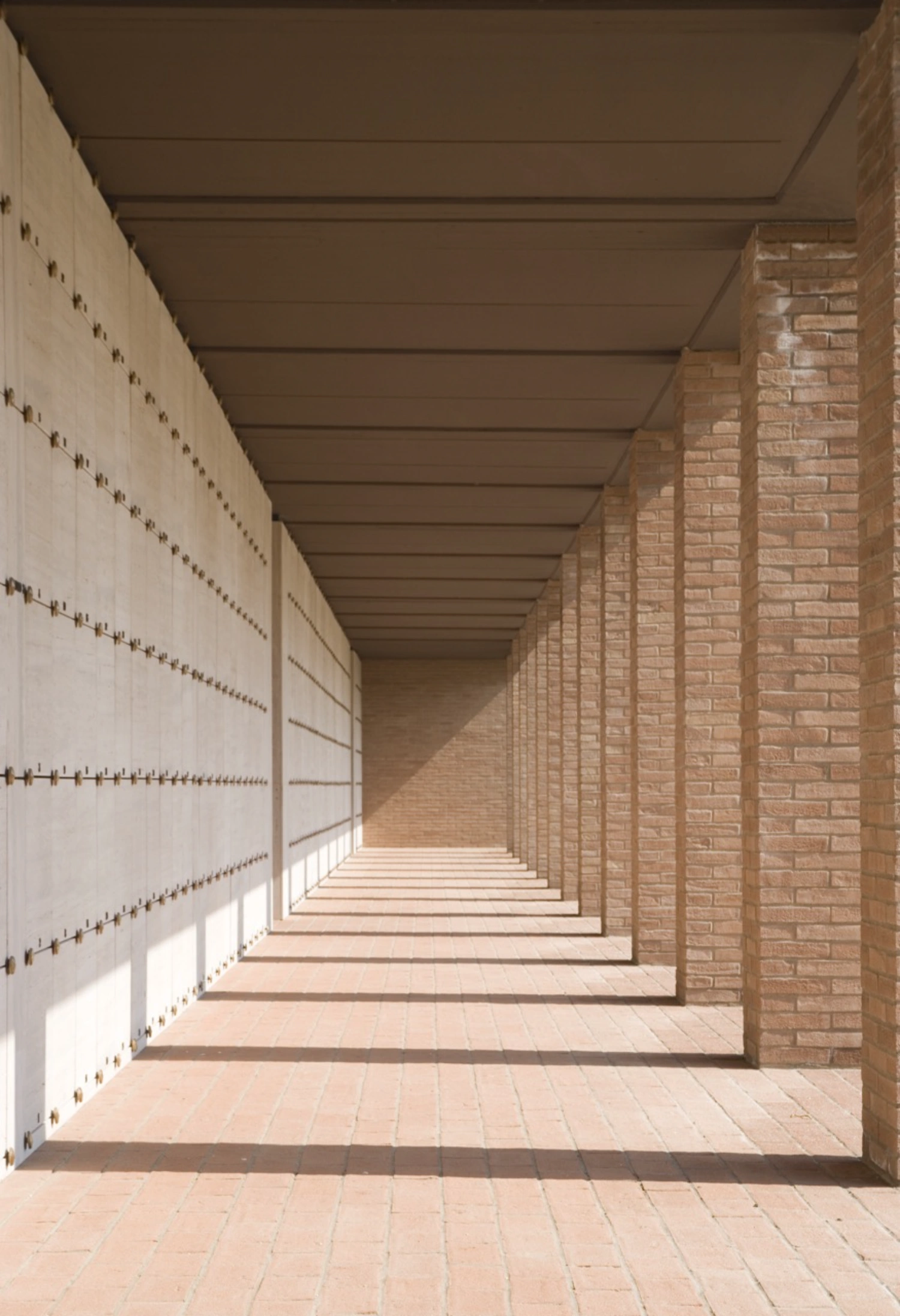
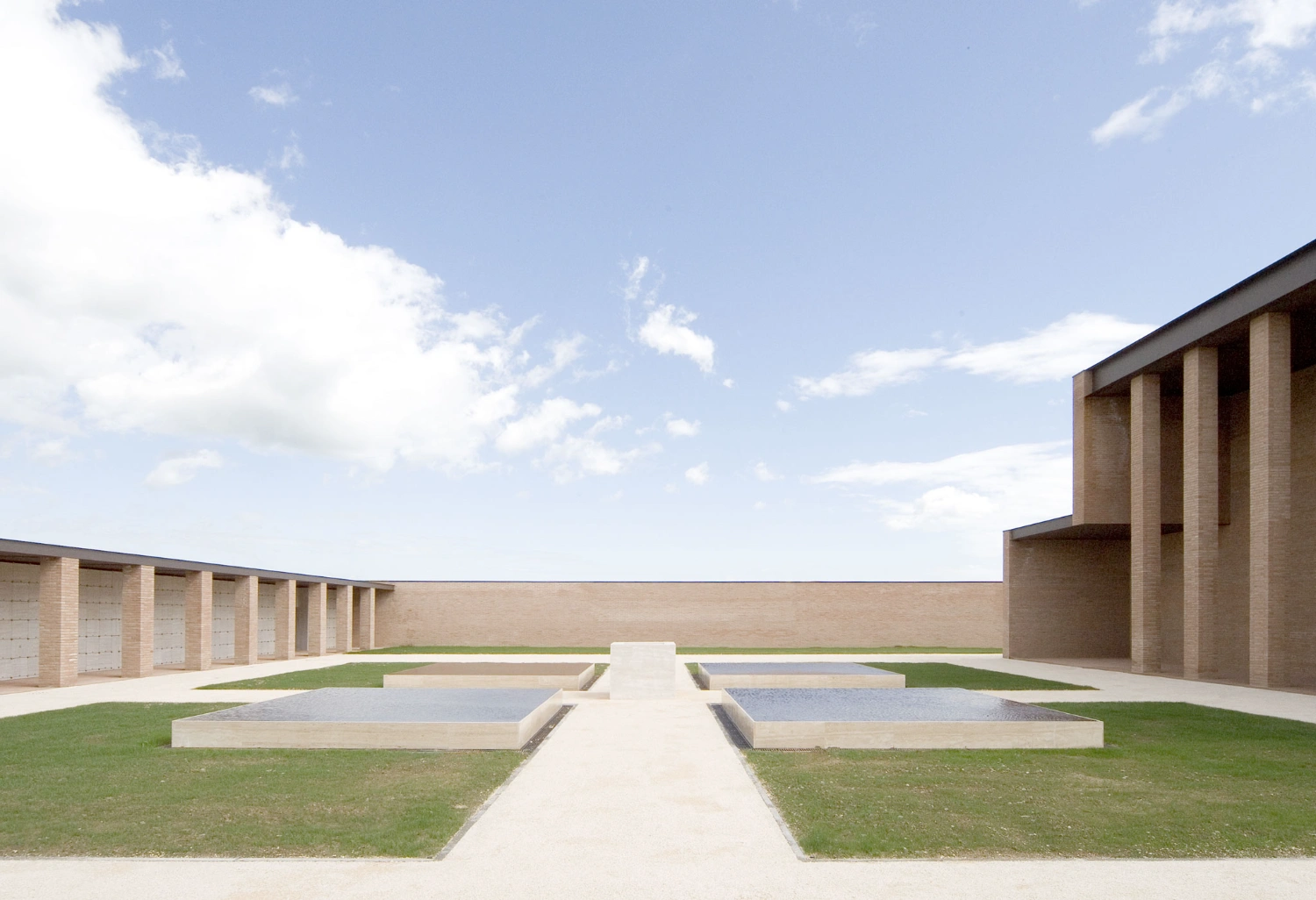
The enclosing wall, conceived as an inhabited portico, is the project’s conceptual armature. It binds together the existing cemetery and the new cremation program, creating a continuous ambulatory where mourners drift through a spatial narrative of return. These columbarial recesses, repetitive yet never monotonous, establish a tactile continuum of life and death, a looping promenade that feels both archaic and resolutely contemporary. The sense of infinity is architectural rather than symbolic: a physical circling that turns grief into movement.
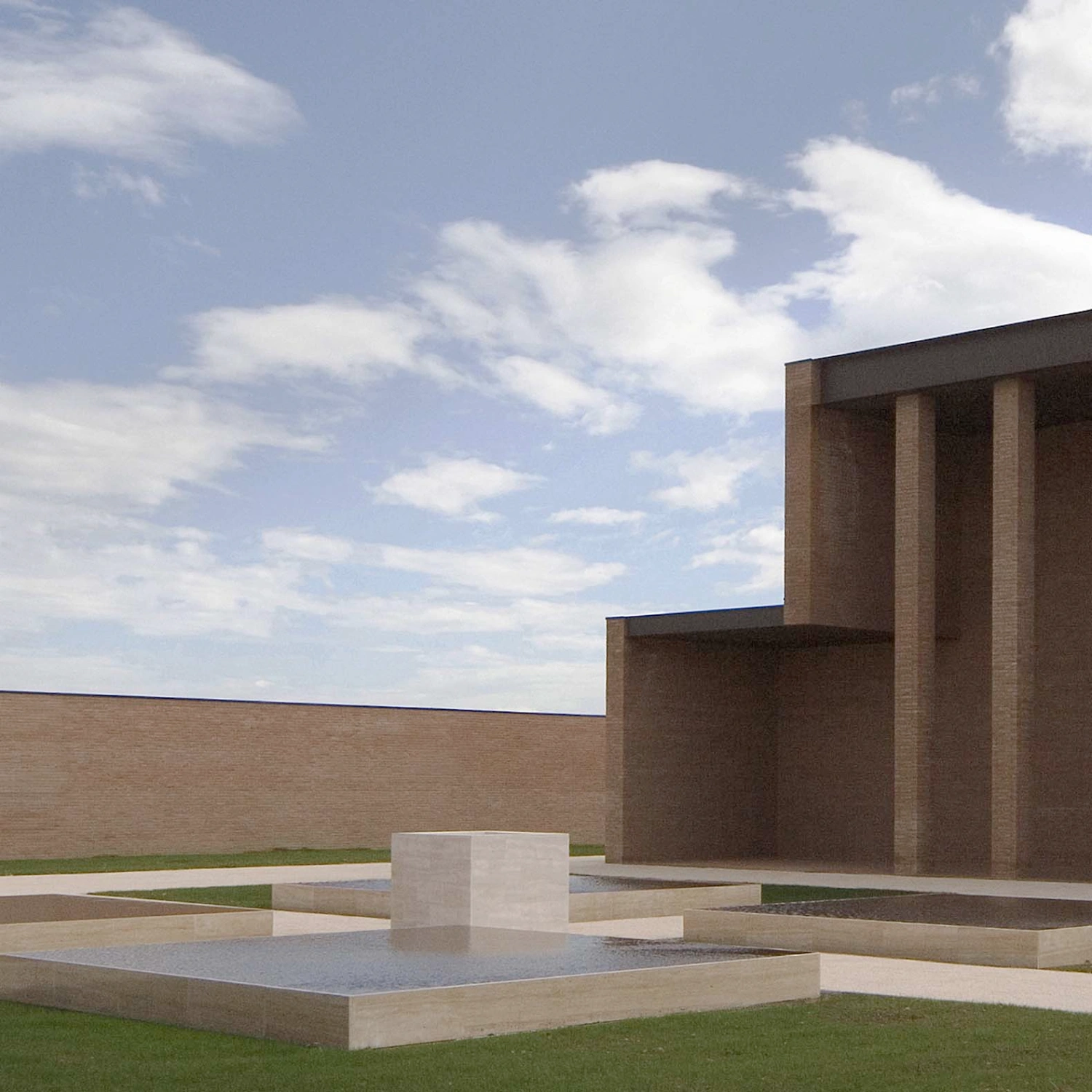
At the core, the Temple rises as an elevated, basilica-like volume—a fragment more than a building, as though cut from a larger, lost whole. Its stepped brick masses extend east and west like wings, addressing both Parma and Valera with equal gravity. From afar, it registers as an urban signal: not monumental in the classical sense, but steadfast, a horizon-latched marker of collective memory. The exterior courts, articulated by sheets of water and clipped lawns, intensify this stillness. Their precise, planar geometries stage the sky as a participant in the ritual, a luminous counterpoint to the weight of masonry.
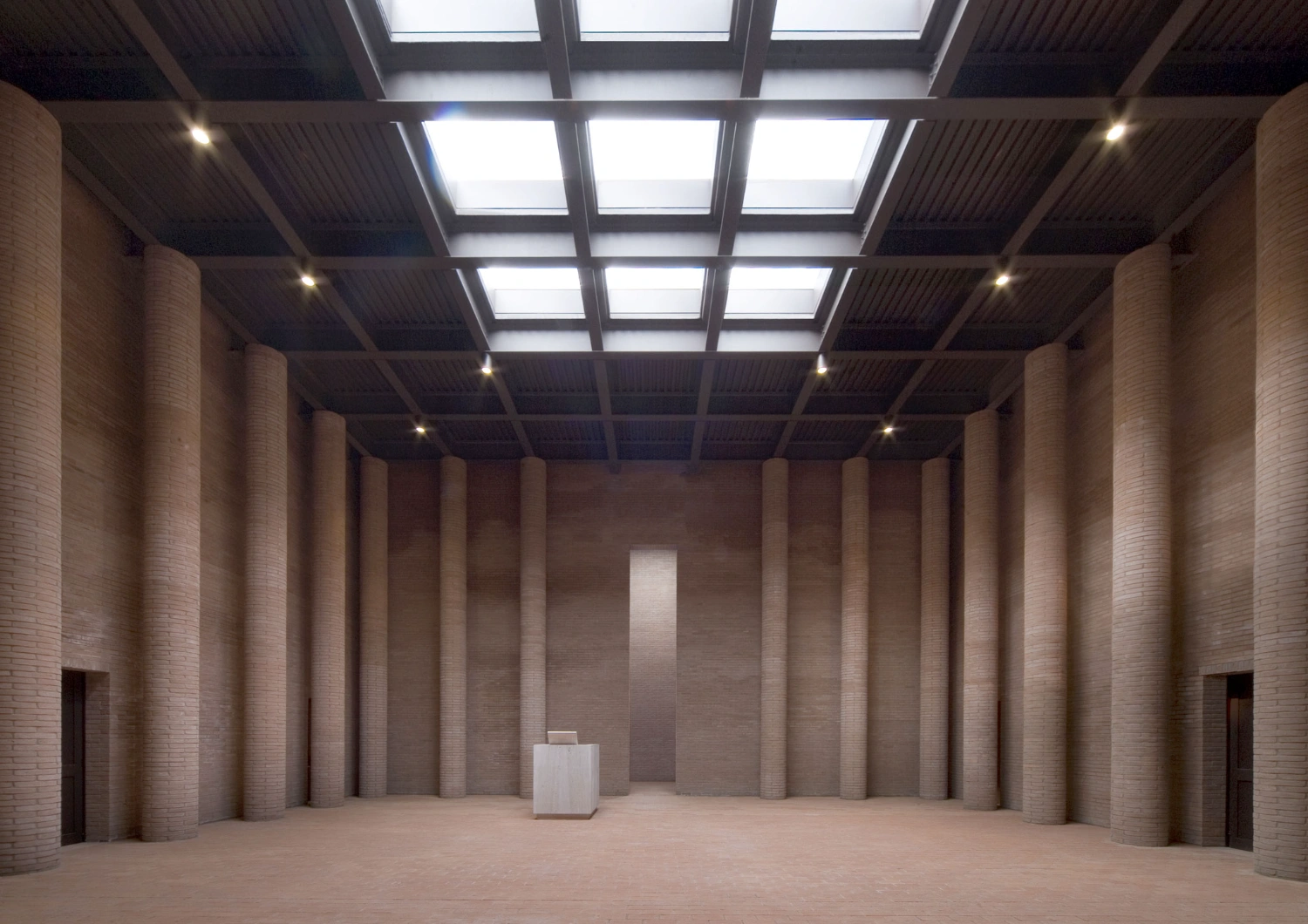
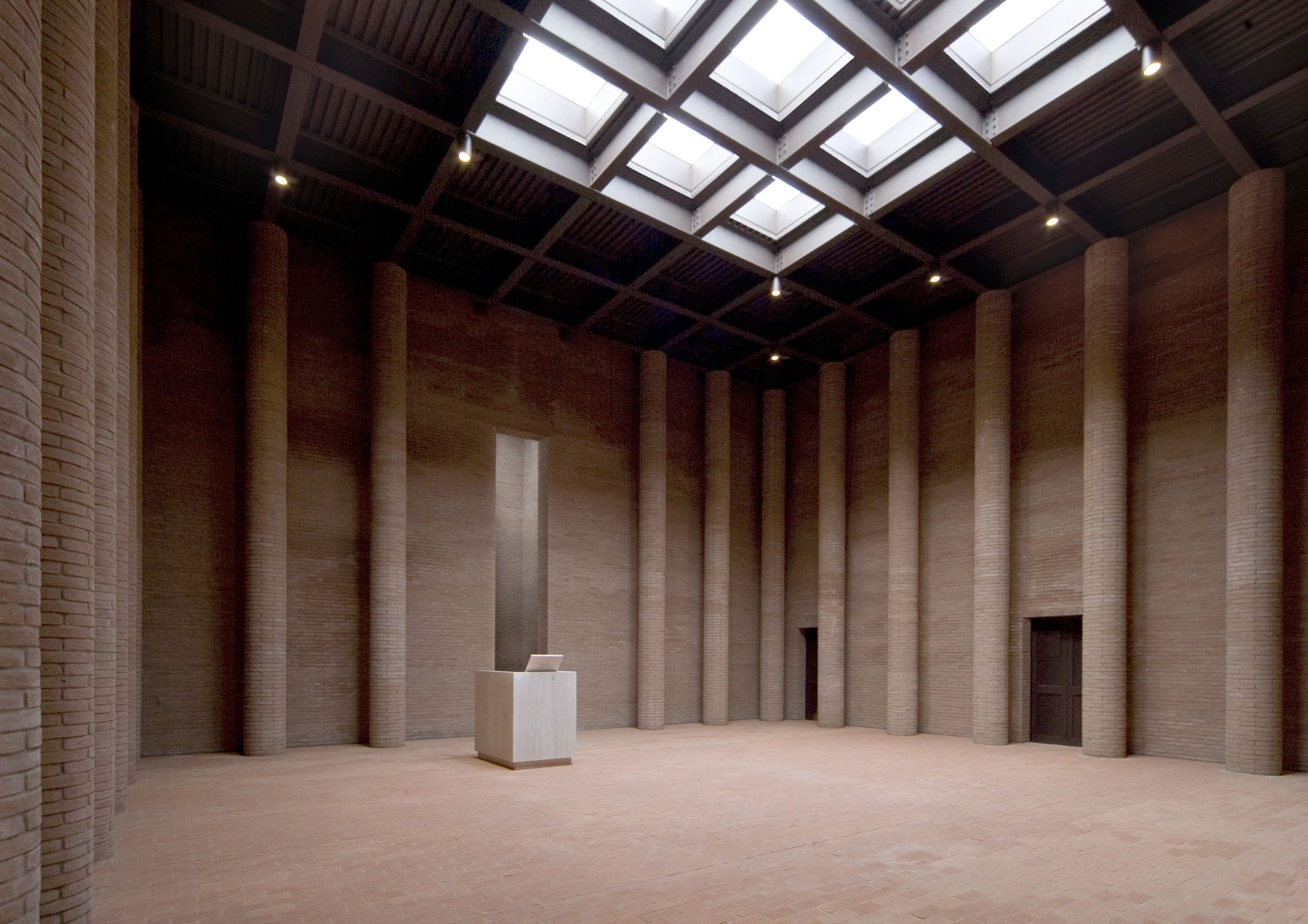
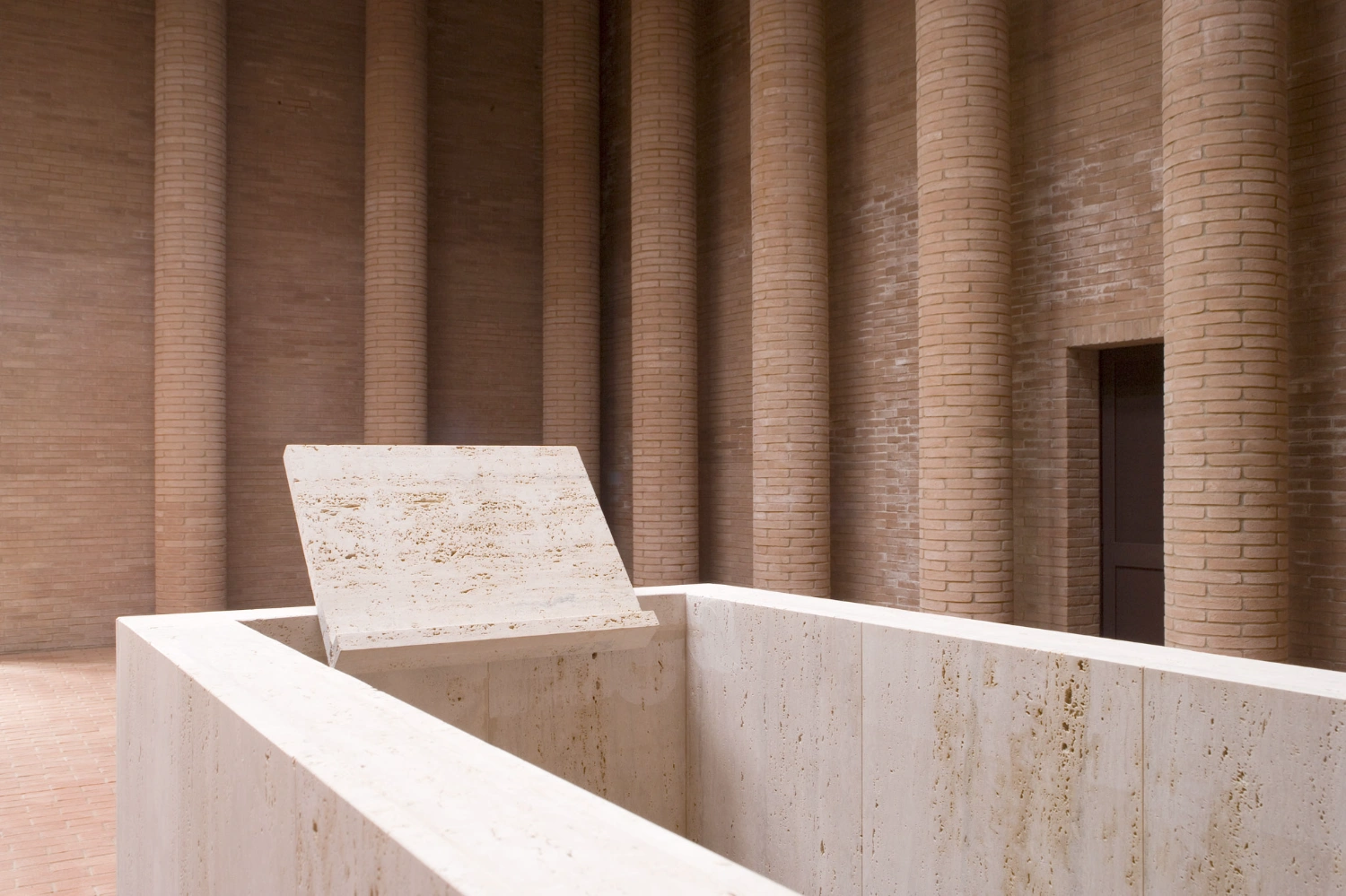
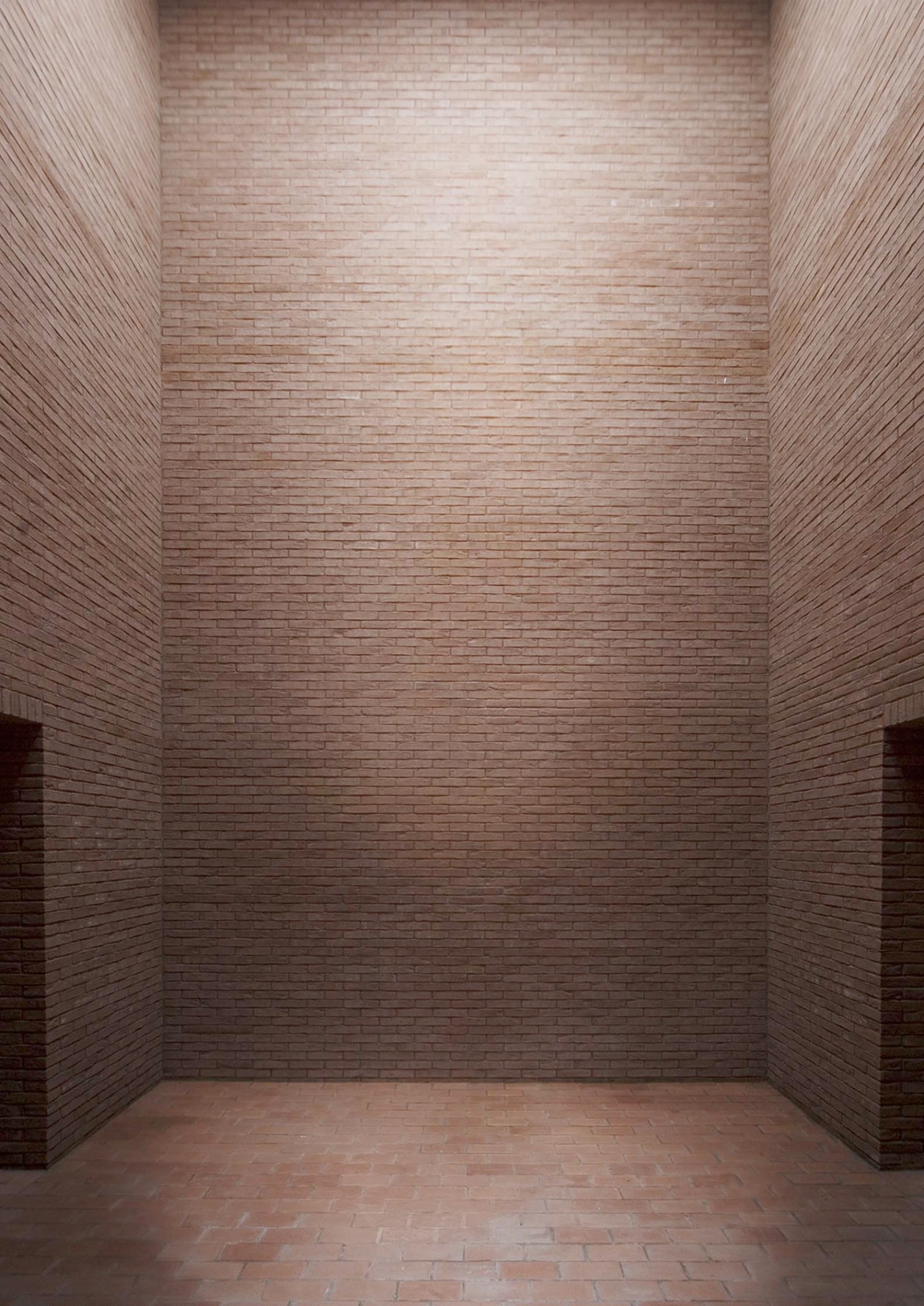
Inside, the Hall of Farewell distills the space to its most essential conditions: brick, void, and light. The rhythmic columns create a mute cadence, their cylindrical forms absorbing sound and anchoring the room in a near-monastic quiet. The vertical cut of daylight on the rear wall is both threshold and erasure; the body passes upward into an unseen volume, dissolving into illumination rather than shadow. It is a spatial choreography of disappearance, austere yet profoundly humane.
In this sequence—from open landscape to portico, from court to hall, from body to light—the architecture reconstructs the rite of passage with unusual clarity. The building does not sentimentalize loss; it stages it with steadiness, allowing ritual to unfold as a slow reorientation of the self. As one exits back into the perimeter walkway, the cycle begins again, reaffirming a continuity that extends beyond any single life.san cataasa