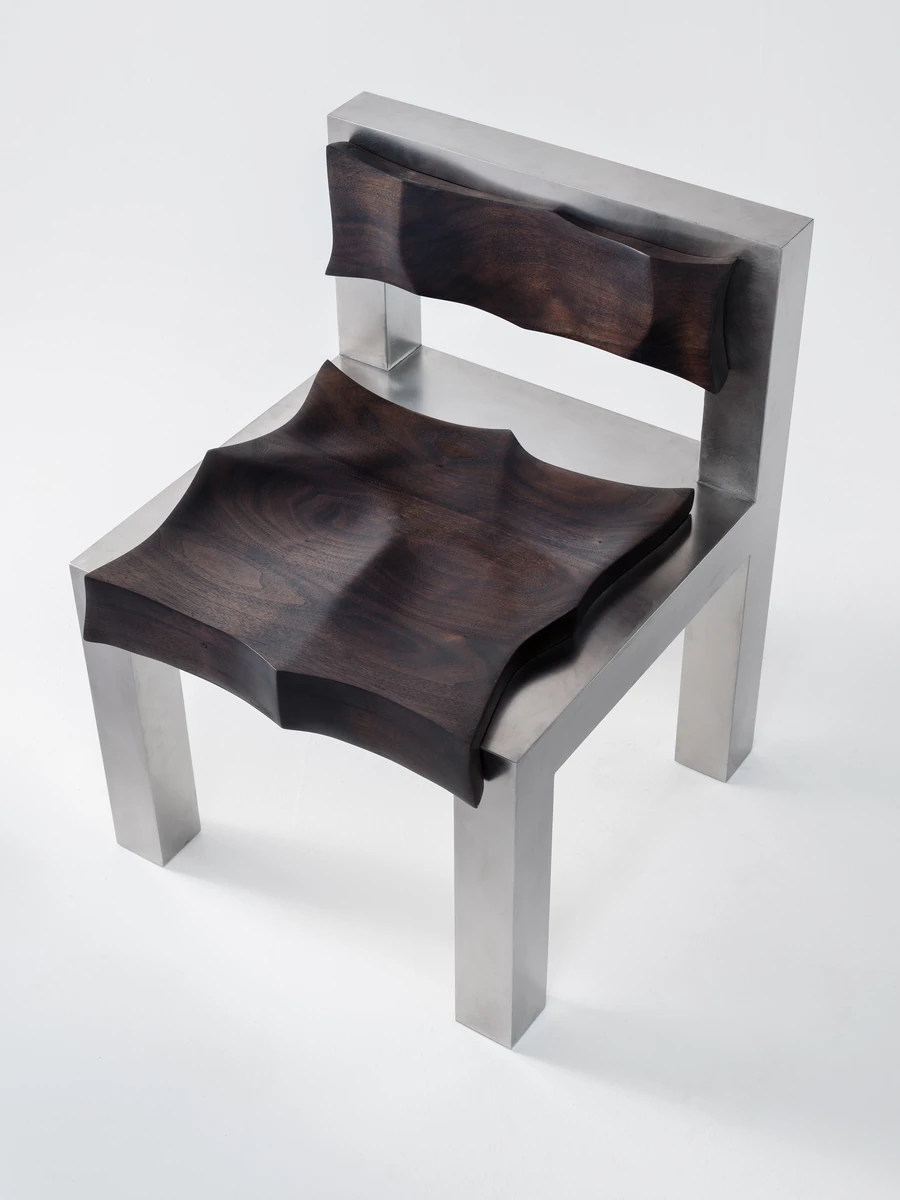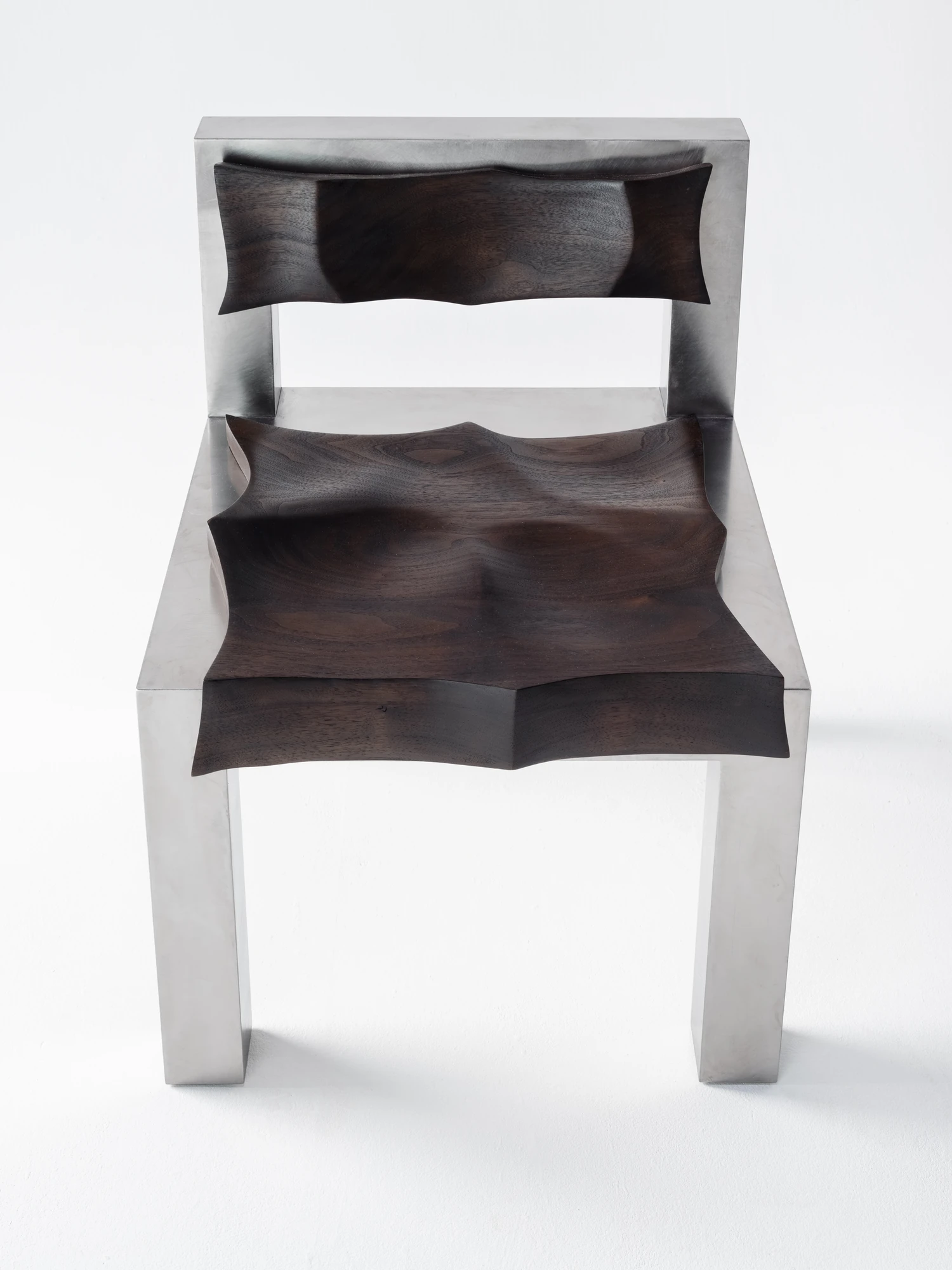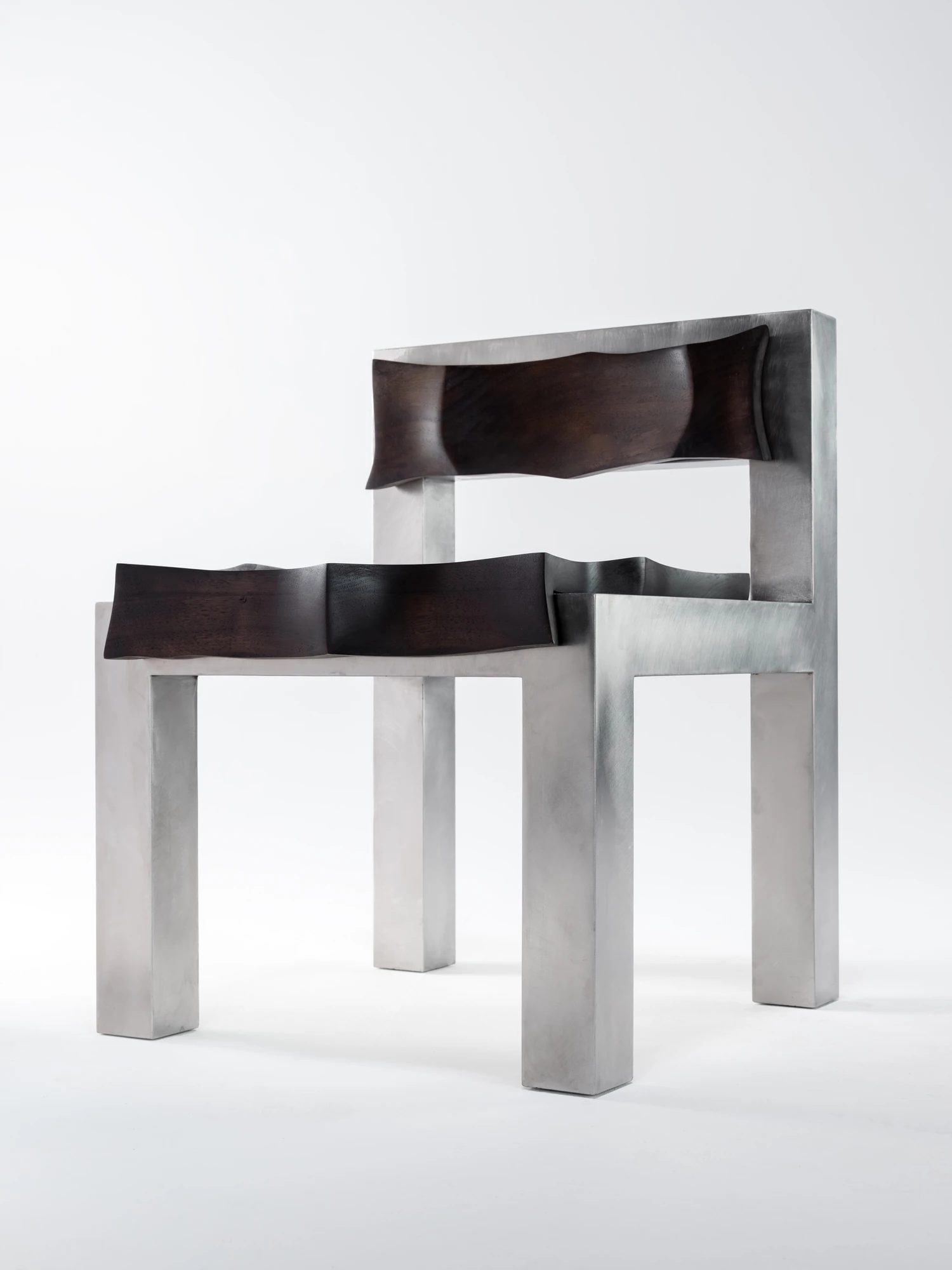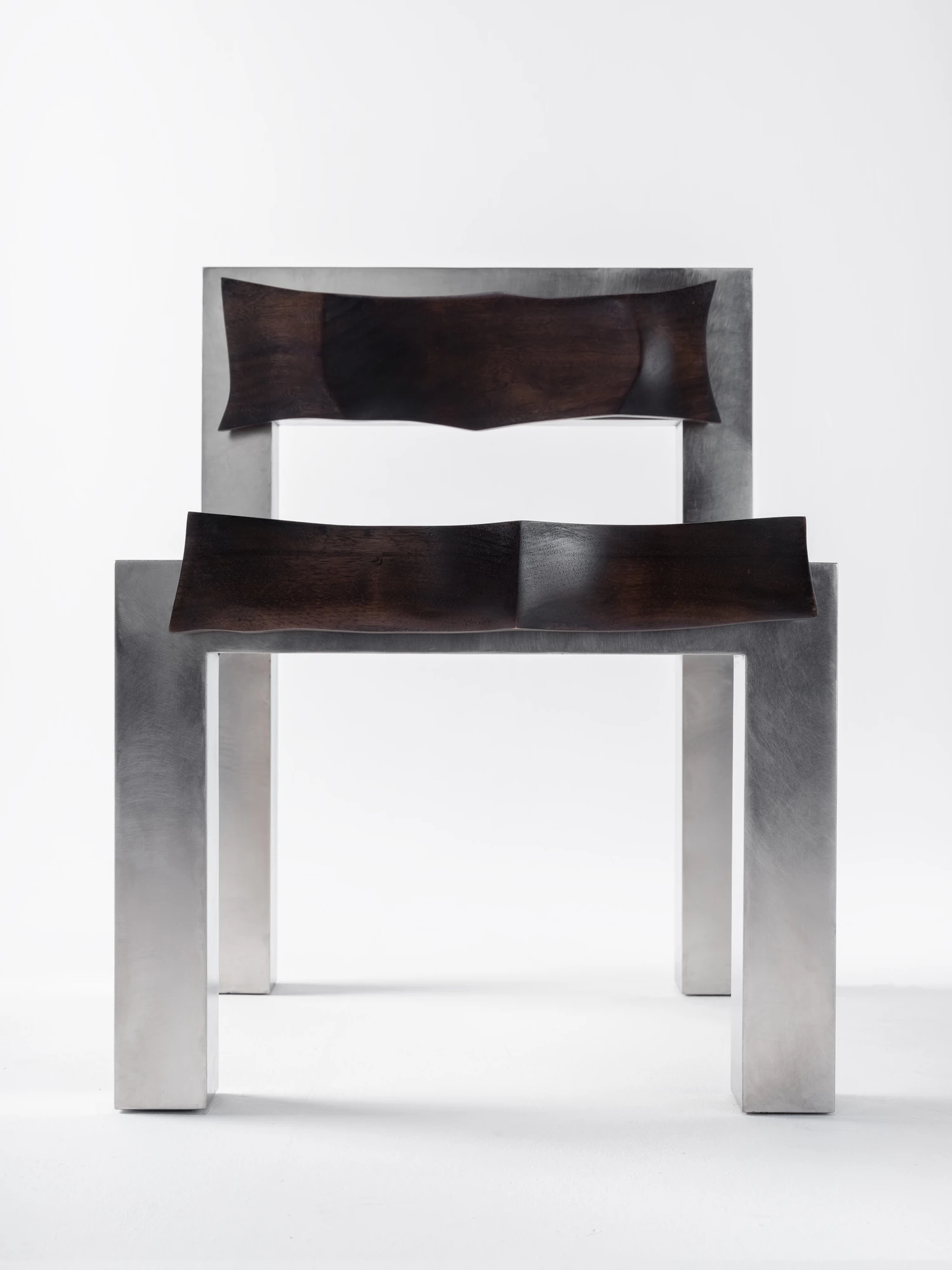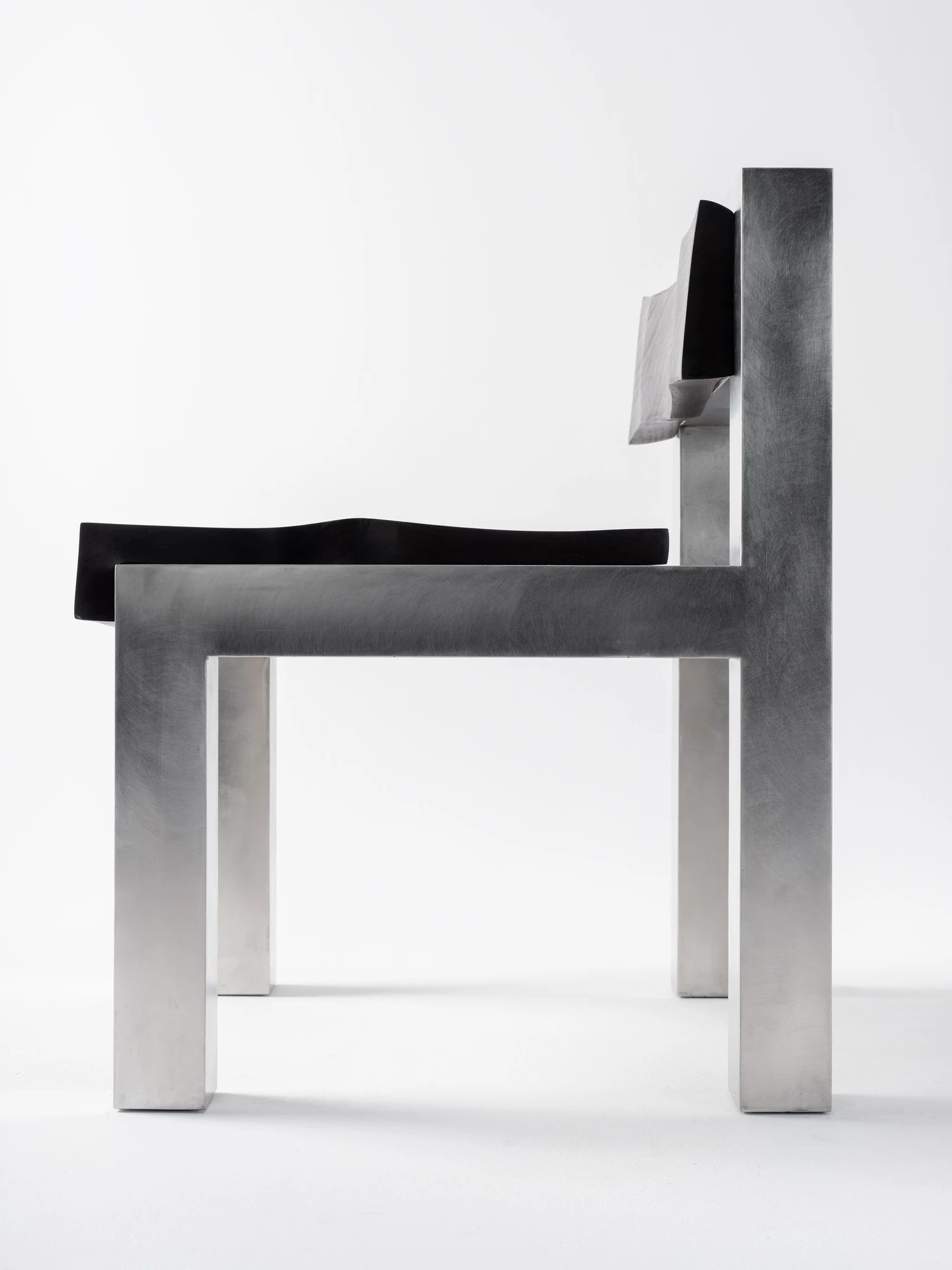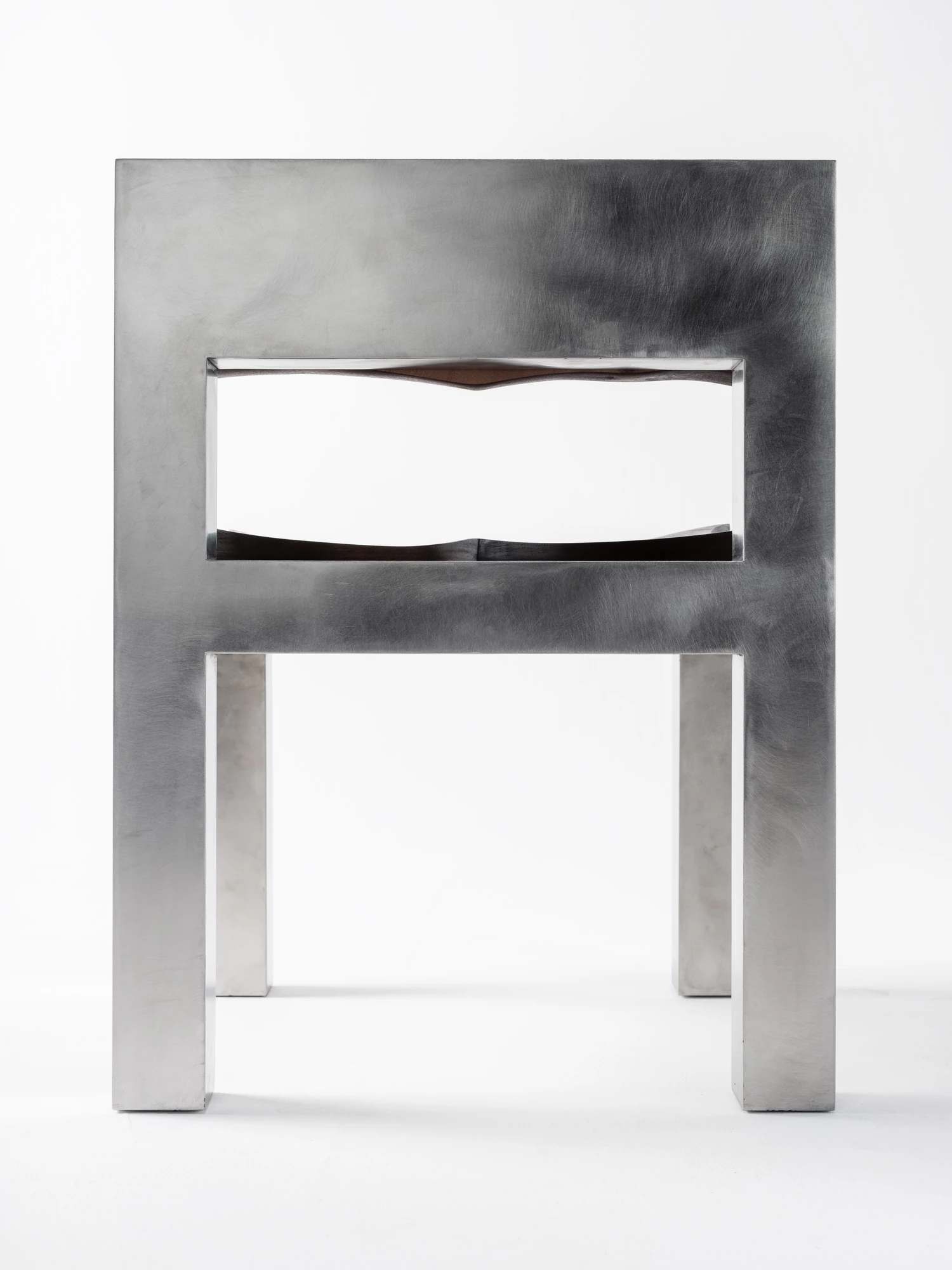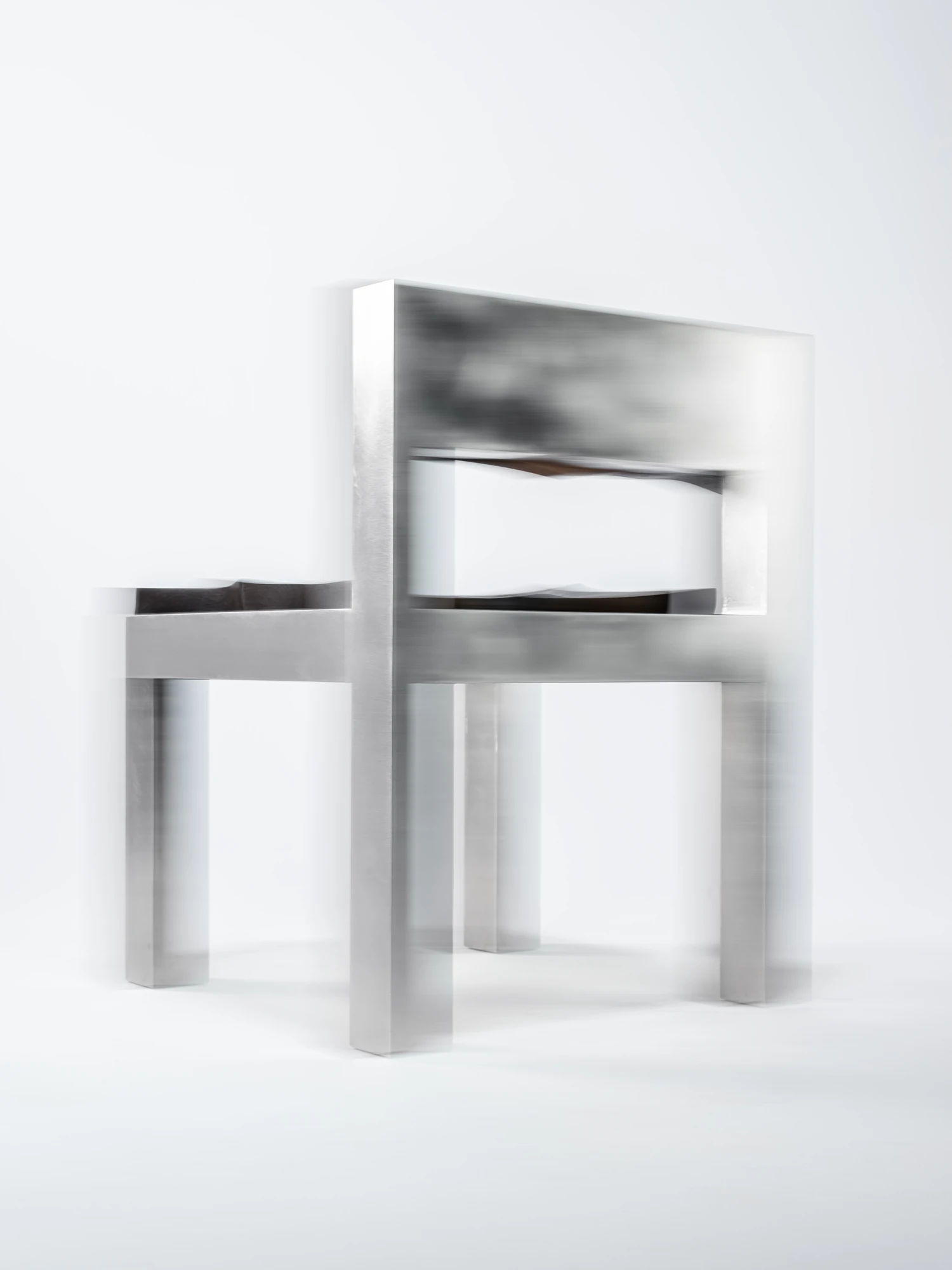
From Rīga, Studio Sija brings Soft Tensions to Collectible in Brussels, a chair whose solid walnut seat, carved to a soft scoop, is cradled by a rigid frame of welded stainless steel.
In response to the Echoes of Use open call from the Brussels fair Collectible, Studio Sija built a chair that treats sitting as an active, changing state rather than a fixed one. The studio works out of Rīga, and its usual output runs to interiors and buildings rather than single objects, which makes Soft Tensions a rare turn toward furniture. The result reads as both a working chair and a study of how a body meets a surface.
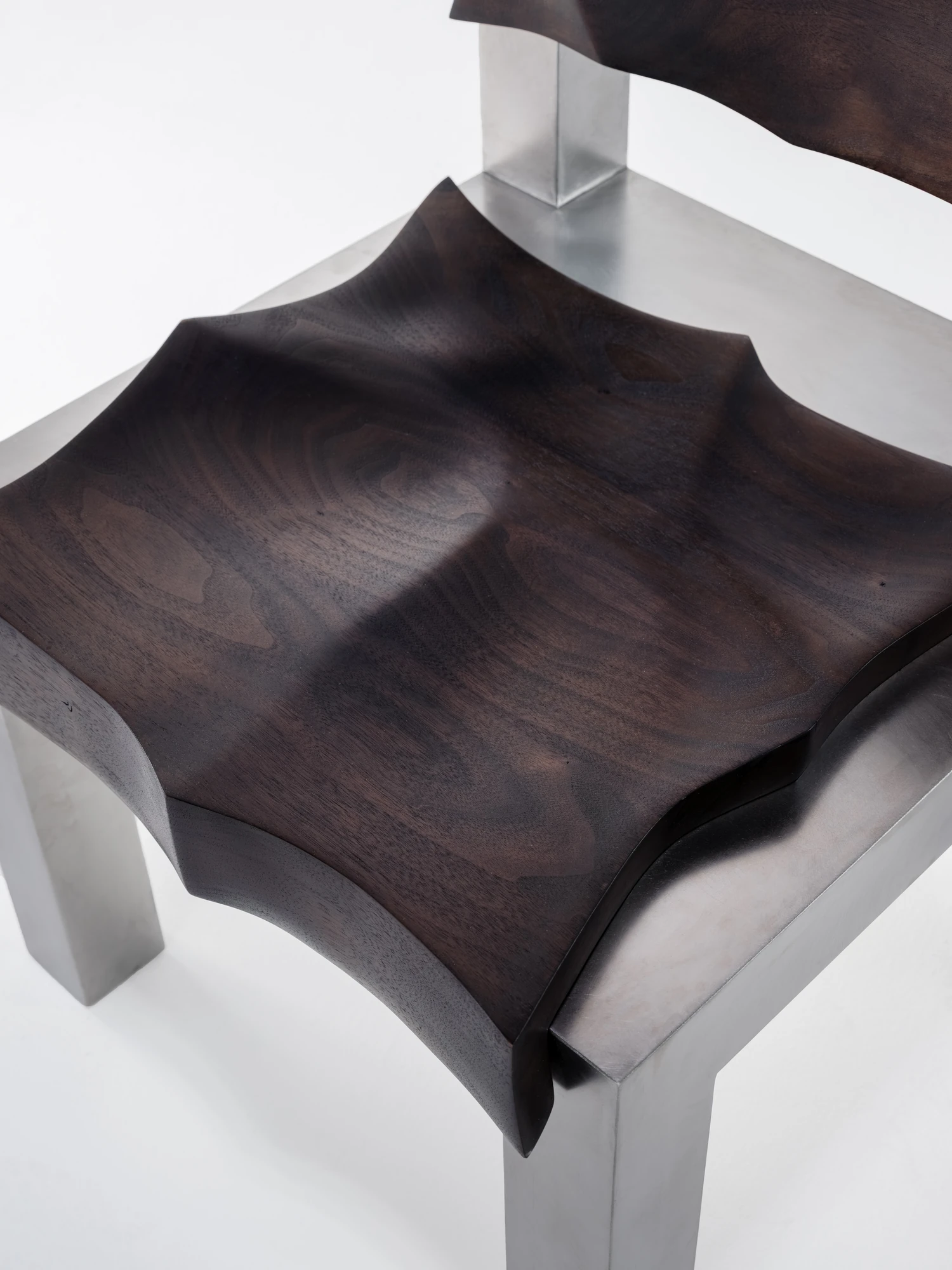
The base is welded stainless steel, its joints handled by Edvards Lancmanis, who designed the welds. Onto that rigid frame sits a seat and low back carved from solid walnut. The two materials set up a plain contrast, cold structured metal against warm worked wood. One holds its edges with machined precision; the other has been cut away until it looks soft.
That softness is the point. The walnut seat is hollowed into a shallow basin that follows the shape of a body, as if a silhouette had been pressed into it and left behind. It resembles a cushion more than a plank, an illusion of give in a material that does not give. Set against the unyielding metal, the wood proposes a gentle tension between the hard and the seemingly soft, and locates the chair somewhere between comfort and resistance, stability and movement.
For Studio Sija, the appeal lies in the visual language between the clean and mechanical and the warm and natural. “Metal as a material is durable and, to a certain extent, indestructible, creating a backdrop against which wood appears differently than usual,” the studio writes.
Soft Tensions showed in the Echoes of Use section, assembled by guest curator Marine Mimouni, which read design objects as witnesses to daily life and asked whether furniture can hold the memory of its own use. The chair answers directly. Here the experience of the object matters more than comfort or function, and the piece becomes a vessel for sensation and movement, a place to notice your own posture rather than forget it.