At Triangolo, Cremona in Italy, Satoru Kurata paints dawn and dusk as psychological weather: hybrid figures between human and animal, phone screens in blue dark, each scene holding two people looking from different sides at once.
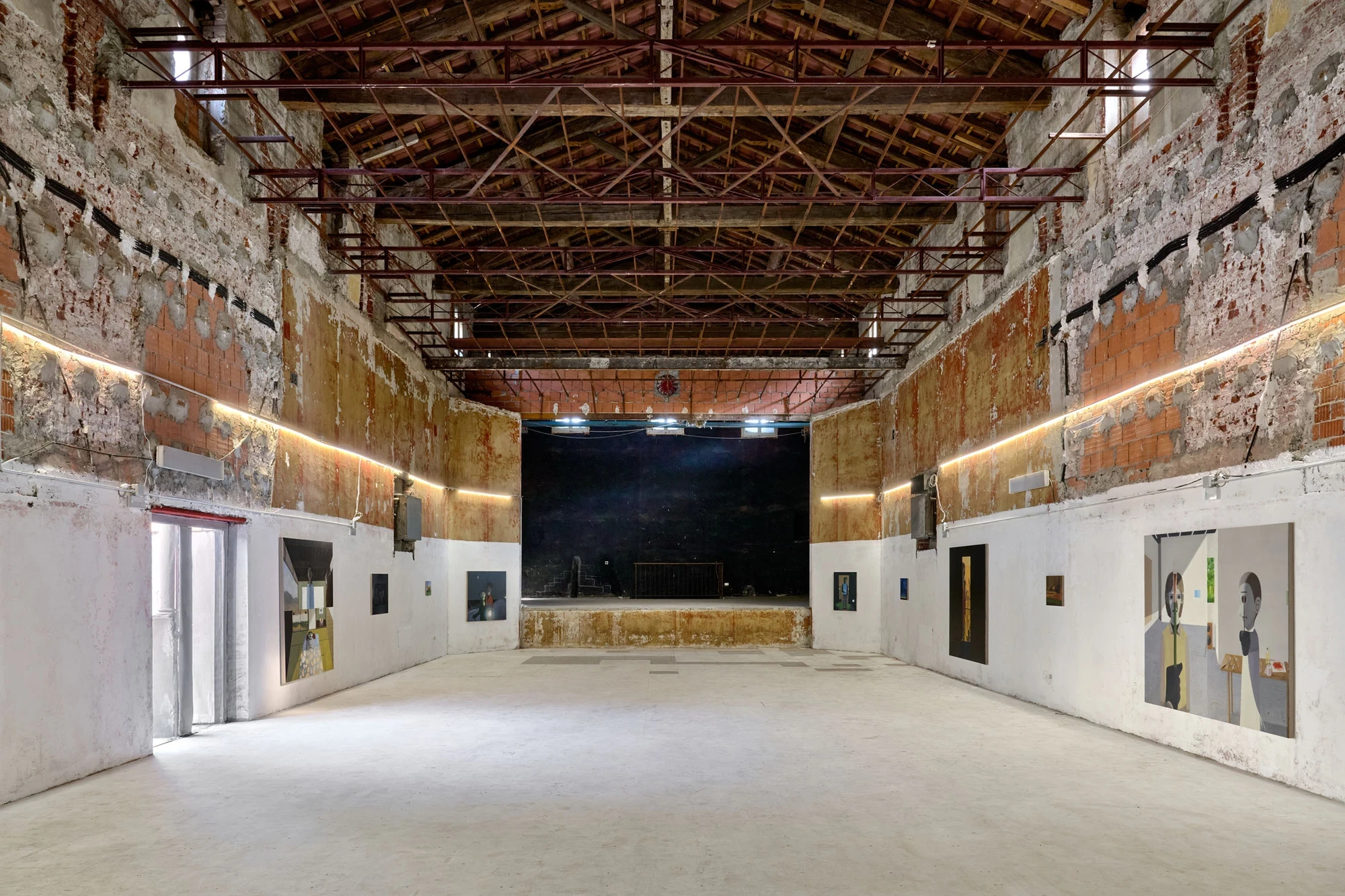
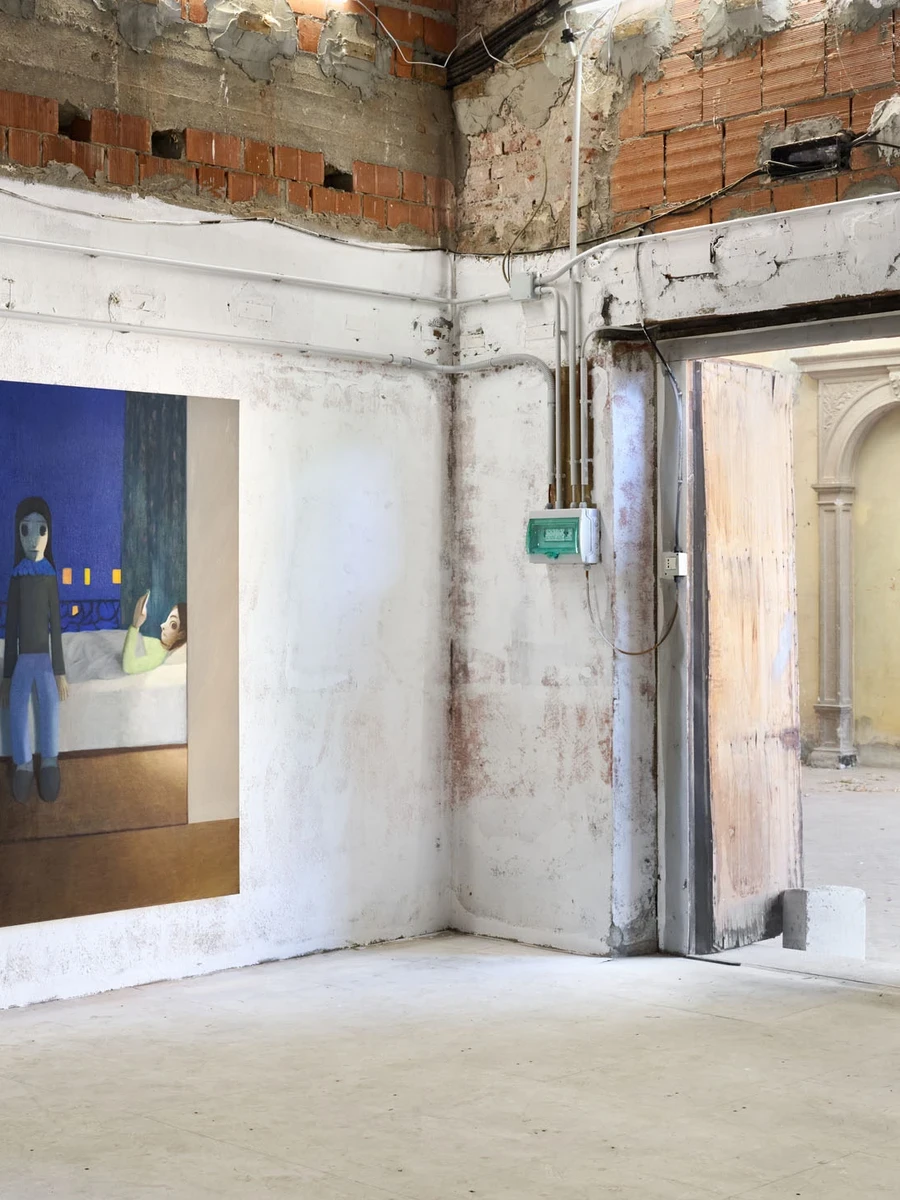
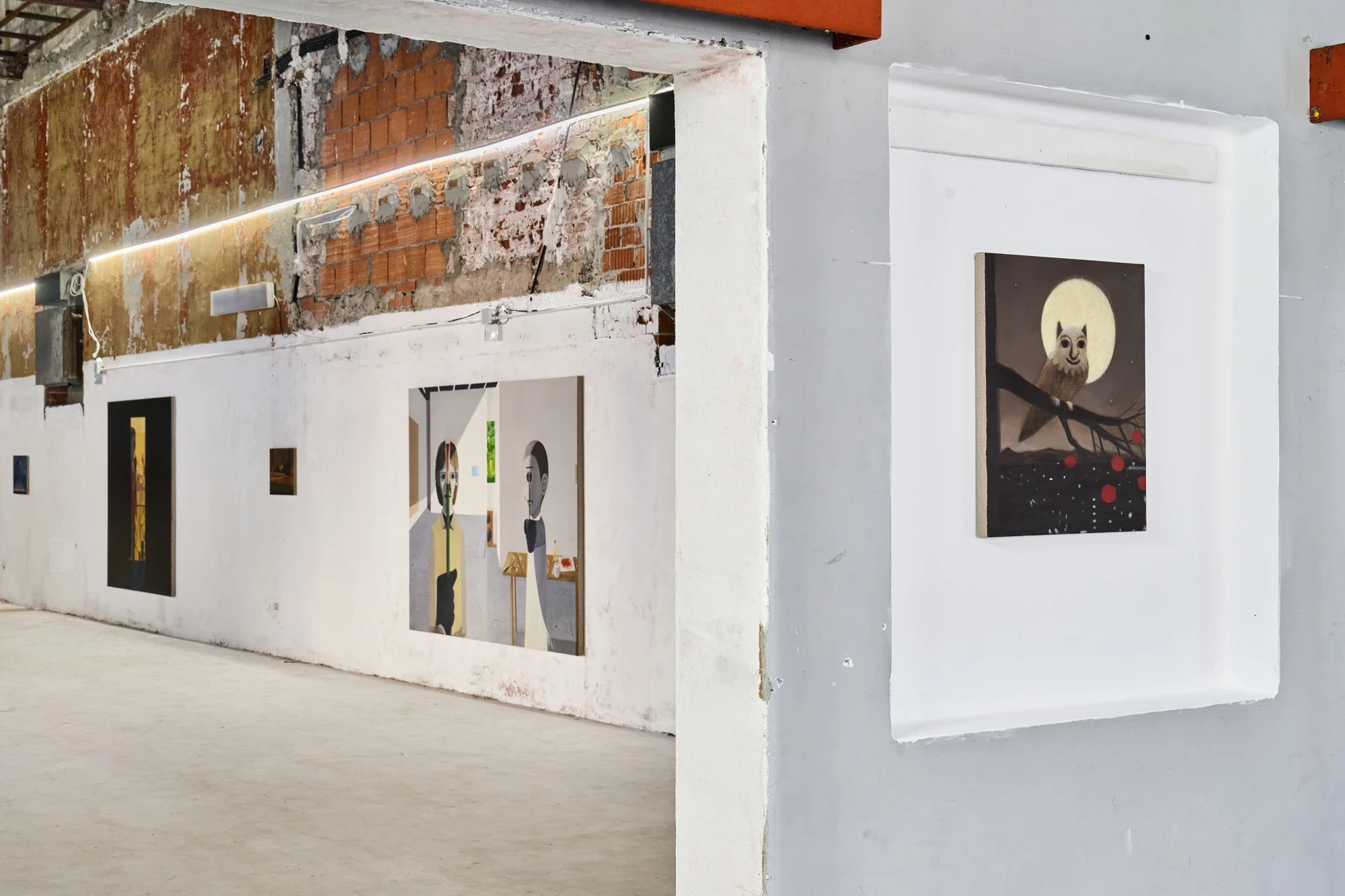
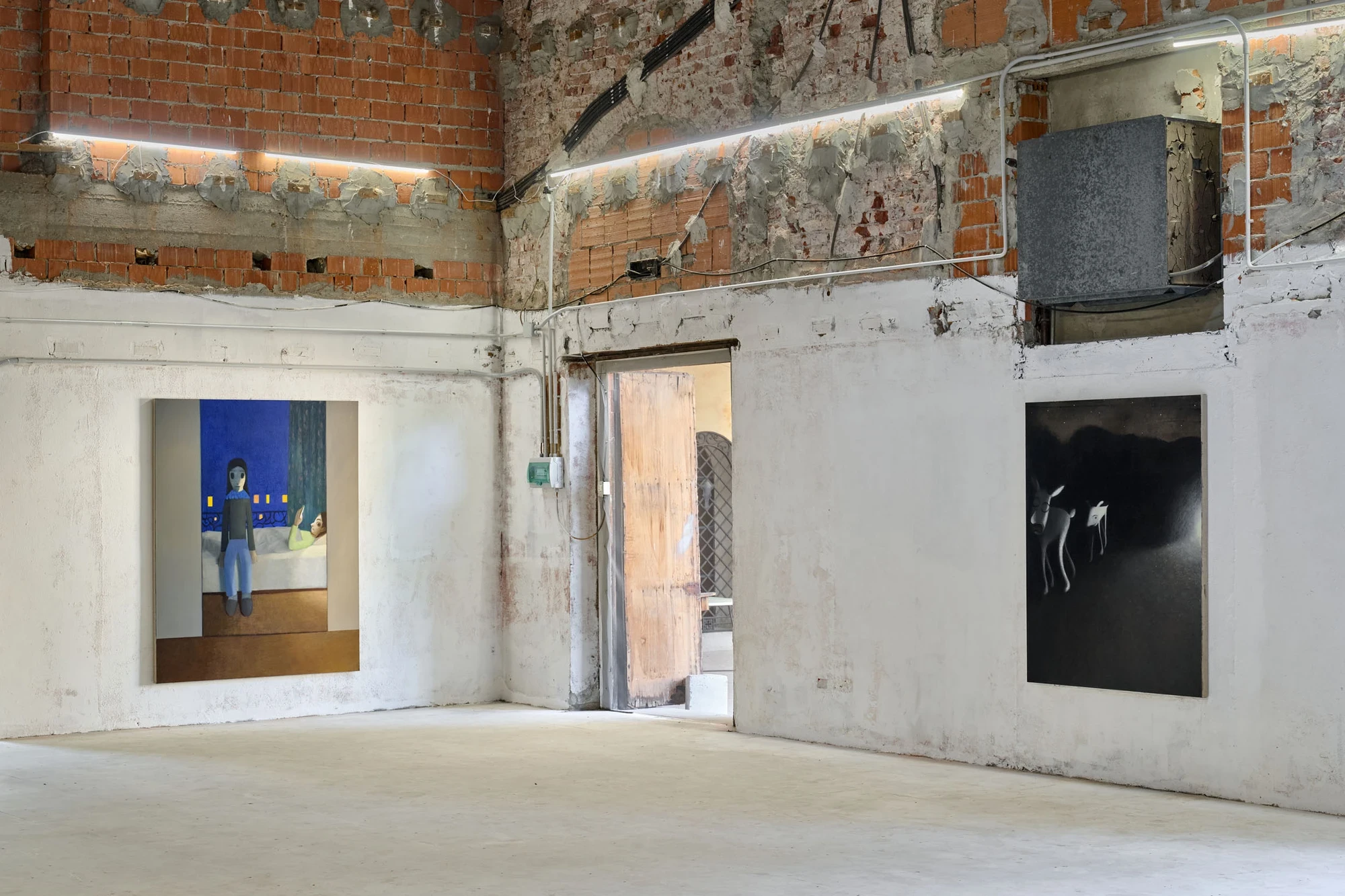
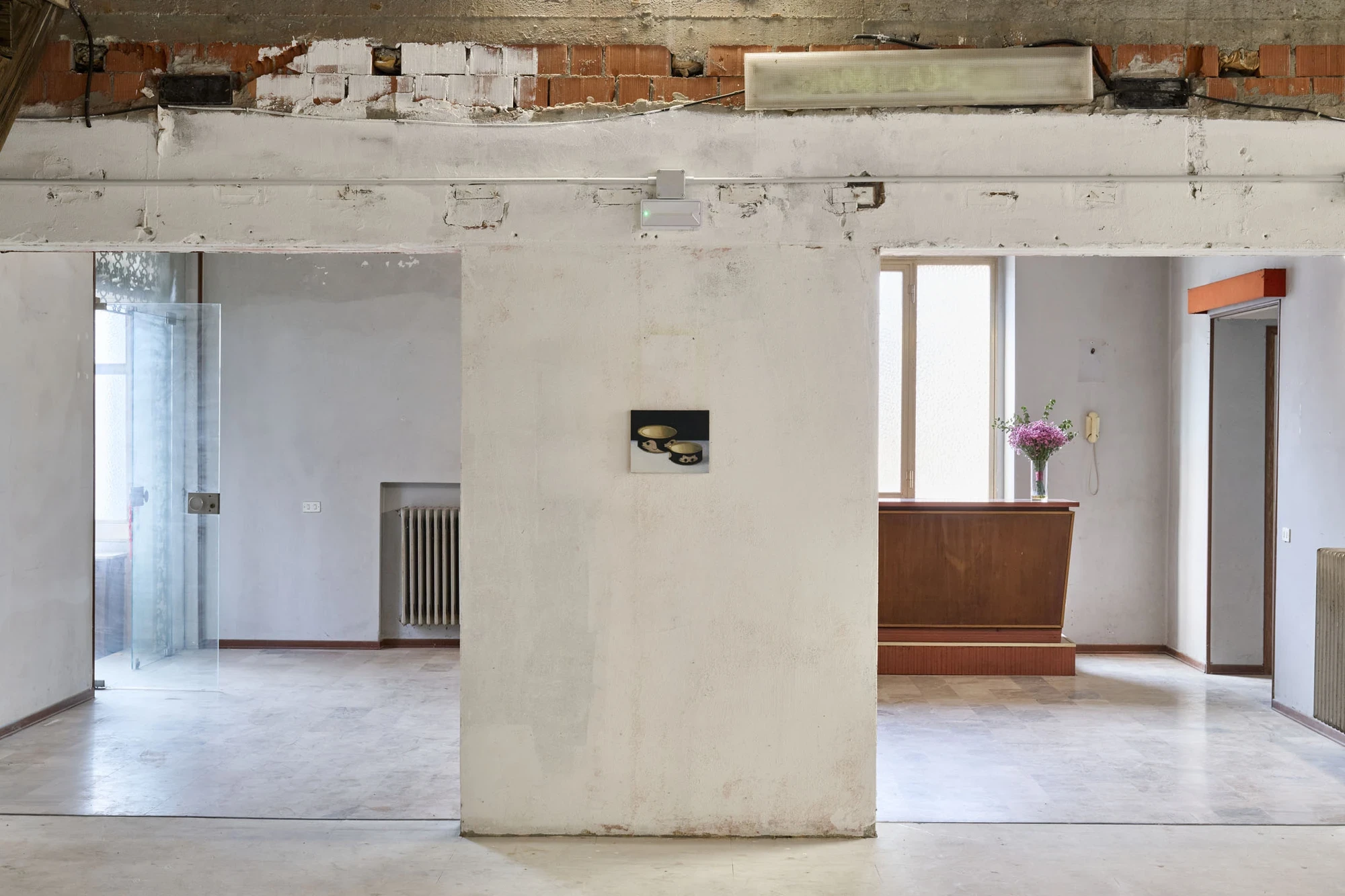
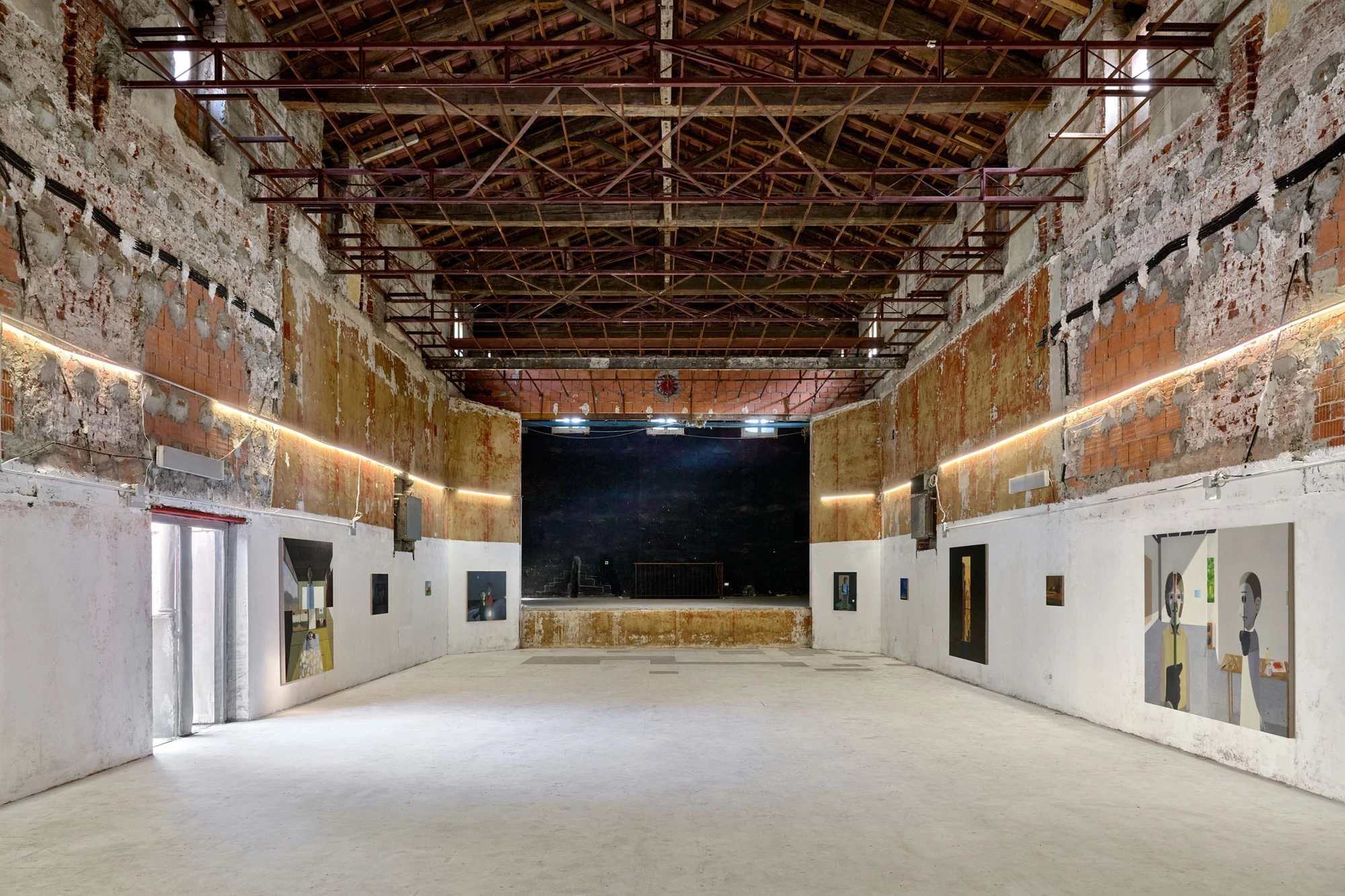
Satoru Kurata's first European solo show fills the former theatre of the Church of San Luca in Cremona, a hall stripped back to exposed brick, ochre-stained plaster and board-marked concrete partitions capped with bright orange lintels. Triangolo hangs the new oil paintings against this worn masonry, some framed inside cut-out niches, others left bare on the raw wall, so the domestic scale of the canvases reads sharply against the industrial volume.
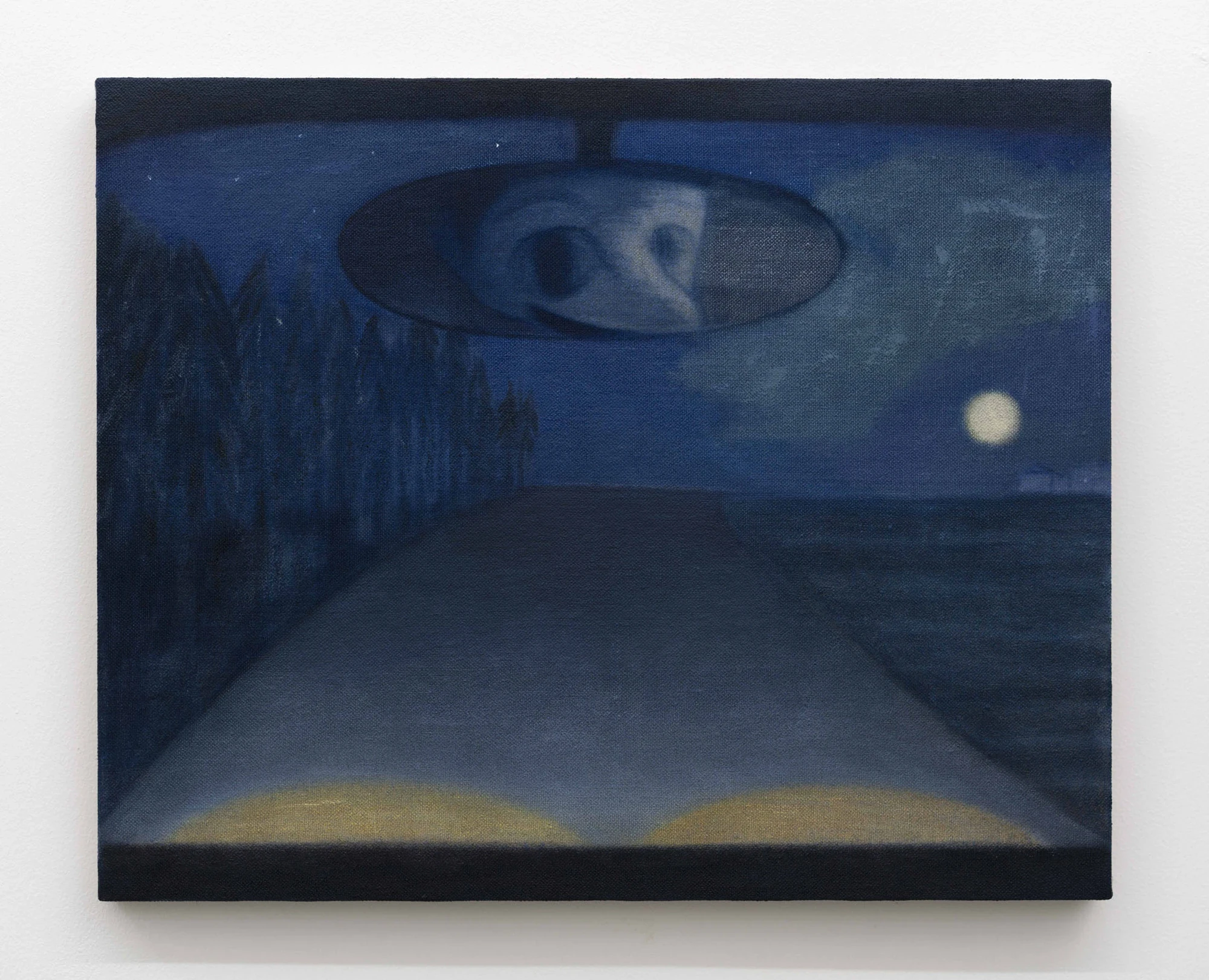
The paintings are quiet and legible, built from flat planes of muted colour and figures drawn down to essentials: almond eyes, blank ovals for faces, bodies rendered in a few economical shapes. Kurata's language is shaped by Japanese culture yet stays readable within Western traditions of figuration. His scenes turn on presence and perception. Recurring motifs come from personal memory, much of it childhood, and from ordinary domestic life: a bedroom, a car interior, a balcony, a pair of pet bowls painted with a dog and a cat.
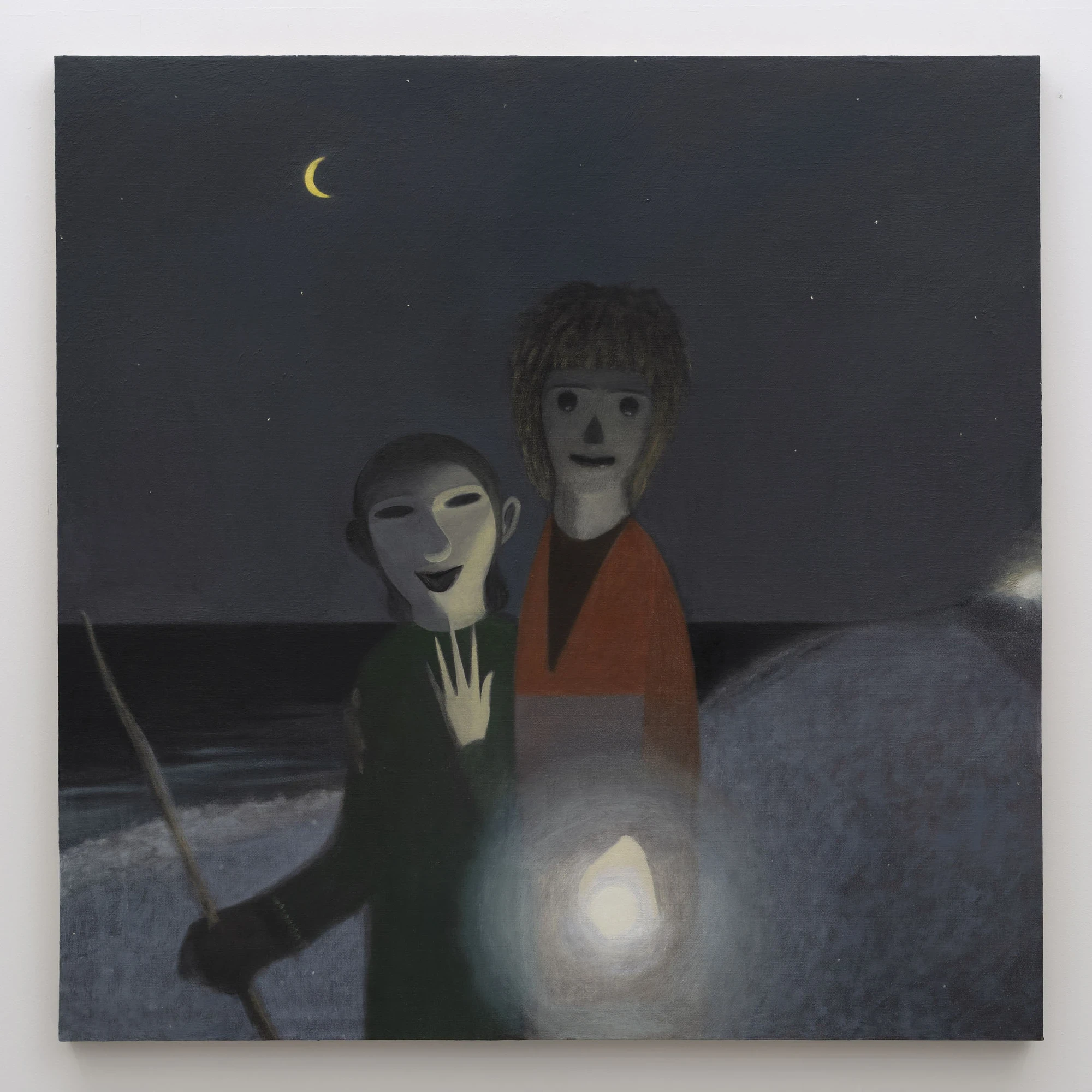
Most of the work sits at dawn or dusk. A blue night presses against a window while a figure lies in bed lit by a phone, a second figure standing sentinel at the bed's edge. Someone in floral pyjamas checks a screen on a dark lawn, a cat and a full moon flanking them like matched lamps. The palette holds to deep indigo, charcoal and warm lamp-yellow, the light always artificial or lunar, never full day.
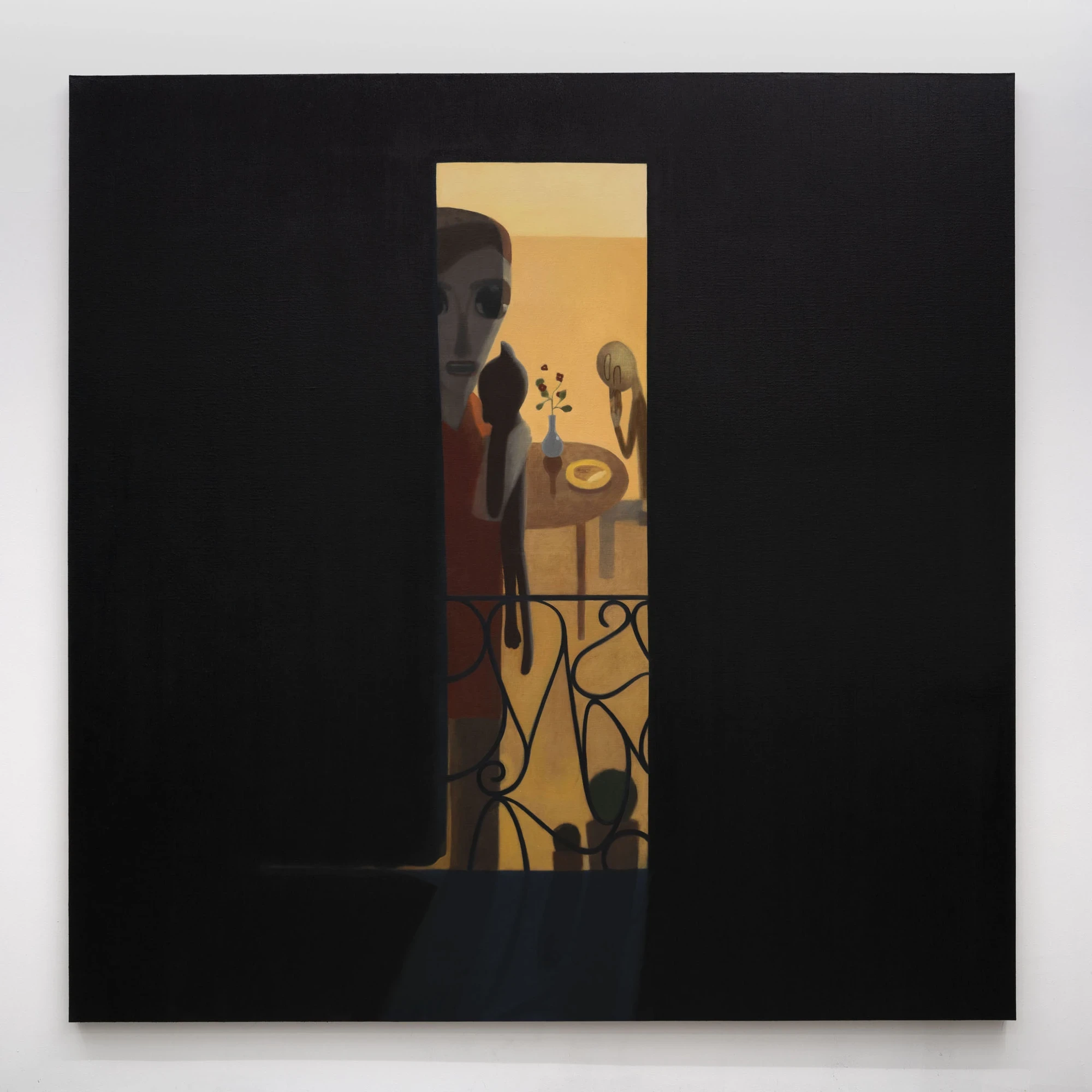
Kurata often builds a single canvas from two viewpoints at once. In one large interior, two heads face each other across a divided plane, a paintbrush held upright between them like a shared axis, the studio behind them splitting into two rooms. Elsewhere a tall black canvas opens only a narrow vertical slit onto a lit interior, a figure and a still life glimpsed through wrought-iron railings, the rest of the surface sealed in darkness. The composition withholds as much as it shows.
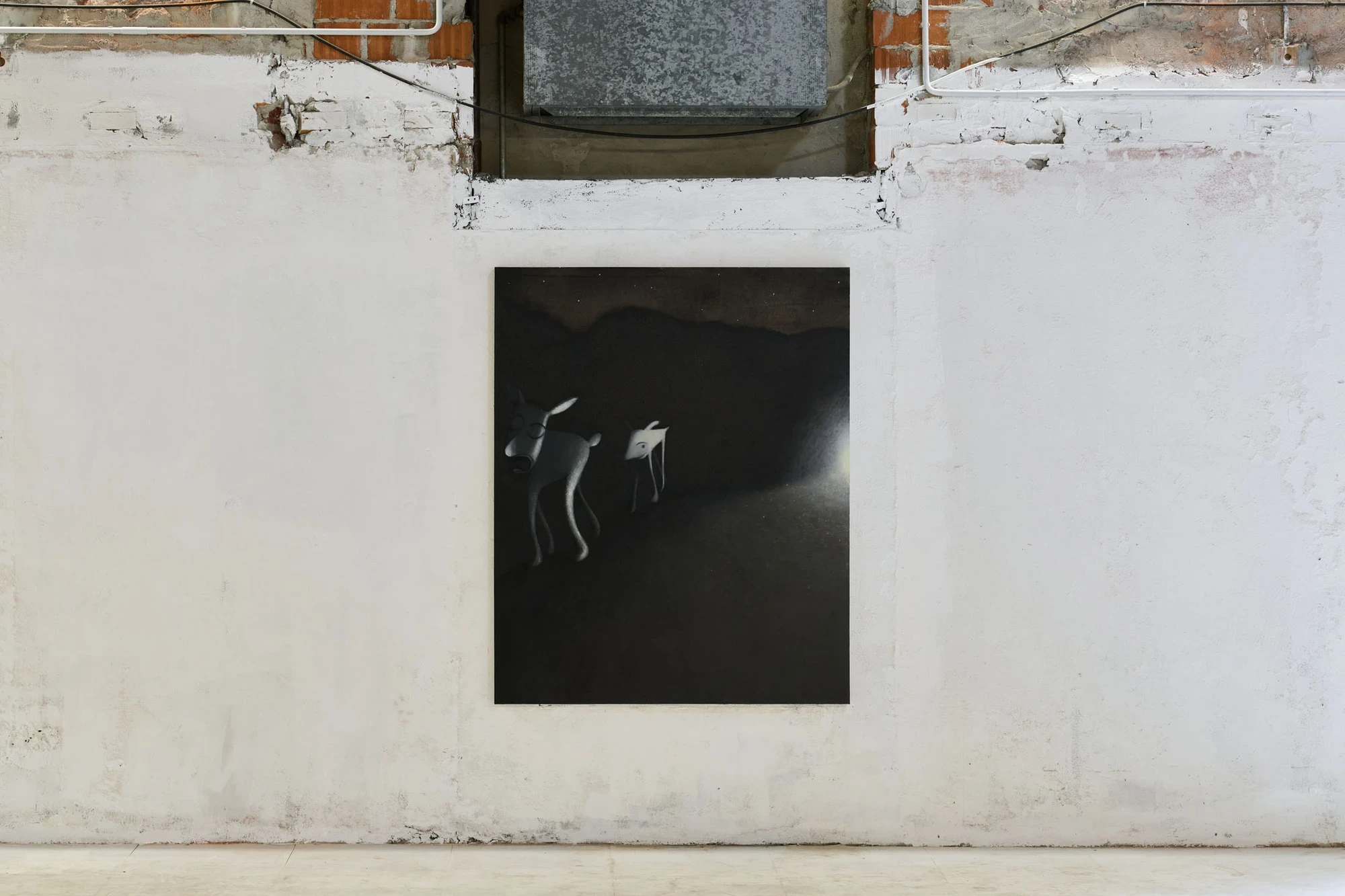
The hybrid figures carry the show's stranger register. Two pale deer-like creatures pick their way through a near-black landscape, one wearing round spectacles, their eyes catching a distant light. An owl sits on a bare branch under a gold moon, a candle-flame flickers between shadowed animal faces. Kurata lets meaning surface through the act of painting rather than arriving with it fixed, balancing familiarity against ambiguity so that each scene stays half-recognised.
Working back and forth between digital and painterly media, repeating and translating an image until it settles, Kurata tests what painting can hold that other pictures cannot. The results read as moments caught between inner states, the hour when a room turns unfamiliar and two people in it no longer see the same thing.