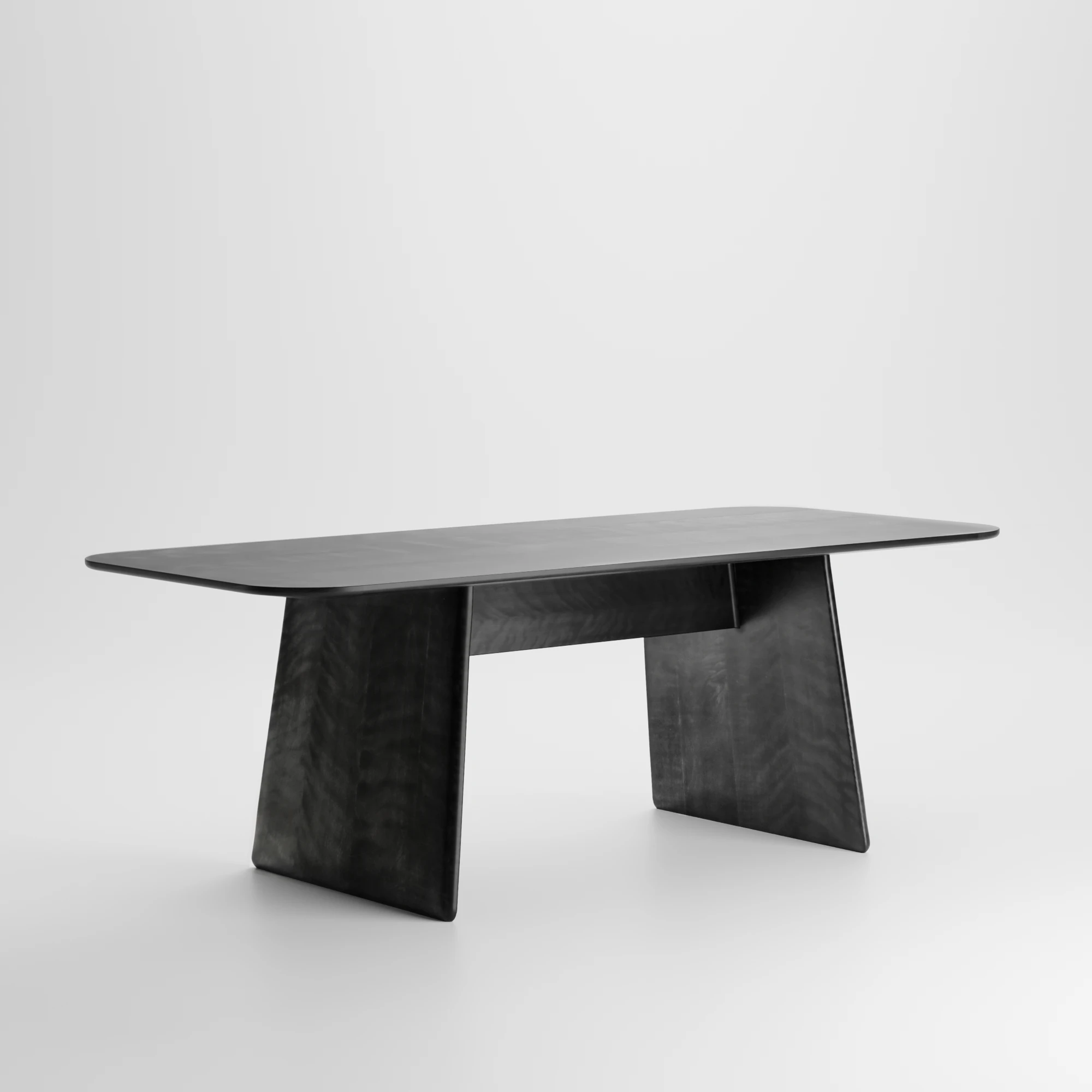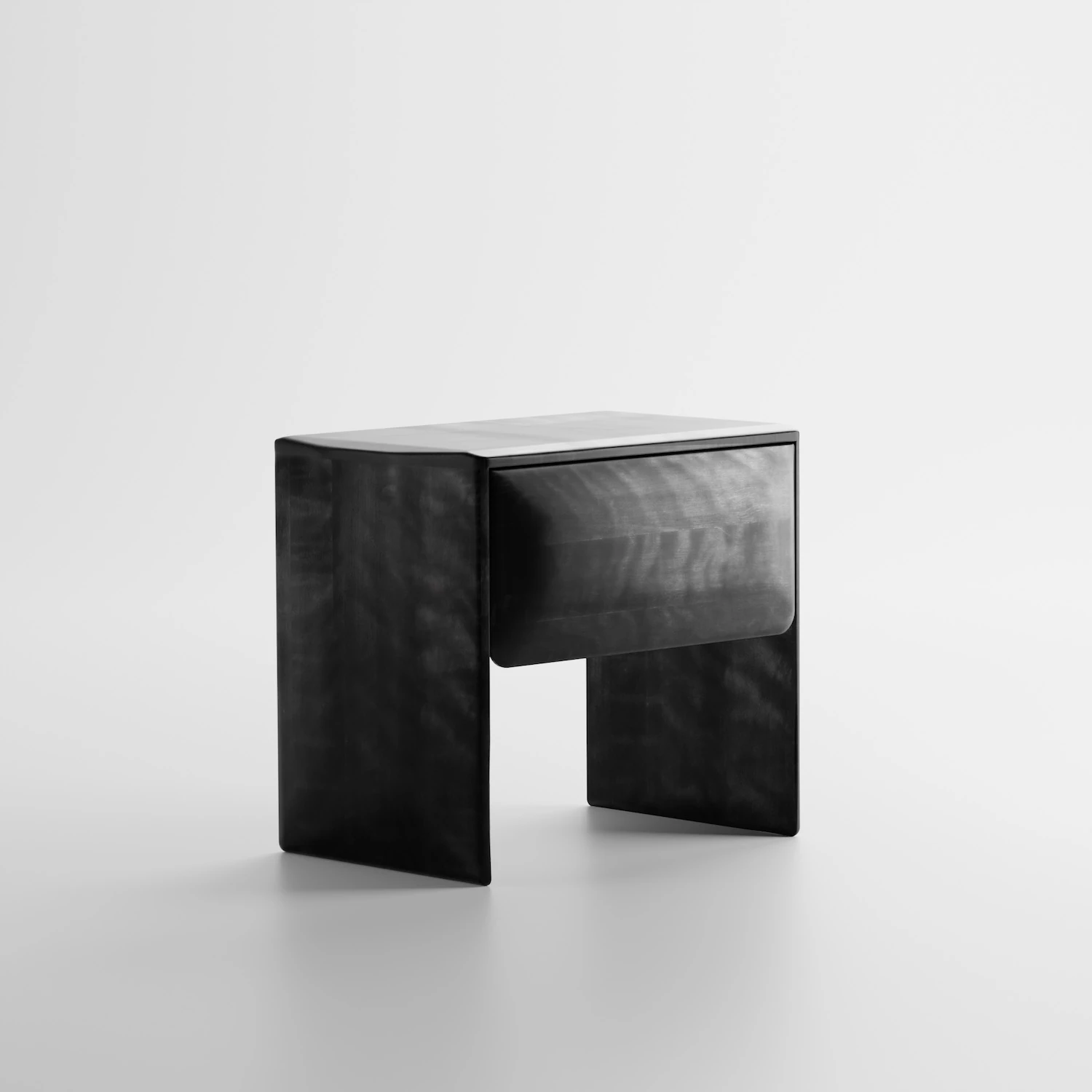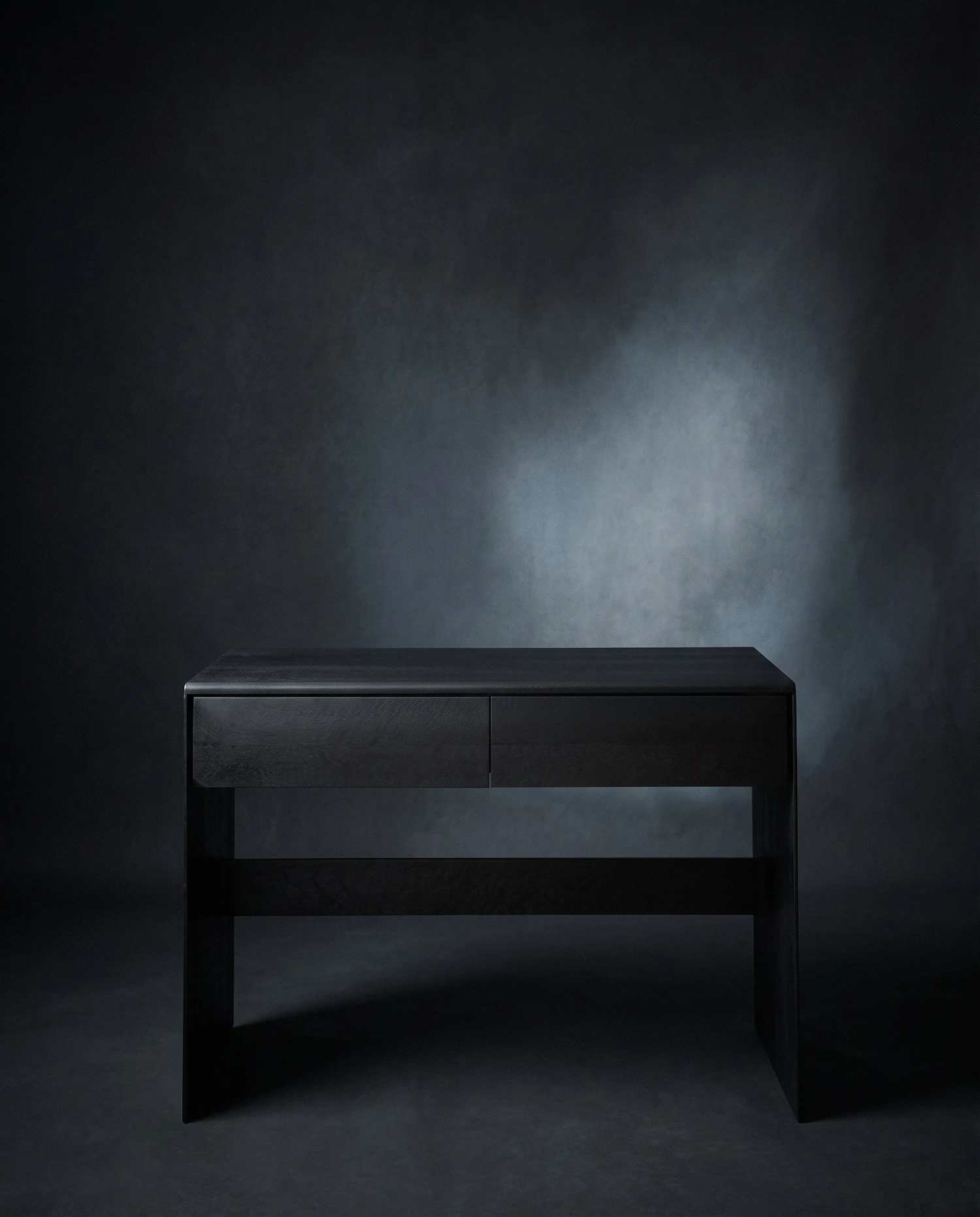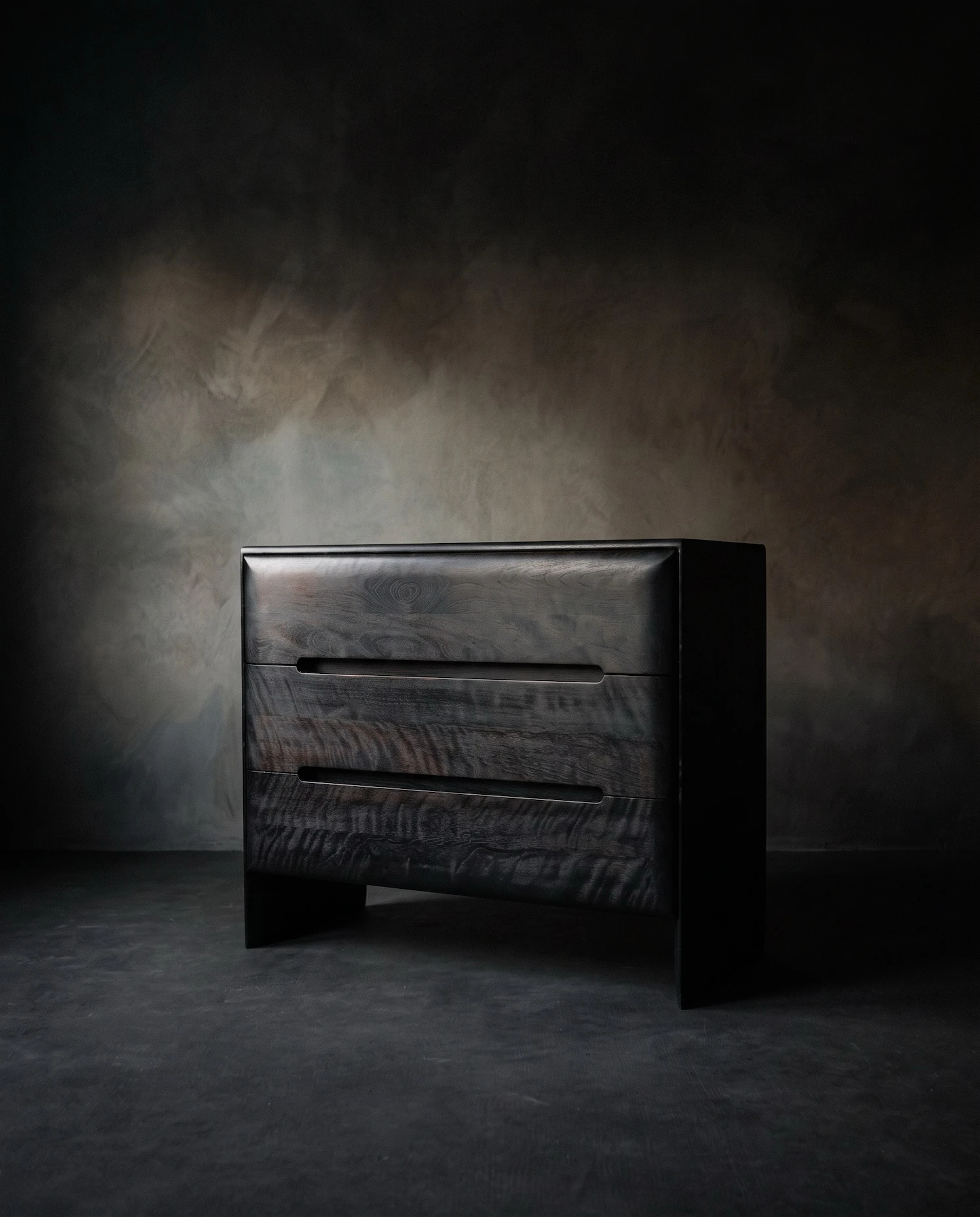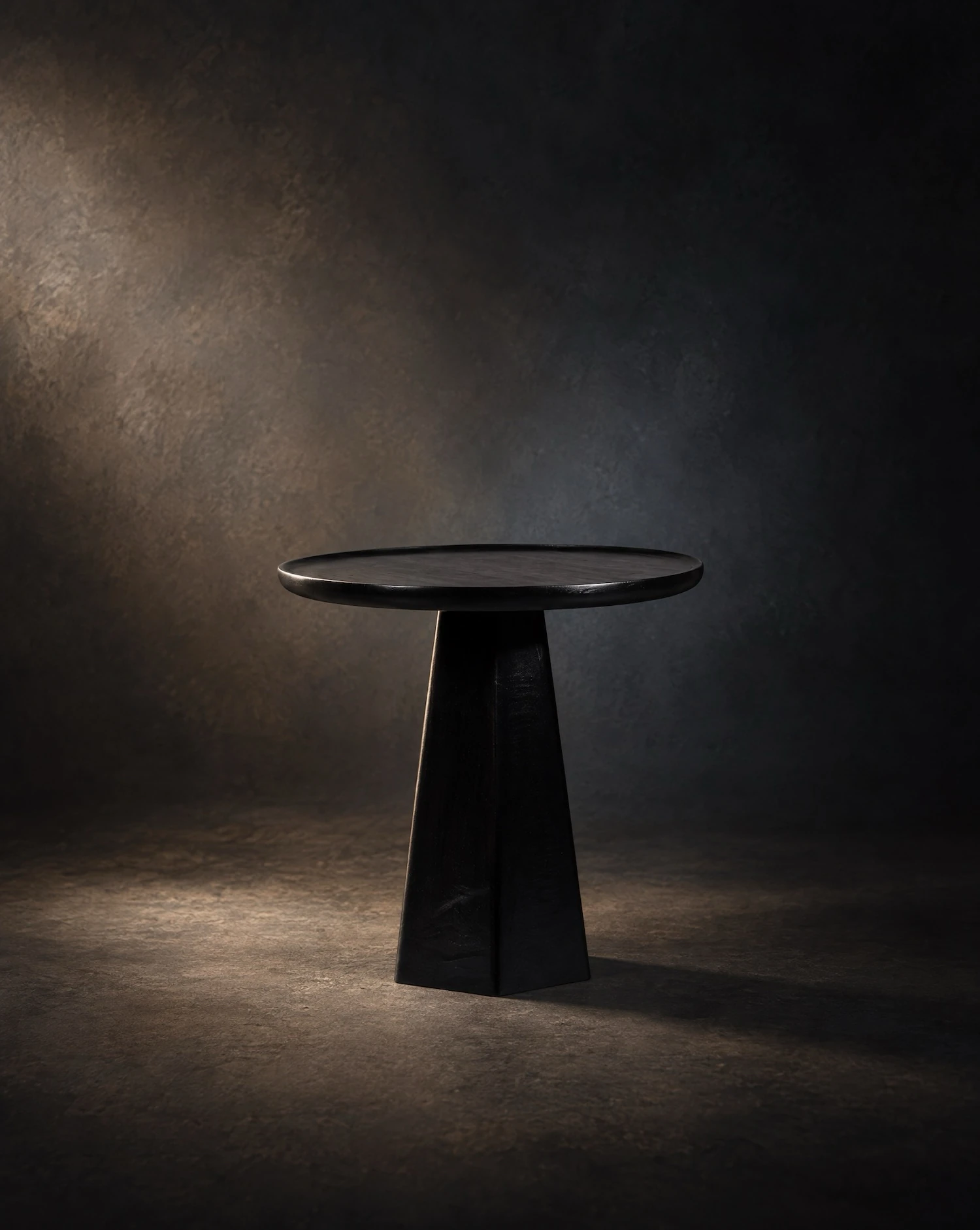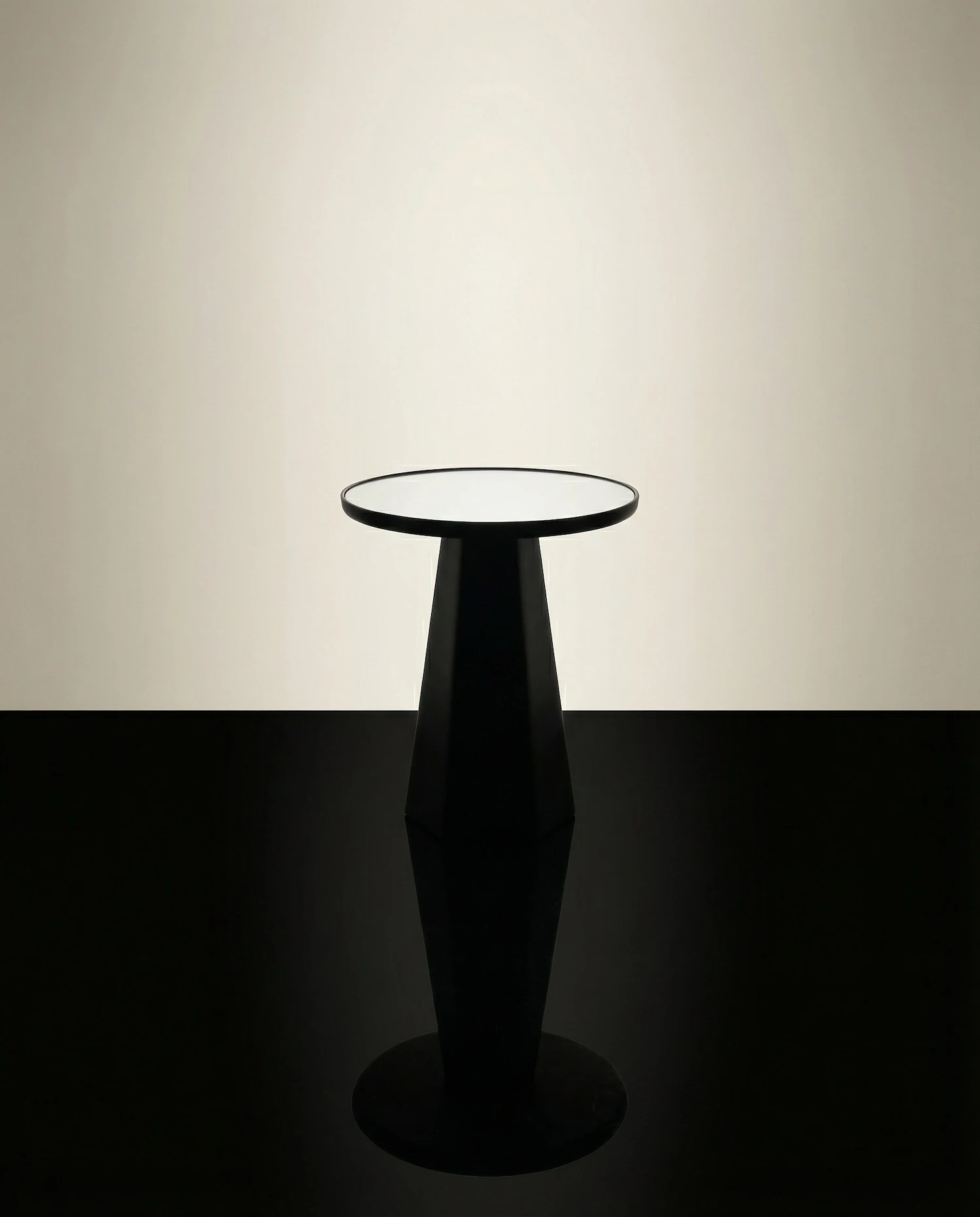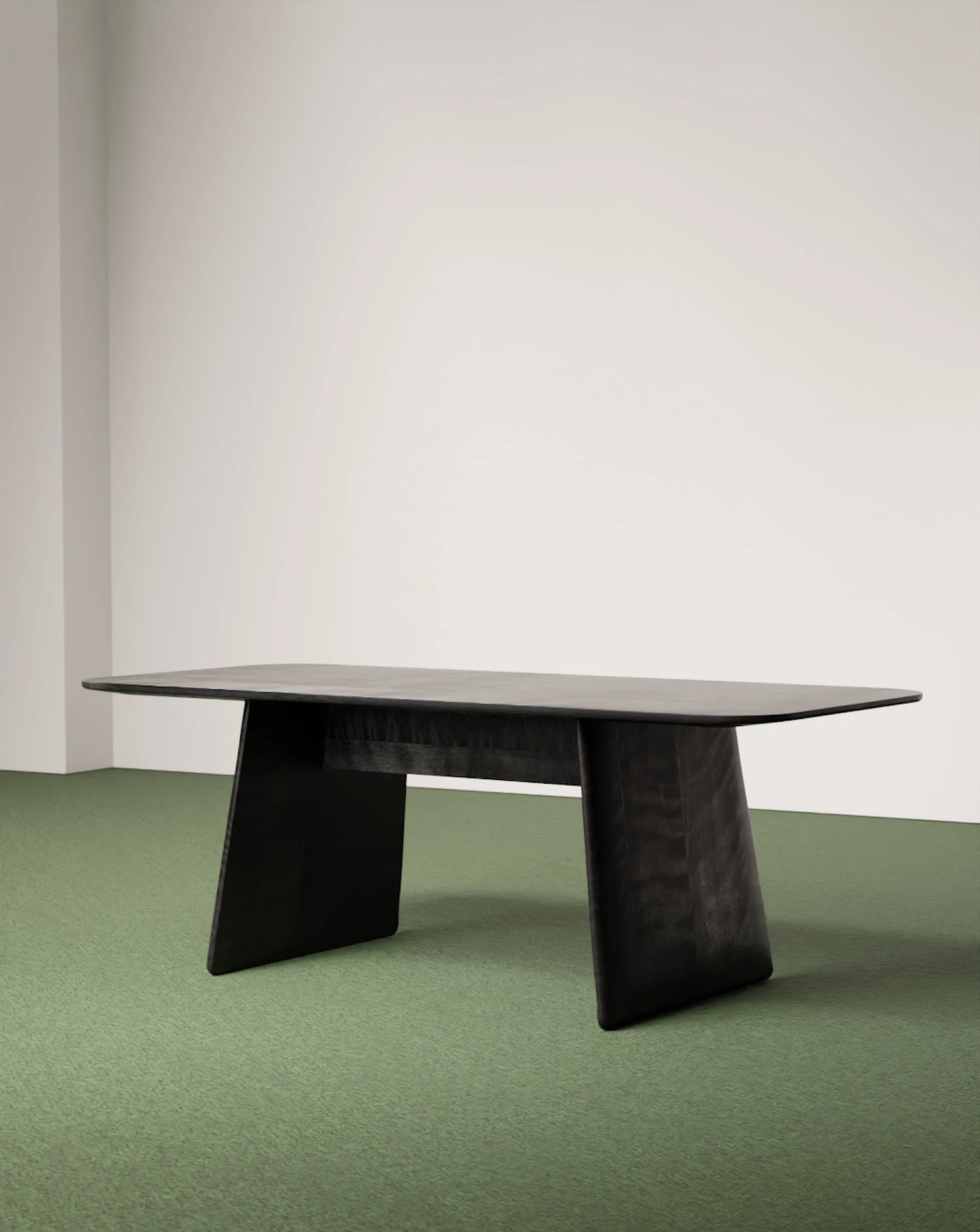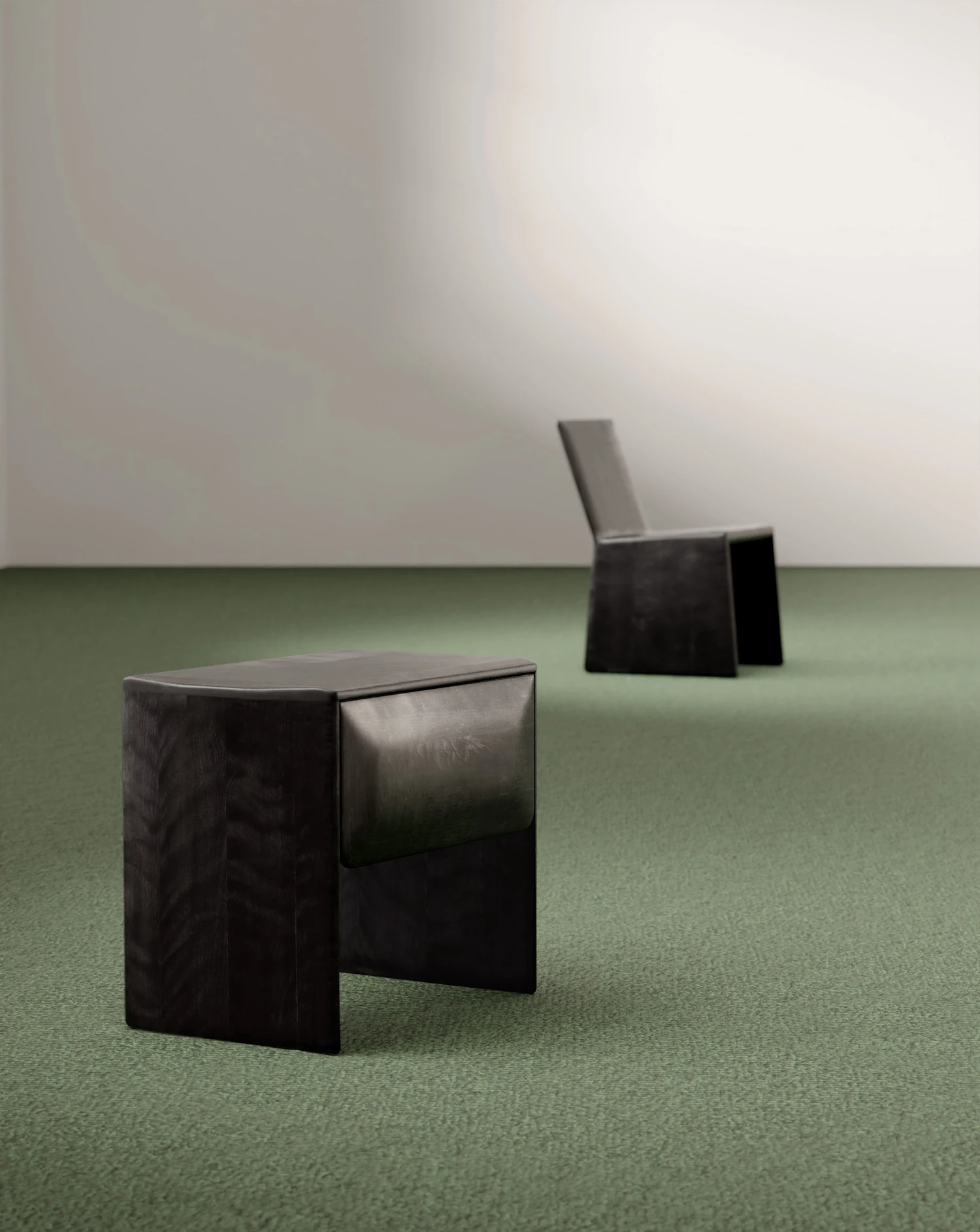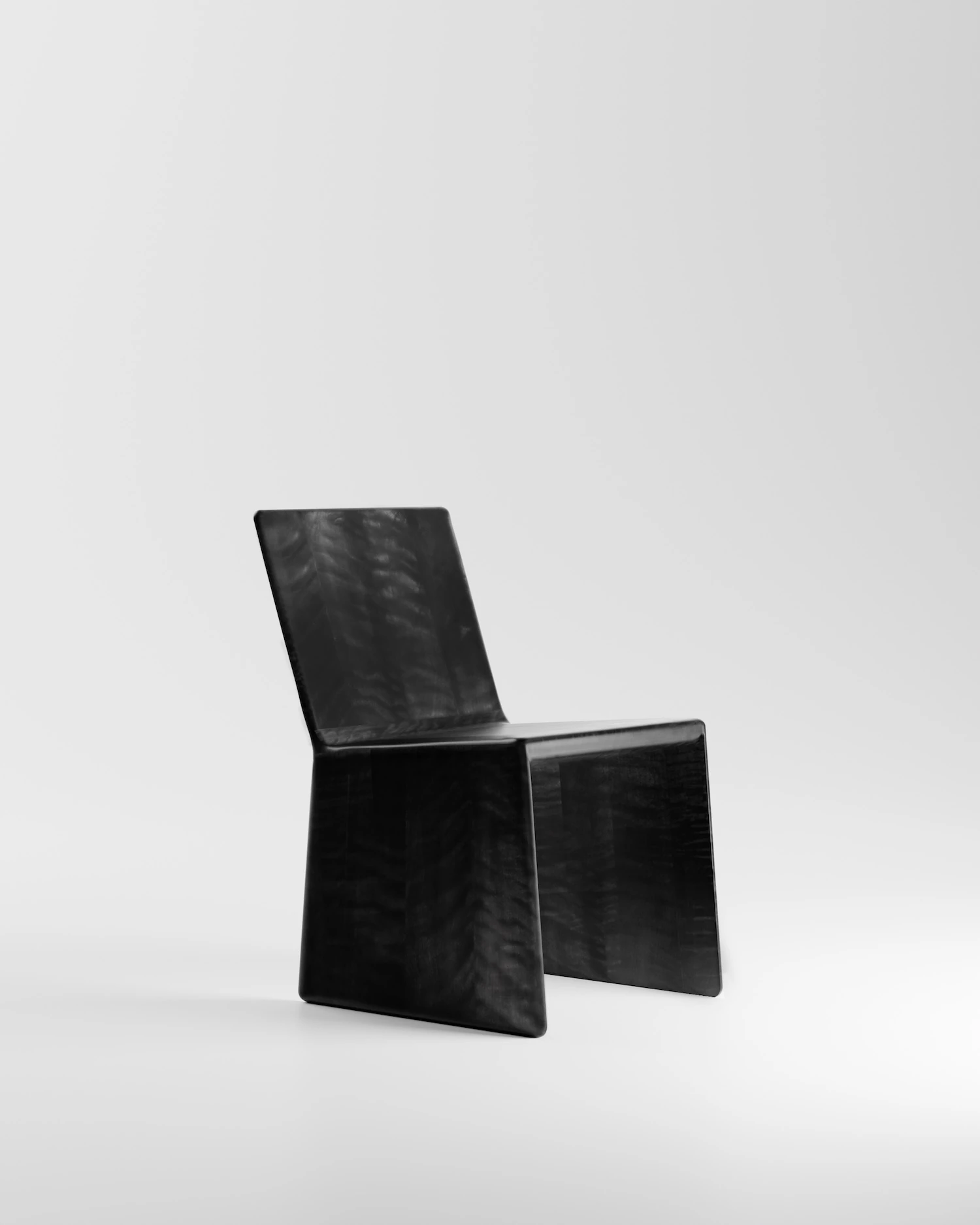
Each piece of PIQUÉ goes through fire: the collection of solid maple furniture that Montreal cabinetmaker Gabriel Page builds by hand is finished with shou sugi ban.
Shou sugi ban comes from Japan: wood is burnt until its face turns black and the char seals it. The practice began on the outside of buildings, as a way of protecting cedar cladding from the weather. Cedar's grain is soft and open, and fire bites deep into it, leaving a thick crust split by cracks. Page, who calls the technique Yakisugi, uses it on furniture in solid maple. Maple answers the fire differently: its grain is close and even, the char stays thin and consistent, and the carbon can be worked until it is smooth and matte.
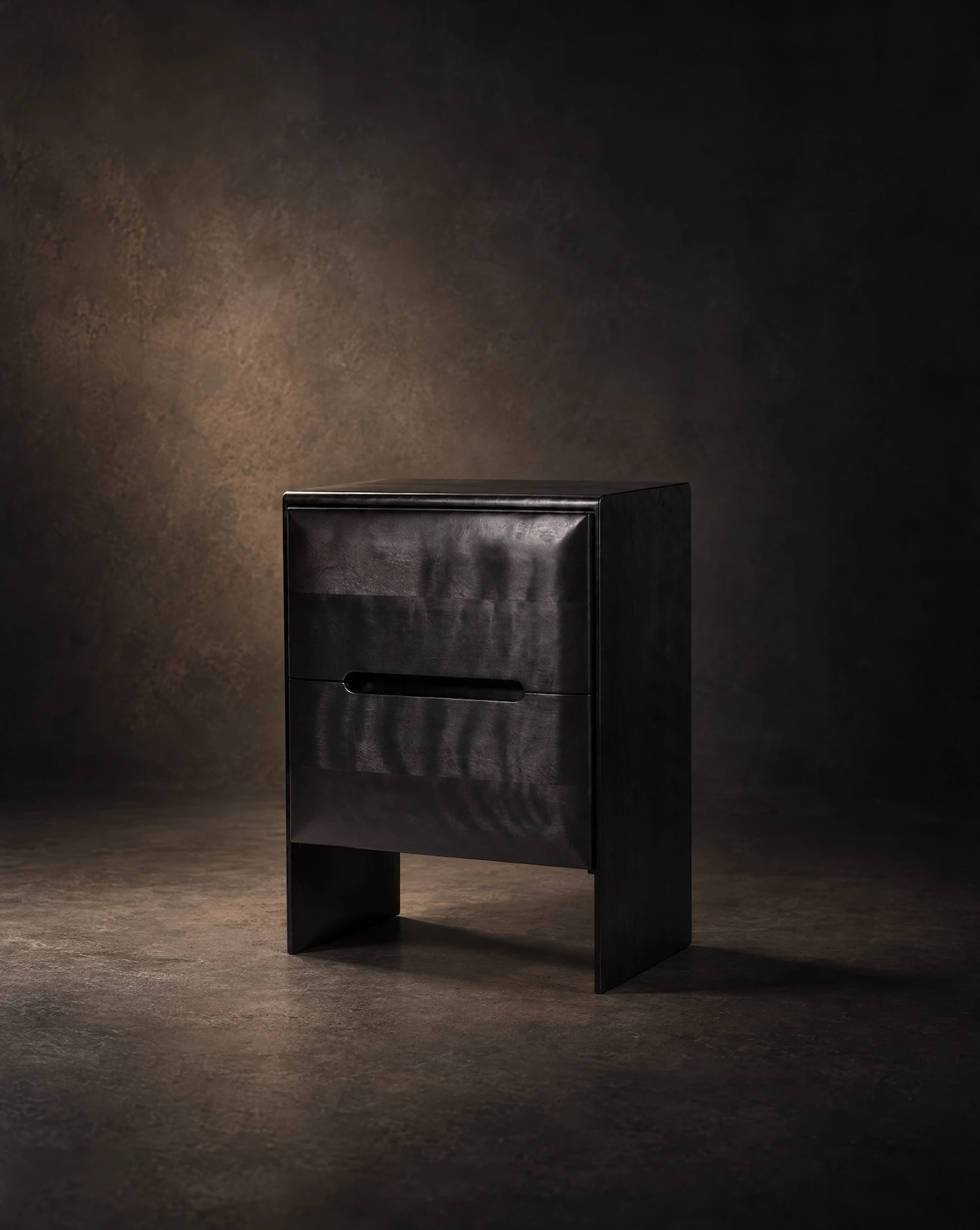
Fire does not treat a board evenly. Soft fibres are consumed sooner than dense ones, so the burn goes deeper in some places than in others, and each board's own unevenness turns into a shallow relief in the burnt surface. That surface is the maple itself, and in the finished piece the grain can still be read through it: its patterns, the places where its direction shifts, the irregularities of the timber.
Where two faces meet, the edge is softened into a continuous curve rather than left sharp, and each profile is shaped as a volume. On the pieces with drawers, the pulls are cut into the casework itself. No drawer front carries applied hardware: no knob, no handle, nothing fixed to its face.
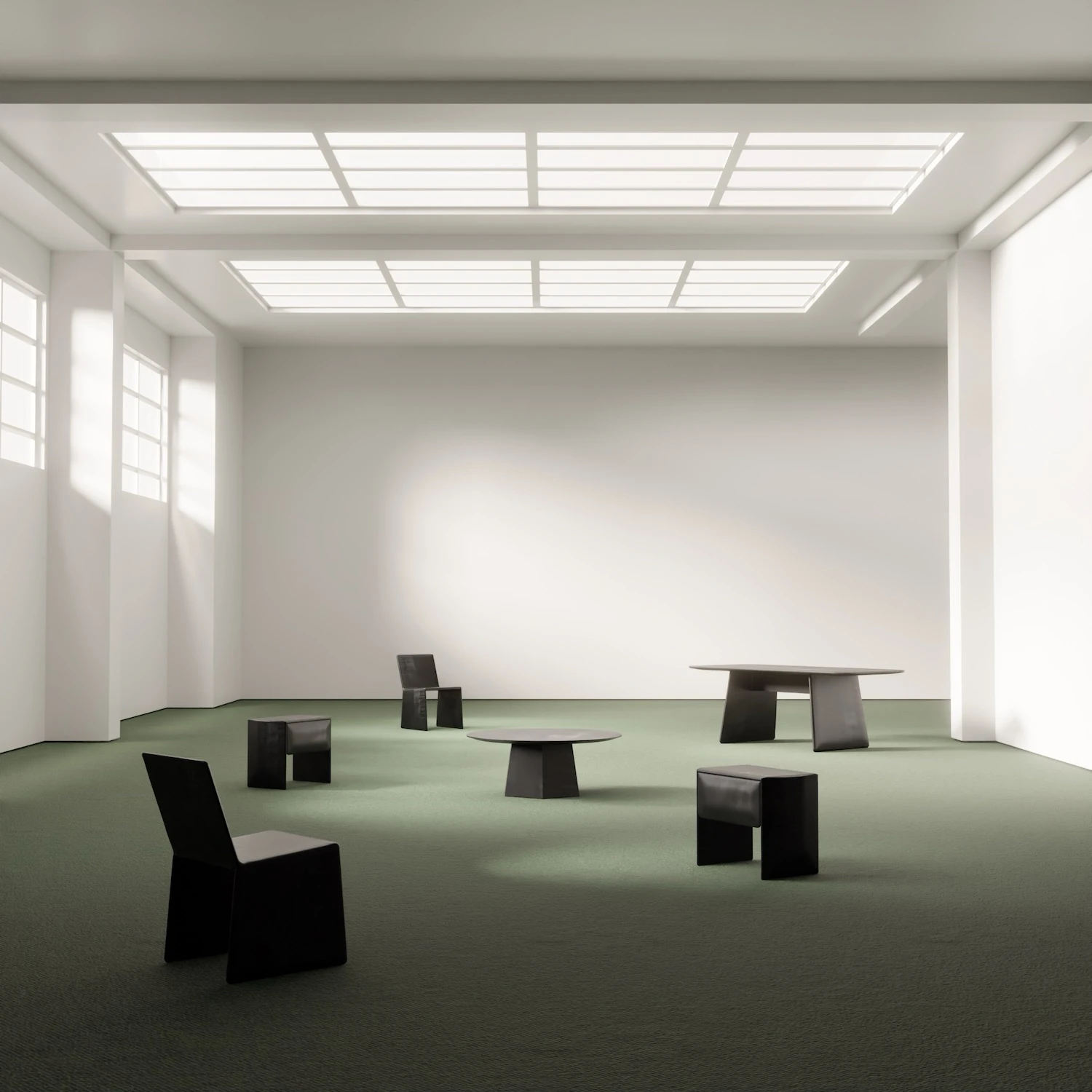
The collection includes a dining chair, a dining table, nightstands, a console with two drawers, a chest of drawers and round side tables. Each piece is built by hand and then charred. The collection is made in charred solid maple, and what varies from one piece to the next is proportion and curvature.