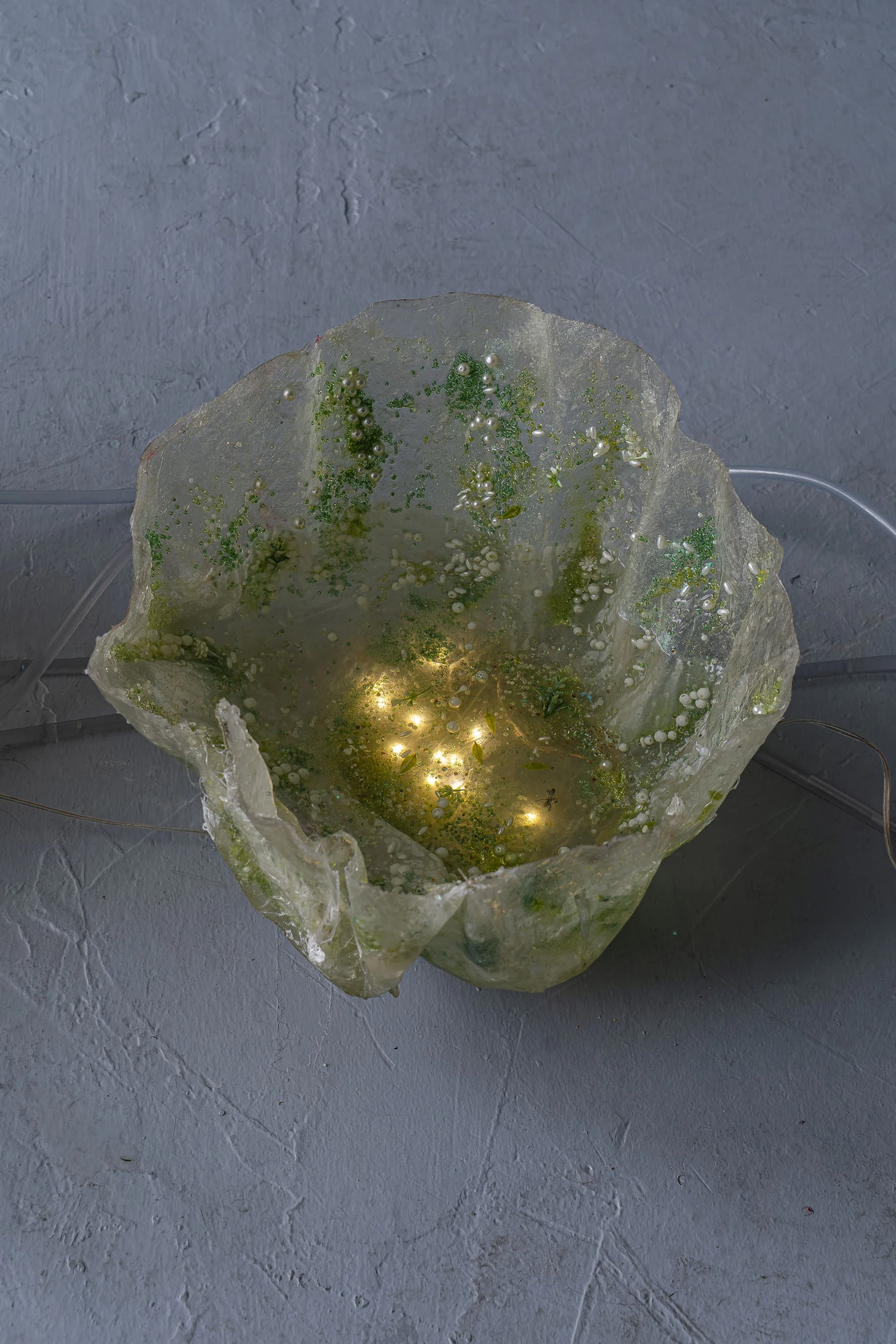
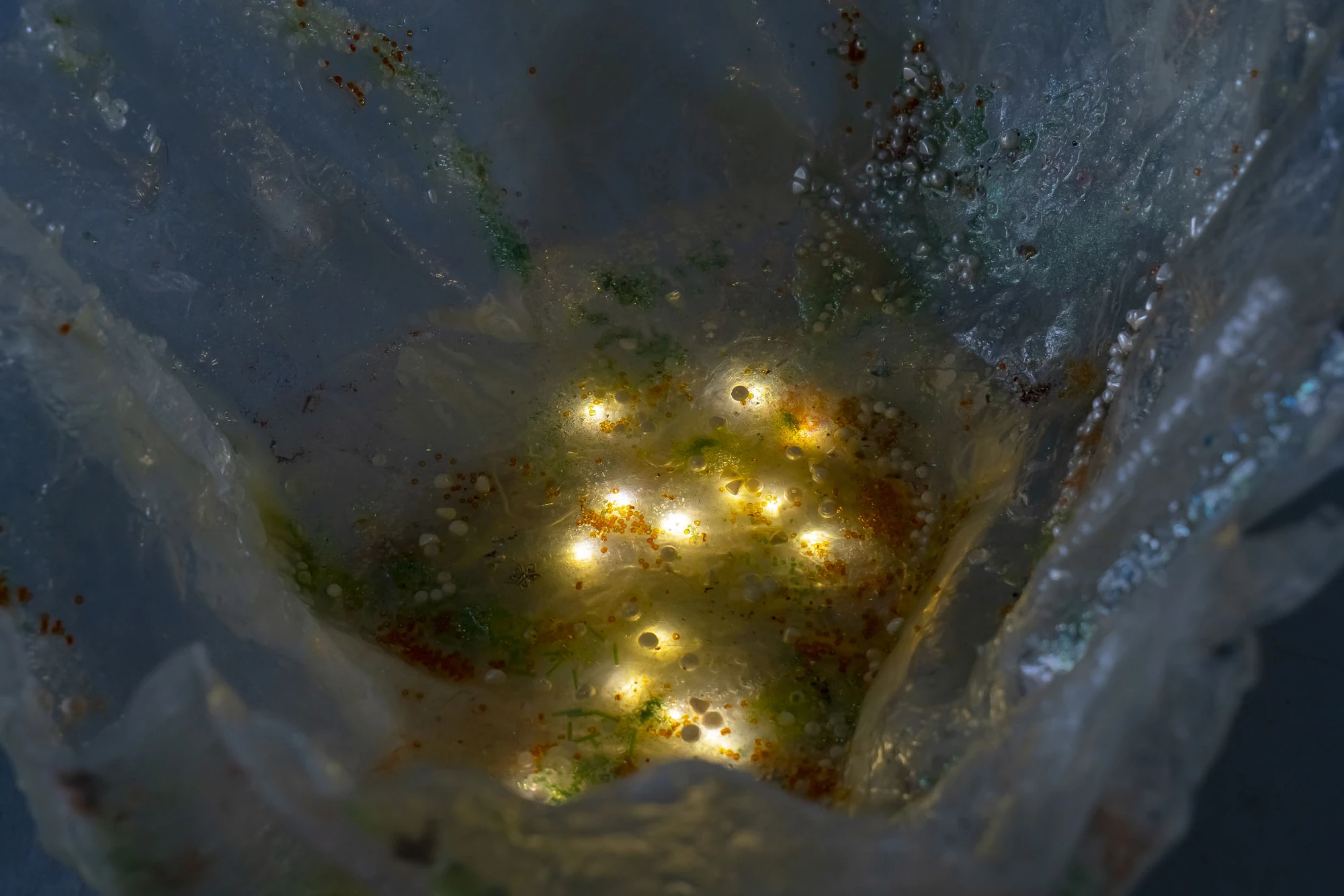
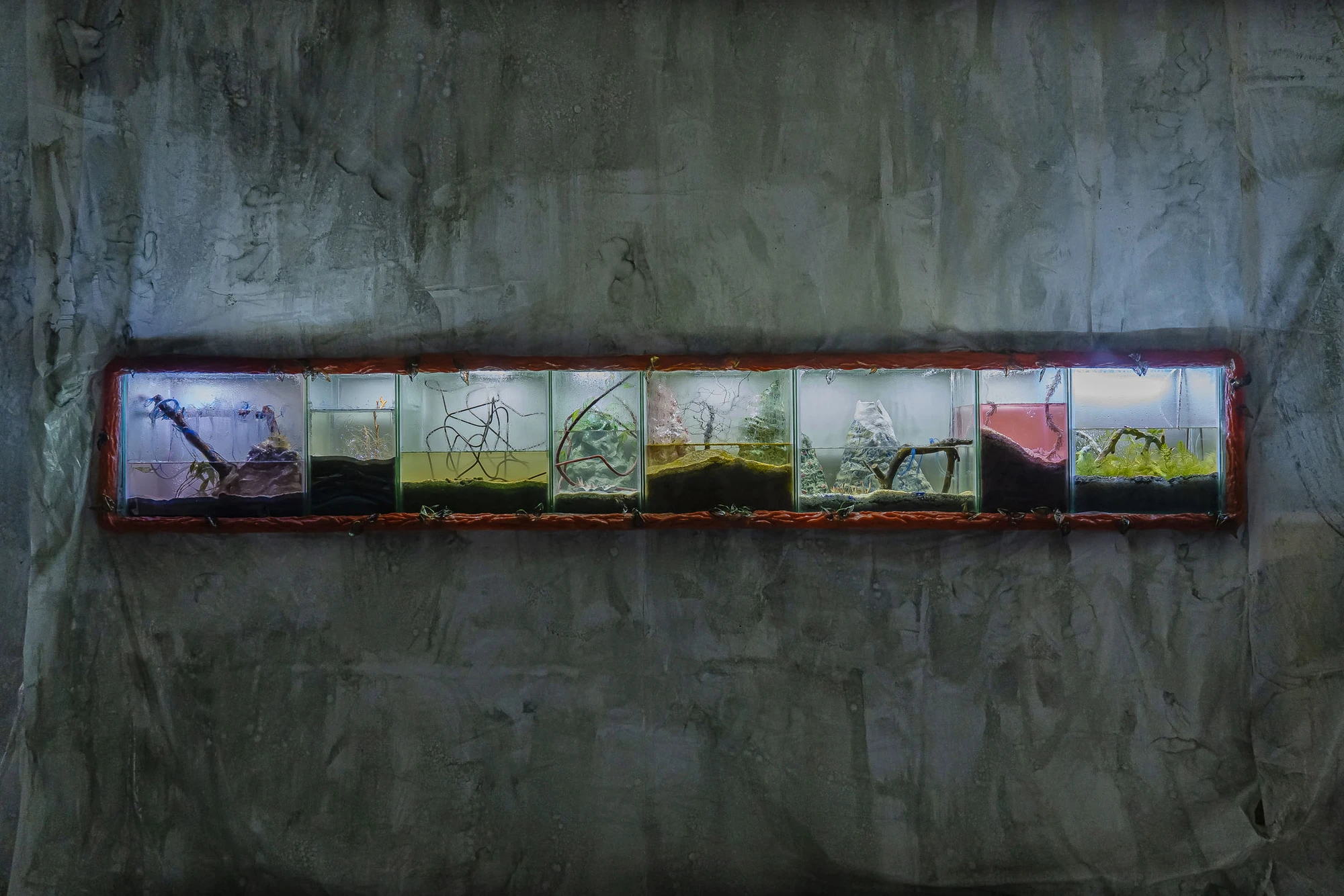
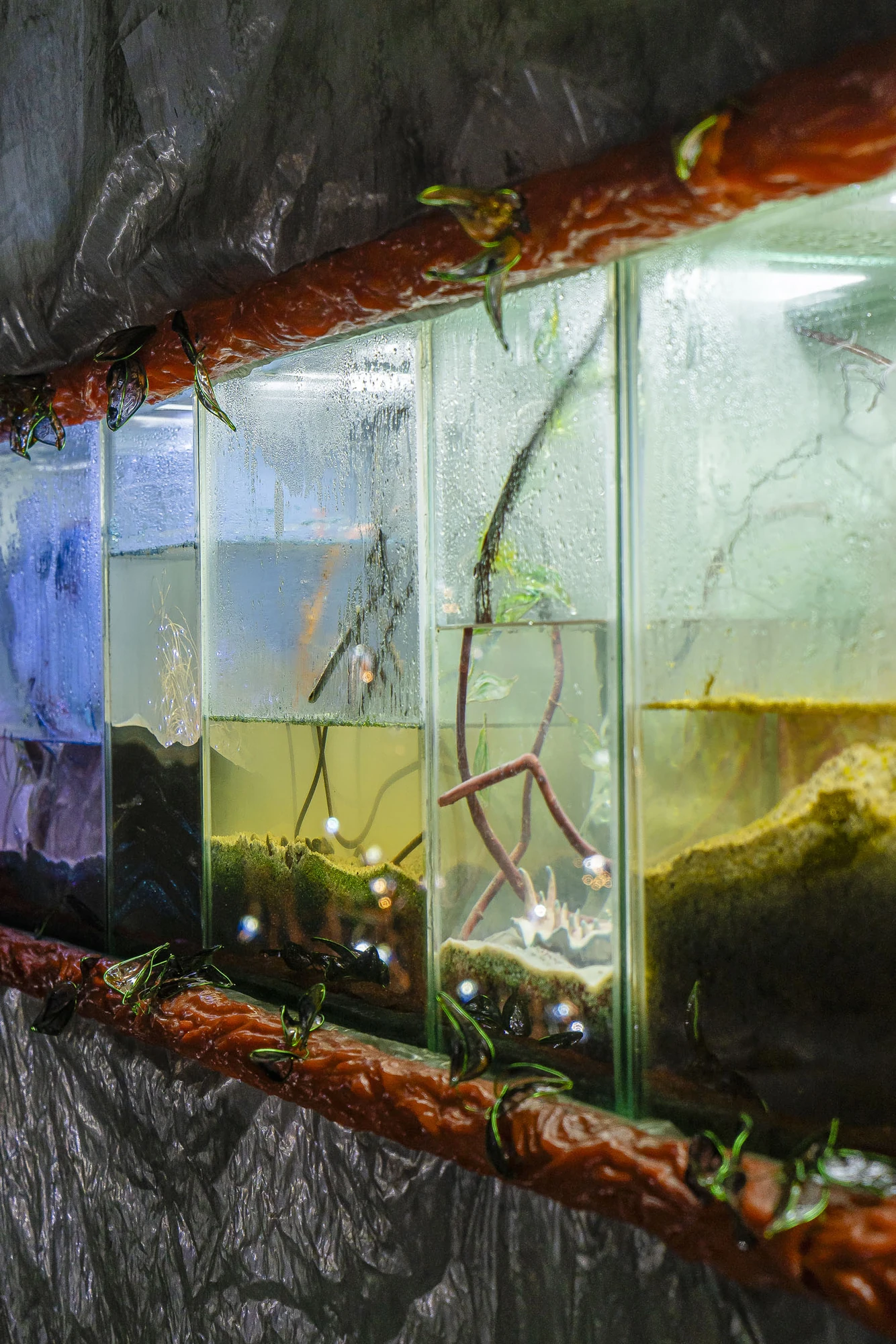
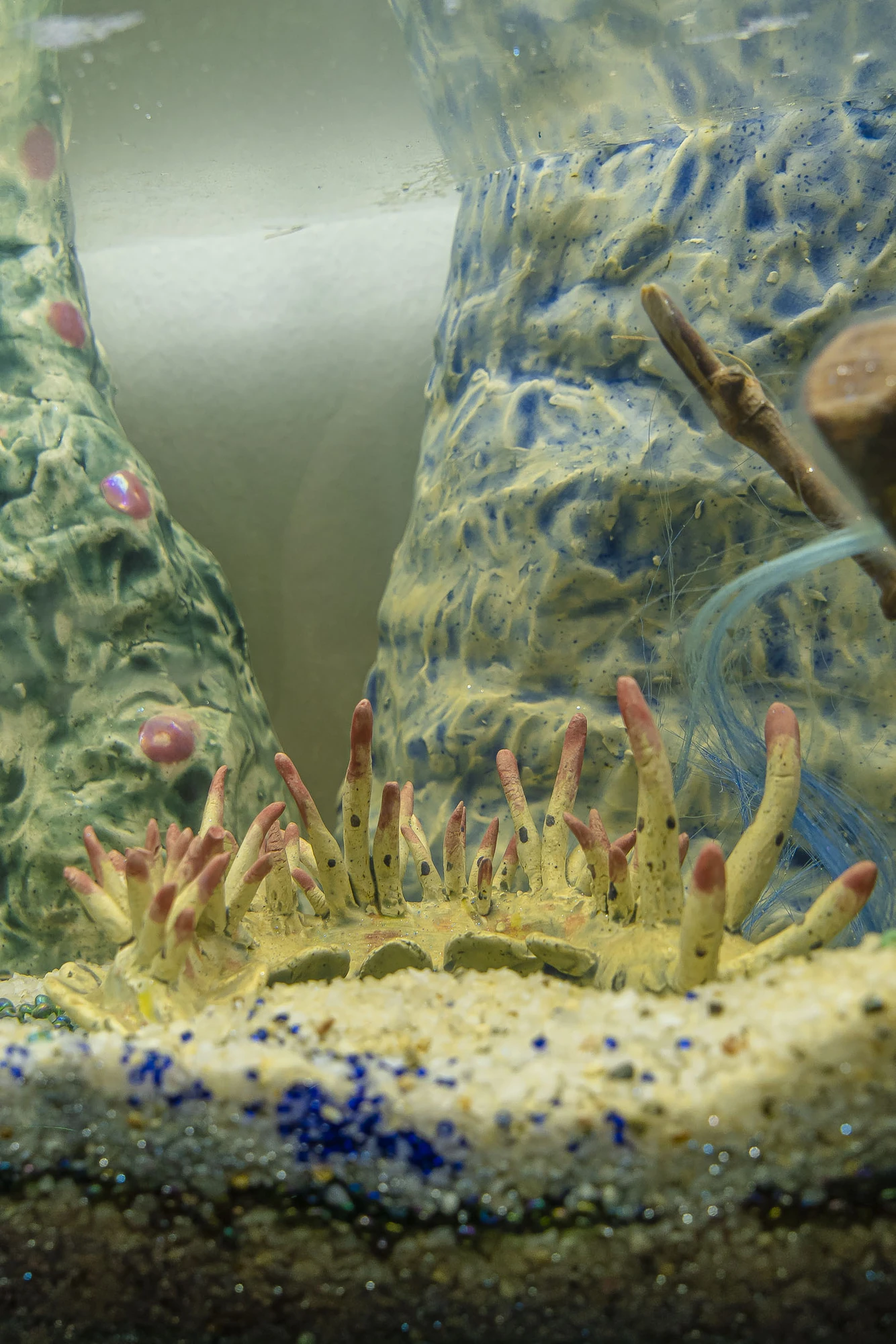
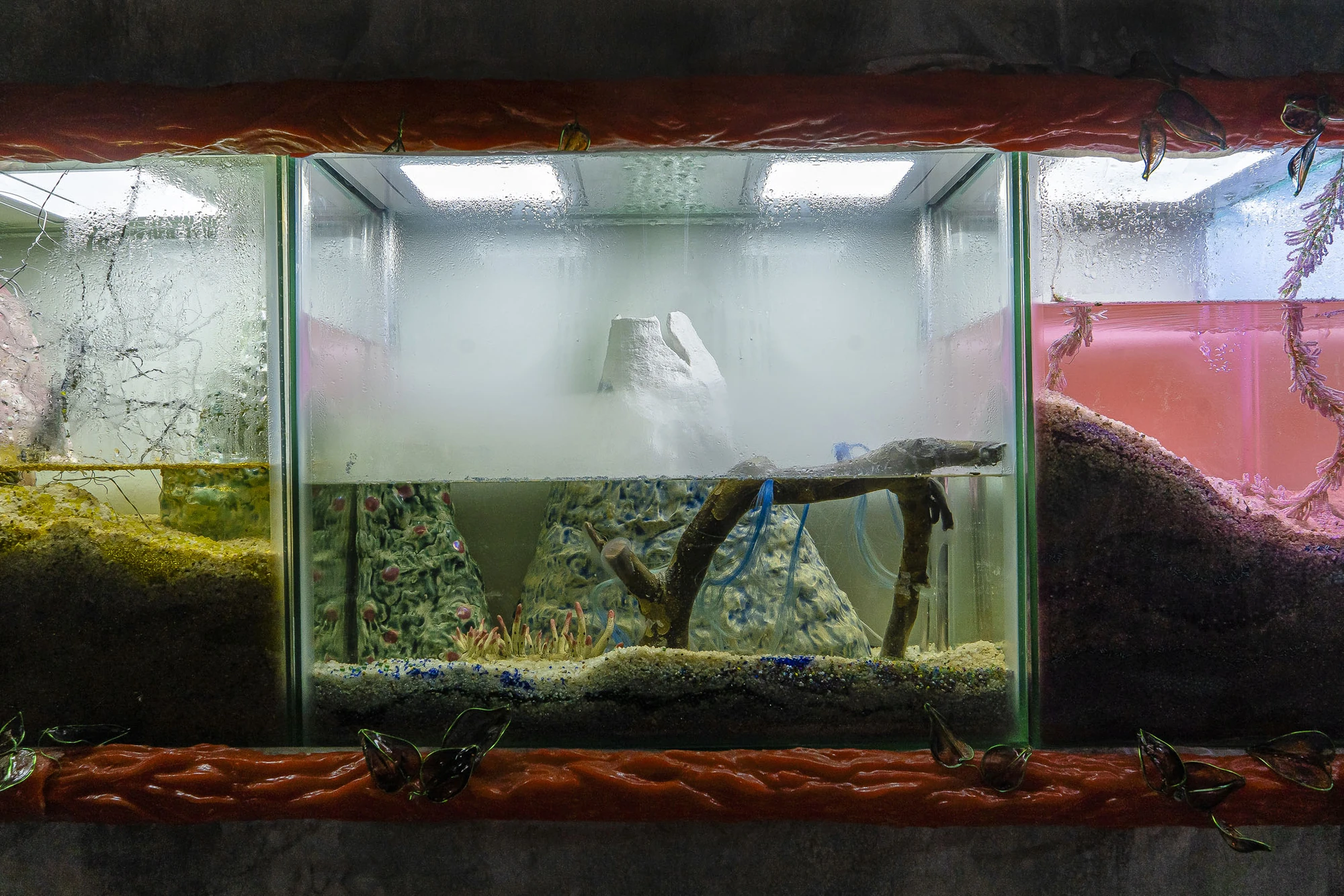
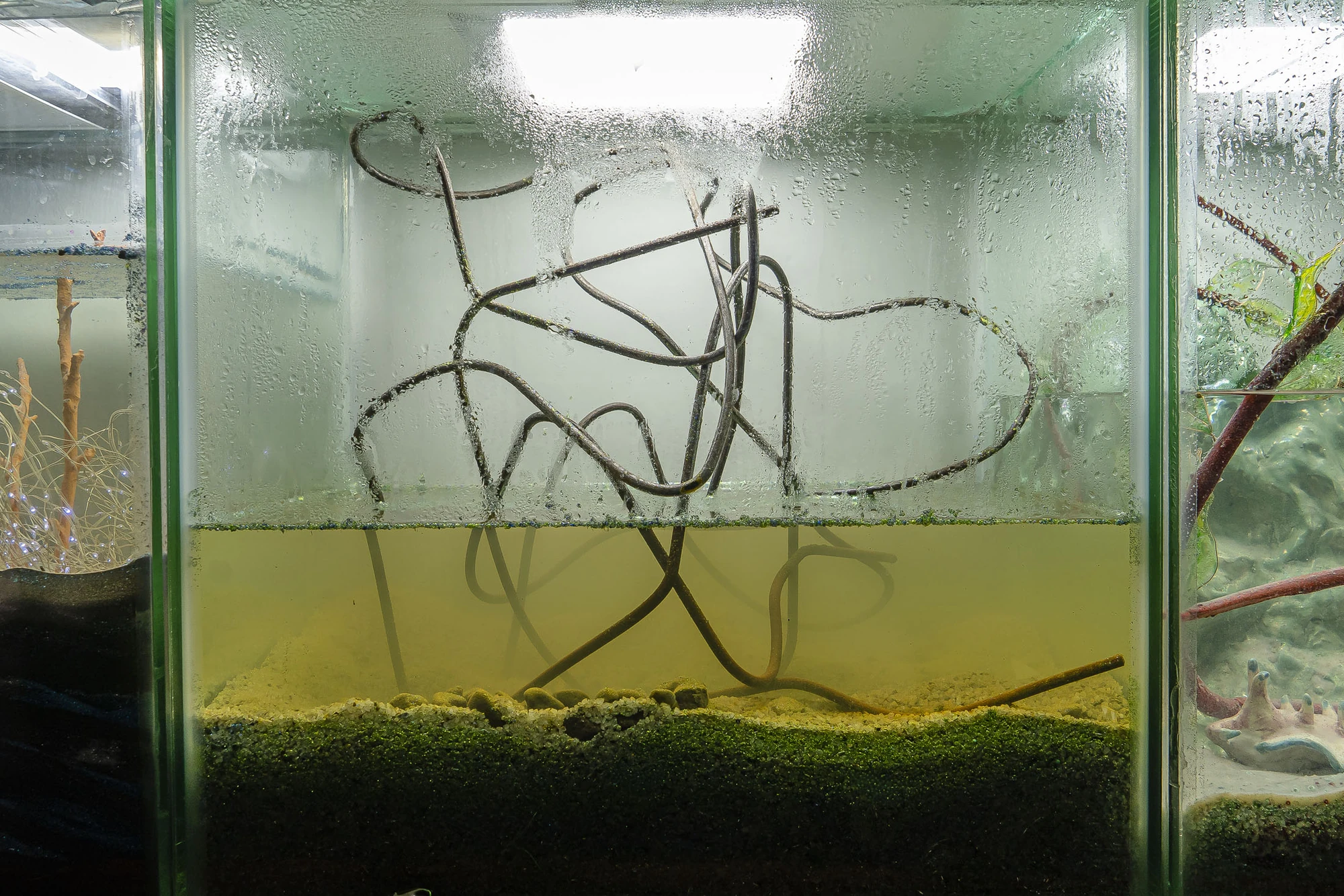
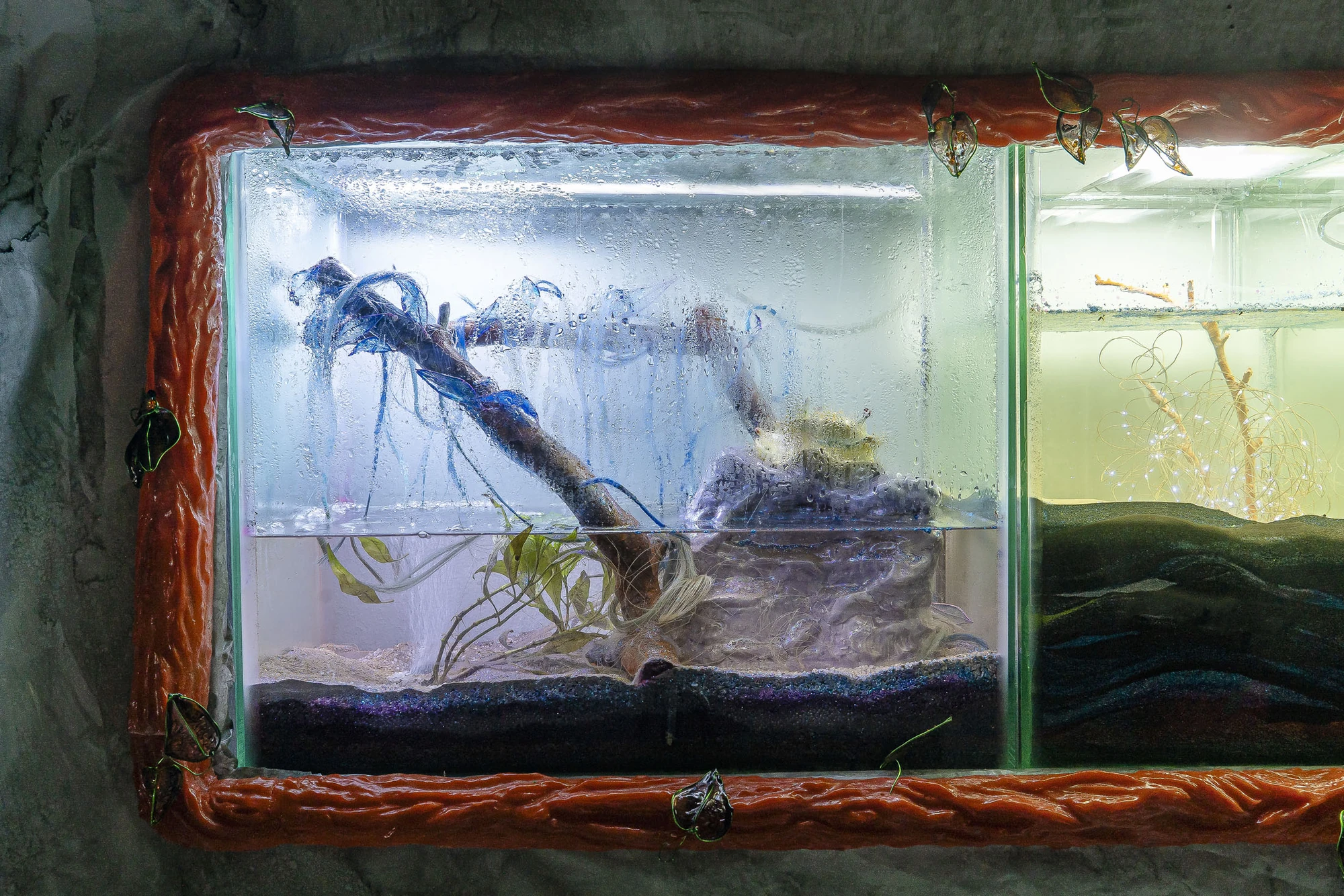
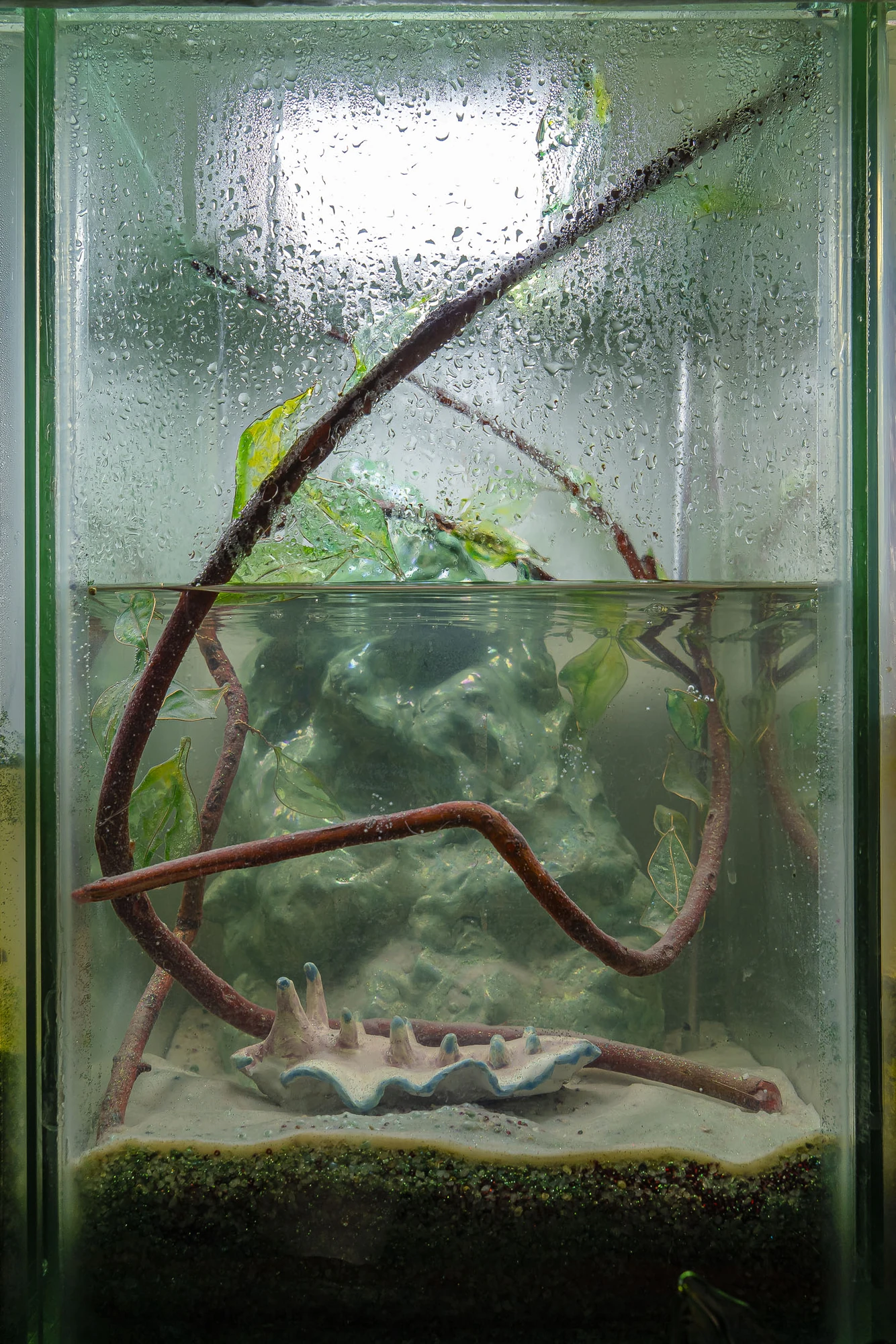
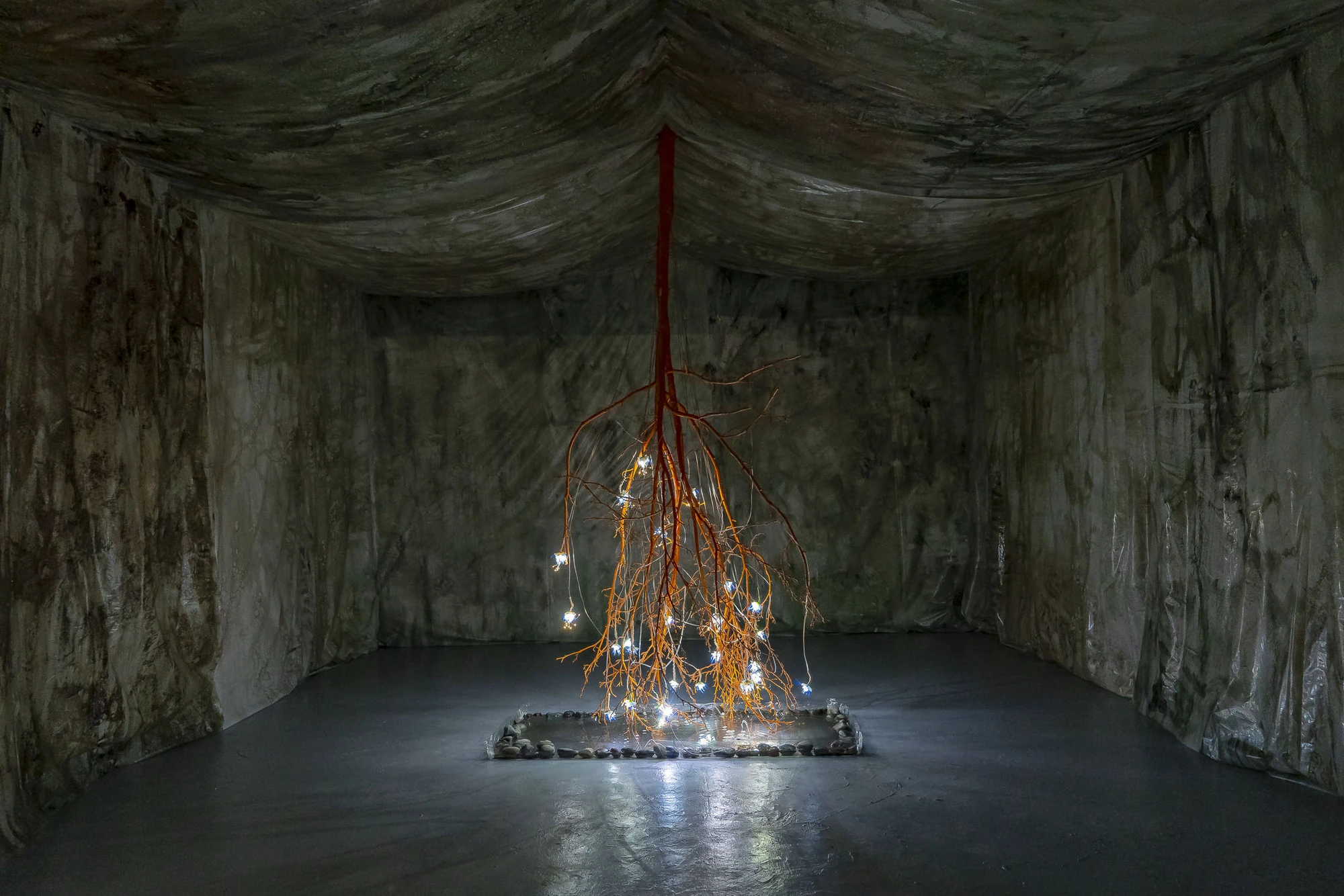
At MAC in Santiago, Chilean artist Paulina Mellado floods the museum with fountains, aquariums, panels and sculptures, an immersive territory that models a planet tipping into ecological crisis.
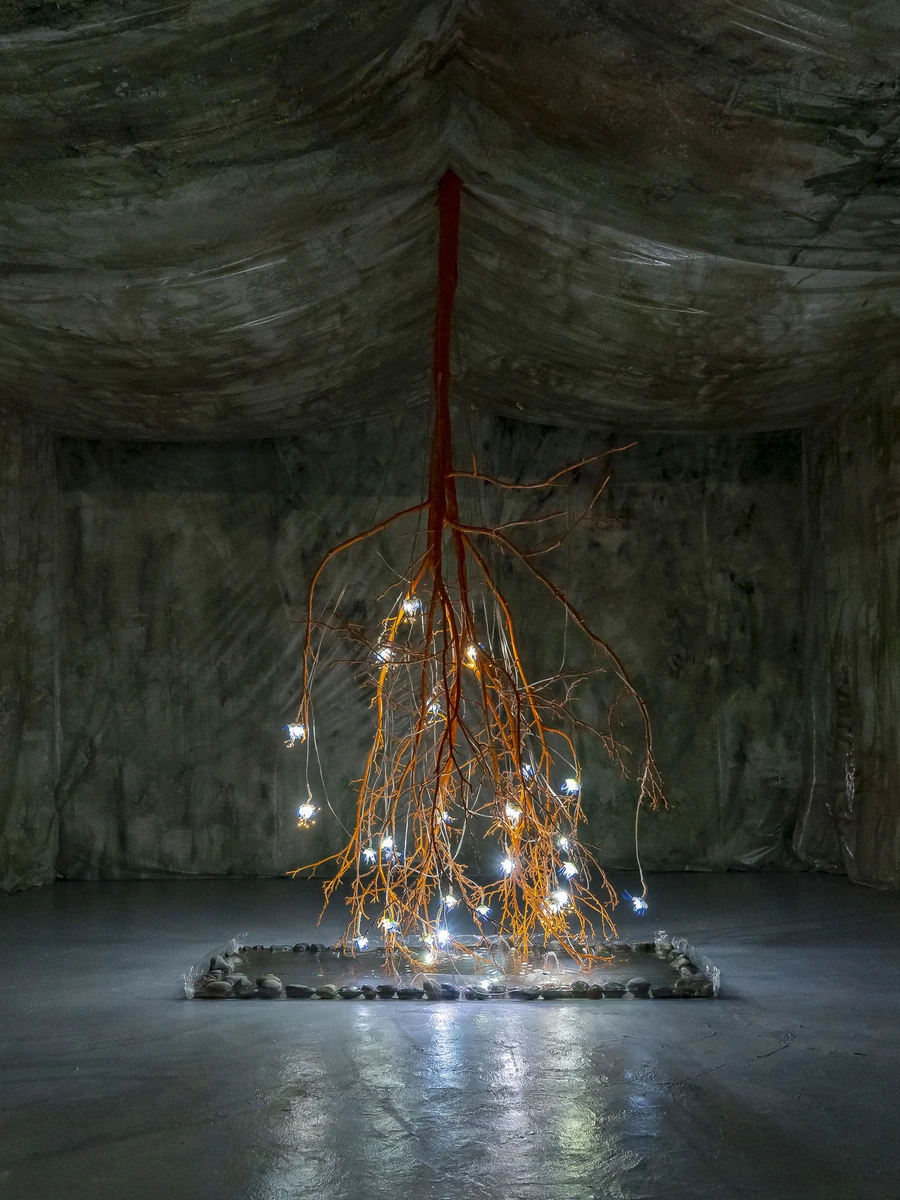
Paulina Mellado's work begins the way a bird builds a nest. Across her trajectory she has gathered sticks and branches, weaving them with fibers and wires, tangling hair among a twig fallen from a tree, dry grass, a loose strand. Those fragments cohered into thin, fragile structures, tangles of hardened fuzz that took their logic from the way birds engage materially with the landscape.
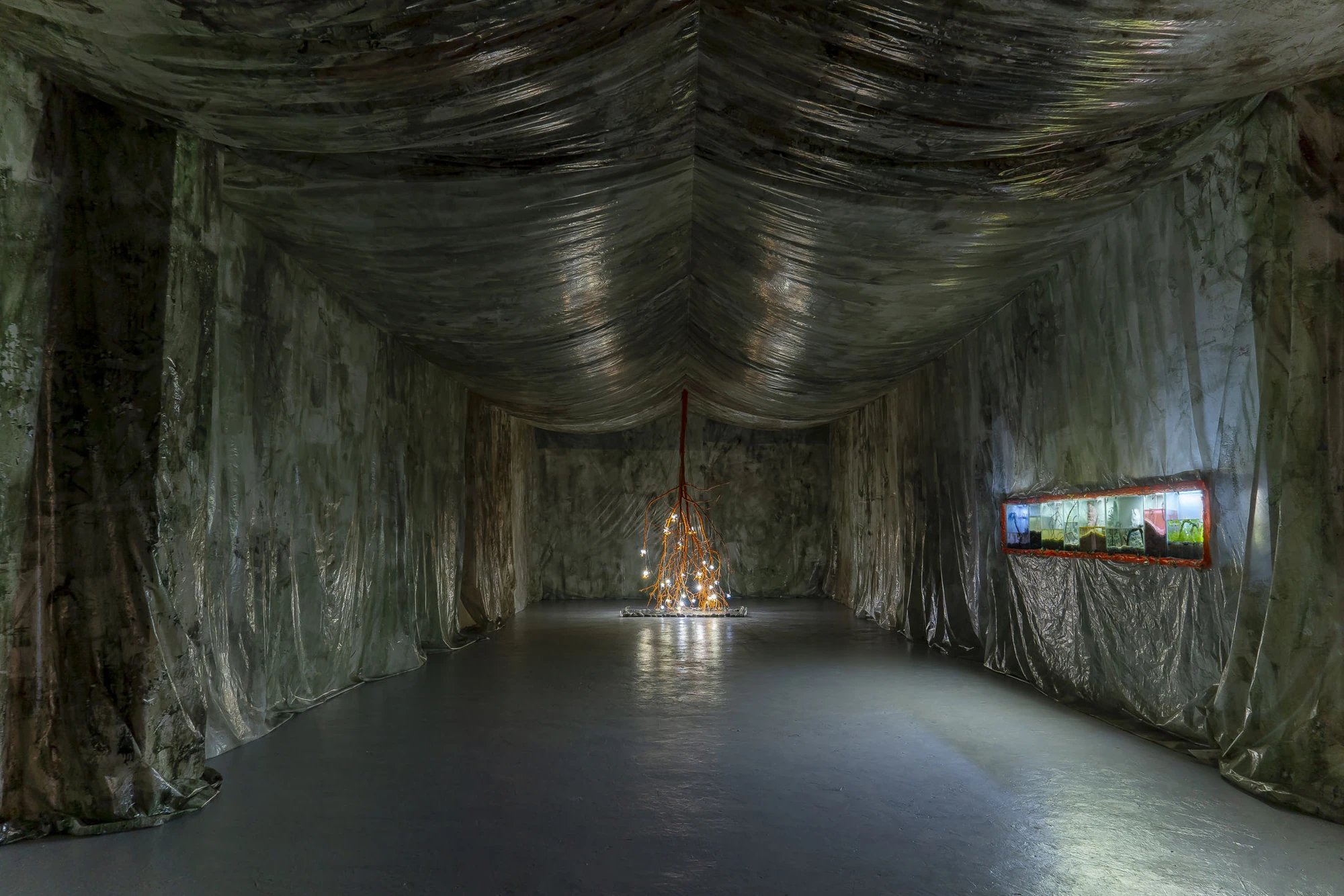
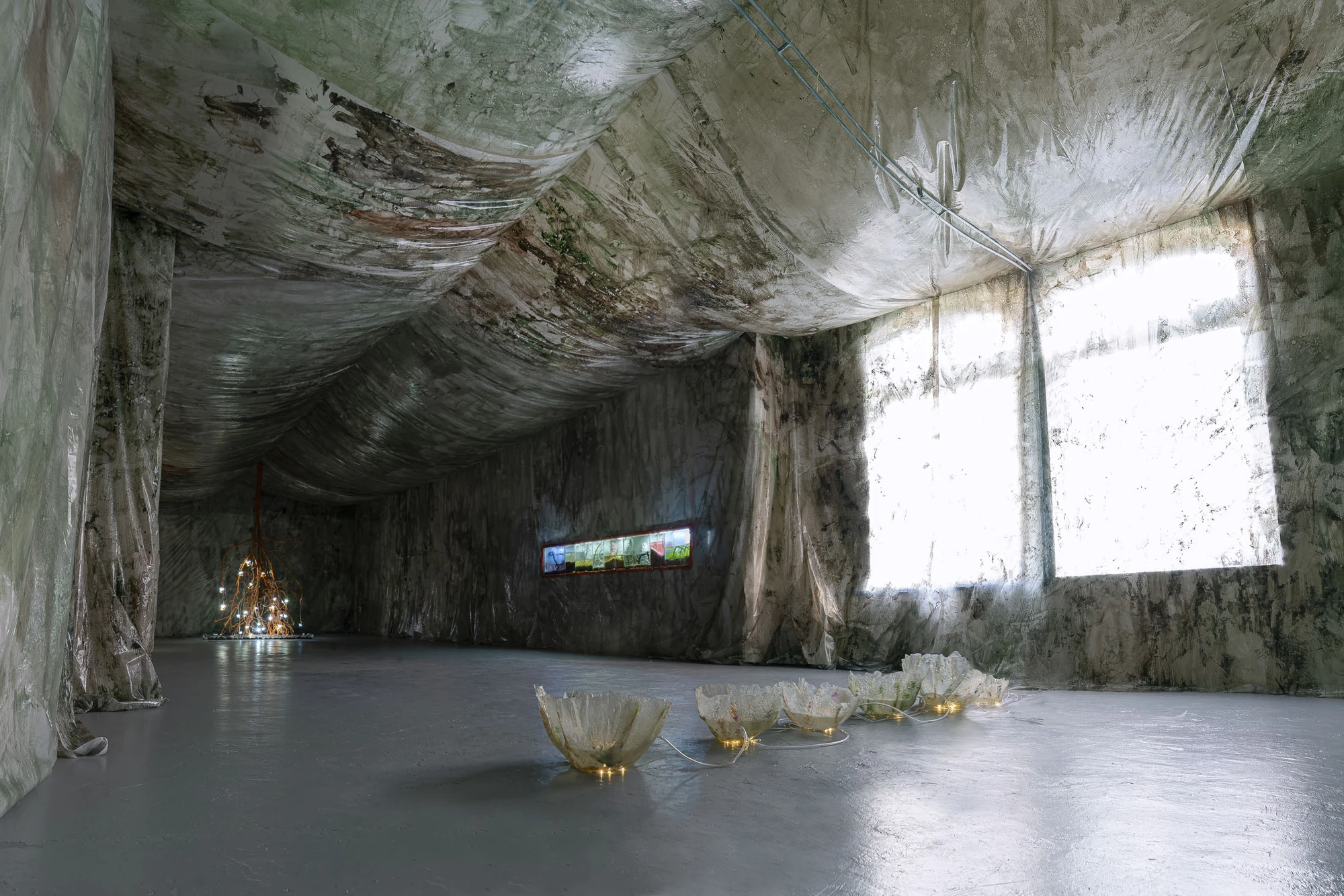
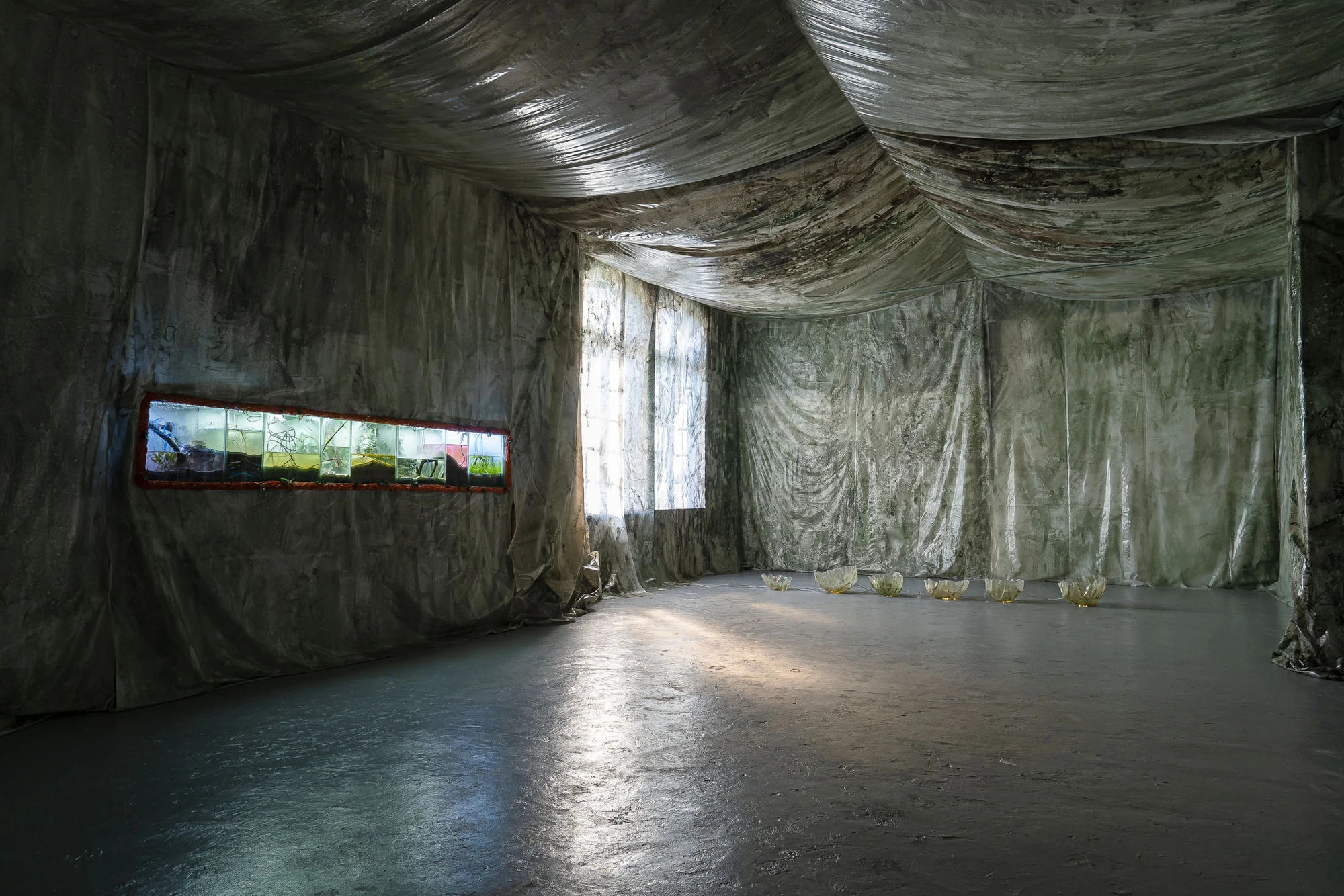
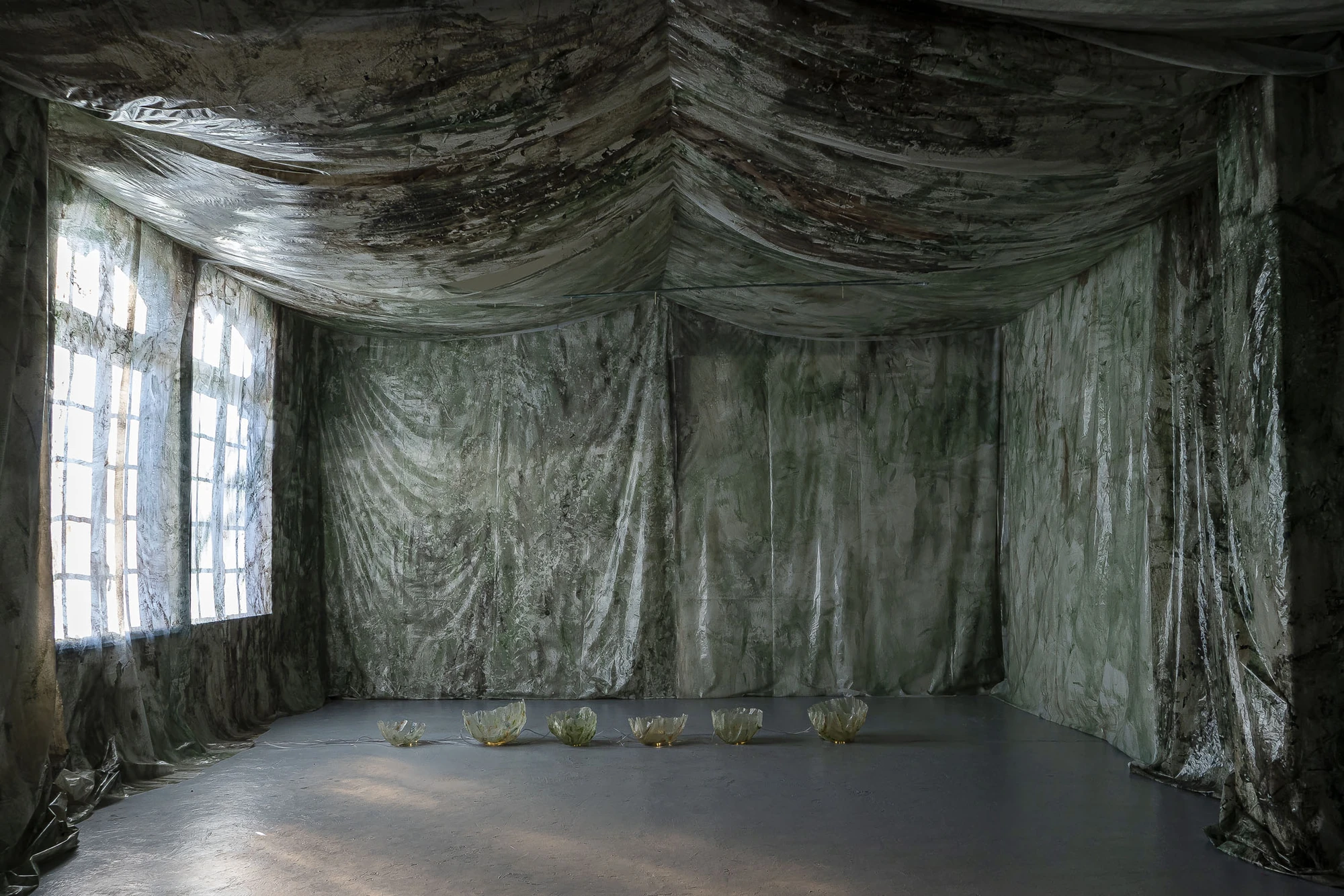
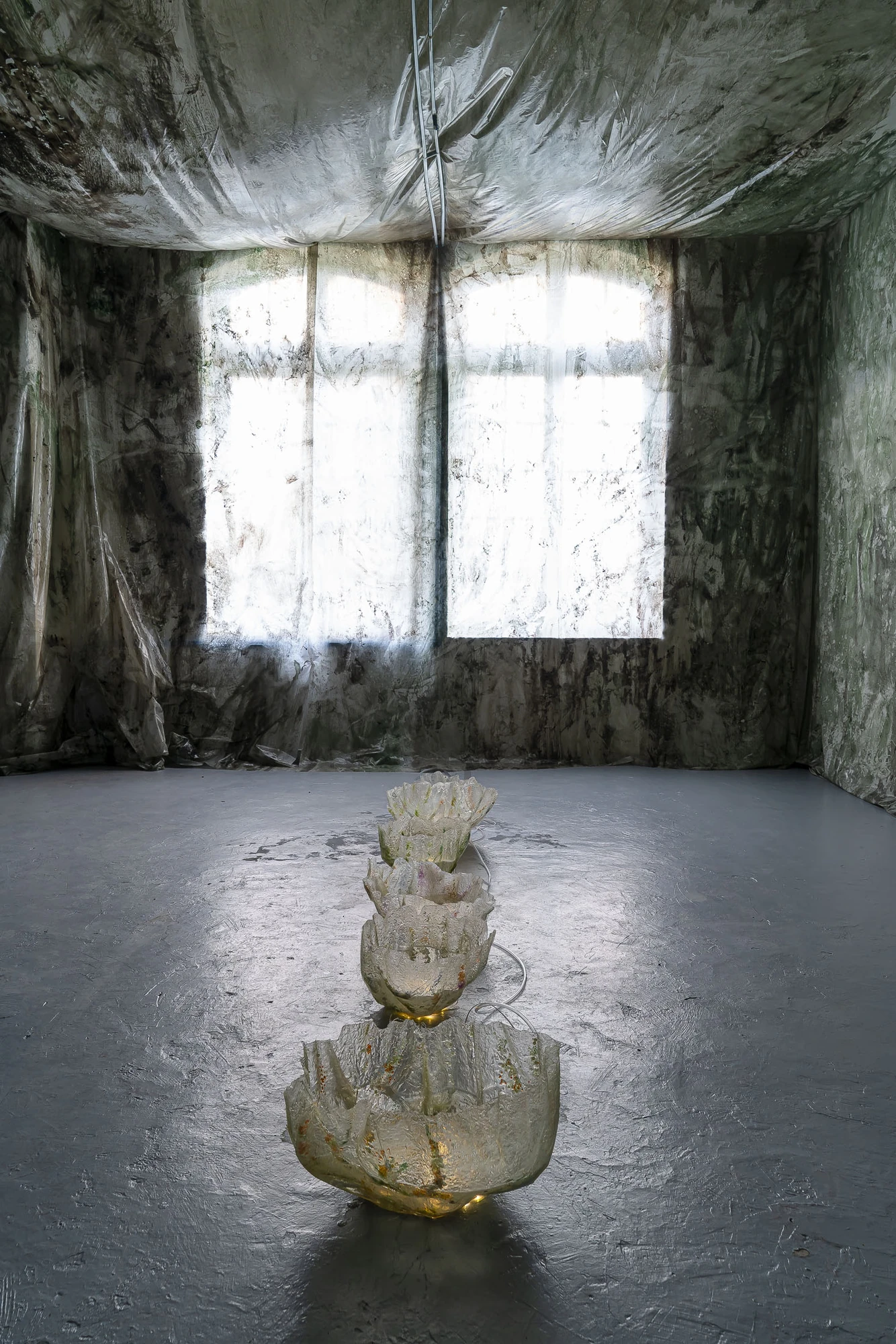
For this solo show at MAC, Santiago, that logic thickens until it can swallow the viewer. The constructions stay delicate, but they stop being objects to look at. Instead they receive the body the way a landscape does, a hybrid of sculpture, installation and painting that one enters rather than observes. The nest, as the exhibition essay puts it, has become a cave. What was once a made thing is now a place, a kind of sculptural landscaping where sculpture works as a device for experiencing an environment as dimensional stimulus.
The subject that fills that place is a natural world in crisis. Nature, and the human species inside it, no longer changes only with the passing seasons. The world heats from within, its living particles accelerating, distorting what the planet's material future might hold. Mellado's environments read as speculative sculptures, materialized fantasies of a planet becoming whatever it may. They model not the present but an imagined future, a speculation built at full scale.
The argument is also aesthetic. Where an Impressionist could paint the landscape from a calm distance, catastrophe cancels that distance and places the viewer permanently inside the weather. The landscape of the future is an infinite storm, closer to how Turner felt paint than to any photographic stillness. Immersion is not a stylistic choice here but the only remaining vantage point.
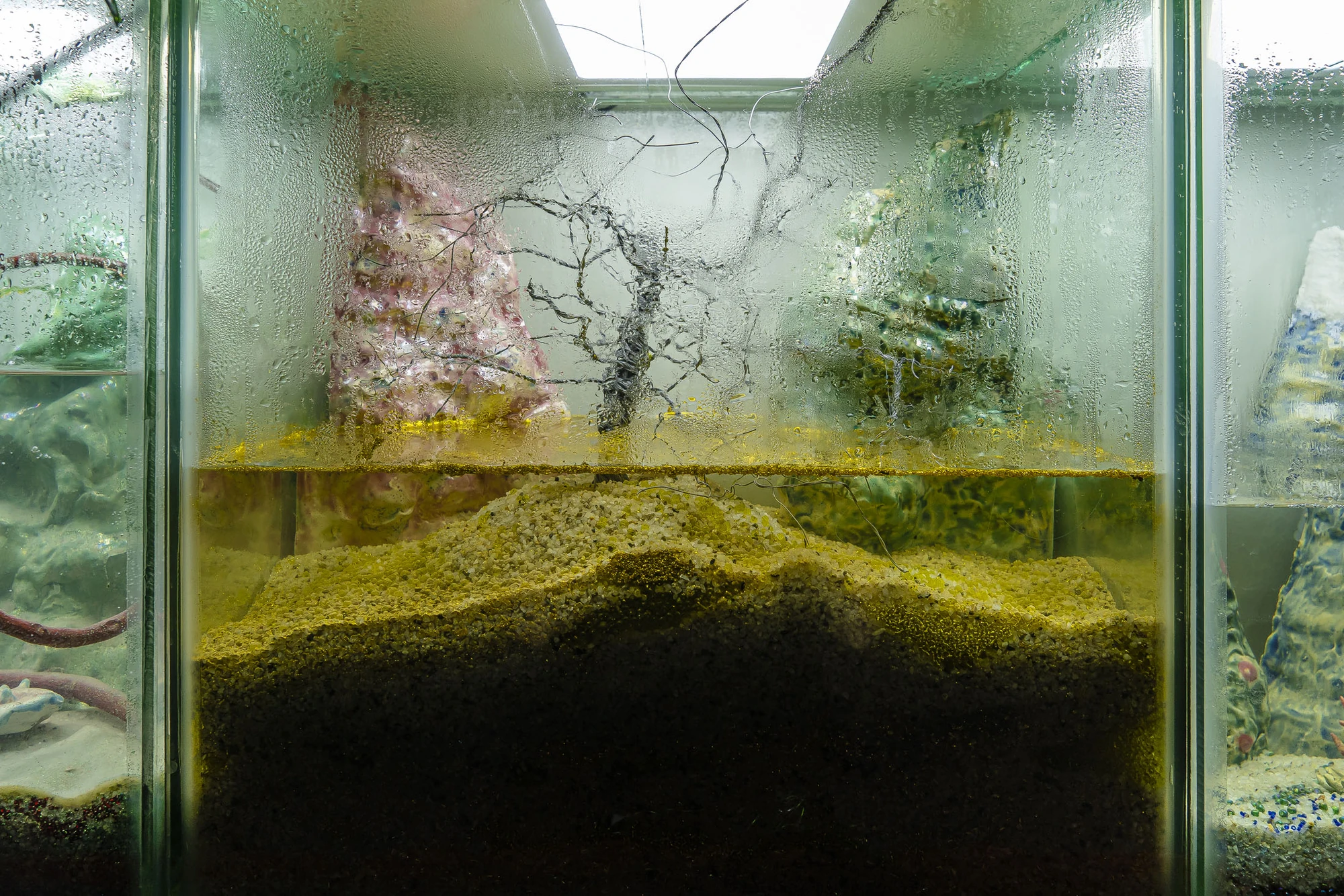
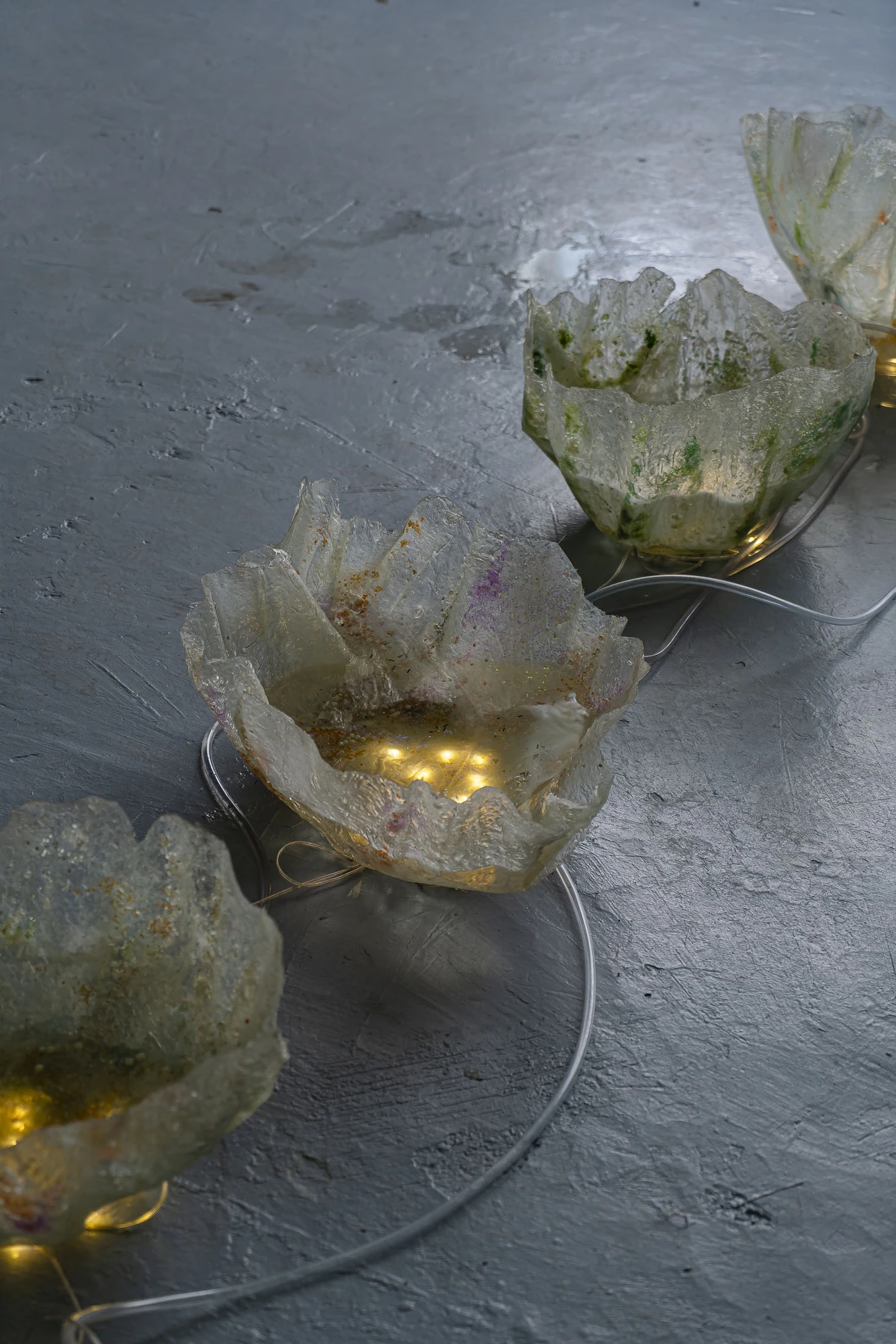
So the show reads as an overflowing, aqueous future: floods, humid air, seepage working into every structure. Fountains, aquariums, panels, sculptures and interventions scatter through the rooms, though they resist being read as separate moments. They behave more like points that together configure a single sensitive territory, an environment closer to a forest or the interior of a cloud than to a sequence of discrete works.
The result asks for the body before the mind. Mellado remains an artist who touches the landscape, and here she extends that touch toward a nature that has not yet arrived, inviting a sensory encounter with the environment a heating planet may leave behind.