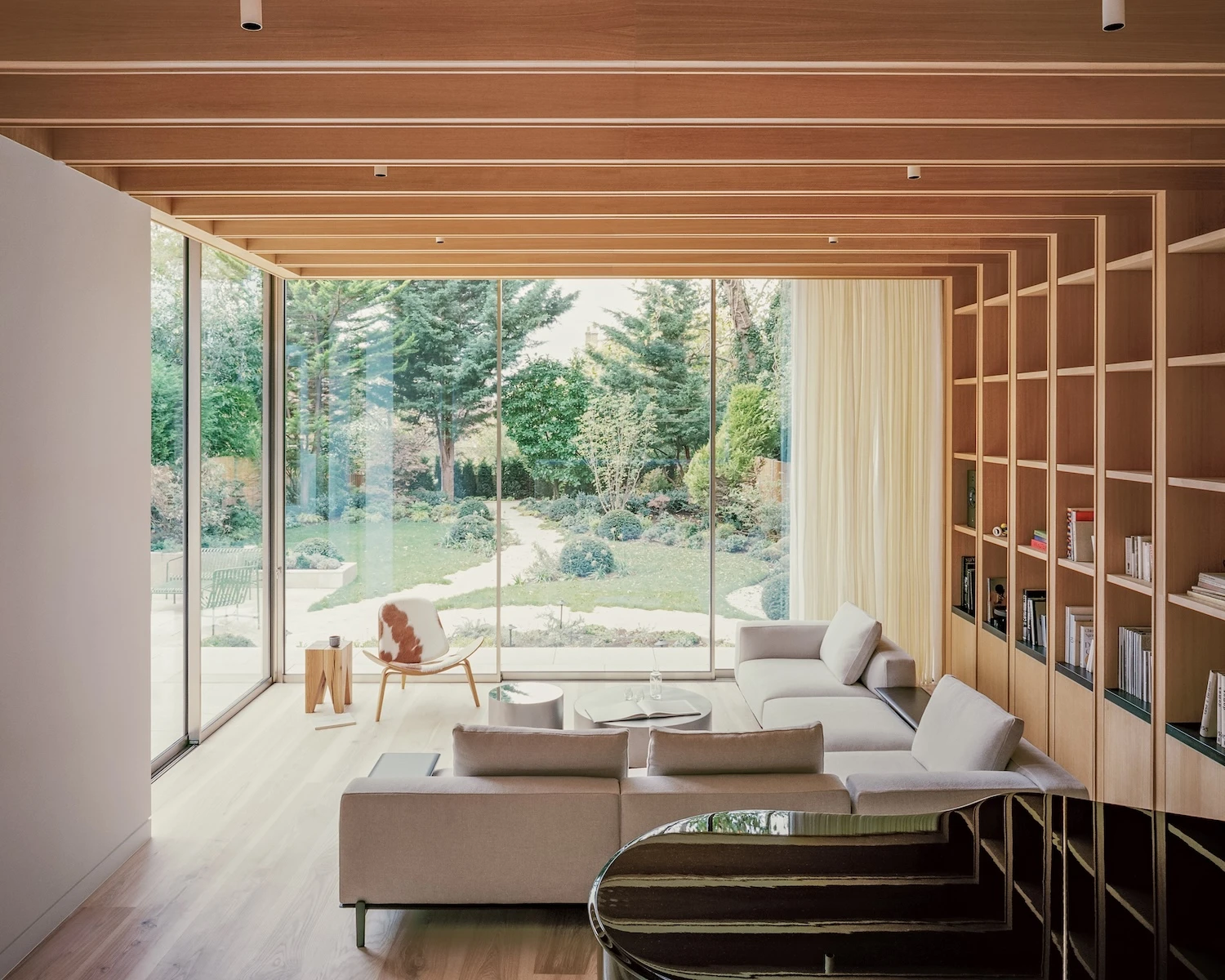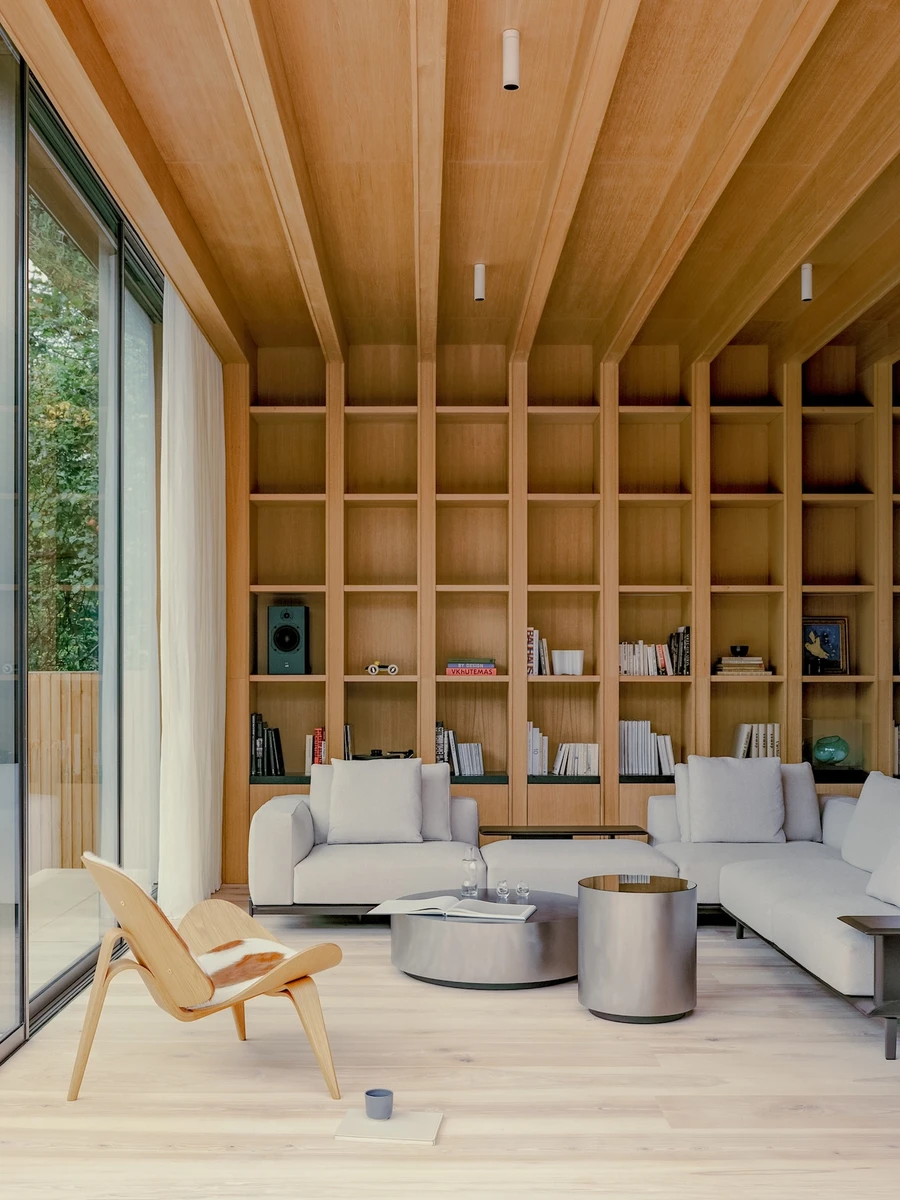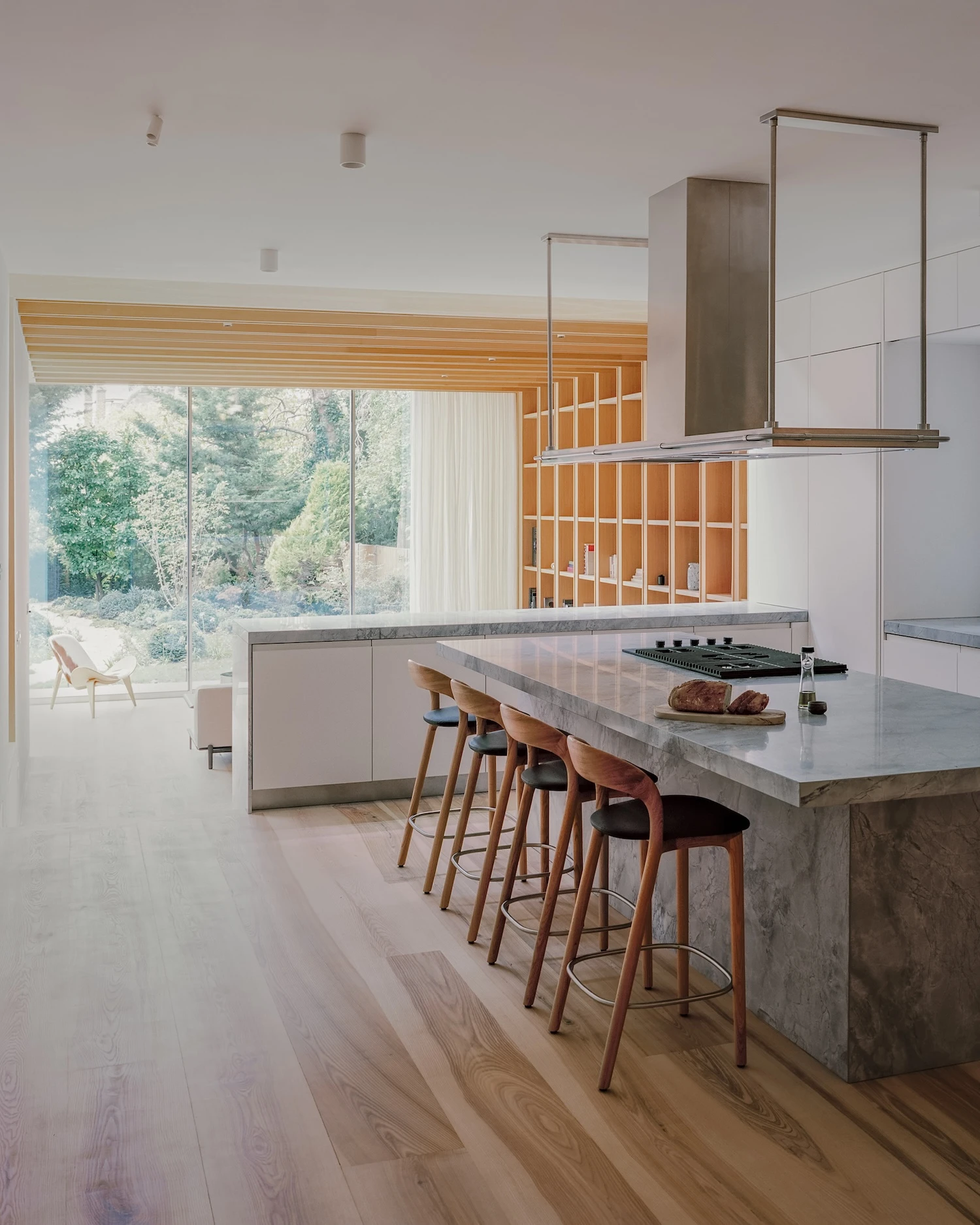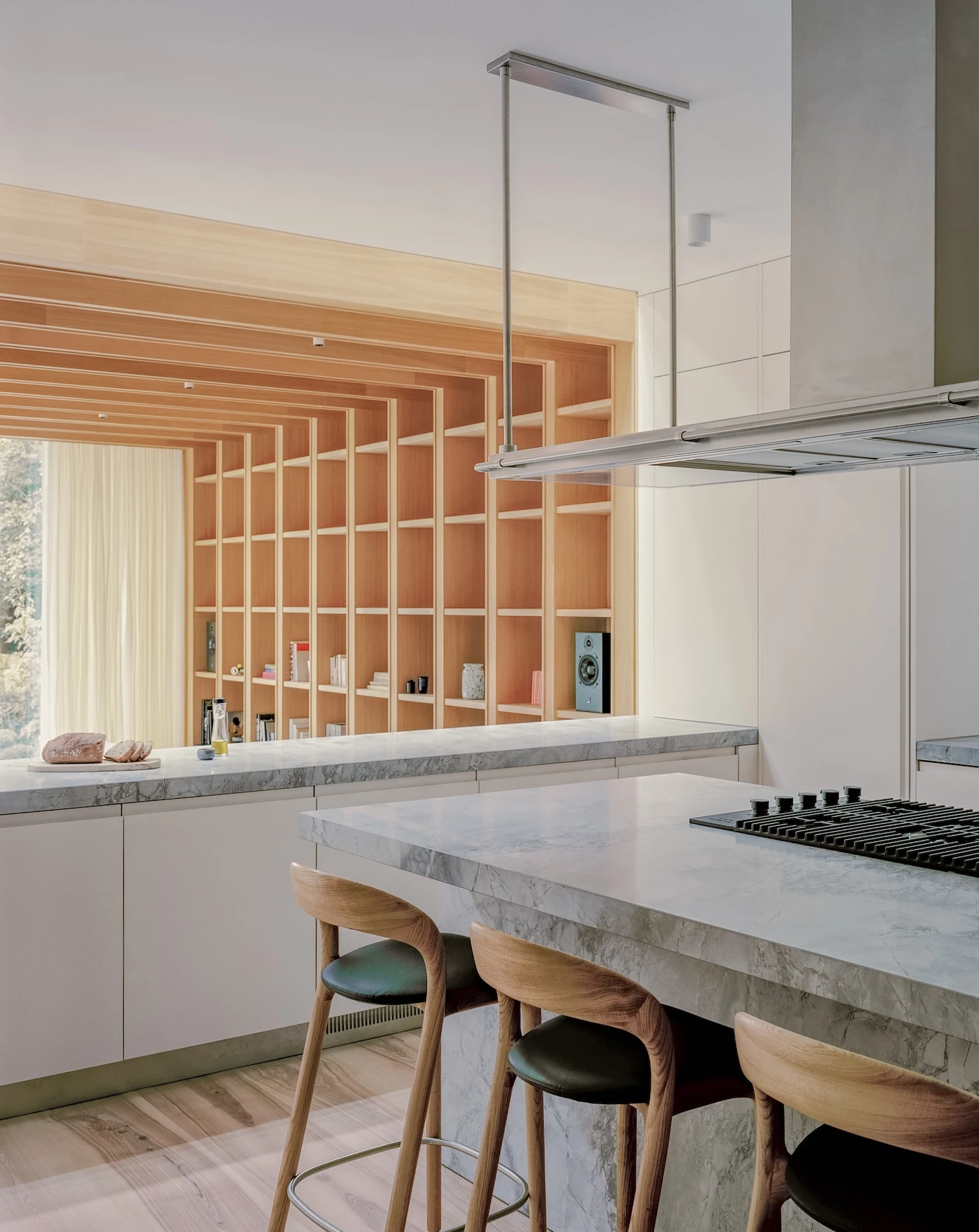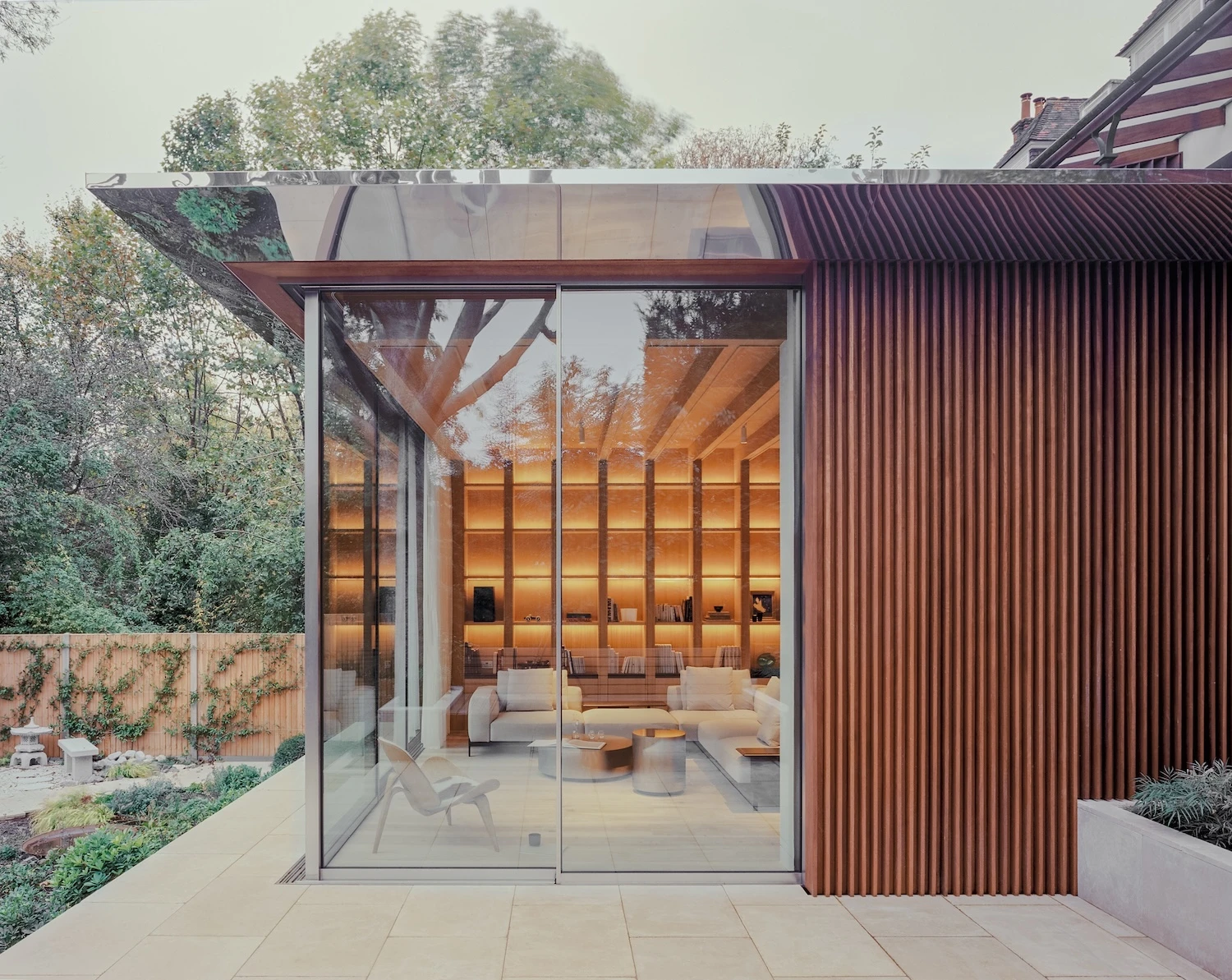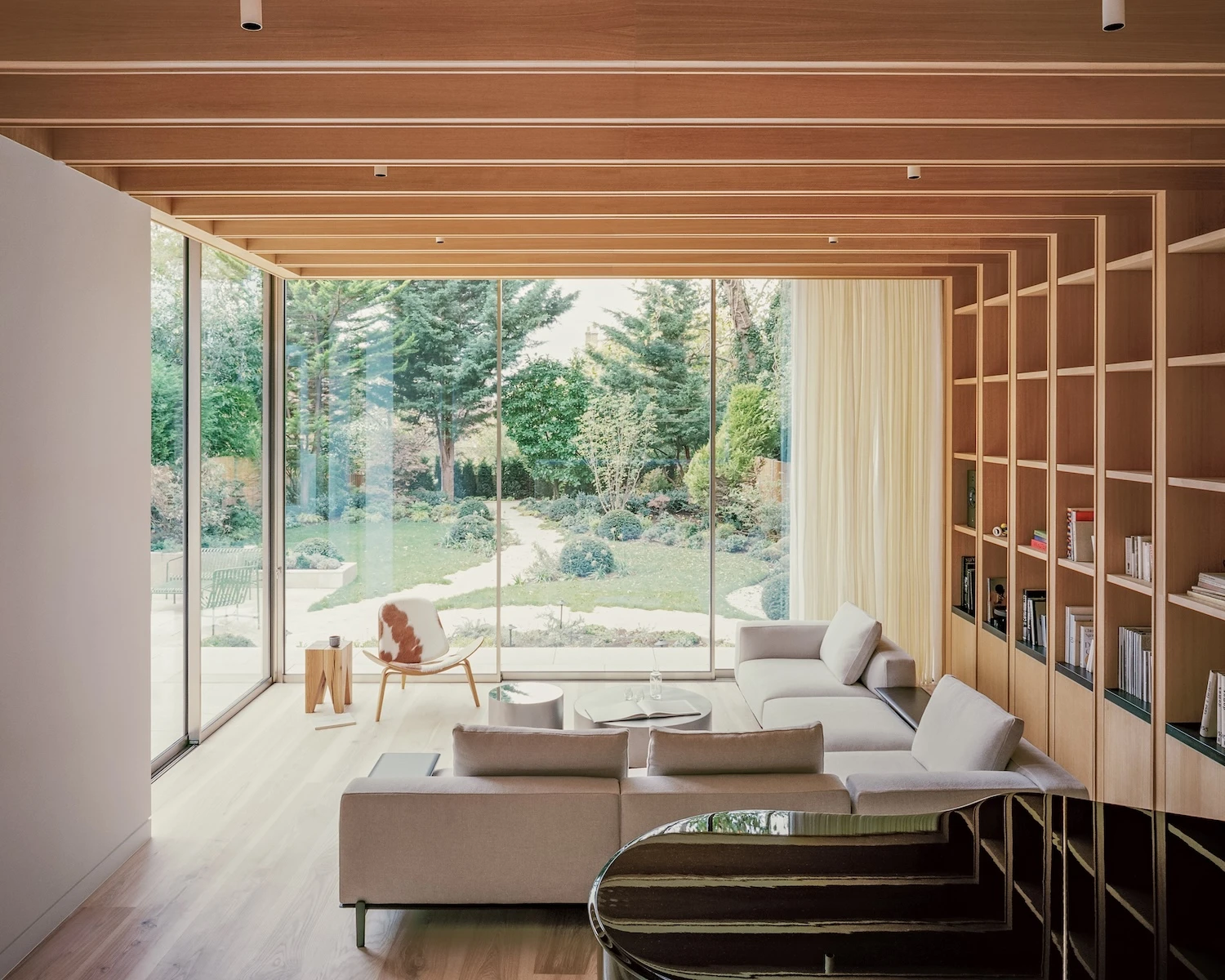
In the Reddington and Frognal conservation area of Hampstead, London, MATA Architects extends a period house by descending into its south-facing garden, delivering a corner-glazed living volume at ground level.
The problem was elevation. A south-facing garden sat nearly 1.5 metres below the ground floor of the existing house, connected only by a long flight of stairs. The family wanted to be in the garden, not overlooking it from a distance. MATA Architects' response was to treat the extension not as an addition to the existing floor level but as a deliberate descent: the new living volume drops almost a metre below the original ground plane while maintaining full ceiling height, so the room meets the garden at the scale of an inhabited threshold rather than a viewing platform.
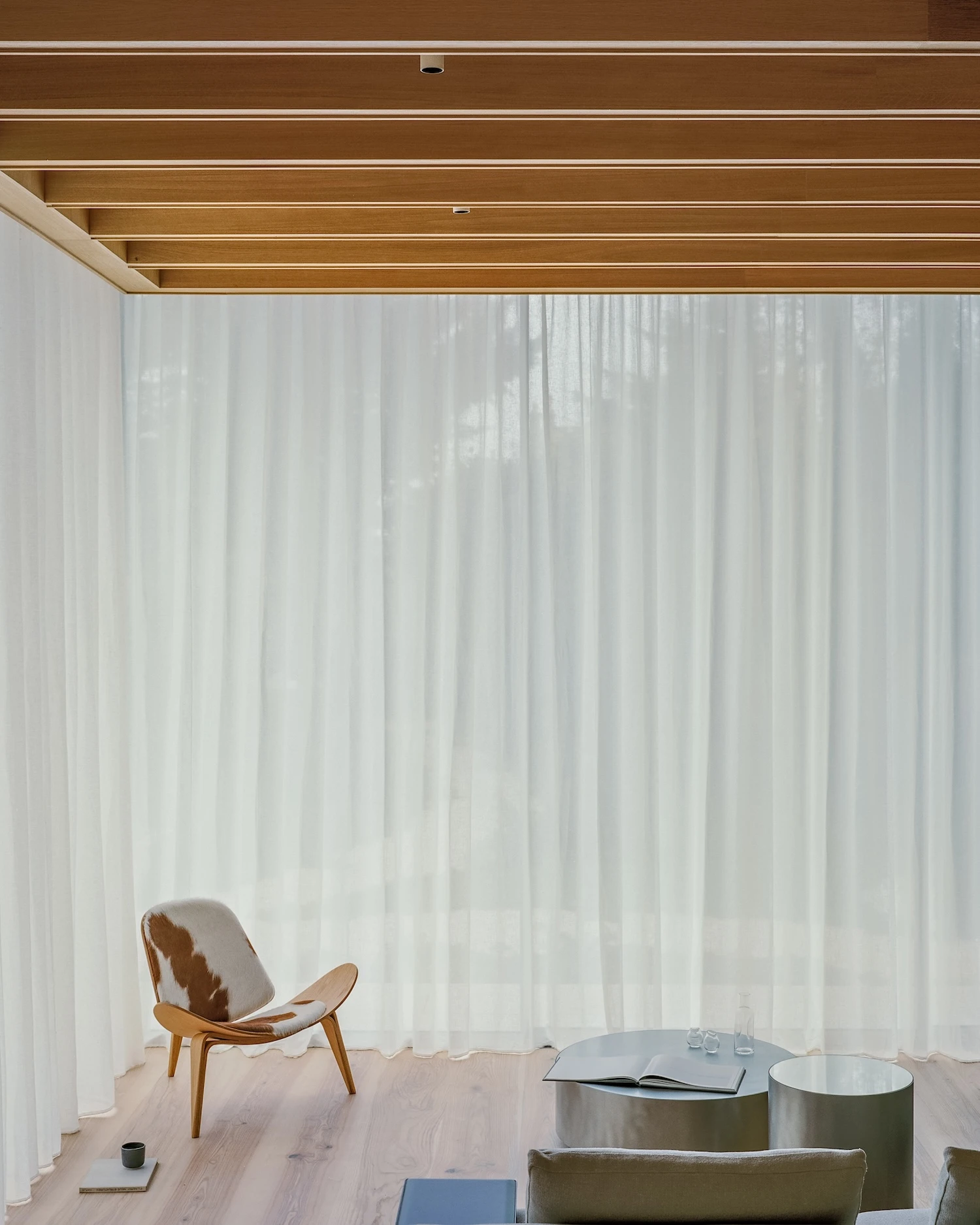
The visual material of the extension is European oak throughout: slatted cladding on the exterior, warm-toned panelling wrapping the interior walls, open shelving running the full height of one wall, and a ceiling whose exposed beam structure continues flush through to the outside soffit. The corner opens through Maxlight large-format sliding panels that retract to make the boundary between room and garden functionally absent. When you look at the corner in the exterior photograph, the glazing at dusk reveals the amber glow of the oak shelving inside, the cedar ceiling slats, the white sofas, the whole apparatus of the room.
The kitchen is positioned directly behind the living space as a single open-plan volume. A thick marble-slab island sits at the junction of the two zones, its veined grey surface heavy against the pale oak floor. Walnut-stained stools line the island. Behind, the original house has been refitted with flush oak joinery, a cast-iron fireplace surround, and a kitchen alcove in stainless steel. The palette of the two zones is the same but weighted differently: the extension is all glass and light, the original house darker and more contained.
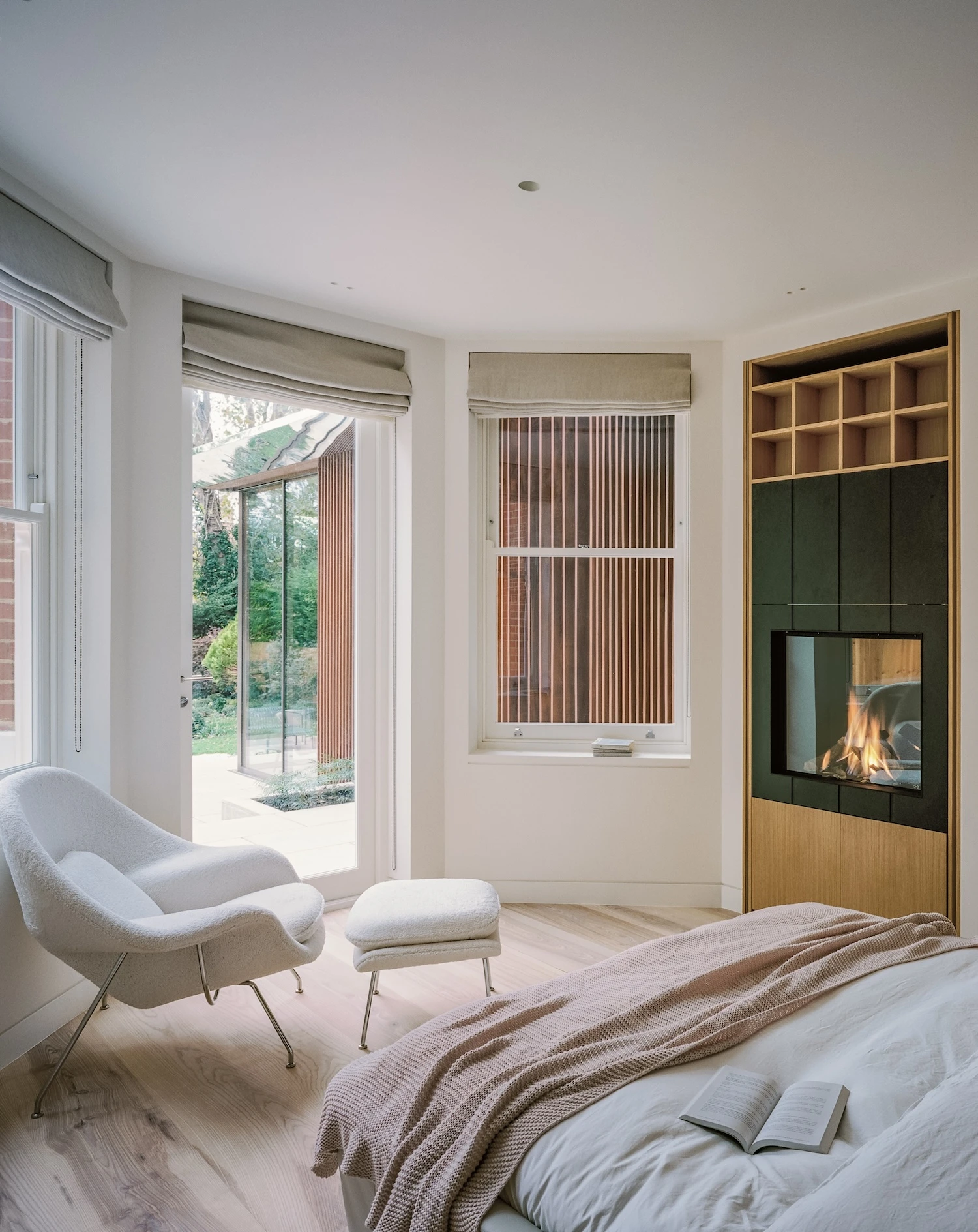
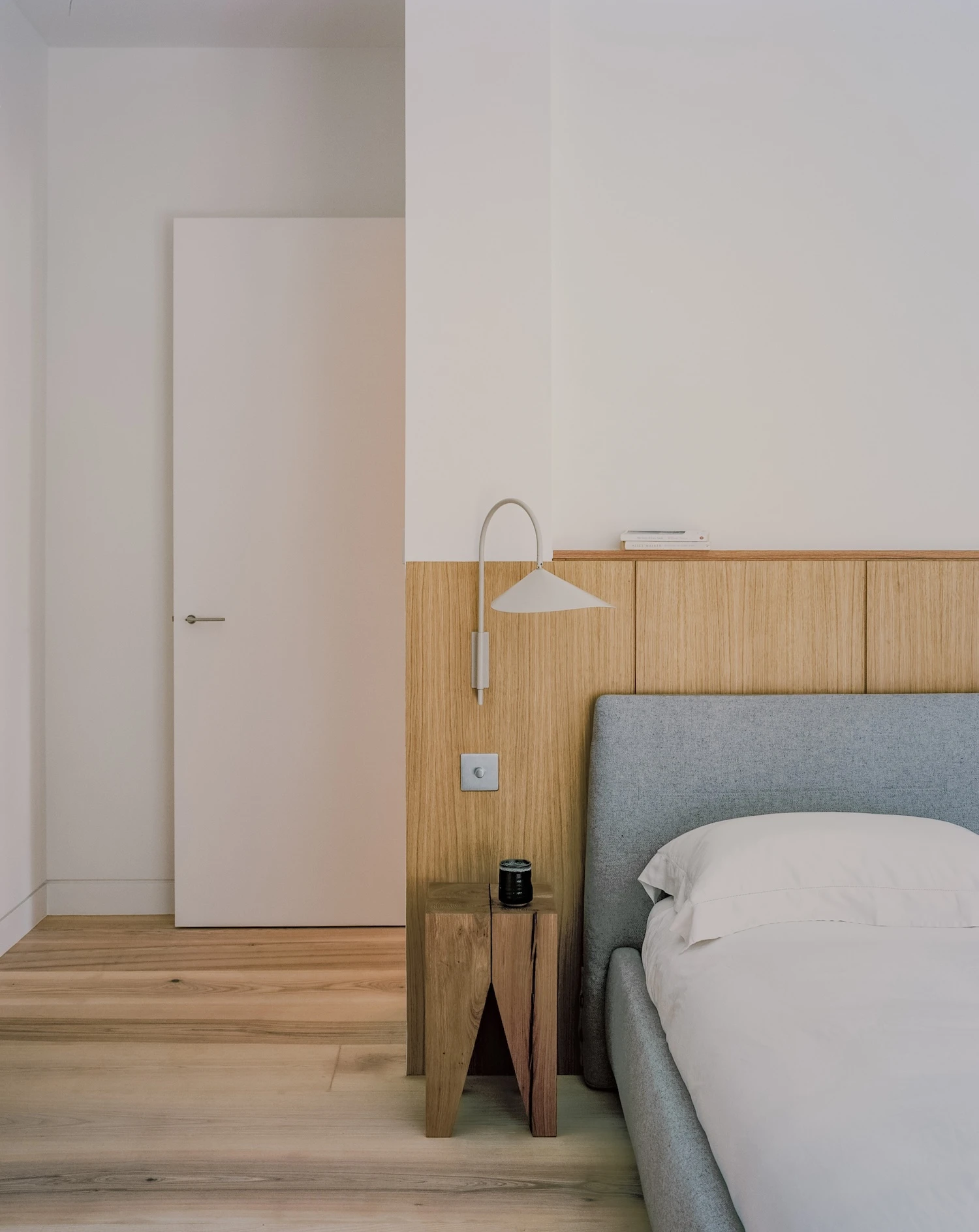
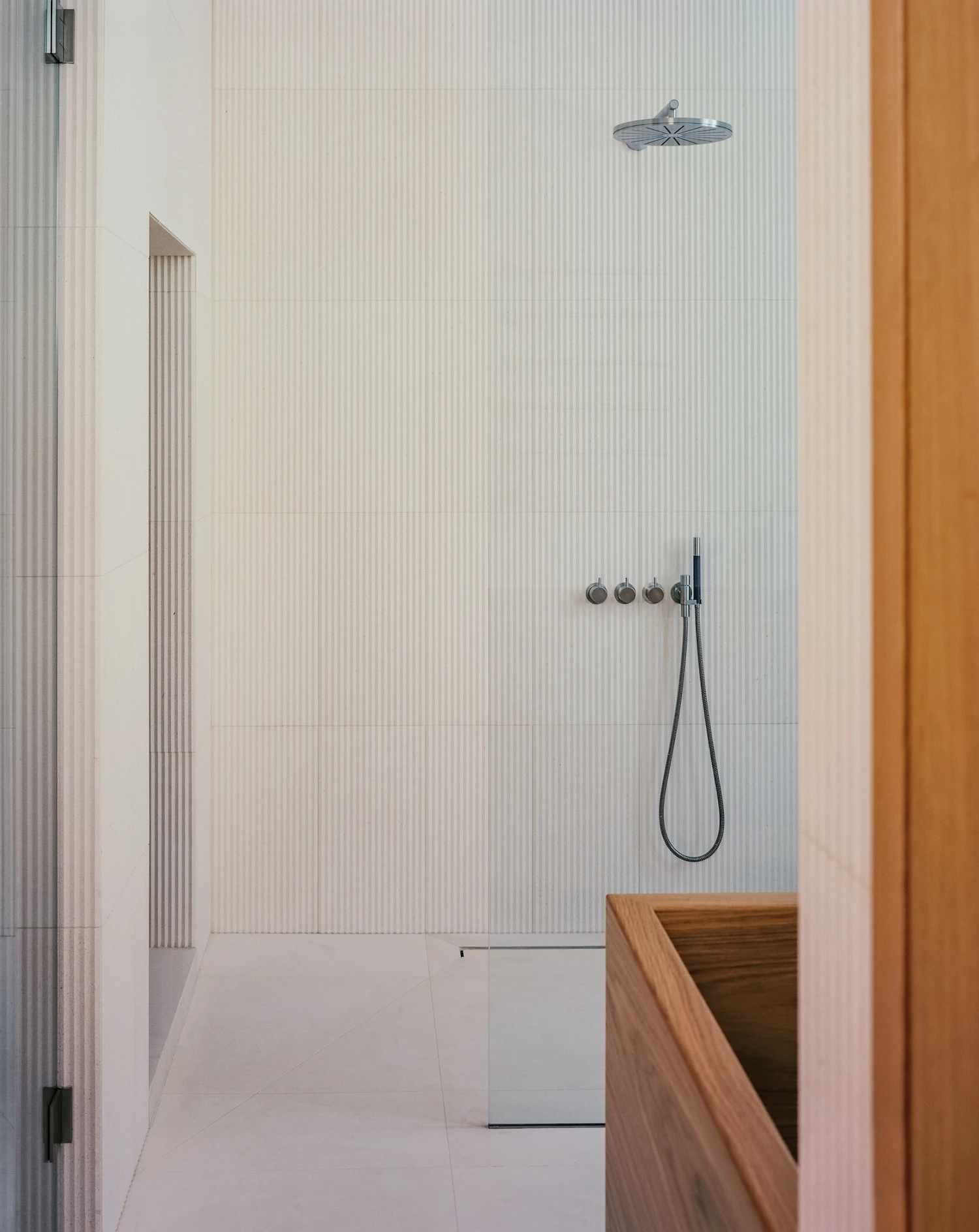
The upper floors carry the same material logic upward. A bedroom has a floor-level fireplace set into an oak-and-dark-lacquered steel niche, the room opening to a view of the new extension below through a sash window looking onto the garden. A bathroom is fitted with a Japanese-style ofuro tub in figured oak, box-jointed at the corners, placed before a wall of fine white ribbed ceramic tile. The tub is the detail that lands hardest: it suggests the project is not just a square extension but a set of considered decisions carried room by room.
The site's mature trees shaped the plan throughout. Arboriculturists were brought in to define the root protection zones of the surrounding growth, and the extension's footprint traces those lines. The consequence of that constraint is that the plan is not generic: it is calibrated to the specific trees of this specific garden in Hampstead, and the sections vary accordingly. That embedded specificity is what separates the project from its precedents in glazed rear extensions across London.