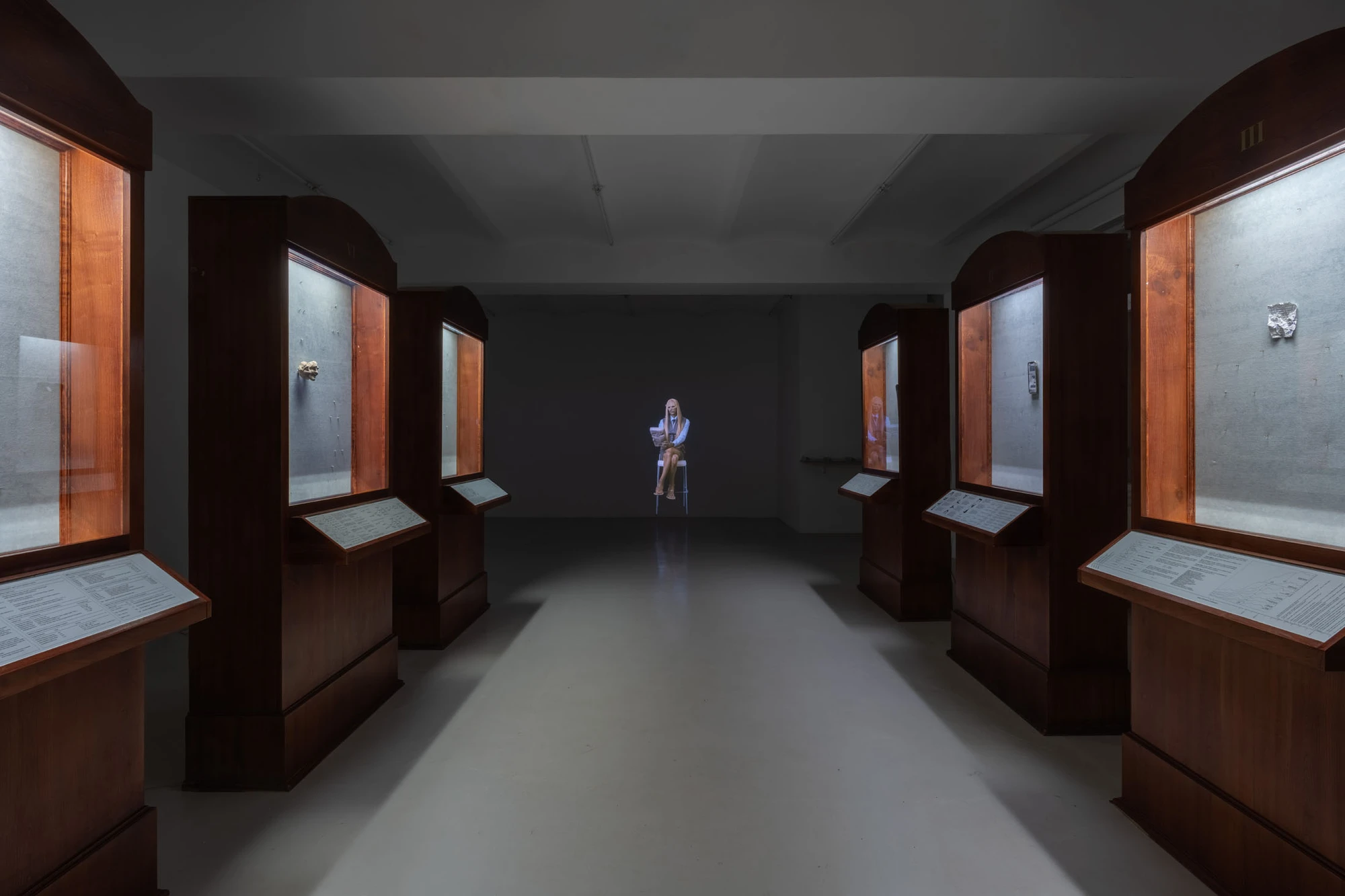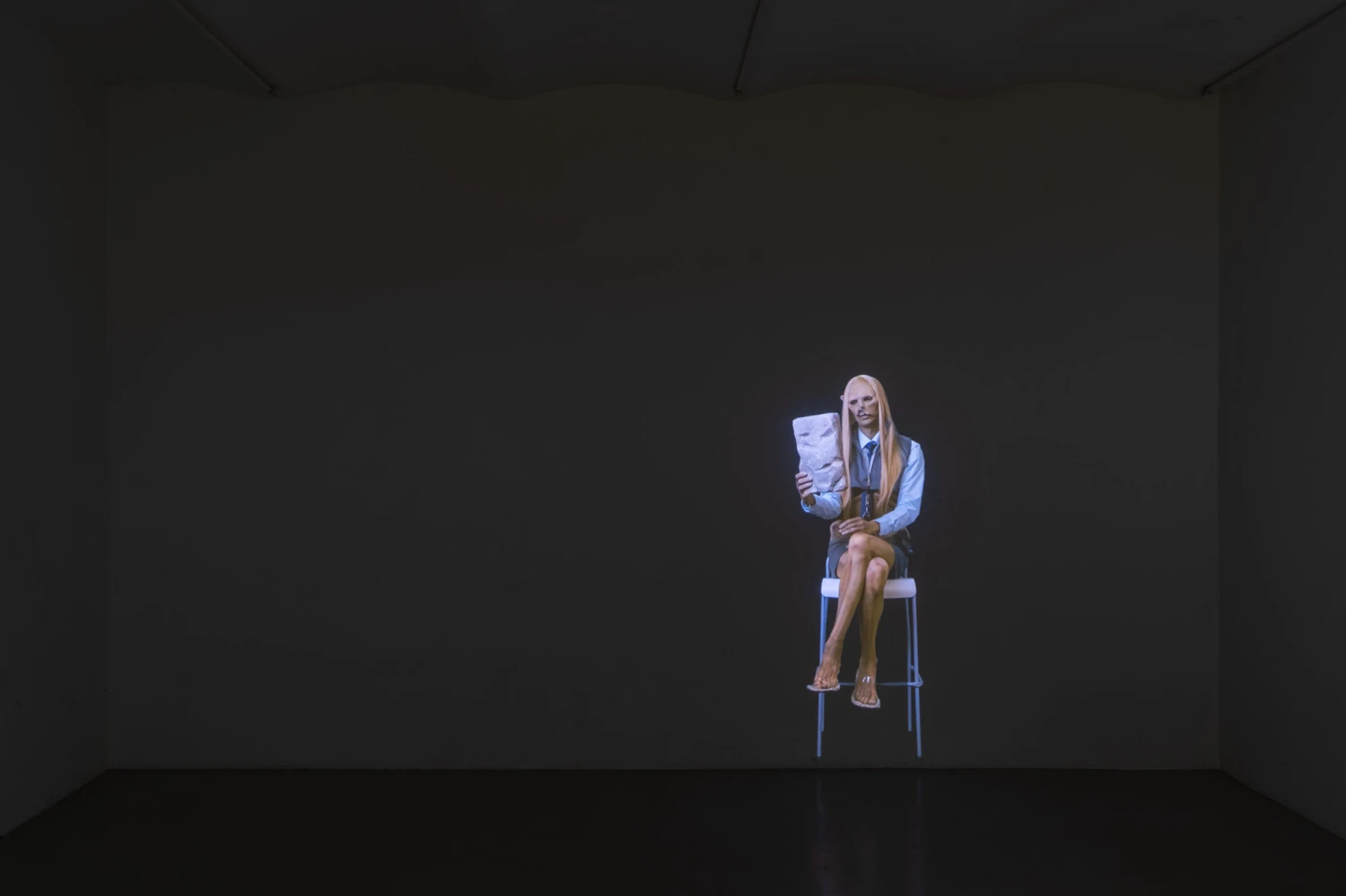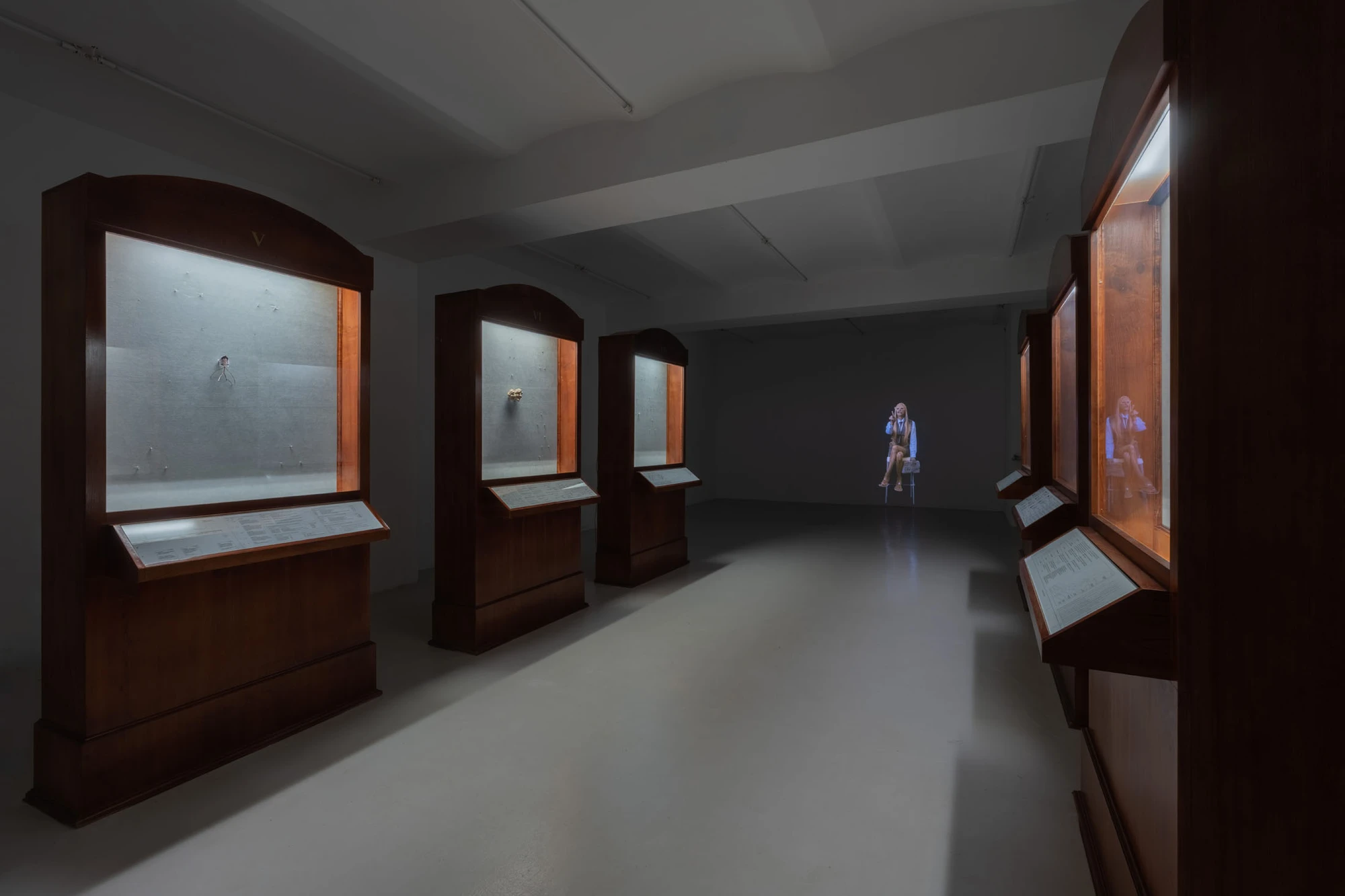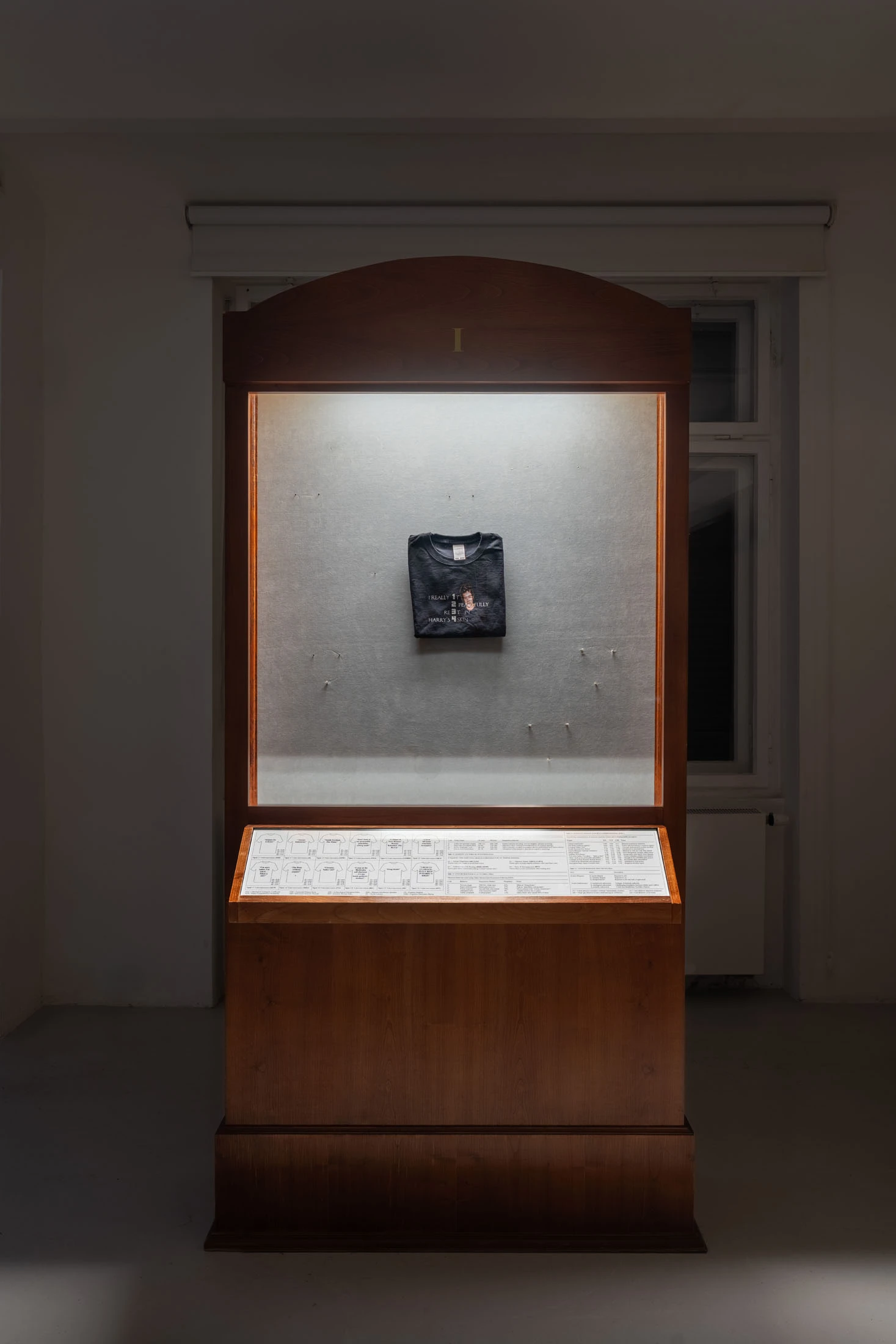
At Galeria Skala in Poznań, Amsterdam-based artist Levi van Gelder presents Ötza, Offshore—a multi-media exhibition where a 5,300-year-old Neolithic mummy writes fan fiction, evades taxes, and queers the archive.
Ötza is not a person but a practice. A cryodesiccated fanfiction writer from the Neolithic, a self-proclaimed connoisseur of post-historical theory-fiction, she is the drag adaptation of Ötzi the Iceman that Levi van Gelder has been developing through performance, writing, sculpture, and video. Her signature features include long blonde hair—briefly replaced by a platinum bob in chapter III—a natural lip flip, and a pronounced thigh gap that persists regardless of the increasingly hard-to-hide traces of decay on her complexion.
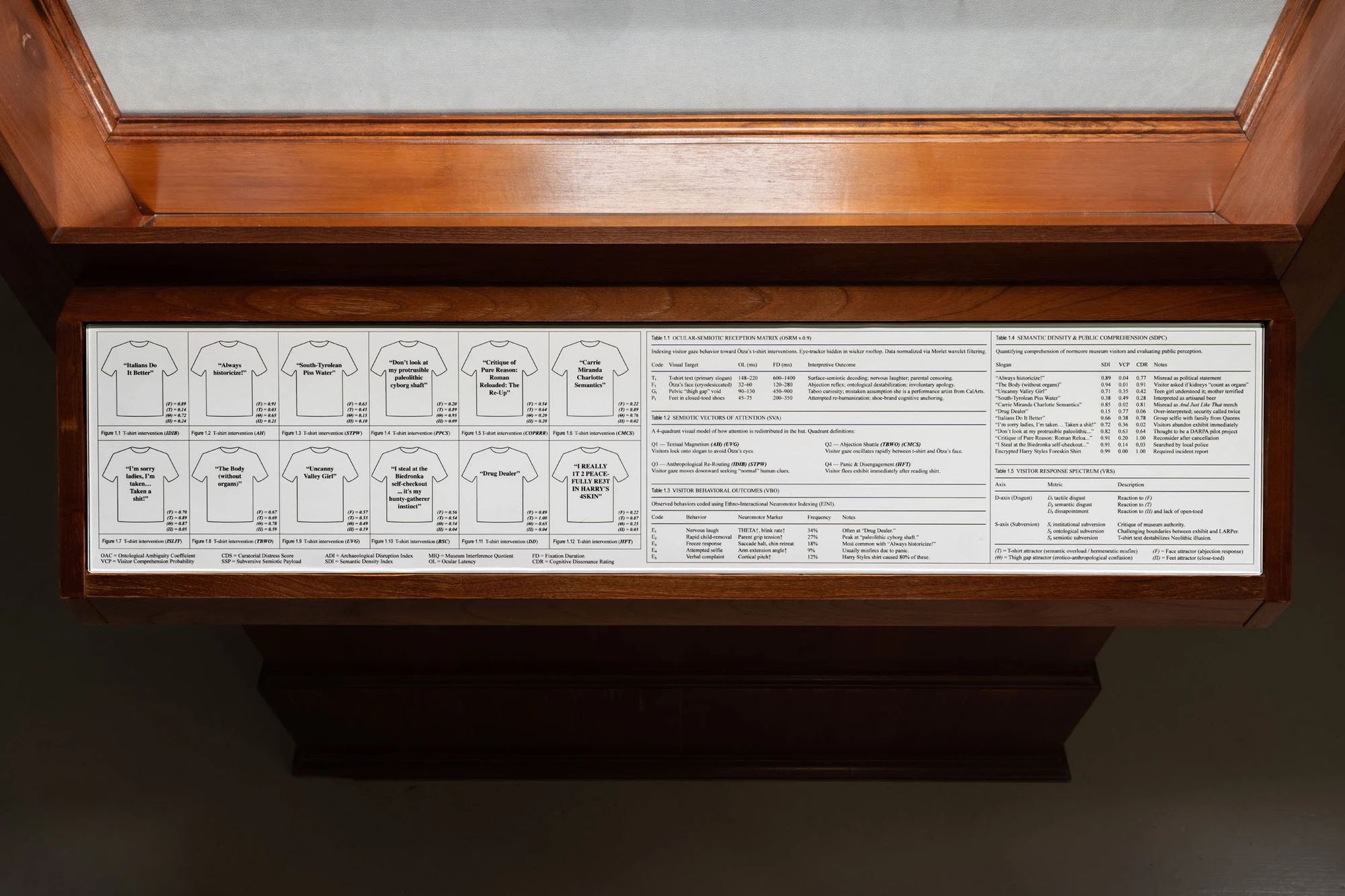
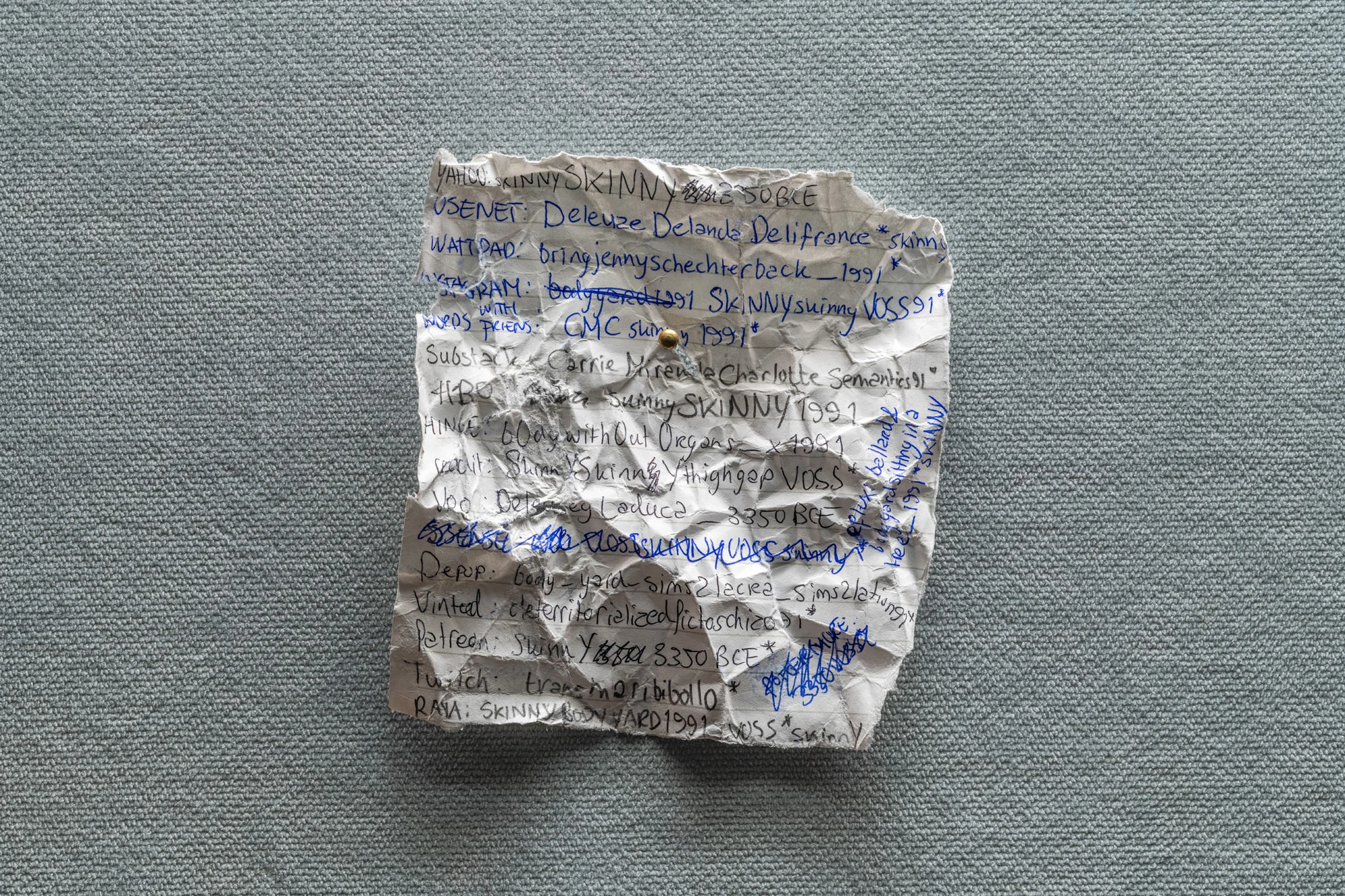
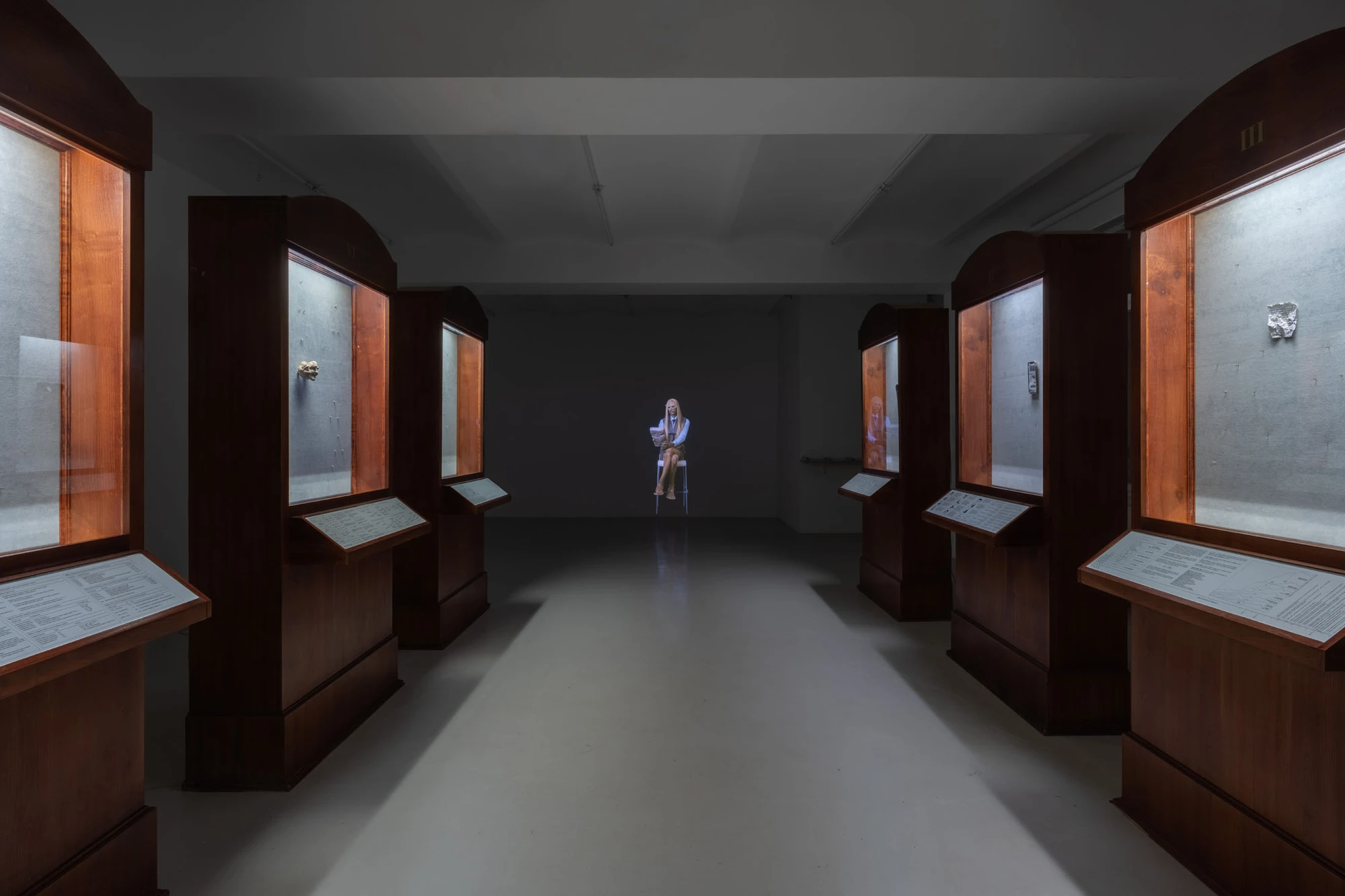
The exhibition unfolds across media, each a vessel for the character's particular wit and critique. Created in collaboration with costume designer Leila El Alaoui, Ötza occupies the gallery through sculptural presences—amber-lit wooden cabinets arranged with theatrical precision—that function as both archive and stage set. They suggest storage, containment, the institutional logic that seeks to pin down meaning. But Ötza resists pinning. Her fan fiction pieces, in which Carrie, Miranda, and Charlotte meet semantics, and a post-Marxist, posthumanist revolt takes on a mute form in a yogic silent retreat, operate as both comedy and critique.
At the core of the project is fan fiction as a methodology for queer resistance and counterfactual reclamation. By writing, performing, and making as Ötza, van Gelder creates a subversive, post-historical rendering of the Neolithic mummy—queering prehistory in a meta-textualized account of misrepresentation, questioning and resisting claims to truth with quick-witted storytelling and playful refusal. The artistic process turns the authority of the archive into material for play.
Ötza fights the regime of truth in her work, in her biography, and in courtrooms alike. After a not-too-successful trial for tax fraud and copyright infringement, she does not cease searching for ancillary incomes and tax havens. While the richest one percent tend to place their assets in Caribbean companies and offshore funds, the mummy, who must spend a significant part of her time in a cryogenic chamber, looks for colder places. Perhaps the journey to this tax Arcadia, which begins at Poznań's galeria skala, will one day end in her own museum in a fiscally friendly Swiss village among Alpine glaciers.