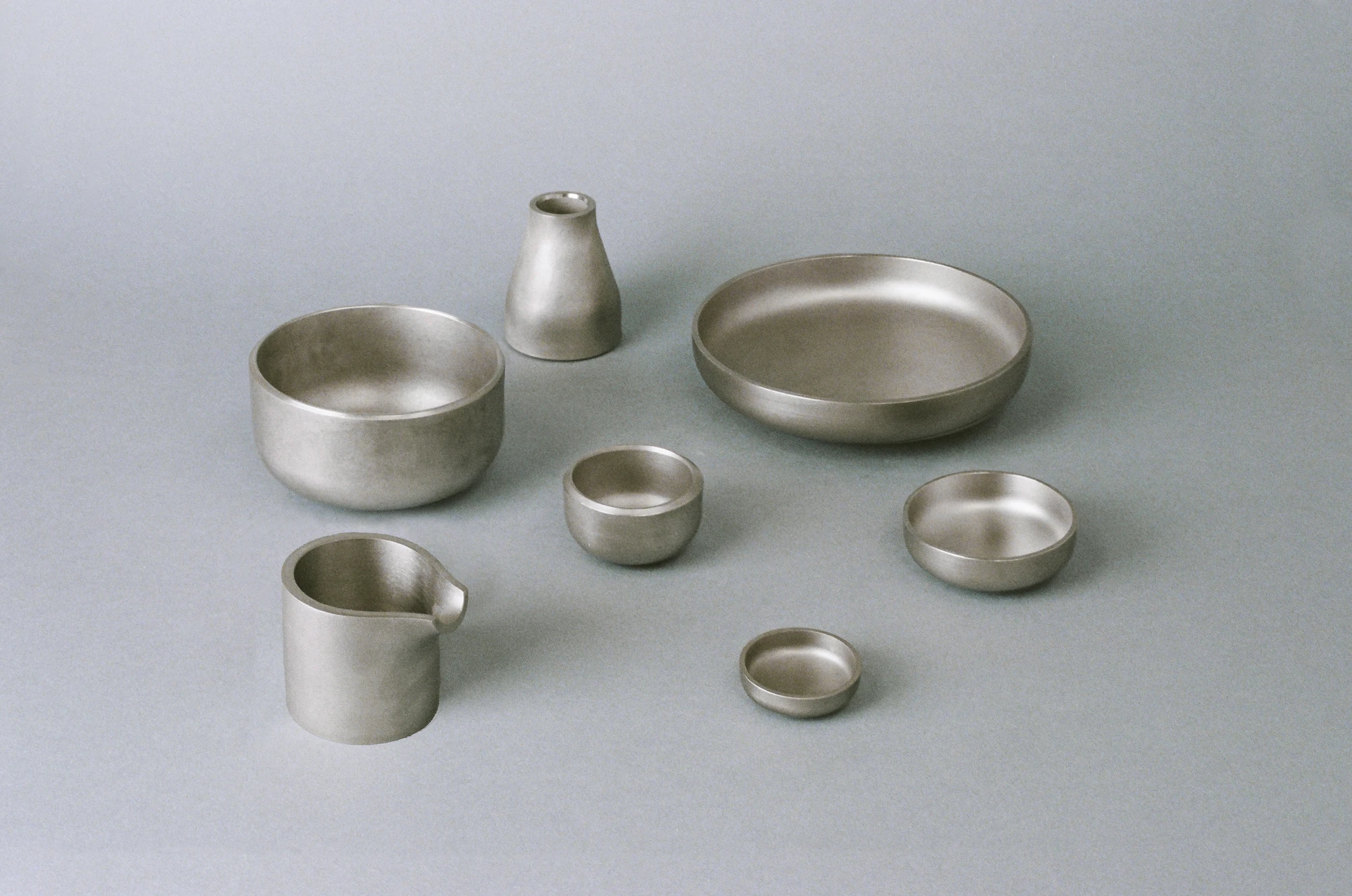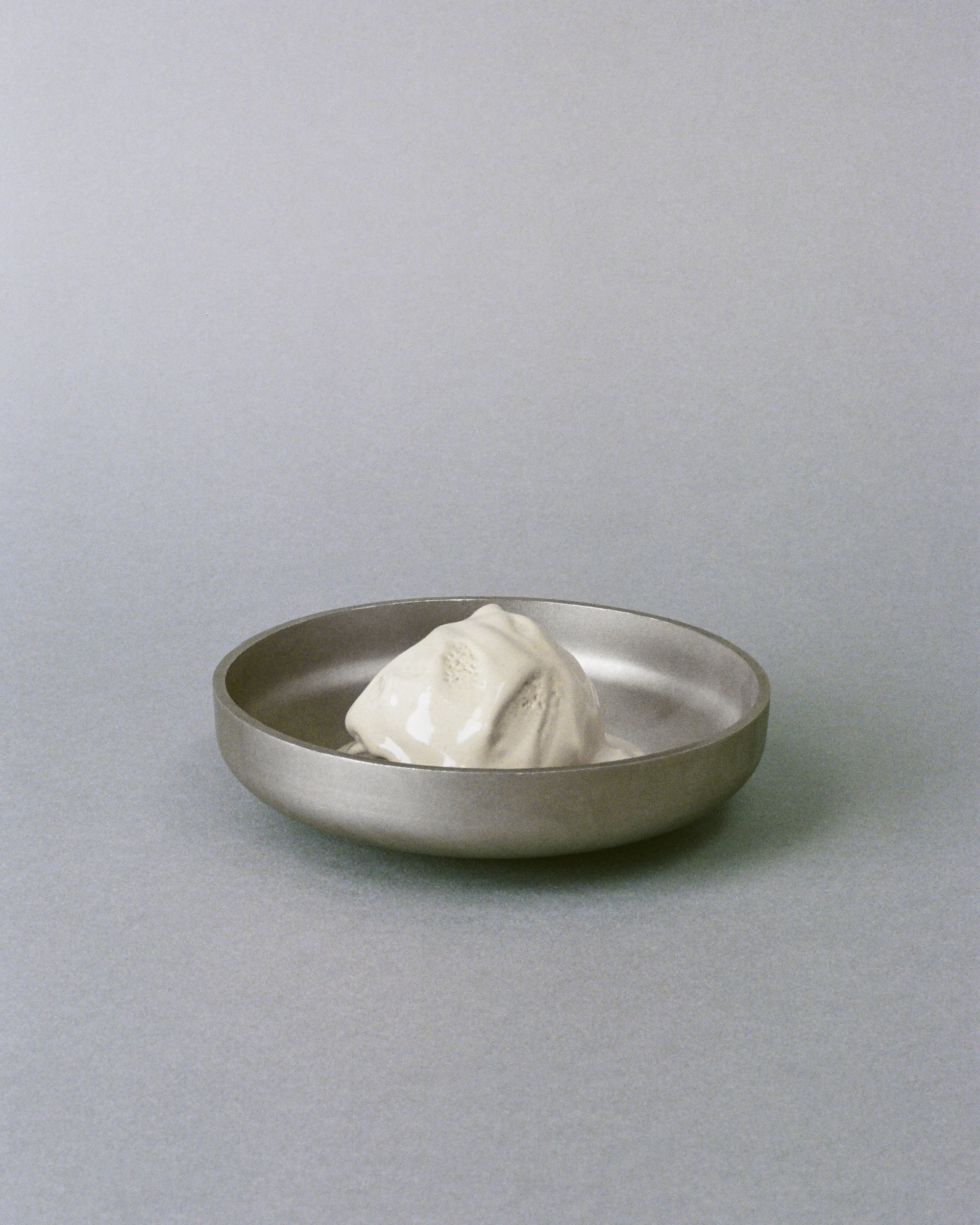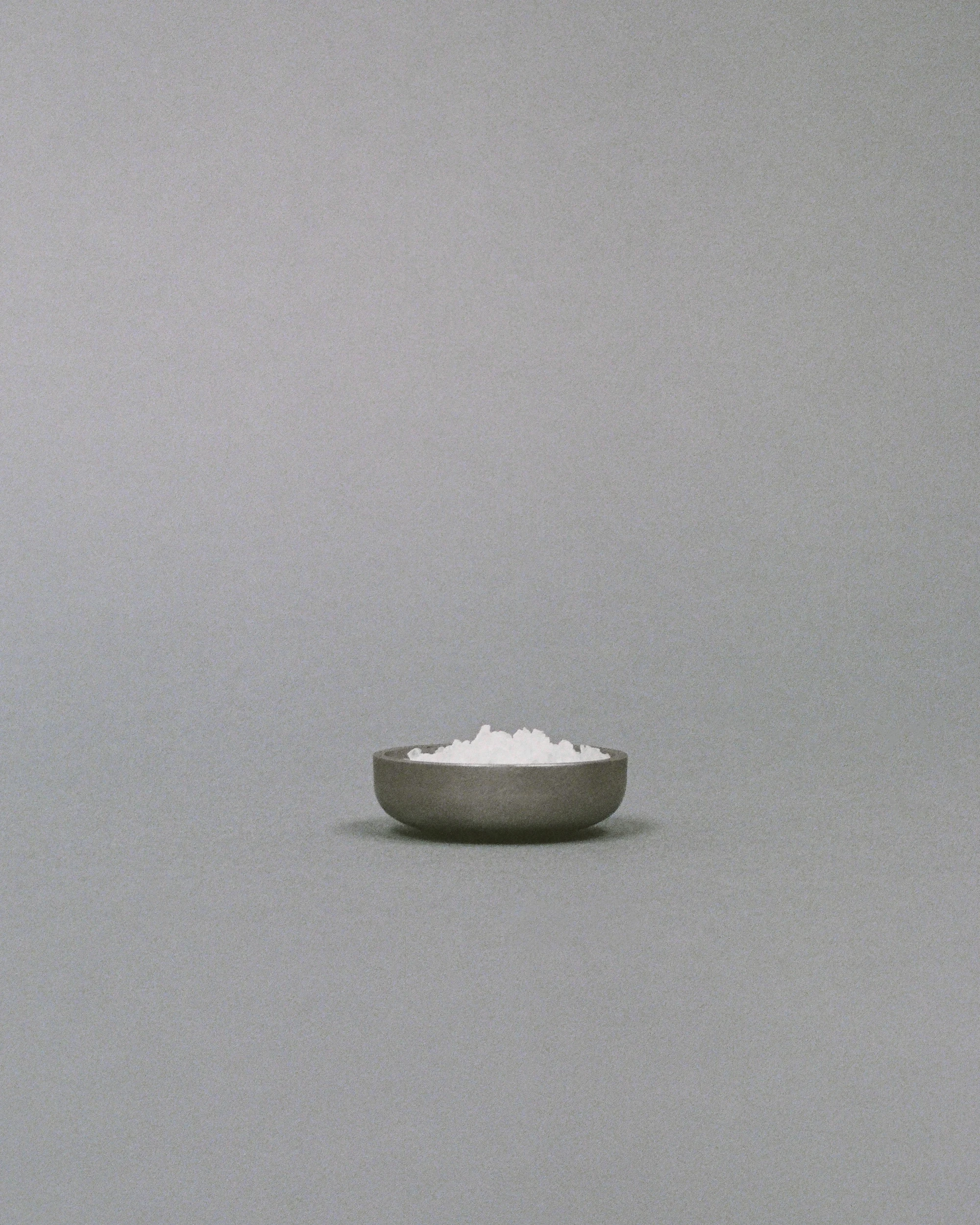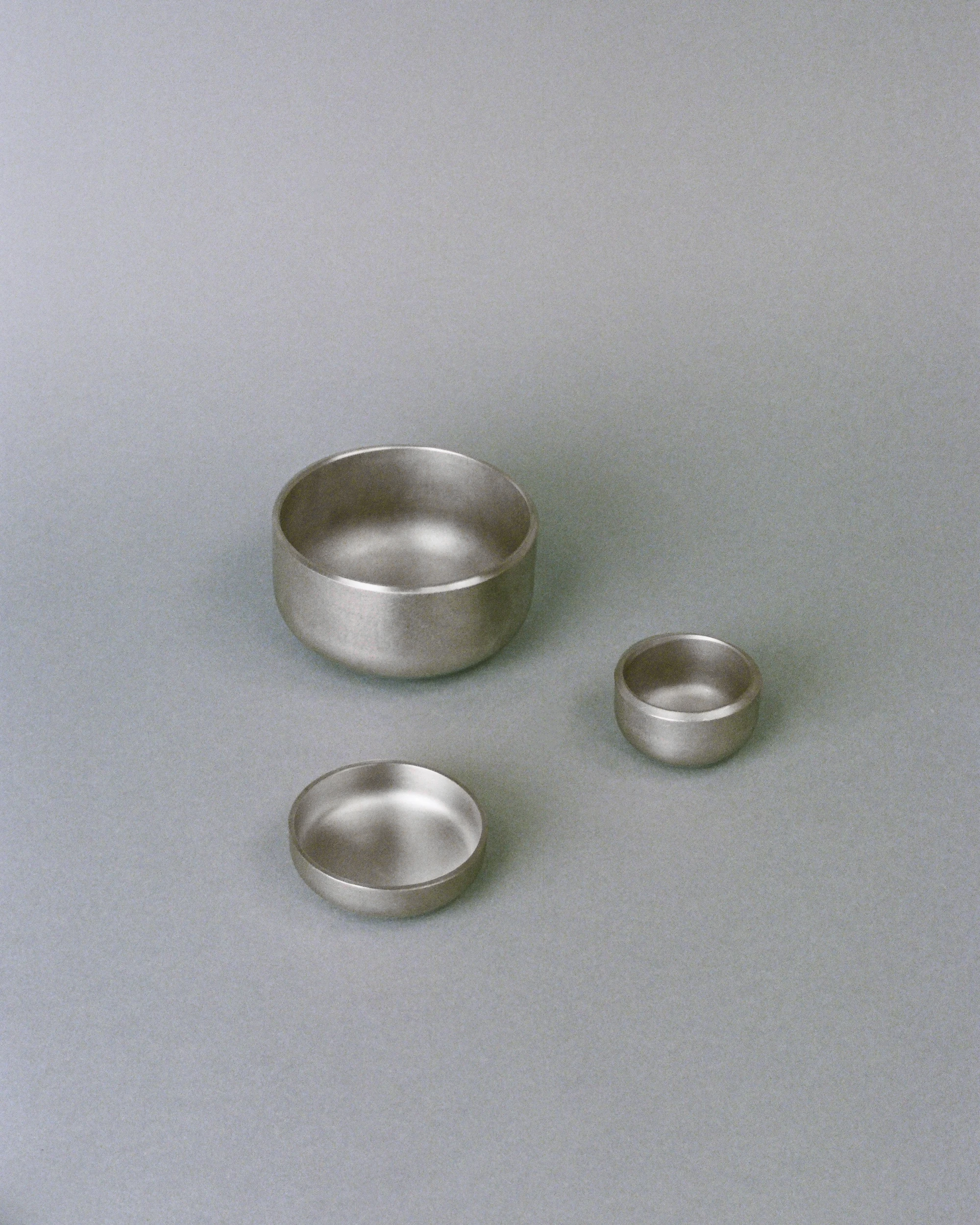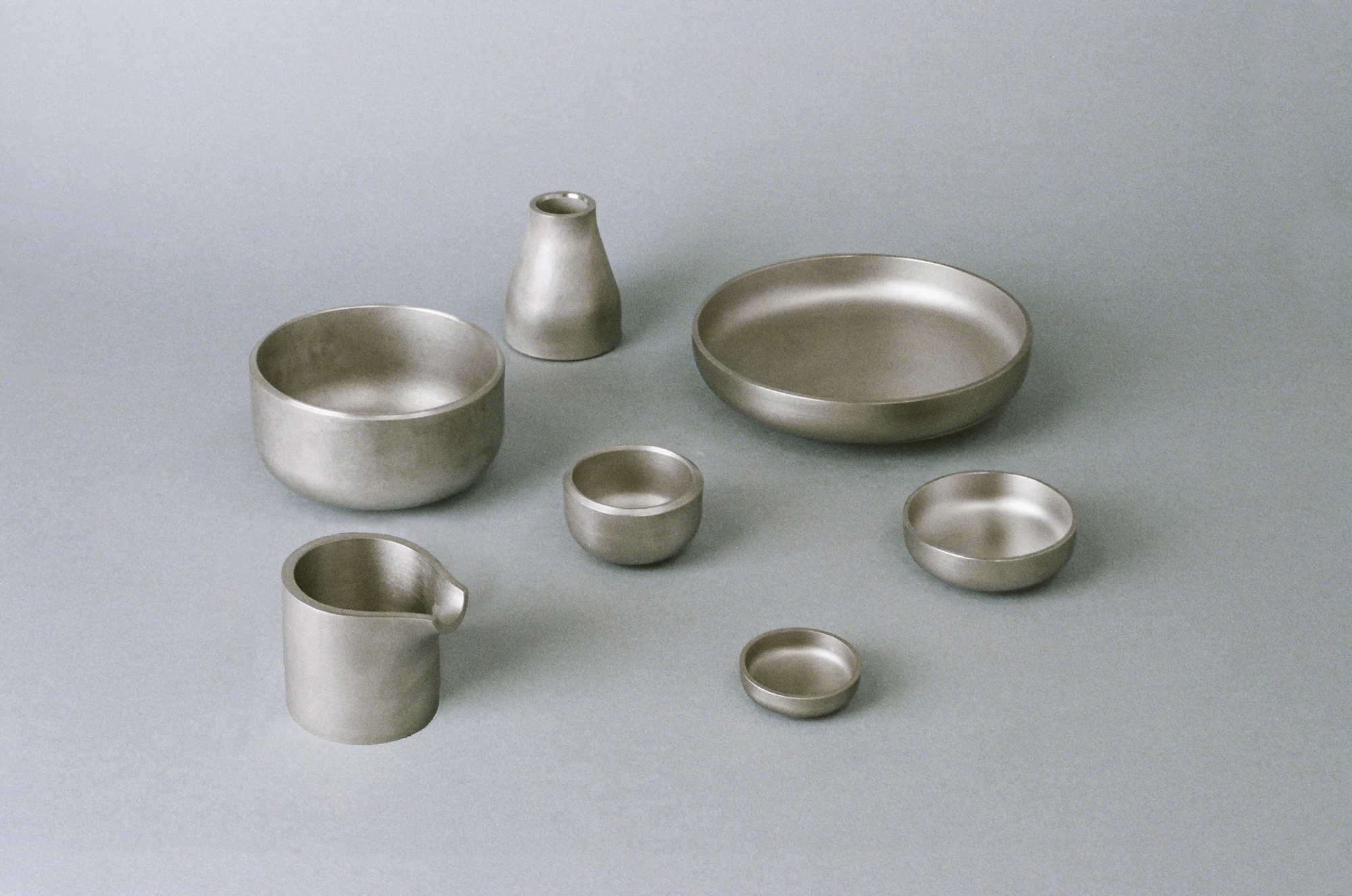
Guberan Studio's Off-Shelf Collection repurposes standard 316L stainless steel components originally intended for the food industry — cutting, welding and sanding them into a limited-edition tableware set for Lausanne's L'Appart and its chef Luis Zuzarte: a pragmatic approach that turns industrial sourcing into an argument about materials and use.
316L stainless steel is a material specification, not a design choice — or rather it was, until this project made it both. The food-industry standard is selected for corrosion resistance, food safety, cleanability. It is the material of processing equipment and commercial kitchen fittings, the matter-of-fact infrastructure of any operation that takes hygiene seriously. Christophe Guberan begins here, with off-the-shelf components that already exist for functional reasons, and through minimal interventions — cutting, welding, sanding — transforms them into table objects that retain their industrial origin without apologising for it.
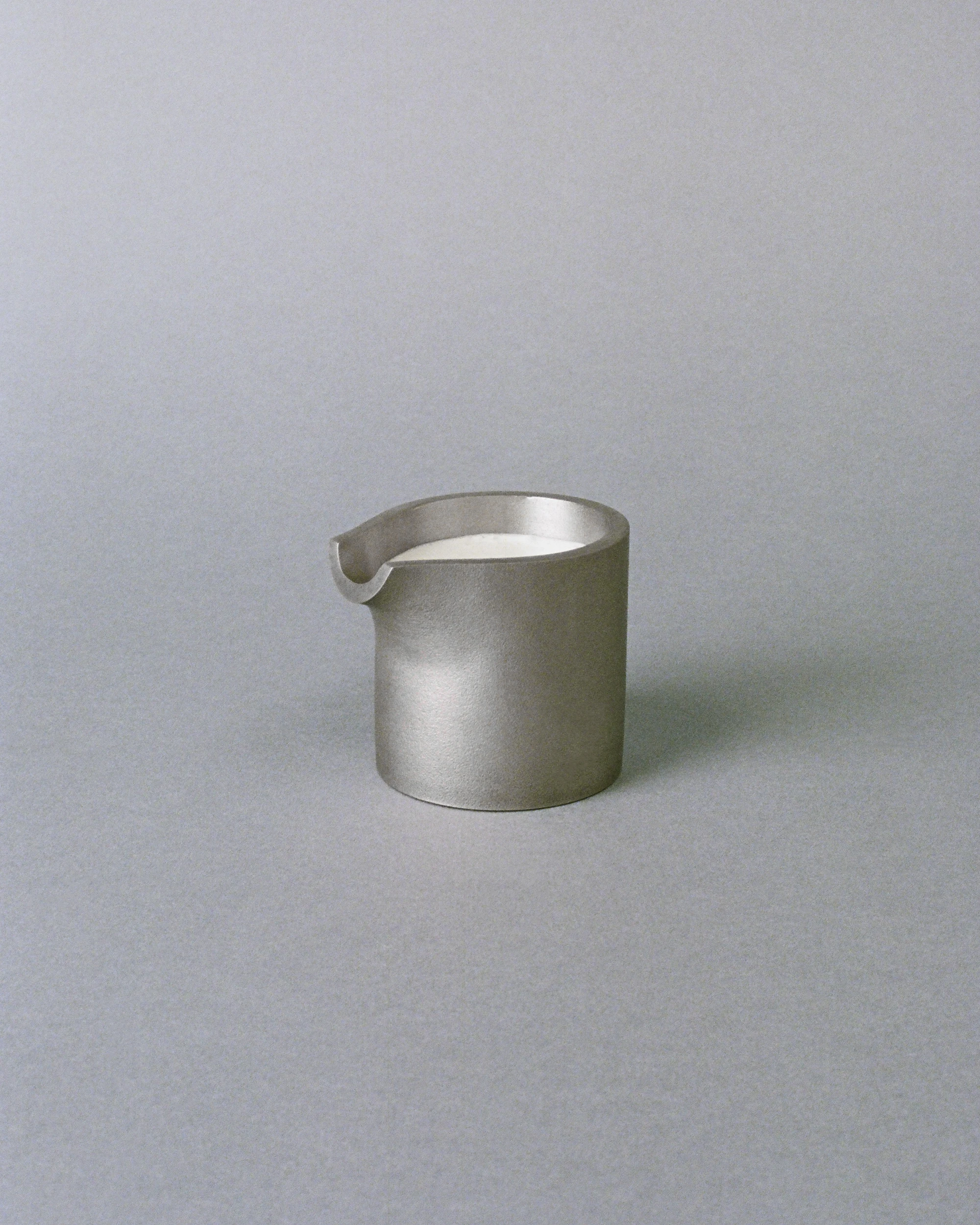
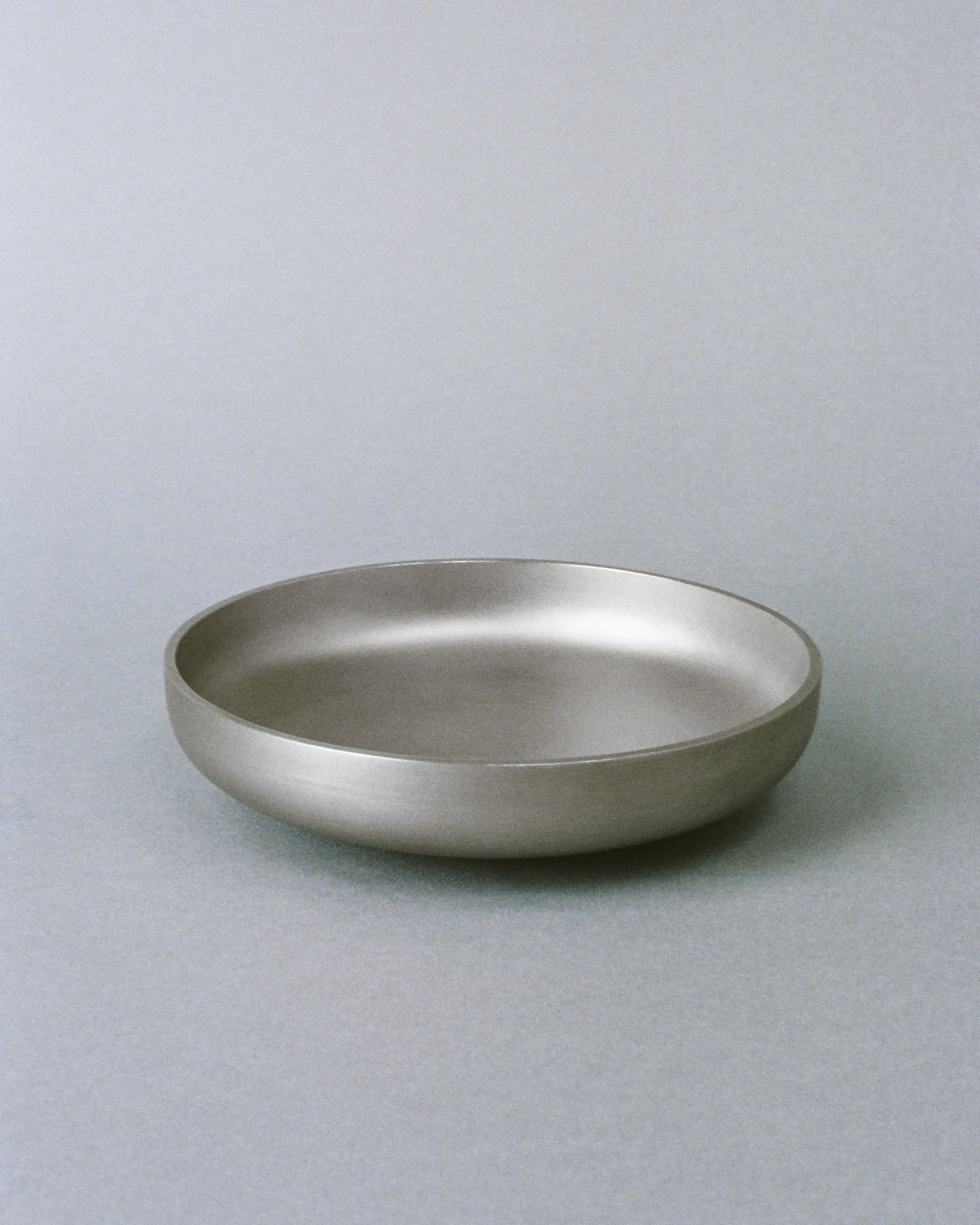
The collection includes plates, bowls, butter dishes and milk jugs: the vocabulary of a table service, produced from the vocabulary of a production facility. The result is what Guberan describes as "a family of objects that is both raw and refined, introducing industrial codes into a gastronomic context." The tension between industrial coding and gastronomic context is not resolved so much as made productive. At L'Appart, where chef Luis Zuzarte is the client, the tableware meets food that has its own relationship to material and process. The steel does not defer to the cuisine; it holds its own character on the table alongside it.
Photographer Jasmine Deporta documents the collection in images that are as direct as the objects themselves — light on the sanded steel surface, the geometry of the forms without editorial distance. The welded joints, the sanded finishes, the slight variations between objects produced by hand rather than machine are present in the images rather than suppressed. Guberan Studio's approach here — taking an industrial material at face value and doing as little to it as the function requires — produces objects that carry a different kind of honesty than craft-first design does: the honesty of the factory rather than the workshop, turned toward the table.