.webp)
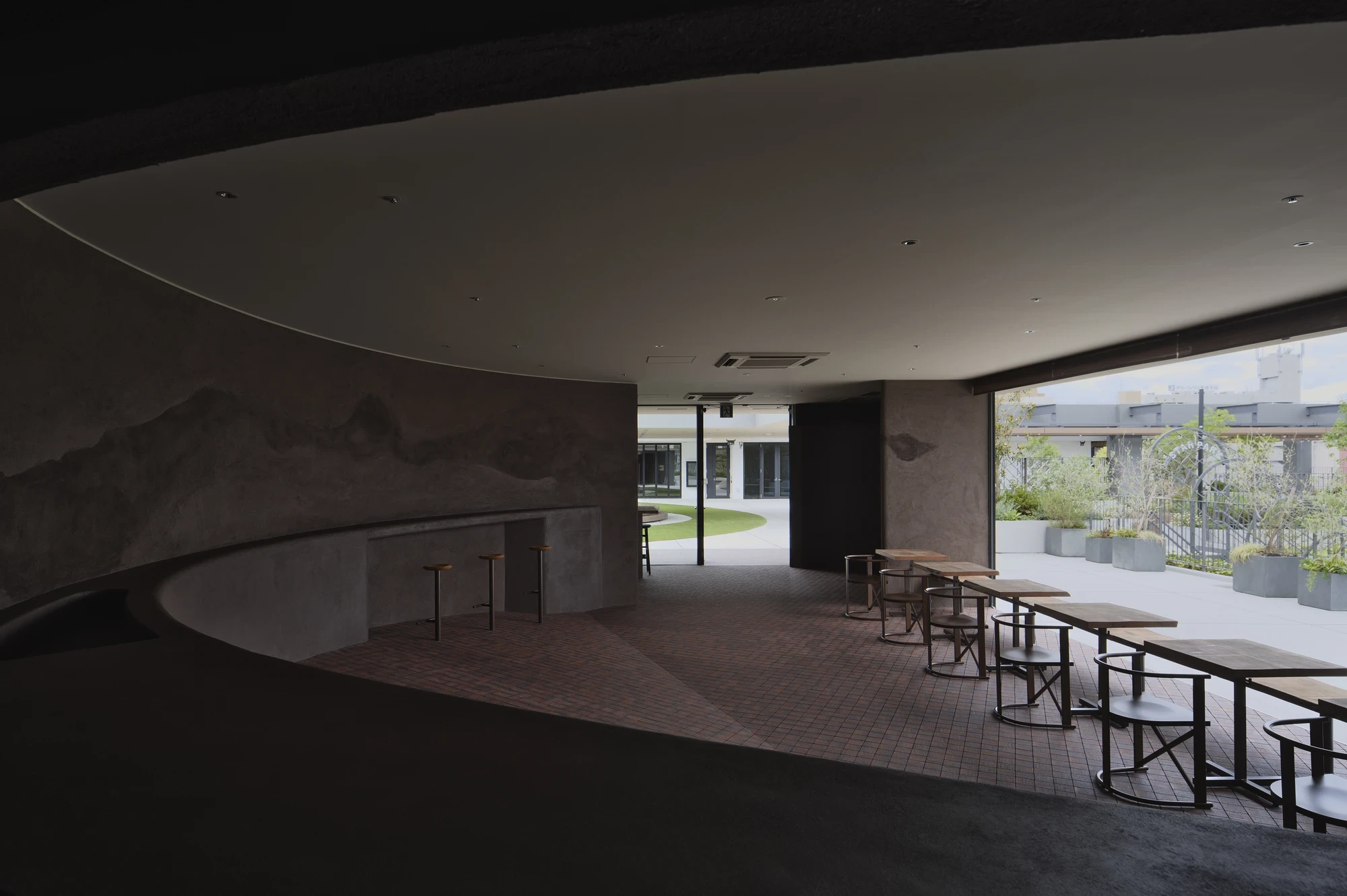
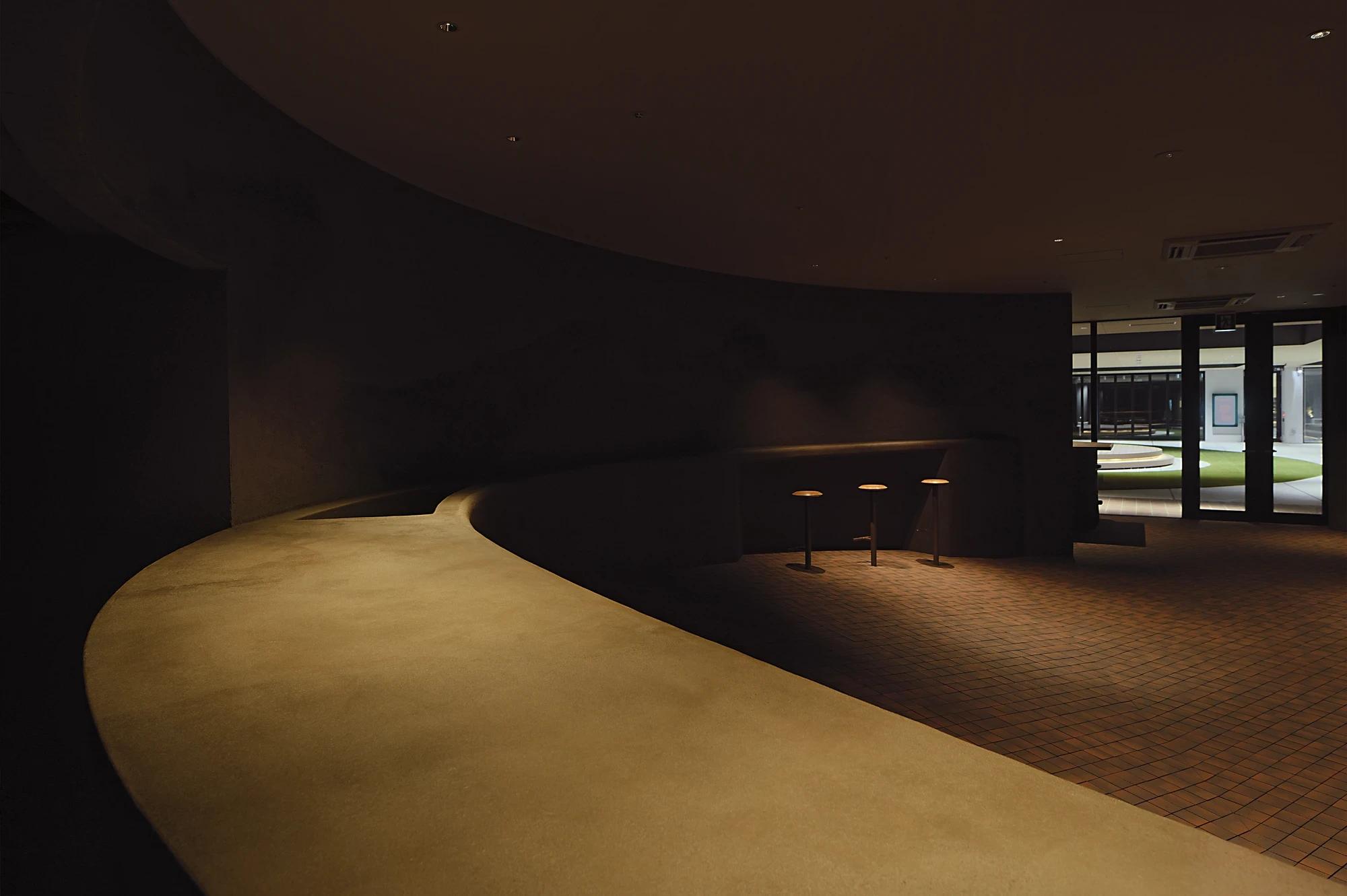
The counter sits at the highest point of NIWA FUKUOKA, a café by ANONIMAL design community lifted onto a rooftop in Fukuoka, Japan, where a curved earthen wall traces the ridgeline of the mountains hidden behind the building.
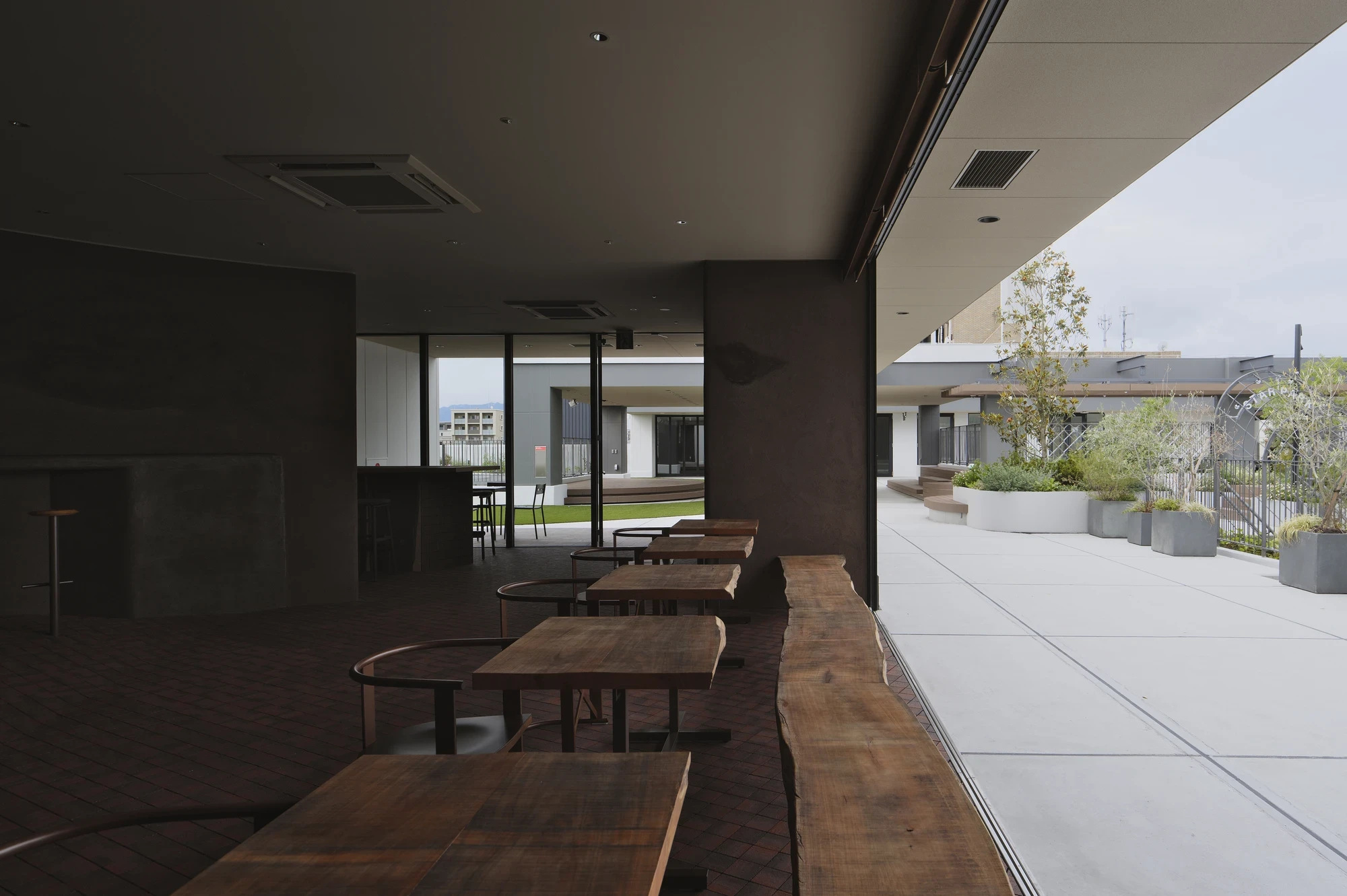
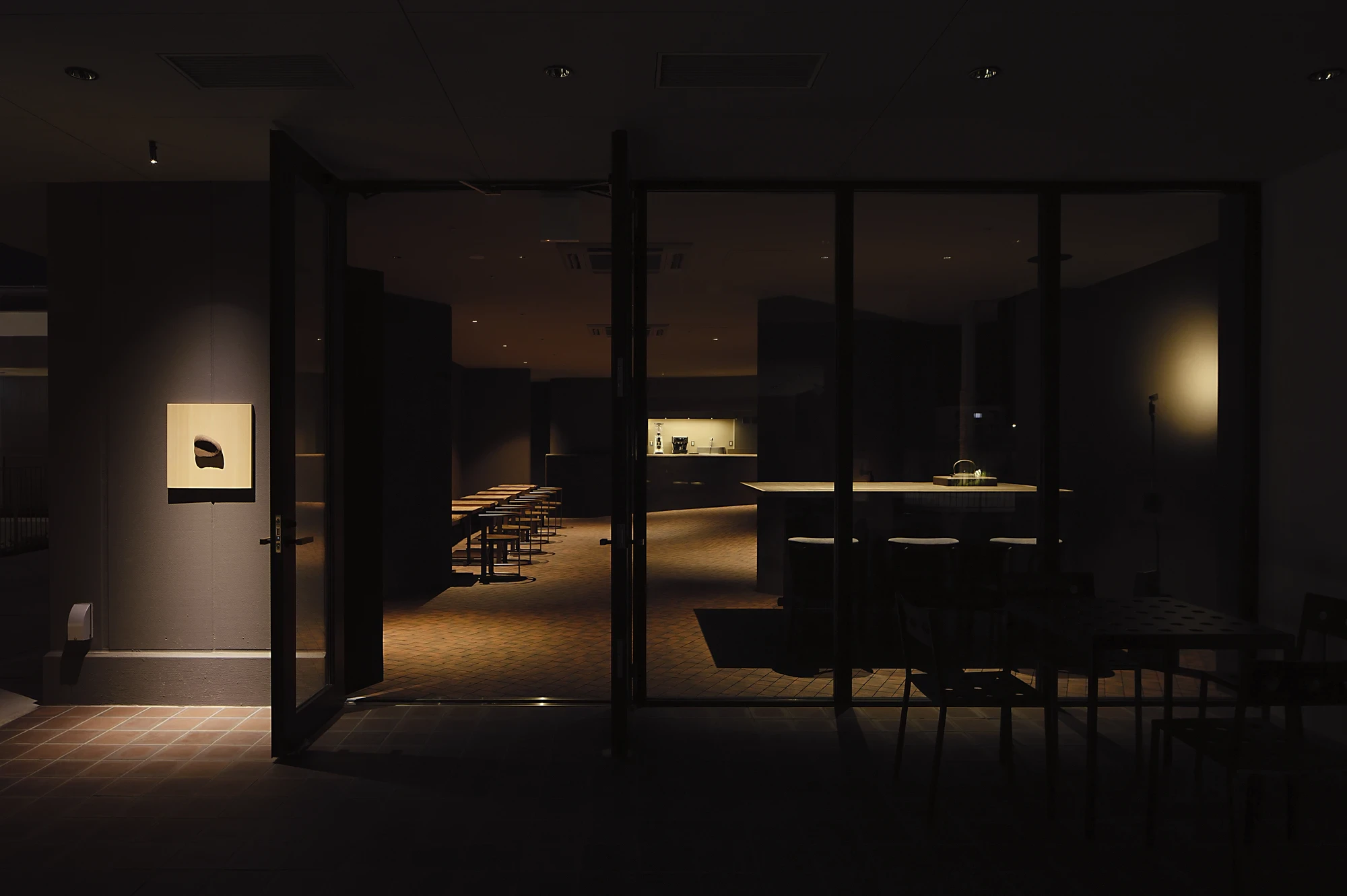
The café crowns OHASHI HILL, a commercial building in front of Ohashi Station in Fukuoka. The building works as a slow ascent. Public space threads through every level, and the route is arranged so that a visitor climbs from the street up toward the roof while the city of Ohashi unfolds alongside. At the top waits a rooftop plaza with a water feature and dense planting, a place for rest. Fumiyasu Egami and his studio were asked to set a café beside it, and they built the room around two things: the view out over Ohashi, and the plaza just beyond the glass.
They placed the counter at the highest level and raised the floor beneath it into a low stage that looks down across the plaza. Ordering means climbing an undulating floor, then turning and descending again toward the daylight and the planting. The route is choreographed rather than direct. At certain points the floor and the walls quietly turn a person's body toward the landscape, so the room keeps handing the view back.
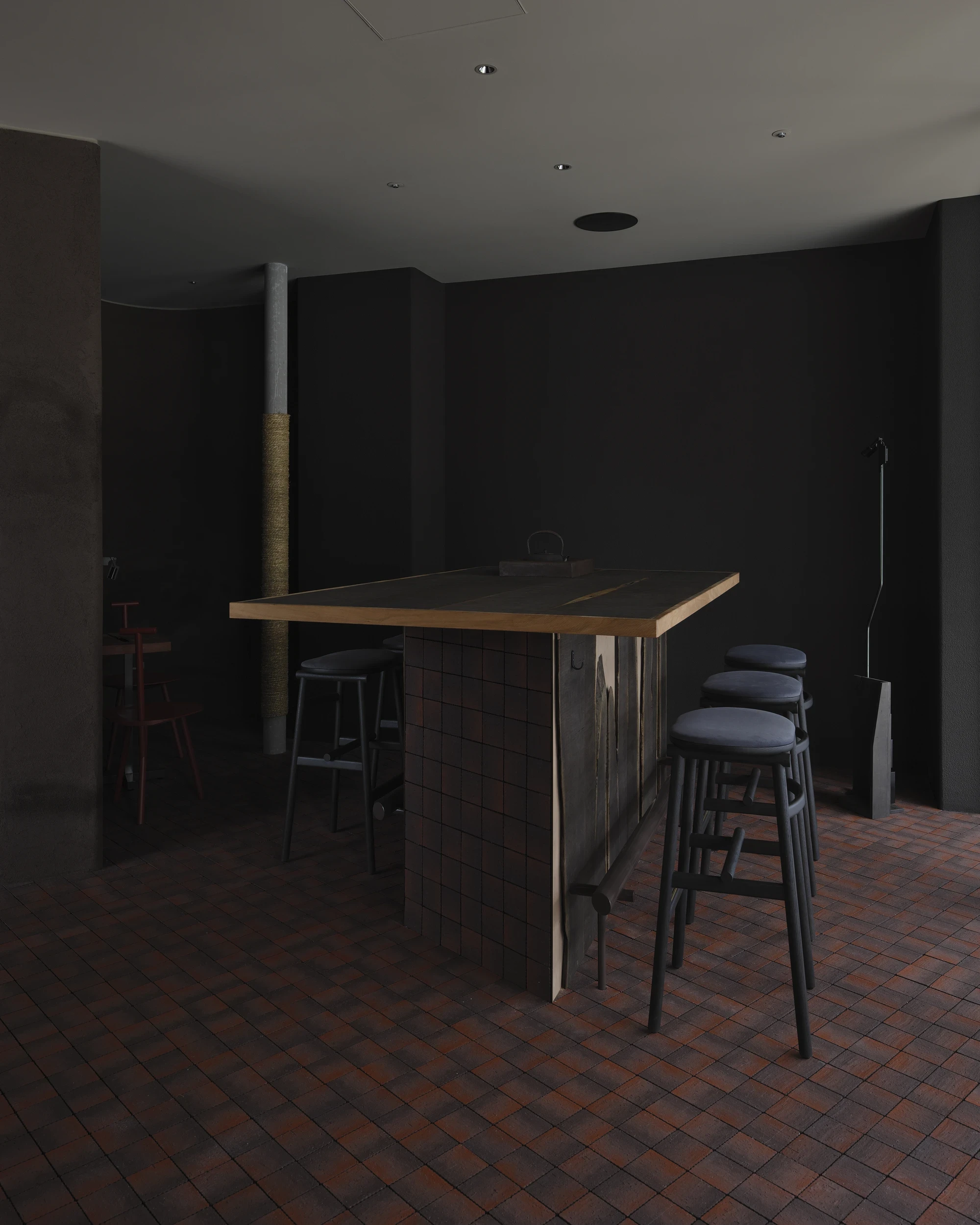
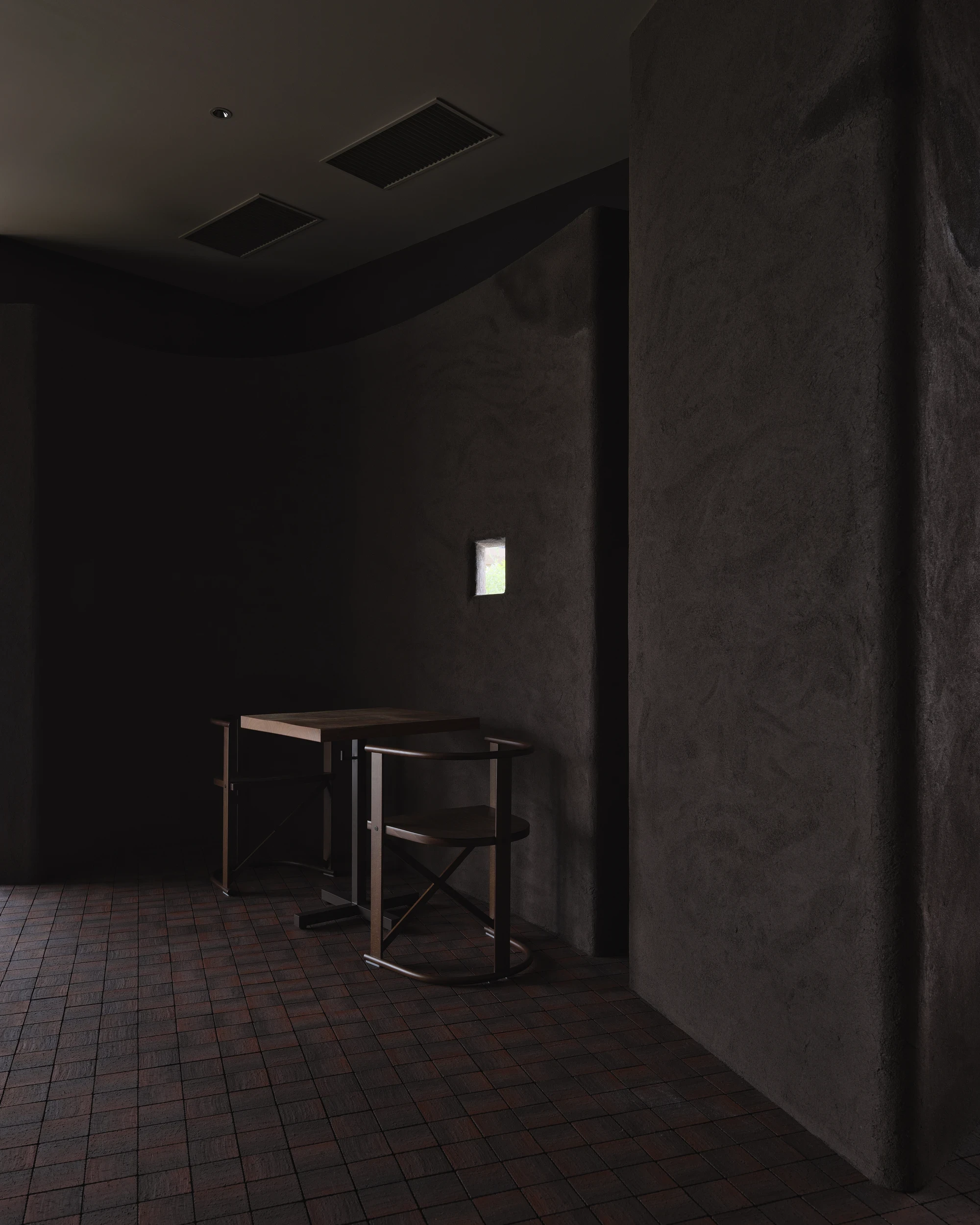
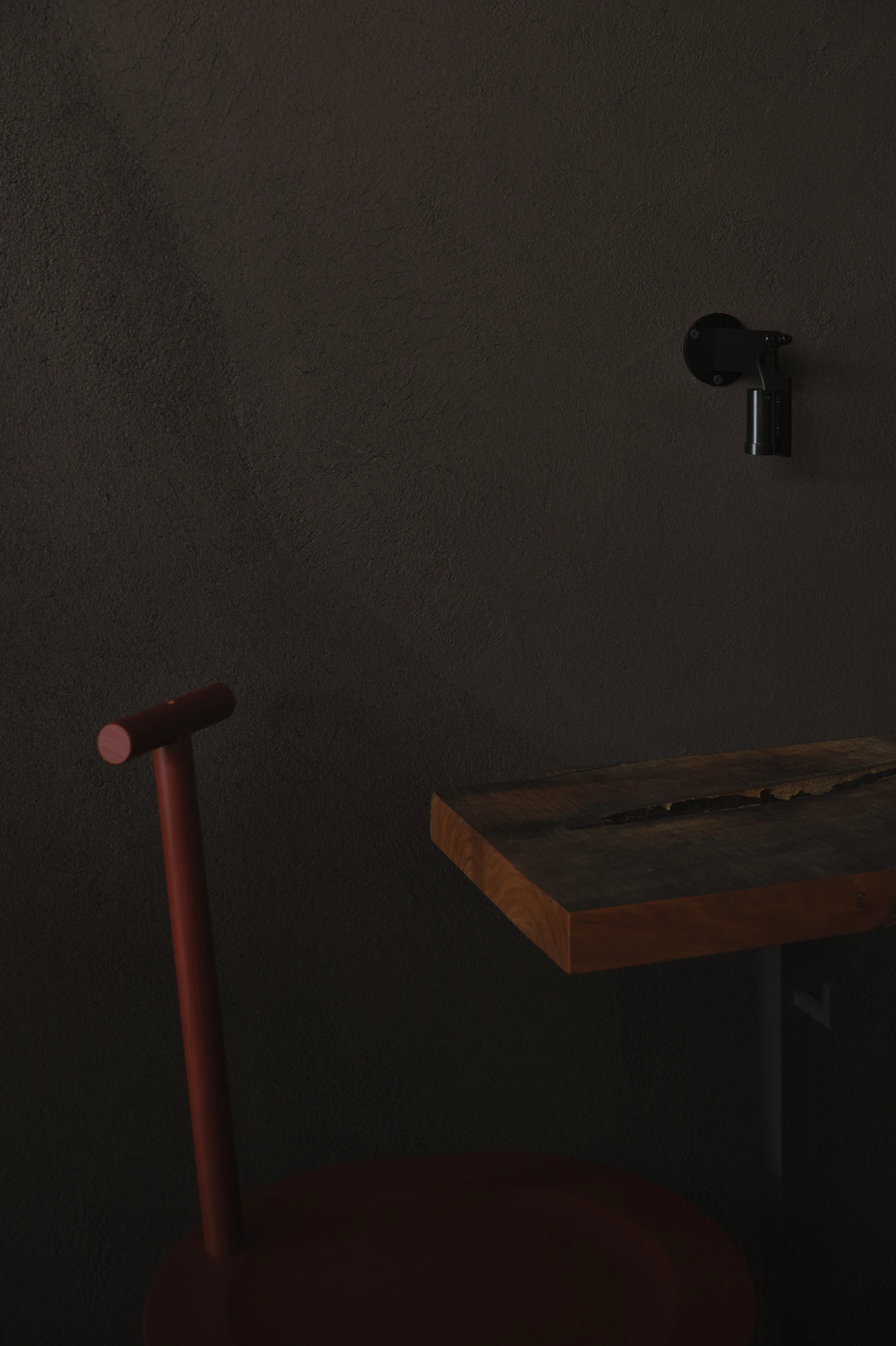
Everything is worked in a narrow band of earth tones. The floor is laid in small terracotta tiles, oxblood and brown, that carry the warmth of the room even in low light. The walls are tsuchikabe, traditional earthen plaster, troweled by hand into soft curves that swell and recede. Into the base mix the studio folded spent coffee grounds, upcycled from the café's own trade, so the material of the wall carries the residue of what the place serves.
Onto the largest and most generous of the curved walls, the coffee grounds were sprayed to draw the ridgeline of the mountains that stand behind OHASHI HILL, out of sight from inside. The peaks the building blocks are returned to the room as a dark silhouette on the plaster. A furniture mix of oxblood spindle chairs, raw timber tabletops and a sisal-wrapped column keeps the register handmade, and after dark the whole floor reads as a single warm ember against the glass. In naming the café niwa, garden, the studio proposes the room itself as a landscape, one you climb, look out from, and read on the wall.