In Asker, Norway, Carl-Viggo Hølmebakk AS adds a 100-square-metre mortuary to a late-1950s crematorium chapel, a barrel vault of load-bearing white clay brick over the ceremony room.
The brief for a mortuary addition alongside an existing crematorium chapel in Asker calls for something that most buildings are not asked to do: hold ceremony and preparation and withdrawal simultaneously, in a single small precinct, without collapsing the distinctions between them. Carl-Viggo Hølmebakk solved this with a lucid three-part arrangement, ceremony room, preparation room, court, that condenses an emotionally charged programme into about 100 square metres. The compression is not a limitation; it is the whole point.
The ceremony room is covered by a barrel vault of load-bearing white clay brick, the structural logic legible from the moment you enter. The vault reads as self-contained and complete, and this is not accidental: the concrete slabs that cover the preparation room and ancillary spaces counter the lateral forces of the vault without the need for exposed tension rods, leaving the ceremony room with the formal calm of something that appears to hold itself up by pure geometry. Hølmebakk noted that even though the building is religiously neutral, "the proportions of the rooms, the geometry, the light, the fixtures and even the small stones in the concrete floors seemed to attract symbolic meaning." The observation is accurate. Nothing in the room states a doctrine; the proportions and the light do the work that doctrine would otherwise do.
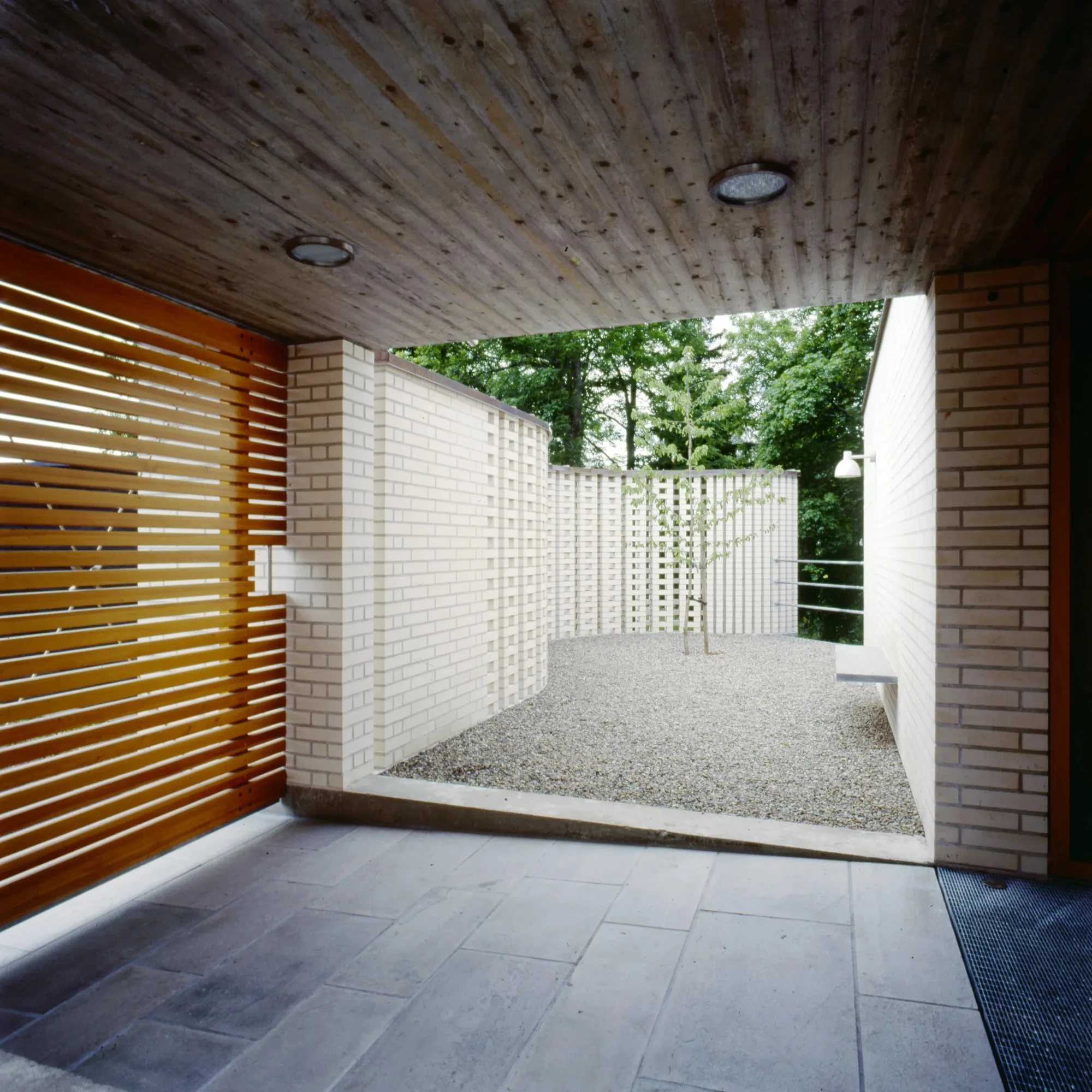
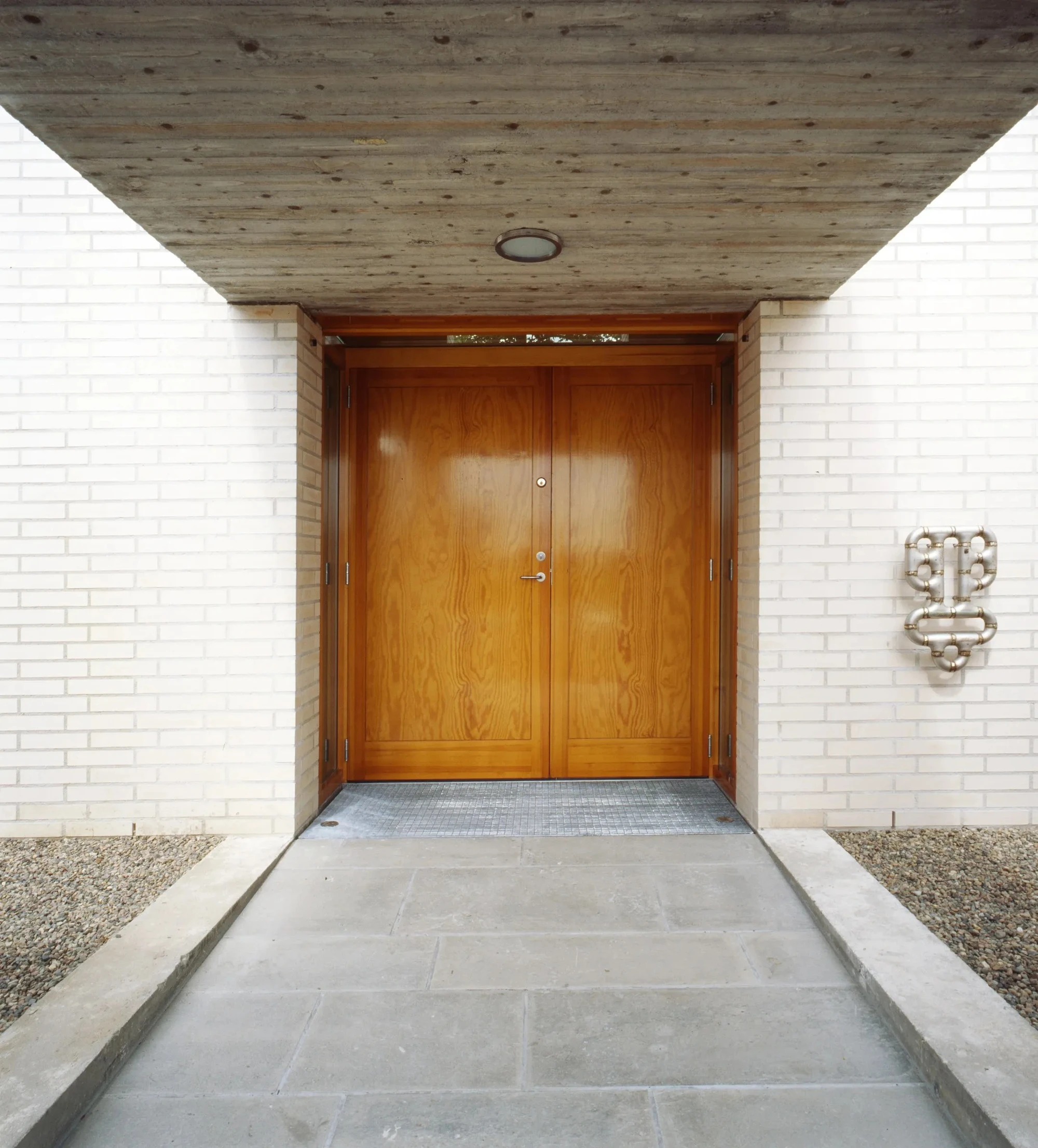
The white clay brick varies subtly in tone across the surfaces, with glazed areas in water-exposed zones producing shifts from grey to cream to yellow as salts leach from the clay. The ground concrete floor registers weight underfoot. Pine doors and window frames, treated with glossy oil, introduce warmth without diminishing the rigour. Stainless steel candle holders and light fixtures reduce the tactile register to mineral mass, timber grain and metal precision: three materials, three temperatures, none redundant.
A tall skylight introduces daylight onto a marble wall panel and frames the upper portion of a tree outside, drawing the eye beyond the enclosed interior without dissolving its concentration. The marble floor inset and corresponding wall panel establish a liturgical centre that the room's non-denominational brief never contradicts.
Outside, a curved perforated brick wall encloses the court by omitting alternating bricks and laying the remaining units at slight angles, a wall that is simultaneously boundary, filter and instrument of orientation toward the graveyard. Light, shadow and oblique views move through the porous surface depending on hour and season. At the centre of the court, a wild cherry tree introduces a temporal dimension the brick alone cannot supply. As the canopy fills in over decades, the court changes character from walled enclosure to roomed garden. The building has been standing for more than a quarter century now. The tree will have done its work.