Thisispaper Community
Join today.
Enter your email address to receive the latest news on emerging art, design, lifestyle and tech from Thisispaper, delivered straight to your inbox.
Oops! Something went wrong while submitting the form.
Instant access to new channels
The top stories curated daily
Weekly roundups of what's important
Original features and deep dives
Exclusive community features
No items found.
Dolls' Theater by Mimosa Echard at Kunsthaus Biel
Alexander Zaxarov
Aug 19, 2026

In the Salle Poma at Kunsthaus Biel / Centre d'art Bienne, Mimosa Echard rebuilds the white cube as a conceptual cave for Dolls' Theater, where Times Square screens meet prehistoric handprints.

Kunsthaus Biel / Centre d'art Bienne hands Mimosa Echard the Salle Poma, and she treats the white cube the way a child treats a hollow in a rock face. The French artist, born in 1986, fills it with mythologies that have no business sharing a room: prehistoric motifs, New York's Times Square, Diana the Roman goddess of the hunt, the Spice Girls. Paul Bernard and Selma Meuli assemble the result as an allegorical grotto, where perception and violence, pleasure and control run into one another. The title comes from a miniature stalactite formation in New Mexico.

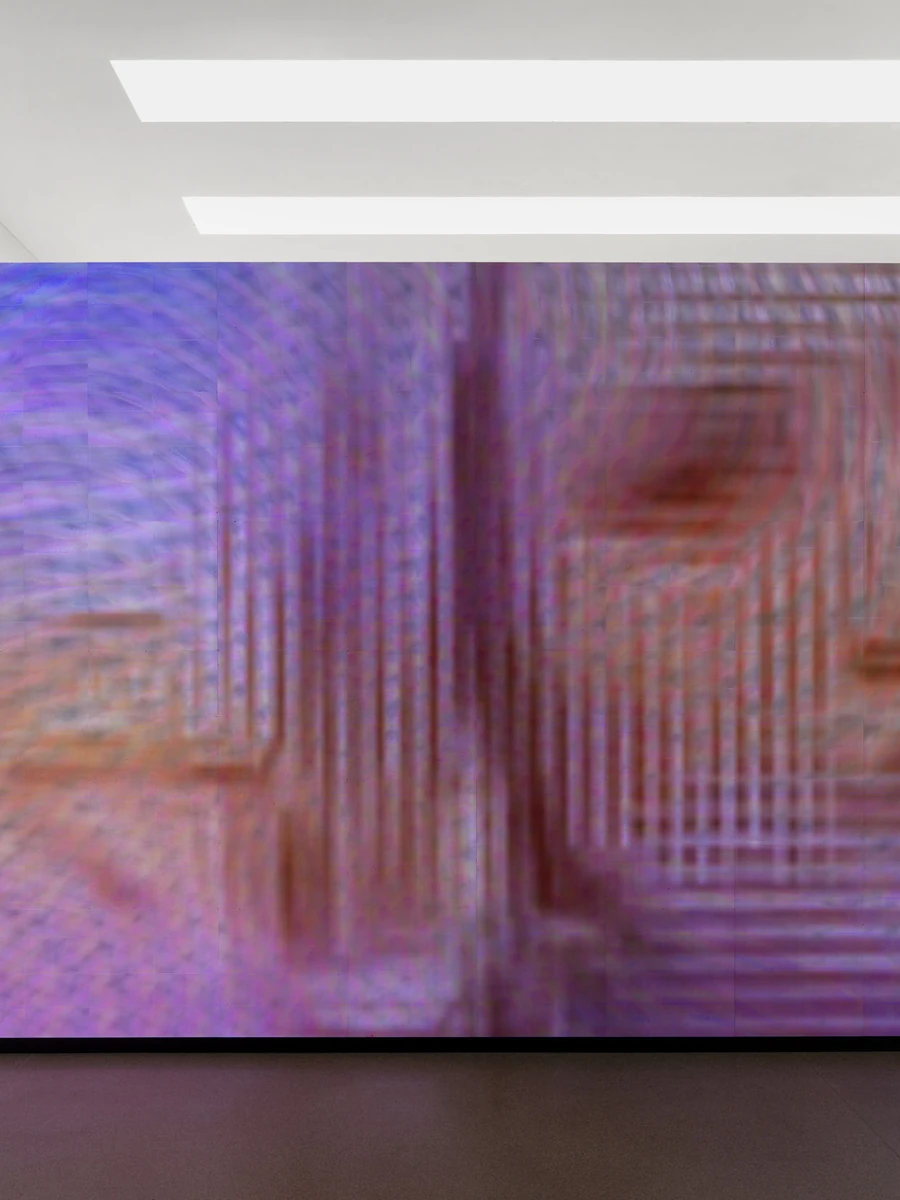
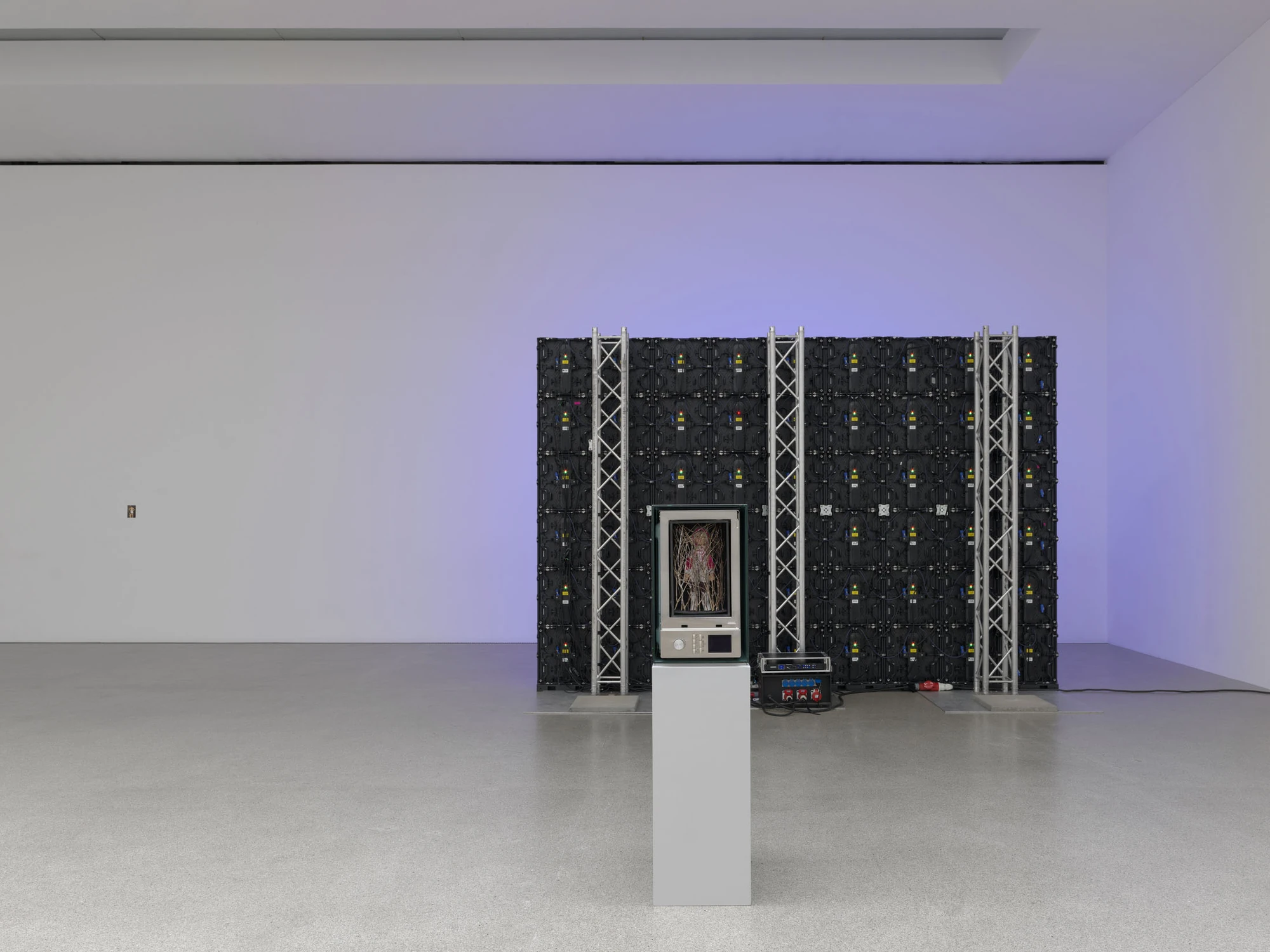
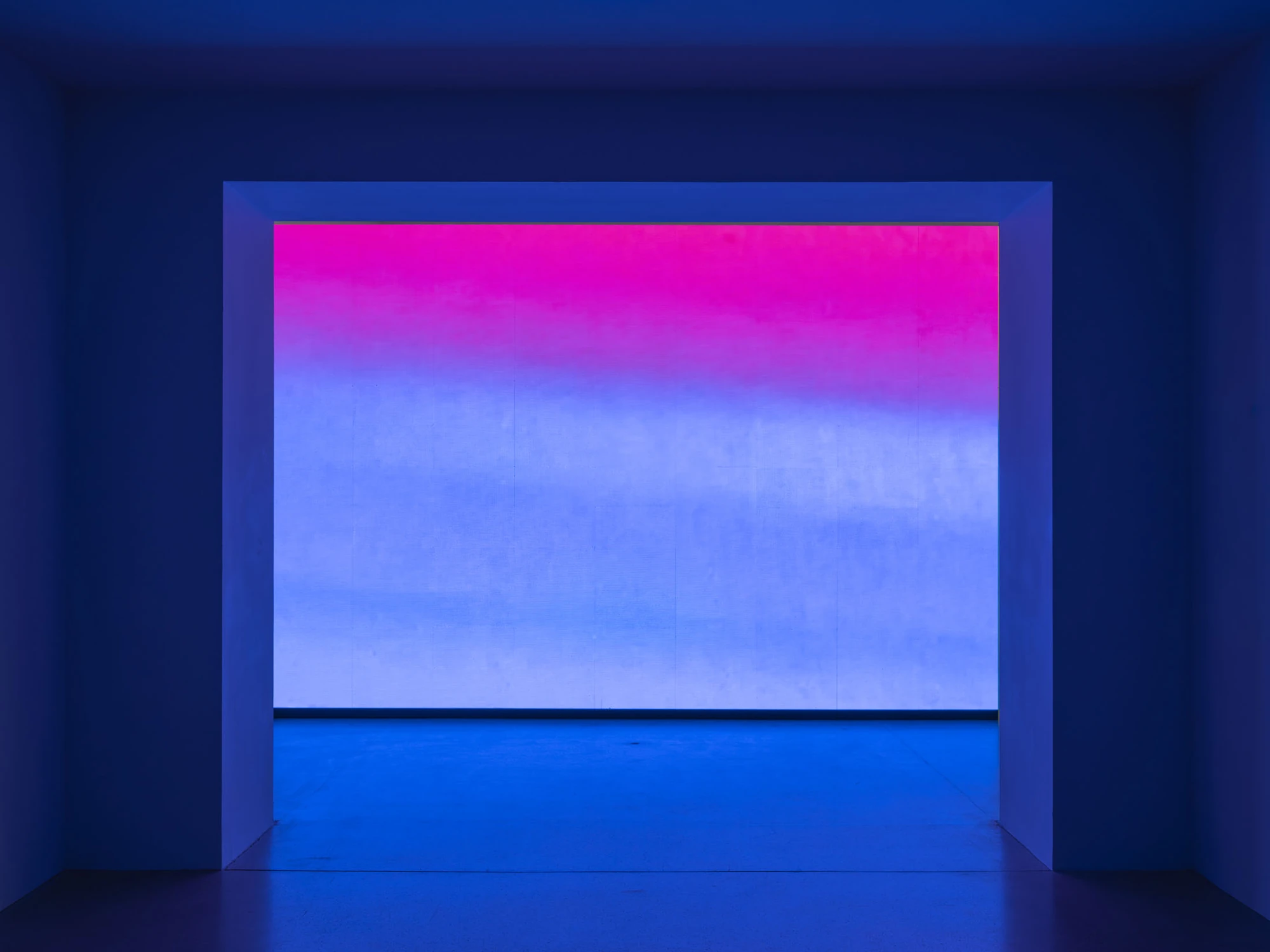
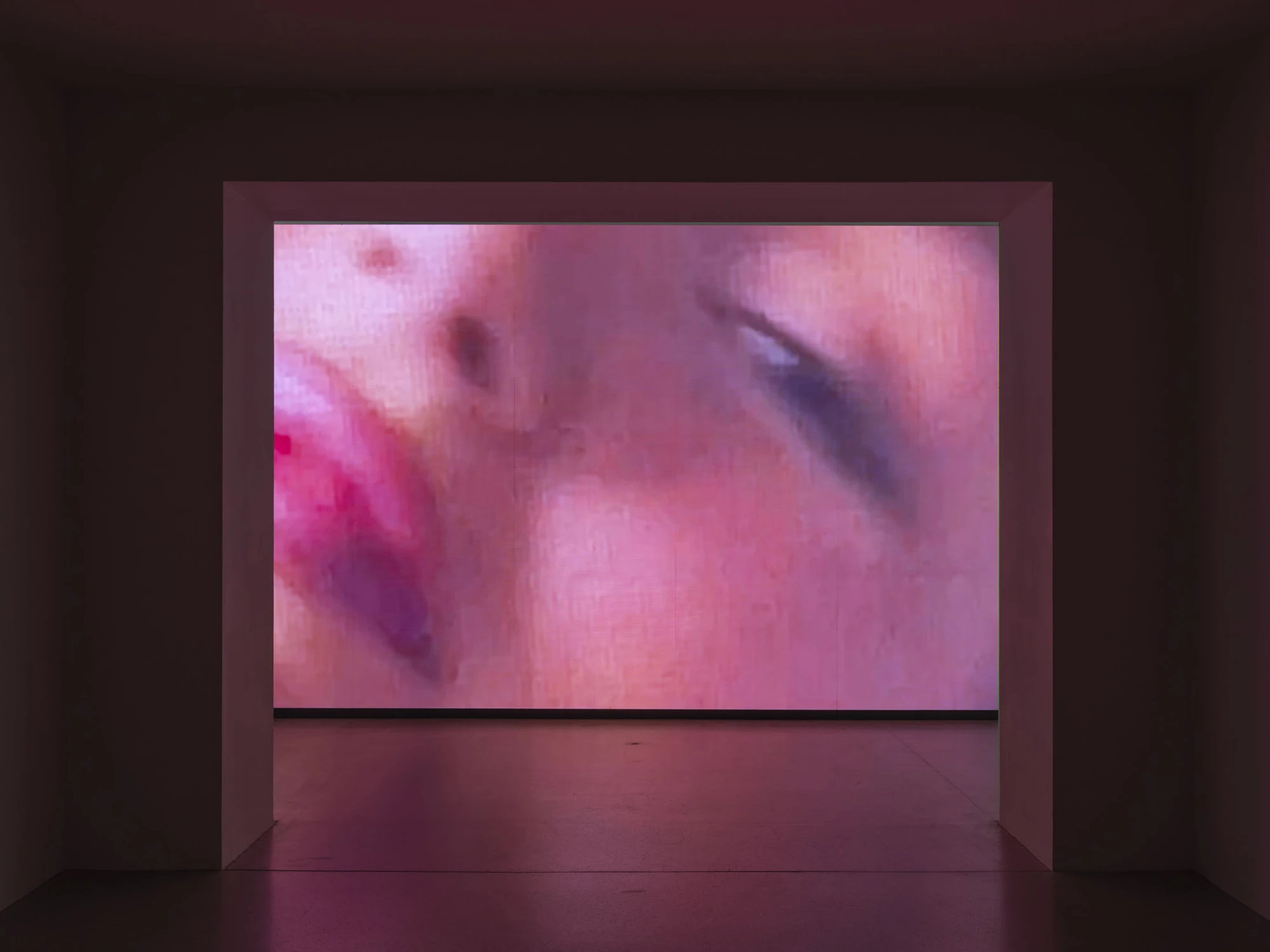
At the entrance stands Tide (2026), an LED wall the size of a partition. Echard shot advertising screens in Times Square on a smartphone and blew the footage up until the products dissolved. What survives is skin-pink, ultramarine, a lattice that could be lingerie or a screen door. The crossroads has been through this before: since the 1980s the porn cinemas and peep shows have given way to monumental LED loops. Stripped of merchandise, the work leaves only what the show calls the raw material of attention, its abstract texture, "rhythm, flow, cut".

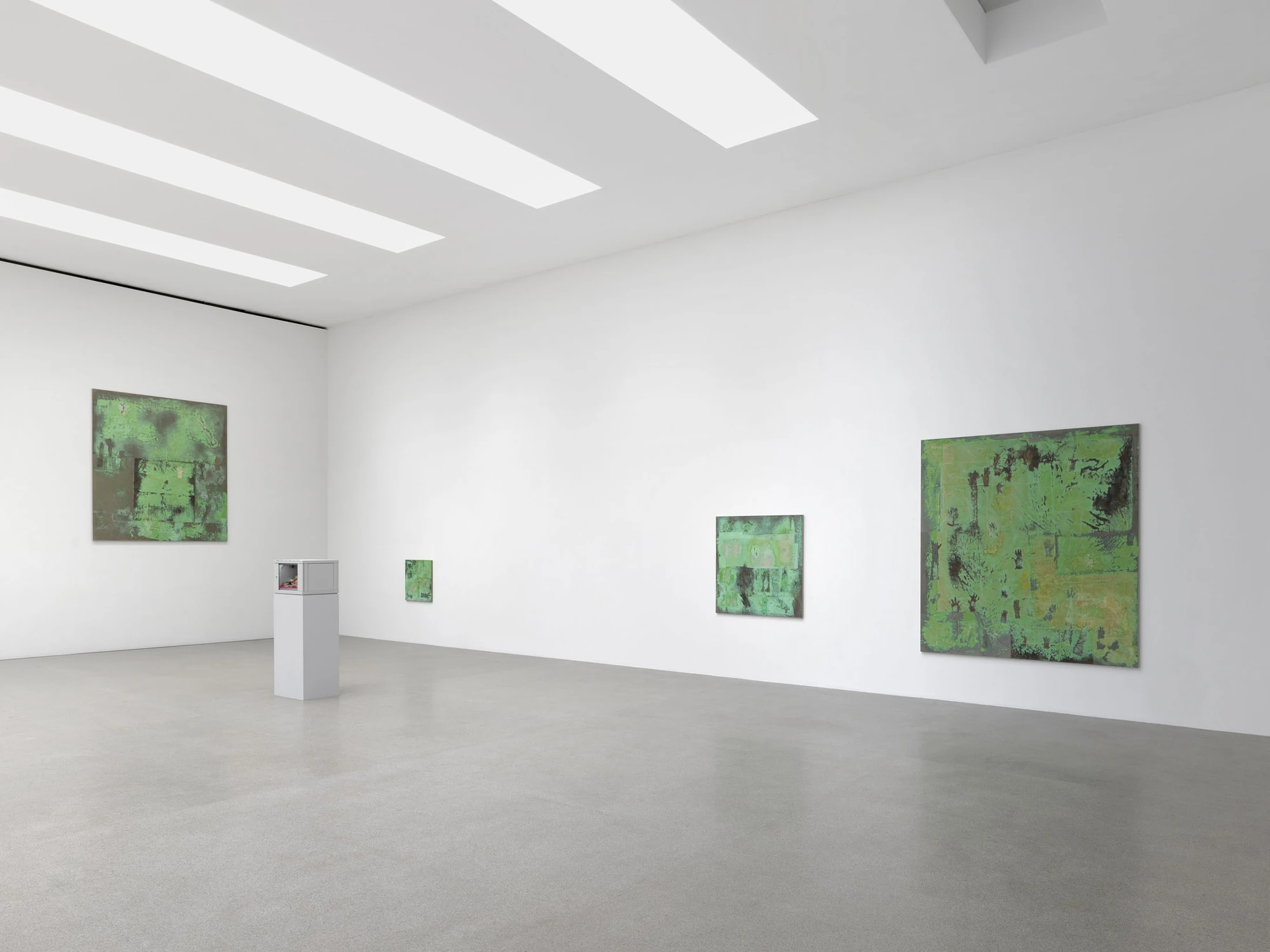
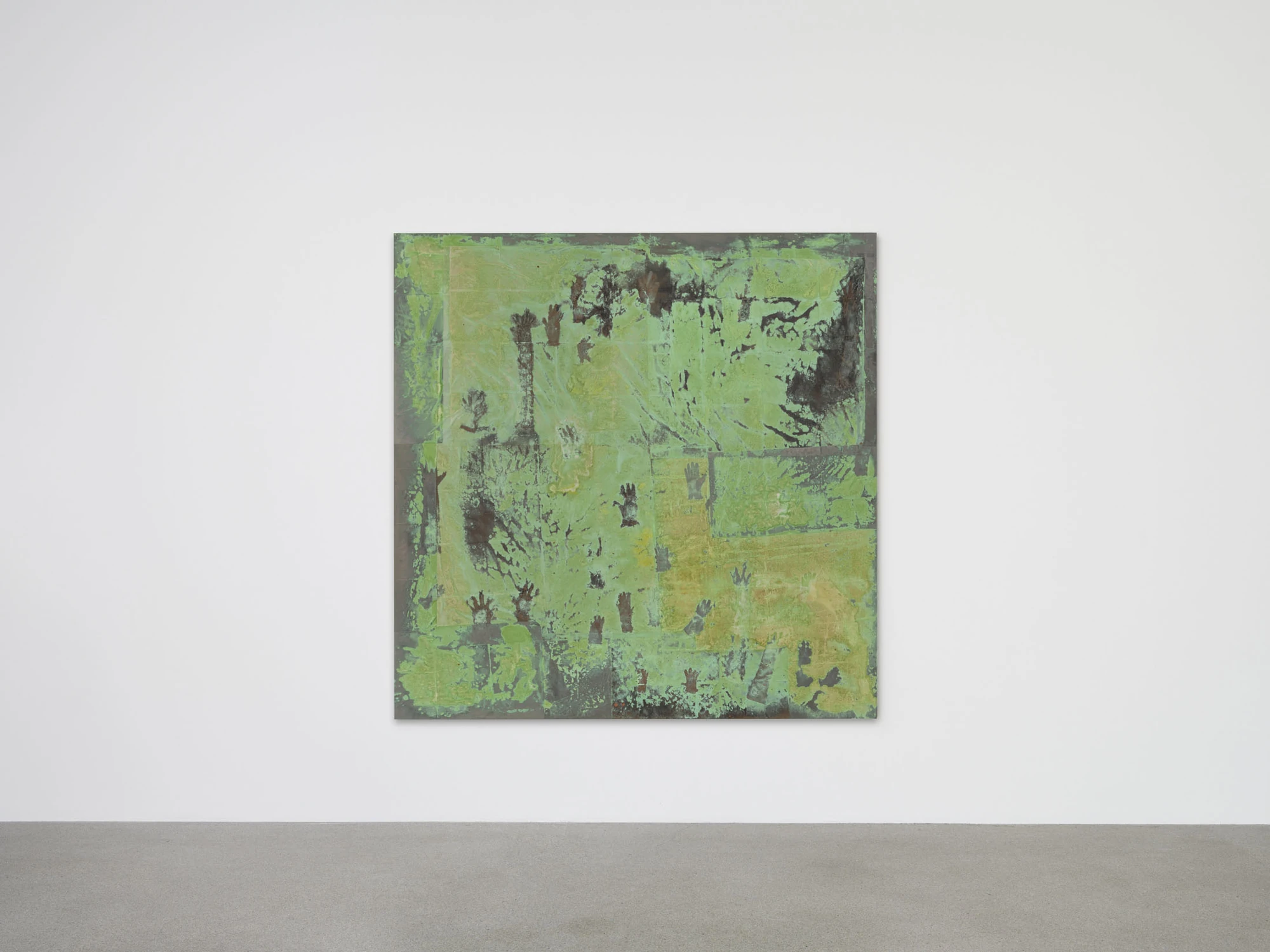
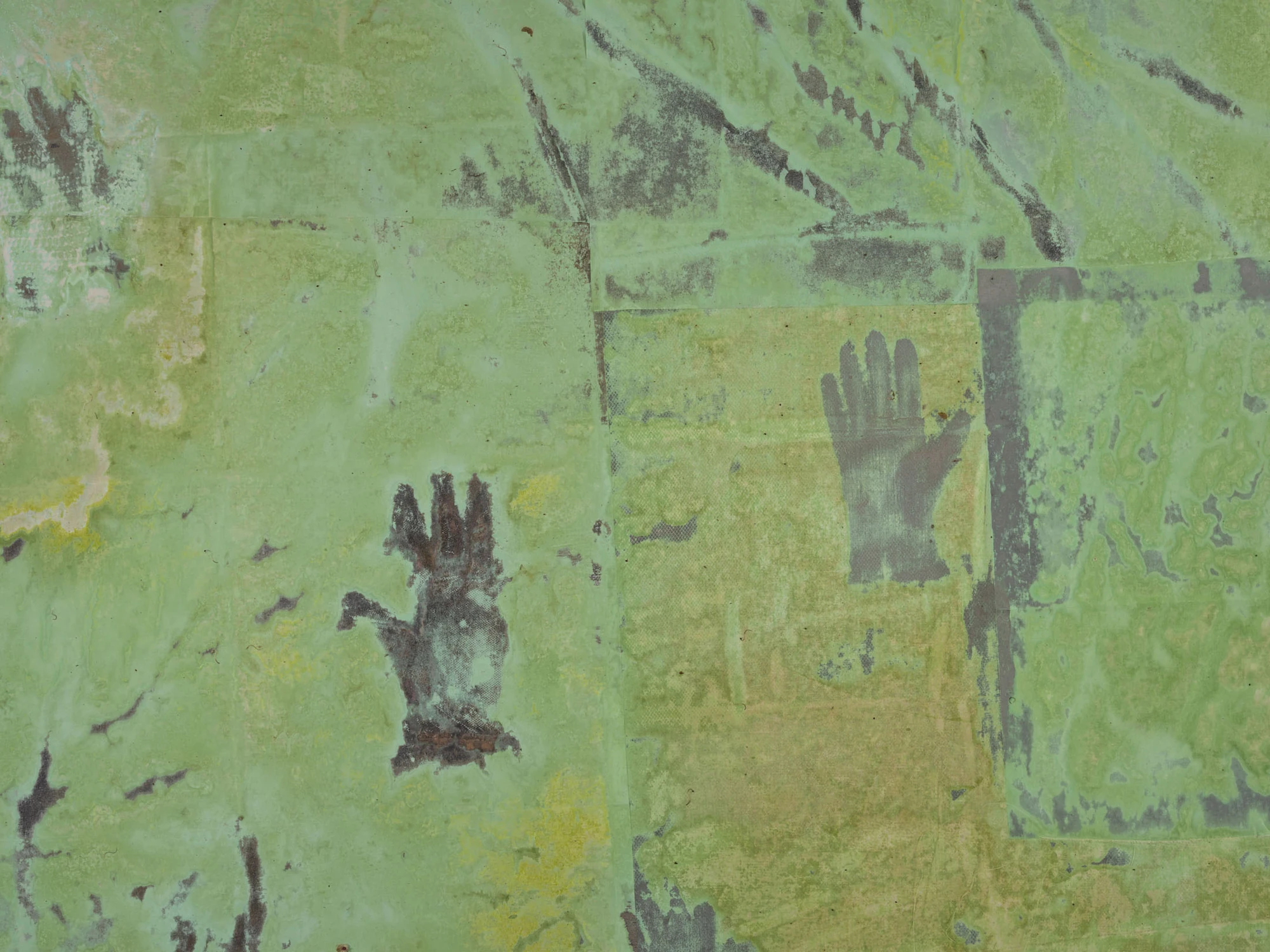
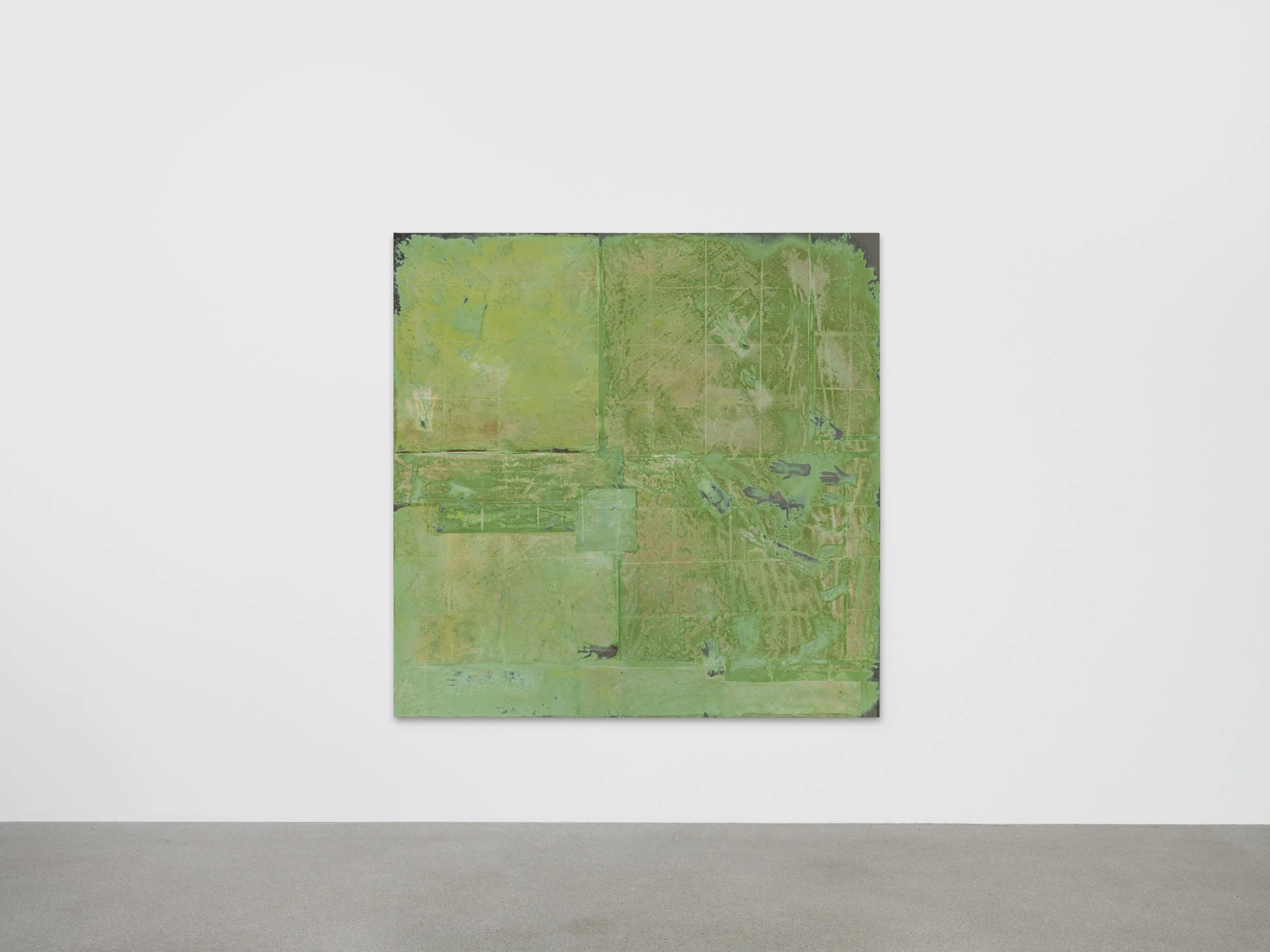
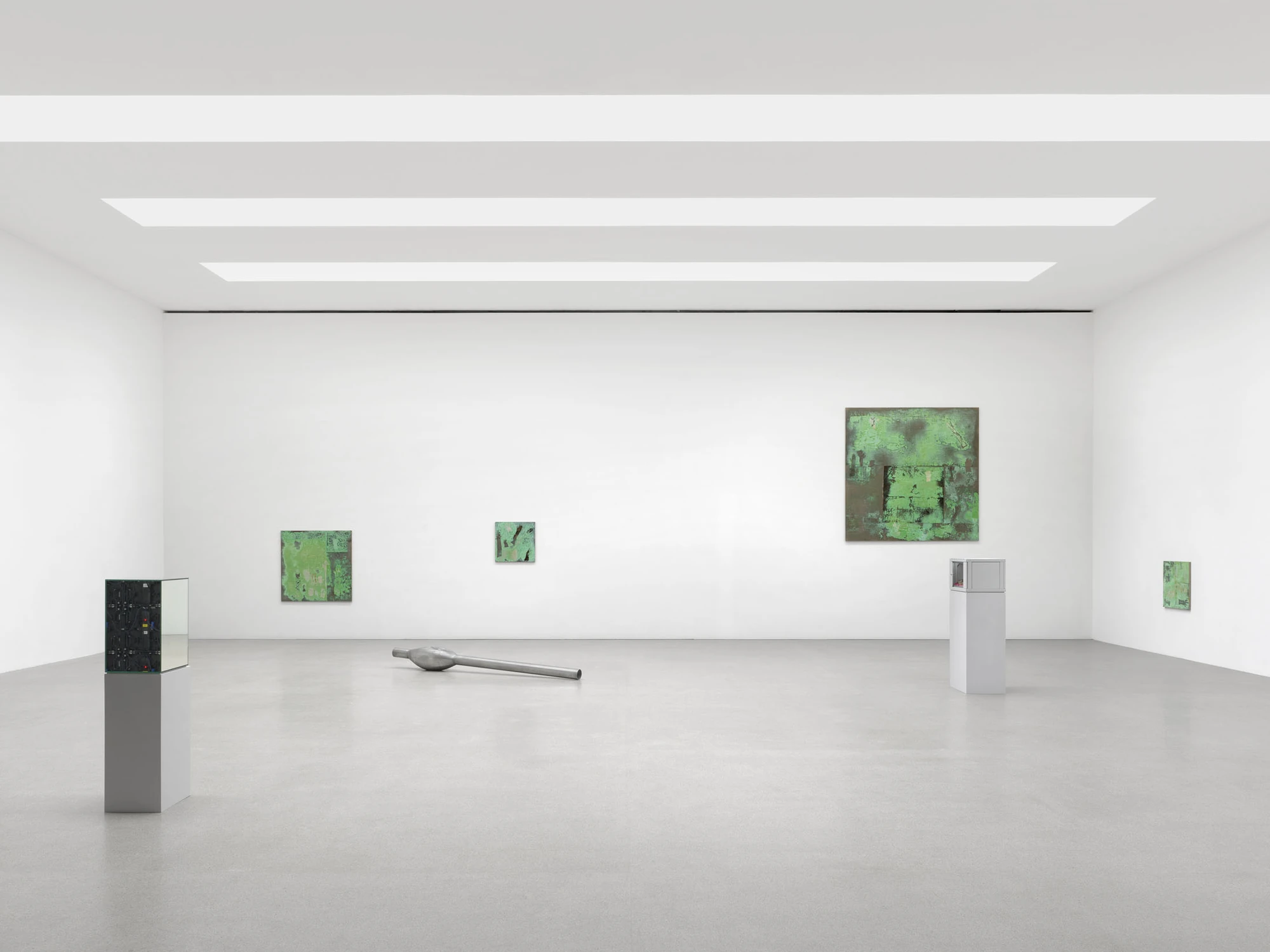
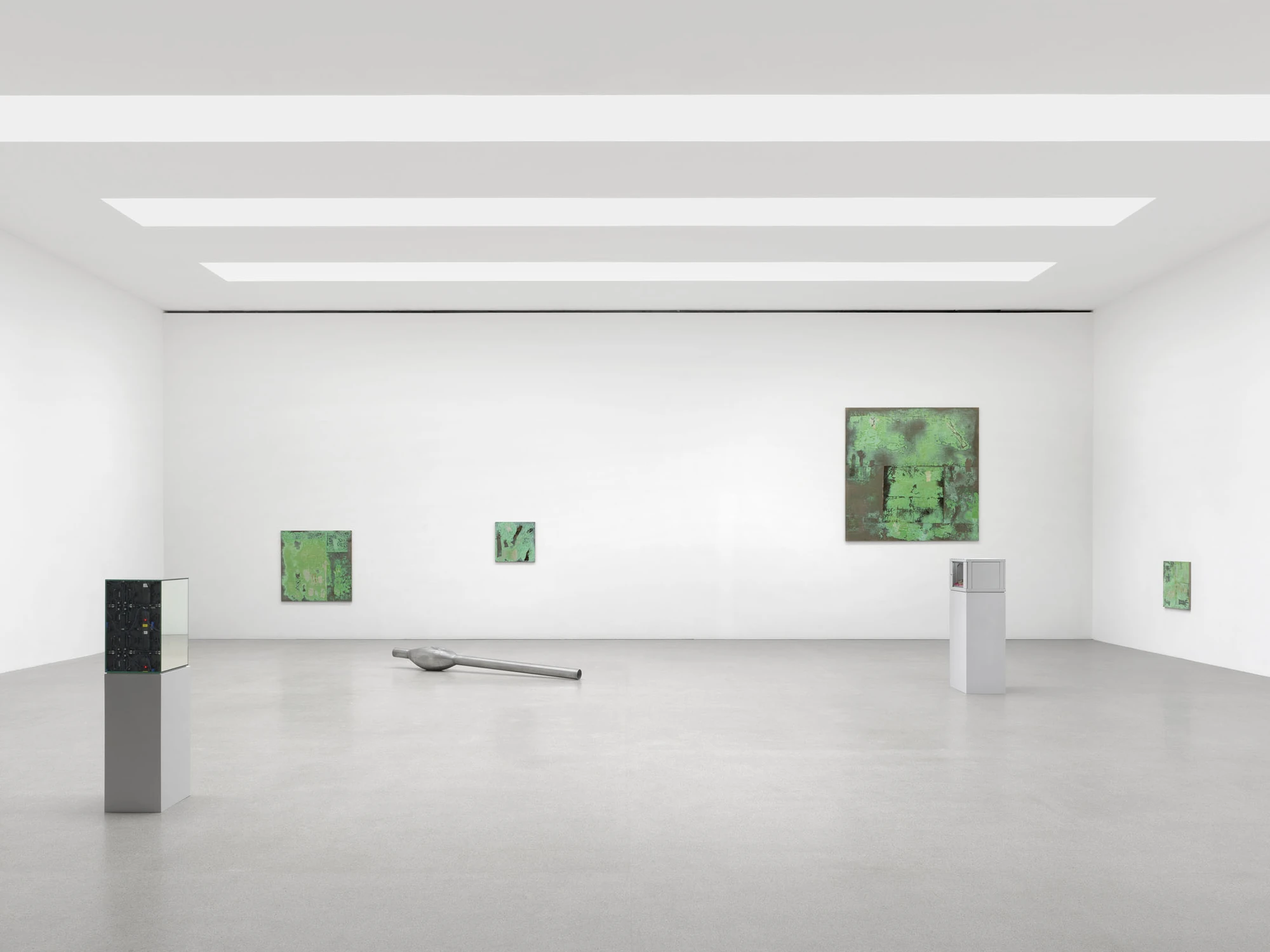
The tableaux of Withdrawals (2026) hang on the bright side of the building under strips of skylight, square and increasing in scale. They are patchworks of fabric engineered to block electromagnetic waves, sold against Wi-Fi, 5G and microwaves, left to oxidise into a yellow-green that runs from lime to verdigris. Negative handprints surface across them the way they do on cave walls, sometimes carrying the lace grain of the gloves Echard wore. Impenetrable material made porous. The ambiguity points back to the Paris arcades, whose fantasies, in Walter Benjamin's phrase, "modernise the universe".

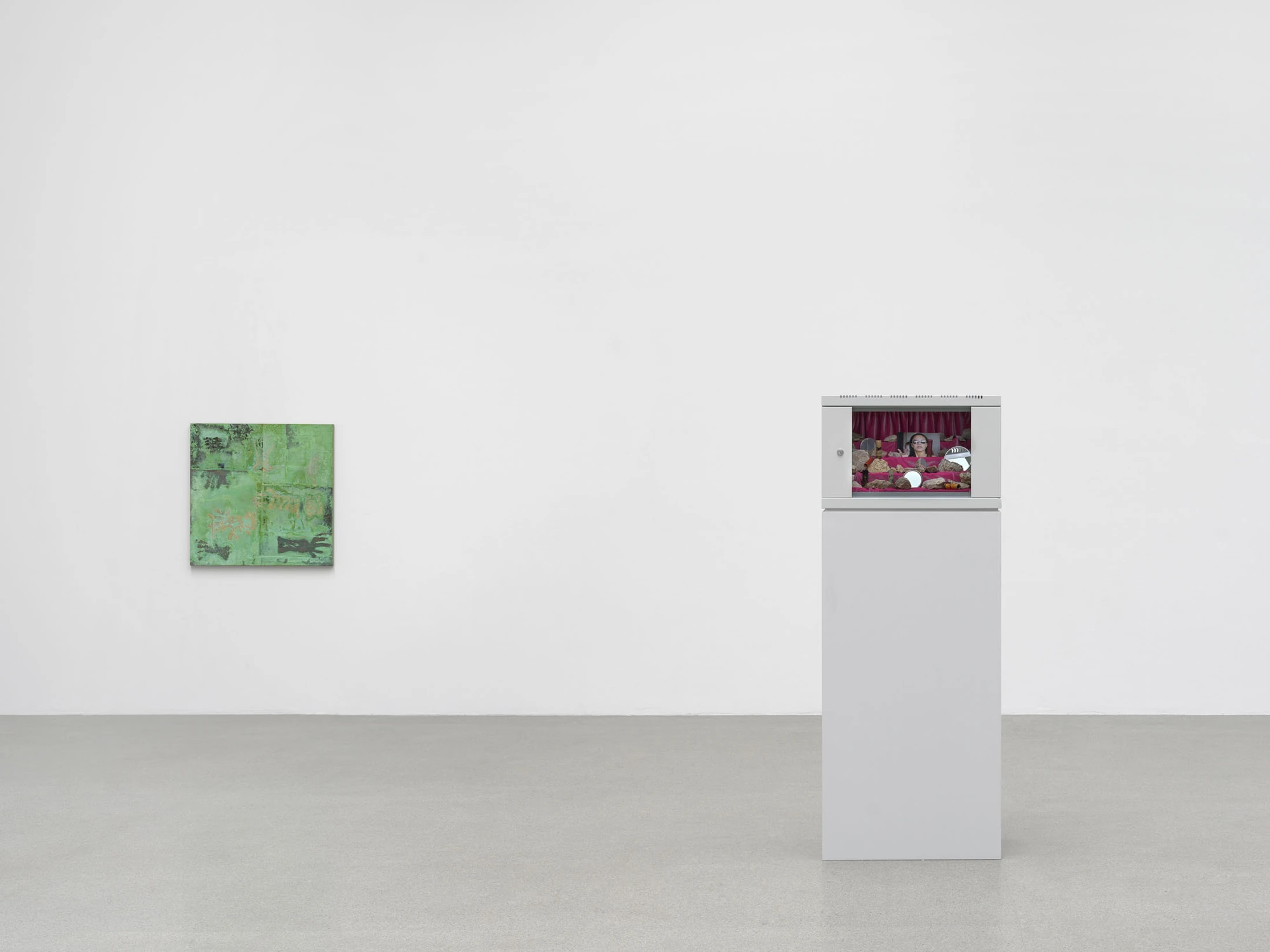
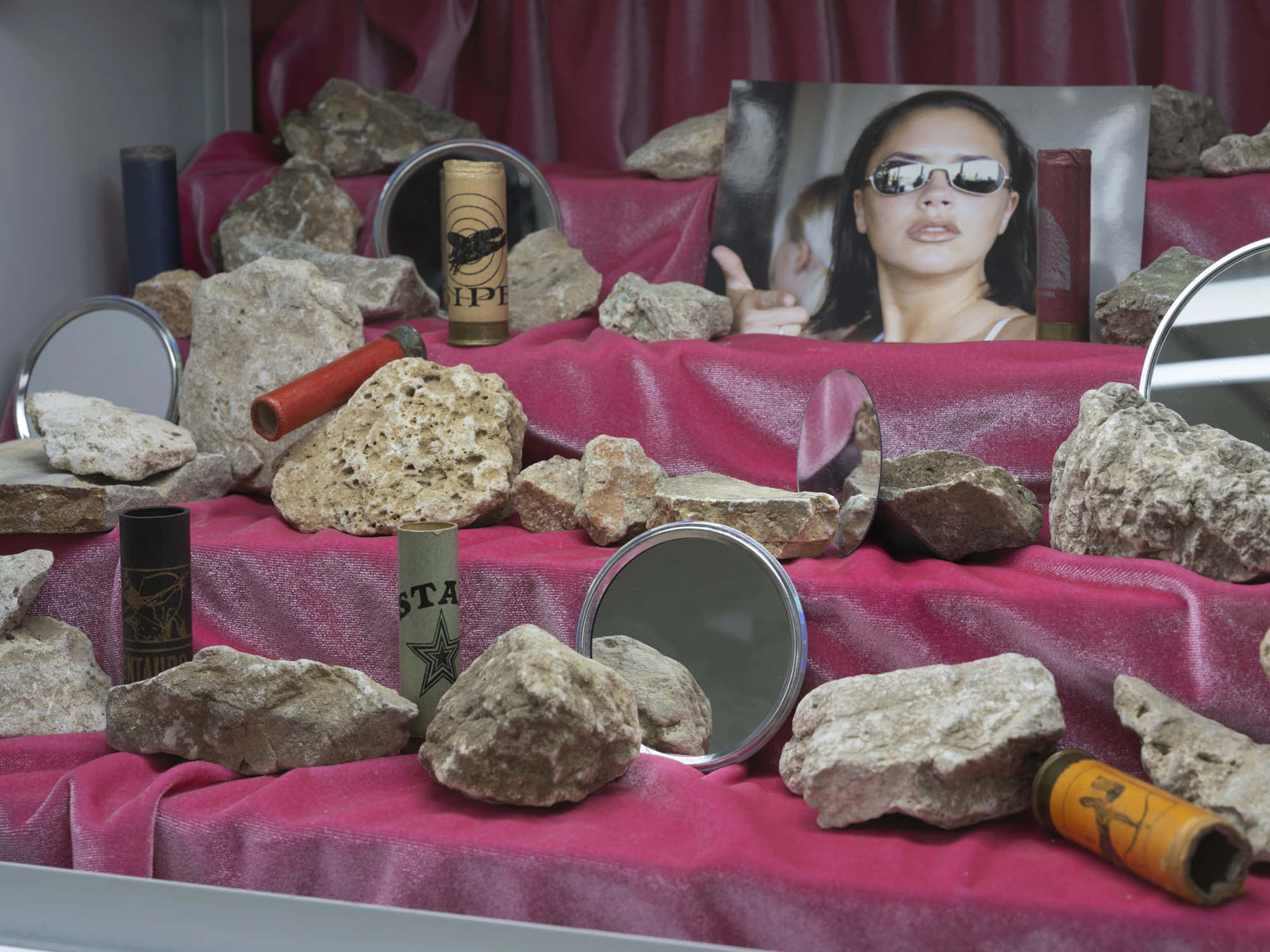
Three sculptures hold the floor. Diane (2026) is a server rack lined with magenta velvet, tiered like a stalls section and loaded with limestone pebbles, spent shotgun cartridges, round pocket mirrors and a photograph of a woman in mirrored sunglasses. Echard is rebuilding a cave she decorated at twelve from the same materials, and the result sits exactly between a screening room and a memorial altar. Bébé Marie (after Joseph Cornell) (2024) recasts the Surrealist's Victorian doll lost in a forest as a pop astronaut sheltered in a microwave, keeping the original unease intact.

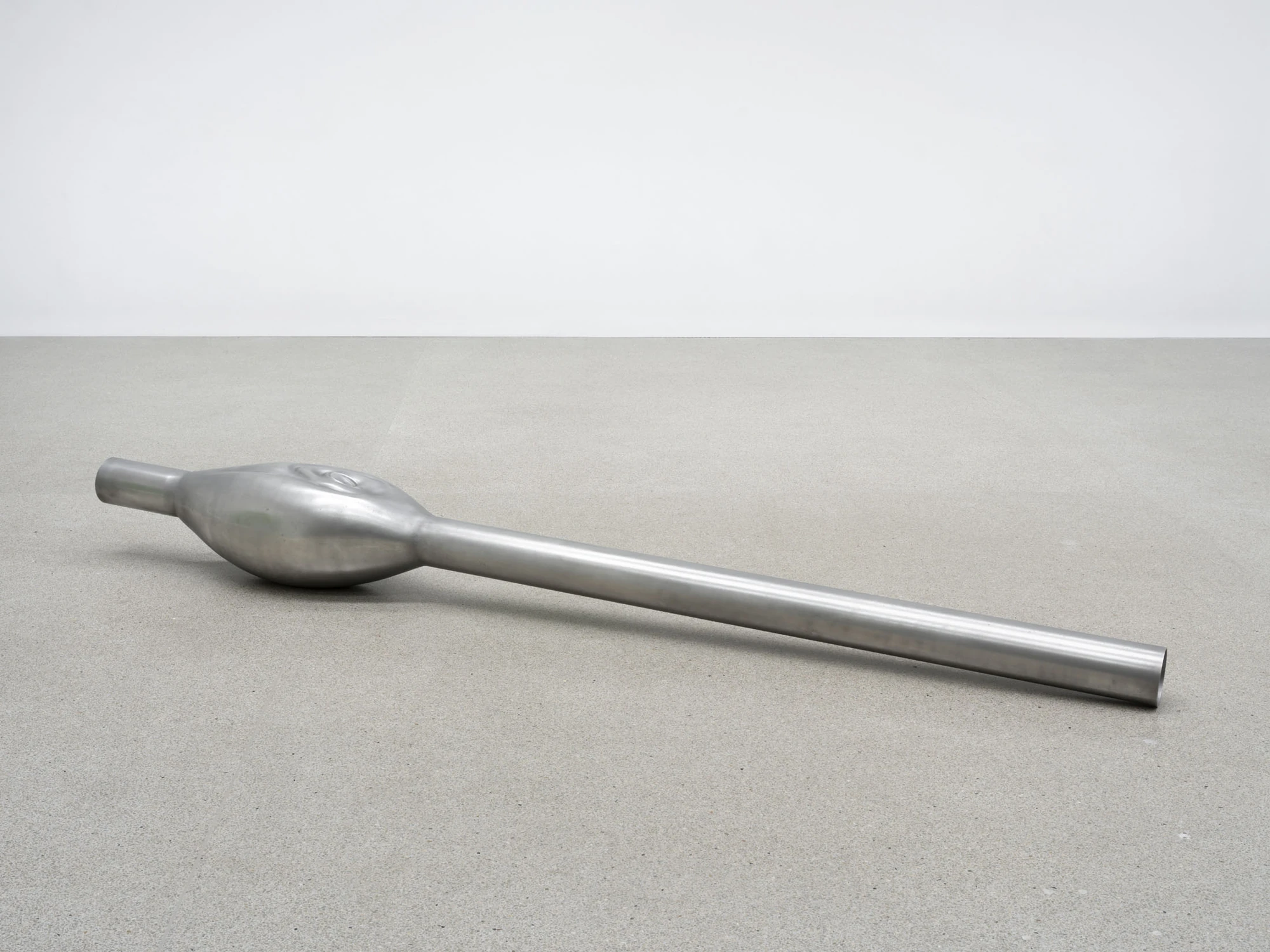
Matrix (2026) lies on the concrete like something dropped: a brushed steel straw enlarged from one bought in a New York sex shop, its bulb swollen into a form that reads as vulva, then eye, then face, then torso, depending on the angle of approach. A contemporary Venus, Echard's line drawn from consumer culture back to the sexes engraved on cave walls since time immemorial.

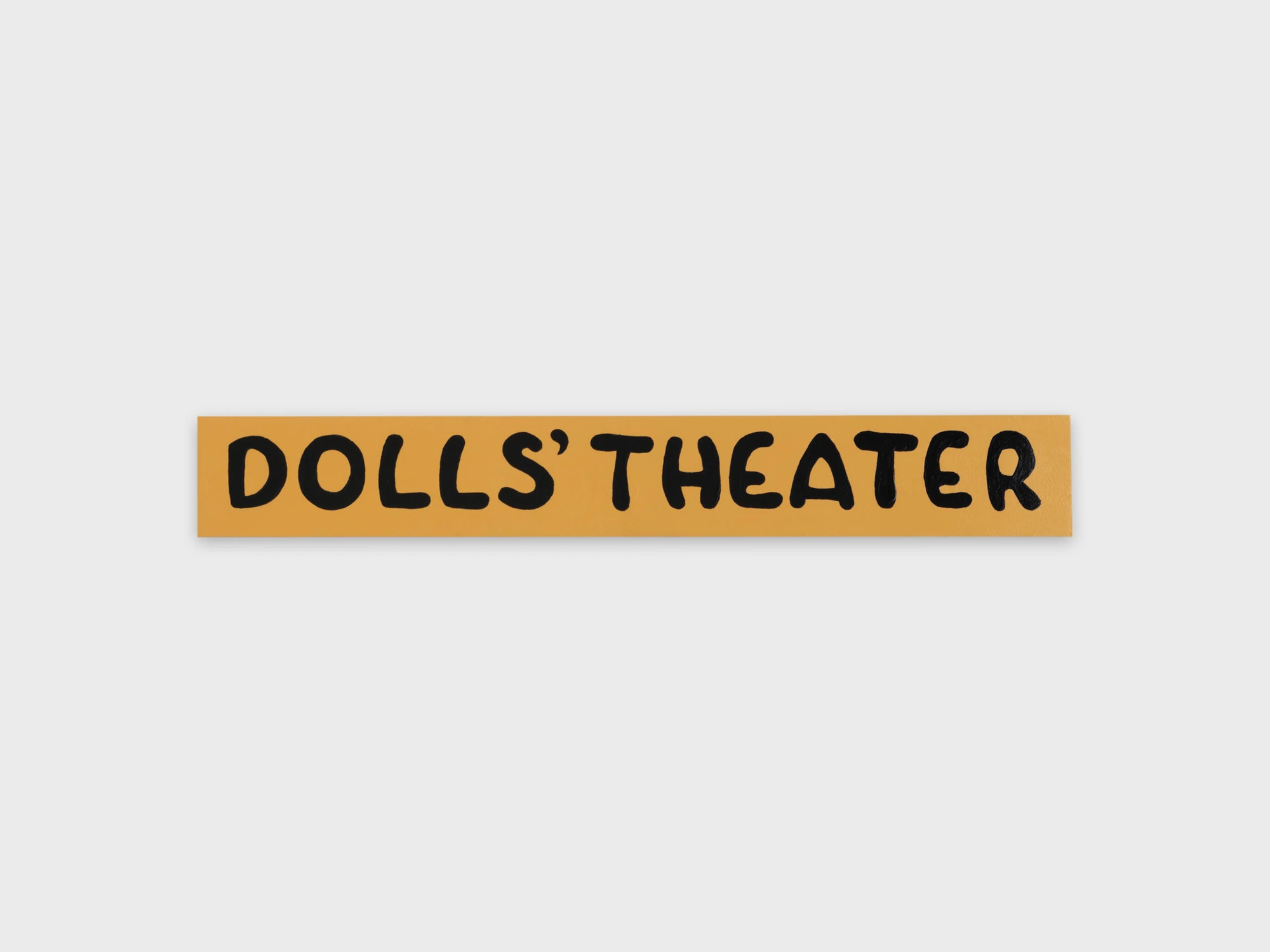
A hand-painted ochre sign spells out DOLLS' THEATER in wobbling black capitals, the only language in the room. Theatre, the show insists, is above all a place where one looks. What Echard puts there to be looked at is the shape of myths woven into contemporary reality: its rhythm, its void, its fetishes.
Interested in Showcasing Your Work?

If you would like to feature your works on Thisispaper, please visit our Submission page and sign up to Thisispaper+ to submit your work. Once your submission is approved, your work will be showcased to our global audience of 2 million art, architecture, and design professionals and enthusiasts.
No items found.
Less, with more behind it.
Explore guides. Search the archive. Walk the atlas.
Become a Thisispaper+ member today to unlock full access to our magazine, advanced tools, and support our work.
Get two months FREE
with annual subscription
Less, with more behind it.
Explore guides. Search the archive. Walk the atlas.
Become a Thisispaper+ member today to unlock full access to our magazine, advanced tools, and support our work.
Get two months FREE
with annual subscription
No items found.
Alexander Zaxarov
Aug 19, 2026

In the Salle Poma at Kunsthaus Biel / Centre d'art Bienne, Mimosa Echard rebuilds the white cube as a conceptual cave for Dolls' Theater, where Times Square screens meet prehistoric handprints.

Kunsthaus Biel / Centre d'art Bienne hands Mimosa Echard the Salle Poma, and she treats the white cube the way a child treats a hollow in a rock face. The French artist, born in 1986, fills it with mythologies that have no business sharing a room: prehistoric motifs, New York's Times Square, Diana the Roman goddess of the hunt, the Spice Girls. Paul Bernard and Selma Meuli assemble the result as an allegorical grotto, where perception and violence, pleasure and control run into one another. The title comes from a miniature stalactite formation in New Mexico.

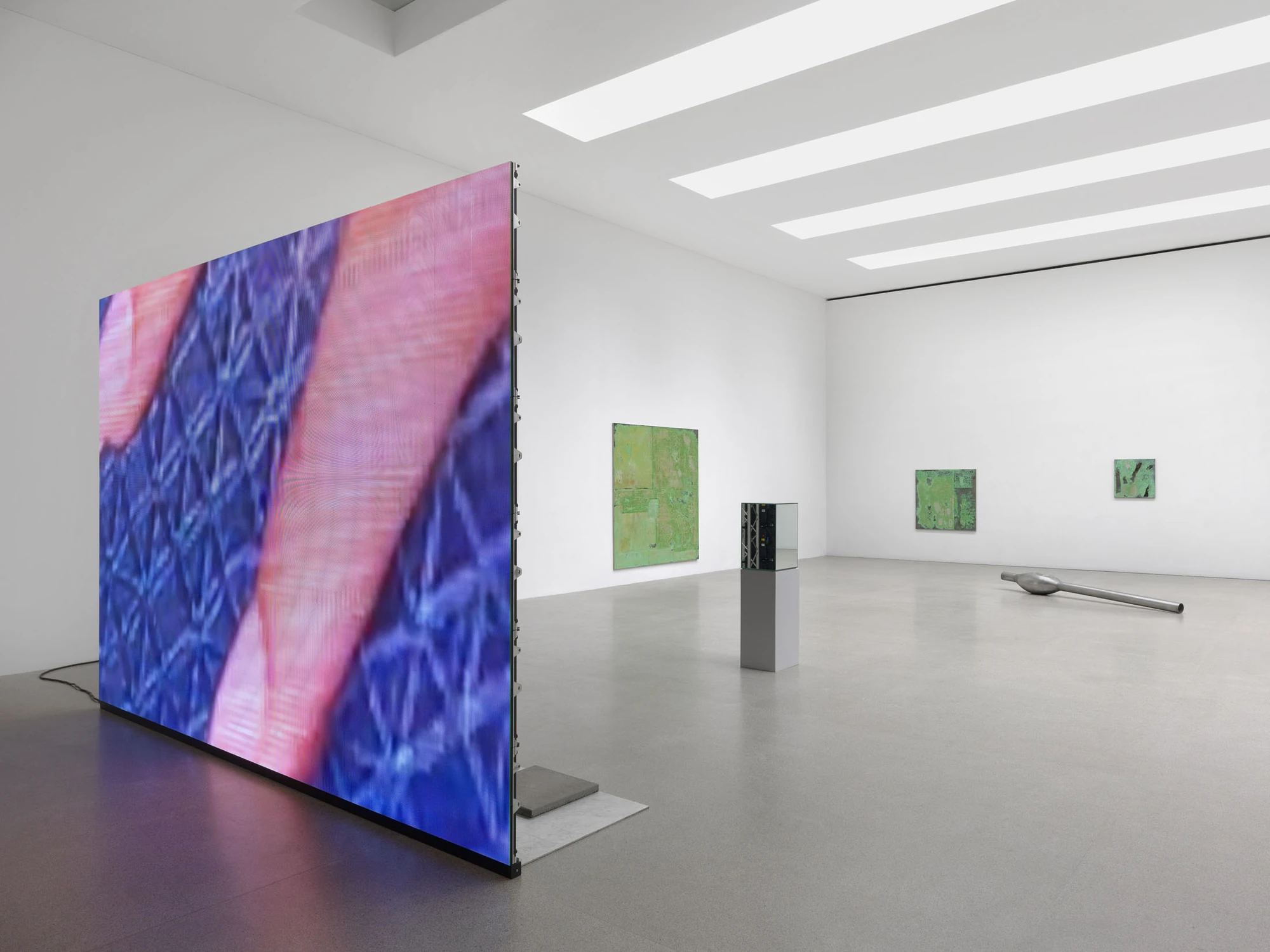
At the entrance stands Tide (2026), an LED wall the size of a partition. Echard shot advertising screens in Times Square on a smartphone and blew the footage up until the products dissolved. What survives is skin-pink, ultramarine, a lattice that could be lingerie or a screen door. The crossroads has been through this before: since the 1980s the porn cinemas and peep shows have given way to monumental LED loops. Stripped of merchandise, the work leaves only what the show calls the raw material of attention, its abstract texture, "rhythm, flow, cut".

The tableaux of Withdrawals (2026) hang on the bright side of the building under strips of skylight, square and increasing in scale. They are patchworks of fabric engineered to block electromagnetic waves, sold against Wi-Fi, 5G and microwaves, left to oxidise into a yellow-green that runs from lime to verdigris. Negative handprints surface across them the way they do on cave walls, sometimes carrying the lace grain of the gloves Echard wore. Impenetrable material made porous. The ambiguity points back to the Paris arcades, whose fantasies, in Walter Benjamin's phrase, "modernise the universe".

Three sculptures hold the floor. Diane (2026) is a server rack lined with magenta velvet, tiered like a stalls section and loaded with limestone pebbles, spent shotgun cartridges, round pocket mirrors and a photograph of a woman in mirrored sunglasses. Echard is rebuilding a cave she decorated at twelve from the same materials, and the result sits exactly between a screening room and a memorial altar. Bébé Marie (after Joseph Cornell) (2024) recasts the Surrealist's Victorian doll lost in a forest as a pop astronaut sheltered in a microwave, keeping the original unease intact.

Matrix (2026) lies on the concrete like something dropped: a brushed steel straw enlarged from one bought in a New York sex shop, its bulb swollen into a form that reads as vulva, then eye, then face, then torso, depending on the angle of approach. A contemporary Venus, Echard's line drawn from consumer culture back to the sexes engraved on cave walls since time immemorial.

A hand-painted ochre sign spells out DOLLS' THEATER in wobbling black capitals, the only language in the room. Theatre, the show insists, is above all a place where one looks. What Echard puts there to be looked at is the shape of myths woven into contemporary reality: its rhythm, its void, its fetishes.
Interested in Showcasing Your Work?

If you would like to feature your works on Thisispaper, please visit our Submission page and subscribe to Thisispaper+. Once your submission is approved, your work will be showcased to our global audience of 2 million art, architecture, and design professionals and enthusiasts.
No items found.

Join Thisispaper+
Unlock access to 2500 stories, curated guides + editions, and share your work with a global network of architects, artists and designers who are shaping the future.
Get two months FREE
with annual subscription
Travel Guides
Immerse yourself in timeless destinations, hidden gems, and creative spaces—curated by humans, not algorithms.
Explore All Guides +
Submission Module
Submit your project and gain the chance to showcase your work to our worldwide audience of over 2M architects, designers, artists, and curious minds.
Learn More+
Curated Editions
Dive deeper into carefully curated editions, designed to feed your curiosity and foster exploration.
Off-the-Grid
Jutaku
Sacral Journey
minimum
The New Chair
Explore All Editions +
Atlas
A new and interactive way to explore the most inspiring places around the world.
Interactive map
Linked to articles
450+ curated locations
Google + Apple directions
Smart filters
Subscribe to Explore+
Become a Thisispaper+ member today to unlock full access to our magazine, submit your project and support our work.
Join Thisispaper+Join Thisispaper+
€9/month
Get two months FREE
with annual subscription