Lupita Alvalade by XXXI.studio in Lisbon operates as theatre as much as restaurant—a space where pizza becomes performance and the city itself becomes dining room.
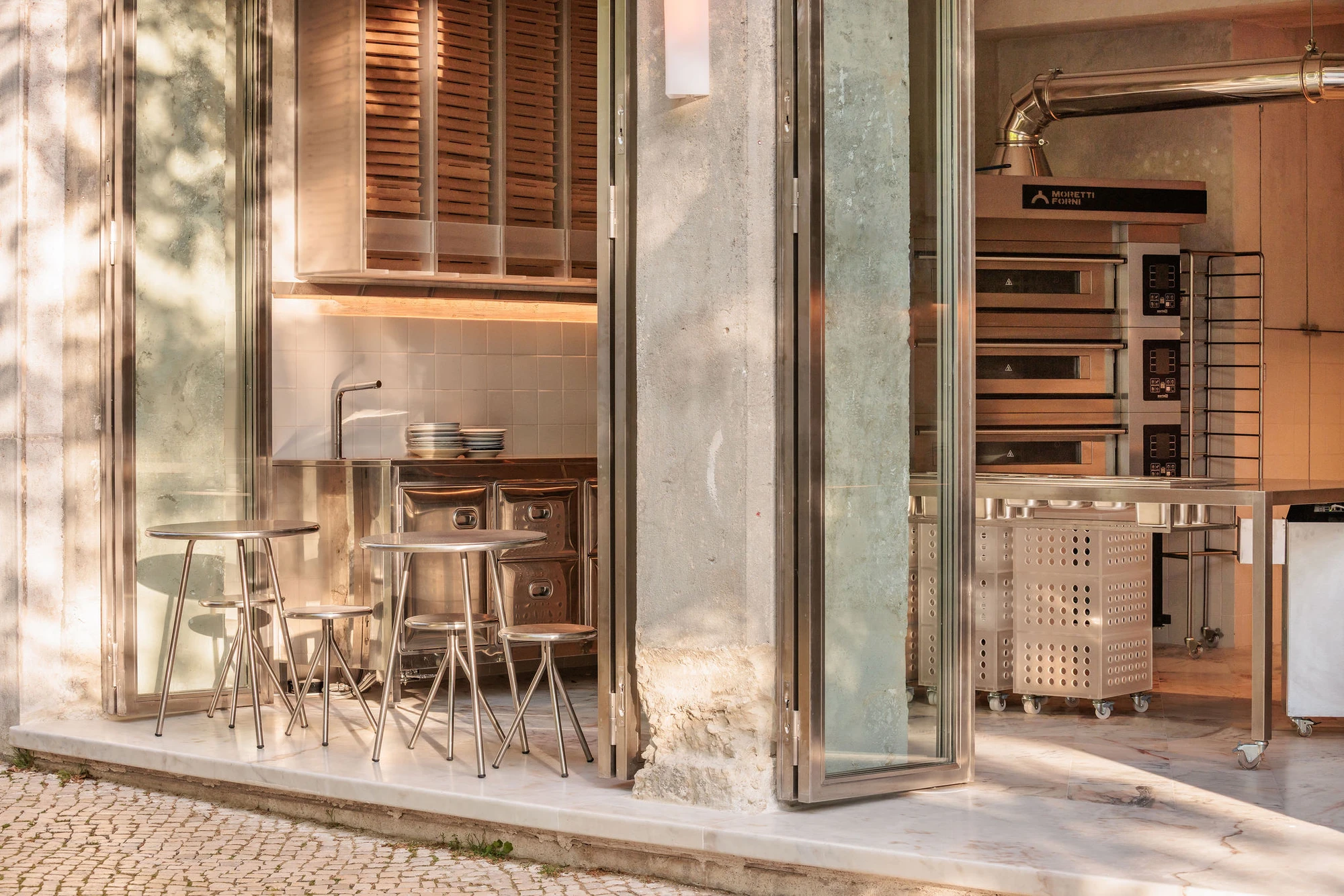
Walk down the Avenida da Igreja in Lisbon's Alvalade neighborhood and you'll notice something missing: a façade. Where other storefronts present closed faces to the street—signs, windows, doors—Lupita offers only absence. The entire front wall has been removed, replaced by a single rolling shutter that, when raised, erases the boundary between inside and out entirely.
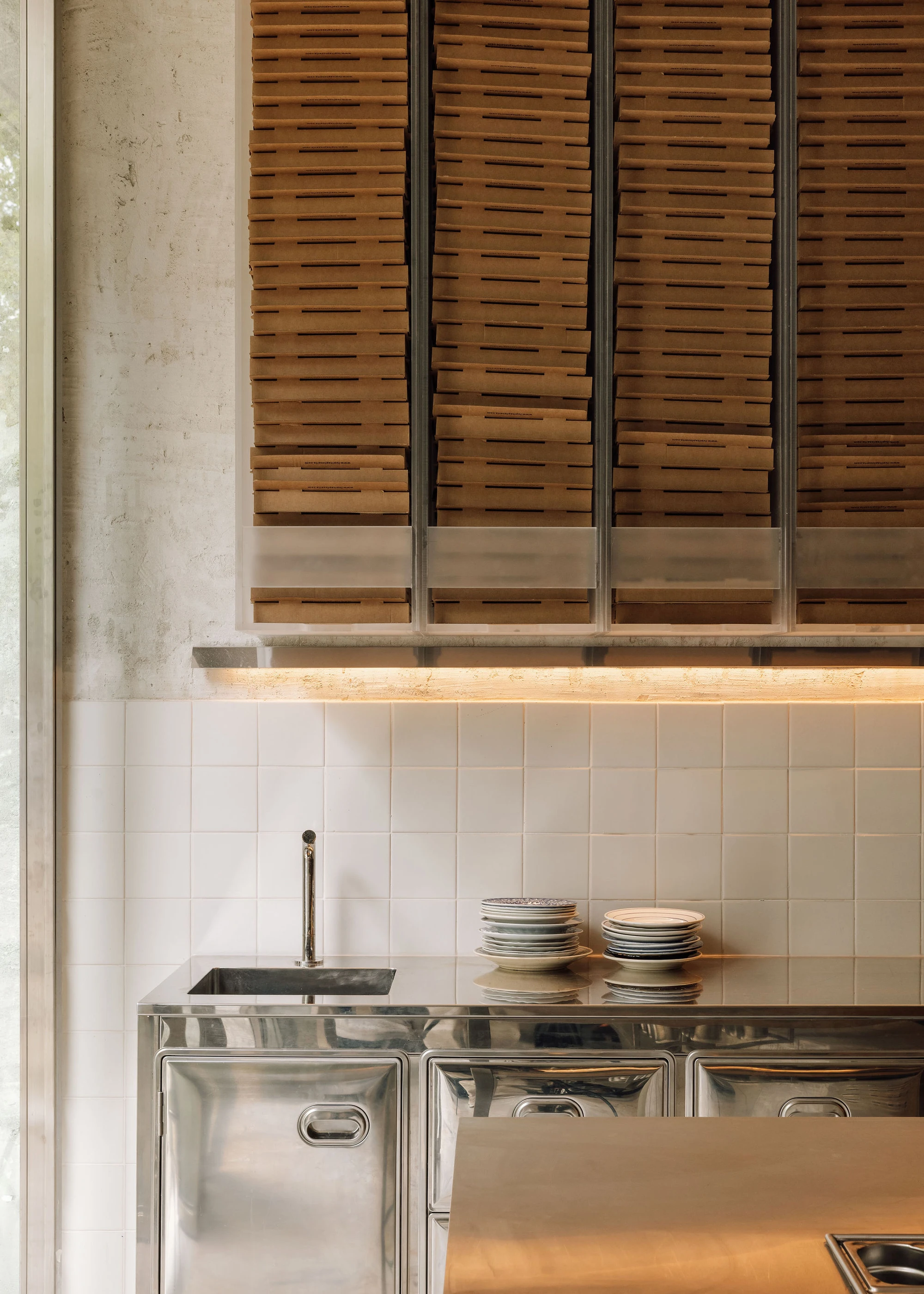
This is not minimalism as style but minimalism as strategy. XXXI.studio, the Lisbon practice led by Carlos Aragão, designed the space around a single principle: the pizza is the show, and everyone should have a ticket. Stainless steel counters position the dough-stretching, topping, and oven work directly in the sightline of anyone passing by. The few tables and stools spill onto the sidewalk, turning the curb into a front-row seat.
Inside, the material palette reinforces this atmosphere of productive honesty. Rosa Portuguese marble floors, veined with apricot and cream, ground the industrial severity of brushed steel and exposed concrete. Chrome ventilation ducts snake across the ceiling like the circulatory system of some benevolent machine. Wooden shutters, almost Moorish in their rhythm, filter afternoon light onto the tiled walls.
The genius of the design lies in what it refuses to hide. Most restaurants invest enormous energy in maintaining the illusion that food simply appears—whisked from some invisible backstage into the spotlight of the table. Lupita inverts this logic. The flour dust, the controlled chaos of a busy service, the hypnotic rotation of dough—these become the décor. You don't eat at Lupita so much as you eat with it, your meal assembled in full view from ingredients you watched arrive.
XXXI.studio's intervention also carries an implicit argument about urban life. By refusing a traditional shopfront, Lupita treats the street not as something to be separated from but as an extension of the dining room. The boundary between public and private, between watching and participating, dissolves like mozzarella under heat. Alvalade gains not just a pizzeria but a new kind of gathering point—a place where the act of making food becomes a shared civic experience.