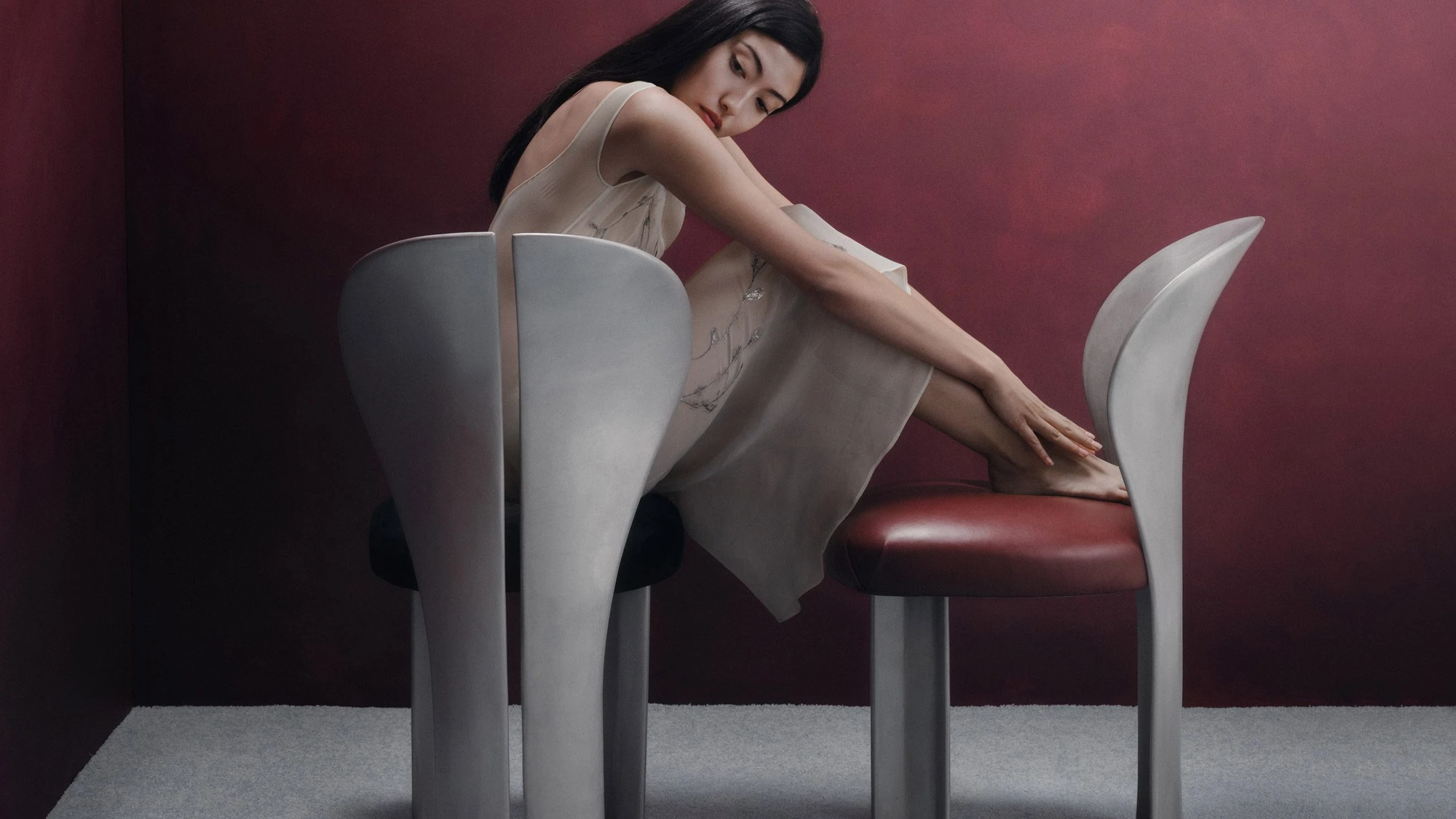
In Los Angeles, Colombian designer Nicolás Riaño Guerrero of Studio NRG casts the Lilium chair from aluminium salvaged from car rims, a limited-edition seat shaped like a flower petal to make metal read as warm.
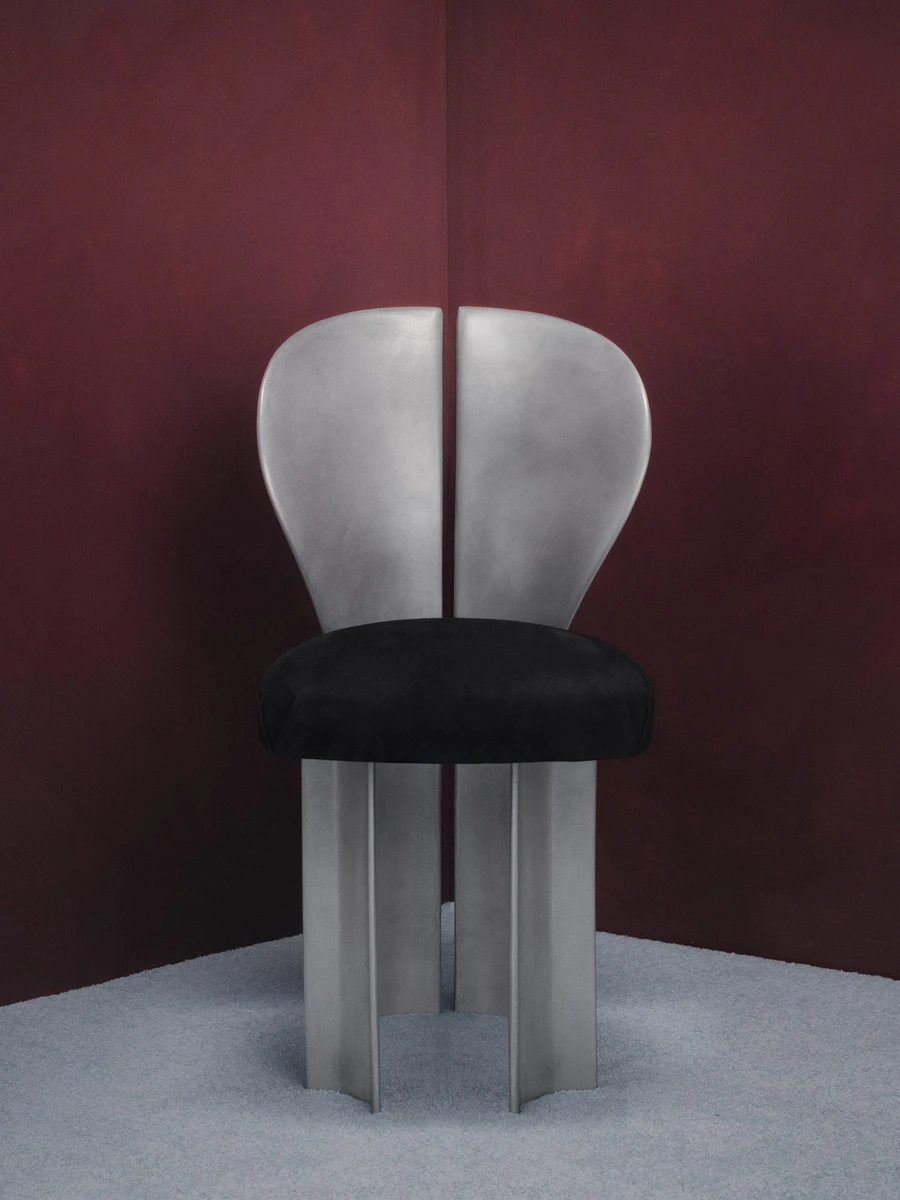
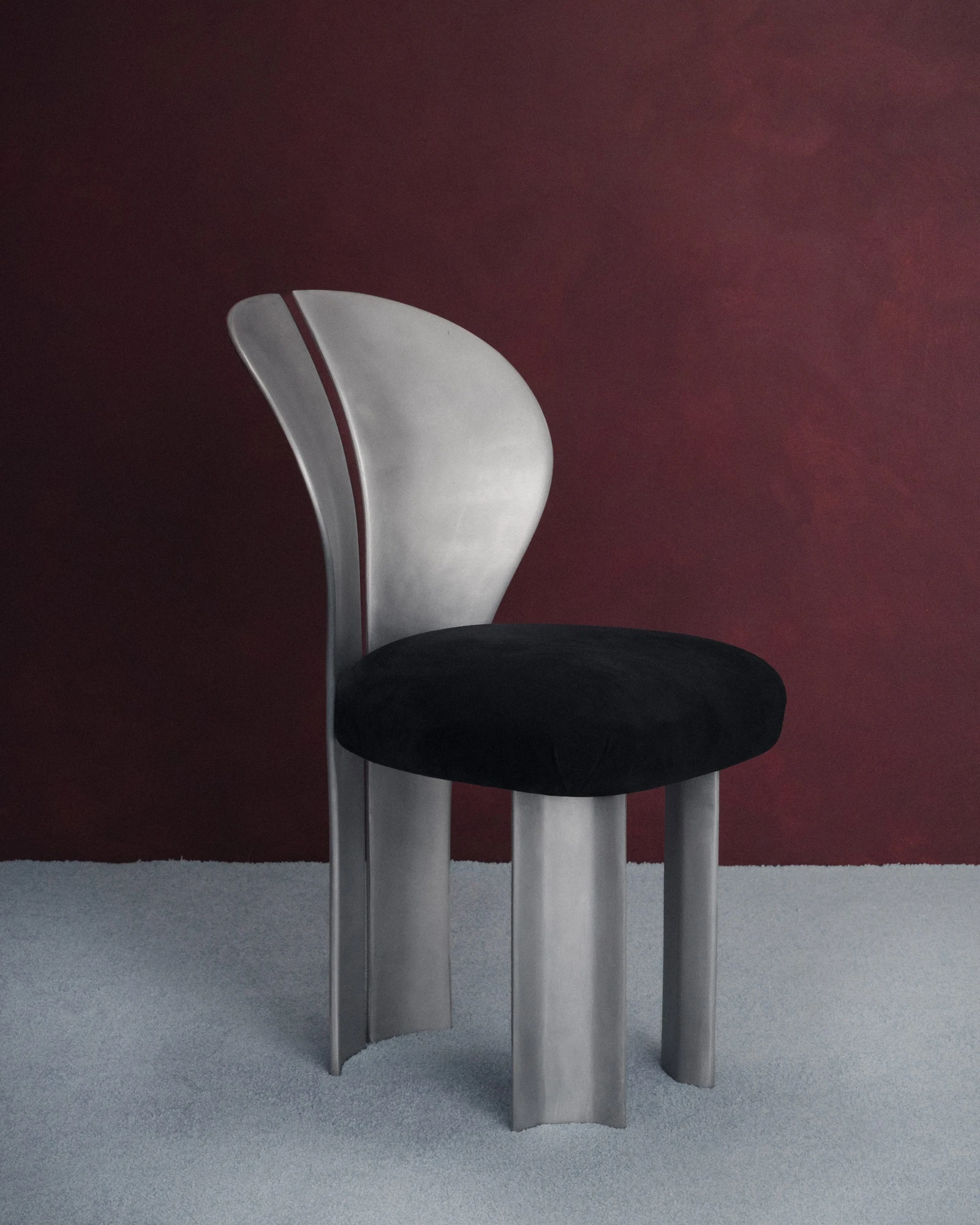
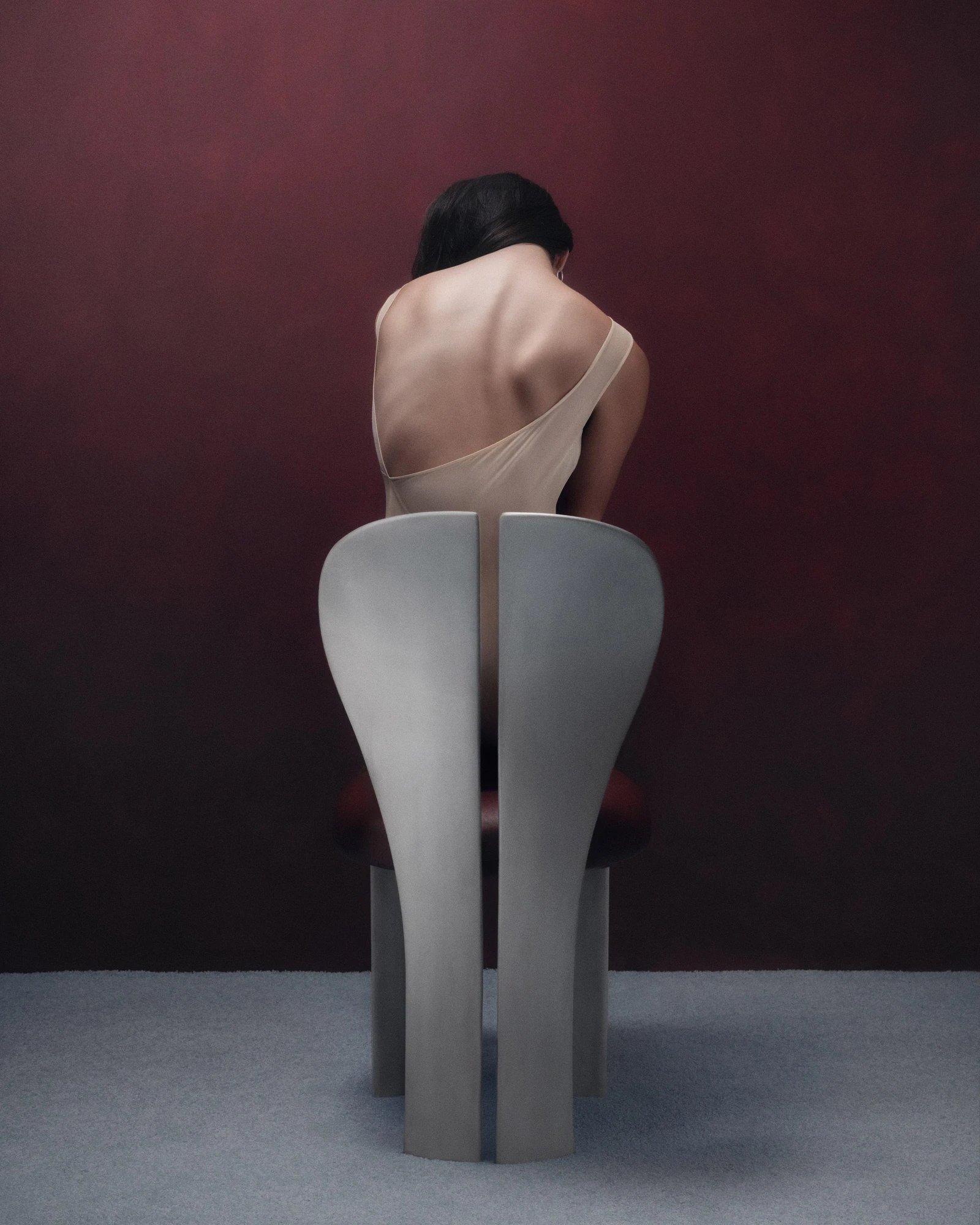
Aluminium rarely gets to be gentle. It arrives sharpened, extruded, aggressive, the language of engine bays and industrial edges. The Lilium chair sets out to reverse that grammar. Its backrest opens into two petal-shaped panels, split by a narrow seam down the center and brushed to a soft satin grey, a form Guerrero derived from studying the curvature of flowers rather than the geometry of machines.
The material has a history before it becomes furniture. Each chair is cast from recycled high-grade aluminium salvaged from car rims, diverted from landfill, melted down, and poured into shape at the South Gate foundry in Los Angeles. "It feels exciting to take this material out of the industrial loop and give it new identity within furniture, essentially reconceptualising its use," Guerrero says. What was once a wheel becomes a seat, the same metal carrying an opposite intention.
The making sits between two eras of craft. Traditional forming processes handle the sweep and volume of the backrest, while digital fabrication resolves the tolerances, and the two methods meet in a piece that looks poured yet precise. "Metal is almost always treated with a sharp, aggressive form and I wanted to see if by combining traditional forming processes with more modern digital fabrication, I could achieve the opposite," Guerrero says. "It started as a question of how I could make metal inviting and even comfortable."
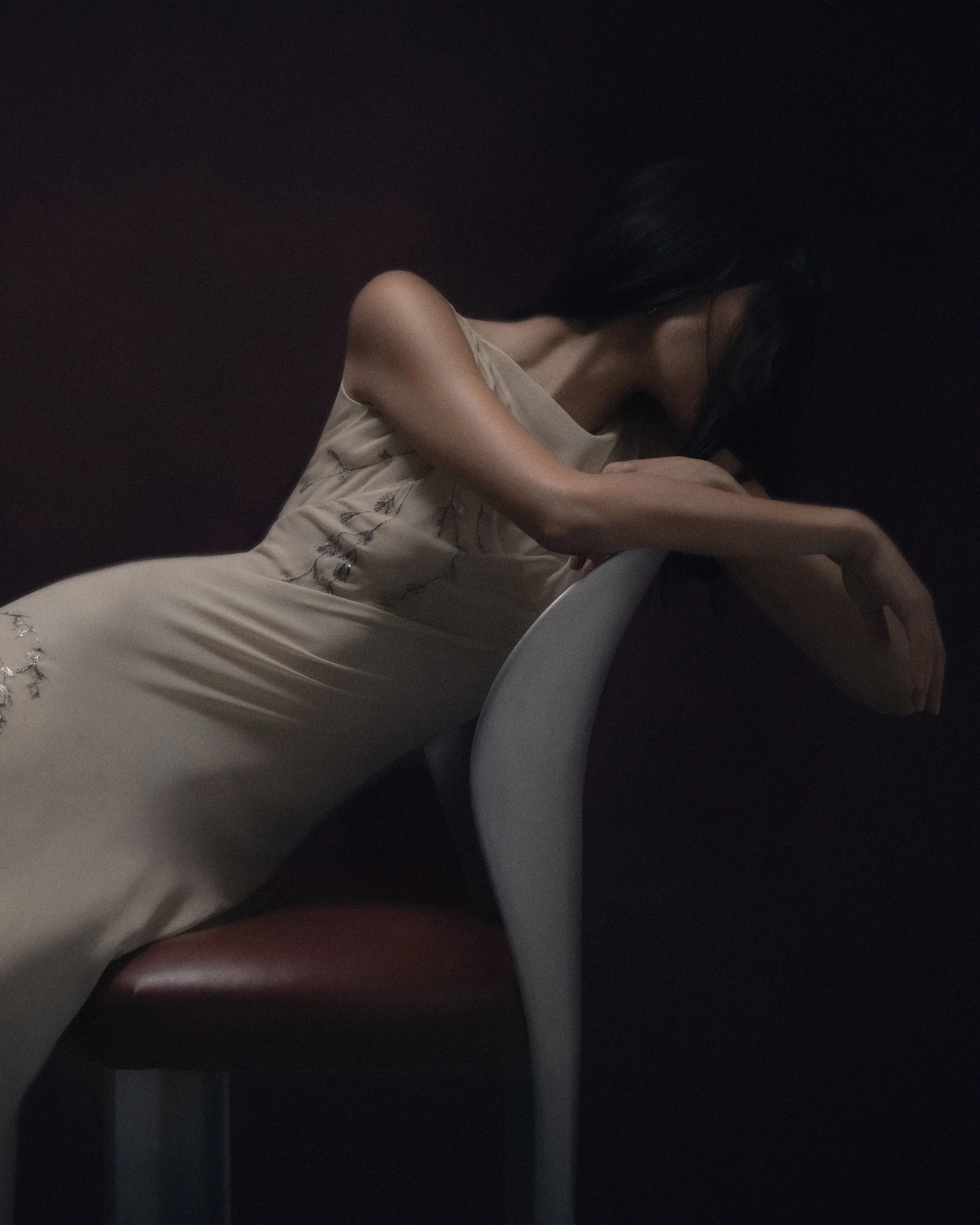
Comfort is engineered, not implied. Guerrero measured sitting positions and studied petal geometry to fix the backrest dimensions, tuning the curve so it supports a slight recline rather than forcing an upright pose. The legs read as the same idea in section, fluted and concave where they meet the floor, a scalloped column that lifts the volume off the ground and keeps it from looking heavy.
The seat itself refuses the coldness the frame could have carried. A rounded cushion, upholstered in black suede or oxblood leather, drops the temperature of the metal and gives the body something soft to land on. Set against a deep maroon backdrop, the chair holds its own as sculpture, yet everything about it points back toward use, toward the plain proposition that one of the most industrial materials in the world can be asked to hold a person kindly.