Thisispaper Community
Join today.
Enter your email address to receive the latest news on emerging art, design, lifestyle and tech from Thisispaper, delivered straight to your inbox.
Oops! Something went wrong while submitting the form.
Instant access to new channels
The top stories curated daily
Weekly roundups of what's important
Original features and deep dives
Exclusive community features
Hitoshi Arato
Apr 26, 2026

Across Bangladesh's Padma floodplains and the coal pits of Jaintiapur, Sarker Protick photographs Leen, Jirno, Awngar, and Mr. & Mrs., four series built on the discipline of listening.

Sarker Protick came to photography through music. Growing up in Dhaka in the 1990s, he remembers his mother's singing and his father's record collection: the Doors, Leonard Cohen, the Beatles. His father was not a musician but, as Protick puts it, a very good listener. The phrase has become a working method. He enrolled at the Pathshala South Asian Media Institute in 2009, surrounded by photojournalists, but it was Robert Adams and William Eggleston, another photographer-musician, who told him what else photography could be.

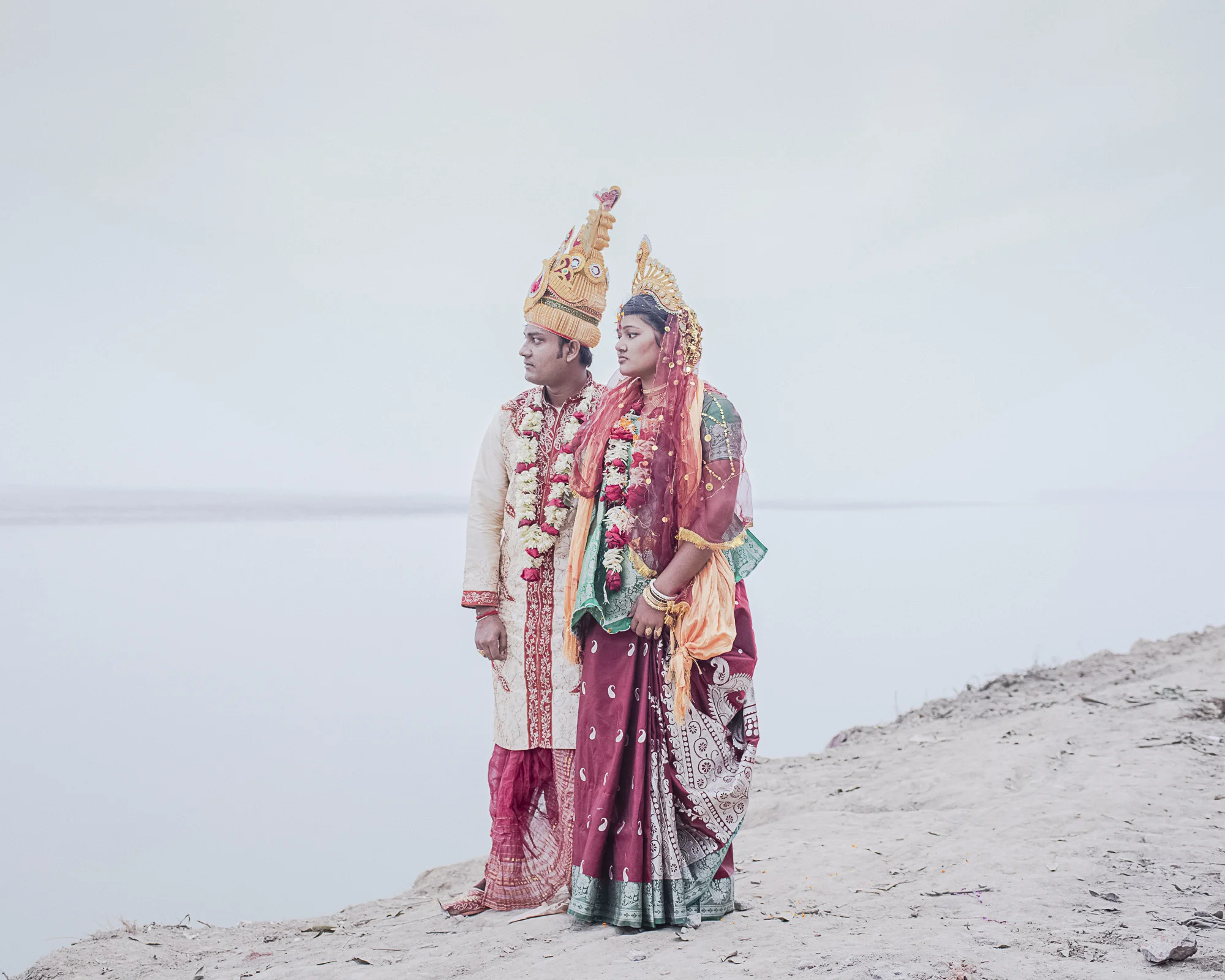
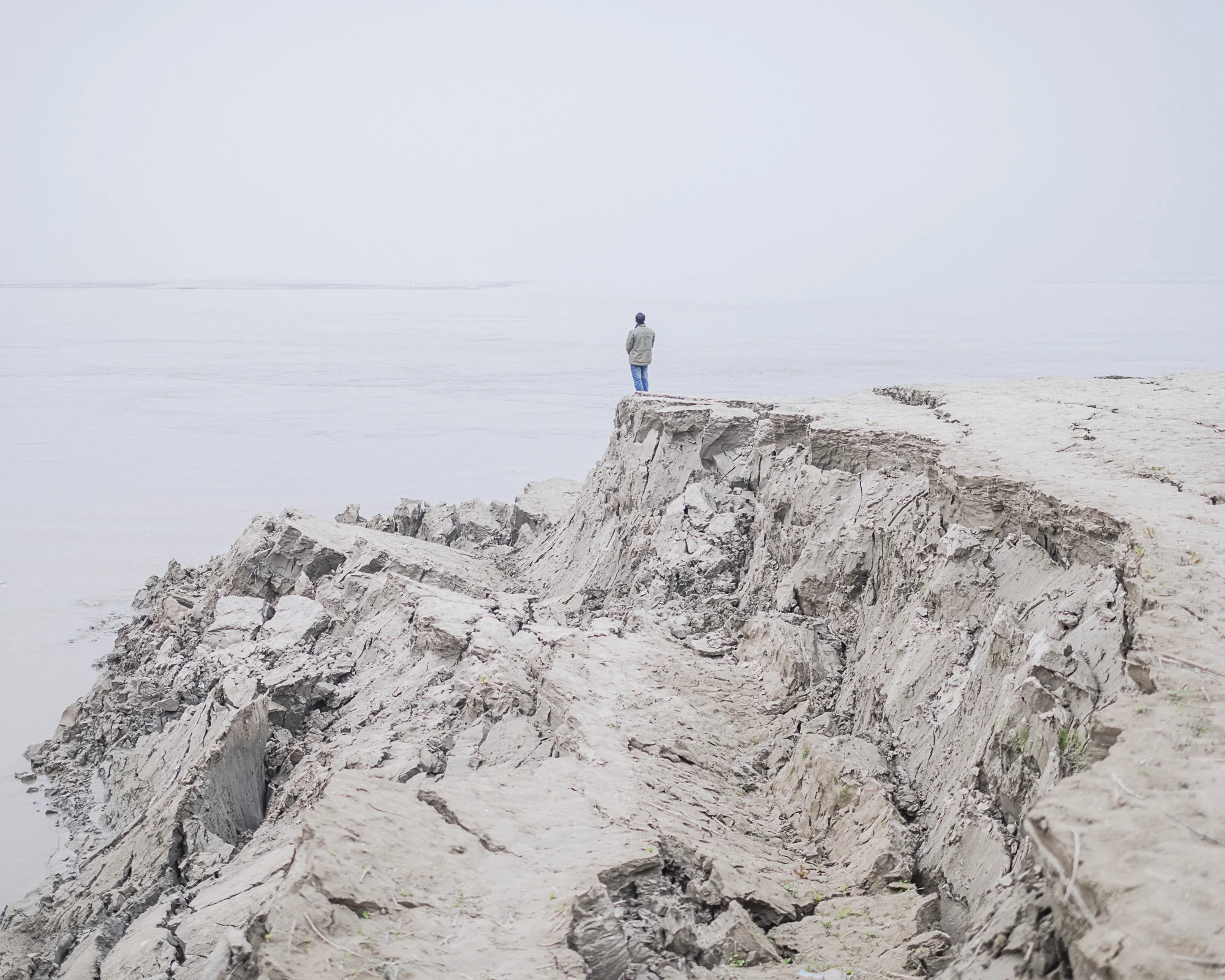
Leen was made along the Padma, the river Bengalis call the goddess. Its banks collapse yearly; entire villages disappear inside a single monsoon. Protick returns and waits. A bride and groom stand at the sand edge in full wedding dress, gold crowns and burgundy silk absurd against the white water. A bare tree rises from the shallows, trunks pale as bone, a figure crouched beneath it. A man in grey walks to the edge of a clay cliff that will not be there next spring. The camera keeps the hush of an overcast winter afternoon.

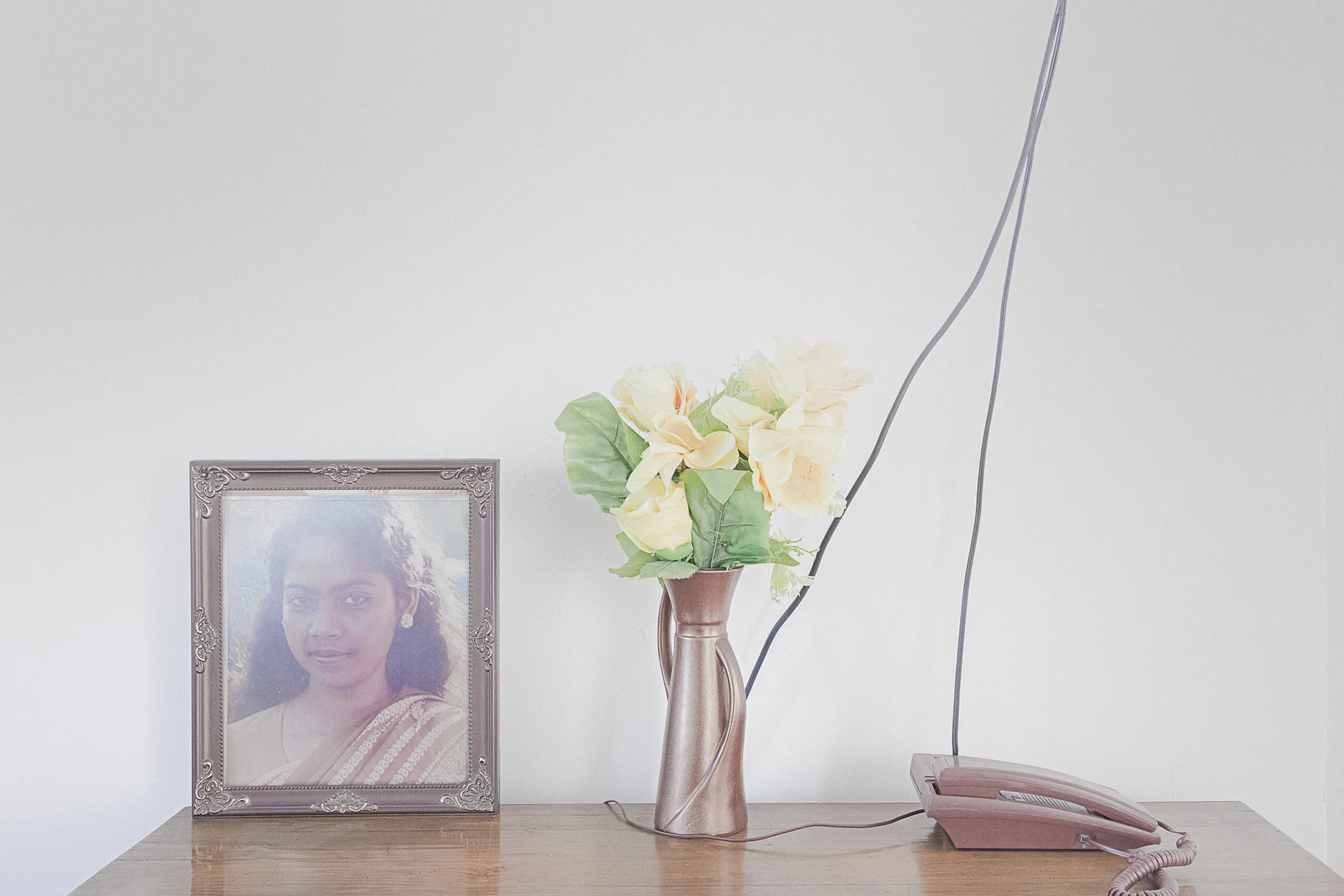
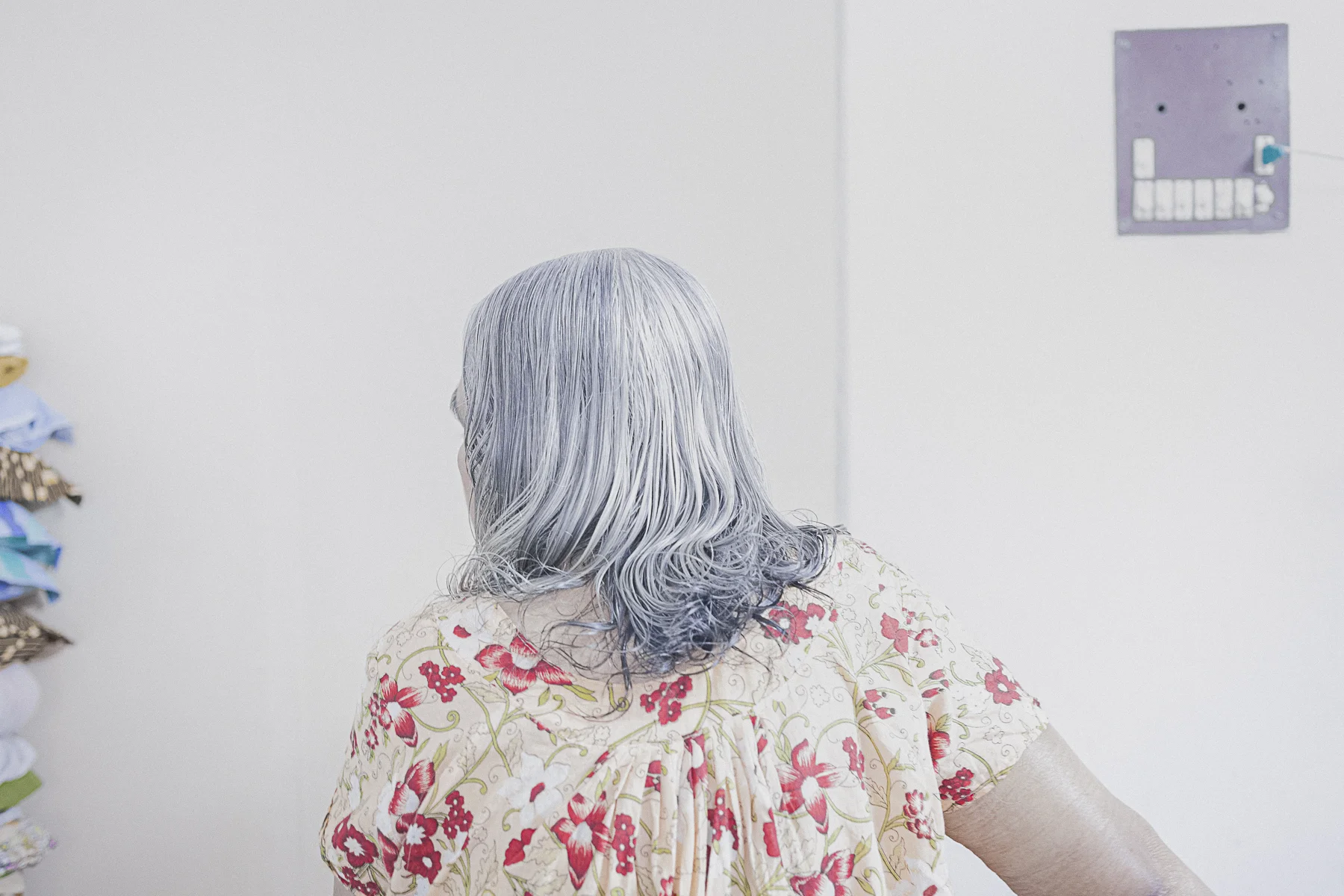
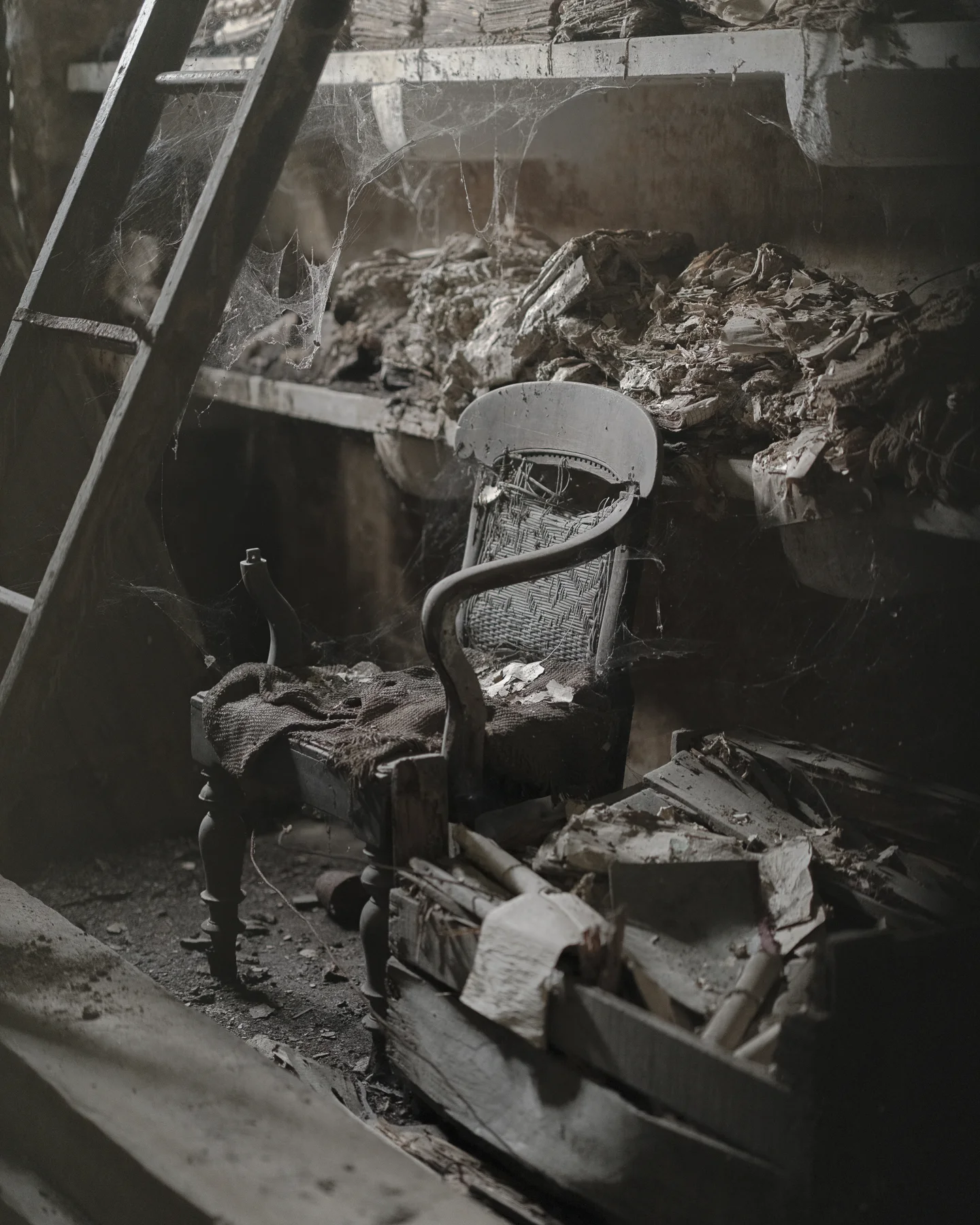
Mr. & Mrs. turns inward, a portrait of his parents' flat in Dhaka made across the years his mother was dying. A framed photograph of a young woman, a plastic bouquet in a bronze vase, a mauve rotary telephone on a wood table. His mother seen from behind, wet grey hair against a white wall, a cotton blouse printed with red flowers. Nothing is staged for the viewer. The rooms hold what rooms hold: the furniture of a long marriage and the slow absence of the person who chose it.

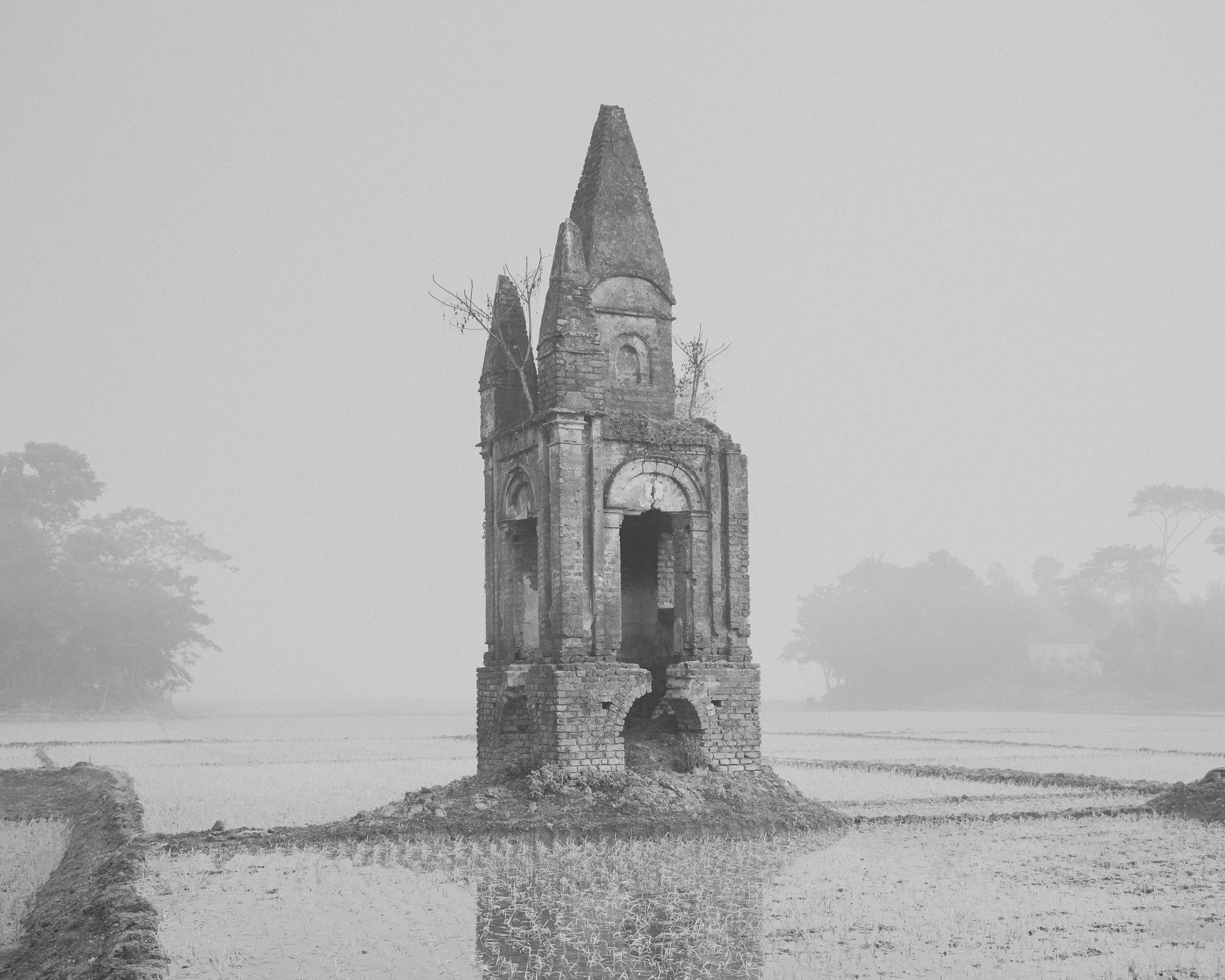
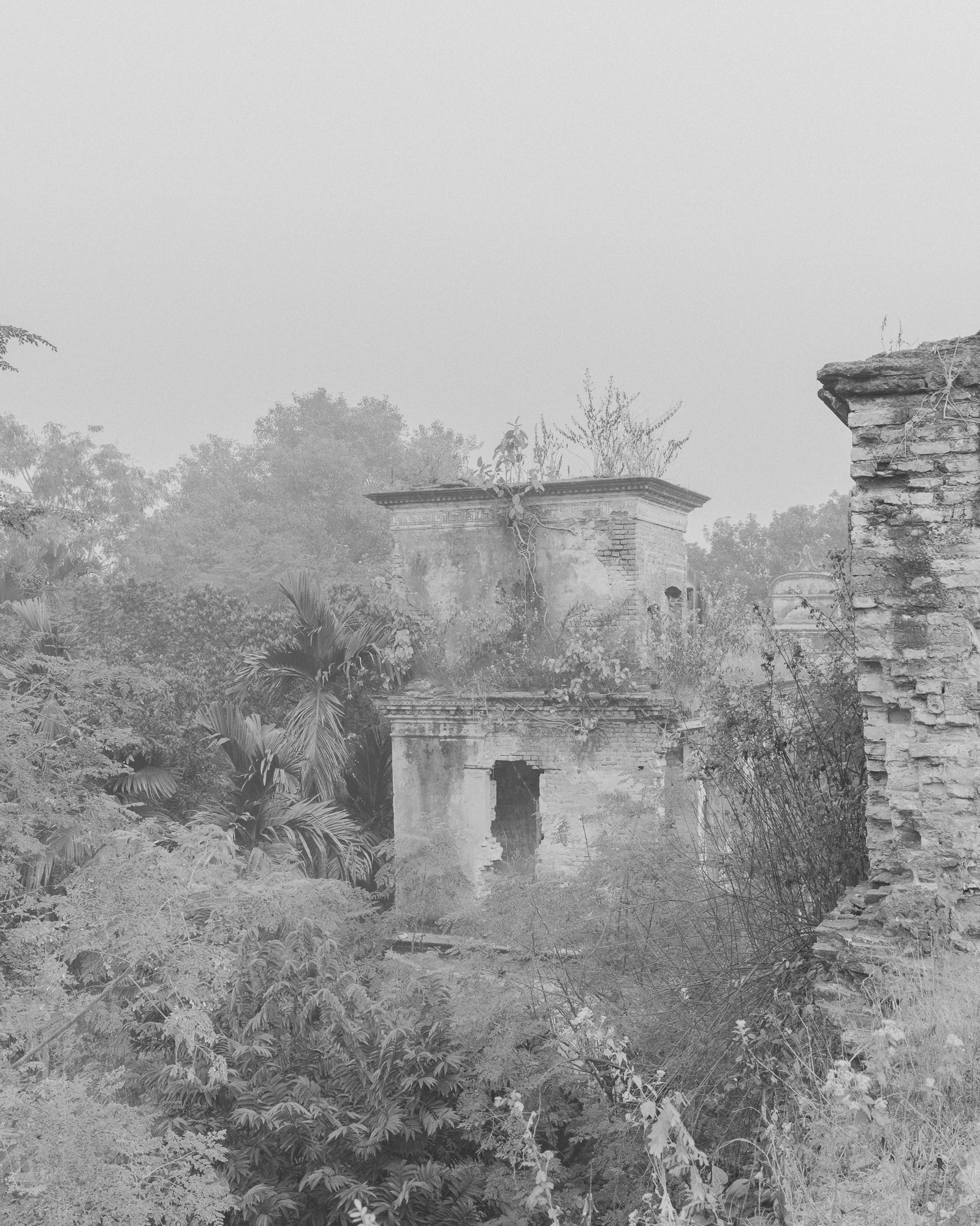
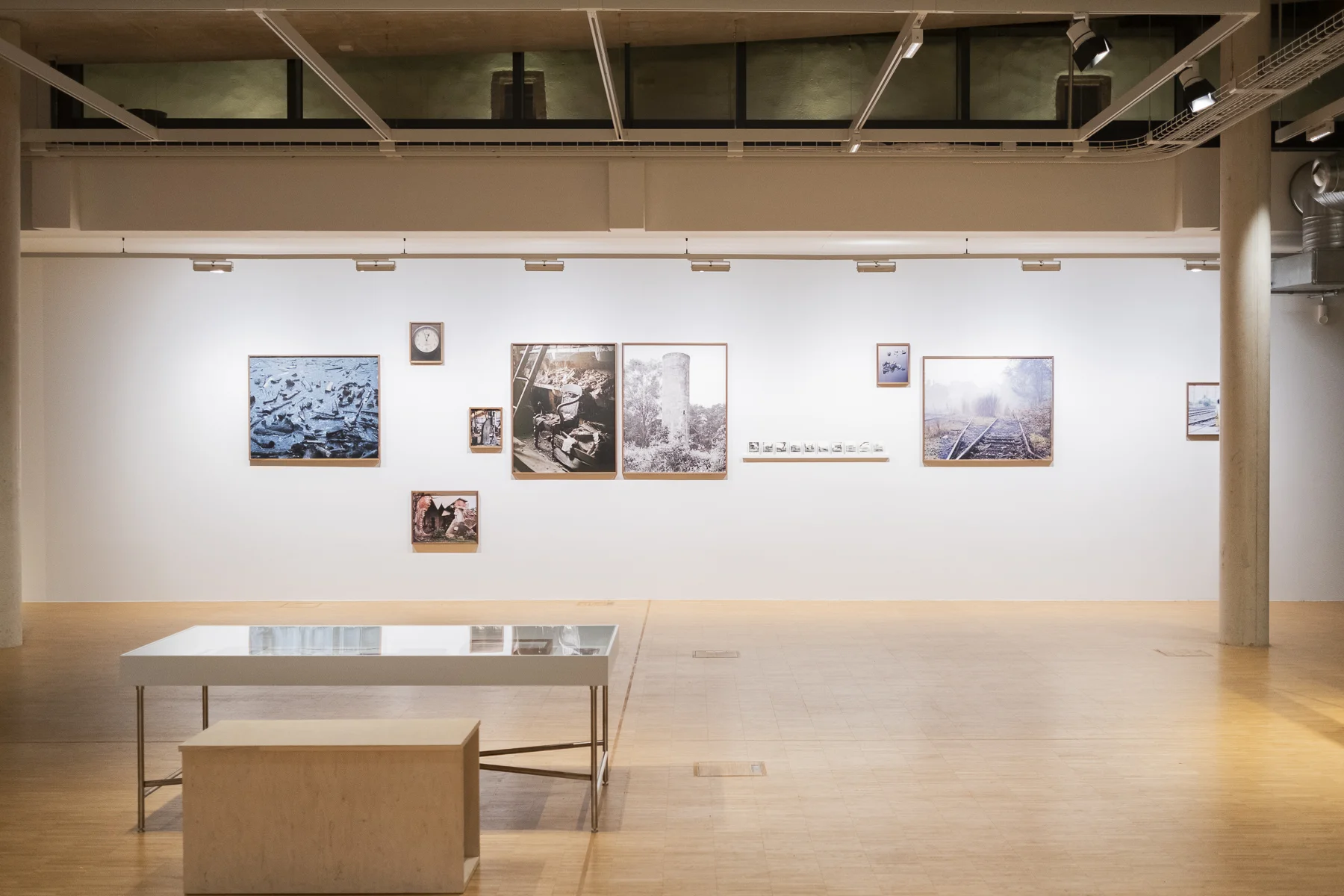
Jirno, which translates as decrepit, records brick temples and zamindar houses stranded in rice fields across the delta, structures that a century of flood and partition have half-returned to the ground. Spires push through banana leaves. A tower sits in water like a ship run aground. The pictures are black and white and small in the frame; the ruin is never the subject, only the ground on which vegetation, weather, and the surrounding village do their work.

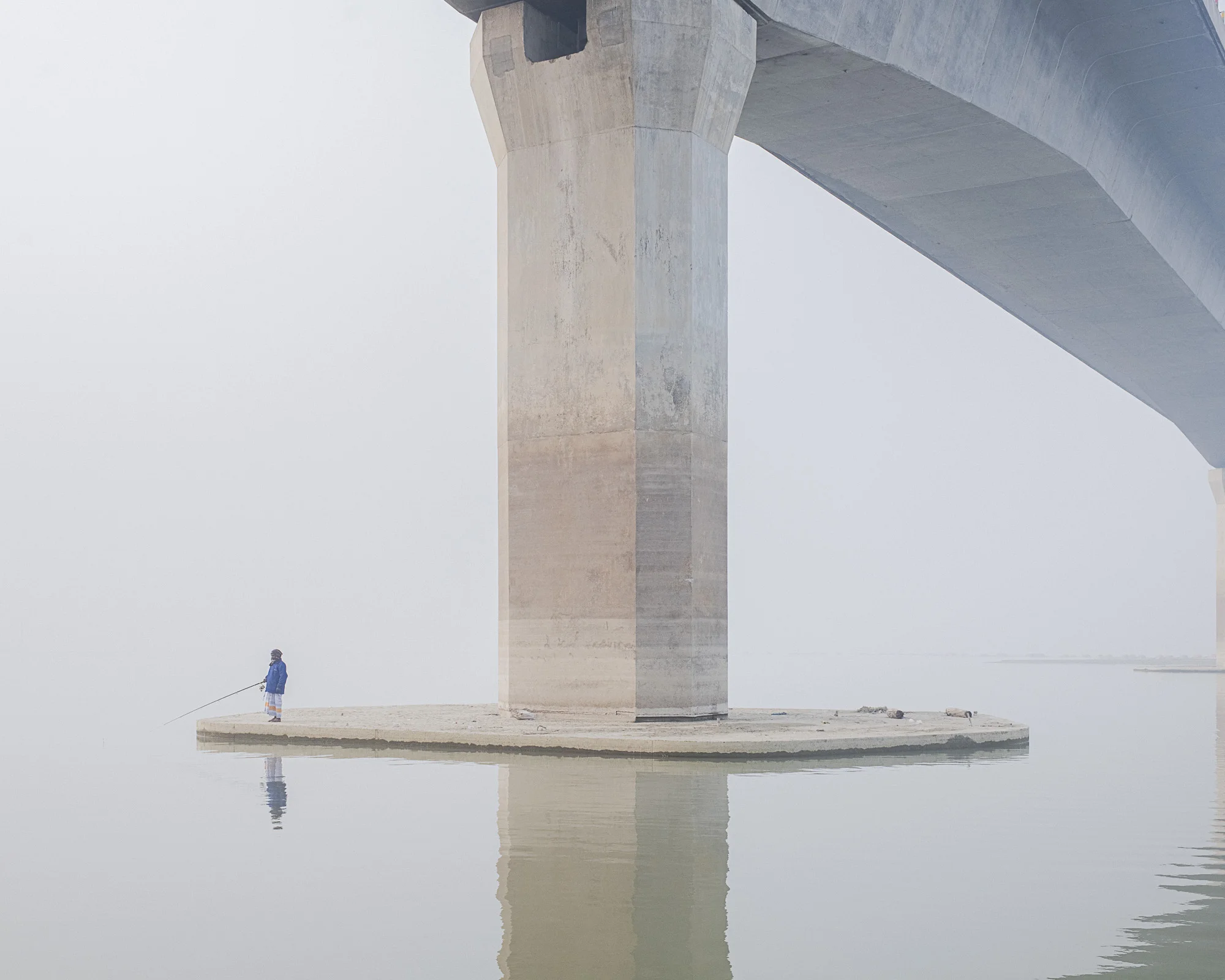
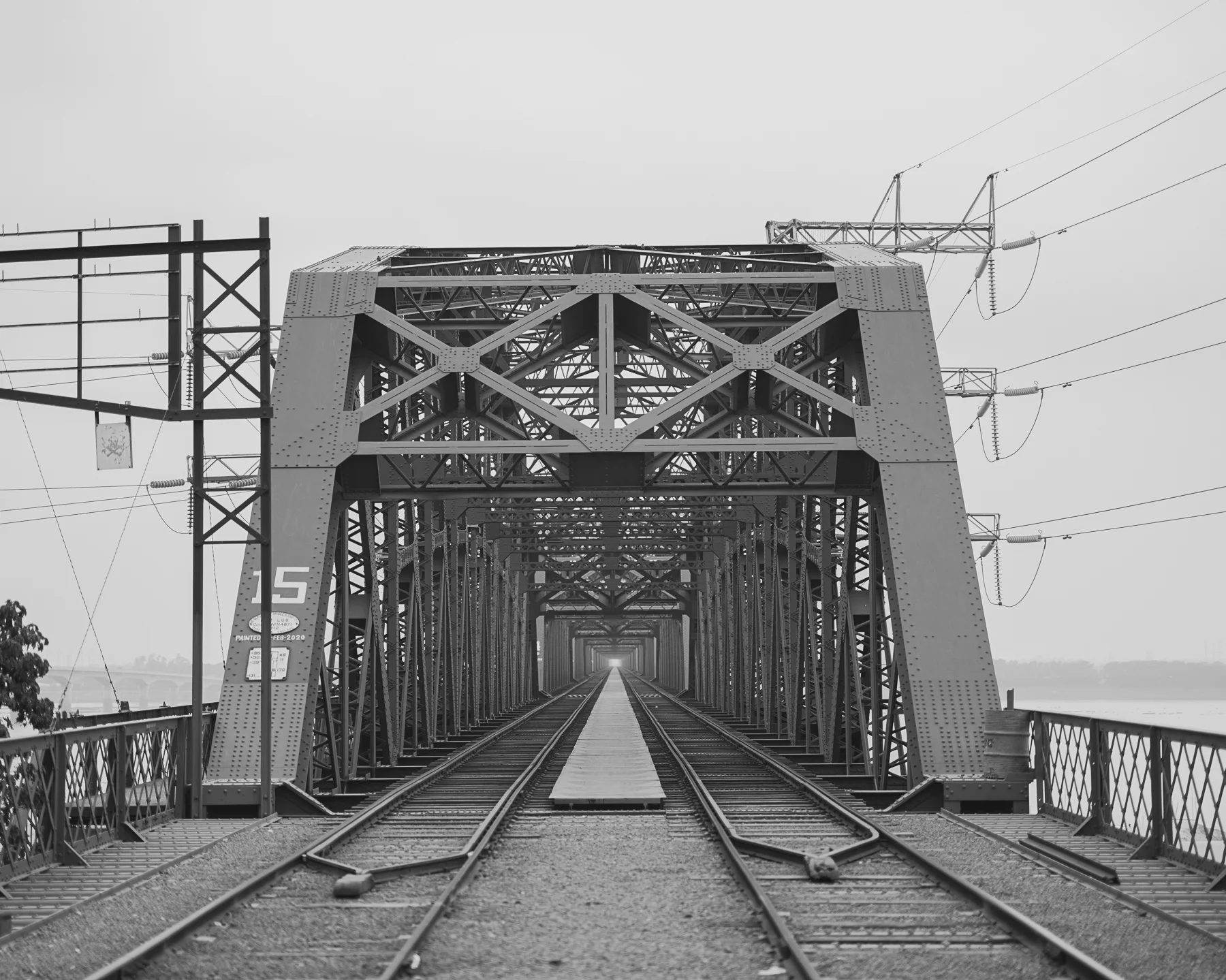
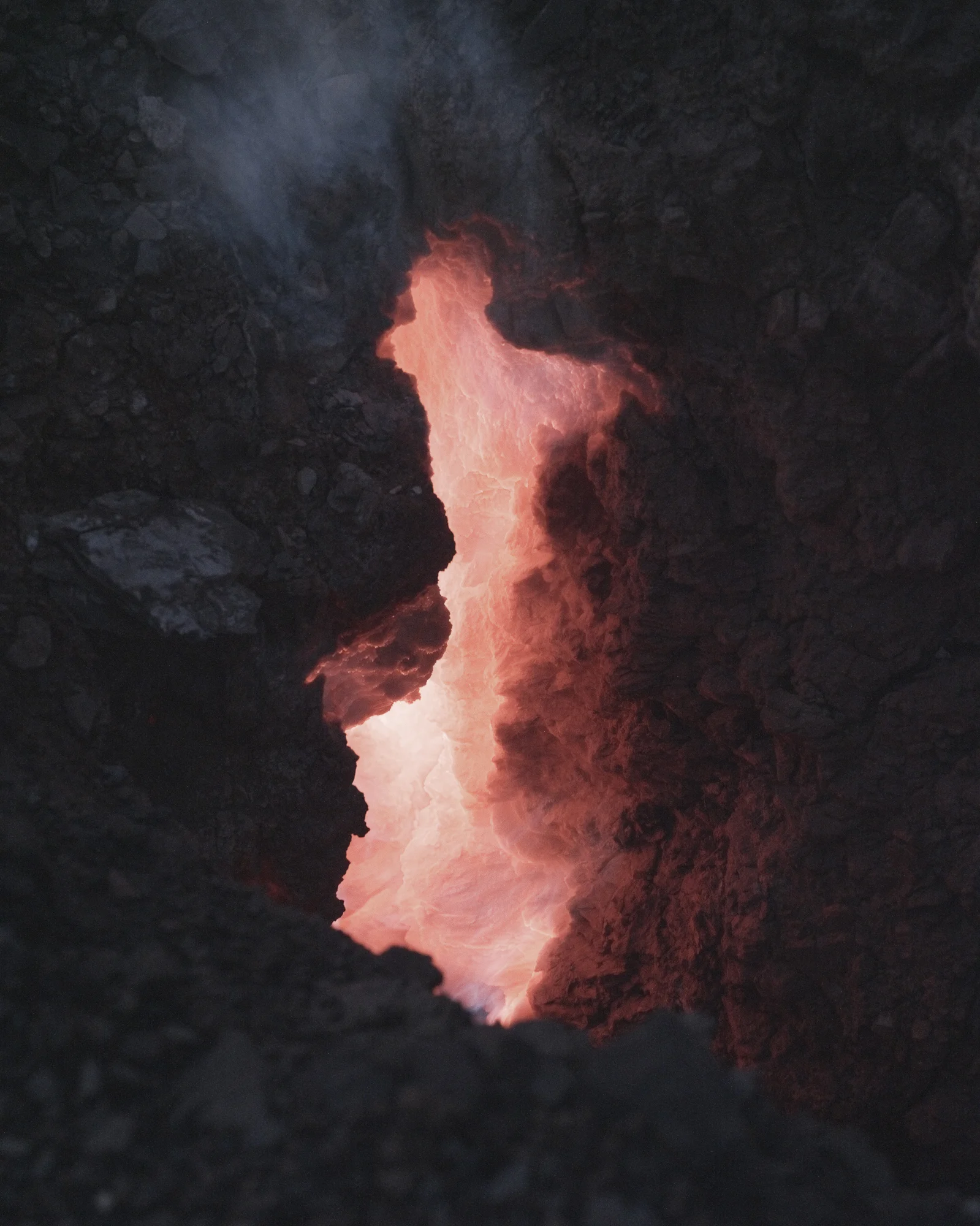
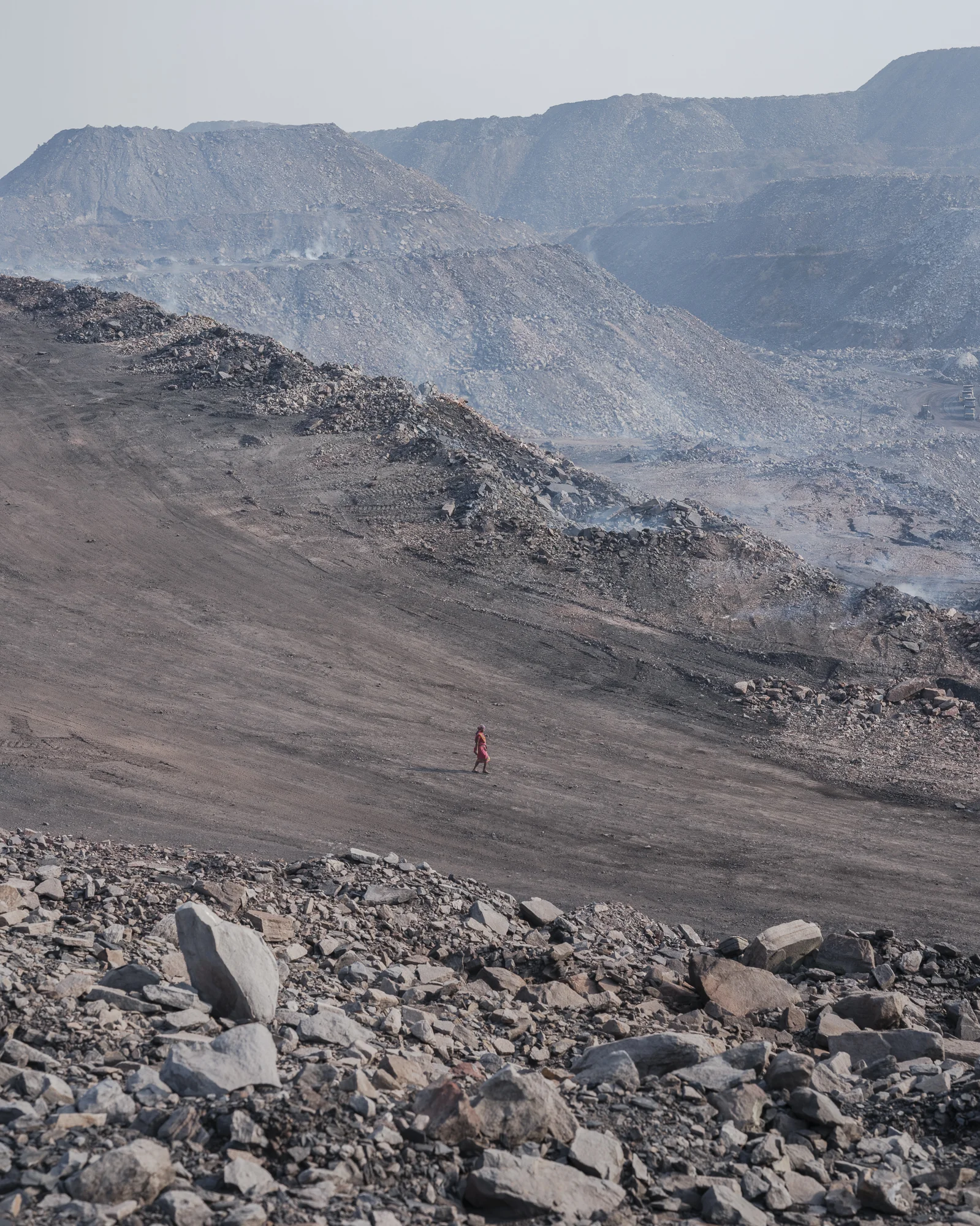
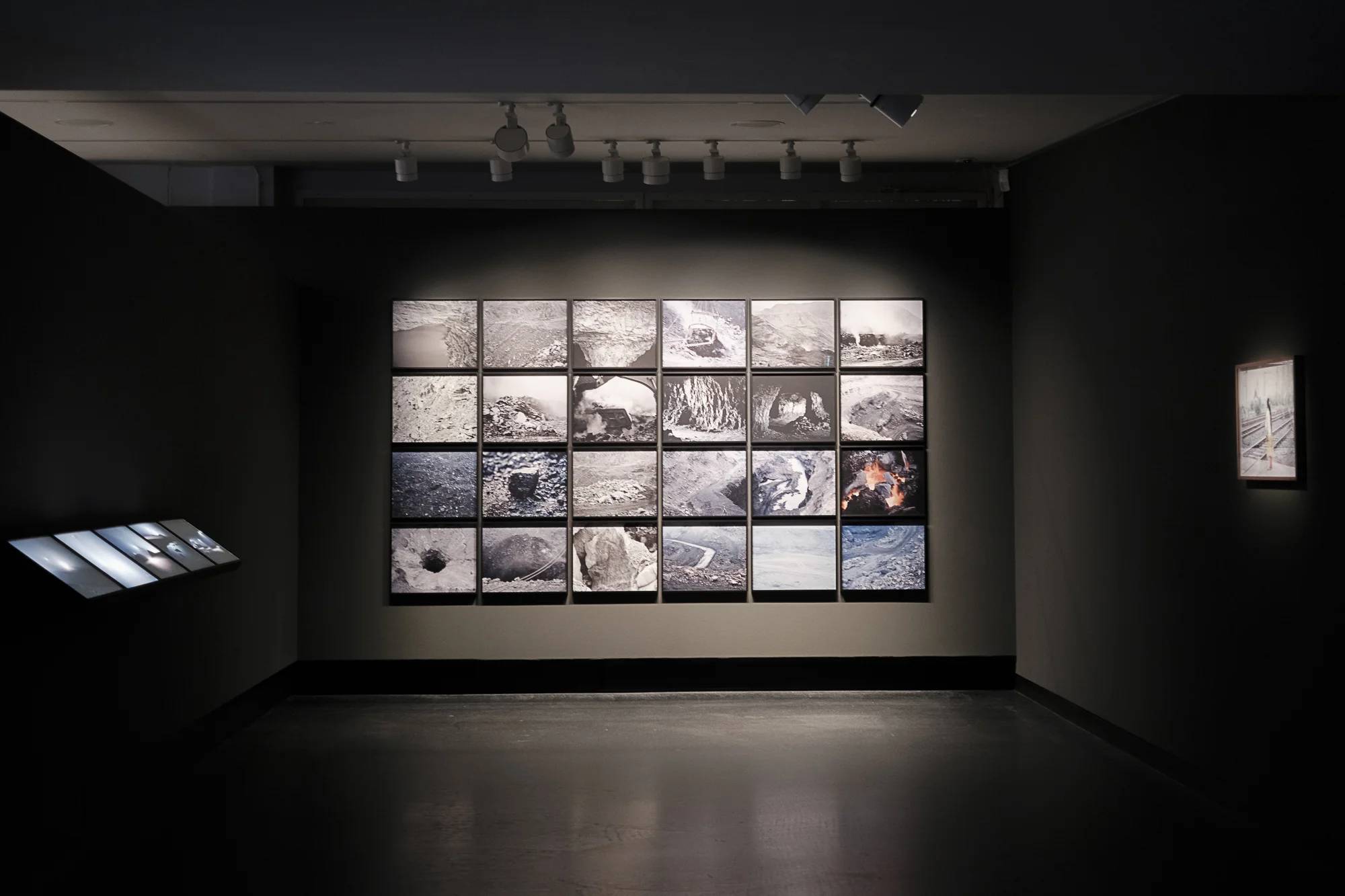
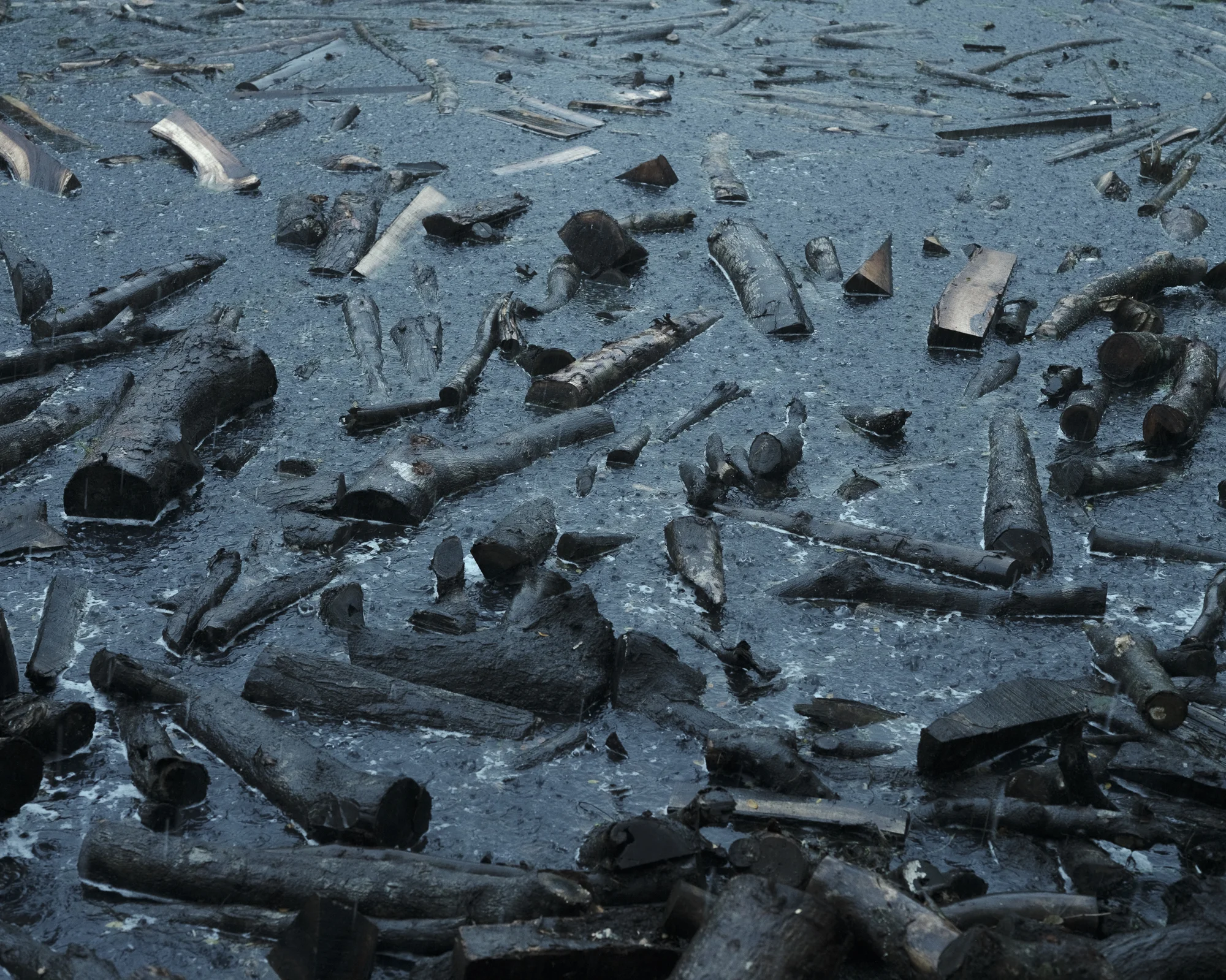
Awngar, meaning charcoal, moves north and underground. At the open-cast coal fields of Jaintiapur, Protick photographs board-formed concrete piers rising out of river fog, steel railway trusses bolted against haze, fields of charred timber on wet ash, a figure in red walking a slope of scree that was once a hill. Inside the pit he gets close enough to a burn seam that the lens reads molten red pushing through basalt. It is the rare frame where the work raises its voice.

Seen together, the four series function as one: a record of what Bangladesh is losing to water, to coal, to time, photographed by someone trained first to listen. The lineage is old. Adams in Colorado, Eggleston in Mississippi. The territory belongs to the delta, where the ground itself is provisional. Protick's earlier work on extraction, already covered in this magazine, anticipated the turn. A photograph, he seems to say, is not a shout but a held breath, long enough to include what is slipping.
Interested in Showcasing Your Work?

If you would like to feature your works on Thisispaper, please visit our Submission page and sign up to Thisispaper+ to submit your work. Once your submission is approved, your work will be showcased to our global audience of 2 million art, architecture, and design professionals and enthusiasts.
No items found.
We love less
but there is more.
Become a Thisispaper+ member today to unlock full access to our magazine, advanced tools, and support our work.
Get two months FREE
with annual subscription
We love less
but there is more.
Become a Thisispaper+ member today to unlock full access to our magazine, advanced tools, and support our work.
Get two months FREE
with annual subscription
No items found.
Hitoshi Arato
Apr 26, 2026

Across Bangladesh's Padma floodplains and the coal pits of Jaintiapur, Sarker Protick photographs Leen, Jirno, Awngar, and Mr. & Mrs., four series built on the discipline of listening.

Sarker Protick came to photography through music. Growing up in Dhaka in the 1990s, he remembers his mother's singing and his father's record collection: the Doors, Leonard Cohen, the Beatles. His father was not a musician but, as Protick puts it, a very good listener. The phrase has become a working method. He enrolled at the Pathshala South Asian Media Institute in 2009, surrounded by photojournalists, but it was Robert Adams and William Eggleston, another photographer-musician, who told him what else photography could be.

Leen was made along the Padma, the river Bengalis call the goddess. Its banks collapse yearly; entire villages disappear inside a single monsoon. Protick returns and waits. A bride and groom stand at the sand edge in full wedding dress, gold crowns and burgundy silk absurd against the white water. A bare tree rises from the shallows, trunks pale as bone, a figure crouched beneath it. A man in grey walks to the edge of a clay cliff that will not be there next spring. The camera keeps the hush of an overcast winter afternoon.

Mr. & Mrs. turns inward, a portrait of his parents' flat in Dhaka made across the years his mother was dying. A framed photograph of a young woman, a plastic bouquet in a bronze vase, a mauve rotary telephone on a wood table. His mother seen from behind, wet grey hair against a white wall, a cotton blouse printed with red flowers. Nothing is staged for the viewer. The rooms hold what rooms hold: the furniture of a long marriage and the slow absence of the person who chose it.

Jirno, which translates as decrepit, records brick temples and zamindar houses stranded in rice fields across the delta, structures that a century of flood and partition have half-returned to the ground. Spires push through banana leaves. A tower sits in water like a ship run aground. The pictures are black and white and small in the frame; the ruin is never the subject, only the ground on which vegetation, weather, and the surrounding village do their work.

Awngar, meaning charcoal, moves north and underground. At the open-cast coal fields of Jaintiapur, Protick photographs board-formed concrete piers rising out of river fog, steel railway trusses bolted against haze, fields of charred timber on wet ash, a figure in red walking a slope of scree that was once a hill. Inside the pit he gets close enough to a burn seam that the lens reads molten red pushing through basalt. It is the rare frame where the work raises its voice.

Seen together, the four series function as one: a record of what Bangladesh is losing to water, to coal, to time, photographed by someone trained first to listen. The lineage is old. Adams in Colorado, Eggleston in Mississippi. The territory belongs to the delta, where the ground itself is provisional. Protick's earlier work on extraction, already covered in this magazine, anticipated the turn. A photograph, he seems to say, is not a shout but a held breath, long enough to include what is slipping.
Interested in Showcasing Your Work?

If you would like to feature your works on Thisispaper, please visit our Submission page and subscribe to Thisispaper+. Once your submission is approved, your work will be showcased to our global audience of 2 million art, architecture, and design professionals and enthusiasts.
Thisispaper+
Climax
15+ Projects
Web Access
Link to Maps
Photography that bears witness to the climate emergency, slowly and without slogan. Thawing Arctic towns, sinking coasts, vanishing salt lakes, olive groves lost to tourist economies, skies emptied of stars. Architectural responses sit alongside: seed vaults, waste-to-energy plants, desert-cooling pavilions. The register is witness rather than manifesto; the method is the long look, not the emergency headline.
Explore
Climax

Join Thisispaper+
Unlock access to 2500 stories, curated guides + editions, and share your work with a global network of architects, artists, writers and designers who are shaping the future.
Get two months FREE
with annual subscription
Travel Guides
Immerse yourself in timeless destinations, hidden gems, and creative spaces—curated by humans, not algorithms.
Explore All Guides +
Submission Module
Submit your project and gain the chance to showcase your work to our worldwide audience of over 2M architects, designers, artists, and curious minds.
Learn More+
Curated Editions
Dive deeper into carefully curated editions, designed to feed your curiosity and foster exploration.
Off-the-Grid
Jutaku
Sacral Journey
minimum
The New Chair
Explore All Editions +
Atlas
A new and interactive way to explore the most inspiring places around the world.
Interactive map
Linked to articles
300+ curated locations
Google + Apple directions
Smart filters
Subscribe to Explore+
Become a Thisispaper+ member today to unlock full access to our magazine, submit your project and support our work.
Join Thisispaper+Join Thisispaper+
€ 9 EUR
/month
Cancel anytime
Get two months FREE
with annual subscription