Thisispaper Community
Join today.
Enter your email address to receive the latest news on emerging art, design, lifestyle and tech from Thisispaper, delivered straight to your inbox.
Oops! Something went wrong while submitting the form.
Instant access to new channels
The top stories curated daily
Weekly roundups of what's important
Original features and deep dives
Exclusive community features
Alexander Zaxarov
Nov 12, 2025

L’AND Vineyards in Montemor-o-Novo in Portugal unfolds as a study in contemporary rural architecture—an ensemble where PROMONTORIO reimagines the Alentejo’s agrarian DNA through a lens of measured geometry and quiet spatial drama.

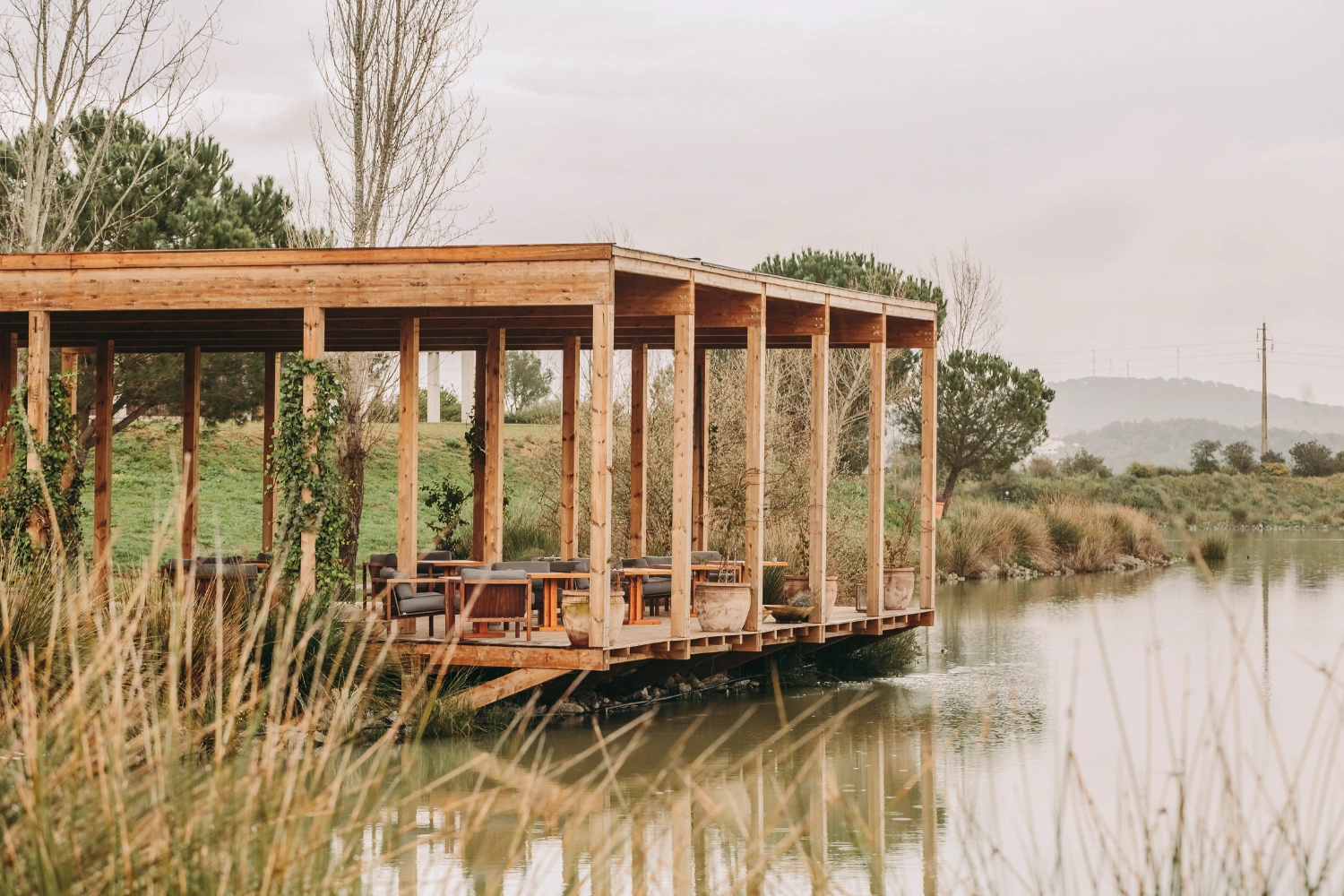
Conceived in 2005 through a collaboration with a long-standing agro-business family, the project sets out not to mimic the region’s past but to interpret its essential rhythms: the vast horizon, the slow cadence of viticulture, the intimate scale of traditional “monte” compounds. PROMONTORIO’s masterplan responds with a choreography of clustered forms and terraced dwellings arranged around a reflective lake that both cools the land and anchors the resort’s atmosphere.

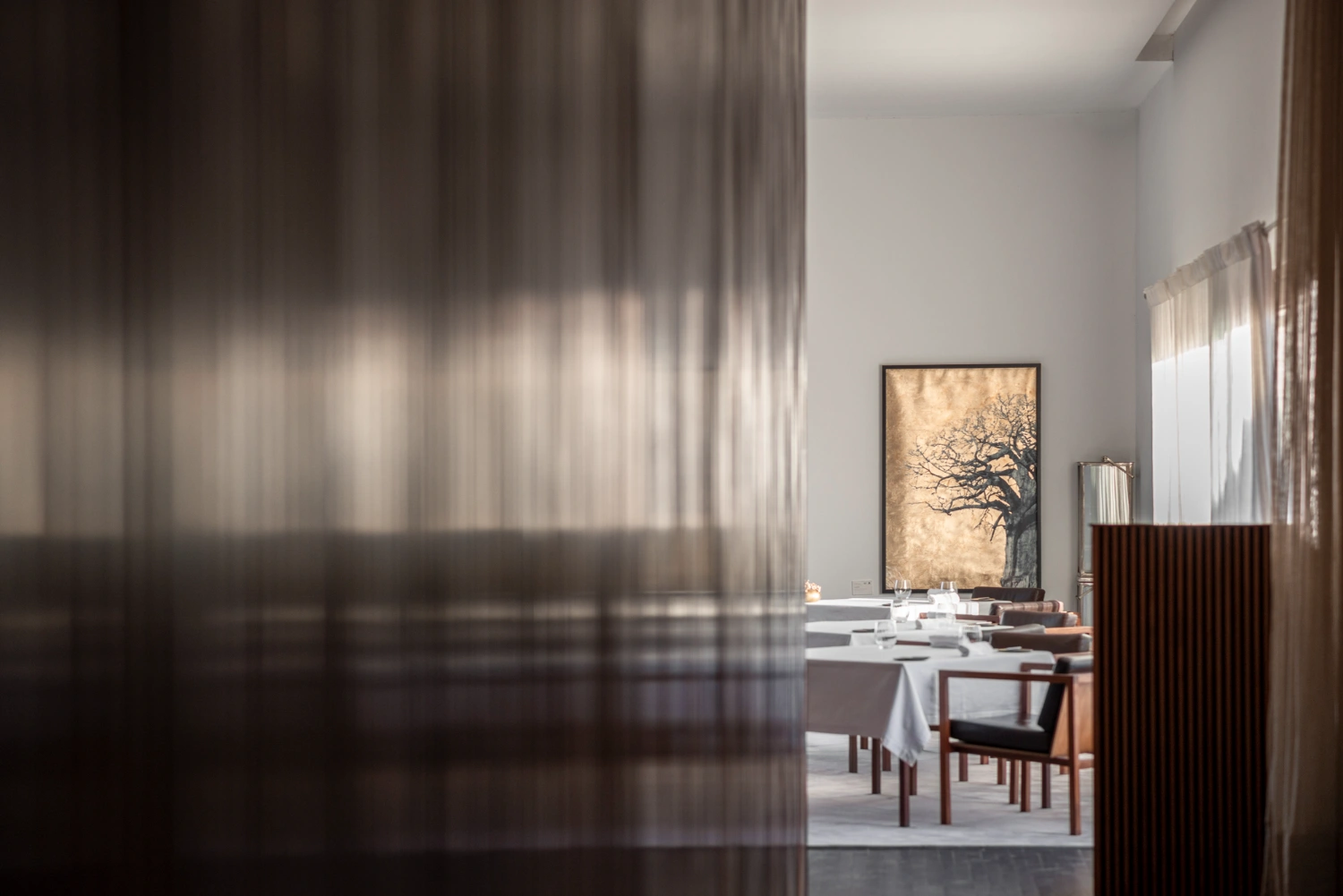
At the heart of the resort’s culinary identity is Mapa, led by chef David Jesus, whose approach threads personal memory with a wider cartography of Portuguese maritime history. His cuisine unfolds like a series of geographic notes—local organic produce, grass-fed meats, fish from Setúbal—interlaced with techniques gathered from far-flung culinary lineages. Each dish becomes an encounter between Alentejo’s grounded flavours and the exploratory spirit of Portugal’s past. Paired with the estate’s wines and framed by the restaurant’s calm, architectural precision, Mapa adds an auditory and sensorial layer to the project, reinforcing L’AND’s ambition to cultivate a holistic, place-rooted experience.

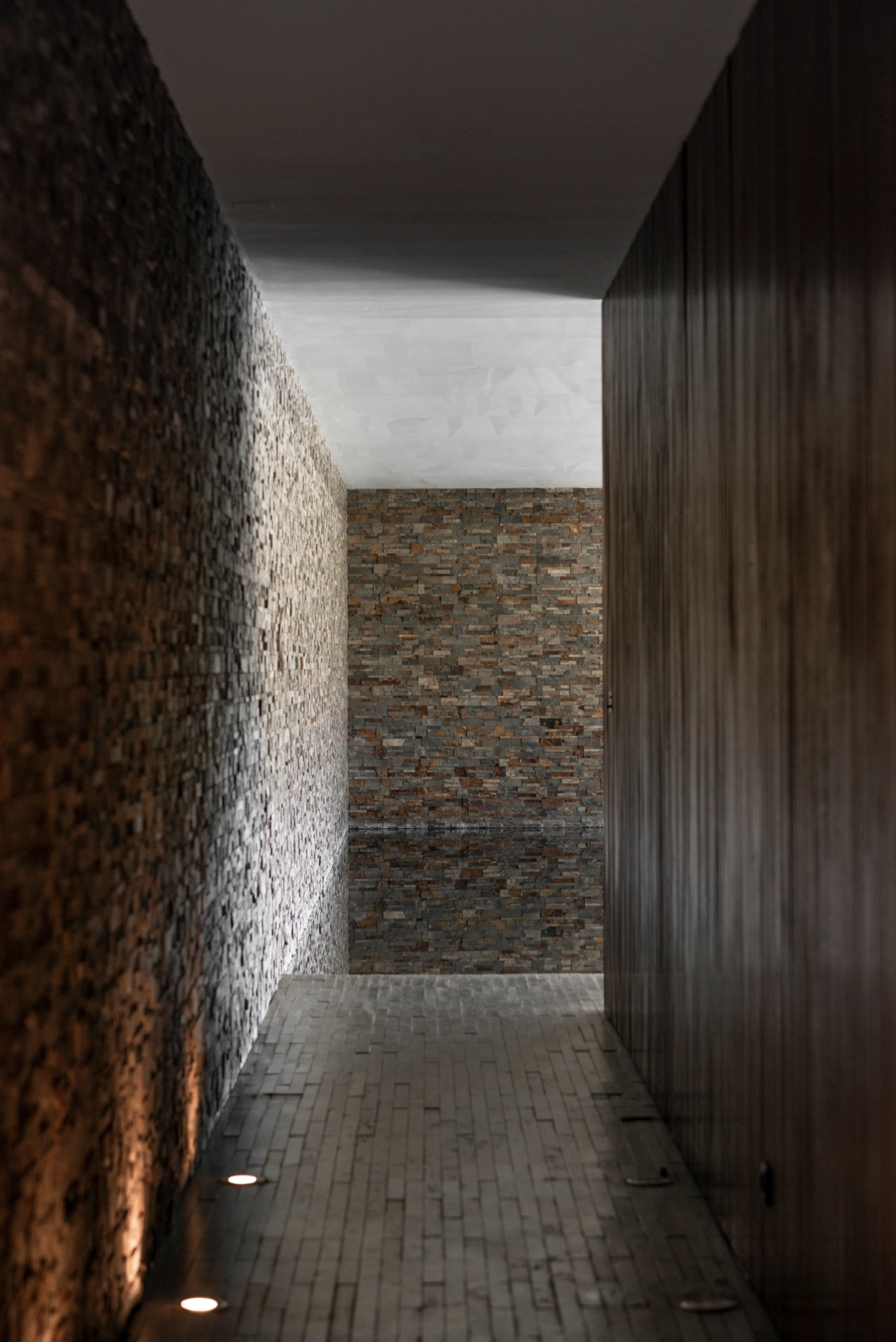
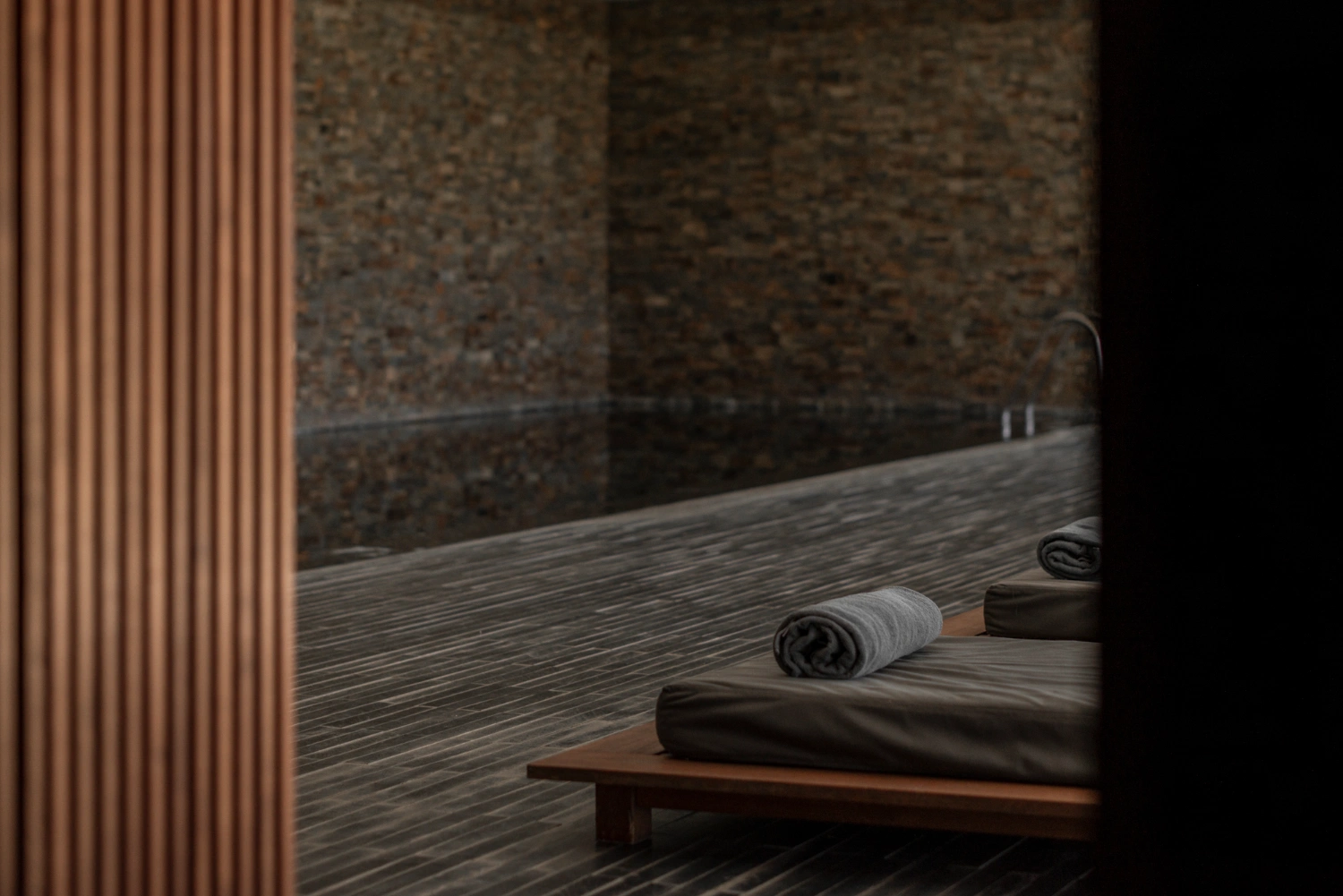
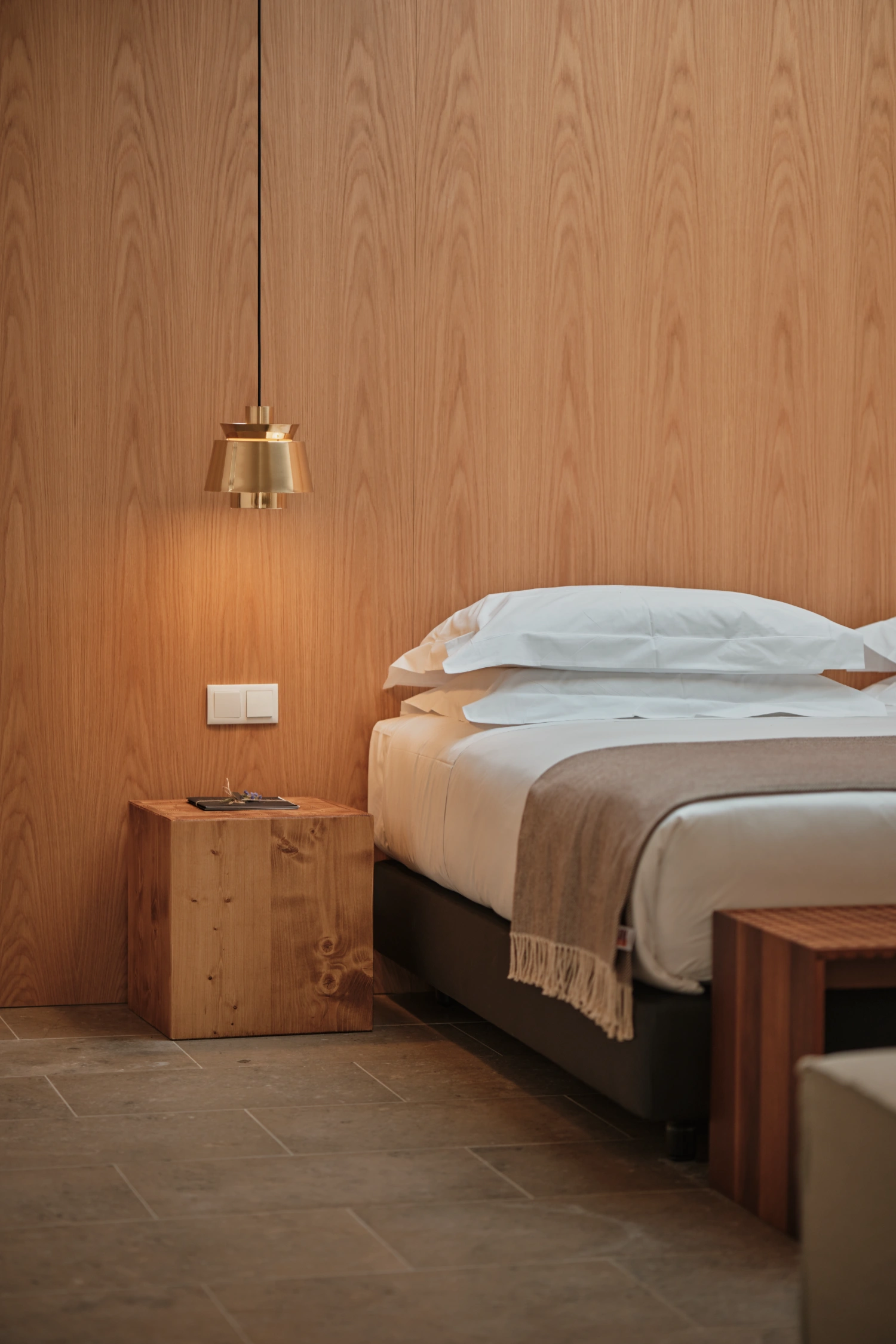
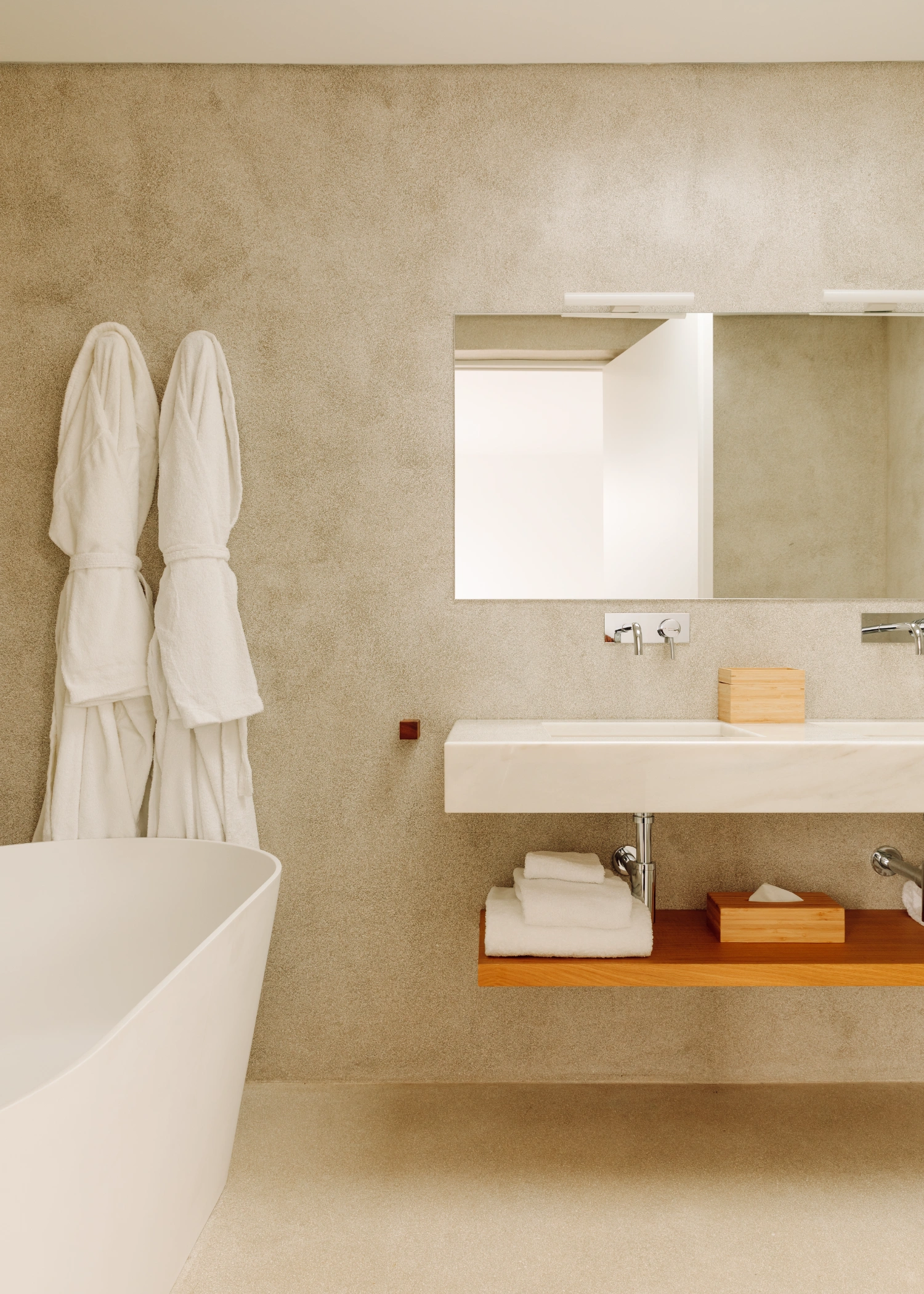
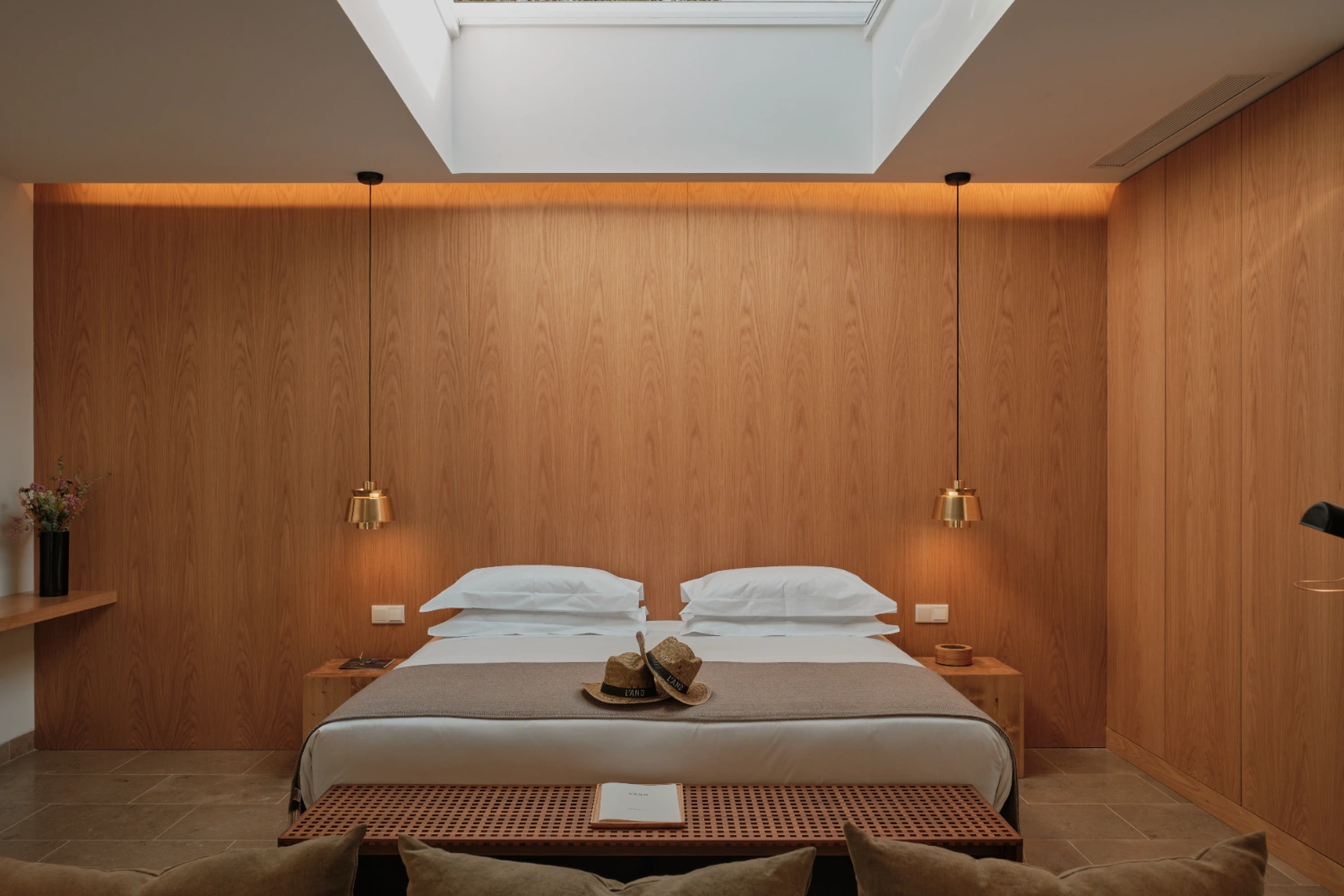
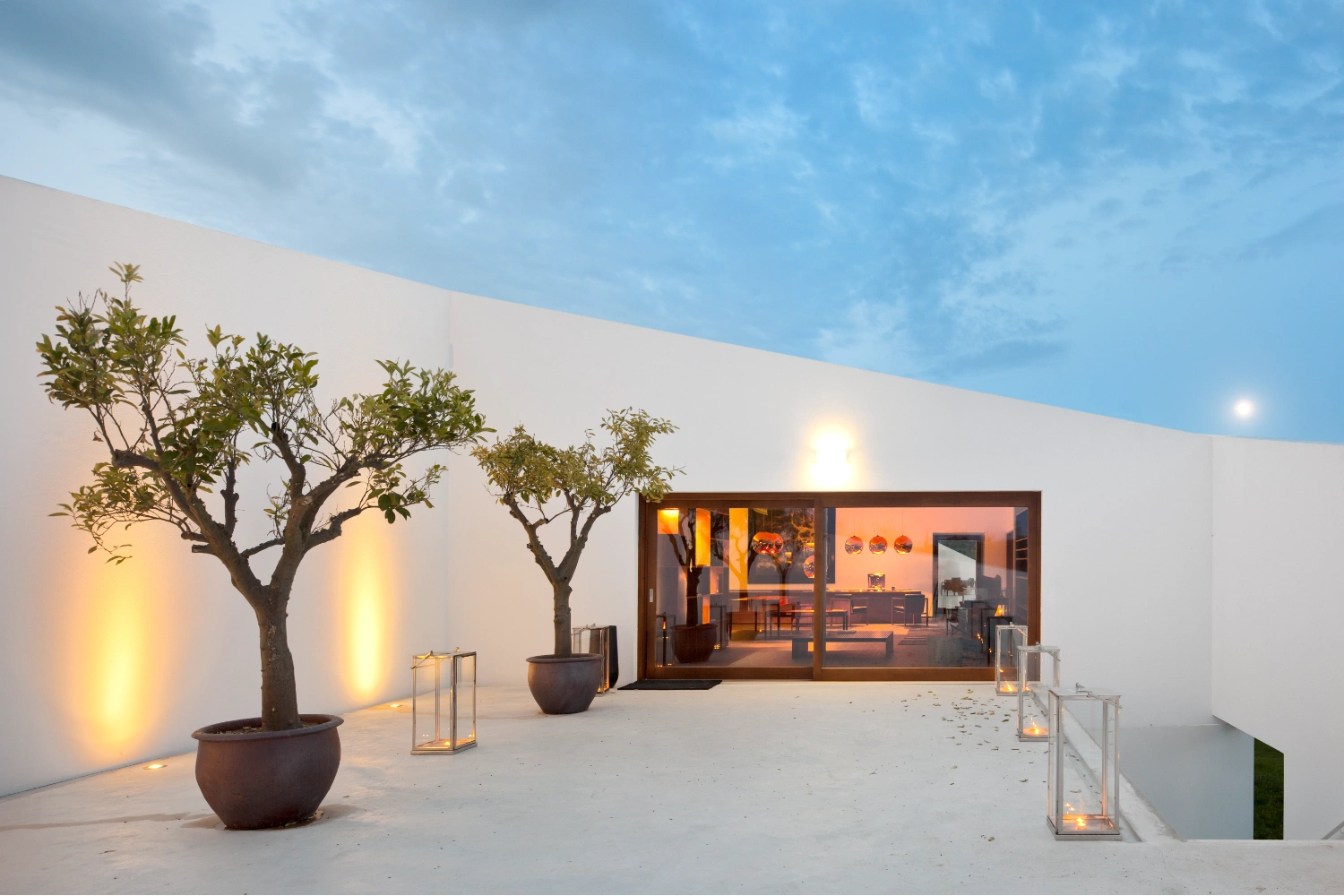
The hotel, positioned as the resort’s gravitational center, distills this balance between function and sensorial richness. Designed as a hinged prism with its corners carved away, the building yields sheltered patios, breezeways, and shaded apertures that soften transitions between interior and landscape. These incisions turn the hotel into a vessel for light and shadow, echoing the region’s whitewashed patios while avoiding any nostalgic overstatement. Inside, the juxtaposition of oak fluted wainscoting and dense Alentejo slate produces a tactile depth—an immersive warmth that pushes against the more elemental, industrial character of the winemaking areas embedded within the same structure.

PROMONTORIO’s terraced guest suites cascade toward the lake in an amphitheater-like arrangement, half-buried to reduce their presence while preserving the flow of the natural slope. Each unit centers on an internal living courtyard, reinforcing the Mediterranean idea of the patio as both anchor and refuge. The architectural restraint—even in the beam-structured roofs designed to one day hold vines—allows the terrain to speak first, with the built form gently receding into the undulating topography.

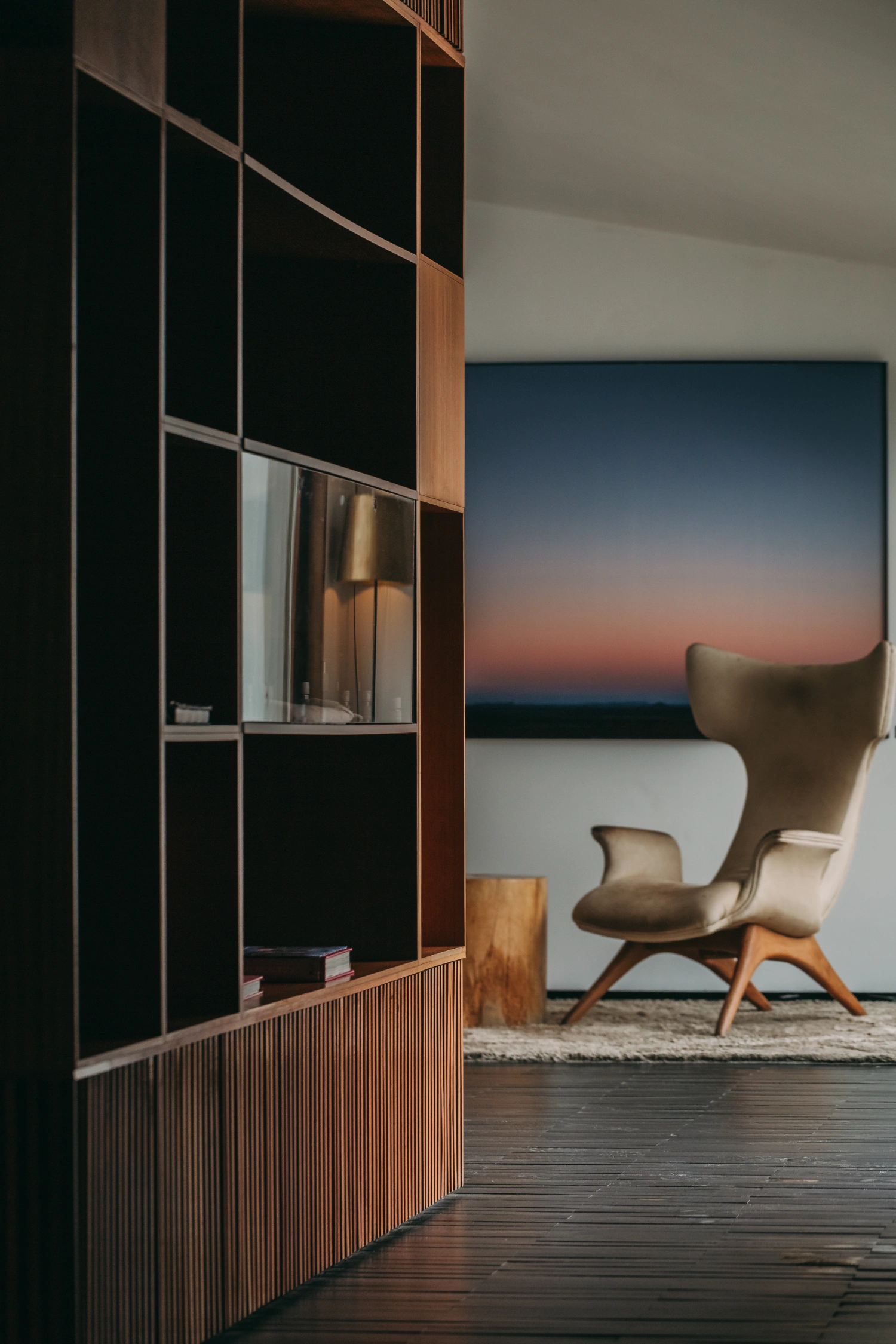
The interiors across the hotel and suites carry the unmistakable imprint of Brazilian architect Márcio Kogan, whose material sensitivity heightens the project’s grounded, elemental aesthetic. Local handwoven rugs, Nakashima wood pieces, Dixon’s void lamps, and furniture by Serôdio and Santa Rita cultivate an atmosphere that is neither rustic nor overtly polished. Instead, the spaces feel quietly edited, resonating with the resort’s ethos of slowness and simplicity. Artworks by Michael Biberstein and contemporary photographers infuse the interiors with a contemplative clarity, reinforcing the dialogue between architecture and landscape.

Across the estate, the landscape architecture by PROAP brings renewed intentionality to the Mediterranean palette—reweaving vineyards, orchards, pines, and oaks into a contemporary agricultural mosaic. The result is not a reconstruction of a rural past but a calibrated environment where cultivated land meets a new hospitality landscape. This ethos continues into the winery and Wine Club, where guests and residents participate directly in the process of crafting small-batch wines, extending the idea of inhabiting the territory beyond observation and into cultivation.

The project also broadens into private residences by leading architects, each exploring the patio house’s typology as a vessel for privacy, climate, and place. These villas, each with their own vineyard plot, articulate the project’s most intimate dimension: the desire to embed living within the culture of wine and landscape, rather than merely positioning it beside them. In this sense, L’AND Vineyards operates as both retreat and micro-territory—a contemporary reinterpretation of how architecture might inhabit, and contribute to, the Alentejo.

Interested in Showcasing Your Work?

If you would like to feature your works on Thisispaper, please visit our Submission page and sign up to Thisispaper+ to submit your work. Once your submission is approved, your work will be showcased to our global audience of 2 million art, architecture, and design professionals and enthusiasts.
No items found.
We love less
but there is more.
Become a Thisispaper+ member today to unlock full access to our magazine, advanced tools, and support our work.
Get two months FREE
with annual subscription
We love less
but there is more.
Become a Thisispaper+ member today to unlock full access to our magazine, advanced tools, and support our work.
Get two months FREE
with annual subscription
No items found.
Alexander Zaxarov
Nov 12, 2025

L’AND Vineyards in Montemor-o-Novo in Portugal unfolds as a study in contemporary rural architecture—an ensemble where PROMONTORIO reimagines the Alentejo’s agrarian DNA through a lens of measured geometry and quiet spatial drama.

Conceived in 2005 through a collaboration with a long-standing agro-business family, the project sets out not to mimic the region’s past but to interpret its essential rhythms: the vast horizon, the slow cadence of viticulture, the intimate scale of traditional “monte” compounds. PROMONTORIO’s masterplan responds with a choreography of clustered forms and terraced dwellings arranged around a reflective lake that both cools the land and anchors the resort’s atmosphere.

At the heart of the resort’s culinary identity is Mapa, led by chef David Jesus, whose approach threads personal memory with a wider cartography of Portuguese maritime history. His cuisine unfolds like a series of geographic notes—local organic produce, grass-fed meats, fish from Setúbal—interlaced with techniques gathered from far-flung culinary lineages. Each dish becomes an encounter between Alentejo’s grounded flavours and the exploratory spirit of Portugal’s past. Paired with the estate’s wines and framed by the restaurant’s calm, architectural precision, Mapa adds an auditory and sensorial layer to the project, reinforcing L’AND’s ambition to cultivate a holistic, place-rooted experience.

The hotel, positioned as the resort’s gravitational center, distills this balance between function and sensorial richness. Designed as a hinged prism with its corners carved away, the building yields sheltered patios, breezeways, and shaded apertures that soften transitions between interior and landscape. These incisions turn the hotel into a vessel for light and shadow, echoing the region’s whitewashed patios while avoiding any nostalgic overstatement. Inside, the juxtaposition of oak fluted wainscoting and dense Alentejo slate produces a tactile depth—an immersive warmth that pushes against the more elemental, industrial character of the winemaking areas embedded within the same structure.

PROMONTORIO’s terraced guest suites cascade toward the lake in an amphitheater-like arrangement, half-buried to reduce their presence while preserving the flow of the natural slope. Each unit centers on an internal living courtyard, reinforcing the Mediterranean idea of the patio as both anchor and refuge. The architectural restraint—even in the beam-structured roofs designed to one day hold vines—allows the terrain to speak first, with the built form gently receding into the undulating topography.

The interiors across the hotel and suites carry the unmistakable imprint of Brazilian architect Márcio Kogan, whose material sensitivity heightens the project’s grounded, elemental aesthetic. Local handwoven rugs, Nakashima wood pieces, Dixon’s void lamps, and furniture by Serôdio and Santa Rita cultivate an atmosphere that is neither rustic nor overtly polished. Instead, the spaces feel quietly edited, resonating with the resort’s ethos of slowness and simplicity. Artworks by Michael Biberstein and contemporary photographers infuse the interiors with a contemplative clarity, reinforcing the dialogue between architecture and landscape.

Across the estate, the landscape architecture by PROAP brings renewed intentionality to the Mediterranean palette—reweaving vineyards, orchards, pines, and oaks into a contemporary agricultural mosaic. The result is not a reconstruction of a rural past but a calibrated environment where cultivated land meets a new hospitality landscape. This ethos continues into the winery and Wine Club, where guests and residents participate directly in the process of crafting small-batch wines, extending the idea of inhabiting the territory beyond observation and into cultivation.

The project also broadens into private residences by leading architects, each exploring the patio house’s typology as a vessel for privacy, climate, and place. These villas, each with their own vineyard plot, articulate the project’s most intimate dimension: the desire to embed living within the culture of wine and landscape, rather than merely positioning it beside them. In this sense, L’AND Vineyards operates as both retreat and micro-territory—a contemporary reinterpretation of how architecture might inhabit, and contribute to, the Alentejo.

Interested in Showcasing Your Work?

If you would like to feature your works on Thisispaper, please visit our Submission page and subscribe to Thisispaper+. Once your submission is approved, your work will be showcased to our global audience of 2 million art, architecture, and design professionals and enthusiasts.
Thisispaper+
Portugal Guide
40+ Locations
Web Access
Link to Maps
Exploring Portugal’s architecture through the lens of modernism, the following guide showcases a selection of incredible building projects across the country. When traveling through its many cities and towns, visitors can capture a glimpse of how context, design culture and innovation create new concepts and spaces.
Explore
Portugal Guide

Join Thisispaper+
Unlock access to 2500 stories, curated guides + editions, and share your work with a global network of architects, artists, writers and designers who are shaping the future.
Get two months FREE
with annual subscription
Atlas
A new and interactive way to explore the most inspiring places around the world.
Interactive map
Linked to articles
300+ curated locations
Google + Apple directions
Smart filters
Subscribe to Explore+
Travel Guides
Immerse yourself in timeless destinations, hidden gems, and creative spaces—curated by humans, not algorithms.
Explore All Guides +
Curated Editions
Dive deeper into carefully curated editions, designed to feed your curiosity and foster exploration.
Off-the-Grid
Jutaku
Sacral Journey
minimum
The New Chair
Explore All Editions +
Submission Module
Submit your project and gain the chance to showcase your work to our worldwide audience of over 2M architects, designers, artists, and curious minds.
Learn More+
Become a Thisispaper+ member today to unlock full access to our magazine, submit your project and support our work.
Join Thisispaper+Join Thisispaper+
€ 9 EUR
/month
Cancel anytime
Get two months FREE
with annual subscription