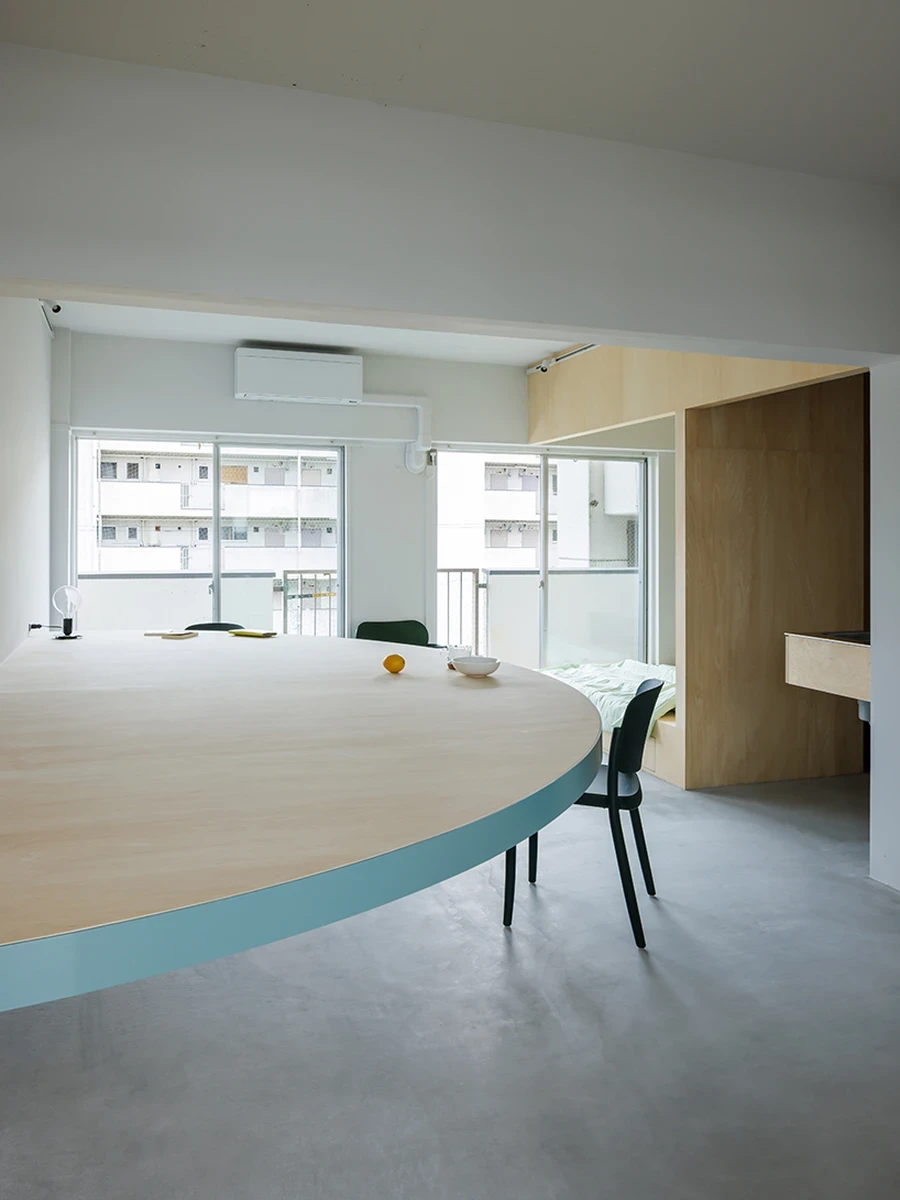
What if a single table could do the work of walls? In a vacant unit of a municipal housing complex in Kyoto, Tato Architects lets a 3,600mm semicircle organize an entire apartment.
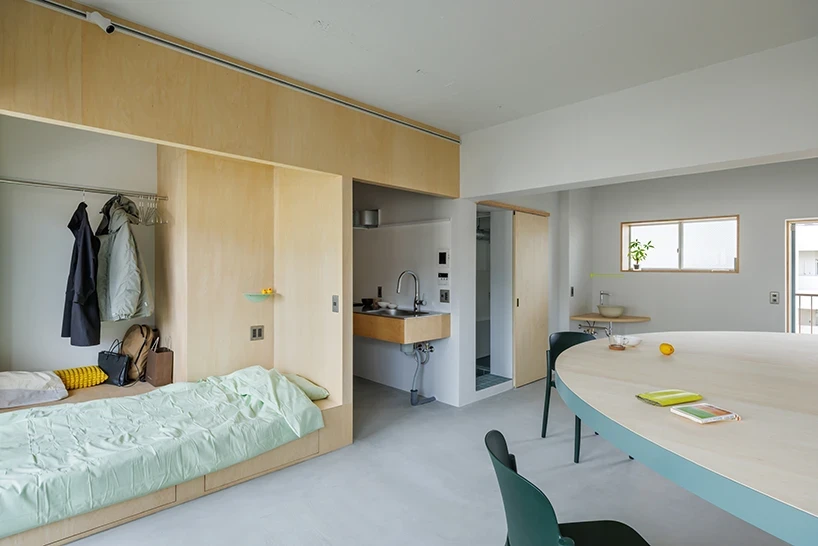
The unit came out of a renovation initiative involving eight universities, one that converts empty apartments in Japan's municipal housing stock into company housing for welfare-sector workers. Yo Shimada led the design, developed with graduate and undergraduate students of his laboratory at Kyoto City University of Arts. The original plan was the fragmented layout of postwar nuclear-family housing, a warren of small rooms divided by non-structural walls.
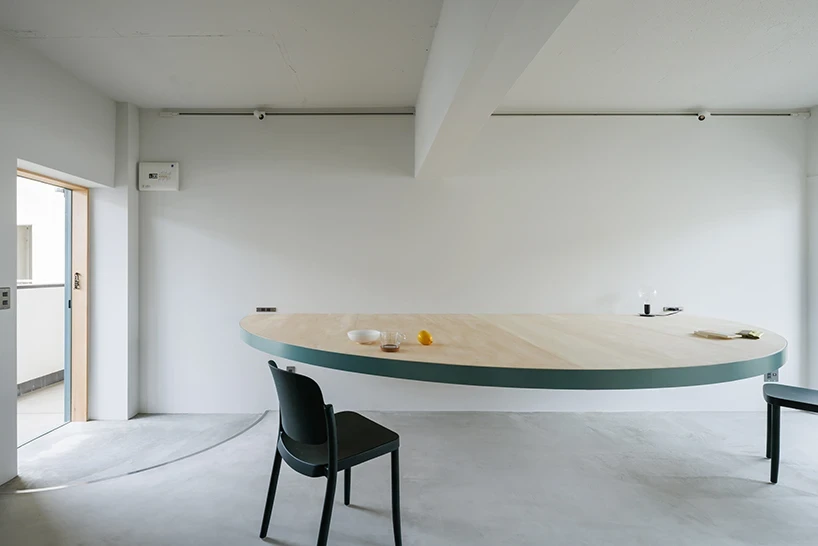
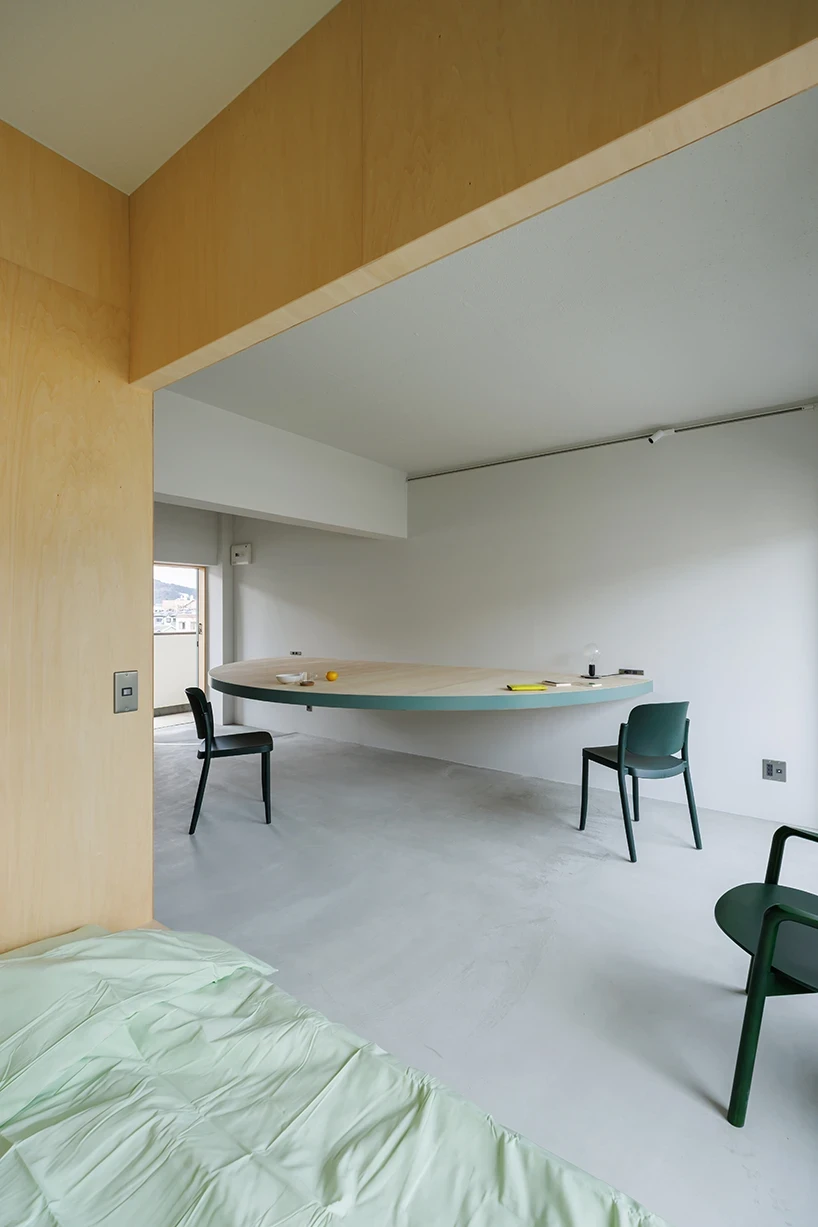
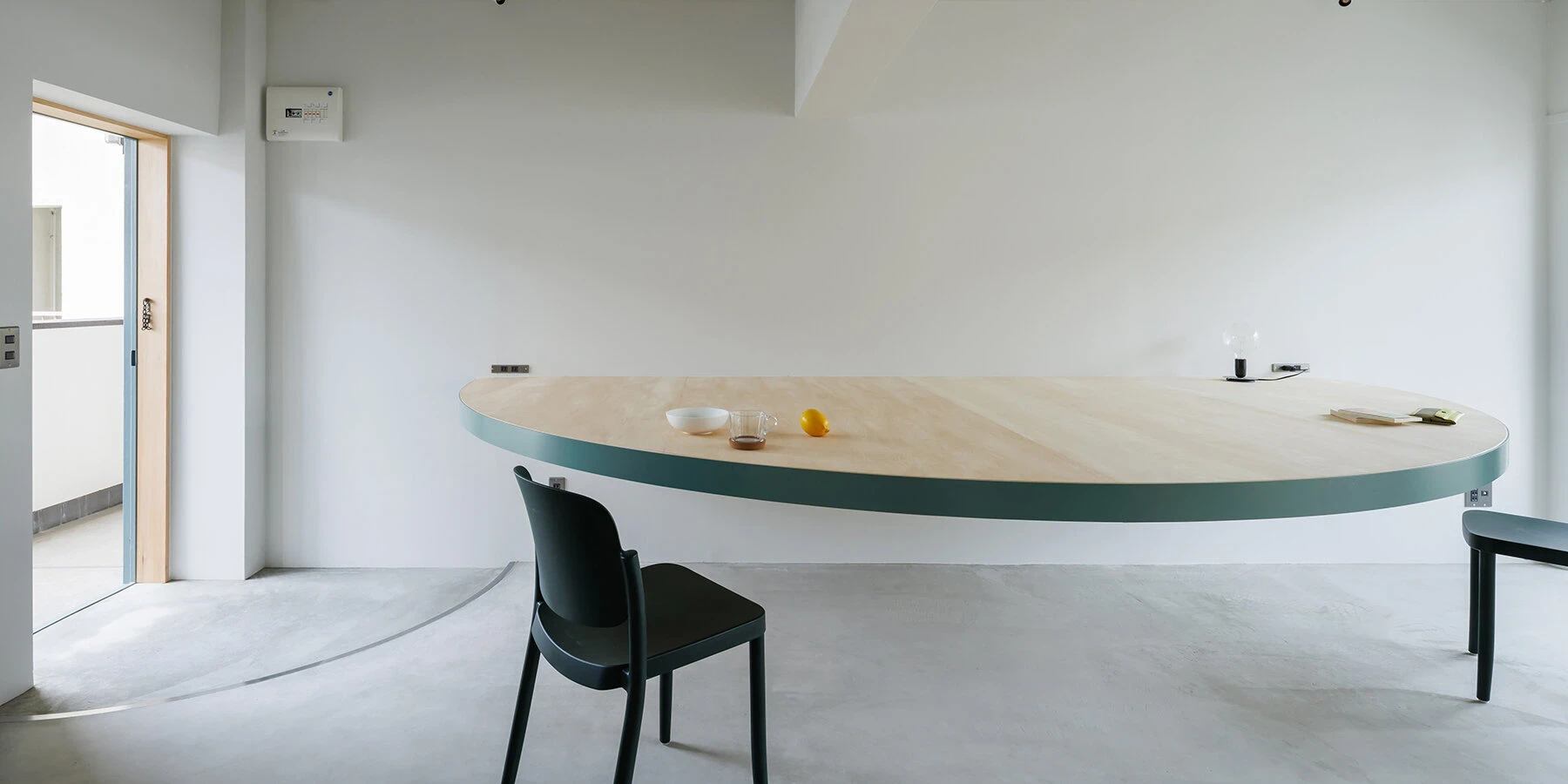
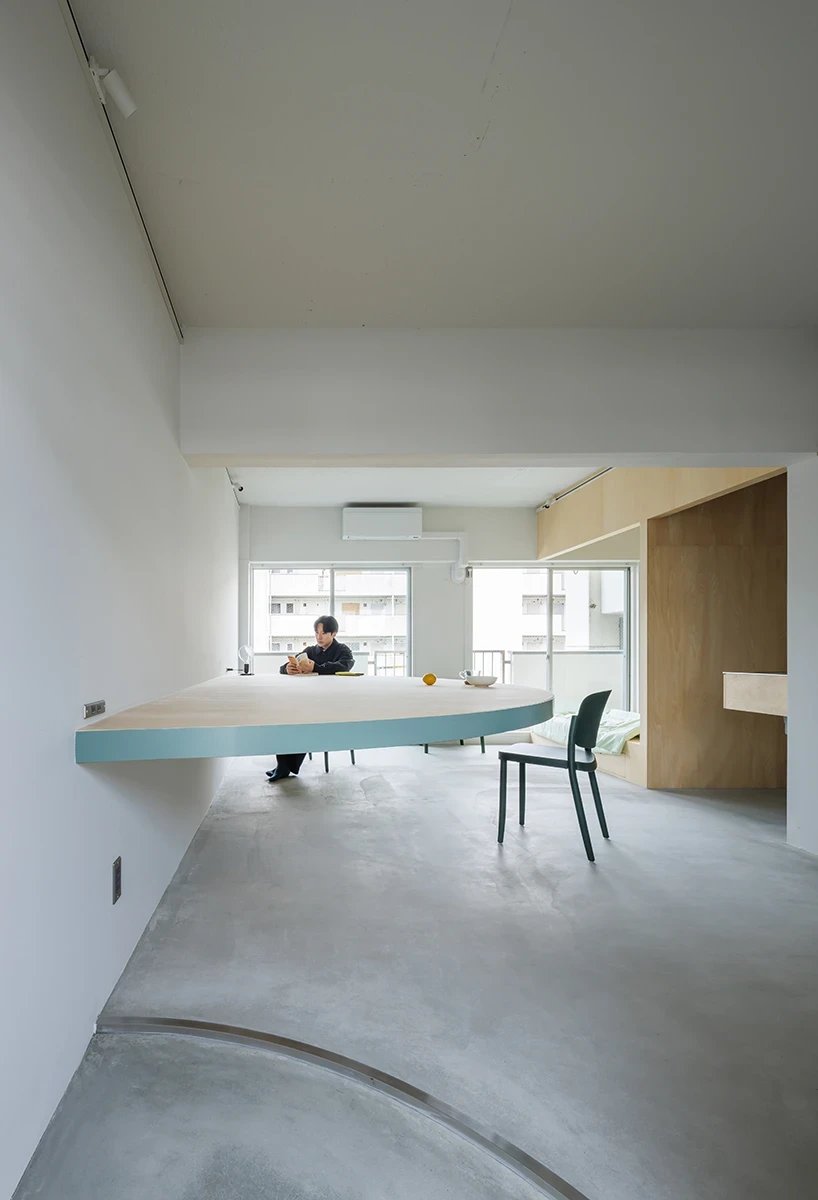
Those walls came down. What remains is a single open floor of polished concrete under white-painted walls, and one large object that reads as furniture and as plan at once. The table is a half-circle, 3.6 metres across, its straight edge fixed to the wall and its curved front cantilevered out over the concrete, the straight edge meeting the wall as though the table were half of a circle the other half of which is buried in the plaster.
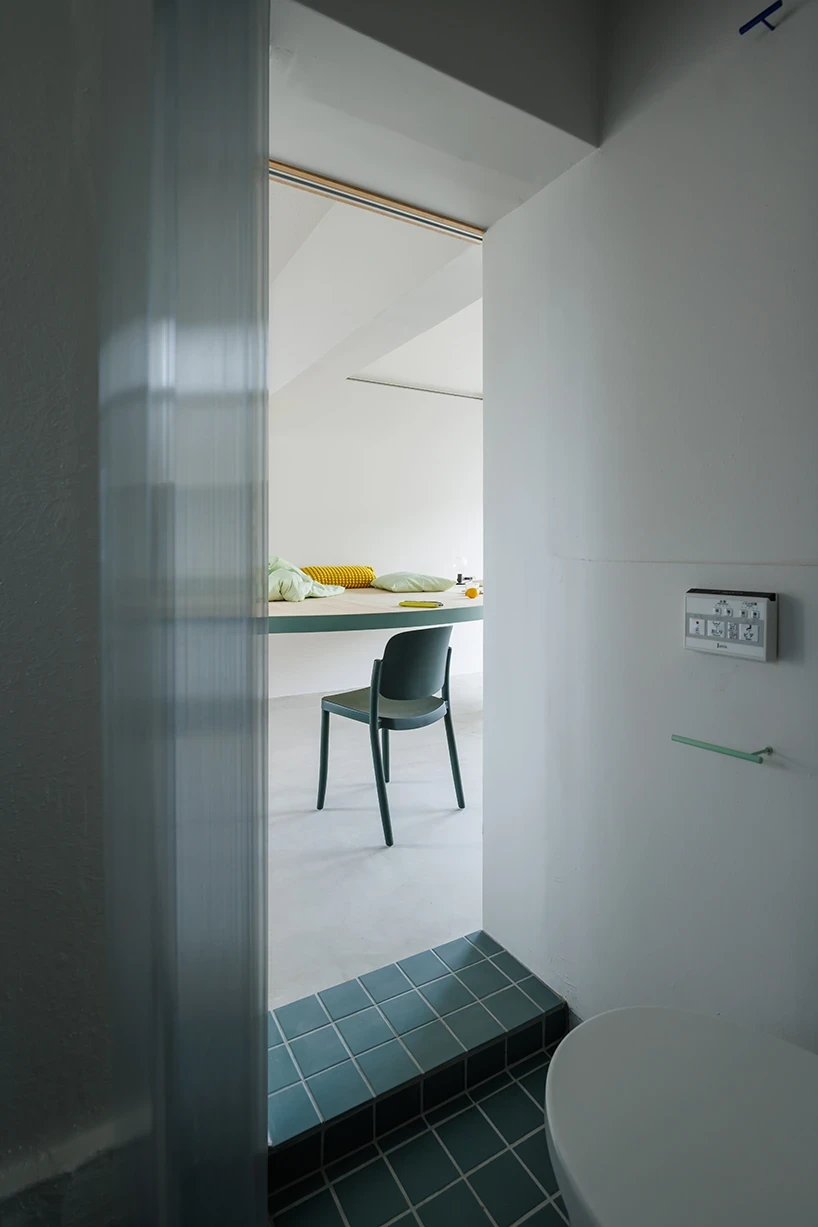
The surface is pale birch, counter height, enormous against the room. Its edge is painted a blue-green that recovers a strange authority the moment the eye finds it repeated elsewhere. The service functions, bedroom and kitchen and toilet and bathroom, are packed into roughly a third of the floor area inside plywood volumes, and each carries the same blue-green, on a chair, on the bathroom's floor tiles, on the paint that traces the table's arc.
No single function is assigned to the table. People eat at it, work at it, talk across it, rest against it, and the design keeps those boundaries deliberately loose. A man sits reading beneath its cantilevered edge; three chairs are scattered around it rather than pulled up in formation. In the low afternoon light the arc casts a shadow on the concrete that repeats the table's shape, so the room seems to hold two semicircles, one solid and one dark.
The move is quiet but not small. Where the old plan sorted a family into rooms and roles, the table proposes a household organized around a shared surface with no hierarchy built into it. For welfare workers rotating through temporary housing, that openness is the point, a home that asks nothing of how you use it and offers a single generous place to gather.