Across the United States, from forest defenders outside Atlanta to the militarised stretch of the Texas border, Jordan Conway builds It's Not the Wind, a documentary series on personal autonomy under strain.
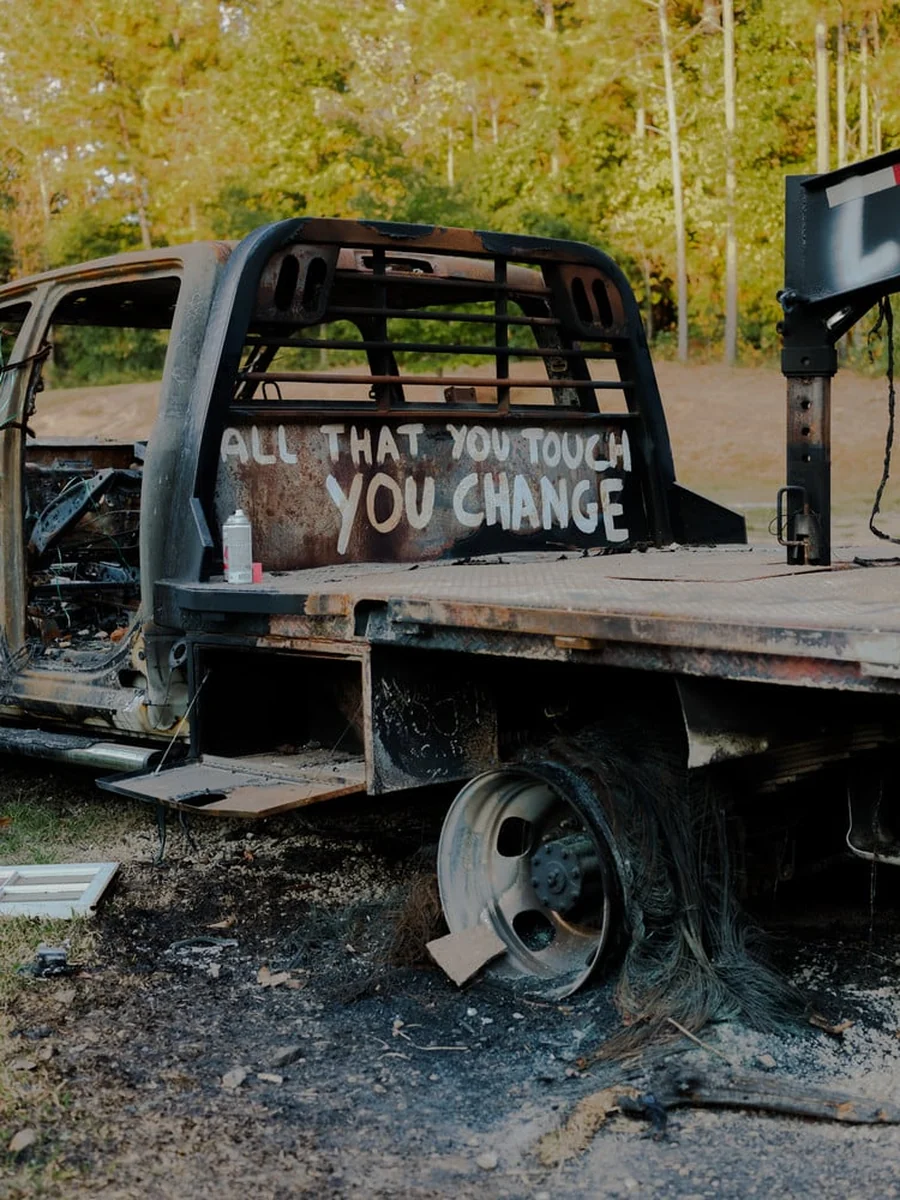
Jordan Conway spends It's Not the Wind moving between Americans who have decided, in very different ways, to take back some measure of control over their own lives. The work crosses fronts that rarely share a frame: forest defenders camped outside Atlanta, the militarised stretch of the Texas border, gun ranges and night skies far from either. Its title borrows loosely from Leonard Cohen's writing on discontent, and the photographs read that discontent as a pressure sitting just under the surface of the country.
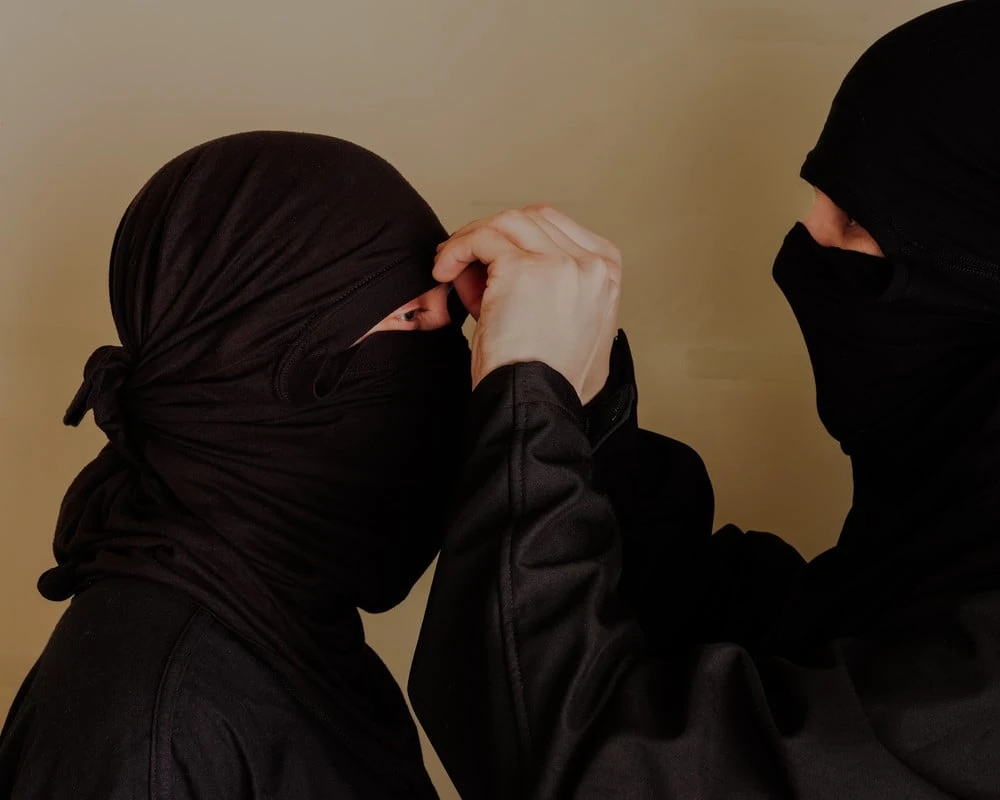
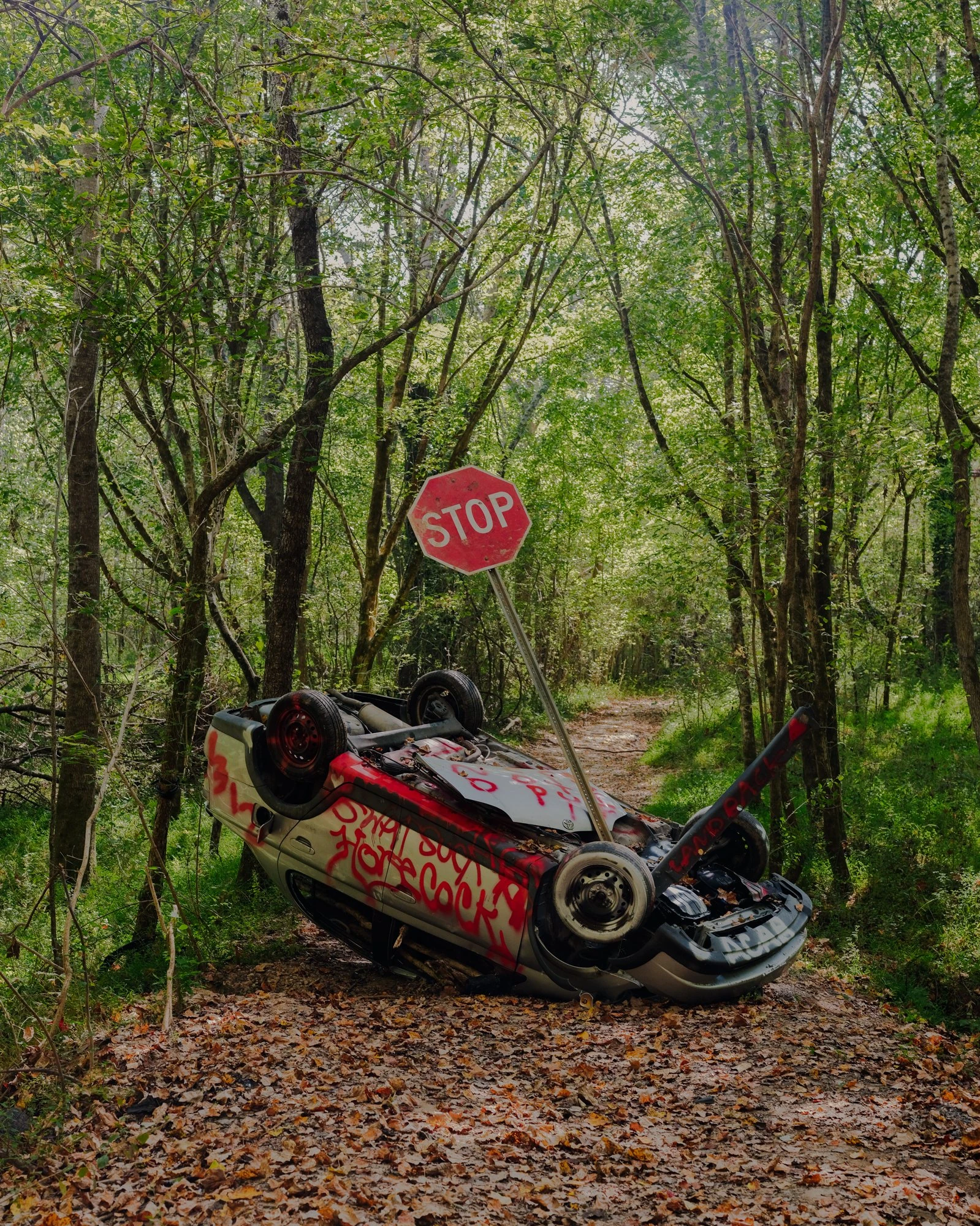
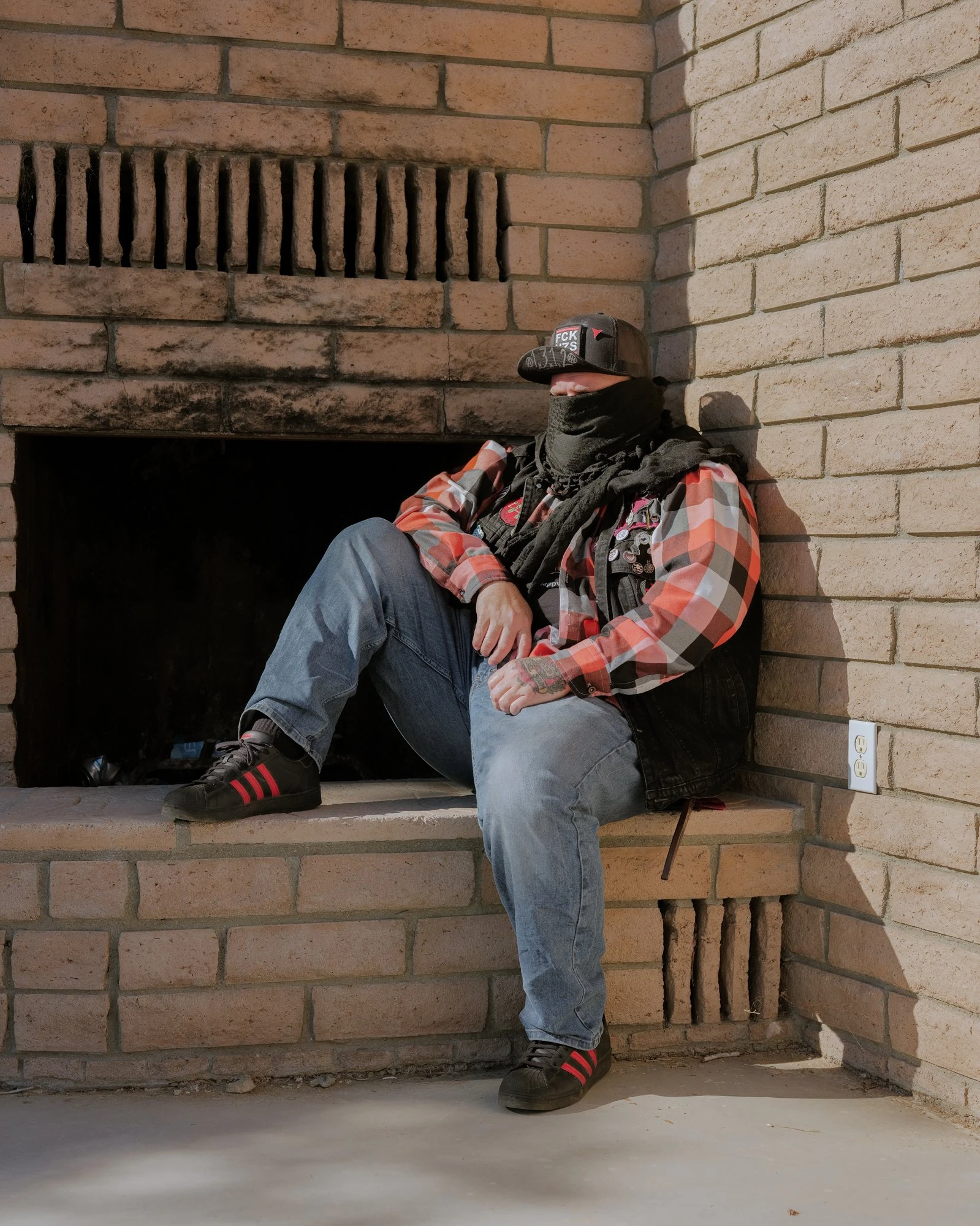
In the woods, the register turns clandestine. Two figures in black balaclavas stand against a bare backdrop, one adjusting the other's mask before whatever comes next. A man in a brown shell jacket reaches into the canopy to rig a rope between the trees. Nearby, a small car lies upended across a trail, its underside spray-painted red, a stolen STOP sign planted beside it like a barricade against anyone who might follow.
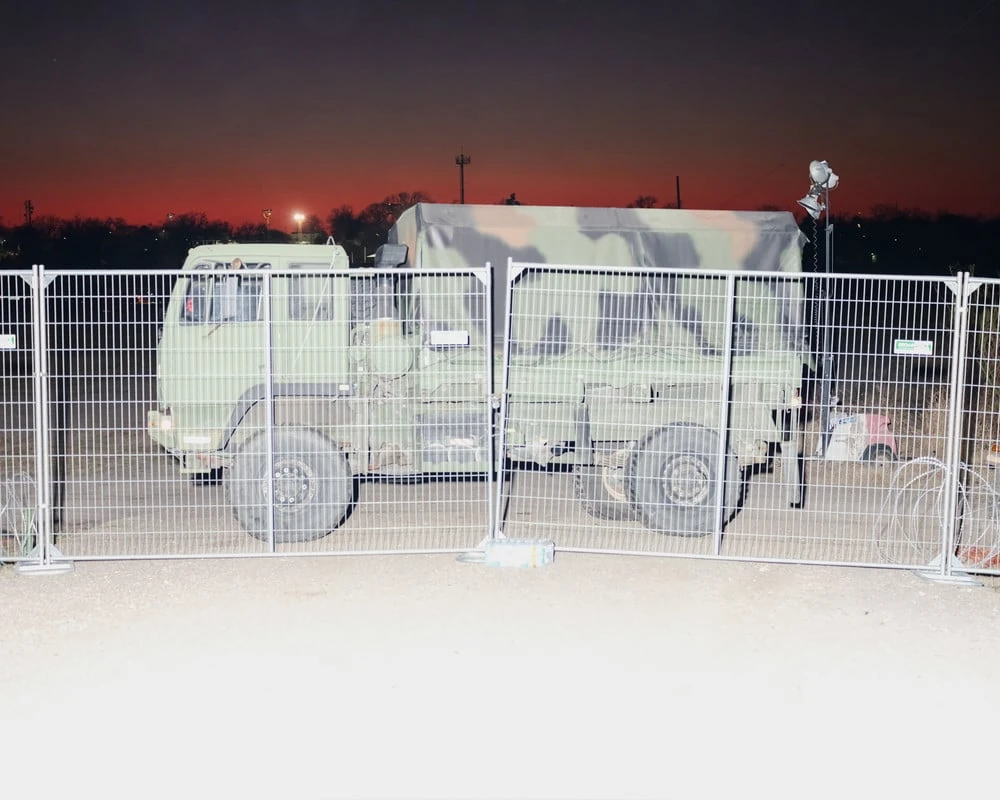
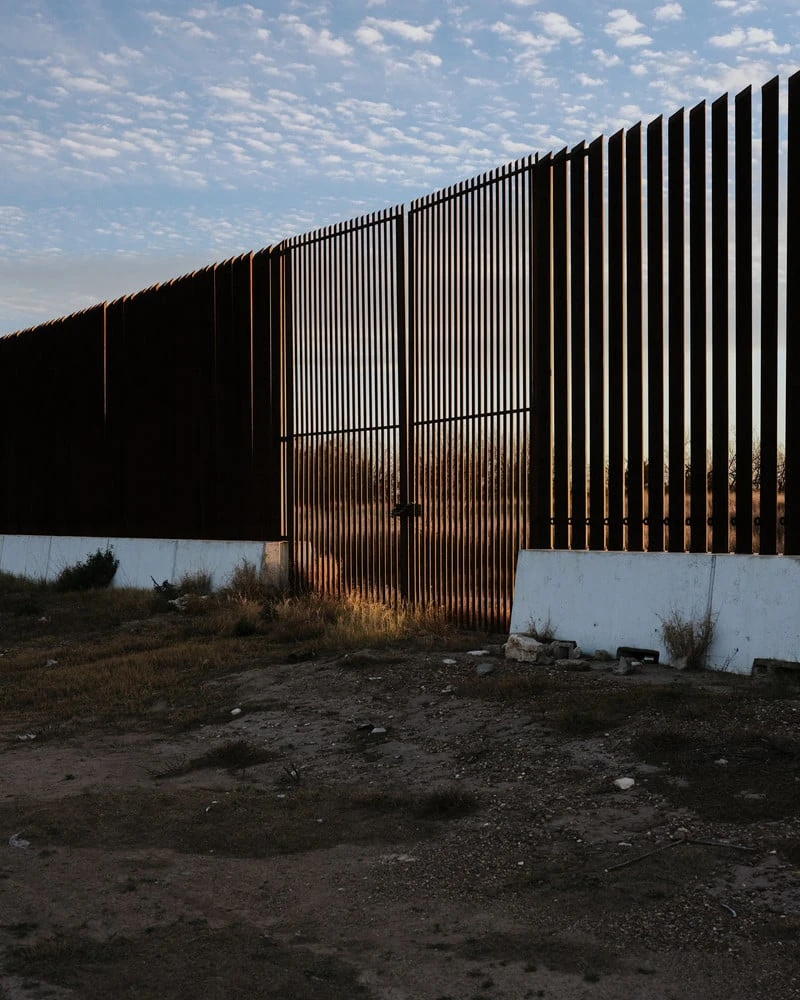
The Texas pictures pull back into the open. A steel bollard wall runs off toward the horizon at dusk, its bars catching the last gold light while the ground in front sits churned and littered. After dark, a National Guard transport waits behind temporary fencing under a sky bled deep red, a floodlight rigged at the perimeter. Conway photographs the apparatus of control without raising his voice, letting the scale of it speak.
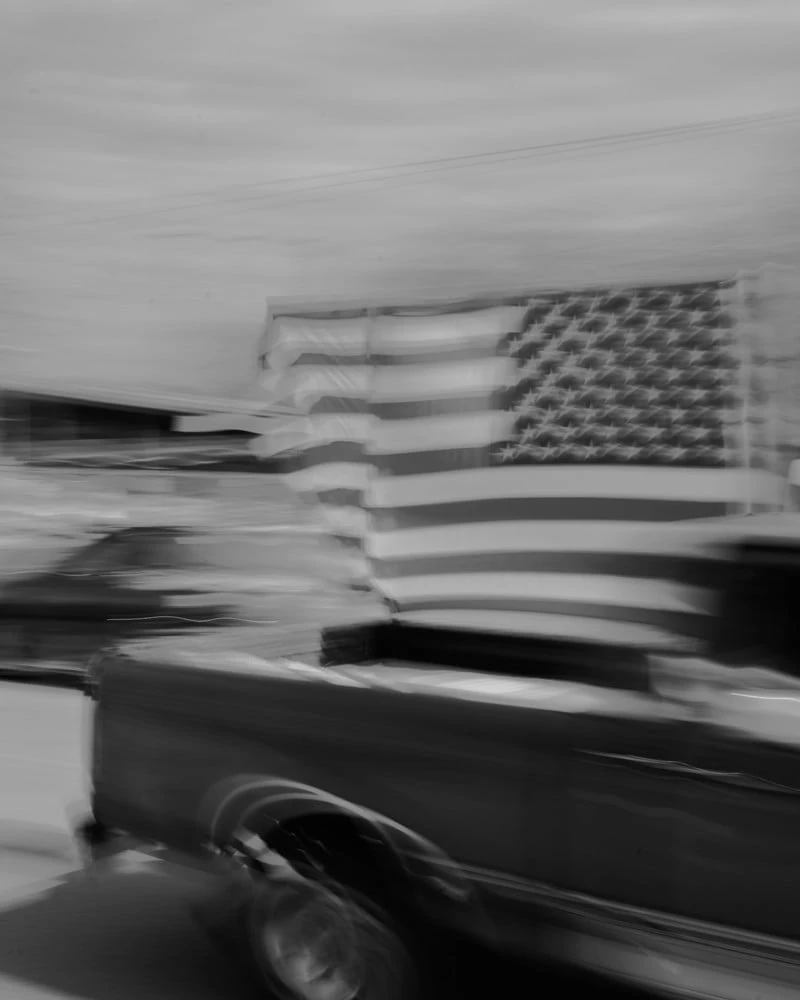
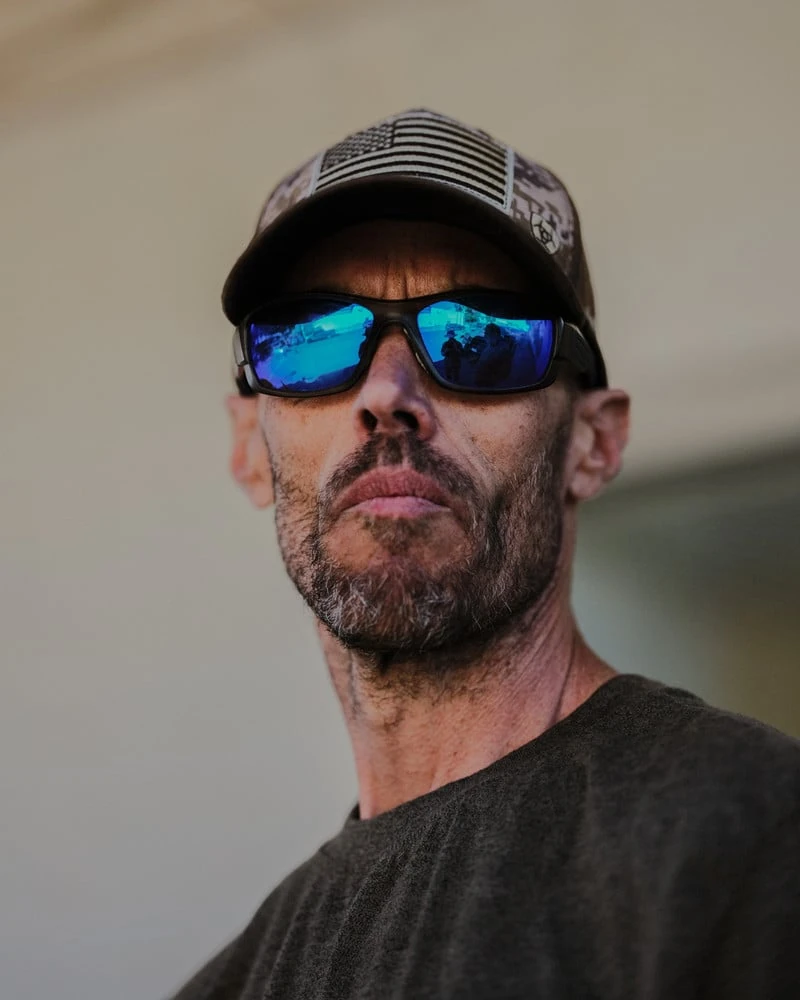
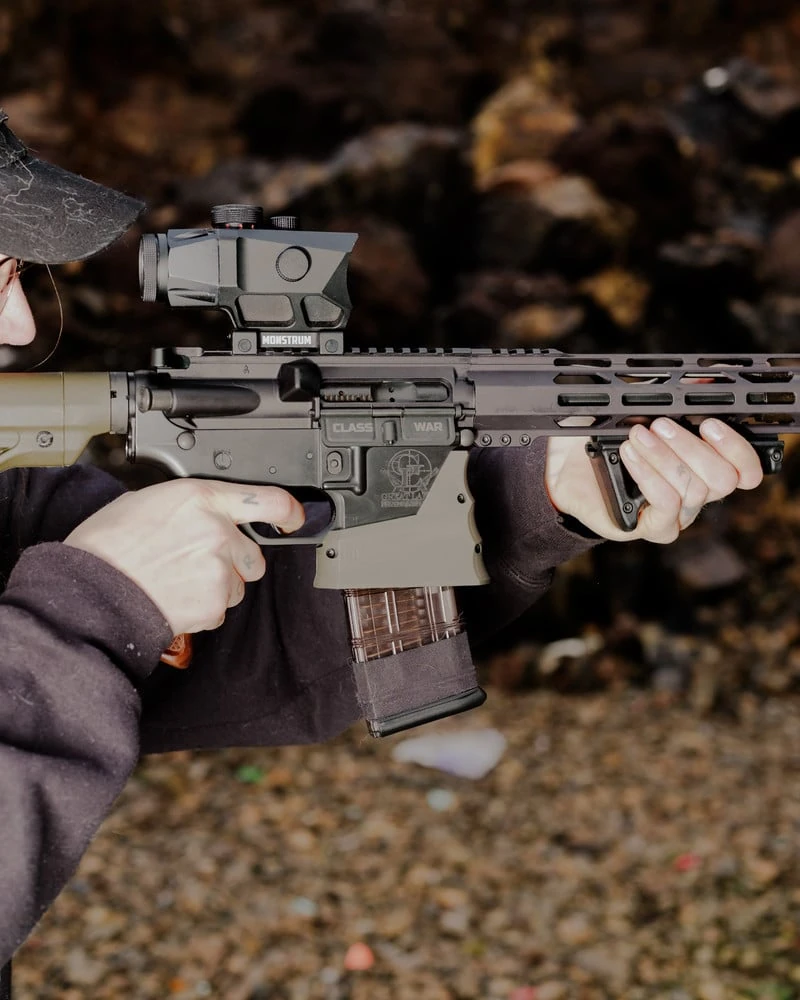
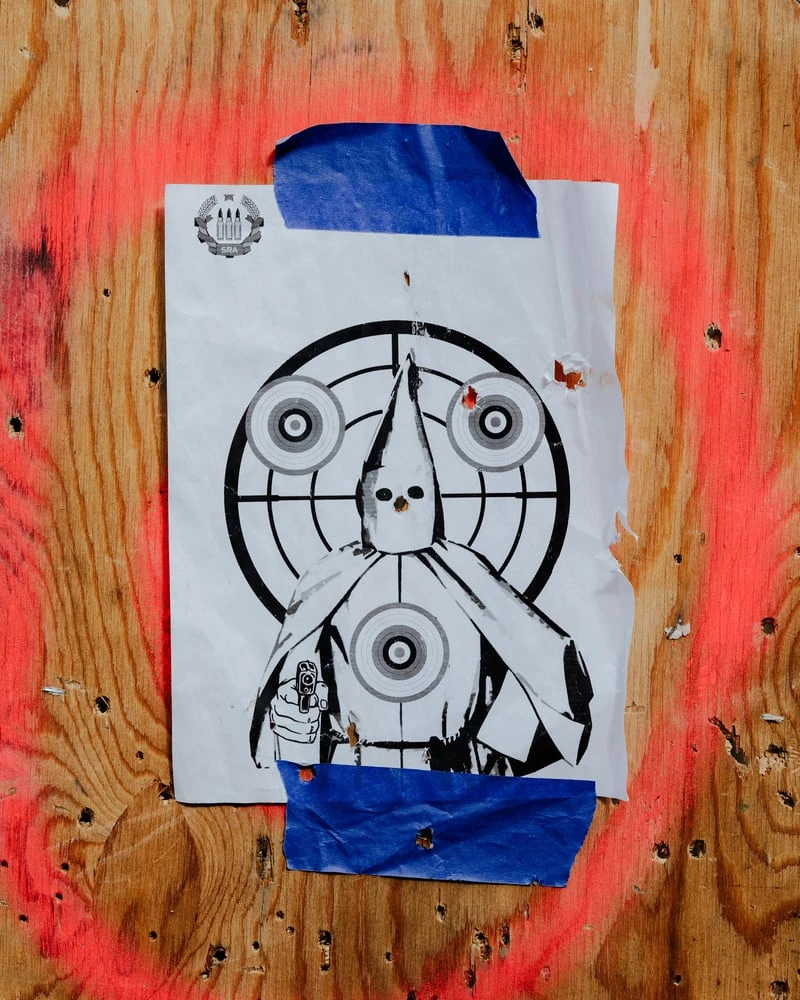
Other frames refuse easy alignment. Hands cradle an AR-15 whose lower receiver is stamped CLASS WAR; a paper target shaped like a hooded Klansman, pistol raised, hangs taped to bullet-chewed plywood; a pickup carrying an oversized flag blurs past in black and white. A weathered man stares out from under a flag-print cap, the photographer and his rig reflected in mirrored blue lenses. The series holds grievance and resistance in the same hand, and declines to sort one from the other.
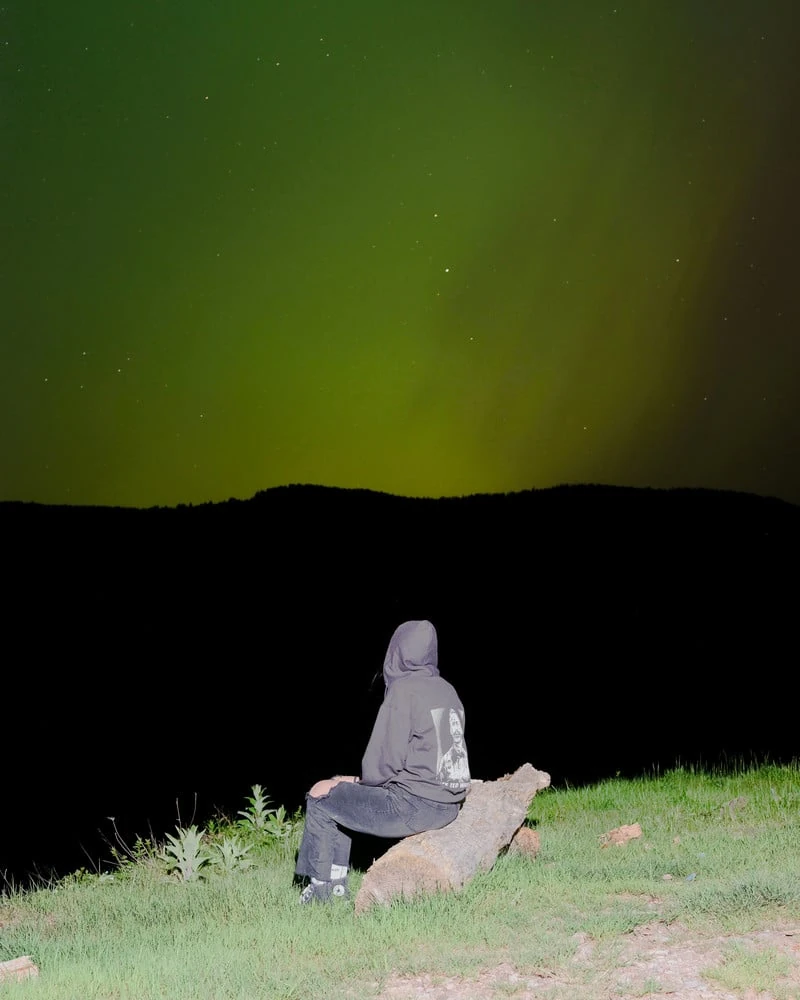
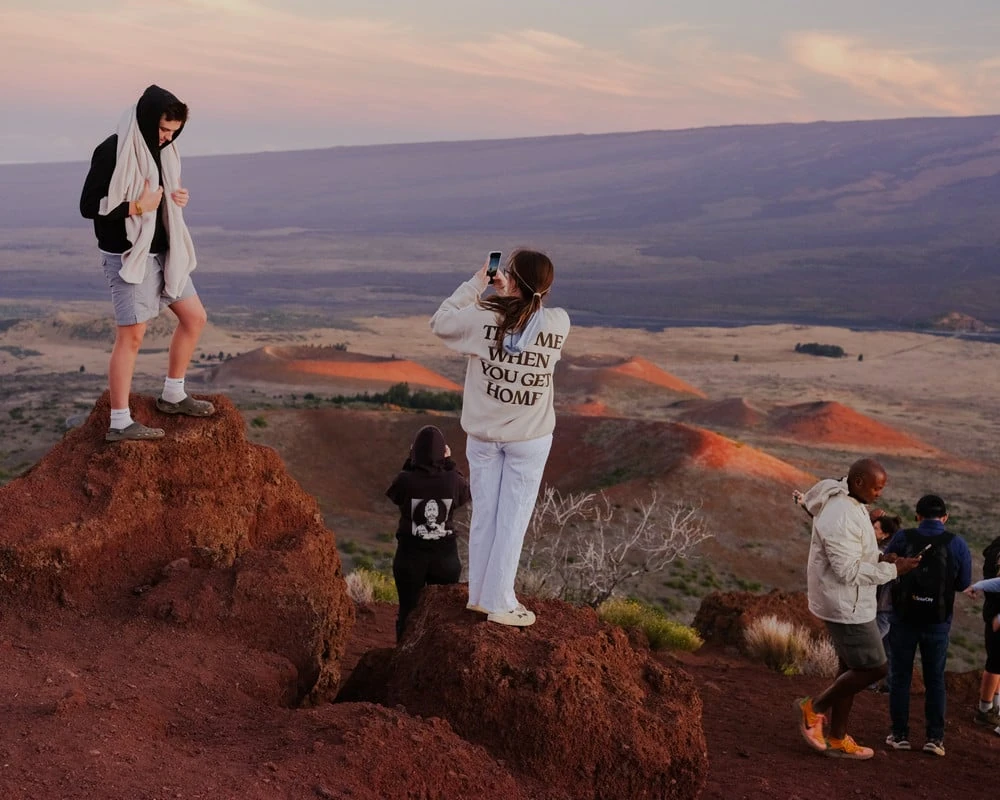
Then the pressure lifts for a moment. A lone figure sits on a fallen log watching a green aurora flood the night, hood up, back turned. On a field of red volcanic cinder at dusk, tourists climb the cones and photograph the view, one of them in a sweatshirt printed TEXT ME WHEN YOU GET HOME. The line lands as both caption and warning. Conway reads the existential strain of contemporary America in its faces and its land in equal measure, and leaves the question of what comes next where he found it, unresolved.