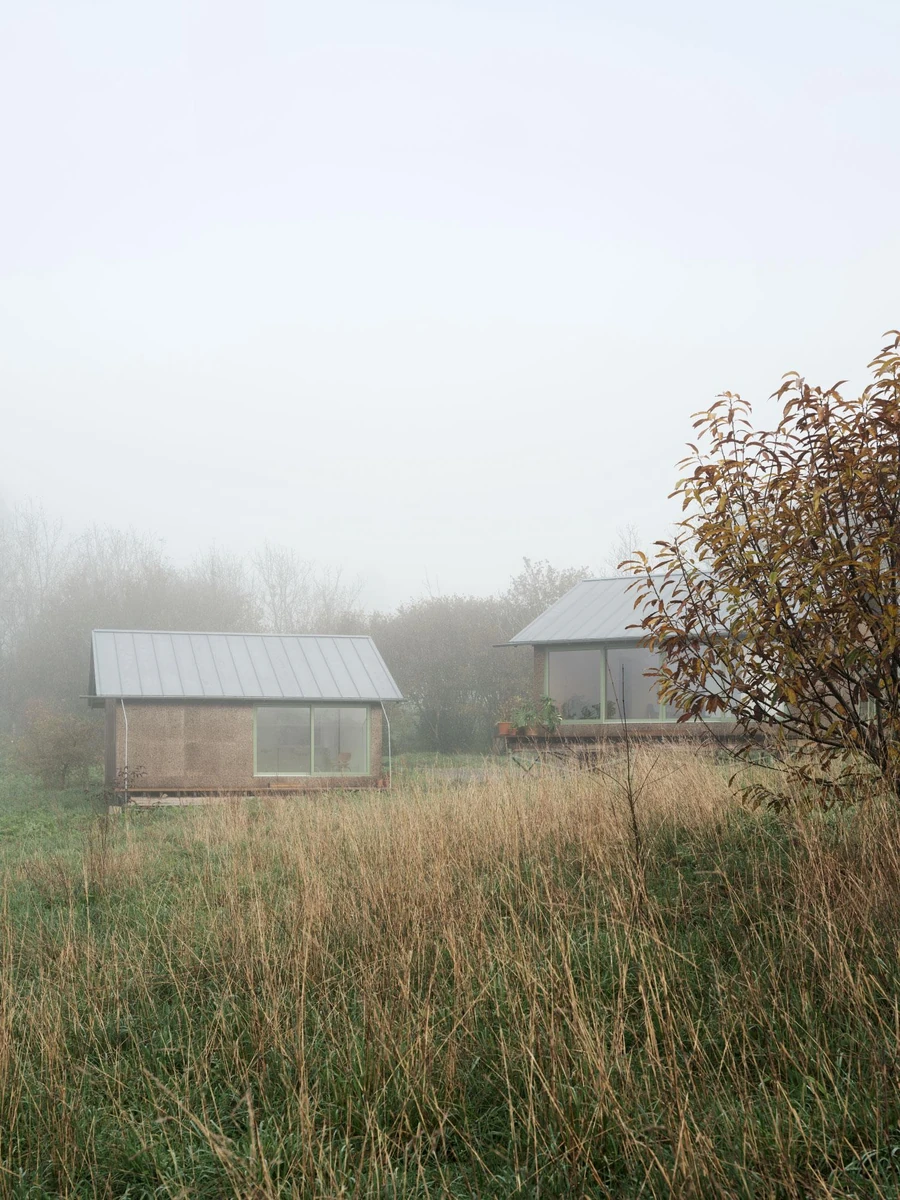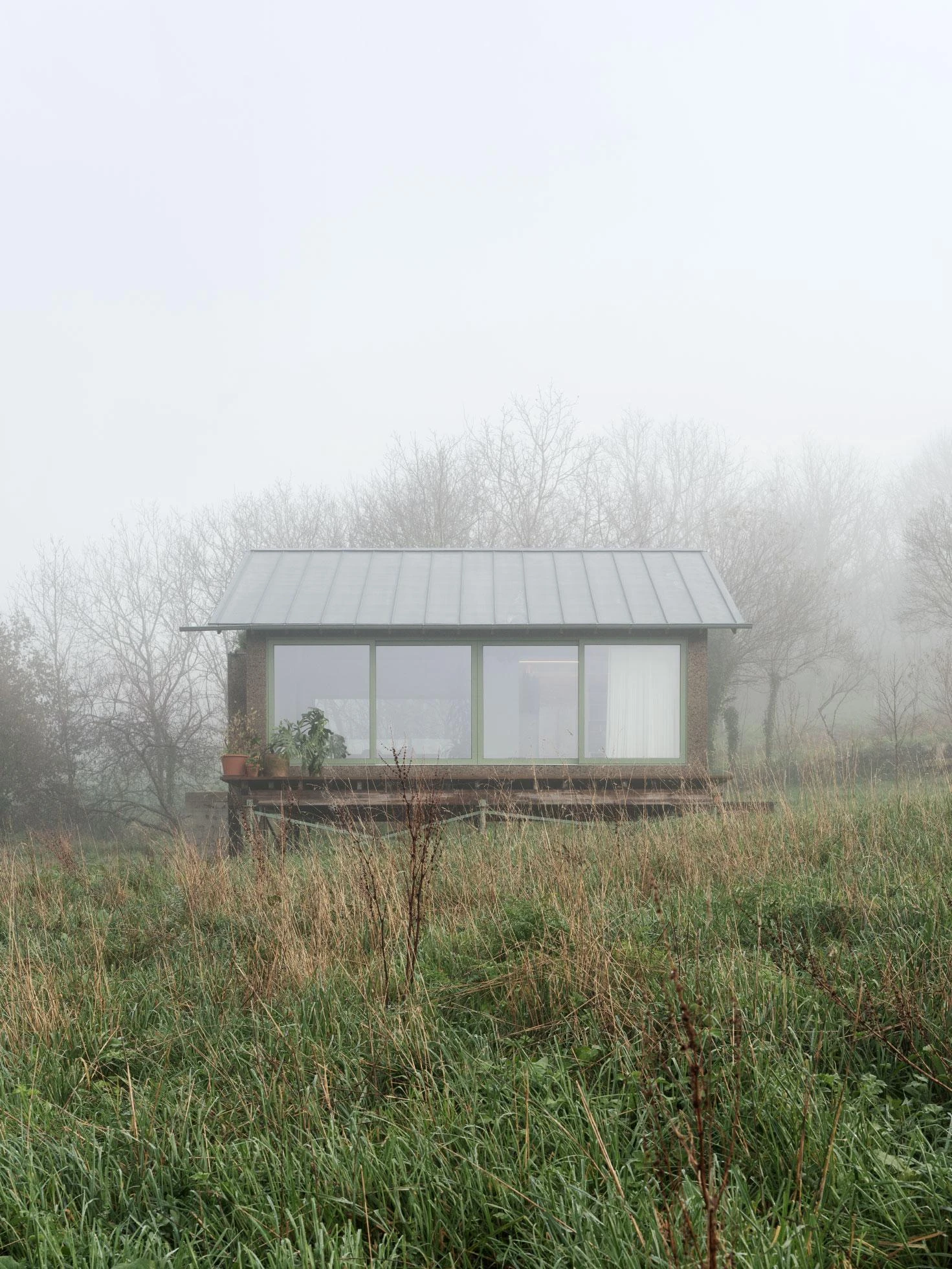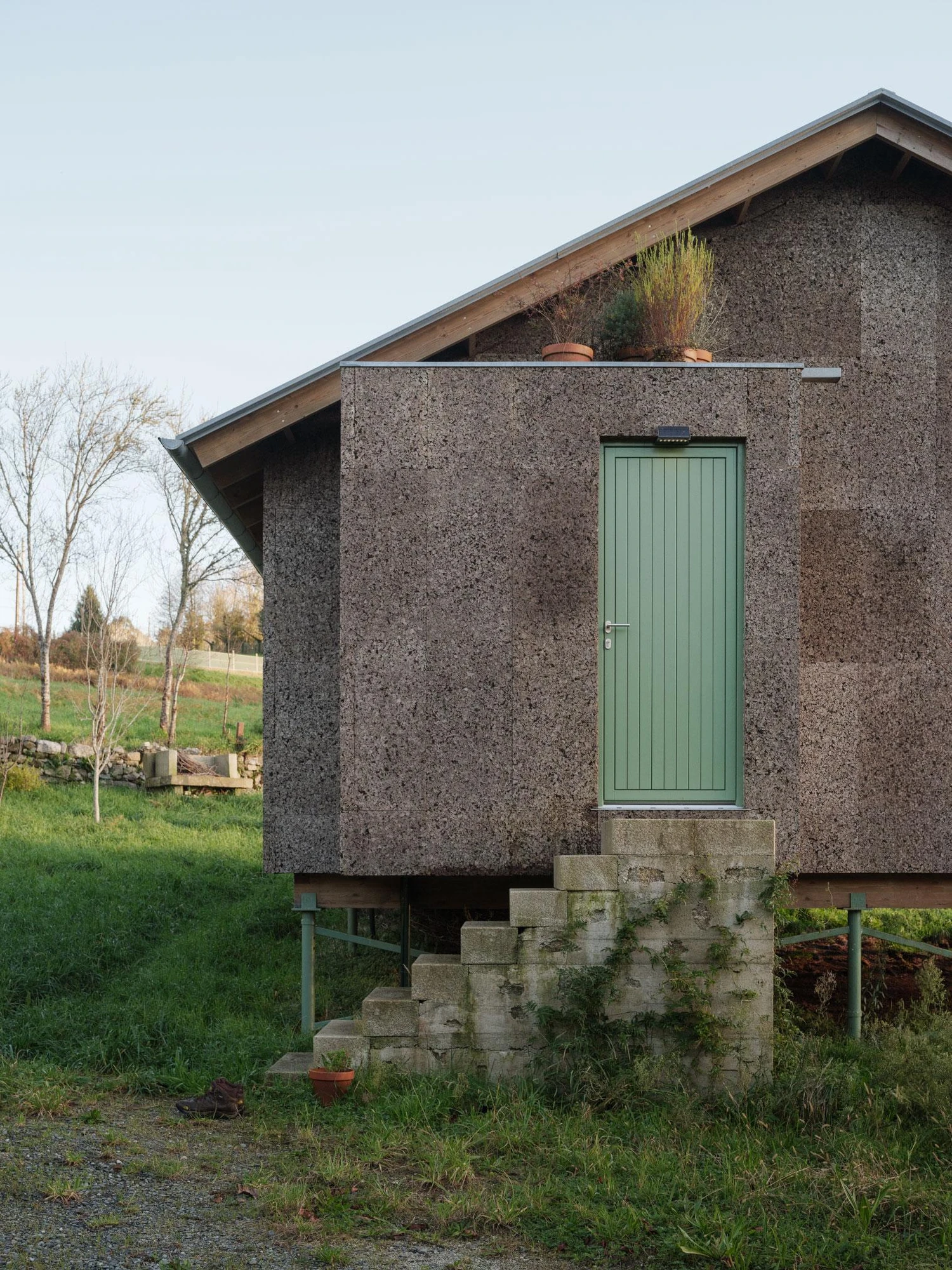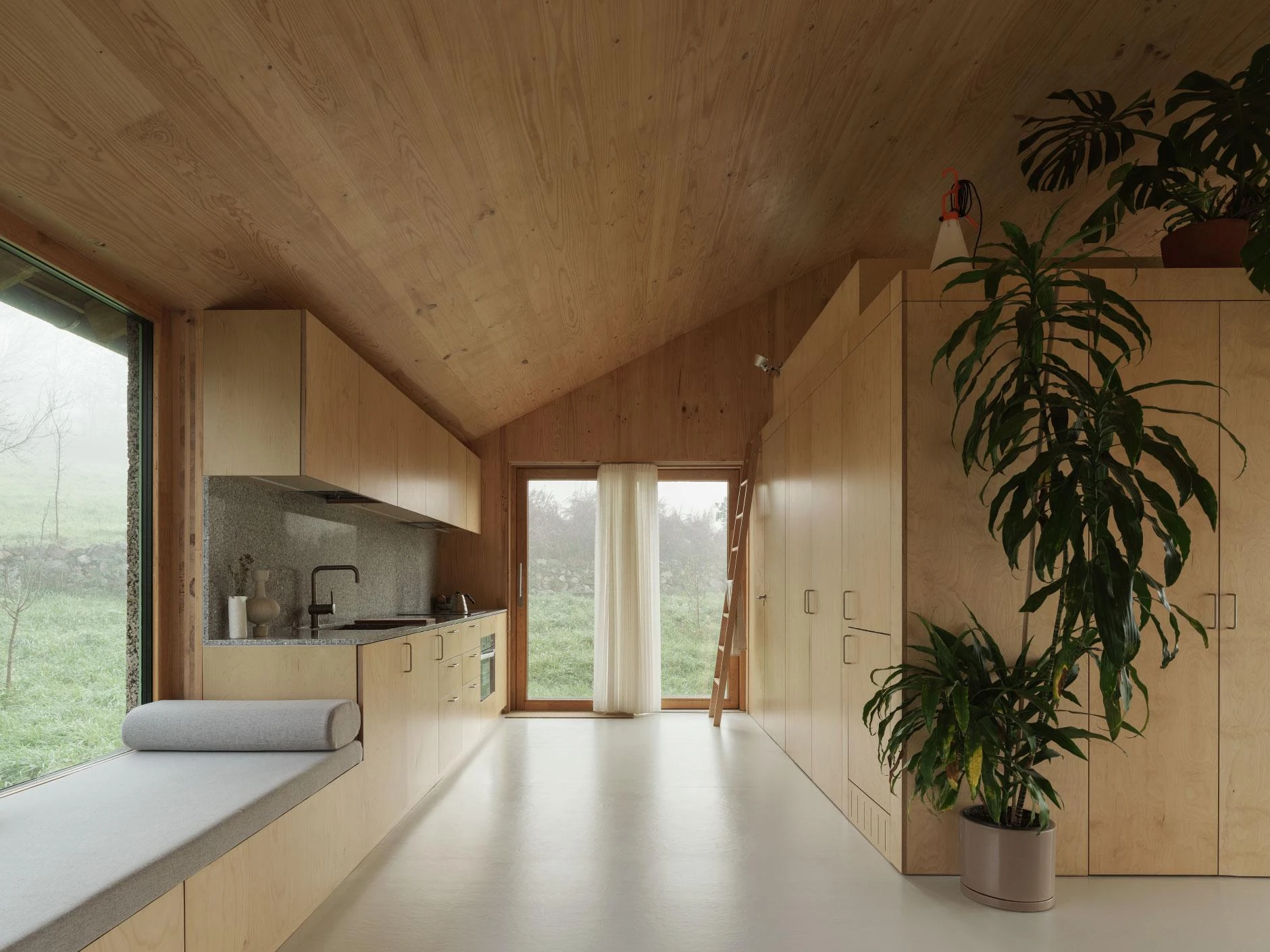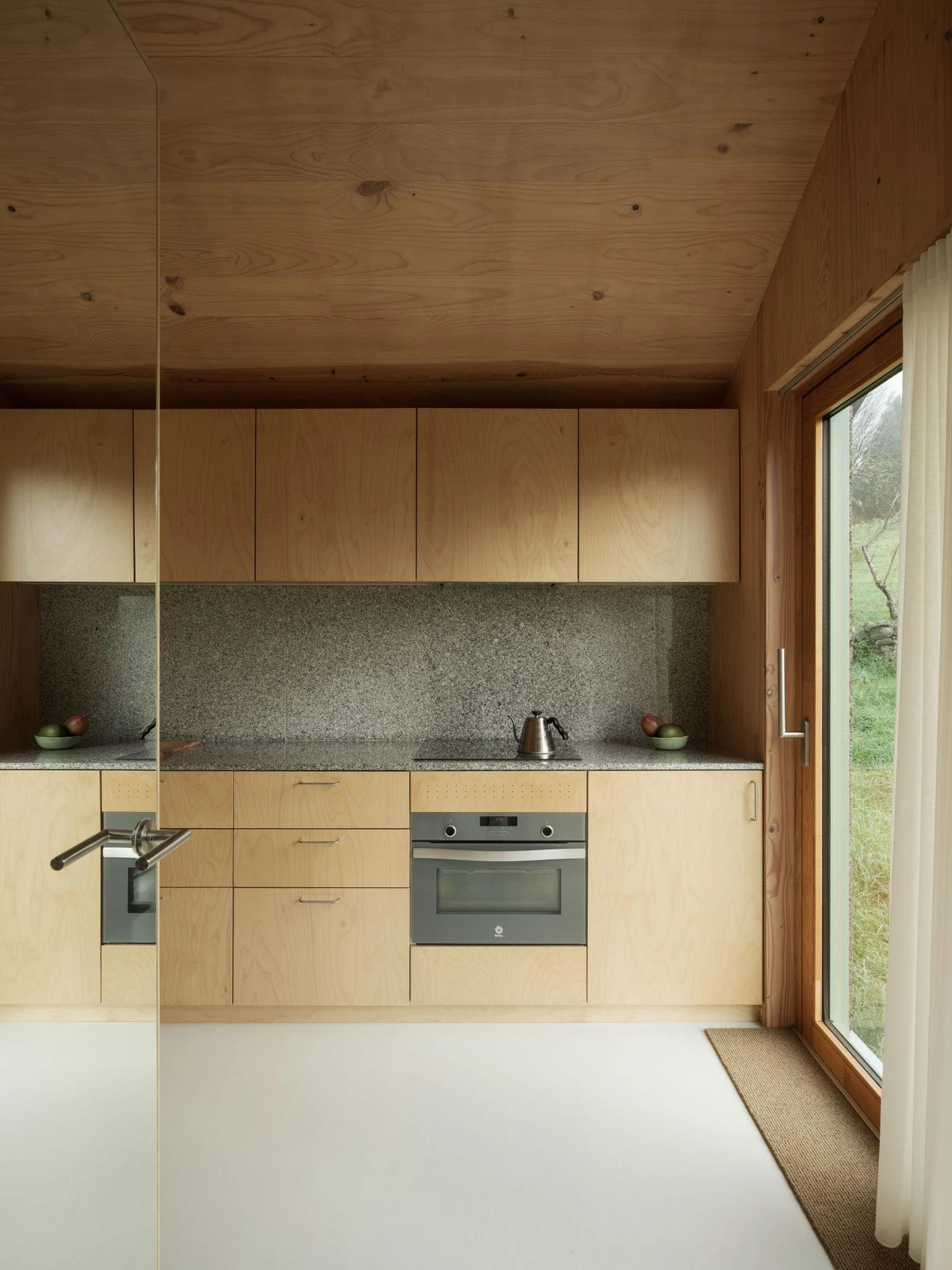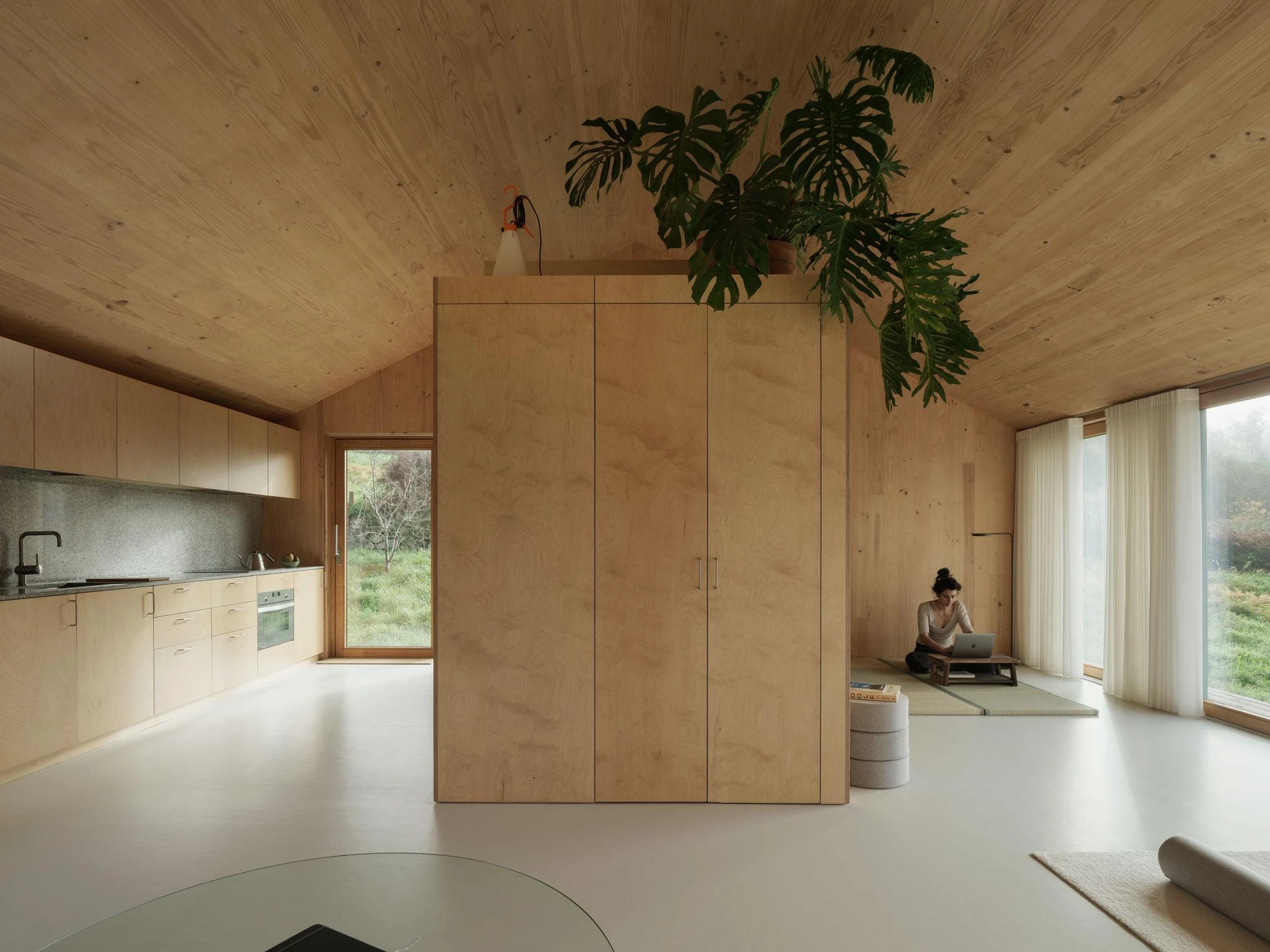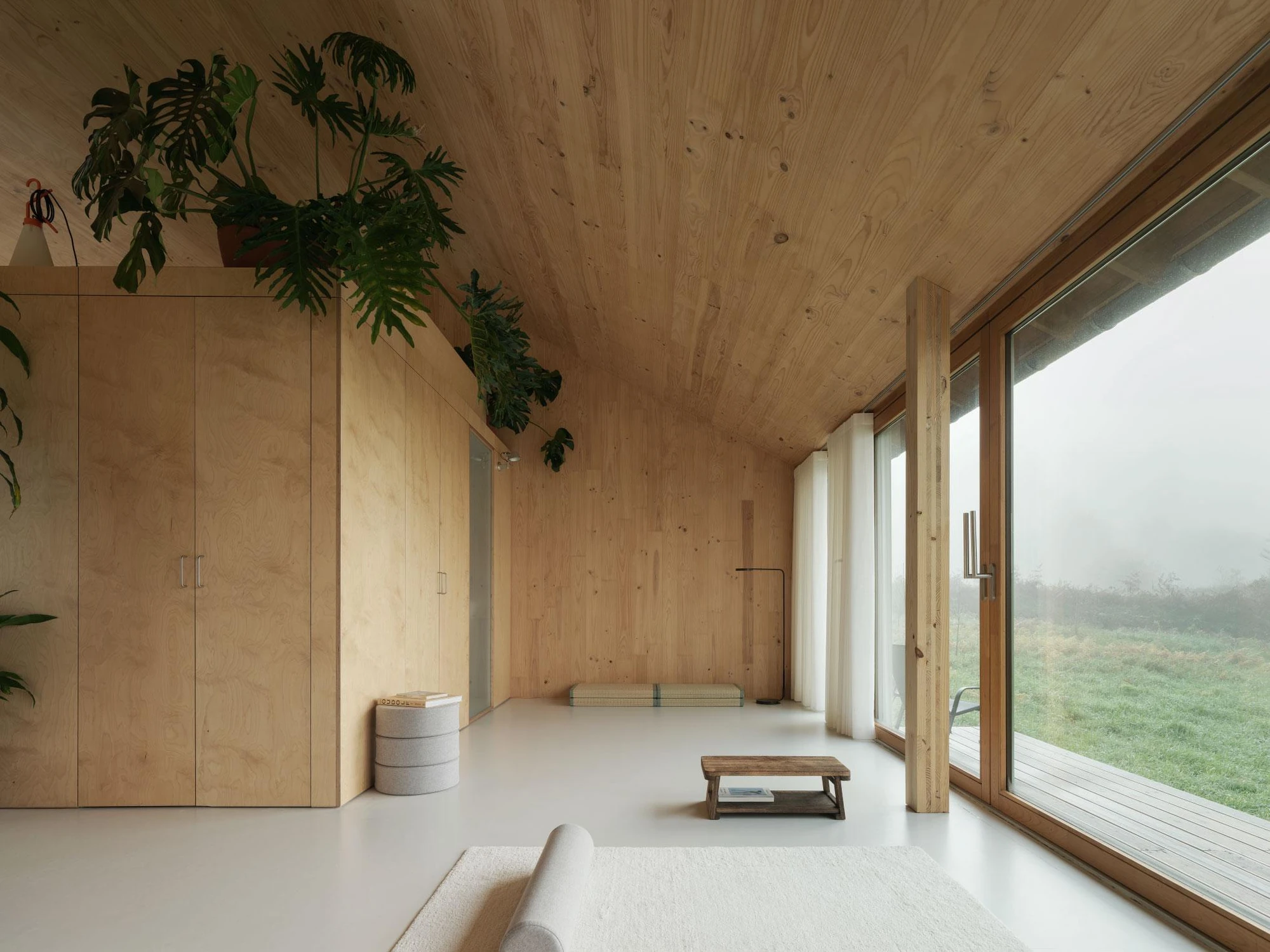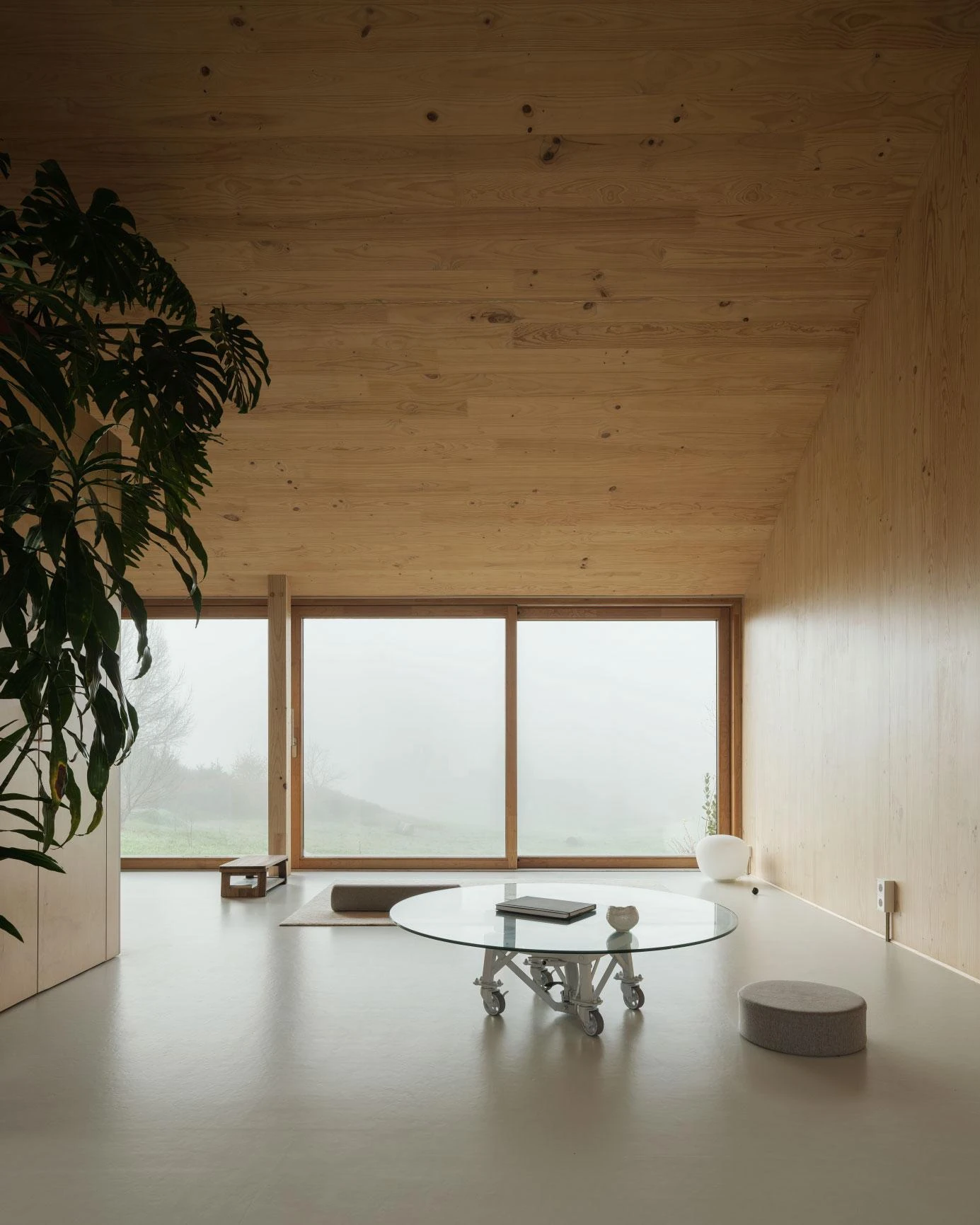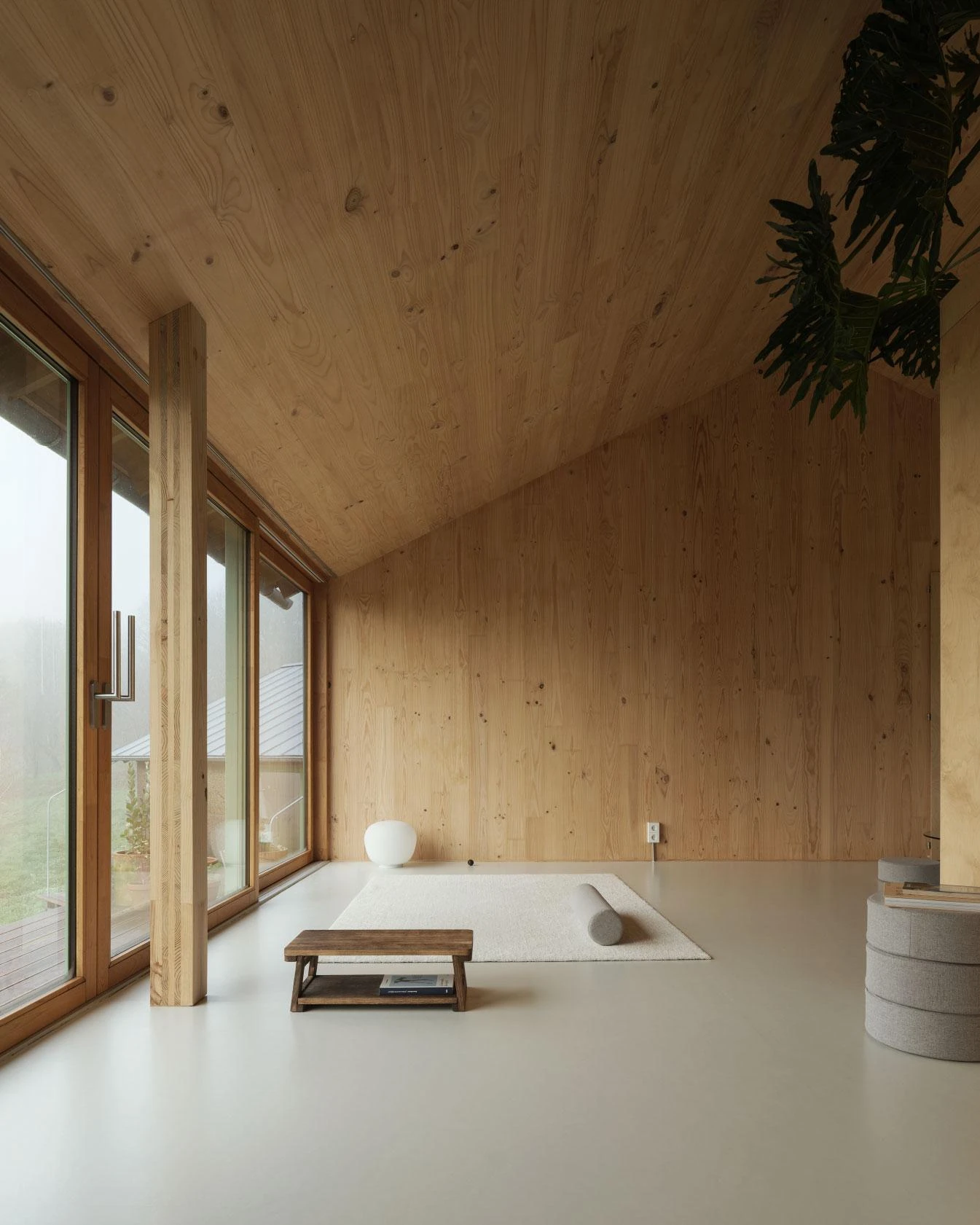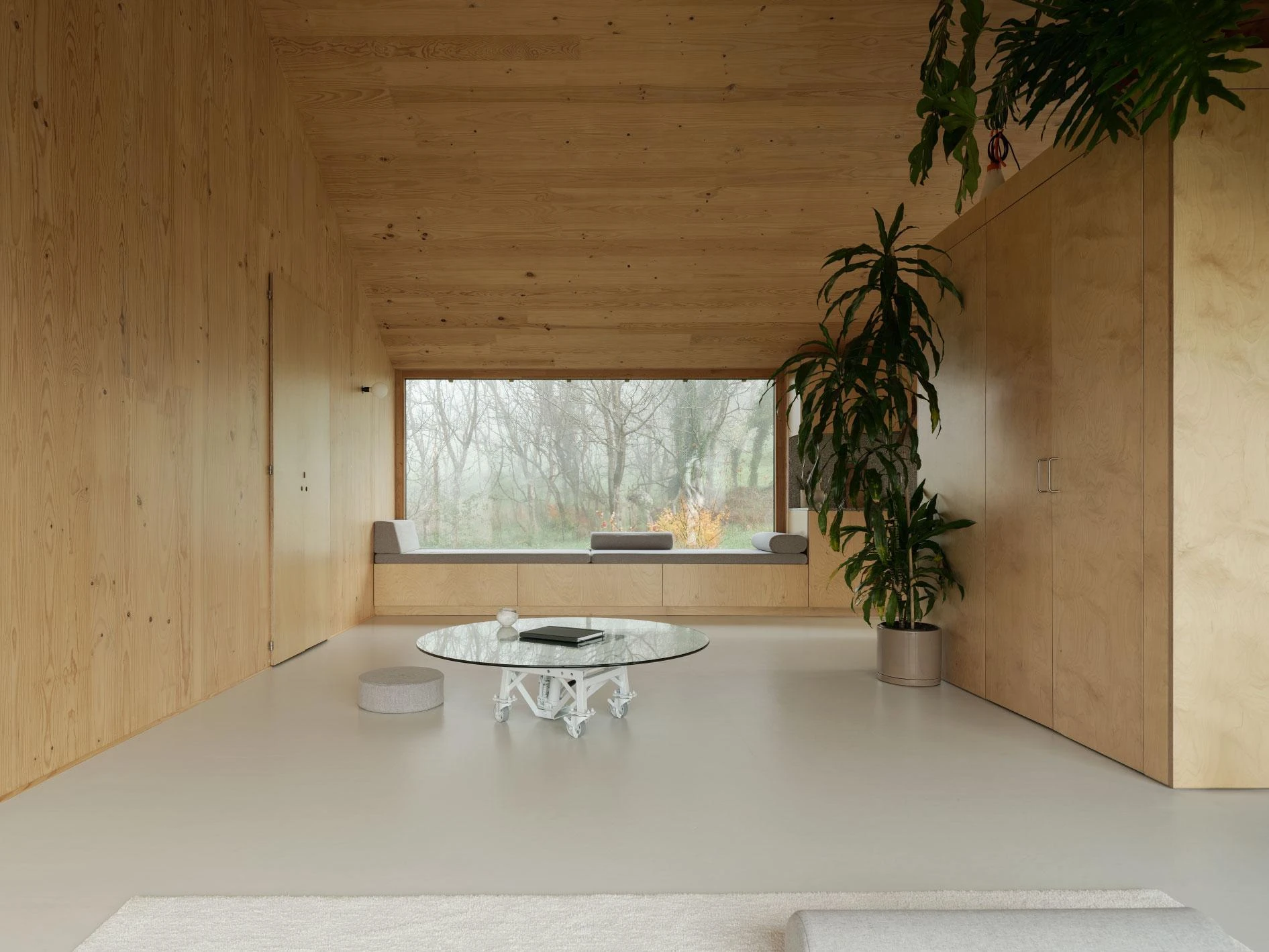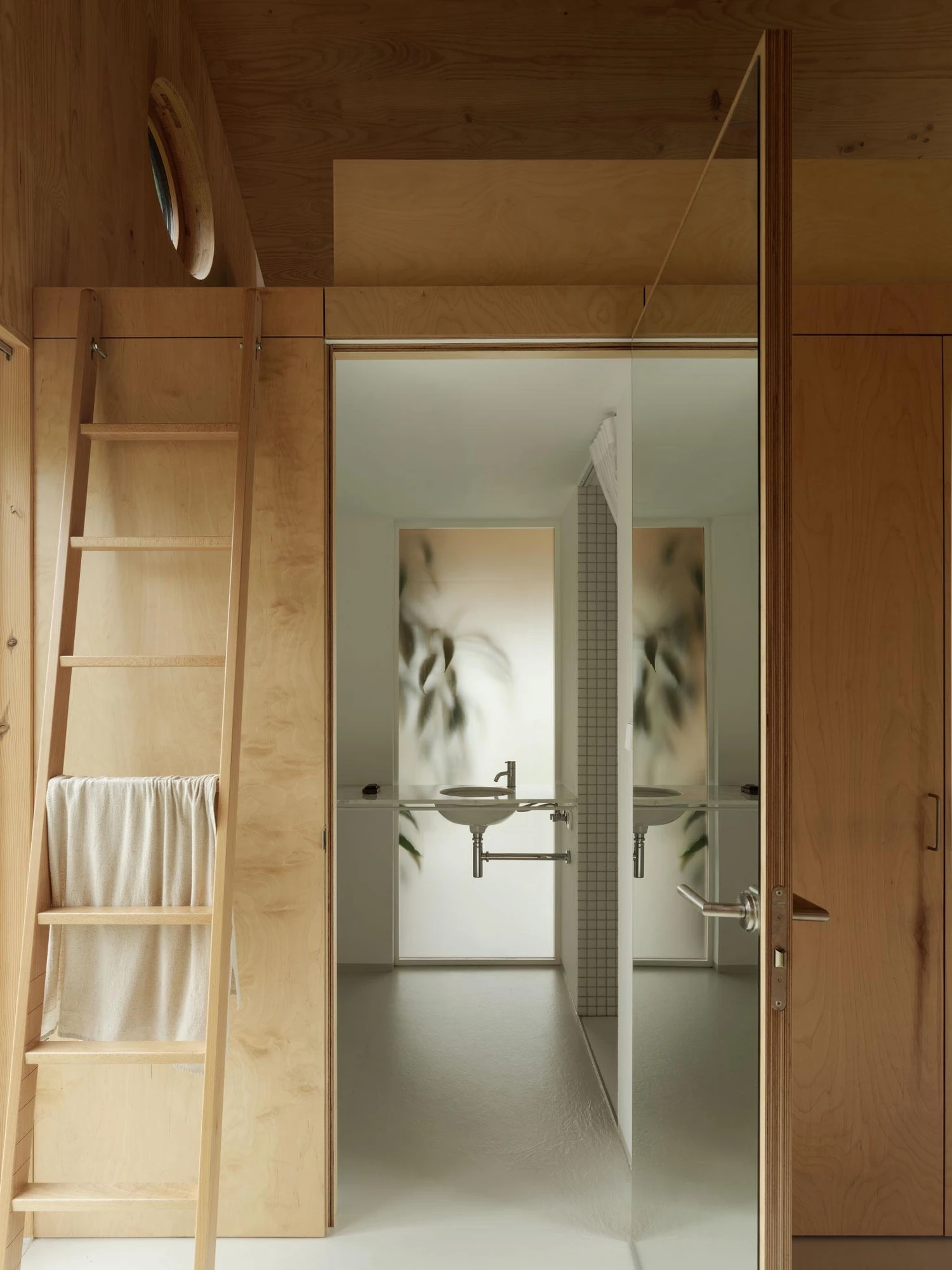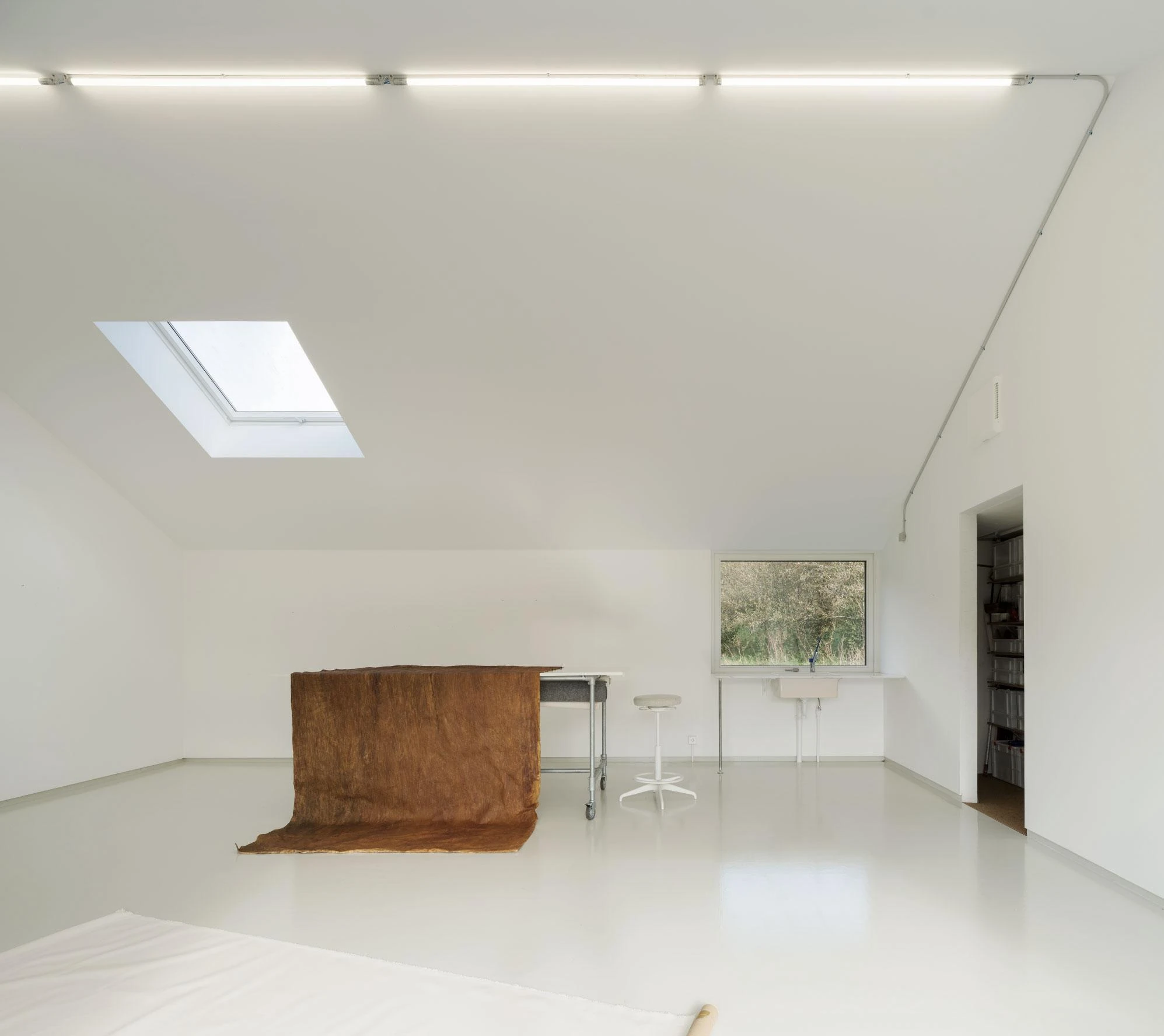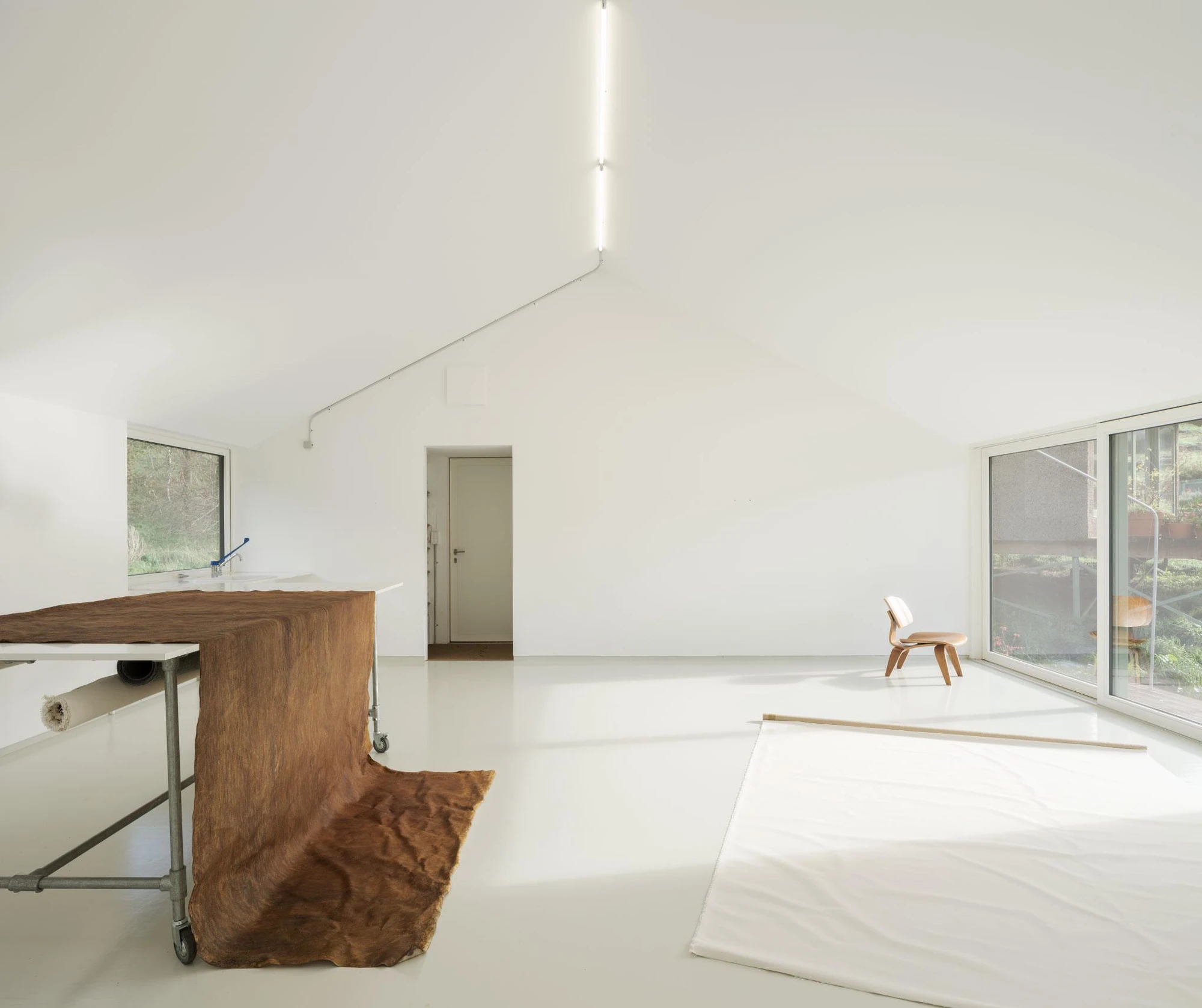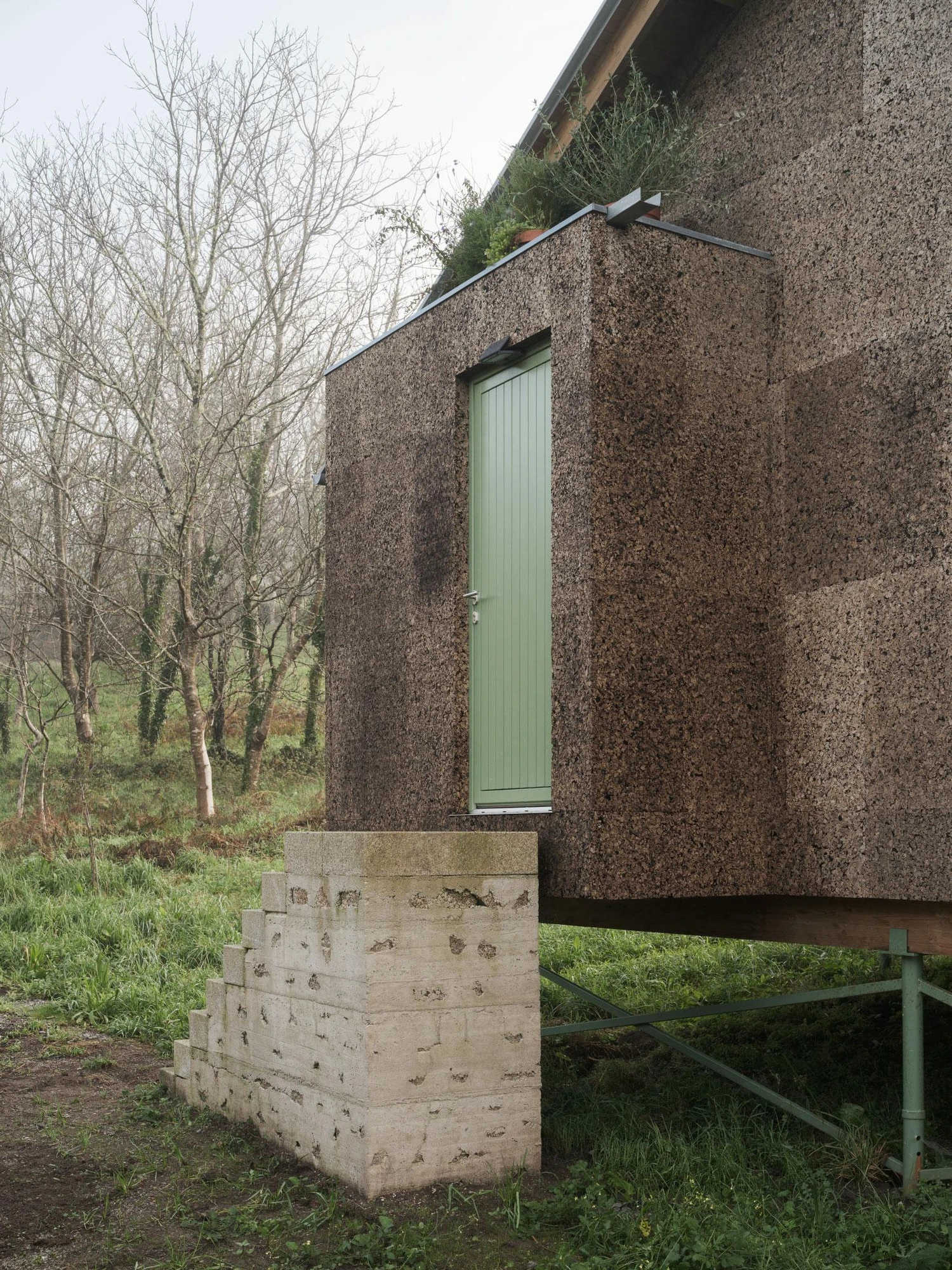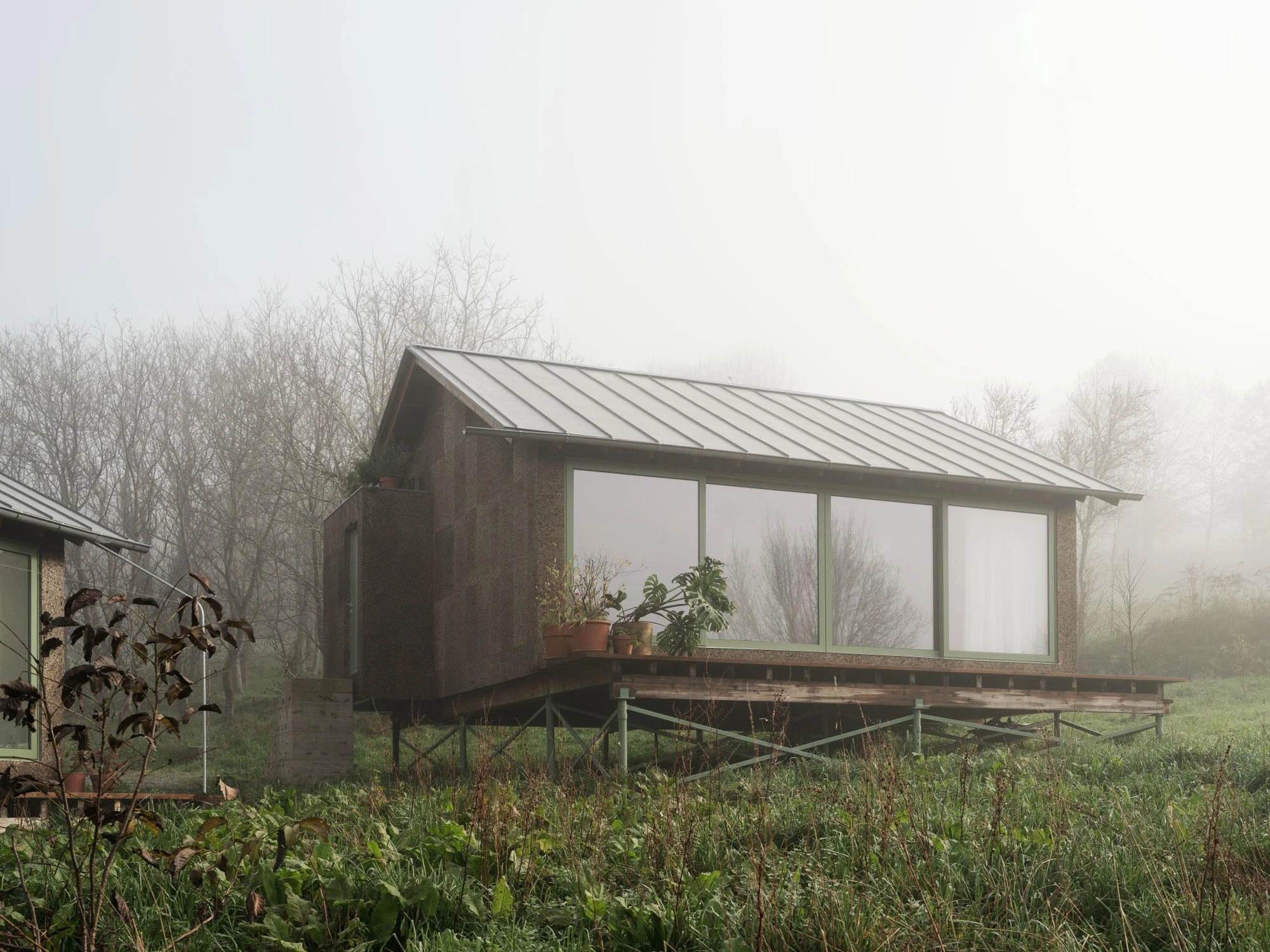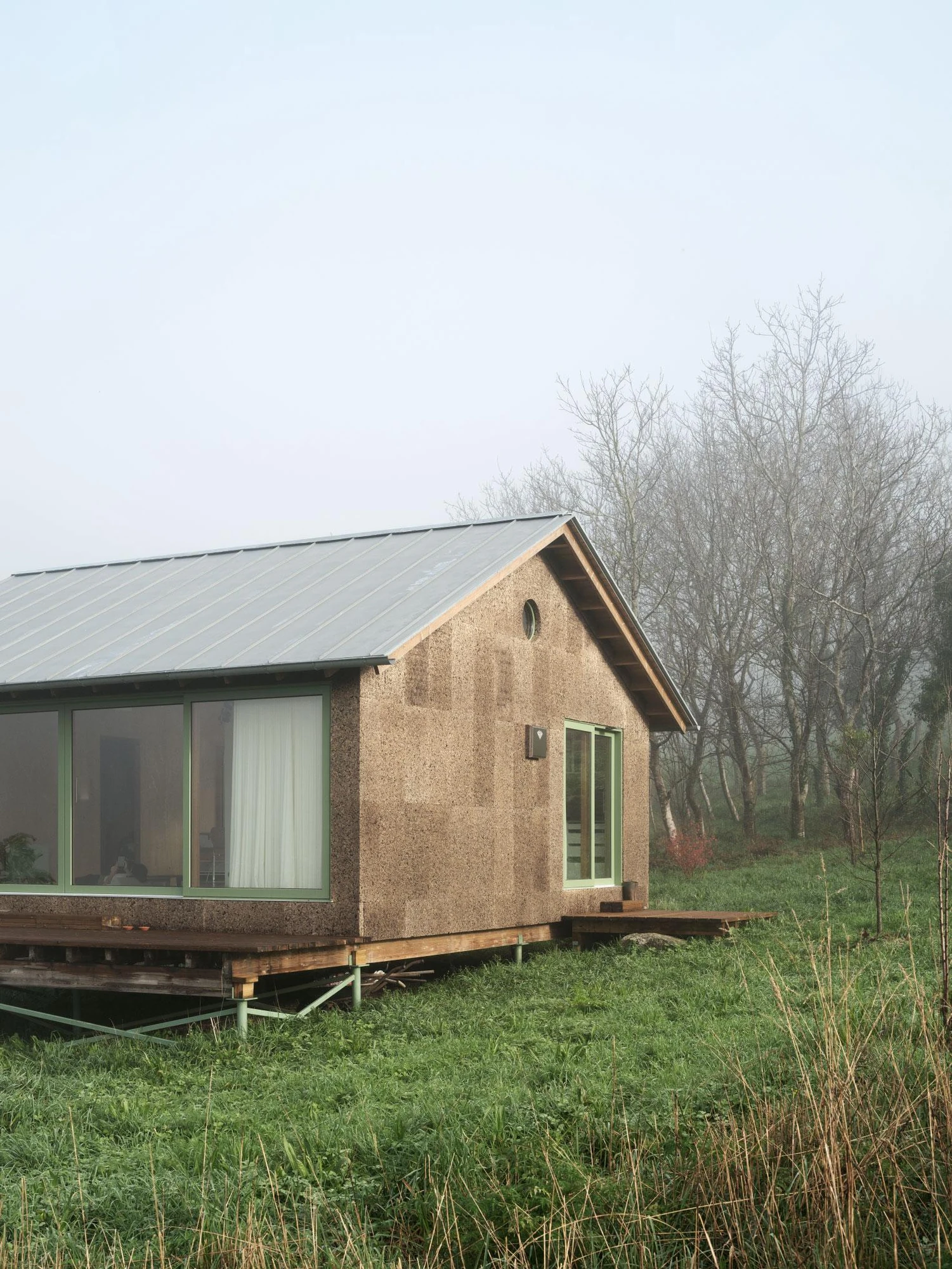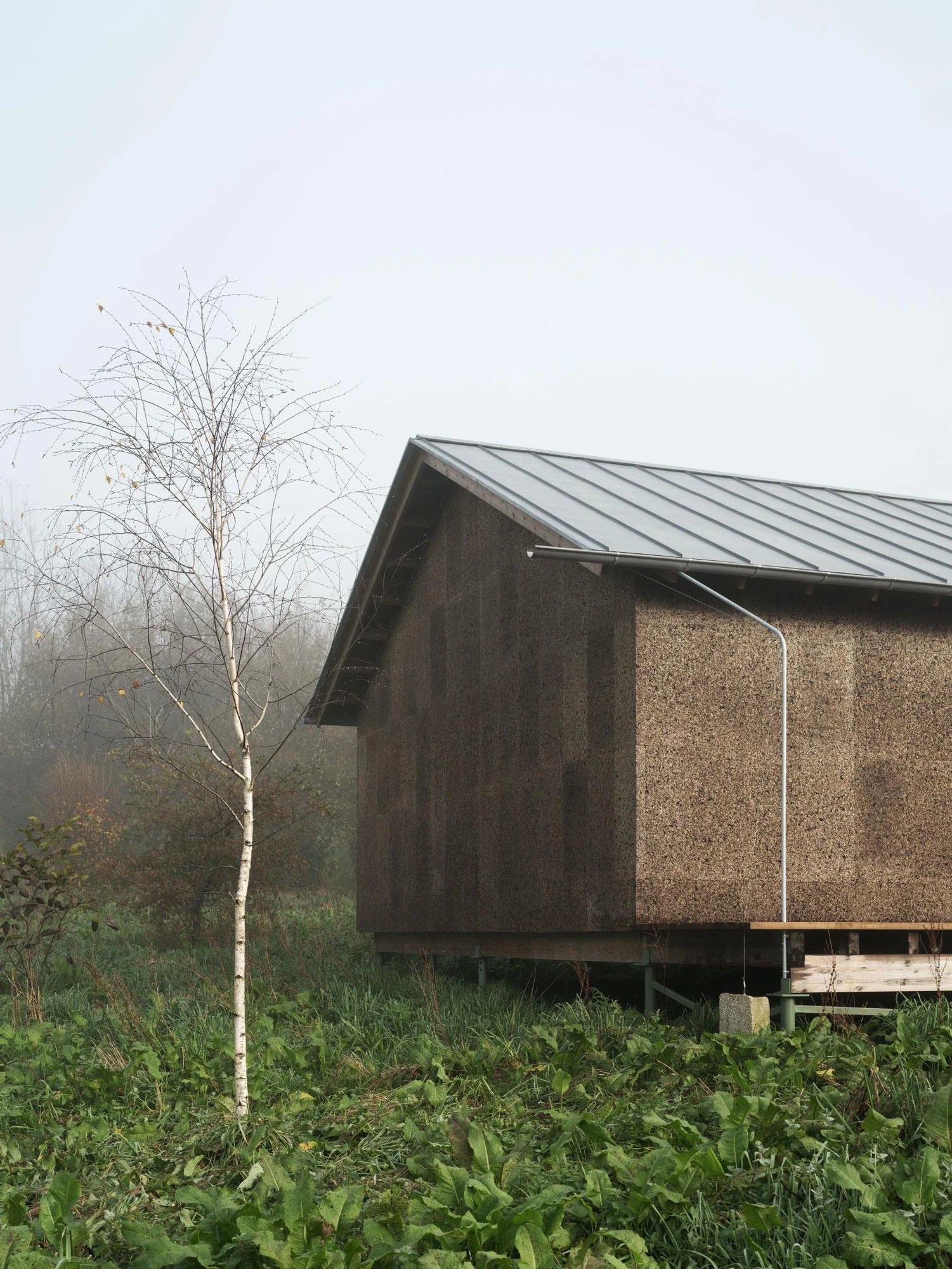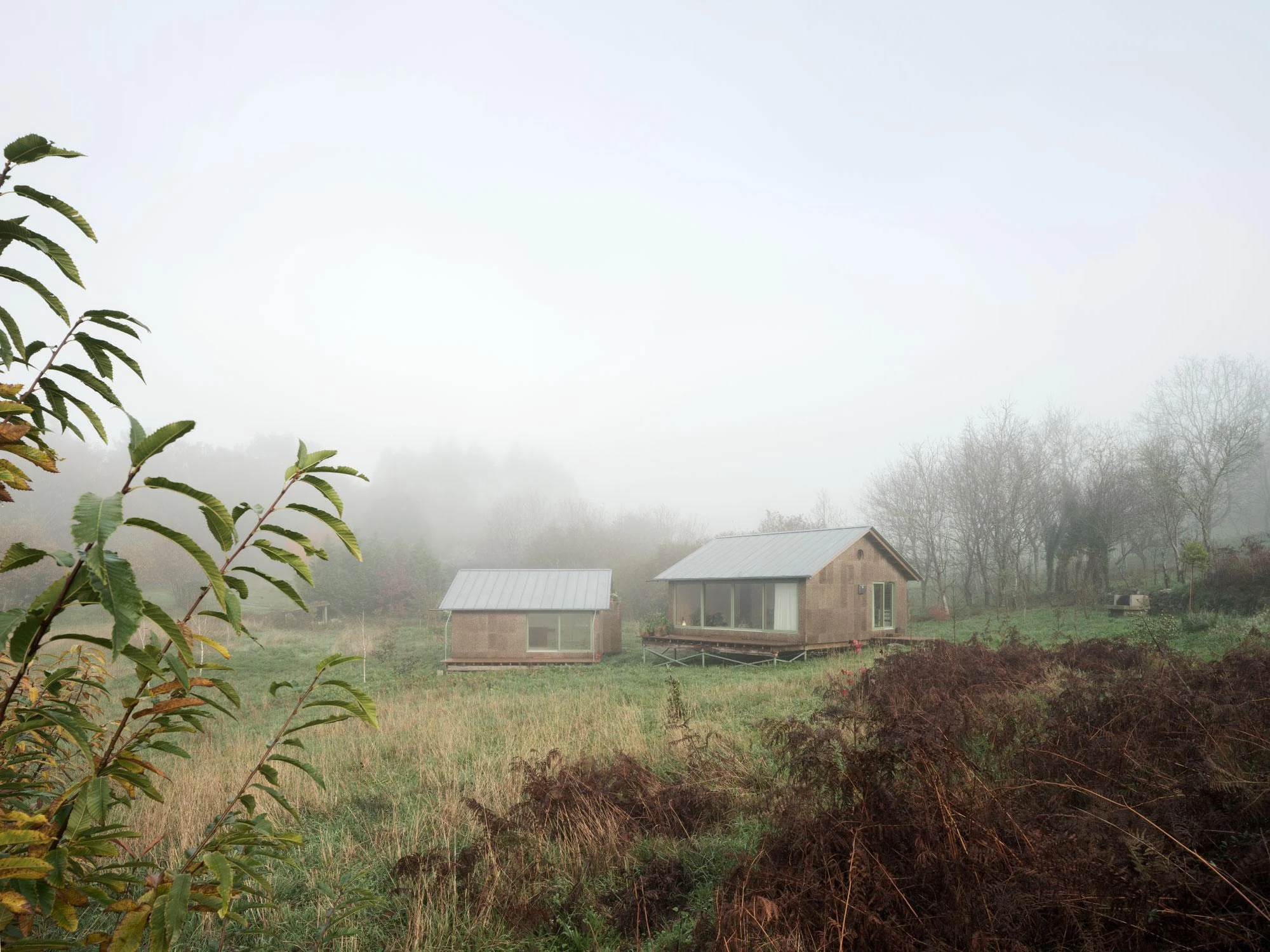
Ground that gives no support for metres down sets the terms for ID House and Atelier Grau, an artist's home and workplace at the rim of the valley around Suevos in Galicia, which rellam raises on metal posts.
Irene Grau's house and atelier stand at Suevos, a village in Ames, in rural Galicia near Santiago de Compostela. Trees surround the plot, and the River Tambre runs a few hundred metres off. There are two buildings, a house to live in and an atelier that serves as her studio. The design team at rellam, Andrea Gimeno, Lluis J. Liñán and Xevi Lluch, worked on them with Grau from 2019, and the credit carries both names.
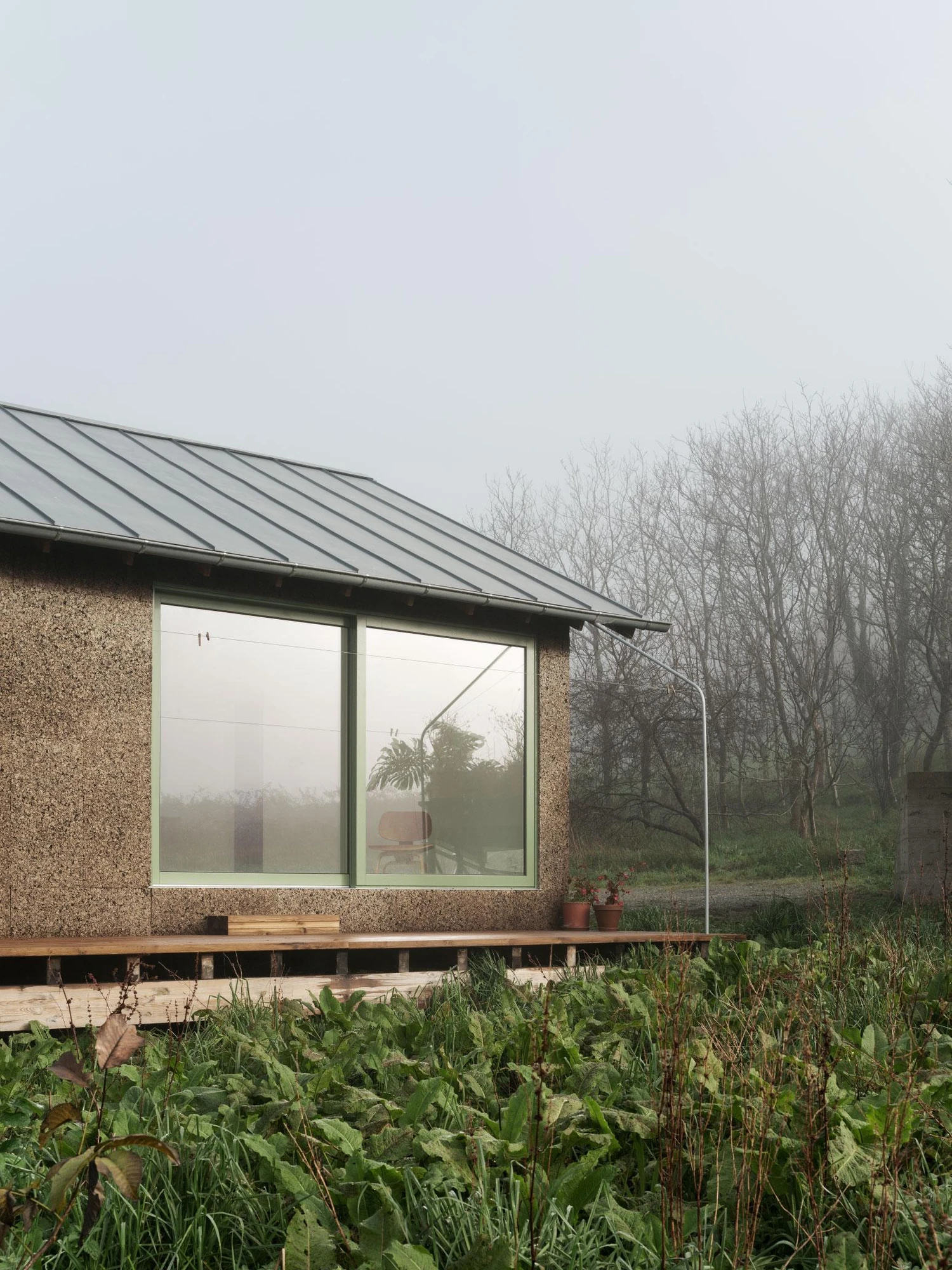
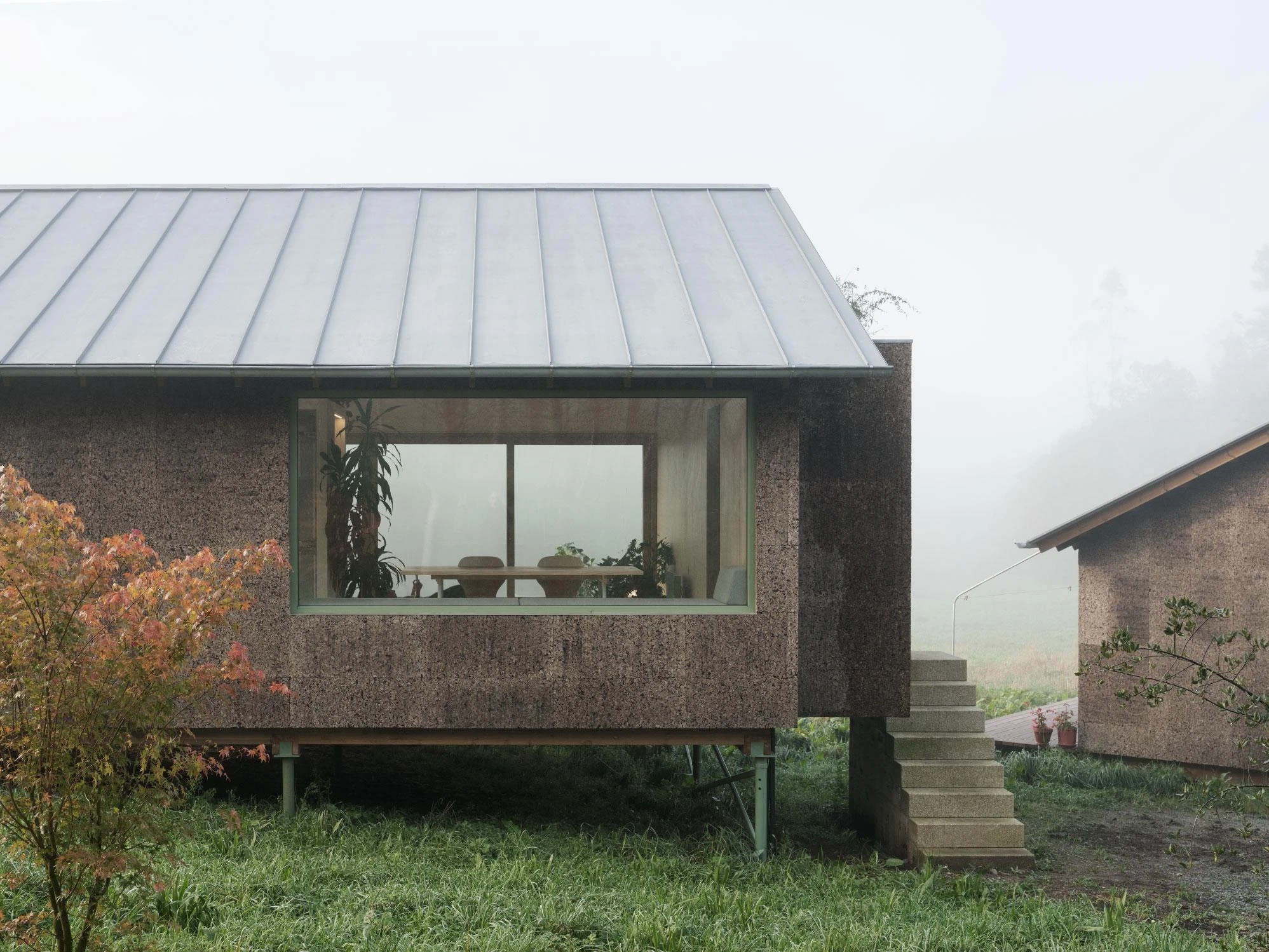
The landscape keeps its difficulty below the surface. As rellam puts it, "the ground offers no resistance in the first 6 to 9 metres." With nothing obvious to bear on, the design was pared back over a long time, steered by two choices. The first was to found both buildings on metal posts, which kept heavy machinery off the site and spared the ground as much as possible. The second was to let a lightweight building system set the rules throughout, holding down the mass of the buildings and their environmental cost alike.
In rellam's words, "Lightness, then, is the main driver of this work." Here sustainable is a matter of parts: every component is removable, each has a low carbon footprint, and everything but the metal posts is sourced in Galicia and Portugal. Together they add up to a plain, legible construction that the team relates to some of the vernacular buildings nearby, and that pushes an environmentally responsive agenda. The larger claim concerns context. The project's most significant contribution, rellam suggests, may be to rethink how buildings come to define their own context.
A second text by rellam, written as the house neared completion, offers another way in. The team calls its approach, provisionally, pre-ocupación: a way of presenting the work before it is finished, through the eyes of its client, Irene Grau. Seen her way, a building is already inhabited before completion. The drawings are occupied. Meals happen on the plot, the trees receive names, colours are tried on the foundations, treasured things go into storage, and someone spends a night in the small wooden volume, freshly assembled.