Thisispaper Community
Join today.
Enter your email address to receive the latest news on emerging art, design, lifestyle and tech from Thisispaper, delivered straight to your inbox.
Oops! Something went wrong while submitting the form.
Instant access to new channels
The top stories curated daily
Weekly roundups of what's important
Original features and deep dives
Exclusive community features
Alexander Zaxarov
Jan 5, 2026

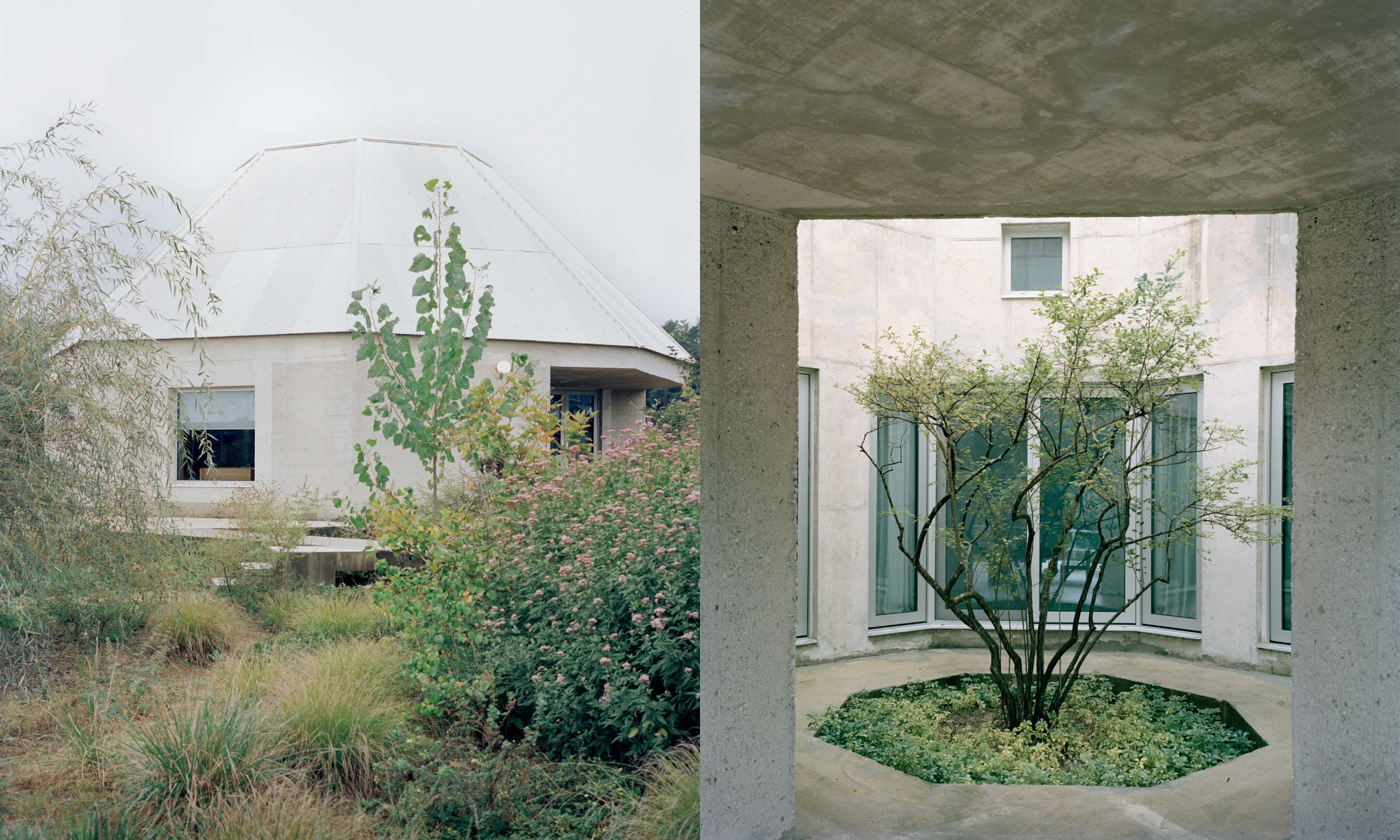
In a quiet corner of Gangneung, where mountains barely rise and the land rolls gently into anonymity, AOA Architects have crafted HOJI — a collection of houses that avoid the spectacle typical of South Korea’s vacation architecture.

Shunning the brash aesthetics of poolside villas and curated “healing stays,” HOJI takes a quieter stance. It doesn’t sell a lifestyle but invites the visitor into something more ephemeral: memory, distance, and dislocation. These aren’t rooms to photograph; they are spaces to inhabit.

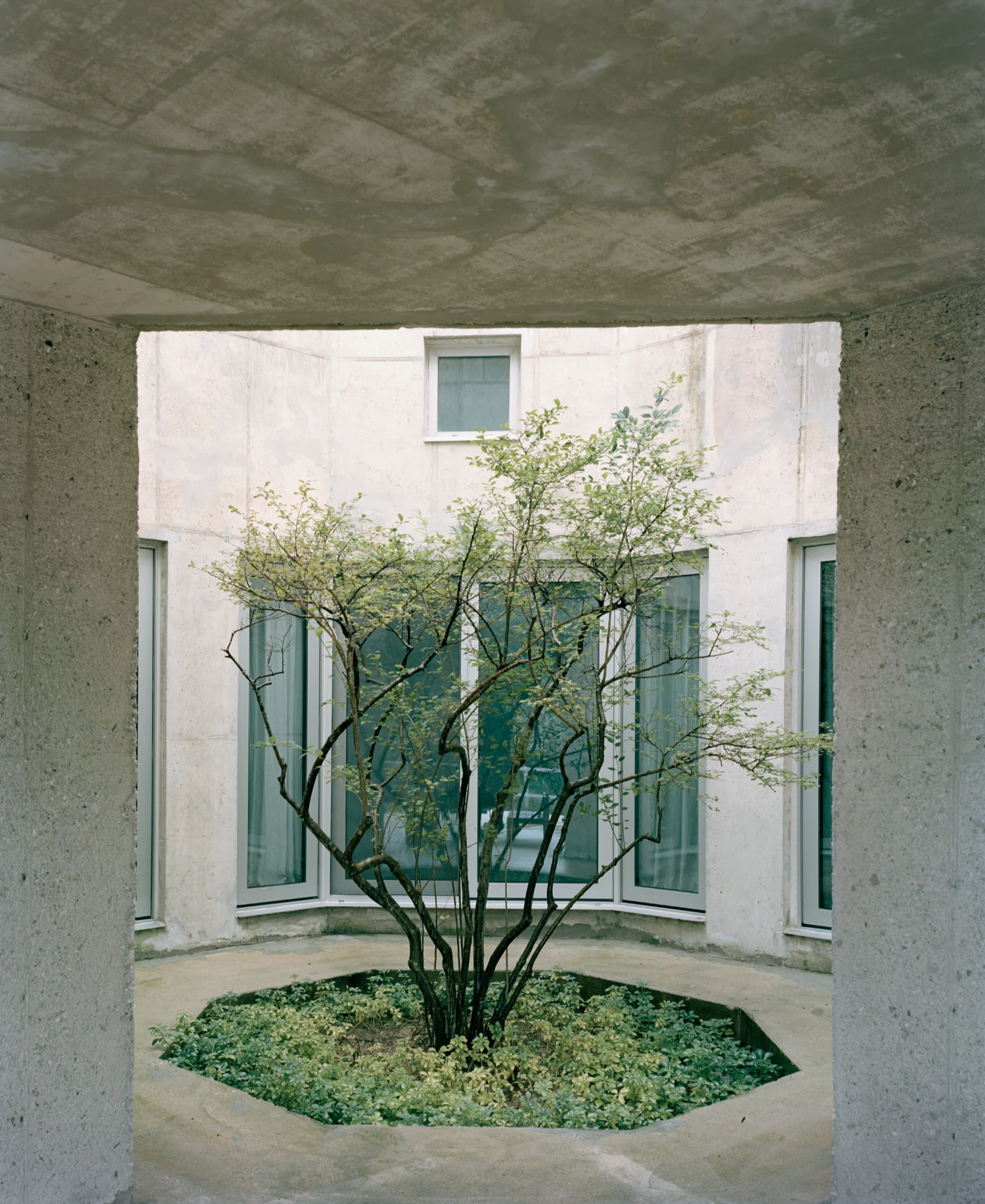
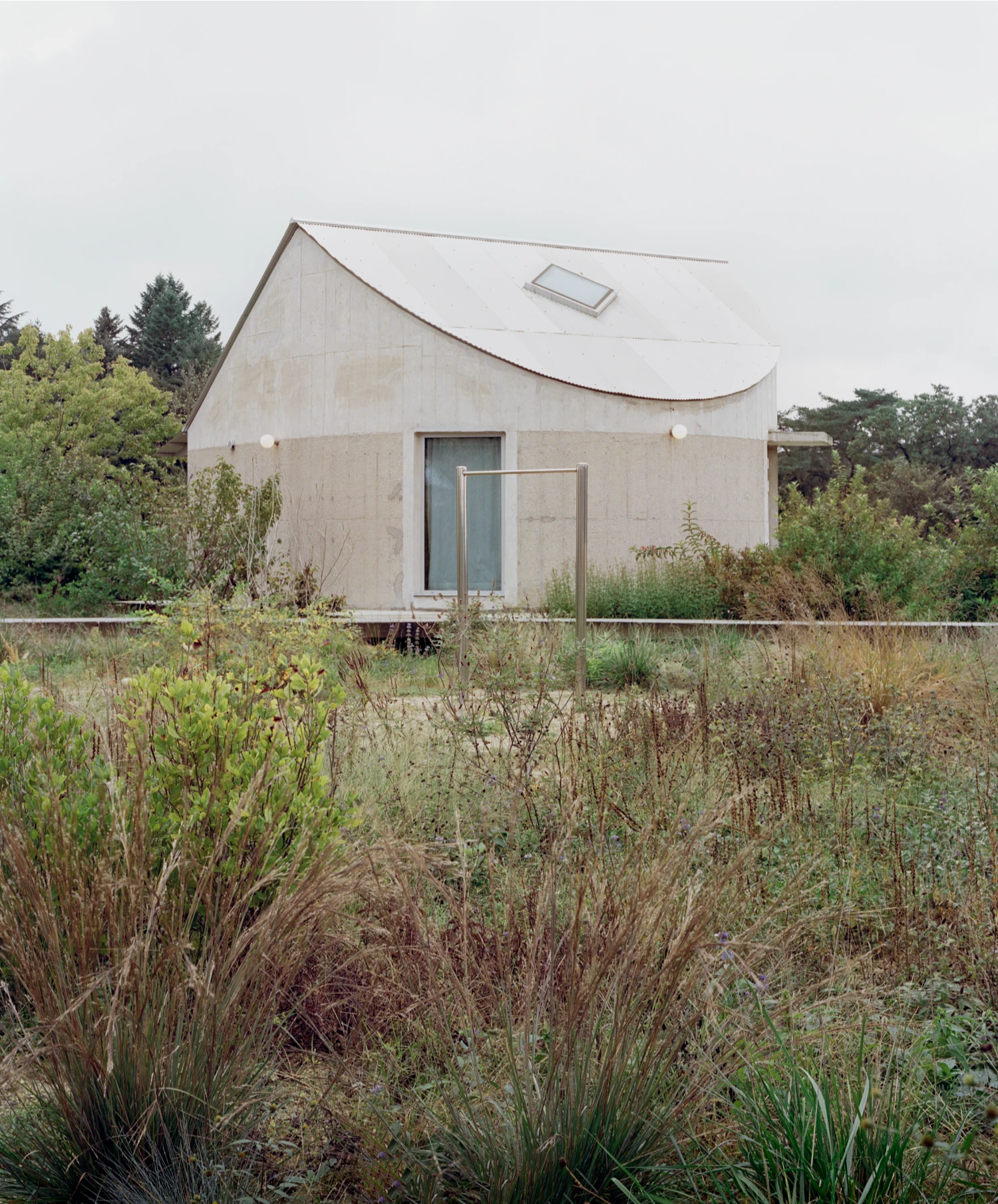
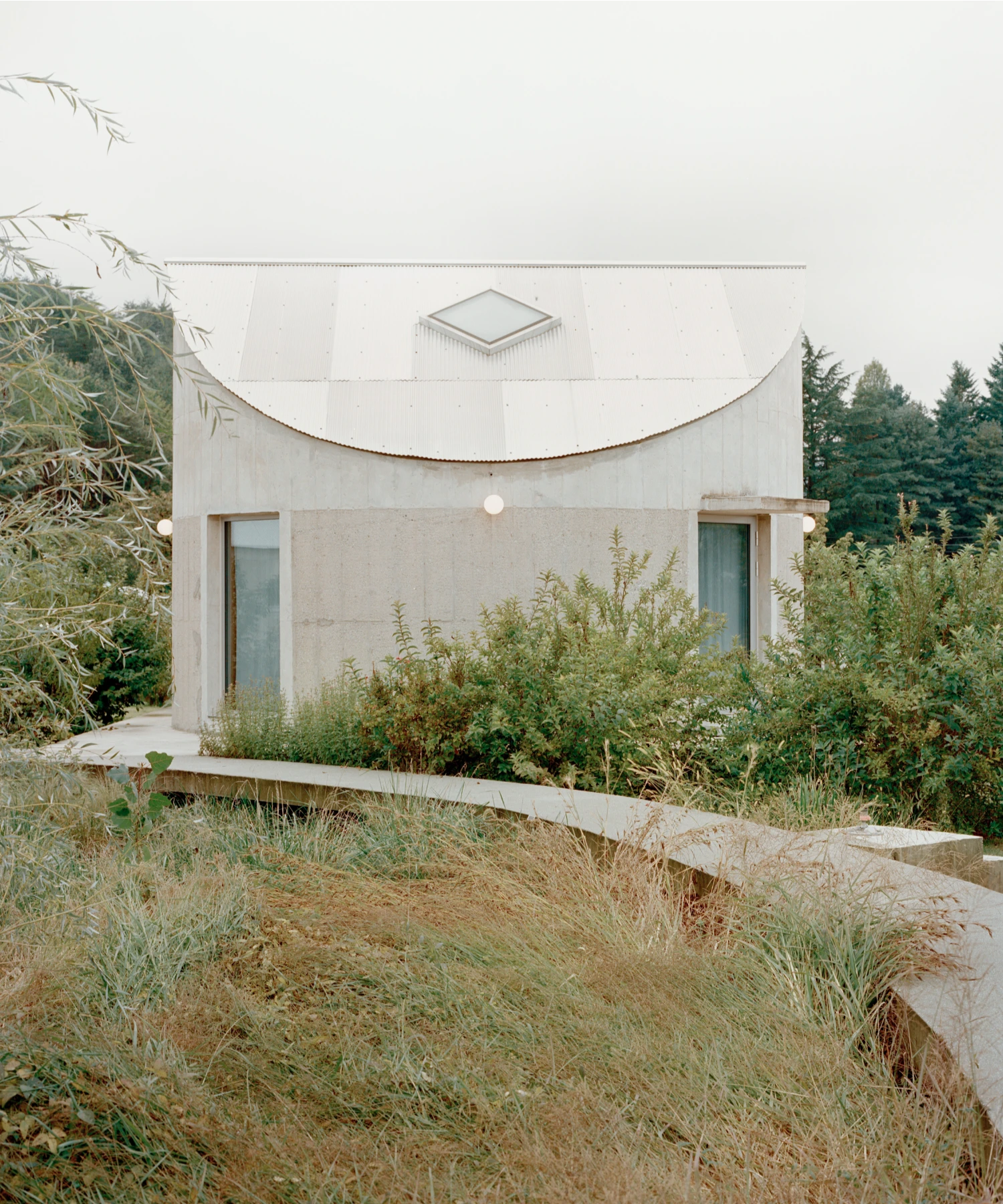
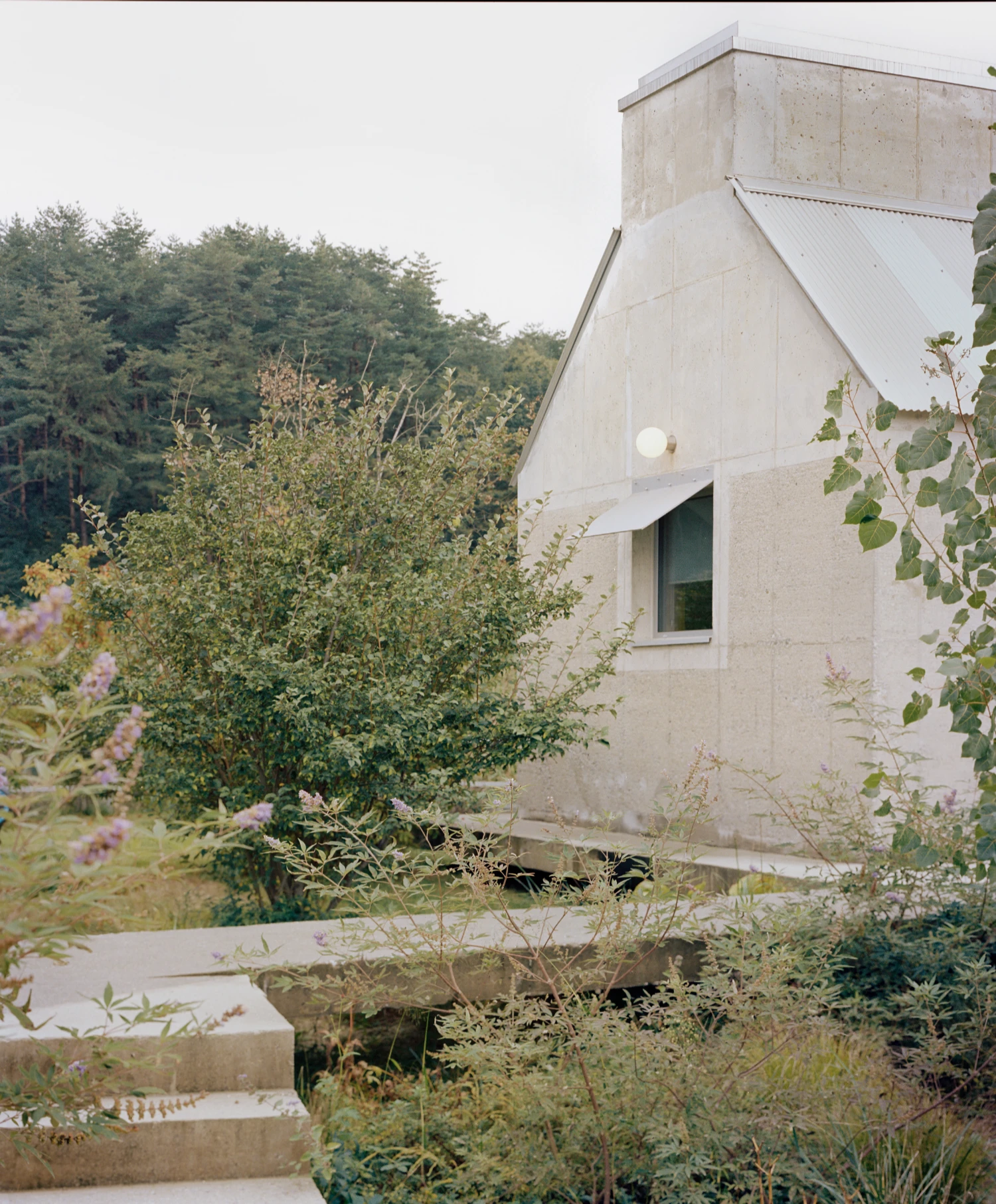
HOJI captured by Danny Kai is composed of three distinct guest buildings — the Octagonal House, Long House, and Round House — along with a community warehouse and the owner’s own home. Scattered across a modest 3,300m² slope, the site resists the gravitational pull of design trends. Each form appears deliberately blunt, at ease among countryside vernacular: they might be barns, silos, or warehouses, if not for the way light bounces, disappears, or reveals their weight. There is a tension between the handmade and the austere — structures that are both playful and monkish.

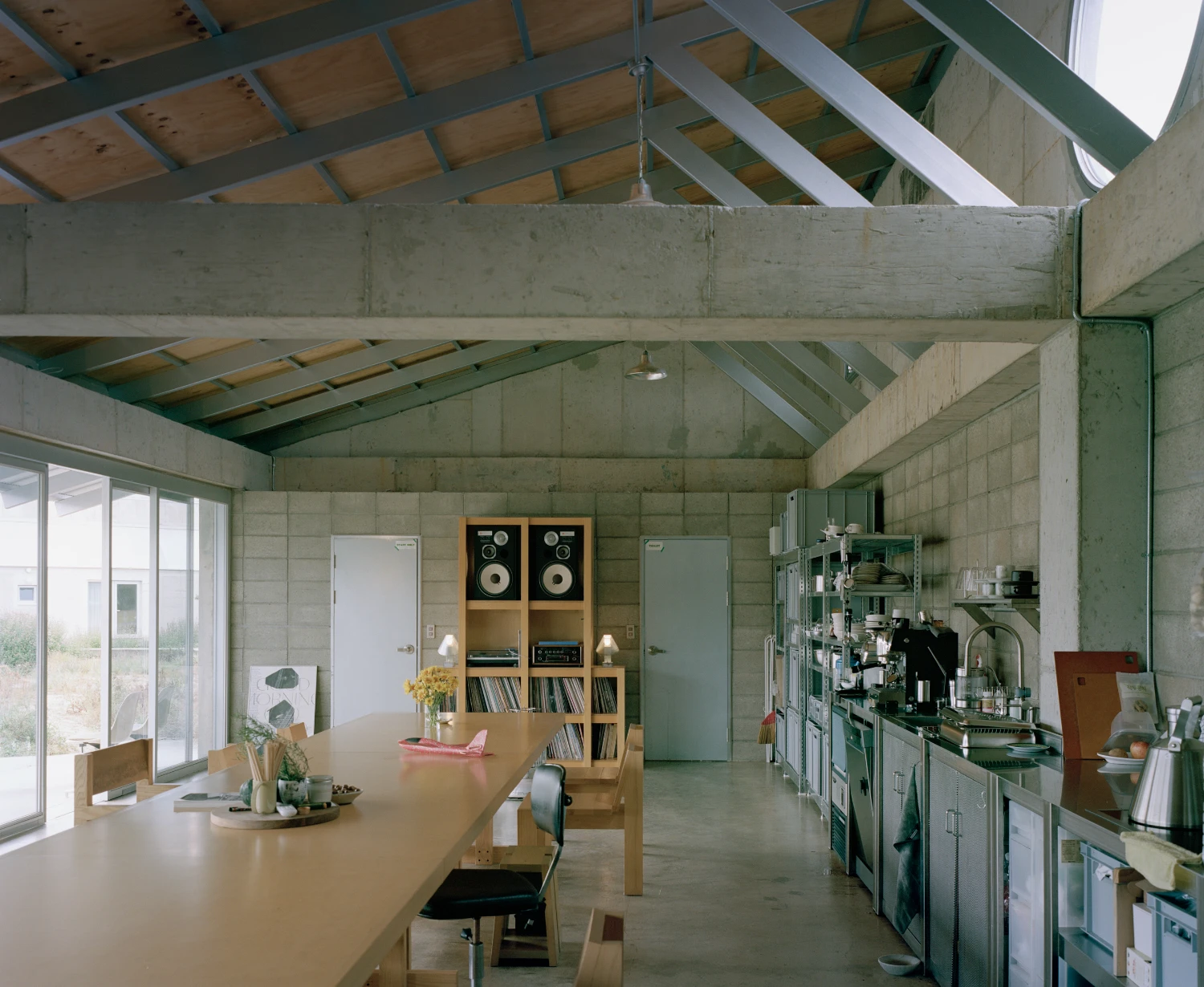
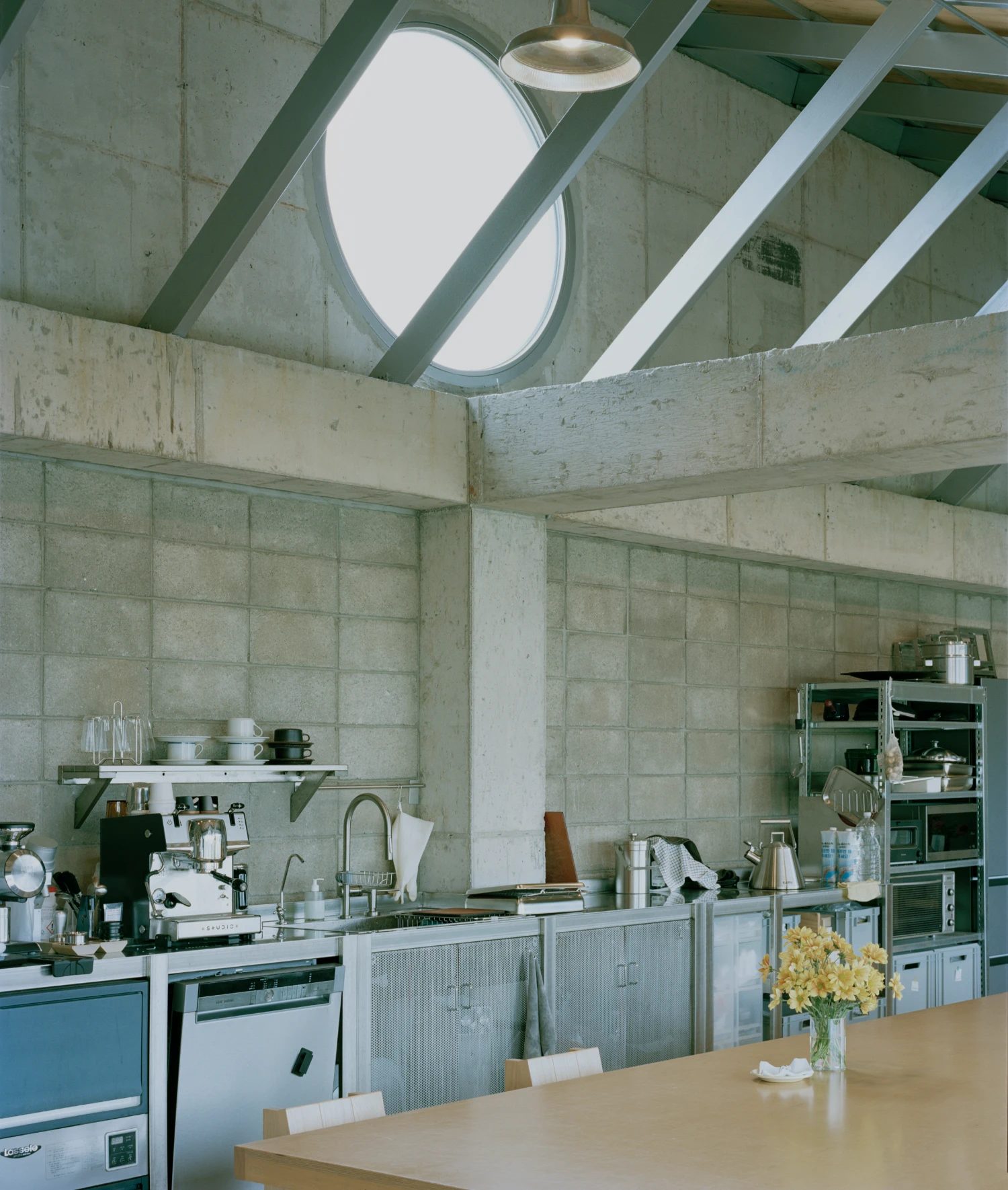
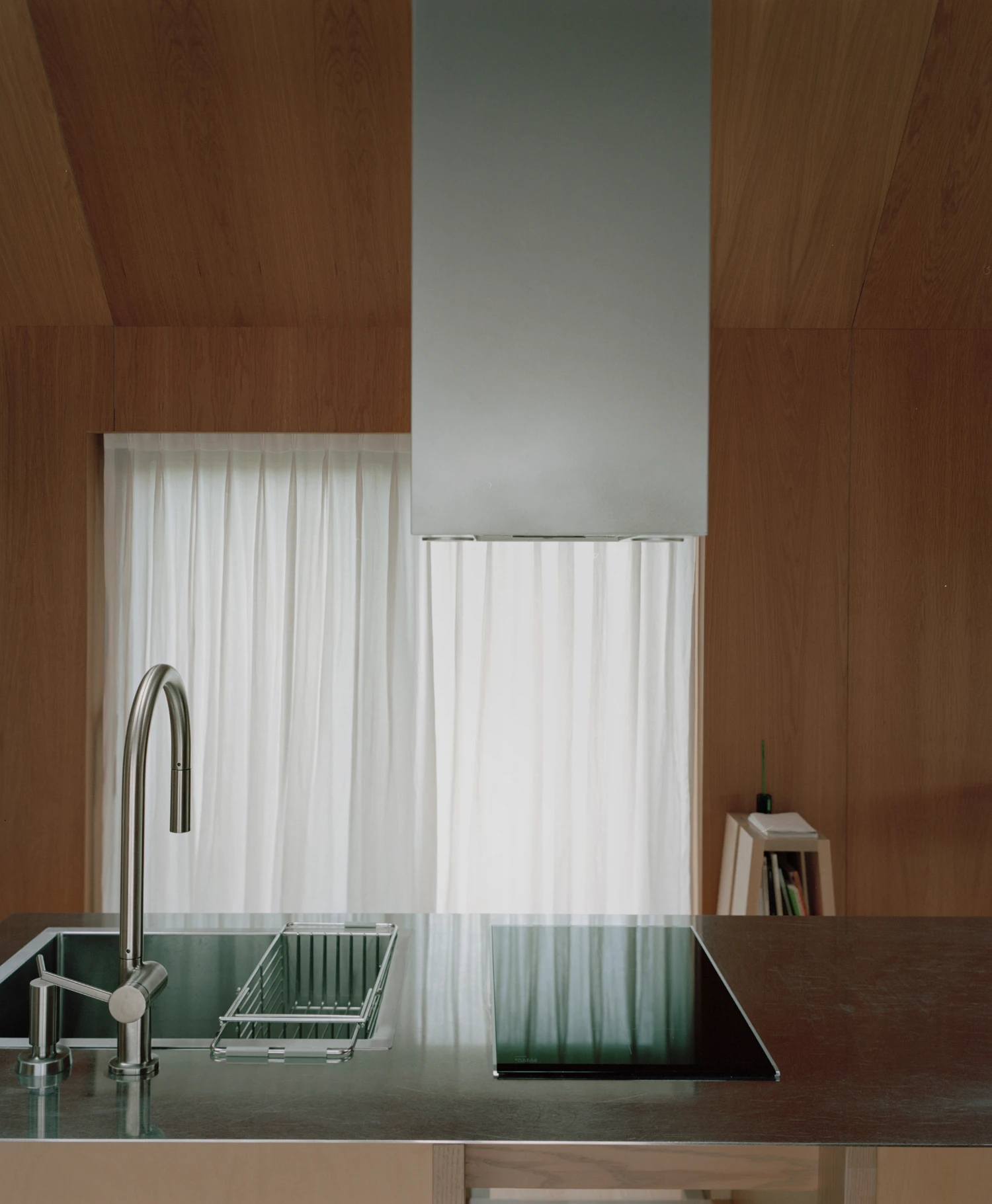
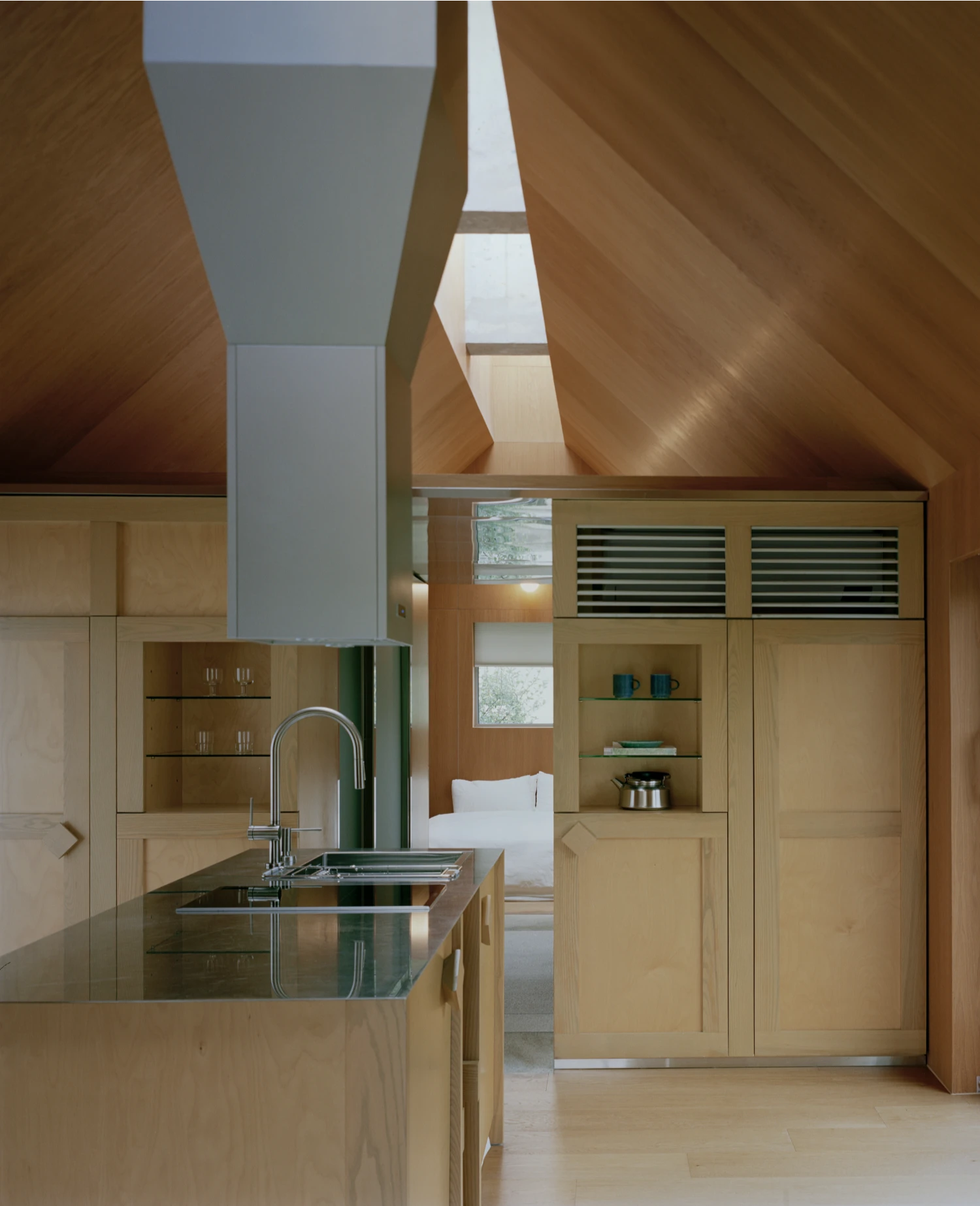
AOA’s approach here is anti-iconic. The buildings flirt with archetype but never commit: the Octagonal House is a pavilion, a tent, a courtyard dwelling. The Round House is a spatial riddle, its fireplace-turned-oven-hood hovering like an art object. The Long House draws its name from its plan, but not its effect — with beams hanging like punctuation marks across a ceiling that reflects its viewers back onto themselves. Each space offers a moment of disorientation, a slippage between function and fiction.

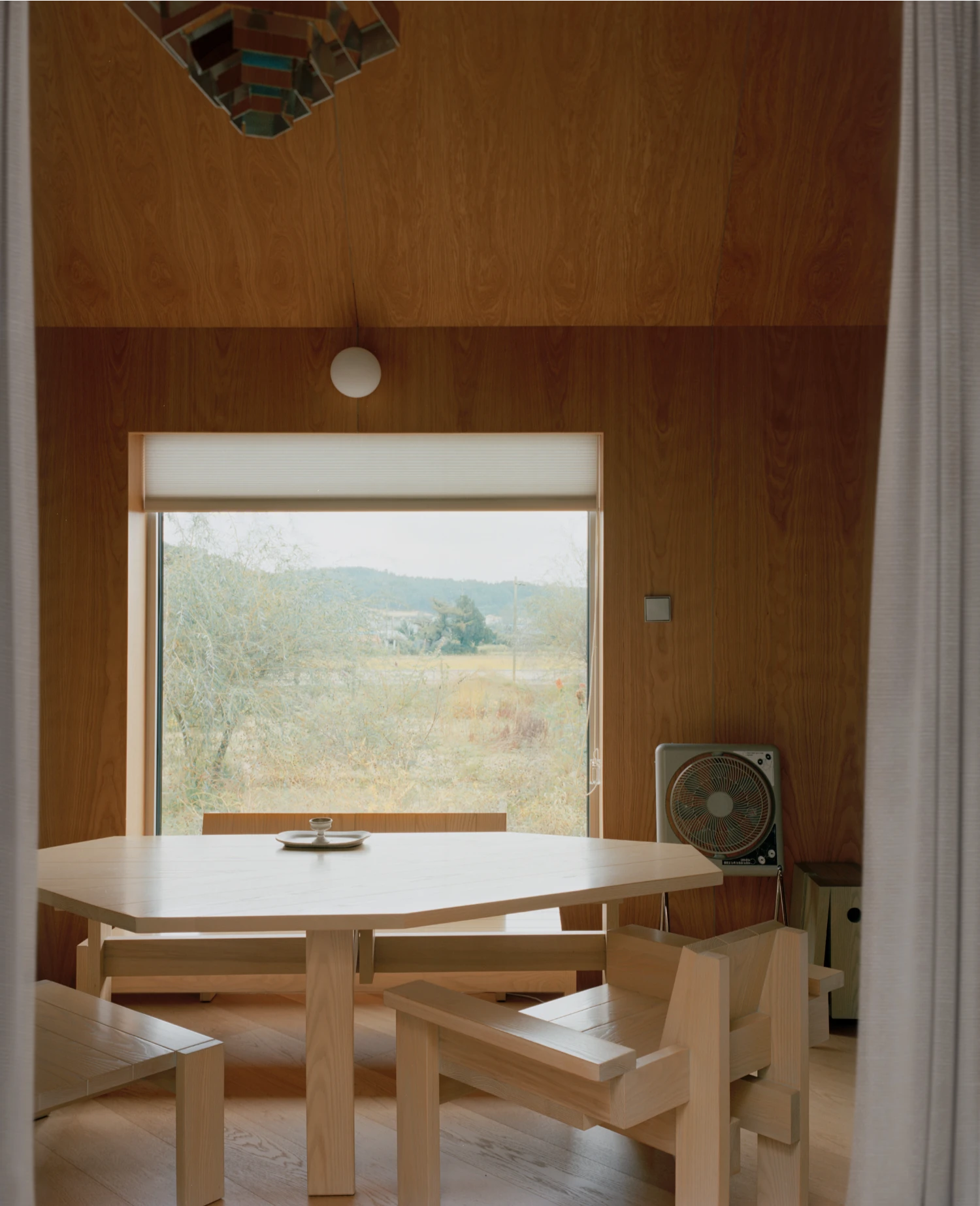
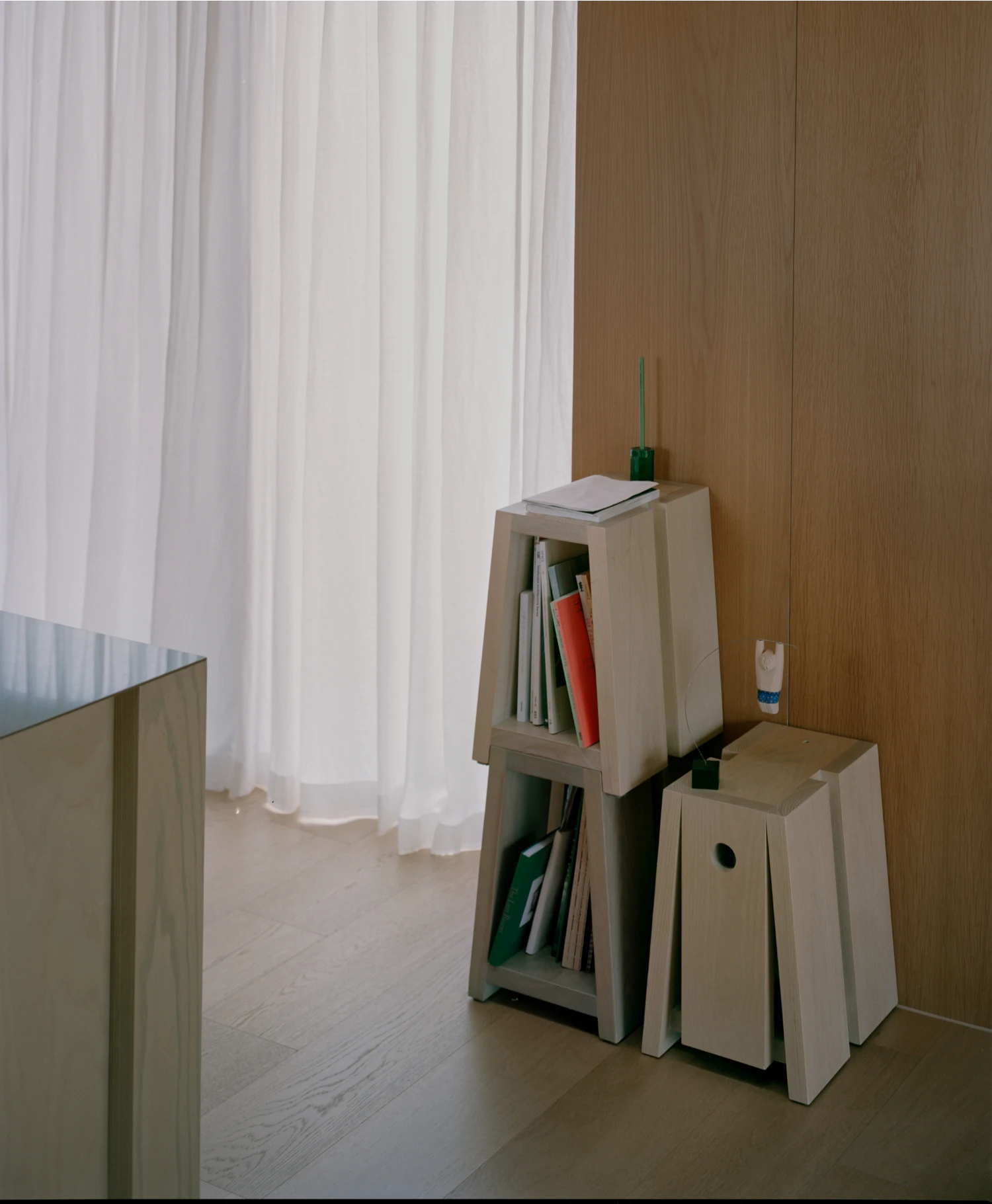
Interiors are spare but warm — wood on every surface, irregular chairs like reassembled crates, and light that feels carefully rehearsed. At dawn, the steep ceilings glow with a monastic hush. At night, starlight and the far-off bark of a dog become part of the program. These are spaces not designed for display, but for the quiet accumulation of sensory detail: the downy warmth of sunset on bare skin in an open courtyard shower, the whisper of grasses brushing the walls.

HOJI succeeds by doing less. Its restraint is not minimalist, but conceptual — each building a framework for a slightly altered state. The use of symmetry and scale grounds the visitor, while elements like the red marble wall or the oversized ceiling object push toward the uncanny. Rather than impose an identity, AOA allows each visitor to project their own.
Interested in Showcasing Your Work?

If you would like to feature your works on Thisispaper, please visit our Submission page and sign up to Thisispaper+ to submit your work. Once your submission is approved, your work will be showcased to our global audience of 2 million art, architecture, and design professionals and enthusiasts.
No items found.
We love less
but there is more.
Become a Thisispaper+ member today to unlock full access to our magazine, advanced tools, and support our work.
Get two months FREE
with annual subscription
We love less
but there is more.
Become a Thisispaper+ member today to unlock full access to our magazine, advanced tools, and support our work.
Get two months FREE
with annual subscription
No items found.
Alexander Zaxarov
Jan 5, 2026

In a quiet corner of Gangneung, where mountains barely rise and the land rolls gently into anonymity, AOA Architects have crafted HOJI — a collection of houses that avoid the spectacle typical of South Korea’s vacation architecture.

Shunning the brash aesthetics of poolside villas and curated “healing stays,” HOJI takes a quieter stance. It doesn’t sell a lifestyle but invites the visitor into something more ephemeral: memory, distance, and dislocation. These aren’t rooms to photograph; they are spaces to inhabit.

HOJI captured by Danny Kai is composed of three distinct guest buildings — the Octagonal House, Long House, and Round House — along with a community warehouse and the owner’s own home. Scattered across a modest 3,300m² slope, the site resists the gravitational pull of design trends. Each form appears deliberately blunt, at ease among countryside vernacular: they might be barns, silos, or warehouses, if not for the way light bounces, disappears, or reveals their weight. There is a tension between the handmade and the austere — structures that are both playful and monkish.

AOA’s approach here is anti-iconic. The buildings flirt with archetype but never commit: the Octagonal House is a pavilion, a tent, a courtyard dwelling. The Round House is a spatial riddle, its fireplace-turned-oven-hood hovering like an art object. The Long House draws its name from its plan, but not its effect — with beams hanging like punctuation marks across a ceiling that reflects its viewers back onto themselves. Each space offers a moment of disorientation, a slippage between function and fiction.

Interiors are spare but warm — wood on every surface, irregular chairs like reassembled crates, and light that feels carefully rehearsed. At dawn, the steep ceilings glow with a monastic hush. At night, starlight and the far-off bark of a dog become part of the program. These are spaces not designed for display, but for the quiet accumulation of sensory detail: the downy warmth of sunset on bare skin in an open courtyard shower, the whisper of grasses brushing the walls.

HOJI succeeds by doing less. Its restraint is not minimalist, but conceptual — each building a framework for a slightly altered state. The use of symmetry and scale grounds the visitor, while elements like the red marble wall or the oversized ceiling object push toward the uncanny. Rather than impose an identity, AOA allows each visitor to project their own.
Interested in Showcasing Your Work?

If you would like to feature your works on Thisispaper, please visit our Submission page and subscribe to Thisispaper+. Once your submission is approved, your work will be showcased to our global audience of 2 million art, architecture, and design professionals and enthusiasts.
Thisispaper+
Weekend Retreat
100+ Projects
Web Access
Link to Maps
The idea of a refuge dwelling has seduced the modern psyche for years. Weekend Retreat is ongoing research from remote cabins to grand farmhouses, from country meadows to water's edge and mountain glades designed to experience meaningful moments with family and friends.
Explore
Weekend Retreat

Join Thisispaper+
Unlock access to 2500 stories, curated guides + editions, and share your work with a global network of architects, artists, writers and designers who are shaping the future.
Get two months FREE
with annual subscription
Atlas
A new and interactive way to explore the most inspiring places around the world.
Interactive map
Linked to articles
300+ curated locations
Google + Apple directions
Smart filters
Subscribe to Explore+
Travel Guides
Immerse yourself in timeless destinations, hidden gems, and creative spaces—curated by humans, not algorithms.
Explore All Guides +
Curated Editions
Dive deeper into carefully curated editions, designed to feed your curiosity and foster exploration.
Off-the-Grid
Jutaku
Sacral Journey
minimum
The New Chair
Explore All Editions +
Submission Module
Submit your project and gain the chance to showcase your work to our worldwide audience of over 2M architects, designers, artists, and curious minds.
Learn More+
Become a Thisispaper+ member today to unlock full access to our magazine, submit your project and support our work.
Join Thisispaper+Join Thisispaper+
€ 9 EUR
/month
Cancel anytime
Get two months FREE
with annual subscription