Thisispaper Community
Join today.
Enter your email address to receive the latest news on emerging art, design, lifestyle and tech from Thisispaper, delivered straight to your inbox.
Oops! Something went wrong while submitting the form.
Instant access to new channels
The top stories curated daily
Weekly roundups of what's important
Original features and deep dives
Exclusive community features
Alexander Zaxarov
Feb 5, 2026

Guardia di Finanza by Brandlhuber+ in Scopello, Sicily transforms an abandoned 1970s customs police station into a guesthouse where concrete and Mediterranean light reach a new understanding.

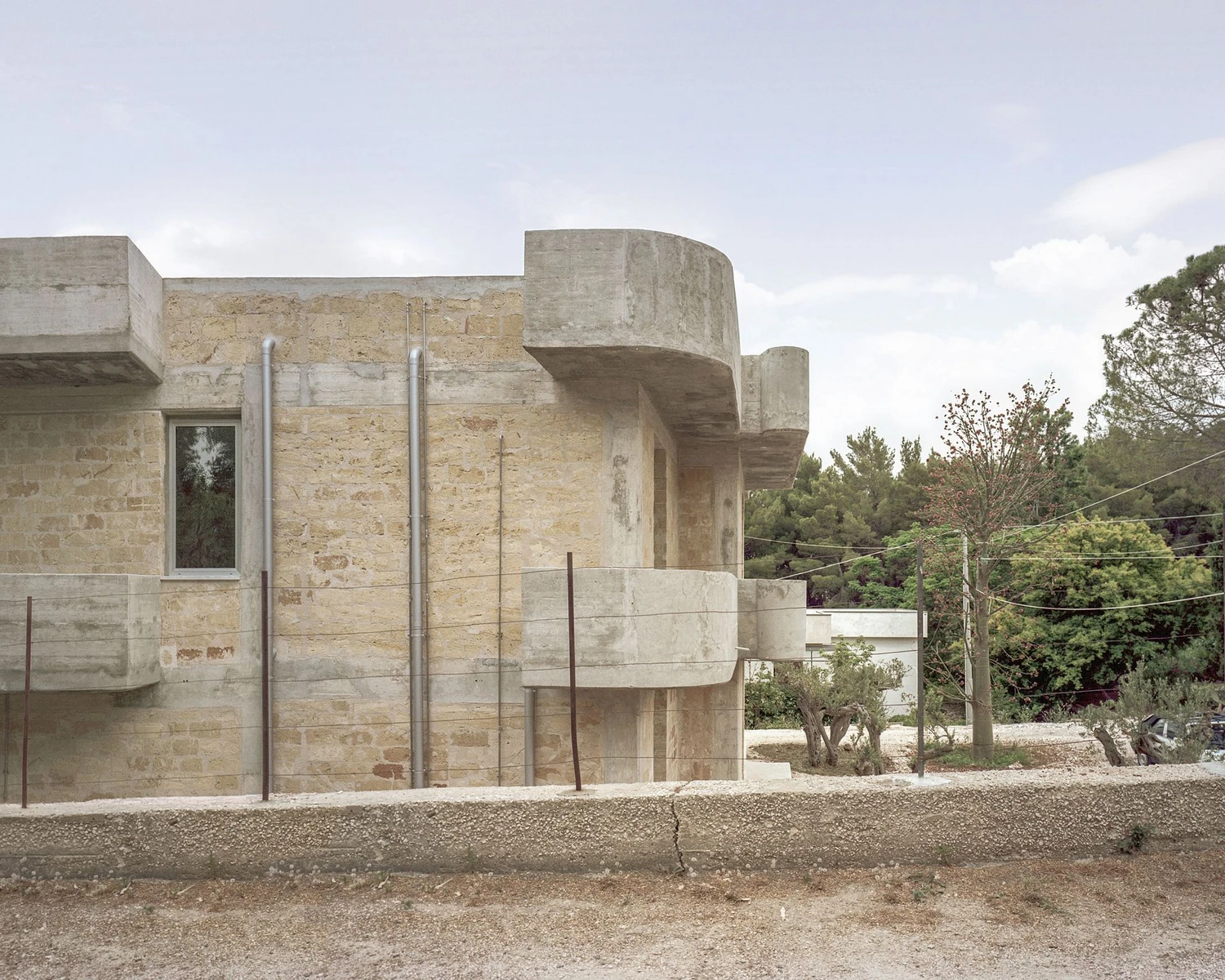
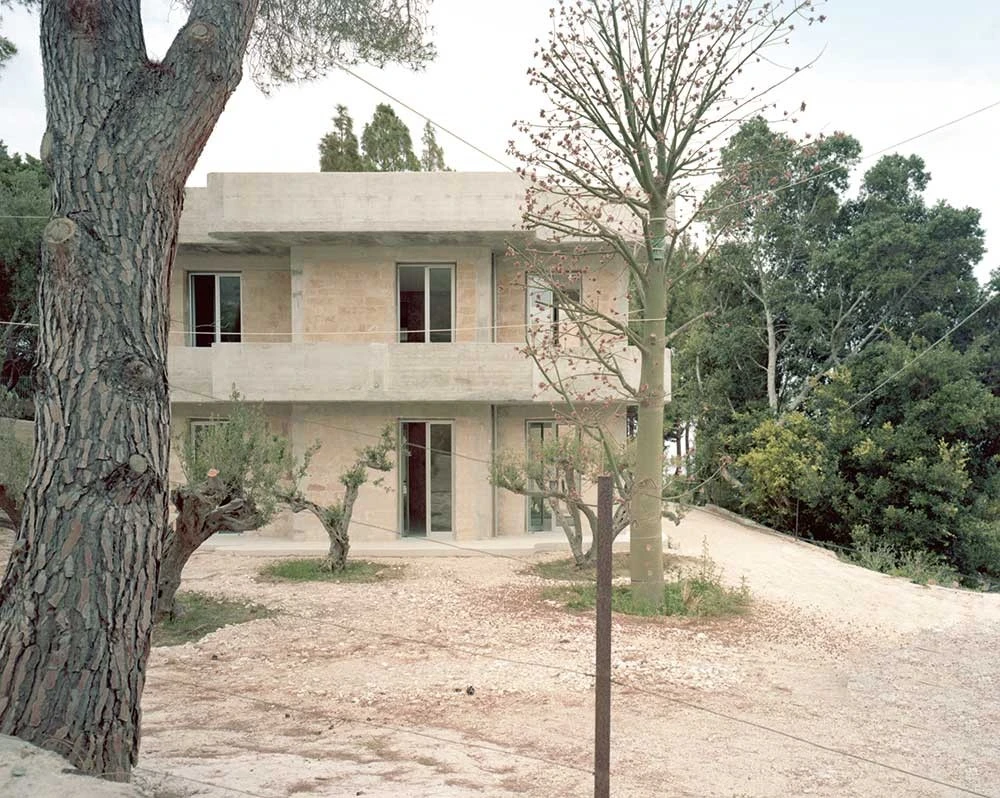
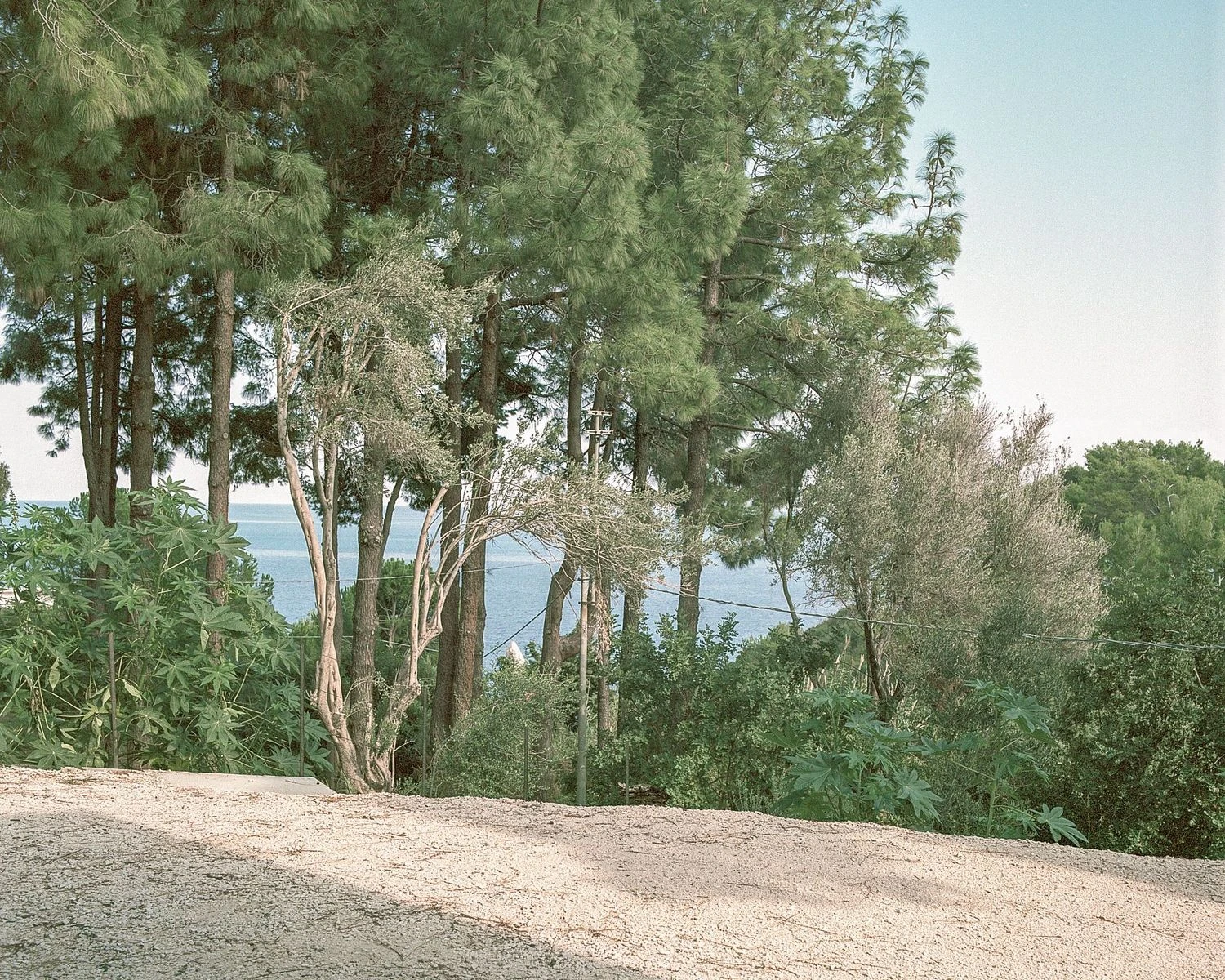
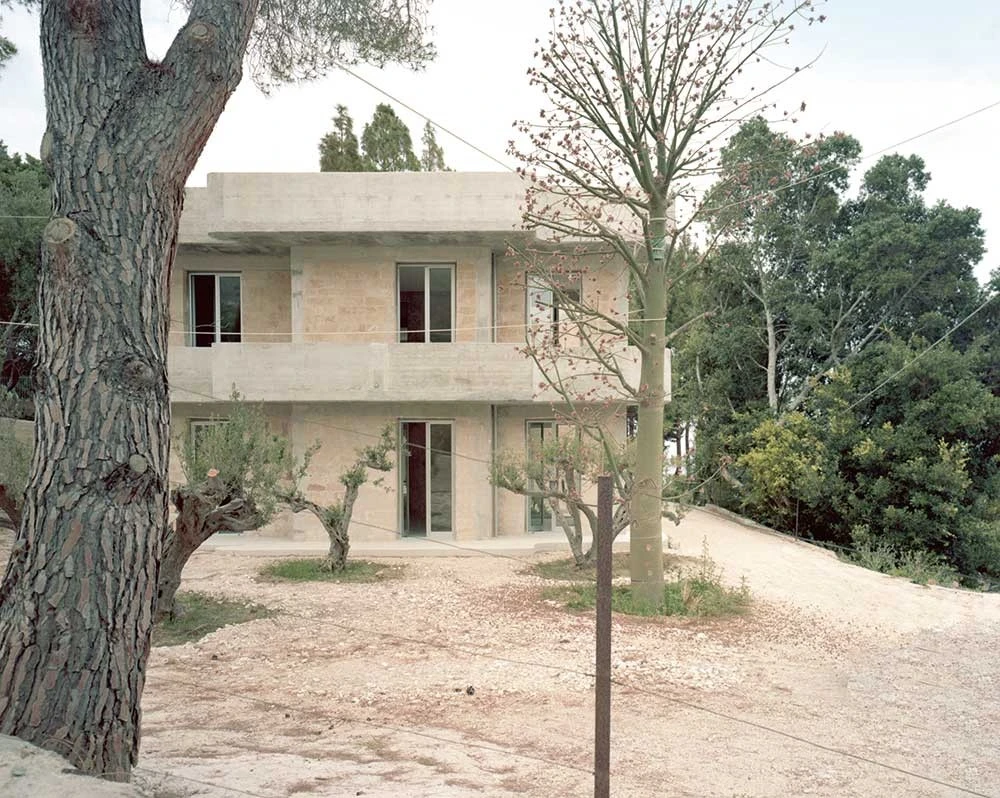
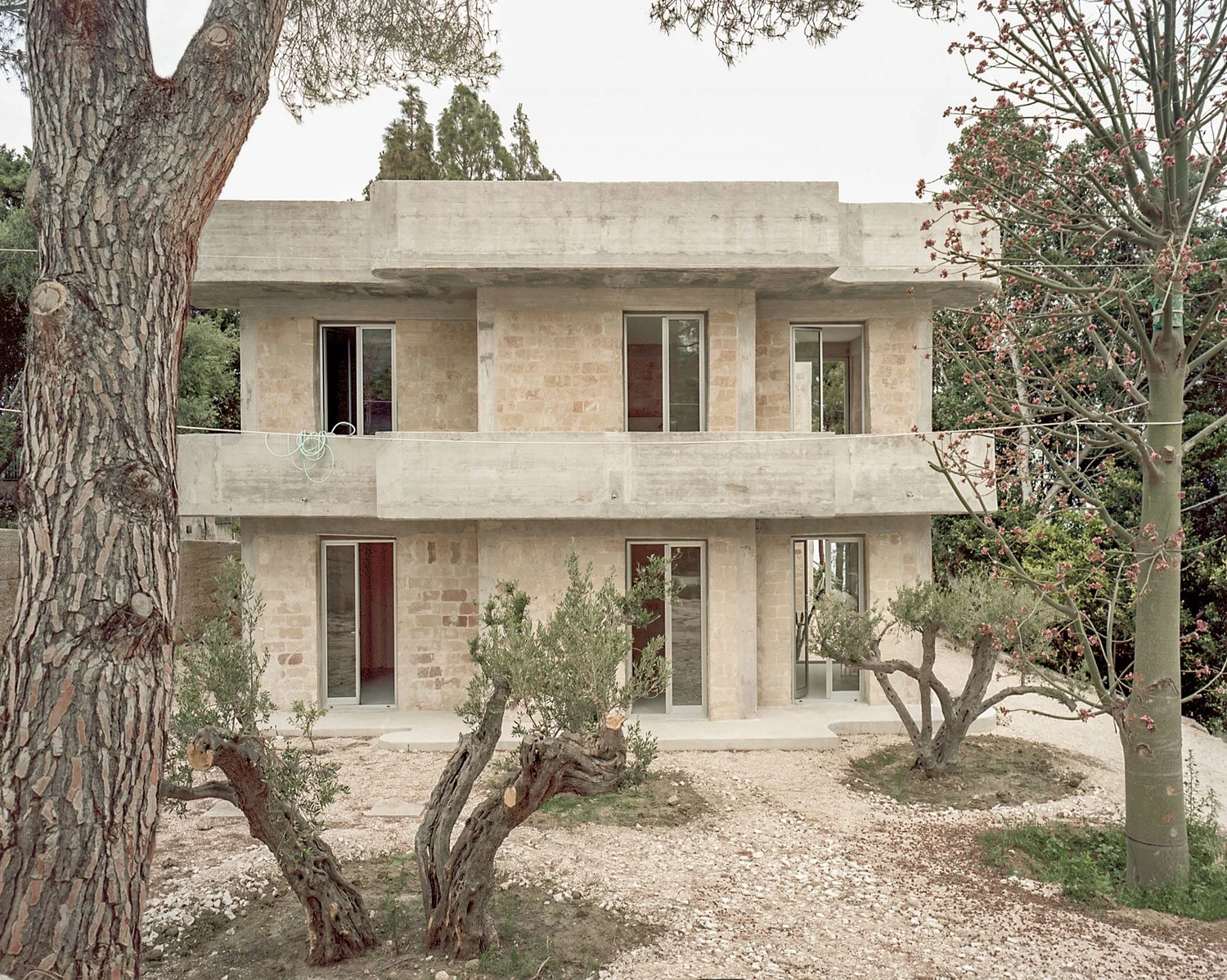
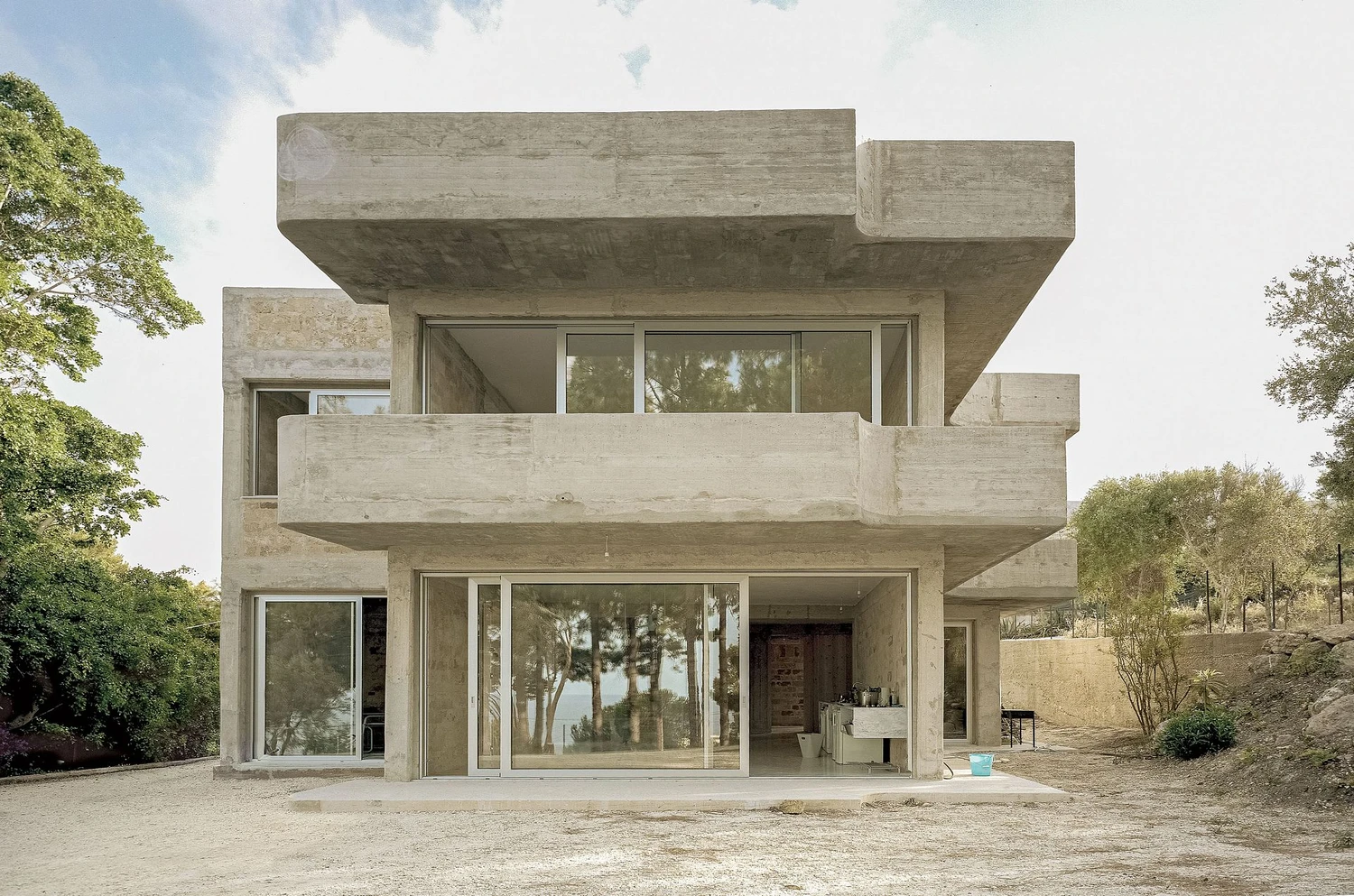
On a hillside above the Gulf of Castellammare, near the entrance to Sicily's Zingaro nature reserve, a building designed by Michele di Simone in 1976 had stood empty for years. The former Guardia di Finanza station—once home to Italy's customs police—presented the Berlin-based practice Brandlhuber+ with a structure of uncommon character: curved concrete balconies cantilevering toward the sea, a muscular frame softened by decades of salt air.

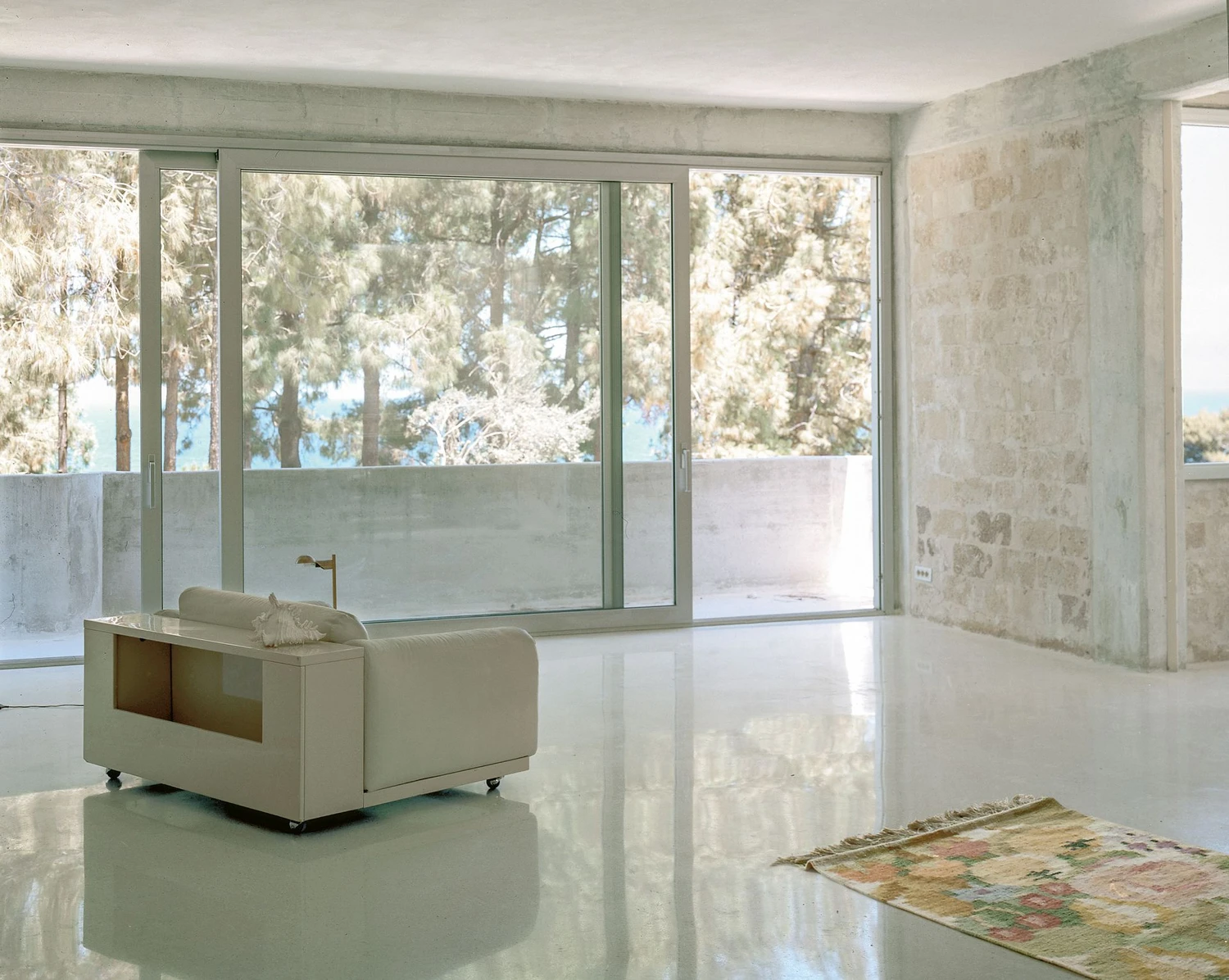
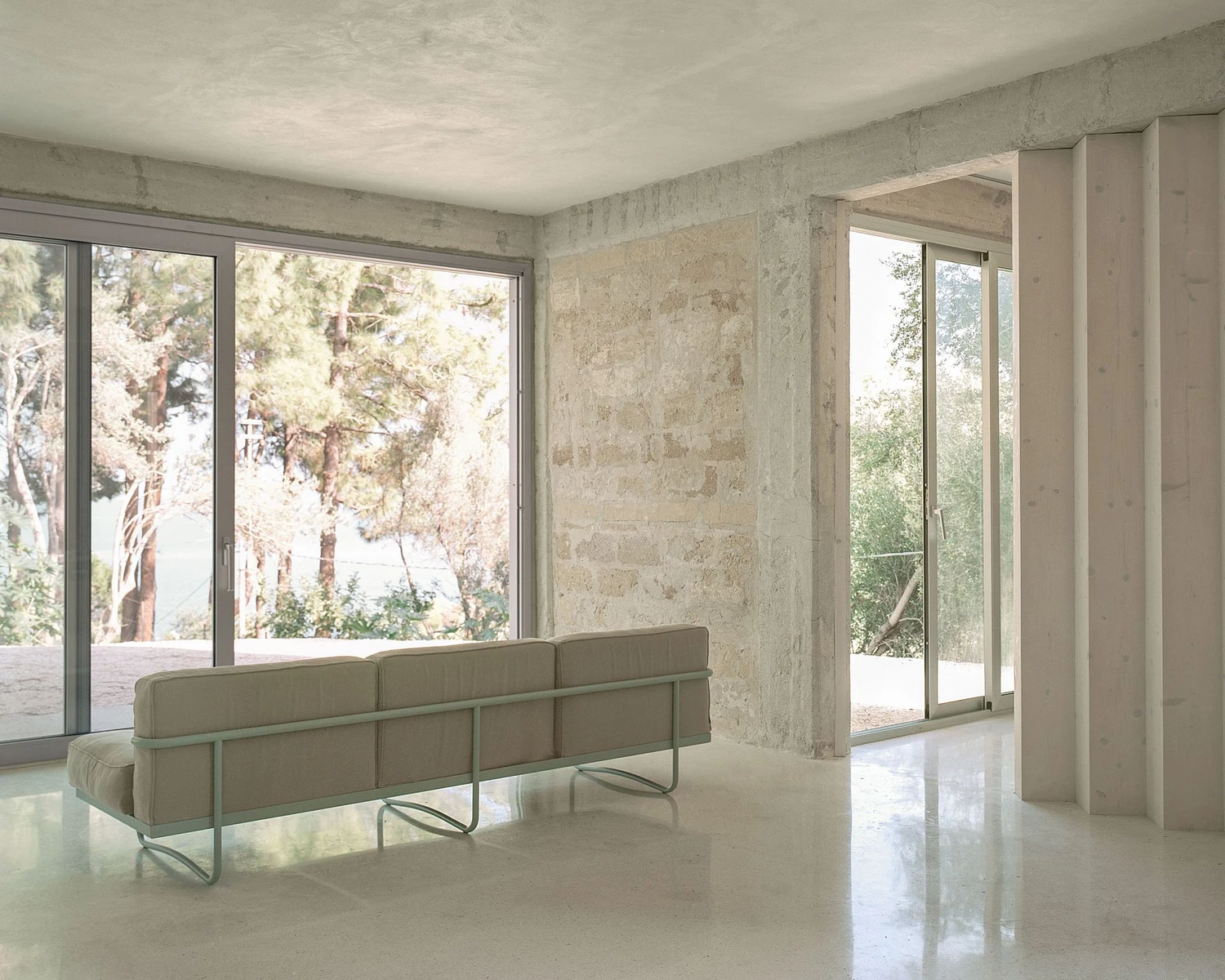
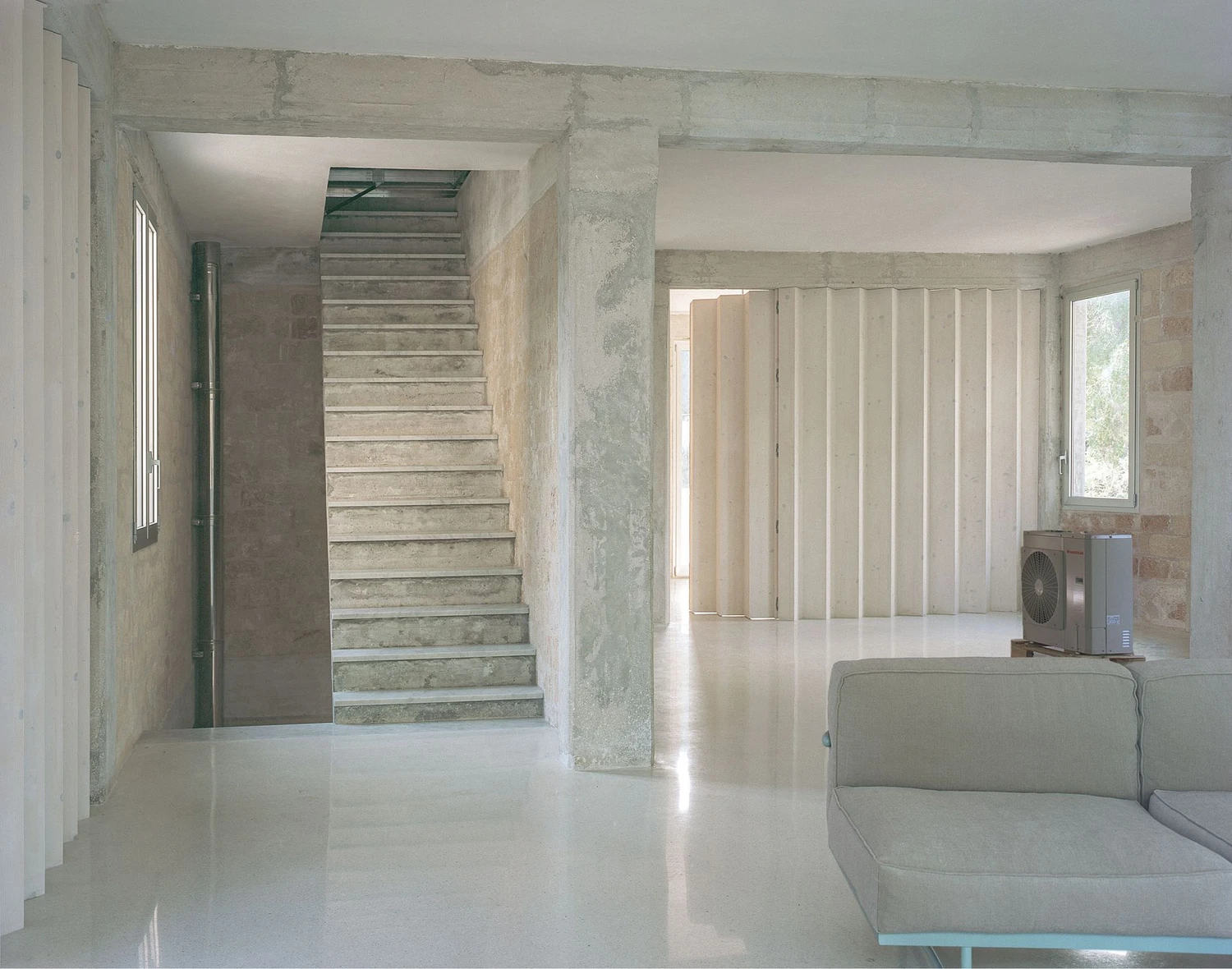
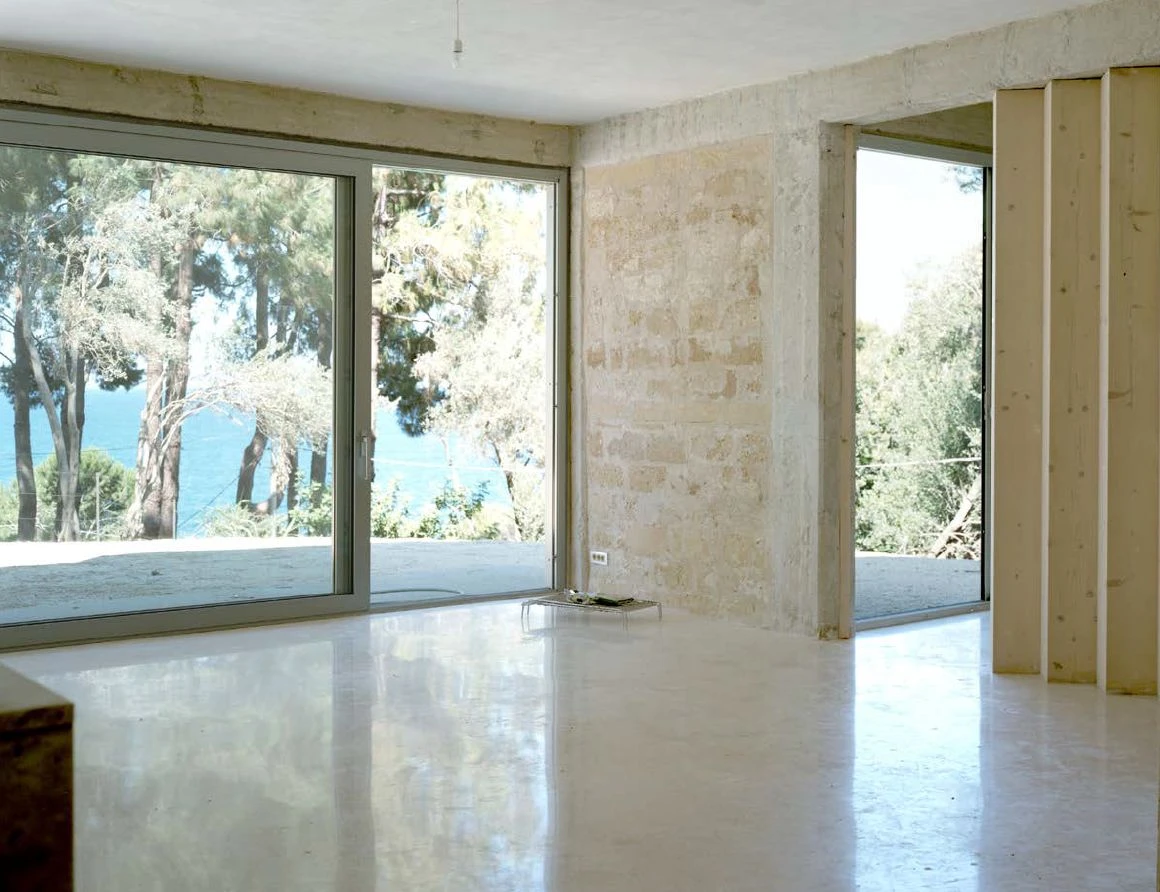
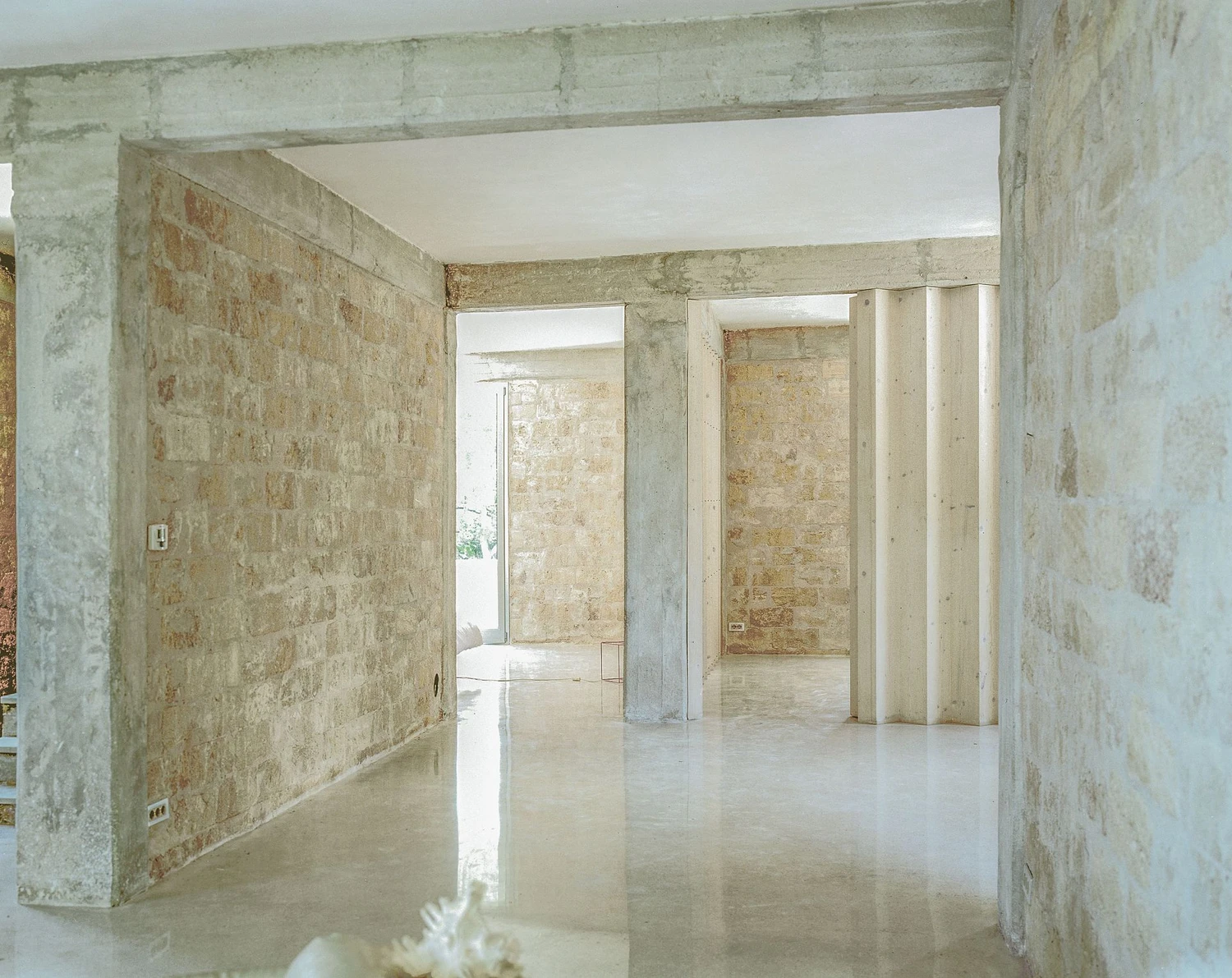
Arno Brandlhuber's intervention, developed with Giacomo Messina, Martha Michalski, and Marco Wagner, proceeded by subtraction rather than addition. Wall plaster came away to reveal the building's skeleton: a concrete frame infilled with local tufa stone. Interior partitions disappeared, opening the floor plate to Mediterranean cross-ventilation and views that now sweep uninterrupted from mountain to water.

The approach resembles archaeology more than renovation. Each layer removed exposed another stratum of the building's material history. The concrete, freed from its coating of institutional paint, shows the grain of its formwork. The tufa, suddenly visible, grounds the structure in its Sicilian geology. What emerges is a building both more raw and more refined than what the customs officers left behind.

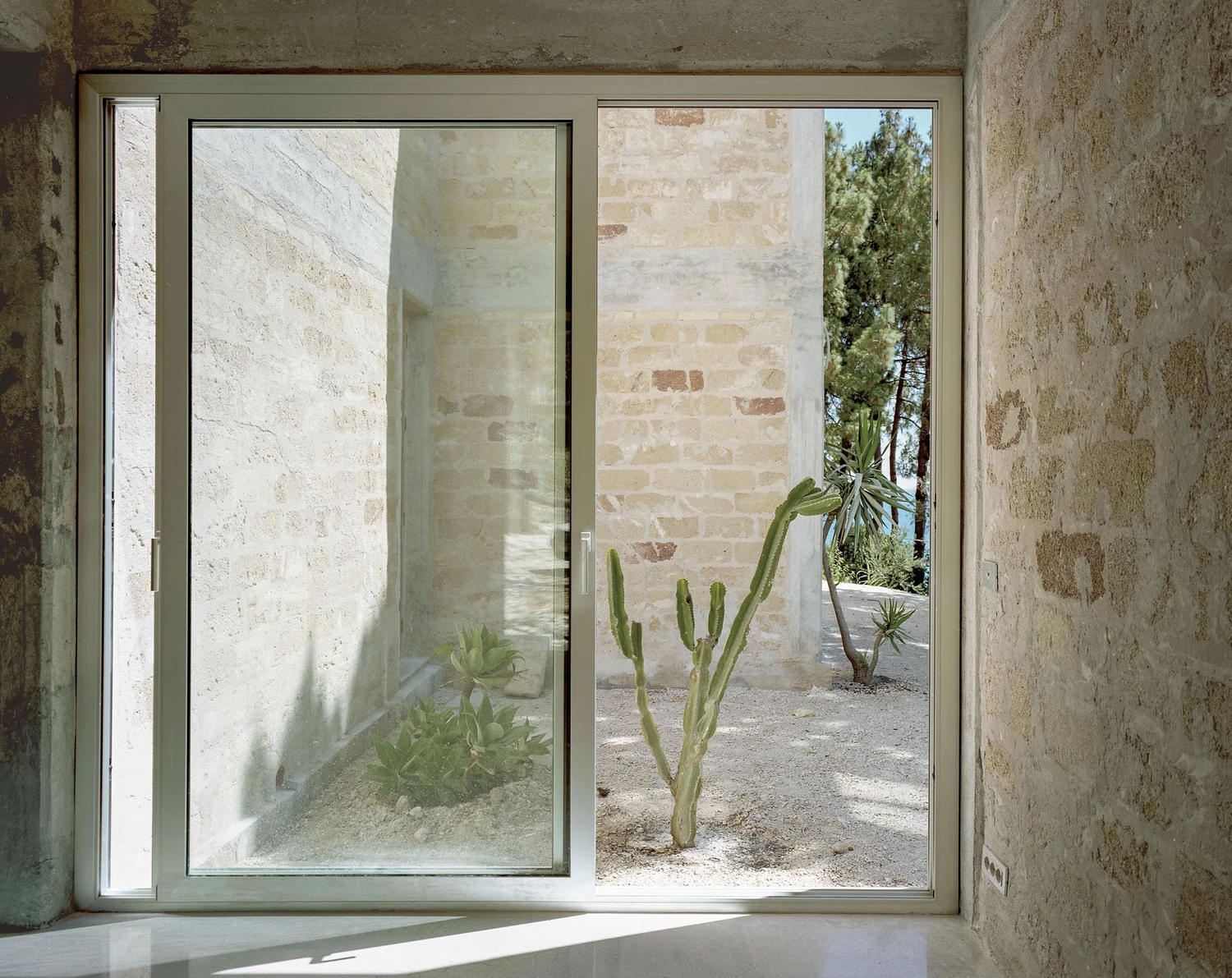
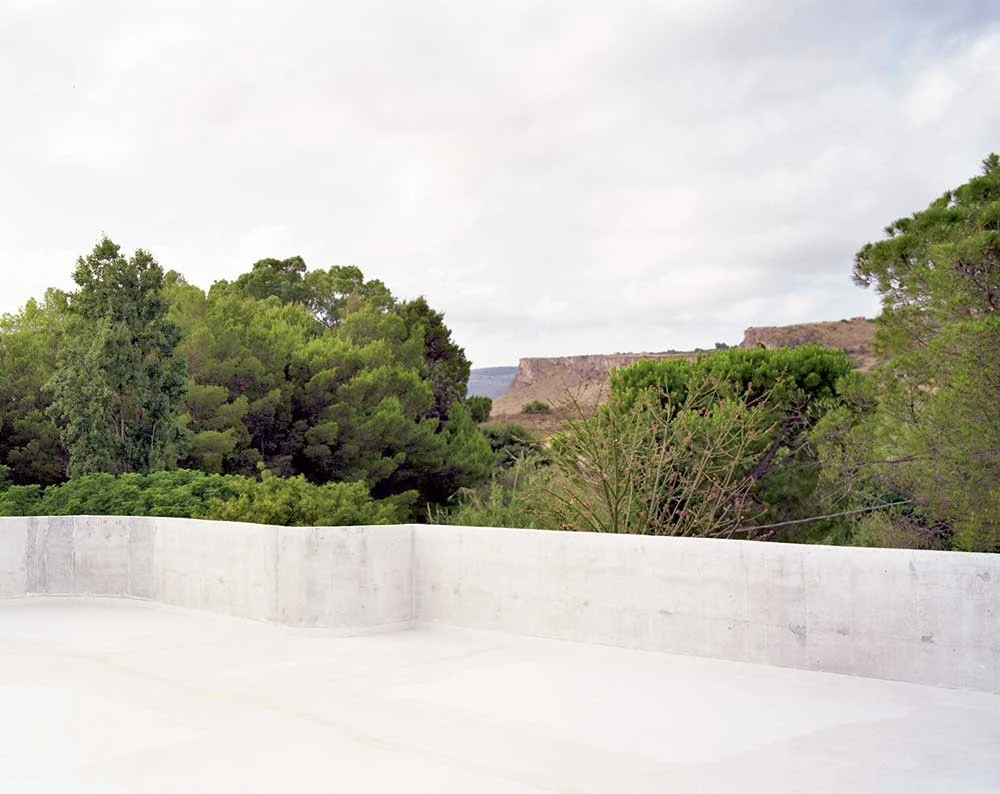
New elements arrive with deliberate clarity. Northern windows, once domestic in scale, became room-height sliding doors opening onto the distinctive balconies. Interior partitions, where privacy requires them, fold accordion-style from wooden planks—present when needed, absent when not. A new staircase climbs to a rooftop terrace that had always existed but never been accessed.

The furniture selection completes the transformation. LC5 sofas by Le Corbusier occupy spaces originally designed for filing cabinets and desks. Carrara marble sliding doors replace institutional hardware. The combination is neither nostalgic nor ironic but straightforwardly honest: good design serving daily life, the building's authoritarian past repurposed for pleasure. The Guardia di Finanza has finally stood down.
Interested in Showcasing Your Work?

If you would like to feature your works on Thisispaper, please visit our Submission page and sign up to Thisispaper+ to submit your work. Once your submission is approved, your work will be showcased to our global audience of 2 million art, architecture, and design professionals and enthusiasts.
No items found.
We love less
but there is more.
Become a Thisispaper+ member today to unlock full access to our magazine, advanced tools, and support our work.
Get two months FREE
with annual subscription
We love less
but there is more.
Become a Thisispaper+ member today to unlock full access to our magazine, advanced tools, and support our work.
Get two months FREE
with annual subscription
No items found.
Alexander Zaxarov
Feb 5, 2026

Guardia di Finanza by Brandlhuber+ in Scopello, Sicily transforms an abandoned 1970s customs police station into a guesthouse where concrete and Mediterranean light reach a new understanding.

On a hillside above the Gulf of Castellammare, near the entrance to Sicily's Zingaro nature reserve, a building designed by Michele di Simone in 1976 had stood empty for years. The former Guardia di Finanza station—once home to Italy's customs police—presented the Berlin-based practice Brandlhuber+ with a structure of uncommon character: curved concrete balconies cantilevering toward the sea, a muscular frame softened by decades of salt air.

Arno Brandlhuber's intervention, developed with Giacomo Messina, Martha Michalski, and Marco Wagner, proceeded by subtraction rather than addition. Wall plaster came away to reveal the building's skeleton: a concrete frame infilled with local tufa stone. Interior partitions disappeared, opening the floor plate to Mediterranean cross-ventilation and views that now sweep uninterrupted from mountain to water.

The approach resembles archaeology more than renovation. Each layer removed exposed another stratum of the building's material history. The concrete, freed from its coating of institutional paint, shows the grain of its formwork. The tufa, suddenly visible, grounds the structure in its Sicilian geology. What emerges is a building both more raw and more refined than what the customs officers left behind.

New elements arrive with deliberate clarity. Northern windows, once domestic in scale, became room-height sliding doors opening onto the distinctive balconies. Interior partitions, where privacy requires them, fold accordion-style from wooden planks—present when needed, absent when not. A new staircase climbs to a rooftop terrace that had always existed but never been accessed.

The furniture selection completes the transformation. LC5 sofas by Le Corbusier occupy spaces originally designed for filing cabinets and desks. Carrara marble sliding doors replace institutional hardware. The combination is neither nostalgic nor ironic but straightforwardly honest: good design serving daily life, the building's authoritarian past repurposed for pleasure. The Guardia di Finanza has finally stood down.

Interested in Showcasing Your Work?

If you would like to feature your works on Thisispaper, please visit our Submission page and subscribe to Thisispaper+. Once your submission is approved, your work will be showcased to our global audience of 2 million art, architecture, and design professionals and enthusiasts.
Thisispaper+
Concrete Stories
100+ Projects
Web Access
Link to Maps
Monolithic yet intricate, raw yet refined—Concrete Stories presents a global collection of architectural wonders shaped by the visionaries of our time. This is a tribute to the poetic and sculptural power of concrete, where material and form converge in striking, unforgettable statements.
Explore
Concrete Stories

Join Thisispaper+
Unlock access to 2500 stories, curated guides + editions, and share your work with a global network of architects, artists, writers and designers who are shaping the future.
Get two months FREE
with annual subscription
Atlas
A new and interactive way to explore the most inspiring places around the world.
Interactive map
Linked to articles
300+ curated locations
Google + Apple directions
Smart filters
Subscribe to Explore+
Travel Guides
Immerse yourself in timeless destinations, hidden gems, and creative spaces—curated by humans, not algorithms.
Explore All Guides +
Curated Editions
Dive deeper into carefully curated editions, designed to feed your curiosity and foster exploration.
Off-the-Grid
Jutaku
Sacral Journey
minimum
The New Chair
Explore All Editions +
Submission Module
Submit your project and gain the chance to showcase your work to our worldwide audience of over 2M architects, designers, artists, and curious minds.
Learn More+
Become a Thisispaper+ member today to unlock full access to our magazine, submit your project and support our work.
Join Thisispaper+Join Thisispaper+
€ 9 EUR
/month
Cancel anytime
Get two months FREE
with annual subscription