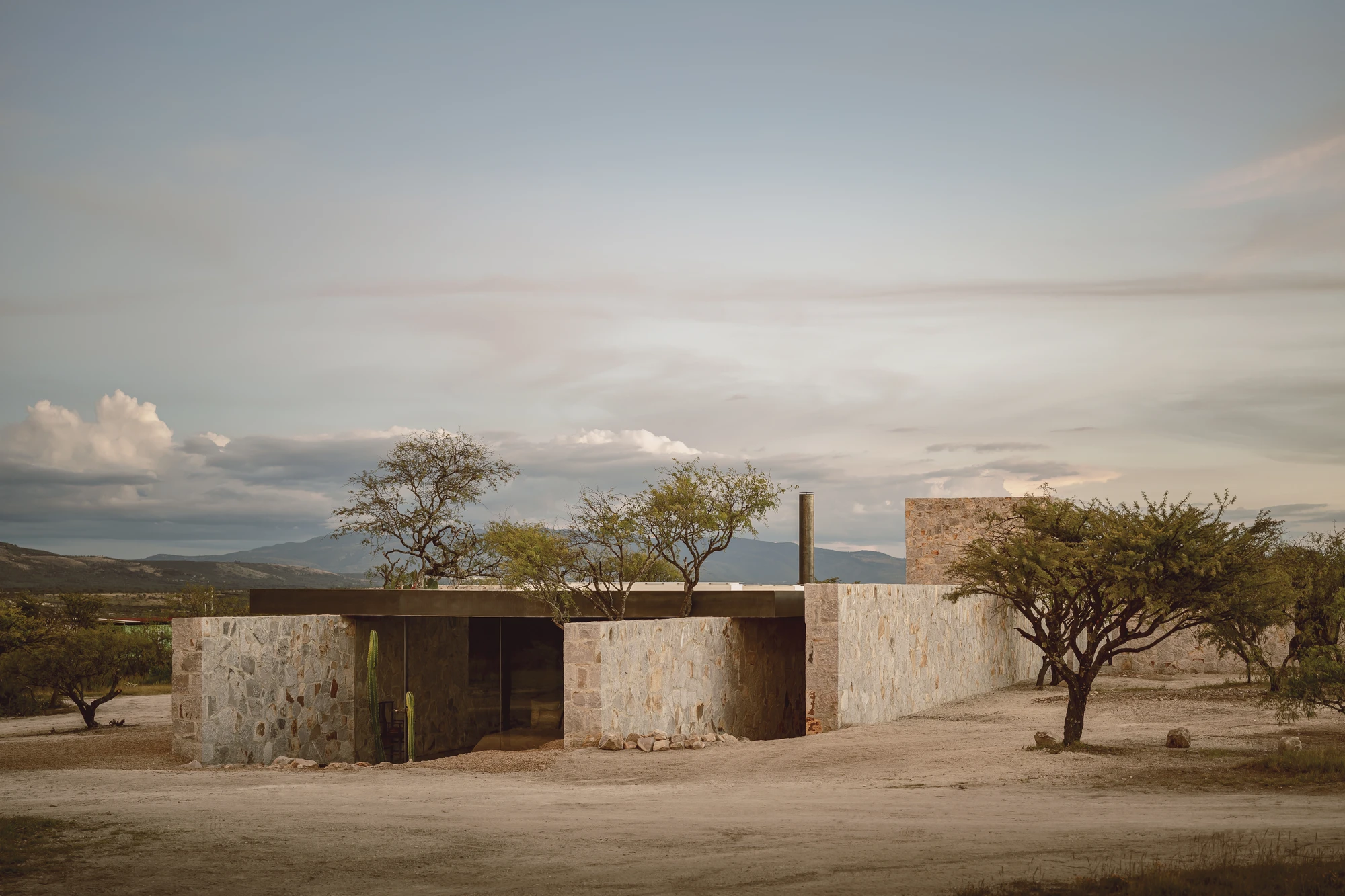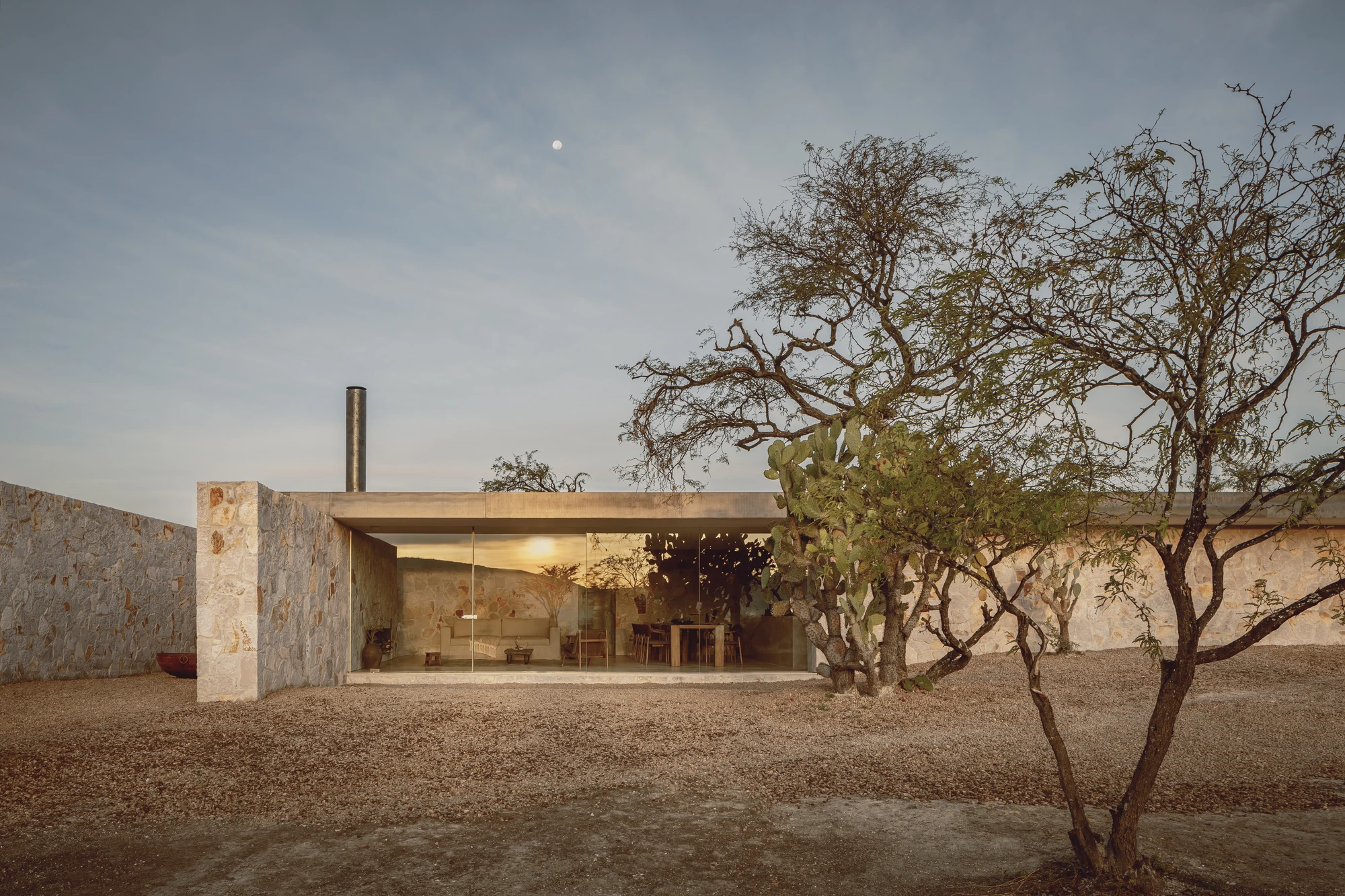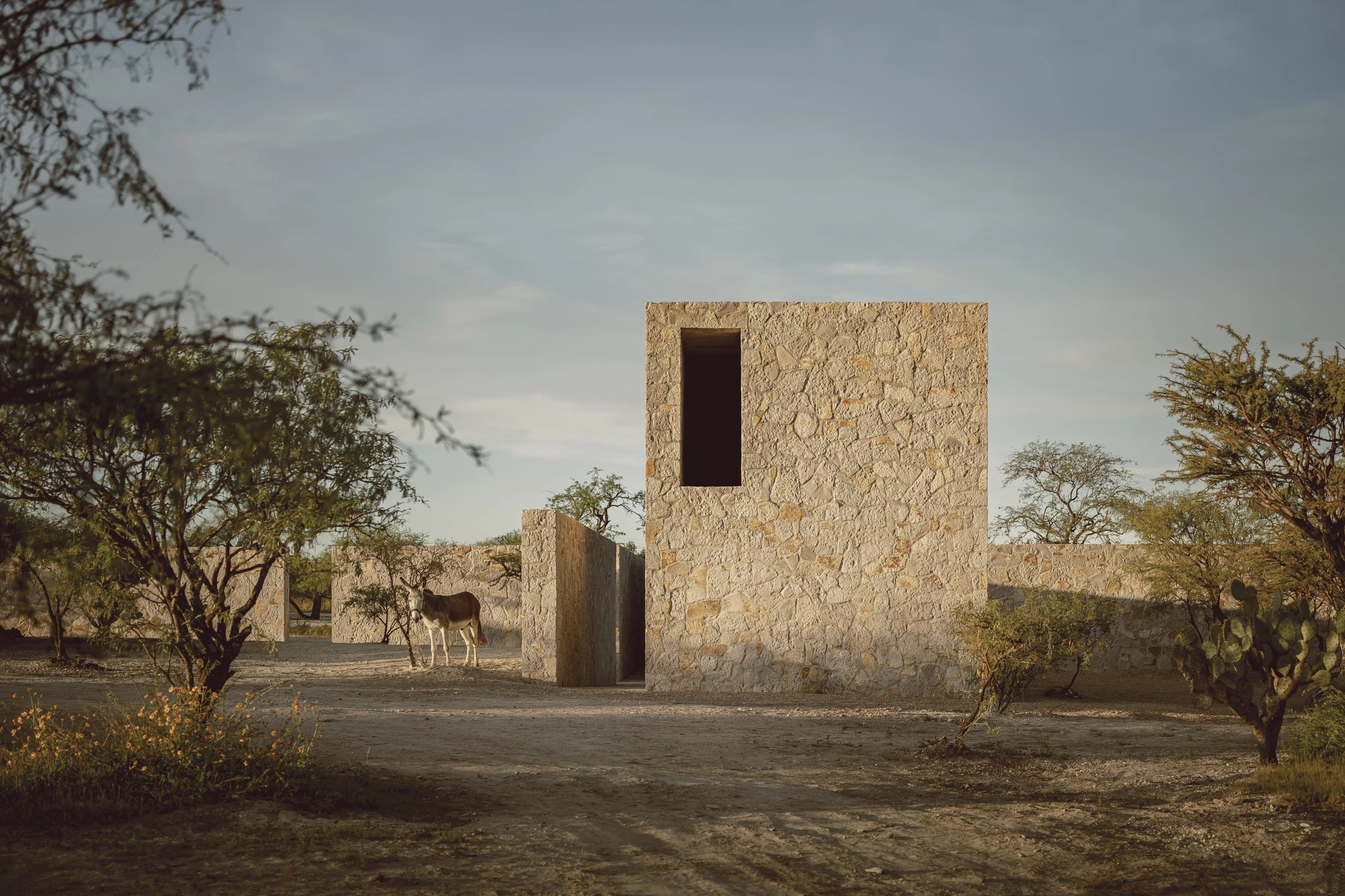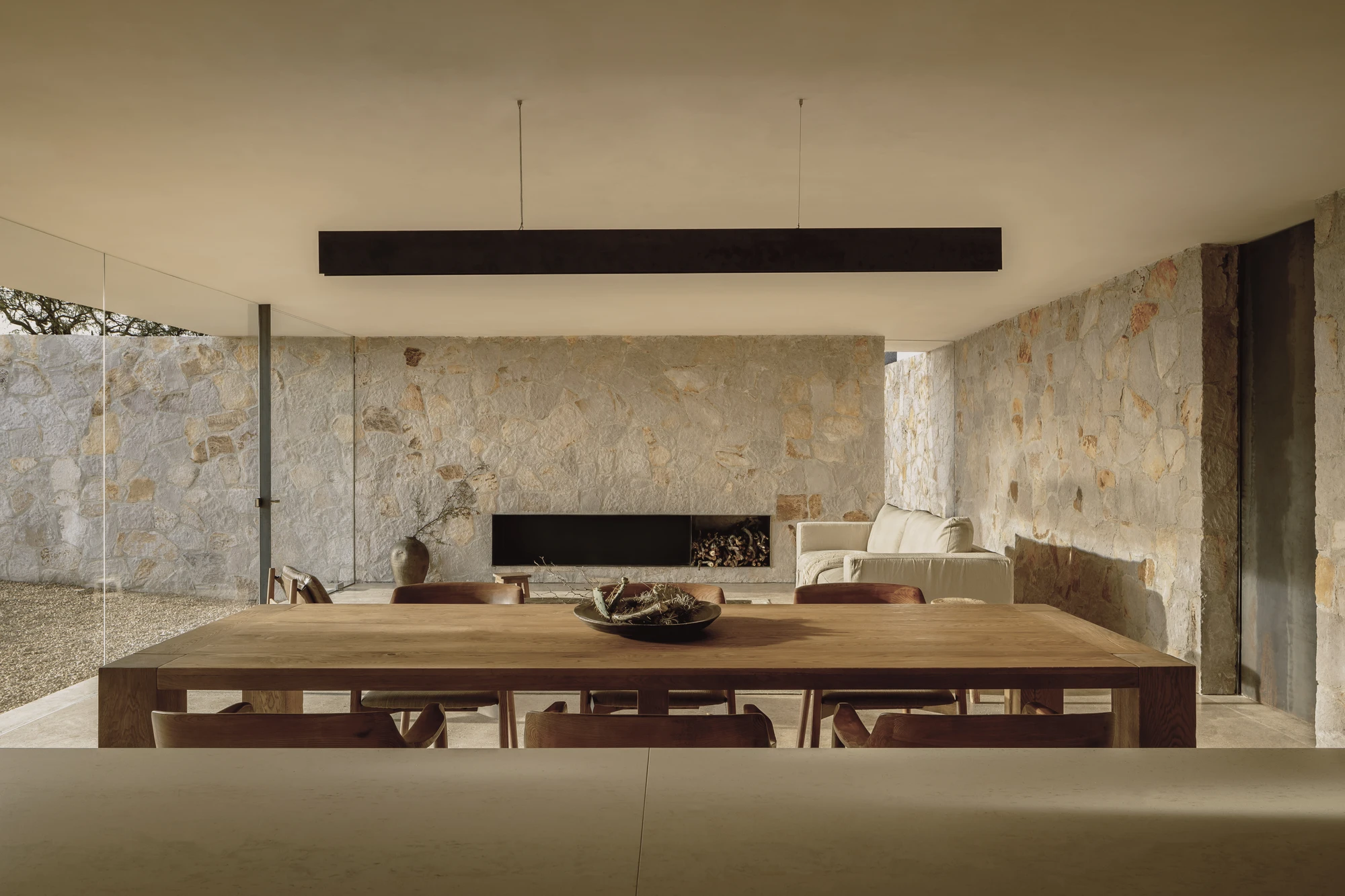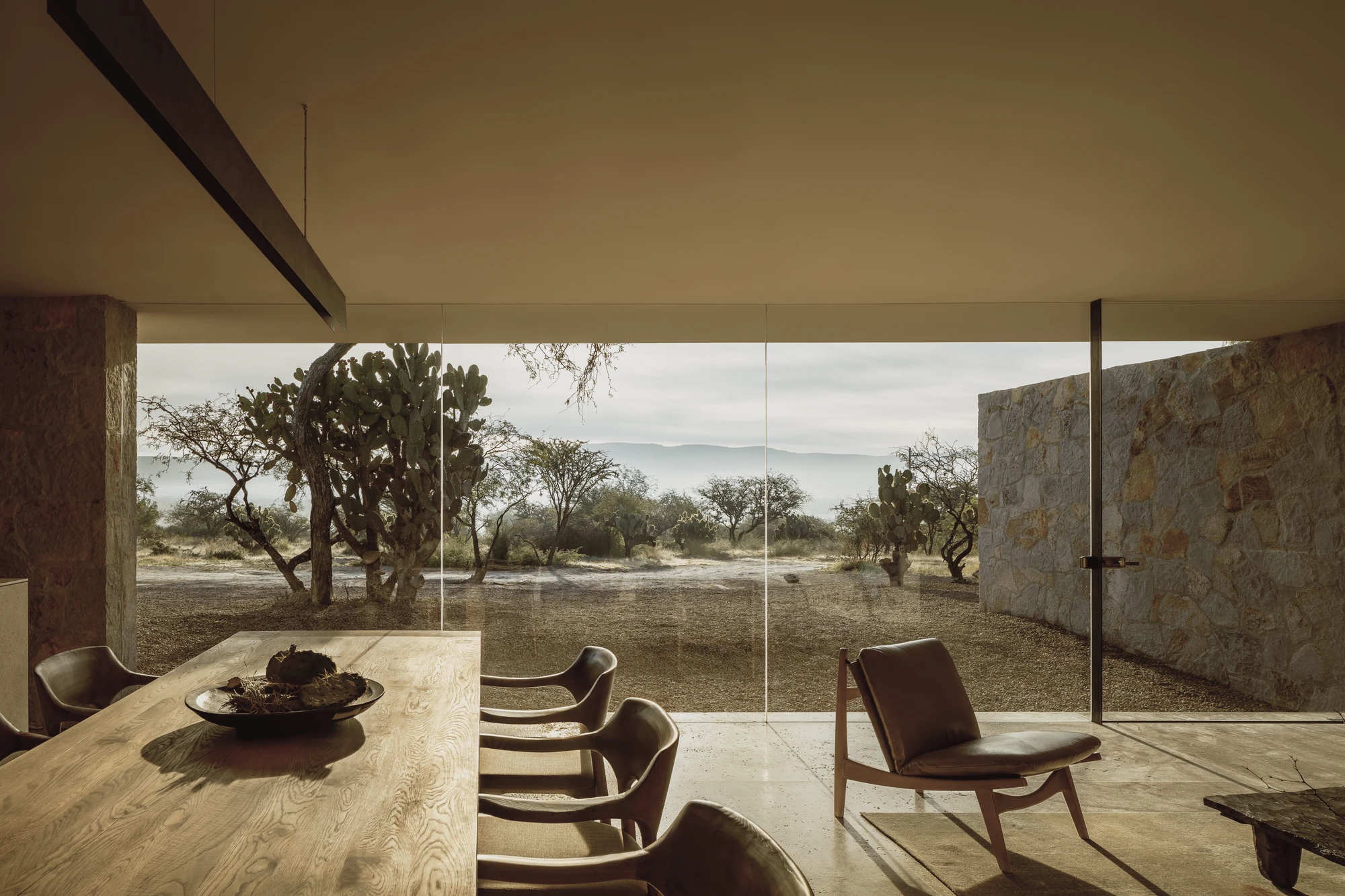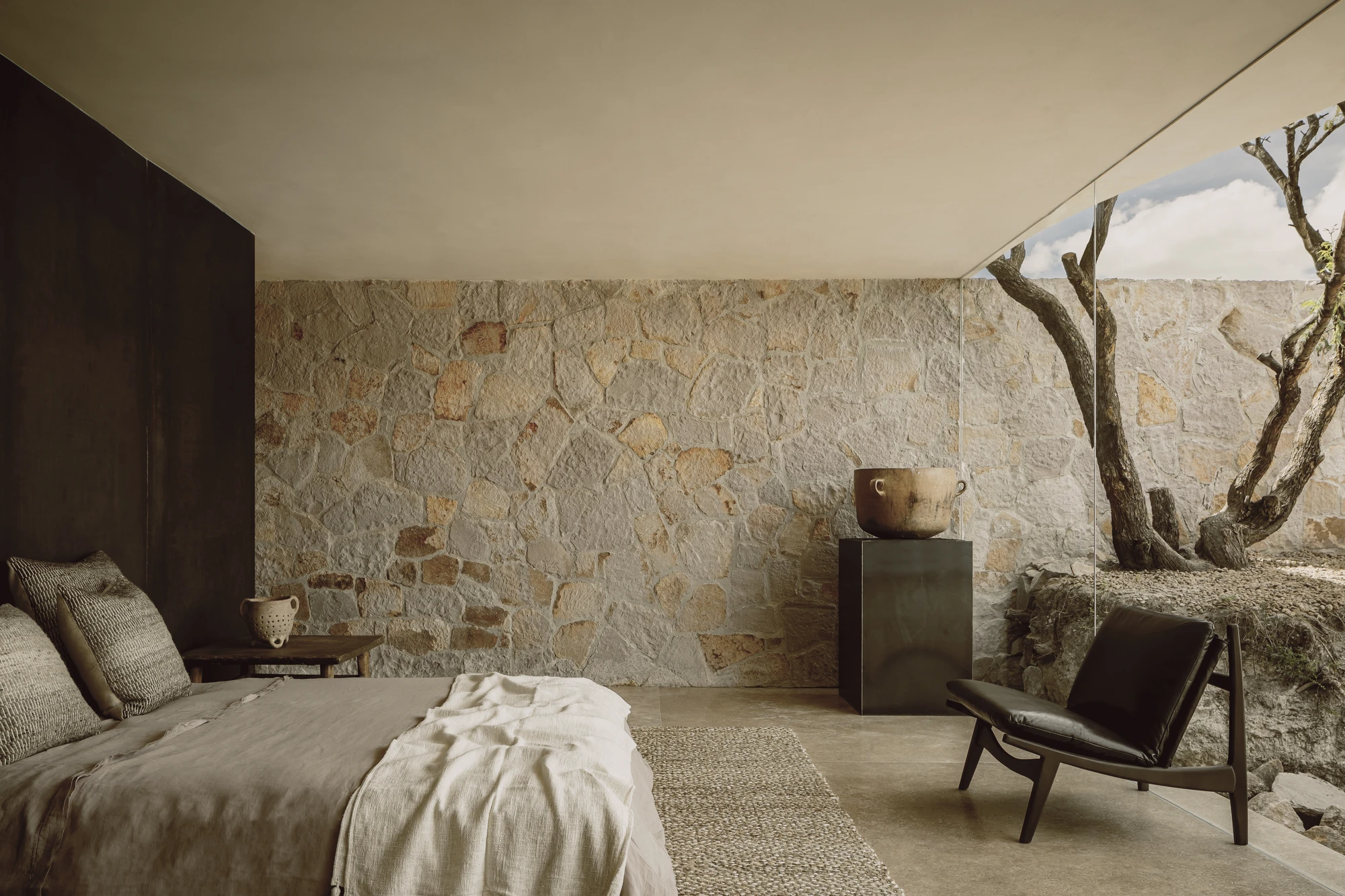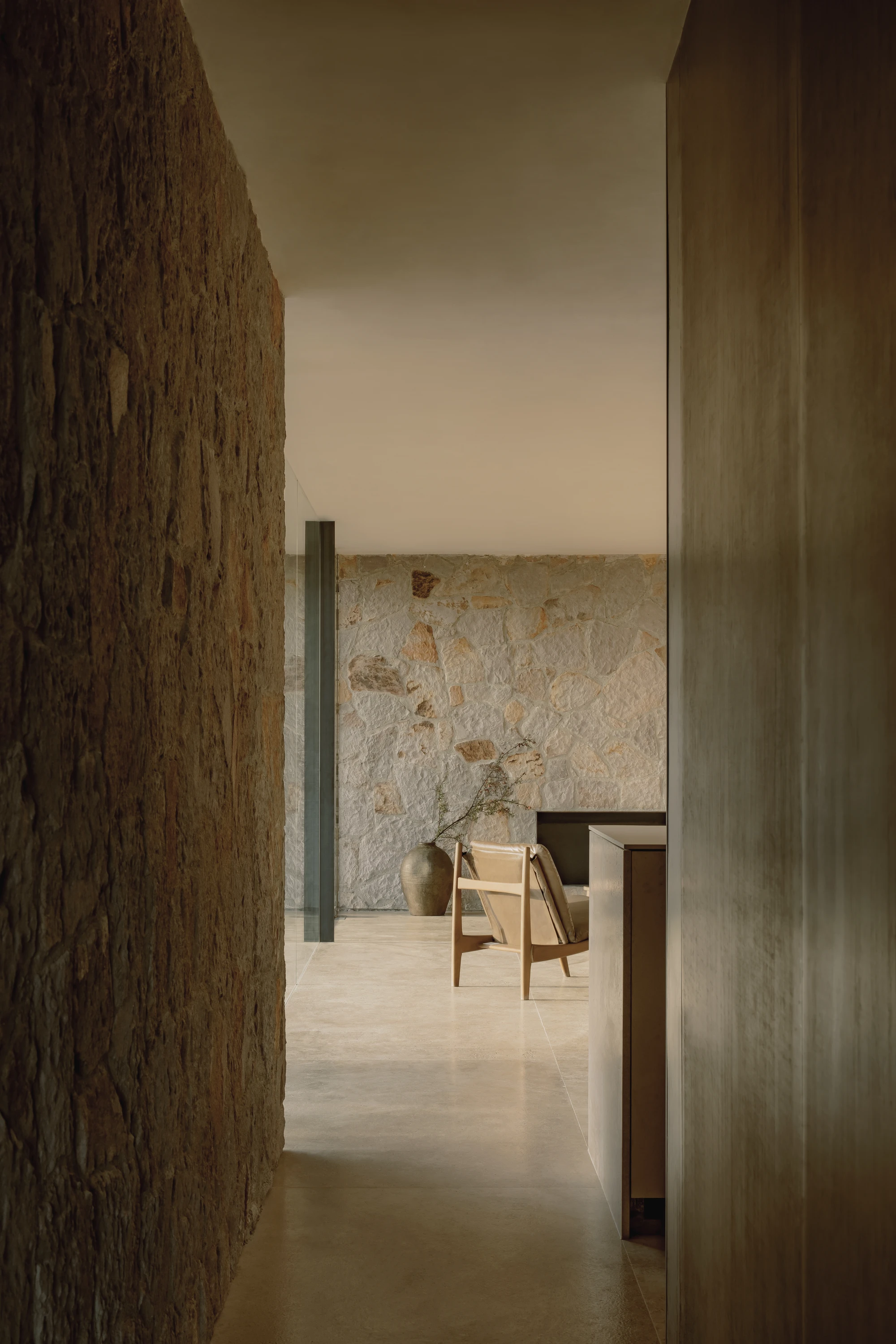
Enso House II by HW Studio in San Miguel de Allende, Mexico organizes domestic life around a single view—stone walls becoming frames for distant mountains.
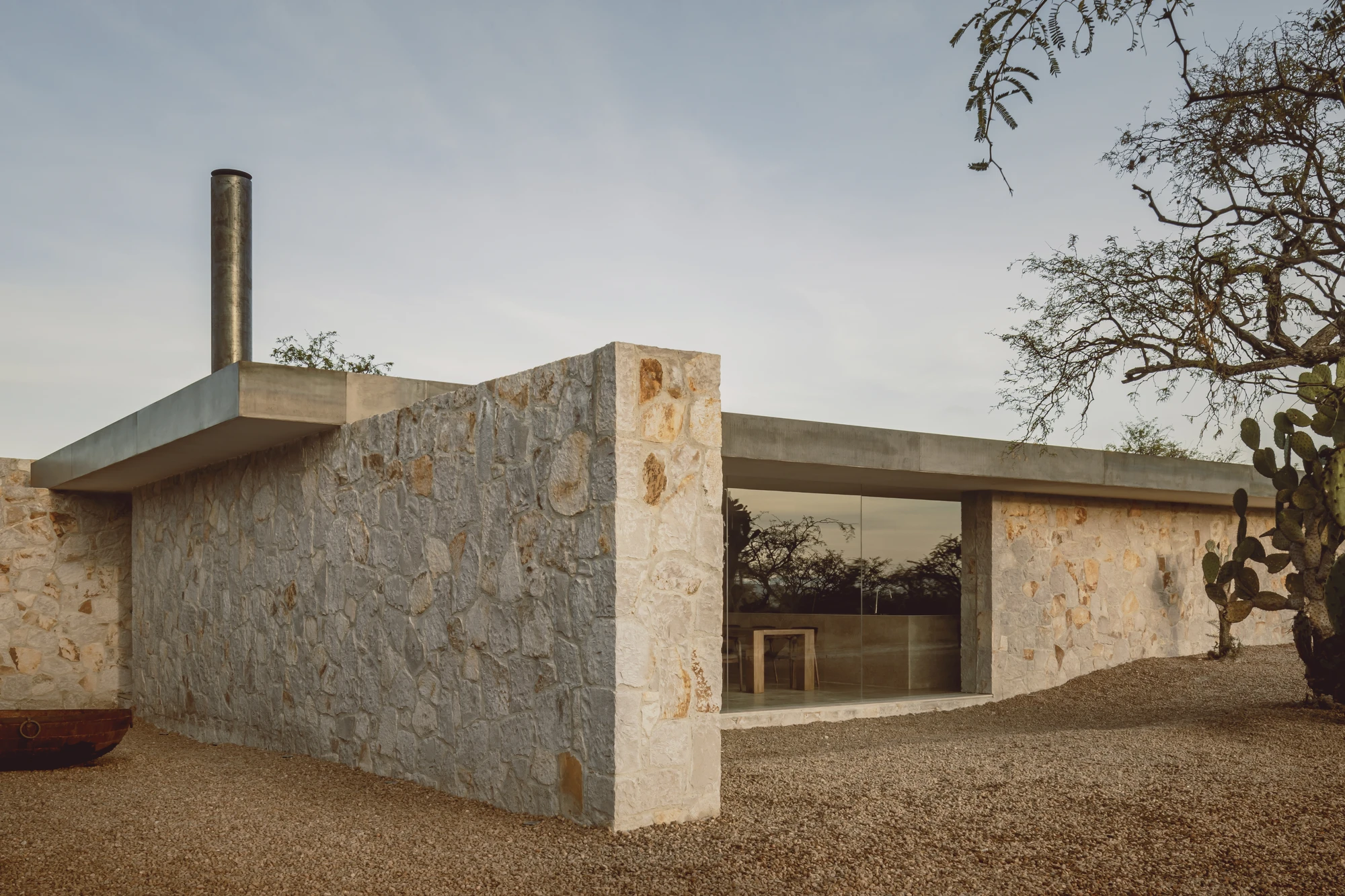
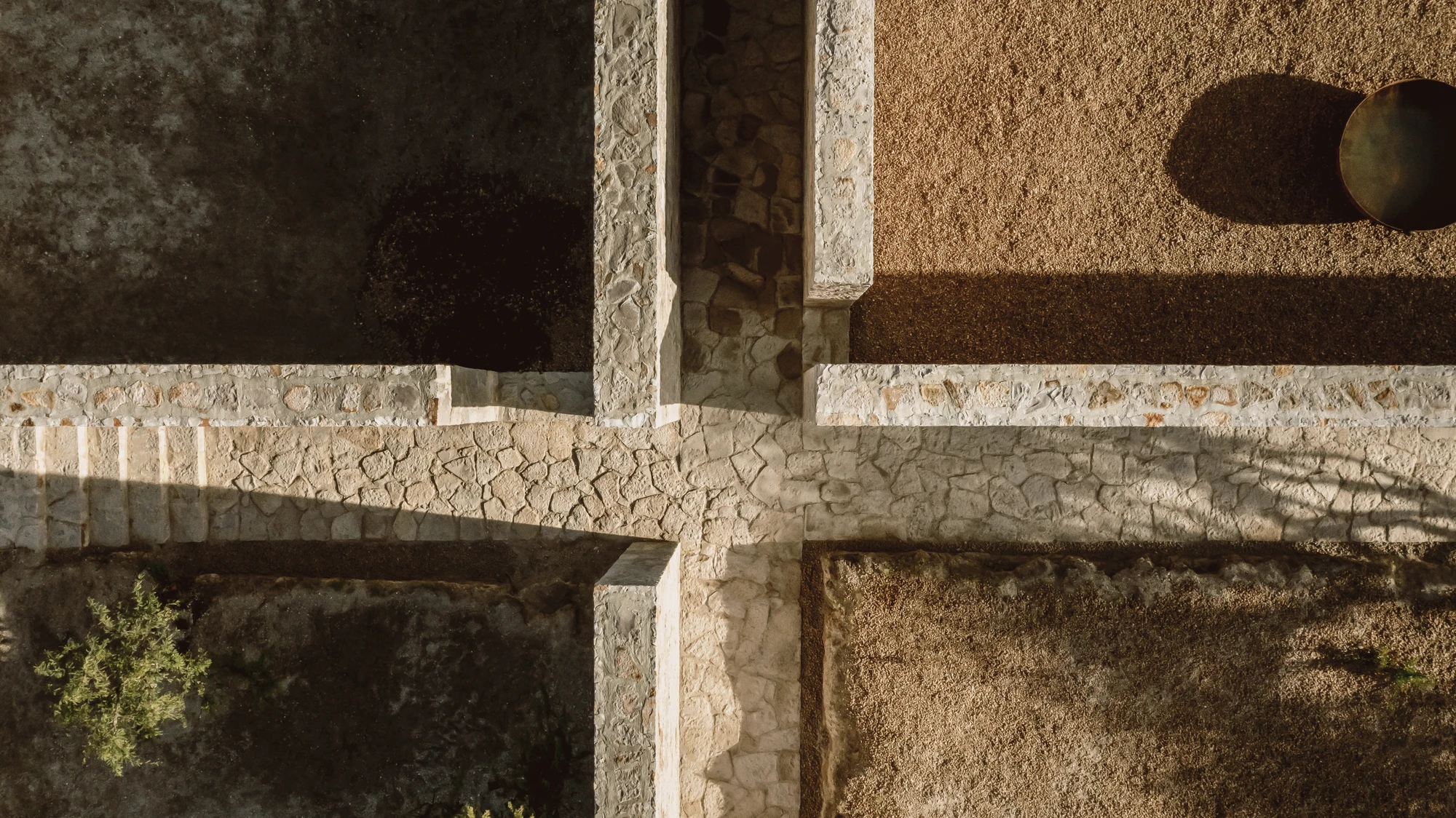
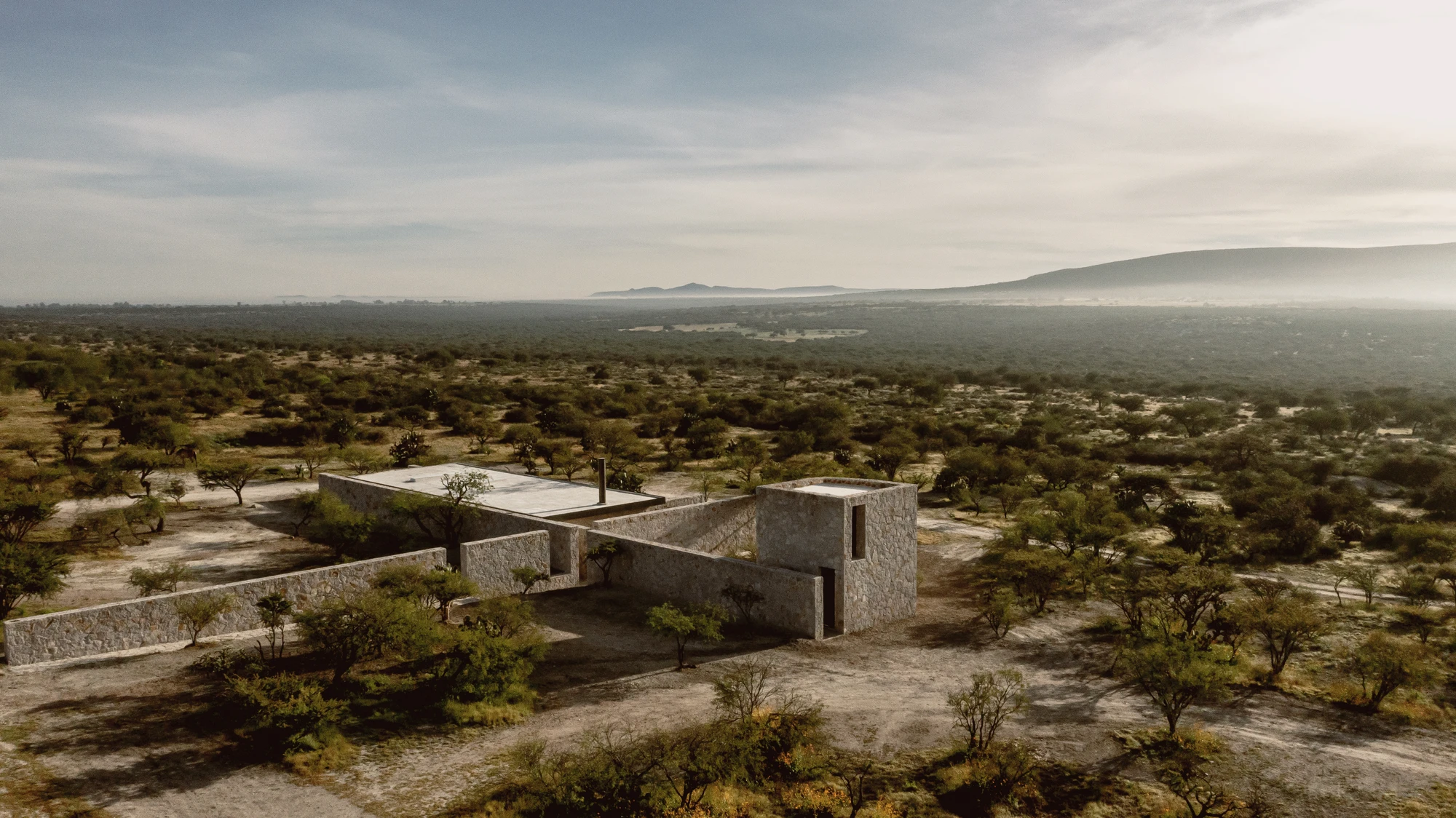
The mesquite-dotted landscape around San Miguel de Allende has attracted architects seeking the clarifying effect of horizon. For a residence in this terrain, HW Studio proposed a plan as elemental as the view it captures: a cruciform, its four arms dividing the site into quadrants of different character, its intersection creating a center of gravitational stillness.
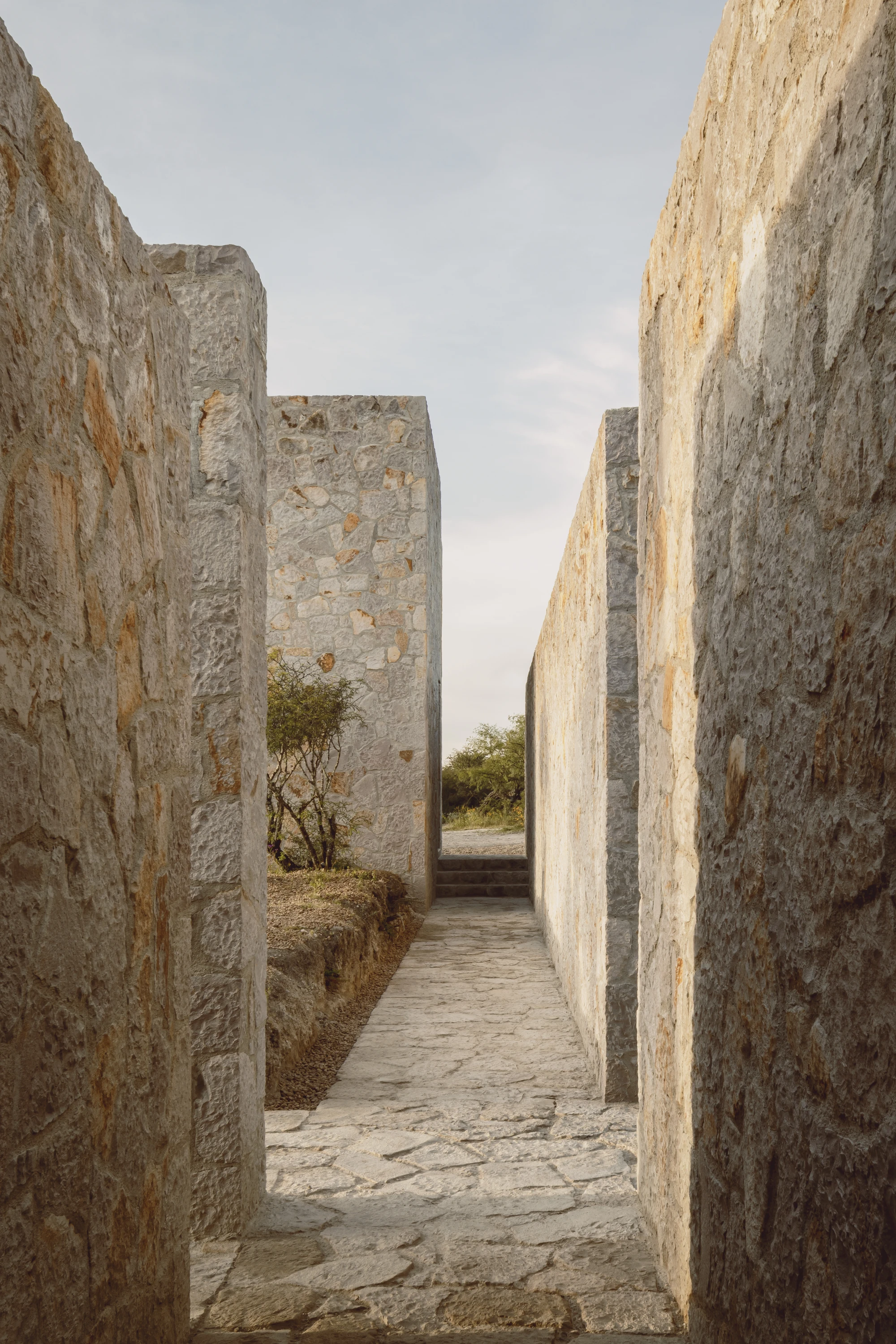
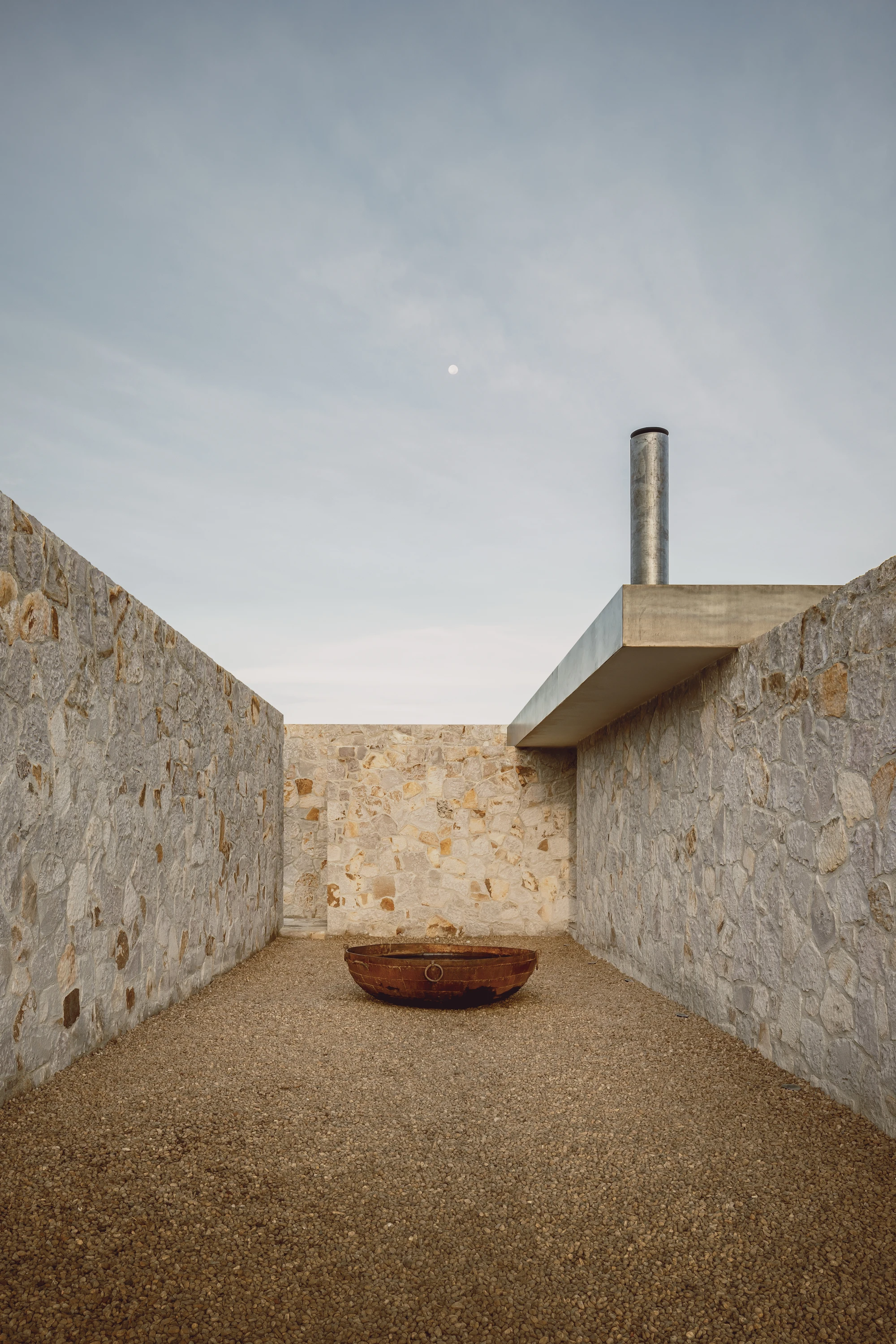
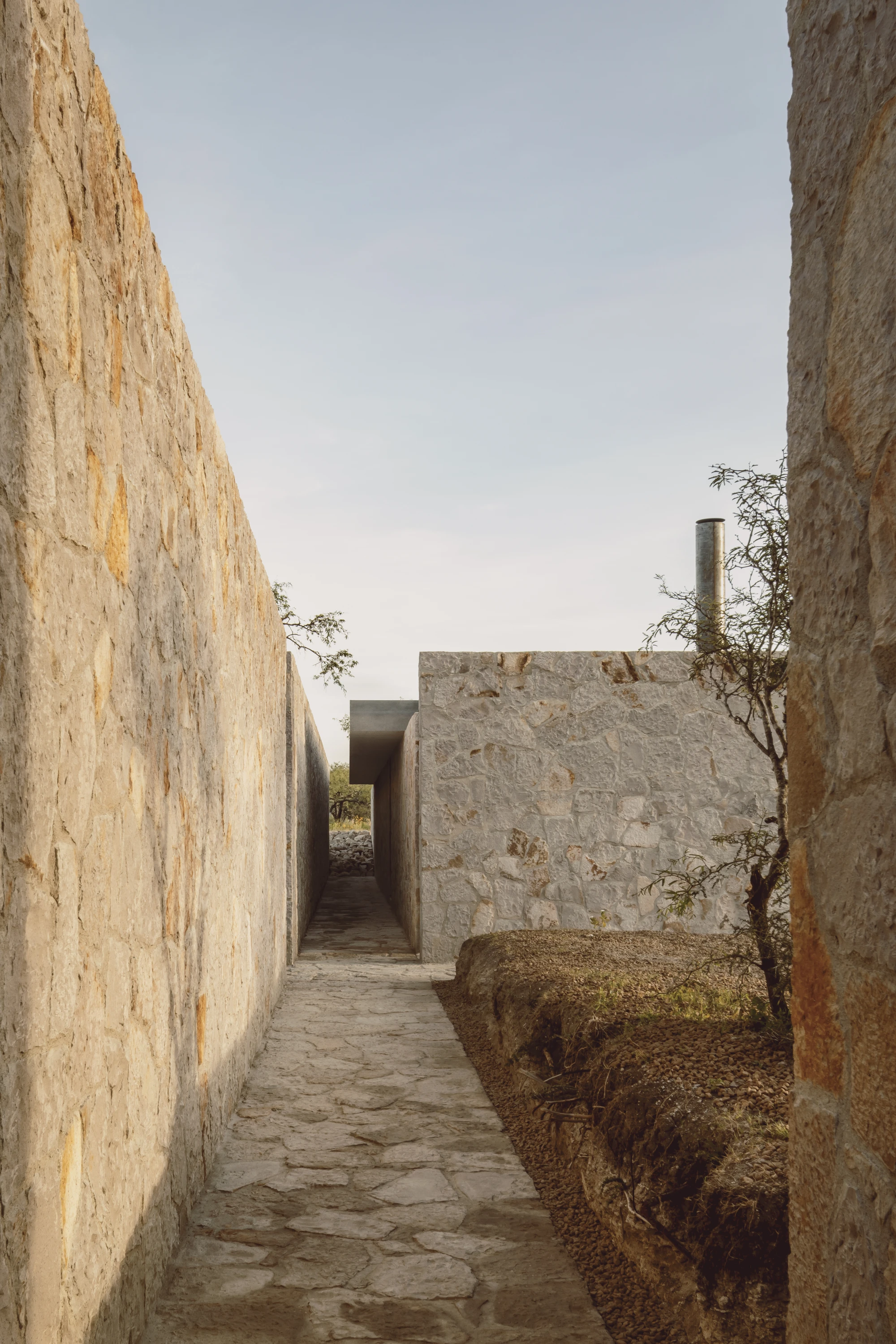
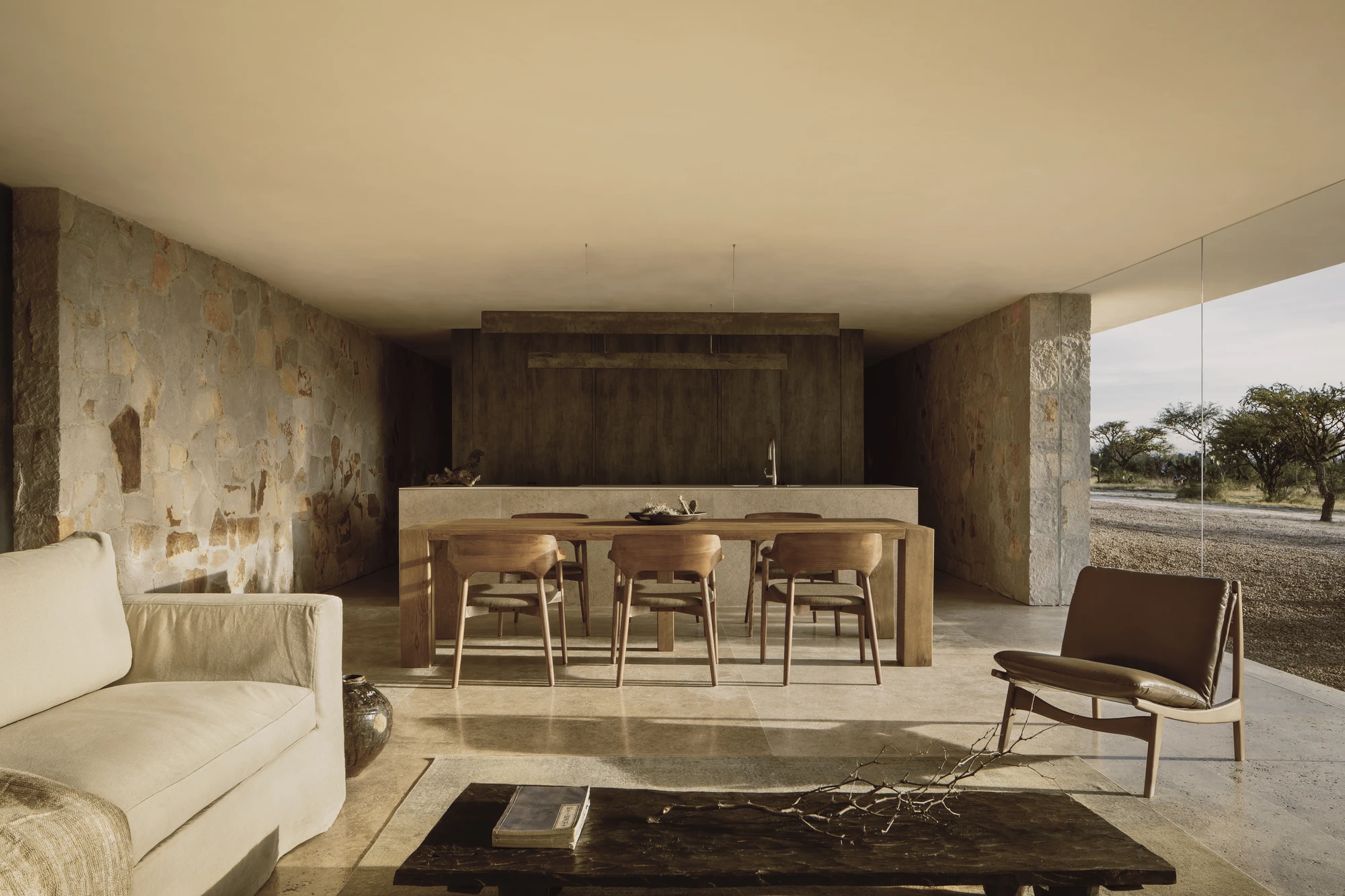
Each quadrant serves distinct purpose. One receives vehicles; another contains an entry garden. The main living spaces occupy a third, while the fourth houses a private office. Movement between these zones requires passing through the central crossing—and, crucially, through open air. The house breathes at its core, its inhabitants constantly reminded of the climate they have chosen to inhabit.
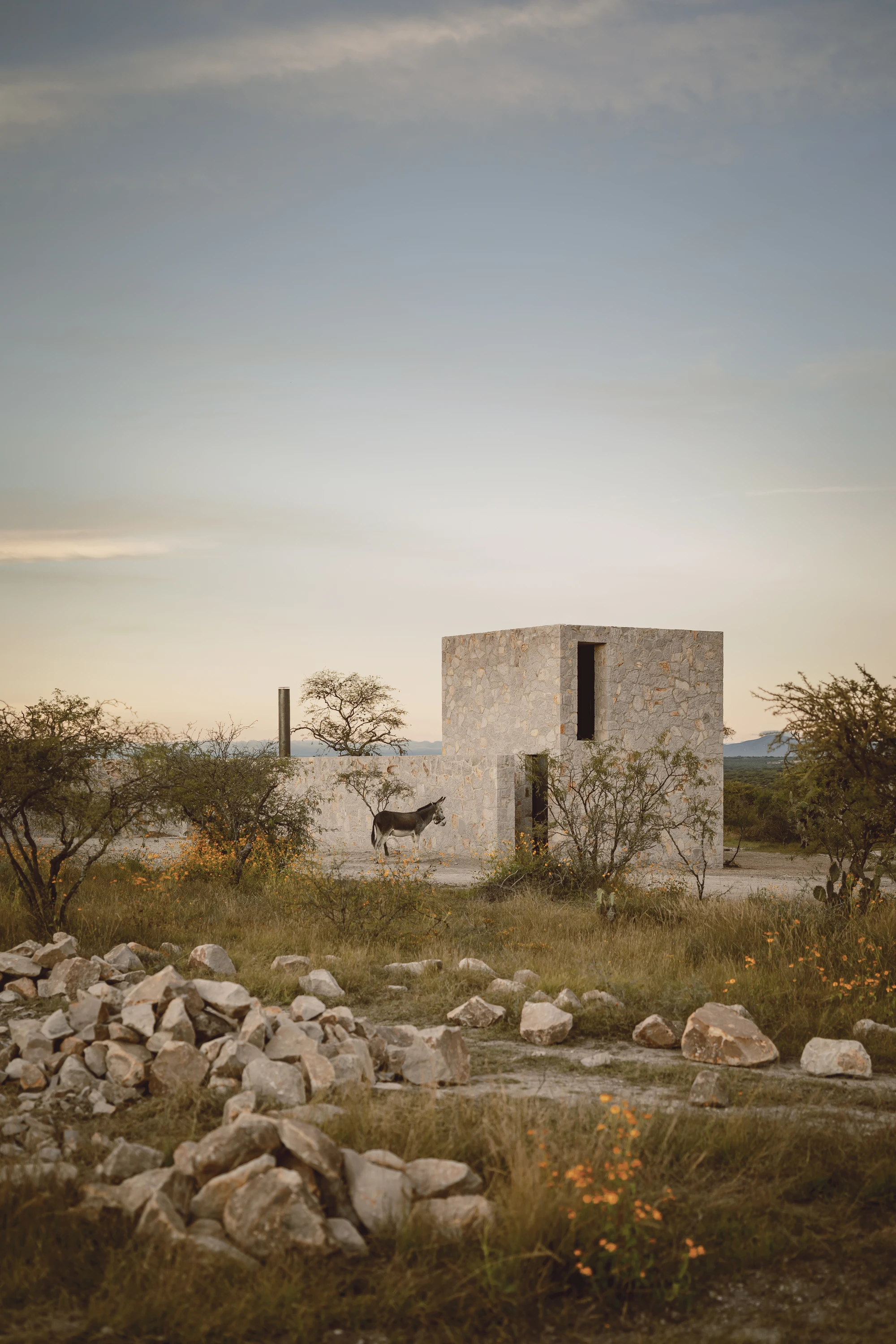
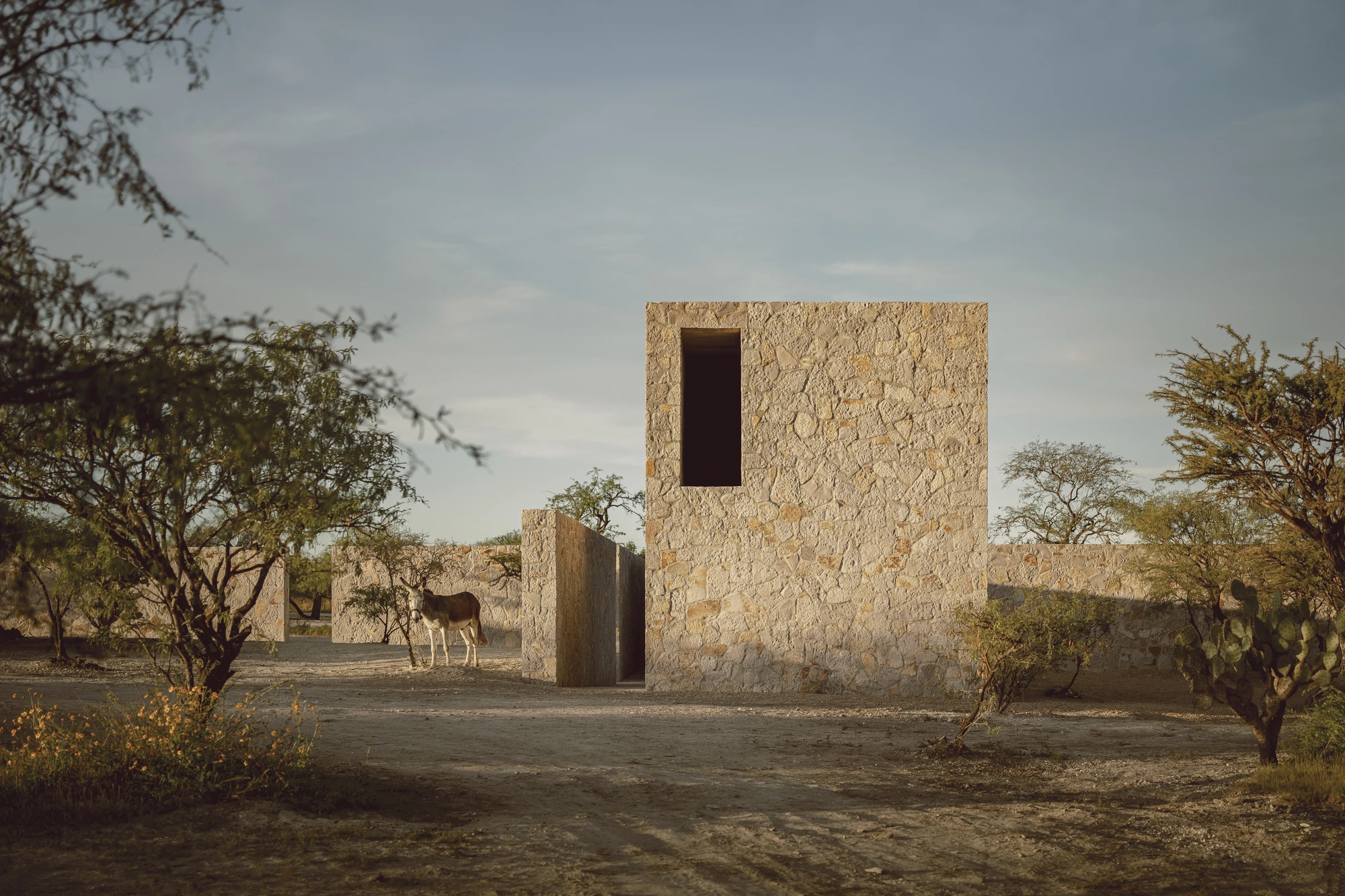
The stone walls that define the cross read simultaneously as architecture and landscape. Their material—local rock, laid in courses that emphasize horizontality—echoes the stratification visible in distant cliff faces. Windows cut through these walls as precise apertures rather than transparent membranes, framing specific views rather than offering panoramic display. The mountain that anchors the composition appears and disappears as one moves through the plan.
The monastic analogy embedded in the project's name proves apt. The enso—the Zen circle drawn in a single brushstroke—suggests both completion and emptiness, form and void. Here, the cruciform plan achieves similar balance: enclosed enough to shelter, open enough to connect, oriented precisely toward what lies beyond its walls.
HW Studio's achievement lies in making the view constitutive rather than additive. The mountain does not merely appear through the architecture; it organizes it, pulling the plan into alignment with forces larger than domestic program. Residents live not in a house with a view but in a house made by one.