


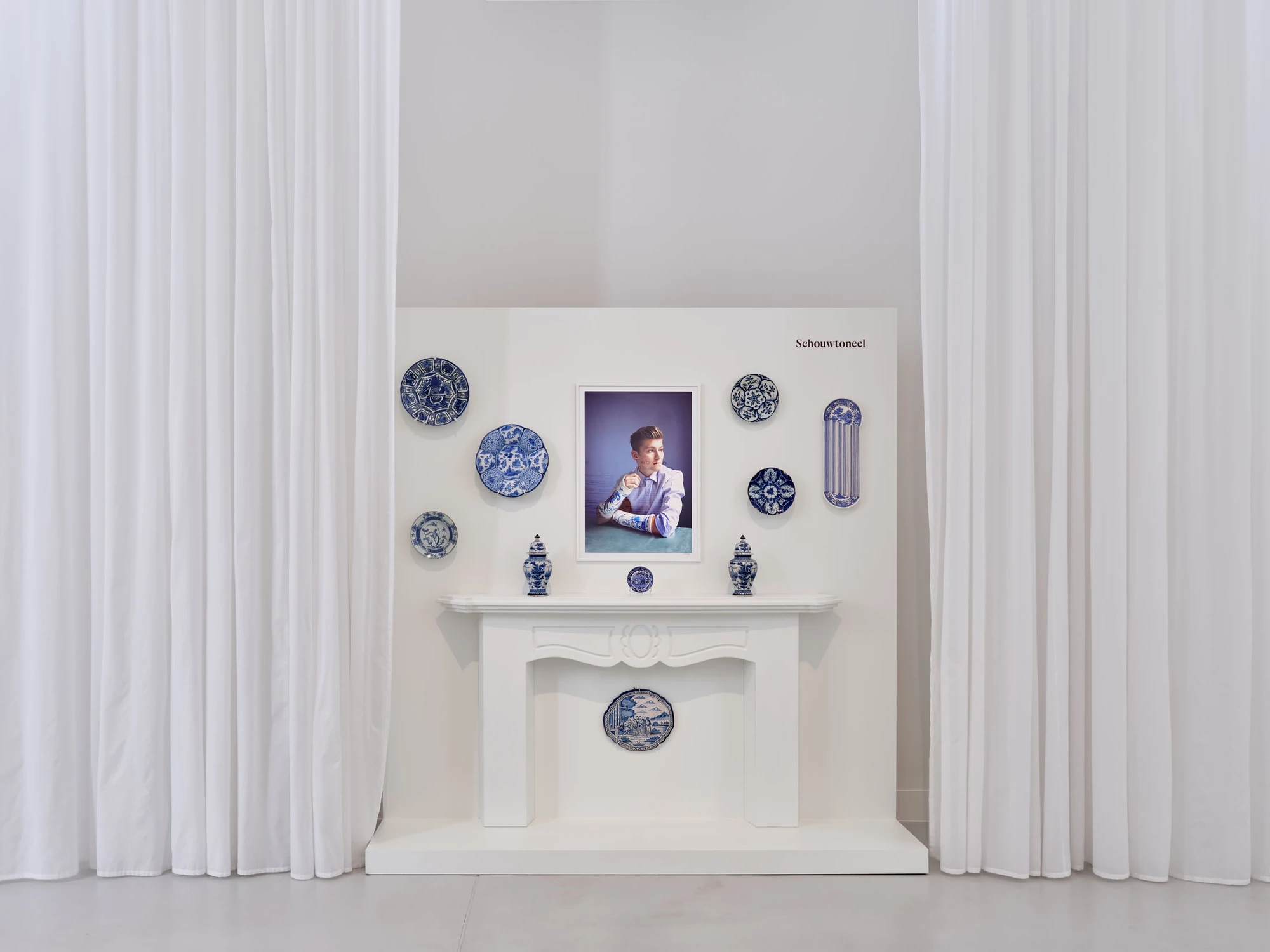
In Kortrijk, Belgium, Abby stages Coup de Théâtre. A Play of Clay, a group exhibition that treats its ceramic collection as a cast of actors and sorts centuries of figures, showpieces and scenery into three acts.
Ceramics have always been more than tableware. In Coup de Théâtre. A Play of Clay, Abby takes that history at its word and treats clay as a theatrical medium, one built for role-play, spectacle and staging. Figures, vessels and painted backdrops are arranged like a cast waiting for its cue, a reminder that for centuries porcelain and earthenware have been asked to stand in for identity, power, beauty and the texture of ordinary life.
The show draws on Abby's own holdings, one of the most important ceramic collections in Flanders, and puts some ninety historical objects in the same rooms as contemporary art and design. Assembled by Klara Rowaert and Sarah Keymeulen, it moves without hierarchy between old figures, plates and vessels and work by living artists such as Nick Cave, Wieki Somers, Anne Wenzel and Augustas Serapinas. Past and present share the stage rather than the timeline.
Structure carries the argument. The exhibition unfolds as three acts. Role-playing gathers characters, social types and figuration, the ceramic equivalent of a company of players. Show and Display turns to the showpiece, the object made to be presented and admired, a study in cultural imagery. All the World's a Stage takes on nature and illusion, the point where a modelled leaf or a glazed beast blurs what is real and what is staged.
Between the historical acts, Abby adds a contemporary subplot. Working with Designregio Kortrijk, it shows new pieces by young international designers who take their cue from the region's long ceramic tradition, a nod to Kortrijk's own history as a place where clay was worked, traded and turned into everyday goods.
What holds it together is the conceit named in the title. A coup de théâtre is the sudden turn that changes a play, and here the turn is simple: objects usually kept behind glass are asked to perform. Seen this way, the collection reads as a theatre of the world in miniature, where a figurine is a character, a tureen is a set piece, and clay itself becomes the oldest actor in the room.


