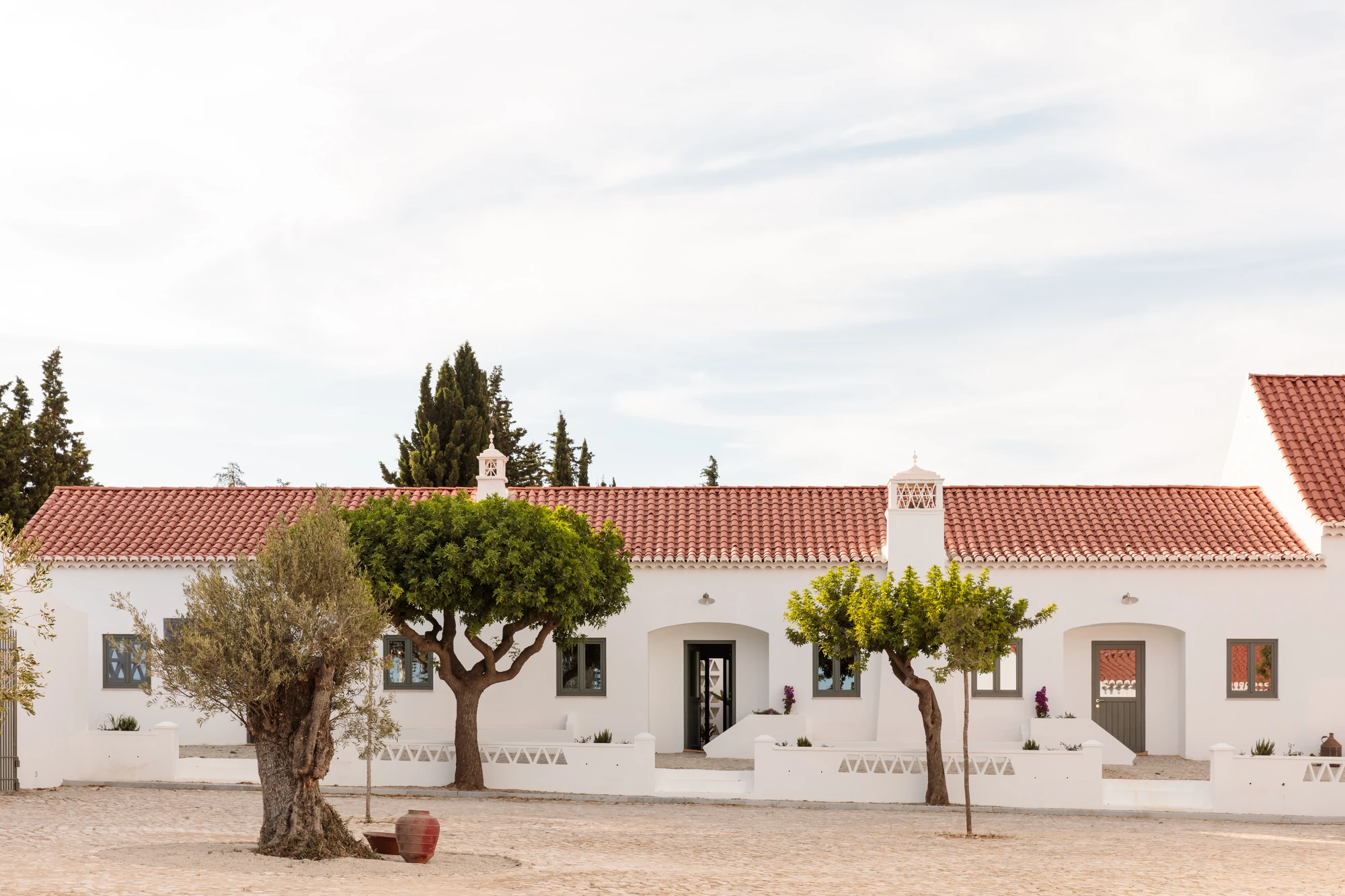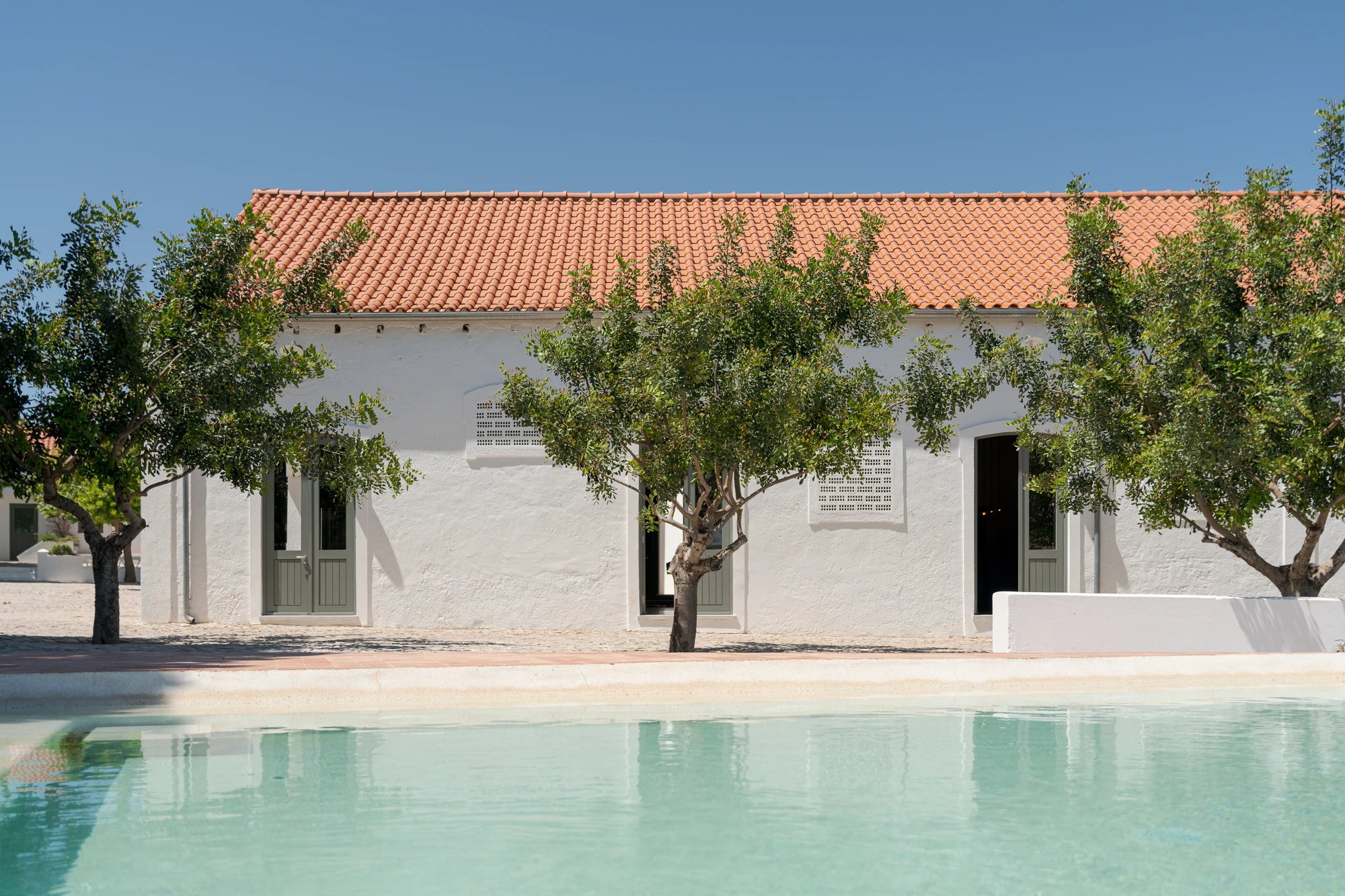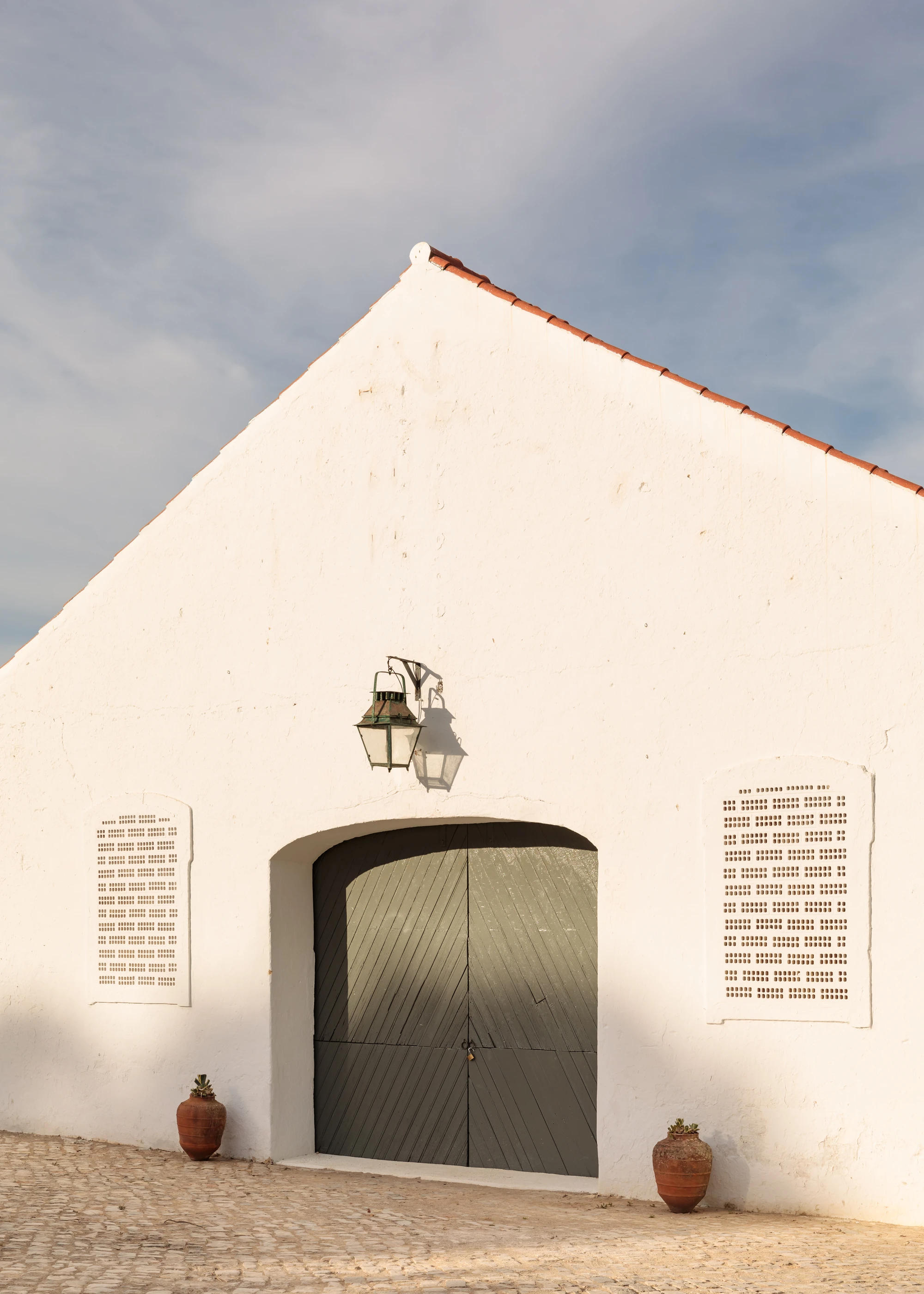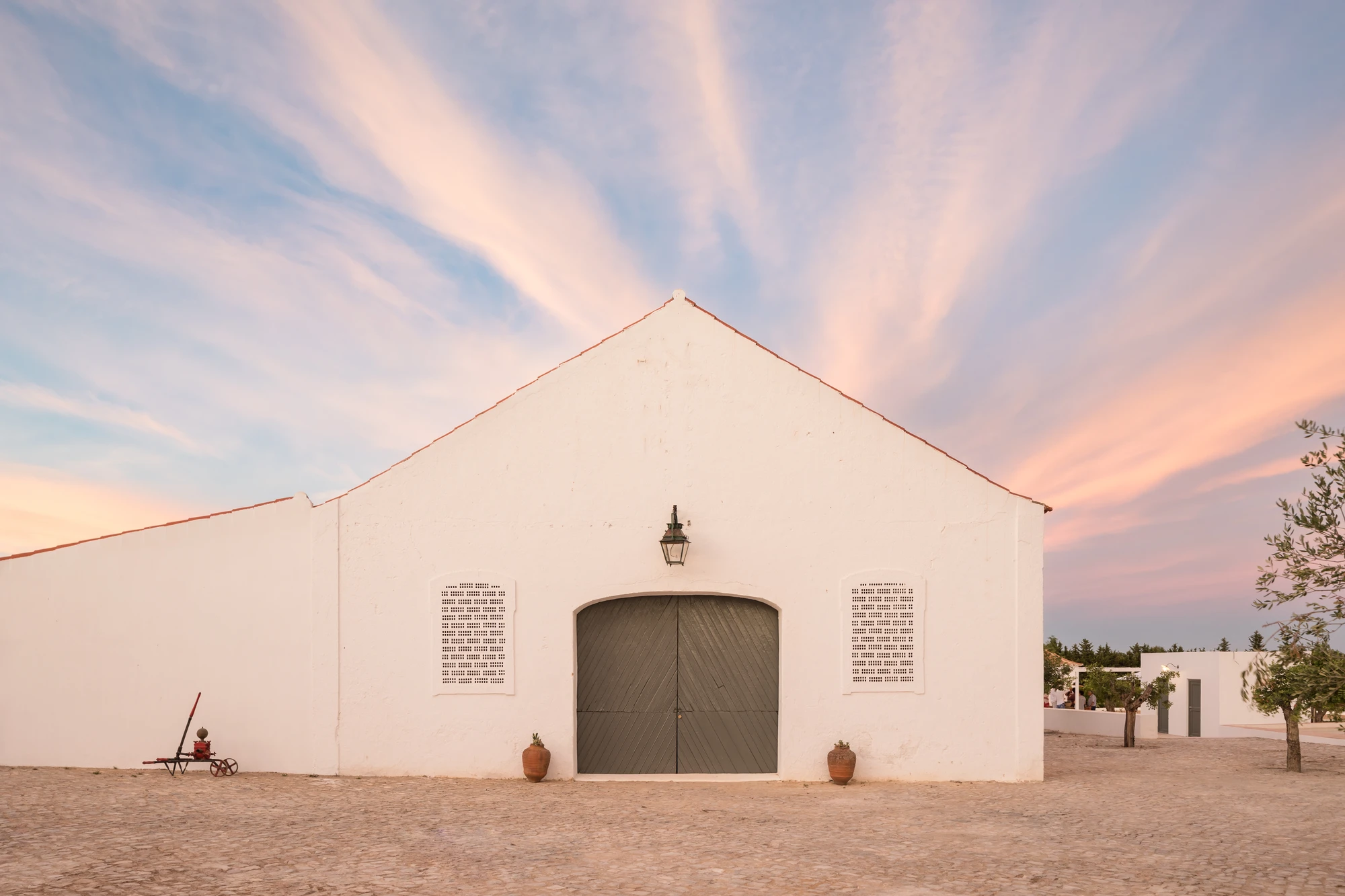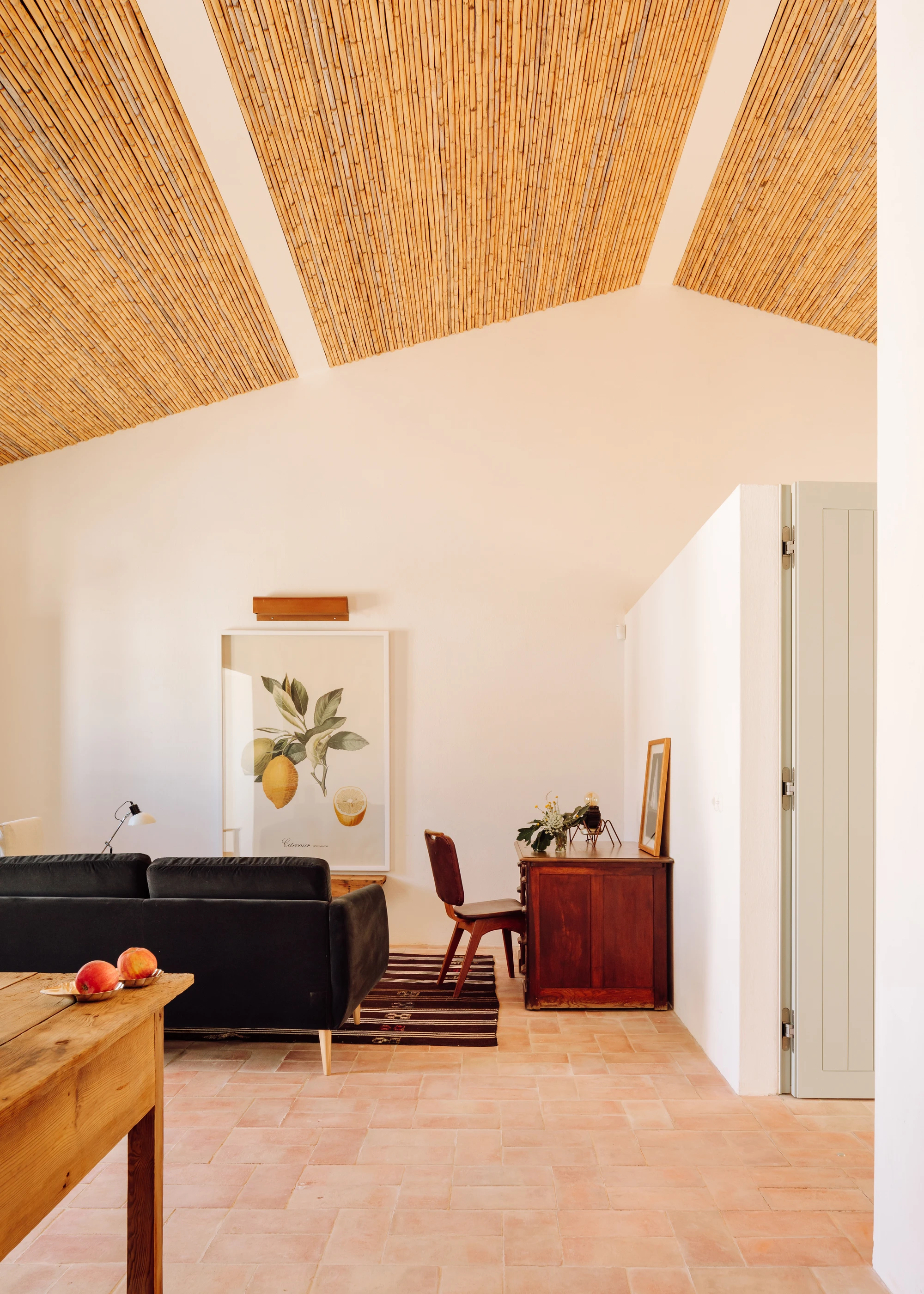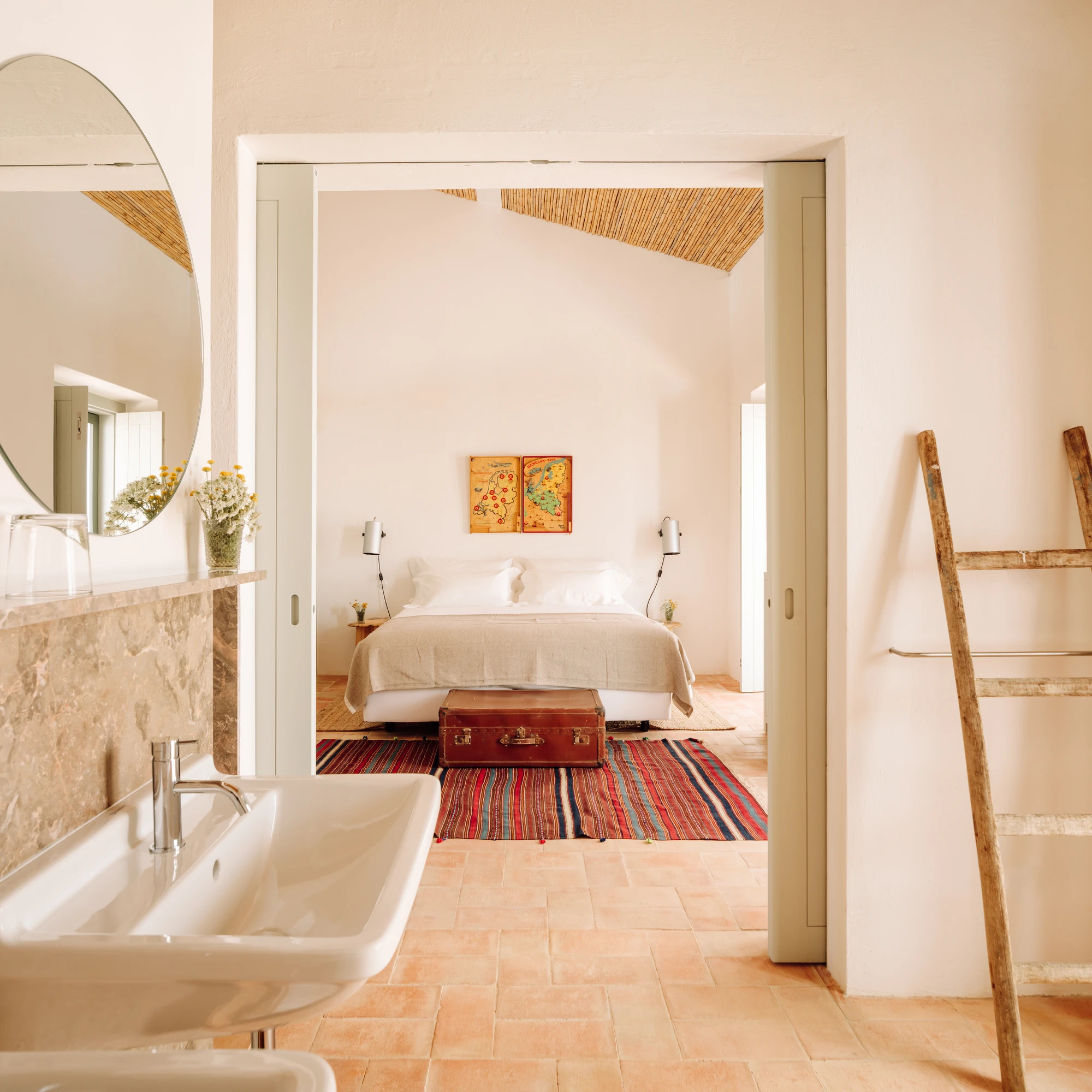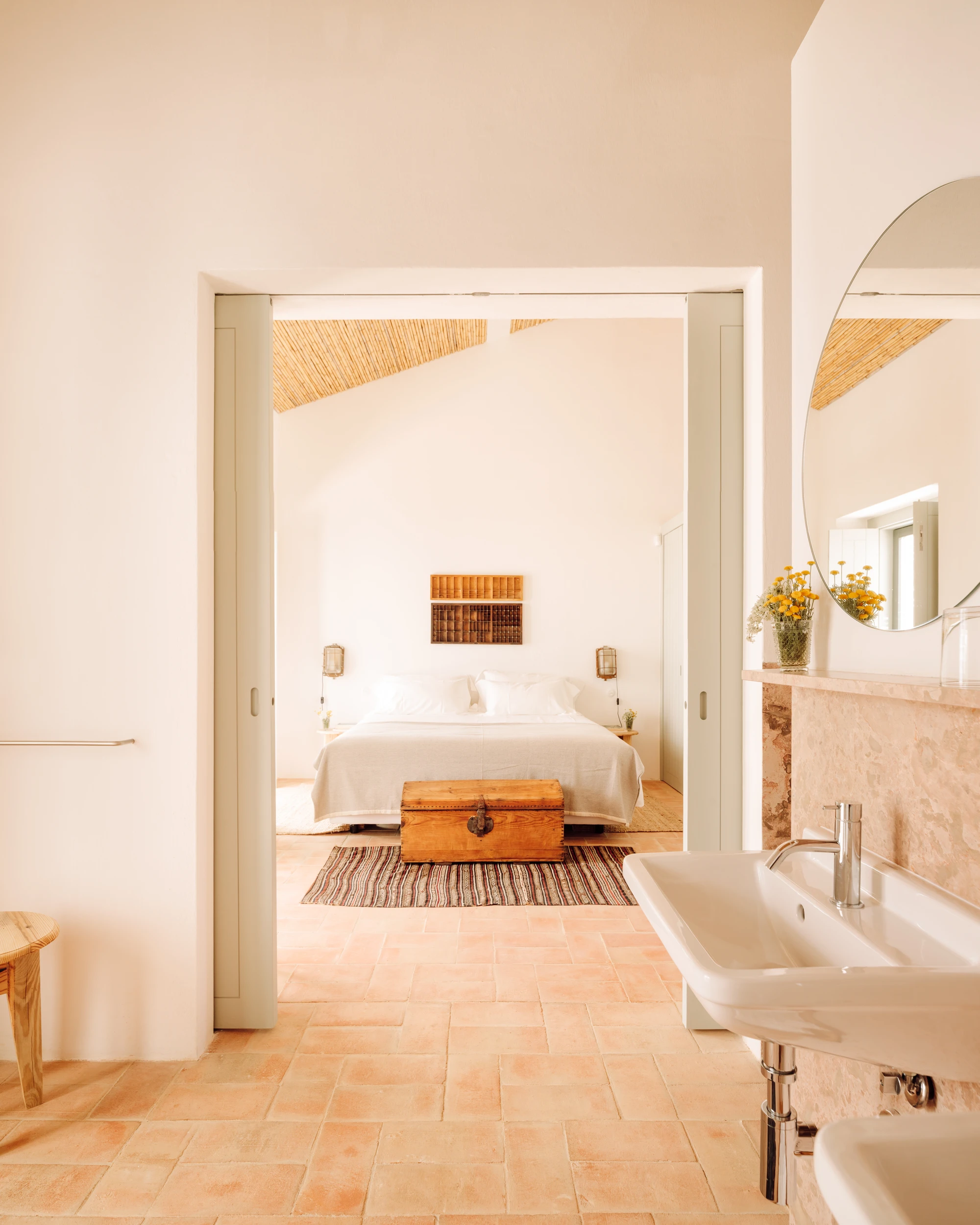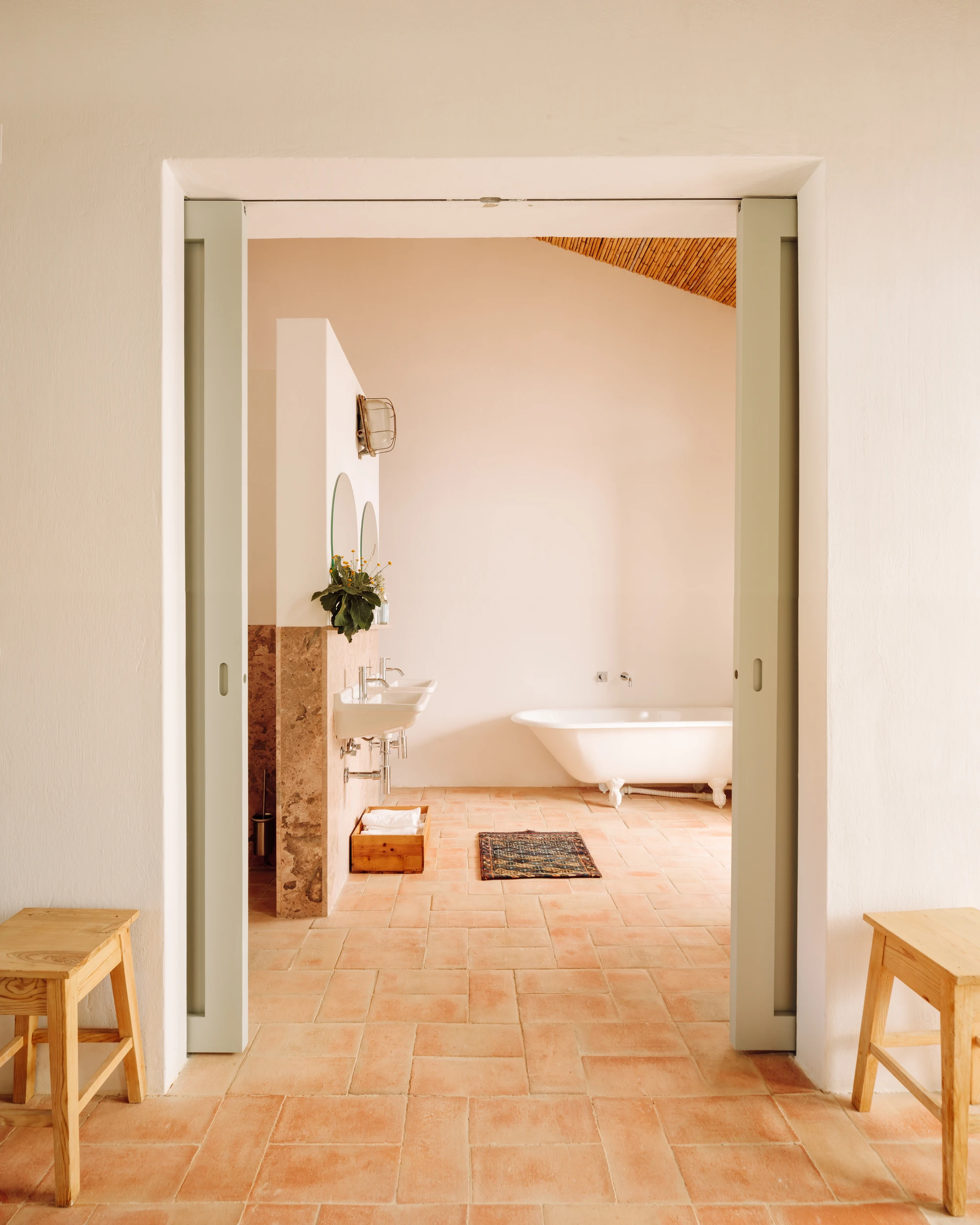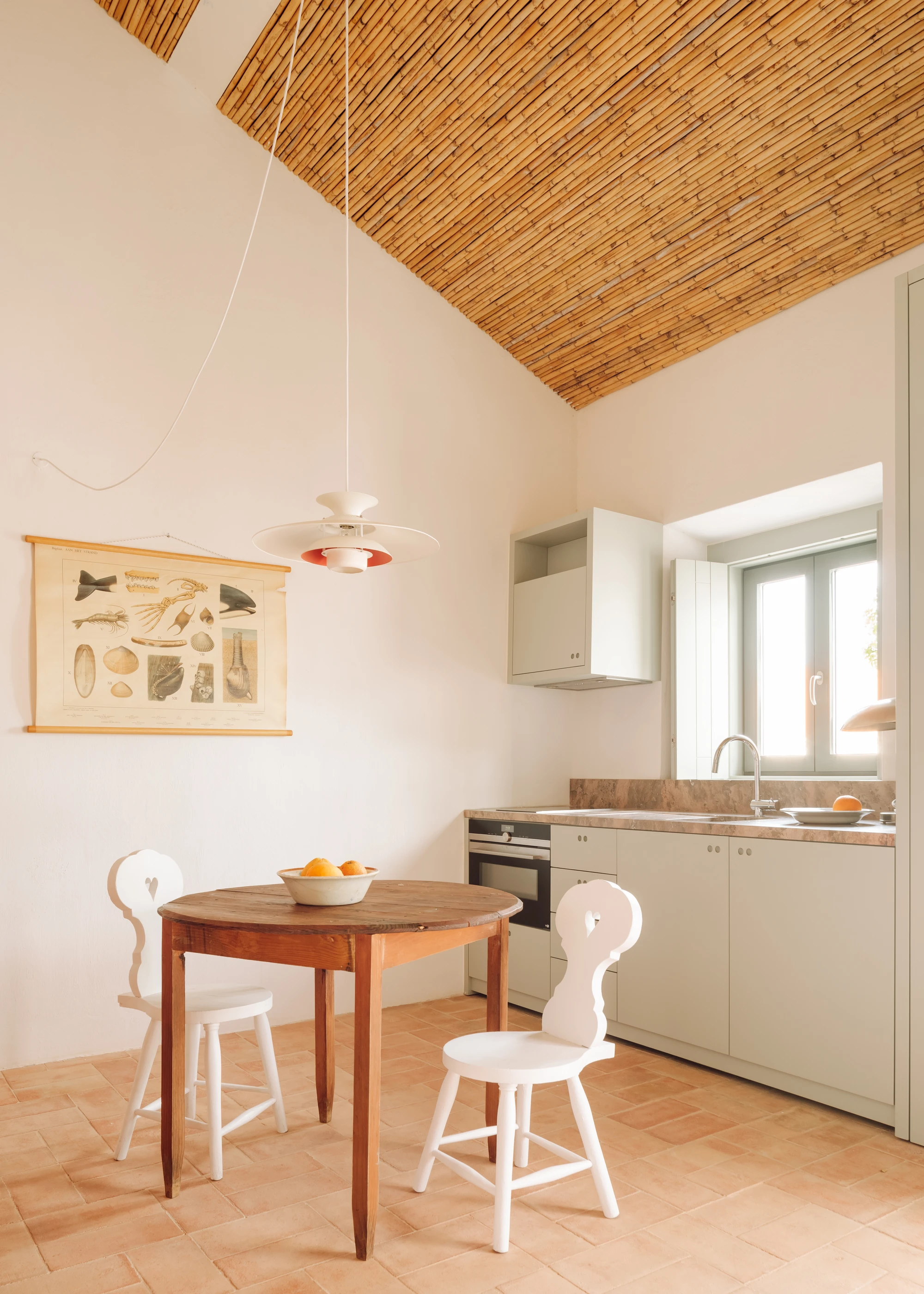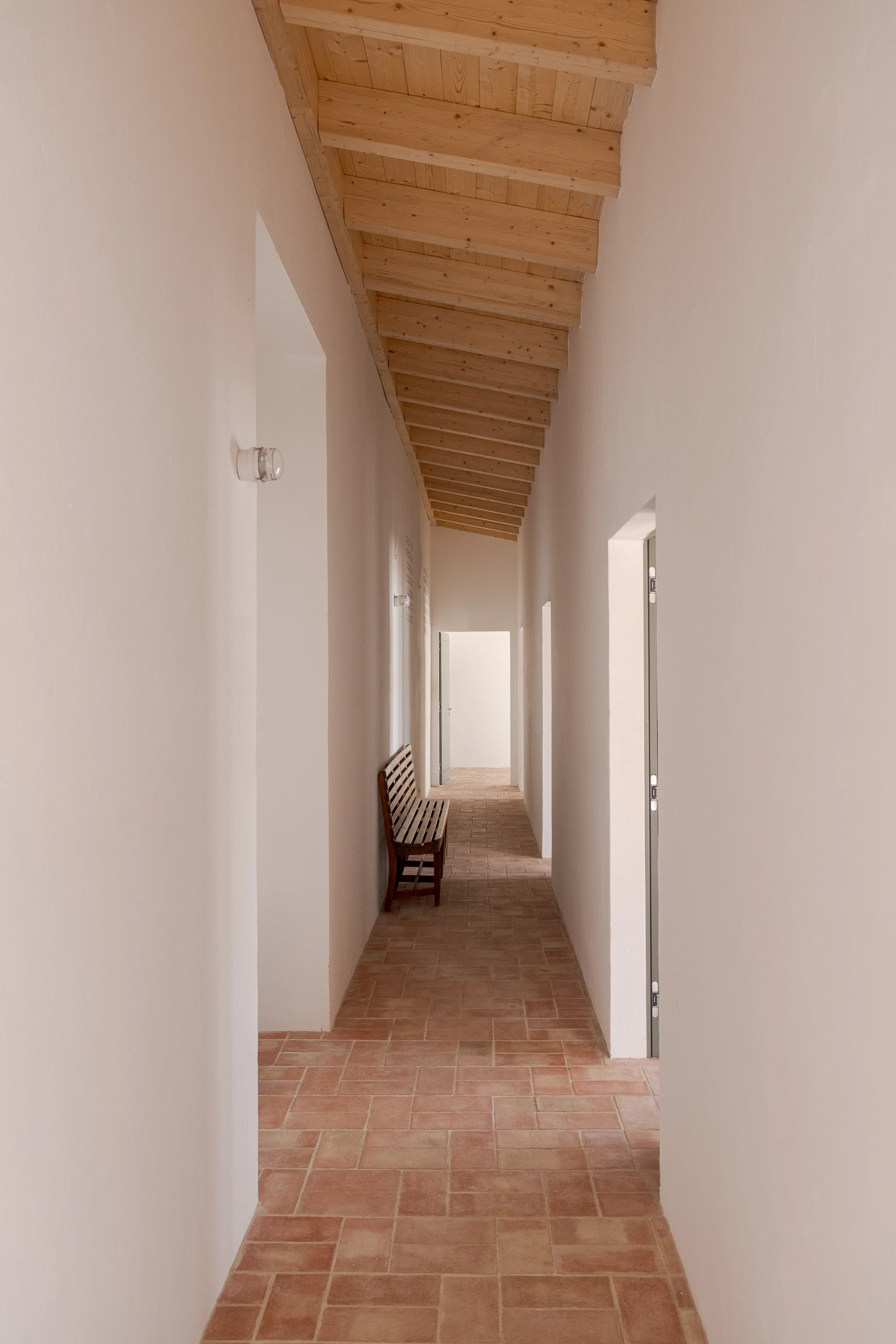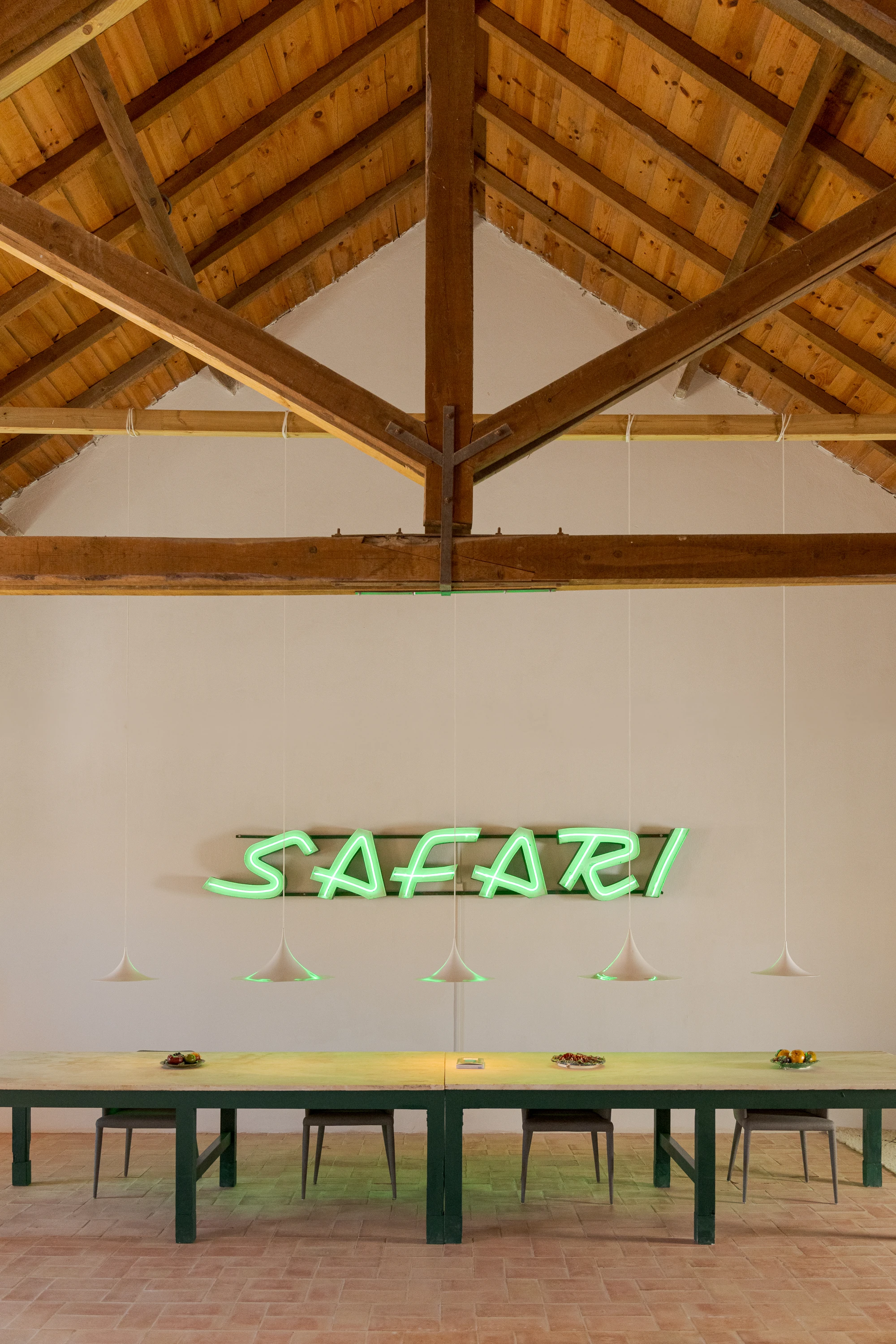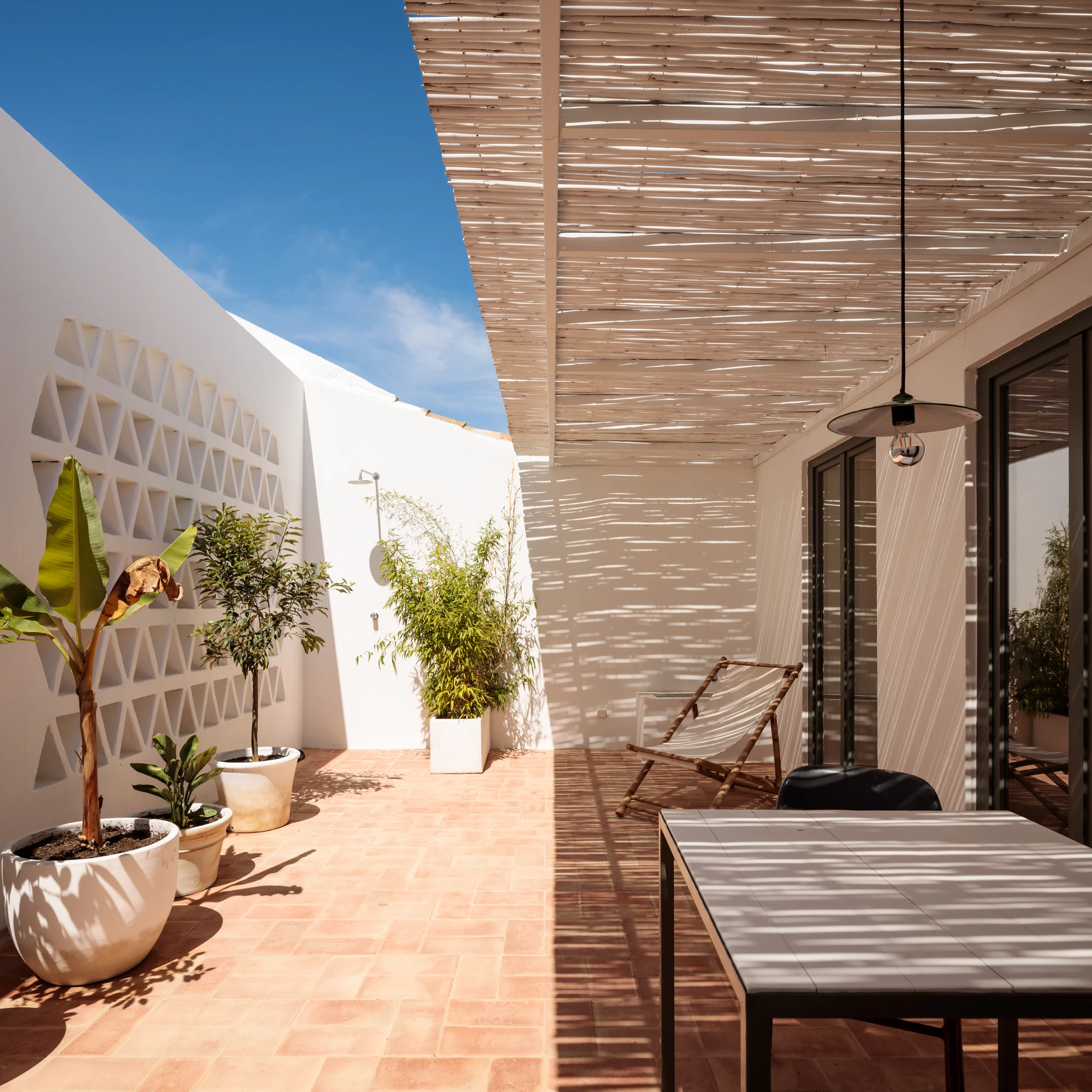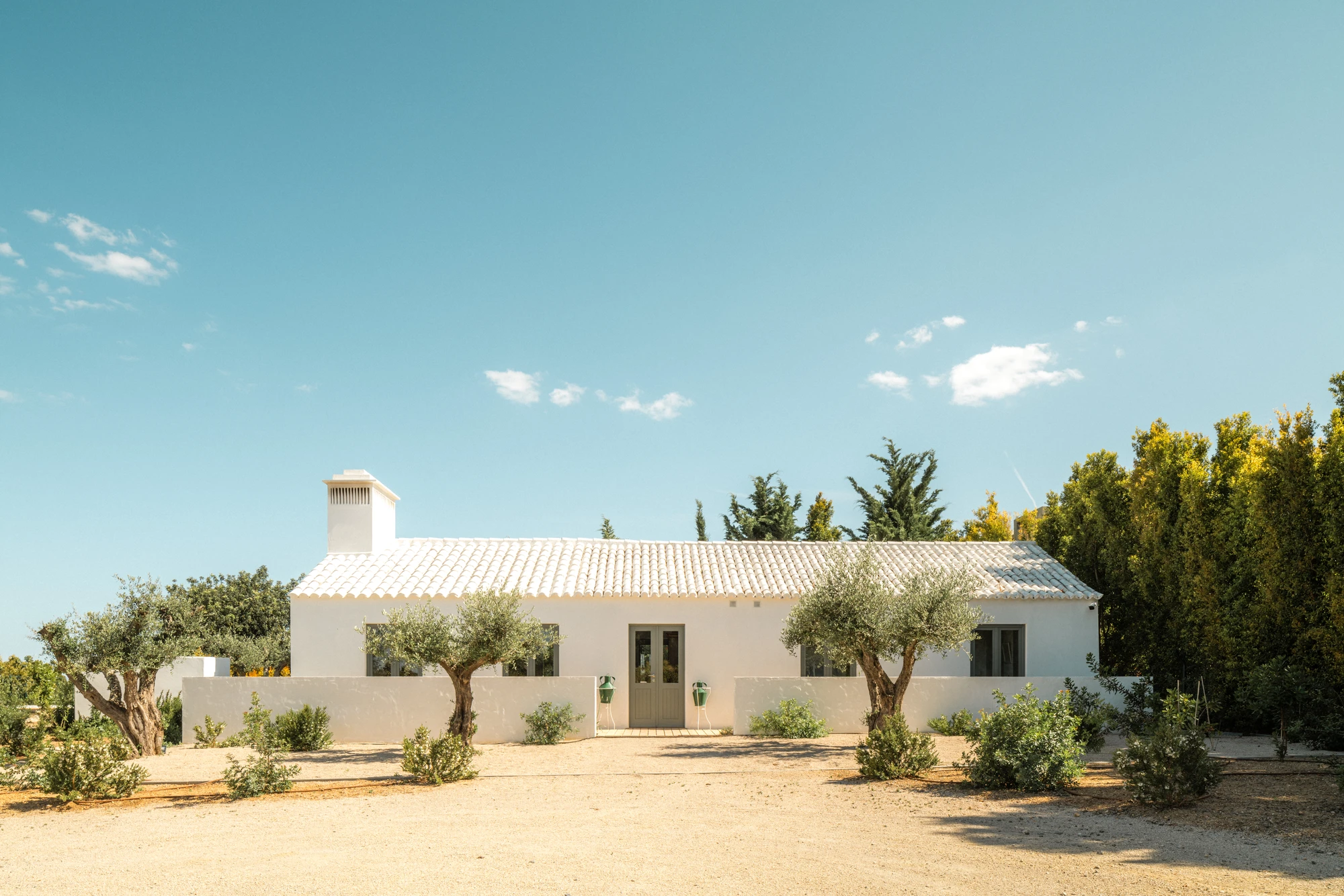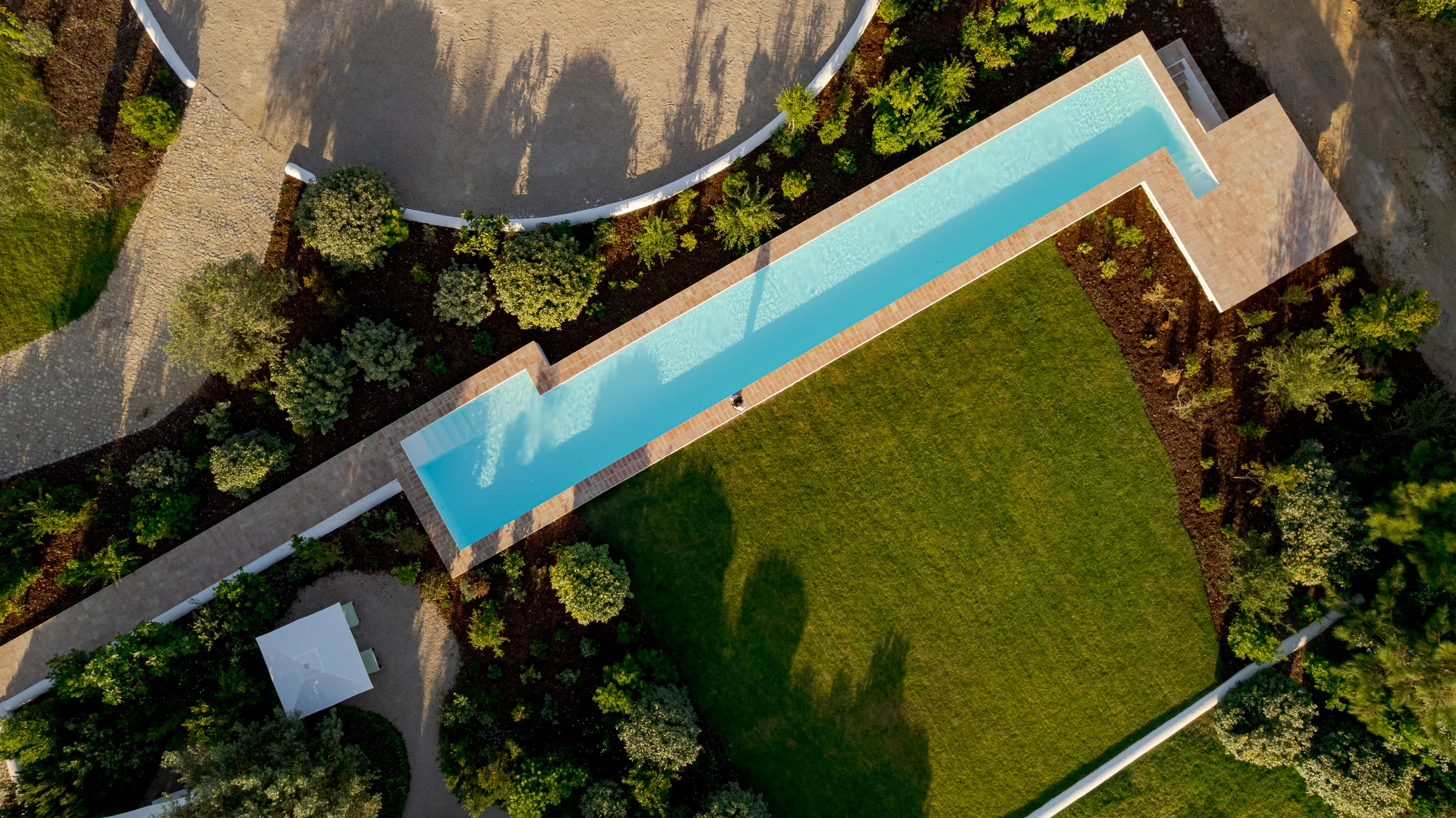
In the Portuguese countryside, Ricardo Gonçalves designs Casas da Quinta de Cima — a residential cluster on a quinta estate where the material language of stone, rendered wall and timber sits in honest conversation with the land rather than performing nostalgia at it.
The quinta as a typology carries centuries of accumulated building intelligence. On Portuguese estates, houses were added as need required, taking their scale from the land and their materials from what was close. The result was rarely composed by a single architectural intention but by time and necessity, and the accumulated whole often reads with a coherence that deliberate design struggles to achieve. Casas da Quinta de Cima engages this condition directly: not by producing an anthology of vernacular quotations, but by continuing the conversation at the scale of contemporary dwelling.
Stone walls bear the work of the ground they come from — textured, irregular at the joints, carrying the warmth of excavated material rather than the smoothness of industrial product. Rendered volumes carry the white that belongs to this landscape, the kind of surface that absorbs morning light and holds shade at midday with equal authority. Openings are sized for view and for the thermal logic of the Portuguese interior: protected from summer heat, oriented for winter sun.
What Casas da Quinta de Cima proposes is not a style but a posture: that building in the Portuguese countryside today means understanding the material memory of the landscape and continuing it forward, rather than either preserving it behind glass or erasing it in favour of something self-consciously contemporary. The quinta is old. The houses are new. Neither pretends to be something it is not.