João Pedro Falcão de Campos restores a 50-hectare Algarvian quinta as a 9-suite boutique hotel: workers' cottages become suites, warehouses become public rooms, the largest threshing floor in the Algarve becomes a stage.
Casas da Quinta de Cima sits on a century-old farm estate in the Eastern Algarve, a short walk from the beach of Cacela Velha and surrounded by orange trees, citrus groves and meadows of wildflowers. The estate has been held by the same family for five generations, acquired in 1925 by Frederico Ramirez. Rather than impose a new building on the land, João Pedro Falcão de Campos's restoration keeps the original “monte” layout — the Algarvian farm-estate typology — intact, and converts every existing volume to a new use without erasing what made the cluster legible to begin with.
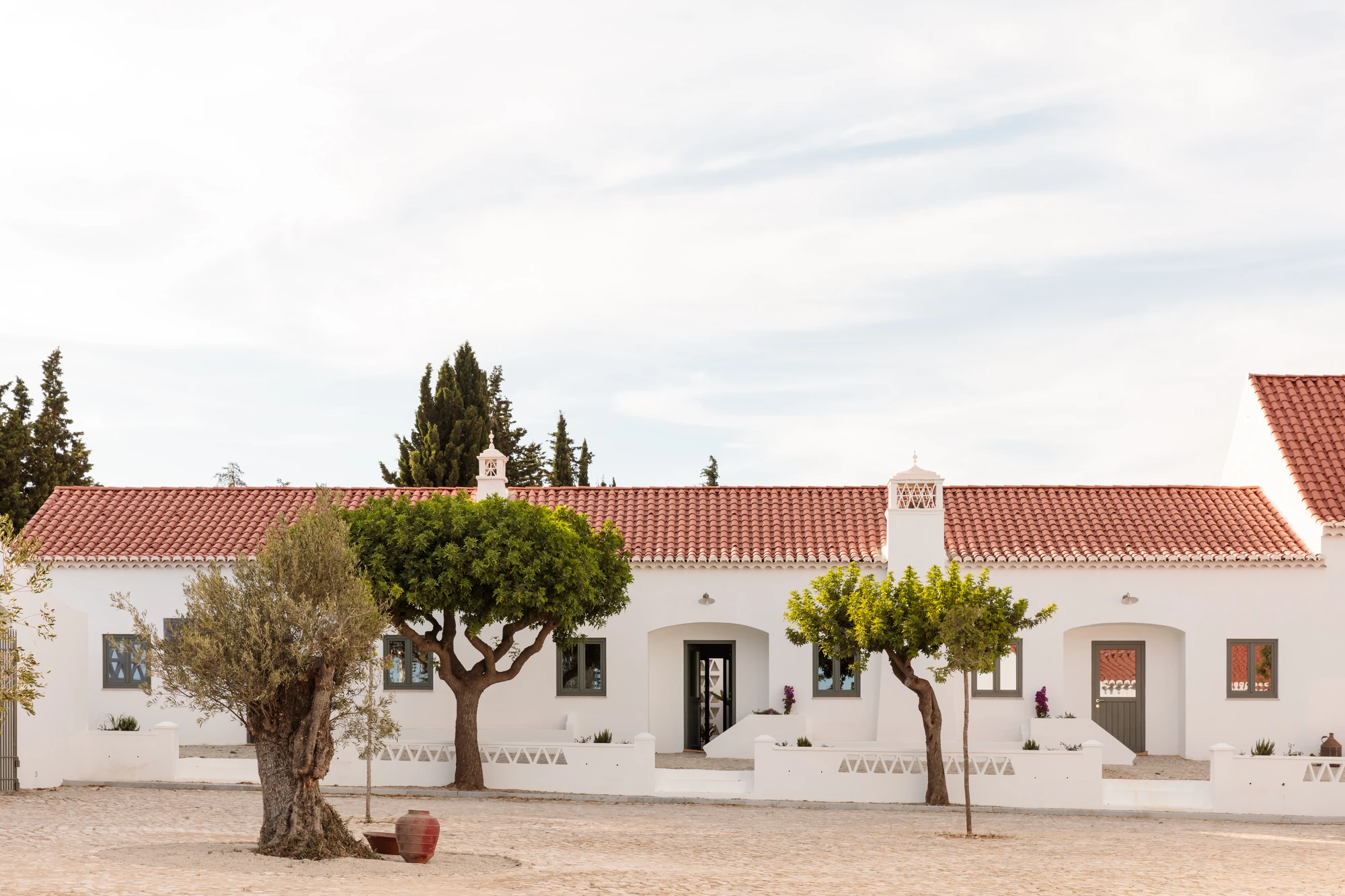
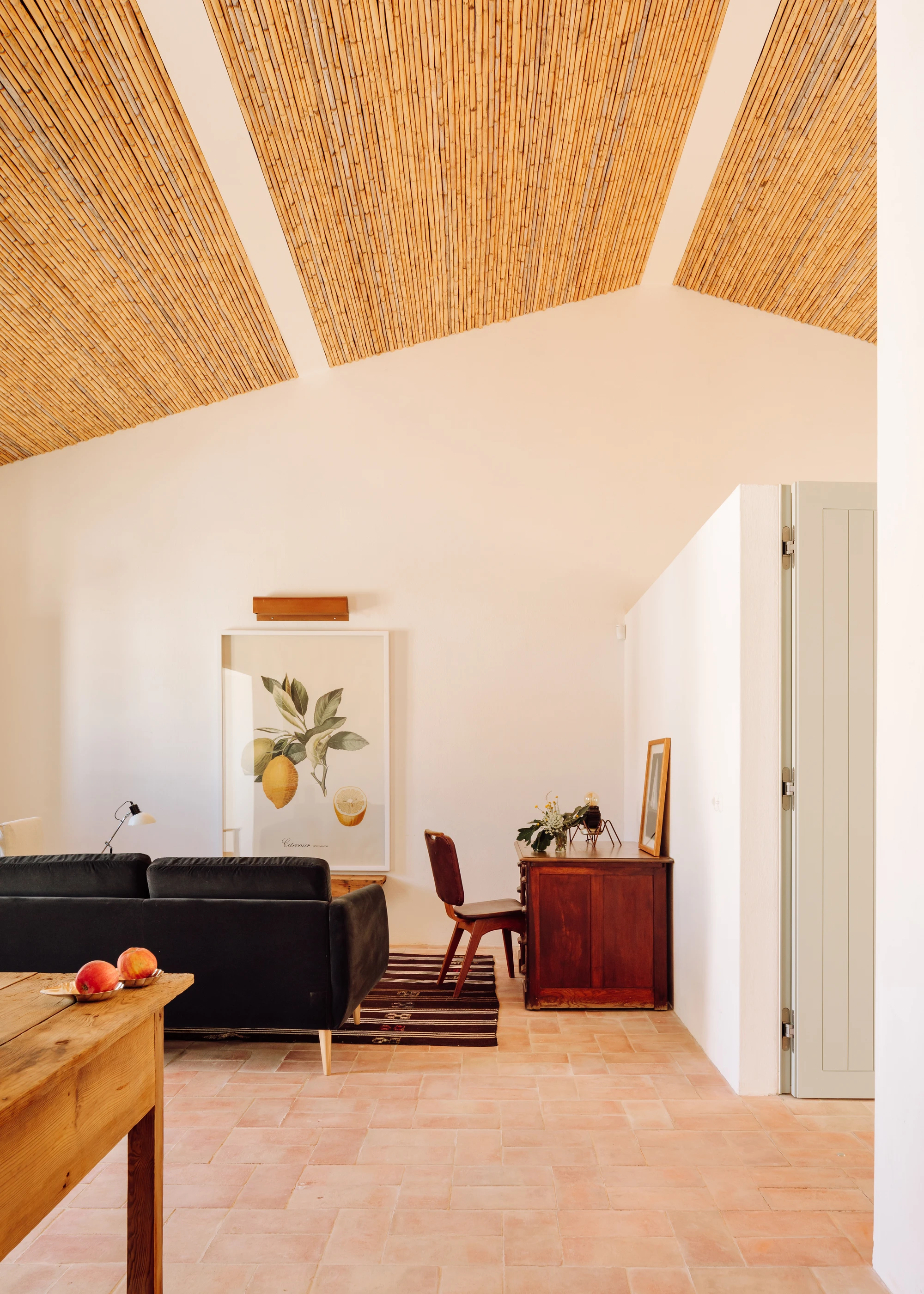
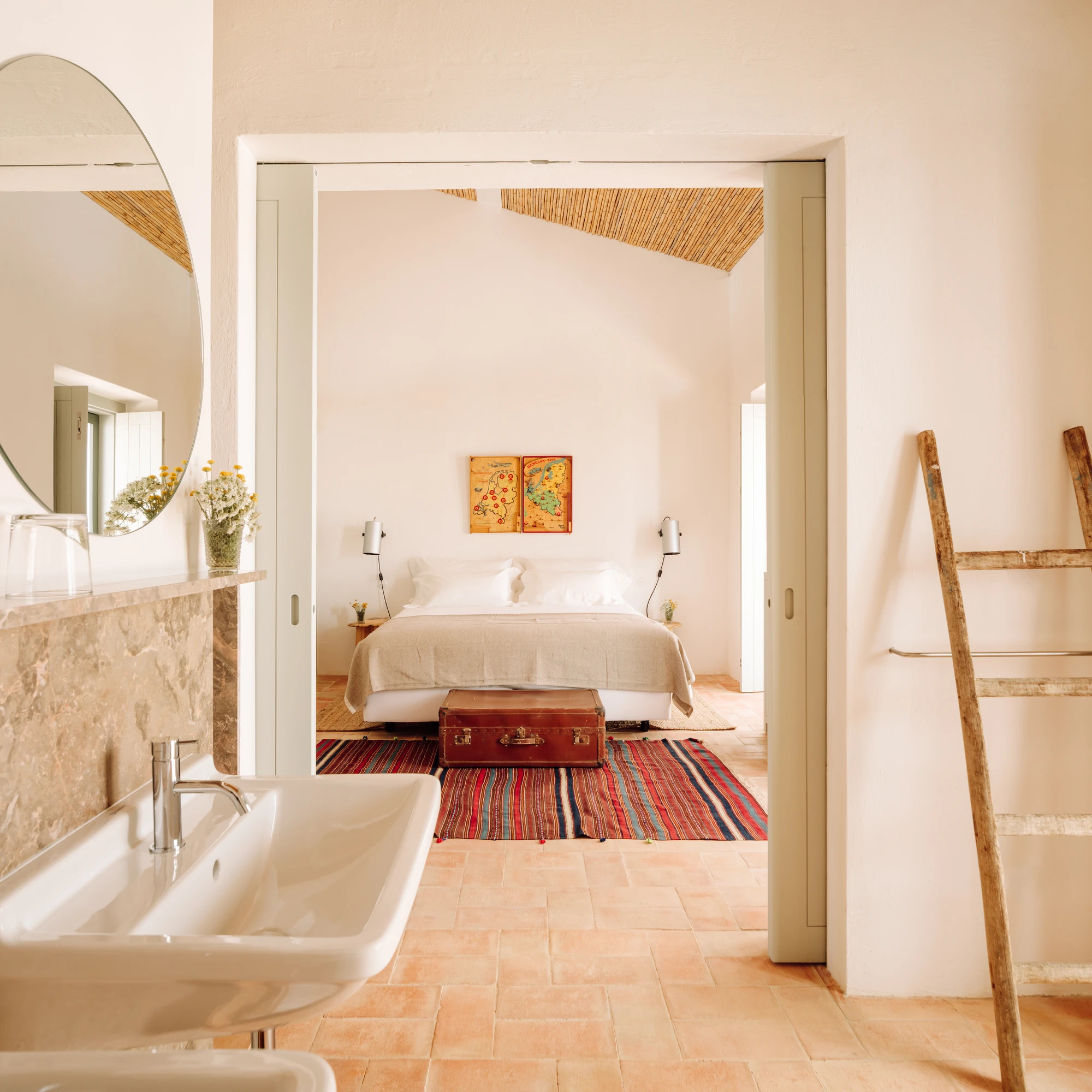
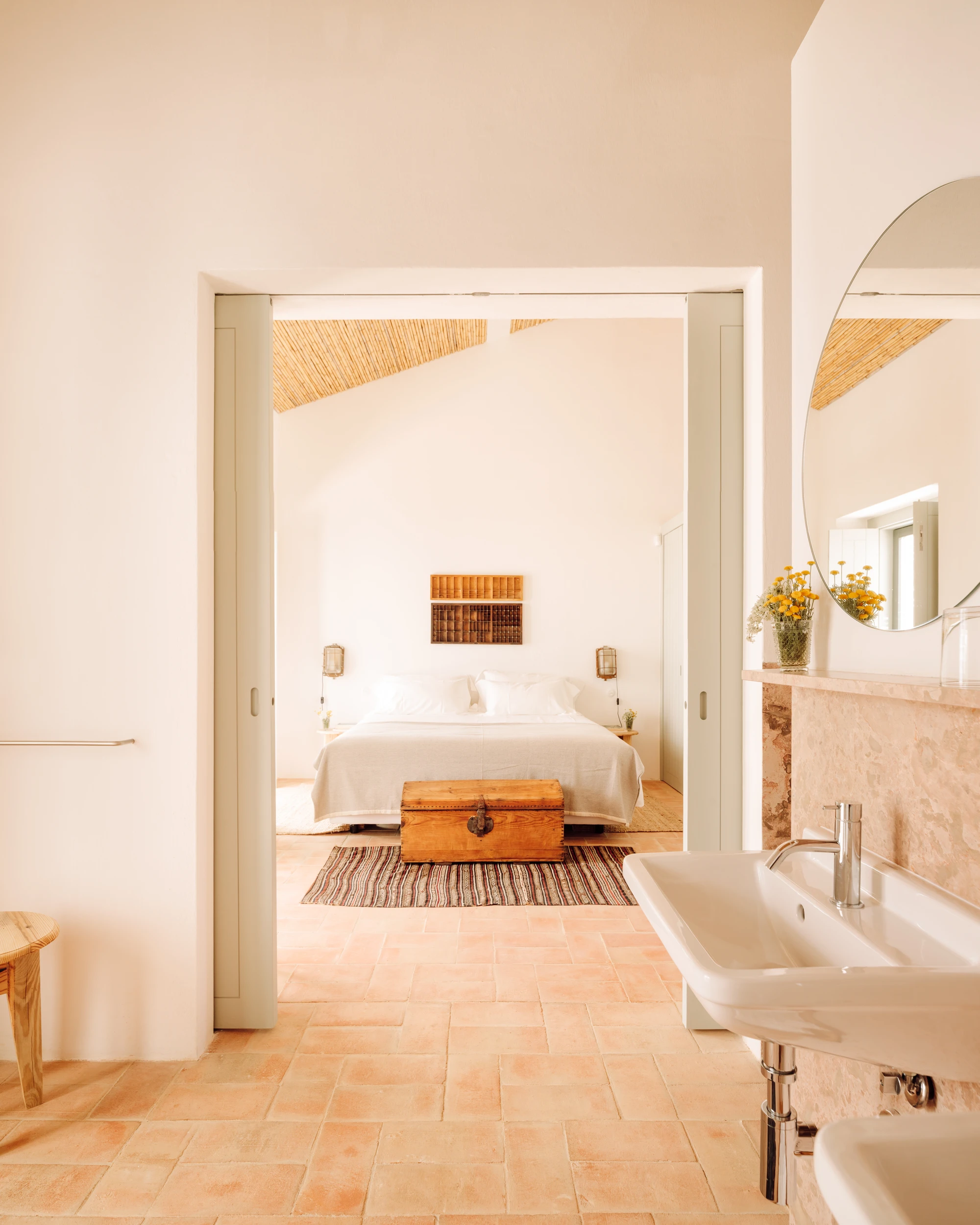
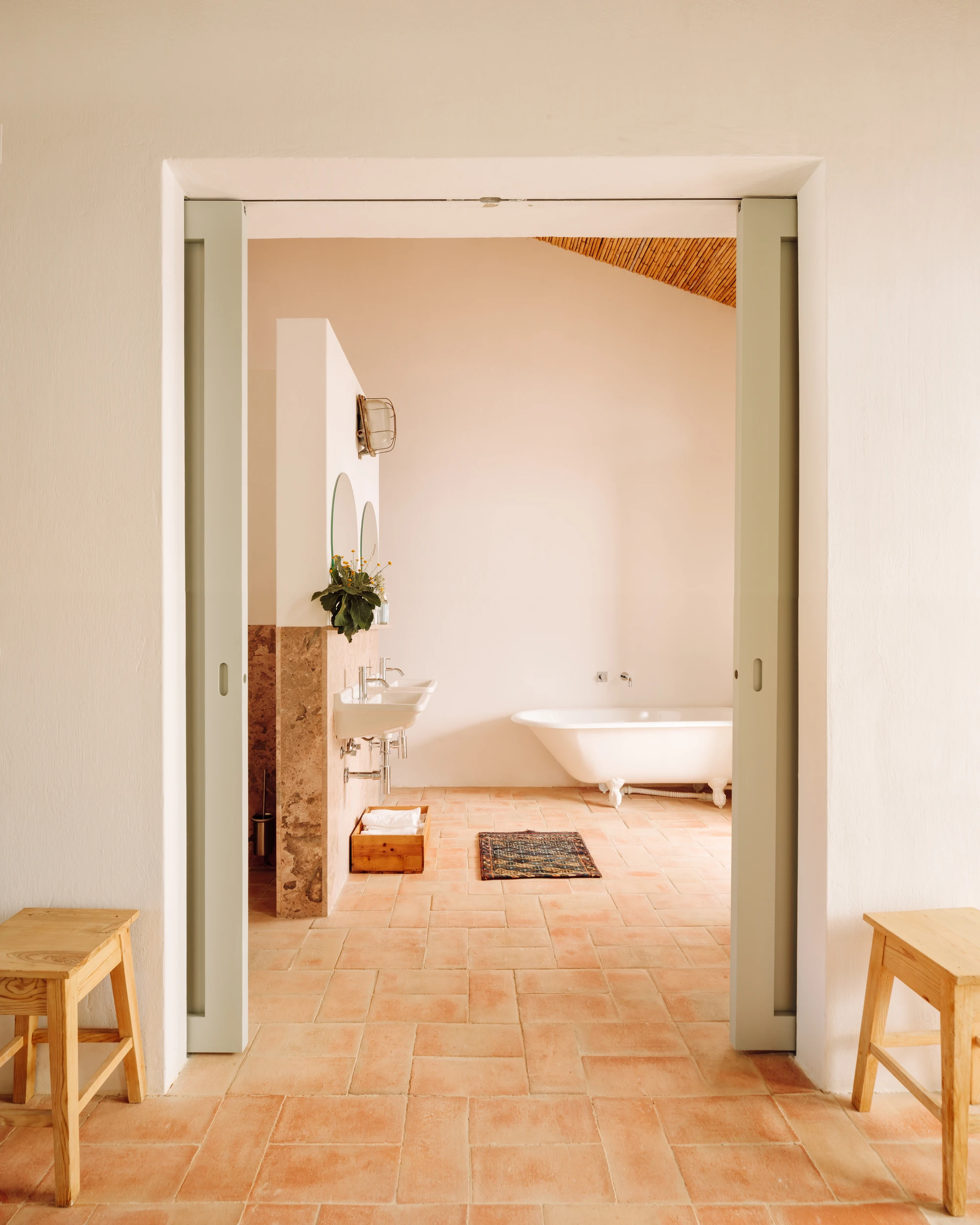
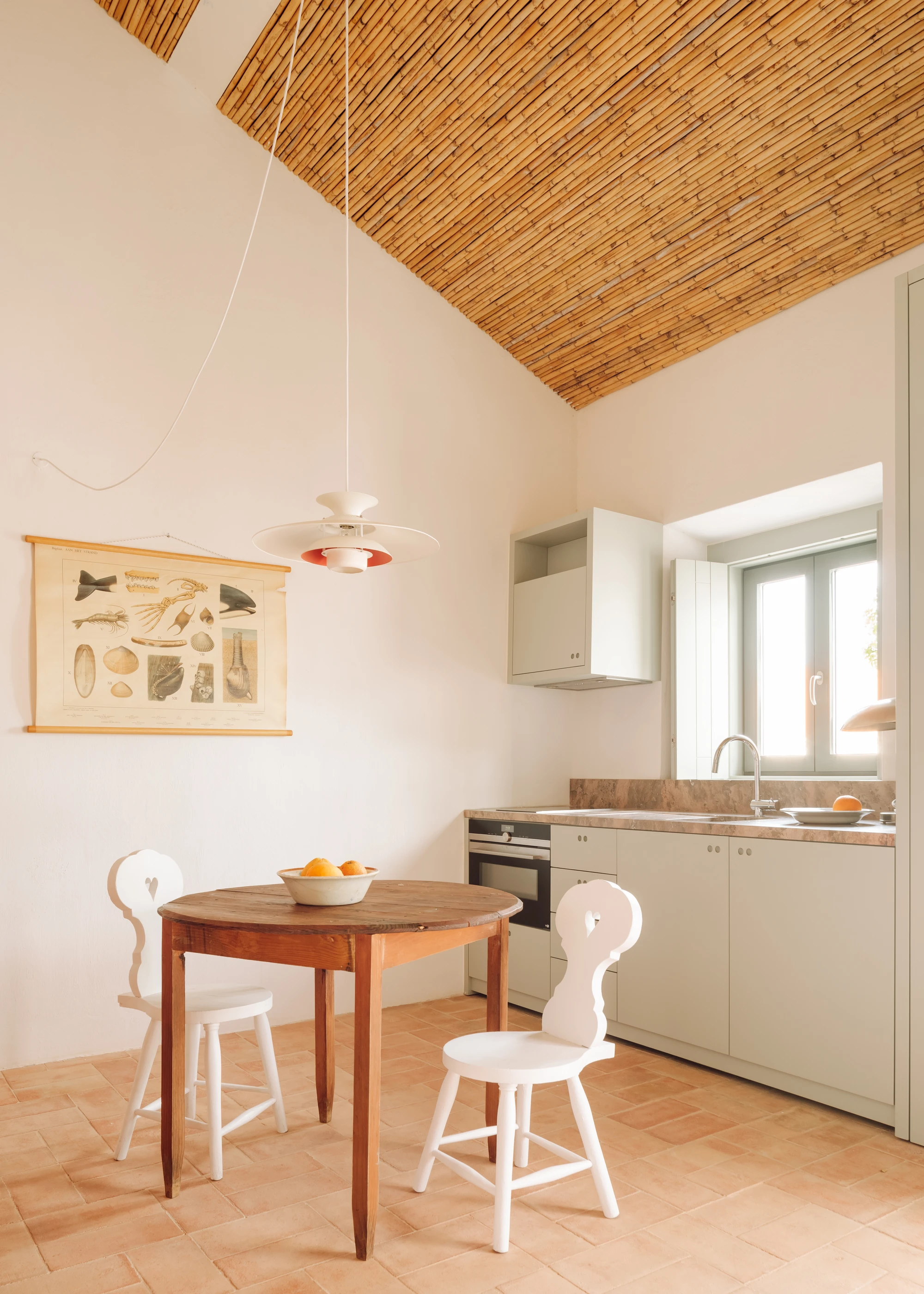
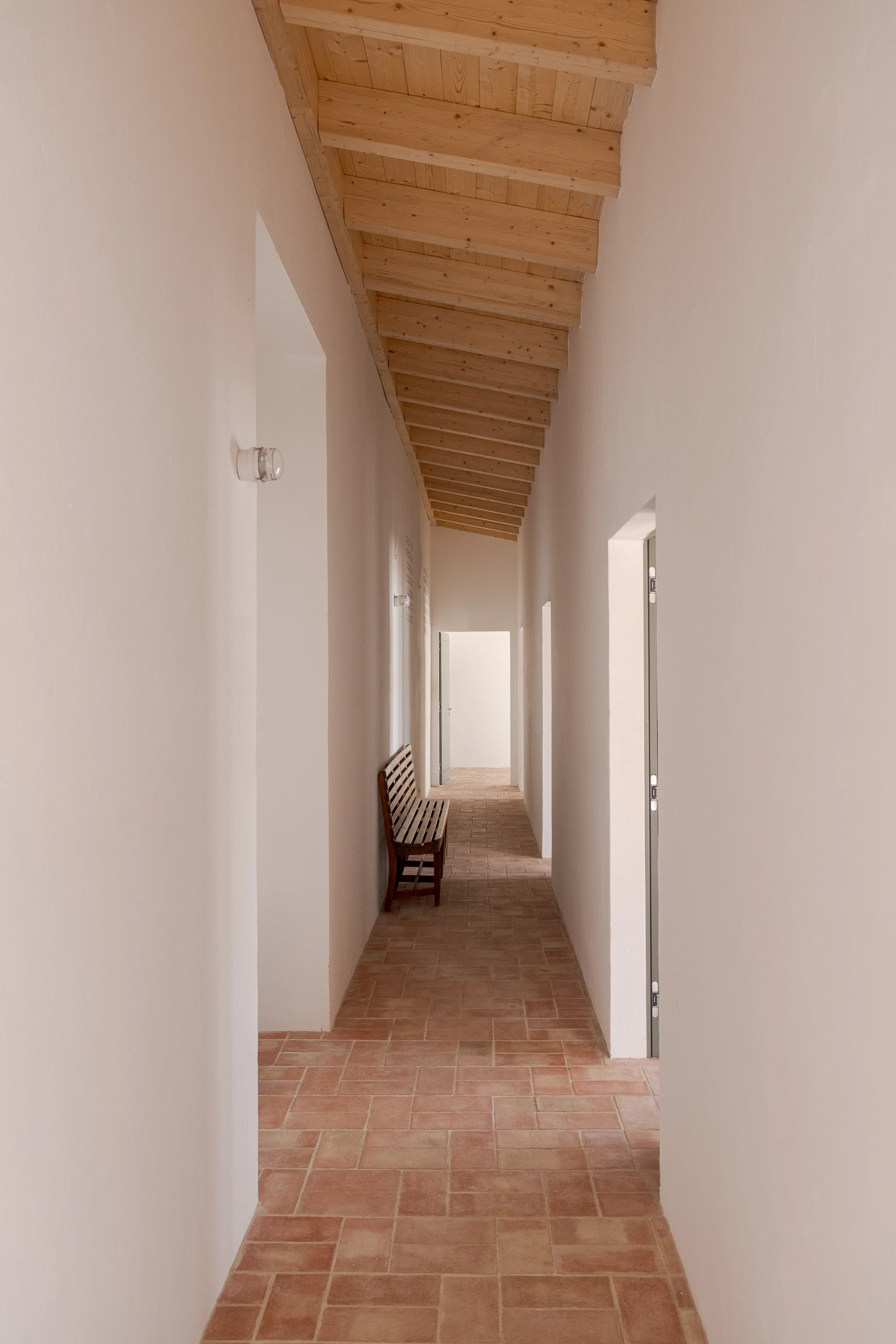
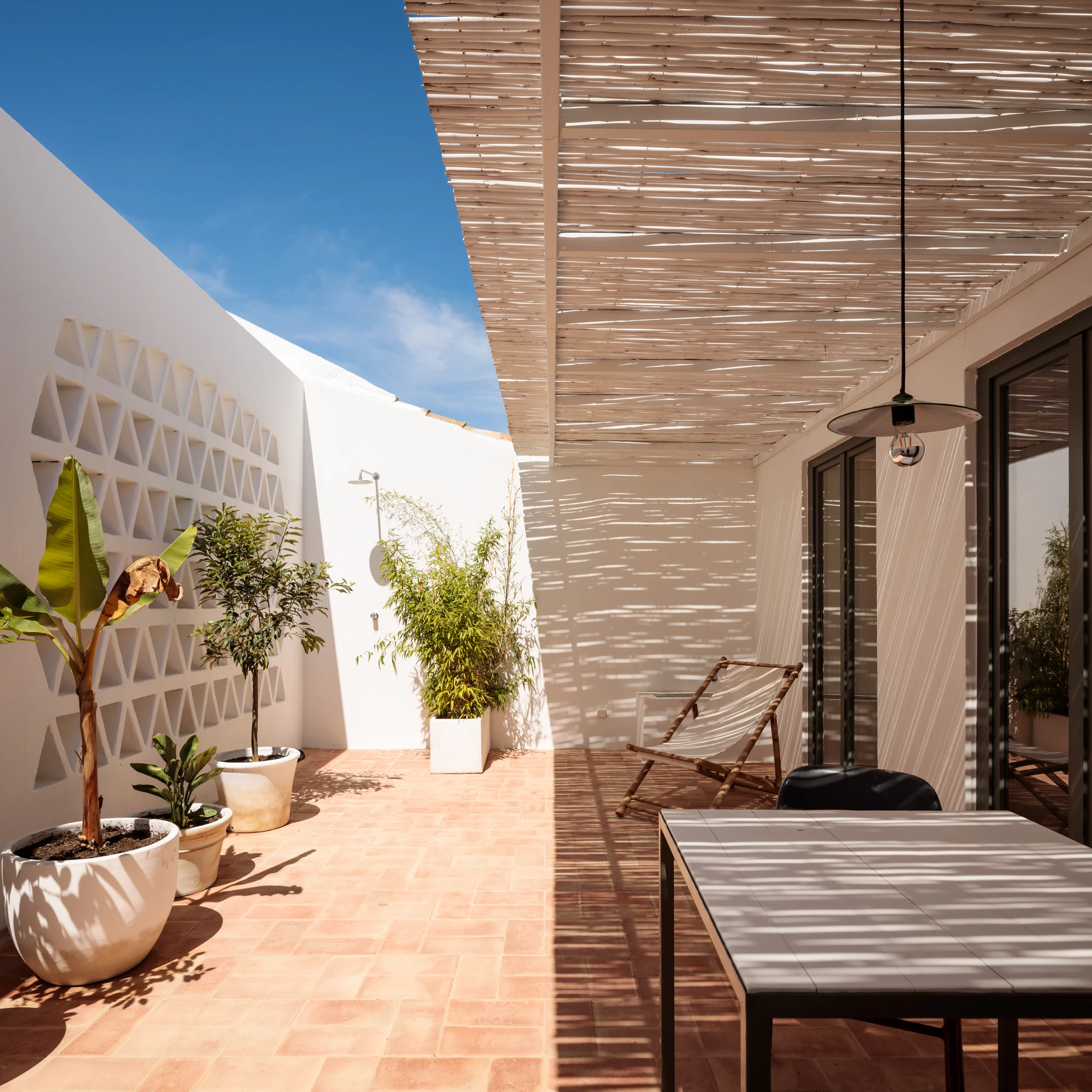
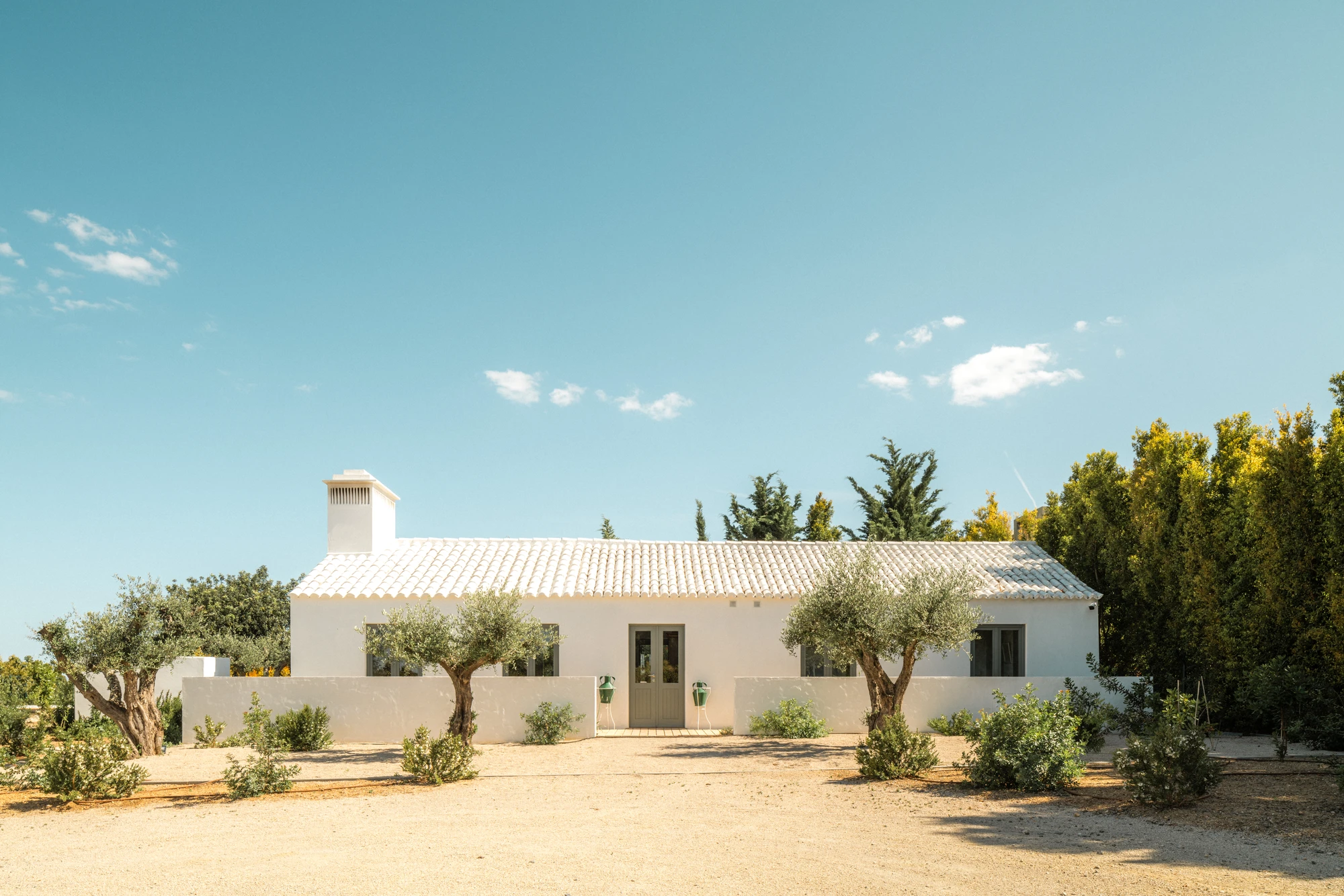
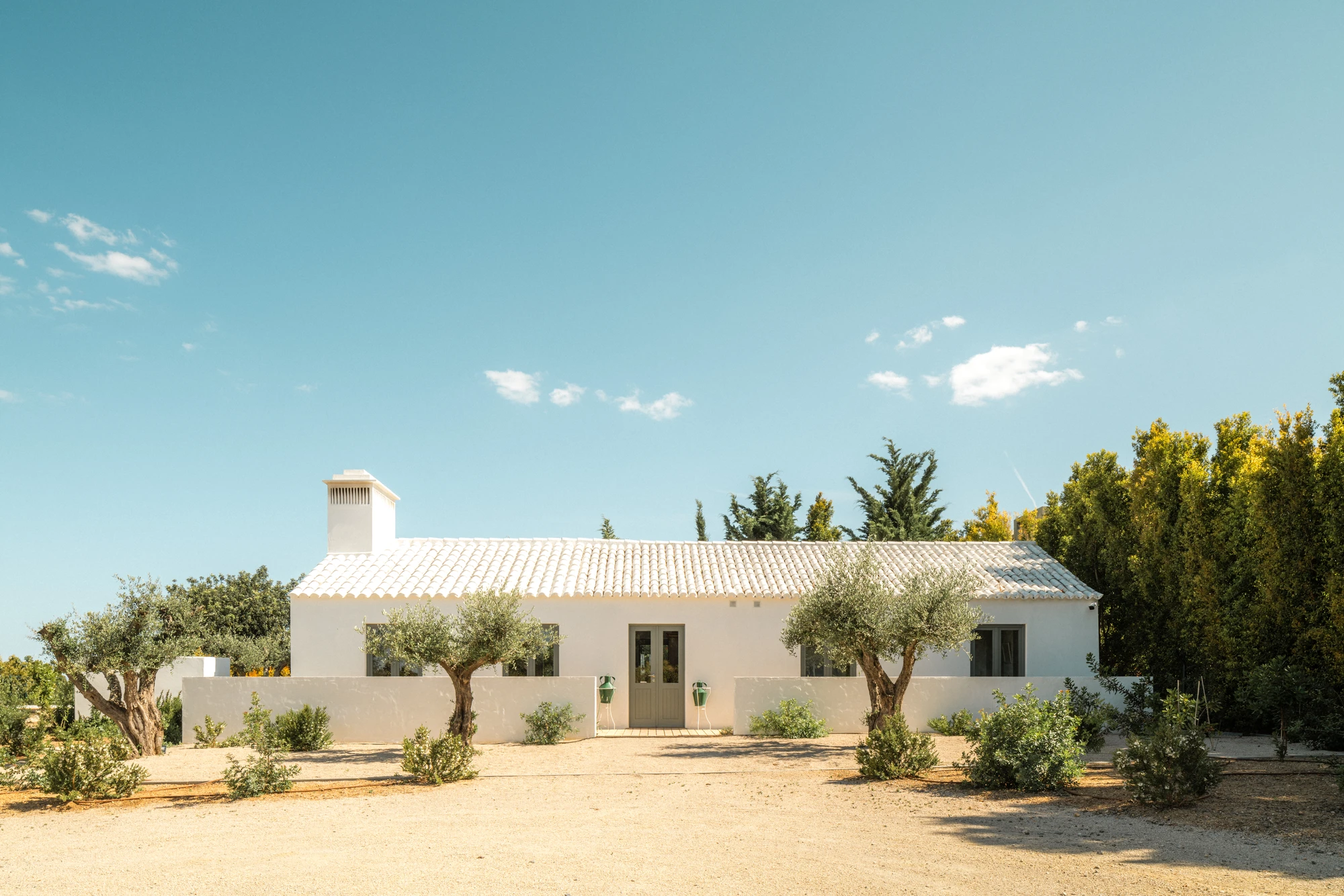
The nine cottages that house the suites were originally the workers' cottages of the estate. Each was extended into a 70-square-metre suite holding a living room, kitchenette and bathroom, but the Algarvian envelope was preserved: high ceilings lined in wicker, walls in wood, terracotta and rendered surface, floors that take underfloor heating without revealing it. Bathrooms are finished in ochre breccia from Tavira; vintage details run through the interiors alongside wool, cotton and timber. Every suite opens onto a private terrace with an outdoor shower, so the cooling logic of the original cottages — moving in and out of shade through the day — is kept in place.
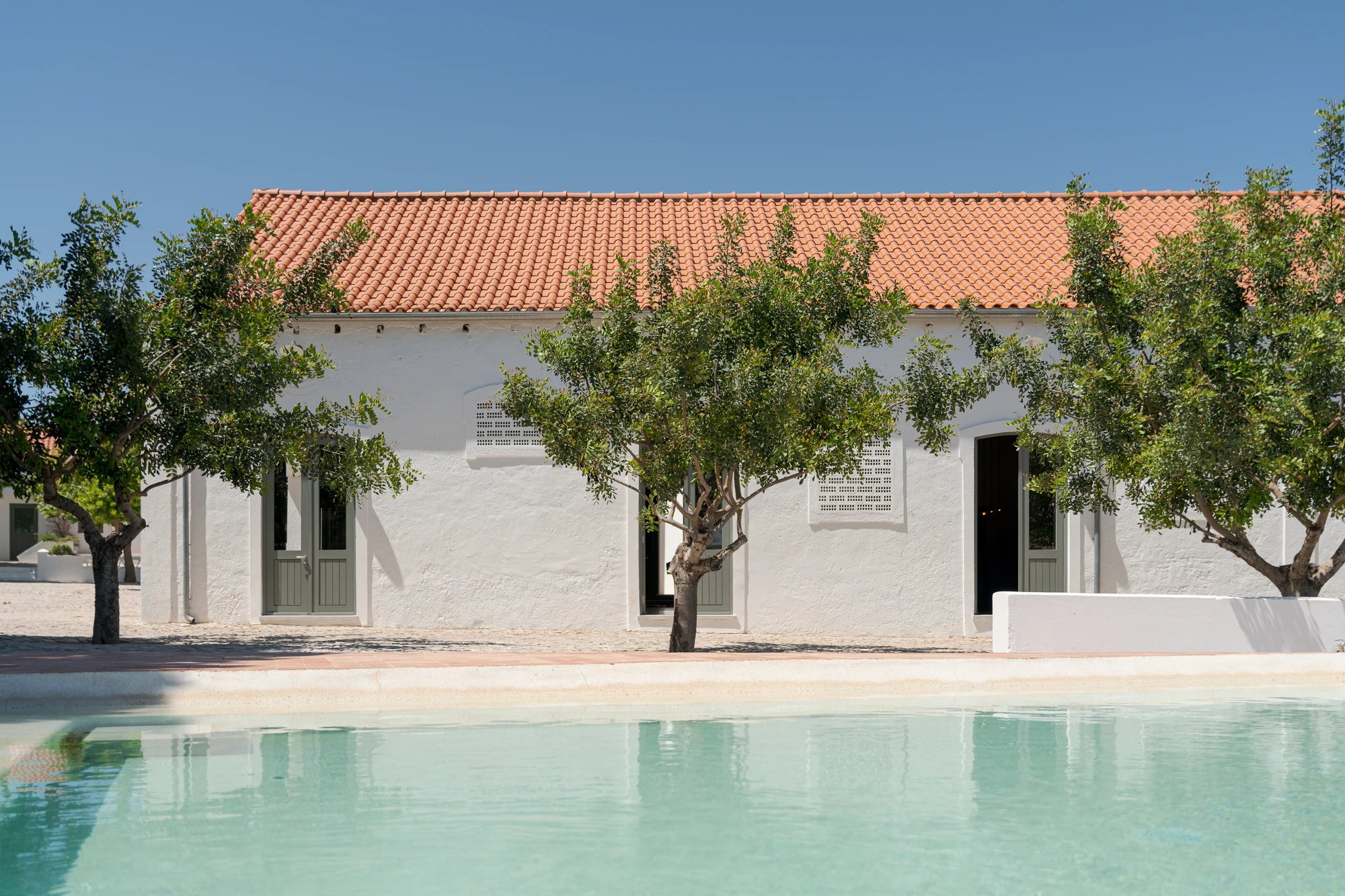
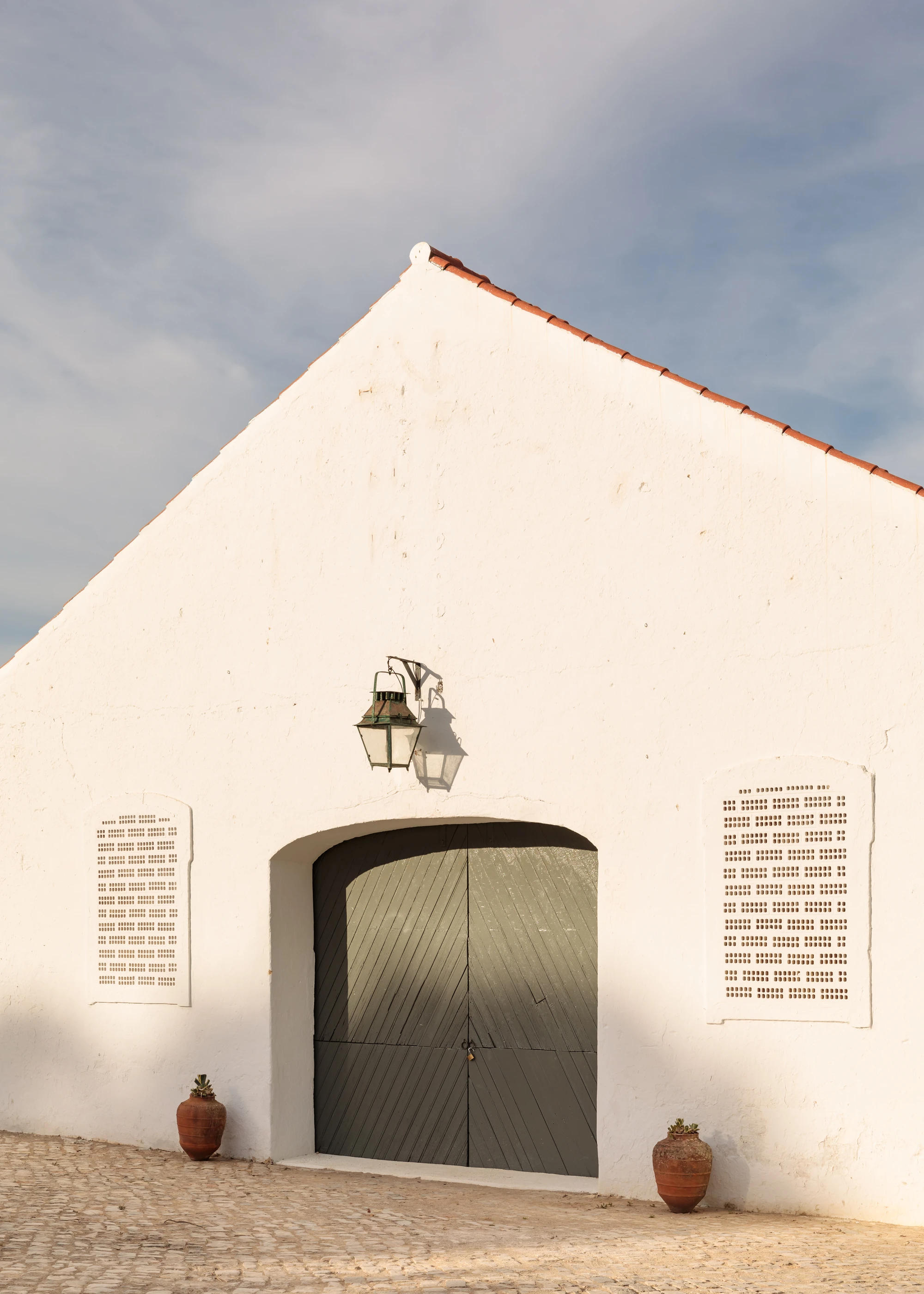
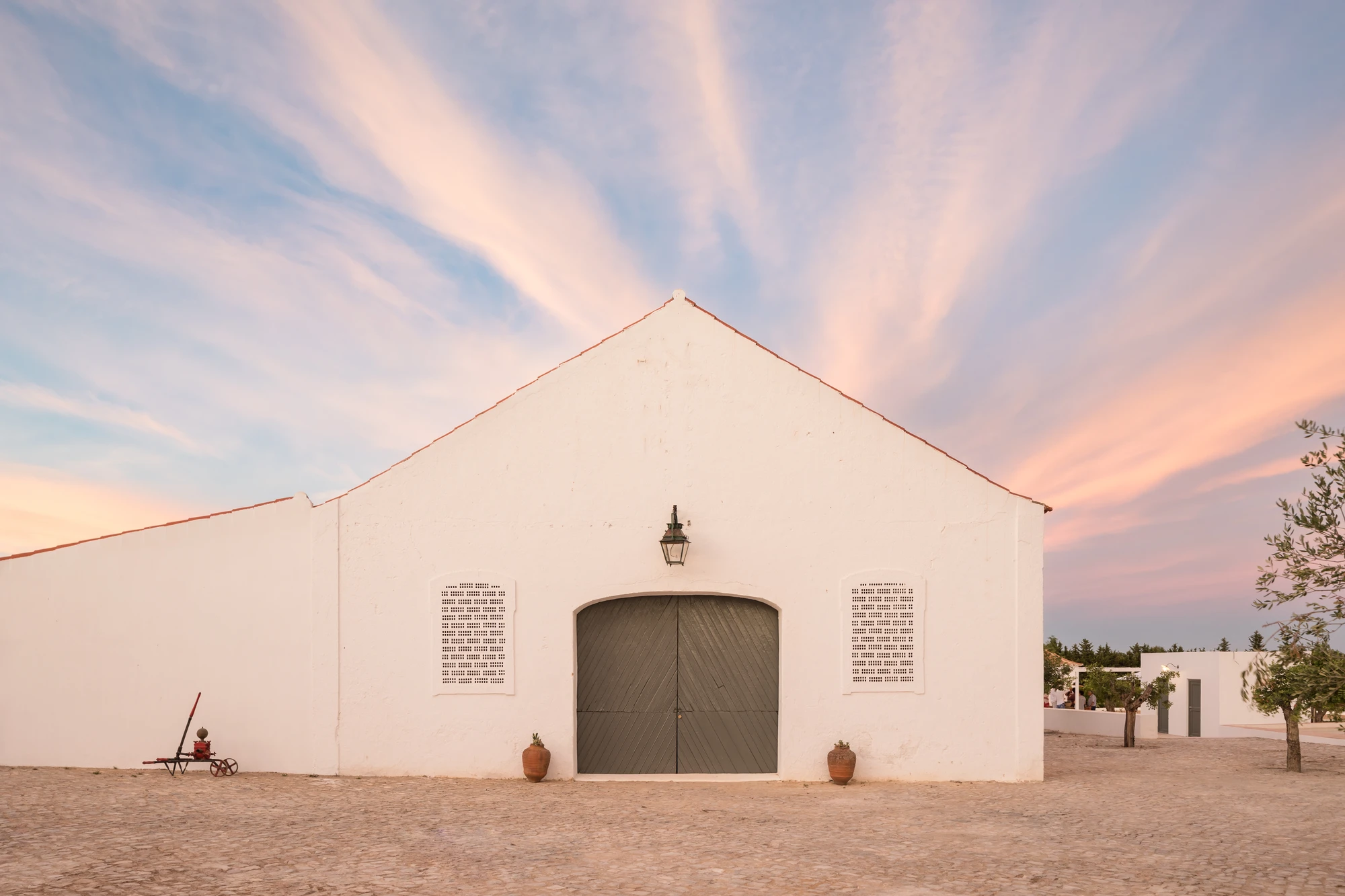
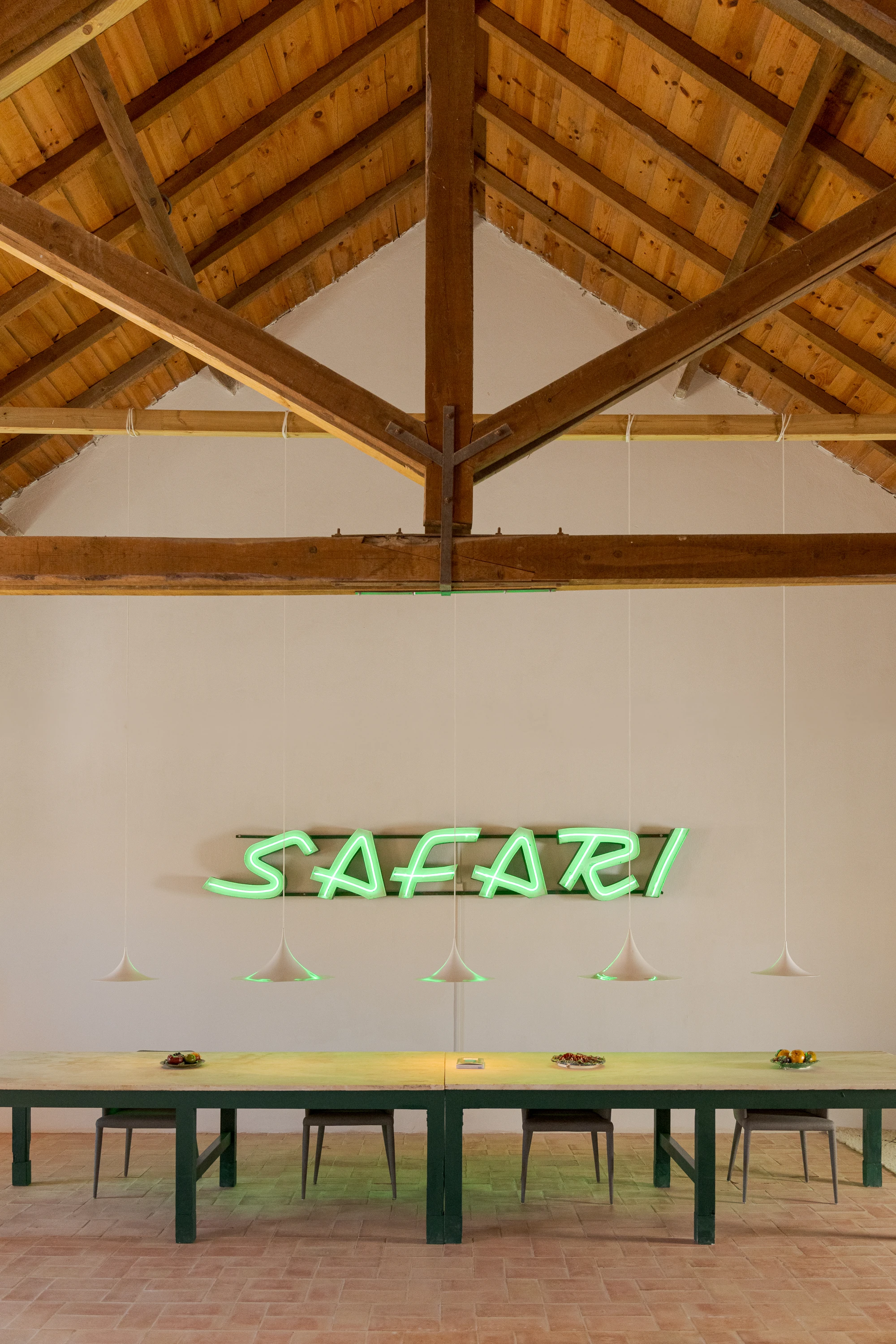
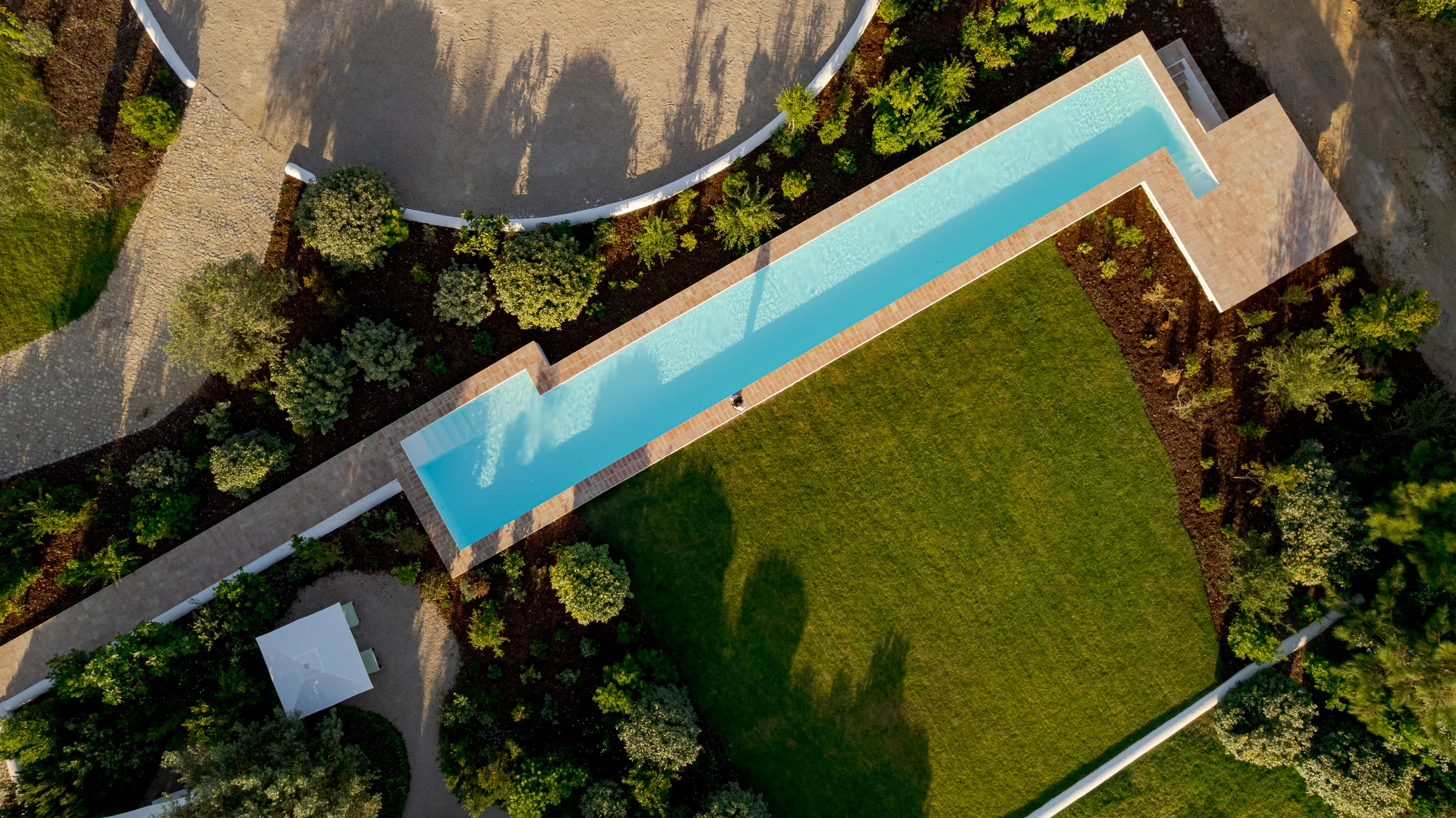
The public rooms are the agricultural warehouses of the quinta, carefully restored and held at their original volume. The largest threshing floor in the Algarve, preserved at the heart of the estate, doubles as an open-air stage for events. New architectural insertions are quiet: a heated stone swimming pool integrated into the blossom-filled gardens, a new 25-metre scenic lap pool stitched into the orchards, a light-filled gym with floor-to-ceiling windows onto the landscape, and two private treatment rooms.
A separate two-bedroom and three-bedroom villa sit a short distance from the main cluster, each with its own pool surrounded by avocado, orange and carob trees. They are designed for guests travelling with children or pets and operate on the same architectural logic — the new is read through the language of what was already there.
The 50-hectare estate still produces citrus, figs, avocados, loquats, apples and pears in full production. Owner João Brion Sanches describes the project as a “harmonious coexistence between natural and built elements” — an entrepreneurial vision rooted in the family's century-old relationship with this corner of the Eastern Algarve. The quinta is old. The hotel is new. The architecture stays honest to that distinction.