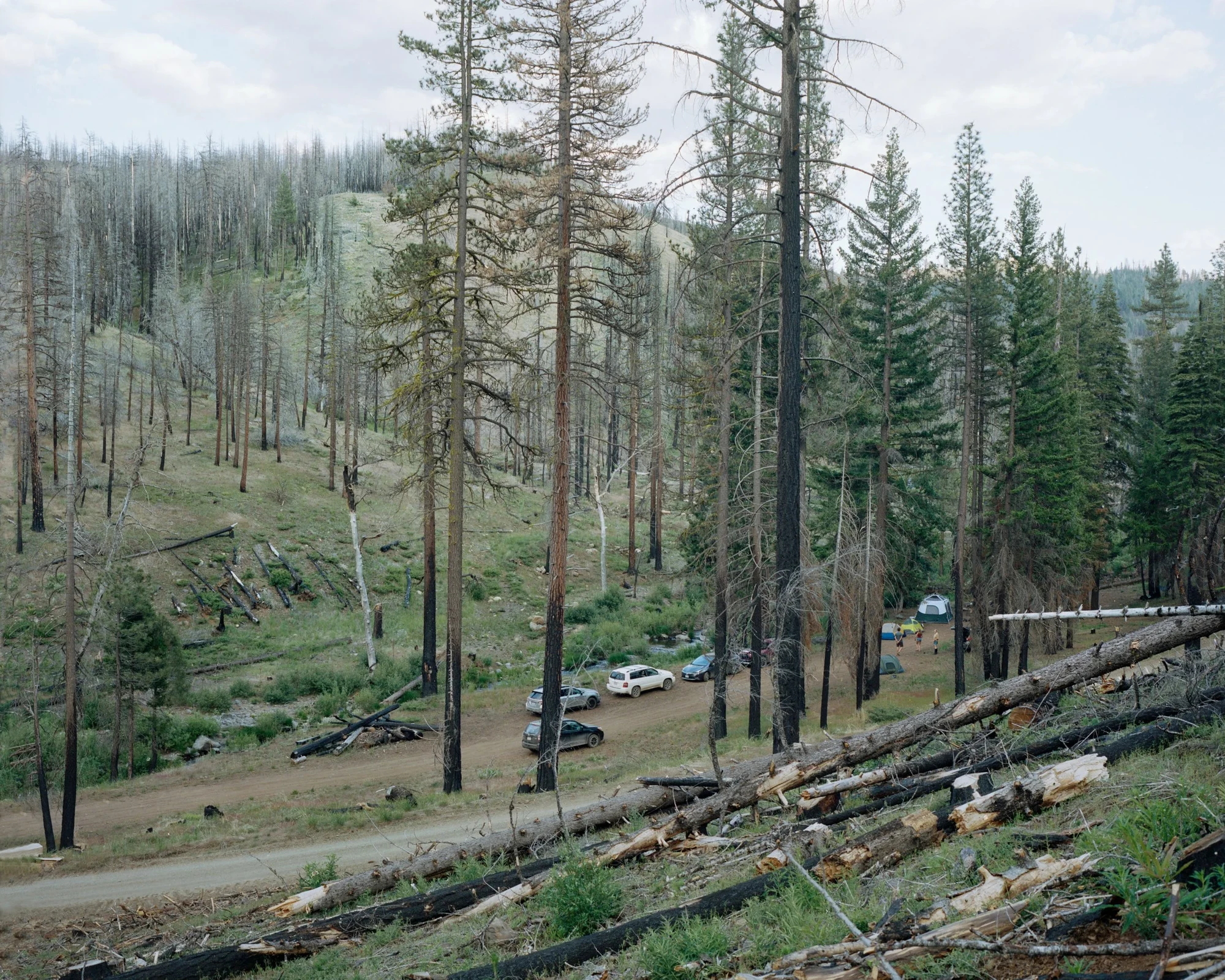
In the Northern Sierra region of California, Blake Masi photographs Camp, an ongoing project tracing communal life in a designed landscape where phones are banned and daily routines become the subject.
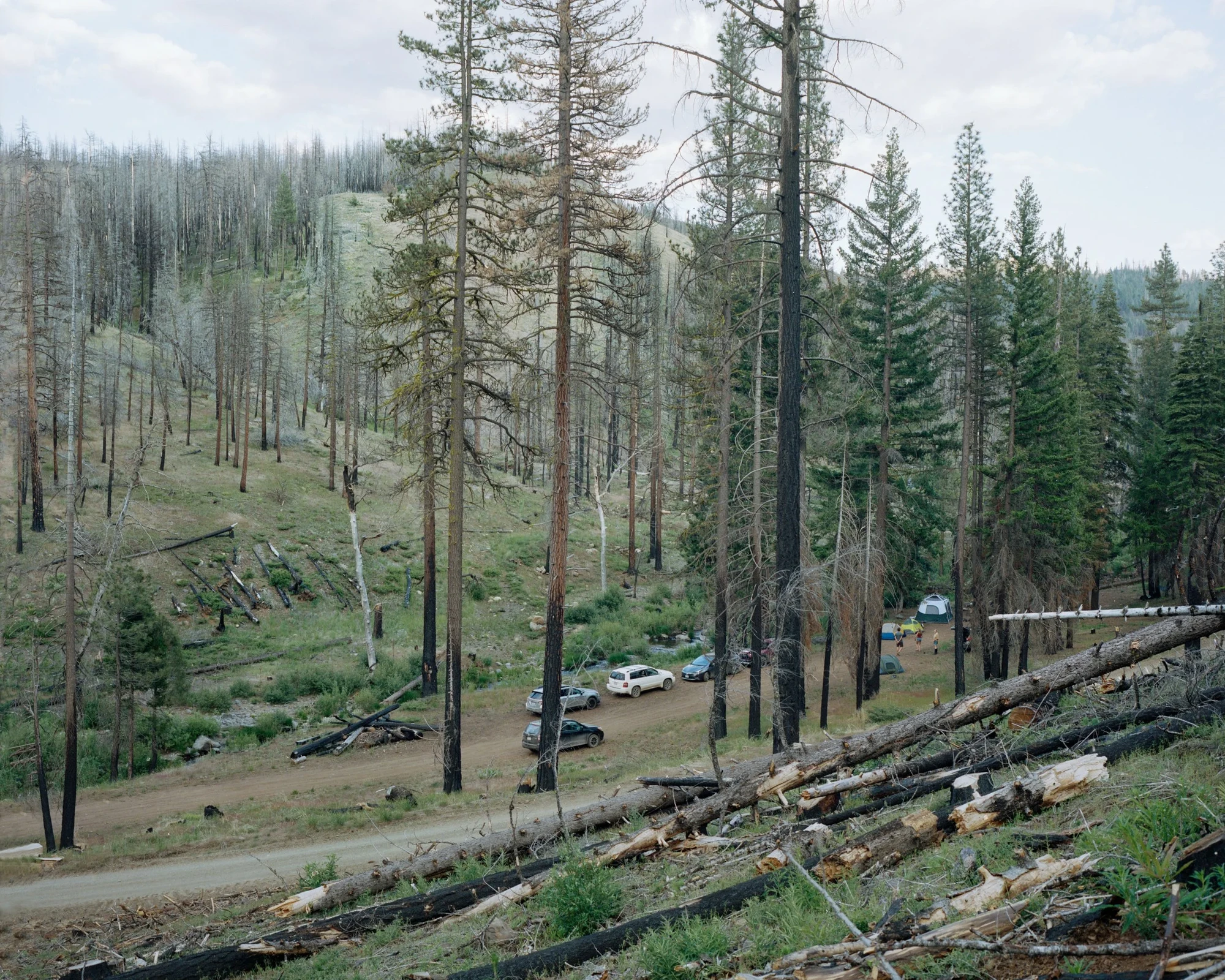
Blake Masi photographs designed environments. The Northern Sierra camp he has been working in for two summers is one in the most literal sense: trails cut into the hillside, cabins among the ponderosa pines, a gravel road where cars park in a loose line against the scorched trunks. It is a world shaped by human systems, and Masi's work has always been interested in what those systems reveal about the people inside them.
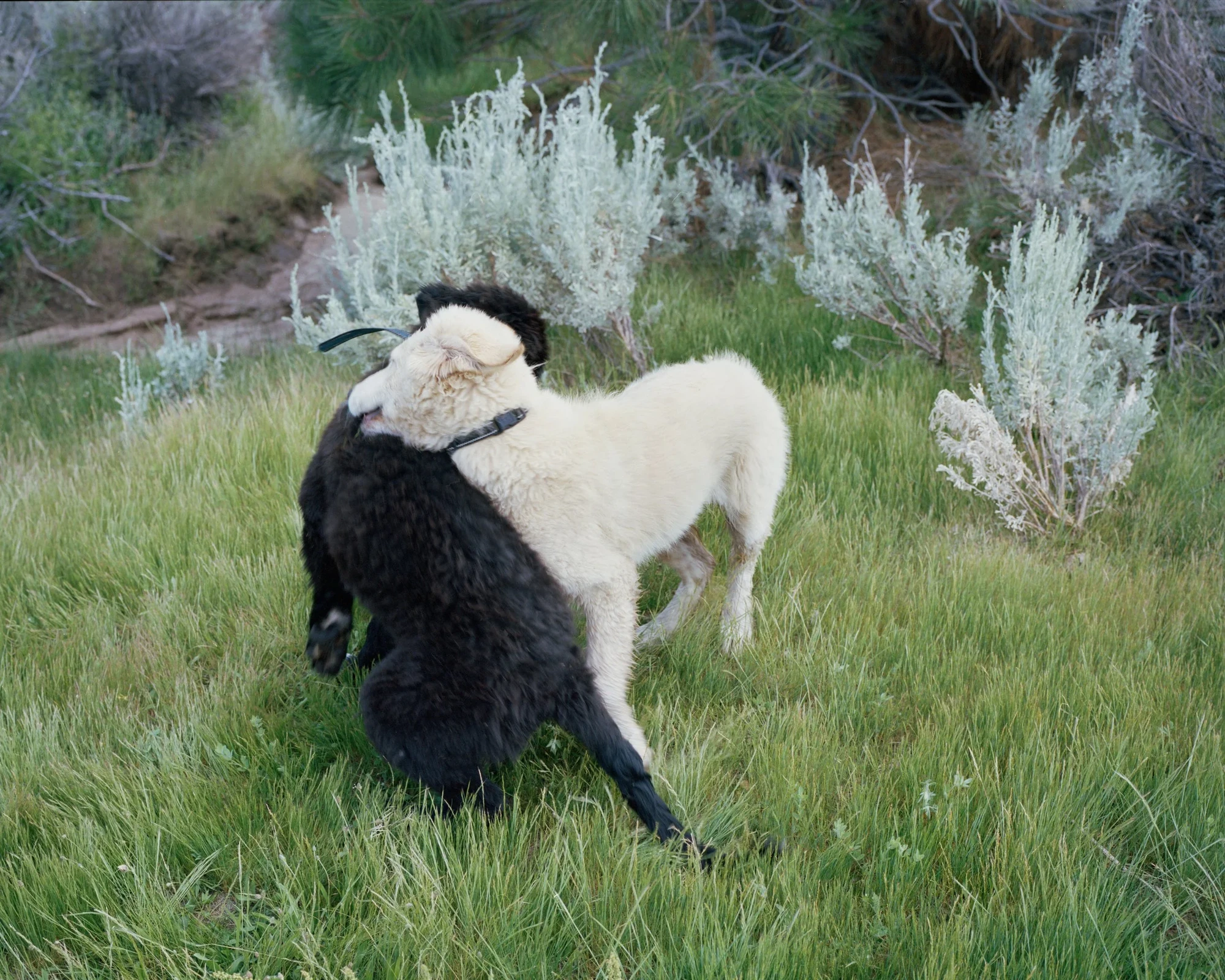
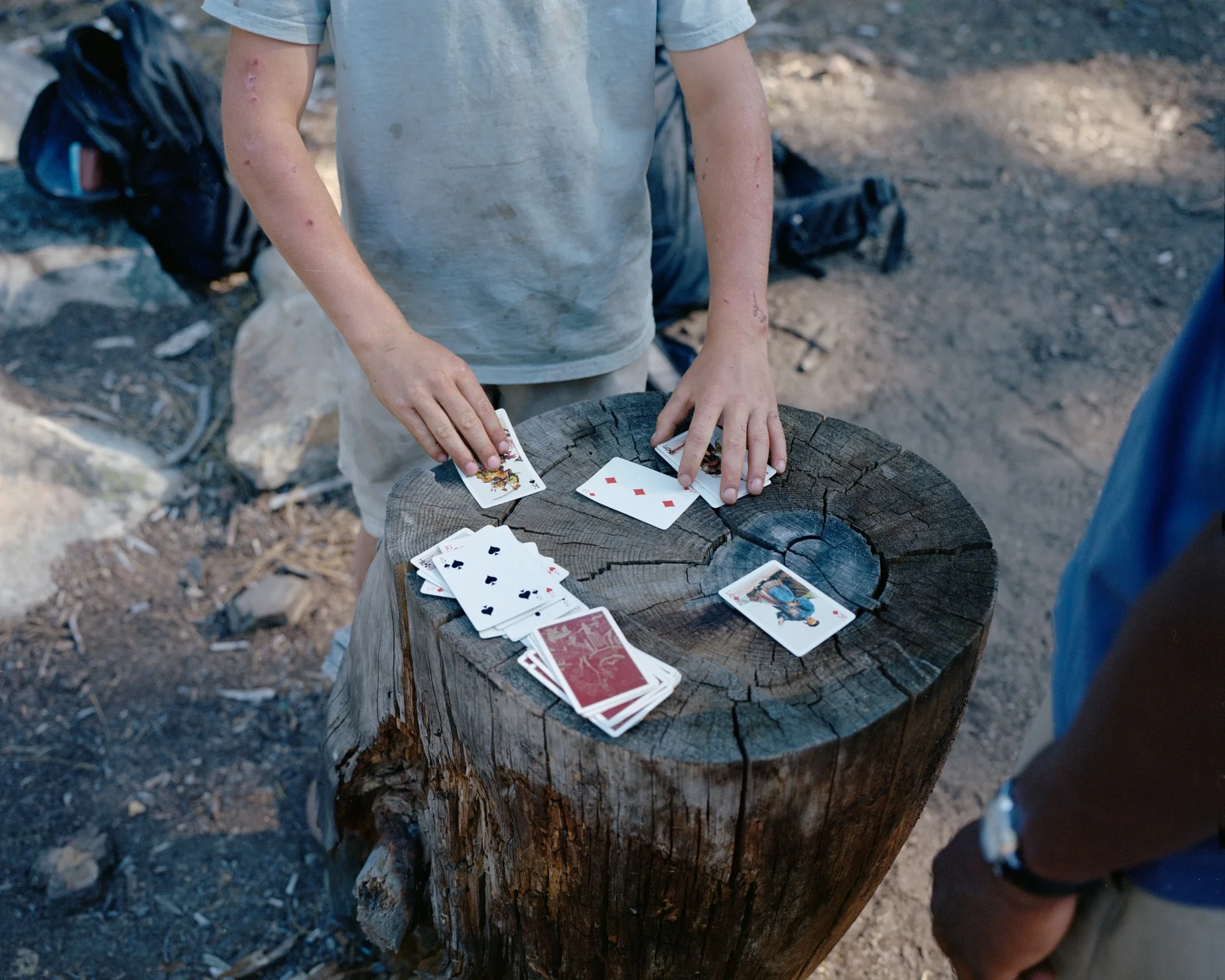
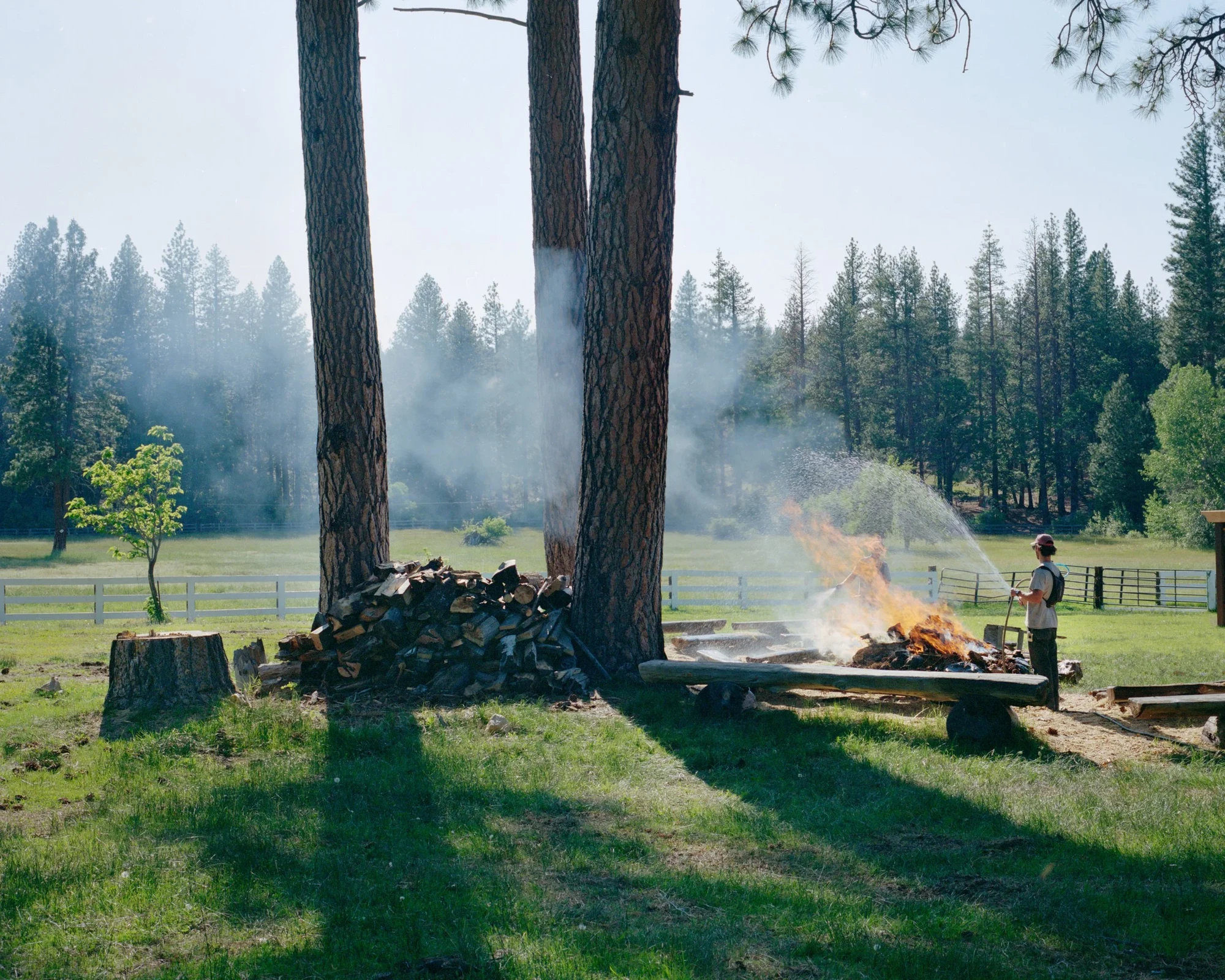
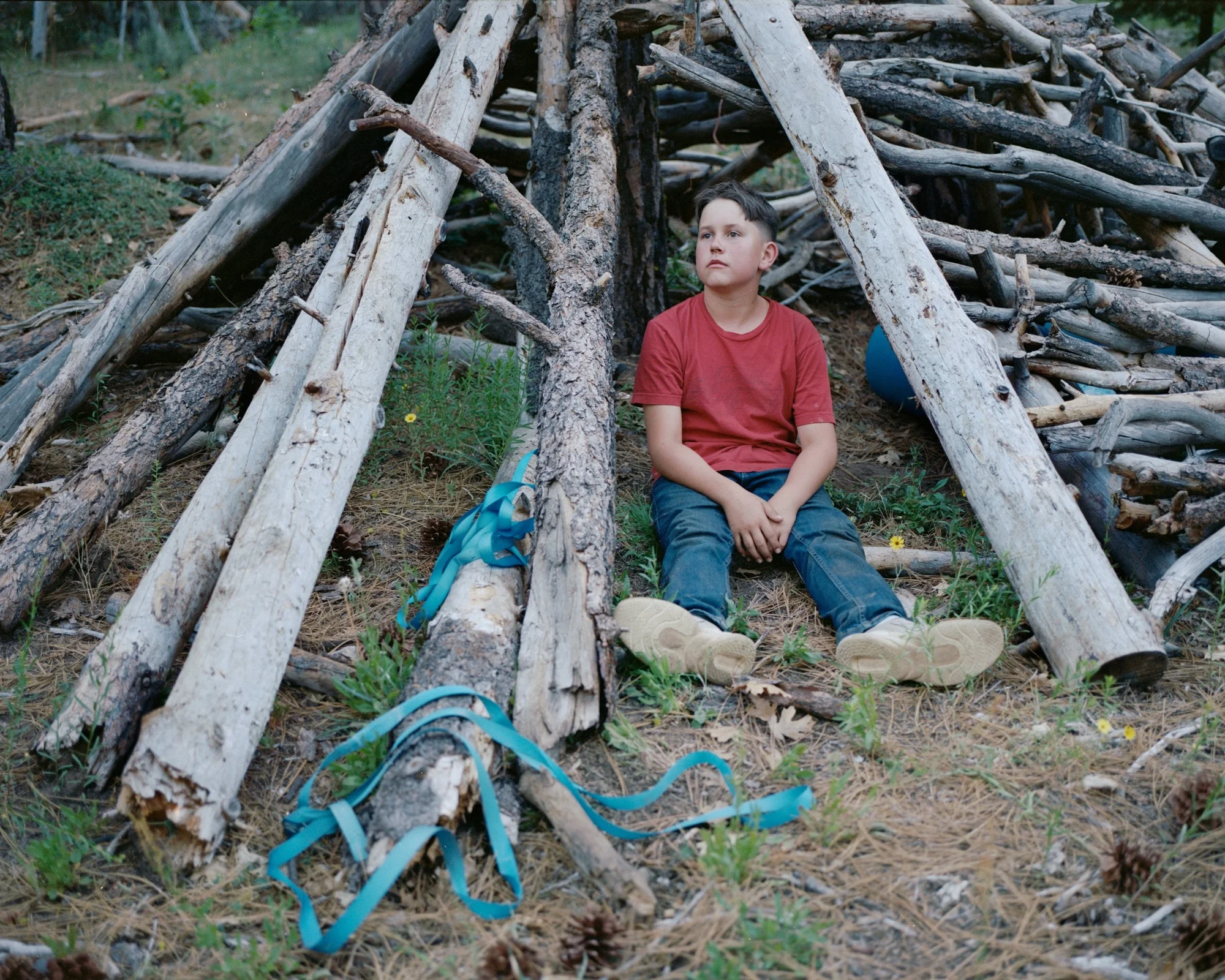
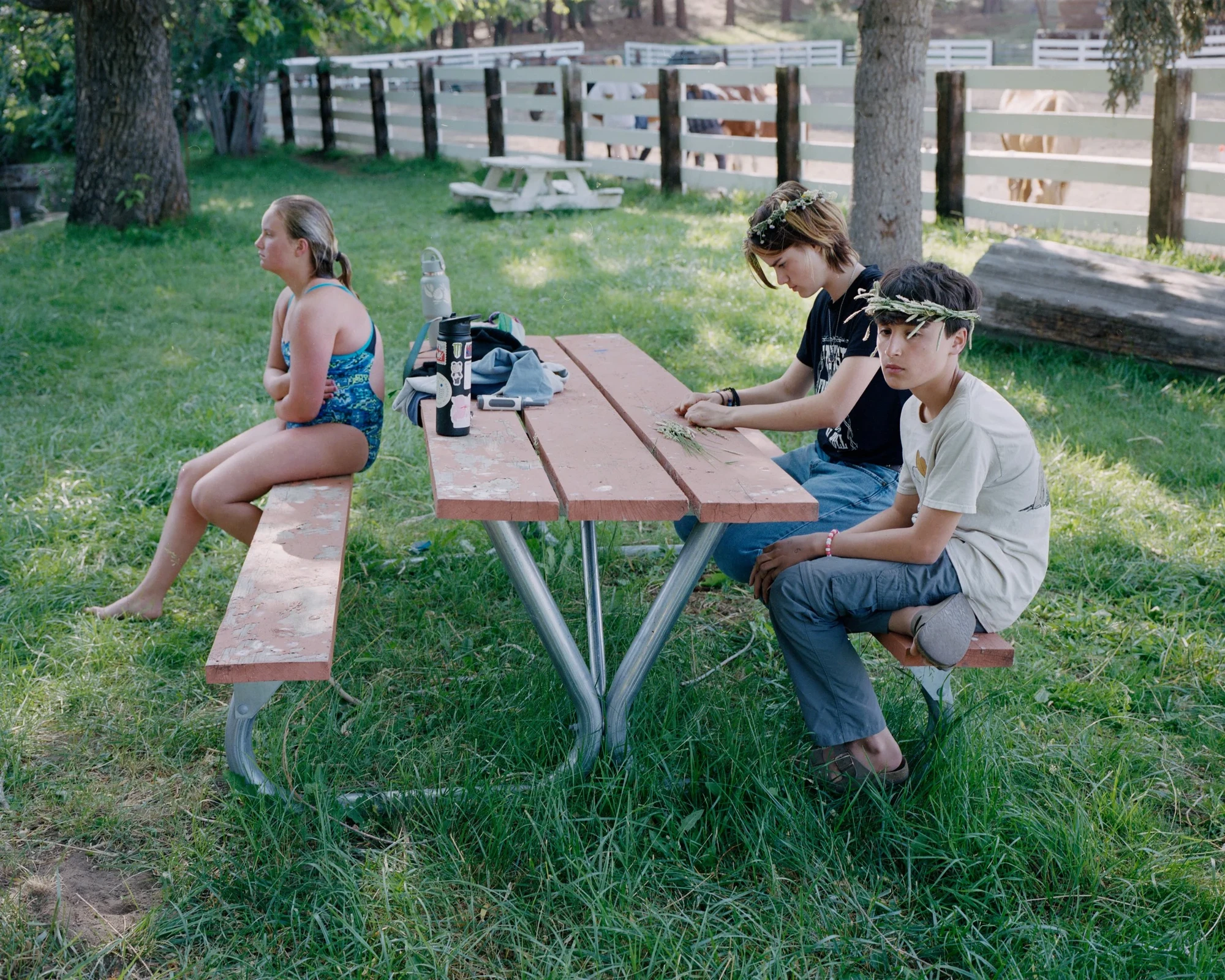
The images are medium-format and warm. Golden-hour light flattens across a red-painted picnic table where three teenagers sit in separate directions, barely interacting. A boy in a red T-shirt leans against a stack of grey weathered logs, hands clasped, looking at nothing. Card games played on a charred tree stump. A figure hosing down a fire against a stand of tall pines. Two lambs, one black and one white, tangled together in the sage. These are not dramatic scenes. They are what fills a day when there is no phone to reach for.
The camp bans phones, and that single rule makes everything Masi shoots legible as a specific kind of contemporary document. "These photographs consider how individuals inhabit designed environments and leave traces of themselves within them," he writes. "The camp becomes a temporary world built through collective participation, where human psychology impresses itself upon the landscape." The statement could apply to any settlement, any intentional community. The particular interest here is that the camp was designed to produce exactly this kind of undivided attention to place, and the photographs show what happens when that design succeeds.
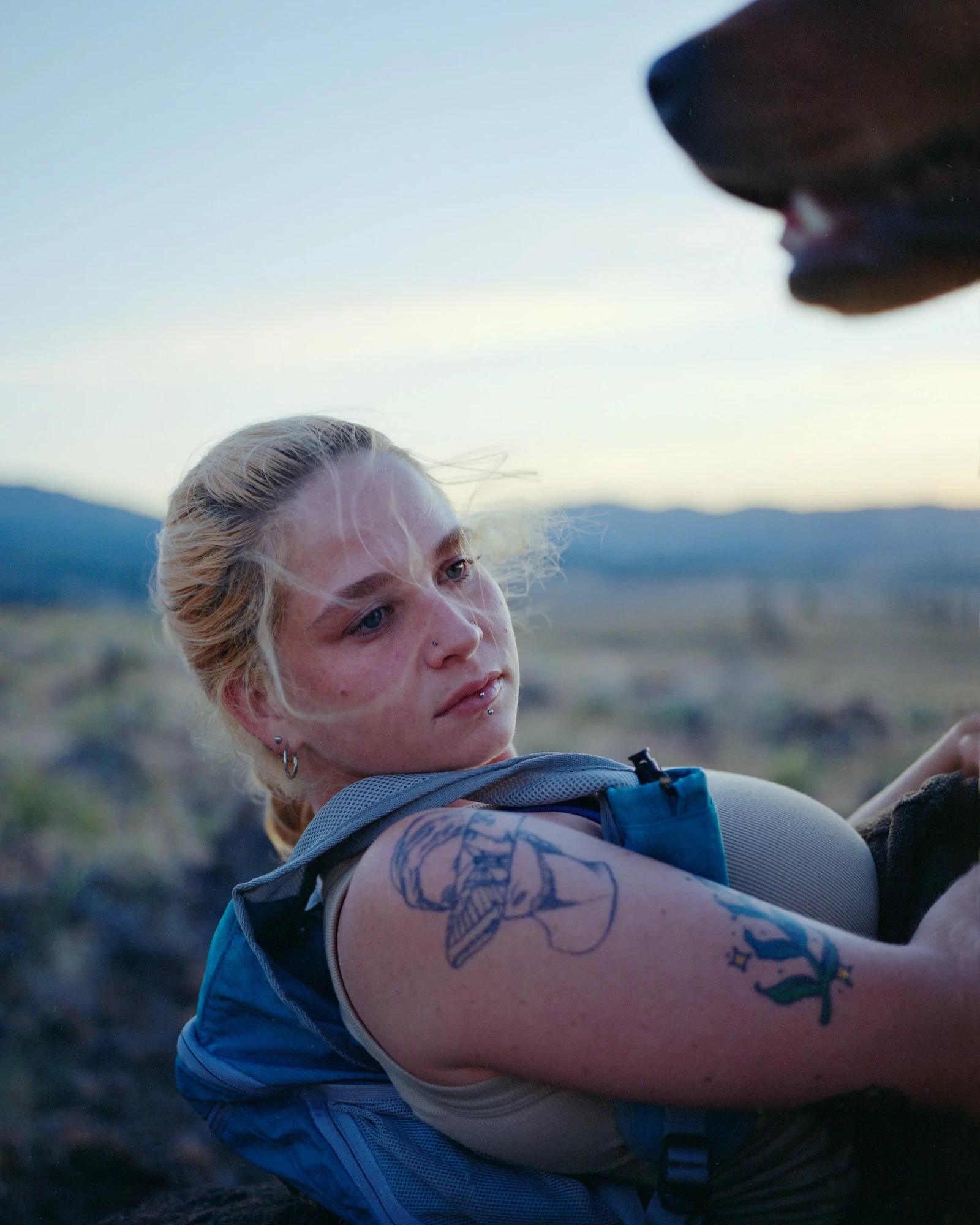
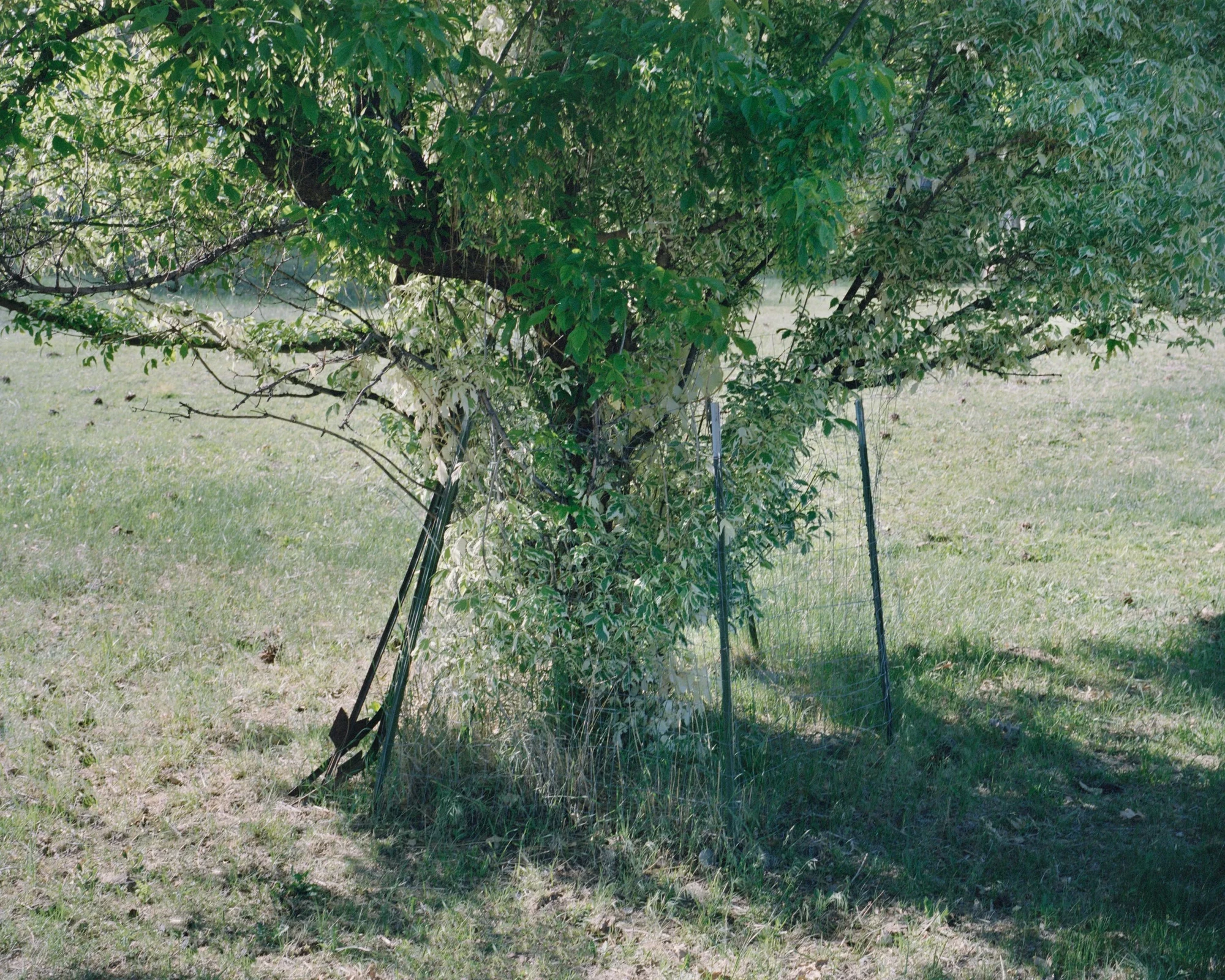
The landscape carries its own density. Fallen pine trunks show char lines from previous fires. The forest thins where burn scars opened the canopy. A small willow tree is wrapped in wire fencing, propped upright by two stakes. At dusk, a young woman rests against a rock, a tattooed arm raised toward an animal just out of frame, the basin of the Sierra behind her in a low blue haze. The wilderness is present throughout, but it is consistently subordinated to the mark of habitation, to the fence, the fire pit, the carefully stacked firewood.
Masi has been publishing since 2019 and his work focuses on post-digital generation environments. Camp sits inside a longer argument about what designed space does to people who live inside it. The study is not ethnographic, exactly. It is slower than that, and less systematic. Two summers produced enough to fill Array 4, the journal that first published this body of work, and apparently enough to keep going.