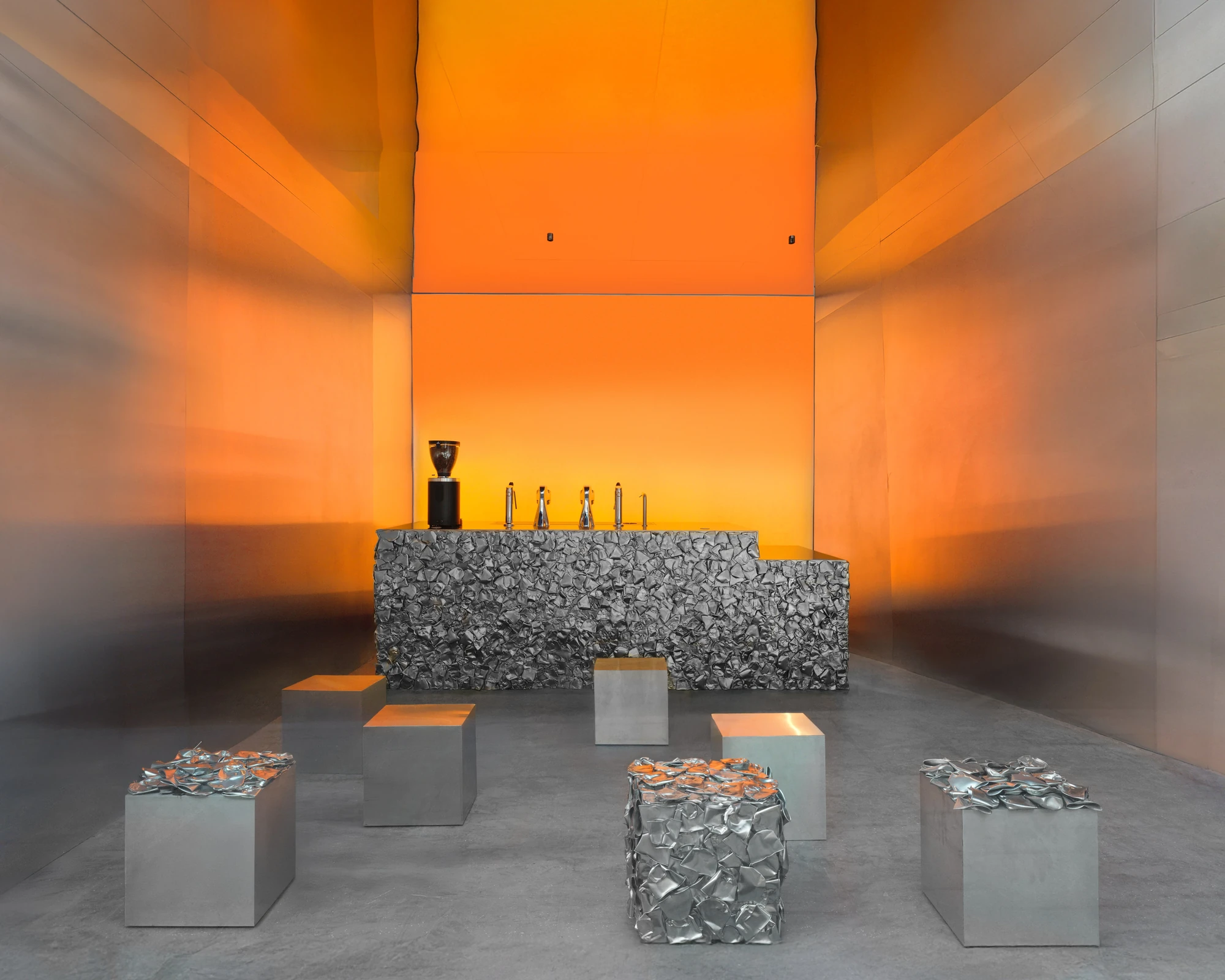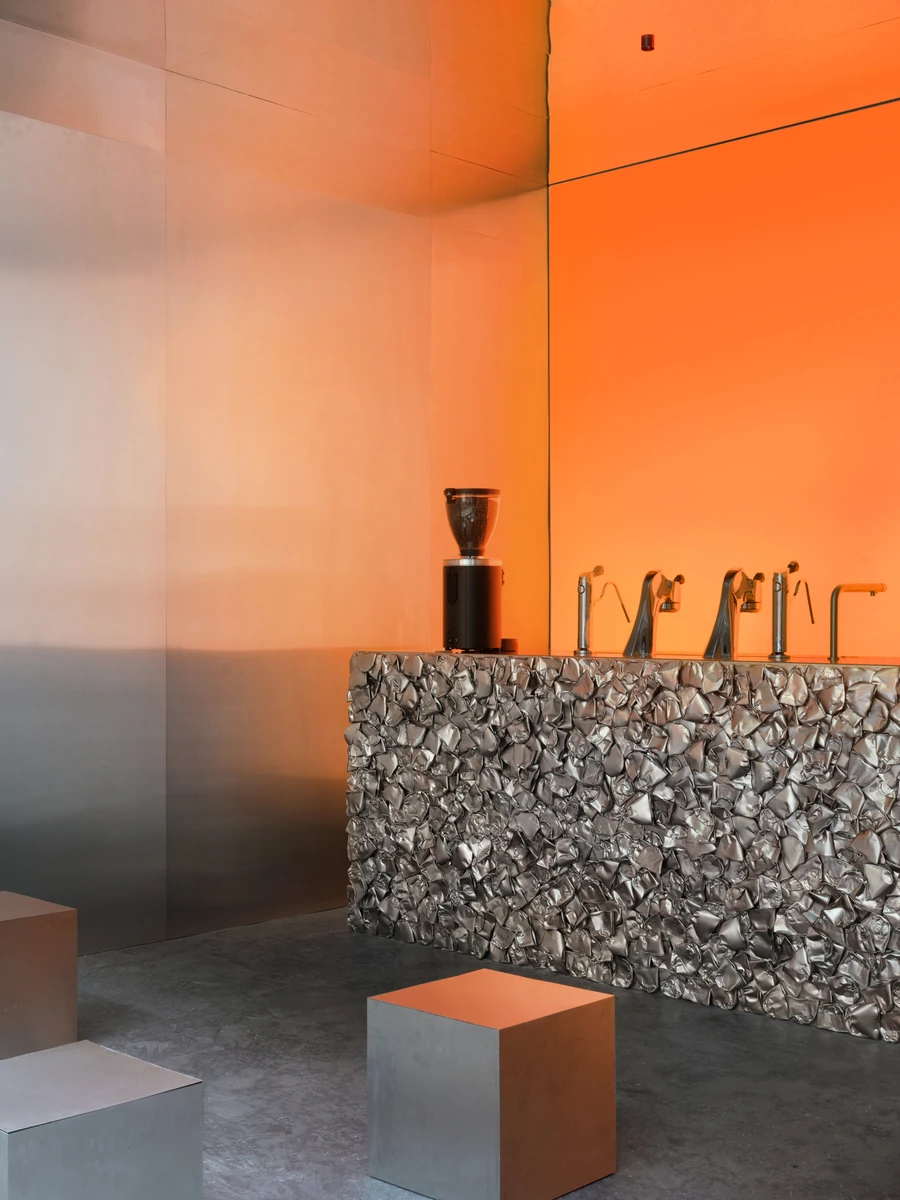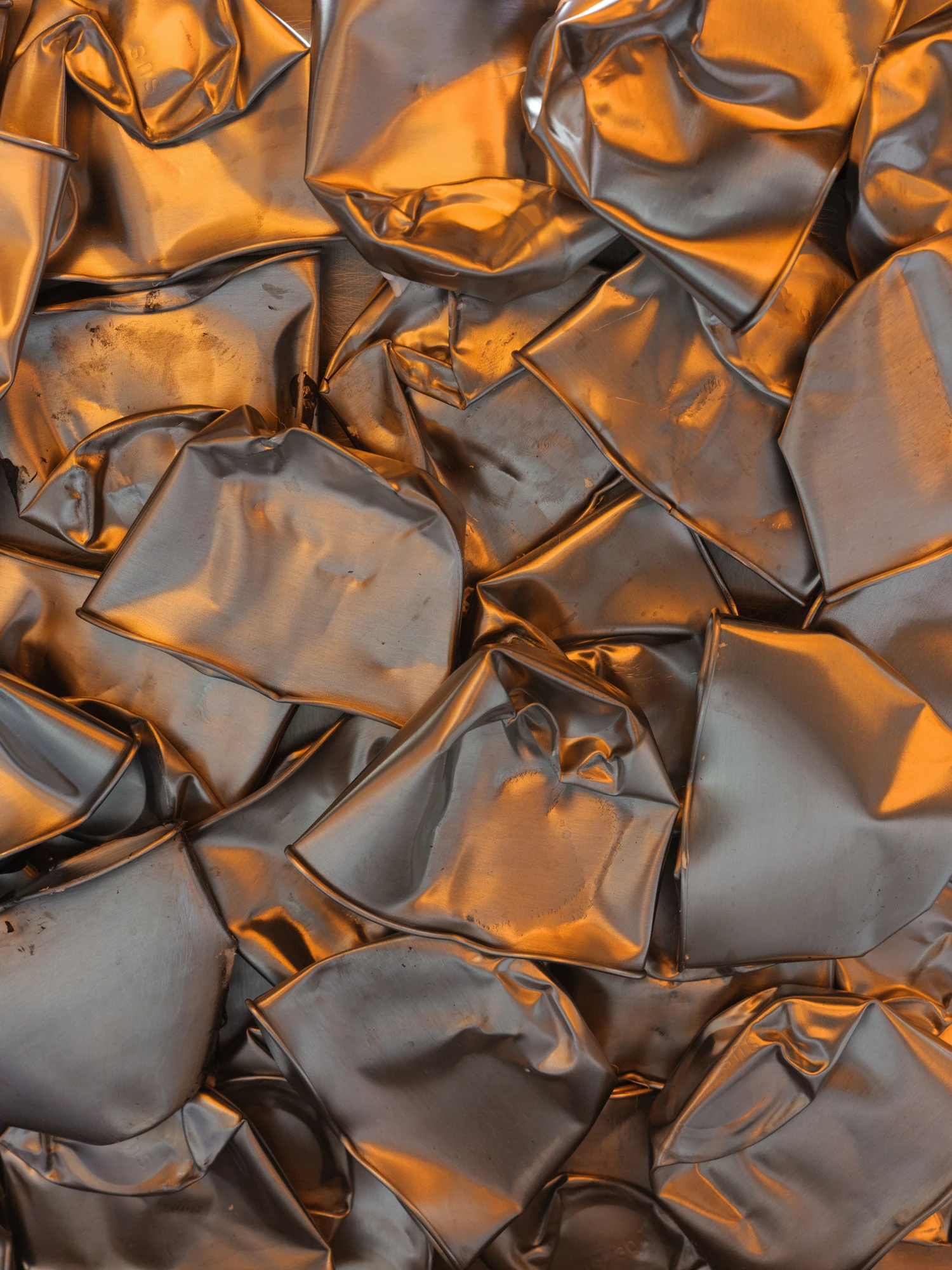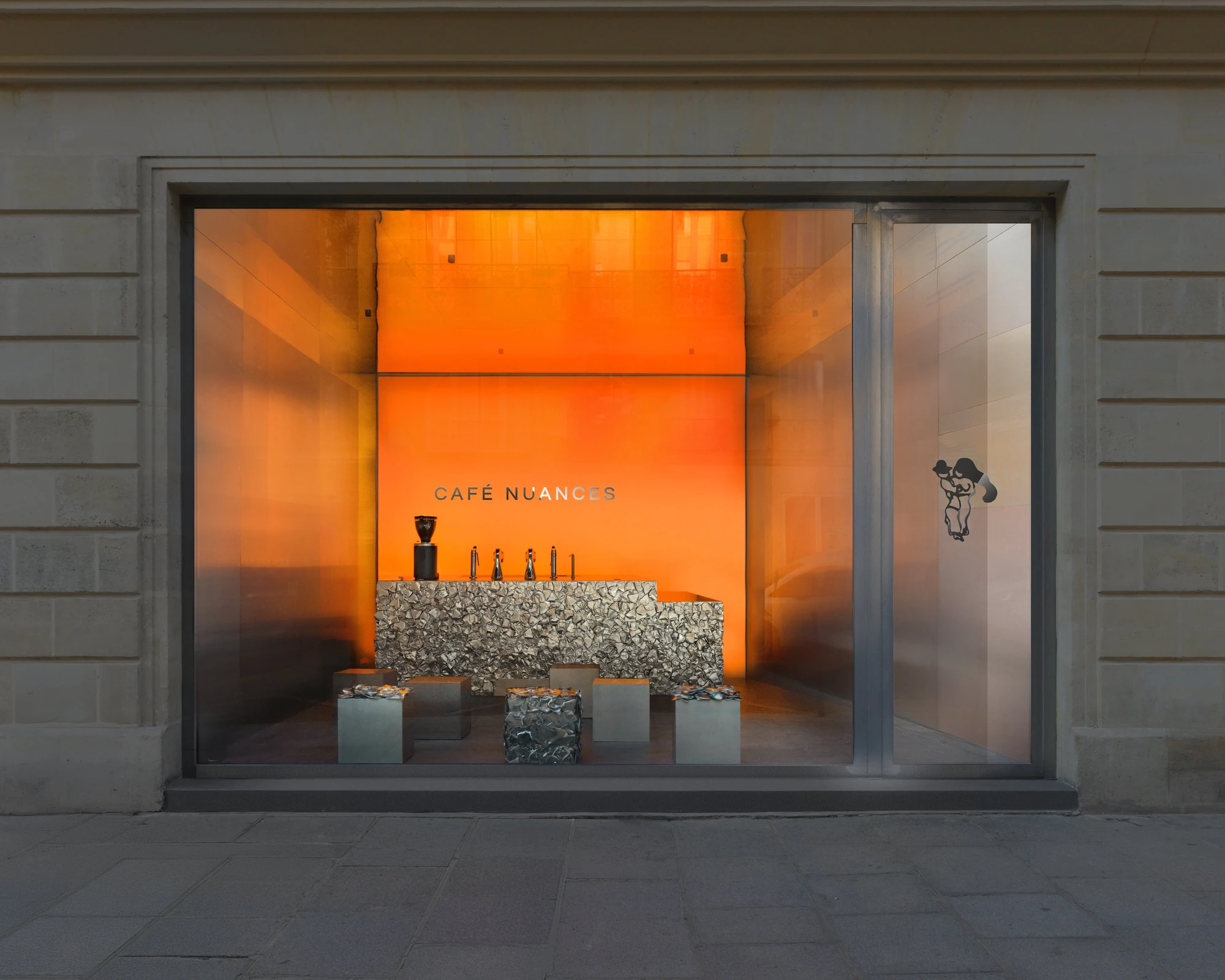
A counter clad in crushed metal, recalling a morning's worth of spent takeout cups, anchors Café Nuances Marais, the steel-lined espresso bar Crosby Studios fits into a 1950s building in the Marais, Paris.
Before the Marais shop opened in July 2025, Café Nuances teased it on Instagram with images of paper cups strewn through the streets. The café puts it in one line: "Let's fast forward to 300 takeout coffees later." The roaster belongs to the brothers Charles and Raphaël Corrot, who studied for years in the United States, took in its coffee culture and founded the business in 2021. The new address, on the ground floor of a limestone-clad 1950s residential building at 51 rue des Francs-Bourgeois, joins shops in the Golden Triangle, at Place Vendôme and in Saint-Germain-des-Prés. Inside: stainless steel, one orange wall, and a counter that takes the teaser almost literally.
Harry Nuriev, who founded Crosby Studios in 2014 and runs it from Paris and New York, has played with metal before: The Elevator, a 2021 project in Basel, set silver modular pieces inside an interior modelled on a corrugated steel-clad elevator. This commission is also personal. Next door is the café the studio fitted out for Dover Street Market Paris when Nuriev had just arrived from New York, and he tells Wallpaper* it is "almost spiritual to return to the spot where it all began." He had already worked with the Corrot brothers on a pop-up.
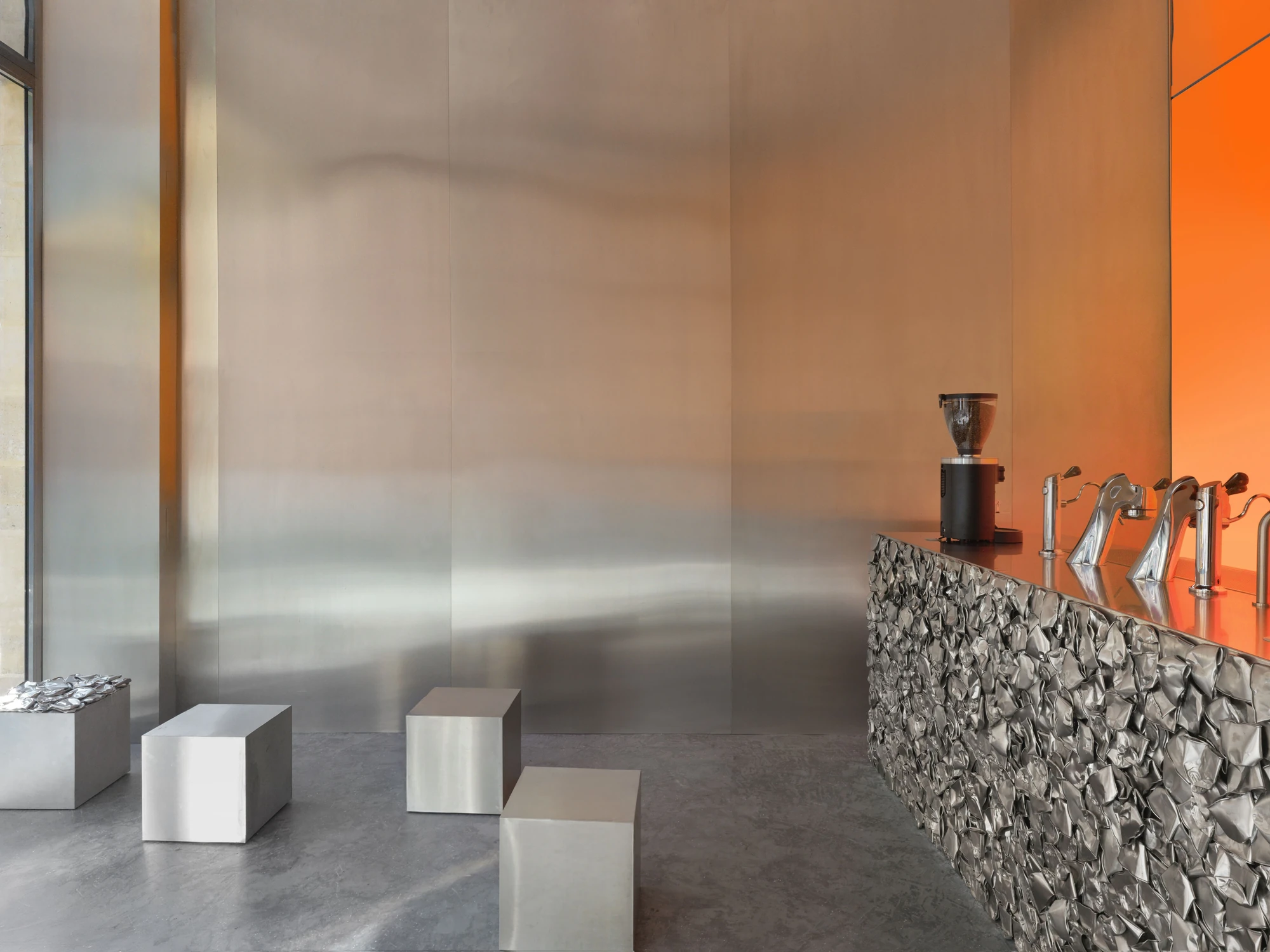
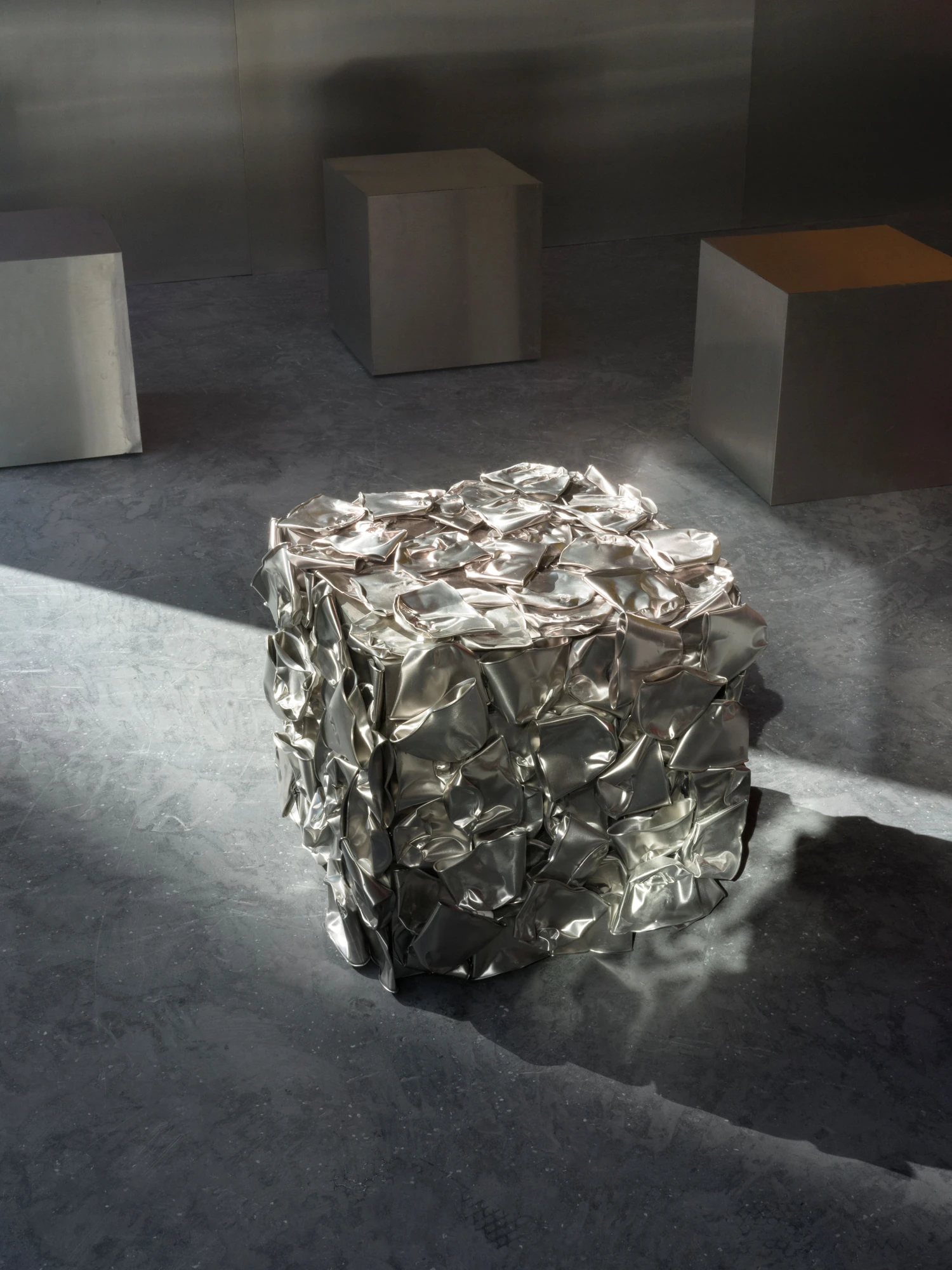
The counter is the room's centrepiece. Its face is clad in crushed metal fragments, its top smooth, its edges crisp, and the whole block resembles a cube of compacted rubbish. According to Interior Design, the studio crushed Inox stainless-steel coffee cups and fixed them to the bar face and to stools; Azure calls the result "shiny representations of yesterday's lattes." The seating repeats the idea at a smaller scale. Some stools are plain steel cubes, others are topped or wrapped in the same crumpled pieces, all set on a smooth grey concrete floor.
The rest is steel. Stainless panels line both side walls and run across the ceiling, mirrored surfaces overhead double the room back on itself, and the coffee equipment shares the same metal. Colour comes from one place, the gradient orange that is the brand's signature, which here covers only the back wall; Azure points out that the steel around it carries the colour through the rest of the room. Behind the full-glass shopfront the whole interior is on show, and Nuriev sees the lighting as a way for passers-by to take part in the room without stepping through the door.
None of it upstages the coffee. The house roasts six bean varieties and pours them until late afternoon. Azure reads the counter that serves them as a showcase of waste, and hopes the sight converts a few regulars to a reusable mug.